ABOS Orthopedic Pathology & Bone Disease Board Review MCQs | Part 1
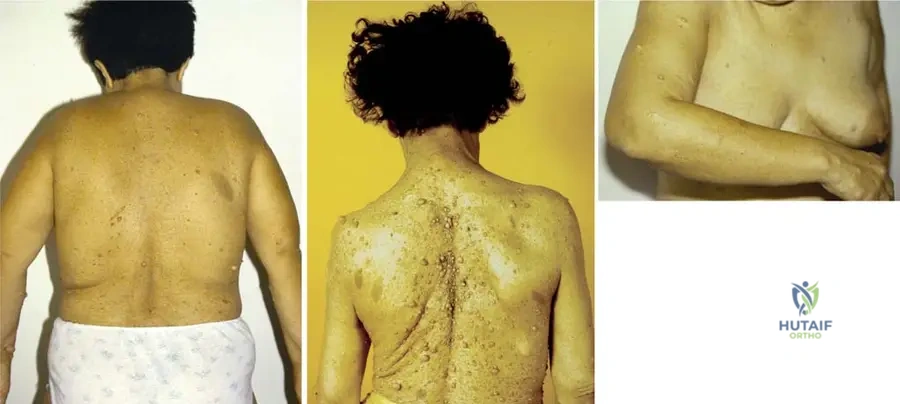
Key Takeaway
This ABOS board review provides multiple-choice questions on orthopedic pathology, covering bone tumors (benign and malignant), skeletal dysplasias like neurofibromatosis, and metabolic bone diseases such as glucocorticoid-induced osteoporosis. Each question includes detailed rationales to enhance understanding for comprehensive exam preparation.
ABOS Orthopedic Pathology & Bone Disease Board Review MCQs | Part 1
Comprehensive 100-Question Exam
00:00
Start Quiz
Question 1
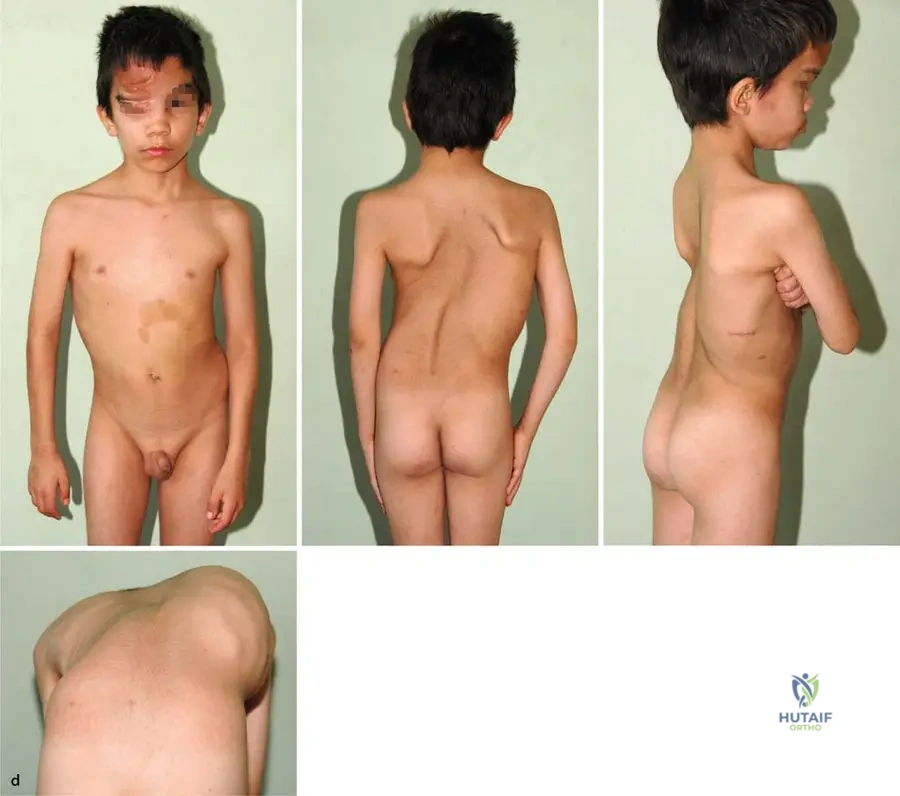
An 18-month-old child presents with anterolateral bowing of the left tibia and multiple café-au-lait spots. An X-ray is shown demonstrating the classic deformity. What is the underlying genetic mutation associated with this condition?
Explanation
Question 2
A 15-year-old boy is diagnosed with high-grade conventional osteosarcoma of the distal femur. After completing a course of neoadjuvant chemotherapy, he undergoes wide surgical resection. Which of the following is the most important prognostic factor for his long-term survival?
Explanation
Question 3
A 12-year-old girl presents with a painful, swollen thigh and systemic symptoms including fever. Biopsy reveals small round blue cells expressing CD99. Which of the following chromosomal translocations is most characteristic of this lesion?
Explanation
Question 4
A 55-year-old man presents with deep thigh pain. Imaging reveals a large, lobulated medullary lesion in the proximal femur with "rings and arcs" calcification. Biopsy confirms a grade II chondrosarcoma. What is the most appropriate management?
Explanation
Question 5
A 32-year-old woman presents with knee pain. Radiographs show an eccentric, lytic epiphyseal-metaphyseal lesion of the distal femur extending to the subchondral bone. Biopsy shows multinucleated giant cells in a background of mononuclear stroma. Before surgical curettage, the multidisciplinary team recommends a targeted medical therapy. What is the mechanism of action of the most commonly used agent?
Explanation
Question 6
A 19-year-old male complains of right thigh pain that is worse at night and dramatically improves with ibuprofen. A CT scan reveals a 7-mm radiolucent nidus surrounded by dense sclerotic bone in the femoral diaphysis. What is the most appropriate definitive treatment?
Explanation
Question 7
A 10-year-old girl is evaluated for a shepherd's crook deformity of her proximal femur. Radiographs show a "ground-glass" appearance of the medullary canal. She also has precocious puberty and large café-au-lait macules with irregular borders. What is the underlying genetic mutation?
Explanation
Question 8
An 8-year-old boy falls and sustains a mild injury to his right shoulder. X-rays reveal a centrally located, completely lytic lesion in the proximal humerus metaphysis with a piece of cortical bone resting at the dependent portion of the lesion. He has a minimally displaced pathological fracture. What is the best initial management?
Explanation
Question 9
A 65-year-old man presents with persistent back pain and fatigue. Blood tests reveal anemia, hypercalcemia, and an elevated creatinine. A serum protein electrophoresis demonstrates a monoclonal spike. Which imaging modality is most sensitive for detecting early impending pathologic fractures in this patient's long bones?
Explanation
Question 10
A 58-year-old woman with a history of breast cancer presents with left hip pain. Radiographs demonstrate a 3.5 cm lytic lesion in the peritrochanteric region of the left femur, involving >50% of the cortex. She reports pain with weight-bearing. According to Mirels' criteria, what is the most appropriate management?
Explanation
Question 11
A 72-year-old man with known long-standing Paget's disease of the pelvis presents with a rapid increase in localized pain over the right ilium and a new palpable mass. Laboratory studies show a sudden exponential rise in serum alkaline phosphatase. What is the most likely diagnosis?
Explanation
Question 12
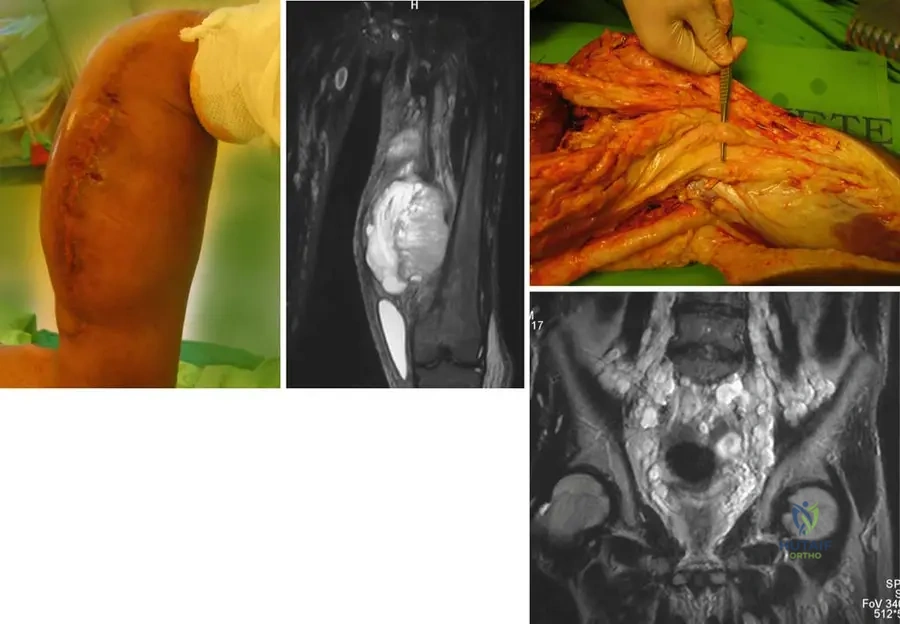
A 2-year-old boy presents with an anterolateral bowing of the tibia. Radiographs show medullary sclerosis and a narrow canal at the apex of the deformity.
What is the underlying genetic mutation most commonly associated with this specific condition?
Explanation
Question 13
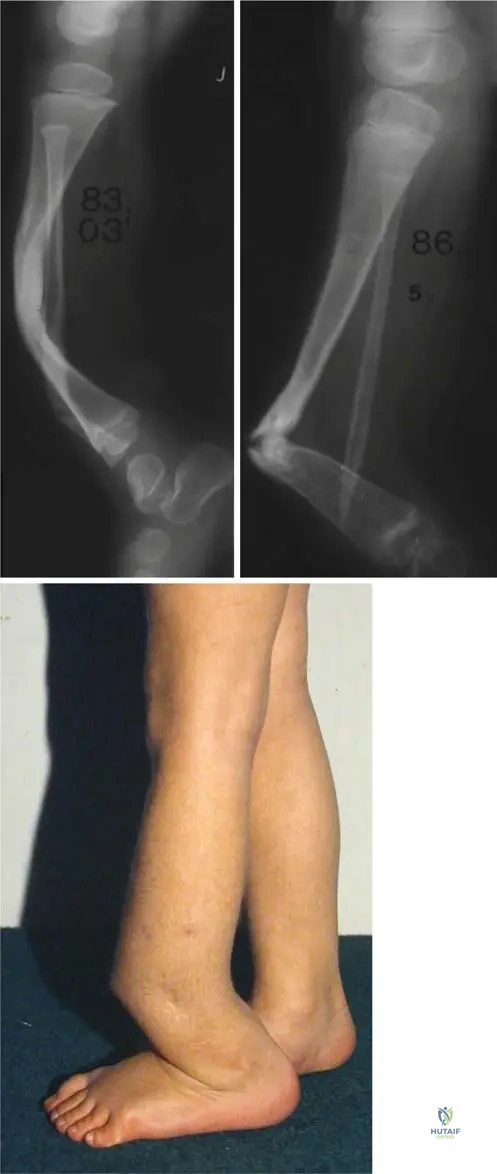
A 10-year-old girl with a known history of neurofibromatosis type 1 develops a rapidly progressive spinal deformity. Radiographs demonstrate a short-segment, sharp angular curve with vertebral scalloping and severe rib penciling.
What is the most appropriate definitive management for this deformity?
Explanation
Question 14
A 30-year-old woman presents with knee pain. Radiographs show an eccentric, purely lytic epiphyseal lesion in the distal femur extending precisely to the subchondral bone plate. A biopsy reveals multinucleated giant cells within a stroma of mononuclear cells. Which targeted therapy is most appropriate for locally advanced, unresectable cases of this tumor?
Explanation
Question 15
A 14-year-old boy presents with a painful, swollen thigh and low-grade fever. Radiographs show a permeative, diaphyseal lesion with an "onion-skin" periosteal reaction. Which chromosomal translocation is most characteristic of this malignancy?
Explanation
Question 16
A 16-year-old girl has a destructive metaphyseal lesion in the proximal tibia accompanied by a "sunburst" periosteal reaction. A core needle biopsy confirms high-grade conventional osteosarcoma. Following neoadjuvant chemotherapy and surgical resection, what is the most critical prognostic factor for her long-term survival?
Explanation
Question 17
A 55-year-old man presents with progressive pain in his proximal humerus. Radiographs show a lytic lesion with intralesional "popcorn" calcifications and endosteal scalloping involving >2/3 of the cortical thickness. Biopsy confirms a grade 2 chondrosarcoma. What is the optimal initial treatment?
Explanation
Question 18
A 65-year-old man presents with generalized back pain, fatigue, and hypercalcemia. A skeletal survey demonstrates multiple "punched-out" lytic lesions in the skull and spine. Serum protein electrophoresis reveals a monoclonal IgG spike. What specific cell type is primarily responsible for the bone resorption seen in this disease process?
Explanation
Question 19
A 12-year-old girl presents with pain and swelling of her distal femur. MRI reveals an expansile, multiloculated metaphyseal lesion containing multiple fluid-fluid levels. Genetic testing of the biopsy specimen identifies a rearrangement of the USP6 gene. What is the diagnosis?
Explanation
Question 20
A 19-year-old male complains of severe, unrelenting night pain in his proximal tibia, which is completely relieved within 30 minutes of taking ibuprofen. A high-resolution CT scan shows a 7 mm radiolucent nidus surrounded by intense reactive sclerosis. What is the pathophysiologic mechanism directly responsible for the pain?
Explanation
Question 21
A 25-year-old man presents with a slow-growing, painful mass in the anterior mid-diaphysis of his tibia. Radiographs reveal a multilocular, eccentric "soap-bubble" lytic lesion. Histological analysis demonstrates a biphasic pattern consisting of an epithelial component embedded within a bland osteofibrous stroma. What is the diagnosis?
Explanation
Question 22
A 9-year-old girl is evaluated for precocious puberty, hyperpigmented cutaneous macules with irregular borders, and multiple expansile bone lesions exhibiting a "ground-glass" matrix on radiographs. This syndrome is caused by a somatic activating mutation in which of the following genes?
Explanation
Question 23
A 60-year-old woman presents with a purely destructive lytic lesion in her proximal humerus. An image-guided biopsy shows clear cell morphology consistent with a metastatic carcinoma. Prior to proceeding with prophylactic internal fixation, what critical preoperative study must be obtained to prevent a catastrophic intraoperative complication?
Explanation
Question 24
A 55-year-old man presents with progressive bowel and bladder dysfunction. MRI reveals a large, destructive, midline sacral mass. Biopsy reveals cords of cells with bubbly, vacuolated cytoplasm that immunostain positive for brachyury. What is the embryological origin of this tumor?
Explanation
Question 25
A 68-year-old man presents with an increasing hat size, unilateral hearing loss, and an anterolateral bowing deformity of his right femur. Radiographs show marked cortical thickening and coarse trabeculae. Which of the following laboratory profiles is most characteristic of this condition?
Explanation
Question 26
An 8-year-old boy sustains a low-energy fracture of the proximal humerus. Radiographs show a centrally located, completely radiolucent metaphyseal lesion with a piece of cortical bone resting dependently at the bottom of the cyst cavity. What is this pathognomonic radiographic sign called?
Explanation
Question 27
A 12-year-old girl is diagnosed with multiple enchondromatosis. Physical examination also reveals numerous soft tissue hemangiomas with visible phleboliths on extremity radiographs. Which syndrome does she have, and what is her lifetime risk of malignant transformation to chondrosarcoma?
Explanation
Question 28
A 2-year-old boy with multiple cafe-au-lait spots presents with the severe lower extremity deformity shown in the clinical and radiographic context.
What is the underlying genetic mutation most commonly associated with this specific osseous manifestation?
Explanation
Question 29
A 14-year-old boy presents with a painful diaphyseal mass in the femur. Biopsy reveals uniform small round blue cells. Cytogenetic analysis identifies a t(11;22)(q24;q12) translocation. Which of the following fusion proteins is driving this pathology?
Explanation
Question 30
A 65-year-old man presents with a painful proximal humerus mass. Radiographs show a destructive medullary lesion with intralesional "popcorn" calcifications and endosteal scalloping involving >2/3 of the cortical thickness. What is the most appropriate definitive management?
Explanation
Question 31
A 10-year-old girl with known Neurofibromatosis type 1 presents with a sharp, angular, short-segment thoracic scoliosis.
Which of the following features is highly indicative of a dystrophic curve that carries a high risk of rapid progression?
Explanation
Question 32
A 32-year-old woman presents with knee pain. Radiographs reveal an eccentric, lytic, epiphyseal lesion in the proximal tibia extending to the subchondral bone. Biopsy shows multinucleated giant cells in a background of mononuclear stromal cells. Which targeted therapy is most appropriate if the lesion is deemed unresectable?
Explanation
Question 33
A 16-year-old boy presents with severe nocturnal thigh pain that is completely relieved by ibuprofen. Imaging shows a 1 cm radiolucent nidus surrounded by dense reactive sclerosis in the femoral diaphysis. What is the primary mechanism of pain relief by NSAIDs in this condition?
Explanation
Question 34
A 25-year-old patient presents with a "shepherd's crook" deformity of the proximal femur. Radiographs show an expansile lesion with a "ground-glass" appearance. A somatic activating mutation in which of the following genes is characteristic of this condition?
Explanation
Question 35
A 70-year-old man presents with increasing hat size, hearing loss, and bowing of the tibiae. Laboratory tests show markedly elevated serum alkaline phosphatase but normal calcium and phosphorus levels. What is the primary cellular defect in the initial phase of this disease?
Explanation
Question 36
A neonate sustains multiple fractures during birth. Examination reveals blue sclerae and bowing of the upper and lower extremities. The underlying genetic defect typically involves the substitution of which crucial amino acid in the collagen triple helix?
Explanation
Question 37
A 9-year-old boy presents with a pathologic fracture of the proximal humerus through a centrally located, completely lytic diaphyseal lesion demonstrating a "fallen leaf" sign on plain radiographs. What is the most appropriate initial management after the fracture has completely healed?
Explanation
Question 38
A 15-year-old girl presents with a rapidly expansile, eccentric lytic lesion in the distal femur. MRI reveals multiple fluid-fluid levels. Genetic analysis of the biopsy reveals a USP6 gene rearrangement. What is the optimal surgical treatment?
Explanation
Question 39
A 65-year-old woman presents with severe, progressive back pain. Radiographs show multiple "punched-out" lytic lesions in the skull and vertebrae. Serum protein electrophoresis shows an M-spike. Which pathway is primarily responsible for the prominent osteolytic lesions seen in this condition?
Explanation
Question 40
A 30-year-old man presents with a slow-growing, painful mass near the knee joint, distinct from the joint space. Imaging shows stippled calcifications within the soft tissue mass. Biopsy reveals a biphasic spindle cell pattern. Which chromosomal translocation is diagnostic for this tumor?
Explanation
Question 41
A 12-year-old boy undergoes a knee radiograph after an ankle sprain. An incidental eccentrically located, multi-loculated, radiolucent lesion with a sclerotic rim is seen in the distal femoral metaphysis, occupying less than 25% of the bone diameter. What is the most appropriate management?
Explanation
Question 42
A 14-year-old boy with confirmed Neurofibromatosis Type 1 presents with severe neck pain and torticollis.
What is the most critical cervical spine pathology to screen for in this patient population?
Explanation
Question 43
A 3-year-old boy presents with severe bowing of the legs and short stature. Labs show normal serum calcium, very low serum phosphorus, normal PTH, and elevated alkaline phosphatase. Genetic testing reveals a mutation in the PHEX gene. What is the core pathophysiology of this specific disease?
Explanation
Question 44
A 4-year-old child presents with anterior and lateral bowing of the tibia. Radiographs show a pseudarthrosis. Examination reveals axillary freckling and multiple hyperpigmented macules.
What is the genetic mutation associated with this condition?
Explanation
Question 45
A 14-year-old boy presents with a destructive metadiaphyseal lesion in the distal femur. Biopsy confirms high-grade osteosarcoma. Which of the following tumor suppressor genes are most commonly implicated in the pathogenesis of this tumor?
Explanation
Question 46
A 10-year-old boy presents with a painful, swollen thigh and low-grade fever. Radiographs show a permeative diaphyseal lesion with an "onion-skin" periosteal reaction. Biopsy reveals small, round blue cells. Which chromosomal translocation is highly diagnostic?
Explanation
Question 47
A 32-year-old woman presents with a lytic epiphyseal lesion of the proximal tibia. Biopsy confirms Giant Cell Tumor (GCT). For an unresectable lesion, which pharmacologic agent is most specifically targeted to the pathophysiology of this tumor?
Explanation
Question 48
A 12-year-old girl with known Neurofibromatosis type 1 presents with a rapidly progressive spinal deformity.
Radiographs show a short-segmented, sharp angular curve with vertebral scalloping and rib penciling. What is the most appropriate management?
Explanation
Question 49
A 9-year-old boy sustains a minor mechanical fall and presents with arm pain. Radiographs reveal a pathologic fracture through a centrally located, lytic diaphyseal lesion of the proximal humerus with a "fallen leaf" sign. What is the most appropriate initial management?
Explanation
Question 50
A 12-year-old patient presents with multiple cafe-au-lait spots, axillary freckling, and Lisch nodules.
The genetic mutation responsible for this condition affects a protein that normally acts as a:
Explanation
Question 51
A 3-year-old boy presents with marked anterolateral bowing of the tibia and an established pseudoarthrosis.
What is the most appropriate surgical treatment principle for managing this specific tibial pathology?
Explanation
Question 52
A 15-year-old boy undergoes neoadjuvant chemotherapy followed by limb-salvage surgery for a high-grade, intramedullary osteosarcoma of the distal femur. What is the most important prognostic factor for his long-term survival?
Explanation
Question 53
A 12-year-old girl presents with fever, elevated ESR, and a permeative diaphyseal lesion in her femur with 'onion skin' periosteal reaction. A biopsy is performed. Which chromosomal translocation is classically associated with her diagnosis?
Explanation
Question 54
A 55-year-old male presents with a large pelvic mass. Biopsy demonstrates atypical chondrocytes with binucleation and myxoid stroma, consistent with a high-grade conventional chondrosarcoma. What is the most appropriate primary treatment modality?
Explanation
Question 55
A 30-year-old female presents with a destructive, eccentrically located epiphyseal lesion in the distal femur. Biopsy confirms a Giant Cell Tumor (GCT). If medical therapy with Denosumab is initiated, what is the specific cellular target of this drug?
Explanation
Question 56
An 18-year-old male complains of severe nocturnal thigh pain that is completely relieved by ibuprofen. Radiographs show a 1.0 cm radiolucent nidus surrounded by dense reactive sclerosis in the femoral diaphysis. The intense pain is pathogenically caused by the secretion of which substance by the nidus?
Explanation
Question 57
A 65-year-old man presents with progressive bowing of his tibiae and an increasing hat size. Laboratory tests reveal an isolated, markedly elevated alkaline phosphatase. A bone biopsy during the late phase of this disease would most likely show:
Explanation
Question 58
Achondroplasia is the most common form of short-limb dwarfism. At the cellular level, the underlying genetic mutation results in which of the following mechanisms?
Explanation
Question 59
A patient with end-stage renal disease (ESRD) presents with diffuse bone pain. Labs show hypocalcemia, hyperphosphatemia, and severely elevated Parathyroid Hormone (PTH) levels. The primary underlying defect causing impaired bone mineralization in this patient is a deficiency of:
Explanation
Question 60
A 2-year-old boy presents with anterolateral bowing of the tibia and multiple café-au-lait macules. Radiographs demonstrate thinning of the tibial cortex and impending fracture.
What is the normal physiologic function of the protein encoded by the mutated gene responsible for this condition?
Explanation
Question 61
A 32-year-old woman presents with a lytic lesion in the distal femur extending into the subchondral bone. Biopsy confirms a Giant Cell Tumor of bone. She is treated with denosumab preoperatively to consolidate the tumor margins. What is the exact mechanism of action of this medication?
Explanation
Question 62
A 55-year-old man undergoes wide resection of a large, painful cartilaginous tumor of the proximal humerus. Histopathology reveals a conventional grade II chondrosarcoma. Which of the following metabolic gene mutations is most frequently implicated in the pathogenesis of this specific tumor?
Explanation
Question 63
A 10-year-old girl is evaluated for a severe shepherd's crook deformity of the proximal femur and precocious puberty. Radiographs show extensive 'ground-glass' opacities in the affected bone. The pathogenesis of her underlying musculoskeletal condition is directly related to which of the following molecular mechanisms?
Explanation
Question 64
A 14-year-old boy complains of intense thigh pain that worsens at night and is dramatically relieved by ibuprofen. Imaging reveals a 1 cm radiolucent nidus surrounded by dense sclerotic bone in the proximal femur. Which of the following biochemical mediators is secreted in excess by the central nidus?
Explanation
Question 65
A 28-year-old man presents with a slow-growing, painful mass near his knee joint. MRI shows a well-circumscribed, lobulated mass in the popliteal fossa with calcifications. Biopsy reveals a biphasic proliferation of spindle cells and epithelial cells. Which chromosomal translocation is highly diagnostic for this tumor?
Explanation
Question 66
An 8-year-old girl is found to have an expansile, eccentric lytic lesion in the metaphysis of her distal radius. MRI demonstrates multiple fluid-fluid levels within the lesion. Genetic analysis of the primary lesion would most likely reveal a translocation leading to the upregulation of which of the following genes?
Explanation
Question 67
A 62-year-old man with a history of nephrectomy for renal cell carcinoma presents with a solitary lytic metastasis in the proximal femur causing an impending pathologic fracture. Prior to prophylactic internal stabilization, which adjunctive intervention is most critical to minimize perioperative surgical morbidity?
Explanation
Question 68
An infant presents with recurrent fractures, cranial nerve palsies, and diffuse uniform osteosclerosis on whole-body radiographs. Bone marrow aspiration is dry, and a diagnosis of infantile malignant osteopetrosis is suspected. What is the primary cellular defect in this disorder?
Explanation
Question 69
A 35-year-old woman presents with a slow-growing mass on the anterior aspect of her tibia. Radiographs show a distinct eccentric 'soap bubble' lytic lesion in the anterior tibial diaphysis. Histology reveals biphasic nests of epithelial cells surrounded by a bland fibrous stroma. Which immunohistochemical marker will predictably be strongly positive in the epithelial component?
Explanation
Question 70
A 14-year-old girl with a known genetic disorder presents for evaluation of progressive back pain and clinical deformity.
Given her underlying diagnosis of Neurofibromatosis Type 1, what is the most typical characteristic of the dystrophic spinal deformity frequently seen in these patients?
Explanation
Question 71
A 70-year-old man presents with increasing hat size, sensorineural hearing loss, and a significant bowing deformity of his right femur. Laboratory evaluation shows an isolated marked elevation of serum alkaline phosphatase. The initial pathogenic phase of this disease process is driven primarily by which of the following?
Explanation
Question 72
A 9-year-old boy sustains a minor fall and presents with arm pain. X-rays reveal a central, purely lytic lesion in the proximal humerus displaying a classic 'fallen leaf' sign. Aspiration of the lesion yields clear serous fluid. What is the most appropriate initial management for this presentation?
Explanation
Question 73
A 12-year-old boy with a family history of multiple palpable bone bumps presents with a new, rapidly enlarging, painful mass on his distal femur. Radiographs reveal multiple sessile and pedunculated osteocartilaginous lesions pointing away from the joint spaces. What gene mutation is most likely responsible for his underlying baseline condition?
Explanation
Question 74
A 14-year-old boy presents with chronic knee pain. Radiographs reveal a 2 cm eccentric, purely lytic lesion located entirely within the distal femoral epiphysis. Biopsy demonstrates mononuclear cells and areas of chondroid matrix with fine, 'chicken-wire' calcifications. Which of the following genetic mutations is most strongly associated with this lesion?
Explanation
Question 75
An 8-year-old boy presents with severe, progressive thoracic scoliosis. Physical examination reveals 7 cafe-au-lait spots measuring >5 mm and axillary freckling. Radiographs demonstrate a sharp, short-segment angular kyphoscoliosis.
What is the primary cellular function of the protein encoded by the mutated gene in this condition?
Explanation
Question 76
A 25-year-old woman presents with progressive right hip pain and a noticeable limp. Radiographs demonstrate a 'shepherd's crook' deformity of the proximal femur with a hazy, ground-glass matrix in the medullary canal. Which of the following underlying molecular defects is responsible for this condition?
Explanation
Question 77
A 60-year-old man presents with a destructive lytic lesion in his humeral diaphysis. Biopsy reveals nests of clear cells with abundant cytoplasm. He has a known history of radical nephrectomy. What is the most appropriate next step prior to prophylactic surgical fixation of the humerus?
Explanation
Question 78
A 16-year-old boy presents with a rapidly expanding, painful lytic lesion in the proximal humerus. MRI demonstrates a multiloculated lesion with prominent fluid-fluid levels. Biopsy confirms a primary aneurysmal bone cyst (ABC). Which genetic abnormality is the primary driver of this true neoplasm?
Explanation
Question 79
A 10-year-old boy presents with severe night pain in his anterior tibia that is dramatically relieved by ibuprofen. Radiographs show profound cortical sclerosis surrounding a 1 cm radiolucent nidus. The intense pain experienced by this patient is primarily mediated by high local concentrations of which of the following?
Explanation
Question 80
A 32-year-old woman presents with knee pain. Radiographs reveal an eccentric, lytic lesion in the proximal tibia that extends to the subchondral bone. Biopsy demonstrates sheets of mononuclear stromal cells and numerous multinucleated giant cells. Which of the following best describes the mechanism of the targeted medical therapy for this condition?
Explanation
Question 81
A 25-year-old man presents with a slowly enlarging, painful mass near his knee joint. Radiographs show a soft tissue mass with stippled calcifications. Biopsy demonstrates a biphasic tumor with both spindle cells and epithelial-like cells. Which of the following chromosomal translocations is characteristic of this malignancy?
Explanation
Question 82
A 65-year-old man presents with severe back pain, anemia, and hypercalcemia. Radiographs show multiple punched-out lytic skull lesions. A Technetium-99m bone scan is performed but fails to demonstrate increased uptake in the areas of destruction. What is the primary reason for this false-negative bone scan?
Explanation
Question 83
A 70-year-old man complains of progressive bowing of his femurs, increasing hat size, and new-onset hearing loss. Labs show a markedly elevated alkaline phosphatase but normal serum calcium and phosphate. A biopsy of the affected bone would most likely demonstrate which of the following?
Explanation
Question 84
A 28-year-old woman presents with a painless mass on the posterior aspect of her distal femur. Radiographs demonstrate a dense, lobulated, broad-based ossifying mass on the cortical surface with a 'string sign' separating part of the tumor from the cortex. There is no medullary involvement. Which genetic alteration is characteristic of this lesion?
Explanation
Question 85
A 4-year-old boy has a history of multiple fractures, hepatosplenomegaly, and severe anemia. Radiographs demonstrate generalized, extreme bone density with a 'bone-within-bone' appearance. What is the fundamental cellular defect in this condition?
Explanation
Question 86
A 55-year-old man presents with deep thigh pain. Radiographs reveal a 6 cm lytic lesion in the proximal femur with 'ring and arc' calcifications and endosteal scalloping. Biopsy confirms a grade II (intermediate) chondrosarcoma. What is the most appropriate definitive management?
Explanation
Question 87
A 30-year-old man presents with a swelling on his lower leg. Radiographs reveal an eccentric, multilobulated lytic lesion in the anterior diaphyseal cortex of the tibia. Histologic evaluation shows nests of epithelial cells within a benign fibrous stroma. Which of the following is the most likely diagnosis?
Explanation
Question 88
A 6-year-old girl is evaluated for an anterolateral bowing deformity of the tibia. Physical exam reveals axillary freckling and multiple Lisch nodules.
According to the NIH diagnostic criteria for this condition, which of the following additional findings would independently satisfy a diagnostic criterion?
Explanation
Question 89
A 9-year-old boy presents with mild shoulder pain after throwing a baseball. Radiographs reveal a centrally located, purely lytic lesion in the proximal humeral metaphysis. A small cortical fragment is seen resting at the dependent portion of the radiolucent cavity. What is the most likely diagnosis?
Explanation
Question 90
A 32-year-old woman presents with progressive knee pain. Radiographs reveal an eccentric, expansile, lytic lesion in the epiphysis of the distal femur that extends to the subchondral bone without a sclerotic margin. A core needle biopsy reveals a proliferation of uniform mononuclear cells interspersed with numerous multinucleated giant cells. Which of the following best describes the underlying cellular pathogenesis and the precise mechanism of targeted medical therapy for this condition?
Explanation
None
