ABOS Board Review: Osteopetrosis, TRPS1, & Paget's Disease Comprehensive Guide | Part 4
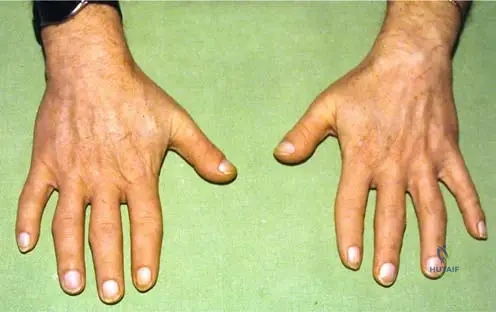
Key Takeaway
Orthopedic bone disorders encompass conditions like Osteopetrosis (dense, brittle bones due to osteoclast dysfunction), Tricho-Rhino-Phalangeal Dysplasia Type 1 (genetic disorder with facial, hair, and hand anomalies), and Paget's Disease of Bone (disorganized bone remodeling with elevated alkaline phosphatase). These conditions present with varied clinical, radiographic, and genetic features.
ABOS Board Review: Osteopetrosis, TRPS1, & Paget's Disease Comprehensive Guide | Part 4
Comprehensive 100-Question Exam
00:00
Start Quiz
Question 1
A 25-year-old male sustains a subtrochanteric fracture after a minor fall. Radiographs show a "bone-within-a-bone" appearance and a densely sclerotic skeleton. What is the primary cellular defect responsible for this condition?
Explanation
Question 2
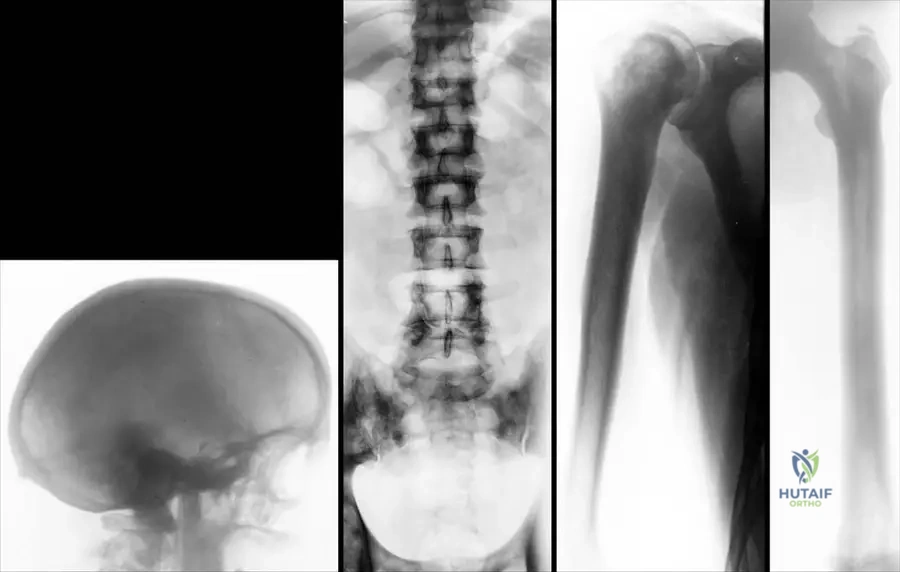
Review the radiograph of an infant presenting with multiple fractures, hepatosplenomegaly, and pancytopenia.
Which of the following is the most definitive, potentially curative treatment for the malignant infantile form of this disease?
Explanation
Question 3
A 9-year-old child presents with short stature, fine sparse hair, and a bulbous, "pear-shaped" nasal tip. Hand radiographs are shown.
What genetic mutation is primarily associated with this syndrome?
Explanation
Question 4
A 65-year-old male with active Paget's disease is scheduled for an elective total hip arthroplasty due to severe secondary osteoarthritis. His alkaline phosphatase is currently 4 times the upper limit of normal. What is the most appropriate preoperative medical optimization?
Explanation
Question 5
A 72-year-old male with a long-standing history of Paget's disease involving the right femur presents with new, progressive, unremitting thigh pain and a newly palpated soft tissue mass. Radiographs show aggressive cortical destruction. What is the most likely diagnosis?
Explanation
Question 6
You are planning internal fixation for a transverse midshaft femur fracture in a 30-year-old patient with autosomal dominant osteopetrosis. Which of the following technical challenges is most specifically anticipated during surgery?
Explanation
Question 7
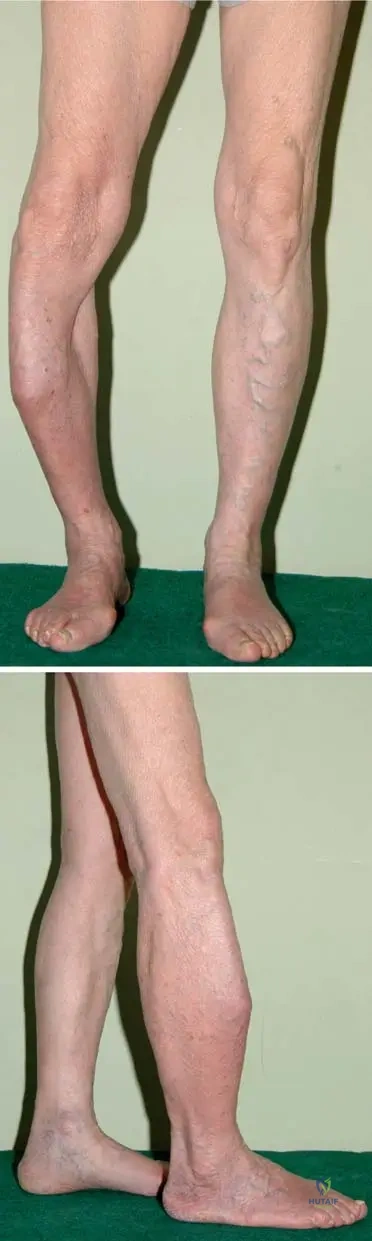
The radiograph below demonstrates classical findings of a metabolic bone disorder.
The pathogenesis of this condition initially involves overactivity of which cell type, commonly linked to which gene mutation in familial cases?
Explanation
Question 8
A child presents with sparse hair, a bulbous nose, cone-shaped epiphyses, and multiple osteochondromas. A contiguous gene deletion syndrome is diagnosed. Loss of which two genes is responsible for this exact phenotype?
Explanation
Question 9
Which of the following is a recognized and statistically higher risk complication specifically associated with total hip arthroplasty in a patient with advanced Paget's disease compared to standard osteoarthritis?
Explanation
Question 10
A patient with autosomal recessive osteopetrosis is found to have a specific mutation in the carbonic anhydrase II (CAII) gene. Which of the following systemic manifestations is uniquely associated with this specific mutation variant?
Explanation
Question 11
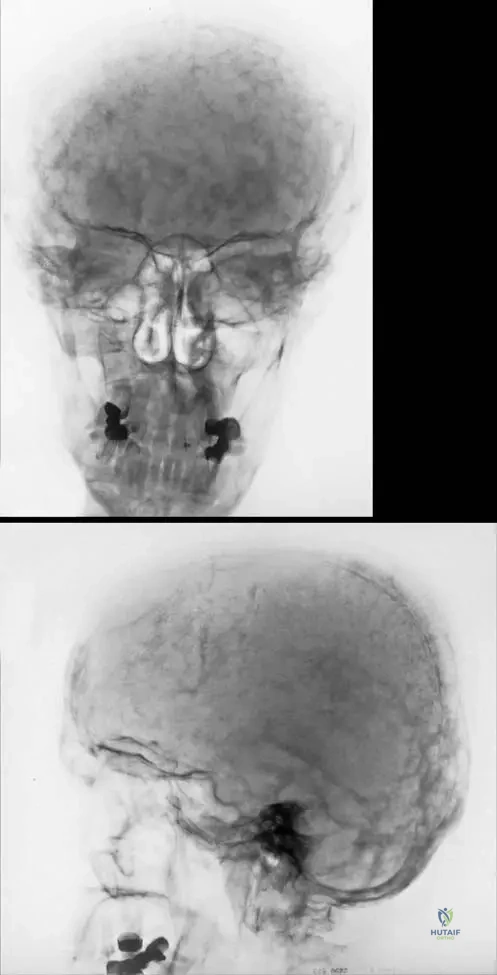
A 68-year-old woman presents with progressive hearing loss and an increasing hat size. A skull radiograph is shown.
What is the expected laboratory profile for this patient?
Explanation
Question 12
Children with Trichorhinophalangeal Syndrome (TRPS) Type I are at an increased risk of developing which of the following hip pathologies, which frequently mimics a distinct pediatric orthopedic condition?
Explanation
Question 13
Histological examination of a bone biopsy from a patient with severe, untreated osteopetrosis would most classically reveal which of the following characteristic features?
Explanation
Question 14
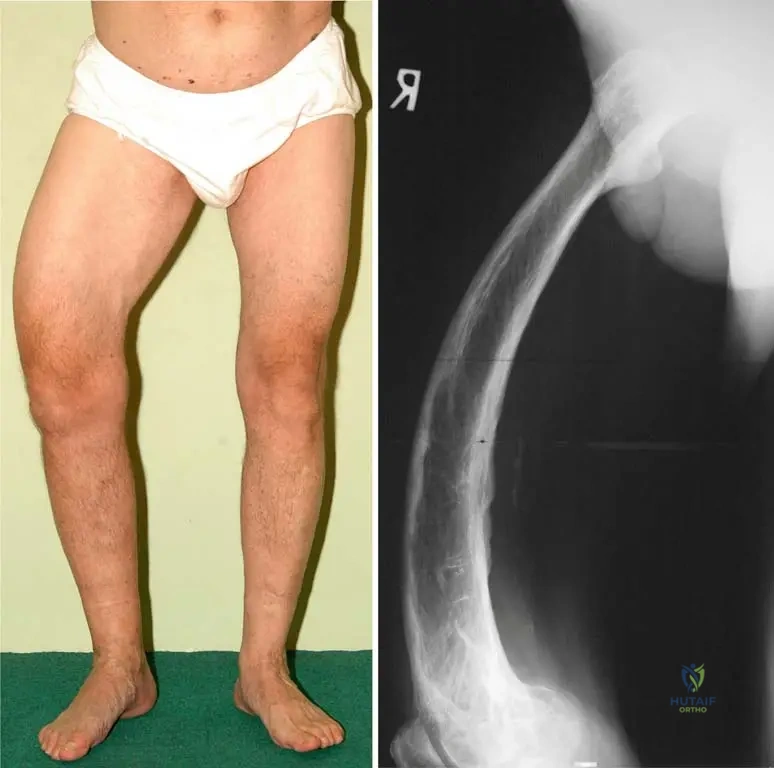
Review the spinal radiograph of a 70-year-old male presenting with severe neurogenic claudication.
Which of the following represents the most likely primary pathomechanism causing his neurologic symptoms?
Explanation
Question 15
Trichorhinophalangeal syndrome (TRPS) Type III is phenotypically distinguished from TRPS Type I primarily by the presence of which of the following features?
Explanation
Question 16
A 65-year-old male presents with bone pain and enlarging skull size. Lab tests reveal isolated elevation of alkaline phosphatase. The primary cellular defect in this condition involves a mutation affecting which of the following?
Explanation
Question 17
A 72-year-old female with a long history of Paget's disease presents with a new, rapidly enlarging, painful mass in her proximal femur. Radiographs show cortical destruction and soft tissue extension. What is the most likely diagnosis?
Explanation
Question 18
A child with recurrent fractures, pancytopenia, and hepatosplenomegaly is diagnosed with malignant infantile osteopetrosis. The pathogenesis of this disease is best described by the failure of which process?
Explanation
Question 19
A 7-year-old boy presents with sparse hair, a pear-shaped nose, and short stature. Hand radiographs show the following characteristic anomaly.
What is the radiographic hallmark seen in this syndrome's phalanges?
Explanation
Question 20
A 58-year-old man requires a total hip arthroplasty for severe secondary osteoarthritis due to Paget's disease. Why is preoperative administration of intravenous bisphosphonates recommended for this patient?
Explanation
Question 21
A 24-year-old male presents with a history of recurrent fractures since childhood. Radiographs reveal a 'bone-within-a-bone' appearance and uniformly dense vertebral bodies with a 'rugger jersey' spine pattern. What is the fundamental cellular defect responsible for this condition?
Explanation
Question 22
A 65-year-old female presents with chronic deep aching pain in her right thigh and progressive bowing of her lower leg. Laboratory studies show a significantly elevated alkaline phosphatase but normal calcium and phosphorus. Which of the following is the first-line medical management for her underlying bone disease?
Explanation
Question 23
A 12-year-old boy presents with short stature, a bulbous nose, and sparse scalp hair. Radiographs of his hands demonstrate cone-shaped epiphyses in the phalanges. Which of the following orthopedic hip conditions is strongly associated with this genetic syndrome?
Explanation
Question 24
A 70-year-old male with long-standing polyostotic Paget's disease presents with a sudden, severe increase in pain in his left femur accompanied by a rapidly enlarging soft tissue mass. What is the most likely diagnosis?
Explanation
Question 25
An infant presents with macrocephaly, severe anemia, thrombocytopenia, and hepatosplenomegaly. Radiographs reveal diffuse, uniformly dense bones with loss of the medullary canal. What is the only potential curative treatment for this severe infantile disorder?
Explanation
Question 26
Which of the following laboratory profiles is most characteristic of active, uncomplicated Paget's disease of bone?
Explanation
Question 27
Trichorhinophalangeal syndrome type 1 (TRPS1) is inherited in an autosomal dominant pattern. The mutated gene in this syndrome predominantly affects which of the following cellular processes?
Explanation
Question 28
A 68-year-old male presents with increasing hat size over the past year. A lateral skull radiograph reveals a large, well-defined osteolytic lesion involving the frontal and occipital bones.
What phase of his underlying disease does this 'osteoporosis circumscripta' represent?
Explanation
Question 29
A 30-year-old female with known autosomal dominant osteopetrosis (Albers-Schönberg disease) develops a painful, non-healing ulcer in her jaw following a routine tooth extraction. What is the primary pathophysiologic mechanism for this complication?
Explanation
Question 30
An 80-year-old man with extensive Paget's disease of the skull reports progressively worsening hearing loss. What is the most common pathophysiologic mechanism for sensorineural hearing loss in this patient population?
Explanation
Question 31
A 10-year-old girl is evaluated for characteristic hand deformities and facial features.
Radiographs of her hands reveal the classic skeletal hallmark of Trichorhinophalangeal syndrome. Which of the following describes this finding?
Explanation
Question 32
A 28-year-old male with osteopetrosis sustains a displaced subtrochanteric femur fracture after a minor fall. He is scheduled for intramedullary nailing. What specific intraoperative technical challenge is most likely to be encountered?
Explanation
Question 33
A 72-year-old male with severe, polyostotic Paget's disease presents with progressive dyspnea, fatigue, and lower extremity edema. Assuming his cardiac symptoms are a direct complication of his bone disease, echocardiography is most likely to demonstrate which of the following?
Explanation
Question 34
A 68-year-old man presents with progressive enlargement of his skull and increasing deafness. Radiographs reveal a 'cotton-wool' appearance of the calvarium. A mutation in which of the following genes is most commonly implicated in the pathogenesis of this patient's condition?
Explanation
Question 35
A 72-year-old male with a history of Paget's disease presents with a 2-month history of a rapidly enlarging, painful mass in his left proximal femur. Radiographs show a destructive lytic lesion with cortical breach. What is the most likely diagnosis?
Explanation
Question 36
A 65-year-old woman is scheduled for a total hip arthroplasty due to severe osteoarthritis secondary to Paget's disease. Her alkaline phosphatase is significantly elevated. Which of the following preoperative interventions is most appropriate to minimize surgical complications?
Explanation
Question 37
Which of the following classic histological findings is the hallmark of the mixed phase of Paget's disease?
Explanation
Question 38
A patient with widespread Paget's disease develops progressive shortness of breath and bilateral lower extremity edema. Echocardiography reveals a normal ejection fraction but a markedly elevated cardiac output. What is the pathophysiological mechanism of this complication?
Explanation
Question 39
A 3-month-old infant presents with failure to thrive, hepatosplenomegaly, and generalized increased bone density on radiographs. The defect responsible for this condition primarily affects which of the following cellular processes?
Explanation
Question 40
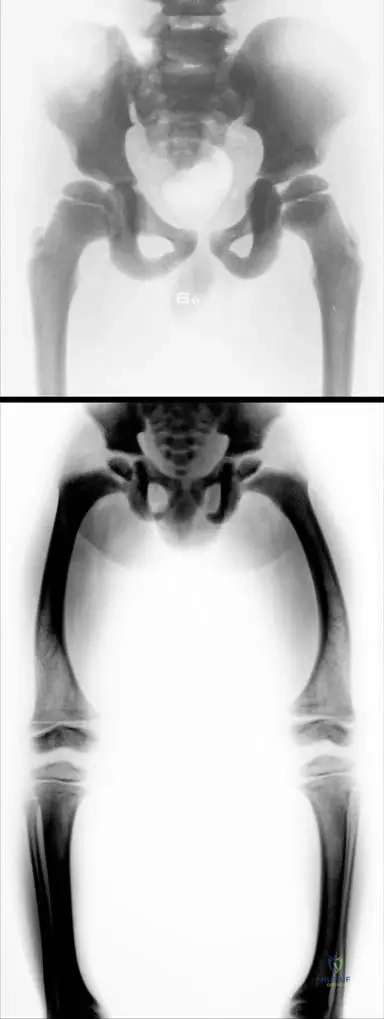
Review the provided radiograph.
This characteristic 'bone-within-a-bone' appearance is pathognomonic for a condition caused by a defect in cells derived from which of the following lineages?
Explanation
Question 41
A 4-year-old child with a known diagnosis of malignant infantile osteopetrosis is being considered for definitive treatment. Which of the following is the only potential curative therapy for the underlying bone pathology in this patient?
Explanation
Question 42
A 35-year-old male with an autosomal dominant form of osteopetrosis (Albers-Schönberg disease) sustains a displaced subtrochanteric femur fracture. During open reduction and internal fixation, which of the following intraoperative challenges is the surgeon most likely to encounter?
Explanation
Question 43
Which of the following combinations of clinical and radiographic findings best distinguishes Trichorhinophalangeal syndrome (TRPS) Type I from Legg-Calvé-Perthes disease when evaluating a child with hip pain?
Explanation
Question 44
A 9-year-old boy presents with multiple bony protuberances, sparse hair, a bulbous nose, and mild intellectual disability. Radiographs confirm multiple hereditary exostoses (osteochondromas). Which of the following chromosomal microdeletions is responsible for this specific syndrome?
Explanation
Question 45
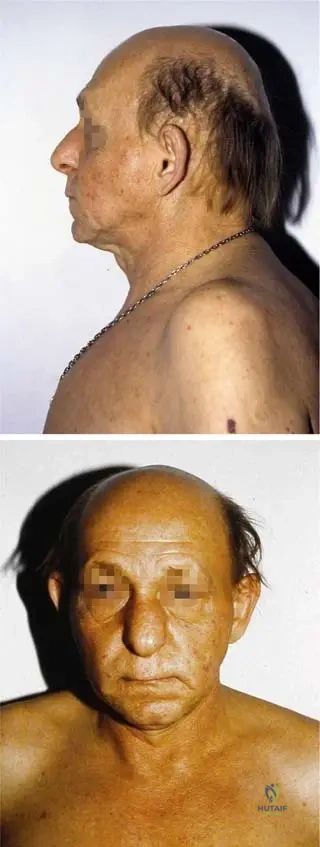
Review the clinical hand radiograph below.
The structural abnormality seen in the phalanges is highly characteristic of TRPS. What is the underlying molecular function of the TRPS1 gene?
Explanation
Question 46
A patient with Paget's disease is treated with a nitrogen-containing bisphosphonate (e.g., Alendronate). By which intracellular mechanism does this medication primarily inhibit osteoclast function?
Explanation
Question 47
A patient with Autosomal Recessive Osteopetrosis (ARO) is found to have a concurrent diagnosis of renal tubular acidosis and bilateral cerebral calcifications. A deficiency in which of the following enzymes is responsible for this specific triad?
Explanation
Question 48
In the evaluation of a patient with suspected Paget's disease of bone, which of the following serum laboratory profiles is most classic for an active, uncomplicated disease state?
Explanation
Question 49
A 45-year-old male presents with recurrent non-union of a transverse femur fracture. Radiographs show diffusely thickened cortices and an obliterated medullary canal. History reveals he suffers from frequent sinus infections and has a sibling with similar skeletal findings. What hematologic complication is most likely to develop in this patient?
Explanation
Question 50
Which of the following cranial nerve complications is most classically associated with severe infantile osteopetrosis?
Explanation
Question 51
A 55-year-old female with Paget's disease presents with increasing bowing of her tibia and local warmth over the bone. Radiographs show the 'blade of grass' sign. Which cellular sequence accurately describes the pathological progression of her disease?
Explanation
Question 52
A 12-year-old girl is diagnosed with TRPS1 based on facial features, sparse hair, and brachydactyly. She complains of persistent hip pain. Radiographs of her pelvis are most likely to demonstrate which of the following?
Explanation
Question 53
Review the radiograph of the hand below.
The marked digital foreshortening (brachydactyly) in this patient with TRPS is primarily caused by which of the following pathophysiological mechanisms?
Explanation
Question 54
What is the most common secondary malignancy arising in a patient with long-standing Paget's disease of bone?
Explanation
Question 55
Infantile malignant osteopetrosis is most commonly associated with a mutation in which of the following genes, resulting in defective osteoclast function?
Explanation
Question 56
Trichorhinophalangeal syndrome type 1 (TRPS1) is characterized by a specific triad of clinical findings. Which of the following radiographic features is the hallmark of this condition?
Explanation
Question 57
A 72-year-old female with symptomatic Paget's disease is treated with a nitrogen-containing bisphosphonate. What is the primary molecular target of this medication?
Explanation
Question 58
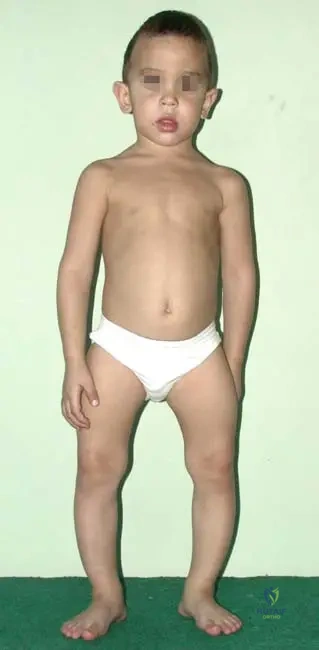
A 25-year-old male presents with recurrent fractures and mild anemia. Radiographs show diffusely dense bones with a 'bone within a bone' appearance in the pelvis and spine.
What is the typical inheritance pattern of this specific variant of the disorder?
Explanation
Question 59
Histological evaluation of a bone biopsy from a patient with Paget's disease shows a mosaic pattern of lamellar bone with prominent cement lines. This represents which phase of the disease?
Explanation
Question 60
TRPS type II (Langer-Giedion syndrome) differs from TRPS type I by the presence of which of the following additional skeletal manifestations?
Explanation
Question 61
A 65-year-old man with Paget's disease affecting his right hip requires a total hip arthroplasty for severe secondary osteoarthritis. Which preoperative intervention is most appropriate to minimize intraoperative blood loss?
Explanation
Question 62
Which of the following is the only potentially curative treatment for infantile malignant osteopetrosis?
Explanation
Question 63
A 70-year-old man complains of increasing hat size and hearing loss. A skull radiograph is obtained.
Which of the following classic radiographic signs is most likely to be seen in the early stage of this cranial disease?
Explanation
Question 64
In a patient with TRPS1, progressive joint deformities in the hands most often occur due to which of the following mechanisms?
Explanation
Question 65
A 6-year-old girl with osteopetrosis presents with facial asymmetry and inability to close her right eye. Which of the following is the primary pathophysiological mechanism for this complication?
Explanation
Question 66
A 75-year-old woman with Paget's disease presents with back pain. An AP radiograph of her lumbar spine shows a single, markedly dense vertebral body with enlargement of the vertebral contours.
This finding is classically described as:
Explanation
Question 67
What are the typical serum calcium, phosphorus, and alkaline phosphatase levels in a patient with adult-onset (autosomal dominant) osteopetrosis?
Explanation
Question 68
The sensorineural hearing loss commonly seen in patients with Paget's disease of the skull is most directly attributed to:
Explanation
Question 69
The TRPS1 gene encodes a zinc-finger transcription factor. Its mutation primarily affects the development of which of the following tissue types?
Explanation
Question 70
When performing a total hip arthroplasty in a patient with advanced Paget's disease of the proximal femur, the surgeon should be highly prepared for which of the following intraoperative technical challenges?
Explanation
Question 71
A bone biopsy is obtained from a child with frequent fractures and hepatosplenomegaly.
Histological evaluation shows islands of calcified cartilage matrix persisting within mature trabecular bone. What is the diagnosis?
Explanation
Question 72
While the exact etiology of Paget's disease is debated, inclusion bodies found within the osteoclasts of Pagetic bone have ultrastructural similarities to which family of viruses?
Explanation
Question 73
A 68-year-old man presents with progressive anterior bowing of his tibia and an enlarging hat size. Laboratory studies show markedly elevated alkaline phosphatase with normal serum calcium and phosphorus levels. What additional laboratory finding is most specific for evaluating the primary active disease process in this patient?
Explanation
Question 74
Electron microscopy of abnormal bone cells in a patient with osteitis deformans often reveals intranuclear inclusion bodies. These inclusions most closely resemble the nucleocapsids of which of the following virus families?
Explanation
Question 75
A 74-year-old woman with a known history of polyostotic Paget's disease undergoes a bone biopsy to rule out malignancy. If the biopsy is taken from an area in the 'mixed phase' of the disease, what is the classic histologic hallmark?
Explanation
Question 76
A 70-year-old man requires a total hip arthroplasty for severe secondary osteoarthritis caused by Paget's disease of the pelvis and proximal femur. Which of the following is the most likely perioperative complication related to his underlying bone disorder?
Explanation
Question 77
A neonate is diagnosed with an autosomal recessive form of osteopetrosis. Subsequent evaluation reveals concomitant renal tubular acidosis and cerebral calcifications. A mutation in the gene encoding which of the following enzymes is most likely responsible?
Explanation
Question 78
A 10-year-old boy presents with sparse hair, a bulbous nose, and multiple bony exostoses on his long bones. Hand radiographs show cone-shaped epiphyses. This specific syndrome (Langer-Giedion syndrome) is caused by a contiguous gene deletion involving TRPS1 and which other gene?
Explanation
Question 79
A 72-year-old man with long-standing Paget's disease presents with a new onset of severe, unremitting thigh pain and a palpable mass. Radiographs show aggressive cortical destruction and a soft tissue extension.
What is the most likely diagnosis?
Explanation
Question 80
A bone biopsy is performed on a patient with diffuse skeletal osteosclerosis and a history of recurrent fractures. Histologic examination reveals unresorbed islands of calcified cartilage surrounded by mature lamellar bone. What is the primary diagnosis?
Explanation
Question 81
A 65-year-old patient with symptomatic Paget's disease is treated with intravenous zoledronic acid. Which of the following describes the primary cellular mechanism of action of this medication?
Explanation
Question 82
A 12-year-old child with an autosomal dominant form of osteopetrosis complains of severe jaw pain and swelling after a dental extraction. Given the underlying bone pathology, what is the most likely complication?
Explanation
Question 83
A 9-year-old girl is evaluated for short stature and characteristic facial features, including a pear-shaped nose. Radiographs of her hands are obtained.
Which of the following radiographic findings is most characteristic of Trichorhinophalangeal syndrome (TRPS)?
Explanation
Question 84
In addition to characteristic hand deformities, patients with Trichorhinophalangeal Syndrome Type 1 (TRPS1) are most likely to develop which of the following orthopedic conditions in the lower extremities?
Explanation
Question 85
A 71-year-old male with long-standing Paget's disease complains of progressive unilateral hearing loss. Imaging of the skull is shown.
What is the primary pathophysiology of this specific neurological deficit?
Explanation
Question 86
The most common genetic mutation in the severe malignant infantile form of osteopetrosis is a defect in the TCIRG1 gene. This mutation directly impairs the function of which crucial osteoclast component?
Explanation
Question 87
In the natural history of Paget's disease, the pathologic process progresses through distinct phases. The initial phase of the disease is predominantly characterized by?
Explanation
Question 88
A 35-year-old woman is incidentally found to have 'sandwich vertebrae' on a lateral spine radiograph.
Which of the following describes the most likely inheritance pattern and prognosis of her condition?
Explanation
Question 89
A patient with severe, untreated polyostotic Paget's disease develops worsening dyspnea on exertion, cardiomegaly, and lower extremity edema. Echocardiography will most likely reveal which of the following hemodynamic states?
Explanation
Question 90
Genetic testing of a patient with typical features of Trichorhinophalangeal syndrome (TRPS) confirms a mutation in the TRPS1 gene. The protein encoded by TRPS1 primarily functions as a:
Explanation
Question 91
A 28-year-old male with known autosomal dominant osteopetrosis requires open reduction and internal fixation for a displaced transverse femur fracture. Which of the following technical challenges is most characteristic during surgery for this patient?
Explanation
Question 92
Which of the following scenarios is an established, absolute indication for initiating preoperative bisphosphonate therapy in an asymptomatic patient with Paget's disease?
Explanation
Question 93
A 35-year-old female with a history of recurrent fractures presents with progressive hearing loss and left-sided facial muscle weakness. Radiographs demonstrate diffuse osteosclerosis and loss of medullary canals.
Which set of cranial nerves is most frequently affected by compressive neuropathies in this adult-onset condition?
Explanation
Question 94
A 72-year-old male with known Paget's disease presents with a sudden increase in severe, unremitting right thigh pain and swelling. Radiographs show a destructive lytic lesion with cortical breakthrough in a previously thickened, bowed femur.
What is the most likely diagnosis?
Explanation
Question 95
A 12-year-old girl with fine sparse hair and a bulbous, "pear-shaped" nose complains of painless deformity and swelling of her finger joints.
Based on the clinical presentation and typical radiographic findings of this syndrome, which of the following skeletal anomalies is the hallmark of this condition?
Explanation
Question 96
A 65-year-old male with an isolated Pagetic lesion in the tibia complains of constant pain and increased warmth over the anterior shin. Laboratory studies reveal a significantly elevated serum alkaline phosphatase level with normal calcium and phosphorus. Which of the following is the most appropriate first-line pharmacologic treatment for this patient?
Explanation
Question 97
A 15-year-old presents with recurrent fractures, cerebral calcifications, and a history of renal tubular acidosis. Radiographs reveal diffuse, uniform osteosclerosis.
This specific variant of osteopetrosis is most likely caused by a deficiency in which of the following?
Explanation
Question 98
A 68-year-old woman undergoes total hip arthroplasty for severe secondary osteoarthritis. During templating, the proximal femur is noted to have thickened cortices and coarse trabeculae.
If a core biopsy of the femoral head were sent for pathology, which histologic description would most accurately characterize the expected findings?
Explanation
Question 99
An infant with failure to thrive is diagnosed with autosomal recessive malignant osteopetrosis. On physical exam, the infant's abdomen is notably protuberant and firm. The abdominal distension in this patient is primarily related to which of the following pathophysiologic processes?
Explanation
Question 100
A 10-year-old male with known Trichorhinophalangeal syndrome (TRPS) presents with a painless limp and restricted hip abduction. Which of the following hip pathologies is frequently associated with TRPS type I and most likely explains his symptoms?
Explanation
None
