Orthopedic Board Review: Osteopetrosis, TRPS Type 1, & Paget's Disease Key Concepts | Part 4
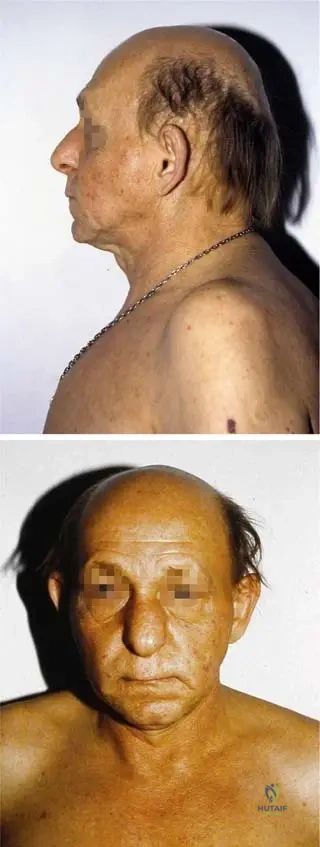
Key Takeaway
Orthopedic Bone Disorders Review: This ABOS Board Review covers key conditions like Osteopetrosis, Tricho–Rhino–Phalangeal Dysplasia Type 1, and Paget's Disease of Bone. It details their clinical features, radiographic findings, pathophysiology, genetics, and management, crucial for orthopedic board exam preparation.
Orthopedic Board Review: Osteopetrosis, TRPS Type 1, & Paget's Disease Key Concepts | Part 4
Comprehensive 100-Question Exam
00:00
Start Quiz
Question 1
A 25-year-old male presents with recurrent fractures and is diagnosed with autosomal dominant osteopetrosis. Which of the following gene mutations is most commonly associated with this adult-onset form?
Explanation
Question 2
A 65-year-old man with an enlarging skull and bowing of his tibiae undergoes a bone biopsy. Histology shows a mosaic pattern of lamellar bone with prominent cement lines. A mutation in which of the following genes is most strongly implicated in the pathogenesis of this condition?
Explanation
Question 3
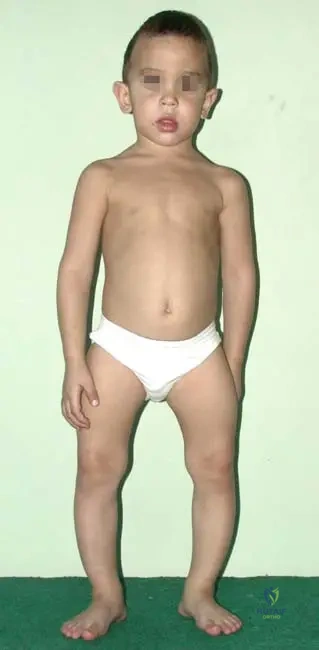
A 9-year-old girl presents with short stature, sparse hair, a bulbous pear-shaped nose, and finger joint deformities. Radiographs of her hands show cone-shaped epiphyses in the phalanges.
What other orthopedic manifestation is highly characteristic of this syndrome?
Explanation
Question 4
A 70-year-old male with symptomatic Paget's disease of the femur is scheduled to undergo a corrective osteotomy. To minimize intraoperative bleeding, he is pre-treated with intravenous zoledronic acid. What is the precise cellular mechanism of action of this medication?
Explanation
Question 5
A patient with marble bone disease (osteopetrosis) sustains a subtrochanteric femur fracture. Despite the dense radiographic appearance of the bone, it is mechanically brittle. The fundamental cellular defect in this condition leads to which of the following histological findings?
Explanation
Question 6
A 75-year-old female with long-standing polyostotic Paget's disease presents with new, severe, unremitting thigh pain and localized swelling. Radiographs reveal a new destructive lytic lesion breaking through the cortex. What is the most likely diagnosis?
Explanation
Question 7
An infant presents with failure to thrive, dense bones on radiography, cerebral calcifications, and renal tubular acidosis.
This specific constellation of findings is most characteristic of a deficiency in which of the following enzymes?
Explanation
Question 8
During the initial phase of Paget's disease, osteoclasts demonstrate intense resorptive activity. On a radiograph of the tibia, this early stage is classically represented by which of the following findings?
Explanation
Question 9
Trichorhinophalangeal syndrome (TRPS) type 1, which features cone-shaped epiphyses and early hip degeneration, is inherited in an autosomal dominant pattern. The responsible TRPS1 gene is located on which chromosome?
Explanation
Question 10
A 72-year-old man with Paget's disease of the pelvis and proximal femur undergoes a total hip arthroplasty for severe osteoarthritis. Which of the following complications is significantly increased in this patient compared to a non-pagetic patient?
Explanation
Question 11
Children with severe infantile autosomal recessive osteopetrosis frequently develop blindness and deafness. What is the primary pathophysiological mechanism for these sensory deficits?
Explanation
Question 12
A 35-year-old female presents with recurrent fractures and is diagnosed with the autosomal dominant form of osteopetrosis (Albers-Schönberg disease). Mutations in which of the following genes are most commonly responsible for this condition?
Explanation
Question 13
A 10-year-old child presents with sparse hair, a pear-shaped nose, and short stature. A hand radiograph is obtained.
What is the most characteristic radiographic finding associated with this syndrome?
Explanation
Question 14
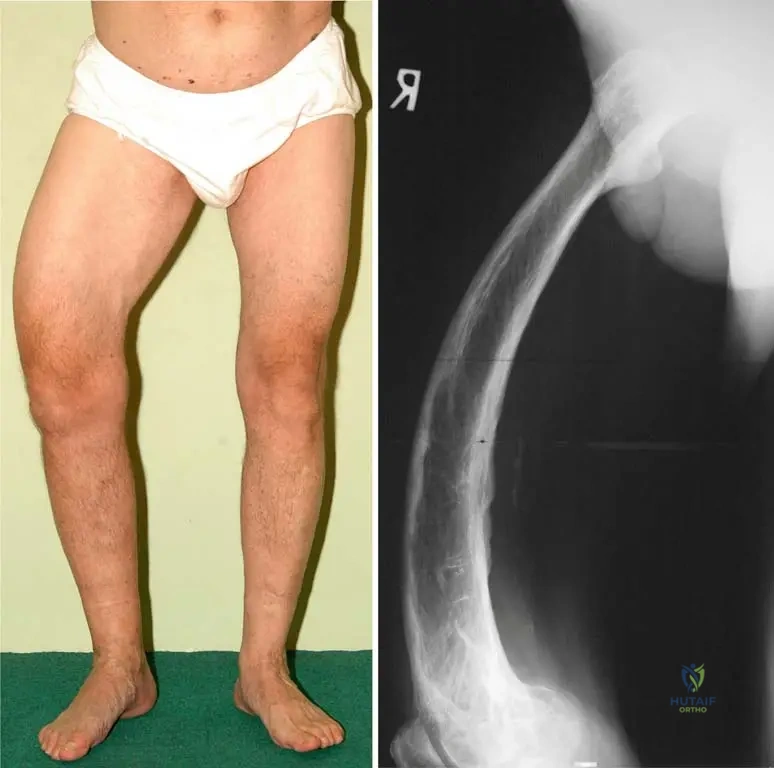
A biopsy of an expanded, bowed tibia in an elderly patient is shown.
The prominent, haphazardly arranged cement lines forming a 'mosaic pattern' are most characteristic of which phase of this disease?
Explanation
Question 15
A 6-month-old infant presents with failure to thrive, hepatosplenomegaly, and severe pancytopenia. Radiographs reveal diffuse osteosclerosis. What is the only potential curative treatment for this patient's underlying condition?
Explanation
Question 16
A 4-month-old infant presents with hepatosplenomegaly, failure to thrive, and vision loss. Radiographs reveal diffuse, uniform osteosclerosis of all bones. Genetic testing reveals a mutation in the TCIRG1 gene. What is the primary cellular mechanism responsible for this patient's condition?
Explanation
Question 17
A 68-year-old man with increasing head size and deep bone pain in his right thigh undergoes laboratory testing. Which of the following serum profiles is most consistent with the active mixed phase of his likely diagnosis?
Explanation
Question 18
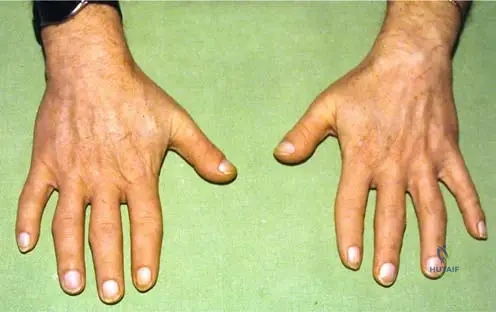
A 12-year-old girl is evaluated for short stature, a pear-shaped nose, and sparse hair. She has brachydactyly and bilateral hip pain. Radiographs of her hands are shown.
What is the hallmark radiographic finding in the hands associated with this syndrome?
Explanation
Question 19
A 72-year-old male with a long-standing history of symptomatic Paget's disease presents with a sudden onset of severe, unrelenting pain in his right femur. Radiographs show a destructive lytic lesion with cortical breakthrough. What is the most likely diagnosis?
Explanation
Question 20
A 2-year-old boy with autosomal recessive osteopetrosis develops progressive hearing loss and facial paralysis. What is the underlying pathophysiology of these neurologic deficits?
Explanation
Question 21
A 65-year-old woman is diagnosed with symptomatic Paget's disease affecting her pelvis and lumbar spine. She is prescribed first-line pharmacological therapy. What is the primary mechanism of action of the most appropriate medication?
Explanation
Question 22
A 10-year-old boy with Trichorhinophalangeal syndrome type 1 (TRPS1) complains of bilateral groin pain. Radiographs reveal flattening and fragmentation of both femoral heads. What is the expected long-term orthopedic outcome if this hip pathology is left untreated?
Explanation
Question 23
A bone biopsy is obtained from a 15-year-old male with a history of recurrent fractures and dense bones on radiography. Histologic examination reveals persistence of primary spongiosa with calcified cartilage cores within mature trabecular bone. Which diagnosis is most consistent with these findings?
Explanation
Question 24
A 70-year-old man undergoes a biopsy of an expanding lytic and sclerotic lesion in his tibia. The histology shows a chaotic, mosaic pattern of lamellar bone with prominent, irregular cement lines. Which gene mutation is most strongly associated with this condition?
Explanation
Question 25
A 60-year-old male presents with dull aching pain in his lower leg. A radiograph of his tibia is shown.
The image demonstrates a sharply demarcated, V-shaped radiolucency advancing down the diaphysis. What does this "blade of grass" sign represent?
Explanation
Question 26
A 25-year-old patient presents with a distal femur fracture after a minor fall. An AP radiograph is shown.
The radiograph reveals an "Erlenmeyer flask" deformity and an "endobone" appearance. What is the fundamental defect leading to this metaphyseal flaring?
Explanation
Question 27
A 75-year-old man with polyostotic Paget's disease presents with progressive dyspnea on exertion, fatigue, and lower extremity edema. Echocardiography shows an ejection fraction of 65% with elevated cardiac output. What is the primary cause of his cardiac symptoms?
Explanation
Question 28
What is the only definitive curative treatment for the malignant infantile (autosomal recessive) form of osteopetrosis?
Explanation
Question 29
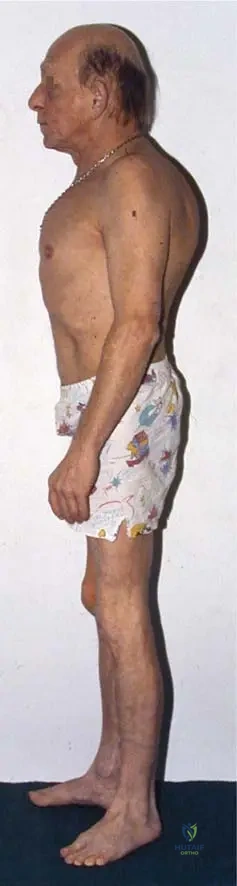
A family is evaluated for a condition characterized by short stature, sparse scalp hair, long flat philtrum, and joint pain. Clinical imaging shows cone-shaped epiphyses.
Genetic testing reveals a mutation in the TRPS1 gene. What is the genetic inheritance pattern of this syndrome?
Explanation
Question 30
A 68-year-old man requires a total hip arthroplasty for severe secondary osteoarthritis due to Paget's disease of the right hemipelvis and proximal femur. His preoperative alkaline phosphatase is 4 times the upper limit of normal. What is the most appropriate preoperative medical management?
Explanation
Question 31
A 14-year-old girl is diagnosed with a rare variant of osteopetrosis. In addition to dense, brittle bones, she exhibits cerebral calcifications and metabolic acidosis. A mutation in which of the following enzymes is most likely responsible?
Explanation
Question 32
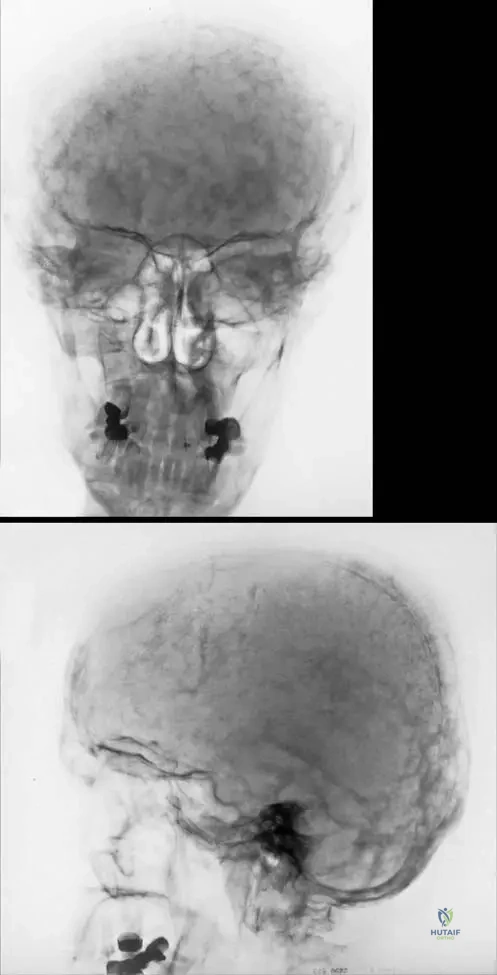
A 70-year-old male undergoes a spine radiograph for back pain.
The image shows an enlarged, densely sclerotic "picture frame" vertebral body. What complication is he at highest risk of developing directly related to this specific vertebral change?
Explanation
Question 33
A 9-year-old child presents with marked brachydactyly and deviation of the digits.
Given the suspected diagnosis of Trichorhinophalangeal syndrome (TRPS) type 1, what other distinct clinical feature should the examiner expect to find?
Explanation
Question 34
A 4-year-old child presents with frequent fractures, developmental delay, and metabolic acidosis. Radiographs reveal diffuse, uniform osteosclerosis. Genetic testing confirms a mutation in the CA2 gene. Which of the following is the underlying pathophysiological mechanism of this specific subtype of osteopetrosis?
Explanation
Question 35
What is the primary cellular mechanism responsible for the skeletal phenotype seen in malignant infantile osteopetrosis?
Explanation
Question 36
A biopsy of a thickened, bowed tibia in a 65-year-old man reveals giant osteoclasts with up to 100 nuclei per cell. Which of the following phases of his disease process is primarily characterized by this cellular abnormality?
Explanation
Question 37
A 12-year-old girl presents with bilateral hip pain. Exam reveals sparse scalp hair and a bulbous, pear-shaped nose. Radiographs demonstrate cone-shaped epiphyses of the phalanges.
What is the underlying genetic mutation?
Explanation
Question 38
A 72-year-old man with increasing head size is evaluated for Paget's disease. Blood tests show normal serum calcium and phosphate, but significantly elevated serum alkaline phosphatase. Which additional laboratory finding is most likely expected?
Explanation
Question 39
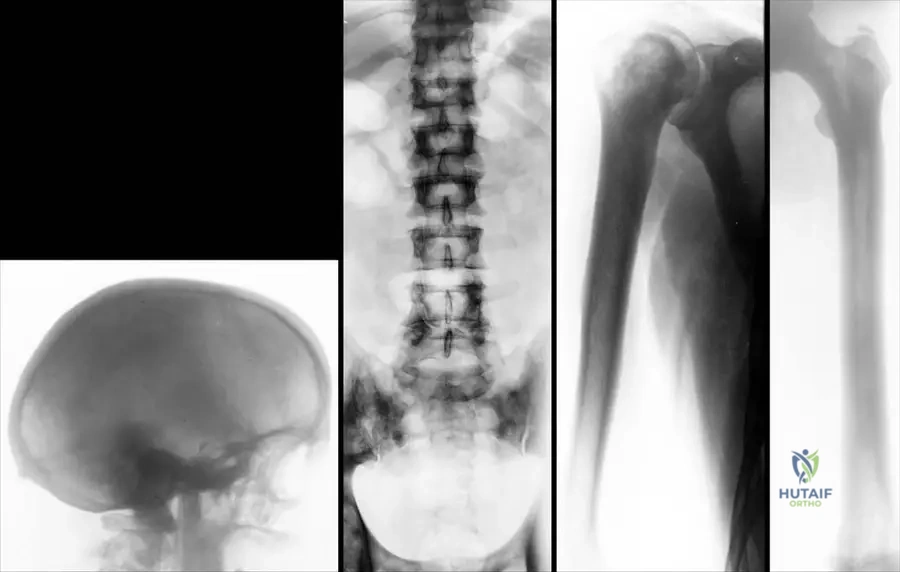
A 4-year-old boy with a history of severe anemia presents with a subtrochanteric femur fracture. Radiographs show a "bone-within-a-bone" appearance.
What is the most severe neurological complication associated with this condition?
Explanation
Question 40
A 68-year-old woman with Paget's disease of the right hemipelvis and proximal femur is scheduled for a total hip arthroplasty. To minimize intraoperative complications, which preoperative optimization strategy is most recommended?
Explanation
Question 41
A 10-year-old boy has bilateral Legg-Calvé-Perthes-like hip changes, a bulbous nasal tip, and cone-shaped epiphyses on hand radiographs.
This syndrome is caused by a defect in a gene that functions primarily as a:
Explanation
Question 42
A 75-year-old man with polyostotic Paget's disease presents with new-onset, unrelenting severe pain in his left thigh. Radiographs show a destructive, permeative lytic lesion disrupting the thickened cortex. What is the most likely diagnosis?
Explanation
Question 43
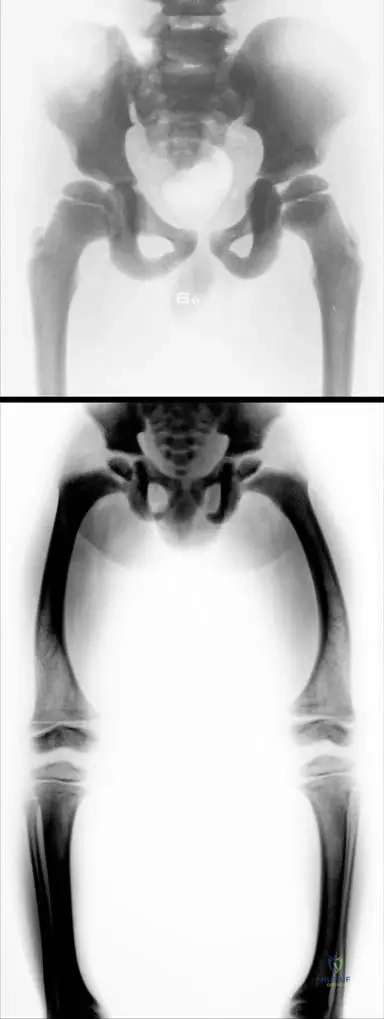
A 25-year-old woman sustains a transverse, "chalk-stick" fracture of her proximal tibia. Radiographs reveal diffuse osteosclerosis and a "rugger jersey" spine.
She has no history of childhood anemia. Which gene mutation is most likely responsible?
Explanation
Question 44
A 60-year-old man presents with a "cotton wool" skull on radiographs and a thickened, bowed tibia. Genetic testing reveals a mutation causing increased osteoclast activity via the RANK-NF-κB signaling pathway. Which gene is most commonly mutated in familial cases of this disease?
Explanation
Question 45
A patient presents with sparse hair, a pear-shaped nose, and cone-shaped epiphyses of the hands. Additionally, the patient has multiple osteochondromas throughout the appendicular skeleton. Which contiguous gene deletion syndrome is this?
Explanation
Question 46
A 6-month-old infant is diagnosed with malignant autosomal recessive osteopetrosis, exhibiting hepatosplenomegaly, severe anemia, and failure to thrive. What is the only potential curative treatment for this underlying defect?
Explanation
Question 47
A 55-year-old patient undergoes femur radiographs, demonstrating a V-shaped, sharply demarcated radiolucent lesion advancing down the diaphysis.
This pathognomonic "blade of grass" sign corresponds to which phase of the underlying disease?
Explanation
Question 48
A 30-year-old man with autosomal dominant osteopetrosis requires surgical fixation of a displaced transverse femoral shaft fracture. Which of the following is the most significant intraoperative challenge expected?
Explanation
Question 49
The primary medical treatment for symptomatic Paget's disease involves the use of nitrogen-containing bisphosphonates. What is the specific molecular target of this class of drugs?
Explanation
Question 50
A rare variant of osteopetrosis presents with the classic skeletal "marble bone" appearance accompanied by renal tubular acidosis and cerebral calcifications. This triad is caused by a deficiency in which enzyme?
Explanation
Question 51
A 70-year-old man is incidentally found to have an enlarged, dense vertebral body on a radiograph, presenting as a "picture frame" vertebra with thickened endplates.
Which of the following is the most likely diagnosis?
Explanation
Question 52
A 15-year-old girl with confirmed TRPS Type 1 presents with hand radiographs showing brachydactyly and distinctive cone-shaped epiphyses.
Which of the following lower extremity pathologies is she at highest risk for developing prematurely?
Explanation
Question 53
Defective acidification of the osteoclast resorption pit in malignant infantile osteopetrosis is most commonly due to a mutation in which of the following genes?
Explanation
Question 54
An asymptomatic 72-year-old man has incidental radiographic findings of a thickened cranial vault and a "cotton wool" appearance. Which of the following laboratory profiles is most expected?
Explanation
Question 55
TRPS Type 1 is characterized by skeletal anomalies including cone-shaped epiphyses. The causative TRPS1 gene mutation predominantly affects which of the following cellular processes?
Explanation
Question 56
An infant with diffuse skeletal sclerosis and hepatosplenomegaly develops progressive vision loss. What is the most likely pathophysiologic mechanism for this complication?
Explanation
Question 57
A 70-year-old male with long-standing Paget's disease presents with new-onset, severe, unrelenting pain in his right femur. Radiographs reveal a new destructive lytic lesion with cortical breakthrough. What is the most likely diagnosis?
Explanation
Question 58
A patient presents with generalized bone sclerosis. A classic radiographic sign seen in the vertebral bodies of this condition is often described as:
Explanation
Question 59
A 10-year-old boy presents with hip pain and a limp. He has fine, sparse hair and a pear-shaped nose. Radiographs show femoral head flattening mimicking Legg-Calvé-Perthes disease. What hand deformity is most commonly associated with this syndrome?
Explanation
Question 60
Which of the following is the first-line medical treatment for symptomatic Paget's disease of bone?
Explanation
Question 61
Which of the following histological findings is a hallmark of osteopetrosis?
Explanation
Question 62
A 65-year-old male with a progressively enlarging head circumference presents with shin pain. The classic "blade of grass" or "flame-shaped" lucency on an anterior tibial radiograph is characteristic of which phase of his disease?
Explanation
Question 63
A 12-year-old girl is diagnosed with Trichorhinophalangeal syndrome type 1 (TRPS1). Her parents ask about the risk of her future children inheriting the condition. What is the mode of inheritance for TRPS1?
Explanation
Question 64
What is the only potential curative treatment for the severe, infantile autosomal recessive form of osteopetrosis?
Explanation
Question 65
A patient with advanced Paget's disease is scheduled for a total knee arthroplasty due to severe secondary osteoarthritis. Which of the following is a recognized surgical challenge specific to this condition?
Explanation
Question 66
A 35-year-old male with autosomal dominant osteopetrosis sustains a subtrochanteric femur fracture. Which of the following principles must be considered during internal fixation?
Explanation
Question 67
TRPS Type II (Langer-Giedion syndrome) shares many features with TRPS Type I, including sparse hair and cone-shaped epiphyses. Which of the following clinical findings uniquely distinguishes TRPS Type II from Type I?
Explanation
Question 68
A 74-year-old man with Paget's disease of the skull develops gradual sensorineural hearing loss. What is the primary pathophysiologic mechanism for this complication?
Explanation
Question 69
The underlying cellular defect in osteopetrosis leads to a failure of bone resorption. Despite the increased bone mass, patients frequently suffer from "chalk-stick" fractures. This is primarily because:
Explanation
Question 70
A 60-year-old female treated with zoledronic acid for symptomatic Paget's disease returns for a 6-month follow-up. Which of the following serum markers is the most reliable and cost-effective indicator of disease activity and treatment response?
Explanation
Question 71
A rare subtype of autosomal recessive osteopetrosis is caused by a deficiency in carbonic anhydrase II (CA II). This specific genetic mutation is characteristically associated with which of the following triads?
Explanation
Question 72
Reviewing a hand radiograph of a child with TRPS Type 1, the physician notes characteristic cone-shaped epiphyses. Which joints are most classically affected by this specific epiphyseal malformation in TRPS?
Explanation
Question 73
A 6-month-old infant presents with hepatosplenomegaly, pancytopenia, and severe visual impairment. Radiographs show diffusely sclerotic bones with an absence of normal medullary cavities. The patient is diagnosed with infantile malignant osteopetrosis. Which of the following is the definitive treatment for this condition?
Explanation
Question 74
A 72-year-old man with a long-standing history of Paget's disease of the pelvis presents with new, severely worsening, and unrelenting localized pain. Radiographs demonstrate a new area of lytic destruction with cortical breakthrough and soft tissue extension. What is the most likely diagnosis?
Explanation
Question 75
A 10-year-old boy diagnosed with Trichorhinophalangeal Syndrome (TRPS) Type 1 presents with right hip pain and a limp. Pelvic radiographs show flattening and fragmentation of the right capital femoral epiphysis. This orthopedic manifestation of TRPS Type 1 most closely mimics which of the following conditions?
Explanation
Question 76
Which of the following is an absolute indication for initiating medical treatment with nitrogen-containing bisphosphonates in a patient with Paget's disease of bone?
Explanation
Question 77
Adult-onset autosomal dominant osteopetrosis (Albers-Schonberg disease) is most commonly caused by a mutation in the CLCN7 gene. What is the precise pathophysiological consequence of this mutation at the cellular level?
Explanation
Question 78
A 65-year-old female is incidentally noted to have an enlarged skull and bowing of the right femur on clinical exam. Suspecting Paget's disease of bone, which of the following laboratory profiles is most characteristic for this condition?
Explanation
Question 79
Trichorhinophalangeal Syndrome (TRPS) Type 2, also known as Langer-Giedion syndrome, is a contiguous gene deletion syndrome involving chromosome 8q23.3-q24.1. Which of the following phenotypic features reliably differentiates TRPS Type 2 from TRPS Type 1?
Explanation
Question 80
A bone biopsy is performed on a patient with active Paget's disease. Histological examination during the initial lytic phase of the disease is most likely to demonstrate which of the following?
Explanation
Question 81
A 30-year-old male presents with recurrent fractures. Radiographs of the spine are obtained.
The image demonstrates the classic 'rugger jersey' or 'bone-within-a-bone' appearance. What is the fundamental defect leading to this radiographic finding?
Explanation
Question 82
A 75-year-old man with advanced Paget's disease involving the skull presents with progressive sensorineural hearing loss. What is the most widely accepted mechanism for this neurological complication?
Explanation
Question 83
A 12-year-old girl is evaluated for short stature and joint deformities. Hand radiographs are obtained.
The image shows classic cone-shaped epiphyses. Which of the following physical examination findings is most consistently associated with this syndrome?
Explanation
Question 84
A 40-year-old patient with known adult-onset autosomal dominant osteopetrosis requires a dental extraction for a severely decayed molar. Which of the following is the most significant potential complication of this procedure in this patient?
Explanation
Question 85
Zoledronic acid is considered a first-line treatment for active, symptomatic Paget's disease. What is its primary cellular mechanism of action?
Explanation
Question 86
An orthopedic surgeon is planning open reduction and internal fixation for a displaced subtrochanteric femur fracture in a 35-year-old patient with osteopetrosis. Which of the following technical challenges is most likely to be encountered during surgery?
Explanation
Question 87
A 60-year-old male with chronic back pain undergoes a lumbar spine radiograph. A single, enlarged vertebral body with prominent cortical thickening on all margins and central relative lucency is noted. What is the classical eponymous term for this finding in Paget's disease?
Explanation
Question 88
Osteopetrosis with renal tubular acidosis is an autosomal recessive variant caused by a mutation in the carbonic anhydrase II (CAII) gene. In addition to osteosclerosis and metabolic acidosis, which of the following is a classic manifestation of this specific variant?
Explanation
Question 89
A 72-year-old male with a long-standing history of Paget's disease presents with new, rapidly worsening, and unremitting pain in his right thigh. Radiographs demonstrate an aggressive, mixed lytic and sclerotic lesion with cortical destruction in the femoral diaphysis. What is the most likely diagnosis?
Explanation
Question 90
An infant presents with failure to thrive, hepatosplenomegaly, and recurrent severe infections. Radiographs exhibit a diffuse "bone-within-bone" appearance.
What is the definitive curative treatment for the underlying etiology of this patient's disorder?
Explanation
Question 91
An 8-year-old boy presents with a painful limp. Physical examination reveals fine sparse hair, a pear-shaped nose, and brachydactyly.
Hand radiographs show cone-shaped epiphyses. Which of the following hip pathologies is most characteristic of this patient's syndrome?
Explanation
Question 92
A 68-year-old female with Paget's disease of the tibia requires a corrective osteotomy for severe bowing.
To minimize intraoperative bleeding, a specific medication is administered two months preoperatively. What is the mechanism of action of the most appropriate drug for this indication?
Explanation
Question 93
A bone biopsy from a 30-year-old male with recurrent fractures demonstrates islands of calcified cartilage retained within mature trabecular bone and a lack of proper marrow spaces. What cellular ultrastructural feature is typically absent or dysfunctional in the cell line responsible for this pathology?
Explanation
Question 94
A 75-year-old man presents with an increasing hat size and progressive sensorineural hearing loss. His serum calcium and phosphorus are within normal limits. Which combination of laboratory markers is most likely to be elevated, reflecting the hypermetabolic state of his bone disease?
Explanation
Question 95
A family cluster presents with craniofacial dimorphism, thin nails, sparse hair, and severe early-onset hip osteoarthritis. Genetic analysis reveals a deletion on chromosome 8q23.3. Which of the following genes is mutated in this condition?
Explanation
Question 96
A 4-year-old child presents with dense, brittle bones on radiography, bilateral optic nerve atrophy, and renal tubular acidosis. What specific enzyme deficiency links these three clinical findings?
Explanation
None
