Master ABOS Orthopedic Board Review: Liposarcoma, Chondroblastoma, Syringomyelia | Part 17
Key Takeaway
This ABOS Board Review covers critical musculoskeletal oncology topics including soft tissue sarcomas (atypical lipomatous tumors, well-differentiated liposarcomas), their diagnosis, MRI features, and management. It also details chondroblastoma (epiphyseal lytic lesions, histology, epidemiology) and aggressive fibromatosis. Additionally, it addresses syringomyelia and Chiari Type I malformation.
Master ABOS Orthopedic Board Review: Liposarcoma, Chondroblastoma, Syringomyelia | Part 17
Comprehensive 100-Question Exam
00:00
Start Quiz
Question 1
A 15-year-old male presents with chronic knee pain. Radiographs reveal a well-circumscribed, eccentrically located lytic lesion in the proximal tibial epiphysis with a thin sclerotic rim. Biopsy demonstrates mononuclear cells with longitudinal nuclear grooves and areas of pericellular 'chicken-wire' calcification. Which of the following is the most appropriate initial management?
Explanation
Question 2
A 45-year-old male undergoes a core needle biopsy of a deep thigh mass. Histology reveals a uniform population of round cells, a prominent myxoid stroma, and a branching capillary network resembling 'chicken-wire'. Which specific chromosomal translocation is most characteristic of this soft tissue sarcoma?
Explanation
Question 3
A 12-year-old female presents with a rapidly progressive left-sided thoracic scoliosis. Neurological examination reveals a loss of pain and temperature sensation in her bilateral upper extremities with preserved fine touch and proprioception. What is the most likely primary etiology of her spinal deformity?
Explanation
Question 4
A 60-year-old patient presents with a large, slow-growing retroperitoneal mass. Biopsy reveals mature adipocytes with focal areas of nuclear atypia and hyperchromatic stromal cells. Molecular testing demonstrates amplification of a specific gene on chromosome 12q13-15. Which of the following genes is amplified in this tumor?
Explanation
Question 5
A 17-year-old male with a history of a treated proximal humerus chondroblastoma presents 3 years later for routine follow-up. A chest CT reveals three small, asymptomatic bilateral pulmonary nodules. Biopsy of a nodule shows benign-appearing chondroblasts identical to the primary tumor. What is the most appropriate management?
Explanation
Question 6
Which of the following epigenetic alterations is highly specific for diagnosing chondroblastoma and distinguishing it from other giant cell-rich bone lesions?
Explanation
Question 7
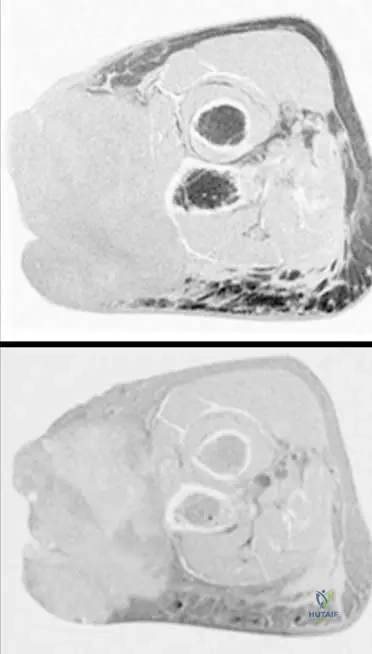
A 50-year-old female presents with a 15 cm deep, painless thigh mass.
MRI shows a predominantly fatty tumor with thick, nodular septations (>2 mm) and areas of non-lipogenic enhancement. What is the most appropriate definitive surgical approach?
Explanation
Question 8
Which subtype of liposarcoma is unique in its tendency to spread to extrapulmonary sites, specifically necessitating a whole-spine MRI during initial staging to rule out bone metastases?
Explanation
Question 9
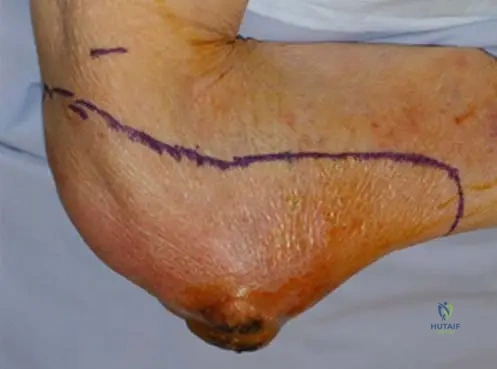
A 35-year-old male with untreated syringomyelia presents with massive swelling, instability, and crepitus of his right shoulder. He reports minimal pain despite severe radiographic destruction of the glenohumeral joint. What is the underlying pathophysiology of his joint destruction?
Explanation
Question 10
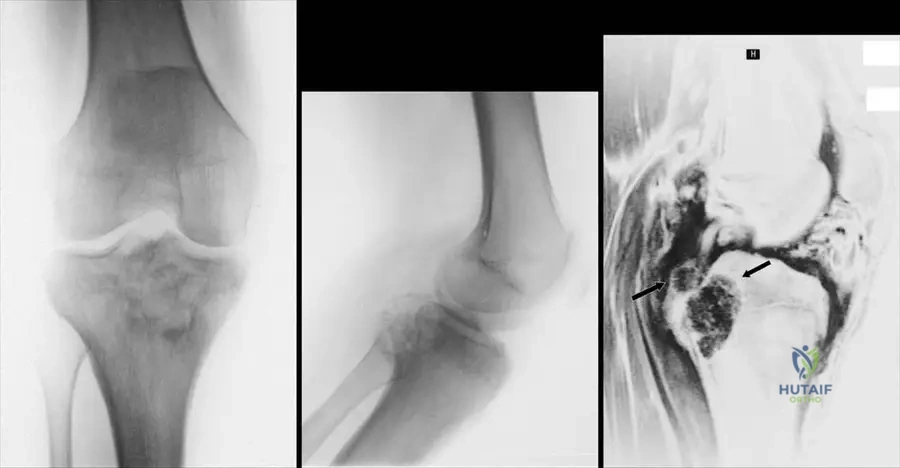
A 16-year-old undergoes curettage of a presumed chondroblastoma.
Pathology shows areas of typical chondroblastoma juxtaposed with multiple blood-filled spaces lined by fibrous septa containing giant cells. What does this secondary finding represent?
Explanation
Question 11
A 68-year-old male undergoes resection of a retroperitoneal sarcoma. Pathology reveals an abrupt transition from a well-differentiated liposarcoma to a high-grade, non-lipogenic pleomorphic sarcoma. What is the diagnosis?
Explanation
Question 12
A 9-year-old boy presents with an atypical right thoracic scoliosis curve of 45 degrees. MRI confirms a large syringomyelia spanning C5 to T8 and a Chiari I malformation. What is the most appropriate initial surgical intervention?
Explanation
Question 13
When differentiating atypical lipomatous tumor (ALT) from well-differentiated liposarcoma (WDL), which of the following is the primary distinguishing factor according to the WHO classification?
Explanation
Question 14
An 18-year-old female presents with shoulder pain. Imaging shows a lytic epiphyseal lesion in the proximal humerus with a sclerotic rim. Which of the following immunohistochemical markers would be most helpful in confirming the diagnosis of chondroblastoma?
Explanation
Question 15
A 75-year-old female presents with a rapidly growing, painful thigh mass. Biopsy demonstrates a high-grade sarcoma with numerous pleomorphic lipoblasts and complex karyotype with severe aneuploidy. There is no MDM2 amplification or t(12;16) translocation. What is the most likely diagnosis?
Explanation
Question 16
Which specific spinal cord tract is initially compromised in syringomyelia, leading to the classic 'cape-like' neurological deficit?
Explanation
Question 17
A 16-year-old male with an open proximal femur physis presents with a symptomatic chondroblastoma crossing the physis into the metaphysis. How does this transphyseal involvement affect the surgical approach and prognosis?
Explanation
Question 18
Regarding the radiation sensitivity of liposarcoma subtypes, which variant is considered highly radiosensitive and often exhibits dramatic tumor shrinkage following neoadjuvant radiation therapy?
Explanation
Question 19
A 40-year-old male presents with hip pain. Radiographs show a lytic lesion in the femoral head epiphysis. Biopsy shows large cells with clear cytoplasm and distinct cell membranes, amidst a cartilaginous matrix. What is the most important differential diagnosis to distinguish from chondroblastoma in this older age group?
Explanation
Question 20
A 14-year-old female presents with scoliosis. On physical exam, stroking the skin around the umbilicus fails to elicit an umbilical deviation toward the stimulus on the left side. What is the significance of this finding in the context of adolescent idiopathic scoliosis?
Explanation
Question 21
A 45-year-old male presents with a deep, painless mass in his posterior thigh. Core needle biopsy demonstrates a myxoid stroma, scattered lipoblasts, and a prominent branching capillary network. Which cytogenetic abnormality is most characteristic of this tumor?
Explanation
Question 22
A 14-year-old boy presents with chronic knee pain. Radiographs reveal an eccentric, lytic lesion in the distal femoral epiphysis with a thin sclerotic rim.
Biopsy demonstrates mononuclear cells with grooved nuclei and areas of pericellular 'chicken-wire' calcification. What is the most appropriate definitive management?
Explanation
Question 23
A 10-year-old girl is evaluated for a new-onset scoliosis. Physical examination reveals an atypical left-sided thoracic curve. Neurological examination reveals a loss of pain and temperature sensation in a cape-like distribution over her shoulders. What is the most appropriate next step in evaluation?
Explanation
Question 24
A 60-year-old man undergoes resection of a massive retroperitoneal tumor. Histology shows an abrupt transition between areas of well-differentiated adipocytic proliferation and areas of high-grade, non-lipogenic sarcoma. Which molecular marker is critically amplified in this pathology?
Explanation
Question 25
A patient with a known history of an expanding syringomyelia in the cervical and thoracic spine begins to experience progressive flaccid paralysis and significant muscle atrophy in the intrinsic muscles of the hands. This specific physical finding indicates extension of the syrinx into which spinal cord structure?
Explanation
Question 26
A 16-year-old boy presents with progressive shoulder pain. Radiographs demonstrate an epiphyseal lesion in the proximal humerus. Biopsy confirms chondroblastoma. Two years after successful curettage, routine imaging reveals three small, asymptomatic lung nodules. Biopsy of a lung nodule shows histologically benign chondroblastoma. What is the most appropriate management?
Explanation
Question 27
You are treating a 45-year-old patient diagnosed with myxoid liposarcoma of the proximal thigh. In addition to local imaging and a chest CT, what additional imaging modality is uniquely indicated for staging this specific sarcoma subtype?
Explanation
Question 28
A 35-year-old woman with an untreated Chiari I malformation and large cervical syringomyelia presents with rapid, painless swelling of her right shoulder, accompanied by a 'crunching' sensation during movement. Radiographs reveal severe destruction of the humeral head and glenoid with loose osseous debris. What is the underlying pathophysiology of this joint destruction?
Explanation
Question 29
Histological examination of a well-differentiated liposarcoma (atypical lipomatous tumor) reveals hyperchromatic, atypical stromal cells within mature adipose tissue. By what primary mechanism does the characteristic gene amplification in this tumor promote oncogenesis?
Explanation
Question 30
A 13-year-old girl is found to have a 60-degree progressive thoracic scoliosis associated with a large, symptomatic syringomyelia and a Chiari I malformation. What is the recommended surgical sequencing for her treatment?
Explanation
Question 31
Which of the following locations is the most common site for a chondroblastoma to arise in a skeletally immature patient?
Explanation
Question 32
A 55-year-old man presents with a deep intramuscular mass in his vastus lateralis. MRI demonstrates a predominantly lipomatous mass with several thick, nodular septations measuring 4 mm in width that show enhancement. What is the most appropriate management strategy?
Explanation
Question 33
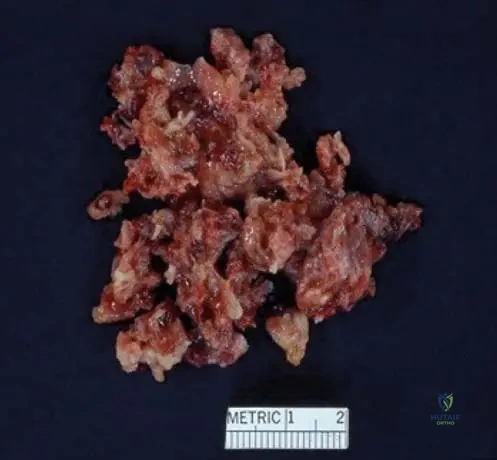
A 15-year-old male undergoes intralesional curettage of a pathologically confirmed chondroblastoma of the proximal tibial epiphysis.
During the procedure, a secondary cystic, hemorrhagic, and multiloculated cavity is encountered adjacent to the primary tumor. What is the most likely diagnosis of this secondary lesion?
Explanation
Question 34
Myxoid liposarcoma has a distinct clinical response to neoadjuvant therapy compared to most other high-grade soft tissue sarcomas. Which of the following best describes this characteristic response?
Explanation
Question 35
A 16-year-old male athlete presents with chronic ankle pain. Radiographs show a lytic, geographically distinct lesion within the calcaneal apophysis.
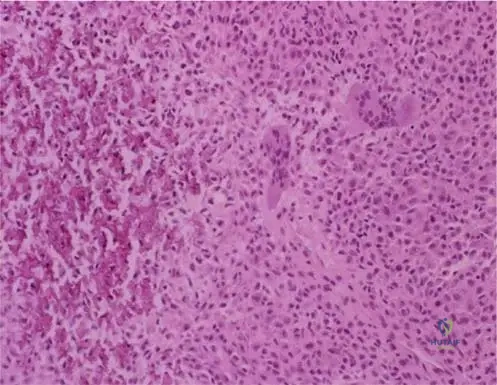
Histology demonstrates mononuclear cells with longitudinal nuclear grooves ('coffee bean' nuclei). Which highly specific epigenetic mutation is most strongly associated with this neoplasm?
Explanation
Question 36
A 65-year-old woman presents with a rapidly enlarging, painless mass in her posterior thigh. Core needle biopsy demonstrates a high-grade sarcoma with pleomorphic lipoblasts, severe nuclear atypia, and a complex karyotype lacking any specific gene fusions or MDM2 amplification. What is the most likely diagnosis?
Explanation
Question 37
In the classical neurological presentation of syringomyelia, the loss of pain and temperature sensation occurs bilaterally across the shoulders and upper extremities. This specific deficit results from the syrinx compressing which of the following?
Explanation
Question 38
Which of the following clinical presentations is the most common initial symptom in a patient with a chondroblastoma?
Explanation
Question 39
Which anatomical location carries the highest risk for an atypical lipomatous tumor (ALT) to undergo transformation into a dedifferentiated liposarcoma?
Explanation
Question 40
A 10-year-old boy presents to the clinic with an isolated finding of diminished abdominal reflexes and mild hyperreflexia in the lower extremities. Further workup reveals a cervical syringomyelia. The presence of hyperreflexia in the lower extremities indicates that the syrinx has expanded to compress which structure?
Explanation
Question 41
Which of the following chromosomal translocations is highly characteristic of myxoid liposarcoma?
Explanation
Question 42
A 15-year-old boy presents with right knee pain. Radiographs reveal a well-defined lytic lesion in the proximal tibial epiphysis with a thin sclerotic margin. Biopsy demonstrates mononuclear cells, scattered multinucleated giant cells, and areas of pericellular calcification. What is the most appropriate initial management?
Explanation
Question 43
A 45-year-old female presents with progressive, painless swelling and instability of her right shoulder. Examination reveals massive crepitus and a loss of pain and temperature sensation over her shoulders and upper back. What is the most appropriate imaging modality to confirm the underlying etiology of her joint pathology?
Explanation
Question 44
A deep-seated, 8 cm thigh mass in a 60-year-old man is biopsied, revealing an atypical lipomatous tumor (well-differentiated liposarcoma). Which of the following molecular markers is most consistently amplified in this pathology?
Explanation
Question 45
In a patient diagnosed with chondroblastoma of the proximal humerus, what specific histological feature is considered pathognomonic for this lesion?
Explanation
Question 46
Neuropathic (Charcot) arthropathy of the upper extremity, particularly affecting the shoulder or elbow, is most commonly associated with which of the following underlying conditions?
Explanation
Question 47
What is the primary definitive treatment for a 10 cm dedifferentiated liposarcoma located deep within the posterior compartment of the thigh without evidence of systemic metastasis?
Explanation
Question 48
A 17-year-old male undergoes curettage for a proximal femur chondroblastoma. Two years later, routine imaging reveals asymptomatic 1 cm bilateral pulmonary nodules. Biopsy of a nodule confirms benign-appearing chondroblastoma. What is the most appropriate management?
Explanation
Question 49
A 55-year-old presents with a painless, enlarging thigh mass. Histology demonstrates mature adipocytes with variation in cell size, scattered hyperchromatic stromal cells, and lipoblasts. Molecular testing is positive for CDK4 amplification. What is the most likely diagnosis?
Explanation
Question 50
Which physical examination finding is classically associated with the expanding central cord lesion seen in advanced syringomyelia?
Explanation
Question 51
A 16-year-old female presents with hip pain. Radiographs reveal a well-circumscribed, lytic lesion in the greater trochanter with a thin sclerotic rim. Which of the following immunohistochemical markers is characteristically positive in the mononuclear cells of this tumor?
Explanation
Question 52
A 45-year-old patient presents with a large retroperitoneal mass identified as a dedifferentiated liposarcoma. Compared to well-differentiated liposarcoma, the dedifferentiated subtype is most strongly associated with which of the following?
Explanation
Question 53
Which of the following is the most common anatomic location for the development of a chondroblastoma?
Explanation
Question 54
A 32-year-old male with a known Chiari I malformation presents with weakness in his intrinsic hand muscles and multiple painless burn scars on his forearms. What is the precise pathophysiological mechanism responsible for his sensory deficit?
Explanation
Question 55
Pleomorphic liposarcoma is the rarest and most aggressive subtype of liposarcoma. Unlike well-differentiated and myxoid liposarcomas, molecular analysis of a pleomorphic liposarcoma typically exhibits:
Explanation
Question 56
While performing an intralesional curettage of a chondroblastoma in the proximal humerus of a 14-year-old patient, the surgeon must be particularly careful to avoid iatrogenic damage to which of the following structures?
Explanation
Question 57
A 38-year-old female presents with a deep thigh mass that is confirmed by biopsy to be a myxoid liposarcoma. This specific sarcoma subtype has a unique predilection for metastasis to which of the following locations, necessitating specific staging studies?
Explanation
Question 58
A 50-year-old woman develops a rapidly progressive, destructive arthropathy of her right elbow without significant trauma. Neurological exam reveals absent reflexes and cape-like sensory loss. MRI confirms a large cervical syrinx. What is the most appropriate initial management for her elbow?
Explanation
Question 59
A well-circumscribed, radiolucent lesion is found in the calcaneus of a 22-year-old patient. Biopsy confirms chondroblastoma. What makes the calcaneus and other tarsal bones unique regarding the anatomical predilection of chondroblastoma?
Explanation
Question 60
Which subtype of liposarcoma is characterized histologically by a prominent branching capillary network resembling a "chicken-wire" vascular pattern, abundant mucinous stroma, and small lipoblasts?
Explanation
Question 61
A 15-year-old male presents with chronic knee pain. Radiographs reveal an eccentric, lytic epiphyseal lesion in the proximal tibia with a sclerotic rim. Biopsy reveals mononuclear cells with clefted nuclei and a distinct "chicken-wire" pattern of calcification.
What is the most appropriate management for this lesion?
Explanation
Question 62
A 45-year-old male presents with a deep, painless thigh mass. Histopathologic examination reveals uniform, small round cells in a myxoid stroma with a prominent, arborizing "crow's feet" capillary network. Which of the following cytogenetic abnormalities is pathognomonic for this tumor?
Explanation
Question 63
An 8-year-old male presents with a rapidly progressive left thoracic scoliosis curve of 45 degrees. On neurological examination, he has absent superficial abdominal reflexes on the left side but normal lower extremity motor strength. What is the most appropriate next step in management?
Explanation
Question 64
A 60-year-old patient undergoes resection of a massive retroperitoneal tumor. Histology shows mature adipose tissue with scattered highly atypical, hyperchromatic stromal cells. Fluorescence in situ hybridization (FISH) confirms the diagnosis of a well-differentiated liposarcoma. Which gene amplification was detected?
Explanation
Question 65
A 17-year-old male undergoes curettage of a distal femur chondroblastoma. Two years later, routine surveillance imaging reveals three small pulmonary nodules. Biopsy of a lung nodule confirms cells identical to the primary tumor. What is the expected clinical behavior of these lung lesions?
Explanation
Question 66
A 45-year-old female presents with painless swelling, crepitus, and instability of the right shoulder. Radiographs show severe destruction of the glenohumeral joint with massive osseous debris but no signs of infection. Neurological exam reveals a loss of pain and temperature sensation in the upper extremities. What is the primary pathophysiology?
Explanation
Question 67
A 35-year-old male is newly diagnosed with myxoid liposarcoma of the posterior thigh. When planning staging workup for this specific histologic subtype, which of the following is true regarding its metastatic pattern?
Explanation
Question 68
Histological evaluation of a curettage specimen from a proximal humerus lesion reveals sheets of mononuclear cells with "coffee-bean" nuclei, interspersed osteoclast-like giant cells, and delicate pericellular calcifications.
This constellation of findings is diagnostic for:
Explanation
Question 69
In the pediatric population, a symptomatic syrinx (syringomyelia) causing a rapidly progressive scoliosis is most commonly associated with which of the following underlying cranial abnormalities?
Explanation
Question 70
A 65-year-old female presents with a massive, painless thigh mass. Core biopsy reveals an abrupt transition from a well-differentiated, lipoma-like tumor to a high-grade, non-lipogenic sarcoma.
Which of the following statements is true regarding this specific entity?
Explanation
Question 71
While chondroblastomas classically occur in the epiphysis of long bones, they can also arise in apophyseal equivalents. Which of the following is the most common apophyseal location for a chondroblastoma?
Explanation
Question 72
A 12-year-old girl with syringomyelia and an associated Chiari I malformation presents with a 60-degree progressive thoracic scoliosis. Which of the following describes the recommended sequence of surgical interventions?
Explanation
Question 73
Among the main histological subtypes of liposarcoma, which carries the worst overall prognosis, highest rate of metastasis, and is characterized by a complex karyotype lacking a specific, defining chromosomal translocation?
Explanation
Question 74
Due to a local recurrence rate of 10-20% following simple curettage of a chondroblastoma, modern surgical management routinely incorporates an extended curettage. Which of the following combinations is typically utilized in the surgical bed?
Explanation
Question 75
A 28-year-old male with a known cervical syrinx presents with painless burns on his hands. He has normal light touch and proprioception bilaterally. The pathophysiology of his isolated sensory deficit is due to compression of which specific spinal cord structure?
Explanation
Question 76
When evaluating a deep soft tissue mass of the thigh on MRI, which of the following imaging characteristics is highly suggestive of a well-differentiated liposarcoma rather than a benign lipoma?
Explanation
Question 77
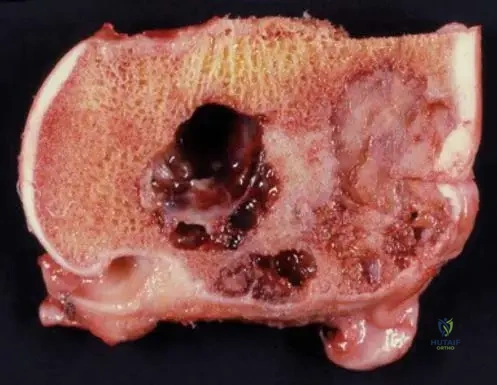
A 14-year-old patient presents with a large joint effusion and severe shoulder pain. Radiographs demonstrate a radiolucent lesion in the proximal humeral epiphysis. MRI confirms the lesion and surrounding bone marrow edema.
Which local complication is highly associated with chondroblastoma and likely causing the profound joint effusion?
Explanation
Question 78
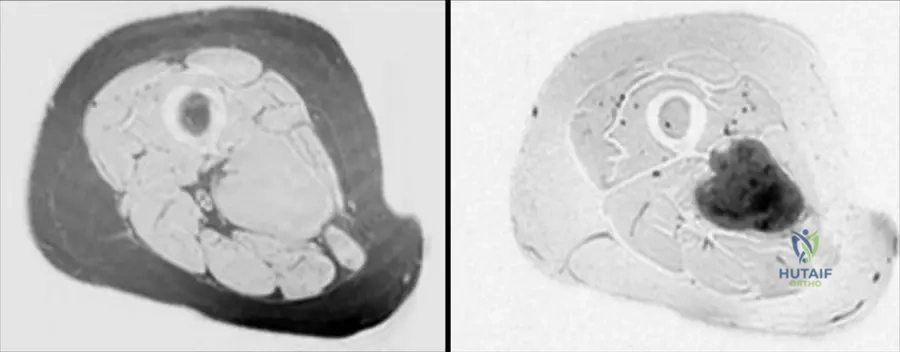
A 55-year-old male presents with a large, deep intramuscular mass in the vastus lateralis. Core needle biopsy confirms dedifferentiated liposarcoma. Staging scans show no evidence of distant metastasis.
What is the most appropriate definitive management?
Explanation
Question 79
A 40-year-old male presents with cape-like pain and temperature sensory loss in the upper extremities. MRI of the cervical spine reveals a syrinx extending from C2 to T2. However, there is no evidence of a Chiari malformation, spinal tumor, or tethered cord. What is the most likely anamnestic finding in this patient's history?
Explanation
Question 80
A pathologist is evaluating a curettage specimen from a distal femur epiphyseal lesion. The differential diagnosis is primarily between chondroblastoma and giant cell tumor of bone. Which of the following combinations of immunohistochemical markers and genetic mutations is highly specific for chondroblastoma?
Explanation
Question 81
A 14-year-old boy presents with chronic right knee pain. Radiographs reveal a well-circumscribed, lytic lesion with a thin sclerotic rim located centrally in the distal femoral epiphysis. Biopsy demonstrates mononuclear cells with longitudinal nuclear grooves and scattered multinucleated giant cells within a background of pericellular 'chicken-wire' calcification. What is the most appropriate primary surgical treatment for this lesion?
Explanation
Question 82
A 45-year-old male presents with a painless, deep thigh mass. MRI reveals a multinodular intramuscular mass with high T2 signal and linear septations. Core needle biopsy confirms myxoid liposarcoma. Which of the following chromosomal translocations is most characteristic of this tumor?
Explanation
Question 83
A 28-year-old female presents with a progressive left-sided thoracic scoliosis and decreased pain and temperature sensation in her bilateral upper extremities. Light touch and proprioception remain intact. Which of the following is the most appropriate next step in her evaluation?
Explanation
Question 84
A 15-year-old male undergoes extended curettage of a proximal humeral epiphyseal lesion confirmed as chondroblastoma.
During his 2-year follow-up, a routine chest CT reveals a solitary 1.2 cm pulmonary nodule. A biopsy of the nodule shows identical histology to the primary bone tumor. What is the most appropriate management?
Explanation
Question 85
An asymptomatic 60-year-old woman undergoes imaging for a suspected hematoma, revealing a deep intramuscular lipomatous mass in her anterior thigh measuring 12 cm. Core needle biopsy demonstrates mature adipocytes with focal hyperchromatic nuclei and nuclear atypia. Molecular testing is most likely to show amplification of which of the following?
Explanation
Question 86
A 12-year-old boy presents with a rapidly progressive right thoracic scoliosis measuring 55 degrees. An MRI demonstrates a large cervicothoracic syrinx and a Chiari I malformation. What is the most appropriate recommended treatment sequence?
Explanation
Question 87
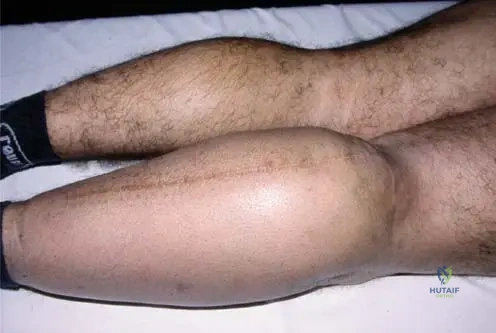
A 32-year-old female presents with a slowly enlarging, firm mass in her posterior thigh.
Histology shows uniform spindle cells in a collagenous stroma without significant atypia or necrosis. Immunohistochemistry is strongly positive for nuclear beta-catenin. Given the diagnosis, what is the preferred initial management strategy?
Explanation
Question 88
A 65-year-old man presents with a rapidly growing, painful soft tissue mass in his left thigh.
Histological examination reveals highly atypical, bizarre, multinucleated giant cells and lipoblasts with no well-differentiated areas. There are no specific genetic translocations identified. Which of the following statements regarding this subtype of liposarcoma is true?
Explanation
Question 89
When attempting to differentiate a chondroblastoma from a giant cell tumor of bone on core needle biopsy, which of the following histological or immunohistochemical features is most specific for chondroblastoma?
Explanation
Question 90
A 40-year-old male with a history of a chronic, untreated cervical syrinx presents with a massively swollen, painless right shoulder. Radiographs demonstrate severe joint destruction, bony debris, and disorganization of the glenohumeral joint. Infection is ruled out via aspiration. What is the fundamental pathophysiology driving this joint destruction?
Explanation
None
