ABOS Part I & OITE Review: Elbow OCD, Lateral Epicondylitis, and Loose Bodies | Part 22214
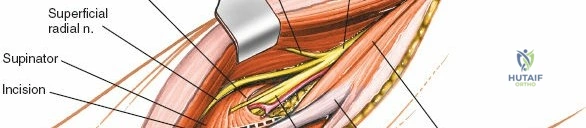
Key Takeaway
This comprehensive review for ABOS Part I and AAOS OITE exams focuses on key elbow pathologies. It covers the diagnosis, management, and differential diagnoses of Osteochondritis Dissecans (OCD) and intra-articular loose bodies, as well as lateral epicondylitis (tennis elbow) and radial tunnel syndrome. Essential for orthopedic residents and surgeons preparing for board certification.
ABOS Part I & OITE Review: Elbow OCD, Lateral Epicondylitis, and Loose Bodies | Part 22214
Comprehensive 100-Question Exam
00:00
Start Quiz
Question 1
A 33-year-old male presents with intermittent painful locking of his right elbow. Radiographs show a single loose body in the anterior aspect of the joint with well-maintained joint space. He reports a history of unexplained painful elbow for 18 months when he was 17 years old, which resolved spontaneously. No history of acute trauma. Based on this clinical presentation and history, what is the most likely diagnosis?
Explanation
Correct Answer: C
Explanation:
The most likely diagnosis is Osteochondritis Dissecans (OCD) with loose body formation. The key elements supporting this diagnosis are:
- Age of onset of initial symptoms: The patient experienced unexplained painful elbow symptoms at age 17, which is a classic age range for the presentation of OCD of the capitellum.
- Nature of current symptoms: Intermittent painful locking is highly characteristic of a symptomatic intra-articular loose body.
- Radiographic findings: A single loose body with well-maintained joint space points away from advanced osteoarthritis as the primary cause. The absence of calcification in the muscle or capsule rules out myositis ossificans and synovial sarcoma.
- Absence of trauma: The patient denies any history of acute injury, ruling out a purely post-traumatic loose body.
- Single loose body: While synovial chondromatosis can cause loose bodies, it typically presents with multiple loose bodies, often described as 'rice bodies,' rather than a single one.
Therefore, the history of adolescent elbow pain, followed by the current presentation of a single loose body causing locking in a joint with preserved space, strongly indicates a sequela of untreated or unrecognized OCD.
Question 2
The examiner asks the candidate to differentiate between Osteochondritis Dissecans (OCD) and osteoarthritis as the cause of the loose body. Which of the following findings from the case most strongly supports OCD over osteoarthritis?
Explanation
Correct Answer: D
Explanation:
The most compelling finding that differentiates OCD from osteoarthritis in this case is the history of unexplained painful elbow at age 17. OCD of the capitellum typically affects adolescents and young adults, often presenting with vague elbow pain, stiffness, or mechanical symptoms. This history strongly suggests an underlying osteochondral lesion that likely progressed to loose body formation. While osteoarthritis can cause loose bodies (osteophytes breaking off), it is less common in a 33-year-old with well-maintained joint space and without a clear history of significant prior trauma or inflammatory conditions. The patient's current age (A) is young for primary osteoarthritis. The presence of a single loose body (B) can occur in both conditions, though multiple loose bodies are more indicative of synovial chondromatosis. Intermittent painful locking (C) is a symptom of any loose body, regardless of etiology. The absence of calcification in the muscle or capsule (E) helps rule out myositis ossificans or synovial sarcoma, but not specifically differentiate OCD from osteoarthritis.
Question 3
When the patient was 17 years old, he experienced unexplained painful elbow for 18 months. If an orthopedic surgeon were consulting him at that time, and MRI was not widely available, what would have been the most appropriate diagnostic imaging study to assess for an osteochondral lesion and its stability?
Explanation
Correct Answer: C
Explanation:
Given the historical context where MRI was not widely available, an elbow arthrogram with contrast would have been the most appropriate diagnostic imaging study to assess for an osteochondral lesion and its stability. An arthrogram involves injecting contrast material into the joint, which can then outline the articular cartilage and reveal defects, fissures, or the separation of an osteochondral fragment. This technique was historically used to evaluate the integrity of the articular surface and the stability of OCD lesions before the widespread adoption of MRI. Plain radiographs (A) would likely show subtle or no pathology in early OCD, as noted in the case. A CT scan (B) is excellent for bony detail but less effective for cartilage assessment without intra-articular contrast. A bone scan (D) would show increased metabolic activity but not provide detailed anatomical information about the lesion's stability. Ultrasound (E) has limited utility for deep intra-articular osteochondral lesions.
Question 4
The 33-year-old patient's current symptom of intermittent painful locking is directly caused by the loose body. What is the most appropriate definitive treatment for this patient's current symptoms and to prevent future locking episodes?
Explanation
Correct Answer: C
Explanation:
The patient's primary symptom is intermittent painful locking caused by a loose body. The most appropriate definitive treatment for a symptomatic intra-articular loose body in the elbow is arthroscopic removal of the loose body. This procedure directly addresses the mechanical obstruction causing the locking and pain. Physical therapy and activity modification (A) and NSAIDs and observation (B) are conservative measures that may temporarily alleviate symptoms but will not remove the mechanical block or prevent future locking episodes. Open reduction and internal fixation (D) would be considered if the loose body was a large, viable osteochondral fragment that could be reattached to its bed, but for a free, symptomatic loose body causing locking, simple removal is typically preferred. Corticosteroid injections (E) may reduce inflammation but will not resolve the mechanical issue of a loose body.
Question 5
The examiner asks the candidate about the name for OCD of the elbow. The candidate correctly identifies Panner's disease. Which of the following statements best describes Panner's disease?
Explanation
Correct Answer: B
Explanation:
Panner's disease is specifically an osteochondrosis (avascular necrosis) of the capitellar epiphysis, typically occurring in children between the ages of 7 and 12 years. It is characterized by fragmentation and necrosis of the capitellar ossification center, often associated with repetitive microtrauma (e.g., in young baseball pitchers or gymnasts). It is distinct from typical osteochondritis dissecans (OCD) of the capitellum, which usually affects older adolescents and young adults (12-18 years) and involves a focal area of subchondral bone necrosis and overlying cartilage damage. While the case uses 'Panner's disease' somewhat broadly for OCD of the elbow, it's important to know the specific definition. Option A describes an acute injury. Option C describes osteoarthritis. Option D describes synovial chondromatosis. Option E describes inflammatory arthritis.
Question 6
The candidate notes that the radiographs show 'well-maintained joint space' and 'no calcification in the muscle or capsule.' What specific diagnoses are primarily ruled out or made less likely by these observations?
Explanation
Correct Answer: C
Explanation:
The observation of 'well-maintained joint space' makes advanced osteoarthritis less likely, as osteoarthritis is characterized by joint space narrowing, osteophyte formation, and subchondral sclerosis. The presence of a single loose body with preserved joint space points away from widespread degenerative changes. 'No calcification in the muscle or capsule' specifically helps to rule out myositis ossificans, which involves heterotopic ossification within muscle, and also makes conditions like synovial sarcoma (which can have calcification) less likely. While the case mentions ruling out synovial sarcoma, myositis ossificans is a more direct exclusion based on the lack of muscle/capsule calcification. Therefore, advanced osteoarthritis and myositis ossificans are primarily ruled out or made less likely.
Question 7
The patient's current symptoms of intermittent painful locking are a direct consequence of the loose body. What is the primary mechanism by which an intra-articular loose body causes locking in a joint?
Explanation
Correct Answer: C
Explanation:
The primary mechanism by which an intra-articular loose body causes locking in a joint is mechanical impingement between joint surfaces. A loose body, which is a free-floating fragment of bone or cartilage, can get caught between the articulating surfaces of the joint during movement. This physical obstruction prevents the joint from moving through its full range of motion, leading to a sudden, painful block or 'locking' sensation. While a loose body can cause some inflammation (A) or direct compression (B) if it's large, the characteristic locking symptom is due to its physical interposition. Increased intra-articular pressure (D) is not the direct cause of locking, and ligamentous laxity (E) is unrelated to loose body locking.
Question 8
The patient's initial presentation at age 17 with unexplained painful elbow was unfortunately discharged from follow-up after a single X-ray showed no obvious pathology. What is the most likely long-term consequence of untreated osteochondritis dissecans of the capitellum that led to the current presentation?
Explanation
Correct Answer: C
Explanation:
The most likely long-term consequence of untreated osteochondritis dissecans (OCD) of the capitellum, especially if it was unstable, is the formation and detachment of an osteochondral fragment into a loose body. OCD involves a localized area of subchondral bone necrosis and overlying cartilage damage. If the lesion is unstable or progresses, the affected fragment can separate from its bed and become a free-floating loose body within the joint. This loose body then causes mechanical symptoms such as locking, catching, and pain, as seen in the 33-year-old patient. While long-standing OCD can eventually contribute to osteoarthritis (B), the immediate and most direct consequence explaining the current symptoms is the loose body formation. Spontaneous healing (A) is possible for stable, early lesions, but not for those that progress to symptomatic loose bodies. Chronic inflammatory synovitis (D) is not the primary sequela, and increased risk of elbow dislocation (E) is not typically associated with OCD.
Question 9
The examiner asks about other causes for one or two loose bodies in a joint, and the candidate mentions osteoarthritis. The examiner then asks about multiple loose bodies. What is the most common diagnosis when multiple loose bodies are observed in an elbow joint?
Explanation
Correct Answer: C
Explanation:
When multiple loose bodies are observed in an elbow joint, the most common diagnosis is primary synovial chondromatosis. This is a benign condition characterized by metaplastic changes in the synovial membrane, leading to the formation of cartilaginous nodules within the synovium. These nodules can then detach and become free-floating loose bodies within the joint, often calcifying over time and appearing as multiple, variably sized, calcified bodies on radiographs. Osteochondritis dissecans (A) typically results in one or a few loose bodies from a specific lesion. Post-traumatic osteochondral fragments (B) are usually limited in number. Rheumatoid arthritis (D) and gouty arthritis (E) are inflammatory conditions that do not typically produce multiple, calcified loose bodies as a primary feature, although joint destruction in severe cases could lead to some fragments.
Question 10
Considering the examiner's feedback on Candidate 2's performance, which aspect of Candidate 2's approach was most crucial for arriving at a spot-on diagnosis and appropriate management plan?
Explanation
Correct Answer: D
Explanation:
Candidate 2's most crucial contribution to a spot-on diagnosis and appropriate management plan was connecting the current findings with the detailed past medical history. While identifying the loose body (A) is a basic radiographic interpretation, and knowing Panner's disease (B) is specific knowledge, and asking about presenting symptoms (C) is good clinical practice, it was the specific inquiry into 'any problem with this elbow in the past' and then linking the 'unexplained painful elbow at age 17' to the current loose body that allowed Candidate 2 to correctly deduce the diagnosis of OCD. This demonstrates a higher-order clinical reasoning skill of synthesizing historical data with current findings. Suggesting arthroscopic removal (E) is the correct treatment, but it follows from the correct diagnosis, which was enabled by the historical connection.
Question 11
A 48-year-old tennis player presents with chronic lateral elbow pain, exacerbated by gripping and wrist extension. On examination, maximal tenderness is consistently localized to an area just distal and anterior to the lateral epicondyle. Which specific structure is most likely the primary source of pathology?
Explanation
Correct Answer: C
The most common site of pathology in lateral epicondylitis (tennis elbow) is the origin of the Extensor Carpi Radialis Brevis (ECRB) tendon, specifically its deep fibers, just distal and anterior to the lateral epicondyle. While the common extensor origin is affected, the ECRB is the primary culprit. The anconeus muscle is more posterior and not typically the primary pain generator. The lateral collateral ligament complex is associated with elbow instability. The radial nerve proper is rarely the direct source of pain but can be entrapped in radial tunnel syndrome, which is a differential diagnosis, but the precise localization points strongly to the ECRB.
Question 12
During your physical examination for suspected lateral epicondylitis, you perform Cozen's test. Which maneuver constitutes a positive Cozen's test?
Explanation
Correct Answer: C
Cozen's test involves the examiner palpating the lateral epicondyle while the patient makes a fist, pronates the forearm, radially deviates the wrist, and then extends the wrist against resistance. A positive test is reproduction of pain at the lateral epicondyle. Option C accurately describes this maneuver. Option B describes a component but misses the critical elbow extension and forearm pronation. Option D describes Mill's test, which is passive. Option E describes Maudsley's test.
Question 13
A 55-year-old accountant presents with lateral elbow pain that started insidiously. He denies any acute trauma but notes pain with typing and lifting objects, especially with his palm down. Which of the following findings on examination would be MOST specific for lateral epicondylitis rather than a radial tunnel syndrome?
Explanation
Correct Answer: C
Pain elicited by passive wrist flexion with the elbow extended (Mill's test) is a classic maneuver that stretches the common extensor origin, particularly the ECRB, and is highly suggestive of lateral epicondylitis. While Maudsley's test (resisted long finger extension) is also positive in lateral epicondylitis, it can sometimes be positive in radial tunnel syndrome due to irritation of the nerve passing beneath the ECRB. Tenderness over the supinator muscle and pain with resisted forearm supination are more indicative of radial tunnel syndrome. Normal sensation in the superficial radial nerve distribution is common in both, as PIN entrapment is a motor neuropathy. Therefore, Mill's test specifically targets the common extensor origin's stretch sensitivity.
Question 14
Which histological finding is most consistently associated with chronic lateral epicondylitis specimens obtained surgically?
Explanation
Correct Answer: B
Chronic lateral epicondylitis is primarily a degenerative tendinopathy, not an inflammatory process. Histologically, it is characterized by angiofibroblastic hyperplasia, which involves disordered collagen fibers, increased fibroblasts, and neovascularization, rather than acute inflammatory cells. While some minor inflammation may be present, it's not the hallmark. Calcification can occur but is less consistent. Complete rupture is rare. Infection is not part of the pathology.
Question 15
A patient presents with lateral elbow pain that radiates distally to the dorsal aspect of the forearm and hand. They report weakness, particularly with gripping, and exquisite tenderness over the extensor muscle mass, approximately 3-5 cm distal to the lateral epicondyle, specifically in the arcade of Frohse region. Pain is exacerbated by repetitive forearm rotation. Which condition should be prioritized in your differential diagnosis?
Explanation
Correct Answer: C
The description of pain radiating distally to the dorsal forearm/hand, weakness with gripping, and exquisite tenderness 3-5 cm distal to the lateral epicondyle (over the arcade of Frohse where the PIN can be entrapped), especially exacerbated by repetitive forearm rotation, is classic for posterior interosseous nerve (PIN) entrapment syndrome, a form of radial tunnel syndrome. While lateral epicondylitis is a differential, the specific tenderness location and nerve-like radiation strongly favor PIN entrapment. Radiohumeral OA typically presents with pain with rotation and sometimes catching, but less nerve-like radiation. Capitellar OCD affects younger patients and usually involves mechanical symptoms. Cervical radiculopathy would have more widespread neurological deficits and often neck pain. PIN entrapment affects motor function, leading to weakness without sensory changes, which aligns with the presentation of grip weakness.
Question 16
Which of the following imaging modalities is considered most useful in confirming the diagnosis of lateral epicondylitis and assessing its severity in cases where the clinical diagnosis is equivocal or non-operative treatment has failed?
Explanation
Correct Answer: D
Plain radiographs are typically normal in lateral epicondylitis and are mainly used to rule out bony pathology. CT scans offer excellent bony detail but are less effective for soft tissue. EMG/NCS are useful for differentiating nerve entrapment syndromes (like radial tunnel) but not for diagnosing lateral epicondylitis directly. MRI and high-resolution musculoskeletal ultrasound are the most useful imaging modalities. Ultrasound can show hypoechogenicity, tendon thickening, tears, and neovascularization. MRI can detect signal changes within the ECRB tendon, edema, and tendinosis/tears. These modalities help confirm the diagnosis, assess the extent of degenerative changes, and rule out other soft tissue pathologies. Bone scintigraphy is rarely indicated for this condition.
Question 17
A patient with suspected lateral epicondylitis has undergone a corticosteroid injection at the common extensor origin. They return three months later with recurrent, slightly worse pain. What is the MOST appropriate next step in management, assuming initial non-operative treatment (PT, NSAIDs) was also attempted without success?
Explanation
Correct Answer: C
Repeat corticosteroid injections are generally discouraged due to evidence suggesting potential long-term adverse effects on tendon integrity and often diminished efficacy after initial failure. While surgery is an option for recalcitrant cases, a trial of biologic injections like PRP or autologous blood is often considered before surgery, especially after a failed corticosteroid injection, as they aim to promote healing. Ordering an EMG/NCS is a reasonable diagnostic step if nerve entrapment is suspected as a differential or co-morbidity, but given the recurrence after a targeted injection, biological augmentation is a strong consideration before resorting to surgery. A stronger NSAID regimen is unlikely to succeed if initial NSAIDs failed and the condition is chronic. Therefore, PRP offers a rehabilitative option prior to surgery.
Question 18
What is the primary rationale for recommending a counterforce brace (tennis elbow strap) in the management of lateral epicondylitis?
Explanation
Correct Answer: D
The primary rationale for a counterforce brace is to alter the angle of pull of the extensor muscles distal to their origin, effectively lengthening the muscle-tendon unit and reducing the tensile load and strain at the common extensor origin, particularly the ECRB, during gripping and wrist extension activities. This mechanism offloads the injured area. While some proprioceptive feedback may occur, it's not the primary effect. It does not restrict elbow ROM, improve blood flow directly, or primarily act via direct compression for pain reduction, although comfort may be a side effect.
Question 19
A 32-year-old active construction worker presents with typical symptoms of lateral epicondylitis. He reports that his pain is worse when performing tasks requiring sustained grip and repetitive hammering. Which of the following statements regarding the prognosis of lateral epicondylitis is most accurate?
Explanation
Correct Answer: C
Lateral epicondylitis has a generally favorable prognosis with non-operative management. Approximately 80-95% of patients achieve satisfactory relief with a combination of rest, activity modification, physical therapy, NSAIDs, and sometimes injections. While the course can be protracted (up to 12-18 months), surgical intervention is only required in a small percentage (5-10%) of recalcitrant cases. Spontaneous resolution within 6 weeks is optimistic; it often takes longer. Workers' compensation claims are often associated with a poorer prognosis, not a better one. While symptom duration can influence treatment response, it's not the single 'most critical factor' for overall success, which is primarily driven by the high success rate of conservative measures.
Question 20
Which muscle is most commonly implicated in the pathology of lateral epicondylitis?
Explanation
Correct Answer: D
The Extensor Carpi Radialis Brevis (ECRB) is almost universally accepted as the primary muscle/tendon involved in lateral epicondylitis. Its origin on the lateral epicondyle is the most common site of tendinopathic changes. While other extensors (ECRL, EDC, ECU) also originate from the common extensor tendon, the ECRB is most consistently implicated due to its anatomical position and biomechanical loading characteristics, especially with wrist extension and radial deviation combined with gripping.
Question 21
During surgical debridement for refractory lateral epicondylitis, the surgeon must identify and excise the pathologic tissue. Which of the following muscles is the primary site of pathology in this condition?
Explanation
Question 22
A 45-year-old female undergoes open debridement for lateral epicondylitis. Postoperatively, she reports a new clicking sensation and elbow instability when attempting to push herself off a chair. Iatrogenic injury to which structure is most likely responsible for this complication?
Explanation
Question 23
A 7-year-old male baseball player presents with lateral elbow pain and stiffness. Radiographs demonstrate fragmentation and sclerosis of the entire capitellum without a localized defect or loose body. What is the most appropriate initial management?
Explanation
Question 24
A 14-year-old female gymnast presents with lateral elbow pain. Radiographs reveal a radiolucent lesion in the capitellum. MRI is obtained to evaluate the lesion's stability. Which of the following MRI findings most strongly indicates an unstable osteochondritis dissecans (OCD) lesion that may necessitate surgical intervention?
Explanation
Question 25
A 50-year-old male undergoes surgical excision of diseased tissue for chronic, refractory lateral epicondylitis. Histopathological examination of the excised tissue is most likely to demonstrate which of the following?
Explanation
Question 26
When evaluating a patient for suspected lateral epicondylitis, the examiner performs provocative testing. Resisted extension of which digit is most specific for stressing and isolating the extensor carpi radialis brevis (ECRB) origin?
Explanation
Question 27
A 13-year-old male baseball pitcher complains of lateral elbow pain. Routine anteroposterior (AP) and lateral elbow radiographs appear normal. Suspecting early capitellar osteochondritis dissecans, which specific radiographic view should be ordered next to best visualize the capitellum?
Explanation
Question 28
A 42-year-old tennis player presents with lateral epicondylitis and is considering a corticosteroid injection versus physical therapy. Based on randomized controlled trials, what is the most likely long-term (1 year) outcome of corticosteroid injection compared to physical therapy or watchful waiting?
Explanation
Question 29
A 35-year-old male presents with mechanical elbow locking and decreased range of motion. Radiographs show multiple, uniform, intra-articular calcified loose bodies. He undergoes arthroscopic removal. The underlying pathophysiology of this specific condition most likely involves:
Explanation
Question 30
A 15-year-old baseball pitcher has a capitellar OCD lesion. MRI shows a 10 mm lesion with intact overlying cartilage and no fluid behind the fragment, but mechanical pain persists despite 6 months of absolute rest. What is the most appropriate surgical intervention?
Explanation
Question 31
During arthroscopic removal of a loose body in the anterior elbow compartment, the surgeon establishes the anterolateral portal. Which nerve is most at risk during the establishment of this specific portal?
Explanation
Question 32
During open surgery for lateral epicondylitis, the surgeon defines the interval between the extensor carpi radialis longus (ECRL) and the extensor digitorum communis (EDC) to access the ECRB. Where is the origin of the ECRL located relative to the lateral epicondyle?
Explanation
Question 33
A 14-year-old gymnast presents with lateral elbow pain. The examiner supinates the patient's forearm, flexes the elbow to 15 degrees, and applies a valgus stress while passively extending the elbow, eliciting a painful catch. What does this test evaluate?
Explanation
Question 34
A 16-year-old weightlifter presents with a capitellar OCD lesion. MRI demonstrates a 15 mm detached osteochondral fragment with underlying extensive cystic changes in the capitellum. What is the most appropriate surgical treatment?
Explanation
Question 35
To avoid posterolateral rotatory instability (PLRI) during surgical debridement of the lateral epicondyle, the surgeon must preserve the lateral ulnar collateral ligament (LUCL). The LUCL originates from the lateral epicondyle at which position relative to the ECRB origin?
Explanation
Question 36
A 55-year-old heavy laborer presents with elbow stiffness, loss of terminal extension, and painful clicking. Radiographs reveal osteophytes at the olecranon tip, coronoid, and several loose bodies in the olecranon fossa. Which physical exam finding is most typical for this primary osteoarthritis condition?
Explanation
Question 37
A 40-year-old plumber with chronic lateral epicondylitis is prescribed a counterforce brace. To be mechanically effective and properly offload the diseased tendon, where should the brace be positioned relative to the lateral epicondyle?
Explanation
Question 38
The susceptibility of the capitellum to osteochondritis dissecans in adolescent throwers is largely attributed to its tenuous blood supply. Which of the following best describes the vascular anatomy of the capitellum?
Explanation
Question 39
A 28-year-old tennis player complains of lateral elbow snapping and painful catching during terminal extension. MRI is negative for loose bodies or OCD, but reveals a thickened band of tissue in the radiocapitellar joint. What is the most likely diagnosis?
Explanation
Question 40
A 15-year-old baseball pitcher presents with pain in the posterior aspect of the elbow during the deceleration phase of throwing. He denies lateral pain. Exam shows a flexion contracture of 15 degrees and tenderness over the posteromedial olecranon. What is the most likely diagnosis?
Explanation
Question 41
What is the primary histological finding in the extensor carpi radialis brevis (ECRB) tendon in a patient with chronic lateral epicondylitis?
Explanation
Question 42
A 14-year-old female gymnast presents with insidious onset lateral elbow pain, clicking, and a 15-degree extension deficit. Radiographs reveal a radiolucent lesion of the capitellum. Which of the following differentiates capitellar osteochondritis dissecans (OCD) from Panner disease?
Explanation
Question 43
During an open debridement for recalcitrant lateral epicondylitis (Nirschl procedure), the surgeon must avoid injuring a critical structure located directly beneath the ECRB origin. Which structure is at greatest risk during excessive deep dissection?
Explanation
Question 44
A 45-year-old male undergoes elbow arthroscopy for removal of multiple loose bodies. Which standard arthroscopic portal places the radial nerve at the highest risk of injury?
Explanation
Question 45
A 15-year-old baseball pitcher has advanced capitellar OCD with a 1.5 cm unstable, hinged osteochondral flap and underlying subchondral cyst seen on MRI. What is the most appropriate surgical management?
Explanation
Question 46
Which physical examination maneuver is most specific for diagnosing lateral epicondylitis by isolating the extensor carpi radialis brevis (ECRB)?
Explanation
Question 47
A 38-year-old man presents with decreased elbow range of motion and mechanical catching. Radiographs reveal over 30 uniform, small, calcified loose bodies within the elbow joint space. What is the most likely underlying pathophysiology?
Explanation
Question 48
On an MRI of a 13-year-old gymnast with an OCD lesion of the capitellum, which finding is the most reliable indicator of lesion instability requiring surgical intervention?
Explanation
Question 49
A 42-year-old tennis player requests a corticosteroid injection for newly diagnosed lateral epicondylitis. What should the physician advise regarding the expected outcomes of a corticosteroid injection compared to physical therapy or observation?
Explanation
Question 50
A 28-year-old male golfer complains of catching and snapping on the lateral side of his elbow during extension. MRI is negative for loose bodies but shows a thickened band of tissue in the lateral gutter. Which condition most closely mimics lateral loose bodies and lateral epicondylitis in this presentation?
Explanation
Question 51
What is the primary mechanical etiology driving the development of capitellar osteochondritis dissecans (OCD) in overhead throwing athletes?
Explanation
Question 52
A patient develops symptomatic posterolateral rotatory instability (PLRI) following an open release for lateral epicondylitis. Which examination finding confirms this iatrogenic complication?
Explanation
Question 53
A 22-year-old collegiate pitcher presents with posteromedial elbow pain and lack of full extension. Radiographs show loose bodies in the posteromedial compartment and an olecranon osteophyte. What associated pathology must be carefully evaluated before proceeding with arthroscopic loose body removal and olecranon debridement?
Explanation
Question 54
A 12-year-old male gymnast is diagnosed with a stable capitellar OCD lesion based on MRI (no cystic changes, intact overlying cartilage). What is the most appropriate initial management?
Explanation
Question 55
According to randomized controlled trials, which orthobiologic injection has demonstrated better long-term pain relief and functional improvement for refractory lateral epicondylitis compared to corticosteroid injections?
Explanation
Question 56
A 55-year-old manual laborer presents with progressive elbow stiffness, painful terminal extension, and multiple large loose bodies in the coronoid and olecranon fossae. The joint space is globally narrowed. What is the most appropriate surgical intervention for durable relief of mechanical symptoms?
Explanation
Question 57
In the surgical management of an unstable capitellar OCD lesion with a loose body, what size threshold generally supports arthroscopic fragment excision and microfracture over an osteochondral autograft transfer (OATS)?
Explanation
Question 58
The extensor carpi radialis brevis (ECRB) is the primary tendon implicated in lateral epicondylitis. What is its precise anatomical origin relative to the extensor digitorum communis (EDC)?
Explanation
Question 59
A patient with multiple radiocapitellar loose bodies undergoes an anterior capsulotomy and loose body excision via a lateral approach. Postoperatively, they cannot actively extend their fingers at the metacarpophalangeal joints, but wrist extension is preserved with radial deviation. Which nerve was most likely injured?
Explanation
Question 60
A 7-year-old boy presents with a dull, aching pain in his dominant lateral elbow without mechanical locking. Radiographs show fragmentation and sclerosis of the entire capitellum without loose bodies. What is the most appropriate management?
Explanation
Question 61
Microscopic evaluation of tissue excised during surgery for refractory lateral epicondylitis classically demonstrates which of the following?
Explanation
Question 62
A 14-year-old elite female gymnast presents with insidious onset of lateral elbow pain, worsened with weight-bearing activities. Examination reveals a 15-degree extension deficit. What biomechanical force is primarily responsible for her most likely diagnosis?
Explanation
Question 63
Which of the following physical examination maneuvers is most specific for isolating the extensor carpi radialis brevis (ECRB) in a patient suspected of having lateral epicondylitis?
Explanation
Question 64
In a 13-year-old baseball pitcher with capitellar osteochondritis dissecans, which of the following MRI findings most strongly indicates an unstable lesion requiring surgical intervention?
Explanation
Question 65
Based on high-level clinical evidence, what is the expected long-term outcome (at 1 year) of corticosteroid injection compared to physical therapy for the treatment of lateral epicondylitis?
Explanation
Question 66
A 45-year-old male presents with mechanical elbow pain, catching, and limited range of motion. Radiographs show multiple uniform, round, ossified bodies within the joint space with preserved radiocapitellar and ulnohumeral joint spaces. What is the most likely underlying pathophysiology?
Explanation
Question 67
A 15-year-old right-hand-dominant baseball pitcher presents with a symptomatic 12 mm capitellar OCD lesion. Intraoperatively, the articular cartilage is breached, and the fragment is loose but unfragmented with adequate bone. What is the most appropriate surgical management?
Explanation
Question 68
During an open release of the extensor carpi radialis brevis (ECRB) for refractory lateral epicondylitis, the surgeon must avoid extending the dissection too posterior and distal. Injury to which structure could result in iatrogenic posterolateral rotatory instability (PLRI)?
Explanation
Question 69
A 7-year-old boy presents with dull, aching lateral elbow pain without mechanical symptoms. Radiographs reveal fragmentation and sclerosis of the entire capitellum. What is the most appropriate initial management?
Explanation
Question 70
When performing elbow arthroscopy to remove loose bodies, establishing the anteromedial portal places which neurological structure at the greatest superficial risk of iatrogenic injury?
Explanation
Question 71
In the management of capitellar osteochondritis dissecans (OCD), osteochondral autograft transfer (OATS) is most strongly indicated for which of the following lesions?
Explanation
Question 72
A 42-year-old female presents with lateral elbow and forearm pain. Her pain is maximal 4 to 5 cm distal to the lateral epicondyle. Resisted supination of the forearm with the elbow fully extended significantly exacerbates her symptoms. What is the most likely diagnosis?
Explanation
Question 73
In a 55-year-old heavy laborer with primary osteoarthritis of the elbow, loose bodies and osteophytes are most commonly symptomatic and surgically addressed in which of the following elbow compartments?
Explanation
Question 74
To optimally visualize a suspected capitellar osteochondritis dissecans lesion on plain radiographs, which specific elbow view is most helpful to profile the typical posterolateral location of the lesion?
Explanation
Question 75
During a Nirschl procedure for lateral epicondylitis, which of the following describes the most accurate anatomical relationship regarding the posterior interosseous nerve (PIN) to avoid iatrogenic injury?
Explanation
Question 76
A 45-year-old tennis player presents with chronic lateral elbow pain refractory to 6 months of nonoperative management. He elects to undergo surgical debridement. Histologic examination of the excised tissue from the primary tendon involved would most likely reveal which of the following?
Explanation
Question 77
A 14-year-old elite gymnast presents with lateral elbow pain and a 15-degree extension deficit. Radiographs demonstrate a radiolucent lesion of the capitellum. MRI is obtained to evaluate the stability of the osteochondral lesion. Which of the following MRI findings is the most reliable indicator of instability?
Explanation
Question 78
A 9-year-old boy presents with an aching lateral right elbow. He plays Little League baseball but denies any specific injury. Radiographs reveal sclerosis and fragmentation of the entire capitellum without any loose bodies. What is the most appropriate initial management?
Explanation
Question 79
During open surgical release of the extensor carpi radialis brevis (ECRB) for recalcitrant lateral epicondylitis, an overzealous dissection is performed inferiorly and deep to the tendon origin. Postoperatively, the patient experiences apprehension when pushing up from a chair. Injury to which of the following structures is the most likely cause of this complication?
Explanation
Question 80
Which of the following biomechanical forces is the primary contributor to the development of osteochondritis dissecans (OCD) of the capitellum in overhead throwing athletes?
Explanation
Question 81
A 40-year-old carpenter presents with lateral elbow pain. Provocative testing reveals pain at the lateral epicondyle when the patient extends his wrist against resistance with the elbow fully extended. Which tendon is the primary pathological structure isolated by this maneuver?
Explanation
Question 82
A 16-year-old baseball pitcher presents with a 4-month history of lateral elbow pain, clicking, and a 20-degree flexion contracture. MRI reveals an 8 mm unstable capitellar osteochondral lesion with an intra-articular loose body. What is the most appropriate surgical treatment?
Explanation
Question 83
A 45-year-old woman with lateral epicondylitis asks about corticosteroid injections compared to physical therapy. Based on high-level evidence, what should she be counseled regarding the outcomes of corticosteroid injections for this condition?
Explanation
Question 84
A 35-year-old man presents with chronic multiple loose bodies in the elbow, causing intermittent locking and restricted range of motion. Radiographs show numerous calcified bodies of similar shape and size scattered throughout the joint. A biopsy of the synovium demonstrates metaplasia of synovial tissue into cartilaginous nodules. What is the most likely diagnosis?
Explanation
Question 85
When performing an open Nirschl procedure (excision of the angiofibroblastic tissues of the ECRB) for lateral epicondylitis, the surgeon normally approaches the ECRB origin through an interval. Which structure typically overlies the ECRB and must be incised or split to expose the pathologic tissue?
Explanation
Question 86
A 50-year-old man complains of lateral elbow pain radiating down the posterior forearm. He has pain with resisted supination and middle finger extension, but Cozen's test is negative. There is no sensory deficit. This clinical presentation most closely mimics lateral epicondylitis but is actually due to entrapment of which nerve?
Explanation
Question 87
Regarding the vascular anatomy of the capitellum, which of the following best explains its susceptibility to osteochondrosis and osteochondritis dissecans?
Explanation
None
