ABOS Part I Orthopaedic Surgery Board Review & MCQ Practice | Part 22163
Key Takeaway
The ABOS Part I Comprehensive Review module is an online tool designed for orthopaedic surgeons preparing for the American Board of Orthopaedic Surgery Part I qualifying exam. It features multiple-choice questions (MCQs), study and exam modes, progress tracking, and detailed results to enhance board preparation and knowledge retention.
ABOS Part I Orthopaedic Surgery Board Review & MCQ Practice | Part 22163
Comprehensive 100-Question Exam
00:00
Start Quiz
Question 1
A 25-year-old male sustains a vertically oriented femoral neck fracture (Pauwels III) after a high-energy motor vehicle accident. Which of the following fixation constructs provides the most biomechanical stability against the vertical shear forces characteristic of this fracture pattern?
Explanation
Question 2
During endochondral ossification, the differentiation of mesenchymal stem cells into the osteoblast lineage is highly dependent on a specific master transcription factor. A mutation in the gene encoding this factor leads to cleidocranial dysplasia. Which of the following is the correct transcription factor?
Explanation
Question 3
A 12-year-old girl with a history of chronic renal failure and renal osteodystrophy presents with a unilateral slipped capital femoral epiphysis (SCFE). After successful in situ pinning of the symptomatic hip, what is the most appropriate management for the contralateral asymptomatic hip?
Explanation
Question 4
During the physical examination of a patient suspected of having cervical spondylotic myelopathy, the examiner firmly flicks the distal phalanx of the middle finger, observing a reflex flexion of the thumb and index finger. This specific physical examination finding is known as:
Explanation
Question 5
A 30-year-old rock climber suffers a forced extension of his flexed ring finger, rupturing his flexor digitorum profundus (FDP) tendon directly at its insertion on the distal phalanx base. According to the standard flexor tendon injury classification, this corresponds to:
Explanation
Question 6
Which of the following anatomic variants is a well-documented intrinsic anatomic risk factor for a non-contact anterior cruciate ligament (ACL) tear?
Explanation
Question 7
A 45-year-old highly active male undergoes a primary total hip arthroplasty with a ceramic-on-ceramic bearing surface. One year postoperatively, he complains of a loud, audible squeaking sound from the hip during deep flexion. Which component position is most highly associated with this phenomenon?
Explanation
Question 8
A 15-year-old boy presents with progressive, worsening knee pain. Radiographs reveal a mixed lytic and sclerotic lesion in the distal femoral metaphysis with a sunburst periosteal reaction. Biopsy confirms high-grade osteosarcoma. Which tumor suppressor gene mutation is most strongly associated with the Li-Fraumeni syndrome variant of this disease?
Explanation
Question 9
The Lisfranc ligament is a critical stabilizing structure of the midfoot that prevents lateral displacement of the lesser metatarsals. Which two osseous structures does the primary intra-articular component of this ligament connect?
Explanation
Question 10
Aseptic loosening is the most common cause of failure in total joint arthroplasty and is driven by the biologic response to particulate wear debris. Which cell type is primarily responsible for phagocytosing these particles and subsequently releasing osteolytic cytokines like TNF-alpha and IL-1?
Explanation
Question 11
A 4-month-old infant is being treated with a Pavlik harness for developmental dysplasia of the hip (DDH). During a follow-up visit, the parents report the infant has stopped kicking the affected leg. Physical examination reveals absent active knee extension. Which harness adjustment error most likely caused this complication?
Explanation
Question 12
A 45-year-old male sustains a high-energy Schatzker IV (medial plateau) tibial plateau fracture. What is the classic mechanism of injury, and what is the essential biomechanical principle of internal fixation for this pattern?
Explanation
Question 13
A 65-year-old male presents with bilateral leg cramping and heaviness that worsens after walking two blocks. He notes the pain is completely relieved within a few minutes if he sits down or leans forward over a shopping cart. Examination is normal at rest with palpable pulses. What is the most likely diagnosis?
Explanation
Question 14
A 40-year-old female presents with aching volar forearm pain and paresthesias in the thumb, index, and middle fingers. The physician is trying to differentiate between carpal tunnel syndrome (CTS) and pronator syndrome. Which clinical finding strongly points toward pronator syndrome rather than CTS?
Explanation
Question 15
A 28-year-old professional volleyball player presents with insidious posterior shoulder pain and weakness. Physical exam reveals isolated weakness in external rotation with the arm at the side. The infraspinatus demonstrates profound atrophy, but the supraspinatus muscle bulk and strength are completely normal. Where is the most likely site of nerve compression?
Explanation
Question 16
During a primary total knee arthroplasty, a surgeon utilizes spacer blocks to evaluate the ligamentous gaps before making the final bony cuts. The knee is perfectly balanced and stable in 90 degrees of flexion, but it is too tight in full extension. Which of the following surgical steps is most appropriate to balance the gaps?
Explanation
Question 17
In a 35-year-old male with a displaced intracapsular femoral neck fracture, the primary blood supply to the adult femoral head is at risk. Which of the following arteries provides this primary supply?
Explanation
Question 18
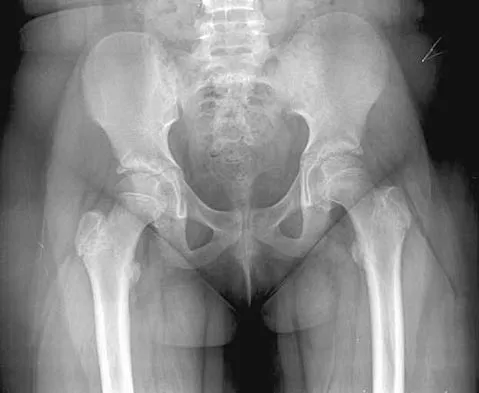
A 12-year-old obese boy presents with insidious onset of left knee pain and a limp. On physical exam, there is obligate external rotation of the left hip with passive hip flexion. What is the most likely diagnosis?
Explanation
Question 19
A patient with Li-Fraumeni syndrome develops an aggressive primary bone sarcoma. This syndrome is characterized by a germline mutation in which of the following genes?
Explanation
Question 20
Which of the following is a recognized complication specifically associated with hard-on-hard ceramic-on-ceramic bearing surfaces in total hip arthroplasty?
Explanation
Question 21
In an adult trauma patient, an atlantodens interval (ADI) greater than 3 mm on lateral cervical spine radiographs most specifically indicates incompetence of which stabilizing structure?
Explanation
Question 22
A Segond fracture observed on an AP radiograph of the knee is pathognomonic for an anterior cruciate ligament tear. This fracture represents a bony avulsion of the lateral capsule and which specific structure?
Explanation
Question 23
Which of the following physical examination maneuvers has the highest sensitivity for diagnosing carpal tunnel syndrome?
Explanation
Question 24
Current evidence suggests that managing acute Achilles tendon ruptures non-operatively with an early functional rehabilitation protocol, compared to surgical repair, results in:
Explanation
Question 25
Primary bone healing, characterized by Haversian remodeling and cutting cone formation without intermediate callus, requires which of the following mechanical environments?
Explanation
Question 26
An open diaphyseal tibial fracture presents with a 12 cm laceration and extensive periosteal stripping. Following debridement, there is adequate local soft tissue to cover the bone. What is the appropriate Gustilo-Anderson classification?
Explanation
Question 27
When treating an infant for developmental dysplasia of the hip (DDH) using a Pavlik harness, prolonged hyperflexion of the hips places the patient at highest risk for which complication?
Explanation
Question 28
Flexor tendon injuries in the hand historically carry a poor prognosis when occurring in "Zone II" due to the tight confines of the fibro-osseous sheath. What is the proximal anatomical boundary of Zone II?
Explanation
Question 29
During a primary total knee arthroplasty, placing the femoral component in excessive internal rotation relative to the epicondylar axis is most likely to result in which complication?
Explanation
Question 30
Which of the following intervertebral levels is the most common site for degenerative spondylolisthesis?
Explanation
Question 31
Denosumab is highly effective in the medical management of surgically unsalvageable giant cell tumors of bone. What is the precise molecular target of this medication?
Explanation
Question 32
The Remplissage procedure is utilized to manage significant engaging Hill-Sachs lesions following anterior shoulder dislocations. It involves capsulodesis and tenodesis of which muscle into the humeral head defect?
Explanation
Question 33
Normal articular hyaline cartilage is composed primarily of water, proteoglycans, and a highly organized collagen framework. Which collagen type constitutes over 90% of this collagenous framework?
Explanation
Question 34
A "fleck sign" observed on an anteroposterior radiograph of a trauma patient's foot is highly suggestive of a Lisfranc injury. This osseous fragment typically represents an avulsion from which anatomical location?
Explanation
Question 35
Due to its tenuous retrograde vascularity, the proximal pole of the scaphoid is highly susceptible to avascular necrosis after fracture. The primary blood supply to the proximal pole enters via vessels located at which anatomical landmark?
Explanation
Question 36
In an awake patient, what is clinically recognized as the earliest and most sensitive physical exam finding indicative of evolving acute compartment syndrome?
Explanation
Question 37
A 28-year-old male sustains a displaced basicervical femoral neck fracture. He undergoes closed reduction and internal fixation with three cancellous screws. Which of the following factors is most predictive of osteonecrosis of the femoral head in this patient?
Explanation
Question 38
A 12-year-old obese male presents with a 3-week history of left knee pain and a limp. Examination reveals obligate external rotation of the hip during flexion. Radiographs confirm a stable slipped capital femoral epiphysis (SCFE). During in situ pinning with a single screw, what is the ideal screw placement?
Explanation
Question 39
A 65-year-old female presents with progressive clumsiness in her hands and difficulty walking. Examination shows a positive Hoffmann sign bilaterally and hyperreflexia. MRI shows severe cervical stenosis at C4-C5 and C5-C6 with T2 signal change in the cord. Which physical exam finding is most specific for cervical myelopathy?
Explanation
Question 40
A 68-year-old female experiences recurrent posterior dislocations of her total hip arthroplasty. Revision surgery is planned. Radiographs and intraoperative evaluation reveal the acetabular component is well-fixed but retroverted. What is the most appropriate surgical management?
Explanation
Question 41
A 22-year-old female undergoes ACL reconstruction with a bone-patellar tendon-bone autograft. Six months postoperatively, she complains of anterior knee pain and difficulty ascending stairs. Exam shows a 10-degree extension deficit. What is the most likely cause of her extension deficit?
Explanation
Question 42
Following a Zone II flexor digitorum profundus (FDP) repair, what biomechanical property is most enhanced by adding an epitendinous suture to the core suture?
Explanation
Question 43
A 35-year-old female presents with progressive knee pain. Radiographs reveal an eccentric, lytic lesion in the distal femoral epiphysis extending to the subchondral bone, with no sclerotic margin. Biopsy shows multinucleated giant cells and mononuclear stromal cells. What is the standard initial surgical treatment?
Explanation
Question 44
A 24-year-old sustains a Lisfranc fracture-dislocation with lateral displacement of the 2nd through 5th metatarsals. Which structure is the primary stabilizing ligament of the normal Lisfranc joint complex?
Explanation
Question 45
Which type of bone healing occurs primarily under conditions of absolute stability, such as following open reduction and internal fixation with a compression plate?
Explanation
Question 46
A 72-year-old male presents 4 weeks after a total knee arthroplasty with acute onset of severe knee pain, erythema, and swelling. Aspiration yields a synovial fluid white blood cell count of 45,000 cells/mcL with 92% neutrophils. What is the most appropriate management?
Explanation
Question 47
A 4-month-old female infant is diagnosed with developmental dysplasia of the hip (DDH). Ultrasound confirms a dislocated left hip that is reducible. What is the most appropriate initial treatment?
Explanation
Question 48
A 45-year-old male sustains a Schatzker VI tibial plateau fracture. Which of the following complications is most specifically associated with this fracture pattern due to its high-energy mechanism?
Explanation
Question 49
A 70-year-old male with neurogenic claudication secondary to lumbar spinal stenosis is scheduled for decompression. Which ligament hypertrophies and contributes significantly to the dorsal compression of the thecal sac in this condition?
Explanation
Question 50
A 55-year-old male undergoes arthroscopic evaluation of a massive rotator cuff tear involving the supraspinatus and infraspinatus. Preoperatively, he exhibited a positive 'horn blower's' sign. Which muscle is primarily deficient?
Explanation
Question 51
When evaluating the mechanical properties of an orthopedic implant material, the 'yield point' on a stress-strain curve represents what phenomenon?
Explanation
Question 52
A 30-year-old male sustains a closed tibia fracture and develops suspected acute compartment syndrome. His blood pressure is 120/80 mmHg. Intracompartmental pressure testing is performed. At what pressure threshold is a four-compartment fasciotomy clearly indicated?
Explanation
Question 53
In the Ponseti method for correcting idiopathic clubfoot, what is the correct sequence of deformity correction?
Explanation
Question 54
A 45-year-old pregnant female at 32 weeks gestation presents with severe, bilateral carpal tunnel syndrome that is unresponsive to nighttime splinting and causes significant sleep deprivation. What is the most appropriate next step in management?
Explanation
Question 55
A 6-year-old boy presents with a completely displaced, extension-type Gartland III supracondylar humerus fracture. Which of the following neurologic deficits is most commonly associated with this specific injury pattern?
Explanation
Question 56
A 25-year-old man sustains a Pauwels type III femoral neck fracture. Biomechanically, what is the primary force that fixation constructs must overcome to prevent failure in this specific fracture pattern?
Explanation
Question 57
A 14-year-old boy is diagnosed with a destructive diaphyseal bone lesion with an "onion skin" periosteal reaction. Cytogenetic analysis reveals a t(11;22) chromosomal translocation. Which fusion protein is characteristic of this tumor?
Explanation
Question 58
A 3-month-old infant is being treated with a Pavlik harness for developmental dysplasia of the hip. The mother reports the infant has stopped kicking the left knee. What is the most likely cause of this complication?
Explanation
Question 59
A 32-year-old man is admitted with a closed tibia fracture. Which of the following objective measurements is most indicative of acute compartment syndrome?
Explanation
Question 60
In flexor tendon repair of the hand, which anatomical landmarks define the proximal and distal borders of "Zone II"?
Explanation
Question 61
A 22-year-old football player sustains a midfoot injury. Radiographs show a "fleck sign" in the first intermetatarsal space. The disrupted ligament primarily connects which two anatomical structures?
Explanation
Question 62
A 35-year-old woman with recurrent Giant Cell Tumor of the distal radius is treated with Denosumab. What is the precise mechanism of action of this medication?
Explanation
Question 63
An obese 12-year-old boy presents with left groin pain and a limp. On physical examination, as the affected hip is passively flexed, it demonstrates an obligatory motion. Which obligatory motion is classic for this condition?
Explanation
Question 64
A 24-year-old man sustains a proximal pole scaphoid fracture. The risk of avascular necrosis is high due to the retrograde blood supply of the scaphoid. Which artery is the primary source of this blood supply?
Explanation
Question 65
A trauma patient presents with an anteroposterior compression (APC) type III pelvic ring injury. A circumferential pelvic binder is applied. For maximum mechanical efficacy, the binder should be centered over which anatomic landmark?
Explanation
Question 66
A 65-year-old woman develops catching and popping in her knee 1 year after a Total Knee Arthroplasty (TKA). She undergoes arthroscopy which reveals a fibrosynovial nodule. This complication is most uniquely associated with which TKA design?
Explanation
Question 67
A 55-year-old diabetic patient presents with a swollen, erythematous, but painless foot. Radiographs show extensive bone fragmentation, joint subluxation, and debris. According to the Eichenholtz classification for Charcot arthropathy, which stage does this represent?
Explanation
Question 68
Articular cartilage is composed of multiple zones. Which zone contains the highest concentration of proteoglycans and the lowest concentration of water?
Explanation
Question 69
What process is most commonly used to eliminate free radicals in highly cross-linked polyethylene components used in total joint arthroplasty?
Explanation
Question 70
In a 25-year-old patient with a Pauwels type III femoral neck fracture, which fixation construct provides the greatest biomechanical stability against vertical shear forces?
Explanation
Question 71
Which of the following is the strongest clinical predictor for the development of avascular necrosis (AVN) following a slipped capital femoral epiphysis (SCFE)?
Explanation
Question 72
Which of the following radiographic anatomical features is most strongly associated with an increased risk of primary anterior cruciate ligament (ACL) rupture in female athletes?
Explanation
Question 73
A 32-year-old manual laborer presents with dorsal wrist pain. Radiographs reveal sclerosis and fragmentation of the lunate with carpal height collapse and a fixed scaphoid rotation (Lichtman Stage IIIB). What is the most appropriate surgical treatment?
Explanation
Question 74
During the evaluation of a 65-year-old male with cervical spondylotic myelopathy, the examiner flicks the distal phalanx of the middle finger, resulting in reflex flexion of the thumb and index finger. This physical examination finding indicates compression of which tract?
Explanation
Question 75
A 72-year-old patient presents with a first-time posterior dislocation of a total hip arthroplasty performed 12 years ago. The patient had no prior instability. What is the most likely underlying cause of this late dislocation?
Explanation
None
