Master ABOS Board Review: Scleroderma, Dwarfism, Infections, Osteomalacia | Part 26

Key Takeaway
This ABOS Board Review covers critical topics for orthopaedic surgeons, including systemic sclerosis manifestations, mesomelic dwarfism types and genetics, iatrogenic orthopaedic infection diagnosis and management, and the pathophysiology and clinical features of osteomalacia and rickets. Prepare for your board exam with these essential questions and explanations.
Master ABOS Board Review: Scleroderma, Dwarfism, Infections, Osteomalacia | Part 26
Comprehensive 100-Question Exam
00:00
Start Quiz
Question 1
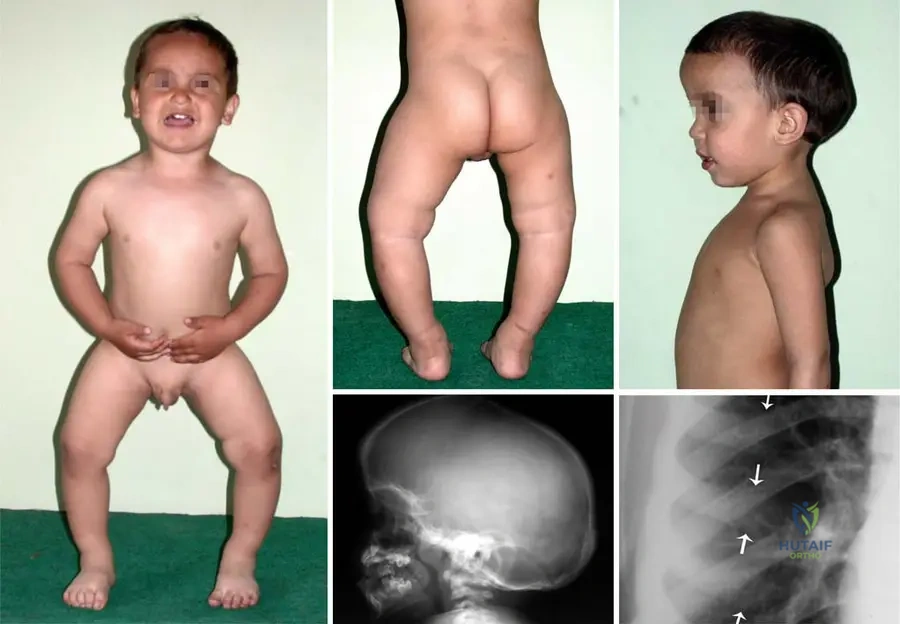
A 55-year-old female presents with vague generalized bone pain and proximal muscle weakness. Pelvic radiograph shows a transverse radiolucency in the superior pubic ramus.
Which of the following laboratory profiles is most consistent with her diagnosis?
Explanation
Question 2
A 42-year-old female with a history of systemic sclerosis presents with severe pain and a non-healing ulcer on the tip of her index finger. Radiographs show resorption of the terminal phalangeal tuft. Which of the following autoantibodies is most strongly associated with this specific radiographic finding?
Explanation
Question 3
A 6-month-old male with a known FGFR3 mutation presents with failure to thrive and episodes of central sleep apnea. What is the most appropriate next step in management?
Explanation
Question 4
A 2-year-old child presents with a limp and refuses to bear weight. Laboratory tests show an ESR of 45 mm/h and a CRP of 3.2 mg/dL. Joint aspiration reveals 60,000 WBCs/mcL. Standard agar cultures show no growth at 48 hours. What is the most likely causative organism?
Explanation
Question 5
A 48-year-old male develops progressive lower extremity weakness and multiple insufficiency fractures. Laboratory workup reveals profound hypophosphatemia, normal calcium, normal parathyroid hormone, and inappropriately low 1,25-dihydroxyvitamin D. What is the pathophysiologic mechanism of this patient's condition?
Explanation
Question 6
A newborn is noted to have short-limbed dwarfism, bilateral clubfeet, hitchhiker thumbs, and swelling of the external ear pinnae. A defect in which of the following is most likely responsible for this condition?
Explanation
Question 7
A 62-year-old male presents with increasing pain and malodorous drainage from a chronic sinus tract in his tibia that has been present for 35 years following an open fracture. A recent biopsy of the tract reveals malignant cells. What is the most common histologic subtype of this malignancy?
Explanation
Question 8
A 50-year-old female with systemic sclerosis presents with a painfully ischemic, cyanotic long finger digit despite conservative warming measures. Which of the following medications acts as a first-line therapy to promote vasodilation in this acute setting?
Explanation
Question 9
A 5-year-old boy presents with progressive bowing of his legs and short stature. His mother has a similar history and required bilateral corrective osteotomies as a teenager. Genetic testing confirms a PHEX mutation. Which of the following is the hallmark of the indicated medical treatment?
Explanation
Question 10
A 7-year-old boy with a known type II collagen (COL2A1) mutation is scheduled for bilateral hip reconstruction due to coxa vara. Preoperative assessment must include which of the following imaging modalities?
Explanation
Question 11
A 65-year-old male undergoes a two-stage revision for a chronic prosthetic joint infection. The organism isolated is Methicillin-sensitive Staphylococcus aureus. The success of targeted antibiotic therapy in this setting depends heavily on penetrating a biofilm. Which of the following antibiotics is most critical to include in the regimen for its unique anti-biofilm activity?
Explanation
Question 12
A 9-year-old girl presents with waddling gait, short stature, and early-onset osteoarthritis of the hips. Her facial features are entirely normal. Radiographs reveal delayed, fragmented epiphyseal ossification and normal interpedicular distances in the lumbar spine. Which gene is most likely mutated?
Explanation
Question 13
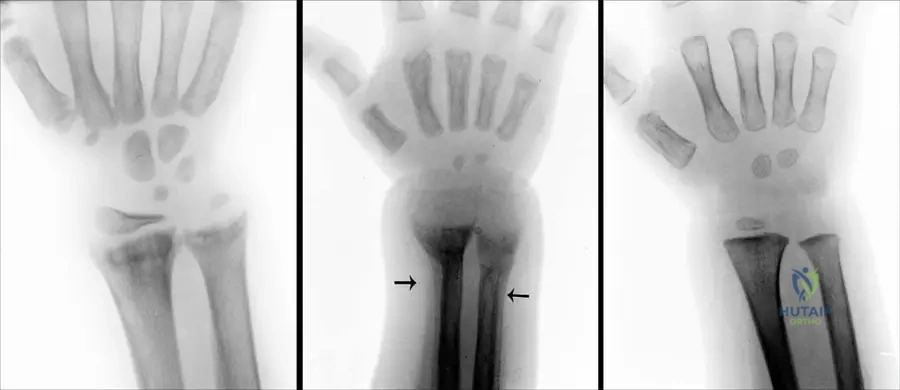
A 50-year-old patient with end-stage renal disease undergoes a transiliac bone biopsy. The histomorphometric analysis demonstrates wide osteoid seams and an increased mineralization lag time.
Which of the following underlying mechanisms best explains this specific finding?
Explanation
Question 14
A 14-year-old female presents for evaluation of shoulder hypermobility. She can easily approximate her shoulders anteriorly in the midline. Examination reveals delayed eruption of permanent teeth. What is the genetic inheritance pattern and associated gene mutation for this condition?
Explanation
Question 15
A 7-year-old child with sickle cell disease presents with fever, focal tibial pain, and swelling. MRI suggests diaphyseal osteomyelitis. Aspiration and blood cultures yield a Gram-negative, motile, non-lactose fermenting bacillus. What is the most appropriate directed antibiotic therapy?
Explanation
Question 16
A 12-year-old boy presents with mild short stature, generalized joint pain, and an early waddling gait. Radiographs show delayed epiphyseal ossification in multiple joints and a double-layered appearance of the patella on the lateral view. Spine radiographs are notably normal. What is the most likely diagnosis?
Explanation
Question 17
Which of the following radiographic findings is most characteristic of the spine in a patient with achondroplasia?
Explanation
Question 18
A 45-year-old female with systemic sclerosis (scleroderma) presents with chronic hand pain and fingertip ulcerations. Which of the following radiographic findings is most specifically associated with her condition?
Explanation
Question 19
A 55-year-old man presents with generalized bone pain and profound muscle weakness. Laboratory studies reveal hypophosphatemia, normal serum calcium, elevated alkaline phosphatase, and elevated FGF-23 levels. What is the most likely etiology of his osteomalacia?
Explanation
Question 20
A newborn is evaluated for severe limb shortening, a 'hitchhiker thumb' deformity, cauliflower ears, and a rigid cervical kyphosis. A mutation in which of the following genes is responsible for this condition?
Explanation
Question 21
When treating a periprosthetic joint infection caused by Staphylococcus aureus with retention of the hardware, rifampin is often added to the antibiotic regimen. What is the primary mechanism of action of rifampin?
Explanation
Question 22
A 6-year-old boy with X-linked hypophosphatemia (XLH) continues to have progressive lower extremity bowing despite standard oral phosphate and calcitriol therapy. Which of the following targeted therapies directly addresses the underlying pathophysiology?
Explanation
Question 23
An infant with achondroplasia is being evaluated by a pediatric orthopedist. The parents report episodes of apnea and increased tone in the extremities. What is the most critical anatomical region to evaluate immediately?
Explanation
Question 24
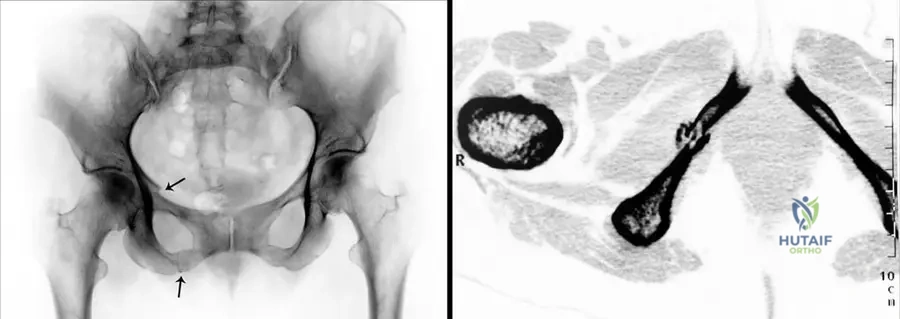
A 45-year-old female presents with diffuse bone pain. Radiographs demonstrate bilateral pseudofractures of the medial femoral neck.
If an iliac crest bone biopsy with double tetracycline labeling is performed, what is the expected histologic finding?
Explanation
Question 25
In children, acute hematogenous osteomyelitis most frequently affects which specific anatomic region of the long bone?
Explanation
Question 26
A 5-year-old child presents with disproportionate short stature and waddling gait. Unlike typical achondroplasia, the child has completely normal facial features and head circumference. Genetic testing reveals a mutation in the COMP gene. What is the diagnosis?
Explanation
Question 27
A patient with CREST syndrome is referred for orthopedic evaluation of painful subcutaneous nodules in the digits that occasionally extrude a chalky white material. Which specific autoantibody is most closely associated with this patient's systemic disease?
Explanation
Question 28
Which of the following statements most accurately distinguishes the underlying pathophysiology of osteomalacia from that of osteoporosis?
Explanation
Question 29
In the pathogenesis of periprosthetic joint infections, what is the primary function of the bacterial glycocalyx?
Explanation
Question 30
A 4-year-old child presents with a short trunk, severe coxa vara, and atlantoaxial instability. Radiographs demonstrate delayed ossification of the capital femoral epiphyses and a barrel-shaped chest. Genetic testing reveals a mutation in COL2A1. What is the diagnosis?
Explanation
Question 31
A 10-year-old patient with achondroplasia develops progressive symptomatic genu varum. What is the primary anatomical driver of this deformity?
Explanation
Question 32
Which of the following correctly describes Kingella kingae, an increasingly recognized cause of pediatric osteoarticular infections?
Explanation
Question 33
A hand surgeon is contemplating soft tissue release for severe joint contractures in a patient with diffuse cutaneous systemic sclerosis (scleroderma). What is the most critical perioperative complication the surgeon must anticipate?
Explanation
Question 34
A 2-year-old child presents with rickets-like skeletal deformities and early loss of deciduous teeth. Laboratory analysis shows marked osteomalacia with a notably low serum alkaline phosphatase level. What is the primary underlying defect?
Explanation
Question 35
A child with a known mucopolysaccharidosis presents with progressive myelopathy. Radiographs reveal severe odontoid hypoplasia and atlantoaxial instability. Biochemical testing shows abnormal accumulation of keratan sulfate. Which syndrome does this patient have?
Explanation
Question 36
In the lifecycle of a bacterial biofilm associated with orthopedic implants, what is the final stage that facilitates the spread of infection to new sites?
Explanation
Question 37
A 4-year-old boy presents with progressive bowing of the lower extremities. Labs show normal serum calcium, low serum phosphate, and elevated alkaline phosphatase. Genetic testing reveals a mutation in the PHEX gene. Which of the following is the primary mechanism of this disease?
Explanation
Question 38
A 45-year-old female with a history of systemic sclerosis presents with progressive shortening of her distal fingers and painful, chalky subcutaneous nodules on her fingertips. Radiographs reveal resorption of the terminal phalangeal tufts. What is the most appropriate initial management for the subcutaneous nodules if they become acutely inflamed but lack signs of systemic infection?
Explanation
Question 39
A 35-year-old male with achondroplasia presents with neurogenic claudication. He reports leg pain and numbness after walking 50 meters, which is relieved by sitting. Radiographs of the lumbar spine will most likely demonstrate which of the following anatomic abnormalities?
Explanation
Question 40
A 65-year-old male presents with chronic pain in his total knee arthroplasty, performed 3 years ago. Aspiration yields 3,500 WBC/uL with 75% PMNs. Alpha-defensin is positive. Synovial CRP is elevated. According to the 2018 ICM criteria, what is the next best step in management?
Explanation
Question 41
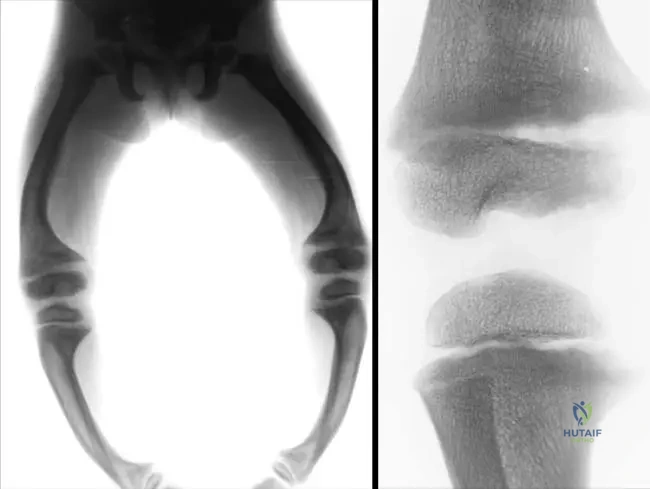
A 52-year-old male presents with severe diffuse bone pain and muscle weakness. Radiographs reveal multiple pseudofractures (Looser zones).
Labs demonstrate marked hypophosphatemia. A whole-body DOTATATE PET scan reveals a small soft-tissue mass in the plantar aspect of the foot. Resection of this mass will most likely normalize the level of which of the following?
Explanation
Question 42
A newborn is evaluated for multiple musculoskeletal anomalies. Examination reveals severe shortening of the limbs, bilateral clubfeet, "hitchhiker" thumbs, and swelling of the external ears (cauliflower ears). A mutation in which of the following genes is responsible for this condition?
Explanation
Question 43
A 50-year-old female with limited cutaneous systemic sclerosis (CREST syndrome) complains of hand stiffness and Raynaud's phenomenon. Which of the following autoantibodies is most highly associated with this patient's specific subtype of scleroderma?
Explanation
Question 44
A 14-month-old girl presents with a limp and refusal to bear weight on the right leg. She has a low-grade fever and a recent upper respiratory infection. Inflammatory markers are mildly elevated. Blood cultures are negative, but a joint aspiration of the knee grows a fastidious Gram-negative coccobacillus on blood agar. What is the most likely causative organism?
Explanation
Question 45
A bone biopsy from a patient with undiagnosed metabolic bone disease demonstrates abundant unmineralized osteoid seams that are abnormally thick (>15 micrometers). The mineralization lag time is significantly increased.
Which of the following conditions is most consistent with these histological findings?
Explanation
Question 46
A 5-year-old child presents with disproportionate short stature characterized by a short trunk and barrel chest. Radiographs reveal platyspondyly, delayed ossification of the femoral heads, and severe coxa vara. Visual and hearing assessments show myopia and sensorineural hearing loss. The primary defect involves which of the following collagens?
Explanation
Question 47
A 72-year-old male with an infected total hip arthroplasty undergoes a two-stage revision. During the extraction of the components, thick biofilm is noted on the prosthesis. Which of the following describes the primary characteristic of the bacteria within the deeper layers of this biofilm?
Explanation
Question 48
A patient with scleroderma presents with severe, refractory digital ischemia secondary to Raynaud's phenomenon, which has not responded to calcium channel blockers and PDE-5 inhibitors. What surgical intervention may be considered to improve digital perfusion?
Explanation
Question 49
A 7-year-old child presents with short-limb dwarfism, joint laxity, and early-onset osteoarthritis. Unlike achondroplasia, the patient's facial features and head circumference are completely normal. Radiographs show delayed epiphyseal ossification and irregular metaphyses. A mutation in the COMP (Cartilage Oligomeric Matrix Protein) gene is identified. What is the diagnosis?
Explanation
Question 50
A 60-year-old female with end-stage renal disease on hemodialysis presents with bilateral hip pain. Radiographs reveal pseudofractures in the femoral neck. Lab values show elevated PTH, hyperphosphatemia, and hypocalcemia. What is the primary cause of her impaired bone mineralization?
Explanation
Question 51
A 12-year-old boy is diagnosed with acute hematogenous osteomyelitis of the proximal tibia. Cultures grow Methicillin-resistant Staphylococcus aureus (MRSA). The patient has a known severe anaphylactic allergy to vancomycin. Which of the following intravenous antibiotics is the most appropriate alternative for targeting the MRSA?
Explanation
Question 52
A 6-month-old infant with achondroplasia is noted to have central apnea, brisk deep tendon reflexes, and hypotonia. An MRI of the craniocervical junction is obtained. What is the most critical complication that must be ruled out or treated urgently in this patient?
Explanation
Question 53
An orthopedic surgeon is planning a total joint arthroplasty in a 68-year-old patient with long-standing systemic sclerosis. Which of the following perioperative complications is this patient at the HIGHEST risk of developing compared to the general population?
Explanation
Question 54
Which of the following radiographic findings is considered pathognomonic for osteomalacia and typically occurs on the compression side of the bone?

Explanation
Question 55
A 22-year-old sexually active female presents with acute onset of right knee pain, swelling, and fever. She also reports migrating polyarthralgia over the past three days and a few painless pustular skin lesions on her hands. Synovial fluid aspiration shows 45,000 WBC/uL. What is the most likely pathogen?
Explanation
Question 56
A 6-year-old boy presents with bilateral hip pain and a waddling gait. Radiographs reveal bilateral, symmetric fragmentation and flattening of the femoral capital epiphyses, with normal acetabuli and normal spine radiographs. His father had similar early-onset arthritis. Which of the following best differentiates this condition from Legg-Calvé-Perthes disease?
Explanation
Question 57
A 5-year-old boy presents with progressive bowing of the legs and short stature. Labs show normal serum calcium, markedly low serum phosphate, and elevated alkaline phosphatase. Genetic testing reveals a mutation in the PHEX gene. Which of the following best explains the pathophysiology of his condition?
Explanation
Question 58
A 45-year-old female with a history of systemic sclerosis presents with severe fingertip pain and recurrent ulceration. Radiographs of the hands are most likely to demonstrate which of the following pathognomonic findings?
Explanation
Question 59
A 6-month-old infant with achondroplasia presents with hypotonia, central apnea during sleep, and hyperreflexia. What is the most appropriate next step in management?
Explanation
Question 60
A 65-year-old man presents with acute onset of right knee pain, swelling, and fever 3 weeks after a primary total knee arthroplasty. Aspiration yields a white blood cell count of 75,000 cells/uL with 92% neutrophils. The implant is well-fixed. What is the most appropriate surgical management?
Explanation
Question 61
A 52-year-old man presents with diffuse bone pain and proximal muscle weakness. Laboratory studies show hypophosphatemia, normal serum calcium, normal PTH, and elevated FGF23. A small mesenchymal tumor is found in his thigh. Complete surgical excision of the tumor will most likely lead to which of the following?
Explanation
Question 62
A newborn presents with short stature, severe rigid clubfeet, 'hitchhiker' thumbs, and cystic swelling of the pinnae (cauliflower ears). Which of the following gene mutations is most likely responsible for this condition?
Explanation
Question 63
A 45-year-old strict vegan presents with generalized bone pain and a waddling gait. Radiographs show transverse radiolucent bands in the femoral neck and pubic rami. If a bone biopsy were performed following double tetracycline labeling, what would be the expected finding?
Explanation
Question 64
A 2-year-old child presents with a limp, low-grade fever, and refusal to bear weight on the right leg. Hip aspiration yields synovial fluid with a WBC count of 45,000 cells/uL. Standard Gram stain and routine cultures are negative at 48 hours. What is the most appropriate method to identify the most likely causative organism?
Explanation
Question 65
A 50-year-old female with the CREST variant of scleroderma presents with a gangrenous tip of her index finger due to severe Raynaud phenomenon. She has failed conservative management. Before proceeding with surgical amputation, what intervention is recommended to optimize healing of the adjacent tissue?
Explanation
Question 66
Which of the following cervical spine manifestations is most characteristic of Spondyloepiphyseal Dysplasia Congenita (SEDC) but NOT typical for Achondroplasia?
Explanation
Question 67
A 45-year-old female presents with tightening of the skin on her fingers, dysphagia, and cold-induced digital vasospasm. Radiographs of her hands are most likely to demonstrate which of the following classic findings?
Explanation
Question 68
Achondroplasia is characterized by a disproportionate short stature. Which of the following accurately describes the primary genetic and cellular etiology of this condition?
Explanation
Question 69
A 60-year-old female with a history of celiac disease presents with generalized bone pain and proximal muscle weakness. Her radiographs demonstrate pseudofractures.
Which of the following laboratory profiles is most consistent with her diagnosis?
Explanation
Question 70
A 7-year-old boy with sickle cell disease presents with fever, focal tibial pain, and swelling. While Staphylococcus aureus remains the most common overall cause of osteomyelitis in this population, which of the following organisms is disproportionately more prevalent in patients with this underlying disease compared to the general pediatric population?
Explanation
Question 71
A newborn is evaluated for skeletal dysplasia. Examination reveals severe micromelia, "hitchhiker" thumbs, clubfeet, and cystic swelling of the pinnae (cauliflower ear). What is the underlying genetic defect?
Explanation
Question 72
A 45-year-old male presents with worsening lower extremity pain, muscle weakness, and multiple rib fractures. Laboratory studies reveal severe hypophosphatemia, normal calcium, elevated alkaline phosphatase, and low 1,25-dihydroxyvitamin D. PTH is normal. A PET scan reveals a small soft-tissue mass in the plantar aspect of his foot. Overproduction of which of the following substances by this tumor is responsible for his condition?
Explanation
Question 73
A 4-year-old boy presents with an acute onset of a limp and refuses to bear weight on his right leg. His temperature is 38.8°C (101.8°F). Laboratory tests show a WBC count of 13,500/mm³ and an ESR of 55 mm/hr. According to the Kocher criteria, what is the predictive probability that this child has septic arthritis of the hip?
Explanation
Question 74
A patient with diffuse systemic sclerosis (scleroderma) requires a reconstructive hand procedure. This patient is known to be at high risk for progressive interstitial lung disease. Which of the following autoantibodies is most highly associated with the diffuse form of this disease and pulmonary fibrosis?
Explanation
Question 75
A 6-year-old child presents with disproportionate short stature, normal craniofacial features, significant ligamentous laxity, and early-onset osteoarthritis of the hips. Radiographs show delayed epiphyseal ossification and platyspondyly with anterior beaking. A defect in which of the following genes is the most likely cause?
Explanation
Question 76
A 48-year-old woman presents with generalized bone pain and muscle weakness. Radiographs reveal bilateral radiolucent bands perpendicular to the cortex in her femoral necks.
Histological analysis of these bands would most likely demonstrate an accumulation of which of the following?
Explanation
Question 77
Which of the following describes the underlying pathophysiology of achondroplasia at the level of the physis?
Explanation
Question 78
A 45-year-old female with systemic sclerosis (scleroderma) suffers from severe, medically refractory Raynaud's phenomenon. She is scheduled for a digital sympathectomy. Which of the following is the primary anatomic target during this procedure?
Explanation
Question 79
An 18-month-old child presents with an acute monoarticular effusion of the knee, fever, and refusal to bear weight. Gram stain of the synovial aspirate is negative. Which of the following is the most sensitive method to isolate Kingella kingae from this patient's synovial fluid?
Explanation
Question 80
A 50-year-old male presents with profound muscle weakness and multiple pseudofractures. Laboratory studies show hypophosphatemia, normocalcemia, normal PTH, and inappropriately low 1,25-dihydroxyvitamin D. Which of the following is the most likely etiology?
Explanation
Question 81
A newborn presents with rhizomelic short stature, bilateral clubfeet, "hitchhiker" thumbs, and cystic swelling of the pinnae. Mutations in the SLC26A2 gene are suspected. Which of the following spinal deformities is most characteristic of this condition?
Explanation
Question 82
A 70-year-old man underwent a total hip arthroplasty 3 years ago. He had a dental extraction 4 weeks ago and now presents with 3 days of severe hip pain, erythema, and a temperature of 38.8°C. Aspiration yields 85,000 WBC/uL (95% neutrophils). What is the most appropriate initial surgical management?
Explanation
Question 83
Acro-osteolysis of the distal phalanges is frequently observed in patients with systemic sclerosis. Which of the following best describes the primary pathogenesis of this finding?
Explanation
Question 84
An 8-month-old male with achondroplasia presents for routine follow-up. Radiographs demonstrate a 30-degree thoracolumbar kyphosis. Neurologic exam is normal. What is the most appropriate management of the spinal deformity?
Explanation
Question 85
A 35-year-old patient on long-term phenytoin therapy develops osteomalacia. Which of the following best explains the mechanism of antiepileptic-induced bone disease?
Explanation
Question 86
A 5-year-old boy presents with short-trunk dwarfism, a waddling gait, myopia, and a history of cleft palate. Radiographs show delayed ossification of the femoral heads and severe coxa vara. He is diagnosed with spondyloepiphyseal dysplasia (SED) congenita. This disorder is caused by a mutation affecting which of the following proteins?
Explanation
Question 87
A 60-year-old diabetic patient presents with acute, severe leg pain out of proportion to exam findings, swelling, and bullae. In the operating room, an incision reveals "dishwater pus" and non-bleeding fascia. Which of the following is the most critical intervention for patient survival?
Explanation
Question 88
To confirm a suspected diagnosis of osteomalacia and assess bone turnover dynamics, an undecalcified bone biopsy is obtained.
Which of the following labeling agents is administered prior to the biopsy to evaluate the mineralization apposition rate?
Explanation
Question 89
In a patient with CREST syndrome, which of the following represents the most widely accepted orthopedic indication for surgical excision of calcinosis cutis lesions?
Explanation
Question 90
An adult male with achondroplasia presents with progressive neurogenic claudication and lower extremity weakness. Which of the following distinct anatomic features of the achondroplastic spine most directly causes this pathology?
Explanation
Question 91
Which of the following organisms is most heavily reliant on the production of a polysaccharide glycocalyx (slime layer) to adhere to orthopedic implants and evade host immune responses in chronic periprosthetic joint infections?
Explanation
Question 92
A 3-year-old child presents with short stature, ligamentous laxity, and a waddling gait. He had a normal appearance at birth and has a normal facial appearance. Radiographs show fragmented epiphyses. A mutation in the COMP gene is confirmed. What is the diagnosis?
Explanation
Question 93
A 5-year-old girl is diagnosed with X-linked hypophosphatemic rickets (PHEX mutation). Which of the following is the gold standard medical therapy to prevent progression of skeletal deformity?
Explanation
Question 94
During surgical debridement of chronic osteomyelitis, the surgeon removes a piece of dense, isolated bone. By definition, a sequestrum represents which of the following?
Explanation
Question 95
A 60-year-old female presents with severe hand deformities. Radiographs reveal prominent resorption of the terminal phalangeal tufts, preservation of the joint spaces, and diffuse subcutaneous calcifications. Marginal erosions are absent. This radiographic pattern is most pathognomonic for which of the following diseases?
Explanation
Question 96
A 48-year-old female with a history of Roux-en-Y gastric bypass presents with diffuse bone pain, muscle weakness, and a waddling gait. Radiographs demonstrate the findings shown in the provided image.
Which of the following best describes the primary underlying histologic pathogenesis of this condition?
Explanation
Question 97
A 12-month-old male with achondroplasia is brought to the clinic by his parents due to a noticeable "hump" in his lower back. Physical examination reveals a flexible thoracolumbar kyphosis that corrects when the child is suspended prone. Neurological examination is unremarkable. What is the most appropriate initial management?
Explanation
Question 98
A 5-year-old child presents with disproportionate short stature, a waddling gait, and profound joint laxity. Unlike classic achondroplasia, the child has completely normal facial features and intelligence. Radiographs show delayed epiphyseal ossification and irregular, fragmented metaphyses. A mutation in which of the following genes is most likely responsible?
Explanation
Question 99
A 54-year-old female with long-standing diffuse systemic sclerosis (scleroderma) presents with progressive, painful flexion contractures of her proximal and distal interphalangeal joints bilaterally. Radiographs show acro-osteolysis but no periarticular erosions. Which of the following is the most likely primary cause of her joint contractures?
Explanation
Question 100
A 2-year-old child presents with a low-grade fever, limp, and refusal to bear weight on the right leg. Inflammatory markers are only mildly elevated. A knee aspirate yields purulent synovial fluid, but standard Gram stain is negative. Which of the following fastidious pathogens is highly suspected and best identified using nucleic acid amplification testing (PCR)?
Explanation
None
