Comprehensive Orthopedic Deformity, LLD & Hip Biomechanics Board Review | Part 13
20 Jun 2026
55 min read
44 Views

Key Takeaway
ABOS Orthopedic Board Review Part 13 covers advanced deformity correction, limb length discrepancy (LLD) management, and hip biomechanics. Topics include Paley's principles, malunion osteotomy strategies, pelvic support osteotomy (PSO), and distraction osteogenesis, providing critical knowledge for orthopedic specialists and exam preparation.
Comprehensive Orthopedic Deformity, LLD & Hip Biomechanics Board Review | Part 13
Comprehensive 100-Question Exam
00:00
Start Quiz
Question 1
During a total hip arthroplasty, the surgeon medializes the acetabular component and increases the femoral offset. What is the combined effect on the hip joint reaction force (JRF) and abductor muscle force?
Explanation
Medializing the acetabulum decreases the body weight lever arm, and increasing offset increases the abductor lever arm. Both biomechanical alterations reduce the required abductor force and the total joint reaction force.
Question 2
According to the principles of deformity correction, if an osteotomy is performed exactly at the center of rotation of angulation (CORA) and the mechanical hinge is also placed at the CORA, what is the expected outcome regarding the bone ends?
Explanation
Placing both the osteotomy cut and the mechanical hinge axis directly at the CORA (Rule 1 of deformity correction) results in pure angular correction without translation.
Question 3
A 4-year-old girl presents with a congenital short femur resulting in a 2.5 cm leg length discrepancy (LLD). Using the Paley multiplier method, if her age- and gender-specific multiplier is approximately 1.5, what is her predicted LLD at skeletal maturity assuming constant inhibition?
Explanation
The multiplier method predicts the ultimate LLD at skeletal maturity by multiplying the current discrepancy by the age- and gender-specific multiplier. For this patient, 2.5 cm x 1.5 = 3.75 cm.
Question 4
A patient presents with symptomatic bilateral coxa valga. How does this specific proximal femoral deformity alter hip biomechanics compared to a normal neck-shaft angle?
Explanation
Coxa valga increases the neck-shaft angle, which decreases the femoral offset and shortens the abductor lever arm. This mechanical disadvantage requires increased abductor muscle force, thereby increasing the overall hip joint reaction force.
Question 5
A 12-year-old pre-menarchal girl presents with a 2.0 cm leg length discrepancy due to a previously treated left femoral shaft fracture resulting in overgrowth. Her bone age matches her chronologic age. What is the most appropriate management to achieve equal leg lengths at maturity?
Explanation
A 12-year-old girl has approximately 2 years of growth remaining. A distal femoral epiphysiodesis arrests approximately 1 cm of growth per year, reliably correcting a 2.0 cm discrepancy by skeletal maturity.
Question 6
In a diaphyseal deformity, if the osteotomy is performed at a level distinct from the center of rotation of angulation (CORA), but the mechanical hinge is placed exactly at the CORA, what is the geometric consequence?
Explanation
This illustrates Deformity Rule 2: placing the hinge at the CORA will fully correct the mechanical axis. However, if the osteotomy is made away from the CORA, obligate translation of the bone ends occurs.
Question 7
A patient presents with an apex posterior (recurvatum) deformity of the proximal tibia following premature closure of the anterior physis. Which of the following secondary clinical findings is most likely associated with this deformity?
Explanation
A proximal tibial recurvatum deformity decreases the normal posterior slope of the tibial plateau, leading to compensatory knee hyperextension. This structural change significantly increases patellofemoral joint contact pressures, often causing anterior knee pain.
Question 8
A patient with right hip osteoarthritis uses a cane in the left hand. By what primary biomechanical mechanism does this relieve pain in the right hip?
Explanation
Using a cane in the contralateral hand produces an upward force with a long lever arm from the affected hip. This generates a powerful counter-moment, significantly reducing the required abductor muscle force and the resultant joint reaction force.
Question 9
A 45-year-old man presents with a Pauwels type III femoral neck fracture nonunion. A valgus-producing intertrochanteric osteotomy is planned. What is the primary biomechanical goal of this procedure?
Explanation
A valgus osteotomy makes the fracture line more horizontal relative to the ground, decreasing the Pauwels angle. This mechanically converts destabilizing shear forces into stabilizing compressive forces, facilitating bony union.
Question 10
During gradual tibial lengthening using a circular external fixator, the patient develops a progressive equinus deformity of the ankle. What is the most common underlying cause of this specific complication?
Explanation
As the tibia is lengthened, the gastrocnemius-soleus complex fiercely resists stretching. This leads to a relative shortening of the Achilles tendon compared to the lengthened bone, resulting in an equinus contracture if not aggressively managed with physical therapy and splinting.
Question 11
A patient exhibits a compensated Trendelenburg gait characterized by leaning the trunk laterally over the affected hip during the stance phase. What is the precise biomechanical consequence of this maneuver?
Explanation
Leaning the trunk over the affected, weak hip shifts the body's center of gravity closer to the hip's center of rotation. This dramatically decreases the body weight lever arm, thereby reducing the necessary counter-force required from the weakened abductors.
Question 12
A patient presents with a mid-diaphyseal tibial deformity. If a single-cut opening wedge osteotomy is placed precisely at the CORA, what secondary physical effect on the limb is expected?
Explanation
An opening wedge osteotomy corrects the angular deformity by creating a wedge-shaped gap on the convex side while hinging on the concave cortex. This invariably results in an increase in the overall absolute length of the bone segment.
Question 13
During revision total hip arthroplasty for severe acetabular bone loss, the surgeon accepts a "high hip center" (superior placement of the acetabular component without medialization). How does this position affect hip biomechanics?
Explanation
A high and lateral hip center displaces the center of rotation away from the abductor origin. This shortens the abductor muscles, decreases their moment arm, and drastically increases the force they must generate, thereby increasing total joint reaction force.
Question 14
A 16-year-old male undergoes full-length standing lower extremity radiographs. The mechanical axis line (Mikulicz line) is drawn from the center of the femoral head to the center of the ankle plafond. In a normal lower extremity, where should this line pass relative to the knee joint center?
Explanation
In a healthy, normally aligned lower extremity, the mechanical axis passes slightly medial to the center of the knee joint (typically 1 to 8 mm). This anatomical baseline places slightly higher physiologic loading on the medial compartment.
Question 15
A 3-year-old child with Congenital Femoral Deficiency (CFD) has a stable hip and knee (Paley Type 1) and a predicted LLD at skeletal maturity of 12 cm. Which of the following is the most appropriate long-term reconstructive strategy for achieving limb equalization?
Explanation
For a large predicted LLD (> 8 cm) in a patient with stable joints (Type 1 CFD), limb reconstruction is feasible but cannot be safely done in one setting. It requires staged lengthening procedures (e.g., at ages 4, 8, and 14), often augmented by contralateral epiphysiodesis.
Question 16
A 65-year-old man with severe right hip osteoarthritis is advised to use a cane to offload the affected joint. Which of the following biomechanical descriptions accurately explains the primary benefit of proper cane usage?
Explanation
A cane should be held in the contralateral hand. It creates a large counter-moment that assists the hip abductors, drastically reducing the abductor force required to keep the pelvis level, thereby decreasing the total hip joint reaction force.
Question 17
According to Paley's principles of deformity correction, which of the following accurately describes Osteotomy Rule 1?
Explanation
Osteotomy Rule 1 states that placing both the osteotomy and the mechanical hinge at the Center of Rotation of Angulation (CORA) results in pure angular correction without translation of the bone ends.
Question 18
During a complex revision total hip arthroplasty, the surgeon places the acetabular component in a superior and medial position (high hip center). Assuming femoral lateralization is not altered, what is the expected biomechanical consequence on the hip joint?
Explanation
A high hip center displaces the center of rotation superiorly and medially. Without increased femoral offset, this shortens the abductor moment arm and lengthens the body weight moment arm, leading to a significantly higher joint reaction force.
Question 19
When analyzing full-length standing lower extremity radiographs for a coronal plane deformity, what is the normal accepted range for the mechanical Lateral Distal Femoral Angle (mLDFA)?
Explanation
The normal mechanical lateral distal femoral angle (mLDFA) ranges from 85 to 90 degrees, with an average of 87 to 88 degrees. Angles less than 85 degrees indicate a valgus deformity, while those greater than 90 degrees indicate varus.
Question 20
A 10-year-old boy is diagnosed with developmental coxa vara. Biomechanically, how does this deformity alter the forces acting on the proximal femur?
Explanation
Coxa vara decreases the neck-shaft angle, which anatomically lengthens the abductor moment arm, improving abductor efficiency. However, it also creates a longer perpendicular distance from the load vector to the neck, increasing the bending moment and the risk of fracture.
Question 21
A 10-year-old girl suffers a completely displaced Salter-Harris type IV fracture of the distal femur resulting in premature complete physeal closure. Assuming skeletal maturity is reached at age 14, what is the projected final leg length discrepancy?
Explanation
The distal femoral physis grows at approximately 9 mm per year. With 4 years of growth remaining (from age 10 to 14), the projected discrepancy is 4 years x 9 mm/year = 36 mm, or 3.6 cm.
Question 22
A surgeon is planning a deformity correction using an external fixator. Due to poor skin quality at the apex, the osteotomy must be placed 3 cm proximal to the Center of Rotation of Angulation (CORA), while the mechanical hinge remains exactly at the CORA. What is the expected geometric outcome according to Osteotomy Rule 2?
Explanation
Osteotomy Rule 2 states that if the osteotomy is made away from the CORA but the mechanical hinge is maintained at the CORA, the mechanical axis will realign through angular correction accompanied by translation of the bone fragments.
Question 23
In a patient undergoing primary total hip arthroplasty, the surgeon uses a high-offset femoral stem instead of a standard stem. What is the primary biomechanical advantage of this decision?
Explanation
Increasing femoral offset lengthens the abductor moment arm, making the abductor muscles biomechanically more efficient. This reduces the muscle force required for pelvic stability, thereby significantly decreasing the joint reaction force.
Question 24
A patient with severe unilateral hip abductor weakness demonstrates a classic Trendelenburg gait. Biomechanically, how does shifting the torso laterally over the affected hip compensate for this weakness?
Explanation
In a Trendelenburg gait, the patient shifts their torso over the affected hip to move their center of gravity closer to the joint's center of rotation. This drastically reduces the body weight moment arm, decreasing the required abductor force.
Question 25
Moving the hip center of rotation medially and inferiorly during total hip arthroplasty has what primary effect on hip biomechanics?
Explanation
Medializing and inferiorly translating the hip center of rotation increases the abductor moment arm and decreases the body weight moment arm. This significantly reduces the overall joint reaction force across the hip.
Question 26
When evaluating a lower extremity deformity, the mechanical axis of the proximal segment and the mechanical axis of the distal segment intersect at a specific point. What is this point defined as?
Explanation
The Center of Rotation of Angulation (CORA) is defined as the intersection of the proximal and distal anatomical or mechanical axes of a deformed bone segment in a given plane.
Question 27
A 4-year-old girl has a 2 cm congenital femoral deficiency. Using the Paley multiplier method, what is the expected limb length discrepancy at skeletal maturity? (Assume the multiplier for girls at age 4 is approximately 2.0)
Explanation
The Paley multiplier method predicts limb length discrepancy at maturity by multiplying the current discrepancy by an age- and gender-specific multiplier. For a 4-year-old girl, the multiplier is roughly 2.0, yielding a 4 cm predicted discrepancy.
Question 28
According to Paley's osteotomy rules, if the osteotomy line and the hinge axis are both placed directly at the Center of Rotation of Angulation (CORA), what is the resulting correction?
Explanation
Paley's Osteotomy Rule 1 states that if the osteotomy line and the hinge axis both pass through the CORA, a pure angular correction is achieved without any translation of the bone segments.
Question 29
If a deformity correction osteotomy is performed at a site different from the CORA, but the hinge is appropriately placed at the CORA, what occurs during the correction process?
Explanation
Paley's Osteotomy Rule 2 dictates that if the hinge is at the CORA but the osteotomy is at a different level, the correction will result in angulation along with translation, keeping the mechanical axes collinear.
Question 30
A patient with advanced right hip osteoarthritis is advised to use a cane. In which hand should the cane be held, and what is the primary biomechanical rationale?
Explanation
A cane should be held in the contralateral (left) hand. It exerts an upward force that creates a moment opposing body weight, significantly decreasing the required abductor muscle force and resultant joint reaction force.
Question 31
When analyzing coronal plane alignment of the lower extremity, what is the normal mechanical lateral distal femoral angle (mLDFA)?
Explanation
The normal mechanical lateral distal femoral angle (mLDFA) is 87 degrees, with a typical normal range between 85 and 90 degrees.
Question 32
At skeletal maturity, a healthy, asymptomatic patient is diagnosed with a projected leg length discrepancy of 1.5 cm. What is the most appropriate initial management?
Explanation
Limb length discrepancies less than 2.0 cm at skeletal maturity are typically asymptomatic and well-tolerated. Observation without any active intervention or shoe lift is the most appropriate management.
Question 33
In evaluating sagittal plane deformities of the proximal tibia, what is the normal posterior proximal tibial angle (PPTA)?
Explanation
The normal posterior proximal tibial angle (PPTA) is 81 degrees (range 77-84 degrees). This parameter describes the normal posterior slope of the tibial plateau in the sagittal plane.
Question 34
A 12-year-old boy undergoing tibial lengthening with a circular external fixator experiences premature consolidation of the bony regenerate. Which of the following factors most strongly predisposes to this specific complication?
Explanation
Premature consolidation occurs when the bone heals before the target length is achieved, typically due to a distraction rate that is too slow (e.g., 0.25 mm/day). The standard target rate for distraction osteogenesis is roughly 1.0 mm/day.
Question 35
A patient develops coxa vara following a malunited intertrochanteric fracture. How does this structural deformity primarily alter hip biomechanics?
Explanation
Coxa vara decreases the neck-shaft angle, which lengthens the abductor moment arm (improving abductor mechanical advantage) but significantly increases shear forces across the femoral neck, risking nonunion or failure.
Question 36
An oblique plane deformity of the tibia consists of 15 degrees varus in the coronal plane and 20 degrees procurvatum in the sagittal plane. How is the true magnitude of this oblique deformity calculated?
Explanation
An oblique plane deformity is the vector sum of the coronal and sagittal deformities. Its true magnitude is calculated using the Pythagorean theorem (the square root of the sum of the squares of the two orthogonal angles).
Question 37
During a proximal tibial lengthening procedure, a patient acutely develops an inability to actively dorsiflex the ankle and extend the great toe. Which structure is compromised, and what is the immediate initial management?
Explanation
The common peroneal nerve is highly susceptible to stretch injury during proximal tibial lengthening. Initial management includes stopping the distraction and flexing the knee (with plantarflexion of the ankle) to acutely relieve tension on the nerve.
Question 38
An uncompensated Trendelenburg gait in a patient with a right hip abductor deficiency is characterized by which of the following kinematic patterns during the stance phase on the right leg?
Explanation
In an uncompensated Trendelenburg gait, weak right hip abductors fail to maintain a level pelvis during right single-leg stance, causing the contralateral (left) pelvis to drop while the trunk remains vertically oriented.
Question 39
According to Paley's Osteotomy Rule 3, if the osteotomy and the hinge are both placed away from the Center of Rotation of Angulation (CORA), what is the expected outcome of the deformity correction?
Explanation
Osteotomy Rule 3 states that if the osteotomy and hinge axis are placed outside the CORA, angular correction will result in translation, leaving the mechanical axes parallel but non-collinear (producing a secondary translation deformity).
Question 40
When utilizing the Green-Anderson growth remaining charts for predicting limb length discrepancy, which variable is most critical for accurate assessment?
Explanation
The Green-Anderson growth remaining charts strictly rely on skeletal bone age (typically determined via left hand and wrist radiographs) rather than chronological age to accurately predict remaining growth of the lower extremities.
Question 41
During a normal single-leg stance, the joint reaction force acting across the hip joint is approximately how many times the individual's total body weight?
Explanation
During single-leg stance, the hip joint reaction force is approximately 2.5 to 3.0 times body weight. This is the sum of the force of body weight and the substantial abductor muscle force required to maintain pelvic equilibrium.
Question 42
The Taylor Spatial Frame utilizes a hexapod construct based on the Stewart-Gough platform. How many degrees of freedom does this system provide for simultaneously correcting complex deformities?
Explanation
The Taylor Spatial Frame (a hexapod fixator) allows for simultaneous deformity correction in six degrees of freedom: angulation and translation in both the coronal and sagittal planes, axial rotation, and axial length.
Question 43
In a mechanically neutral lower extremity, where does the mechanical axis (Mikulicz line) pass in relation to the knee joint center?
Explanation
The normal mechanical axis of the lower extremity passes directly through or just slightly medial (typically 1-3 mm) to the center of the knee joint. Deviation from this defines a varus or valgus mechanical axis deviation (MAD).
Question 44
During total hip arthroplasty for developmental dysplasia of the hip (DDH), placing the acetabular component in a "high hip center" without adequate lateralization has what primary biomechanical consequence?
Explanation
A high hip center inherently decreases the abductor moment arm and shortens the resting length of the abductor musculature. This reduces their mechanical efficiency, requiring a higher force output and thereby increasing the resultant joint reaction forces.
Question 45
A patient with severe unilateral hip osteoarthritis uses a cane in the contralateral hand. How does this mechanical intervention primarily alter the biomechanics of the affected hip during the stance phase?
Explanation
Using a cane in the contralateral hand provides an upward counter-moment to gravity. This significantly decreases the force required by the hip abductors to maintain a level pelvis, thereby greatly reducing the overall joint reaction force on the affected hip.
Question 46
According to the principles of deformity correction (Osteotomy Rule 2), if an osteotomy is performed at a level separate from the Center of Rotation of Angulation (CORA), but the Axis of Correction of Angulation (ACA) still passes through the CORA, what is the expected geometric outcome?
Explanation
Osteotomy Rule 2 states that when the ACA passes through the CORA but the osteotomy is made at a different level, the correction will result in both angulation and translation at the osteotomy site. This translation is mathematically necessary to realign the mechanical axis.
Question 47
A 10-year-old girl (skeletal age 10) presents with a predicted leg length discrepancy of 3.2 cm at maturity. Assuming growth follows the Menelaus rule, at what approximate skeletal age should a distal femoral epiphysiodesis be performed to equalize her limb lengths?
Explanation
Using the Menelaus rule, the distal femur grows approximately 10 mm (1 cm) per year, and girls cease growth at skeletal age 14. To correct a 3.2 cm discrepancy, approximately 3 years of growth arrest are needed, indicating the procedure should be performed at skeletal age 11.
Question 48
During a total hip arthroplasty for developmental dysplasia, the surgeon places the acetabular component in a 'high hip center' (superior and lateral) position. What is the primary biomechanical consequence of this placement?
Explanation
Placing the hip center superiorly and laterally shortens the abductor moment arm. This requires the abductor muscles to generate significantly more force to stabilize the pelvis, which consequently increases the overall joint reaction force.
Question 49
In a 3-year-old child presenting with asymmetric genu varum, which radiographic parameter is the most reliable predictor that the deformity is infantile Blount disease progressing to require surgical intervention, rather than resolving physiologic bowing?
Explanation
The metaphyseal-diaphyseal angle (MDA) of Drennan is highly prognostic in early tibia vara. An MDA greater than 16 degrees strongly correlates with the progression of infantile Blount disease requiring surgery.
Question 50
A 12-year-old boy is undergoing tibial lengthening via distraction osteogenesis. Serial radiographs demonstrate premature consolidation of the regenerate bone. Which of the following parameters of the Ilizarov method was most likely applied incorrectly?
Explanation
Premature consolidation typically occurs when the rate of distraction is too slow or the latency period (the time between osteotomy and the start of distraction) is too short. In robust healers like children, waiting too long before distracting allows the osteotomy to bridge completely.
Question 51
A patient is diagnosed with severe coxa vara (neck-shaft angle < 110 degrees). How does this proximal femoral morphology uniquely alter the biomechanics of the hip joint?
Explanation
Coxa vara lateralizes the greater trochanter, which increases the abductor moment arm. This improved mechanical advantage decreases the required abductor force and the total joint reaction force, although it dramatically increases the bending moment across the femoral neck.
Question 52
During deformity planning for a varus knee, the Joint Line Convergence Angle (JLCA) is measured at 7 degrees medially convergent. The normal JLCA is 0 to 2 degrees. What does this abnormal JLCA strongly imply?
Explanation
An abnormal JLCA indicates an intra-articular source of deformity. In a varus knee with a medially convergent JLCA, this is typically due to asymmetric medial joint space narrowing (cartilage loss) or lateral ligamentous laxity.
Question 53
The Paley Multiplier method is frequently used to predict leg length discrepancy at skeletal maturity for patients with congenital femoral deficiency. What is the fundamental assumption of this predictive model?
Explanation
The Multiplier method for congenital limb deficiencies assumes a constant percentage of growth inhibition. This means the affected limb grows at a consistently slower proportional rate compared to the normal limb throughout childhood.
Question 54
A patient undergoes total hip arthroplasty. During templating, the surgeon plans to increase the femoral offset compared to the patient's native anatomy. How will this purely biomechanical change affect the required abductor muscle force and the total joint reaction force (JRF) during single-leg stance?
Explanation
Increasing femoral offset extends the abductor moment arm. A longer moment arm reduces the required abductor muscle force to balance the pelvis, which consequently decreases the overall joint reaction force across the hip.
Question 55
According to Paley's rules of deformity correction, if a corrective osteotomy is performed at a diaphyseal level different from the Center of Rotation of Angulation (CORA), but the axis of correction (hinge) is placed exactly at the CORA, what is the resulting biomechanical effect on the bone segments?
Explanation
Paley's Rule 2 dictates that placing the hinge at the CORA but making the osteotomy at a different level ensures the proximal and distal mechanical axes realign collinearly. However, this geometry forces the bone ends to translate relative to each other at the osteotomy site.
Question 56
A 4-year-old girl presents with a congenital femoral deficiency resulting in a current leg length discrepancy (LLD) of 2.5 cm. Assuming the Paley multiplier for a 4-year-old girl is approximately 2.0, what is her predicted LLD at skeletal maturity?
Explanation
Congenital deformities typically maintain a constant ratio of shortening throughout growth. Using the multiplier method, the current discrepancy (2.5 cm) multiplied by the age- and sex-specific multiplier (2.0) predicts a 5.0 cm LLD at maturity.
Question 57
A patient with severe unilateral hip osteoarthritis exhibits a compensated Trendelenburg gait, characterized by excessive lateral leaning of the trunk over the affected hip during the stance phase. What is the primary biomechanical advantage of this gait modification?
Explanation
Leaning the trunk laterally shifts the body's center of gravity closer to the center of the affected femoral head. This significantly decreases the body weight moment arm, thereby reducing the force required by the weakened hip abductors and lowering the joint reaction force.
Question 58
When programming a hexapod external fixator (e.g., Taylor Spatial Frame) for complex deformity correction, which of the following defines the specific point in three-dimensional space around which the entire mathematical correction is referenced?
Explanation
In hexapod software, the "origin" is the mathematical point in space (usually designated at the CORA or a specific point on the bone) around which all angular and translational corrections are calculated.
Question 59
A non-ambulatory child with severe cerebral palsy develops bilateral spastic coxa valga. How does the pathophysiology of coxa valga alter the normal biomechanics of the hip joint?
Explanation
Coxa valga is characterized by an increased neck-shaft angle, which anatomically decreases the horizontal femoral offset. This shortens the abductor moment arm, reducing the mechanical advantage of the abductors and increasing the joint reaction force.
Question 60
A patient is undergoing tibial lengthening via distraction osteogenesis (Ilizarov method). Radiographs at week 4 reveal premature consolidation of the regenerate bone. Which of the following parameters is the most likely cause of this complication?
Explanation
A distraction rate of 0.5 mm/day is too slow and heavily predisposes the highly osteogenic regenerate to prematurely consolidate. The standard optimal rate is 1.0 mm/day, typically divided into four 0.25 mm increments.
Question 61
A 10-year-old boy is scheduled for a percutaneous epiphysiodesis of the distal femur to address a predicted 3 cm leg length discrepancy. To reliably arrest growth and prevent iatrogenic angular deformity, what is the minimum required anatomical ablation of the physis?
Explanation
Successful epiphysiodesis requires complete and symmetric destruction of at least the central 50% to 70% of the growth plate. Unequal or insufficient ablation can lead to continued asymmetric growth, causing progressive varus or valgus deformities.
Question 62
A patient presents with a multi-apical bowing deformity of the tibial diaphysis. The surgeon plans a single corrective osteotomy located exactly halfway between the two Centers of Rotation of Angulation (CORAs), with the hinge placed at the osteotomy site. What will be the alignment outcome based on Paley's rules?
Explanation
According to Paley's Rule 3, if both the osteotomy and the correction hinge are placed at a level away from the CORA, the proximal and distal mechanical axes will become parallel but not collinear, resulting in a pure translational deformity.
Question 63
In the standard evaluation of normal lower extremity mechanical alignment using a full-length standing anteroposterior radiograph, what are the normal ranges for the mechanical lateral distal femoral angle (mLDFA) and the mechanical medial proximal tibial angle (mMPTA)?
Explanation
The normal mLDFA is approximately 87 degrees (range 85-90), and the normal mMPTA is also approximately 87 degrees (range 85-90). This combined anatomy keeps the knee joint line horizontal to the ground during normal single-leg stance.
Question 64
A medial opening-wedge high tibial osteotomy (HTO) is performed for a patient with medial compartment osteoarthritis. Because of the triangular cross-section of the proximal tibia, how must the opening gap be contoured to maintain the patient's native posterior tibial slope?
Explanation
Due to the natural posterior slope and the triangular shape of the proximal tibia, an opening-wedge HTO must have a smaller anterior gap relative to the posterior gap. A symmetric opening will inadvertently increase the posterior tibial slope.
Question 65
A 65-year-old male with symptomatic severe right hip osteoarthritis is instructed to use a cane for ambulation. To maximally decrease the joint reaction force on the right hip, in which hand should the cane be held and what is the biomechanical rationale?
Explanation
The cane should be held in the contralateral (left) hand. The upward ground reaction force through the cane produces a torque on the pelvis that acts in the same direction as the affected hip's abductor muscles, drastically reducing their required force and the resulting joint reaction force.
Question 66
A 14-year-old is undergoing 5 cm of femoral lengthening using a monolateral external fixator. During the 5th week of distraction, the patient develops a 20-degree knee flexion contracture and struggles with physical therapy. Radiographs show excellent regenerate bone formation. What is the most appropriate initial management?
Explanation
Soft tissue resistance, particularly knee flexion contractures from the hamstrings and IT band, is a common complication during femoral lengthening. The standard initial management is to slow the rate of distraction to allow soft tissue adaptation while intensifying physical therapy and dynamic splinting.
Question 67
A patient with severe right hip osteoarthritis uses a cane in the left hand. What is the primary biomechanical mechanism by which this reduces the right hip joint reaction force (JRF)?
Explanation
Using a cane in the contralateral hand provides an upward floor reaction force at a long distance from the hip center, counteracting the body weight moment. This significantly reduces the force required by the abductor muscles, thereby decreasing the overall hip JRF.
Question 68
In deformity planning, the center of rotation of angulation (CORA) is determined. According to Paley's osteotomy rules, what occurs if the osteotomy is performed at a level different from the CORA, but the mechanical hinge is placed exactly at the CORA?
Explanation
Paley's Rule 2 states that if the hinge is at the CORA but the osteotomy is at a different level, the mechanical axis will fully realign. This occurs through a combination of angulation and translation of the bone ends at the osteotomy site.
Question 69
A 10-year-old girl with a right distal femoral physeal arrest presents with a 3 cm leg length discrepancy. Her bone age matches her chronological age. Assuming growth ceases at age 14, and using the rule of thumb for physeal growth, what is the most appropriate timing for a contralateral distal femoral epiphysiodesis?
Explanation
The contralateral distal femur grows at approximately 9 mm/year. To correct a 30 mm LLD, she needs 3.33 years of growth remaining (30 / 9). Subtracting 3.33 from skeletal maturity at age 14 yields an ideal surgical age of 10.67 years.
Question 70
A patient with right hip osteoarthritis is advised to use a cane for ambulation. In which hand should the cane be held, and what is the primary biomechanical rationale for this intervention to decrease the hip joint reaction force?
Explanation
Using a cane in the contralateral hand reduces the hip joint reaction force by creating an upward ground reaction force with a long moment arm. This counter-torque significantly decreases the force required by the ipsilateral hip abductors to maintain a level pelvis during the single-leg stance phase.
Question 71
According to the rules of deformity correction
, if an osteotomy is performed at a level different from the center of rotation of angulation (CORA), but the mechanical hinge is placed exactly at the CORA, what is the expected geometric result?
, if an osteotomy is performed at a level different from the center of rotation of angulation (CORA), but the mechanical hinge is placed exactly at the CORA, what is the expected geometric result?
Explanation
Osteotomy rule 2 states that if the osteotomy is off the CORA but the hinge axis is on the CORA, the bone ends will angulate and translate relative to each other. This translation is functionally required to perfectly realign the mechanical axis.
Question 72
A 10-year-old girl with a predicted leg length discrepancy of 3 cm at skeletal maturity is scheduled for a distal femoral epiphysiodesis. According to the Menelaus method and Green-Anderson growth data, approximately how much lower extremity growth per year is expected specifically from the distal femur?
Explanation
The distal femur contributes approximately 10 mm (3/8 inch) of growth per year until skeletal maturity. In contrast, the proximal tibia contributes approximately 6 mm (1/4 inch) per year.
Question 73
A pediatric patient with developmental coxa vara presents with a neck-shaft angle of 100 degrees. Compared to a normal hip biomechanical model, which of the following describes the altered forces across the proximal femur?
Explanation
In coxa vara, the elevated greater trochanter lengthens the abductor moment arm, which increases the abductor mechanical advantage and lowers the overall joint reaction force. However, the horizontal orientation of the femoral neck significantly increases the bending and shear forces across the neck, predisposing to pseudarthrosis.
Question 74
An infant is evaluated for limb deformity and diagnosed with fibular hemimelia. Which of the following is the most characteristic clinical and radiographic presentation associated with this condition?
Explanation
Fibular hemimelia is the most common congenital long bone deficiency and classically presents with anteromedial bowing of the tibia. It is strongly associated with absent lateral rays of the foot, tarsal coalition, an absent ACL, and a ball-and-socket ankle joint.
Question 75
The Menelaus method is a simplified arithmetic rule used to estimate remaining growth for timing epiphysiodesis in leg length discrepancies. This method assumes that lower extremity growth ceases at what ages for girls and boys, respectively?
Explanation
The Menelaus arithmetic method simplifies growth remaining calculations by assuming growth ceases at age 14 for girls and age 16 for boys. It applies standard growth rates of 10 mm/yr for the distal femur and 6 mm/yr for the proximal tibia during these remaining years.
Question 76
A patient exhibits a compensated Trendelenburg lurch to the right side during the stance phase of the right leg. Biomechanically, what is the primary purpose of this compensatory trunk shift?
Explanation
A compensated Trendelenburg gait involves leaning the trunk over the affected hip during stance. This shifts the body's center of gravity laterally, directly over the hip joint, which drastically reduces the body weight moment arm and minimizes the force required by the weak abductors.
Question 77
According to the Aitken classification of Proximal Focal Femoral Deficiency (PFFD), a Class A deficiency is characterized by which of the following radiographic findings at skeletal maturity?
Explanation
In Aitken Class A PFFD, the femoral head is present in the acetabulum, and the initial cartilaginous connection between the head and the shaft eventually ossifies. This ultimately results in an intact bony connection, albeit with a severely shortened femur and significant coxa vara.
Question 78
During a revision total hip arthroplasty, the hip center of rotation is inadvertently placed 2 cm superior and 2 cm lateral to its anatomic location. How does this altered hip center mechanically affect the required abductor muscle force and the resultant joint reaction force (JRF)?
Explanation
Placing the hip center superiorly and laterally shortens the abductor moment arm and lengthens the body weight moment arm. This mechanical disadvantage requires much higher abductor muscle forces to maintain pelvic stability, which proportionally increases the joint reaction force.
Question 79
The Taylor Spatial Frame utilizes six independent struts to correct multidirectional deformities simultaneously. This external fixation system is based mathematically on which of the following kinematic models?
Explanation
The Taylor Spatial Frame (TSF) is a hexapod external fixator based on the Stewart-Gough platform mechanism. This mathematical model provides six degrees of freedom, allowing for precise, simultaneous correction of complex multidirectional deformities.
Question 80
When evaluating a child with an abnormally short femur, which of the following clinical features most reliably differentiates a simple congenital short femur from Proximal Focal Femoral Deficiency (PFFD)?
Explanation
A simple congenital short femur is a miniature but morphologically normal bone, maintaining normal proximal femoral integrity and hip joint stability. In contrast, PFFD involves focal structural deficits in the proximal femur, typically presenting with severe coxa vara or pseudarthroses.
Question 81
In a single-leg stance static free-body diagram of the hip, if the patient's effective body weight (W) is 600 N, the body weight moment arm is 10 cm, and the abductor moment arm is 5 cm, what is the approximate magnitude of the total hip joint reaction force (JRF)? (Assume all forces act in parallel).
Explanation
The required abductor force (F_abd) is calculated by balancing moments: F_abd = (600 N * 10 cm) / 5 cm = 1200 N. The total joint reaction force is the sum of the effective body weight and the abductor force (JRF = 600 N + 1200 N = 1800 N).
Question 82
A patient with right hip osteoarthritis is advised to use a cane in their left hand during ambulation. What is the primary biomechanical mechanism by which this intervention reduces the joint reaction force (JRF) across the right hip?
Explanation
Using a cane in the contralateral hand provides an upward force at a long distance from the hip, creating a moment that assists the abductor muscles. This significantly decreases the force required from the abductors to maintain a level pelvis, thereby proportionally reducing the JRF.
Question 83
A patient with severe hip dysplasia exhibits an uncompensated Trendelenburg lurch (Duchenne gait), characterized by shifting the torso over the affected hip during the stance phase. What is the biomechanical effect of this compensatory gait?
Explanation
Shifting the torso over the affected hip moves the center of gravity closer to the center of rotation of the femoral head. This decreases the body weight lever arm, effectively reducing the required abductor force and minimizing the overall joint reaction force.
Question 84
According to Paley's principles of deformity correction, if an osteotomy is performed at a level different from the center of rotation of angulation (CORA) but the hinge is placed at the CORA, what is the geometric result after angular correction?
Explanation
Paley's Rule 2 states that if the osteotomy is outside the CORA but the hinge remains at the CORA, the mechanical axes will align (collinear correction). However, predictable translation will inevitably occur at the local osteotomy site.
Question 85
In a structurally normal lower extremity, how does the mechanical axis of the femur (a line connecting the center of the femoral head to the center of the knee) typically relate to the anatomic axis of the femur?
Explanation
The anatomic axis of the femur normally lies in 5 to 7 degrees of valgus relative to the mechanical axis. Therefore, the mechanical axis is oriented 5 to 7 degrees varus relative to the anatomic axis.
Question 86
A 10-year-old girl is predicted to have a 3.5 cm leg length discrepancy at skeletal maturity secondary to a prior physeal arrest of the distal femur. Using the Green-Anderson growth remaining rules, how much longitudinal growth per year is typically expected from the distal femoral physis?
Explanation
The distal femur contributes approximately 3/8 inch or 9-10 mm of growth per year. In comparison, the proximal tibia contributes roughly 1/4 inch or 6 mm of longitudinal growth per year.
Question 87
During a 6 cm femoral lengthening using a monolateral external fixator in a 14-year-old boy, he develops an extension contracture of the knee. What is the most common anatomic structure responsible for this specific complication?
Explanation
The rectus femoris muscle crosses both the hip and the knee joint. During significant femoral lengthening, its tension increases dramatically, often restricting knee flexion and resulting in an extension contracture.
Question 88
During a total hip arthroplasty, the surgeon opts for a high-offset stem without changing the vertical position of the hip center. Compared to a standard offset stem, what is the biomechanical effect on the abductor muscle force and the joint reaction force (JRF)?
Explanation
Increasing the femoral offset lengthens the abductor lever arm. A longer abductor lever arm means less muscle force is required to counteract the body weight moment, which proportionally decreases the overall joint reaction force.
Question 89
On a weight-bearing long leg radiograph, the mechanical axis deviation (MAD) is measured in a patient with a severe varus thrust during gait. Where does the mechanical axis line typically pass relative to the knee center in this patient?
Explanation
In a varus deformity of the lower extremity, the mechanical axis (line from the center of the femoral head to the center of the ankle) falls medial to the center of the knee joint. This significantly increases the compressive forces across the medial compartment.
Question 90
To perform an opening wedge osteotomy without creating secondary translation of the mechanical axis, where should the mechanical hinge be placed relative to the CORA?
Explanation
According to Paley's Rule 1, placing the hinge at the CORA ensures no translation occurs. Placing the hinge specifically on the concave cortex at this level will produce an opening wedge osteotomy upon angular correction.
Question 91
A 2-year-old boy presents with isolated hemihypertrophy and a 2.5 cm leg length discrepancy. Which routine screening test is mandatory for this patient due to associated systemic risks?
Explanation
Isolated hemihypertrophy can be associated with Beckwith-Wiedemann syndrome, which carries an increased risk of embryonal tumors (such as Wilms tumor and hepatoblastoma). Regular screening with abdominal ultrasound is the standard of care until roughly age 7.
Question 92
The Paley multiplier method is highly accurate for predicting leg length discrepancy at skeletal maturity. What is the fundamental physiological assumption underlying the use of this method in congenital limb deficiencies?
Explanation
The multiplier method assumes that the relative growth inhibition of the affected bone remains constant over time. Because the ratio of the discrepancy to the total length is constant, simple multiplication can predict the discrepancy at skeletal maturity.
Question 93
In a complex revision total hip arthroplasty, the acetabular component is placed in a "high hip center" without lateralization. How does this specific placement affect hip biomechanics compared to an anatomic center?
Explanation
A high hip center shifts the center of rotation superiorly. Because the greater trochanter moves relatively closer to the joint center, the abductor lever arm is shortened, requiring greater muscle force and thereby increasing the joint reaction force.
Question 94
When evaluating a sagittal plane deformity of the tibia, a procurvatum deformity is identified. What is the characteristic radiographic description of this deformity?
Explanation
Procurvatum is a sagittal plane deformity characterized by an anteriorly directed apex. Conversely, recurvatum refers to a posteriorly directed apex.
Question 95
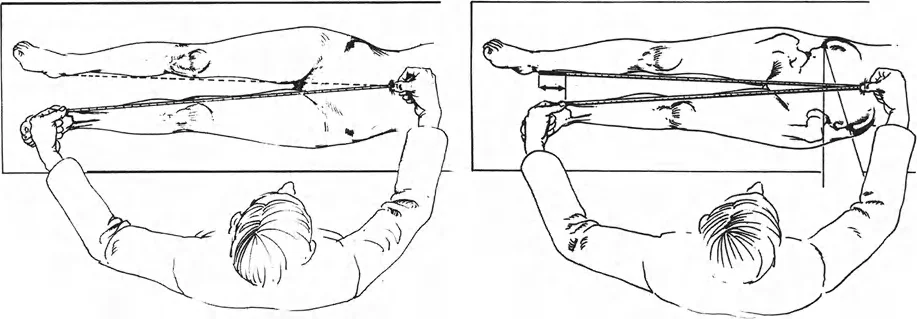
A patient with severe varus gonarthrosis has a joint line convergence angle (JLCA) of 8 degrees measured on a standing AP radiograph. What does this abnormally high JLCA most likely indicate?
Explanation
The normal JLCA is 0 to 2 degrees. An abnormally high JLCA indicates joint space asymmetry, which typically arises from intra-articular cartilage loss, subchondral bone wear, or collateral ligament laxity.
Question 96
A 12-year-old girl is calculated to have a projected leg length discrepancy of 1.5 cm at skeletal maturity. She is currently asymptomatic but her parents are highly concerned. What is the most appropriate management recommendation?
Explanation
Leg length discrepancies of less than 2.0 cm at skeletal maturity rarely cause functional impairment and are generally well tolerated. Non-operative management, such as observation or a simple shoe lift if symptomatic, is indicated.
Question 97
A distal femoral osteotomy is planned for a 12-degree valgus deformity. If a lateral opening wedge technique is executed, what associated structural change is inherent to this procedure?
Explanation
Opening wedge osteotomies inherently add length to the bone segment due to the addition of space (and often a bone graft) at the osteotomy site. This can be beneficial if the valgus limb is also short, but may cause an unwanted leg length discrepancy if the limbs were equal preoperatively.
None
Previous ChapterABOS Orthopedic Board Review: Lower Extremity Deformity, Ga…
Next Chapter ABOS Orthopedic Board Review: Foot, Ankle & Hip Deformity C…

Medically Verified Content by
Prof. Dr. Mohammed Hutaif Clinic
Consultant Orthopedic & Spine Surgeon