ABOS Part I & AAOS OITE Orthopaedic Review: Blount Disease & Achilles Rupture MCQs for Board Prep | Part 21566
Key Takeaway
This module offers 20 advanced orthopaedic multiple-choice questions mirroring ABOS Part I and AAOS OITE exams. It comprehensively covers Blount Disease, including diagnosis, guided growth, and osteotomy, alongside Achilles Tendon Rupture, focusing on pathology, surgical repair, and rehabilitation. Ideal for residents and surgeons preparing for board certification.
ABOS Part I & AAOS OITE Orthopaedic Review: Blount Disease & Achilles Rupture MCQs for Board Prep | Part 21566
A 2-year-old obese African American male presents to your clinic with bilateral bowing of the legs, which his parents report has been progressively worsening since he started walking at 10 months of age. Physical examination reveals significant varus deformity below the knees, with internal tibial torsion. Standing AP radiographs of the knees show a medial physeal beak and metaphyseal-epiphyseal irregularities, consistent with Langenskiöld Stage III changes in both tibias. The mechanical axis passes significantly medial to the center of both knees. Given this presentation, which of the following is the most appropriate initial surgical management?
Correct Answer: C
The patient presents with classic features of infantile Blount disease: early onset (2 years old), progressive worsening, obesity, African American ethnicity, and radiographic findings of Langenskiöld Stage III changes. Infantile Blount disease, especially at Stage III, is unlikely to resolve spontaneously or with bracing alone, making observation (A) and bracing (B) inappropriate as primary surgical management options. Lateral hemiepiphysiodesis (C) is indicated for progressive infantile Blount disease in Langenskiöld stages II-IV, typically in children aged 4-8 years, but can be considered earlier if progression is significant and there is sufficient remaining growth potential. The case describes a 2-year-old with progressive Stage III disease, making guided growth a suitable option to leverage the remaining growth. Acute proximal tibial varus-producing osteotomy (D) is generally reserved for more severe deformities (Langenskiöld Stages V-VI), older children with less growth remaining, or failed guided growth. Medial hemiepiphysiodesis (E) would further inhibit growth on the already pathologically suppressed medial side, exacerbating the varus deformity, and is therefore incorrect.
A 14-year-old obese male presents with progressive unilateral left genu varum. Radiographs confirm adolescent Blount disease with a Medial Proximal Tibial Angle (MPTA) of 78 degrees and a Mechanical Axis Deviation (MAD) of 25 mm medial to the center of the knee. His skeletal age is 13 years, with open physes. Lateral hemiepiphysiodesis of the proximal tibia is planned. During the surgical approach to the lateral proximal tibia, which neurovascular structure is at highest risk of injury and requires meticulous attention, particularly with deep or misguided retraction?
Correct Answer: C
The common peroneal nerve (C) courses superficially around the fibular neck, approximately 3-5 cm distal to the proximal tibial physis. During a lateral approach to the proximal tibia for hemiepiphysiodesis, aggressive or misguided deep retractors, especially those placed distally or posteriorly, can put this nerve at significant risk of stretch or direct injury, leading to a foot drop. The popliteal artery (A) and posterior tibial nerve (E) are located more posteriorly in the popliteal fossa and are less directly at risk with a lateral approach to the tibia, though deep posterior instrumentation could theoretically endanger them. The saphenous nerve (B) is a cutaneous nerve located more medially in the thigh and leg. The anterior tibial artery (D) passes through the interosseous membrane anteriorly and is generally not at direct risk during a lateral approach to the proximal tibia unless dissection is carried too deep and anteriorly.
A 7-year-old female with progressive right tibia vara is undergoing lateral hemiepiphysiodesis of the proximal tibia. The surgeon places an eight-plate across the lateral physis. Post-operatively, the limb gradually corrects into neutral alignment over 18 months. This correction is primarily achieved by which of the following biomechanical principles?
Correct Answer: C
Lateral hemiepiphysiodesis operates on the principle of guided growth, which leverages the Hueter-Volkmann law. In Blount disease, the medial physis is pathologically inhibited, leading to varus. By applying an eight-plate to the lateral aspect of the proximal tibial physis, growth on the lateral side is temporarily tethered or arrested (C). This allows the medial physis, which is no longer subjected to the concentrated compressive forces of varus and is allowed to express its natural growth potential, to 'catch up' and grow relatively faster. This differential growth gradually corrects the varus deformity. Option A is incorrect because increased compressive forces inhibit, not stimulate, growth according to Hueter-Volkmann. Option B is incorrect as the plate acts as a tether, not a distractor. Option D is incorrect because the eight-plate provides temporary, not permanent, arrest; permanent arrest would be achieved with transphyseal screws or physeal bar excision. Option E is incorrect as the primary mechanism is differential physeal growth, not metaphyseal remodeling independent of the physis.
A 6-year-old male presents with progressive bilateral tibia vara. Radiographic evaluation reveals Langenskiöld Stage V changes in the right proximal tibia, characterized by a significant physeal bar and epiphyseal wedging, and Stage III changes in the left proximal tibia. His skeletal age is 6 years. He has a Medial Proximal Tibial Angle (MPTA) of 68 degrees on the right and 78 degrees on the left. Which of the following is the most appropriate surgical plan for this patient?
Correct Answer: B
This patient presents with asymmetric Blount disease requiring different approaches for each limb. For the right tibia, Langenskiöld Stage V changes, an MPTA of 68 degrees (severe varus), and a significant physeal bar are contraindications for lateral hemiepiphysiodesis. Guided growth relies on the remaining growth potential of the medial physis, which is compromised by a significant physeal bar. Therefore, an acute correction via a proximal tibial varus-producing osteotomy is indicated for the right limb. For the left tibia, Langenskiöld Stage III changes and an MPTA of 78 degrees (mild-to-moderate varus) with open physes make it an ideal candidate for lateral hemiepiphysiodesis. Thus, option B, combining an osteotomy for the severe right side and guided growth for the moderate left side, is the most appropriate plan. Option A would likely fail on the right due to the physeal bar and severity. Option C is overly aggressive for the left side. Option D, while considering physeal bar resection, might not be sufficient for Stage V and severe angular deformity, and osteotomy is often preferred. Option E is inappropriate given the progressive nature and advanced stages of the disease.
A 10-year-old male with adolescent Blount disease undergoes lateral hemiepiphysiodesis of the proximal tibia. During the procedure, after drilling the pilot holes for the eight-plate screws, the surgeon performs fluoroscopic checks. Which of the following findings on fluoroscopy would necessitate immediate repositioning or re-drilling of a screw?
Correct Answer: C
The most critical aspect of eight-plate placement for guided growth is to ensure that the screws do not cross or compress the physis. If the screw threads are seen crossing the physis (C), it indicates direct damage to the growth plate, which can lead to premature physeal arrest, growth disturbance, or failure of the guided growth mechanism. This finding necessitates immediate repositioning or re-drilling of the screw. Options A, B, D, and E describe correct or acceptable findings. Bicortical purchase in the metaphysis (A) is desirable for stability. Unicortical purchase in the epiphysis (B) is often acceptable to avoid articular violation. Centered plate placement (D) and appropriate screw length (E) are also crucial for successful surgery.
A 5-year-old child with progressive infantile Blount disease is being evaluated for lateral hemiepiphysiodesis. Pre-operative planning includes a comprehensive radiographic assessment. Which of the following radiographic measurements is most crucial for assessing overall limb alignment and guiding the surgical correction?
Correct Answer: C
While all listed options (except TFA, which is clinical) are relevant to Blount disease assessment, the Mechanical Axis Deviation (MAD) on a standing full-length AP radiograph (C) is the most crucial for assessing overall limb alignment and guiding surgical correction. The MAD directly quantifies how far the mechanical axis deviates from the center of the knee joint, providing a comprehensive measure of the varus deformity across the entire limb. The Metaphyseal-Diaphyseal Angle (MDA) (A) and Langenskiöld classification (E) are important for diagnosing and staging Blount disease at the proximal tibia but do not provide a complete picture of overall limb alignment. The Distal Femoral Valgus Angle (mLDFA) (B) assesses femoral alignment, which can be a confounding factor but is not the primary measure for tibial deformity. The Thigh-Foot Angle (D) is a clinical measure of rotational alignment, not angular deformity.
A 12-year-old female underwent lateral hemiepiphysiodesis for progressive adolescent Blount disease. She is now 18 months post-surgery and presents for a follow-up. Standing full-length AP radiographs show a mechanical axis that passes 6 mm lateral to the center of the knee, indicating a mild valgus alignment. Her skeletal age is 13 years, with approximately 2 years of remaining growth. What is the most appropriate next step in her management?
Correct Answer: C
The goal of guided growth is to achieve a slight overcorrection into valgus (typically 5-7 degrees of mechanical valgus) before hardware removal. This strategy accounts for the potential rebound phenomenon and allows the limb to settle into a neutral mechanical axis by skeletal maturity. The patient's current alignment of 6 mm lateral to the center of the knee (mild valgus) falls within this target range. Therefore, removing the eight-plate now (C) is the most appropriate next step to prevent further overcorrection and allow the limb to normalize. Continuing observation (A) risks significant overcorrection into genu valgum. Performing a medial hemiepiphysiodesis (B) would be an intervention for established, significant valgus, not for a planned slight overcorrection. A varus-producing osteotomy (D) is an acute, invasive procedure for severe, fixed valgus, not for this scenario. Advising increased weight-bearing (E) is not a recognized method to influence physeal growth in this context and would not address the overcorrection.
A 9-year-old male with progressive right tibia vara (MPTA 75 degrees) undergoes lateral hemiepiphysiodesis. Post-operatively, he is allowed weight-bearing as tolerated. Which of the following statements accurately describes the typical post-operative rehabilitation protocol and monitoring for this patient?
Correct Answer: C
Post-operative rehabilitation for hemiepiphysiodesis is generally straightforward. Patients are typically allowed weight-bearing as tolerated (WBAT) immediately or shortly after surgery, making options A and B incorrect. The most critical aspect of post-operative management is regular clinical and radiographic follow-up (C) every 3-6 months. These visits are essential to monitor the progression of correction and determine the precise timing for hardware removal, which occurs when a slight overcorrection into valgus (e.g., 5-7 degrees mechanical valgus) is achieved. Hardware removal is not based on a fixed time frame (D) but on radiographic alignment. Intensive physical therapy with aggressive strengthening and high-impact activities (E) is generally avoided in the immediate post-operative period to allow for soft tissue healing, though gentle ROM and strengthening are encouraged.
A 15-year-old male presents with severe, progressive adolescent Blount disease. Radiographs show an MPTA of 65 degrees, a significant medial physeal bar spanning 60% of the physis, and a skeletal age of 15 years, indicating limited remaining growth. He has significant pain and functional limitations. Given these findings, which of the following is the most appropriate definitive surgical intervention?
Correct Answer: C
This patient presents with several factors that contraindicate guided growth and indicate the need for an acute correction. The MPTA of 65 degrees signifies severe varus deformity. The presence of a significant medial physeal bar (60%) will mechanically impede any 'catch-up' growth from the medial physis, rendering hemiepiphysiodesis ineffective. Furthermore, a skeletal age of 15 years indicates limited remaining growth potential, which is a prerequisite for successful guided growth. Therefore, a proximal tibial varus-producing osteotomy (C) is the most appropriate definitive surgical intervention for severe deformities, significant physeal bars, or in patients with limited growth potential. Lateral hemiepiphysiodesis (A) would fail due to the physeal bar and limited growth. Medial physeal bar resection (B) might be considered for smaller bars and less severe deformities, but for a 60% bar and severe angular deformity, osteotomy is more reliable. Observation and bracing (D) are inappropriate for severe, progressive disease in an older adolescent. Distal femoral medial hemiepiphysiodesis (E) would address femoral varus, which is not the primary pathology described here, and would not correct the severe tibial deformity.
The shift in surgical management of Blount disease from acute osteotomies to guided growth techniques, particularly using tension band plates, has been significantly influenced by the work of which orthopedic surgeon, who extensively documented the efficacy and safety of these methods?
Correct Answer: B
Peter Stevens (B) has been a leading proponent and researcher in guided growth, extensively documenting the efficacy and safety of temporary hemiepiphysiodesis using eight-plates for various angular deformities, including Blount disease. His work has been instrumental in popularizing this less invasive approach. Walter Blount (A) originally described the disease. Ignacio Ponseti (C) is renowned for his non-operative method for clubfoot correction. Robert Salter (D) is known for his work on physeal injuries (Salter-Harris classification) and innominate osteotomy for hip dysplasia. M. E. Müller (E) was a pioneer in internal fixation and total hip arthroplasty, and a founder of the AO Foundation.
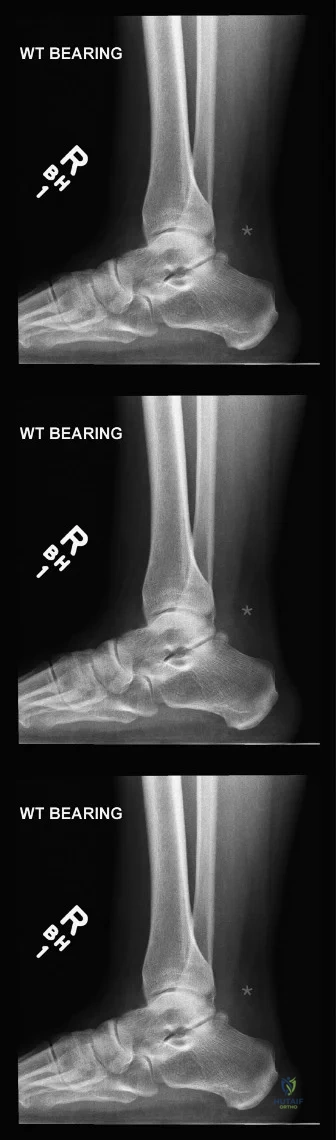
A 42-year-old male, a self-described 'weekend warrior,' presents to the emergency department after experiencing a sudden 'pop' in his right calf while playing recreational basketball. He reports immediate pain and difficulty pushing off his foot. Clinical examination reveals a palpable gap approximately 4 cm proximal to the calcaneal insertion and a positive Thompson test. Based on the provided case, which of the following statements best describes the most likely underlying pathological process contributing to this acute rupture?
Correct Answer: D
The case explicitly states that 'rupture typically occurs when an acute load exceeds the tendon's ultimate tensile strength, often in the presence of underlying degenerative changes. Such degenerative changes, including myxoid degeneration, collagen disorganization, and tenocyte apoptosis, are frequently observed histologically in ruptured tendons... and are more pronounced in the hypovascular watershed zone.' This directly supports option D, highlighting the combined role of degenerative changes and the hypovascular watershed zone in predisposing the tendon to rupture under eccentric load.
Incorrect Options:
- A: While inflammation can occur post-injury, the primary underlying pathology predisposing to rupture is degenerative, not acute inflammatory. The case mentions 'degenerative changes' as preceding rupture.
- B: The mechanism of injury typically involves a 'sudden eccentric load applied to the actively contracting gastrocnemius-soleus complex,' often during ankle dorsiflexion simultaneous with knee extension, not a concentric contraction.
- C: The rupture typically occurs in the 'watershed zone' (2-6 cm proximal to insertion), which is described as a 'relatively hypovascular zone' and 'receives its blood supply predominantly from the paratenon, with fewer direct penetrating vessels compared to the proximal and distal ends.' This contradicts the idea of robust vascularity.
- E: While age and activity level are risk factors, the case clearly states that 'rupture typically occurs... often in the presence of underlying degenerative changes,' indicating intrinsic tendon pathology is involved, not just extrinsic factors.
A 38-year-old male presents with an acute Achilles tendon rupture. During surgical planning, the surgeon notes that the rupture is located approximately 4 cm proximal to the calcaneal insertion, a region commonly referred to as the 'watershed zone.' Regarding the vascular supply to the Achilles tendon, particularly this critical zone, which statement is most accurate?
Correct Answer: C
The case explicitly states under 'Vascularity' that 'Critically, a relatively hypovascular zone, the 'watershed zone,' exists approximately 2-6 cm proximal to the calcaneal insertion. This region receives its blood supply predominantly from the paratenon, with fewer direct penetrating vessels compared to the proximal and distal ends.' This directly supports option C.
Incorrect Options:
- A: The calcaneal arterial arcade primarily supplies the osseotendinous junction (distal end), not the mid-substance watershed zone.
- B: The musculotendinous junction supplies the proximal third of the tendon, not the entire mid-substance, and the watershed zone is specifically noted for its relative hypovascularity.
- D: The case states, 'Unlike tendons with a true synovial sheath, the Achilles tendon's paratenon provides its primary external blood supply.' This refutes the presence of a true synovial sheath.
- E: The presence of a 'watershed zone' directly contradicts the idea of uniform vascularity along the tendon's length.
A 55-year-old sedentary female with a history of well-controlled diabetes presents with a suspected Achilles tendon rupture. Clinical examination reveals a positive Thompson test and a palpable gap of approximately 0.8 cm. She is reluctant to undergo surgery due to concerns about wound healing. Based on the provided case, which of the following is the most appropriate initial management strategy?
Correct Answer: C
The case provides clear indications for non-operative management: 'Elderly or sedentary individuals,' 'Significant medical comorbidities' (like diabetes), and 'Small tendon gap (<1 cm) and good apposition.' The patient fits all these criteria. The case also highlights that 'Non-operative treatment is increasingly utilized, especially with advancements in functional rehabilitation protocols that incorporate early protected motion and weight-bearing.'
Incorrect Options:
- A: While diabetes is a comorbidity, it is listed as an indication for *non-operative* management due to increased surgical risks (e.g., wound healing complications), especially when well-controlled and with a small gap.
- B: While percutaneous repair aims to reduce wound complications, non-operative management is explicitly favored for patients with significant medical comorbidities and small gaps, making it a more appropriate initial choice.
- D: Delayed surgical repair is typically indicated for chronic ruptures (>2-4 weeks), not as an initial strategy for an acute presentation, especially when non-operative management is suitable.
- E: The case states, 'Clinically, the diagnosis is usually straightforward... Imaging, particularly MRI, can confirm the diagnosis... though it is not always necessary for acute cases.' Given the clear clinical findings (positive Thompson, palpable gap), MRI is not an absolute prerequisite for initiating treatment, especially when non-operative management is indicated.
During an open Achilles tendon repair for an acute rupture, the surgeon makes a lateral para-Achilles incision. After incising the skin and subcutaneous tissue, meticulous dissection is performed to identify and protect a critical neural structure. Which nerve is the surgeon most concerned about protecting during this approach, and what is its typical course?
Correct Answer: C
The case explicitly states under 'Innervation and Vascularity': 'Of particular surgical relevance is the sural nerve, a sensory nerve... which courses subcutaneously along the posterior calf, often running close to the lateral border of the Achilles tendon. It is highly susceptible to iatrogenic injury during posterior surgical approaches.' It further notes that a 'lateral para-Achilles incision is often preferred as it places the incision further away from the path of the sural nerve, which typically courses inferolaterally.'
Incorrect Options:
- A: The tibial nerve innervates the triceps surae complex but is deep and medial, not typically at risk with a lateral para-Achilles incision.
- B: The common peroneal nerve is located more proximally around the fibular head and does not course anterior to the Achilles tendon.
- D: The saphenous nerve is on the medial side of the leg and is not typically at risk with a lateral para-Achilles approach.
- E: The posterior tibial nerve is deep in the posterior compartment, not superficial and lateral to the Achilles tendon.
A 48-year-old male undergoes open repair of an acute Achilles tendon rupture. Post-operatively, he develops a wound dehiscence with signs of superficial infection. Despite oral antibiotics and local wound care, the wound continues to show poor healing. Which of the following complications is he at highest risk for, and what is a common salvage strategy for significant wound issues in this region?
Correct Answer: E
The case lists 'Wound Healing Complications' as a specific surgical complication, with an incidence of 5-20% for open repairs. It states, 'The skin over the Achilles is thin with poor vascularity, especially in the watershed area.' For 'significant necrosis or deep infection,' the management includes 'Debridement, wound VAC, and potentially plastic surgery consultation (local flaps, skin grafts).' This scenario directly aligns with the patient's ongoing poor wound healing despite initial measures.
Incorrect Options:
- A: Sural nerve neuroma is a complication of nerve injury, not directly of wound dehiscence and infection, although a deep infection could theoretically involve the nerve. The primary concern with wound dehiscence is tissue viability.
- B: DVT is a general complication, but not the highest risk directly stemming from a persistent wound dehiscence and superficial infection. While DVT prophylaxis is important, it's not the primary salvage strategy for a wound issue.
- C: Rerupture is a risk, but it's a mechanical failure of the repair, not a direct consequence of a superficial wound infection and dehiscence. While a severe wound complication could compromise the repair, the immediate and highest risk from a persistent wound issue is further tissue breakdown.
- D: Tendon lengthening is a complication of a lax repair, not typically a direct result of a superficial wound infection.
A 35-year-old professional soccer player sustains an acute Achilles tendon rupture with a palpable gap of 2.5 cm. He desires the quickest and most reliable return to high-level sport. He has no significant medical comorbidities. Based on the provided case, which treatment approach is most strongly indicated for this patient?
Correct Answer: C
The case clearly outlines operative indications: 'Young, active individuals: Especially athletes or those with high functional demands,' and 'Large tendon gap (>1 cm) on clinical examination or imaging.' The patient's profile (35-year-old professional soccer player, 2.5 cm gap, desire for quick and reliable return to high-level sport, no comorbidities) perfectly matches these indications. The case also emphasizes that 'Operative management is generally favored for patients seeking to maximize strength and power, aiming for a faster return to high-level athletic activity.' Furthermore, 'early functional rehabilitation' is consistently recommended post-operatively for optimal outcomes.
Incorrect Options:
- A: Prolonged immobilization is outdated and associated with increased stiffness and atrophy, not suitable for an athlete seeking a quick return.
- B: While non-operative management has its place, for a high-level athlete with a large gap, operative repair is generally preferred for potentially better strength outcomes and lower rerupture rates, as discussed in the 'Summary of Key Literature.'
- D: While percutaneous repair offers cosmetic benefits, the primary goal for this patient is maximal strength and reliable return to sport. Open repair allows for direct visualization and a more robust repair, which is often preferred for high-demand athletes, especially with a larger gap. Delayed weight-bearing is also contrary to modern accelerated rehab protocols.
- E: Delayed surgical repair is indicated for chronic ruptures, not an acute presentation in a high-demand athlete.
A 60-year-old male, 8 weeks post-open Achilles tendon repair, is progressing through his rehabilitation. He is now in a phase focused on regaining full active and passive range of motion and initiating progressive strengthening. Which of the following activities is most appropriate for him at this stage, according to the provided rehabilitation guidelines?
Correct Answer: B
According to the 'Phases of Rehabilitation' section, Phase 3 (Weeks 6/8 - 12/16) is described as 'Progressive Strengthening & Full Weight-Bearing.' The goals include 'Regain full active and passive ROM, normalize gait, restore strength and endurance.' Specific exercises listed for this phase include 'Transition out of CAM boot and into supportive athletic shoes' and 'Progressive resistance exercises for plantarflexors (seated and standing calf raises, initially bilateral, then unilateral).' This directly matches option B.
Incorrect Options:
- A: Plyometric exercises are part of Phase 4 (Months 4-6+), 'Return to Activity & Advanced Strengthening,' which is too early at 8 weeks.
- C: Sport-specific drills are also part of Phase 4, too early at 8 weeks.
- D: Strictly non-weight-bearing with the ankle locked in plantarflexion is characteristic of Phase 1 (Weeks 0-2/3), the early immobilization and protection phase, which he has already progressed beyond.
- E: Manipulation under anesthesia is a salvage strategy for refractory stiffness, not a standard part of progressive rehabilitation at 8 weeks, unless severe complications have arisen.
A surgeon is performing an open Achilles tendon repair. After identifying the ruptured tendon ends, they proceed to place sutures. The case describes common suture techniques for robust repair. Which of the following suture techniques is explicitly mentioned as a common choice for Achilles tendon repair, and what is a key principle for suture placement?
Correct Answer: C
Under 'Tendon Reduction and Suture Placement,' the case states: 'The modified Kessler suture or Krakow locking loop stitch are common techniques. Multiple strands (e.g., 4 or 6 strands) are often preferred for maximal strength.' It further emphasizes: 'Ensure adequate tendon purchase, typically 2-3 cm from the ruptured edge, especially in the watershed zone where tissue quality might be compromised. The sutures should engage healthy tendon tissue to prevent pull-out.'
Incorrect Options:
- A: Figure-of-eight is a general suture pattern, but not specifically highlighted as a primary core stitch for Achilles repair in the text. Sutures are placed in the tendon substance, not just the paratenon, which is repaired separately.
- B: Horizontal mattress is a general suture pattern, but the text emphasizes 'adequate tendon purchase, typically 2-3 cm from the ruptured edge,' not minimal purchase.
- D: A running simple stitch is not described as a core repair technique for the tendon itself; it's more for skin or superficial layers.
- E: Vertical mattress is a general suture pattern, but the text states, 'The knots should be buried where possible to minimize irritation,' contradicting superficial knot tying.
The Achilles tendon is formed by the conjoined aponeuroses of the gastrocnemius and soleus muscles. Regarding the specific contributions and characteristics of these muscles, which statement is most accurate?
Correct Answer: E
Under 'Musculotendinous Complex,' the case states: 'The gastrocnemius muscle originates from the medial and lateral femoral condyles and is primarily a knee flexor and ankle plantarflexor. The soleus muscle originates from the posterior tibia and fibula and is a pure ankle plantarflexor.' This statement perfectly matches option E.
Incorrect Options:
- A: The gastrocnemius is a knee flexor and ankle plantarflexor, not a pure ankle plantarflexor. The soleus is the pure ankle plantarflexor.
- B: This describes the gastrocnemius, not the soleus. The soleus is a pure ankle plantarflexor originating from the tibia and fibula.
- C: The triceps surae complex (gastrocnemius and soleus) is innervated by the tibial nerve (S1, S2), not the common peroneal nerve.
- D: The plantaris tendon lies 'deep to the medial head of the gastrocnemius and superficial to the soleus,' not superficial to the gastrocnemius. Its contribution to plantarflexion is also described as 'minimal.'
A 40-year-old male, 6 months post-operative from an Achilles tendon repair, is being assessed for return to sport. He has achieved full pain-free range of motion and good calf girth. According to the provided rehabilitation guidelines, which objective criterion is crucial for determining his readiness to return to high-impact activities like running and jumping?
Correct Answer: D
Under 'Phase 4: Return to Activity & Advanced Strengthening,' the case explicitly lists criteria for 'Return to Sport': 'Typically not before 6 months, and only after meeting objective criteria: ... Single-leg heel raise endurance (e.g., >20 repetitions on affected side, >80-90% of unaffected side).' This directly matches option D.
Incorrect Options:
- A: 5 single-leg heel raises is insufficient; the guideline specifies >20 repetitions or >80-90% of the unaffected side.
- B: While scar tissue quality is important, the absence of *any* palpable scar tissue is not a listed objective criterion for return to sport.
- C: The guidelines emphasize 'meeting objective criteria' rather than a strict timeline for physical therapy completion, as progression should be individualized and pain-guided.
- E: The guidelines explicitly state 'meeting objective criteria,' indicating that subjective feeling alone is not sufficient for return to high-impact activities.
When evaluating a radiograph of a child with suspected Blount disease, the metaphyseal-diaphyseal angle (Drennan angle) is a critical measurement. Which anatomical landmarks define the lines used for this measurement?
None
