ABOS Part I & OITE Hand Surgery Review: Skin Grafts, Trigger Finger, Carpal Tunnel Syndrome | Part 21591
Key Takeaway
This ABOS Part I & OITE Hand Surgery Review module offers 30 advanced multiple-choice questions covering high-yield topics like skin grafts, trigger finger, and carpal tunnel syndrome. It provides detailed explanations and clinical insights essential for orthopaedic board exam preparation, focusing on critical hand surgery concepts and patient management strategies.
ABOS Part I & OITE Hand Surgery Review: Skin Grafts, Trigger Finger, Carpal Tunnel Syndrome | Part 21591
Comprehensive 100-Question Exam
00:00
Start Quiz
Question 1
A 32-year-old carpenter sustains a deep laceration to his dominant right hand, resulting in a full-thickness skin defect over the palmar aspect of his index finger, exposing the flexor digitorum profundus tendon. Intraoperatively, after meticulous debridement, the surgeon notes that the flexor tendon is completely denuded of its synovial sheath and appears glistening white and avascular. The surrounding subcutaneous tissue is also compromised. Which of the following is the MOST appropriate reconstructive option for this defect?
Explanation
Correct Answer: C
The case explicitly states that an exposed, bare flexor tendon, stripped of its synovial covering, is essentially avascular. The teaching case emphasizes that 'An avascular structure cannot support a skin graft directly, making direct grafting onto bare flexor tendons an absolute contraindication. Such scenarios necessitate the interposition of a vascularized tissue layer (e.g., local flap, muscle flap, or paratenon graft from another site) before skin graft application.' Therefore, a vascularized flap is mandatory to provide a blood supply to the exposed tendon and create a suitable bed for potential secondary skin grafting or definitive coverage. Options A, B, and D involve direct skin grafting onto an avascular bed, which would inevitably lead to graft failure and tendon necrosis. Option E, primary closure, is contraindicated for a full-thickness skin defect with exposed vital structures, as it would create excessive tension and compromise the underlying tendon further, leading to potential dehiscence and infection.
Question 2
A 48-year-old patient presents with a clean, well-vascularized full-thickness skin defect over the dorsal aspect of the metacarpophalangeal (MCP) joint of the middle finger, following excision of a benign lesion. The underlying extensor tendon's paratenon is intact and healthy. The primary goals for reconstruction are to minimize secondary contraction, maximize pliability for joint motion, and achieve good aesthetic outcome. Which of the following skin graft options is MOST appropriate?
Explanation
Correct Answer: C
The teaching case highlights that 'FTSGs generally offer superior sensory recovery compared to STSGs... FTSGs typically achieve a better color match, texture, and overall aesthetic appearance... FTSGs, by virtue of their complete dermal layer, are inherently more robust, durable, and resistant to chronic friction... FTSGs, due to their thicker dermal component, demonstrate substantially less secondary contraction (typically 10-30%).' For a well-vascularized bed over a dorsal MCP joint, where minimizing secondary contraction, maximizing pliability for joint motion, and achieving good aesthetics are paramount, a full-thickness skin graft (FTSG) is the superior choice. Options A, B, and D involve split-thickness skin grafts (STSGs), which, even when intermediate or thick, are prone to significantly more secondary contraction (up to 70-90% for thinner, meshed grafts) and offer less durability and poorer cosmetic outcomes compared to FTSGs. Meshing (A and D) further exacerbates secondary contraction. Option E, a xenograft, is a temporary dressing and not a definitive reconstructive solution.
Question 3
A 60-year-old diabetic patient undergoes skin grafting for a dorsal hand wound with exposed extensor tendons (intact paratenon). On post-operative day 3, the patient complains of increasing pain, and examination reveals a dark, tense, non-blanching discoloration beneath a portion of the graft. The most likely immediate cause of this graft compromise is:
Explanation
Correct Answer: C
The teaching case states that 'Hematoma or Seroma' is 'The most common cause' of graft failure. It describes the clinical presentation as 'dark discoloration, tense swelling, palpable fluid under the graft.' The symptoms of increasing pain and a dark, tense, non-blanching discoloration on post-operative day 3 are highly indicative of a hematoma or seroma accumulating beneath the graft. This fluid collection mechanically lifts the graft off its vascularized bed, preventing imbibition and subsequent revascularization, leading to graft necrosis. While infection (A) can cause graft lysis, it typically presents later (Day 5-7) with purulence, fever, and spreading erythema. Inadequate revascularization (B) is a broader cause, but hematoma is a specific, common mechanism. Secondary contraction (D) occurs weeks to months after graft take, not on day 3. An allergic reaction (E) would typically present with erythema, pruritus, and rash, not a tense, dark discoloration of the graft itself.
Question 4
A 28-year-old patient requires coverage for a large, irregularly shaped full-thickness skin defect on the dorsal aspect of the hand, extending across multiple digits. The underlying extensor tendons have viable paratenon. The surgeon decides to use a split-thickness skin graft (STSG). Which of the following statements regarding the use of a meshed STSG in this scenario is TRUE?
Explanation
Correct Answer: B
The teaching case explicitly lists the advantages of meshing: 'Allows the graft to expand, covering larger defects with less donor site harvest' and 'Creates fenestrations that facilitate drainage of seroma or hematoma from beneath the graft, which is particularly beneficial when covering an exposed tendon where fluid accumulation can compromise take.' Therefore, meshing helps prevent fluid accumulation. Option A is incorrect; meshing significantly increases secondary contraction. Option C is incorrect; a 1:1 meshing ratio offers minimal expansion, and higher ratios (e.g., 1:3, 1:6) offer greater expansion but result in a less aesthetic 'cobblestone' appearance, not the best cosmetic outcome. Option D is incorrect; meshed STSGs are generally less durable and more prone to breakdown due to the interstices. Option E is incorrect; meshing does not primarily improve sensory recovery; FTSGs offer better sensory potential.
Question 5
A 55-year-old patient undergoes successful full-thickness skin grafting to the dorsal aspect of the wrist. On post-operative day 6, during the first dressing change, the graft appears uniformly pink, adherent, and blanches with gentle pressure. The underlying wound bed is clean. Which of the following is the MOST appropriate next step in the rehabilitation protocol?
Explanation
Correct Answer: C
The teaching case outlines the post-operative rehabilitation protocol. In Phase 1, the first dressing change (Post-Op Day 5-7) is a critical evaluation point. If graft take is good (pink, blanching, adherent), the transition to Phase 2, Early Mobilization, begins. This phase involves 'Controlled Active Range of Motion (AROM)' for 'non-grafted joints and for joints adjacent to the graft that are not directly under tension.' The splint is reapplied to maintain protection. Option A, aggressive passive ROM, is too early and risks shear forces on the delicate, newly revascularized graft. Option B, unrestricted active use, is also premature and highly risks graft disruption. Option D, compression garments, are typically introduced later (after 2-3 weeks) for edema and scar management, not immediately after the first dressing change. Option E, systemic corticosteroids, are not indicated for routine graft healing and could impair wound healing and increase infection risk.
Question 6
During the harvest of a full-thickness skin graft (FTSG) from the groin crease for a hand defect, the surgeon meticulously excises the graft. After harvest, the graft is placed dermal side up on a sterile surface. Which of the following steps is CRITICAL for ensuring successful graft take and should be performed next?
Explanation
Correct Answer: C
The teaching case describes the FTSG technique: 'Defatting the Graft (Crucial Step): Place the harvested FTSG, dermal side up, on a sterile firm surface... Using fine, sharp, curved iris scissors or a small #15 scalpel, meticulously trim away all subcutaneous fat from the undersurface of the dermis. This is a critical step; residual fat is avascular and will act as a barrier to revascularization, leading to graft failure.' Options A and B are incorrect for an FTSG at this stage. Meshing is typically for STSGs, and while fenestrations are made in unmeshed grafts, defatting is a more immediate and critical step after harvest for FTSGs. Option D, irrigating with antibiotics, is not a standard critical step for graft preparation. Option E, stretching the graft, should be avoided as it can damage the graft and is not the primary method for matching the defect; FTSGs are harvested slightly larger to account for primary contraction.
Question 7
A 70-year-old patient with a history of chronic steroid use presents with a large, chronic ulcer on the dorsal aspect of the hand, exposing the extensor tendons with viable paratenon. The wound bed is marginal due to poor tissue quality. The surgeon plans for skin grafting. Considering the patient's comorbidities and wound characteristics, which of the following statements accurately reflects the biomechanical properties and take rate considerations for skin grafts?
Explanation
Correct Answer: C
The teaching case states: 'Split-thickness skin grafts (STSGs) inherently possess a higher take rate compared to full-thickness skin grafts (FTSGs). This is due to their thinner nature, requiring less oxygen and nutrients for survival and facilitating quicker revascularization. This characteristic makes STSGs advantageous for marginal or less-than-ideally vascularized recipient beds.' Given the patient's chronic steroid use and marginal wound bed, a thinner STSG would be favored for its higher take rate. Option A is incorrect; STSGs have a higher take rate. Option B is incorrect; STSGs are highly susceptible to significant secondary contraction, whereas FTSGs demonstrate substantially less. Option D is incorrect; FTSGs are more robust and durable, while STSGs can be fragile and prone to blistering. Option E is incorrect; the presence of hair follicles is a cosmetic consideration for FTSGs but does not significantly impair their take rate.
Question 8
A 40-year-old patient requires a full-thickness skin graft (FTSG) for a small, clean defect on the dorsal aspect of the index finger. The surgeon is planning the donor site. Which of the following donor sites is generally preferred for FTSGs in the hand due to its skin characteristics and ability for primary closure, while also offering a good color match?
Explanation
Correct Answer: C
The teaching case lists common FTSG donor sites: 'Common FTSG donor sites include the groin crease, volar forearm, hypothenar eminence, supraclavicular fossa, and postauricular region. Prioritize concealment of the donor scar and minimize functional deficit.' The groin crease is a well-established donor site for FTSGs, offering skin that is relatively thin, pliable, and often provides a good color match for the hand, while allowing for primary closure of the donor site. Options A, B, D, and E are typically used for split-thickness skin grafts (STSGs) due to their larger surface area and the ability of STSG donor sites to heal by re-epithelialization, but they are generally not preferred for FTSGs due to thickness, hair-bearing status, or less ideal color match for the hand.
Question 9
A 25-year-old patient sustains a degloving injury to the dorsal hand, resulting in a large full-thickness skin defect. The underlying extensor tendons are exposed but retain viable paratenon. The surgeon plans for an intermediate split-thickness skin graft (STSG). Which of the following physiological events is primarily responsible for the initial survival of the graft in the first 24-48 hours post-application?
Explanation
Correct Answer: C
The teaching case describes the biological integration of a skin graft: '1. Imbibition (0-48 hours): The freshly applied graft survives by passively absorbing tissue fluid, including plasma and nutrients, from the underlying wound bed. The graft appears pale and slightly edematous.' This initial phase is crucial for the graft's survival before a new blood supply is established. Option A, active revascularization (Inosculation and Revascularization), occurs later (2-7 days and beyond). Option B, lymphatic drainage, also commences later. Option D, nerve regeneration, is a much later and often incomplete process. Option E, primary contraction, is an immediate physical property of the graft upon harvest, not a physiological mechanism of survival post-application.
Question 10
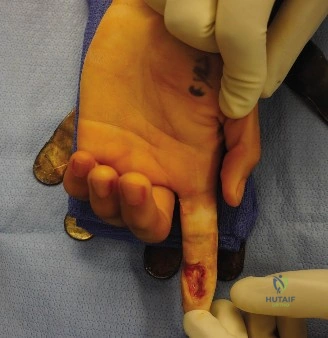
A 50-year-old patient undergoes skin grafting for a complex hand wound, as depicted in the image below, showing the meticulous application of a skin graft to a hand wound, illustrating careful placement and secure suturing to ensure optimal contact with the vascularized recipient bed. Following the application and securing of the graft, the surgeon proceeds with dressing and immobilization. Which of the following components is CRITICAL for the immediate post-application dressing to ensure graft survival?
Explanation
Correct Answer: C
The teaching case emphasizes the importance of the immediate post-application dressing: 'The immediate post-application dressing is paramount for graft survival, providing immobilization and gentle, continuous pressure.' It specifically details the 'Bolster Dressing (Tie-Over or Stent Dressing): This provides critical, continuous, gentle pressure to the graft and ensures its immobilization.' This pressure maintains uniform graft contact with the recipient bed, preventing hematoma/seroma formation and shear forces. Option A, topical antibiotic ointment, is generally not recommended directly on the graft as it can interfere with imbibition and revascularization. Option B, a bulky dressing without direct pressure, is insufficient to prevent fluid accumulation or shear. Option D, immediate active range of motion, is strictly contraindicated as it would disrupt the delicate graft. Option E, leaving the graft exposed to air, would lead to desiccation and graft failure.
Question 11
A 52-year-old female presents with a 6-month history of painful clicking and locking in her right ring finger, particularly noticeable in the mornings. She reports difficulty making a full fist and extending the digit. Physical examination reveals a palpable, tender nodule at the base of the ring finger, consistent with the A1 pulley, and a characteristic 'triggering' sensation during active flexion and extension. Her medical history is significant for Type 2 Diabetes Mellitus, managed with oral medications. She has failed two corticosteroid injections into the flexor sheath over the past 3 months. Based on the epidemiological data presented in the case, which of the following statements regarding her condition is most accurate?

Explanation
Correct Answer: D
The case explicitly states that "Diabetes mellitus is the most strongly linked condition, increasing the risk by two to ten-fold, with higher incidence, severity, and recurrence rates in diabetic patients." This directly supports option D. Her history of failed injections and persistent symptoms aligns with the increased severity and recurrence often seen in diabetic patients.
Option A is incorrect because while repetitive strain can contribute, diabetes mellitus is highlighted as the most strongly linked systemic comorbidity, significantly increasing risk and severity, making it more than a 'minor' factor.
Option B is incorrect because the case states a "predilection for women (female-to-male ratio of approximately 2:1)," making her presentation typical for gender, not atypical.
Option C is incorrect because the case lists the most frequently affected digits in descending order as "the thumb, ring finger, middle finger, little finger, and index finger." The ring finger is the second most commonly affected digit, not the least.
Option E is incorrect because "Bilateral involvement is observed in approximately 20-30% of cases," which is a significant percentage, making the likelihood of future involvement in the contralateral hand not 'very low' but rather a notable possibility.
Question 12
A 48-year-old carpenter presents with a painful locking sensation in his right middle finger. He points to the base of his finger in the palm as the site of discomfort. During surgical planning for an A1 pulley release, the surgeon must accurately identify the anatomical location of the A1 pulley. For the middle finger, where is the A1 pulley consistently situated relative to the palmar creases?

Explanation
Correct Answer: C
The case explicitly states: "For the middle and ring fingers, the A1 pulley is consistently situated beneath the proximal palmar crease." This is a direct recall of the anatomical landmark provided for surgical planning.
Option A is incorrect as the A1 pulley is at the MCP joint level, far proximal to the DIP joint crease.
Option B is incorrect as the A1 pulley is at the MCP joint level, which is typically marked by the proximal palmar crease, not necessarily proximal to it for the middle finger. For the thumb, it's proximal to the MCP joint crease, and for the index finger, slightly more proximal to the crease, but for the middle finger, it's beneath the crease itself.
Option D is incorrect as the A3 pulley overlies the volar plate of the PIP joint, not the A1 pulley.
Option E is incorrect as the A2 pulley originates from the proximal half of the proximal phalanx, not the A1 pulley.
Question 13
A 60-year-old woman reports a 'catching' and 'snapping' sensation in her left ring finger when she tries to extend it after making a fist. This has progressed to the point where she sometimes needs to use her other hand to straighten the finger. The underlying biomechanical pathology responsible for this 'triggering' phenomenon, as described in the case, primarily involves:

Explanation
Correct Answer: C
The case clearly describes the biomechanics of triggering: "The pathological process in stenosing tenosynovitis involves an imbalance between the volume of the flexor tendon and the caliber of the A1 pulley tunnel. Chronic irritation, repetitive strain, or systemic conditions lead to tenosynovial inflammation and hypertrophy, predominantly affecting the FDS tendon. This results in the formation of a palpable nodule..." This nodule then catches on the proximal edge of the A1 pulley during extension.
Option A is incorrect because the A1 pulley is the primary pulley implicated in trigger finger, not the A2 pulley.
Option B is incorrect because trigger finger involves a restriction of tendon glide due to a nodule, not a tendon rupture, which would typically result in loss of flexion.
Option D is incorrect because while chronic triggering can lead to a fixed flexion deformity of the MCP joint, the primary pathology is tendon and pulley-related, not primarily degenerative changes within the joint itself causing the initial triggering.
Option E is incorrect because carpal tunnel syndrome involves median nerve compression at the wrist, and while it can be associated with trigger finger, it does not directly cause the mechanical triggering phenomenon in the digit.
Question 14
During an open A1 pulley release for a trigger index finger, a surgeon is meticulously dissecting through the subcutaneous tissue and palmar fascia. The proper digital nerves and arteries are identified and retracted. According to the case, which specific digital nerve is particularly vulnerable during this procedure for the index finger?

Explanation
Correct Answer: B
The case states: "The proper digital nerves... course along the radial and ulnar aspects of the flexor tendon sheath, superficial to the A1 pulley. They are particularly vulnerable during surgical approaches to the A1 pulley, especially the radial digital nerve of the index finger and the ulnar digital nerve of the little finger, as they are often more volar." Therefore, for the index finger, the radial digital nerve is highlighted as particularly vulnerable.
Option A is incorrect because while the ulnar digital nerve of the index finger is present, the radial digital nerve is specifically mentioned as more vulnerable due to its often more volar position.
Option C is incorrect because the common digital nerves are more proximal in the palm and divide into proper digital nerves before reaching the A1 pulley level.
Option D is incorrect because the median nerve proper is a major nerve in the forearm and wrist, not directly at the A1 pulley level in the digit.
Option E is incorrect because the question specifically asks about the index finger, not the middle finger.
Question 15
A 35-year-old mother presents with a 9-month history of painful locking of her right thumb, which she describes as interfering significantly with her ability to care for her infant. She has a palpable nodule at the base of her thumb and a fixed flexion deformity of the MCP joint, requiring passive manipulation to extend. She has undergone two corticosteroid injections, with only temporary relief lasting less than 2 weeks each time. Based on the provided indications, what is the most appropriate next step in her management?

Explanation
Correct Answer: C
The case outlines several operative indications, including: "Failure of Non-Operative Management: Persistent, symptomatic triggering, locking, or pain despite adequate trials of corticosteroid injections (typically 1-2 injections)..." and "Fixed Flexion Deformity: Established contracture of the MCP joint secondary to chronic triggering, making passive extension difficult or incomplete." This patient has failed two injections, has persistent debilitating symptoms, and a fixed flexion deformity, all strong indications for surgical release.
Option A is incorrect because the case states that typically 1-2 injections are tried, and repeated injections (more than 2-3) are generally not recommended due to potential tendon weakening or skin atrophy. She has already failed two.
Option B is incorrect because while therapy and splinting are part of conservative management, she has already failed injections and has a fixed deformity, indicating a need for more definitive treatment.
Option D is incorrect because while childhood trigger thumb can sometimes self-resolve, this patient is an adult (35 years old) and has a fixed deformity, which warrants surgical intervention, not observation.
Option E is incorrect because the diagnosis of trigger finger/thumb is primarily clinical, and imaging is generally not required for typical presentations. Her symptoms and physical exam findings are classic.
Question 16
A 68-year-old male undergoes an open A1 pulley release for a trigger middle finger. Two weeks post-operatively, he reports that while the pain has improved, he still experiences a 'catching' sensation when actively flexing and extending his finger, similar to his pre-operative symptoms, though perhaps less severe. On examination, a subtle click is still palpable at the base of the finger. Based on the case, what is the most likely cause of his persistent symptoms?

Explanation
Correct Answer: D
The case identifies "Incomplete Release/Recurrence" as a common complication (1-5% incidence) and states: "The most common reason for persistent symptoms post-surgery [is] Insufficient division of the A1 pulley fibers..." The patient's description of persistent 'catching' and a palpable click strongly suggests an incomplete release.
Option A is incorrect because CRPS presents with a constellation of symptoms including disproportionate pain, swelling, skin changes, and temperature dysregulation, which are not described here. Persistent triggering is not a primary symptom of CRPS.
Option B is incorrect because digital nerve injury typically causes sensory deficits, numbness, or painful neuroma/dysesthesia, not a mechanical 'catching' or 'triggering' sensation.
Option C is incorrect because inadvertent division of the A2 pulley leads to bowstringing, which is a visible displacement of the tendon away from the bone, and is extremely rare with isolated A1 release. It does not typically manifest as persistent 'catching' in the same way as an incomplete A1 release.
Option E is incorrect because infection would present with signs such as redness, warmth, purulent discharge, and increased pain, none of which are mentioned in the vignette.
Question 17
During an open A1 pulley release, after identifying and retracting the neurovascular bundles, the surgeon exposes the glistening white flexor tendon sheath. To ensure safe and complete release of the A1 pulley, which critical step should be performed immediately before incising the pulley?

Explanation
Correct Answer: C
The case describes the A1 pulley release technique: "Crucial Step: Insert the tip of a curved mosquito hemostat or a probe under the A1 pulley and over the flexor tendons. This elevates the pulley off the tendons and protects the underlying tendons from inadvertent laceration." This is a fundamental safety step to prevent iatrogenic tendon injury.
Option A is incorrect because a tourniquet (usually an upper arm tourniquet) would have been applied and inflated much earlier in the procedure to create a bloodless field for the entire dissection, not immediately before incising the pulley.
Option B is incorrect because the triggering site would have been confirmed during the pre-operative physical examination and potentially intra-operatively before the incision, but not immediately before incising the pulley after full exposure.
Option D is incorrect because injecting local anesthetic into the tendon itself is not a standard practice and could cause tendon damage or irritation. Local anesthetic is typically infiltrated into the surrounding tissues for regional anesthesia.
Option E is incorrect because the A2 pulley is a critical pulley that must be preserved to prevent bowstringing. Incising it would be a significant complication, not a necessary step.
Question 18
A 55-year-old patient undergoes an uncomplicated open A1 pulley release for a trigger ring finger. The surgeon provides post-operative instructions. Which of the following instructions is most critical for the immediate post-operative phase (Day 0-7) to prevent stiffness and promote early recovery, as emphasized in the rehabilitation protocol?

Explanation
Correct Answer: B
The case's "Immediate Post-Operative Phase (Day 0-7)" section explicitly states: "Early Active Range of Motion (AROM): Crucial for preventing stiffness and adhesion formation. Begin gentle, active flexion and extension of the affected digit, starting immediately post-surgery or within the first 24 hours..." This is a cornerstone of trigger finger post-operative care.
Option A is incorrect because immobilization is generally avoided to prevent stiffness. Early motion is preferred.
Option C is incorrect because avoiding all hand movements for 3 weeks would lead to significant stiffness and adhesion formation, directly contradicting the rehabilitation goals.
Option D is incorrect because progressive grip strengthening is typically introduced in the intermediate rehabilitation phase (Week 3-6), not immediately post-operatively, to avoid excessive stress on the healing tissues.
Option E is incorrect because ice application is recommended in the immediate post-operative phase to reduce swelling and discomfort, not heat, which could increase swelling.
Question 19
A surgeon is performing an A1 pulley release. During the procedure, there is concern about inadvertently damaging adjacent pulleys. The case highlights the importance of preserving specific pulleys to prevent bowstringing and maintain the mechanical advantage of the flexor tendons. Which of the following pulleys is considered critical to preserve during an A1 pulley release to avoid bowstringing?

Explanation
Correct Answer: D
The case explicitly states under Annular Pulleys: "A2 Pulley: Originates from the proximal half of the proximal phalanx. It is a critical pulley for flexor tendon mechanics and must be preserved during A1 pulley release to avoid bowstringing." This directly answers the question.
Option A is incorrect because the A3 pulley overlies the PIP joint volar plate and is less critical for preventing bowstringing compared to A2. While important, its division alone after A1 release is less likely to cause significant bowstringing.
Option B is incorrect because C1 is a cruciate pulley, which are thinner and more flexible, and their primary role is not to prevent bowstringing in the same critical manner as the A2 pulley.
Option C is incorrect because the A5 pulley overlies the DIP joint volar plate and is not the primary pulley for preventing bowstringing at the MCP/proximal phalanx level.
Option E is incorrect because C3 is a cruciate pulley, similar to C1, and not the critical pulley for preventing bowstringing in the context of A1 release.
Question 20
A 62-year-old patient with a trigger middle finger is discussing treatment options with her orthopedic surgeon. She asks about the efficacy and risks of corticosteroid injections versus open surgical release. Based on the summary of key literature and guidelines provided in the case, which statement accurately reflects the current understanding of these treatments?

Explanation
Correct Answer: C
The case states under "Efficacy of Surgical Release": "Multiple studies consistently report success rates (defined as complete resolution of triggering and pain) ranging from 90% to 98% for open A1 pulley release. This makes it one of the most reliable hand surgery procedures." And under "Comparative Studies (Open vs. Percutaneous)": "Open Release: Remains the gold standard, offering direct visualization of structures, ensuring complete release, and minimizing nerve injury risk." It also notes that surgery is indicated after failure of 1-2 injections.
Option A is incorrect because the case states that corticosteroid injections are effective in about 50-70% of cases and have higher recurrence rates, especially in diabetic patients, not 'nearly all cases' with lower recurrence.
Option B is incorrect because while percutaneous release has comparable efficacy in selected cases, the case notes "concerns remain regarding the increased risk of digital nerve injury, particularly for the thumb and small finger... The American Academy of Orthopaedic Surgeons (AAOS) and American Society for Surgery of the Hand (ASSH) guidelines generally support open release as the primary surgical method." It is not preferred for 'all digits' due to lower nerve injury risk.
Option D is incorrect because the case advises that "repeated injections (more than 2-3) are generally not recommended due to potential tendon weakening or skin atrophy."
Option E is incorrect because the case states under "Outcomes and Patient-Reported Measures": "Studies evaluating PROMs... consistently demonstrate significant improvement in pain, function, and quality of life following A1 pulley release," implying a significant difference and benefit from surgical treatment when indicated.
Question 21
A 29-year-old G1 P0 woman, 7 months pregnant, presents with bilateral thumb numbness, worse at night, waking her from sleep. She has edematous hands and a positive Durkan test, but no weakness or thenar atrophy. She is diagnosed with carpal tunnel syndrome of pregnancy. Considering the diagnostic workup, which of the following statements regarding the Durkan test is most accurate?

Explanation
Correct Answer: C
The Durkan test, also known as the carpal compression test, involves direct compression over the median nerve at the carpal tunnel for approximately 30 seconds. A positive test is indicated by the onset of paresthesias or pain in the median nerve distribution. This test is highly sensitive and specific, with reported values around 90% for both. It is considered one of the most reliable clinical tests for carpal tunnel syndrome.
Option A describes the Phalen test (wrist flexion), not the Durkan test, and while the duration is similar, its sensitivity is generally lower than Durkan's.
Option B describes the Tinel sign, which involves tapping over the median nerve. While used for CTS, its sensitivity is lower than the Durkan test, and it's not primarily for nerve regeneration assessment in this context.
Option D describes a motor assessment, not a specific provocative test for median nerve compression.
Option E describes Finkelstein's test, which is used to diagnose de Quervain's tenosynovitis, a completely different wrist pathology.
Question 22
Following the diagnosis of carpal tunnel syndrome of pregnancy, the patient asks about the likelihood of other pregnant women experiencing similar symptoms. Based on current orthopedic literature, what is the approximate incidence of pregnancy-induced carpal tunnel syndrome?

Explanation
Correct Answer: C
Carpal tunnel syndrome is a common condition during pregnancy, with an approximate incidence of 25% among pregnant women. This high incidence is primarily attributed to the generalized edema experienced during the later stages of pregnancy, which leads to increased pressure within the carpal tunnel and compression of the median nerve. Symptoms typically resolve spontaneously after delivery.
Options A, B, D, and E are incorrect as they do not reflect the established incidence rate of carpal tunnel syndrome in pregnant women, which is widely reported to be around 25%.
Question 23
The patient's symptoms are primarily nocturnal, waking her from sleep. She is concerned about the long-term implications and potential need for surgery. Which of the following is the most appropriate initial management strategy for this patient?

Explanation
Correct Answer: C
For carpal tunnel syndrome during pregnancy, conservative management is almost always the first-line treatment, especially given that symptoms often resolve spontaneously after delivery. Nocturnal wrist splinting in a neutral position is highly effective in reducing pressure within the carpal tunnel during sleep, alleviating nocturnal symptoms. Patient education on activity modification (avoiding repetitive wrist flexion/extension, prolonged gripping) is also crucial. Most women respond well to these measures.
Option A is incorrect. Surgical intervention is rarely needed during pregnancy and is reserved for severe, refractory cases, especially those with objective motor weakness or thenar atrophy, which this patient does not exhibit. Furthermore, symptoms often resolve post-partum.
Option B is generally avoided in pregnancy due to potential fetal risks, especially systemic corticosteroids.
Option D, while a conservative option for non-pregnant individuals, is approached with caution in pregnancy due to concerns about fetal exposure to corticosteroids, although local injections carry less systemic risk than oral steroids. It is typically considered after splinting fails, and often with careful discussion with the obstetrician.
Option E is not a standard treatment for carpal tunnel syndrome and is not generally recommended for managing edema in pregnancy unless other obstetric indications exist.
Question 24
The patient's symptoms persist despite 4 weeks of nocturnal splinting and activity modification. She is now 8 months pregnant and reports increasing difficulty with daily tasks due to the numbness. She asks about the safety of surgical intervention. What is the most accurate statement regarding carpal tunnel release surgery during pregnancy?

Explanation
Correct Answer: C
While conservative management is preferred, if symptoms are severe, debilitating, and refractory to conservative measures, carpal tunnel release surgery can be safely performed during pregnancy. The key is careful planning and execution under the direction of an experienced anesthesiologist, often in consultation with the obstetrician, to ensure maternal and fetal well-being. The second trimester is generally considered the safest period for non-emergent surgery, but it can be performed in the third trimester if necessary.
Option A is incorrect. While generally avoided if possible, it is not absolutely contraindicated and can be performed safely when indicated.
Option B is incorrect. While many symptoms resolve postpartum, delaying surgery for 6 months is unnecessary if the patient is severely symptomatic and conservative measures have failed. The goal is symptom relief, and if surgery is indicated, it can be performed earlier.
Option D is incorrect. Various anesthetic techniques can be employed, including regional blocks, and the use of epinephrine in local anesthetics is often carefully considered and used in diluted concentrations, not an absolute contraindication that limits efficacy.
Option E is not necessarily true. The choice between open and endoscopic release is typically based on surgeon preference and experience, and there is no strong evidence to suggest one is inherently safer or more beneficial than the other specifically during pregnancy.
Question 25
The patient asks about the underlying physiological reason for her symptoms during pregnancy. Which of the following is the primary mechanism contributing to carpal tunnel syndrome in pregnant women?

Explanation
Correct Answer: C
The primary etiology of carpal tunnel syndrome during pregnancy is related to generalized whole-body edema, which is common in the later phases of pregnancy. This edema leads to fluid retention and swelling within the confined space of the carpal tunnel, increasing pressure on the median nerve and causing its compression. This mechanism is distinct from other causes of CTS.
Option A is less likely to be the primary cause, although activity changes might exacerbate symptoms. The fundamental physiological change is edema.
Option B is incorrect. Hormonal changes (e.g., relaxin) can contribute to ligamentous laxity, but they do not directly cause demyelination of the median nerve. The mechanism is mechanical compression due to fluid retention.
Option D is anatomically incorrect. The uterus is in the abdomen/pelvis and does not directly compress the median nerve at the wrist.
Option E is a potential risk factor for peripheral neuropathy, including CTS, but it is not the primary mechanism for pregnancy-induced CTS in the general pregnant population. While gestational diabetes can increase the risk, the most common cause is edema.
Question 26
A 35-year-old non-pregnant female presents with similar symptoms of nocturnal hand numbness and tingling in the thumb, index, and middle fingers. On examination, she has a positive Phalen test. Compared to the Durkan test, what is generally true about the Phalen test?

Explanation
Correct Answer: B
The Phalen test (wrist flexion test) is performed by asking the patient to flex their wrists to 90 degrees and hold this position for 30-60 seconds. This maneuver increases pressure within the carpal tunnel, provoking median nerve symptoms. While a useful clinical test, its sensitivity and specificity are generally considered to be less than those of the Durkan test (carpal compression test), which involves direct compression over the median nerve.
Option A is incorrect. The Durkan test involves direct median nerve compression and generally has higher sensitivity. The Phalen test involves wrist flexion.
Option C is incorrect. Both Phalen and Durkan tests are provocative tests for sensory symptoms of median nerve compression, although severe CTS can also manifest with motor weakness.
Option D is incorrect. Both tests are designed to provoke median nerve symptoms, not ulnar nerve symptoms.
Option E is incorrect. As discussed, the Durkan test generally has superior sensitivity and specificity compared to the Phalen test.
Question 27
The patient's symptoms resolve completely after delivery. However, 5 years later, she presents with recurrent, similar symptoms in her right hand, now accompanied by mild thenar atrophy. She is no longer pregnant. Which of the following findings on nerve conduction studies (NCS) would be most indicative of severe carpal tunnel syndrome?

Explanation
Correct Answer: D
Nerve conduction studies (NCS) and electromyography (EMG) are objective diagnostic tools for carpal tunnel syndrome. The severity of CTS correlates with the degree of abnormality on NCS. The absence of median nerve sensory nerve action potentials (SNAP) and compound muscle action potentials (CMAP) indicates severe nerve damage and is highly indicative of severe carpal tunnel syndrome, especially when correlated with clinical signs like thenar atrophy.
Option A would indicate no carpal tunnel syndrome.
Option B (prolonged sensory latency with normal motor latency) is characteristic of mild to moderate CTS, as sensory fibers are often affected earlier due to their superficial location and smaller diameter.
Option C (prolonged motor latency with normal sensory latency) is less common as an isolated finding in CTS, as sensory changes usually precede or accompany motor changes. If present, it would still indicate nerve compromise, but not necessarily the most severe form.
Option E describes ulnar nerve pathology (cubital tunnel syndrome), not carpal tunnel syndrome.
Question 28
A 40-year-old male presents with chronic bilateral hand numbness and tingling, worse at night. He has a history of poorly controlled diabetes mellitus and hypothyroidism. On examination, he has a positive Tinel sign at the wrist and mild thenar atrophy. In addition to carpal tunnel syndrome, what other condition should be considered in the differential diagnosis given his comorbidities?

Explanation
Correct Answer: E
The patient's history of poorly controlled diabetes mellitus is a significant risk factor for diabetic peripheral neuropathy. While he presents with classic symptoms of carpal tunnel syndrome, diabetes can cause a generalized neuropathy that can exacerbate or mimic CTS, or even cause a 'double crush' phenomenon where a nerve is compressed at two or more locations. Hypothyroidism is also a known risk factor for CTS. Therefore, diabetic peripheral neuropathy affecting the median nerve (or other nerves) should be considered in the differential or as a contributing factor.
Option A (De Quervain's tenosynovitis) causes pain and tenderness at the radial styloid, not diffuse numbness and tingling in the median nerve distribution.
Option B (Trigger finger) involves catching or locking of a digit due to inflammation of the flexor tendon sheath, not nerve compression symptoms.
Option C (Cervical radiculopathy) can cause hand numbness, but typically involves the neck and shoulder pain, and specific dermatomal patterns that may differ from classic CTS. While it's a differential for hand numbness, the specific comorbidities point more strongly to systemic neuropathy.
Option D (Thoracic outlet syndrome) can cause upper extremity numbness, but typically involves the entire hand or specific nerve distributions (often ulnar), and is associated with positional symptoms in the shoulder/neck region, less commonly purely nocturnal median nerve symptoms.
Question 29
A 55-year-old female presents with bilateral hand numbness and tingling, worse at night. She reports that shaking her hands vigorously provides temporary relief. This maneuver is known as the 'flick sign'. Which of the following statements about the flick sign is true?

Explanation
Correct Answer: C
The 'flick sign' (or 'shake sign') is a common and highly suggestive symptom reported by patients with carpal tunnel syndrome. Patients often describe shaking or 'flicking' their hands to relieve the numbness and paresthesias, particularly when waking up at night. This maneuver is thought to temporarily reduce pressure within the carpal tunnel or improve blood flow to the median nerve. It has been shown to have high sensitivity for CTS.
Option A is incorrect. The flick sign is associated with median nerve compression, not ulnar nerve compression.
Option B is incorrect. While cervical radiculopathy can cause hand numbness, the flick sign is not pathognomonic for it; it is much more characteristic of CTS.
Option D is incorrect. The flick sign is a sensory symptom and does not directly indicate motor weakness, nor does it automatically necessitate immediate surgery.
Option E is incorrect. The flick sign is not used to diagnose de Quervain's tenosynovitis.
Question 30
A 32-year-old pregnant patient, similar to the case, is diagnosed with carpal tunnel syndrome. She asks about the prognosis of her condition after delivery. What is the most likely outcome for pregnancy-induced carpal tunnel syndrome?

Explanation
Correct Answer: C
A hallmark of pregnancy-induced carpal tunnel syndrome is its excellent prognosis. The vast majority of women experience spontaneous resolution of symptoms within weeks to months after delivery. This is primarily due to the resolution of generalized edema and fluid retention that contributed to the carpal tunnel compression during pregnancy.
Option A is incorrect. Symptoms almost always improve or resolve after delivery, and surgical intervention is rarely needed.
Option B is incorrect. The condition is typically transient and resolves postpartum, not persisting indefinitely.
Option D is incorrect. While severe, untreated CTS can lead to permanent nerve damage, this is rare in pregnancy-induced CTS due to its transient nature and the effectiveness of conservative management. The risk of permanent damage is low, and surgery during pregnancy is reserved for very specific, severe, and refractory cases.
Option E is incorrect. The symptoms are specific to median nerve compression and do not typically transform into other neuropathies.
Question 31
A 45-year-old male undergoes a split-thickness skin graft for a dorsal hand defect. During the first 48 hours postoperatively, the graft is primarily dependent on which of the following mechanisms for survival?
Explanation
Question 32
A full-thickness skin graft is placed on the dorsal hand. During the first 24 to 48 hours postoperatively, how does the graft primarily survive before the establishment of a new blood supply?
Explanation
Question 33
Which of the following is the most common cause of split-thickness skin graft failure in upper extremity reconstruction?
Explanation
Question 34
During an open trigger finger release of the middle finger, the surgeon incises the A1 pulley. Which adjacent annular pulley is most critical to preserve to prevent bowstringing of the flexor tendons?
Explanation
Question 35
During an open carpal tunnel release, the surgeon encounters the recurrent motor branch of the median nerve piercing directly through the transverse carpal ligament. According to the Poisel classification, which anatomic variant does this represent?
Explanation
Question 36
A 2-year-old child presents with a fixed flexion deformity of the right thumb interphalangeal joint. The parents state the thumb has been "stuck" for a month. A palpable Nott's node is present at the volar metacarpophalangeal joint. What is the most appropriate initial management?
Explanation
Question 37
Which of the following electrodiagnostic findings is considered the earliest and most sensitive indicator of carpal tunnel syndrome?
Explanation
Question 38
When comparing full-thickness skin grafts (FTSG) to split-thickness skin grafts (STSG) for hand reconstruction, which of the following statements accurately describes their contraction profiles?
Explanation
Question 39
A 55-year-old patient with poorly controlled type 2 diabetes mellitus presents with a locked trigger ring finger. How does the patient's diabetic status affect the expected outcome of a local corticosteroid injection compared to a non-diabetic patient?
Explanation
Question 40
A 45-year-old woman is 4 weeks status post open carpal tunnel release. She complains of persistent, deep-seated aching pain in the thenar and hypothenar eminences. She has full nerve recovery and normal wound healing. What is the most appropriate management?
Explanation
Question 41
During evaluation for suspected carpal tunnel syndrome, the examiner notes decreased two-point discrimination over the volar aspect of the index and middle fingers, but perfectly preserved sensation over the thenar eminence. What anatomical rationale explains the preserved thenar sensation?
Explanation
Question 42
During an open surgical release of the A1 pulley for a trigger thumb, which nerve is at greatest risk of iatrogenic injury due to its oblique anatomical course crossing the flexor pollicis longus sheath?
Explanation
Question 43
A patient presents with a dorsal hand avulsion injury. The wound bed consists exclusively of exposed metacarpal bone completely devoid of periosteum. Which of the following is the most appropriate definitive coverage option?
Explanation
Question 44
Which of the following systemic conditions is most strongly associated with severe bilateral carpal tunnel syndrome secondary to amyloid deposition in the transverse carpal ligament and tenosynovium?
Explanation
Question 45
A 72-year-old female presents with chronic carpal tunnel syndrome. She demonstrates profound thenar atrophy and an inability to oppose her thumb to her small finger. EMG shows severe denervation. Following a carpal tunnel release, what concomitant procedure is most appropriate to restore opposition?
Explanation
Question 46
A surgeon decides to mesh a split-thickness skin graft 1.5:1 for a large dorsal hand defect. Aside from expanding the surface area of the graft, what is the primary biological advantage of meshing in this setting?
Explanation
Question 47
The A1 pulley of the digital flexor tendon sheath primarily originates from which of the following anatomical structures?
Explanation
Question 48
Comparing endoscopic carpal tunnel release (ECTR) to open carpal tunnel release (OCTR), high-level evidence demonstrates which of the following outcomes for ECTR?
Explanation
Question 49
A 50-year-old male received a corticosteroid injection for a trigger middle finger 5 days ago. He now presents with severe throbbing pain, diffuse fusiform swelling of the digit, a semiflexed posture, and excruciating pain with passive extension. Which anatomical structure is the primary conduit for the proximal spread of this suspected infection?
Explanation
Question 50
After harvesting a split-thickness skin graft (STSG) from the anterolateral thigh, the donor site heals primarily by which mechanism?
Explanation
Question 51
What is the primary mechanism of nutrient delivery to a newly applied skin graft during the first 24 to 48 hours post-application?
Explanation
Question 52
During an open surgical release of the A1 pulley for a trigger thumb, which neurovascular structure is at the greatest risk of iatrogenic injury due to its anatomical course?
Explanation
Question 53
Which of the following electrodiagnostic findings is typically the earliest and most sensitive indicator of carpal tunnel syndrome?
Explanation
Question 54
When comparing full-thickness skin grafts (FTSG) to split-thickness skin grafts (STSG) for reconstructing a volar hand defect, which of the following statements regarding graft contraction is true?
Explanation
Question 55
To avoid injury to the palmar cutaneous branch of the median nerve during an open carpal tunnel release, the longitudinal surgical incision should be placed in line with the radial border of the ring finger and specifically:
Explanation
Question 56
Which of the following describes the primary histological finding in the A1 pulley of a patient with chronic trigger finger?
Explanation
Question 57
Which of the following clinical findings is the strongest predictor of failure for non-operative management (e.g., splinting, corticosteroid injection) in a patient with carpal tunnel syndrome?
Explanation
Question 58
A 55-year-old patient with poorly controlled type 2 diabetes mellitus presents with a grade III trigger ring finger. Regarding the use of corticosteroid injections for this condition, the patient should be counseled that:
Explanation
Question 59
A patient sustains a degloving injury to the dorsal hand, resulting in exposed extensor tendons completely devoid of paratenon. Why is a split-thickness skin graft contraindicated for immediate coverage of this specific defect?
Explanation
Question 60
When comparing endoscopic carpal tunnel release to open carpal tunnel release, the endoscopic technique is generally associated with a higher risk of:
Explanation
Question 61
A 45-year-old male undergoes reconstruction of a volar digital defect using a full-thickness skin graft. During the first 48 hours postoperatively, by which of the following mechanisms does the graft primarily survive?
Explanation
Question 62
A 55-year-old woman presents with nocturnal paresthesias in her thumb, index, and middle fingers. Phalen's test is positive. When obtaining electrodiagnostic studies, which of the following is typically the earliest and most sensitive abnormality observed in carpal tunnel syndrome?
Explanation
Question 63
During surgical release of a pediatric trigger thumb, which neurological structure is at highest risk of iatrogenic injury due to its anatomical course?
Explanation
Question 64
To avoid injury to the palmar cutaneous branch of the median nerve (PCBMN) during open carpal tunnel release, the incision is typically placed ulnar to the thenar crease. Proximally at the wrist level, the PCBMN normally travels between which two structures?
Explanation
Question 65
Which of the following statements accurately characterizes the biomechanical properties of a full-thickness skin graft (FTSG) compared to a split-thickness skin graft (STSG)?
Explanation
Question 66
A 58-year-old patient with long-standing type 1 diabetes mellitus presents with a locking ring finger. What is the most accurate information regarding the expected outcome of a single corticosteroid injection for her trigger finger compared to a non-diabetic patient?
Explanation
Question 67
During an open carpal tunnel release, the transverse carpal ligament is completely divided to decompress the median nerve. Which of the following bony structures form the ulnar attachments of this ligament?
Explanation
Question 68
A 30-year-old mechanic sustains a severe avulsion injury to the dorsum of his hand. Meticulous debridement leaves a 4x4 cm defect with exposed metacarpal bone stripped of its periosteum and extensor tendons completely devoid of paratenon. What is the most appropriate definitive soft tissue coverage for this defect?
Explanation
Question 69
Percutaneous release of the A1 pulley is an accepted treatment for trigger finger. For which of the following digits is percutaneous release considered relatively contraindicated due to the anatomical vulnerability of the adjacent digital nerve?
Explanation
Question 70
A 70-year-old woman presents with severe, end-stage carpal tunnel syndrome, demonstrating profound thenar atrophy and an inability to palmar abduct the thumb. Which of the following thumb intrinsic muscles is most likely to retain its normal function and innervation?
Explanation
None
