ABOS Orthopedic Board Review: Lower Extremity Deformity, Gait & Hip Biomechanics | Part 10
20 Jun 2026
56 min read
36 Views

Key Takeaway
Orthopedic deformity correction involves restoring normal lower extremity alignment and function. Key principles include gait biomechanics analysis, understanding joint orientation angles like PDFA and MPTA, and applying Paley's methods for osteotomy planning. Procedures like pelvic support osteotomy address complex hip instability and limb length discrepancies, crucial for ABOS board review.
ABOS Orthopedic Board Review: Lower Extremity Deformity, Gait & Hip Biomechanics | Part 10
Comprehensive 100-Question Exam
00:00
Start Quiz
Question 1
A patient with severe right hip osteoarthritis uses a cane in the left hand during ambulation. What is the primary biomechanical mechanism by which this intervention relieves right hip pain?
Explanation
Using a cane in the contralateral hand provides an upward ground reaction force that assists the hip abductors. This significantly decreases the required abductor muscle force, thereby reducing the overall hip joint reaction force.
Question 2
Which of the following biomechanical changes is most characteristic of coxa vara?
Explanation
In coxa vara, the decreased neck-shaft angle moves the greater trochanter more laterally, which increases the abductor moment arm. While this decreases the joint reaction force, it pathologically increases the bending moment and shear force across the femoral neck.
Question 3
An uncompensated Trendelenburg gait (abductor lurch) involves leaning the trunk laterally over the stance leg. What is the primary biomechanical consequence of this compensatory movement?
Explanation
Leaning the trunk laterally over the affected hip shifts the body's center of mass closer to the center of rotation of the hip joint. This dramatically decreases the body weight moment arm, reducing the workload required by the weak hip abductors.
Question 4
A patient presents with an audible "foot slap" immediately following initial contact during gait. Which phase of the gait cycle is affected, and what specific muscle contraction is failing?
Explanation
Foot slap occurs due to the failure of the tibialis anterior to adequately decelerate plantarflexion after heel strike. This requires an eccentric contraction of the ankle dorsiflexors during the transition from initial contact to the loading response phase.
Question 5
According to the principles of deformity correction (Osteotomy Rule 1), if an osteotomy and the axis of correction of angulation (ACA) are both positioned exactly at the Center of Rotation of Angulation (CORA), what is the resulting geometric effect?
Explanation
Osteotomy Rule 1 dictates that when both the osteotomy and the ACA are placed at the CORA, the bone segments undergo pure angulation. The mechanical axis is fully realigned without introducing any secondary translational deformity.
Question 6
A patient walking with a stiff right knee due to arthrofibrosis demonstrates a vaulting gait. Which of the following best describes the kinematic hallmark of this compensatory gait pattern?
Explanation
A vaulting gait is a compensatory mechanism used to clear a functionally long limb (such as a stiff knee) during its swing phase. It is characterized by excessive plantarflexion (rising on the toes) of the contralateral, normal stance limb.
Question 7
During an opening wedge high tibial osteotomy (HTO) for medial compartment osteoarthritis, the anterior gap is opened more than the posterior gap. What is the expected sagittal plane consequence?
Explanation
Due to the triangular cross-section of the proximal tibia, maintaining the native sagittal slope requires the posterior gap to be larger than the anterior gap (roughly 2:1). Opening the anterior gap more than the posterior gap tilts the proximal fragment posteriorly, increasing the posterior tibial slope.
Question 8
A 65-year-old man with right hip osteoarthritis uses a cane to improve his gait and decrease pain. To optimally reduce the joint reaction force across his right hip, how should he hold the cane and what is the primary biomechanical mechanism?
Explanation
Using a cane in the contralateral hand provides a long lever arm to assist in supporting body weight. This significantly reduces the necessary force generated by the ipsilateral hip abductors to maintain pelvic level, thereby decreasing the overall hip joint reaction force.
Question 9
A patient with severe left-sided hip osteoarthritis is instructed to carry a heavy 15 kg suitcase. To minimize the joint reaction force on the arthritic hip, how should the patient carry the load?
Explanation
Carrying a load in the ipsilateral hand shifts the total body center of mass closer to the affected hip joint. This decreases the gravitational moment arm, which reduces the force required by the abductors, ultimately decreasing the hip joint reaction force.
Question 10
Which of the following describes the biomechanical effect of coxa vara (decreased neck-shaft angle) on the hip joint?
Explanation
Coxa vara lateralizes the greater trochanter, increasing the abductor lever arm and thereby reducing the required abductor force and total joint reaction force. However, the more horizontal femoral neck experiences an increased shear force and bending moment, predisposing it to fatigue failure.
Question 11
During the normal human gait cycle, the peak joint reaction force at the hip occurs during which phase?
Explanation
The hip joint reaction force is biphasic with peaks at early stance and late stance. The highest peak (up to 3-4 times body weight) occurs during terminal stance (push-off) due to the combination of maximum active abductor and flexor muscle forces stabilizing the pelvis.
Question 12
Based on the principles of deformity correction, if an osteotomy is performed at a level different from the Center of Rotation of Angulation (CORA), but the hinge (axis of correction) is placed exactly on the CORA, what is the resulting alignment of the bone?
Explanation
This is Paley's Rule 2 of deformity correction. When the osteotomy is remote from the CORA but the hinge axis is on the CORA, the mechanical axis is restored (collinear), but the bone ends will translate relative to each other at the osteotomy site.
Question 13
A 10-year-old girl with a skeletal age of 10 sustains a distal femoral Salter-Harris IV fracture complicated by a complete premature physeal arrest of the distal femur. Using the Green-Anderson / Menelaus method, what is the expected leg length discrepancy at skeletal maturity?
Explanation
Using the Menelaus method, girls reach skeletal maturity at age 14, leaving 4 years of growth. The distal femur grows approximately 3/8 inch (9-10 mm) per year. 4 years x ~9.5 mm/year = ~3.8 cm (or 40 mm) of expected discrepancy.
Question 14
A patient is planned for a medial opening wedge high tibial osteotomy (HTO) for medial compartment osteoarthritis with a varus deformity. To achieve optimal longevity of the joint, where should the postoperative mechanical axis line ideally pass through the knee?
Explanation
The Fujisawa point corresponds to roughly 62-62.5% across the tibial plateau (from medial to lateral). Targeting the mechanical axis through this slightly lateral point reliably offloads the medial compartment and improves HTO survivorship.
Question 15
In patients with spastic diplegic cerebral palsy, crouch gait is a common ambulatory deviation. Overactivity and contracture of which muscle group is the primary driver of this specific gait pattern?
Explanation
Crouch gait is characterized by excessive hip and knee flexion during the stance phase. It is primarily driven by spasticity and contracture of the hamstrings and psoas, often exacerbated by a lengthened or weak Achilles tendon (triceps surae).
Question 16
To maximize the axial stiffness of an Ilizarov circular external fixator frame used for bone transport, which of the following mechanical modifications is most effective?
Explanation
Axial stiffness in a circular frame is maximized by using smaller diameter rings, tensioning the wires maximally, placing the rings close to the fracture site, and crossing wires at roughly 90 degrees.
Question 17
During the first rocker (heel rocker) of the stance phase in normal gait, which muscle undergoes eccentric contraction to control the rate of plantarflexion and prevent 'foot slap'?
Explanation
The first rocker occurs from initial contact to loading response. The tibialis anterior contracts eccentrically to slow the plantarflexion of the foot, smoothing the transition to foot flat and preventing a 'slap'.
Question 18
A patient with severe unilateral quadriceps weakness will classically compensate during the stance phase of gait by demonstrating which of the following trunk movements?
Explanation
To compensate for quadriceps weakness, the patient uses a forward trunk lean during the early stance phase. This shifts the body's center of gravity anterior to the knee axis, creating an extensor moment that mechanically locks the knee and prevents buckling.
Question 19
A patient with long-standing, severe Blount's disease undergoes lower extremity deformity planning. Analysis of a standing long-leg radiograph reveals a mechanical lateral distal femoral angle (mLDFA) of 88 degrees and a mechanical proximal tibial angle (MPTA) of 72 degrees. Where is the mechanical axis deviation (MAD)?
Explanation
Blount's disease causes severe tibia vara (indicated by the abnormally low MPTA of 72 degrees; normal is ~87 degrees). This uncompensated varus deformity shifts the mechanical axis deviation (MAD) medially across the knee joint.
Question 20
A 6-year-old child presents with a central physeal bar of the distal femur occupying 60% of the cross-sectional area of the physis following a traumatic injury. There is a 3 cm leg length discrepancy and progressive varus deformity. What is the most appropriate management regarding the physeal bar?
Explanation
Physeal bar resection is generally contraindicated if the bar occupies more than 50% of the cross-sectional area, as the success rate for restoring growth is extremely low. The best management is complete epiphysiodesis to halt progressive angular deformity, combined with lengthening or contralateral epiphysiodesis.
Question 21
A patient with a drop foot demonstrates a 'steppage gait'. This compensatory mechanism primarily involves exaggerated motion at which joints during which phase of gait?
Explanation
Steppage gait is a swing-phase deviation used to clear a plantarflexed foot (drop foot). The patient compensates by increasing hip and knee flexion on the affected side to lift the foot higher during swing.
Question 22
When evaluating coronal plane lower extremity deformity, which of the following values indicates a pathologic varus deformity originating from the distal femur?
Explanation
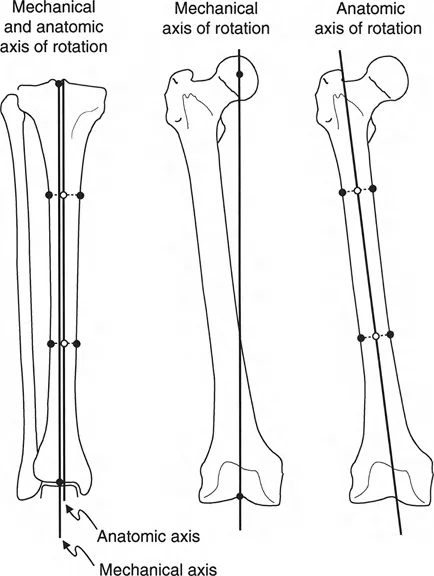
The normal mechanical lateral distal femoral angle (mLDFA) is approximately 87 degrees. An mLDFA greater than 90 degrees indicates that the distal femur is in varus, while an mLDFA less than 85 degrees indicates valgus.
Question 23
During a total hip arthroplasty, the surgeon inadvertently places the acetabular component in a high and lateral position relative to the true anatomic center of rotation. Biomechanically, what is the consequence of this cup placement?
Explanation
A high and lateral hip center decreases the offset (lever arm) of the abductor mechanism. To compensate and keep the pelvis level during single-leg stance, the abductors must fire with much greater force, substantially increasing the overall joint reaction force.
Question 24
A patient demonstrates an uncompensated Trendelenburg gait (pelvic drop) on the left side during the right swing phase. This is primarily caused by dysfunction of which muscle group and nerve?
Explanation
A contralateral pelvic drop (left side drops down) during the swing phase of the unaffected (left) leg indicates weakness of the stance-leg (right leg) abductors. Wait, the question states 'pelvic drop on the left side during the right swing phase' - this means the right leg is in swing, so the left leg is in stance. Therefore, the weak abductors are on the LEFT leg, supplied by the left superior gluteal nerve.
Question 25
A patient with a stiff-knee gait (unable to flex the knee during swing phase) typically compensates to allow for foot clearance. Which compensatory mechanism occurs on the CONTRALATERAL limb during the affected limb's swing phase?
Explanation
Vaulting is a stance-phase deviation that occurs on the unaffected, contralateral limb. The patient plantarflexes the normal ankle (goes up on their toes) to raise the pelvis and allow the functionally longer, stiff affected limb to clear the ground during its swing phase.
Question 26
According to Paley's Rule 3 of deformity correction, if an osteotomy is performed at a level different from the Center of Rotation of Angulation (CORA) and the hinge is also placed at a location remote from the CORA, what is the expected outcome?
Explanation
Rule 3 dictates that if neither the osteotomy nor the hinge axis is located at the CORA, angular correction will occur, but it will create a new, iatrogenic translation deformity (the mechanical axis lines will be parallel but not collinear).
Question 27
In an isolated ankle arthrodesis, which specific functional event (rocker mechanism) of the gait cycle is permanently lost, and how does the body immediately compensate?
Explanation
An ankle arthrodesis eliminates the tibiotalar motion required for the second rocker (the tibia rolling forward over the fixed foot). Patients compensate by lifting the heel early during mid-stance, transferring the pivot point to the forefoot prematurely.
Question 28
In a patient undergoing total hip arthroplasty, the surgeon increases the femoral offset by 10 mm compared to the native anatomy. Which of the following biomechanical effects is most likely to occur as a direct result of this modification?
Explanation
Increasing femoral offset lengthens the abductor moment arm, which reduces the required abductor muscle force to maintain pelvic stability. Consequently, this leads to a decrease in the overall hip joint reaction force.
Question 29
A patient with unilateral right hip osteoarthritis is advised to use a cane to reduce pain. To optimally decrease the joint reaction force on the right hip, in which hand should the cane be held and what is the primary biomechanical reason?
Explanation
Using a cane in the contralateral (left) hand provides a long lever arm to assist the right hip abductors in balancing body weight. This significantly reduces the force the right abductors must generate, profoundly decreasing the joint reaction force on the right hip.
Question 30
During the normal human gait cycle, in terminal stance (immediately prior to initial contact of the contralateral foot), what is the position of the ground reaction force (GRF) vector relative to the hip, knee, and ankle joints?
Explanation
In terminal stance, the body advances over the stance limb, placing the GRF vector posterior to the hip (promoting extension), anterior to the knee (promoting extension), and anterior to the ankle (promoting dorsiflexion, which the calf muscles must resist).
Question 31
When planning a corrective osteotomy for a diaphyseal angular deformity, what is the geometric consequence of placing the osteotomy hinge at a level that is physically separated from the Center of Rotation of Angulation (CORA), while fully correcting the angular deformity?
Explanation
According to the rules of deformity correction by Paley, if an osteotomy is performed away from the CORA and the angular deformity is corrected, an obligatory translation of the bone ends occurs. This translation is required to realign the proximal and distal mechanical axes.
Question 32
A patient presents with severe coxa vara (neck-shaft angle of 95 degrees). Compared to a normal neck-shaft angle (130 degrees), which of the following biomechanical profiles is characteristic of coxa vara?
Explanation
Coxa vara increases the abductor moment arm, which decreases the required abductor force and therefore decreases the hip joint reaction force. However, the more horizontal femoral neck increases the shear force and bending moment across the femoral neck, increasing the risk of femoral neck fracture.
Question 33
A patient with profound weakness of the right gluteus medius exhibits a classic Trendelenburg gait. During the stance phase on the right lower extremity, which of the following compensatory movements is expected to minimize the required abductor force?
Explanation
In an uncompensated Trendelenburg sign, the contralateral pelvis drops. In a compensated Trendelenburg gait, the patient leans their trunk laterally over the affected (ipsilateral) side during stance to move the center of gravity closer to the hip joint center, reducing the demand on the weak abductors.
Question 34
A 45-year-old active male with medial compartment knee osteoarthritis undergoes a medial opening wedge high tibial osteotomy (HTO). Postoperatively, he is noted to have a new-onset genu recurvatum during gait. Which of the following technical errors during the HTO most likely caused this complication?
Explanation
The proximal tibia has a normal posterior slope. If a medial opening wedge HTO is opened more anteriorly than posteriorly, it decreases the posterior tibial slope (or introduces anterior slope), leading to knee hyperextension (recurvatum) during weight-bearing.
Question 35
In a patient with cerebral palsy presenting with a stiff-knee gait, electromyography (EMG) is most likely to show abnormal, continuous firing of which muscle during the swing phase of gait?
Explanation
Stiff-knee gait in cerebral palsy is characterized by diminished peak knee flexion during the swing phase. This is most commonly caused by abnormal, prolonged overactivity of the rectus femoris muscle during swing, which is often treated with a rectus femoris transfer.
Question 36
To minimize the joint reaction force on the left hip while carrying a heavy 20-lb suitcase, how should the patient carry the load?
Explanation
Carrying a load in the ipsilateral hand shifts the body's superincumbent weight vector closer to the affected hip joint, which decreases the abductor force needed to maintain a level pelvis. Carrying it in the contralateral hand significantly increases the hip joint reaction force.
Question 37
A 25-year-old patient presents with a 'steppage' gait secondary to a common peroneal nerve palsy. In a normal gait cycle, the primary muscle affected by this palsy functions in which of the following combinations of contractions?
Explanation
The tibialis anterior (innervated by the deep peroneal nerve) normally functions eccentrically during loading response (heel strike to foot flat) to prevent foot slap, and concentrically during swing phase to dorsiflex the foot and clear the toes.
Question 38
A Bernese periacetabular osteotomy (PAO) is performed for symptomatic developmental dysplasia of the hip (DDH). What is the primary biomechanical alteration at the hip joint achieved by this procedure?
Explanation
A PAO allows the acetabulum to be reoriented to increase femoral head coverage (improving the center-edge angle). It also medializes the hip joint center of rotation, which decreases the lever arm of the body weight and subsequently reduces the joint reaction force.
Question 39
Using the Menelaus method for calculating limb length discrepancy, what are the accepted average growth rates of the distal femur and proximal tibia per year, respectively?
Explanation
The Menelaus rule of thumb estimates that the distal femoral physis grows approximately 9-10 mm (3/8 inch) per year, and the proximal tibial physis grows approximately 6 mm (1/4 inch) per year. Growth is estimated to cease at age 14 in girls and 16 in boys.
Question 40
A patient with a significant equinus contracture of the ankle presents with a characteristic secondary gait deviation during the stance phase. Which of the following is the most likely observed compensatory knee kinematic?
Explanation
A fixed plantarflexion (equinus) contracture forces the tibia backward when the foot is planted flat on the ground during stance. This creates a plantarflexion-knee extension couple, driving the knee into hyperextension (recurvatum).
Question 41
In distraction osteogenesis using an Ilizarov circular frame, which of the following histologic processes is primarily responsible for the formation of new bone in the distraction gap under ideal conditions of stability and rate?
Explanation
Under appropriate conditions of stability, rhythm, and rate (typically 1 mm per day in 4 increments), the regenerate bone in distraction osteogenesis forms primarily via intramembranous ossification, occurring parallel to the tension vectors without a cartilage intermediate.
Question 42
A patient demonstrates a classic 'gluteus maximus lurch' during gait. Which kinematic alteration during the stance phase characterizes this gait pattern?
Explanation
In the presence of a weak gluteus maximus, the patient thrusts their trunk posteriorly at initial contact and early stance. This places the center of gravity posterior to the hip joint axis, generating an external extension moment that substitutes for the weak hip extensors.
Question 43
According to Saunders' determinants of gait, normal pelvic drop (approximately 4 to 5 degrees) on the swing side during midstance serves which of the following primary energy-conserving functions?
Explanation
Pelvic drop (a slight normal Trendelenburg) lowers the apex of the sinusoidal curve of the center of gravity during the midstance phase. This minimizes the upward vertical displacement, reducing the overall energy expenditure of gait.
Question 44
A 12-year-old boy presents with right lower limb length discrepancy and angular deformity due to a partial distal femoral physeal arrest following a Salter-Harris IV fracture. Imaging reveals a peripheral physeal bar. Under what conditions is physeal bar resection (epiphysiolysis) indicated?
Explanation
Physeal bar resection is generally indicated if the bar involves less than 50% of the total physeal cross-sectional area and the child has at least 2 years of remaining skeletal growth. If the bar is larger or less growth remains, corrective osteotomy or epiphysiodesis is preferred.
Question 45
During clinical evaluation of femoral anteversion in a child, the Craig's test is performed. The patient is placed prone with the knee flexed to 90 degrees. What specifically is being measured to determine the degree of anteversion?
Explanation
In Craig's test (trochanteric prominence angle test), the examiner palpates the greater trochanter and rotates the hip until the trochanter is most prominent laterally (which parallels the femoral neck). The angle of the lower leg (tibia) relative to the true vertical represents the degree of femoral anteversion.
Question 46
A 60-year-old female undergoes a distal femoral osteotomy for a severe valgus knee deformity and isolated lateral compartment osteoarthritis. A medial closing wedge osteotomy is performed. What is the expected change to the mechanical axis of the lower extremity?
Explanation
A varus-producing distal femoral osteotomy (such as a medial closing wedge) is used for a valgus knee with lateral compartment osteoarthritis. It shifts the weight-bearing mechanical axis medially, offloading the diseased lateral compartment.
Question 47
A patient with symptomatic cerebral palsy exhibits a 'crouch gait'. Surgical correction often targets hamstring tightness. If isolated hamstring lengthening is performed without addressing other concurrent deformities, which of the following is a common postoperative complication?
Explanation
The hamstrings extend the hip and flex the knee, maintaining a posterior pull on the pelvis. Over-lengthening the hamstrings without addressing concurrent psoas/rectus tightness can lead to an unchecked anterior pelvic tilt and an exaggerated hyperlordosis of the lumbar spine.
Question 48
A 65-year-old patient with severe right hip osteoarthritis uses a cane to reduce hip pain during ambulation. To optimally decrease the joint reaction force across the right hip, the patient should be instructed to hold the cane in which hand, and by what biomechanical mechanism does this work?
Explanation
Holding a cane in the contralateral (left) hand provides a supportive upward force at a long distance from the hip, creating a moment that assists the hip abductors. This significantly decreases the force required by the abductors, thereby reducing the total hip joint reaction force.
Question 49
A patient presents with a high-stepping gait, exhibiting foot slap immediately following initial contact. Electromyography is most likely to show denervation in a muscle innervated by which of the following nerves?
Explanation
The patient has a steppage gait due to foot drop, which results from weakness of the ankle dorsiflexors (primarily the tibialis anterior). This muscle is innervated by the deep peroneal nerve.
Question 50
When planning an osteotomy for a uniplanar deformity, following Paley's Osteotomy Rule 1 dictates that the osteotomy and the axis of rotation both pass directly through the Center of Rotation of Angulation (CORA). What is the expected biomechanical outcome of this correction?
Explanation
Osteotomy Rule 1 states that if the osteotomy line and the hinge (axis of rotation) both pass through the CORA, the deformity corrects with pure angulation, restoring the mechanical axis without any translation at the osteotomy site.
Question 51
During a total hip arthroplasty, the surgeon opts to use a femoral stem with an increased offset. Compared to a standard offset stem, what is the primary biomechanical effect of this decision on the hip joint?
Explanation
Increasing the femoral offset lateralizes the greater trochanter, which increases the abductor moment arm. A longer abductor moment arm means less abductor force is required to maintain a level pelvis, thus decreasing the overall joint reaction force.
Question 52
A patient exhibits a compensated Trendelenburg gait, leaning their trunk laterally over the stance limb. What is the primary biomechanical advantage of this compensatory mechanism?
Explanation
By leaning the trunk laterally over the weak stance hip, the center of gravity is brought closer to the center of the hip joint. This dramatically decreases the body weight moment arm, reducing the moment that the weak abductors must counteract.
Question 53
A 2-year-old child is evaluated for bilateral genu varum. Which of the following radiographic parameters best differentiates infantile Blount's disease from physiologic bowing?
Explanation
The metaphyseal-diaphyseal angle (MDA) of Drennan is used to differentiate physiologic bowing from infantile Blount's disease. An MDA > 11-16 degrees is highly predictive of progression to Blount's disease.
Question 54
When predicting a pediatric limb length discrepancy at maturity using the Paley multiplier method, the calculation is fundamentally based on which of the following biological assumptions?
Explanation
The multiplier method assumes the principle of constant inhibition, meaning the short limb grows at a constant, proportional rate relative to the normal limb throughout childhood.
Question 55
During the normal human gait cycle, the gluteus maximus demonstrates its peak electromyographic (EMG) activity during which specific phase?
Explanation
The gluteus maximus fires maximally from initial contact to the loading response phase. Its eccentric contraction decelerates the forward momentum of the trunk and prevents uncontrolled hip flexion.
Question 56
According to the principles of deformity correction (Osteotomy Rule 2), if the osteotomy is made at a level different from the CORA, but the axis of rotation is placed perfectly at the CORA, what is the geometric result?
Explanation
Under Rule 2, placing the hinge at the CORA but making the osteotomy elsewhere allows for simultaneous angulation and translation. This restores the colinearity of the proximal and distal mechanical axes.
Question 57
A patient with osteoarthritis of the left hip is tasked with carrying a 20-pound suitcase. To minimize the joint reaction force across the painful left hip during ambulation, the patient should be instructed to carry the suitcase in which manner?
Explanation
Carrying a load in the ipsilateral (left) hand shifts the body's center of gravity closer to the stance hip, reducing the body weight moment arm. This decreases the abductor muscle force required, thereby reducing the joint reaction force.
Question 58
In the sagittal plane analysis of normal gait, the 'second rocker' mechanism refers to the advancement of the tibia over the stationary foot. This corresponds to which phase of the gait cycle?
Explanation
The second rocker (ankle rocker) occurs during mid-stance as the tibia rolls forward over the talus. The first rocker is the heel rocker at initial contact, and the third is the forefoot rocker at terminal stance.
Question 59
A patient with developmental dysplasia of the hip is found to have a center-edge (CE) angle of Wiberg of 12 degrees. How does this anatomic variation pathologically alter hip biomechanics?
Explanation
A decreased CE angle (<20 degrees) indicates poor lateral acetabular coverage. This significantly decreases the contact area between the femoral head and acetabulum, leading to concentrated, elevated contact stresses superiorly and accelerating osteoarthritis.
Question 60
When performing fixator-assisted intramedullary nailing for the correction of a diaphyseal femur deformity, what is the primary purpose of the temporarily applied external fixator?
Explanation
Fixator-assisted nailing utilizes a temporary external fixator to dial in and hold the exact desired multiplanar correction. This rigid temporary stabilization ensures the deformity is not lost during reaming and nail insertion.
Question 61
According to Saunders' determinants of gait, which of the following kinematic mechanisms is most responsible for minimizing the vertical displacement of the center of gravity during the peak of the stance phase?
Explanation
Normal knee flexion (~15 degrees) during the stance phase allows the pelvis and center of gravity to drop slightly at what would otherwise be the highest point of the arc, thereby flattening the trajectory and conserving energy.
Question 62
Based on the Ilizarov principle of tension-stress, optimal bone regeneration and soft tissue histogenesis during distraction osteogenesis are achieved using which distraction rate and rhythm?
Explanation
Ilizarov's fundamental research established that a distraction rate of 1 mm/day, divided into four separate increments of 0.25 mm (QID), optimizes the local mechanical environment for regenerate bone formation.
Question 63
On a standing full-length AP radiograph of the lower extremities, the mechanical axis line is drawn from the center of the femoral head to the center of the ankle talus. If this line passes lateral to the center of the knee joint, what deformity is present?
Explanation
A mechanical axis deviation (MAD) that passes lateral to the center of the knee indicates a valgus alignment (genu valgum). A medial MAD indicates a varus alignment.
Question 64
In a patient with untreated developmental dysplasia of the hip characterized by proximal migration of the femur, how is the biomechanical function of the gluteus medius primarily compromised?
Explanation
Proximal migration of the greater trochanter decreases the horizontal distance between the hip center and the abductor insertion (decreased moment arm) and reduces the resting length of the muscle, resulting in a severe biomechanical disadvantage and weakness.
Question 65
In the analysis of a normal adult gait cycle at a standard walking speed, the cycle is classically divided into the stance phase and the swing phase. What percentage of the total gait cycle is typically occupied by each phase?
Explanation
A normal gait cycle is composed of approximately 60% stance phase (when the foot is in contact with the ground) and 40% swing phase (when the limb is advancing through the air).
Question 66
A pediatric orthopedic surgeon applies a tension band plate (guided growth) to the medial aspect of the distal femoral physis to correct genu valgum. The gradual correction of this deformity relies on which of the following biological principles?
Explanation
The Hueter-Volkmann principle states that increased mechanical compression across a physis inhibits longitudinal growth, while decreased compression stimulates it. Plating the medial side slows medial growth, allowing the lateral side to 'catch up'.
Question 67
During a complex revision total hip arthroplasty, the surgeon places the acetabular component in a 'high hip center' (superiorly translated) without restoring the native lateral offset. What is the most significant negative biomechanical consequence of this placement?
Explanation
A high, non-lateralized hip center brings the center of rotation closer to the line of action of the abductors. This significantly shortens the abductor moment arm, requiring much higher muscle forces to stabilize the pelvis and dramatically increasing joint reaction forces.
Question 68
A patient with severe right hip osteoarthritis is advised to use a cane for offloading. In which hand should the cane be held, and what is the primary biomechanical mechanism of action?
Explanation
Using a cane in the contralateral hand reduces the body weight moment. This significantly decreases the force required by the hip abductors, which in turn drastically reduces the overall joint reaction force.
Question 69
During the normal gait cycle, weakness of which muscle group and during which specific phase results in a classic 'foot slap'?
Explanation
A 'foot slap' occurs when the pretibial muscles (primarily the tibialis anterior) fail to eccentrically control plantarflexion from initial contact to the foot-flat phase (loading response).
Question 70
In planning a corrective osteotomy for a diaphyseal tibial deformity, the surgical cut is planned proximal to the Center of Rotation of Angulation (CORA). To restore the mechanical axis perfectly without creating a secondary deformity, the osteotomy must include which of the following?
Explanation
When an osteotomy is performed at a level other than the CORA, correcting the angulation alone will result in a translation deformity (loss of mechanical axis alignment). Both angulation and translation must be performed to restore the axis.
Question 71
A patient exhibits a posterior trunk lean immediately after heel strike during the stance phase of gait. This compensatory mechanism (gluteus maximus lurch) is most likely due to weakness of a muscle innervated by which nerve?
Explanation
A posterior trunk lean at initial contact shifts the center of gravity behind the hip joint, artificially locking it in extension. This compensates for weakness of the gluteus maximus, which is innervated by the inferior gluteal nerve.
Question 72
During the single-leg stance phase of normal walking gait, the hip joint reaction force is approximately what multiple of total body weight?
Explanation
During single-leg stance, the hip abductors must exert a force roughly 1.5 to 2 times body weight to maintain a level pelvis. Combined with body weight, the resultant joint reaction force across the hip is approximately 2.5 to 3 times body weight.
Question 73
A 2-year-old child presents with bilateral genu varum. Radiographs reveal a metaphyseal-diaphyseal angle of 18 degrees on the right and 10 degrees on the left. What is the most appropriate management for the right leg?
Explanation
A metaphyseal-diaphyseal angle greater than 16 degrees strongly suggests infantile Blount's disease. For children under 3 years of age (Langenskiöld stage I or II), bracing with a KAFO is the standard initial treatment.
Question 74
Medializing the hip center of rotation during a total hip arthroplasty for severe developmental dysplasia of the hip has what primary biomechanical effect?
Explanation
Medializing the acetabulum decreases the lever arm of the body weight relative to the center of rotation. This reduces the mechanical advantage of the body weight, decreasing the required abductor force and lowering the joint reaction force.
Question 75
A 10-year-old child with spastic diplegic cerebral palsy undergoes an isolated percutaneous Achilles tendon lengthening. Postoperatively, the patient rapidly develops a progressive crouch gait. What biomechanical consequence explains this outcome?
Explanation
The gastrocnemius-soleus complex normally stabilizes the tibia during stance, promoting knee extension (the plantarflexion-knee extension couple). Over-lengthening the Achilles tendon removes this stabilizing force, leading to tibial advancement, knee flexion, and crouch gait.
Question 76
An 11-year-old boy presents with progressive genu valgum and a lateral mechanical axis deviation. He has open physes with approximately 3 years of growth remaining. If guided growth is chosen, where should a tension-band plate be positioned?
Explanation
To correct a valgus deformity, growth must be slowed on the medial side while allowing the lateral side to continue growing. Placing a tension-band plate across the medial distal femoral (or proximal tibial) physis achieves this via the Hueter-Volkmann principle.
Question 77
Placing the acetabular component in a 'high and lateral' position during a complex total hip arthroplasty alters hip biomechanics in which of the following ways?
Explanation
A high and lateral hip center decreases the abductor moment arm and increases the body weight moment arm. This requires greater force from the abductors, thereby increasing the overall joint reaction force and predisposing the patient to an antalgic limp.
Question 78
During the normal gait cycle, the 'second rocker' (ankle rocker) is defined by tibial progression over the plantigrade foot during mid-stance. Which muscle group predominantly controls this motion?
Explanation
The ankle rocker occurs as the tibia advances over the fixed foot. The gastrocnemius-soleus complex acts eccentrically to control this forward progression and prevent excessive dorsiflexion and knee collapse.
Question 79
A 7-year-old girl presents with frequent tripping and an intoeing gait. Examination shows hip internal rotation of 85 degrees and external rotation of 10 degrees bilaterally. What is the most likely diagnosis and its natural history?
Explanation
This presentation (excessive internal rotation, 'W-sitting') is classic for increased femoral anteversion. In the vast majority of cases, it resolves spontaneously by ages 8 to 10 without surgical intervention.
Question 80
A valgus-producing proximal femoral osteotomy is planned for a patient with a femoral neck nonunion. What is the primary biomechanical advantage of this procedure for achieving union?
Explanation
A valgus intertrochanteric osteotomy reorients the vertical fracture line of a nonunion more horizontally. This converts destabilizing shear forces into compressive forces, promoting fracture healing.
Question 81
A 15-year-old requires correction of a multiplanar post-traumatic tibial deformity using a hexapod circular fixator. The mathematical model governing this device's simultaneous correction of all planes is based on which of the following kinematic principles?
Explanation
Hexapod circular fixators, like the Taylor Spatial Frame, utilize Stewart platform mechanics. This allows for 6 degrees of freedom, enabling simultaneous correction of length, angulation, translation, and rotation via computer software.
Question 82
Which of the following muscles is considered the primary driver of limb advancement during the initial swing phase of the normal gait cycle?
Explanation
The iliopsoas initiates hip flexion during the initial swing phase. This concentric contraction is the primary motor force responsible for advancing the lower extremity forward.
Question 83
When performing a fixator-assisted nailing (FAN) for an acute distal femoral deformity correction, what is the primary purpose of applying the temporary external fixator prior to reaming?
Explanation
In fixator-assisted nailing, the external fixator acts as a temporary rigid guide. It holds the desired alignment (preventing loss of translation and angulation correction) while the medullary canal is reamed and the nail is inserted.
Question 84
A 25-year-old female presents with groin pain. Radiographs reveal a lateral center-edge angle of Wiberg of 12 degrees. How does this structural abnormality alter hip biomechanics compared to a normal hip?
Explanation
A center-edge angle of less than 20 degrees indicates acetabular dysplasia. The shallow, uncovered roof significantly decreases the articular contact area, abnormally shifting peak stresses to the anterolateral acetabular rim.
Question 85
During a normal human walking gait cycle at a standard pace, what percentage of the entire gait cycle is spent in double-limb support?
Explanation
In a normal walking gait cycle, stance phase comprises 60% and swing phase 40%. Double-limb support occurs at the beginning and end of the stance phase, totaling approximately 20% of the gait cycle.
Question 86
A high tibial osteotomy (HTO) is planned for a patient with medial compartment osteoarthritis and varus alignment. To reliably unload the medial compartment and halt disease progression, the mechanical axis should be corrected to pass through which specific coordinate of the tibial plateau (measured from medial to lateral)?
Explanation
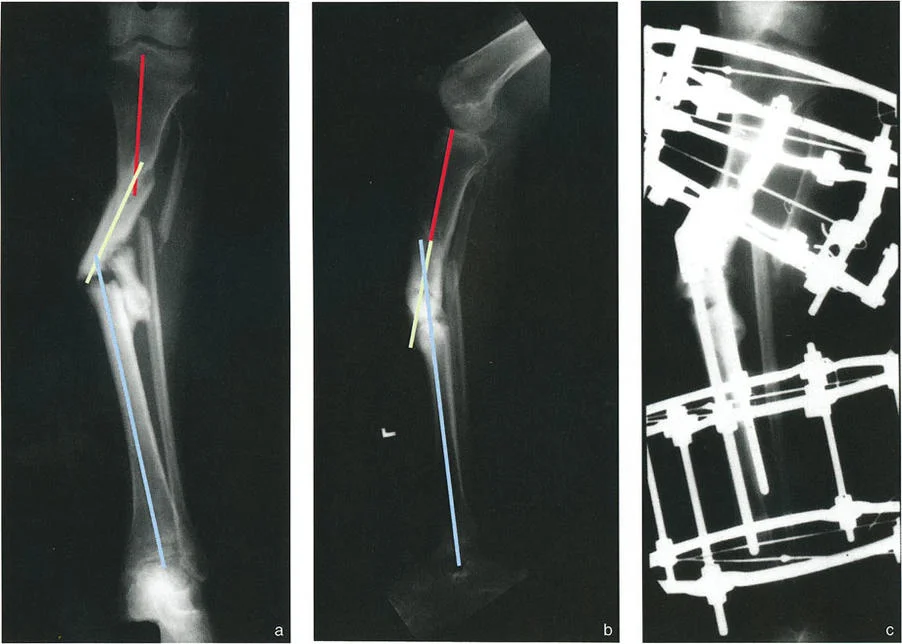
To predictably relieve symptoms in a medial compartment HTO, the mechanical axis is intentionally shifted laterally to the Fujisawa point. This point is located at 62.5% of the tibial plateau width (measured from medial to lateral).
Question 87
In total hip arthroplasty, utilizing a femoral component with an appropriately increased offset (while strictly maintaining leg length) has which of the following biomechanical effects?
Explanation
Increasing femoral offset lengthens the abductor moment arm without changing leg length. This increased mechanical advantage requires less force from the abductors to stabilize the pelvis, thus significantly decreasing the overall joint reaction force.
Question 88
During a total hip arthroplasty, the surgeon medializes the acetabular cup to the level of the true floor of the acetabulum (cotyloid fossa). What is the primary biomechanical effect of this maneuver during single-leg stance?
Explanation
Medializing the acetabular center of rotation moves the hip joint closer to the body's center of gravity. This decreases the body weight lever arm, thereby reducing the required abductor muscle force and the overall hip joint reaction force.
Question 89
A 45-year-old active patient undergoes a medial opening wedge high tibial osteotomy (HTO) for medial compartment gonarthrosis. Assuming standard technique distal to the tibial tubercle, what are the most likely expected postoperative changes to the mechanical axis and patellar height?
Explanation
A medial opening wedge HTO corrects varus deformity, lateralizing the mechanical axis. Because the osteotomy is typically distal to the tibial tubercle, opening the wedge increases the distance between the tubercle and the joint line, relatively lowering the patella (patella baja).
Question 90
During the initial contact (heel strike) phase of a normal gait cycle, what is the position of the ground reaction force (GRF) vector relative to the anatomic centers of the hip, knee, and ankle joints?
Explanation
At initial contact, the GRF vector passes anterior to the hip (creating a flexion moment), anterior to the knee (creating an extension moment), and posterior to the ankle (creating a plantarflexion moment).
Question 91
When planning a lower extremity deformity correction, Osteotomy Rule 2 dictates that the osteotomy is performed at a level different from the center of rotation of angulation (CORA), while the hinge axis is placed directly at the CORA. What is the expected geometric result of this correction?
Explanation
According to Paley's rules of deformity correction, if the osteotomy is made at a level away from the CORA but the hinge is placed at the CORA (Rule 2), the axis will realign completely via a combination of angulation and translation at the osteotomy site.
Question 92
A 12-year-old with spastic diplegic cerebral palsy presents with progressive "crouch gait" characterized by excessive hip and knee flexion and ankle dorsiflexion during stance. Which of the following previous iatrogenic interventions is the most likely primary contributor to this gait pattern?
Explanation
Iatrogenic over-lengthening of the Achilles tendon eliminates the plantarflexion-knee extension couple. The resulting weak plantarflexion allows excessive ankle dorsiflexion and tibial advancement, causing a progressive and difficult-to-treat crouch gait.
Question 93
A patient undergoes a proximal femoral osteotomy that effectively lateralizes the greater trochanter without altering the position of the femoral head. What is the biomechanical effect on the required abductor muscle force and the hip joint reaction force during single-leg stance?
Explanation
Lateralizing the greater trochanter lengthens the lever arm of the abductor muscles. A longer lever arm means less abductor muscle force is required to balance the pelvis, which consequently decreases the overall hip joint reaction force.
Question 94
A 65-year-old male presents with a "steppage gait," characterized by excessive hip and knee flexion during the swing phase. This compensatory gait pattern is most commonly necessitated by a deficit in which of the following nerves?
Explanation
A steppage gait is a compensation for foot drop, which is caused by a weakness of the ankle dorsiflexors innervated by the deep branch of the common peroneal nerve. The patient excessively flexes the hip and knee to allow the dropped foot to clear the ground during the swing phase.
Question 95
In the pathogenesis of infantile Blount disease, a vicious cycle occurs where varus bowing increases compressive forces across the medial proximal tibial physis, which in turn further suppresses medial growth. Which biomechanical principle best describes this phenomenon?
Explanation
The Hueter-Volkmann principle states that increased compressive forces across a physis inhibit its growth, while decreased forces or tension stimulate growth. This explains the progressive medial physeal failure in Blount disease.
Question 96
During a revision total hip arthroplasty with severe acetabular bone loss, the surgeon places the new acetabular component in a superior and lateral "high hip center" position. What is the most significant biomechanical consequence of this placement?
Explanation
A superior and lateral center of rotation shortens the abductor lever arm and lengthens the body weight lever arm. This biomechanical disadvantage requires a massive increase in abductor force to maintain a level pelvis, dramatically increasing the hip joint reaction force.
Question 97
A 5-year-old girl is evaluated for an in-toeing gait. Examination reveals internal hip rotation of 85 degrees, external hip rotation of 10 degrees, and a thigh-foot angle of +10 degrees. What is the primary anatomical cause of her rotational profile?
Explanation
The patient exhibits classically increased femoral anteversion, characterized by excessive internal hip rotation (>70 degrees) and restricted external rotation. The positive thigh-foot angle indicates normal to slightly external tibial torsion, ruling out internal tibial torsion.
Question 98
During a normal gait cycle, the ankle joint transitions through varying degrees of dorsiflexion and plantarflexion. At which specific point in the gait cycle does maximal ankle dorsiflexion occur?
Explanation
Maximal ankle dorsiflexion (typically around 10 degrees) occurs at the very end of terminal stance, just before heel-off, as the tibia achieves its maximum forward progression over the planted foot.
Question 99
During templating for a total hip arthroplasty, the surgeon plans to use a high-offset femoral stem to increase global femoral offset without altering leg length. What is the expected effect of this choice on hip biomechanics and stability?
Explanation
Increasing femoral offset shifts the femur laterally, which restores or increases the abductor lever arm (increasing resting abductor tension and mechanical advantage). It also distances the proximal femur from the pelvis, reducing the risk of bony impingement and improving stability.
Question 100
A 22-year-old athlete sustains a knee injury and subsequently walks with a "quadriceps avoidance gait," characterized by a forward trunk lean and maintenance of the knee in full extension during the loading response phase. This gait adaptation is most specific to a deficiency of which structure?
Explanation
A quadriceps avoidance gait is a compensatory pattern seen in ACL-deficient knees. Patients lean forward and avoid knee flexion during early stance to prevent the quadriceps from contracting, which would otherwise pull the tibia anteriorly and cause subluxation.
None
Previous ChapterABOS Board Review: Lower Extremity Deformity, TKA, & Gait A…
Next Chapter Comprehensive Orthopedic Deformity, LLD & Hip Biomechanics …

Medically Verified Content by
Prof. Dr. Mohammed Hutaif Clinic
Consultant Orthopedic & Spine Surgeon