ABOS Part I Orthopedic Trauma Review: Acetabular, Femoral, Distal Radius Fracture Management | Part 21548

Key Takeaway
This ABOS Part I & AAOS OITE review module offers 32 advanced multiple-choice questions on orthopedic trauma. It covers comprehensive management of acetabular, femoral, and distal radius fractures, including surgical approaches like ilioinguinal and IM nailing, biomechanics, common complications like DRUJ instability and CRPS, and post-operative rehabilitation strategies for exam preparation.
ABOS Part I Orthopedic Trauma Review: Acetabular, Femoral, Distal Radius Fracture Management | Part 21548
Comprehensive 100-Question Exam
00:00
Start Quiz
Question 1
A 32-year-old male undergoes an ilioinguinal approach for a displaced anterior column acetabular fracture. Postoperatively, he complains of numbness and a burning sensation over the anterolateral aspect of his ipsilateral thigh. Which nerve was most likely injured or irritated during the procedure?
Explanation
Correct Answer: C
The lateral femoral cutaneous nerve (LFCN) is the most commonly injured nerve during the ilioinguinal approach, with sensory deficits reported in up to 80% of cases and persistent symptoms in 5-10%. It emerges from beneath the inguinal ligament, lateral to the sartorius, and its course is highly variable, making it susceptible to traction, compression, or direct injury during dissection and retraction, particularly in the lateral window. Symptoms typically involve numbness, tingling, or burning pain (meralgia paresthetica) over the anterolateral thigh. The iliohypogastric and ilioinguinal nerves are typically retracted superiorly with the external oblique aponeurosis and spermatic cord, respectively, and while they can be injured, their sensory distribution is more medial and inferior (groin, scrotum/labia, medial thigh). The femoral nerve and obturator nerve are deeper structures, and their injury would typically result in motor deficits (quadriceps weakness for femoral nerve, adductor weakness for obturator nerve) in addition to sensory changes, and are much rarer but more severe complications.
Question 2
The image below depicts the lateral window of the ilioinguinal approach. Which of the following structures are typically detached from the ASIS and retracted laterally to develop this window?

Explanation
Correct Answer: C
The lateral window of the ilioinguinal approach is developed by detaching the origins of the sartorius and tensor fascia lata (TFL) muscles from the anterior superior iliac spine (ASIS) and retracting them laterally. This maneuver exposes the lateral aspect of the iliac wing. Subsequently, subperiosteal dissection elevates the iliacus muscle, which, along with the psoas muscle, is retracted medially to expose the inner table of the ilium. The rectus abdominis and pyramidalis muscles are detached and reflected superiorly in the medial window. The femoral neurovascular bundle is retracted medially in the middle window. The spermatic cord and ilioinguinal nerve are mobilized and retracted inferiorly/superiorly during the initial exposure of the inguinal canal and development of the medial window, respectively.
Question 3
During an ilioinguinal approach for a complex acetabular fracture, a surgeon encounters significant difficulty retracting the femoral neurovascular bundle in the middle window. Despite careful technique, the patient develops a new, profound ipsilateral lower extremity weakness and an absent femoral pulse post-operatively. Which of the following is the most appropriate immediate management step?
Explanation
Correct Answer: E
The clinical presentation of profound lower extremity weakness (suggesting femoral nerve injury) and an absent femoral pulse (indicating femoral artery occlusion) constitutes a surgical emergency. This is a rare but devastating complication of the ilioinguinal approach, typically due to direct injury, prolonged compression, or thrombosis of the femoral neurovascular bundle. Immediate surgical exploration and repair by a vascular surgeon are paramount to restore blood flow and potentially salvage nerve function. Delay in revascularization can lead to limb ischemia, muscle necrosis, and permanent neurological deficits. While a CT angiogram might be useful for detailed mapping, the urgency of the situation dictates immediate surgical intervention based on clinical findings. Corticosteroids, physical therapy, and antibiotics are not primary treatments for acute vascular occlusion or severe nerve injury in this context.
Question 4
A 68-year-old osteopenic female sustains a fall from standing height, resulting in a displaced acetabular fracture. CT imaging reveals a pure posterior column fracture with significant comminution and medial displacement of the femoral head. Which of the following statements regarding the ilioinguinal approach for this patient is most accurate?
Explanation
Correct Answer: C
The ilioinguinal approach is primarily designed for anterior column, anterior wall, and specific both-column fractures where the primary displacement is anterior and medial. It provides limited, if any, direct access to the posterior column. For a pure posterior column fracture, a posterior approach such as the Kocher-Langenbeck approach is far more appropriate as it provides direct visualization and access to the posterior column and posterior wall of the acetabulum. While the patient's age and bone quality are factors to consider, they are not absolute contraindications to surgery itself, but rather influence the choice of fixation and rehabilitation. Medial displacement of the femoral head can occur with anterior column fractures (e.g., quadrilateral plate involvement), which the ilioinguinal approach can address, but in the context of a pure posterior column fracture, it is not the primary mechanism or indication for this approach. An irreducible hip dislocation is an indication for operative management, but the choice of approach would still be dictated by the fracture pattern.
Question 5
A 40-year-old male presents with a complex acetabular fracture after a high-energy motor vehicle collision. Prior to definitive surgical planning via the ilioinguinal approach, which imaging modality is considered mandatory and provides the most detailed information regarding fracture lines, displacement, comminution, and intra-articular fragments?
Explanation
Correct Answer: C
While plain radiographs (AP pelvis, iliac oblique, and obturator oblique views) are essential for initial assessment and Judet and Letournel classification, a Computed Tomography (CT) scan with 3D reconstructions is considered mandatory for complex acetabular fractures. CT provides unparalleled detailed information regarding fracture lines, displacement, comminution, impaction, and the presence of intra-articular fragments, which is critical for accurate classification, surgical planning, and anticipating reduction maneuvers. MRI is useful for assessing soft tissue injuries, cartilage damage, or occult fractures but is not the primary imaging modality for bony fracture morphology in the acute setting. Selective angiography may be considered for suspected major vascular injury or difficult reoperations but is not routinely mandatory. Ultrasound has limited utility for detailed bony fracture assessment.
Question 6
The image below illustrates the medial window of the ilioinguinal approach. During the development of this window, which anatomical variant must be anticipated and carefully managed to prevent significant hemorrhage?

Explanation
Correct Answer: C
During the development of the medial window, meticulous dissection is performed along the superior pubic ramus, deep to the pubic tubercle. In this region, the 'corona mortis' (crown of death) is an anatomical variant involving an anastomosis between the obturator and external iliac/inferior epigastric vessels. This vascular connection crosses the superior pubic ramus in 10-30% of cases and can cause significant, life-threatening bleeding if inadvertently injured. Therefore, careful identification and either ligation and division or protection of these vessels are critical. The lateral femoral cutaneous nerve is relevant to the lateral aspect of the incision, not the medial window. A high bifurcation of the femoral artery or an accessory obturator nerve branch are not specific to this region or associated with the same risk of massive hemorrhage. The deep circumflex iliac artery is typically encountered more laterally along the iliac crest.
Question 7
A 28-year-old male undergoes successful open reduction and internal fixation of a displaced anterior column acetabular fracture via the ilioinguinal approach. The fixation is deemed stable intraoperatively. What is the most appropriate initial weight-bearing status for the affected extremity in the immediate post-operative period (Days 0-7)?
Explanation
Correct Answer: C
Following open reduction and internal fixation of acetabular fractures, even with stable fixation, the standard post-operative protocol typically involves non-weight bearing (NWB) or touch-down weight bearing (TDWB) (10-15 kg) on the affected extremity for an extended period, usually 8-12 weeks. This allows for initial fracture healing and prevents excessive stress on the fixation construct, which could lead to hardware failure, loss of reduction, or delayed union. Early full or partial weight-bearing is generally contraindicated for complex acetabular fractures. Progressive weight-bearing is initiated only after radiographic evidence of fracture healing and clinical stability, usually in the intermediate rehabilitation phase.
Question 8
The image below demonstrates the middle window of the ilioinguinal approach. Which of the following structures, located deep to the external iliac vein in this region, requires meticulous protection to prevent iatrogenic injury during dissection and retraction?

Explanation
Correct Answer: D
The middle window of the ilioinguinal approach involves the careful medial retraction of the femoral neurovascular bundle (femoral artery, vein, and nerve) along with the iliopsoas muscle. Deep to the external iliac vein, the obturator nerve and vessels cross the medial aspect of this window. Injury to these structures is rare but can lead to adductor weakness (obturator nerve) or significant hemorrhage (obturator vessels). Therefore, meticulous dissection and careful retraction are essential to protect the obturator nerve and vessels in this critical area. The ilioinguinal and lateral femoral cutaneous nerves are more superficial and lateral, respectively. The femoral nerve is part of the bundle being retracted. The superior gluteal nerve is located more posteriorly, exiting the pelvis through the greater sciatic notch, and is not directly exposed or at risk in the ilioinguinal approach.
Question 9
The image below shows definitive fixation of an acetabular fracture. In the context of an anterior column fracture managed via the ilioinguinal approach, what is the primary biomechanical purpose of placing a plate along the pelvic brim and potentially a separate plate or lag screws to buttress the quadrilateral surface?

Explanation
Correct Answer: C
The primary biomechanical purpose of anatomical reduction and rigid internal fixation of acetabular fractures, particularly with plates along the pelvic brim and buttressing of the quadrilateral surface, is to restore the spherical shape of the acetabulum, maintain congruity with the femoral head, and prevent secondary displacement. Specifically, buttressing the quadrilateral surface is crucial to resist medial displacement of the femoral head, which is a common and debilitating consequence of anterior column and both-column fractures involving this medial wall. This stable construct allows for early, controlled range of motion and optimizes load distribution, thereby mitigating the risk of post-traumatic arthritis. While stable fixation is a prerequisite for eventual weight-bearing, it does not immediately facilitate early weight-bearing. The plates are not primarily for posterior column stability (which is addressed by posterior approaches) or for bone graft scaffolding, nor do they directly protect the neurovascular bundle from screw penetration (which is achieved by careful screw length measurement and trajectory).
Question 10
A 55-year-old male with a history of traumatic brain injury and a complex acetabular fracture is undergoing surgical fixation via the ilioinguinal approach. Given his risk factors, the surgical team plans for prophylaxis against heterotopic ossification (HO). Which of the following is a recommended prophylactic regimen for HO in this setting?
Explanation
Correct Answer: B
Heterotopic ossification (HO) is a common complication after acetabular fracture surgery, with radiographic incidence ranging from 15-50%. Patients with traumatic brain injury are at a significantly increased risk. The recommended prophylactic regimens for HO include either non-steroidal anti-inflammatory drugs (NSAIDs) like Indomethacin (typically 25 mg three times daily for 6 weeks) or a single dose of radiation therapy (700-800 cGy) administered within 72 hours post-operatively. Low-molecular-weight heparin is for DVT prophylaxis. Continuous passive motion (CPM) has variable evidence for HO prevention and is not a primary prophylactic measure. High-dose systemic corticosteroids are not a standard HO prophylaxis. Surgical excision of HO is a treatment for symptomatic, mature HO, typically performed more than a year post-op, not a prophylactic measure at 3 weeks.
Question 11
A 38-year-old male presents with a comminuted mid-diaphyseal femoral shaft fracture following a high-energy motor vehicle collision. He is hemodynamically stable, and the fracture is closed. The surgical team is debating between an intramedullary nail (IMN) and a plate for definitive fixation. Considering the biomechanical principles discussed in the case, which of the following statements accurately describes a key advantage of an IMN over a plate for this specific fracture?

Explanation
Correct Answer: C
The correct answer is C because intramedullary nails (IMNs) are load-sharing devices designed to be placed centrally within the medullary canal, close to the neutral axis of the bone. This central placement allows them to share axial compressive loads with the bone, which minimizes bending moments at the fracture site. This load-sharing characteristic promotes Wolff's Law, encouraging bone remodeling and reducing the degree of stress shielding compared to plates, which are load-bearing and placed eccentrically on the bone surface. Plates, due to their eccentric placement, bear the majority of the load and create significant bending moments, leading to more pronounced stress shielding.
Option A is incorrect because IMNs derive their stiffness from their diameter and material properties, but their primary biomechanical advantage is load sharing due to central placement, not superior bending stiffness from eccentric placement (which is characteristic of plates). Option B is incorrect as it reverses the roles: IMNs are load-sharing, and plates are load-bearing. Option D is incorrect; while plates can provide good rotational stability, IMNs achieve excellent rotational stability, especially in comminuted fractures, through interlocking screws. Option E is incorrect; IMNs are typically inserted with minimal soft tissue dissection (indirect reduction techniques), which is a significant biological advantage over plates that often require more extensive exposure and periosteal stripping.
Question 12
A 25-year-old male sustains a Gustilo-Anderson Type II open tibial shaft fracture with moderate contamination. After thorough debridement and irrigation, the orthopedic surgeon plans for definitive fixation with an intramedullary nail. During pre-operative planning, the surgeon considers the decision between reamed and unreamed nailing. Based on the case discussion, what is the most accurate statement regarding reaming in this scenario?

Explanation
Correct Answer: B
The correct answer is B. Reaming the medullary canal prepares a larger diameter canal, allowing for the insertion of a larger, stiffer nail. This enhances mechanical stability and improves bone-nail contact (fit-and-fill). However, reaming does temporarily compromise the endosteal blood supply, which is a consideration, especially in open fractures where soft tissue and periosteal blood supply may already be compromised. Despite this, modern reaming techniques, often employing low-pressure, high-volume irrigation, have minimized the concern for endosteal compromise, making reamed nails acceptable and often preferred in many Gustilo Type I/II open fractures due to their superior mechanical stability and potential to accelerate union.
Option A is incorrect. While unreamed nails were historically preferred for open fractures to preserve endosteal blood flow, current evidence suggests reamed nails are acceptable for Gustilo Type I/II open fractures. Option C is incorrect; while reaming carries a theoretical risk of fat embolism, it is not an absolute contraindication for all open fractures, and the risk is managed with careful technique. Option D is incorrect; reaming allows for a larger nail, which generally provides better fit-and-fill than an unreamed nail, which is limited by the native canal diameter. Option E is incorrect; reaming does impact endosteal blood supply, though the effect is often transient and minimized by modern techniques; it's not universally superior in all contexts without consideration of the temporary compromise.
Question 13
A 62-year-old female with severe osteopenia sustains a highly comminuted distal tibia (pilon) fracture with significant soft tissue swelling. Due to her comorbidities and the soft tissue status, an external fixator is chosen as a temporizing measure. The surgeon aims to achieve maximal frame rigidity to protect the fracture site. Which of the following modifications would contribute MOST significantly to increasing the rigidity of the external fixator construct?

Explanation
Correct Answer: E
The correct answer is E. Frame rigidity in an external fixator is significantly influenced by several factors. Employing a biplanar or multiplanar pin configuration (e.g., placing pins in different anatomical planes) provides significantly more rigidity than a uniplanar setup. Additionally, using larger diameter pins (e.g., 5mm or 6mm Schanz pins instead of 4mm) directly increases the stiffness and pull-out strength of the pin-bone interface, thereby enhancing overall frame rigidity. These two factors combined offer the most substantial increase in construct stiffness.
Option A is incorrect; carbon fiber rods are generally more flexible than stainless steel or aluminum rods of the same diameter, though they are radiolucent and lighter. Option B is incorrect; the closer the frame is to the bone, the stiffer the construct. Increasing the distance reduces rigidity. Option C is incorrect; uniplanar frames offer limited rotational control and are less rigid than multiplanar frames. Option D is incorrect; decreasing the pin diameter would reduce the stiffness and pull-out strength of the pins, thereby decreasing overall frame rigidity.
Question 14
A 45-year-old male underwent intramedullary nailing for a mid-diaphyseal tibial fracture. Six months post-operatively, radiographs show minimal callus formation and persistent fracture line, indicating a delayed union. The nail was initially statically locked proximally and distally. Based on the principles of IMN performance and management of delayed unions, what is the most appropriate next step to stimulate healing?

Explanation
Correct Answer: C
The correct answer is C. Dynamization is a well-established strategy for managing delayed unions in fractures treated with statically locked intramedullary nails. By removing one of the locking screws (typically a distal screw, but sometimes a proximal one depending on the fracture pattern and nail design), controlled axial micromotion is introduced at the fracture site. This micromotion provides a mechanical stimulus that encourages callus formation and secondary bone healing, which is often inhibited by excessive rigidity (stress shielding) in a statically locked construct. The case specifically mentions dynamization as a method to encourage callus formation.
Option A is incorrect; converting to an external fixator would be a more invasive and complex procedure, typically reserved for failed IMN with infection or severe nonunion, not a primary step for delayed union. Option B is incorrect; exchange nailing for delayed union/nonunion typically involves inserting a larger diameter nail (if possible) to ream the canal, stimulate bone, and provide increased stability and fit-and-fill, not a smaller one. Option D is incorrect; adding a compression plate would further increase rigidity and stress shielding, which is counterproductive for a delayed union needing micromotion. Option E is incorrect; immediately removing the nail without addressing the nonunion and providing stabilization would lead to fracture instability and likely re-fracture.
Question 15
A 55-year-old male with a comminuted open distal tibia fracture (Gustilo-Anderson Type IIIB) is managed with a temporary external fixator. Two weeks post-operatively, he develops increasing pain, erythema, and purulent drainage around one of the Schanz pin sites. The pin is not loose, and the patient is afebrile. Based on the case, what is the most appropriate initial management strategy for this complication?

Explanation
Correct Answer: C
The correct answer is C. Pin tract infection is the most common complication of external fixators. The case explicitly states that meticulous pin care (daily cleaning with sterile saline or antiseptic solution) is crucial for infection prevention and management. For superficial infections, which this presentation suggests (pain, erythema, purulent drainage, but pin not loose and patient afebrile), meticulous local pin care combined with oral antibiotics is the appropriate initial management. This aims to control the infection locally and prevent progression to a deeper infection or osteomyelitis.
Option A is incorrect; immediate removal of the entire fixator is too aggressive for a localized pin tract infection, especially if the fracture is not yet stable for definitive internal fixation. Option B is incorrect; while aggressive debridement and IV antibiotics might be necessary for a deeper, more severe infection or osteomyelitis, it's not the initial step for a localized pin tract infection where the pin is still stable. Pin replacement would also be considered if the pin were loose or the infection was recalcitrant. Option D is incorrect; pin tract infections are complications that require intervention, not a normal part of the process. Option E is incorrect; a tight compression bandage is not indicated and could worsen the infection by trapping exudate and increasing pressure.
Question 16
A 30-year-old male presents with a comminuted subtrochanteric femoral fracture. The surgeon plans for antegrade intramedullary nailing. During the surgical approach, the choice of entry portal is critical to minimize complications. Based on the case, which entry portal is increasingly popular for femoral nailing but may be associated with a higher incidence of post-operative hip pain?

Explanation
Correct Answer: B
The correct answer is B. The case explicitly states that the 'Greater Trochanteric Tip' entry is increasingly popular, through the vastus lateralis and gluteus medius. It is noted to have less risk to the superior gluteal neurovascular bundle and potentially easier access, but 'May be associated with higher rates of hip pain.' This hip pain is often attributed to irritation of the gluteus medius or trochanteric bursitis.
Option A, the piriformis fossa entry, is the traditional entry point and is also through the gluteus medius, but it carries a risk to the superior gluteal neurovascular bundle and is not specifically highlighted as having a higher incidence of hip pain compared to the GT tip in the text. Options C and D are entry portals for tibial nailing, not femoral. Option E is an entry portal for retrograde humeral nailing, not femoral.
Question 17
A 42-year-old male polytrauma patient presents to the emergency department after a high-speed motor vehicle collision. He has a Glasgow Coma Scale (GCS) of 10, a significant base deficit of 8, and an open Gustilo-Anderson Type IIIC tibial plateau fracture with associated vascular injury. After initial resuscitation and vascular repair, the orthopedic team must decide on the initial fracture stabilization strategy. Based on the principles of Damage Control Orthopedics (DCO) and open fracture management, what is the most appropriate initial approach?

Explanation
Correct Answer: C
The correct answer is C. The patient's presentation with a GCS of 10 (indicating head injury), a significant base deficit (indicating metabolic acidosis and hemodynamic instability), and an open Gustilo-Anderson Type IIIC fracture with vascular injury are all classic indications for Damage Control Orthopedics (DCO). The case explicitly states that DCO, typically involving ExFix for initial stabilization, is indicated for hemodynamically unstable polytrauma patients (e.g., ISS > 40, base deficit > 6, lactate > 2.5, hypothermia, coagulopathy). Furthermore, Type IIIC open fractures with significant soft tissue loss and vascular injury usually require initial DCO with ExFix, serial debridement, and plastic surgery involvement, with delayed definitive fixation. An external fixator provides rapid, temporary stabilization with minimal additional physiological insult, allowing for patient resuscitation and soft tissue recovery before definitive fixation.
Options A and B are incorrect. Immediate definitive internal fixation (Early Total Care, ETC) with either an IMN or plate is contraindicated in hemodynamically unstable polytrauma patients and in severe open fractures (Type IIIC) due to the high risk of infection, further physiological insult, and complications. Option D is incorrect; a cast would not provide adequate stability for a comminuted open tibial plateau fracture and would hinder wound care and soft tissue monitoring. Option E is incorrect; while definitive fixation is delayed, the fracture requires immediate stabilization, not just waiting until the patient is ambulatory, which could take weeks or months.
Question 18
A 50-year-old female requires an intramedullary nail for a pathological femoral shaft fracture due to metastatic disease. She has a known allergy to nickel, which is a component in some stainless steel alloys. When selecting the IMN material, which of the following statements regarding material science is most relevant to her case?

Explanation
Correct Answer: B
The correct answer is B. The case explicitly states that 'Titanium alloys (e.g., Ti-6Al-4V) offer superior biocompatibility, lower elastic modulus (closer to bone, reducing stress shielding), and improved fatigue resistance.' This makes titanium a preferred choice, especially in patients with metal sensitivities or when minimizing stress shielding is a concern. Given the patient's nickel allergy, titanium alloys would be the safer and more appropriate choice due to their superior biocompatibility and lack of nickel.
Option A is incorrect; stainless steel (316L) contains nickel and has a higher elastic modulus than titanium, leading to more stress shielding. Option C is incorrect; the choice of material significantly impacts fatigue resistance and stress shielding, as detailed in the case. Option D is incorrect; while stainless steel is strong, titanium alloys also offer excellent strength and fatigue resistance, and the relative strength can depend on specific alloy and design. Option E is incorrect; HA-coated pins are discussed in the context of external fixators to improve the bone-pin interface, not typically for IMNs.
Question 19
A 68-year-old male undergoes intramedullary nailing for a comminuted intertrochanteric femoral fracture, utilizing a cephalomedullary (recon) nail. Post-operatively, he complains of persistent, localized pain over the lateral aspect of his hip, particularly with ambulation and lying on that side. Radiographs show appropriate nail and screw placement. Based on the common complications of IMN, what is the most likely cause of his pain?

Explanation
Correct Answer: D
The correct answer is D. The case specifically lists 'Entry Portal Pain (Femur)' with an incidence of 10-25% for the greater trochanteric entry. This pain is typically localized over the lateral aspect of the hip and can be exacerbated by activity or direct pressure. While the piriformis fossa entry is also a femoral entry, the greater trochanteric tip entry is more commonly associated with this specific complication, often due to irritation of the gluteus medius tendon or trochanteric bursa by the nail or prominent hardware.
Option A is incorrect; distraction at the fracture site would typically manifest as delayed union or nonunion, not primarily as localized hip pain, and is less likely with a recon nail designed for proximal femoral fractures. Option B is incorrect; fat embolism syndrome is a rare but severe systemic complication, not localized hip pain, and typically occurs acutely post-injury or surgery. Option C is incorrect; an iatrogenic fracture would be evident on radiographs and would present with acute pain and instability, not persistent localized hip pain. Option E is incorrect; while infection is a possibility, the patient's symptoms (localized pain, no fever, appropriate hardware placement) are more consistent with entry portal pain than a deep-seated infection, which would typically involve systemic signs or more severe local inflammation.
Question 20
A 35-year-old male presents with a displaced mid-diaphyseal femoral shaft fracture. The orthopedic surgeon is planning for antegrade intramedullary nailing. During pre-operative templating, which of the following parameters is MOST critical to accurately assess to ensure optimal fit-and-fill and prevent cortical impingement?

Explanation
Correct Answer: C
The correct answer is C. The case emphasizes that for intramedullary nails, templating involves measuring the 'Diameter: Measure the medullary canal at the narrowest isthmus on AP and lateral views. Plan for appropriate reaming.' This is crucial for achieving optimal 'fit-and-fill' (nail diameter close to canal diameter), which maximizes contact with the endosteum, enhancing stability and load transfer, and preventing iatrogenic fracture or cortical impingement. Accurate measurement of the diameter ensures the selection of an appropriately sized nail and guides the reaming process.
Option A, bone mineral density, is important for overall bone health but not the most critical templating parameter for nail selection and fit-and-fill. Option B, the exact length of the contralateral uninjured femur, is critical for determining the correct nail length to restore limb length, but not for fit-and-fill or preventing cortical impingement. Option D, BMI, is a general patient factor but not a direct templating parameter for nail dimensions. Option E, femoral neck anteversion, is important for hip biomechanics but not directly for templating the diaphyseal nail's fit-and-fill or preventing cortical impingement in the shaft.
Question 21
A 68-year-old female presents to the emergency department after a low-energy fall onto an outstretched hand. Radiographs reveal a dorsally displaced, comminuted, intra-articular distal radius fracture with 15 degrees of dorsal angulation, 8 mm of radial shortening, and a 3 mm intra-articular step-off involving the lunate fossa. She has no neurovascular deficits. Given her age and fracture characteristics, which of the following findings, if present on a pre-operative CT scan, would be MOST critical to address to prevent long-term post-traumatic arthritis and DRUJ instability?
Explanation
Correct Answer: C
The case emphasizes that intra-articular step-off or gap of >1-2 mm is strongly correlated with the development of post-traumatic arthritis. A displaced die-punch fragment, especially involving the lunate fossa, directly contributes to this articular incongruity. The lunate fossa is a critical load-bearing surface, and failure to anatomically reduce a displaced die-punch fragment will lead to altered joint mechanics, progressive cartilage wear, and ultimately, post-traumatic arthritis. While other factors like radial shortening and dorsal angulation contribute to overall wrist dysfunction, direct articular incongruity is the most potent predictor of arthritis. DRUJ instability is often secondary to radial length loss or TFCC injury, but a poorly reduced articular surface can also indirectly affect DRUJ mechanics. A pre-operative CT scan is highly recommended for all displaced intra-articular fractures to precisely identify such fragments and guide surgical reduction to restore articular congruity.
Option A (Comminution of the radial styloid) is important for radial length and inclination but less directly impactful on articular congruity than a displaced die-punch fragment.
Option B (Non-displaced ulnar styloid fracture) is common and often does not require specific intervention unless associated with gross DRUJ instability, which is not implied by 'non-displaced'.
Option D (Mild osteopenia) is a patient factor influencing fixation strategy but not a specific fracture characteristic that directly causes post-traumatic arthritis or DRUJ instability in the same way as articular incongruity.
Option E (Non-displaced scaphoid waist fracture) is an associated injury that needs management but, if non-displaced, is less immediately critical for preventing post-traumatic arthritis of the radiocarpal joint than a displaced intra-articular fragment of the distal radius itself.
Question 22
A 35-year-old male sustains a high-energy distal radius fracture with significant dorsal comminution and loss of volar tilt. He is scheduled for open reduction and internal fixation via a volar Henry approach. During the approach, after incising the forearm fascia, the surgeon identifies the flexor carpi radialis (FCR) tendon. Which of the following statements accurately describes the next critical step in the approach and the anatomical structures to be protected?
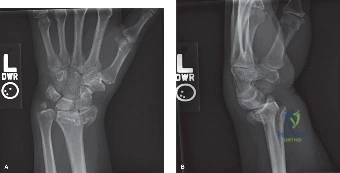
Explanation
Correct Answer: C
The image provided illustrates the volar Henry approach. The case describes the internervous plane for the volar Henry approach: 'The most common interval utilizes the plane between the flexor carpi radialis (FCR) tendon (retracted ulnarly) and the radial artery (retracted radially).' This means the FCR tendon is retracted towards the ulnar side of the forearm, and the radial artery, which courses dorsoradially, is identified and protected by retracting it towards the radial side. The median nerve lies ulnar to the FPL, deeper in the carpal tunnel, and is not the primary structure identified in this specific internervous plane. The palmar cutaneous branch of the median nerve, which courses radially to the FCR tendon, also needs protection during the initial skin and subcutaneous dissection.
Option A is incorrect because the FCR is typically retracted ulnarly, and the radial artery is retracted radially.
Option B is incorrect because the median nerve is ulnar to the FPL, not radially to the FCR in this interval.
Option D is incorrect because the FCR is retracted ulnarly, and the FPL is typically deeper and more ulnar, not the primary structure in this specific interval.
Option E is incorrect; the FCR tendon is a landmark and is retracted, not incised, to access the deeper structures.
Question 23
A 55-year-old active patient undergoes open reduction and internal fixation of a comminuted distal radius fracture with a volar locking plate. Post-fixation fluoroscopy confirms excellent restoration of radial length, radial inclination, and volar tilt. However, during intraoperative assessment, the surgeon notes persistent dorsal subluxation of the ulnar head relative to the sigmoid notch during forearm rotation, despite adequate radial reduction. Which of the following is the MOST appropriate next step in management?
Explanation
Correct Answer: C
The case explicitly states: 'After plate fixation, meticulous assessment of potential DRUJ and carpal instability is paramount. ... If unstable, consider intraoperative TFCC repair (via arthroscopy or open approach), or K-wire stabilization of the DRUJ (typically 2 K-wires across the DRUJ, with the forearm in neutral rotation).' Persistent DRUJ instability after anatomical reduction of the distal radius indicates a significant TFCC injury or gross incongruity that requires direct intervention. Temporary K-wire stabilization in neutral rotation is a common and effective method to allow the TFCC to heal in a reduced position, preventing chronic instability and subsequent arthritis.
Option A is incorrect. Unaddressed DRUJ instability leads to chronic pain, restricted forearm rotation, and early degenerative changes, directly impacting long-term function and increasing CRPS risk.
Option B is incorrect. While immobilization is needed, full supination can put stress on the DRUJ ligaments and may not be the optimal position for healing, especially if the instability is dorsal. Neutral rotation is generally preferred for DRUJ stabilization.
Option D is incorrect. An ulnar shortening osteotomy is a salvage procedure for chronic positive ulnar variance and ulnar impaction syndrome, not an acute treatment for intraoperative DRUJ instability after radial length has been restored. The problem here is instability, not necessarily positive ulnar variance if radial length is restored.
Option E is incorrect. The question states 'excellent restoration of radial length, radial inclination, and volar tilt,' implying the distal radius reduction is adequate. Removing the plate would be unnecessary and detrimental.
Question 24
A 72-year-old female with osteoporosis undergoes open reduction and internal fixation of a comminuted distal radius fracture with a volar locking plate. Postoperatively, she develops disproportionate pain, swelling, allodynia, and skin color changes in her hand and wrist, consistent with early Complex Regional Pain Syndrome (CRPS). Which of the following pre-operative prophylactic measures, if implemented, has the strongest evidence for reducing the incidence of CRPS type I after distal radius fractures?
Explanation
Correct Answer: B
The case explicitly states: 'A meta-analysis by Zollinger et al. (2007) and subsequent studies have suggested that prophylactic oral Vitamin C (e.g., 500mg daily for 50 days) can significantly reduce the incidence of CRPS type I after distal radius fractures. This is a simple, cost-effective intervention with minimal side effects, and its use is increasingly integrated into pre-operative protocols.' This is the prophylactic measure with the strongest evidence mentioned in the case.
Option A (Corticosteroids) is not mentioned as a prophylactic measure for CRPS in the case.
Option C (Stellate ganglion block) is a treatment for established CRPS, not a routine pre-operative prophylactic measure.
Option D (Aggressive pre-operative physical therapy focusing on wrist strengthening) is inappropriate for an acute fracture and could worsen pain and swelling, potentially increasing CRPS risk. Early gentle mobilization of uninvolved joints is part of CRPS prevention, but not aggressive wrist strengthening pre-operatively.
Option E (Strict immobilization for 6 weeks) is contrary to the principle of early mobilization for CRPS prevention, which the case emphasizes: 'Early, pain-free active range of motion, coupled with effective perioperative pain management (including regional blocks), is consistently emphasized in guidelines as a cornerstone of CRPS prevention.'
Question 25
A 48-year-old carpenter sustains a displaced, comminuted distal radius fracture with significant loss of volar tilt and radial shortening. He undergoes open reduction and internal fixation with a volar locking plate. During the procedure, after plate application, the surgeon uses fluoroscopy to confirm optimal screw length and trajectory. Which of the following fluoroscopic findings, if present, would indicate an immediate need for screw revision?
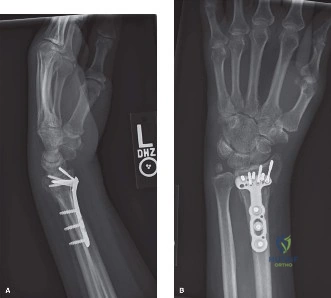
Explanation
Correct Answer: A
The case states: 'Fluoroscopy in both AP and lateral views is crucial to confirm optimal screw length and trajectory, ensuring screws do not violate the joint space or protrude dorsally.' A screw tip extending 1 mm beyond the dorsal cortex, while seemingly small, constitutes dorsal protrusion. This can lead to significant complications such as extensor tendon irritation, tenosynovitis, or even rupture, especially for the extensor pollicis longus (EPL) tendon which courses over Lister's tubercle dorsally. Therefore, any dorsal protrusion requires immediate revision.
Option B (2 mm into the subchondral bone) is generally acceptable and desired, as distal screws are designed to buttress the articular surface by engaging the subchondral bone for stable fixation.
Option C (Proximal screw engaging both cortices) is the standard for cortical screws in the shaft, providing robust fixation.
Option D (Distal screw trajectory parallel to the articular surface) is often ideal for maximizing subchondral bone purchase without violating the joint.
Option E (Distal screw tip positioned just proximal to the critical watershed line) refers to plate positioning, not screw tip position. The plate's distal edge should be just proximal to the watershed line to maximize subchondral screw support without impinging on flexor tendons. Screw tips should be within the bone, not violating the joint or protruding dorsally.
Question 26
A 60-year-old female presents with a distal radius fracture. Radiographs show a dorsally displaced, extra-articular fracture with 10 degrees of dorsal angulation, 4 mm of radial shortening, and 18 degrees of radial inclination. She has no neurovascular deficits. She is a low-demand individual with well-controlled diabetes. Based on the case, which of the following is the MOST appropriate initial management strategy?
Explanation
Correct Answer: B
The case outlines non-operative indications: 'Non-operative management, typically involving closed reduction and cast immobilization, is generally reserved for: Stable fractures: Minimally displaced, extra-articular fractures. Reducible fractures... Elderly, low-demand patients... Acceptable parameters post-reduction: Radial inclination >15°, Volar tilt (or neutral, up to 10° dorsal tilt in very elderly), Radial shortening <3-5 mm, Intra-articular step-off/gap <1-2 mm (if present), No significant DRUJ instability after reduction.' This patient has an extra-articular fracture, 10 degrees of dorsal angulation (which is within the acceptable range for an elderly, low-demand patient), 4 mm of radial shortening (within the <3-5 mm acceptable range), and 18 degrees of radial inclination (above the >15° threshold). Her low-demand status and controlled comorbidities further support non-operative management as an initial strategy, with close monitoring for any loss of reduction.
Option A (Immediate ORIF) is incorrect because her fracture parameters fall within the acceptable range for non-operative management, especially given her low demand. Dorsal angulation >0-5° is a common threshold for operative intervention in active patients, but the case allows up to 10° dorsal tilt in very elderly/low-demand patients.
Option C (External fixation) is typically reserved for highly comminuted, unstable fractures, or open fractures, which is not the case here.
Option D (Percutaneous K-wire fixation) is an operative technique, and the initial parameters suggest non-operative management is appropriate.
Option E (Wrist arthrodesis) is a salvage procedure for severe arthritis or instability, not an initial treatment for an acute fracture.
Question 27
A 28-year-old male presents with a distal radius fracture. Radiographs show a significantly displaced intra-articular fracture with a large dorsal fragment and marked dorsal angulation. He is scheduled for open reduction and internal fixation. During pre-operative planning, the surgeon reviews the CT scan. Which of the following anatomical structures is MOST critical to restore to prevent post-traumatic arthritis and maintain long-term wrist function, as highlighted by the case?
Explanation
Correct Answer: C
The case repeatedly emphasizes the importance of anatomical restoration for preventing long-term complications. Under 'Biomechanics of Distal Radius Fractures,' it states: 'The hallmark of a well-reduced DRF is the restoration of normal radiographic parameters: Volar Tilt... Articular Congruity: Intra-articular step-off or gap of >1-2 mm is strongly correlated with the development of post-traumatic arthritis.' And under 'Key Literature and Guidelines Summary': 'A consistent theme in the literature is the correlation between anatomical reduction and improved long-term outcomes, directly impacting the prevention of post-traumatic arthritis and CRPS. Articular Congruity: Intra-articular step-off or gap exceeding 1-2 mm is widely recognized as a predictor of post-traumatic arthritis.'
Option A (Brachioradialis attachment) is important for radial length but less critical for preventing post-traumatic arthritis than articular congruity and volar tilt.
Option B (Palmar cutaneous branch of the median nerve) is important to protect during surgery to prevent iatrogenic nerve injury, but its integrity does not directly prevent post-traumatic arthritis.
Option D (Dorsal cortex) is a structural feature, but its 'straightness' is less critical than the overall restoration of volar tilt and articular surface.
Option E (Pronator quadratus origin) is important for DRUJ stability and covering the plate, but its origin itself is not the primary factor in preventing post-traumatic arthritis compared to the articular surface and overall alignment.
Question 28
A 40-year-old patient undergoes open reduction and internal fixation of a distal radius fracture. Six months post-operatively, the patient presents with chronic pain, limited forearm rotation, and a clicking sensation on the ulnar side of the wrist. Radiographs show a healed distal radius fracture with neutral ulnar variance. Physical examination reveals tenderness over the DRUJ and instability on stress testing. Based on the case, which of the following is the MOST likely underlying cause of the patient's symptoms?
Explanation
Correct Answer: D
The patient's symptoms of chronic pain, limited forearm rotation, clicking, and DRUJ instability, despite a healed distal radius fracture and neutral ulnar variance, strongly point to an issue with the DRUJ stabilizers. The case highlights: 'The DRUJ is a complex trochoid joint critical for forearm rotation. It is formed by the ulnar head articulating with the sigmoid notch of the distal radius. Stability is primarily conferred by the triangular fibrocartilage complex (TFCC)... Unaddressed DRUJ instability leads to chronic pain, restricted forearm rotation, and early degenerative changes.' An unrecognized or inadequately treated TFCC injury during the initial fracture management would lead to these chronic DRUJ symptoms.
Option A (Persistent positive ulnar variance) is incorrect because the radiographs show neutral ulnar variance. Positive ulnar variance is a common cause of DRUJ pathology, but it's ruled out here.
Option B (Unaddressed scapholunate ligament dissociation) would primarily cause carpal instability and pain, often with a dorsal intercalated segmental instability (DISI) deformity, but less directly explain isolated DRUJ instability and limited forearm rotation.
Option C (Chronic FPL tendon rupture) would cause loss of thumb IP flexion, not DRUJ instability or limited forearm rotation.
Option E (Post-traumatic arthritis of the radiocarpal joint) would cause generalized wrist pain and stiffness, but the specific symptoms of clicking and instability on the ulnar side, with limited forearm rotation, are more characteristic of DRUJ pathology rather than primary radiocarpal arthritis, especially with neutral ulnar variance.
Question 29
A 50-year-old male undergoes open reduction and internal fixation of a distal radius fracture. Two months post-operatively, he develops progressive pain and inability to actively flex his thumb interphalangeal (IP) joint. Examination reveals tenderness over the volar aspect of the distal forearm and a palpable 'bowstringing' of the FPL tendon. Radiographs confirm a healed fracture with the volar plate in situ. Which of the following is the MOST likely cause of this complication?
Explanation
Correct Answer: C
The patient's symptoms of progressive pain, inability to actively flex the thumb IP joint, and palpable 'bowstringing' of the FPL tendon are classic signs of a flexor pollicis longus (FPL) tendon rupture. The case explicitly lists 'Tendon Rupture (FPL most common)' as a complication, with the etiology being 'Plate prominence (especially if too distal or proud), sharp plate edges, rough screw heads, chronic irritation.' The time frame (2 months post-op) is consistent with chronic irritation leading to rupture. The case also emphasizes the importance of pronator quadratus repair to cover the hardware and reduce tendon irritation.
Option A (Acute carpal tunnel syndrome) would present with median nerve symptoms (numbness/tingling in thumb, index, middle fingers, weakness of thenar muscles), not isolated FPL rupture.
Option B (Iatrogenic median nerve injury) would also present with median nerve deficits, not isolated FPL rupture.
Option D (Infection) would typically present with signs of inflammation, fever, purulent discharge, and generalized pain, not specifically FPL rupture, although infection can contribute to tendon damage.
Option E (Malunion) could cause altered mechanics and pain, but it's less likely to cause an isolated FPL rupture with 'bowstringing' compared to direct hardware irritation.
Question 30
A 65-year-old patient undergoes open reduction and internal fixation of a comminuted distal radius fracture. Post-operatively, the rehabilitation protocol emphasizes early active range of motion (AROM) for the fingers, elbow, and shoulder, along with elevation and pain control. Which of the following is the primary goal of these specific early rehabilitation interventions?
Explanation
Correct Answer: C
The case, under 'Postoperative Rehabilitation,' states the goals for Phase 1 (Protective Rehabilitation): 'Protect surgical repair, minimize pain and swelling, prevent joint stiffness in uninvolved joints, initiate CRPS prevention.' Specifically, for 'Early Active Motion,' it lists 'Fingers: Active range of motion (AROM) exercises... Elbow & Shoulder: AROM exercises for the elbow and shoulder to prevent stiffness.' And under 'CRPS Prevention,' it states: 'Emphasize elevation, pain control, active finger/shoulder/elbow ROM.' This clearly indicates that preventing CRPS and stiffness in uninvolved joints are primary goals of these early interventions.
Option A (Accelerate fracture healing) is not the primary goal of early joint motion; fracture healing is a biological process influenced by stability and biology, not directly by finger/elbow/shoulder motion.
Option B (Prevent post-traumatic arthritis) is primarily achieved by anatomical reduction and stable fixation of the fracture, not directly by early motion of uninvolved joints.
Option D (Restore full wrist range of motion within the first two weeks) is incorrect. The case explicitly states 'NO active or passive wrist motion, forearm rotation' in Phase 1, which typically lasts several weeks. Full wrist ROM is a later goal.
Option E (Strengthen wrist muscles immediately) is incorrect. Strengthening exercises are introduced in Phase 3, after initial healing and restoration of basic motion, to protect the repair.
Question 31
A 22-year-old male sustains a high-energy distal radius fracture with significant comminution and shortening. Pre-operative CT scan reveals a complex intra-articular pattern. During the surgical approach, the surgeon utilizes a finger trap traction setup. Which of the following is the primary biomechanical principle leveraged by this setup in the initial reduction phase?
Explanation
Correct Answer: C
The case, under 'Reduction and Fixation Techniques,' describes 'Indirect Reduction (Ligamentotaxis)': 'Application of longitudinal traction (manual or using a finger trap setup) can help distract the fracture fragments and indirectly reduce them by tensioning the intact carpal ligaments. This is particularly useful for comminuted fractures.' This technique uses the intact soft tissue envelope and ligaments to pull the fragments into a more anatomical position.
Option A (Direct manipulation with K-wires) is a direct reduction technique, often used after initial ligamentotaxis, but not the primary principle of finger trap traction itself.
Option B (Restoration of the volar buttress through direct visualization) is a goal of direct reduction and plate application, not the mechanism of finger trap traction.
Option D (Application of a dorsal buttress plate) is a fixation strategy for specific fracture patterns, not a reduction principle of traction.
Option E (Direct compression of the fracture fragments) is typically achieved with plate fixation or external compression, not primarily by finger trap traction, which aims to distract and reduce.
Question 32
A 58-year-old female presents with a distal radius fracture. Radiographs show a dorsally displaced, extra-articular fracture with 5 degrees of dorsal angulation, 2 mm of radial shortening, and 20 degrees of radial inclination. She is an active, high-demand individual. Based on the case, which of the following is the MOST compelling reason to consider operative intervention for this patient?
Explanation
Correct Answer: B
The case outlines operative indications: 'Unstable fractures: ... Loss of volar tilt (dorsal angulation >0-5° is a common threshold for operative intervention, especially in active patients).' It also states: 'Young, high-demand patients: A lower threshold for operative intervention is often adopted to optimize long-term function and minimize the risk of post-traumatic arthritis.' While 5 degrees of dorsal angulation might be acceptable in a low-demand elderly patient, for an active, high-demand 58-year-old, this degree of dorsal angulation (loss of volar tilt) is a compelling reason to consider surgery to ensure optimal anatomical restoration and long-term function.
Option A (Her age) is incorrect. Age alone is not an absolute indication for surgery; patient demand and fracture characteristics are more important. The case describes a bimodal distribution and different thresholds for elderly vs. young/active patients.
Option C (2 mm of radial shortening) is incorrect. The operative threshold for radial shortening is typically >3-5 mm. 2 mm is within acceptable non-operative parameters.
Option D (Extra-articular nature) is incorrect. Extra-articular fractures can be stable and managed non-operatively if parameters are acceptable. It's intra-articular fractures with significant step-off that are often inherently unstable and require surgery.
Option E (20 degrees of radial inclination) is incorrect. Normal radial inclination is 22-23 degrees, and >15 degrees is considered acceptable for non-operative management. 20 degrees is well within the normal/acceptable range and does not indicate severe deformity.
Question 33
A 45-year-old male sustains a posterior wall acetabular fracture with a posterior hip dislocation. Closed reduction is performed in the emergency department. Which of the following findings is the most definitive indication for operative fixation of the posterior wall fragment?
Explanation
Question 34
During a Kocher-Langenbeck approach for a posterior acetabular fracture, the surgeon must protect the deep branch of the medial circumflex femoral artery (MCFA). Preservation of which of the following structures is most critical to protect this vessel?
Explanation
Question 35
According to the Letournel classification of acetabular fractures, which of the following fracture patterns is uniquely characterized by the radiographic "spur sign" on an obturator oblique view?
Explanation
Question 36
A trauma surgeon is performing an ilioinguinal approach for a complex anterior column acetabular fracture. The middle window is developed to access the pelvic brim. What structure defines the medial boundary of this middle window?
Explanation
Question 37
A 25-year-old polytrauma patient sustains a high-energy comminuted midshaft femur fracture. Which of the following is the most sensitive and appropriate imaging modality for diagnosing an occult ipsilateral femoral neck fracture in this patient?
Explanation
Question 38
A 30-year-old male sustains a basicervical femoral neck fracture. Which of the following internal fixation constructs provides the greatest biomechanical stability for this specific fracture pattern?
Explanation
Question 39
During closed reduction and intramedullary nailing of a subtrochanteric femur fracture, the proximal fragment is noted to be flexed, abducted, and externally rotated. Which muscle is primarily responsible for the flexion deformity of the proximal segment?
Explanation
Question 40
A 35-year-old female sustains a high-energy distal femur fracture. A CT scan reveals an isolated coronal plane fracture of the lateral femoral condyle. What is the appropriate eponymous classification and the optimal screw trajectory for this fragment?
Explanation
Question 41
A 65-year-old female undergoes volar locking plate fixation for a displaced distal radius fracture. Six months postoperatively, she presents with a sudden inability to actively flex the interphalangeal joint of her thumb. What is the most likely cause?
Explanation
Question 42
A 24-year-old male sustains a highly comminuted intra-articular distal radius fracture with severe metaphyseal bone loss. A dorsal spanning plate is utilized for damage control. Which two bones are typically fixated by this device?
Explanation
Question 43
In the anatomic evaluation and treatment of distal radius fractures, what is the normal radiographic volar tilt of the distal articular surface of the radius on a lateral radiograph?
Explanation
Question 44
During the distal portion of a volar (Henry) approach to the radius for fracture fixation, the surgeon develops an internervous plane. Which two structures define this distal interval?
Explanation
Question 45
A 45-year-old male sustains a high-energy pelvic injury. Radiographs demonstrate an acetabular fracture with a "spur sign" visible on the obturator oblique view. Which of the following fracture patterns is most likely present?
Explanation
Question 46
During a Kocher-Langenbeck approach for a posterior wall acetabular fracture, the surgeon must carefully protect the sciatic nerve. Which of the following patient positioning maneuvers most effectively decreases tension on the sciatic nerve during this approach?
Explanation
Question 47
A 38-year-old female presents with a displaced femoral neck fracture. Due to the high-energy nature of the injury, a vertical fracture pattern (Pauwels type III) is noted. Which of the following biomechanical forces contributes most to the high rate of failure and nonunion in this specific fracture pattern?
Explanation
Question 48
A patient undergoing open reduction and internal fixation of a distal radius fracture with a volar locking plate develops an inability to flex the interphalangeal joint of the thumb 6 months postoperatively. Which of the following technical errors during the initial surgery is the most likely cause?
Explanation
Question 49
A 72-year-old female taking alendronate for 8 years presents with progressive thigh pain. Radiographs reveal focal lateral cortical thickening and a transverse radiolucent line in the subtrochanteric region. What is the most appropriate management?
Explanation
Question 50
During the modified Stoppa approach for an anterior acetabular fracture, the surgeon must elevate a specific fascial layer to access the quadrilateral plate. Which of the following structures must be incised or elevated?
Explanation
Question 51
A 25-year-old male is involved in a motorcycle collision and sustains a highly comminuted femoral shaft fracture. A dedicated CT scan of the pelvis is ordered as part of the trauma protocol. What is the approximate incidence of an ipsilateral femoral neck fracture in this setting?
Explanation
Question 52
A 60-year-old male undergoes non-operative treatment for a non-displaced distal radius fracture. Eight weeks later, he presents with the sudden inability to actively extend his thumb interphalangeal joint. What is the most appropriate surgical treatment?
Explanation
Question 53
A 40-year-old male sustains a distal femur fracture. CT imaging reveals a coronal plane fracture of the lateral femoral condyle (Hoffa fracture). Which of the following approaches and fixation strategies is most appropriate?
Explanation
Question 54
A 45-year-old male undergoes open reduction and internal fixation of a posterior wall acetabular fracture via a Kocher-Langenbeck approach. Postoperatively, he exhibits a foot drop and inability to extend his great toe. Which anatomical characteristic best explains why the affected nerve division is disproportionately injured during this procedure?
Explanation
Question 55
During a modified Stoppa approach for an anterior column acetabular fracture, the surgeon dissects along the superior pubic ramus. Massive hemorrhage occurs from a vessel located approximately 5 cm lateral to the pubic symphysis. This structure represents an anastomosis between which two vascular systems?
Explanation
Question 56
A 30-year-old male presents with a pelvic ring injury following a motor vehicle collision. Radiographs demonstrate an acetabular fracture. Which specific radiographic finding differentiates a T-type acetabular fracture from a simple transverse fracture?
Explanation
Question 57
A 50-year-old female sustains a subtrochanteric femur fracture. To minimize the risk of iatrogenic varus malreduction during cephalomedullary nailing with a piriformis entry point, what is the most critical technical consideration?
Explanation
Question 58
A 25-year-old male is treated with a volar locking plate for a comminuted distal radius fracture. Six months later, he suddenly loses the ability to actively flex the interphalangeal joint of his thumb. What is the most likely cause of this complication?
Explanation
Question 59
A 60-year-old female sustains a minimally displaced distal radius fracture treated non-operatively in a cast. Six weeks later, she notes a new inability to actively extend her thumb out of the palm. What is the pathophysiology behind this finding?
Explanation
Question 60
A 35-year-old polytrauma patient sustains an ipsilateral midshaft femur fracture and a basicervical femoral neck fracture. What is the most widely recommended timing and sequence for the definitive surgical fixation of these injuries?
Explanation
Question 61
A 40-year-old male presents with an isolated distal femoral coronal plane fracture involving the lateral condyle (Hoffa fracture). Which of the following surgical approaches and fixation strategies is most appropriate?
Explanation
Question 62
According to the Letournel classification of acetabular fractures, which of the following is strictly categorized as an elementary fracture pattern?
Explanation
Question 63
A 65-year-old male undergoes fixation of an unstable intertrochanteric femur fracture with a short cephalomedullary nail. Which intraoperative radiographic parameter is most highly predictive of subsequent lag screw cut-out?
Explanation
Question 64
When evaluating Judet views for a suspected acetabular fracture, the obturator oblique view provides the optimal assessment for which specific combination of anatomical structures?
Explanation
Question 65
A 70-year-old female on long-term alendronate reports a 3-month history of insidious right thigh pain. Radiographs reveal transverse lateral cortical thickening with a small cortical 'beak' in the subtrochanteric region. What is the most appropriate definitive management?
Explanation
Question 66
During volar plating of a comminuted distal radius fracture, the surgeon suspects a screw may be protruding past the dorsal cortex into the extensor compartments. Which intraoperative fluoroscopic view is most sensitive to evaluate for this specific complication?
Explanation
Question 67
A 28-year-old male sustains a transverse plus posterior wall acetabular fracture and a massive, fluctuant swelling over the ipsilateral greater trochanter (Morel-Lavallée lesion). Regarding the management of the soft-tissue lesion, what is the best practice?
Explanation
Question 68
A 45-year-old male undergoes open reduction and internal fixation of a posterior wall acetabular fracture via a Kocher-Langenbeck approach. Post-operatively, he is noted to have a profound foot drop. Which specific lower extremity positioning maneuver during the surgical exposure most likely increased the risk of this iatrogenic complication?
Explanation
Question 69
A 62-year-old female presents with the sudden inability to actively flex the interphalangeal joint of her thumb six months after undergoing volar locking plate fixation for a displaced distal radius fracture. Radiographs show a healed fracture with the distal edge of the plate resting completely distal to the watershed line. Which of the following is the most likely etiology?
Explanation
Question 70
A 28-year-old male sustains a highly vertical, displaced femoral neck fracture (Pauwels type III) following a motor vehicle collision. Which of the following internal fixation constructs provides the greatest biomechanical stability to counteract the significant shear forces associated with this specific fracture pattern?
Explanation
Question 71
During an ilioinguinal approach for an anterior column acetabular fracture, brisk arterial bleeding is encountered on the posterior aspect of the superior pubic ramus, roughly 5 cm lateral to the pubic symphysis. Which of the following anatomic descriptions best characterizes the vessel most likely injured?
Explanation
Question 72
A 35-year-old male polytrauma patient presents with bilateral closed femoral shaft fractures, multiple rib fractures, and a severe closed head injury (GCS 6). He is hemodynamically labile despite initial resuscitation. According to Damage Control Orthopedics (DCO) principles, what is the most appropriate initial management of his femoral fractures?
Explanation
Question 73
A 55-year-old male treated non-operatively in a cast for a nondisplaced distal radius fracture presents 8 weeks post-injury with a sudden inability to actively extend his thumb interphalangeal joint. The fracture is radiographically healed. What is the most appropriate definitive surgical management?
Explanation
Question 74
A 29-year-old female sustains a posterior hip dislocation in a high-speed collision. CT imaging after closed reduction demonstrates a large fracture of the femoral head that involves the primary weight-bearing articular surface cephalad to the fovea centralis. There are no associated femoral neck or acetabular fractures. What is the correct Pipkin classification for this injury?
Explanation
Question 75
An AP pelvis radiograph of a 40-year-old male following a crush injury reveals an isolated disruption of the ilioischial line, while the iliopectineal line, anterior wall, and posterior wall remain intact. Which of the following acetabular fracture patterns is present?
Explanation
None
