العربية
Part of the Master Guide

AAOS & ABOS Basic Science MCQs (Set 3): Bone Biology, Biomechanics & Anatomy Review

Orthopedic Anatomy 2026 MCQs: Board Review Questions & Answers (Part 5)
23 Apr 2026 77 min read 77 Views
Anatomy 2008 MCQs - Part 5

Key Takeaway

This topic focuses on Orthopedic Anatomy 2026 MCQs: Board Review Questions & Answers (Part 5), Top-rated Orthopedic Anatomy 2026 MCQs bank. Practice with clinical case questions, orthopedic surgery board review, and evidence-based answers updated for 2026.

Orthopedic Anatomy 2026 MCQs: Board Review Questions & Answers (Part 5)

Comprehensive 100-Question Exam


00:00

Start Quiz

Question 1

A 45-year-old male presents with persistent anterior shoulder pain, particularly with overhead activities and internal rotation against resistance. On examination, he has tenderness over the bicipital groove and a positive Speed's test. During arthroscopy, the surgeon notes fraying of the superior labrum extending into the biceps anchor. Which structure forms the inferior border of the rotator cuff interval?


Explanation

The rotator cuff interval is a triangular space between the anterior supraspinatus and superior subscapularis tendons. Its borders are the base of the coracoid process superiorly, the supraspinatus tendon superiorly, and the subscapularis tendon inferiorly. The coracohumeral ligament and superior glenohumeral ligament form its roof and floor, respectively, bridging this interval. Therefore, the subscapularis tendon forms its inferior border. Lesions in this area are often associated with adhesive capsulitis or rotator cuff interval tears.

Question 2

During surgical decompression of the cubital tunnel for ulnar nerve entrapment, the surgeon must be aware of potential anatomical variations. Which structure is considered the primary static constraint forming the roof of the cubital tunnel?


Explanation

The cubital tunnel is formed by the medial epicondyle, olecranon, and the connecting aponeurosis of the two heads of the flexor carpi ulnaris (FCU), also known as Osborne's ligament or the cubital tunnel retinaculum. This ligament is the primary static constraint forming the roof of the cubital tunnel, through which the ulnar nerve passes. The Arcade of Struthers is a fibrous band more proximally in the arm, not within the cubital tunnel itself. The medial intermuscular septum is also more proximal. The medial epicondyle and olecranon form the floor and walls, not the roof.

Question 3

A 30-year-old male presents with acute pain and swelling over the dorsal aspect of his wrist following a fall onto an outstretched hand. Radiographs confirm a scaphoid fracture. Which of the following carpal bones has the most consistent and predominant dorsal blood supply, making it susceptible to avascular necrosis when fractured at its waist?


Explanation

The scaphoid has a unique blood supply, primarily from dorsal carpal branches of the radial artery, which enter the distal pole and waist, then travel proximally. The proximal pole receives little to no direct blood supply and relies on retrograde flow. This makes it highly susceptible to avascular necrosis (AVN) following fractures, particularly those through the waist or proximal pole, as the blood supply to the proximal fragment can be compromised. Other carpal bones generally have more diffuse blood supplies.

Question 4

Regarding the blood supply to the adult femoral head, which artery is considered the most critical contributor following physeal closure, particularly in the event of a femoral neck fracture?


Explanation

In the adult, the medial circumflex femoral artery (MCFA), a branch of the deep femoral artery, is the most critical contributor to the blood supply of the femoral head. It sends retinacular branches (especially the posterior and superior retinacular arteries) that ascend the femoral neck and supply the femoral head. Fractures of the femoral neck, particularly displaced ones, commonly disrupt these retinacular vessels, leading to a high risk of avascular necrosis. The lateral circumflex femoral artery plays a lesser role. The artery of the ligamentum teres is significant in childhood but becomes less dominant in adulthood, providing a relatively minor contribution. Superior and inferior gluteal arteries supply the surrounding muscles but not directly the femoral head.

Question 5

A surgeon is performing an arthroscopic repair of a lateral meniscal tear. To ensure proper fixation and stability, the surgeon must understand the meniscal attachments. Which ligament attaches the posterior horn of the lateral meniscus to the medial femoral condyle, potentially hindering its mobility?


Explanation

There are two meniscofemoral ligaments associated with the posterior horn of the lateral meniscus: the ligament of Humphry (anterior meniscofemoral ligament) and the ligament of Wrisberg (posterior meniscofemoral ligament). The ligament of Humphry passes anterior to the posterior cruciate ligament (PCL) to attach to the medial femoral condyle. The ligament of Wrisberg passes posterior to the PCL to attach to the medial femoral condyle. Both can potentially tether the lateral meniscus, reducing its mobility. The question specifically asks for the one attaching to the medial femoral condyle hindering mobility, which is the function of these ligaments. Both Humphry and Wrisberg fit the description of attaching to the medial femoral condyle. However, Wrisberg is more consistently present and often described as the stronger tether. Given the options, Wrisberg is the most appropriate answer describing an attachment from the lateral meniscus to the medial femoral condyle. The transverse meniscal ligament connects the anterior horns. Posterior meniscotibial ligaments are part of the posterior capsule. Coronary ligaments connect the meniscus to the tibial plateau periphery.

Question 6

A football player sustains a high ankle sprain. This injury typically involves damage to which of the following ligamentous complexes?


Explanation

A 'high ankle sprain' refers to an injury of the tibiofibular syndesmosis. The primary ligaments composing the syndesmosis are the anterior inferior tibiofibular ligament (AITFL), the posterior inferior tibiofibular ligament (PITFL), the transverse tibiofibular ligament (deep part of PITFL), and the interosseous membrane/ligament. Among the given options, the AITFL is the most commonly injured component in a high ankle sprain. The ATFL, CFL, and PTFL are components of the lateral ankle collateral ligament complex, involved in 'low' ankle sprains (inversion injuries). The deltoid ligament is the medial collateral ligament complex of the ankle.

Question 7

A patient presents with burning pain, numbness, and tingling along the plantar aspect of the foot, exacerbated by activity and relieved by rest. Tapping posterior to the medial malleolus elicits symptoms (positive Tinel's sign). Which of the following anatomical structures passes most superiorly through the tarsal tunnel?


Explanation

The tarsal tunnel contains structures that pass from the posterior compartment of the leg into the foot, typically listed in order from anterior (most superior, immediately posterior to the medial malleolus) to posterior (most inferior, closer to the calcaneus). The mnemonic 'Tom, Dick, And Nervous Harry' helps recall this order: Tibialis posterior tendon, Flexor digitorum longus tendon, posterior tibial Artery, Tibial Nerve, Flexor Hallucis Longus tendon. Therefore, the Tibialis posterior tendon passes most superiorly (anteriorly) through the tarsal tunnel.

Question 8

Regarding the vertebral column, which ligament limits flexion and provides significant stability, becoming taut during this movement and acting as a strong restraint in the lumbar spine?


Explanation

The supraspinous ligament connects the tips of the spinous processes from C7 to the sacrum, blending with the nuchal ligament in the cervical region. It is a strong fibrous band that limits hyperflexion of the spine. The interspinous ligaments connect adjacent spinous processes but are relatively weak. The ligamentum flavum connects laminae and resists flexion, but its primary role is to maintain intradiscal pressure and act as an elastic recoil. The anterior longitudinal ligament limits extension, while the posterior longitudinal ligament limits flexion but is weaker than the supraspinous ligament in the lumbar region and located anterior to the spinal canal. Thus, the supraspinous ligament is the most significant restraint against flexion posteriorly in the lumbar spine.

Question 9

A patient undergoes surgical exploration for a possible gluteal nerve injury. The surgeon identifies the sciatic nerve emerging from the greater sciatic foramen, inferior to the piriformis muscle. Which nerve typically emerges superior to the piriformis muscle, making it vulnerable in superior gluteal region trauma?


Explanation

The superior gluteal nerve exits the pelvis through the greater sciatic foramen, superior to the piriformis muscle. It innervates the gluteus medius, gluteus minimus, and tensor fasciae latae, and its injury results in a Trendelenburg gait. All other listed nerves (inferior gluteal nerve, pudendal nerve, posterior cutaneous nerve of the thigh, and nerve to obturator internus) typically exit the greater sciatic foramen inferior to the piriformis muscle.

Question 10

A surgeon is decompressing the deep palmar space of the hand due to a severe infection. Which of the following anatomical structures forms the primary boundary between the thenar space and the midpalmar space?


Explanation

The deep palmar space is divided into the thenar space and the midpalmar space. The primary anatomical structure that separates these two spaces is the adductor pollicis muscle. The thenar space lies lateral to the adductor pollicis, deep to the flexor tendons to the index finger. The midpalmar space lies medial to the adductor pollicis. The fibrous septa extend from the palmar aponeurosis to the metacarpals, creating the individual digital compartments and contributing to the boundaries of the superficial palmar space, but the adductor pollicis is key for the deep spaces. The flexor retinaculum forms the roof of the carpal tunnel.

Question 11

A patient presents with shoulder weakness, specifically difficulty with abduction and external rotation. MRI reveals denervation changes in the supraspinatus and infraspinatus muscles. Which anatomical structure is most commonly implicated in compression of the nerve supplying these muscles?


Explanation

The suprascapular nerve innervates both the supraspinatus and infraspinatus muscles. It passes through the suprascapular notch, underneath the superior transverse scapular ligament (STSL), to innervate the supraspinatus. It then curves around the lateral border of the scapular spine (through the spinoglenoid notch) to innervate the infraspinatus. Compression most commonly occurs at the suprascapular notch due to hypertrophy or calcification of the STSL, or at the spinoglenoid notch. The other ligaments listed are not directly involved in suprascapular nerve compression.

Question 12

During an elbow dislocation reduction, the orthopedic surgeon must assess the integrity of the ulnar collateral ligament (UCL). Which band of the UCL is the primary restraint to valgus stress throughout the entire range of motion?


Explanation

The ulnar collateral ligament (UCL) complex consists of three main bands: anterior, posterior, and transverse. The anterior band is the strongest and most discrete part of the UCL. It is the primary restraint to valgus stress from 30° to 120° of elbow flexion and is crucial for stability throughout the entire range of motion, particularly in overhead throwing athletes. The posterior band provides secondary restraint, primarily in flexion, and is less distinct. The transverse band offers little to no valgus stability. The radial collateral ligament and annular ligament provide lateral and posterolateral rotatory stability, respectively.

Question 13

A patient presents with chronic wrist pain and instability following a fall. Imaging suggests disruption of the distal radioulnar joint (DRUJ). Which component of the Triangular Fibrocartilage Complex (TFCC) is the most critical stabilizer of the DRUJ?


Explanation

The Triangular Fibrocartilage Complex (TFCC) is a crucial stabilizer of the distal radioulnar joint (DRUJ) and wrist. It comprises several components, including the articular disc (TFC proper), dorsal and volar (palmar) radioulnar ligaments, meniscus homologue, and extensor carpi ulnaris (ECU) subsheath. While all components contribute, the volar (palmar) radioulnar ligament is considered the most critical stabilizer of the DRUJ, particularly against dorsal displacement of the ulna relative to the radius. The dorsal radioulnar ligament prevents volar displacement. The articular disc allows smooth articulation, and the ECU sheath provides support.

Question 14

A patient complains of sciatica-like symptoms, particularly pain radiating down the posterior thigh, exacerbated by prolonged sitting and internal rotation of the hip. Examination reveals tenderness in the buttock. Which anatomical variation involving the piriformis muscle and the sciatic nerve is most commonly associated with piriformis syndrome?


Explanation

Piriformis syndrome involves compression of the sciatic nerve by the piriformis muscle. The most common anatomical variation associated with this syndrome is when the common peroneal (fibular) division of the sciatic nerve passes through the piriformis muscle, while the tibial division passes inferior to it. This configuration makes the peroneal division particularly vulnerable to compression by muscle spasm or hypertrophy. Other variations exist, but this specific arrangement is the most frequently cited cause of neurogenic symptoms in piriformis syndrome. The sciatic nerve never passes anterior to the piriformis; it always passes posterior or through it from an anterior perspective within the pelvis. Passing superior to piriformis is for the superior gluteal nerve.

Question 15

A surgeon is performing an anterior cruciate ligament (ACL) reconstruction. When preparing the tibial tunnel, it is critical to avoid impingement of the graft. Which anatomical structure marks the anteromedial border of the intercondylar notch on the tibia and serves as a key landmark for tibial tunnel placement?


Explanation

The lateral tibial spine (also known as the lateral intercondylar tubercle or tubercle of Gerty) is a crucial anatomical landmark for ACL reconstruction. It marks the anteromedial border of the intercondylar notch on the tibia. Proper placement of the tibial tunnel, posterior and lateral to the lateral tibial spine, helps avoid roof impingement of the ACL graft. The medial tibial spine is on the medial side. The PCL footprint is posterior. The anteromedial bundle footprint is the desired target but the lateral tibial spine helps define its anterior limit. There is no specific PCL fascicle to the lateral meniscus in a general sense that serves as this landmark.

Question 16

A patient sustains an inversion ankle injury with associated avulsion fracture of the anterior aspect of the distal fibula. Which ligament is not considered part of the lateral collateral ligament complex of the ankle?


Explanation

The lateral collateral ligament complex of the ankle primarily consists of the anterior talofibular ligament (ATFL), the calcaneofibular ligament (CFL), and the posterior talofibular ligament (PTFL). These ligaments resist inversion. The posterior inferior tibiofibular ligament (PITFL) is a component of the tibiofibular syndesmosis, which stabilizes the distal tibiofibular joint, and is injured in 'high ankle sprains' (eversion and dorsiflexion injuries). The accessory lateral ligament is an anatomical variant sometimes found. Therefore, PITFL is the correct answer as it is not part of the lateral collateral ligament complex.

Question 17

A patient presents with heel pain, exacerbated by the first steps in the morning and prolonged standing. Clinical diagnosis is plantar fasciitis. To which bony structure does the plantar fascia primarily attach?


Explanation

The plantar fascia (also known as plantar aponeurosis) is a thick fibrous band that originates from the medial tubercle of the calcaneus. It then fans out distally to attach to the bases of the proximal phalanges and the flexor tendon sheaths of the toes. Plantar fasciitis involves inflammation or degeneration at its origin on the medial tubercle of the calcaneus. The sustentaculum tali is part of the calcaneus but serves as an attachment for the spring ligament and flexor hallucis longus tendon, not the plantar fascia directly. Other options are incorrect attachments.

Question 18

During a posterior approach to the lumbar spine, the surgeon encounters a tough, elastic, yellowish ligament spanning between the laminae. This ligament is known for its high elastin content and its role in maintaining erect posture and preventing hyperflexion. Which ligament is being described?


Explanation

The ligamentum flavum (yellow ligament) connects the laminae of adjacent vertebrae. It is distinctive for its high elastin content (about 80% elastin, 20% collagen), giving it a yellowish appearance and elasticity. This elasticity helps maintain the upright posture, provides smooth recoil from flexion, and prevents sudden internal buckling into the spinal canal during extension. It also helps preserve intradiscal pressure. The anterior and posterior longitudinal ligaments primarily resist extension and flexion respectively. The supraspinous and interspinous ligaments are also posterior but have a different composition and location relative to the laminae.

Question 19

Which of the following ligaments is considered the strongest ligament in the human body, preventing hyperextension of the hip joint?


Explanation

The iliofemoral ligament, also known as the Y-ligament of Bigelow, is considered the strongest ligament in the human body. It originates from the anterior inferior iliac spine (AIIS) and acetabular rim and inserts into the intertrochanteric line of the femur. Its primary function is to prevent hyperextension of the hip joint. The pubofemoral ligament limits abduction and extension, while the ischiofemoral ligament limits extension and internal rotation. The ligamentum teres stabilizes the femoral head but is not the primary restraint to hyperextension. The sacrotuberous ligament is a pelvic ligament, not directly related to hip joint stability in this context.

Question 20

A patient develops a painful mass on the palmar aspect of the hand, particularly along the flexor tendon sheath of the ring finger. During surgical excision, the surgeon encounters a cyst arising from the synovial sheath of a flexor tendon within the fibro-osseous canal. Which type of ganglion cyst is most commonly found in this location, associated with the flexor tendon sheath?


Explanation

A flexor tendon sheath ganglion, often called an A1 pulley ganglion or volar retinacular cyst, typically arises from the synovial sheath of a flexor tendon, most commonly at the level of the A1 pulley in the palm (proximal phalanx/MP joint region). These are distinct from dorsal or volar wrist ganglions, which arise from the wrist joint capsule, or mucous cysts, which arise from the DIP joint. A carpal boss is an osteophyte on the dorsum of the wrist. Therefore, the description perfectly matches a flexor tendon sheath ganglion.

Question 21

A patient sustains a shoulder injury resulting in weakness of deltoid and teres minor muscles. Sensation over the 'regimental badge' area is diminished. The axillary nerve is implicated. Through which anatomical space does the axillary nerve typically pass?


Explanation

The axillary nerve, along with the posterior circumflex humeral artery, passes through the quadrangular space. The boundaries of the quadrangular space are: superiorly, the teres minor muscle (or inferior border of subscapularis); inferiorly, the teres major muscle; medially, the long head of the triceps brachii; and laterally, the surgical neck of the humerus. Compression or injury within this space can lead to deltoid and teres minor weakness and sensory loss over the lateral shoulder. The triangular space contains the circumflex scapular artery. The triangular interval contains the radial nerve and profunda brachii artery.

Question 22

During surgical exploration of the posteromedial elbow, the surgeon must identify the various components of the medial epicondyle's muscle attachment. Which muscle's tendon is the most posterior attachment to the medial epicondyle, making it vulnerable during posterior approaches?


Explanation

The common flexor origin muscles attach to the medial epicondyle in a specific order. From anterior to posterior (or superior to inferior on the epicondyle): pronator teres, flexor carpi radialis, palmaris longus, flexor digitorum superficialis, and finally the flexor carpi ulnaris (FCU). The FCU has its humeral head originating from the medial epicondyle and its ulnar head from the olecranon/ulnar shaft, forming the cubital tunnel. Its attachment is the most posterior aspect of the common flexor origin, making it relevant for posteromedial approaches.

Question 23

A 25-year-old male sustains a fall onto an outstretched hand, resulting in a scaphoid fracture. The surgeon explains the risk of nonunion and avascular necrosis. Which of the following describes the most common and clinically significant blood supply pattern to the scaphoid?


Explanation

The scaphoid's blood supply is highly precarious. The most common and clinically significant pattern involves dorsal branches from the radial artery entering the distal pole and waist of the scaphoid. These vessels then proceed to supply the proximal pole via intraosseous retrograde flow. This pattern explains why fractures of the waist or proximal pole often disrupt the blood supply to the proximal fragment, leading to a high incidence of avascular necrosis and nonunion. Volar branches are less significant. The ulnar artery and circumflex arteries do not directly supply the scaphoid.

Question 24

During total hip arthroplasty, the surgeon is concerned about potential damage to the obturator nerve. This nerve innervates which primary group of muscles?


Explanation

The obturator nerve (L2-L4) exits the pelvis via the obturator foramen and supplies the medial compartment of the thigh. This compartment primarily consists of the adductor muscles: adductor longus, adductor brevis, adductor magnus (adductor portion), gracilis, and obturator externus. Damage to this nerve during hip surgery can lead to weakness in adduction and sensory loss over the medial thigh. The gluteal muscles are supplied by gluteal nerves, hamstrings by the sciatic nerve, quadriceps by the femoral nerve, and peroneal muscles by the common peroneal nerve.

Question 25

A surgeon is performing an anatomical anterior cruciate ligament (ACL) reconstruction. Accurate placement of the femoral tunnel is crucial. Which specific anatomical landmark on the lateral femoral condyle represents the most isometric and stable attachment point for the native ACL?


Explanation

Resident's ridge, also known as the lateral bifurcate ridge, is a critical anatomical landmark on the lateral wall of the intercondylar notch. It consistently separates the anteromedial (AM) and posterolateral (PL) bundles of the native ACL. Placing the femoral tunnel posterior to and above this ridge provides the most isometric and anatomically appropriate attachment for an ACL graft, minimizing impingement and maximizing stability. Blumensaat's line is a radiographic landmark representing the intercondylar roof. The other options are either incorrect landmarks or less precise. Accurate femoral tunnel placement relative to Resident's ridge is key to anatomical ACL reconstruction.

Question 26

A patient presents with pain and weakness during eversion of the foot following a ankle injury. Which anatomical structure functions as a pulley or retinaculum for the peroneal tendons as they pass around the lateral malleolus?


Explanation

The superior peroneal retinaculum (SPR) is a strong fibrous band that originates from the lateral malleolus and inserts onto the lateral calcaneus. Its primary function is to hold the fibularis longus (peroneus longus) and fibularis brevis (peroneus brevis) tendons in place behind the lateral malleolus, preventing subluxation or dislocation. Injuries to the SPR can lead to recurrent peroneal tendon instability. The inferior extensor retinaculum is on the dorsum of the foot, the flexor retinaculum forms the tarsal tunnel medially, and the deltoid ligament is on the medial side of the ankle.

Question 27

A patient sustains a calcaneal fracture involving the sustentaculum tali. This specific part of the calcaneus provides support for which crucial anatomical structure?


Explanation

The sustentaculum tali is a shelf-like projection from the medial side of the calcaneus. It is anatomically significant because it provides crucial support for the medial facet of the body of the talus. It also serves as an attachment point for the spring ligament (plantar calcaneonavicular ligament) and the flexor hallucis longus tendon wraps beneath it. Fractures involving the sustentaculum tali can lead to disruption of talocalcaneal articulation and potential long-term hindfoot pain and deformity. The head of the talus articulates with the navicular, not directly supported by sustentaculum tali.

Question 28

A 60-year-old patient with severe lumbar stenosis undergoes a laminectomy. During the procedure, the surgeon meticulously removes hypertrophied ligamentous structures. Which ligament directly connects adjacent vertebral laminae and contributes significantly to spinal canal stenosis when hypertrophied?


Explanation

The ligamentum flavum (yellow ligament) connects the laminae of adjacent vertebrae. It is highly elastic due to its high elastin content and plays a role in maintaining posture. However, with age, it can undergo hypertrophy, calcification, and infolding, directly contributing to narrowing of the spinal canal (stenosis) by bulging posteriorly into the canal. The anterior and posterior longitudinal ligaments are located anterior and posterior to the vertebral bodies, respectively, and don't directly contribute to canal stenosis via hypertrophy as much as the ligamentum flavum. The intertransverse ligaments are between transverse processes. The supraspinous ligament is superficial to the laminae.

Question 29

The sacroiliac joint is a strong, weight-bearing joint stabilized by numerous ligaments. Which of the following ligaments is considered the strongest and most important for stabilizing the sacroiliac joint, restricting anterior and inferior rotation of the sacrum?


Explanation

The sacroiliac (SI) joint is stabilized by an intricate complex of ligaments. The interosseous sacroiliac ligament is considered the strongest and most important ligament for SI joint stability. It consists of multiple short, strong fibers that fill the irregular space between the sacral and iliac tuberosities, connecting them firmly. It effectively resists anterior and inferior rotation of the sacrum relative to the ilium. The posterior sacroiliac ligaments reinforce the posterior aspect, the iliolumbar ligament connects L5 to the ilium, and the sacrospinous and sacrotuberous ligaments are extrinsic ligaments of the pelvis, providing less direct SI joint stability.

Question 30

In the hand, which group of muscles contributes to both flexion at the metacarpophalangeal (MCP) joints and extension at the proximal interphalangeal (PIP) and distal interphalangeal (DIP) joints?


Explanation

The lumbrical muscles are unique in their action. They originate from the flexor digitorum profundus (FDP) tendons and insert into the extensor expansions (dorsal hood) of the digits. This allows them to flex the metacarpophalangeal (MCP) joints and extend the proximal interphalangeal (PIP) and distal interphalangeal (DIP) joints. This combined action is crucial for fine motor control, often described as the 'writing position' or 'lumbrical grip.' The interossei muscles primarily abduct/adduct the fingers and assist with MCP flexion, but their role in IP extension is less direct than the lumbricals. Thenar and hypothenar muscles act on the thumb and little finger, respectively.

Question 31

A patient undergoes arthroscopic shoulder repair for a superior labrum anterior-posterior (SLAP) tear. Which structure constitutes the primary anatomical landmark for the superior labrum and provides an anchor for the long head of the biceps tendon?


Explanation

The superior aspect of the glenoid labrum, where SLAP tears occur, is intimately associated with the origin of the long head of the biceps brachii tendon. The biceps tendon typically originates from the supraglenoid tubercle and then blends into the superior labrum. The supraglenoid tubercle is thus the primary anatomical landmark for the superior labrum and the biceps anchor. The glenoid rim is the periphery of the socket. The coracoid process is a separate bony projection. The infraglenoid tubercle is the origin for the long head of the triceps. The greater tuberosity is for rotator cuff insertions.

Question 32

Following a radial head fracture, a surgeon must assess the blood supply to the radial head. The primary blood supply to the radial head is derived from which artery?


Explanation

The radial head primarily receives its blood supply from the radial recurrent artery, which is a branch of the radial artery. This artery forms an anastomosis around the elbow joint. While other arteries contribute to the overall elbow circulation, the radial recurrent artery is specifically responsible for the majority of the blood supply to the radial head. This is clinically relevant in complex radial head fractures where comminution or displacement can compromise this delicate blood supply, leading to avascular necrosis.

Question 33

A patient presents with ulnar-sided wrist pain, particularly with pronation, supination, and gripping. MRI reveals a tear within the Triangular Fibrocartilage Complex (TFCC). Which carpal bone articulates directly with the articular disc (TFC proper) of the TFCC?


Explanation

The articular disc (TFC proper) of the TFCC is a biconcave, triangular structure that separates the distal ulna from the carpus. It articulates directly with the triquetrum and also with the lunate to a lesser extent, forming the ulnocarpal joint. The scaphoid and lunate articulate primarily with the distal radius. The hamate articulates with the 4th and 5th metacarpals and partially with the triquetrum, but not directly with the TFC articular disc. The capitate is centrally located. Therefore, the triquetrum is the primary carpal bone articulating directly with the articular disc.

Question 34

During surgical repair of the hip abductor mechanism, the surgeon must be aware of the different trochanteric bursae. Which bursa is located between the gluteus maximus tendon and the greater trochanter, and is commonly implicated in 'trochanteric bursitis'?


Explanation

There are several bursae around the greater trochanter. The subgluteus maximus bursa, often referred to as the superficial trochanteric bursa, is located between the greater trochanter and the overlying gluteus maximus muscle/iliotibial band. This bursa is the most commonly inflamed bursa in cases of 'trochanteric bursitis.' The gluteus medius bursa is located between the gluteus medius and the greater trochanter. The ischiogluteal bursa is near the ischial tuberosity. The iliopsoas bursa is anterior to the hip joint. The term 'deep trochanteric bursa' can be used somewhat generically, but 'subgluteus maximus' precisely describes the superficial bursa implicated.

Question 35

A patient presents with anterior knee pain, particularly during stair climbing and descending. Patellar tracking issues are suspected. Which quadriceps muscle primarily contributes to the lateral pull on the patella, potentially exacerbating patellofemoral pain syndrome?


Explanation

The vastus lateralis muscle exerts a strong lateral pull on the patella, which, if unopposed, can lead to lateral patellar subluxation or tilt and contribute to patellofemoral pain syndrome. The vastus medialis obliquus (VMO) is crucial for providing a medial stabilizing force to counteract this lateral pull. Rectus femoris and vastus intermedius primarily contribute to patellar elevation and extension without a significant directional pull. Sartorius is not part of the quadriceps. Maintaining VMO strength and flexibility is key in managing patellar tracking disorders.

Question 36

A 10-year-old child presents with a painful prominence on the medial aspect of the foot, just proximal to the navicular. Radiographs reveal an accessory navicular bone. Which tendon commonly attaches to this accessory bone, leading to symptoms?


Explanation

An accessory navicular (os naviculare accessorium or os tibiale externum) is an accessory ossicle found on the medial aspect of the foot, at the tuberosity of the navicular bone. The tibialis posterior tendon, which inserts primarily into the navicular tuberosity, commonly attaches to this accessory bone. When the accessory bone is symptomatic, it is often due to traction or inflammation at this attachment site, or trauma. This condition is also sometimes referred to as 'prehallux.' The other tendons listed have different primary insertion sites.

Question 37

A patient complains of burning pain, numbness, and tingling in the third webspace of the foot, often described as 'walking on a marble.' This condition, Morton's neuroma, most commonly involves entrapment and fibrosis of which specific nerve structure?


Explanation

Morton's neuroma is a common forefoot pathology characterized by entrapment neuropathy and perineural fibrosis of a common plantar digital nerve. While it can occur in other webspaces, it is most prevalent in the third intermetatarsal space (between the 3rd and 4th metatarsals). The common plantar digital nerve in this space receives contributions from both the medial plantar nerve (for the third toe's medial side) and the lateral plantar nerve (for the fourth toe's lateral side), making it susceptible to shear forces and compression. Therefore, it's a common plantar digital nerve (from lateral plantar nerve) for the lateral side of the 3rd webspace and a common plantar digital nerve (from medial plantar nerve) for the medial side of the 3rd webspace, but the option specifies common plantar digital nerve originating from the lateral plantar nerve contributing to the 3rd webspace (4th digital nerve), which is a key component.

Question 38

A 70-year-old patient presents with symptoms of cervical myelopathy due to spinal cord compression. The spinal cord ends inferiorly as the conus medullaris at which typical vertebral level in adults?


Explanation

In adults, the spinal cord typically terminates as the conus medullaris at the level of the L1-L2 vertebral body. In children, it can extend lower, usually to L3. This anatomical distinction is crucial for procedures like lumbar puncture, which are safely performed below L2 (e.g., L3/L4 or L4/L5 interspaces) to avoid spinal cord injury. Therefore, L1/L2 is the most accurate typical adult termination level.

Question 39

During surgical repair of a perineal laceration, the surgeon must be mindful of the pudendal nerve's course. Which anatomical structure forms the medial wall of Alcock's canal, where the pudendal nerve travels?


Explanation

The pudendal nerve, along with the internal pudendal artery and vein, passes through Alcock's canal (also known as the pudendal canal). This canal is formed by a splitting of the obturator internus fascia. Therefore, the obturator internus muscle itself forms the lateral wall, and its fascia forms the medial wall of the canal. The ischial spine is a landmark for the nerve's entry into the perineum but not part of the canal itself. The sacrotuberous ligament contributes to the greater sciatic foramen. Ischiopubic ramus is bone forming part of the pelvis. Piriformis muscle is more superior in the pelvis.

Question 40

Dupuytren's contracture involves progressive fibrosis and shortening of the palmar fascia. Which specific anatomical structure is primarily affected in this condition, leading to flexion contractures of the digits?


Explanation

Dupuytren's contracture is a fibrotic disorder characterized by the thickening and shortening of the palmar aponeurosis and its extensions (pretendinous bands, natatory ligaments, spiral bands, etc.). This leads to flexion contractures, most commonly affecting the ring and little fingers. It is a disease of the superficial fascia, not the underlying flexor tendons or intrinsic muscles. The contractures result from nodules and cords forming within these fascial structures. The flexor tendons and intrinsic muscles are typically not primarily involved, although their function may be impaired secondarily by the contracture.

Question 41

A patient presents with shoulder pain and weakness, particularly with external rotation. MRI reveals a tear in the teres minor muscle. The teres minor is innervated by a branch of which nerve, as it passes through a specific anatomical space?


Explanation

The teres minor muscle is one of the four rotator cuff muscles and is primarily involved in external rotation and adduction of the shoulder. It is innervated by a branch of the axillary nerve. The axillary nerve also innervates the deltoid muscle and provides sensory innervation to the 'regimental badge' area. It passes through the quadrangular space along with the posterior circumflex humeral artery. The suprascapular nerve innervates supraspinatus and infraspinatus. Upper and lower subscapular nerves innervate the subscapularis and teres major respectively. Musculocutaneous nerve innervates biceps, coracobrachialis, and brachialis.

Question 42

During surgical exposure of the medial epicondyle for ulnar nerve transposition, the surgeon identifies various muscle attachments. Which of the following muscles does not originate from the common flexor tendon of the medial epicondyle?


Explanation

The common flexor tendon (CFT) originates from the medial epicondyle of the humerus and serves as the origin for five muscles: pronator teres, flexor carpi radialis, palmaris longus, flexor digitorum superficialis (humeral head), and flexor carpi ulnaris (humeral head). The flexor pollicis longus (FPL) originates from the anterior surface of the radius and the interosseous membrane, not from the medial epicondyle. Therefore, FPL is the correct answer.

Question 43

A patient presents with wrist pain and a palpable mass in the distal forearm. Physical examination reveals a ganglion cyst associated with the flexor carpi radialis (FCR) tendon. Which of the following structures is the FCR tendon enclosed by a distinct synovial sheath, unlike the flexor carpi ulnaris (FCU)?


Explanation

The flexor carpi radialis (FCR) tendon has its own distinct synovial sheath as it passes through a separate tunnel within the flexor retinaculum and then over the trapezium. In contrast, the flexor carpi ulnaris (FCU) tendon typically does not have a synovial sheath where it passes superficial to the flexor retinaculum, although its distal insertion onto the pisiform and fifth metacarpal may have some associated bursae. The radial bursa (for FPL) and ulnar bursa (for FDS/FDP tendons) are larger synovial sheaths for other flexor tendons within the carpal tunnel. The extensor retinaculum is on the dorsal side.

Question 44

A patient presents with a Trendelenburg gait. This indicates weakness of the hip abductors, which are primarily innervated by which nerve?


Explanation

The superior gluteal nerve (L4-S1) innervates the gluteus medius, gluteus minimus, and tensor fasciae latae muscles. These muscles are the primary abductors of the hip and are crucial for stabilizing the pelvis during gait. Damage to the superior gluteal nerve or weakness of these muscles results in a Trendelenburg gait, where the pelvis drops on the unsupported side during the stance phase of the opposite limb. The inferior gluteal nerve innervates the gluteus maximus (hip extensor). Obturator nerve innervates adductors. Femoral nerve innervates quadriceps. Sciatic nerve innervates hamstrings and all muscles below the knee.

Question 45

The pes anserinus is a common insertion site for three distinct muscles on the anteromedial aspect of the proximal tibia. Which of the following muscles is not a component of the pes anserinus?


Explanation

The pes anserinus (goose's foot) is the conjoined tendinous insertion of three muscles on the anteromedial aspect of the proximal tibia, distal to the medial tibial condyle. These three muscles are the Sartorius (femoral nerve), Gracilis (obturator nerve), and Semitendinosus (tibial division of sciatic nerve). The Semimembranosus tendon inserts more deeply and proximally on the posteromedial aspect of the medial tibial condyle, separate from the pes anserinus. Therefore, Semimembranosus is not a component of the pes anserinus.

Question 46

A patient presents with persistent lateral ankle pain following an inversion injury. Examination reveals tenderness in the 'sinus tarsi.' Which two bones form the boundaries of the sinus tarsi?


Explanation

The sinus tarsi is a conical canal located on the lateral aspect of the hindfoot, between the talus and the calcaneus. It is bounded by the neck of the talus superiorly and the anterior process of the calcaneus inferiorly. It contains several ligaments (cervical and interosseous talocalcaneal ligaments), fat, and nerve endings. Injuries to the structures within the sinus tarsi can cause 'sinus tarsi syndrome,' characterized by lateral ankle pain and instability. Therefore, the talus and calcaneus form its boundaries.

Question 47

A patient undergoes surgical exploration for chronic hallux valgus with a painful callus beneath the first metatarsal head. Which two sesamoid bones are typically found within the flexor hallucis brevis tendon, located beneath the first metatarsal head?


Explanation

The first metatarsophalangeal (MTP) joint complex includes two sesamoid bones (tibial/medial and fibular/lateral) embedded within the medial and lateral heads of the flexor hallucis brevis (FHB) tendon. These sesamoids articulate with the plantar aspect of the first metatarsal head, forming a critical part of the weight-bearing mechanism and enhancing the mechanical advantage of the FHB. They are commonly involved in pathologies such as sesamoiditis, fractures, or dislocation, particularly in hallux valgus deformity. The cuneiforms, navicular, and cuboid are distinct tarsal bones.

Question 48

Regarding the innervation of intervertebral discs, which type of nerve fibers primarily innervates the outer annulus fibrosus, contributing to discogenic pain?


Explanation

The outer one-third of the annulus fibrosus of the intervertebral disc is richly innervated, primarily by the sinuvertebral nerves (also known as recurrent meningeal nerves). These nerves are branches of the spinal nerves that re-enter the vertebral canal to innervate the posterior longitudinal ligament, the annulus fibrosus, and the dura mater. They carry nociceptive fibers, which explain why damage or inflammation to the outer annulus can cause significant discogenic pain. The nucleus pulposus and inner annulus are largely aneural. Dorsal and ventral rami innervate paraspinal muscles and skin, respectively.

Question 49

Which major nerve exits the pelvis by passing between the sacrotuberous and sacrospinous ligaments before entering Alcock's canal, making it vulnerable to compression in this region?


Explanation

The pudendal nerve exits the greater sciatic foramen (inferior to piriformis), hooks around the ischial spine, and passes between the sacrotuberous ligament (more superficial) and the sacrospinous ligament (deeper). It then re-enters the pelvis through the lesser sciatic foramen to enter Alcock's canal. This specific course makes it vulnerable to compression or injury in this area, particularly during childbirth or prolonged sitting on hard surfaces. The other listed nerves exit the greater sciatic foramen but do not pass between these two ligaments in the same manner to re-enter the lesser sciatic foramen.

Question 50

A patient presents with insidious onset of pain and paresthesias in the dorsoradial forearm, exacerbated by repetitive pronation and supination. Examination reveals tenderness over the supinator muscle. Which nerve is most commonly entrapped in the 'radial tunnel' in this scenario?


Explanation

Radial tunnel syndrome involves compression of the radial nerve or its deep branch, the posterior interosseous nerve (PIN), within the radial tunnel. The radial tunnel is a potential space from the radiocapitellar joint to the distal edge of the supinator muscle. The PIN is particularly vulnerable as it passes through the arcade of Frohse, the most proximal part of the supinator muscle. Symptoms include pain in the dorsoradial forearm, often without motor weakness initially, distinguishing it from PIN palsy. The superficial radial nerve is sensory. The median and ulnar nerves are on the anterior and medial aspects of the forearm, respectively.

Question 51

Which artery is the principal blood supply to the entire lower limb, originating as a continuation of the external iliac artery?


Explanation

The femoral artery is the direct continuation of the external iliac artery after it passes beneath the inguinal ligament. It is the principal arterial trunk supplying the entire lower limb. It descends through the anterior compartment of the thigh, gives off several branches (e.g., deep femoral, superficial femoral, descending genicular), and becomes the popliteal artery after passing through the adductor hiatus. The inferior gluteal, internal pudendal, and obturator arteries are branches of the internal iliac artery and supply more proximal regions or specific compartments. The popliteal artery is a continuation of the femoral artery.

Question 52

A patient presents with numbness and tingling along the lateral aspect of the thigh, without motor weakness. This condition is known as meralgia paresthetica. Which nerve is entrapped as it passes under the inguinal ligament near the anterior superior iliac spine (ASIS)?


Explanation

Meralgia paresthetica is caused by entrapment of the lateral femoral cutaneous nerve (LFCN) as it passes from the pelvis into the thigh. The most common site of entrapment is where the nerve pierces or passes beneath the inguinal ligament, typically near its attachment to the anterior superior iliac spine (ASIS). This nerve is purely sensory, supplying the skin of the anterolateral thigh, so motor weakness is absent. The femoral nerve supplies the anterior thigh muscles. The obturator nerve supplies the medial thigh muscles. The sciatic nerve supplies the posterior thigh and leg. The genitofemoral nerve is more medial and supplies the femoral triangle region and genital area.

Question 53

Regarding the anatomy of the knee, which structure forms the most posterior boundary of the intercondylar notch of the femur?


Explanation

The intercondylar notch of the femur is bounded anteriorly by the intercondylar line (Blumensaat's line radiographically), laterally by the medial surface of the lateral femoral condyle, medially by the lateral surface of the medial femoral condyle, and posteriorly by the posterior cruciate ligament (PCL) insertion footprint. The PCL originates from the anterior part of the lateral surface of the medial femoral condyle, but its main bulk is posterior. The ACL inserts into the posteromedial aspect of the lateral femoral condyle, which is more anterior within the notch than the PCL insertion. Therefore, the PCL insertion forms the most posterior boundary.

Question 54

A patient with a patellar fracture undergoes surgical repair. To ensure proper patellar tracking and stability post-operatively, which of the following muscles acts as the primary dynamic medial stabilizer of the patella?


Explanation

The vastus medialis obliquus (VMO) is the most distal and oblique part of the vastus medialis muscle. Its fibers run at a more horizontal angle, providing a crucial dynamic medial pull on the patella. This medial vector opposes the strong lateral pull exerted by the vastus lateralis, thus acting as the primary dynamic medial stabilizer of the patella. Weakness or dysfunction of the VMO is a common contributor to lateral patellar maltracking and patellofemoral pain syndrome. The rectus femoris and vastus intermedius provide primary knee extension. The vastus lateralis is a lateral stabilizer but pulls laterally.

Question 55

During arthroscopic examination of the knee, the surgeon identifies a structure located between the lateral meniscus and the posterior cruciate ligament (PCL). This structure, when present, can be a confounding factor in diagnosing meniscal pathology. Which ligament is being described?


Explanation

The ligament of Wrisberg (posterior meniscofemoral ligament) is an accessory ligament of the lateral meniscus that runs posterior to the posterior cruciate ligament (PCL) to attach to the medial femoral condyle. The ligament of Humphry (anterior meniscofemoral ligament) runs anterior to the PCL. Both ligaments connect the posterior horn of the lateral meniscus to the medial femoral condyle and can be confused with bucket-handle meniscal tears or loose bodies during arthroscopy. The question specifically mentions between the lateral meniscus and PCL, with Wrisberg being posterior to PCL, and Humphry anterior. The Wrisberg is often more prominent. Given the specific context, Wrisberg is a common confounding factor when seen posteriorly. Coronary ligaments connect the meniscus to the tibia. Transverse meniscal ligament connects anterior horns. Popliteofibular ligament connects the fibular head to the popliteus tendon.

Question 56

Which anatomical structure of the knee provides the primary static restraint to posterior translation of the tibia relative to the femur?


Explanation

The posterior cruciate ligament (PCL) is the primary static restraint to posterior translation of the tibia relative to the femur. It is a strong ligament that originates from the lateral surface of the medial femoral condyle and inserts into the posterior intercondylar area of the tibia. The anterior cruciate ligament (ACL) primarily resists anterior translation. The MCL and LCL are collateral ligaments, providing valgus and varus stability, respectively. The menisci provide load distribution and secondary stability but are not the primary static restraint to AP translation.

Question 57

A patient undergoes surgical repair for a chronic Achilles tendon rupture. To ensure adequate healing and prevent re-rupture, the surgeon must be aware of the primary blood supply to the Achilles tendon. Which artery provides the most significant vascularization to the midportion of the Achilles tendon, making this area prone to hypovascularity and rupture?


Explanation

The Achilles tendon receives its blood supply from branches of the posterior tibial artery, fibular (peroneal) artery, and sural arteries. However, the midportion of the Achilles tendon, approximately 2-6 cm proximal to its calcaneal insertion, is notoriously hypovascular. The primary blood supply to the main body of the tendon is often described as coming from the posterior tibial artery via musculotendinous junctions and from the fibular artery, with a critical zone of hypovascularity in the mid-substance. Given the options, the posterior tibial artery is the most significant contributor to the overall supply, with specific small branches, but the midportion remains a watershed zone. The fibular artery also plays a significant role, but the posterior tibial artery is often cited as the predominant supply in many texts. For high-yield, Posterior Tibial Artery is a very common answer here for the main supply.

Question 58

Which of the following nerves carries both motor and sensory fibers, originates from the brachial plexus, and supplies the coracobrachialis, biceps brachii, and brachialis muscles?


Explanation

The musculocutaneous nerve (C5-C7) is a mixed nerve, containing both motor and sensory fibers. It originates from the lateral cord of the brachial plexus. It primarily innervates the muscles of the anterior compartment of the arm: the coracobrachialis, biceps brachii, and brachialis. Distally, it continues as the lateral cutaneous nerve of the forearm, providing sensory innervation to the lateral forearm. The other nerves listed have different origins, motor, and/or sensory distributions.

Question 59

A 40-year-old male presents with deep, boring pain in the upper thigh and hip, exacerbated by weight-bearing. MRI shows evidence of avascular necrosis of the femoral head. Which of the following is typically the last anatomical location in the femoral head to receive arterial supply, making it particularly vulnerable to ischemia?


Explanation

The superolateral aspect of the femoral head, particularly the subchondral bone, is the area that is most vulnerable to ischemia and is typically the last to receive arterial supply from the retinacular vessels. This area is subjected to maximal weight-bearing stress, and its tenuous blood supply makes it the most common site for the initial collapse associated with avascular necrosis of the femoral head. The foveal artery (artery of the ligamentum teres) supplies the foveal region, but its contribution is often minor in adults. Medial and inferior epiphysis are less critical in this context. The greater trochanteric apophysis has a separate blood supply and is not part of the femoral head articular surface.

Question 60

Which anatomical structure serves as the primary restraint to varus stress of the elbow joint?


Explanation

The radial collateral ligament (RCL) complex is the primary static stabilizer against varus stress at the elbow. It originates from the lateral epicondyle and blends with the annular ligament and supinator crest, providing stability to the ulnohumeral and radiohumeral joints. The anterior band of the UCL (ulnar collateral ligament) is the primary restraint to valgus stress. The annular ligament stabilizes the radial head. The coronoid process and olecranon are bony stabilizers, contributing to overall joint congruity but not direct ligamentous restraint to varus stress.

Question 61

A patient presents with a painful mass in the wrist, often described as a 'ganglion.' If this cyst arises from the radiocarpal joint capsule on the volar aspect, displacing the radial artery radially, what specific location is it most likely to be?


Explanation

Volar wrist ganglions are common and typically arise from the volar aspect of the radiocarpal joint capsule. They are often located on the radial side of the volar wrist crease, proximal to the thenar eminence, and characteristically displace the radial artery radially. Dorsal wrist ganglions arise from the dorsal radiocarpal joint. Scapholunate ganglions are a type of dorsal ganglion. Flexor tendon sheath ganglions are in the palm. Carpometacarpal joint ganglions are typically dorsal and distal. The description points directly to a volar wrist ganglion from the radiocarpal joint.

Question 62

During surgical approach to the posterior knee, the surgeon must identify the popliteal artery and vein. Which of the following nerves crosses superficial (posterior) to the popliteal artery and vein in the popliteal fossa, making it vulnerable during posterior dissections?


Explanation

In the popliteal fossa, the main neurovascular structures are arranged in a specific order from superficial to deep: nerve, vein, artery. Therefore, the tibial nerve (a terminal branch of the sciatic nerve) is the most superficial (most posterior) of the major neurovascular structures in the popliteal fossa. It crosses superficial to the popliteal vein, which in turn is superficial to the popliteal artery. This makes the tibial nerve particularly vulnerable to injury during superficial posterior dissections of the popliteal fossa. The common peroneal nerve is more lateral. Femoral and obturator nerves are in the anterior and medial thigh, respectively. The sural nerve is a superficial cutaneous nerve.

Question 63

A 35-year-old male undergoes surgical fixation of an anterior column acetabular fracture via the ilioinguinal approach. During dissection along the superior pubic ramus, brisk arterial bleeding is encountered. This bleeding is most likely originating from an anastomotic vessel connecting the obturator system to which of the following vessels?


Explanation

The vessel described is the 'corona mortis' (crown of death), which is a common and potentially hazardous vascular anastomosis between the obturator vessels (from the internal iliac system) and the inferior epigastric or external iliac vessels. It crosses the superior pubic ramus and is highly vulnerable to iatrogenic injury during the ilioinguinal approach or during superior pubic ramus fracture fixation.

Question 64

A 22-year-old athlete sustains a posterolateral corner (PLC) injury of the knee requiring surgical reconstruction. To correctly place the femoral tunnel for the fibular collateral ligament (FCL) anatomically, the surgeon must identify its footprint. Where is the femoral attachment of the FCL located in relation to the lateral epicondyle?


Explanation

Anatomical studies by LaPrade et al. demonstrate that the femoral attachment of the fibular collateral ligament (FCL) is situated in a small depression located approximately 1.4 mm proximal and 3.1 mm posterior to the lateral epicondyle. The popliteus tendon attaches in a sulcus approximately 18.5 mm anterior and distal to the FCL attachment.

Question 65

During a posterior approach to the hip for total hip arthroplasty, aggressive release of the short external rotators can endanger the primary blood supply to the femoral head. Which anatomical structure serves as the primary physical barrier protecting the deep branch of the medial circumflex femoral artery (MCFA) during this approach?


Explanation

The deep branch of the medial circumflex femoral artery (MCFA) courses posterior to the obturator externus tendon. During a posterior approach, preserving the obturator externus (or carefully performing a measured tenotomy without extending too medially) protects the MCFA, which provides the primary vascular supply to the adult femoral head via the posterosuperior retinacular vessels.

Question 66

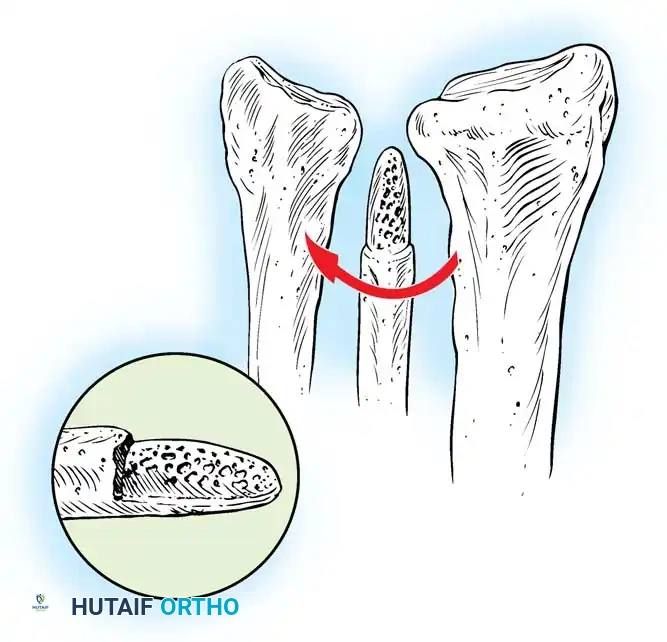
A 42-year-old male presents with inability to extend his fingers and thumb at the MCP joints following a Monteggia fracture-dislocation. Wrist extension is preserved but occurs with strong radial deviation. Surgical exploration of the posterior interosseous nerve (PIN) is planned. The most common site of PIN compression is the Arcade of Frohse. Which of the following defines this anatomic structure?


Explanation

The Arcade of Frohse is formed by the thickened, fibrous proximal edge of the superficial head of the supinator muscle. It is the most common site of entrapment for the posterior interosseous nerve (PIN), leading to PIN syndrome, which classically presents with weakness in thumb and finger extension and radial deviation of the wrist during extension (due to ECRB/ECRL preservation and ECU weakness).

Question 67

A 28-year-old skier sustains a severe external rotation ankle injury. MRI demonstrates a complete rupture of the anterior inferior tibiofibular ligament (AITFL) with an associated bony avulsion from its tibial attachment. What is the eponymous name for this specific anterolateral tibial avulsion fragment?


Explanation

The Tillaux-Chaput tubercle is the bony prominence on the anterolateral distal tibia where the anterior inferior tibiofibular ligament (AITFL) attaches. An avulsion here is a Tillaux-Chaput fracture. The Wagstaffe (or Le Fort-Wagstaffe) tubercle is the fibular attachment of the AITFL. The Volkmann tubercle is the posterior tibial attachment of the posterior inferior tibiofibular ligament (PITFL).

Question 68

A 55-year-old male is undergoing a transforaminal endoscopic lumbar discectomy at L4-L5. The surgeon utilizes Kambin's triangle to safely access the intervertebral disc space. Which of the following structures constitutes the anterior (hypotenuse) boundary of Kambin's triangle?


Explanation

Kambin's triangle is an anatomical safe zone for accessing the lumbar disc space posterolaterally. Its boundaries are: the exiting nerve root (anterior/superior forming the hypotenuse), the superior articular process of the inferior vertebra (posterior/vertical height), and the superior endplate of the inferior vertebral body (inferior base).

Question 69

A 32-year-old professional cyclist presents with severe intrinsic muscle weakness in his right hand and numbness isolated to his small finger and the ulnar half of his ring finger. The surgeon plans an operative decompression of Guyon's canal. Which of the following structures forms the floor of Guyon's canal?


Explanation

Guyon's canal (the ulnar tunnel) contains the ulnar nerve and artery at the wrist. Its floor is formed by the transverse carpal ligament (flexor retinaculum) and the pisohamate ligament. The roof is formed by the volar carpal ligament and the palmaris brevis muscle.

Question 70

A 48-year-old female presents with stage IIb posterior tibial tendon dysfunction and a flexible flatfoot deformity. Reconstruction requires stabilization of the spring ligament complex. Which of the following bands of the spring ligament complex is the strongest, providing the most critical support to the talar head?


Explanation

The spring ligament (calcaneonavicular ligament) complex has three major bands: the superomedial, inferior, and medioplantar oblique. The superomedial calcaneonavicular ligament is the thickest, strongest, and most critical component for static support of the talar head and maintenance of the medial longitudinal arch.

Question 71

A 29-year-old elite volleyball player presents with poorly localized posterior shoulder pain and fatigue. Examination reveals weakness in external rotation. MRI arthrogram reveals an intact labrum but shows isolated atrophy of the teres minor muscle. Which anatomical structure forms the superior boundary of the space where the affected neurovascular bundle is compressed?


Explanation

The patient has Quadrilateral Space Syndrome, characterized by compression of the axillary nerve and posterior circumflex humeral artery. The quadrilateral space is bounded superiorly by the teres minor, inferiorly by the teres major, medially by the long head of the triceps, and laterally by the humeral shaft.

Question 72

A 60-year-old male is undergoing an anterior cervical decompression for myelopathy. During the lateral resection of the uncinate process at the C5-C6 level, brisk arterial bleeding is encountered from the adjacent foramen transversarium. In normal anatomy, the vertebral artery typically enters the foramen transversarium at which cervical level?


Explanation

The vertebral artery typically branches from the subclavian artery and enters the foramen transversarium at the C6 level in approximately 90-95% of individuals. It does not typically pass through the foramen transversarium of C7, which usually contains only the accessory vertebral vein.

Question 73

A surgeon is performing a direct anterior approach to the hip for a total hip arthroplasty. To avoid injury to the lateral femoral cutaneous nerve (LFCN), the superficial dissection is carried out between two specific muscles. What is the innervation of the muscle that forms the medial border of this superficial internervous plane?


Explanation

The direct anterior approach (Smith-Petersen) utilizes the superficial internervous plane between the sartorius and the tensor fasciae latae (TFL). The sartorius forms the medial border and is innervated by the femoral nerve, while the TFL forms the lateral border and is innervated by the superior gluteal nerve.

Question 74

During reconstruction of the posterolateral corner (PLC) of the knee, achieving anatomic femoral tunnel placement is critical for restoring biomechanics. Relative to the lateral epicondyle, where does the popliteus tendon insert on the femur?


Explanation

The popliteus tendon inserts into the popliteal sulcus on the lateral femoral condyle. Anatomically, this insertion site is located approximately 18.5 mm anterior and distal to the fibular collateral ligament (FCL) origin, which lies slightly proximal and posterior to the lateral epicondyle.

Question 75

A 35-year-old male sustains an anterior pelvic ring fracture requiring open reduction and internal fixation via an ilioinguinal approach. During dissection over the superior pubic ramus, brisk arterial bleeding is encountered. This is most likely due to iatrogenic injury of an anastomotic vessel connecting the external iliac system to which of the following arteries?


Explanation

The bleeding is from the corona mortis, which is an anatomical variant representing an anastomosis between the obturator vessels (internal iliac system) and the inferior epigastric vessels (external iliac system). It is typically located over the superior pubic ramus, approximately 5 cm lateral to the pubic symphysis, and is highly susceptible to injury during anterior pelvic surgery.

Question 76

A 28-year-old skier presents with an acute Stener lesion following a fall on an abducted thumb. Operative repair of the ulnar collateral ligament (UCL) of the thumb metacarpophalangeal (MCP) joint is performed. During the exposure, which specific structure is identified as being interposed between the torn, proximally retracted UCL and its anatomical insertion at the base of the proximal phalanx?


Explanation

A Stener lesion occurs when the distal attachment of the ulnar collateral ligament (UCL) of the thumb is avulsed and becomes displaced superficial to the adductor pollicis aponeurosis. This interposition prevents spontaneous healing of the ligament to the proximal phalanx, necessitating surgical repair.

Question 77

A surgeon is utilizing the volar (Henry) approach to plate a proximal third radial shaft fracture. To safely expose the proximal radius while protecting the posterior interosseous nerve (PIN), the supinator muscle must be elevated. What is the safest and most anatomically sound method to manage the supinator insertion during this approach?


Explanation

During the volar (Henry) approach to the proximal radius, the forearm should be placed in full supination. This action displaces the posterior interosseous nerve (PIN) laterally and away from the surgical field. The supinator is then detached from its radial insertion and reflected laterally, protecting the PIN within the muscle substance.

Question 78

When placing a lateral mass screw in the subaxial cervical spine (C3-C6) using the Magerl technique, the optimal starting point is 1 mm medial and 1 mm superior to the center of the lateral mass. The trajectory is angled 25 degrees laterally and 25 degrees sagittally (upward). Which anatomical structure is placed at greatest risk if the screw trajectory is inadvertently directed too far medially?


Explanation

In lateral mass screw fixation of the cervical spine, lateral angulation is required to avoid the foramen transversarium. A trajectory that is too medial places the vertebral artery at significant risk, as it runs anterior and medial to the lateral mass. A trajectory that is too caudal risks the exiting nerve root.

Question 79

A 24-year-old collegiate football player sustains a midfoot sprain. Weight-bearing radiographs reveal a 4 mm diastasis between the first and second metatarsal bases. The primary stabilizing ligament of this complex (the Lisfranc ligament) connects which two osseous structures?


Explanation

The Lisfranc ligament is an oblique, stout interosseous ligament that originates from the lateral aspect of the medial cuneiform and inserts onto the medial aspect of the base of the second metatarsal. It is the strongest and primary stabilizer of the tarsometatarsal articulation, especially given the lack of an intermetatarsal ligament between the first and second metatarsal bases.

Question 80

During open reduction and internal fixation of a proximal humerus fracture via a deltopectoral approach, blunt retractors are placed inferiorly to mobilize the head fragment. The axillary nerve is at risk during this maneuver. The axillary nerve exits the axilla by passing through the quadrangular space. Which structure forms the superior border of this space?


Explanation

The quadrangular space is bordered superiorly by the teres minor (viewed posteriorly) and subscapularis (viewed anteriorly), inferiorly by the teres major, medially by the long head of the triceps, and laterally by the surgical neck of the humerus. It transmits the axillary nerve and the posterior circumflex humeral artery.

Question 81

A 28-year-old female undergoes arthroscopic reconstruction of a torn posterior cruciate ligament (PCL). While preparing the tibial footprint, the surgeon must exercise extreme caution to avoid catastrophic vascular injury. At the level of the PCL tibial insertion, the popliteal artery is anatomically separated from the posterior joint capsule by which of the following?


Explanation

At the level of the PCL insertion on the posterior aspect of the proximal tibia (the PCL facet), the popliteal artery lies directly posterior to the joint capsule, separated only by a very thin layer of fat. This intimate relationship makes the popliteal artery highly vulnerable to injury during PCL reconstruction and posterior meniscal repair.

Question 82

A trauma surgeon is performing an open reduction and internal fixation of a complex subtrochanteric femur fracture. While clearing the linea aspera for plate application, meticulous hemostasis is required. Which vascular structure runs distally in the thigh in close proximity to the posterior femur and provides the major perforating branches at risk during this exposure?


Explanation

The profunda femoris (deep femoral) artery travels distally in the thigh posterior to the adductor longus and anterior to the adductor brevis and magnus. It provides multiple perforating branches that pierce the adductor magnus near its insertion on the linea aspera. These branches and the main trunk are at high risk of injury during posterior stripping or errant drilling at the linea aspera.

Question 83

A 28-year-old male undergoes surgical hip dislocation for the treatment of severe femoroacetabular impingement. To safely dislocate the hip while preserving the primary blood supply to the femoral head, a trochanteric flip osteotomy is performed. During the approach, the main branch of the medial femoral circumflex artery (MFCA) must be protected. This critical vessel is consistently found coursing between which two structures before it pierces the hip capsule?


Explanation

The deep branch of the medial femoral circumflex artery (MFCA) is the primary blood supply to the femoral head. It courses anterior to the quadratus femoris and posterior to the obturator externus muscle. Recognizing this anatomic relationship is critical during posterior and surgical dislocation approaches to the hip to avoid iatrogenic avascular necrosis. The tendon of the obturator externus protects the deep branch of the MFCA during surgical dislocation.

Question 84

A 62-year-old female presents with severe right leg pain following a radicular L4 distribution. MRI reveals an L4-L5 far lateral extraforaminal disc herniation compressing the exiting L4 nerve root. A Wiltse paraspinal approach is utilized for extraforaminal decompression. To safely identify the exiting L4 nerve root, the surgeon must understand the borders of the lumbar intervertebral foramen. Which structure forms the superior boundary of the L4-L5 neural foramen?


Explanation

The lumbar intervertebral foramen is bordered superiorly by the inferior margin of the superior pedicle (in the case of the L4-L5 foramen, this is the L4 pedicle). It is bordered inferiorly by the superior margin of the inferior pedicle (L5 pedicle), anteriorly by the vertebral bodies and intervertebral disc, and posteriorly by the pars interarticularis and the ligamentum flavum covering the facet joint. The exiting nerve root travels below the corresponding pedicle (e.g., L4 root exits beneath the L4 pedicle).

Question 85

A 45-year-old marathon runner presents with chronic medial midfoot pain. MRI demonstrates tenosynovitis at the Master Knot of Henry. The surgeon opts for tenosynovectomy and exploration. At this specific anatomical landmark, what is the correct relationship between the flexor hallucis longus (FHL) and the flexor digitorum longus (FDL) tendons?


Explanation

The Master Knot of Henry is located in the medial plantar aspect of the midfoot, at the level of the navicular bone. At this junction, the flexor hallucis longus (FHL) tendon crosses dorsal (deep) to the flexor digitorum longus (FDL) tendon as it courses distally to the great toe. Fibrinous slips often connect the two tendons at this site, making it a common site for intersection syndrome and tenosynovitis in runners.

Question 86

A 22-year-old collegiate football player sustains a multi-ligament knee injury. An MRI demonstrates a complete rupture of the posterolateral corner (PLC) structures. During surgical reconstruction, the surgeon isolates the fibular head to accurately recreate the insertions of the lateral collateral ligament (LCL) and the popliteofibular ligament (PFL). What is the normal anatomical relationship of the LCL footprint relative to the PFL footprint on the fibula?


Explanation

On the fibular head, the lateral collateral ligament (LCL) inserts on the anterolateral aspect. The popliteofibular ligament (PFL) inserts on the posteromedial aspect of the fibular styloid. Accurate recognition of these distinct footprints is essential for anatomical reconstruction of the posterolateral corner (PLC) of the knee.

Question 87

A 31-year-old professional volleyball player complains of poorly localized posterior shoulder pain and weakness in external rotation. Examination demonstrates isolated atrophy of the teres minor. MRI reveals a multiloculated paralabral cyst compressing the axillary nerve within the quadrangular space. Which of the following muscles forms the superior border of this anatomical space?


Explanation

The quadrangular space is bordered superiorly by the teres minor (and inferior margin of the subscapularis anteriorly), inferiorly by the teres major, medially by the long head of the triceps brachii, and laterally by the surgical neck of the humerus. It contains the axillary nerve and the posterior circumflex humeral artery. Compression here causes axillary nerve palsy, leading to deltoid and teres minor weakness and atrophy.

Question 88

A 45-year-old mechanic presents with a 6-month history of lateral elbow pain and gradual onset of weakness in finger and thumb extension. Wrist extension is preserved but exhibits radial deviation. There is no sensory deficit. The surgeon plans a surgical decompression of the posterior interosseous nerve (PIN). The most common site of PIN compression is the Arcade of Frohse. This structure is formed by the proximal aponeurotic edge of which muscle?


Explanation

The Arcade of Frohse is the most common site of compression for the posterior interosseous nerve (PIN). It is a fibrous arch formed by the proximal border of the superficial head of the supinator muscle. PIN entrapment leads to weakness in thumb and finger extensors and extensor carpi ulnaris (causing radial deviation during wrist extension, as ECRL/ECRB are innervated proximally by the radial nerve), without sensory deficits.

Question 89

A 55-year-old male undergoes open reduction and internal fixation of an anterior pelvic ring fracture via a modified Stoppa approach. During subperiosteal dissection along the superior pubic ramus, brisk arterial bleeding is encountered posterior to the pubic symphysis. The injury is identified as the corona mortis. This vascular structure typically represents a significant anastomosis between which two major vascular systems?


Explanation

The corona mortis ('crown of death') is an anastomotic vascular connection between the external iliac system (typically via the inferior epigastric vessels) and the internal iliac system (via the obturator vessels). It lies on the posterior aspect of the superior pubic ramus. Failure to recognize and ligate this anastomosis during ilioinguinal or Stoppa approaches can lead to severe, difficult-to-control hemorrhage.

Question 90

A 28-year-old carpenter sustains a deep volar laceration over the proximal phalanx of his index finger, transecting the flexor digitorum profundus (FDP) tendon. During the repair, the surgeon evaluates the lumbrical muscles for integrity. Unlike the third and fourth lumbricals, the first lumbrical originates exclusively from which of the following structures?


Explanation

The lumbrical muscles originate from the tendons of the flexor digitorum profundus (FDP). The first and second lumbricals are unipennate and originate from the radial sides of the index and long finger FDP tendons, respectively. They are innervated by the median nerve. The third and fourth lumbricals are bipennate, originating from the adjacent sides of the long/ring and ring/small finger FDP tendons, and are innervated by the ulnar nerve.

Question 91

A 65-year-old female undergoes a total knee arthroplasty. To minimize postoperative pain while preserving quadriceps motor function for early ambulation, the anesthesiologist performs an ultrasound-guided adductor canal block. Which of the following nerves courses through the adductor canal and provides the primary target for this sensory block?


Explanation

The adductor canal (Hunter's canal) contains the superficial femoral artery, superficial femoral vein, saphenous nerve, and the nerve to the vastus medialis. The saphenous nerve is a pure sensory branch of the femoral nerve that supplies the medial aspect of the lower leg. It exits the canal anteriorly by piercing the vastoadductor membrane, making it the primary target for a sensory-only block after TKA, thereby sparing quadriceps strength.

Question 92

A 24-year-old elite gymnast presents with ulnar-sided wrist pain after a fall. An MR arthrogram demonstrates a Palmer Class 1A tear in the central articular disc of the triangular fibrocartilage complex (TFCC). Following a failed trial of conservative management, arthroscopic debridement is planned instead of primary repair. What is the fundamental anatomical rationale for debriding rather than repairing this specific type of tear?


Explanation

The vascular supply to the TFCC is derived primarily from the ulnar artery branches, supplying only the peripheral 10% to 20% of the complex. The central articular disc is completely avascular and relies on synovial fluid for nutrition. Consequently, central tears (Palmer Class 1A) have no inherent healing potential and are treated with arthroscopic debridement, whereas peripheral tears (Palmer Class 1B) are well-vascularized and amenable to primary surgical repair.

Question 93

A 65-year-old male is undergoing posterior C1-C2 fusion for atlantoaxial instability. During the exposure of the posterior arch of C1, the surgeon meticulously dissects laterally. The vertebral artery is at risk of iatrogenic injury in this region. Which of the following describes the precise anatomical course of the V3 segment of the vertebral artery as it relates to C1?


Explanation

The V3 segment of the vertebral artery exits the C1 transverse foramen, courses posteromedially around the superior articular process of C1, and lies in the vertebral groove (sulcus arteriosus) on the superior surface of the posterior arch of C1. During posterior exposure of C1, dissection on the superior aspect of the C1 arch must stay strictly within 1.5 cm of the midline (often stated as a 15 mm safe zone) to avoid injuring the vertebral artery.

Question 94

A 24-year-old professional soccer player sustains a multi-ligamentous knee injury, including a complete tear of the posterolateral corner (PLC). During surgical reconstruction, the surgeon must anatomically restore the femoral attachment of the fibular collateral ligament (FCL). What is the anatomical location of the FCL femoral footprint relative to the popliteus tendon footprint?


Explanation

On the lateral femoral condyle, the popliteus tendon inserts anteriorly and distally within the popliteal sulcus. The femoral footprint of the Fibular Collateral Ligament (FCL) is situated proximal and posterior to the popliteus tendon attachment (averaging 18.5 mm away). Proper identification of this relationship is critical for anatomical PLC reconstruction to restore proper biomechanics and avoid graft isometry mismatch.

Question 95

A 42-year-old male sustains an anterior pelvic ring fracture and undergoes open reduction and internal fixation via an ilioinguinal approach. During dissection along the superior pubic ramus, brisk arterial bleeding is encountered from an aberrant vessel. The injured vessel, known as the corona mortis, is an anastomosis between which two vascular systems?


Explanation

The Corona Mortis (Crown of Death) is an important anatomical variant representing a direct anastomosis between the external iliac or inferior epigastric system and the obturator system (internal iliac system). It is typically found traversing the posterior aspect of the superior pubic ramus at an average distance of 4-6 cm from the symphysis pubis. It is highly susceptible to injury during ilioinguinal exposures, placement of pubic rami screws, or pelvic trauma, leading to significant hemorrhage.

Question 96

A 38-year-old carpenter presents with a deep space infection of the hand following a penetrating injury. Purulent fluid is found communicating between the flexor tendon sheaths of the thumb and the small finger, creating a 'horseshoe abscess.' This proximal communication occurs in Parona's space. What are the specific anatomical boundaries that define the floor (dorsal aspect) and the roof (volar aspect) of Parona's space in the distal forearm?


Explanation

Parona's space is a deep potential space in the distal volar forearm. Its floor (dorsal boundary) is formed by the pronator quadratus muscle and its overlying fascia, while its roof (volar boundary) is formed by the deep surface of the flexor digitorum profundus (FDP) tendons and flexor pollicis longus. It serves as a conduit for infections to track from the radial bursa to the ulnar bursa, resulting in a horseshoe abscess.

Question 97

A 28-year-old gymnast requires surgical fixation for a displaced intra-articular calcaneus fracture. A lateral extensile approach is utilized. The surgeon places a cortical screw from lateral to medial into the sustentaculum tali for primary fracture fragment purchase. To avoid injury to the primary structure running immediately inferior to the sustentaculum tali, care must be taken not to plunge past the medial cortex. Which tendon runs directly beneath the sustentaculum tali?


Explanation

The sustentaculum tali is a medial osseous projection of the calcaneus that supports the middle articular facet for the talus. The tendon of the flexor hallucis longus (FHL) courses directly inferior to the sustentaculum tali within its own fibro-osseous groove. When placing lateral-to-medial screws into the constant sustentacular fragment during calcaneus fracture fixation, screws that protrude past the medial cortex can irritate or tether the FHL tendon.

Question 98

A 50-year-old female presents with weakness in extending her fingers and thumb at the metacarpophalangeal joints. She has no sensory deficits, and wrist extension results in radial deviation. She is diagnosed with Posterior Interosseous Nerve (PIN) syndrome. During surgical decompression, the surgeon meticulously explores the radial tunnel. Which of the following is considered the most common site of PIN compression?


Explanation

The posterior interosseous nerve (PIN) is the deep motor branch of the radial nerve. The most common site of PIN compression in the radial tunnel is the Arcade of Frohse, which is the thickened proximal fibrous edge of the superficial head of the supinator muscle. Other potential, less common compression sites from proximal to distal include fibrous bands at the radiocapitellar joint, the Leash of Henry (recurrent radial vessels), the medial edge of the ECRB, and the distal edge of the supinator.

Question 99

A 35-year-old male is undergoing an open Latarjet procedure for recurrent anterior shoulder instability with significant glenoid bone loss. The surgeon must be cautious of the axillary nerve during the inferior capsular release. The axillary nerve exits the axilla through the quadrangular space. Which of the following accurately identifies the anatomical boundaries of the quadrangular space?


Explanation

The quadrangular space is a critical anatomical passageway connecting the anterior axilla to the posterior shoulder. Its boundaries are defined as the teres minor (superior margin), teres major (inferior margin), long head of the triceps brachii (medial margin), and the surgical neck of the humerus (lateral margin). This space transmits the axillary nerve and the posterior circumflex humeral artery.

Question 100

A 55-year-old female undergoes a lateral lumbar interbody fusion (LLIF) at L4-L5 via a lateral transpsoas approach. Postoperatively, she reports profound new-onset weakness in hip flexion and knee extension, along with paresthesia over the anterior thigh. The femoral nerve was likely injured by the retractor during the approach. Within the cross-section of the psoas major muscle at the L4-L5 disc space level, where does the femoral nerve/lumbar plexus typically reside?


Explanation

During a lateral transpsoas approach (LLIF), the lumbar plexus is at high risk of injury. The plexus resides within the psoas major muscle belly. As the lumbar roots descend, they migrate ventrally; however, at the L4-L5 disc level, the plexus components (including the femoral nerve) are typically concentrated in the posterior third to the posterior half of the psoas muscle. To avoid iatrogenic neural injury, retractors are carefully positioned in the anterior half/third of the disc space following neuromonitoring.

None

Clinic OS
Medically Verified Content by
Prof. Clinic OS
Consultant Orthopedic & Spine Surgeon
Chapter Index
