AAOS Basic Science MCQs (Set 3): Bone & Cartilage Biology, Ortho Biomechanics | ABOS Exam Prep
Key Takeaway
This high-yield Basic Science question set for the AAOS/ABOS exams (Set 3) focuses on foundational orthopedic knowledge. Topics include bone physiology and metabolism, cartilage biology, joint homeostasis, and key principles of orthopedic biomechanics. It's designed to reinforce understanding of core scientific concepts crucial for board success.
AAOS Basic Science MCQs (Set 3): Bone & Cartilage Biology, Ortho Biomechanics | ABOS Exam Prep
Comprehensive 100-Question Exam
00:00
Start Quiz
Question 1
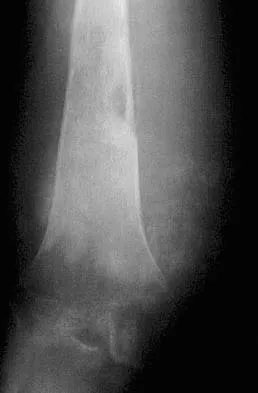
What is the most common location of osteosarcoma?
Explanation
Question 2
A 40-year-old man with an acetabular chondrosarcoma has a small soft-tissue mass. Treatment should consist of
Explanation
Question 3
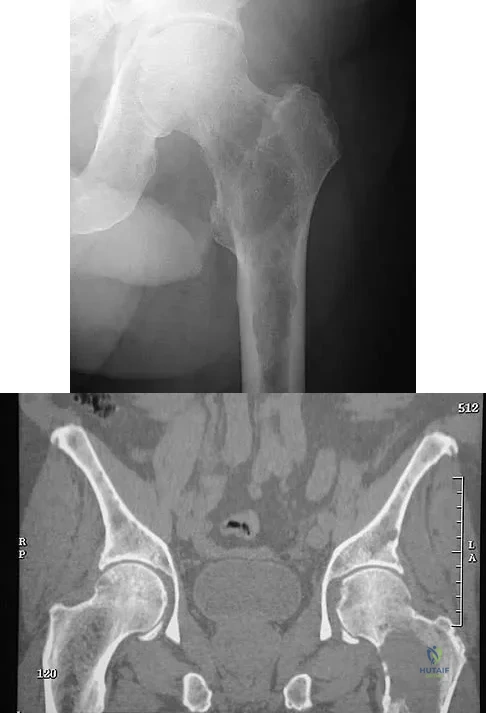
Figures 29a and 29b show the AP radiograph and CT scan of a 70-year-old man who has left thigh pain. Serum protein electrophoresis shows a monoclonal gammopathy. Additional radiographs of the femur show other lesions. Management should consist of
Explanation
Question 4
What pharmacologic agents are preferred for the treatment of symptomatic active Paget's disease?
Explanation
Question 5
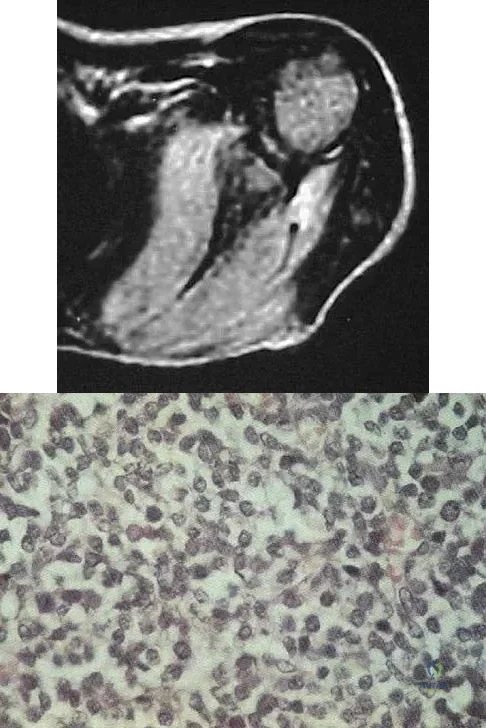
A 7-year-old girl has pain and a mass in the left scapula. A MRI scan and biopsy specimen are shown in Figures 30a and 30b. After staging studies, initial management should consist of
Explanation
Question 6
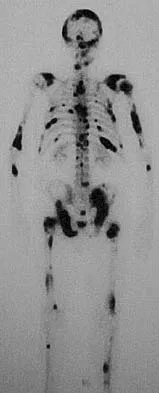
A 73-year-old man reports increasing back and lower extremity pain. A bone scan is shown in Figure 31. What is the most likely diagnosis?
Explanation
Question 7
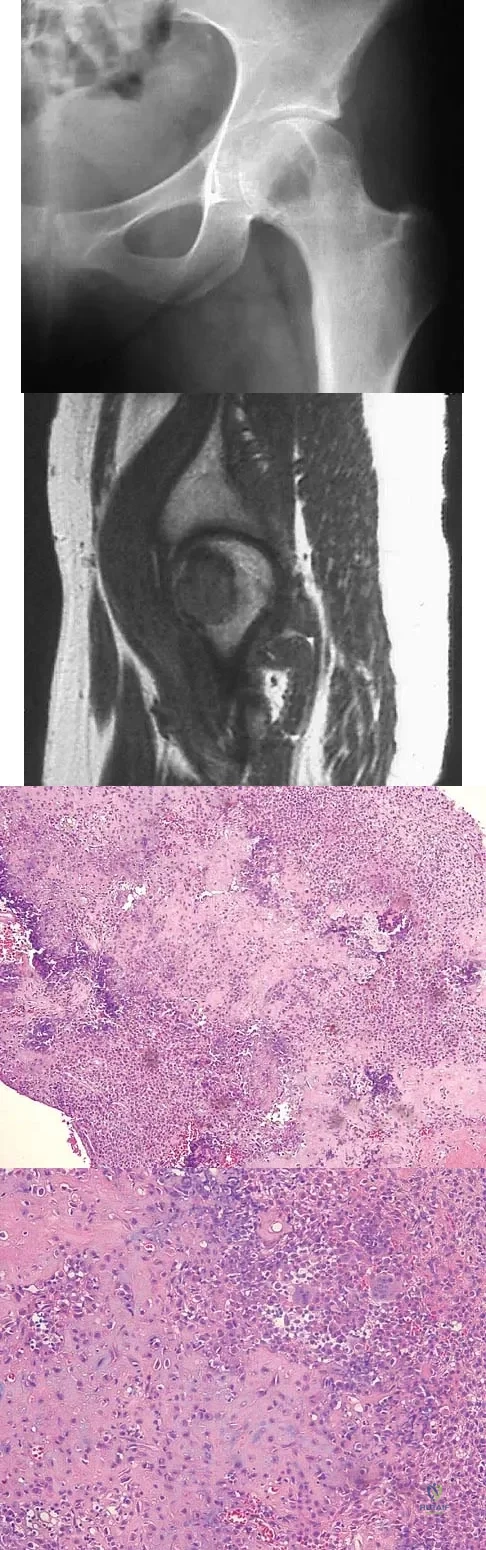
A 16-year-old girl has had pain in the left groin for the past 4 months. She notes that the pain is worse at night; however, she denies any history of trauma and has no constitutional symptoms. There is no history of steroid or alcohol use. Examination reveals pain in the left groin with rotation of the hip. There is no associated soft-tissue mass. A radiograph and MRI scan are shown in Figures 32a and 32b, and biopsy specimens are shown in Figures 32c and 32d. What is the most likely diagnosis?
Explanation
Question 8
Ewing's sarcoma of bone most commonly occurs in which of the following locations?
Explanation
Question 9
A previously healthy 14-year-old boy now reports fatigue, and has a bilateral Trendelenburg gait, right hip pain, and bilateral knee and foot pain. Biopsy of a right sacral mass reveals intermediate grade osteosarcoma. There are no metastases. Laboratory studies reveal a serum calcium level of 7.7 mg/dL (normal 8.5 to 10.5), a phosphate level of 2.0 mg/dL (normal 2.7 to 4.5), a 1,25-dihydroxyvitamin D level of less than 10 pg/mL (normal 18 to 62), a parathyroid hormone level of 19 pg/mL (normal 10 to 60), and an alkaline phosphatase level of 428 U/L (normal 15 to 351). What is the most likely cause of the patient's symptoms?
Explanation
Question 10
Which of the following staging studies should be obtained for an adult with an 8-cm deep, high-grade malignant fibrous histiocytoma of the extremity?
Explanation
Question 11
An 18-year-old boy has had pain in the right knee for the past 6 months. Examination reveals some fullness behind the knee but no significant palpable soft-tissue mass. There is no effusion, and he has full knee range of motion. The remainder of the examination is unremarkable. A radiograph and MRI scans are shown in Figures 33a through 33c, and biopsy specimens are shown in Figures 33d and 33e. What is the most likely diagnosis?
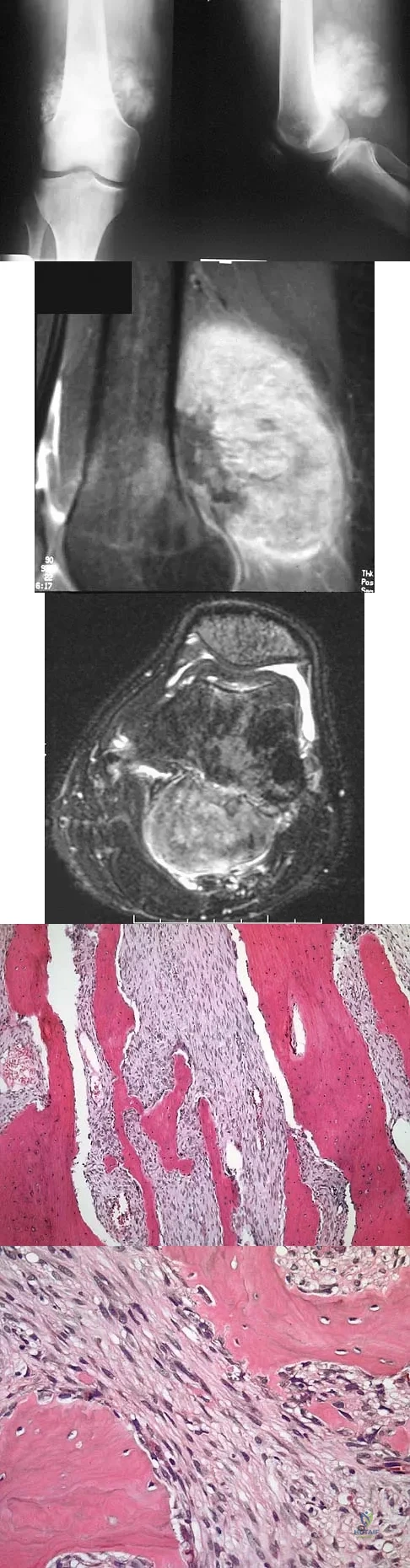
Explanation
Question 12
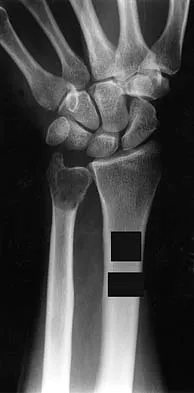
A 30-year-old patient has wrist pain. A radiograph and biopsy specimen are shown in Figures 34a and 34b. What is the most likely diagnosis?
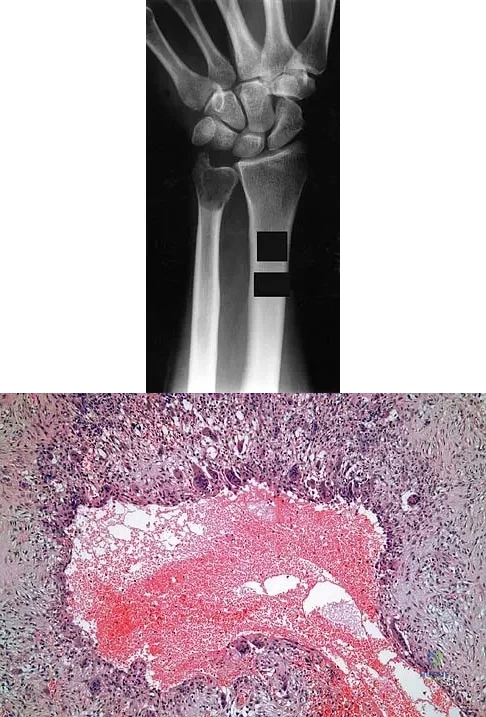
Explanation
Question 13
Mutations of what gene are associated with subsequent development of osteosarcoma?
Explanation
Question 14
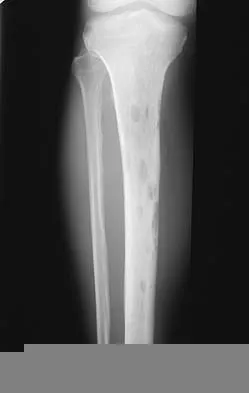
A 12-year-old girl has painless bowing of the tibia. Radiographs and a biopsy specimen are shown in Figures 35a through 35c. What is the most likely diagnosis?
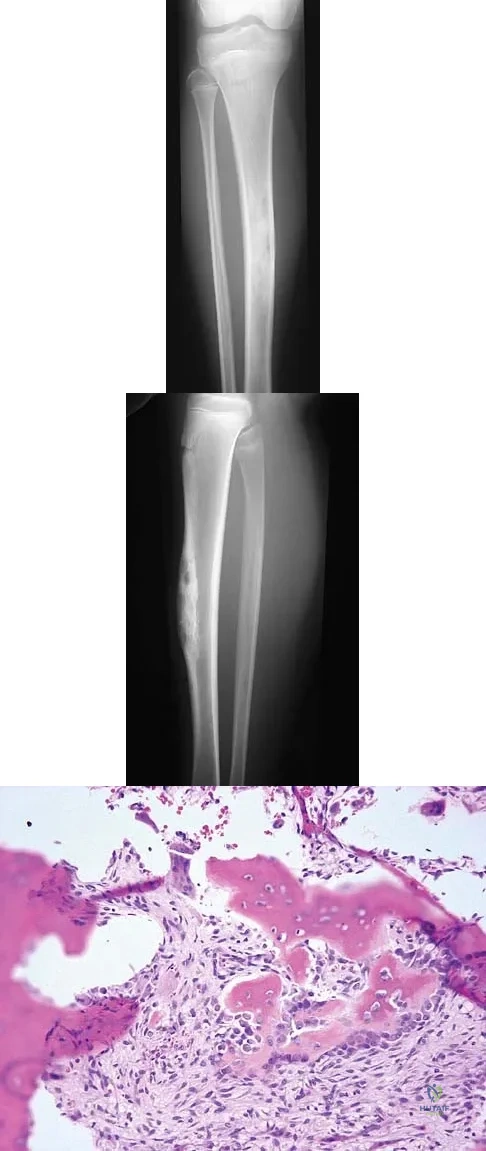
Explanation
Question 15
A 54-year-old man with metastatic renal cell carcinoma has had increasing pain in the left hip for the past 6 weeks. A radiograph is shown in Figure 36. Prophylactic stabilization will most likely result in
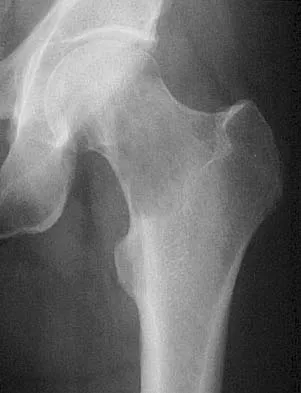
Explanation
Question 16
Which of the following is considered the treatment of choice for a 3-cm chondroblastoma of the distal femoral epiphysis with no intra-articular extension?
Explanation
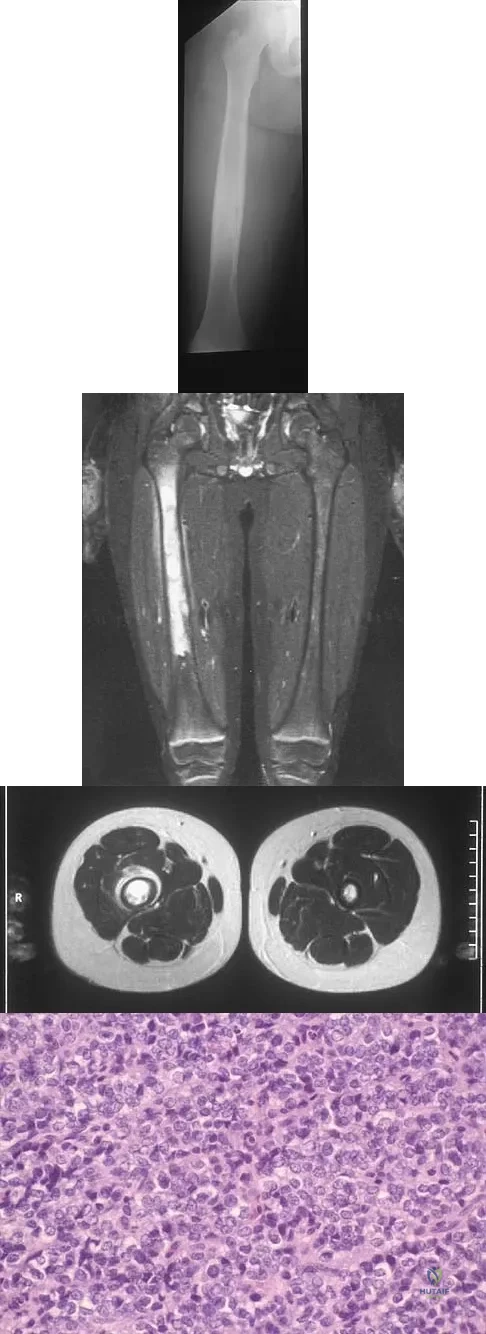
Question 17
A radiograph, MRI scans, and a biopsy specimen of a 9-year-old boy with thigh pain are shown in Figures 37a through 37d. Management should consist of
Explanation
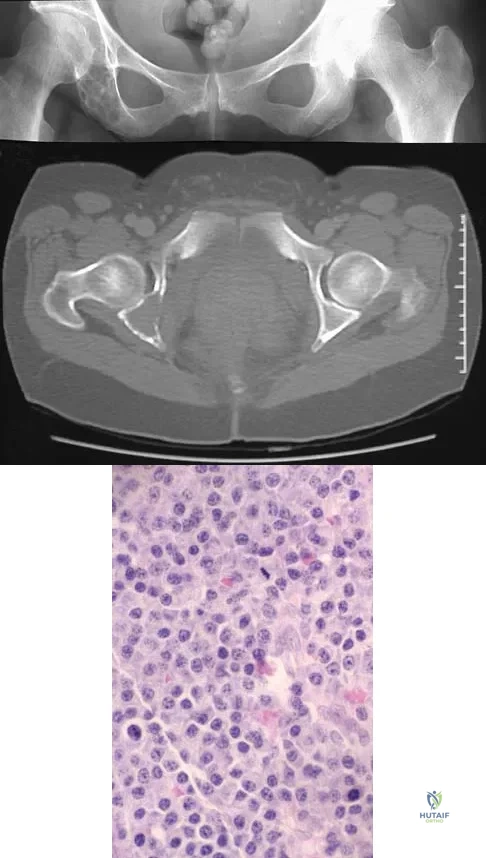
Question 18
A 47-year-old woman has had a 1-month history of left hip and medial thigh pain that is exacerbated by sitting. Laboratory studies show a total protein level of 8.2 g/dL (normal 6.0 to 8.0) and an immunoglobulin G (IGG) level of 2,130 mg/dL (normal 562 to 1,835). A radiograph, CT scan, and biopsy specimen are shown in Figures 38a through 38c. What is the most likely diagnosis?
Explanation
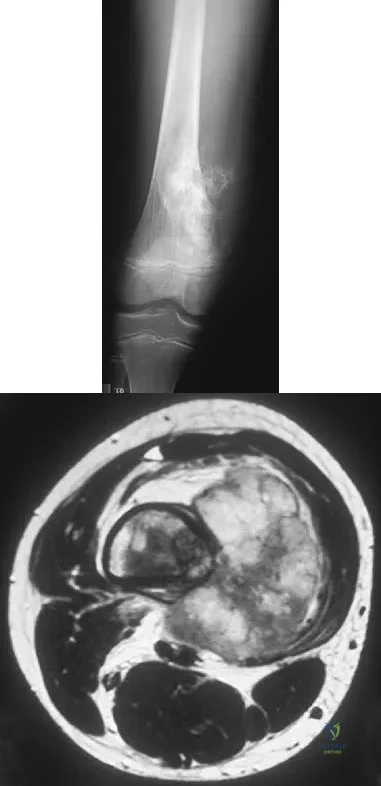
Question 19
A 14-year-old boy has an anteromedial distal thigh mass. A radiograph and MRI scan are shown in Figures 39a and 39b. An open biopsy of the mass should include
Explanation
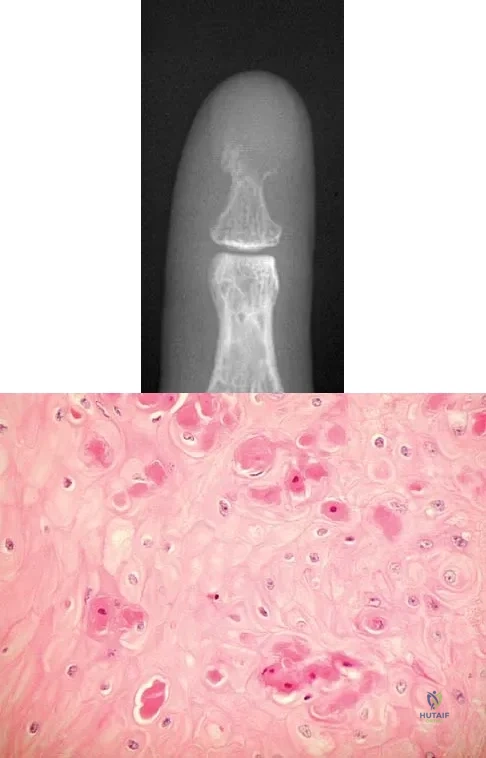
Question 20
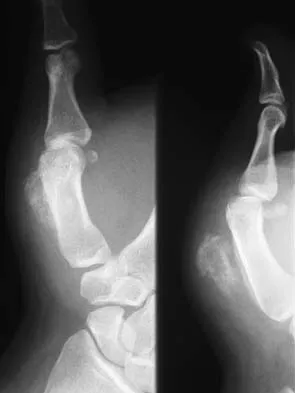
A 60-year-old man has pain at the tip of the index finger. A radiograph and biopsy specimen are shown in Figures 40a and 40b. Management should consist of
Explanation
Question 21
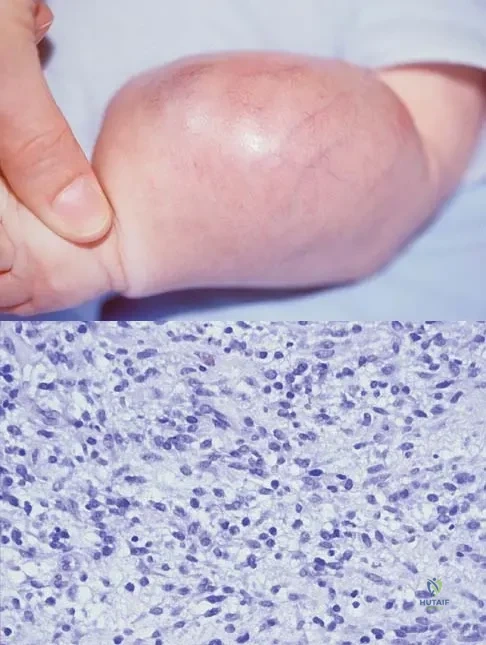
An infant is born with a mass that involves both the volar and dorsal compartments of the left arm. A clinical photograph and biopsy specimen are shown in Figures 41a and 41b. What is the best initial course of action?
Explanation
Question 22
Which of the following processes does not account for decreased hematopoiesis in patients with metastatic disease?
Explanation
Question 23
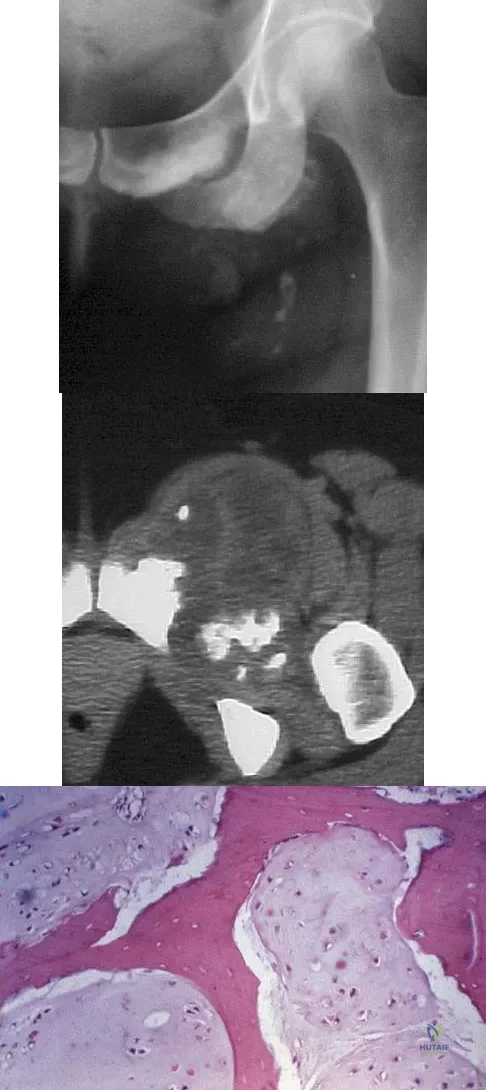
A 43-year-old woman has an enlarging mass in the left groin. A radiograph, CT scan, and a biopsy specimen are shown in Figures 42a through 42c. Treatment should consist of
Explanation
Question 24
A 66-year-old man has a high-grade angiosarcoma of the right tibia. A radiograph is shown in Figure 43. Treatment should consist of
Explanation
Question 25
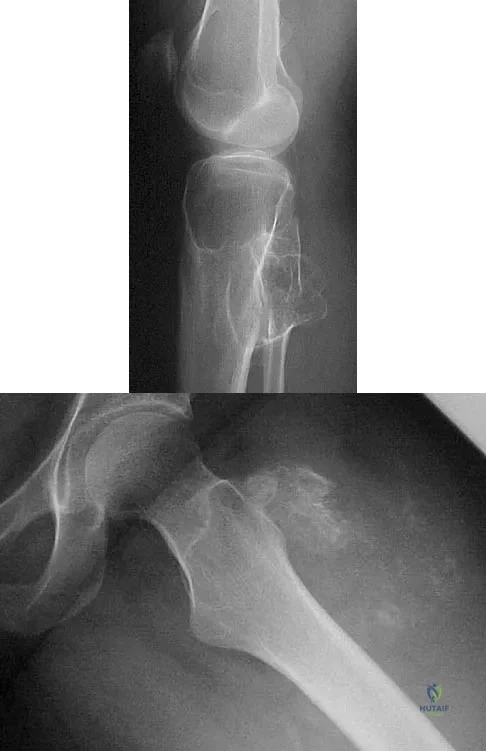
Figures 44a and 44b show the radiographs of a 28-year-old woman who has had progressive hip pain for the past 3 months. What is the most likely diagnosis?
Explanation
Question 26
A viscoelastic material, such as articular cartilage, is subjected to a constant applied load over an extended period, resulting in a progressive increase in deformation. This biomechanical phenomenon is best described as:
Explanation
Question 27
In orthopedic biomechanics, for a solid cylindrical intramedullary nail, the bending stiffness is proportional to the radius raised to which power?
Explanation
Question 28
Which zone of normal articular cartilage has the highest concentration of water and contains collagen fibers oriented primarily parallel to the joint surface to resist shear forces?
Explanation
Question 29
Denosumab is utilized in the management of osteoporosis and certain skeletal-related events in metastatic bone disease. It alters bone biology by directly binding to and inhibiting which of the following molecules?
Explanation
Question 30
Sclerostin, a glycoprotein produced primarily by mature osteocytes, serves as a negative regulator of bone formation. It achieves this by inhibiting which of the following intracellular signaling pathways?
Explanation
Question 31
Which type of fracture healing is primarily achieved when absolute stability and rigid internal fixation (e.g., a lag screw and neutralization plate) are applied to a simple fracture pattern?
Explanation
Question 32
During the tensile biomechanical testing of a normal ligament, the initial "toe region" of the load-elongation curve represents which physiological event?
Explanation
Question 33
What is the predominant large aggregating proteoglycan responsible for drawing water into articular cartilage and providing compressive stiffness?
Explanation
Question 34
Stress shielding around a femoral stem can lead to proximal bone resorption. To minimize this, engineers seek materials with a modulus of elasticity closer to cortical bone. Which material has a modulus most similar to cortical bone?
Explanation
Question 35
In total hip arthroplasty, accelerated generation of polyethylene wear debris due to a fragment of bone cement becoming trapped between the femoral head and acetabular liner is an example of:
Explanation
Question 36
Bone morphogenetic proteins (BMPs) exert their potent osteoinductive effects by binding to cell-surface receptors and primarily activating which of the following intracellular signaling molecules?
Explanation
Question 37
During internal fixation of a diaphyseal fracture, which design modification of a cortical bone screw will most effectively increase its pullout strength?
Explanation
Question 38
Galvanic corrosion of orthopedic implants is most likely to occur under which of the following specific conditions?
Explanation
Question 39
While most of the appendicular skeleton develops via an intermediate cartilage model, which of the following bones develops primarily via intramembranous ossification?
Explanation
Question 40
During prolonged standing, which exposes a joint to high static loads at zero or very low speeds, which mechanism is primarily responsible for the lubrication of articular cartilage?
Explanation
Question 41
Osteoclasts are specialized multinucleated giant cells responsible for the resorption of bone matrix. From which distinct cellular lineage do osteoclasts originate?
Explanation
Question 42
The biomechanical function of the nucleus pulposus within the intervertebral disc is primarily designed to resist and distribute which type of applied force?
Explanation
Question 43
Because mature articular cartilage is avascular and hypoxic, chondrocytes must rely predominantly on which metabolic pathway for their cellular energy (ATP) production?
Explanation
Question 44
During the intracellular biosynthesis of collagen, vitamin C (ascorbic acid) is an absolute requirement as a cofactor for which specific enzymatic process?
Explanation
Question 45
According to the principles of external fixation biomechanics, which of the following modifications will most significantly increase the bending stiffness of a half-pin?
Explanation
Question 46
Which zone of articular cartilage is characterized by the highest water content, highest collagen concentration, and lowest proteoglycan concentration?
Explanation
Question 47
What process characterizes creeping substitution during the incorporation of a cortical bone graft?
Explanation
Question 48
What is the primary cellular mechanism of action for nitrogen-containing bisphosphonates?
Explanation
Question 49
On a load-deformation or stress-strain curve for a structural material, what biomechanical property is represented by the slope of the linear portion?
Explanation
Question 50
The time-dependent increase in strain of articular cartilage when subjected to a constant, prolonged compressive load is termed:
Explanation
Question 51
Which of the following combinations of orthopedic implants is most likely to result in significant galvanic corrosion if placed in direct physical contact in vivo?
Explanation
Question 52
Following a marrow-stimulating procedure (e.g., microfracture) for a full-thickness chondral defect, the resulting repair tissue is predominantly composed of:
Explanation
Question 53
An activating mutation in the FGFR3 gene primarily affects which zone of the physis, leading to the clinical presentation of achondroplasia?
Explanation
Question 54
Aggrecan, the primary proteoglycan found in articular cartilage, is responsible for providing which essential biomechanical property to the tissue?
Explanation
Question 55
Which design modification to a cortical bone screw will most effectively increase its pull-out strength?
Explanation
Question 56
The biological principle stating that bone will adapt its mass and architecture to the mechanical loads and stresses placed upon it is known as:
Explanation
Question 57
Which type of fracture healing is characterized by the sequential formation of a soft cartilaginous callus followed by a hard bony callus?
Explanation
Question 58
Osteoclasts are multinucleated giant cells derived from which of the following cellular lineages?
Explanation
Question 59
Compared to a total hip arthroplasty, the primary mode of ultra-high-molecular-weight polyethylene (UHMWPE) wear in a well-functioning total knee arthroplasty is:
Explanation
Question 60
Which mechanism of joint lubrication operates primarily under conditions of low speeds and high loads, relying on surface-active molecules like lubricin?
Explanation
Question 61
On a stress-strain curve of a normal human tendon, what does the initial non-linear "toe region" represent?
Explanation
Question 62
The primary inorganic mineral constituent that provides mature human bone with its compressive strength is:
Explanation
Question 63
A patient with severe, prolonged vitamin D deficiency develops osteomalacia. Which of the following serum laboratory profiles is most characteristic of this condition?
Explanation
Question 64
Platelet-Rich Plasma (PRP) exerts its biological and healing effects primarily through the degranulation of which intra-platelet structure?
Explanation
Question 65
In an adult human long bone, the inner two-thirds of the diaphyseal cortex receives its primary blood supply from the:
Explanation
Question 66
During biomechanical testing of a new orthopedic implant material, a load is applied and the material undergoes deformation. The slope of the linear portion of the resulting stress-strain curve represents which of the following mechanical properties?
Explanation
Question 67
Articular cartilage is divided into distinct structural zones. Which zone is characterized by the highest concentration of water, the lowest concentration of proteoglycans, and collagen fibers oriented parallel to the joint surface?
Explanation
Question 68
Osteoclasts bind to the bone matrix to initiate resorption by forming a sealing zone. Which specific integrin receptor on the osteoclast membrane is primarily responsible for binding to osteopontin and bone sialoprotein to create this sealing zone?
Explanation
Question 69
A 25-year-old athlete undergoes a knee arthroscopy, during which a full-thickness chondral defect is noted. The primary extracellular matrix structural protein in the healthy adjacent hyaline articular cartilage is:
Explanation
Question 70
Bone remodeling is strictly regulated by intercellular communication between osteoblasts and osteoclasts. Which of the following molecules acts as a decoy receptor for RANKL, thereby inhibiting osteoclastogenesis?
Explanation
Question 71
Polymer materials used in orthopedics, such as ultra-high molecular weight polyethylene (UHMWPE), exhibit viscoelastic properties. The phenomenon where a material continues to slowly deform over time while subjected to a constant load is known as:
Explanation
Question 72
A modular total hip arthroplasty fails due to severe tribocorrosion at the head-neck junction. What specific type of wear is characterized by microscopic oscillatory motion between two solid surfaces under load?
Explanation
Question 73
Achondroplasia is the most common form of short-limb dwarfism. It is caused by an activating mutation in the FGFR3 gene, which predominantly inhibits chondrocyte activity in which zone of the physis?
Explanation
Question 74
Highly cross-linked ultra-high molecular weight polyethylene (UHMWPE) was introduced to improve the longevity of total hip replacements. Which of the following describes the mechanical tradeoff associated with heavily cross-linking UHMWPE?
Explanation
Question 75
Osteocytes secrete a protein called sclerostin to regulate bone mass in response to mechanical loading. Sclerostin inhibits osteoblastic bone formation primarily by antagonizing which intracellular signaling pathway?
Explanation
Question 76
A diaphyseal tibia fracture is treated with a cast. According to Perren's strain theory, what biomechanical environment is necessary to promote secondary bone healing with robust callus formation?
Explanation
Question 77
When examining normal human articular cartilage microscopically, chondrocytes and collagen fibers in the deep (basal) zone are oriented in what direction relative to the articular surface?
Explanation
Question 78
Secondary fracture healing proceeds through distinct biological phases. Which phase is characterized by a hypoxic environment, chondrocyte proliferation, and peak expression of Type II collagen?
Explanation
Question 79
In materials science, 'toughness' is a critical property for fracture fixation hardware. Toughness is best defined mechanically as:
Explanation
Question 80
Aggrecan is the most abundant proteoglycan in articular cartilage. What is its primary biomechanical function within the cartilage matrix?
Explanation
Question 81
During the early phases of fracture healing or in high-turnover states like Paget's disease, woven bone is formed. Compared to mature lamellar bone, woven bone is characterized by:
Explanation
Question 82
Orthopedic implants are manufactured from various biomaterials. Which of the following metallic alloys has a modulus of elasticity closest to that of human cortical bone, thereby theoretically reducing stress shielding?
Explanation
Question 83
The pull-out strength of a cortical screw used in fracture fixation is heavily dependent on screw design and bone quality. Based on screw geometry, pull-out strength is directly proportional to which of the following dimensions?
Explanation
Question 84
Mineralization of the osteoid matrix relies heavily on the local concentration of calcium and phosphate. Which osteoblast-derived enzyme promotes mineralization by hydrolyzing and removing inorganic pyrophosphate, a potent inhibitor of calcification?
Explanation
Question 85
Aseptic loosening of cementless total hip stems can occur secondary to localized proximal femoral osteopenia. This phenomenon, known as stress shielding, occurs because the rigid metal implant:
Explanation
Question 86
In articular cartilage, which zone is characterized by a high concentration of water, collagen fibers oriented parallel to the joint surface, and the lowest concentration of proteoglycans?
Explanation
Question 87
A ligament subjected to a constant, sustained load elongates progressively over time. This viscoelastic property is best described as:
Explanation
Question 88
Osteoclasts resorb bone matrix by creating an acidic microenvironment at the ruffled border. Which intracellular enzyme is primarily responsible for generating the protons required for this acidification process?
Explanation
Question 89
An orthopedic surgeon decides to change an intramedullary nail from a solid titanium rod with a radius of 'r' to a solid titanium rod with a radius of '2r'. Assuming identical material properties, by what factor does the bending rigidity of the nail increase?
Explanation
Question 90
Which of the following components of the extracellular matrix is primarily responsible for the compressive stiffness of articular cartilage?
Explanation
Question 91
Sclerostin (SOST) regulates bone mass by inhibiting a specific cellular signaling pathway. Which of the following pathways is directly antagonized by sclerostin?
Explanation
Question 92
On a stress-strain curve for an orthopedic biomaterial, the area under the curve strictly within the elastic region represents the material's:
Explanation
Question 93
In the epiphyseal growth plate, which zone is primarily responsible for longitudinal bone growth through rapid cellular division and column formation?
Explanation
Question 94
According to Perren's strain theory of bone healing, what is the maximum interfragmentary strain that allows for the formation of primary lamellar bone without intermediate soft callus formation?
Explanation
Question 95
Parathyroid hormone (PTH) stimulates bone resorption primarily by binding to receptors located directly on which of the following cell types?
Explanation
Question 96
When applying a conventional non-locking plate to a diaphyseal fracture, over-tightening the screws compresses the plate directly to the bone. This construct relies on which fundamental biomechanical principle for stability?
Explanation
Question 97
During prolonged standing, resulting in static high loads across the knee joint, which mechanism of articular cartilage lubrication is primarily responsible for minimizing friction between the joint surfaces?
Explanation
Question 98
Which type of collagen is the predominant organic structural component of the soft callus during the early stages of secondary fracture healing?
Explanation
Question 99
An orthopedic implant undergoes cyclical loading well below its ultimate yield strength but eventually fails. On an S-N (Stress-Number of cycles) curve, what does the endurance limit represent?
Explanation
Question 100
During the remodeling phase of cortical bone healing, cutting cones progress longitudinally through the haversian systems. What is the leading cell type at the forefront of a functioning cutting cone?
Explanation
None
