العربية
Part of the Master Guide

AAOS & ABOS Basic Science MCQs (Set 3): Bone Biology, Biomechanics & Anatomy Review

AAOS & ABOS Basic Science MCQs (Set 3): Orthopedic Biomechanics & Bone Physiology | OITE Review
27 Apr 2026 51 min read 90 Views
Mtd 2000 MCQs - Part 3

Key Takeaway

This high-yield question set (Set 3) for the AAOS/ABOS Basic Science exams covers fundamental orthopedic principles. It includes detailed MCQs on musculoskeletal biomechanics, bone physiology, fracture healing mechanisms, and essential human anatomy relevant to orthopedic surgery residents and OITE preparation.

AAOS & ABOS Basic Science MCQs (Set 3): Orthopedic Biomechanics & Bone Physiology | OITE Review

Comprehensive 100-Question Exam


00:00

Start Quiz

Question 1

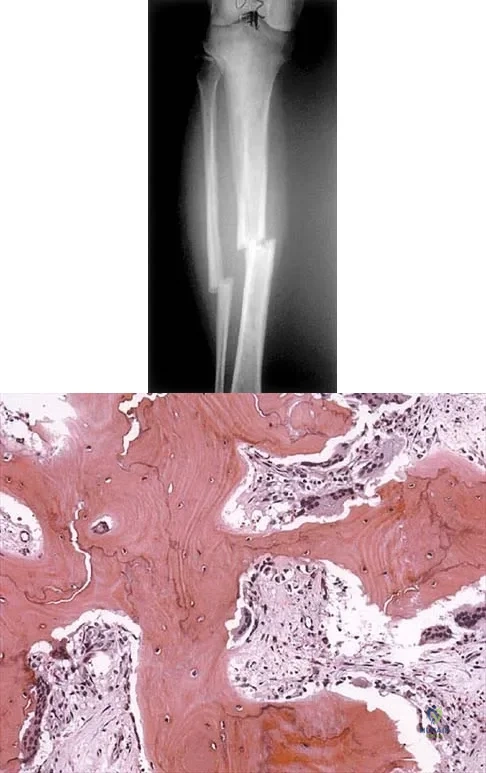
Figure 26a shows the radiograph of a 55-year-old woman who has pain in her right leg after falling. Laboratory studies reveal an elevated alkaline phosphatase level. A biopsy specimen from the proximal tibia is shown in Figure 26b. What is the most likely diagnosis?


Explanation

Paget's disease of bone is a metabolic disorder of bone remodeling. The normally coupled process of bone resorption and deposition is lost, resulting in excessive localized bone resorption and compensatory increased bone formation. Pagetic bone tends to be more brittle; therefore, it is susceptible to pathologic fractures and subsequent deformities. Lander PH, Hadjipavlou AG: A dynamic classification of Paget's disease. J Bone Joint Surg Br 1986;68:431-438.

Question 2

Radiographs of a pediatric patient reveal a suspected osteosarcoma of the distal femur. Additional staging studies should consist of


Explanation

CT of the abdomen and pelvis is not part of the staging of osteosarcoma. Staging studies should consist of CT of the chest, radiographs of the chest and primary tumor, MRI of the primary tumor, and a bone scan. The MRI should be obtained prior to the biopsy.

Question 3

Which of the following factors are considered prognostic of survival in patients with soft-tissue sarcomas?


Explanation

The factors that are independently prognostic of patient survival are tumor size, tumor grade, and tumor depth (ie, subfascial versus superficial). These factors are the basis for the American Joint Committee on Cancer staging criteria. Patient age and neurovascular invasion are not prognostic. Surgical margin is prognostic for local recurrence but not conclusively for patient survival or metastasis. Metastatic disease is also predictive of survival. Cheng EY, Thompson RC Jr: New developments in the staging and imaging of soft-tissue sarcomas. Instr Course Lect 2000;49:443-451.

Question 4

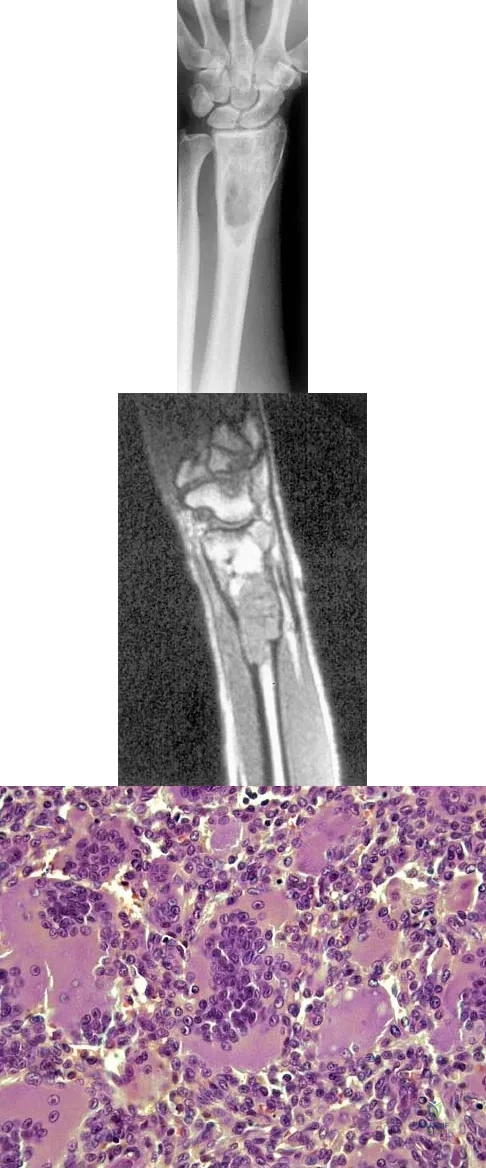
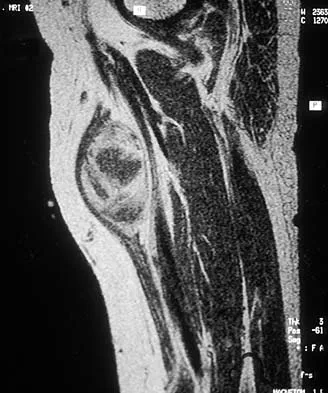
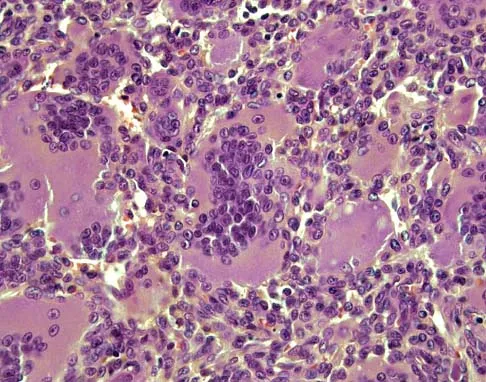
Figures 27a through 27c show the AP radiograph, MRI scan, and biopsy specimen of an otherwise healthy man who has a painful wrist. Serum chemistry studies are normal. What is the most likely diagnosis?


Explanation

The osseous sites most frequently involved by giant cell tumor of bone are the distal femur, proximal tibia, and distal radius with approximately 10% of giant cell tumors involving the distal radius. The goals of treatment are to remove the tumor completely and to preserve maximum function of the extremity.

Question 5

What is the most common primary malignant tumor of bone in childhood?


Explanation

Osteosarcoma is the most common primary malignant tumor of bone in childhood, followed by Ewing's sarcoma. Rhabdomyosarcoma is a soft-tissue sarcoma of childhood. Chondrosarcoma rarely occurs in childhood. Osteochondroma is a benign tumor of bone. Simon MA, Springfield DS, et al: Osteogenic Sarcoma: Surgery for Bone and Soft Tissue Tumors. Philadelphia, PA, Lippincott Raven, 1998, p 266.

Question 6

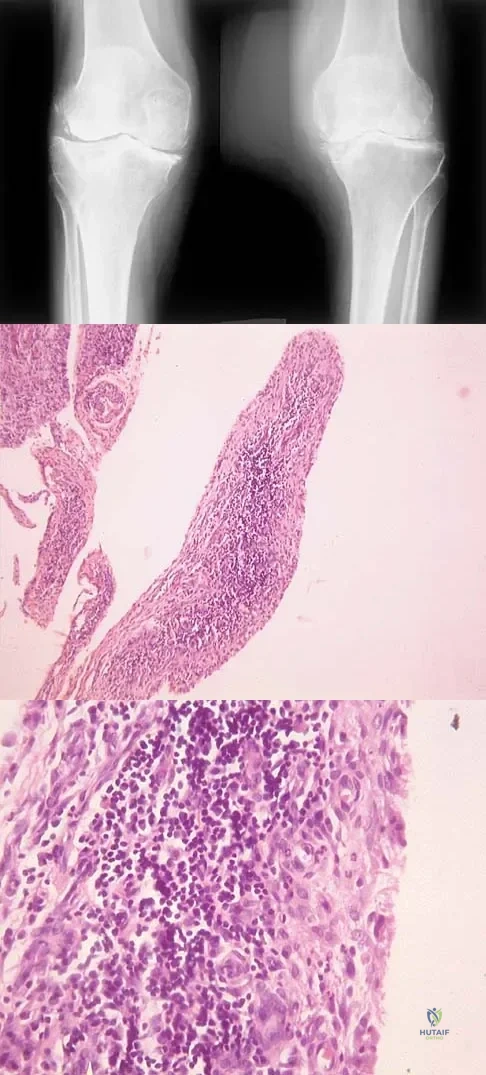
A 44-year-old woman has bilateral knee pain, and history reveals bilateral hip replacements. Radiographs are seen in Figure 28a, and histopathologic specimens from the total hip replacement are shown in Figures 28b and 28c. Laboratory studies reveal anemia. What is the most likely diagnosis?


Explanation

Rheumatoid arthritis is an inflammatory arthritis that usually involves multiple joints. Radiologic findings of periarticular erosion, osteopenia, and minimal osteophyte formation favor rheumatoid arthritis over osteoarthritis. Pigmented villonodular synovitis and Charcot arthropathy are more often considered monoarticular diseases. There are no radiographic findings of Paget's disease.

Question 7

In addition to pain, which of the following factors are considered most predictive of the risk of pathologic fracture?


Explanation

While guidelines for predicting fracture risk are at best imprecise, the scoring system by Mirels (pain, anatomic location, and pattern of bony destruction) has been shown to be most predictive of fracture risk. Functional pain, peritrochanteric location, and lytic bone destruction are the greatest risk factors for pathologic fracture. The factors of patient weight, age, soft-tissue mass, and location within bone are all of lesser importance. Frassica FJ, Frassica DA, McCarthy EF, Riley LH III: Metastatic bone disease: Evaluation, clinicopathologic features, biopsy, fracture risk, nonsurgical treatment, and supportive management. Instr Course Lect 2000;49:453-459.

Question 8

Patients with which of the following primary carcinomas have the shortest overall survival rate after a solitary metastasis to bone?


Explanation

The median survival of patients after discovery of bone metastasis from primary lung carcinoma is shorter compared with other primary sites.

Question 9

A 63-year-old woman has a femoral neck fracture. A biopsy specimen obtained from the fracture site at the time of her hemiarthroplasty reveals metastatic carcinoma. Seven days after surgery, she becomes confused and lethargic. Which of the following laboratory values is most likely implicated in the patient's symptoms at this time?


Explanation

Although many hematologic and electrolyte abnormalities may be present in a patient with advanced metastatic cancer, an elevated serum calcium level is most commonly associated with confusion. Treatment with hydration, diuretics, and bisphosphonates is recommended. Clohishy D: Management of skeletal metastasis in clinical orthopaedics, in Craig E (ed): Operative Orthopaedics. Philadelphia, PA, Lippincott Williams & Wilkins, 1999, pp 994-997.

Question 10

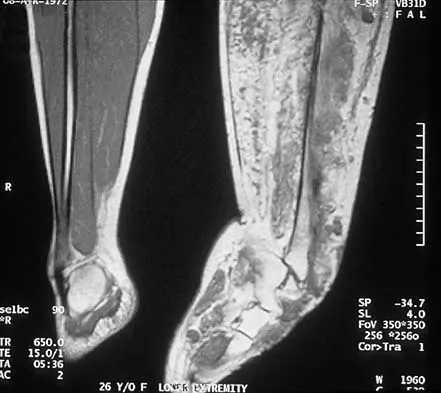
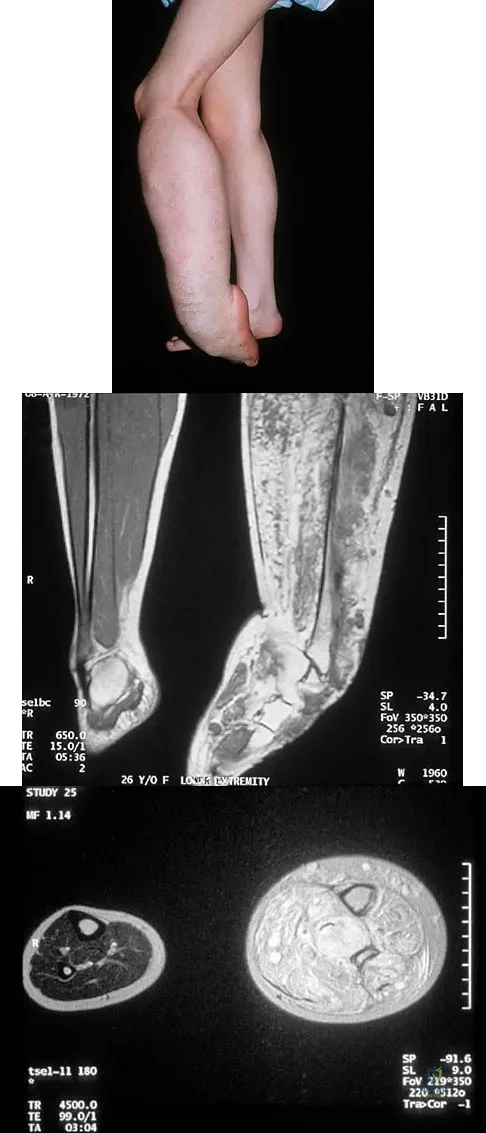
Figure 29a shows the clinical photograph of a 26-year-old woman who has had the leg deformity since birth. She reports difficulty with walking and weight bearing and notes increased discomfort and swelling when the leg is dependent. She denies any history of trauma or family history of a similar disorder. Examination reveals a fixed equinovarus deformity of the foot but no evidence of a limb-length discrepancy. No other cutaneous findings or soft-tissue masses are noted. Sagittal and axial T1- and T2-weighted MRI scans are shown in Figures 29b and 29c. What is the most likely diagnosis?


Explanation

Because the MRI scans show marked dilation and proliferation of lymphatic channels that completely involve all the leg muscles and the clinical photograph shows the severe swelling associated with this disease, the most likely diagnosis is lymphangiomatosis. Poliomyelitis affects the anterior horn cells and manifests as muscle atrophy. Neurofibromatosis can have a similar clinical appearance but usually is associated with other systemic and cutaneous findings. Congenital band syndrome results in amputated or shortened extremities. Chronic venous stasis disease usually is not associated with joint contractures, and typically it affects older individuals. Surgical excision is the only known treatment; this patient underwent an above-knee amputation. Berquist TH (ed): MRI of the Musculoskeletal System, ed 3. Philadelphia, PA, Lippincott Raven, 1997, p 771.

Question 11

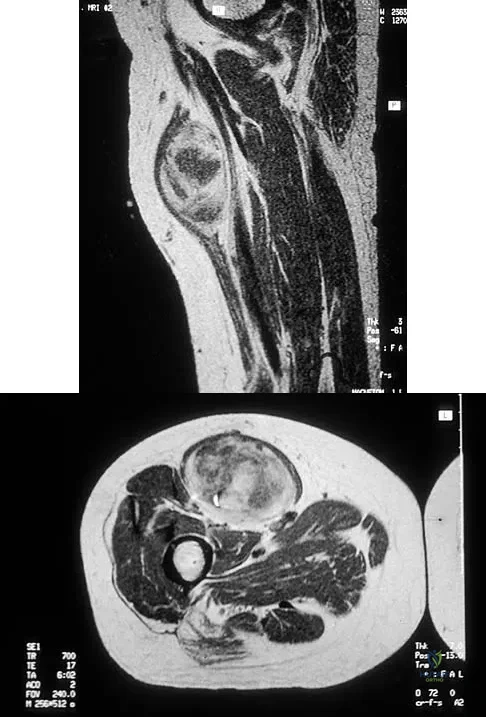
Figures 30a and 30b show the MRI scans of a 51-year-old woman who has had an enlarging soft-tissue mass in her right thigh for the past 18 months. Examination reveals no inguinal adenopathy. Results of a biopsy show a high-grade sarcoma. A bone scan is unremarkable, and a CT scan of the chest shows no evidence of pulmonary metastasis. According to the Musculoskeletal Tumor Society (MSTS) staging system, the tumor should be classified as what stage?


Explanation

According to the MSTS staging system, soft-tissue sarcomas are staged according to the following factors: grade, site, and metastasis. Roman numerals are used to designate malignant tumors, and Arabic numerals are used for benign tumors. Low-grade malignant tumors are staged as I while intermediate- and high-grade tumors are staged as II. Site is defined as intracompartmental (A) or extracompartmental (B). Any metastasis is staged as III. This patient has a high-grade tumor (II), and the MRI scans show that it is confined to a single compartment; therefore, it is staged as IIA. There is no evidence of metastatic disease. Enneking WF, Spanier SS, Goodman MA: A system for the surgical staging of musculoskeletal sarcoma. Clin Orthop 1980;153:106-120. Peabody TD, Monson D, Montag A, Schell MJ, Finn H, Simon MA: A comparison of the prognoses for deep and subcutaneous sarcomas of the extremities. J Bone Joint Surg Am 1994;76:1167-1173. Pisters PW, Leung DH, Woodruff J, Shi W, Brennan MF: Analysis of prognostic factors in 1,041 patients with localized soft tissue sarcomas of the extremities. J Clin Oncol 1996;14:1679-1689.

Question 12

An otherwise healthy 45-year-old man has a 3-cm subcutaneous mass on his anterior thigh that is presumed to be a lipoma. Removal of the mass is performed in the office of his primary care physician. Pathologic evaluation shows a high-grade malignant fibrous histiocytoma. Staging reveals no evidence of metastatic disease. Management at this time should consist of


Explanation

Resection of a previously excised soft-tissue sarcoma is recommended. Reoperation is recommended after removal of malignant tumors previously believed to be benign, as approximately one half of the patients will have residual tumor in the re-excised specimen. Observation is not indicated in most patients because local recurrence is likely. Radiation therapy alone may result in long-term local control but is felt to be less effective than reoperation. Chemotherapy and radiation therapy alone are not recommended. Wide excision is the most important factor for local disease control. Radiation therapy after surgical re-excision may also decrease the risk of local recurrence. Peabody TD, Monson D, Montag A, Schell MJ, Finn H, Simon MA: A comparison of the prognoses for deep and subcutaneous sarcomas of the extremities. J Bone Joint Surg Am 1994;76:1167-1173. Giuliano AE, Eilber FR: The rationale for planned reoperation after unplanned total excision of soft-tissue sarcomas. J Clin Oncol 1985;3:1344-1348. Lewis JJ, Leung D, Espat J, Woodruff JM, Brennan MF: Effect of resection in extremity soft tissue sarcoma. Ann Surg 2000;231:655-663.

Question 13

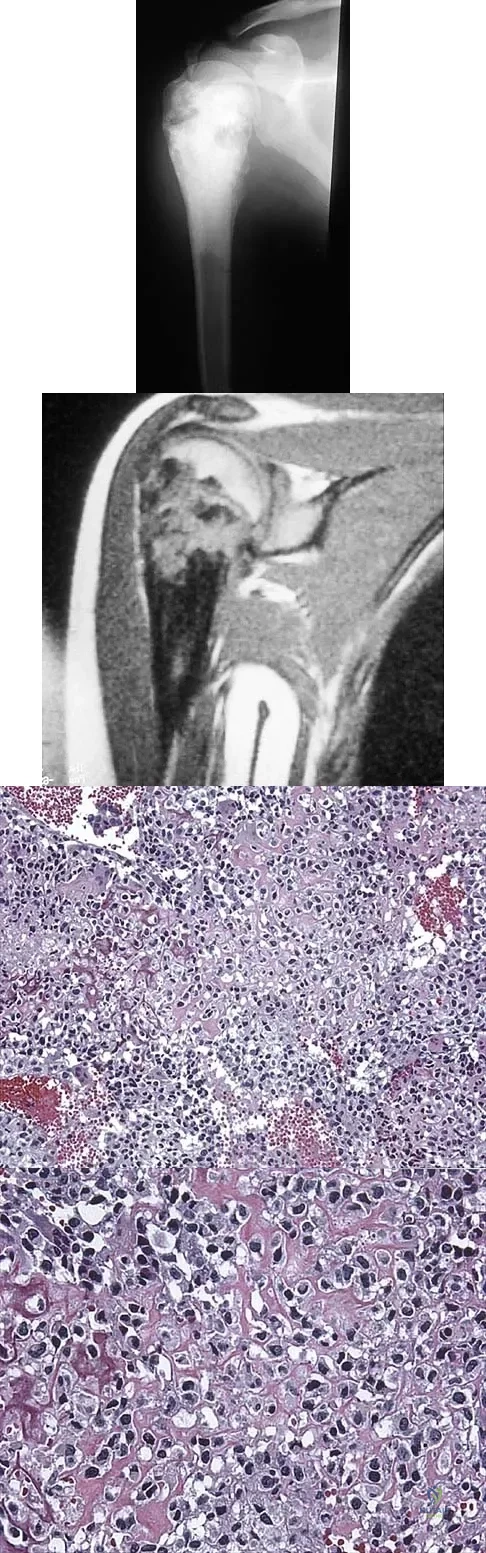
A 13-year-old girl has had a firm mass and pain in her right shoulder for the past several weeks. She denies any history of trauma. A radiograph and MRI scan are shown in Figures 31a and 31b. Biopsy specimens are shown in Figures 31c and 31d. What is the most likely diagnosis?


Explanation

The patient has osteosarcoma. The radiograph suggests an aggressive primary tumor of bone, and the histology shows malignant cells surrounded by osteoid, classic for osteosarcoma. Ewing's sarcoma histologically consists of small round blue cells. Osteochondroma and periosteal chondroma occur in the shoulder but have a different histologic pattern and a less aggressive radiographic appearance. Chondrosarcomas rarely occur in children. Simon MA, Springfield DS, et al: Osteogenic Sarcoma: Surgery for Bone and Soft Tissue Tumors. Philadelphia, PA, Lippincott Raven, 1998, p 266.

Question 14

The use of radiation therapy is most effective in metastatic bone disease from which of the following tumors?


Explanation

Both myeloma and lymphoma are more responsive to radiation therapy. The other types of tumors are relatively more resistant to radiation. Doses of 25 to 50 Gy (2,500 to 5,000 cGy) are usually sufficient for myeloma and lymphoma, while carcinomas frequently require a higher dosage. Large cell lymphoma of bone is usually of B-cell origin and is treated with chemotherapy and radiation therapy. Simon MA, Springfield DS, et al: Surgery for Bone and Soft Tissue Tumors. Philadelphia, PA, Lippincott Raven, 1998, p 683.

Question 15

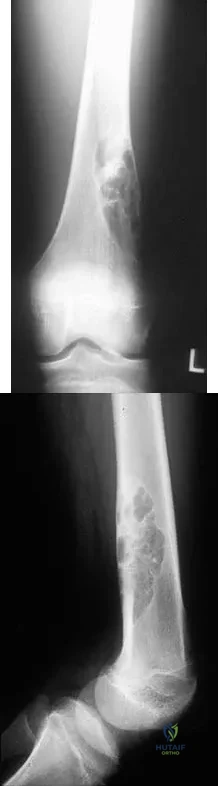
Figures 32a and 32b show the radiographs of an active 13-year-old boy who has persistent left thigh pain and a limp despite a trial of protected weight bearing. Management should consist of


Explanation

The plain radiographs show an eccentric metaphyseal lesion involving a long bone in a skeletally immature patient. The lesion is longer than it is wide, with distinctly lobular outer edges that are sclerotic. These findings are characteristic of a nonossifying fibroma. Small asymptomatic lesions may be followed clinically. Larger lesions that occupy greater than two thirds of the width of the shaft and are located in areas of high mechanical stress such as the femur are more prone to fracture than smaller lesions. Pain is often a sign of impending fracture or the presence of a small fracture that may not be apparent on radiographs. The natural history of the lesion is to resolve over a period of years. The procedure that would allow the patient to return to contact sports is curettage and bone grafting. Intralesional steroid injection has been advocated in the treatment of unicameral bone cysts and eosinophilic granuloma but not nonossifying fibromas. En block resection is not indicated for a benign lesion. Low-dose radiation therapy has been used for eosinophilic granuloma but not for nonossifying fibromas. Walker RN, Green NE, Spindler KP: Stress fractures in skeletally immature patients. J Pediatr Orthop 1996;16:578-584.

Question 16

The spread of malignant cells to the vertebrae is often through


Explanation

In 1940, Batson described a valveless plexus of veins that extend from the dural venous sinuses of the skull to the sacrum. This system permits retrograde blood flow and enables tumor cells to enter vertebral bodies at multiple levels. Increased intra-abdominal pressure will enhance this retrograde blood flow.

Question 17

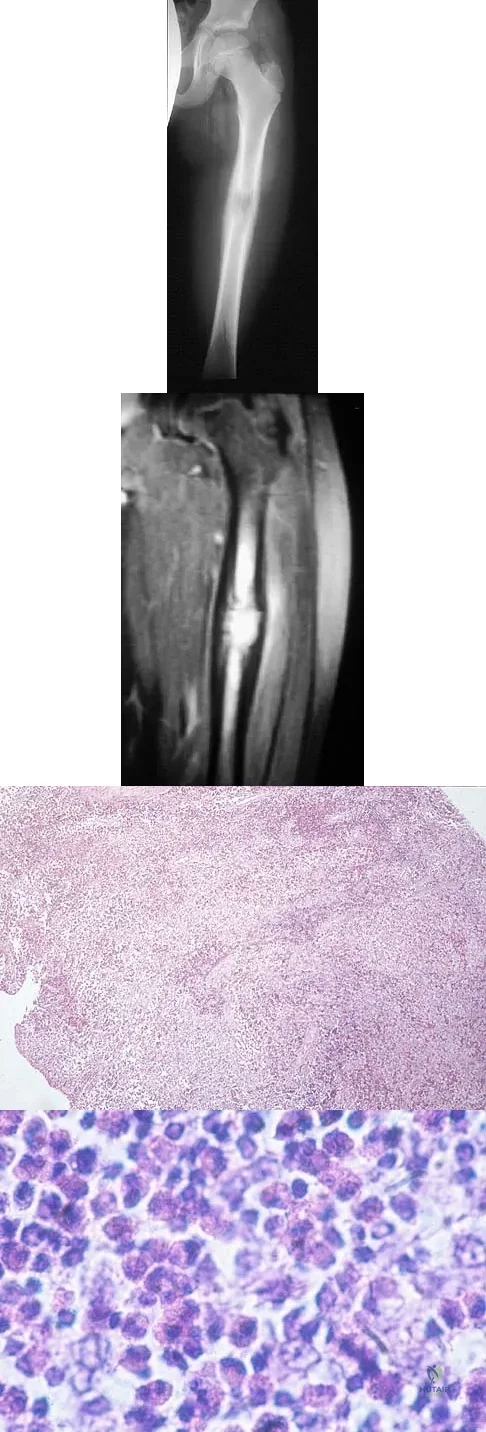
A 10-year-boy has had thigh pain for the past several months. He denies any history of trauma. Examination reveals no soft-tissue mass, and mild tenderness. Figures 33a and 33b show the plain radiograph and MRI scan, and the biopsy specimens are shown in Figures 33c and 33d. What is the most likely diagnosis?


Explanation

The diagnosis is eosinophilic granuloma. The plain radiograph and MRI scan show a lesion in the midshaft of the femur. There is no soft-tissue mass. There is reactive bone about the lesion that suggests a less aggressive tumor. The histology reveals eosinophils in an otherwise bland cellular background with no evidence of mitotic figures or malignant cells to suggest sarcoma. The diagnostic elements are the amphophilic (ie, pale purple) histiocytes with cigar-shaped nuclei, some of which have linear longitudinal grooves. There is no histologic evidence of infection. Lymphoma of bone would be an unusual occurrence in this age group, and the histology is not consistent with that diagnosis.

Question 18

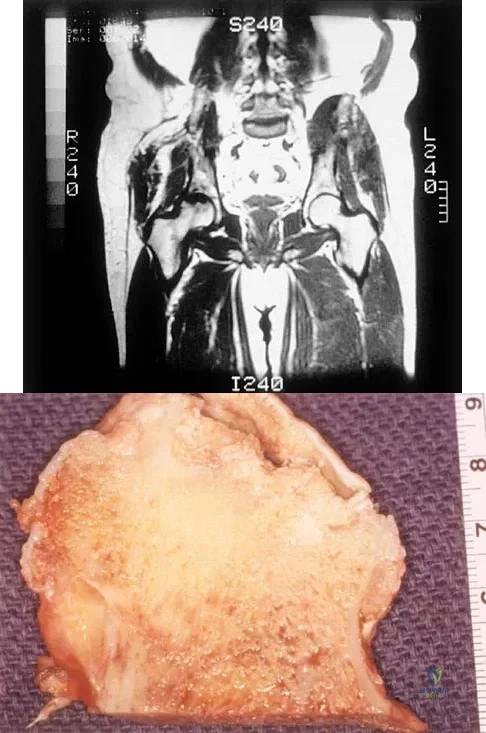
A 35-year-old patient has right hip pain. Figures 34a and 34b show the coronal MRI scan and the biopsy specimen. What is the most likely diagnosis?


Explanation

Alcohol abuse, steroids, Caisson disease, sickle cell disease, and radiation therapy are the leading causes of nontraumatic osteonecrosis of the femoral head. Arlet J: Nontraumatic avascular necrosis of the femoral head: Past, present, and future. Clin Orthop 1992;277:12-21.

Question 19

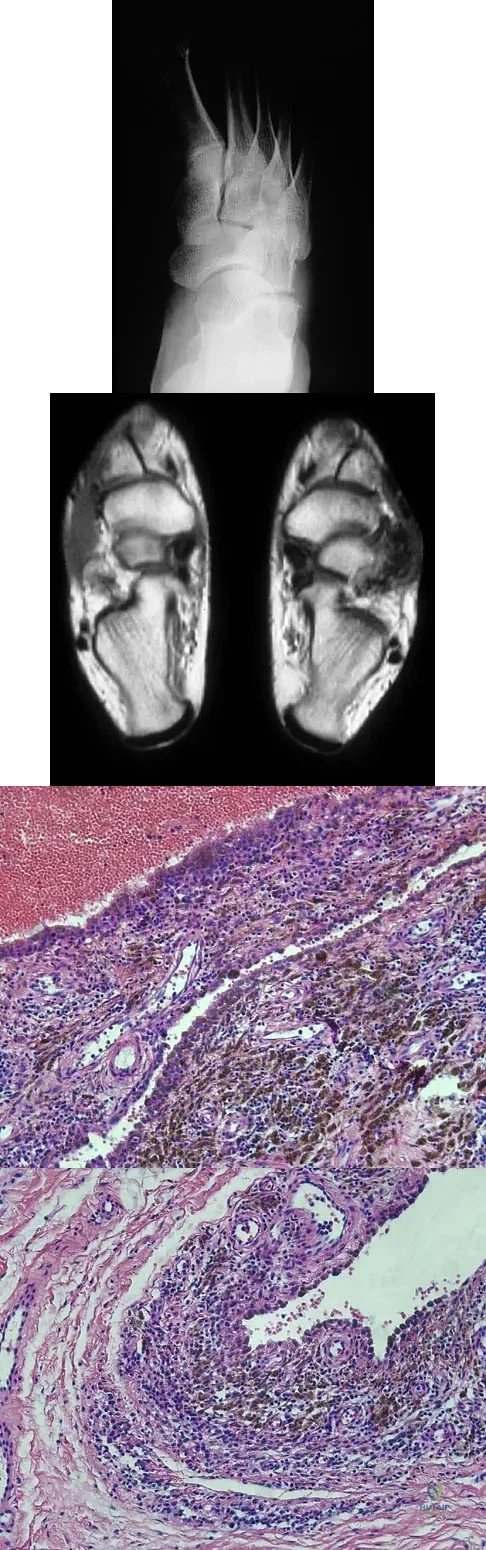
A 16-year-old girl has a painful foot mass. A radiograph, MRI scan, and biopsy specimens are shown in Figures 35a through 35d. What is the most likely diagnosis?


Explanation

Synovial sarcoma should always be considered in the differential diagnosis of a foot mass; however, the histopathology shows a typical example of PVNS, with hemosiderin, giant cells, and synovium. Synovial chondromatosis would have metaplastic cartilage in the synovium. The radiograph shows subtle erosion of the lateral cortex of the cuboid, and the MRI scan shows a soft-tissue mass. Ghert MA, Scully SP, Harrelson JM: Pigmented villonodular synovitis of the foot and ankle: A review of six cases. Foot Ankle Int 1999;20:326-330. Jones BC, Sundaram M, Kransdorf MJ: Synovial sarcoma: MR imaging findings in 34 patients. Am J Roentgenol 1993;161:827-830. Sartoris DJ, Resnick D: Magnetic resonance imaging of pediatric foot and ankle disorders. J Foot Surg 1990;29:489-494.

Question 20

What is the most common diagnosis in a patient older than age 40 years with a destructive bony lesion?


Explanation

The most common destructive lesions in a patient older than age 40 years are, in decreasing incidence, metastatic carcinoma, multiple myeloma, lymphoma, and chondrosarcoma. Osteosarcoma is found primarily in younger patients.

Question 21

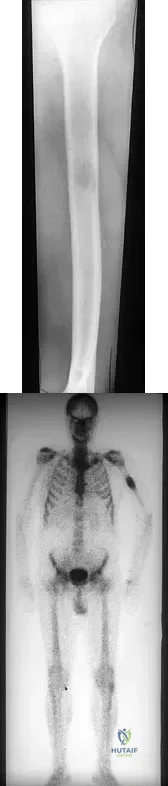
A 78-year-old man being seen for routine follow-up studies reports mild to moderate pain in his left arm. The patient has a history of lung cancer and severe heart disease. A radiograph and a bone scan are shown in Figures 36a and 36b. Treatment should consist of


Explanation

The patient has lung cancer metastatic to the left humerus that is mildly to moderately symptomatic. Radiographically, the lesion is small and is not associated with significant cortical destruction. Metastatic lesions in the upper extremity have a lower incidence of pathologic fracture than lesions in the lower extremity.

Question 22

Which of the following benign bone lesions can develop lung metastases?


Explanation

Although considered benign bone lesions, lung metastases can develop in giant cell tumors and chondroblastomas. These often can be treated with multiple thoracotomies, resulting in long-term survival. Roberts PF, Taylor JG: Multifocal benign chondroblastomas: Report of a case. Hum Pathol 1980;11:296-298.

Question 23

The radiographic feature seen in Figure 37 that best indicates a slow-growing process is the
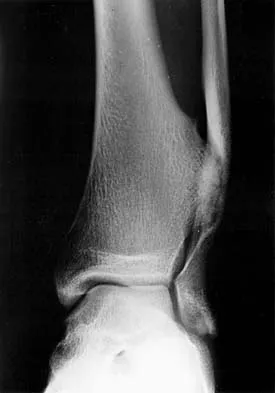
Basic Science 2000 Practice Questions: Set 3 (Solved) - Figure 32


Explanation

For the fibula (or any bone) to bow, a long-standing process needs to be present. Pressure from a rapid process would cause erosion, not allowing the bone to remodel. The other features are helpful confirmatory findings but also may be associated with aggressive processes. In this patient, the fibular deformity is caused by a sessile osteochondroma of the tibia. Lodwick GS, Wilson AJ, Farrell C, Virtama P, Dittrich F: Determining growth rates of focal lesions of bone from radiographs. Radiology 1980;134:577-583.

Question 24

A 52-year-old man has a stage IIB malignant fibrous histiocytoma of the distal femur. Local treatment should consist of


Explanation

Local control of malignant fibrous histiocytoma of bone typically consists of wide excision. Curettage and bone grafting is a procedure with an intralesional surgical margin, with an unacceptable rate of local recurrence. Prophylactic fixation is considered for patients with metastatic disease. Radiation therapy alone is not adequate for local control of this tumor. Neoadjuvant chemotherapy is often used primarily for systemic tumor control.

Question 25

A patient undergoes excision of a 3- x 3-cm soft-tissue sarcoma. The final histology results show tumor at the surgical margin. The surgical procedure performed is classified as


Explanation

Surgical margins are classified according to the plane of dissection in relation to the tumor. An intralesional procedure is where the plane of dissection passes through the tumor. A marginal resection involves a resection where the plane of dissection is through the reactive zone of the tumor. A wide resection is through completely normal tissue outside of the reactive zone. A radical resection removes all of the muscles and/or bone of the compartment that are involved by the tumor.

Question 26

A diaphyseal tibia fracture is treated with rigid plate fixation. According to the principles of stress shielding, which material property of the plate most heavily dictates the degree of osteopenia that will occur underneath the plate?


Explanation

The modulus of elasticity (Young's modulus) dictates the stiffness of the material. Implants with a higher modulus of elasticity (e.g., stainless steel) bear more of the physiologic load, leading to stress shielding and subsequent osteopenia in the underlying bone.

Question 27

Articular cartilage exhibits distinct viscoelastic properties during weight-bearing. Which of the following biomechanical phenomena describes the progressive deformation of cartilage over time when subjected to a constant static load?


Explanation

Creep is a viscoelastic property defined as the progressive deformation of a material over time under a constant load. Stress relaxation, conversely, is the decrease in stress over time when the material is held at a constant deformation.

Question 28

Which of the following cells is the primary source of osteoprotegerin (OPG), and what is its molecular mechanism of action in bone remodeling?


Explanation

Osteoblasts and their precursors secrete OPG, which acts as a decoy receptor for RANKL. By binding RANKL, OPG prevents it from interacting with the RANK receptor on osteoclasts, thereby inhibiting osteoclast differentiation and bone resorption.

Question 29

According to Perren's strain theory of fracture healing, primary (contact) bone healing with the direct formation of lamellar bone can only occur when the strain environment at the fracture gap is maintained below what threshold?


Explanation

Perren's strain theory dictates that lamellar bone can only form in low-strain environments (less than 2% strain). Strain between 2% and 10% promotes secondary healing with callus formation (fibrocartilage and woven bone).

Question 30

When a normal flexor tendon is subjected to tensile loading, the initial "toe region" of its load-elongation curve corresponds to which microstructural event?


Explanation

The toe region of a tendon's stress-strain curve represents the uncrimping (straightening) of the resting crimp pattern of collagen fibers. It occurs under low stress and allows flexibility before the tendon engages its stiffer linear region.

Question 31

Cortical bone exhibits vastly different mechanical properties (e.g., strength and stiffness) depending on the direction of the applied load. This fundamental material property is best described as:


Explanation

Anisotropy refers to a material having different mechanical properties depending on the direction of the applied force. Cortical bone is highly anisotropic, being strongest in longitudinal compression and weakest in transverse tension.

Question 32

Fretting corrosion at the modular head-neck junction of a total hip arthroplasty (trunnionosis) is primarily initiated by which of the following mechanisms?


Explanation

Fretting corrosion is mechanically assisted crevice corrosion initiated by micromotion between two contacting surfaces. This micromotion continually disrupts the implant's protective oxide layer (passivation layer), leading to metal oxidation and ion release.

Question 33

Osteocytes act as the primary mechanosensors within bone. Under conditions of decreased mechanical strain (unloading), osteocytes upregulate the secretion of which molecule to inhibit osteoblast differentiation?


Explanation

Osteocytes regulate bone mass by sensing mechanical loads. During unloading, they secrete sclerostin, which binds to LRP5/6 receptors to inhibit the Wnt/beta-catenin signaling pathway, thereby decreasing osteoblastogenesis and bone formation.

Question 34

To reduce wear in total joint arthroplasty, ultra-high-molecular-weight polyethylene (UHMWPE) is often highly cross-linked using gamma or electron beam irradiation. What subsequent manufacturing step is essential to prevent long-term oxidative degradation of the implant?


Explanation

Irradiation generates free radicals within the polyethylene structure. To prevent these free radicals from reacting with oxygen in vivo (which causes oxidation and embrittlement), the polyethylene is either remelted or annealed to extinguish residual free radicals.

Question 35

A patient with chronic kidney disease presents with renal osteodystrophy. Laboratory analysis reveals elevated parathyroid hormone (PTH). What is the direct mechanism by which persistently elevated PTH drives bone resorption?


Explanation

Osteoclasts do not possess PTH receptors. PTH binds to receptors on osteoblasts, stimulating them to upregulate RANKL and downregulate OPG expression, which secondarily stimulates osteoclast differentiation and activation.

Question 36

During fracture fixation, maximizing the pull-out strength of a cortical screw is highly dependent on screw geometry. Which of the following screw modifications will result in the greatest increase in pull-out strength?


Explanation

Pull-out strength is directly proportional to the outer diameter, thread engagement length, and the volume of bone between threads. Decreasing the thread pitch (distance between threads) increases the number of threads engaged in the bone, maximizing pull-out strength.

Question 37

Which of the following bone morphogenetic proteins (BMPs) utilizes an absorbable collagen sponge carrier and is FDA-approved for the treatment of acute, open tibial shaft fractures?


Explanation

Recombinant human BMP-2 (rhBMP-2) is FDA-approved for use in acute, open tibial shaft fractures treated with an intramedullary nail, as well as anterior lumbar interbody fusions. It is applied using an absorbable collagen sponge.

Question 38

Normal articular cartilage is divided into distinct zones. Which zone is characterized by the highest water content and collagen fibers that are oriented parallel to the joint surface to resist shear forces?


Explanation

The superficial (tangential) zone contains the highest concentration of water (up to 80%) and has collagen fibrils aligned parallel to the articular surface. This orientation helps resist shear stresses during joint motion.

Question 39

When utilizing a solid cylindrical intramedullary nail for diaphyseal fracture fixation, the torsional rigidity of the implant is proportional to its radius raised to which power?


Explanation

The torsional rigidity of a solid cylinder is determined by its polar moment of inertia (J = π·r⁴ / 2). Therefore, torsional rigidity is proportional to the radius to the fourth power, making minor increases in nail diameter exponentially stiffer.

Question 40

Polymethylmethacrylate (PMMA) bone cement provides immediate fixation of total joint arthroplasty components. By which of the following mechanisms does PMMA secure the implant to the surrounding host bone?


Explanation

PMMA is not an adhesive and does not chemically bond to bone. It functions as a grout, providing rigid fixation via interlocking micro-mechanical fixation as it permeates the cancellous bone trabeculae before polymerizing.

Question 41

During the remodeling phase of tendon healing, the biochemical composition of the extracellular matrix changes to restore tensile strength. This process is characterized by a transition from which collagen type to another?


Explanation

During the initial reparative phase of tendon healing, fibroblasts produce large amounts of Type III collagen. As the tendon remodels and matures, this is progressively replaced by stronger, highly organized Type I collagen.

Question 42

Osteocalcin is the most abundant non-collagenous protein found in the bone matrix and is frequently used as a serum marker. What is its primary physiological role within the matrix?


Explanation

Osteocalcin is secreted by mature osteoblasts and contains gamma-carboxyglutamic acid residues (Vitamin K dependent) that tightly bind calcium. Its primary role is regulating bone mineralization and density.

Question 43

The menisci of the knee protect the articular cartilage by converting vertical compressive loads into tangential "hoop stresses". Which structural component of the meniscus is primarily responsible for resisting these hoop stresses?


Explanation

The outer two-thirds of the meniscus consists primarily of Type I collagen arranged in a circumferential pattern. These circumferential fibers are uniquely adapted to resist the expansile "hoop stresses" generated during axial loading.

Question 44

The bending stiffness of a rectangular bone plate is determined by its geometric properties. If a surgeon switches to a plate that is double the thickness of the original plate, the bending stiffness of the construct increases by a factor of:


Explanation

The area moment of inertia for a rectangular plate is given by the formula I = (b · h³) / 12, where b is the base and h is the thickness. Doubling the thickness increases the bending stiffness by a factor of 2³, or 8.

Question 45

Intermittent administration of low-dose parathyroid hormone (e.g., Teriparatide) is used clinically for its profound anabolic effect on bone. This anabolic action is primarily mediated by:


Explanation

While continuous elevated PTH causes bone resorption, intermittent administration has an anabolic effect. It directly stimulates osteoblast proliferation and differentiation while preventing osteoblast apoptosis, leading to net bone formation.

Question 46

If the diameter of a solid intramedullary nail is increased from 10 mm to 12 mm, what is the approximate percentage increase in its bending stiffness?


Explanation

The bending stiffness of a solid cylinder is proportional to the radius to the fourth power (r^4). Increasing the diameter from 10 mm to 12 mm yields a ratio of 1.2^4, which equals 2.0736, representing an approximate 107% increase in bending stiffness.

Question 47

A patient with osteoporosis is started on denosumab. This medication acts by binding to which of the following targets, thereby mimicking the action of what endogenous molecule?


Explanation

Denosumab is a fully human monoclonal antibody that binds to RANKL, preventing it from interacting with the RANK receptor on osteoclasts. This mechanism directly mimics the function of the endogenous decoy receptor osteoprotegerin (OPG).

Question 48

During the physiological loading of a normal ligament, the initial non-linear "toe region" of the stress-strain curve represents which of the following microstructural events?


Explanation

The "toe region" represents the initial phase of the stress-strain curve where minimal force results in significant elongation. This corresponds microscopically to the straightening or "uncrimping" of the naturally crimped collagen fibers.

Question 49

The pullout strength of a bone screw is directly proportional to which of the following geometric parameters?


Explanation

Screw pullout strength is directly proportional to the outer thread diameter, the length of thread engagement in the bone, and the shear strength of the bone material. Increasing the outer diameter maximizes the volume of bone captured between the threads.

Question 50

In normal articular cartilage, which zone is characterized by the highest concentration of water and collagen fibers oriented parallel to the joint surface?


Explanation

The superficial (tangential) zone of articular cartilage contains the highest water content and lowest proteoglycan concentration. Its collagen fibers are densely packed and oriented parallel to the articular surface to resist shear forces.

Question 51

Mixing stainless steel and titanium implants in the same surgical field can lead to accelerated degradation of the implants. Which of the following best describes the primary mechanism of this process?


Explanation

Galvanic corrosion occurs when two dissimilar metals are placed in physical contact within a conductive fluid (such as body fluids). This creates an electrochemical cell, leading to accelerated corrosion of the less noble metal.

Question 52

Which of the following modifications will most effectively increase the mechanical stiffness of a standard uniplanar external fixator construct?


Explanation

To increase external fixator stiffness, the surgeon should increase pin diameter, decrease the bone-to-rod distance, increase the spread between pins in the same fragment, and place the innermost pins close to the fracture site.

Question 53

Because bone is a viscoelastic material, its mechanical properties depend heavily on the rate of loading. When cortical bone is subjected to a high strain rate (fast loading), how do its properties change compared to low strain rate loading?


Explanation

Due to its viscoelastic nature, bone loaded at high strain rates becomes stiffer, sustains higher ultimate loads before failure, and absorbs more energy (higher area under the stress-strain curve) compared to slow loading rates.

Question 54

Which of the following wear mechanisms is defined as the removal of material resulting from two articulating surfaces rubbing against each other, leading to local microscopic welding and subsequent tearing off of particles?


Explanation

Adhesive wear occurs when two surfaces slide against each other, causing local asperities to bond or "weld" together. Subsequent movement tears these micro-welds apart, releasing wear debris.

Question 55

What is the primary mechanical advantage of a locked plating construct over a conventional non-locked plating construct in osteoporotic bone?


Explanation

Locked plates act as single-beam constructs with fixed-angle stability, meaning failure requires simultaneous pullout of all screws. This prevents the sequential screw failure often seen with conventional non-locked plates in poor-quality bone.

Question 56

Parathyroid hormone (PTH) regulates serum calcium levels through multiple mechanisms. Which of the following is a direct physiologic effect of continuous, high-dose PTH exposure on bone cellular activity?


Explanation

Continuous PTH exposure binds to receptors on osteoblasts, stimulating them to upregulate RANKL expression. RANKL then binds to RANK on osteoclast precursors, driving osteoclastogenesis and increasing bone resorption.

Question 57

Which of the following common orthopaedic biomaterials possesses the highest modulus of elasticity (stiffness)?


Explanation

Cobalt-chromium has the highest modulus of elasticity (~220-240 GPa), making it the stiffest among standard implant materials. Stainless steel is ~200 GPa, Titanium alloy is ~110 GPa, and cortical bone is ~15-20 GPa.

Question 58

The primary biomechanical function of the circumferentially oriented Type I collagen fibers in the menisci of the knee is to:


Explanation

The wedge shape of the meniscus and its strong circumferential collagen fibers work together to convert axial compressive loads across the joint into tensile "hoop stresses," effectively dissipating force and protecting the articular cartilage.

Question 59

The compressive stiffness of articular cartilage is primarily provided by the interaction between interstitial fluid and which of the following extracellular matrix components?


Explanation

Proteoglycans, primarily aggrecan, possess highly negatively charged glycosaminoglycan (GAG) side chains that repel each other and draw in water via the Donnan osmotic effect. This creates a swelling pressure that is resisted by the collagen network, providing compressive stiffness.

Question 60

In the context of an intramedullary nail utilized for a comminuted diaphyseal fracture, increasing the "working length" of the nail will result in which of the following mechanical changes?


Explanation

The working length is the distance between the closest points of fixation on either side of the fracture. Increasing the working length makes the construct more flexible, leading to decreased torsional and bending stiffness.

Question 61

Primary (strain-free) bone healing, such as that achieved with rigid absolute stability, is characterized microscopically by which of the following processes?


Explanation

Primary bone healing occurs without callus formation under conditions of absolute stability. It is characterized by direct Haversian remodeling, where osteoclastic cutting cones traverse the fracture site, followed by osteoblasts laying down lamellar bone.

Question 62

In aseptic loosening of a total hip arthroplasty, which of the following particle sizes of ultra-high-molecular-weight polyethylene (UHMWPE) wear debris is most biologically reactive and most readily phagocytosed by macrophages?


Explanation

Submicron particles, specifically in the 0.1 to 1.0 micrometer range, are the most biologically active. They are easily phagocytosed by macrophages, which then release pro-inflammatory cytokines (TNF-alpha, IL-1, IL-6) driving osteolysis.

Question 63

Which type of muscle contraction generates the highest peak force and is most commonly associated with muscle strain injuries?


Explanation

Eccentric contractions, where the muscle lengthens while contracting against a load, generate the highest peak forces. Due to these high forces and mechanical tissue disruption, eccentric loading is the primary mechanism for muscle strains.

Question 64

During the swing phase and normal walking, the primary mechanism of lubrication in the human hip joint, where the articular surfaces are separated by a continuous dynamic fluid film, is best described as:


Explanation

Elastohydrodynamic lubrication is a type of fluid-film lubrication occurring during joint motion, where the pressure of the fluid film physically separates and elastically deforms the opposing articular surfaces, minimizing wear.

Question 65

Nitrogen-containing bisphosphonates (e.g., alendronate) inhibit osteoclast function primarily by interfering with which of the following intracellular pathways?


Explanation

Nitrogen-containing bisphosphonates act by inhibiting the enzyme farnesyl pyrophosphate synthase within the mevalonate pathway. This prevents the prenylation of small GTPase proteins essential for osteoclast survival and cytoskeletal function.

Question 66

Which of the following mechanical properties is determined by the slope of the linear elastic region of a stress-strain curve?


Explanation

Young's modulus (elastic modulus) is the measure of the intrinsic stiffness of a material. It is defined mathematically as the slope of the stress-strain curve in the elastic (linear) region.

Question 67

Denosumab is a monoclonal antibody used in the treatment of osteoporosis and giant cell tumors of bone. It functions by binding to which of the following targets to inhibit osteoclastogenesis?


Explanation

Denosumab mimics the natural decoy receptor osteoprotegerin (OPG) by binding to RANKL. This prevents RANKL from interacting with RANK on osteoclast precursors, thereby inhibiting osteoclast maturation and survival.

Question 68

When designing a solid intramedullary nail, doubling the radius of the nail will increase its torsional rigidity by a factor of:


Explanation

For a solid cylinder, torsional rigidity is proportional to the polar moment of inertia, which scales with the radius to the fourth power (r^4). Therefore, doubling the radius increases the torsional rigidity by 2^4, which is 16.

Question 69

Romosozumab increases bone mineral density primarily through the inhibition of sclerostin. Sclerostin normally inhibits bone formation by directly blocking which of the following intracellular signaling pathways?


Explanation

Sclerostin is a glycoprotein secreted by osteocytes that acts as an antagonist to the Wnt/beta-catenin signaling pathway. Inhibiting sclerostin allows Wnt signaling to proceed, which is essential for osteoblast differentiation and bone formation.

Question 70

A tendon graft used for ACL reconstruction is tensioned to a specific length and fixed in place. Over time, the tension in the graft progressively decreases while the length remains constant. This viscoelastic property is known as:


Explanation

Stress relaxation is the time-dependent decrease in stress (tension) under a constant strain (length). In contrast, creep is a time-dependent increase in strain under a constant stress.

Question 71

Achondroplasia is caused by a gain-of-function mutation in FGFR3. This mutation primarily limits endochondral ossification by affecting which zone of the physis?


Explanation

FGFR3 negatively regulates chondrocyte proliferation during endochondral ossification. A gain-of-function mutation leads to excessive inhibition of chondrocyte division, primarily affecting the proliferative zone of the physis.

Question 72

A surgeon uses a stainless steel screw with a titanium plate for fracture fixation. Which of the following is the most likely consequence of using these mixed metals in vivo?


Explanation

Galvanic corrosion occurs when two dissimilar metals with different electrochemical potentials are placed in contact within a conductive fluid (such as body fluids). This leads to accelerated corrosion of the more anodic metal.

Question 73

Teriparatide is an anabolic agent used for severe osteoporosis. Its mechanism of action requires which of the following administration profiles to stimulate bone formation rather than resorption?


Explanation

Intermittent daily administration of parathyroid hormone (PTH) analogs like teriparatide preferentially stimulates osteoblast-mediated bone formation. Continuous PTH exposure leads to net bone resorption by upregulating RANKL.

Question 74

The pullout strength of a cortical bone screw is directly proportional to which of the following geometric parameters?


Explanation

Screw pullout strength is directly proportional to the outer (major) diameter of the screw threads, the length of thread engagement, and the shear strength of the surrounding bone. Increasing the outer diameter significantly increases pullout resistance.

Question 75

Osteoclasts degrade the organic matrix of bone primarily through the secretion of which of the following enzymes into the resorption pit?


Explanation

Cathepsin K is the primary lysosomal protease secreted by osteoclasts to degrade the type I collagen-rich organic matrix of bone. It operates optimally in the acidic environment of the resorption pit.

Question 76

According to Perren's strain theory, what dictates the type of tissue that forms during fracture healing if the interfragmentary strain is maintained between 2% and 10%?


Explanation

Perren's theory states that strain levels dictate tissue formation. Primary bone healing occurs at <2% strain, while secondary healing with endochondral ossification (callus) occurs at moderate strains between 2% and 10%.

Question 77

The final conversion of 25-hydroxyvitamin D to its most active hormonal form, 1,25-dihydroxyvitamin D, occurs primarily in the kidney. This conversion is directly stimulated by which of the following?


Explanation

Parathyroid hormone (PTH) stimulates the activity of 1-alpha-hydroxylase in the kidney. This enzyme converts 25-hydroxyvitamin D to 1,25-dihydroxyvitamin D (calcitriol), the biologically active form.

Question 78

Which of the following modifications will most significantly increase the bending stiffness of a unilateral external fixator construct?


Explanation

Increasing the spread (distance) between pins within the same bone fragment significantly increases the stability and bending stiffness of the construct. Decreasing the bar-to-bone distance and increasing pin diameter also increase stiffness.

Question 79

A 65-year-old patient presents with diffuse bone pain and a history of gastric bypass surgery. Laboratory workup reveals low serum calcium, low phosphorus, high alkaline phosphatase, and elevated PTH. What is the most likely underlying basic science pathology?


Explanation

The clinical history and labs are classic for osteomalacia due to vitamin D malabsorption. Osteomalacia is characterized histologically by the defective mineralization of newly formed osteoid, leading to widened osteoid seams.

Question 80

Cortical bone is stronger in compression along its longitudinal axis than it is when subjected to transverse loading. This material property, where mechanical behavior depends on the direction of loading, is known as:


Explanation

Anisotropy is the property of a material exhibiting different mechanical properties depending on the direction of the applied load. Bone is highly anisotropic due to the longitudinal orientation of osteons.

Question 81

Which of the following best describes the biological process of "creeping substitution" during the incorporation of a massive cortical structural allograft?


Explanation

Creeping substitution is a slow, sequential process where osteoclasts create cutting cones into the dead allograft bone, followed closely by osteoblasts laying down new lamellar bone within the Haversian systems.

Question 82

What is the primary biomechanical advantage of a locking plate construct over a conventional non-locking compression plate in the treatment of osteoporotic metaphyseal fractures?


Explanation

A locking plate functions as a fixed-angle construct where the screw heads lock into the plate. This prevents screw toggle and failure in osteoporotic bone without relying on plate-to-bone friction for stability.

Question 83

Chronic use of nonsteroidal anti-inflammatory drugs (NSAIDs) may impair early fracture healing primarily by inhibiting the synthesis of which of the following mediators?


Explanation

NSAIDs inhibit cyclooxygenase (COX) enzymes, decreasing the synthesis of prostaglandins, particularly PGE2. PGE2 is critical during the early inflammatory phase of fracture healing for stimulating both angiogenesis and osteogenesis.

Question 84

During the single-leg stance phase of gait, using a cane in the contralateral hand reduces the hip joint reaction force primarily by:


Explanation

A cane in the contralateral hand provides an upward force at a large distance (long moment arm) from the hip center. This counter-moment significantly reduces the force required by the hip abductors, thereby reducing the total joint reaction force.

Question 85

A 12-year-old child presents with recurrent fractures and diffuse osteosclerosis. A mutation in the gene encoding Carbonic Anhydrase II is identified. This mutation prevents osteoclasts from performing which essential step in bone resorption?


Explanation

Carbonic anhydrase II catalyzes the formation of protons and bicarbonate from water and carbon dioxide. A deficiency impairs the osteoclast's ability to secrete protons and acidify the resorption pit, leading to osteopetrosis.

Question 86

Which of the following modifications to a cortical bone screw will yield the greatest increase in its pullout strength?


Explanation

Pullout strength is most significantly influenced by the outer diameter of the screw. It is directly proportional to outer diameter, length of engagement, and shear strength of the bone, and inversely proportional to thread pitch.

Question 87

During the application of a dynamic splint to address a knee flexion contracture, a constant force is applied over time, leading to a gradual increase in tissue elongation. This biomechanical phenomenon is known as:


Explanation

Creep is the viscoelastic property where a material undergoes progressive deformation under a constant load over time. Stress relaxation occurs when a constant deformation is applied, leading to a gradual decrease in stress.

Question 88

In the application of a bridge plate for a comminuted diaphyseal fracture, decreasing the working length of the plate will have which of the following biomechanical effects?


Explanation

The working length of a plate is the distance between the two closest screws on either side of the fracture. Decreasing the working length increases the bending and torsional stiffness of the construct, thereby decreasing interfragmentary strain.

Question 89

A 65-year-old woman is prescribed alendronate for osteoporosis. Which of the following describes the primary mechanism of action of this medication at the cellular level?


Explanation

Nitrogen-containing bisphosphonates like alendronate inhibit farnesyl pyrophosphate synthase in the mevalonate pathway. This disrupts GTPase protein prenylation, leading to osteoclast apoptosis and loss of ruffled border function.

Question 90

According to Perren's strain theory, what is the maximum interfragmentary strain tolerated by the tissue required for primary bone healing to occur?


Explanation

Primary bone healing (direct Haversian remodeling) occurs only under conditions of absolute stability when interfragmentary strain is less than 2%. Strains between 2% and 10% promote secondary bone healing with callus formation.

Question 91

In total hip arthroplasty, utilizing highly cross-linked polyethylene (HXLPE) instead of conventional ultra-high molecular weight polyethylene (UHMWPE) alters the material properties. Which of the following best describes the biomechanical tradeoff of highly cross-linking the polyethylene?


Explanation

High cross-linking of polyethylene significantly improves wear resistance, reducing adhesive and abrasive wear. However, this process alters the mechanical properties by decreasing the material's fatigue strength, ductility, and fracture toughness.

Question 92

A patient with secondary hyperparathyroidism secondary to chronic kidney disease will typically demonstrate which of the following serum laboratory profiles?


Explanation

In chronic kidney disease, impaired phosphate excretion and decreased 1-alpha-hydroxylase activity lead to hyperphosphatemia and hypocalcemia. This chronic hypocalcemia directly stimulates the parathyroid glands, resulting in secondary hyperparathyroidism.

Question 93

A 4-year-old boy presents with refusal to walk, bleeding gums, and petechiae. Radiographs show osteopenia and an exaggerated white line of Frankel. The underlying defect involves an impairment in which of the following steps of collagen synthesis?


Explanation

The clinical presentation is classic for scurvy (Vitamin C deficiency). Ascorbic acid is an essential cofactor for prolyl and lysyl hydroxylases, which are required for the critical hydroxylation of proline and lysine residues during early collagen synthesis.

Question 94


An orthopedic surgeon decides to over-ream a tibial diaphysis to insert a larger diameter intramedullary nail. By increasing the solid nail's radius by a factor of 2, the torsional rigidity of the nail increases by what factor?


Explanation

The torsional rigidity of a solid cylindrical intramedullary nail is proportional to the polar moment of inertia, which scales with the radius to the fourth power (r^4). Therefore, doubling the radius increases the torsional rigidity by a factor of 16 (2^4).

Question 95

When a stainless steel screw is used to secure a titanium plate to bone, the resulting electrochemical potential difference causes localized degradation. Which of the following types of corrosion does this represent?


Explanation

Galvanic corrosion occurs when two dissimilar metals with different electrochemical potentials are placed in contact within a conductive fluid. The less noble metal acts as the anode and corrodes faster, while the more noble metal acts as the cathode.

Question 96

Which of the following factors is directly secreted by osteocytes to inhibit osteoblast-mediated bone formation in response to mechanical unloading?


Explanation

Sclerostin is a glycoprotein secreted primarily by osteocytes, especially in states of mechanical unloading. It acts by binding to LRP5/6 receptors on osteoblasts, thereby inhibiting the Wnt/beta-catenin signaling pathway and decreasing bone formation.

Question 97


In the stress-strain curve of cortical bone, the point at which the material ceases to deform elastically and begins to undergo permanent deformation is defined as the:


Explanation

The yield point on a stress-strain curve marks the transition from elastic (reversible) deformation to plastic (irreversible) deformation. Beyond this point, the material will not return to its original shape when the applied load is removed.

Question 98

The successful application of a tension band construct for a transverse olecranon fracture relies on converting which type of force into a compressive force at the articular surface?


Explanation

The tension band principle involves placing a rigid fixation device on the tension side of a bone. This converts the distracting tensile forces generated by eccentric muscle pull (e.g., triceps) into dynamic compressive forces across the fracture site.

Question 99

Cortical bone exhibits different mechanical properties depending upon the direction of the applied load. It is strongest in compression along its longitudinal axis and weakest in shear. This property is termed:


Explanation

Anisotropy is the material property where mechanical behavior depends on the direction of the applied load. Due to the longitudinal orientation of osteons, cortical bone resists compressive forces parallel to its axis better than transverse forces.

Question 100

A 72-year-old female with severe osteoporosis is treated with denosumab. This biologic agent mimics the action of which naturally occurring endogenous molecule?


Explanation

Denosumab is a monoclonal antibody that specifically targets and binds to RANKL, preventing it from activating the RANK receptor on osteoclasts. This mimics the biological action of osteoprotegerin (OPG), an endogenous decoy receptor that also binds RANKL to inhibit bone resorption.

None

Clinic OS
Medically Verified Content by
Prof. Clinic OS
Consultant Orthopedic & Spine Surgeon
Chapter Index
