العربية
Part of the Master Guide

AAOS & ABOS Basic Science MCQs (Set 3): Bone Biology, Biomechanics & Anatomy Review

AAOS Basic Science MCQs (Set 3): Bone Physiology & Biomechanics | ABOS Board Review
27 Apr 2026 56 min read 96 Views
Mtd 2008 MCQs - Part 3

Key Takeaway

This high-yield question set (Set 3) for AAOS/ABOS exams focuses on core orthopedic basic science. Topics include bone physiology (cellular mechanisms, metabolism) and key principles of orthopedic biomechanics. It also covers general surgical principles, preparing residents for OITE and board examinations.

AAOS Basic Science MCQs (Set 3): Bone Physiology & Biomechanics | ABOS Board Review

Comprehensive 100-Question Exam


00:00

Start Quiz

Question 1

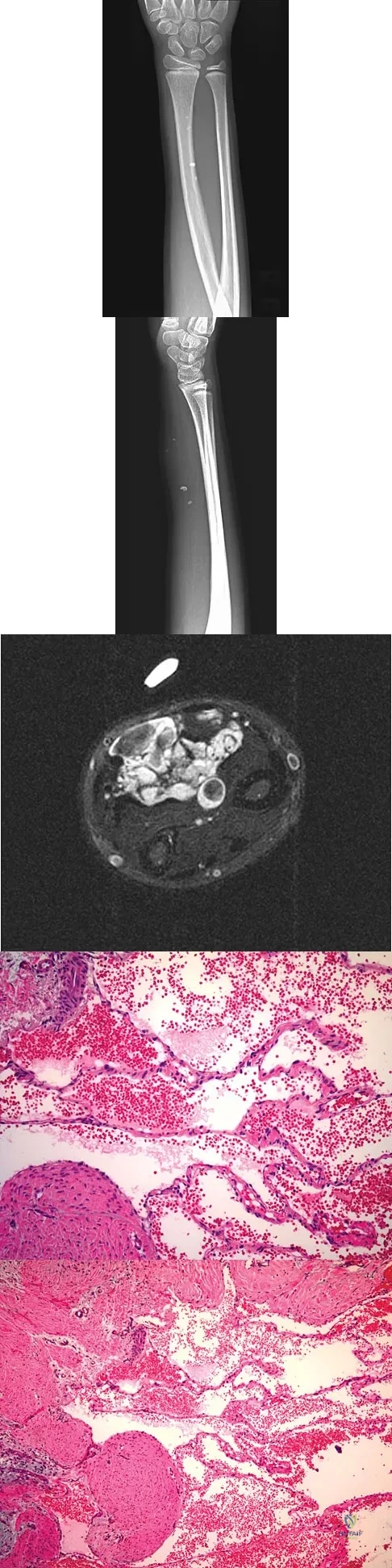
A 7-year-old girl has had a painful forearm for the past 2 months. Examination reveals fullness on the volar aspect of the forearm. Radiographs and an MRI scan are shown in Figures 42a through 42c. Biopsy specimens are shown in Figures 42d and 42e. What is the most likely diagnosis?


Explanation

The radiographs reveal phleboliths on the volar side of the forearm consistent with hemangioma. The MRI scan reveals a rather well-circumscribed in size, irregular in shape, intramuscular soft-tissue mass in the volar aspect of the distal right forearm within the flexor group musculature. The mass demonstrates heterogeneous mixed signal intensity in both T1- and T2-weighted sequences with increased signal intensity on the T1, suggesting fat within the tumor, typical of hemangioma. The postgadolinium-enhanced sequences demonstrate heterogeneous enhancement. The MRI findings are consistent with a soft-tissue hemangioma. Garzon M: Hemangiomas: Update on classification, clinical presentation and associate anomalies. Cutis 2000;66:325-328.

Question 2

Which of the following is an important factor in performing a proper biopsy?
Basic Science 2008 Practice Questions: Set 3 (Solved) - Figure 6


Explanation

There are a number of important technical details in performing a biopsy. Incisions should always be longitudinal in the extremity. Good hemostasis is important in avoiding contamination from hematoma. The approach should avoid neurovascular structures, and go through a single muscle belly when possible. Although a frozen section should be obtained to ensure adequate viable tissue has been obtained, definitive diagnosis is not necessary at the time of the frozen section. Vaccaro AR (ed): Orthopaedic Knowledge Update 8. Rosemont, IL, American Academy of Orthopaedic Surgeons, 2005, pp 197-215.

Question 3

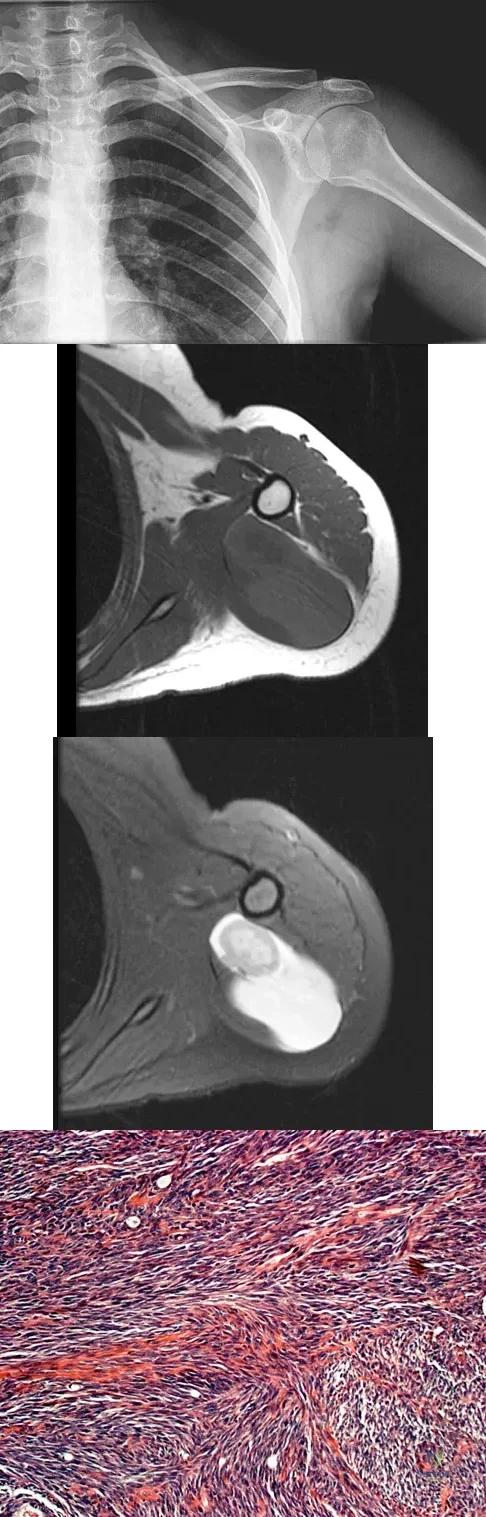
A 16-year-old girl has had painless swelling in her posterior left arm for the past 4 months. A radiograph, MRI scans, and an incisional biopsy specimen are shown in Figures 43a through 43d. What is the cytogenetic translocation most commonly associated with this tumor?


Explanation

This is a case of synovial sarcoma. The radiograph shows some soft-tissue swelling in the upper arm. The MRI scans show a lesion that has increased signal on T2-weighted images and low signal on T1-weighted images. There is a suggestion of a large cystic component to this lesion. The pathology shows a biphasic population of cells, a spindle cell component, and an epithelioid component. Up to 20% of synovial cell sarcomas have areas of cyst formation. The most common cytogenetic translocation with synovial cell sarcoma is X; 18. The 11; 22 translocation is most commonly associated with Ewing's sarcomas; the 12; 22 translocation is most commonly associated with clear cell sarcomas; the 2; 13 translocation is most commonly associated with alveolar rhabdomyosarcomas, and the 12; 16 translocation is most commonly associated with myxoid liposarcomas. Kawai A, Woodruff J, Healey JH, et al: SYT-SSX gene fusion as a determinant of morphology and prognosis in synovial sarcoma. New Engl J Med 1998;338:153-160.

Question 4

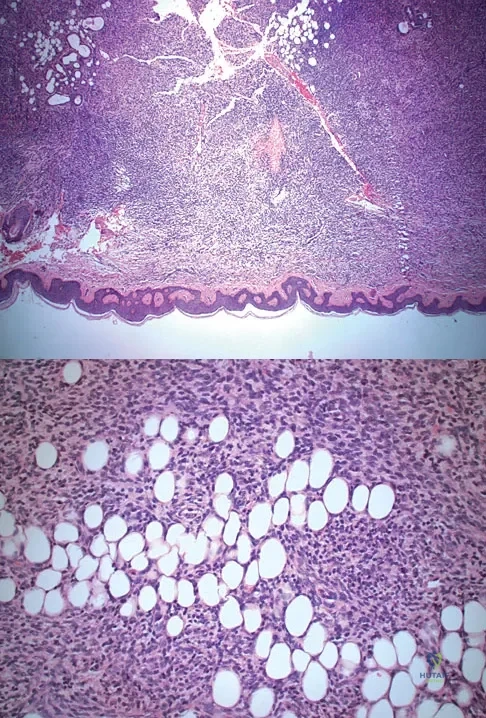
A 43-year-old woman is referred after excisional biopsy of a cutaneous soft-tissue mass from her left shoulder. Based on the biopsy specimens shown in Figures 44a and 44b, what is the best course of action?


Explanation

Dermatofibrosarcoma protuberans (DFSP) is a rare superficial sarcoma that is frequently misdiagnosed at presentation. It is frequently excised prior to suspecting that the lesion is a sarcoma and if not appropriately treated with tumor bed resection to obtain wide margins, these lesions have a high incidence of local recurrence. It is recommended that the wide excision include the deep fascia and a 2.5- to 3-cm cuff of normal-appearing skin. Distant disease spread is rare and usually occurs in the face of a multiply recurrent lesion. Despite the apparent gross circumscription of these lesions, the tumor diffusely infiltrates the dermis and subcutaneous tissues. A characteristic histologic finding can be seen in the deep margins of the tumor where it intricately interdigitates with normal fat. Lindner NJ, Scarborough MT, Powell GJ, et al: Revision surgery in dermatofibrosarcoma protuberans of the trunk and extremities. Eur J Surg Oncol 1999;25:392-397.

Question 5

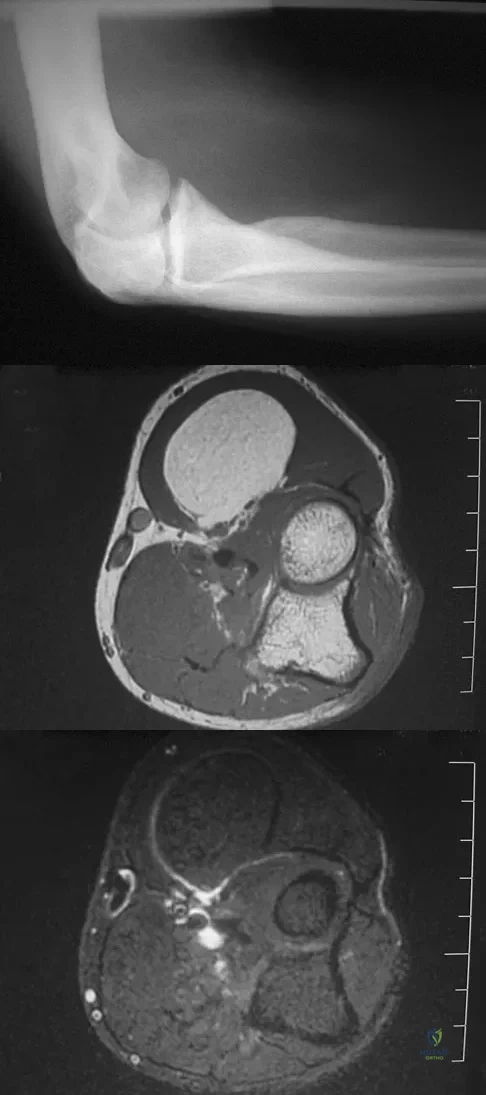
A 33-year-old man reports an enlarging painful soft-tissue mass in his right forearm. A radiograph and MRI scans are shown in Figures 45a through 45c. Treatment should consist of


Explanation

An intramuscular lipoma is a benign soft-tissue lesion that can grow and has a small risk of progressing to a liposarcoma. Radiographs usually show a globular radiolucent mass adjacent to higher-density muscle tissue shadows. When the patient has symptoms and reports an increase in size of the mass, the treatment of choice after appropriate radiographic analysis is complete excision of the mass with marginal resection. Sampling error is a problem with fatty lesions and core or incisional biopsies are frequently unnecessary, especially if an MRI scan of the lesion shows signal intensity that matches subcutaneous fat on all sequences. Damron TA: What to do with deep lipomatous tumors. Instr Course Lect 2004;53:651-655. Gaskin CM, Helms CA: Lipomas, lipoma variants, and well-differentiated liposarcomas (atypical lipomas): Results of MRI evaluations of 126 consecutive fatty masses. Am J Roentgenol 2004;182:733-739.

Question 6

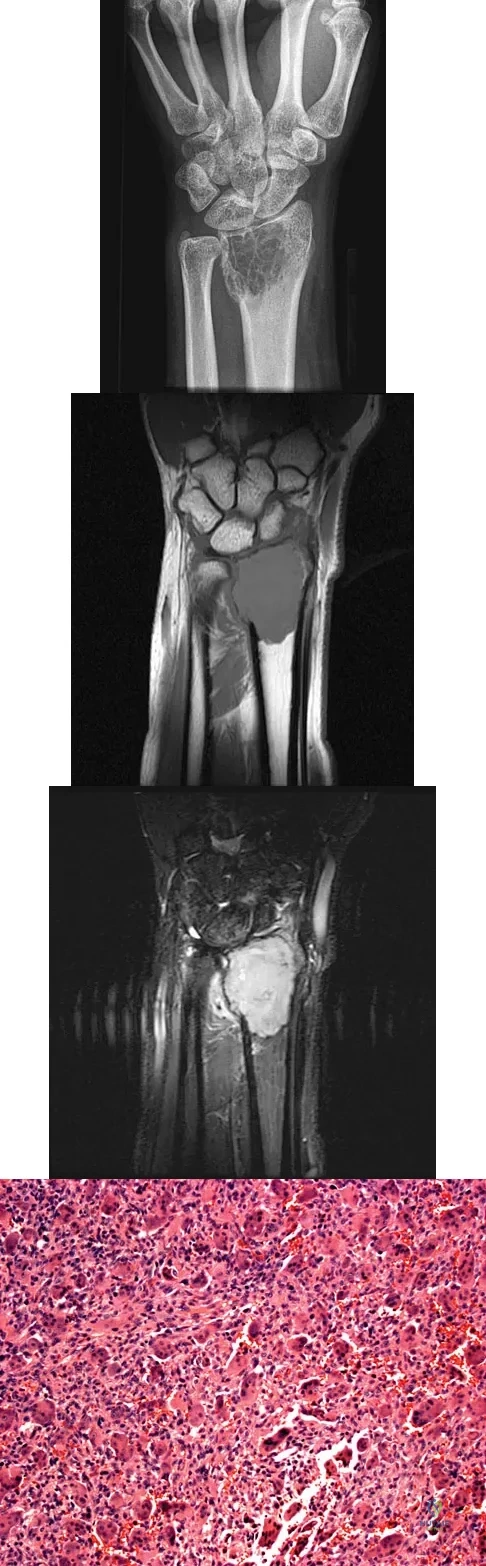
A 20-year-old woman has had wrist pain for the past 5 months. A radiograph, MRI scans, and biopsy specimen are shown in Figures 46a through 46d. The patient is then treated with intralesional surgery. The patient should be counseled that her risk of developing lung metastasis is approximately what percent?


Explanation

Giant cell tumor of bone has about a 2% risk of benign pulmonary metastasis in all cases and 6% risk in recurrent cases. The radiograph and MRI scans show a lytic destructive lesion in the distal radius with no matrix mineralization. The lesion extends up to the subchondral bone. In a young woman, the most likely diagnosis is giant cell tumor of bone, which is supported by the pathology results that show monotonous fibrovascular stroma with numerous multinucleated giant cells where the nuclei that make up the giant cells are identical to the nuclei that make up the background stromal cells. Athanasian EA, Wold LE, Amadio PC: Giant cell tumors of the bones in the hand. J Hand Surg Am 1997;22:91-98.

Question 7

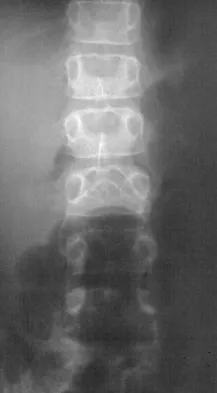
What is the most common location for localized pigmented villonodular synovitis (PVNS) to occur?
Basic Science 2008 Practice Questions: Set 3 (Solved) - Figure 20


Explanation

Localized PVNS is a form of the disease in which synovial proliferation is restricted to one area of a joint and causes the formation of a small mass-like lesion. The true incidence of this is unknown but is probably less common than the diffuse form of the disease. PVNS presents as a usually painful discrete mass. The anterior compartment of the knee is the most common location. Tyler WK, Vidal AF, Williams RJ, et al: Pigmented villonodular synovitis. J Am Acad Orthop Surg 2006;14:376-385.

Question 8

A 45-year-old man reports right shoulder pain with overhead activities only. Figures 47a through 47d show the radiographs, bone scan, and MRI scan of a lesion of the proximal shoulder. What is the most appropriate treatment?



Explanation

The figures show a lesion of the proximal humerus consistent with an enchondroma. The lesion is calcified on the radiographs. There is no cortical destruction, significant endosteal scalloping, or soft-tissue mass. The bone scan shows mild uptake in the area of the proximal humerus, and the T2-weighted MRI scan shows a lesion with high uptake, suggesting a lesion with high water content. A CT scan could also be obtained to rule out bone destruction or periosteal reaction. Pain with overhead activities is likely related to the rotator cuff. A biopsy is unlikely to add information because of inherent difficulties interpreting low-grade cartilaginous lesions. Curettage and grafting and en bloc resection are excessive treatments for a benign lesion that is apparently asymptomatic. Observation with a follow-up radiograph in 3 to 6 months is appropriate. Menendez LR (ed): Orthopaedic Knowledge Update: Musculoskeletal Tumors. Rosemont, IL, American Academy of Orthopaedic Surgeons, 2002, pp 103-111.

Question 9

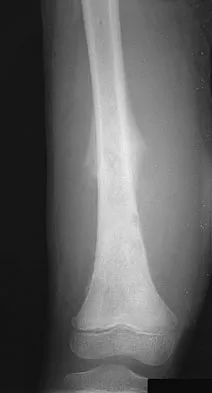
What is the second most common primary bone malignancy in children?
Basic Science 2008 Practice Questions: Set 3 (Solved) - Figure 25


Explanation

Ewing's sarcoma is the second most common bone tumor in children with an incidence of three per one million Caucasian children younger than 21 years of age. Ewing's sarcoma is rare in African Americans. Osteosarcoma is the most common bone tumor in children. Rhabdomyosarcoma is the most common soft-tissue sarcoma in children. Fibrosarcoma is a rare primary bone tumor most commonly seen in adults. Adamantinoma is a rare primary bone malignancy also most commonly seen in adults in the tibia. Menendez LR (ed): Orthopaedic Knowledge Update: Musculoskeletal Tumors. Rosemont, IL, American Academy of Orthopaedic Surgeons, 2002, p 195.

Question 10

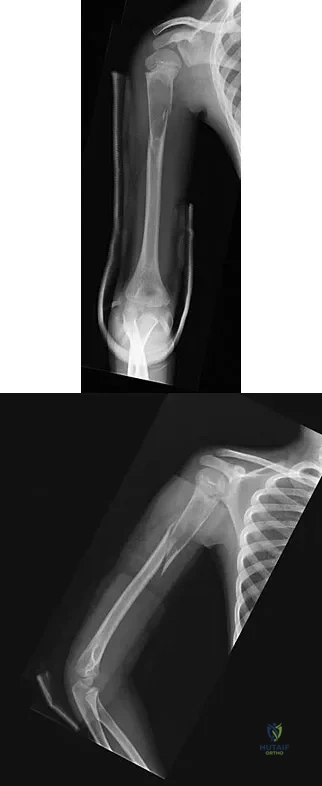
An 11-year-old boy sustained an injury to his arm in gym class. He denies prior pain in the arm. Radiographs are shown in Figures 48a and 48b. What is the next most appropriate step in the management of this lesion?


Explanation

This radiolucent lesion with a "fallen leaf sign" is typical for a unicameral bone cyst(UBC). The most appropriate treatment is to allow the fracture to heal with clinical and radiographic observation. Curettage and bone grafting is not the best initial management for UBC. Wide resection is not indicated for UBC. The proximal humerus is the most common site for UBC. While staging studies consisting of MRI, bone scan, and CT of the chest are appropriate for lesions suspected of being malignant, the classical appearance of this UBC is such that this work-up is not necessary initially. Following fracture healing, aspiration and injection of the cyst may be indicated. Dormans JP, Pill SG: Fractures through bone cysts: Unicameral bone cysts, aneurysmal bone cysts, fibrous cortical defects, and nonossifying fibromas. Instr Course Lect 2002;51:457-467.

Question 11

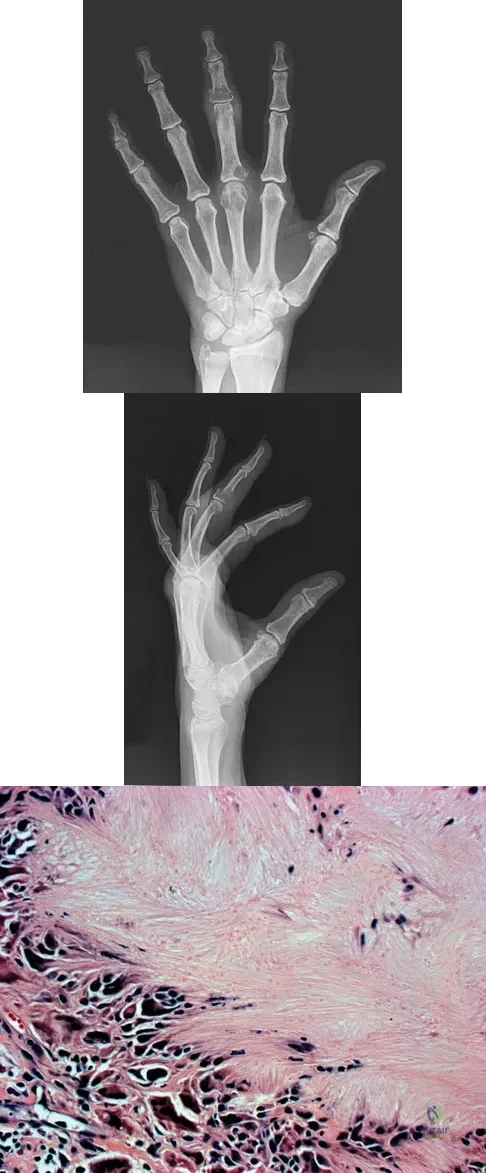
An 83-year-old woman reports pain in her left middle finger after a minor injury. Laboratory studies show a WBC count of 7,000/mm3, an erythrocyte sedimentation rate of 3 mm/h, a uric acid of 10.4 mg/dL, and a normal serum protein electrophoresis. Radiographs are shown in Figures 49a and 49b. A core biopsy specimen is shown is Figure 49c. In addition to treatment of the finger fracture, treatment should include


Explanation

This clinical picture is most consistent with periarticular erosions from gout. The patient has multiple periarticular lytic lesions in the hand. The laboratory studies show an elevated serum uric acid level, and the biopsy specimen demonstrates acute and chronic inflammation with prominent clefts. Therefore, the preferred treatment is systemic control of her gout. Radiation therapy, chemotherapy, and/or amputation should be considered for a malignancy; however, the pathology does not demonstrate any evidence of pleomorphism, high nuclear-to-cytoplasmic ratio, nuclear atypia, or mitotic activity. Antibiotics for an infectious process is a consideration, but the minimal elevation in the WBC count and erythrocyte sedimentation rate does not support an infectious process. Wise CM: Crystal-associated arthritis in the elderly. Clin Geriatr Med 2005;21:491-511.

Question 12

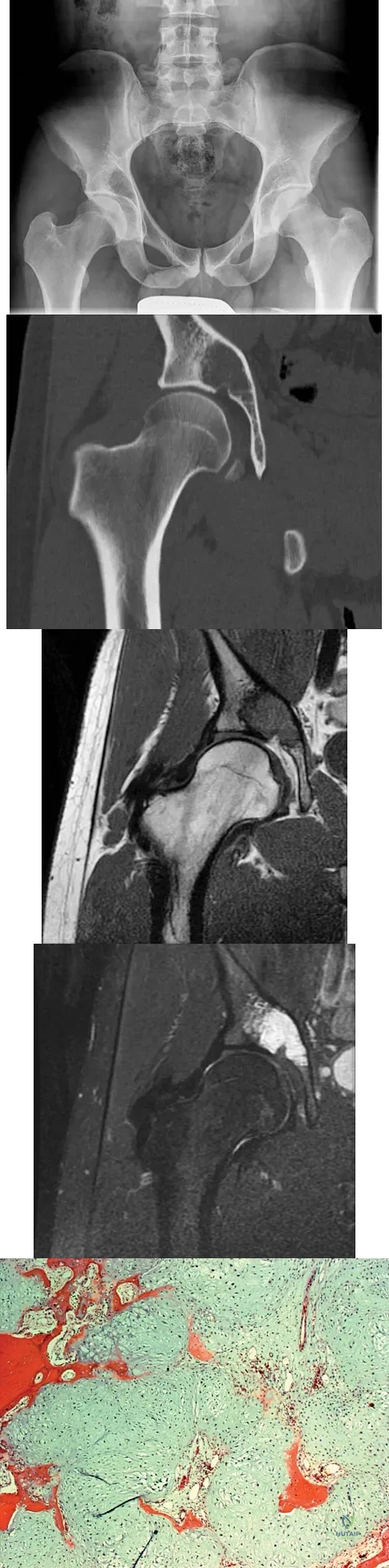
A 21-year-old man has had right groin pain for the past year. A radiograph, CT scan, MRI scans, and a biopsy specimen are shown in Figures 50a through 50e. What is the most likely diagnosis?


Explanation

The pathology demonstrates a very cellular chondroid matrix with multinucleated forms, atypia, and myxomatous regions. This is most consistent with a myxoid chondrosarcoma. The radiograph shows a well-circumscribed lesion in the superior and medial aspect of the right acetabulum. The CT and MRI scans confirm these same findings with no evidence of matrix mineralization or significant surrounding edema. Unfortunately, in this location with this appearance, the radiographic differential diagnosis includes all the diagnoses listed. Terek RM: Recent advances in the basic science of chondrosarcoma. Orthop Clin North Am 2006;37:9-14. Donati D, El Ghoneimy A, Bertoni F, et al: Surgical treatment and outcome of conventional pelvic chondrosarcoma. J Bone Joint Surg Br 2005;87:1527-1530.

Question 13

A healthy 16-year-old boy has had increasing pain in the right knee for the past 3 months. Examination reveals warmth and swelling around the distal femur. Radiographs and an MRI scan are shown in Figures 51a through 51c, and a biopsy specimen is shown in Figure 51d. What is the most likely diagnosis?
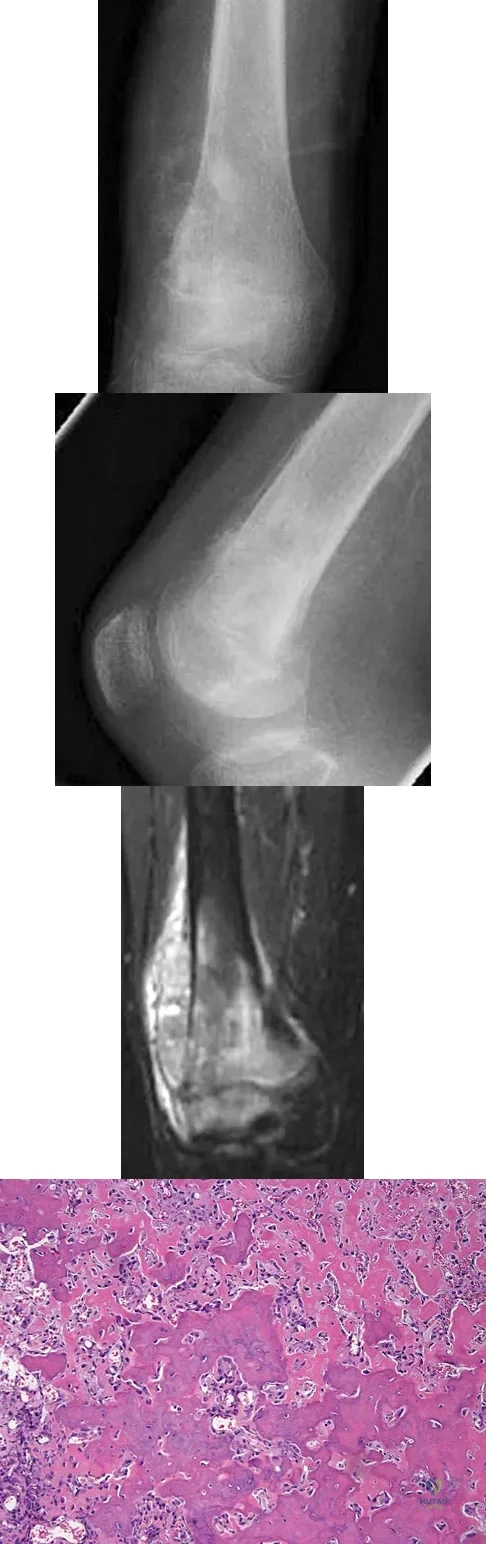


Explanation

The radiographs show a bone-producing lesion in the distal femoral metaphysis in this case of classic osteosarcoma presenting in the most common location, the distal femur. The coronal MRI scan reveals a marrow-occupying lesion with extension into the soft tissues. The histology shows osteoid production by pleomorphic cells consistent with an osteosarcoma. Ewing's sarcoma is a bone tumor characterized by uniform small blue cells on histology. Rhabdomyosarcoma is the most common childhood soft-tissue sarcoma. Osteomyelitis has an inflammatory appearance on histology. Malignant fibrous histiocytoma of bone has a lytic radiographic appearance and a pleomorphic storiform pattern without osteoid on histology. Wold LE, Adler CP, Sim FH, et al: Atlas of Orthopedic Pathology, ed 2. Philadelphia, PA, WB Saunders, 2003, p 179.

Question 14

A 10-year-old boy has had wrist pain for the past 3 months. He denies any history of trauma. He reports mild tenderness associated with a palpable mass. A radiograph and biopsy specimens are shown in Figures 52a through 52c. What is the most likely diagnosis?
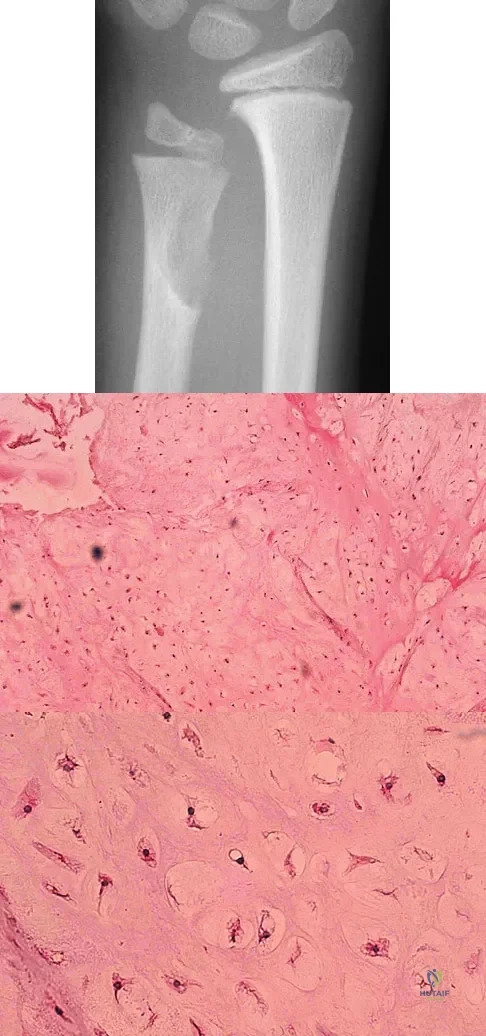


Explanation

The radiograph shows a benign-appearing cortically based lesion eroding the underlying cortex, producing a saucer-shaped defect typical of a periosteal chondroma. The histology shows benign-appearing neoplastic cartilage. Although enchondroma would have the same histologic appearance, radiographs generally show a lesion with a central medullary epicenter. The benign-appearing histology does not support chondrosarcoma. Chondromyxoid fibroma will generally show histologic elements of its fibrous and myxoid components. Chondroblastoma typically demonstrates histologic findings of polyhedral cells separated by a chondroid matrix with pericellular, lattice-like "chicken wire" calcification. Schajowicz F: Tumors and Tumorlike Lesions of Bone: Pathology, Radiology, and Treatment, ed 2. Berlin, Springer-Verlag, 1994, pp 147-151.

Question 15

A 29-year-old woman reports shoulder pain after sustaining a minor fall 6 weeks ago. She has a history of celiac sprue. Radiographs of the forearm and shoulder are shown in Figures 53a and 53b. Which of the following serum abnormalities would be expected?
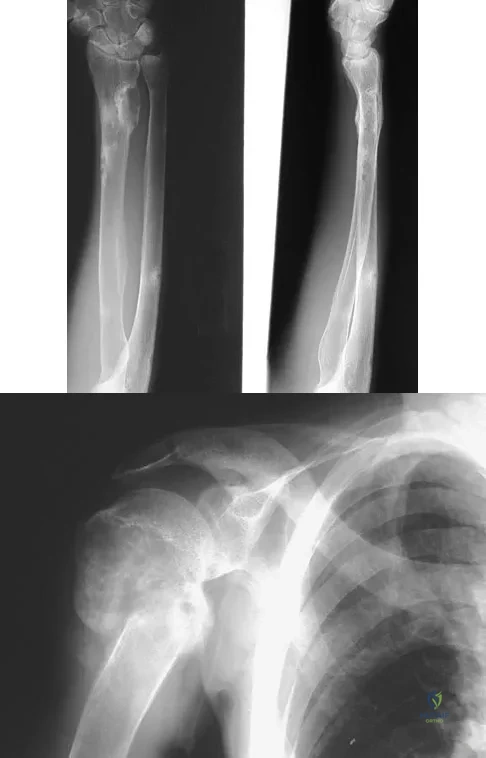


Explanation

Celiac sprue results in rapid gastrointestinal transit and fatty stools that impair the absorption of calcium and vitamin D and result in nutritional-deficiency osteomalacia with secondary hyperparathyroidism. The radiographs show marked osteopenia with brown tumors. A pathologic fracture is seen in the proximal humerus through a large brown tumor. Serum findings include low or normal calcium, low phosphate, elevated alkaline phosphatase, low 1,25(OH)2D, and increased PTH levels. Secondary hyperparathyroidism is associated with a variety of conditions including malabsorption syndromes. Potts JT: Parathyroid hormone: Past and present. J Endocrinol 2005;187:311-325. Corazza GR, Di Stefano M, Maurino E, et al: Bones in coeliac disease: Diagnosis and treatment. Best Pract Res Clin Gastroenterol 2005;19:453-465.

Question 16

A 73-year-old man stepped off a street curb and felt a crack in his left hip. He is now unable to bear weight. A radiograph is shown in Figure 54a. Biopsy specimens are shown in Figures 54b and 54c. What is the most likely diagnosis?
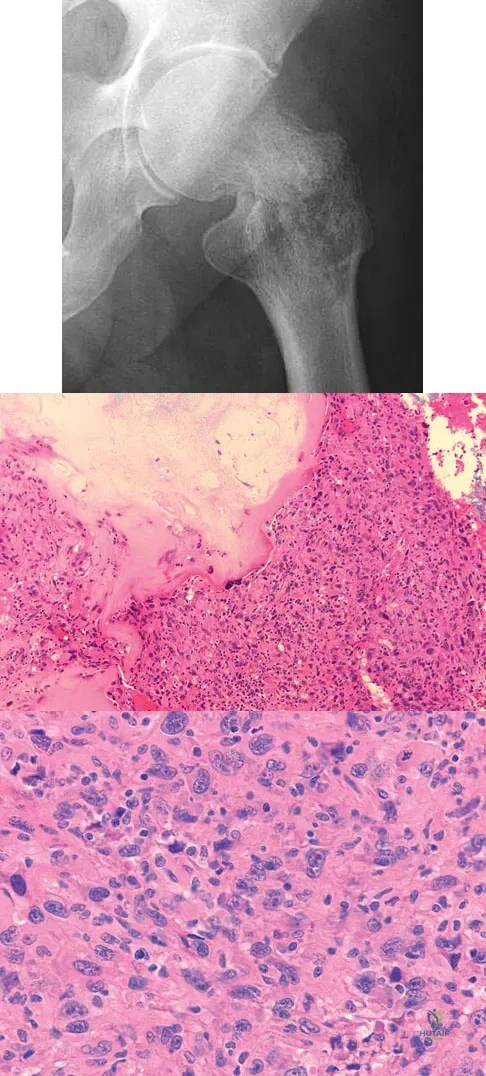


Explanation

The biopsy specimens reveal a high-grade spindle cell lesion adjacent to an area of benign cartilage. This is consistent with a dedifferentiated chondrosarcoma. The radiograph shows a pathologic fracture through a lesion characterized by calcification within the left greater trochanter. Distal to the area of calcification, there is a more osteolytic, destructive appearance. Synovial sarcoma has a biphasic appearance histologically with areas of glandular differentiation that stain positive with keratin. Metastatic prostate cancer, although osteoblastic in appearance, would have a glandular histologic appearance. There is no cartilage in these lesions. Classic low-grade chondrosarcoma does not have an area of high-grade pleomorphic spindle cells within the lesion. A periosteal osteosarcoma is a surface-based lesion with a sunburst radiographic pattern. Although there may be cartilage in the lesion histologically, there are also malignant cells producing osteoid. Dedifferentiated chondrosarcoma is an aggressive, high-grade variant of chondrosarcoma. Wold LE, Adler CP, Sim FH, et al: Atlas of Orthopedic Pathology, ed 2. Philadelphia, PA, WB Saunders, 2003, p 269.

Question 17

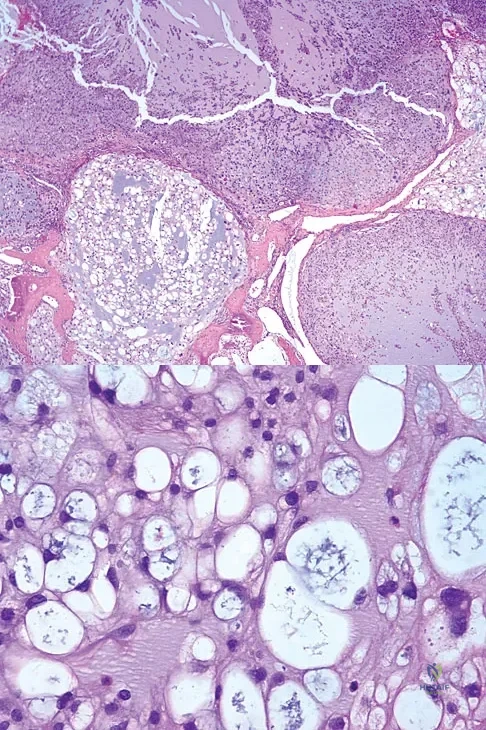
The biopsy specimens seen in Figures 55a and 55b are from a lytic lesion in the sacrum of a 58-year-old man. What is the most likely diagnosis?


Explanation

The lesion is a chordoma and the other listed choices can be eliminated based on the histology. Many tumors can occur in the sacrum including chordoma, multiple myeloma, giant cell tumor, aneurysmal bone cyst, and metastatic disease. The histology in this patient shows a lobulated lesion on low power with fibrous septae separating the lobules. At higher magnification, the cells have eosinophilic vacuolated cytoplasm and are called physaliferous cells. Chordoma is a low-grade neoplasm that most commonly occurs in the sacrum and rarely in the base of the skull. The diagnosis is often delayed. Chordoma is thought to originate from notochordal remnants. Chordoma typically occurs in the midline and has an associated soft-tissue mass. Wold LE, Adler CP, Sim FH, et al: Atlas of Orthopedic Pathology, ed 2. Philadelphia, PA, WB Saunders, 2003, p 372. Fuchs B, Dickey ID, Yaszemski MJ, et al: Operative management of sacral chordoma. J Bone Joint Surg Am 2005;87:2211-2216.

Question 18

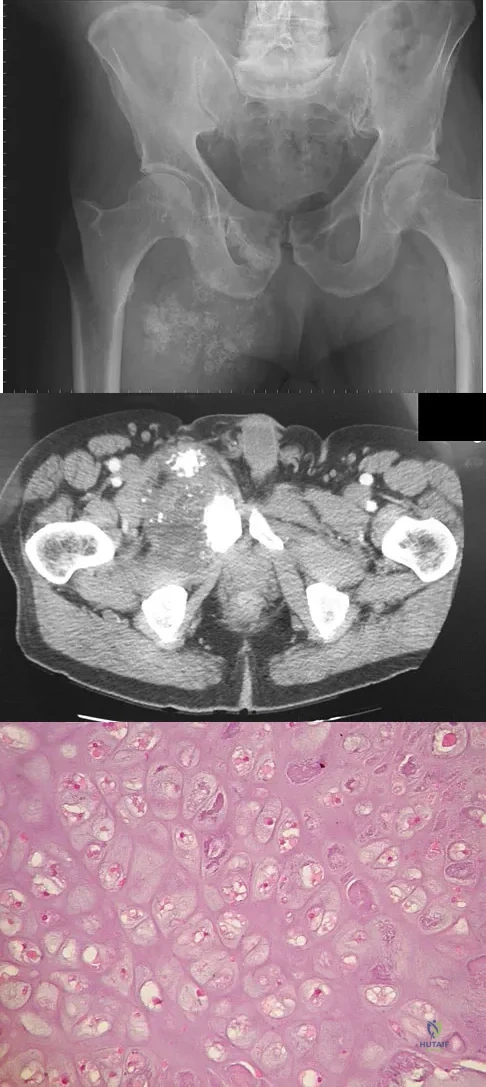
A 65-year-old man has a painful right hip mass that has been growing for several years. A radiograph, CT scan, and photomicrograph are shown in Figures 56a through 56c. What is the most appropriate treatment?


Explanation

This is a conventional chondrosarcoma. The radiograph and the CT scan show a lesion arising from the inferior pubic ramus with a large soft-tissue mass. Abundant punctate, stippled, or "popcorn-like" calcification is present. The photomicrograph demonstrates hypercellular cartilage. Surgical resection is the only effective treatment. Whereas chemotherapy might play a role in the treatment of a dedifferentiated chondrosarcoma, it has no role in the treatment of a conventional chondrosarcoma. Chondrosarcomas are relatively radioresistant. Donati D, El Ghoneimy A, Bertoni F, et al: Surgical treatment and outcome of conventional pelvic chondrosarcoma. J Bone Joint Surg Br 2005;87:1527-1530. Lee FY, Mankin HJ, Fondren G, et al: Chondrosarcoma of bone: An assessment of outcome. J Bone Joint Surg Am 1999;81:326-338.

Question 19

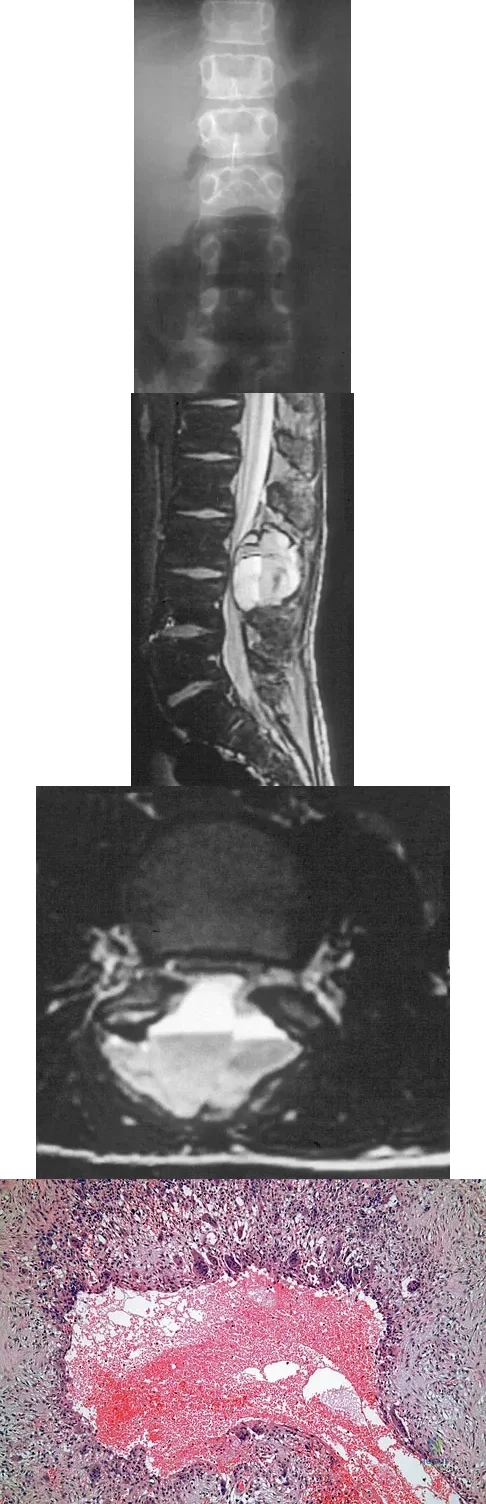
An 8-year-old boy is diagnosed with acute onset cauda equina syndrome. A radiograph, MRI scans, and a biopsy specimen are shown in Figures 57a through 57d. What is the most appropriate treatment?


Explanation

The findings are consistent with an aneurysmal bone cyst. The MRI scan demonstrates a lesion involving the posterior elements of the vertebrae with fluid-fluid levels and neural compression. Fibrovascular tissue with multinucleated giant cells surrounding a vascular lake is seen on the histology. The most appropriate treatment is a marginal resection of the involved posterior elements. Although the recurrence rate can be as high as 25% to 30%, wide surgical resection could result in permanent neurologic injury and is not necessary. Aspiration and steroid injection have been advocated but would not relieve the nerve compression in this patient. Radiation therapy and chemotherapy are not indicated. Mankin HJ, Hornicek FJ, Ortiz-Cruz E, et al: Aneurysmal bone cyst: A review of 150 patients. J Clin Oncol 2005;23:6756-6762.

Question 20

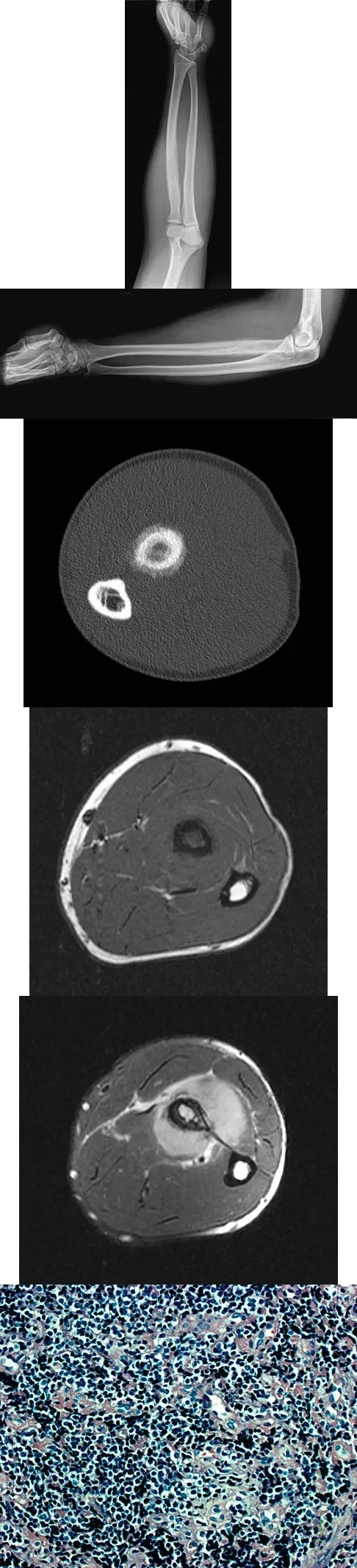
A 19-year-old man has had pain and swelling in his left forearm for the past 8 months. Laboratory studies show a mildly elevated WBC count and erythrocyte sedimentation rate. Radiographs are shown in Figures 58a and 58b, a CT scan is shown in Figure 58c, and T1- and T2-weighted MRI scans are shown in Figures 58d and 58e, respectively. A biopsy specimen is shown in Figure 58f. Immunohistochemistry demonstrates that the lesion is negative for leukocyte common antigen (CD34). What is the most common cytogenetic translocation associated with this lesion?


Explanation

The imaging studies show a permeative lytic destructive lesion in the proximal radius with "hair-on-end" periosteal reaction and a large soft-tissue mass most consistent with Ewing's sarcoma. The pathology reveals monotonous sheets of "round blue" cells. This limits the differential diagnosis to primary lymphoma of bone versus Ewing's sarcoma. These are best differentiated by immunohistochemistry, cytogenetics, and flow cytometry. Lymphoma of bone is typically CD34 positive and CD99 negative; whereas, the reverse is true of Ewing's sarcoma, CD34 negative and CD99 positive. The most common cytogenetic translocation with Ewing's sarcoma is 11; 22; 21; 22 and 7; 22 translocations have also been reported in Ewing's sarcomas. The X; 18 translocation is most commonly associated with synovial cell sarcomas; the 12; 22 translocation is most commonly associated with clear cell sarcomas; the 2; 13 translocation is most commonly associated with alveolar rhabdomyosarcomas, and the 12; 16 translocation is most commonly associated with myxoid liposarcomas. Flow cytometry is used to characterize the cell types of lymphomas. Womer R: The cellular biology of bone tumors. Clin Orthop Relat Res 1991;262:12-21. Yamaguchi U, Hasegawa T, Morimoto Y, et al: A practical approach to the clinical diagnosis of Ewing's sarcoma/primitive neuroectodermal tumour and other small round cell tumours sharing EWS rearrangement using new fluorescence in situ hybridisation probes for EWSR1 on formalin fixed, paraffin wax embedded tissue. J Clin Pathol 2005;58:1051-1056.

Question 21

A 9-year-old girl reports progressive right knee pain. Radiographs are shown in Figures 59a and 59b. Work-up reveals no other sites of disease. Low- and high-power photomicrographs are shown in Figures 59c and 59d. What is the most appropriate treatment?
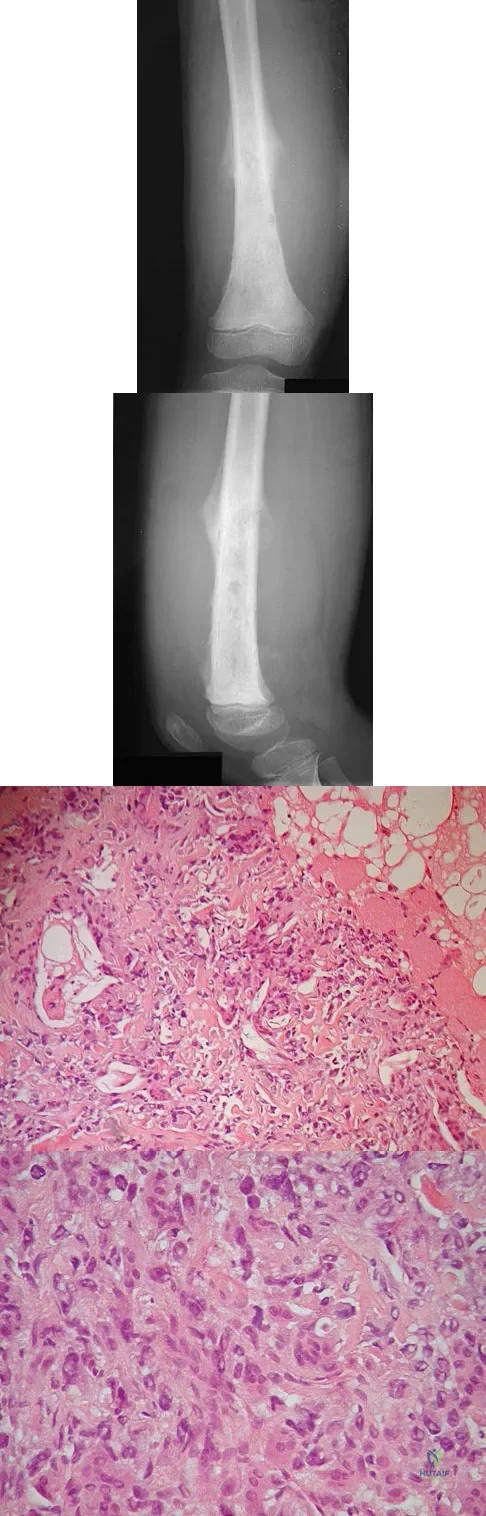


Explanation

This classic case of osteosarcoma illustrates the typical radiographic and histologic characteristics of this disease. The radiographs show an aggressive-appearing lesion of the distal femur. The lesion has both lytic and blastic areas. Periosteal reaction is present in the form of a Codman's triangle. The radiographs are highly suggestive of osteosarcoma. The photomicrographs show malignant spindle cells that produce osteoid, thus confirming the diagnosis of osteosarcoma. Treatment of osteosarcoma is multimodal including multi-agent chemotherapy and surgery (wide resection or amputation). Bacci G, Ferrari S, Bertoni F, et al: Long-term outcome for patients with nonmetastatic osteosarcoma of the extremity treated at the Instituto Ortopedico Rizzoli according to the Instituto Ortopedico Rizzoli/osteosarcoma-2 protocol: An updated report. J Clin Oncol 2000;18:4016-4037. Bielack SS, Kempf-Bielack B, Delling G, et al: Prognostic factors in high-grade osteosarcoma of the extremities or trunk: An analysis of 1,702 patients treated on neoadjuvant cooperative osteosarcoma study group protocols. J Clin Oncol 2002;20:776-790.

Question 22

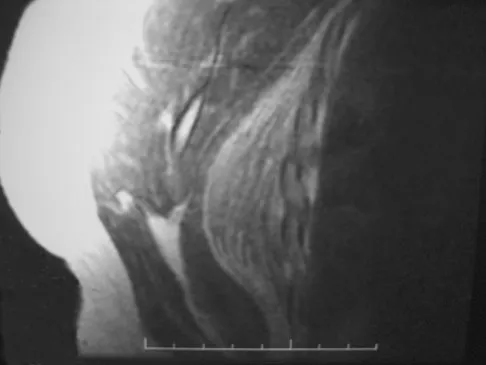
What is the most significant factor affecting long-term survival for a patient with bone sarcoma?
Basic Science 2008 Practice Questions: Set 3 (Solved) - Figure 67


Explanation

The most significant impact on long-term survival is the presence or absence of identifiable metastatic disease on initial presentation. All of these factors have been shown to be predictive of long-term survival to varying degrees. Enneking WF, Spanier SS, Goodman MA: A system for the surgical staging of musculoskeletal sarcoma. Clin Orthop Relat Res 1980;153:106-120.

Question 23

A 75-year-old woman notes a slowly enlarging mass in the right anterior thigh. Her medical history is significant only for hypertension. An MRI scan of her thigh is shown in Figures 60a through 60d. Which of the following surgical margins is the most appropriate for removal of this lesion?
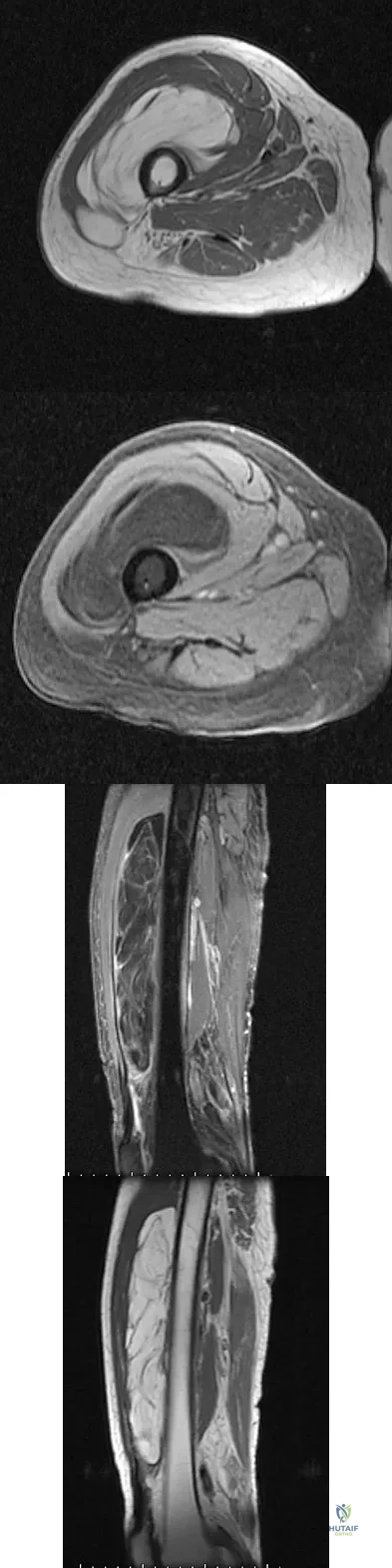


Explanation

The patient has a large deep anterior thigh mass that has imaging characteristics of mature fat. Intramuscular lipomas are effectively treated with marginal resections with very low recurrence rates. Large lipomas often have small amounts of intralesional signal changes frequently representing trapped muscle fibers and do not necessitate more extensive margins. Gaskin CM, Helms CA: Lipomas, lipoma variants, and well-differentiated liposarcomas (atypical lipomas): Results of MRI evaluations of 126 consecutive fatty masses. Am J Roentgenol 2004;182:733-739.

Question 24

Figures 61a and 61b show the CT and MRI scans of a 40-year-old man who has hip pain. He undergoes total hip arthroplasty and curettage and cementation of the lesion as shown in Figure 61c. Histopathologic photomicrographs of the curettage specimen are shown in Figures 61d and 61e. What is the best course of treatment?
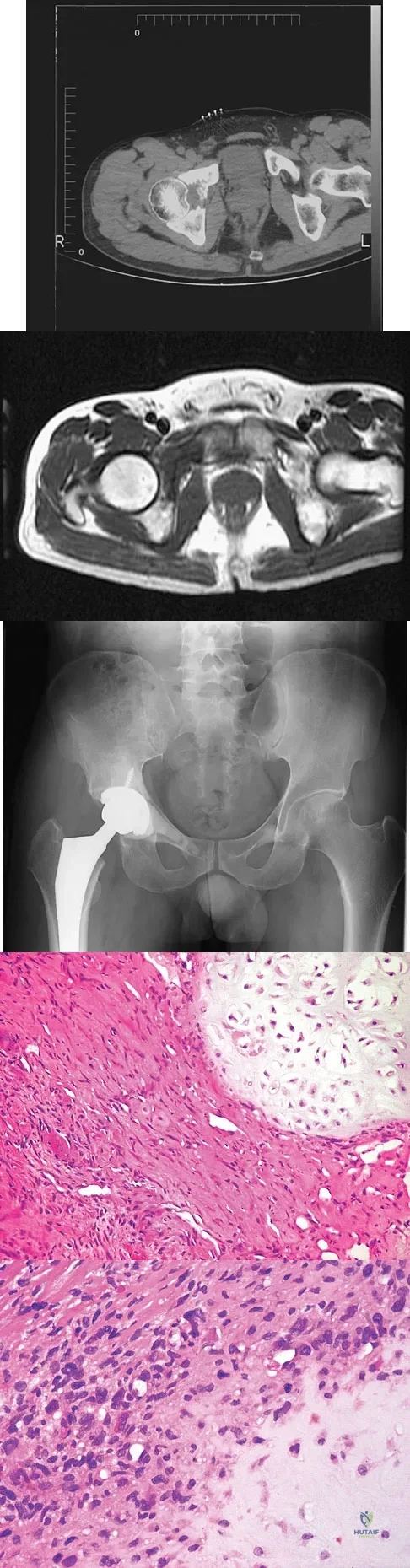


Explanation

The definitive surgery would be removal of the entire resection bed, and in this case of dedifferentiated chondrosarcoma, a hemipelvectomy was performed. The MRI and CT scans show an aggressive cartilage lesion. The histology, representative of a dedifferentiated chondrosarcoma, shows a bimorphic low-grade cartilage lesion with high-grade spindle cell sarcoma. The cartilage lesion is usually an enchondroma or low-grade chondrosarcoma. The dedifferentiated portion is typically a malignant fibrous histocytoma, osteosarcoma, or fibrosarcoma. Weber KL, Pring ME, Sim FH: Treatment and outcome of recurrent pelvic chondrosarcoma. Clin Orthop Relat Res 2002;397:19-28.

Question 25

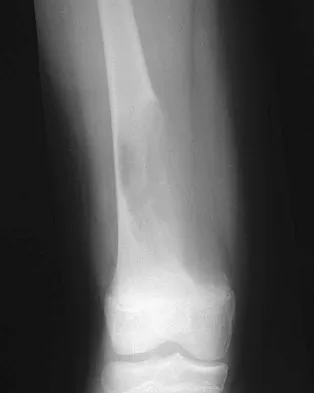
Compared to postoperative radiation therapy, preoperative radiation therapy has a higher rate of what complication?
Basic Science 2008 Practice Questions: Set 3 (Solved) - Figure 77


Explanation

Radiation therapy is commonly used as an adjuvant in the treatment of soft-tissue sarcomas, but a controversy exists whether it should be preoperative or postoperative. Radiation therapy can be given prior to or following resection of the tumor. Postoperative radiation is usually given in a higher dose to a larger treatment field. This commonly results in a higher incidence of fibrosis and lymphedema. There is no statistical difference in local recurrence rate between the two radiation treatment plans. Neuropathy is more commonly a complication of chemotherapy. Preoperative radiation therapy has been shown to have a higher wound complication rate than postoperative radiation. Vaccaro AR (ed): Orthopaedic Knowledge Update 8. Rosemont, IL, American Academy of Orthopaedic Surgeons, 2005, pp 197-215.

Question 26

A 25-year-old patient with increased bone density and cranial nerve impingement is diagnosed with sclerosteosis. This condition is caused by a mutation that affects a protein normally secreted by osteocytes. By which of the following mechanisms does this normal protein function?


Explanation

Sclerostin is produced by osteocytes and inhibits bone formation by binding to LRP5/6, thereby blocking the Wnt/beta-catenin signaling pathway. Mutations leading to loss of sclerostin function cause sclerosteosis, characterized by abnormally high bone mass.

Question 27

Which of the following best describes the mechanical behavior of cortical bone, whereby its strength and stiffness increase as the rate of loading increases?


Explanation

Bone is a viscoelastic material, meaning its biomechanical response depends on the rate of loading. When loaded rapidly, bone becomes stiffer and can absorb more energy before failing.

Question 28

Cortical bone demonstrates different mechanical properties depending on the direction of the applied load. It is stronger in longitudinal compression than in transverse loading. Which biomechanical term best defines this property?


Explanation

Anisotropy refers to a material exhibiting different mechanical properties depending on the direction of the applied load. Cortical bone is highly anisotropic, being strongest in longitudinal compression.

Question 29

A newborn is evaluated for absent clavicles and delayed closure of the cranial sutures. Genetic testing is expected to reveal a mutation in a key transcription factor essential for osteoblast differentiation. Which of the following is the most likely mutated gene?


Explanation

Cleidocranial dysplasia is caused by a mutation in RUNX2 (Cbfa1), a master transcription factor required for osteoblast differentiation and subsequent bone formation.

Question 30

A surgeon plans to perform a revision fixation using a stainless steel plate adjacent to an existing titanium screw. Which of the following complications is most likely to occur due to the combination of these two different metals in a physiologic environment?


Explanation

Galvanic corrosion occurs when two dissimilar metals are placed in physical contact within an electrolytic solution like body fluid. This leads to an electrochemical reaction and accelerated corrosion of the less noble metal.

Question 31

Which of the following non-collagenous bone matrix proteins is vitamin K-dependent and plays a major role in regulating bone mineralization by binding to calcium and hydroxyapatite?


Explanation

Osteocalcin is the most abundant non-collagenous protein in bone. It is vitamin K-dependent (contains gamma-carboxyglutamate residues) and directly binds calcium and hydroxyapatite to regulate mineralization.

Question 32

Continuous, high-dose administration of parathyroid hormone (PTH) results in net bone resorption. Through which cellular mechanism does PTH primarily stimulate osteoclast activity?


Explanation

PTH binds to its receptors on osteoblasts, which then upregulate RANKL expression and downregulate OPG. RANKL then binds to RANK on osteoclast precursors, stimulating osteoclastogenesis and bone resorption.

Question 33

In a stress-strain curve for a metallic implant, the point at which the material ceases to deform elastically and begins to deform permanently is known as which of the following?


Explanation

The yield point on a stress-strain curve marks the transition from elastic (reversible) deformation to plastic (irreversible) deformation.

Question 34

During the incorporation of a cortical structural allograft, the process by which osteoclasts resorb the dead bone and osteoblasts subsequently lay down new vital bone is termed:


Explanation

Creeping substitution is the process of bone graft incorporation where simultaneous resorption of the graft by osteoclasts and formation of new bone by osteoblasts occurs. This is the typical mechanism for cortical allografts.

Question 35

A total hip arthroplasty is performed using a heavily porous-coated, stiff cobalt-chromium femoral stem. Over several years, proximal femoral bone resorption is noted on radiographs. This phenomenon is primarily caused by:


Explanation

Stress shielding occurs when a stiff implant (high Young's modulus) shares the load with bone, bypassing the bone itself. According to Wolff's Law, the lack of mechanical stress on the proximal bone leads to osteopenia and bone resorption.

Question 36

To dissolve the inorganic hydroxyapatite matrix during bone resorption, osteoclasts create an acidic environment in the sealed zone (Howship's lacuna). Which of the following enzymes is primarily responsible for generating the hydrogen ions needed for this process?


Explanation

Carbonic anhydrase II catalyzes the conversion of CO2 and H2O into carbonic acid, which dissociates into hydrogen ions and bicarbonate. The H+ ions are then pumped into the resorption pit to dissolve the mineral matrix.

Question 37

In the development of a long bone, which zone of the physis is characterized by a high concentration of type X collagen and is the weakest area, most susceptible to slipped capital femoral epiphysis (SCFE)?


Explanation

The zone of hypertrophy is the weakest part of the growth plate and is typically the site of physeal fractures and SCFE. It is uniquely characterized by the expression of type X collagen.

Question 38

Absolute stability achieved through rigid internal fixation with a compression plate leads to which type of fracture healing?


Explanation

Rigid compression plating provides absolute stability (strain <2%), allowing for primary bone healing. This occurs via direct Haversian remodeling (cutting cones) without the formation of an intermediate cartilaginous callus.

Question 39

A 65-year-old woman presents with generalized bone pain and proximal muscle weakness. Laboratory studies show hypocalcemia, hypophosphatemia, elevated alkaline phosphatase, and low 25-hydroxyvitamin D. Bone biopsy would most likely show:


Explanation

The clinical and laboratory findings indicate osteomalacia (vitamin D deficiency). Histologically, osteomalacia is characterized by thickened osteoid seams and an impairment or delay in the mineralization of the newly formed bone matrix.

Question 40

Bone morphogenetic proteins (BMPs) play a crucial role in osteoinduction during bone healing. BMPs exert their cellular effects primarily by binding to transmembrane receptors and activating which intracellular signaling molecules?


Explanation

BMPs are members of the TGF-beta superfamily. Upon binding to their serine/threonine kinase receptors, they propagate signals intracellularly primarily via the phosphorylation and activation of Smad proteins.

Question 41

Type I collagen is the primary organic component of bone. Its structural integrity depends on the hydroxylation of specific proline and lysine residues. Which of the following is an essential cofactor for this hydroxylation process?


Explanation

Vitamin C (ascorbic acid) is a required cofactor for prolyl hydroxylase and lysyl hydroxylase, the enzymes responsible for hydroxylating proline and lysine during collagen synthesis. Deficiency leads to scurvy.

Question 42

A dynamic hip screw used to treat a basicervical femoral neck fracture fails 6 months post-operatively. The fracture is a nonunion, and the lag screw has broken despite the patient being non-weight bearing. Which of the following describes failure of an implant due to repetitive sub-maximal cyclic loading?


Explanation

Fatigue failure occurs when an implant is subjected to repetitive cyclic loads below its ultimate tensile strength, eventually leading to the propagation of microcracks and sudden fracture.

Question 43

A child with a history of multiple fractures and pancytopenia is diagnosed with malignant infantile osteopetrosis. The primary cellular defect in this condition involves the inability of osteoclasts to:


Explanation

Osteopetrosis is caused by defective osteoclast function, most commonly due to mutations in genes like TCIRG1 (a vacuolar H+-ATPase) or carbonic anhydrase II. This impairs the osteoclast's ability to acidify the resorption pit.

Question 44

Rank the following materials in order of decreasing Young's modulus (stiffness):


Explanation

Young's modulus represents the stiffness of a material. Stainless steel (approx. 200 GPa) is stiffer than titanium (approx. 110 GPa), which is stiffer than cortical bone (approx. 15-20 GPa), which is stiffer than PMMA bone cement (approx. 2-3 GPa).

Question 45

Which of the following transcription factors is critically required for the differentiation of mesenchymal cells into chondrocytes during endochondral ossification?


Explanation

SOX9 is the master transcription factor responsible for driving mesenchymal cells to differentiate into chondrocytes. Mutations in SOX9 cause campomelic dysplasia.

Question 46

Which of the following cell types primarily secretes osteoprotegerin (OPG) to regulate bone resorption in the normal remodeling cycle?


Explanation

Osteoblasts secrete OPG, which acts as a decoy receptor for RANKL. By binding RANKL, OPG prevents it from interacting with RANK on osteoclasts, thereby inhibiting osteoclast differentiation and bone resorption.

Question 47

The torsional rigidity of a solid cylindrical intramedullary nail is proportional to its radius raised to which of the following powers?


Explanation

The torsional rigidity of a solid cylinder is proportional to its polar area moment of inertia, which scales with the radius to the fourth power (r^4). Therefore, small increases in nail radius dramatically increase torsional stiffness.

Question 48

Which of the following alterations to the design of a cortical bone screw will most significantly increase its pullout strength?


Explanation

Screw pullout strength is directly proportional to the outer diameter, the length of thread engagement, and the shear strength of the bone. Increasing the outer diameter increases the volume of bone caught between the threads, maximizing pullout resistance.

Question 49

On a standard stress-strain curve for cortical bone, the specific point at which the material ceases to deform elastically and begins to undergo permanent plastic deformation is defined as the:


Explanation

The yield point marks the end of elastic (reversible) deformation and the beginning of plastic (irreversible) deformation. Loading past the yield point results in permanent shape alteration.

Question 50

Romosozumab is a monoclonal antibody utilized in the treatment of severe osteoporosis. What is the primary molecular target of this medication?


Explanation

Romosozumab binds to and inhibits sclerostin, a glycoprotein secreted by osteocytes that normally suppresses osteoblast activity. Its inhibition leads to a dual effect of increasing bone formation and decreasing bone resorption.

Question 51

When applying a locking plate for a comminuted diaphyseal fracture, increasing the working length of the plate (the distance between the innermost screws) has which of the following biomechanical effects?


Explanation

Increasing the plate working length decreases the overall stiffness of the construct, allowing for more flexible fixation and greater interfragmentary motion. This flexibility promotes secondary bone healing via callus formation.

Question 52

During dynamic, high-rate unconfined compression of articular cartilage, which of the following mechanisms is primarily responsible for the tissue's initial resistance to load?


Explanation

Due to the extremely low permeability of articular cartilage, rapid loading traps interstitial fluid, creating high hydrostatic fluid pressurization. This fluid pressure supports the majority of the initial load, protecting the solid matrix.

Question 53

A polyethylene component of a total knee prosthesis subjected to a constant physiological load over time undergoes a progressive increase in strain (deformation). This viscoelastic biomechanical phenomenon is known as:


Explanation

Creep is a property of viscoelastic materials where continuous, constant stress (load) results in progressive, time-dependent strain (deformation). Stress relaxation, conversely, is a decrease in stress under constant strain.

Question 54

Which of the following combinations of orthopedic implant materials is most strongly contraindicated for direct contact due to the high risk of clinically significant galvanic corrosion?


Explanation

Stainless steel and titanium have significantly different anodic indices (galvanic potentials). Mixing them in direct physical contact within the electrolytic environment of the body accelerates galvanic corrosion of the stainless steel.

Question 55

Which of the following bones or anatomic segments develops and heals primarily via intramembranous ossification, without a cartilaginous intermediate?


Explanation

The flat bones of the skull (calvarium), the maxilla, and the clavicle primarily form via intramembranous ossification, where mesenchymal cells differentiate directly into osteoblasts. Long bones typically utilize endochondral ossification.

Question 56

Bone morphogenetic proteins (BMPs) such as BMP-2 and BMP-7 induce osteoblastic differentiation primarily through which of the following intracellular signaling pathways?


Explanation

BMPs bind to serine/threonine kinase receptors on the cell surface, which then phosphorylate intracellular Smad 1, 5, and 8. These active Smads form a complex with Smad 4 to enter the nucleus and upregulate osteogenic gene expression.

Question 57

Intermittent, low-dose administration of parathyroid hormone (teriparatide) is used therapeutically for osteoporosis. What is the primary cellular mechanism driving its anabolic effect?


Explanation

While continuous endogenous PTH favors bone resorption, intermittent exogenous PTH administration paradoxically exerts an anabolic effect. It directly stimulates osteoblast proliferation, decreases osteoblast apoptosis, and promotes new bone formation.

Question 58

Within the isolated environment of the Howship lacuna, osteoclasts utilize protons to dissolve hydroxyapatite. Which enzyme is primarily responsible for the subsequent degradation of the organic type I collagen matrix?


Explanation

After carbonic anhydrase II generates protons to lower the pH and dissolve inorganic minerals, cathepsin K is secreted by osteoclasts. Cathepsin K functions optimally in acidic environments to cleave and degrade type I collagen.

Question 59

In total hip arthroplasty, microscopic asperities on the hard femoral head can scratch and systematically remove material from the softer polyethylene liner. This mechanism of material loss is classified as:


Explanation

Abrasive wear occurs when a hard surface directly ploughs into and scratches a softer surface. Adhesive wear occurs when two surfaces bond together and material is pulled away, while third-body wear involves free-floating particles between the bearing surfaces.

Question 60

An orthopedic implant subjected to cyclic loading below its ultimate tensile strength eventually fractures due to microcrack propagation. What term describes the maximum stress level below which a material can endure an infinite number of cycles without failure?


Explanation

The endurance limit (or fatigue limit) is the stress threshold depicted on an S-N (Stress-Number of cycles) curve. Below this specific stress level, the material will theoretically never undergo fatigue failure, regardless of the number of loading cycles.

Question 61

Which of the following correctly ranks common orthopedic materials from the highest to the lowest Young's modulus (stiffness)?


Explanation

Young's modulus indicates material stiffness. Cobalt-chromium is the stiffest (~220 GPa), followed by Stainless steel (~200 GPa), Titanium (~110 GPa), and Cortical bone (~15-20 GPa). Matching implant stiffness closer to bone reduces stress shielding.

Question 62

According to Wolff's law and the piezoelectric properties of bone, the side of a bone subjected to compressive forces becomes electrically:


Explanation

Compression generates an electronegative charge on the concave side of the bone, which stimulates osteoblastic bone formation. Conversely, tension creates an electropositive charge, stimulating osteoclastic resorption.

Question 63

According to Perren's strain theory of fracture healing, what is the optimal range of interfragmentary strain required to promote secondary bone healing via a cartilaginous callus?


Explanation

Cartilage tissue tolerates moderate strain between 2% and 10%, allowing for secondary endochondral healing. Strain less than 2% results in primary bone healing, while strain above 10% promotes persistent granulation or fibrous tissue formation.

Question 64

Highly cross-linked polyethylene (HXLPE) is extensively used in total hip arthroplasty due to its enhanced wear properties. However, increased cross-linking involves which of the following biomechanical tradeoffs?


Explanation

Irradiating polyethylene to increase cross-linking significantly reduces wear. However, it compromises the material's mechanical properties, leading to decreased ultimate tensile strength, ductility, and fracture/fatigue toughness.

Question 65

A 45-year-old patient presents with diffuse bone pain, muscle weakness, and pseudofractures (Looser zones) on radiographs. Labs demonstrate hypocalcemia and hypophosphatemia. A bone biopsy would most likely show which of the following classic histological features?


Explanation

The clinical scenario is consistent with osteomalacia. Histologically, osteomalacia is defined by a defect in bone mineralization, resulting in an accumulation of unmineralized matrix and markedly widened osteoid seams.

Question 66

In the design of a solid intramedullary nail, doubling the radius of the nail will increase its bending stiffness by what factor?


Explanation

The bending stiffness of a solid cylinder is proportional to its area moment of inertia, which is calculated as (pi * r^4) / 4. Therefore, doubling the radius increases the bending stiffness by a factor of 16 (2^4 = 16).

Question 67

A 72-year-old woman is prescribed teriparatide for severe osteoporosis. Which of the following best describes the cellular mechanism by which this medication exerts its primary anabolic effect?


Explanation

Teriparatide is a recombinant human parathyroid hormone (PTH 1-34) analog. When administered in intermittent, pulsatile doses, it has an anabolic effect on bone by stimulating osteoblast activity and differentiation over osteoclast activity.

Question 68

Which of the following modifications to a cortical screw design will most significantly increase its pullout strength?


Explanation

Screw pullout strength is directly proportional to the outer diameter, the length of engagement, and the shear strength of the bone. It is inversely proportional to the thread pitch, making the increase of the outer diameter the most significant positive modification.

Question 69

A novel therapeutic agent for osteoporosis functions by inhibiting sclerostin. Which of the following pathways is directly affected by this inhibition?


Explanation

Sclerostin is produced by osteocytes and inhibits bone formation by antagonizing the Wnt/beta-catenin signaling pathway. Monoclonal antibodies targeting sclerostin (e.g., romosozumab) lead to increased osteoblastic bone formation.

Question 70

Tendons and ligaments exhibit viscoelastic properties. Which of the following terms describes the phenomenon where the load required to maintain a constant deformation decreases over time?


Explanation

Stress relaxation is a viscoelastic property defined as the decrease in applied stress (or load) over time when a material is held at a constant strain (deformation). Creep, conversely, is continued deformation under a constant load.

Question 71

Osteopetrosis is characterized by dense, brittle bones due to defective osteoclastic bone resorption. Mutations in which of the following genes are most commonly responsible for the malignant infantile form of this disease?


Explanation

Malignant infantile osteopetrosis is most commonly caused by mutations in the TCIRG1 gene. This gene encodes the a3 subunit of the vacuolar proton pump (V-ATPase) essential for acidifying the resorption lacunae.

Question 72

On a stress-strain curve for cortical bone, the area under the entire curve up to the point of failure represents which of the following mechanical properties?


Explanation

Toughness is defined as the total amount of energy a material can absorb before it fractures, corresponding to the entire area under the stress-strain curve. Stiffness is represented by the slope of the elastic region.

Question 73

When utilizing a locking compression plate as a bridging construct for a comminuted diaphyseal fracture, what is the primary biomechanical rationale for leaving empty screw holes over the fracture site?


Explanation

Leaving empty screw holes over the fracture site increases the working length of the plate. This reduces construct stiffness, distributes stress over a larger area to prevent plate failure, and promotes callus formation for secondary healing.

Question 74

In the biphasic model of articular cartilage, which component provides the primary resistance to initial, rapid compressive loads?


Explanation

During initial, rapid compressive loading, the low permeability of the extracellular matrix limits fluid flow out of the cartilage. Consequently, interstitial fluid pressurization provides over 90% of the initial load support and resistance to compression.

Question 75

During the process of secondary fracture healing, the initial soft callus is eventually replaced by hard callus. This process is most dependent on which of the following biological phenomena?


Explanation

Secondary fracture healing involves the formation of a cartilaginous soft callus, which is subsequently mineralized and replaced by woven bone via endochondral ossification. Primary healing, by contrast, relies on osteoclastic cutting cones.

Question 76

If a stainless steel screw is used in conjunction with a titanium plate in an internal fixation construct, what type of corrosion is most likely to occur?


Explanation

Galvanic corrosion occurs when two dissimilar metals with different electrochemical potentials are placed in contact within a conductive medium, such as body fluids. This leads to accelerated corrosion of the less noble metal.

Question 77

A patient with chronic kidney disease presents with renal osteodystrophy. Which of the following hormonal profiles is most characteristic of this condition?


Explanation

In chronic kidney disease, impaired renal hydroxylation leads to low levels of 1,25-dihydroxyvitamin D. This decreases intestinal calcium absorption, leading to hypocalcemia, which in turn stimulates secondary hyperparathyroidism.

Question 78

A child presents with rhizomelic shortening of the limbs, frontal bossing, and midface hypoplasia. The genetic mutation responsible for this condition primarily affects which of the following processes?


Explanation

Achondroplasia is caused by a gain-of-function mutation in the FGFR3 gene. This over-activates FGFR3, inhibiting chondrocyte proliferation and hypertrophy in the proliferative zone of the physis and disrupting endochondral ossification.

Question 79

A surgeon plans to ream the medullary canal to accommodate a larger diameter intramedullary nail. The torsional rigidity of a hollow cylindrical nail is proportional to which of the following?


Explanation

The torsional rigidity of a hollow cylinder is determined by its polar moment of inertia, which is proportional to the difference between the outer radius to the fourth power and the inner radius to the fourth power. Increasing nail diameter vastly improves torsional stability.

Question 80

Demineralized bone matrix (DBM) is commonly used as a bone graft substitute. Which of the following bone graft properties is preserved in DBM?


Explanation

Demineralized bone matrix lacks viable cells and structural strength due to the demineralization process. However, this process exposes bone morphogenetic proteins (BMPs), conferring excellent osteoinductive properties.

Question 81

In total hip arthroplasty, the use of highly cross-linked polyethylene has significantly reduced the incidence of osteolysis. This improvement is primarily due to a reduction in which type of wear?


Explanation

Highly cross-linked polyethylene primarily minimizes adhesive wear and subsequent particulate debris generation at the bearing surface. This significantly decreases the incidence of macrophage-mediated periprosthetic osteolysis.

Question 82

Following primary repair of a flexor tendon, the healing process passes through distinct phases. During the remodeling phase, what is the primary change in the collagen matrix?


Explanation

During the remodeling phase of tendon healing, the initial weak Type III collagen laid down during the proliferative phase is gradually replaced by stronger, highly organized Type I collagen. This transition substantially increases the tensile strength of the tendon.

Question 83

A patient with multiple fragility fractures, blue sclerae, and hearing loss is diagnosed with Osteogenesis Imperfecta. The underlying defect typically involves a substitution of which amino acid in the collagen triple helix?


Explanation

Osteogenesis imperfecta is most commonly caused by mutations in the COL1A1 or COL1A2 genes. These mutations typically result in the substitution of glycine, the smallest amino acid essential for the tight packing of the collagen triple helix.

Question 84

Cortical bone exhibits strain rate dependency. Which of the following best describes the mechanical behavior of bone when subjected to a high rate of loading, such as high-speed trauma?


Explanation

Bone is a viscoelastic material, meaning its properties change based on the speed of loading. At high strain rates, bone becomes stiffer, can withstand a higher ultimate load, and stores more energy before failure, often resulting in comminuted fractures.

Question 85

Nitrogen-containing bisphosphonates, such as alendronate, inhibit osteoclast function and induce apoptosis. What is the specific intracellular target of these medications?


Explanation

Nitrogen-containing bisphosphonates inhibit farnesyl pyrophosphate (FPP) synthase within the mevalonate pathway. This prevents the prenylation of small GTPases essential for osteoclast cytoskeletal organization and ruffled border formation, leading to apoptosis.

Question 86

A 14-year-old boy presents with multiple fractures and a history of delayed tooth eruption. Radiographs show diffusely dense, 'bone-within-bone' appearance. His condition is caused by a genetic mutation affecting a specific enzyme required for proper bone resorption. Which of the following is the primary function of this enzyme in the osteoclast?


Explanation

The patient has osteopetrosis, likely due to Carbonic Anhydrase II deficiency. This enzyme converts CO2 and H2O into carbonic acid, providing the protons needed to acidify and dissolve bone mineral in the resorption pit.

Question 87

A biomedical engineer is evaluating a new titanium alloy for intramedullary nails. During mechanical testing, the material undergoes proportional deformation up to a specific limit before permanent deformation occurs. The slope of the load-deformation curve in this linear elastic region represents which of the following mechanical properties?


Explanation

The slope of the linear elastic region on a load-deformation curve represents the stiffness of the material. On a stress-strain curve, this slope represents Young's modulus (modulus of elasticity).

Question 88

A patient undergoes correction of a severe knee flexion contracture using a hinged external fixator. Over several days, the tension in the soft tissues gradually decreases despite the fixator maintaining a constant length. Which viscoelastic property does this phenomenon best describe?


Explanation

Stress relaxation is the decrease in stress (tension) over time when a viscoelastic material is held at a constant strain (length). In contrast, creep is the progressive deformation over time under a constant load.

Question 89

An investigational drug for the treatment of severe osteoporosis acts by inhibiting sclerostin. By neutralizing sclerostin, this medication primarily increases bone mass through which of the following mechanisms?


Explanation

Sclerostin, produced by osteocytes, normally inhibits the Wnt/beta-catenin signaling pathway to decrease osteoblastogenesis. Inhibiting sclerostin (e.g., romosozumab) upregulates Wnt signaling, leading to increased bone formation.

Question 90

A newborn is evaluated for absent clavicles, open cranial sutures, and delayed fontanelle closure. This condition is associated with a mutation in a master transcription factor essential for osteoblast differentiation. Which of the following genes is most likely mutated?


Explanation

The clinical presentation is classic for cleidocranial dysplasia, an autosomal dominant disorder caused by a mutation in CBFA1 (RUNX2). This transcription factor is essential for the differentiation of mesenchymal stem cells into osteoblasts.

Question 91

A surgeon revises a failed stainless steel dynamic compression plate for a femur fracture by applying a titanium plate over the existing stainless steel screws. Several months later, rapid localized corrosion is noted at the screw-plate interfaces. Which of the following best explains this phenomenon?


Explanation

Galvanic corrosion occurs when two dissimilar metals are in contact within a conductive fluid environment like body fluid. The less noble metal undergoes accelerated corrosion due to the electrochemical potential difference.

Question 92

Bone morphogenetic proteins (BMPs) are commonly used in spinal fusion surgery to promote osteoinduction. Following the binding of BMP to its cell surface receptor, which intracellular signaling molecules are directly phosphorylated to translocate to the nucleus and regulate gene transcription?


Explanation

BMPs act through serine/threonine kinase receptors that directly phosphorylate Smad 1, 5, and 8. These phosphorylated Smads form a complex with Smad 4, translocate to the nucleus, and initiate osteogenic gene transcription.

Question 93

During the incorporation of a structural cortical bone allograft, the process involves concurrent osteoclastic resorption of the graft and osteoblastic bone formation. Which of the following best describes this biologic process?


Explanation

Creeping substitution is the process by which necrotic bone is simultaneously resorbed by osteoclasts and replaced by new living bone deposited by osteoblasts. Cortical grafts undergo this process slowly, initially weakening the graft before full incorporation.

Question 94

Articular cartilage exhibits unique biomechanical properties to resist both compressive and tensile forces. Which component of the extracellular matrix is primarily responsible for the compressive stiffness of articular cartilage?


Explanation

Aggrecan, a highly negatively charged proteoglycan, attracts water and creates a swelling pressure that is resisted by the Type II collagen network. This Donnan osmotic effect provides articular cartilage with its exceptional compressive stiffness.

Question 95

A 4-year-old boy presents with diffuse bone pain, gingival bleeding, and metaphyseal radiolucent bands on radiographs. The underlying nutritional deficiency impairs the function of an enzyme essential for collagen synthesis. Which step in collagen synthesis is primarily affected?


Explanation

Scurvy is caused by Vitamin C deficiency, which acts as a necessary cofactor for prolyl and lysyl hydroxylases. These enzymes are required for the hydroxylation of proline and lysine residues during early collagen synthesis.

Question 96

When using a locked plating construct to stabilize a comminuted diaphyseal fracture, which of the following biomechanical principles makes it superior to a conventional non-locking plate in osteoporotic bone?


Explanation

Locked plates act as fixed-angle constructs, meaning stability is dependent on the screw-plate interface rather than plate-to-bone friction. This greatly improves pullout resistance and stability in poor-quality, osteoporotic bone.

Question 97

Intermittent administration of parathyroid hormone (PTH) analogues, such as teriparatide, is used to treat severe osteoporosis. What is the primary cellular mechanism by which intermittent PTH therapy increases bone mineral density?


Explanation

While continuous PTH exposure leads to bone resorption, intermittent PTH administration has an anabolic effect. It directly stimulates osteoblast proliferation, increases their lifespan by preventing apoptosis, and enhances bone formation.

Question 98

Ligaments and tendons exhibit viscoelastic behavior, meaning their mechanical properties change depending on how quickly a force is applied. If a ligament is subjected to a rapid loading rate (high strain rate), how does its biomechanical response change compared to a slow loading rate?


Explanation

Due to the strain-rate dependency of viscoelastic materials, tendons and ligaments become stiffer when subjected to rapid loading. They can withstand a higher ultimate tensile load before failure compared to slow loading scenarios.

Question 99

The mechanical properties of cortical bone vary depending on the direction of the applied load. Cortical bone is strongest in compression along its longitudinal axis and weakest in tension transversally. This biomechanical characteristic is best termed:


Explanation

Anisotropy is the property of a material in which mechanical properties (like strength and stiffness) differ depending on the direction of the applied load. Bone is highly anisotropic, being strongest in longitudinal compression.

Question 100

A surgeon is planning plate fixation for a comminuted diaphyseal femur fracture using a bridge plating technique. To decrease the stiffness of the construct and promote secondary bone healing via callus formation, which modification should the surgeon make?


Explanation

The working length of a plate is the distance between the two closest screws on either side of the fracture. Increasing the working length decreases the stiffness of the construct, allowing for more micromotion to promote secondary bone healing.

None

Clinic OS
Medically Verified Content by
Prof. Clinic OS
Consultant Orthopedic & Spine Surgeon
Chapter Index
