Orthopedic Basic Science MCQs (Set 4): Biomechanics, Bone Physiology & Biomaterials | AAOS, ABOS Review
Key Takeaway
This high-yield question set (Set 4) for the AAOS/ABOS basic science exams provides essential practice. It thoroughly covers fundamental orthopedic biomechanics, including material properties and joint kinetics. Additionally, it delves into bone and cartilage physiology, alongside key concepts in orthopedic biomaterials relevant for board preparation.
Orthopedic Basic Science MCQs (Set 4): Biomechanics, Bone Physiology & Biomaterials | AAOS, ABOS Review
Comprehensive 100-Question Exam
00:00
Start Quiz
Question 1
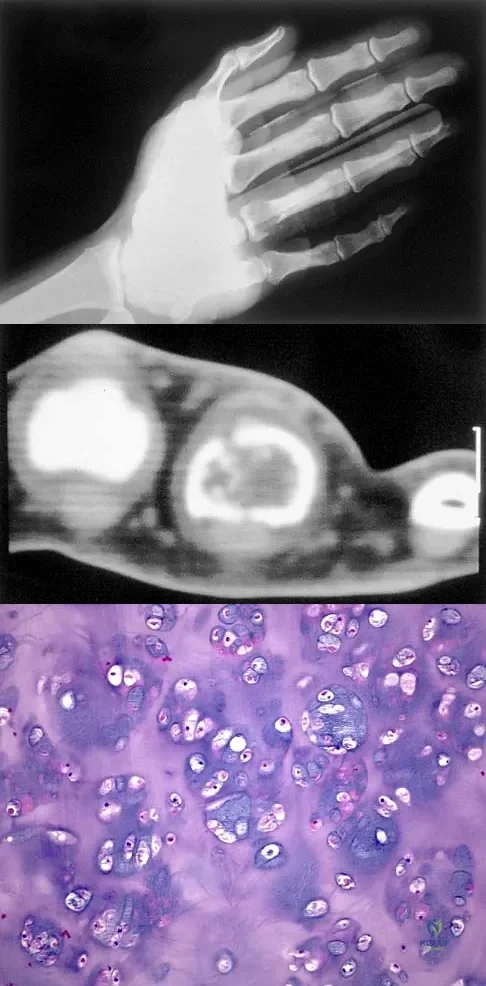
A 30-year-old woman has pain in her right hand. The radiograph, CT scan, and biopsy specimen are seen in Figures 38a through 38c. What is the most likely diagnosis?
Explanation
Question 2
Which of the following agents have been shown to reduce the incidence of skeletal events in patients with multiple myeloma?
Explanation
Question 3
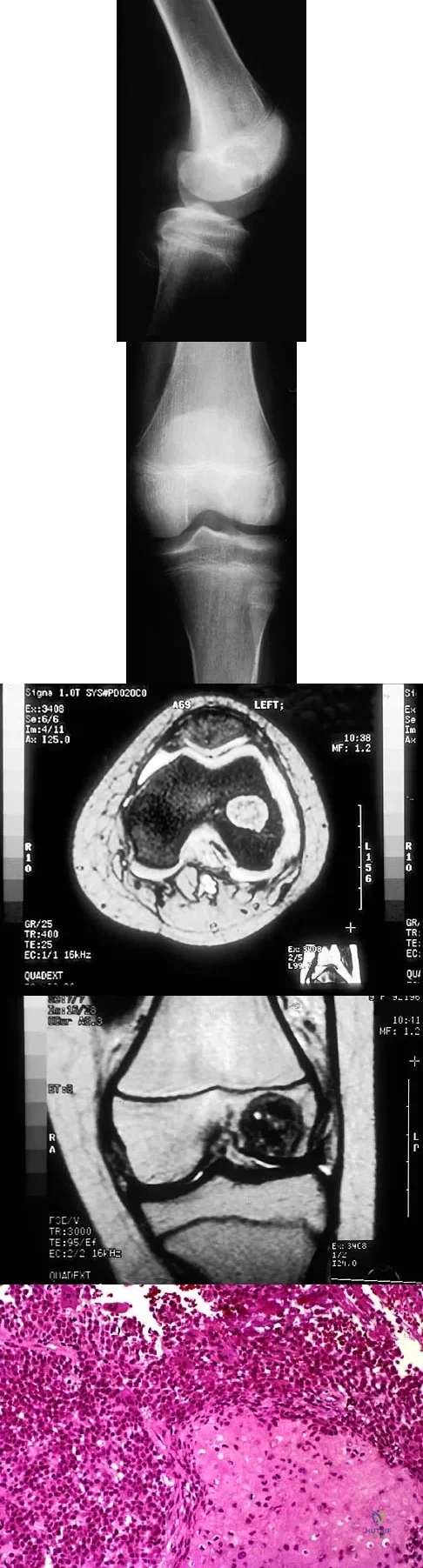
A 12-year-old girl has had progressive left knee pain for the past 4 months. She reports that the pain is unrelated to activity, and she has no history of fever or recent infections. Examination reveals full range of motion of the knee but tenderness along the medial joint line. Plain radiographs and MRI scans are shown in Figures 39a through 39d. A biopsy specimen of the lesion is shown in Figure 39e. Treatment should include
Explanation
Question 4
An open biopsy specimen of a radiodense distal clavicle lesion in a 12-year-old girl shows chronic polyclonal inflammatory cells without granuloma formation. Laboratory studies show that bacterial, fungal, and acid-fast bacillus cultures are negative. Subsequently, a similar lesion is noted in the fibula. The next most appropriate step in management should consist of
Explanation
Question 5
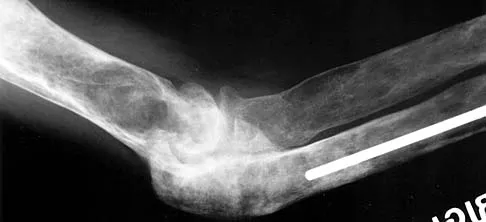
Figure 40 shows the radiograph of a 30-year-old woman who has a painful elbow. Examination reveals a deformed skull, multiple cafe-au-lait spots, and bone deformities. What is the most likely diagnosis?
Explanation
Question 6
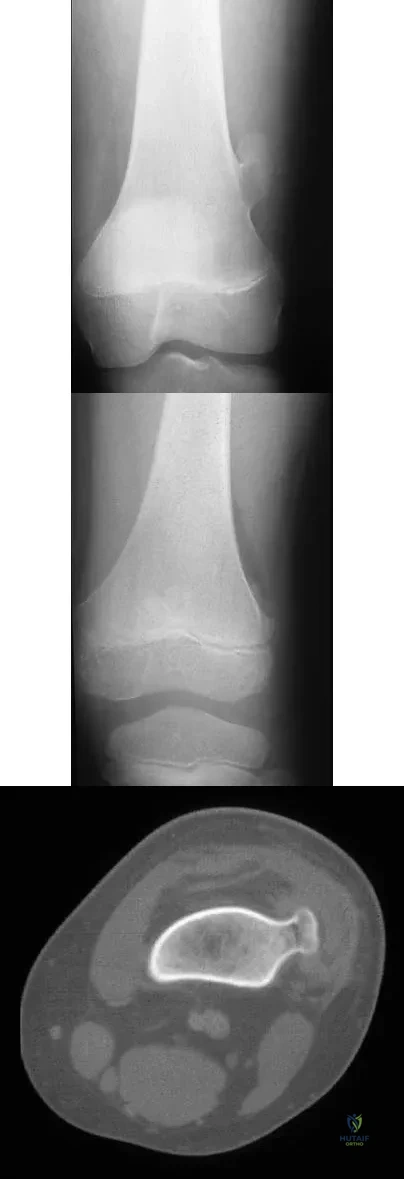
Figure 41a shows the AP radiograph of a 15-year-old boy who reports lateral knee pain. Figures 41b and 41c show a radiograph of the distal femur that was obtained 5 years ago and a current CT scan. The indication for surgery in this patient would be
Explanation
Question 7
In what decade does the peak incidence of conventional osteosarcoma occur?
Explanation
Question 8
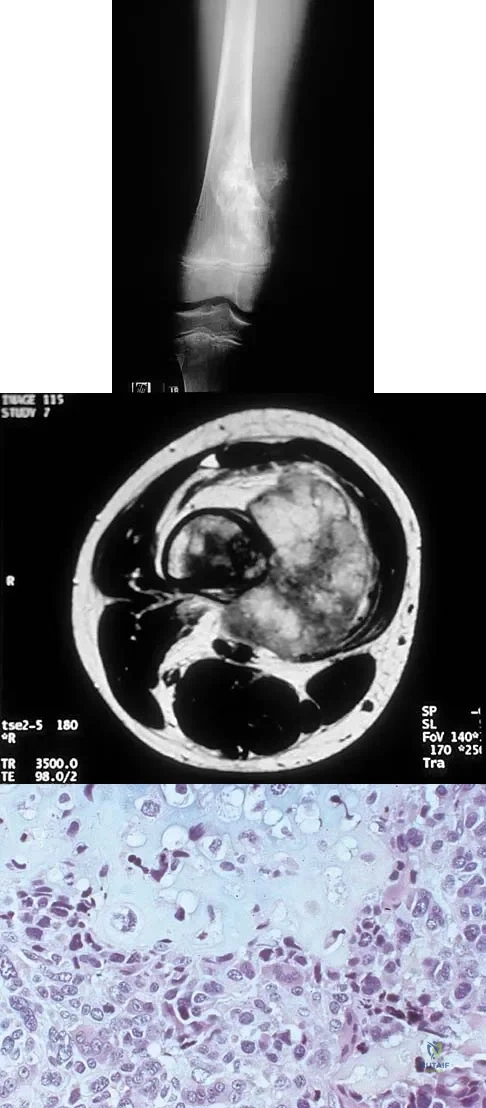
A 10-year-old boy has a painful thigh mass. A radiograph, MRI scan, and biopsy specimen are shown in Figures 42a through 42c. What is the most likely diagnosis?
Explanation
Question 9
A 21-year-old man with neurofibromatosis and multiple cutaneous neurofibromas has a rapidly enlarging painless mass on his buttock. Examination reveals a nontender, well-defined 6- x 6-cm soft-tissue mass that is deep to the fascia. The best course of action should be to order
Explanation
Question 10
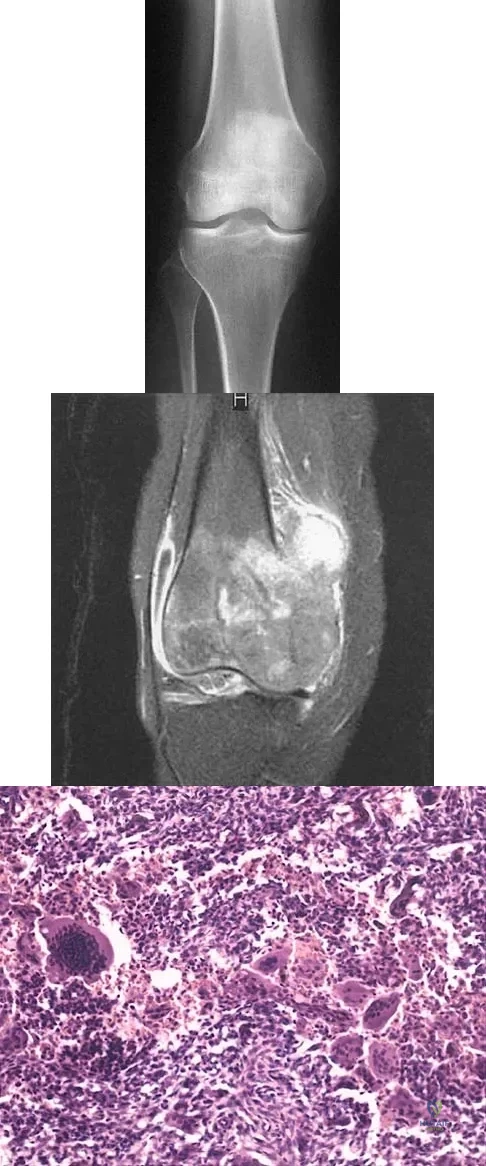
A 21-year-old man has had progressive right knee pain for the past 2 months that is exacerbated with weight-bearing activities. A plain radiograph and an MRI scan are shown in Figures 43a and 43b. A biopsy specimen is shown in Figure 43c. According to the Enneking staging system of tumor classification, the lesion should be classified as what stage?
Explanation
Question 11
What is a common clinical finding in patients with severe hypercalcemia secondary to bony metastasis?
Explanation
Question 12
What cell type causes the bone destruction in metastatic lesions?
Explanation
Question 13
What is the most common malignant bone tumor seen in patients with multiple hereditary exostosis?
Explanation
Question 14
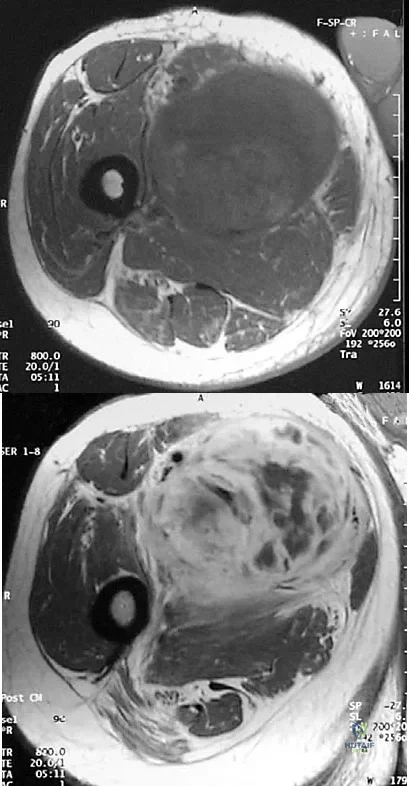
An athletic 55-year-old man reports a painless mass in the anterior aspect of the thigh that appeared 3 weeks ago and has not changed in size. The patient denies any history of trauma. Examination reveals a firm, well-defined nontender mass in the anterior thigh and no inguinal adenopathy or cutaneous changes. Plain radiographs are unremarkable. T1- and T2-weighted MRI scans are shown in Figures 44a and 44b. What is the most likely diagnosis?
Explanation
Question 15
Epithelioid sarcoma most commonly occurs in which of the following anatomic locations?
Explanation
Question 16
What common cytologic abnormality is associated with Ewing's sarcoma?
Explanation
Question 17
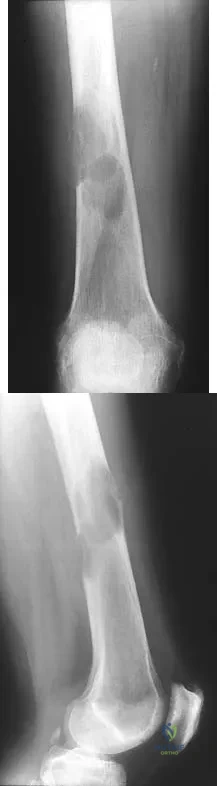
Figures 45a and 45b show the radiographs of a 46-year-old man who reports the acute onset of right knee pain and is unable to bear weight on the extremity. His medical history is unremarkable. The next most appropriate step in management should consist of
Explanation
Question 18
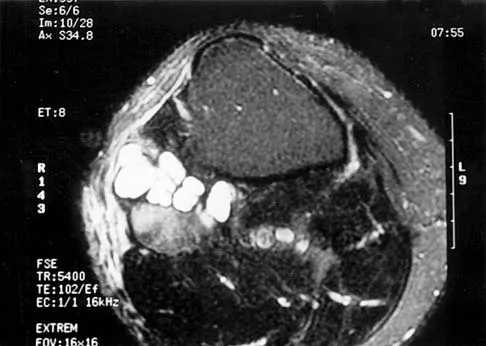
Figure 46 shows the MRI scan of a patient who has a mass in the calf that has been fluctuating in size. Radiographs are negative. Which of the following procedures will most quickly aid in confirming the diagnosis?
Explanation
Question 19
What are the five most common tumors that metastasize to bone?
Explanation
Question 20
Pain associated with a proximal medial tibial osteochondroma in a 10-year-old patient is most commonly the result of
Explanation
Question 21
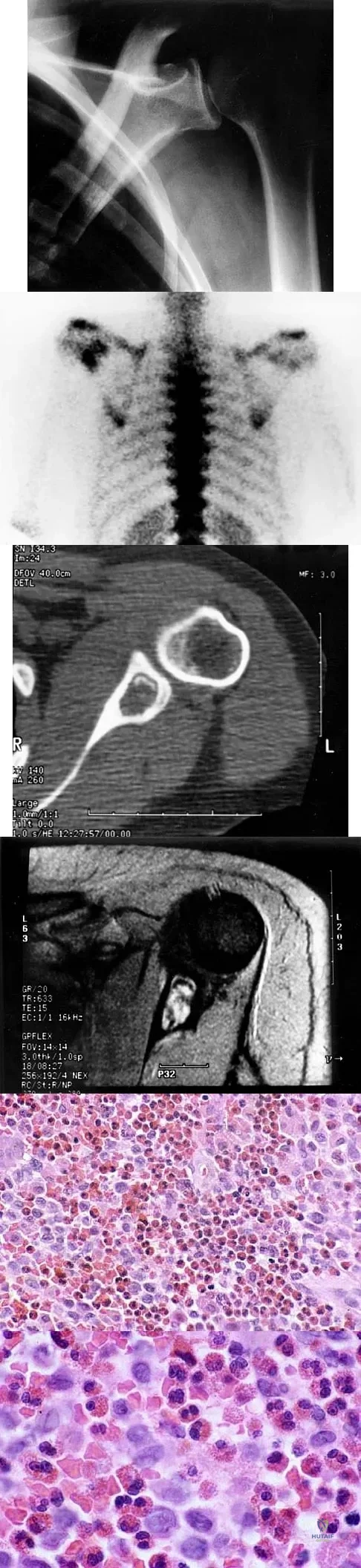
Figures 47a through 47f show the AP radiograph, bone scan, CT scan, MRI scan, and biopsy specimens of a 30-year-old woman who has had vague left shoulder pain for 1 year. Management should consist of
Explanation
Question 22
What is the 5-year overall survival rate for adults with high-grade soft-tissue sarcomas?
Explanation
Question 23
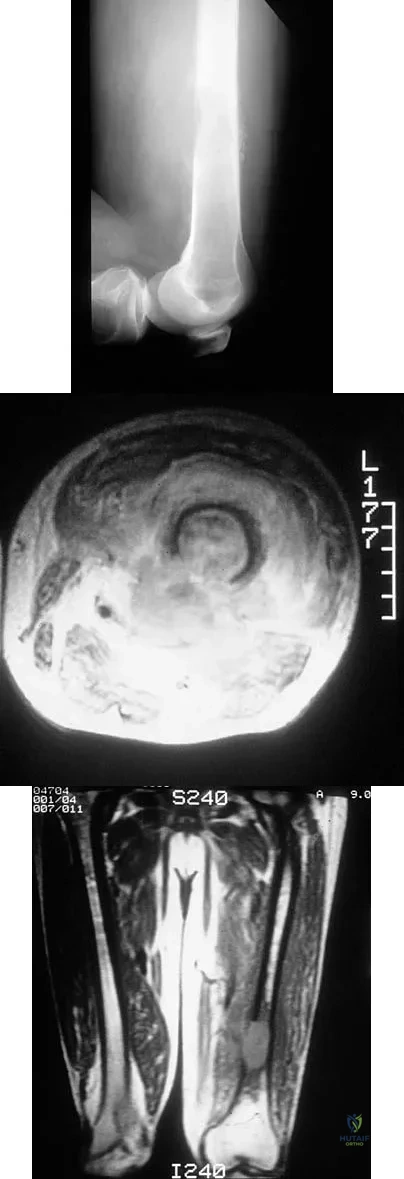
Figures 48a through 48c show the lateral radiograph and MRI scans of a 60-year-old man who has had pain in his thigh for 1 month. The next most appropriate step in management should consist of
Explanation
Question 24
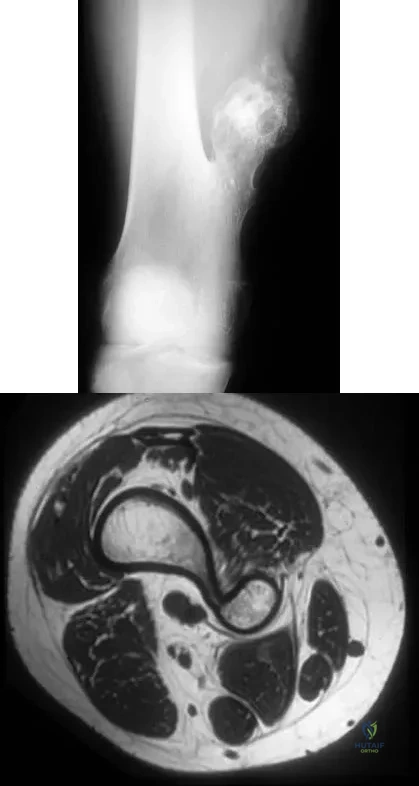
A 17-year-old boy has had a mass in his right thigh for the past 6 months. He denies any history of trauma. Examination reveals that the mass is painless and firm. A radiograph and axial MRI scan are shown in Figures 49a and 49b. What is the most likely diagnosis?
Explanation
Question 25
Evaluation of the percent of necrosis in the resected specimen after preoperative chemotherapy is of prognostic value for what type of sarcoma?
Explanation
Question 26
Which of the following manufacturing processes is most effective at reducing the wear rate of ultra-high-molecular-weight polyethylene (UHMWPE) while minimizing the risk of long-term in vivo oxidation?
Explanation
Question 27
A solid cylindrical intramedullary nail has a radius of 'r'. If the radius is doubled to '2r', the bending stiffness of the solid nail increases by a factor of:
Explanation
Question 28
Which of the following molecules acts as an endogenous soluble decoy receptor to inhibit osteoclastogenesis by binding to RANK Ligand (RANKL)?
Explanation
Question 29
A dynamic splint is applied to a patient's elbow to treat a flexion contracture. Over time, the tension in the elastic band of the splint decreases despite the elbow remaining locked in the exact same position. This viscoelastic phenomenon is best described as:
Explanation
Question 30
The combination of a titanium femoral stem and a cobalt-chromium femoral head in total hip arthroplasty relies on a passivation layer to resist corrosion. If this oxide layer is repeatedly breached by micromotion at the head-neck junction, the resulting degradation is most accurately termed:
Explanation
Question 31
Which of the following orthopedic implant materials possesses a modulus of elasticity most closely resembling that of human cortical bone?
Explanation
Question 32
According to Perren's strain theory, what is the maximum interfragmentary strain that can be tolerated for primary (direct) bone healing to occur without the formation of an intermediate callus?
Explanation
Question 33
An orthopedic surgeon is selecting a non-locking cortical screw for fracture fixation. Which of the following design modifications will most significantly increase the screw's pullout strength from bone?
Explanation
Question 34
Romosozumab is a monoclonal antibody used in the treatment of severe osteoporosis. It exerts its primarily anabolic bone effect by targeting and inhibiting which of the following proteins?
Explanation
Question 35
Which of the following alterations occurs when a radiopacifier such as barium sulfate or zirconium dioxide is added to polymethylmethacrylate (PMMA) bone cement?
Explanation
Question 36
During tensile testing of a human anterior cruciate ligament, the initial non-linear 'toe region' of the load-deformation curve is primarily caused by:
Explanation
Question 37
When applying a bridge plate to a comminuted femoral shaft fracture, intentionally increasing the working length of the plate will have which of the following biomechanical effects?
Explanation
Question 38
Alumina and zirconia ceramics are utilized in total hip arthroplasty primarily for their excellent wear characteristics. Which of the following best describes the mechanical properties of these materials compared to cobalt-chromium alloys?
Explanation
Question 39
Parathyroid hormone (PTH) helps maintain calcium homeostasis through its action on bone, intestines, and kidneys. In the kidney, PTH stimulates the production of the active form of Vitamin D by upregulating which enzyme?
Explanation
Question 40
Osteoclasts resorb bone by creating an isolated, acidic microenvironment known as the Howship lacuna. Which of the following is primarily responsible for degrading the organic collagenous matrix of bone during this process?
Explanation
Question 41
The 'screw-home' mechanism in the native knee is characterized by which of the following obligatory kinematic motions during terminal extension?
Explanation
Question 42
In a highly osteoporotic distal femur fracture treated with a modern locking plate, the stability of the construct relies primarily on:
Explanation
Question 43
Following an anterior cruciate ligament reconstruction utilizing a soft-tissue hamstring autograft, the graft typically secures within the osseous tunnels via which healing mechanism?
Explanation
Question 44
An orthopedic surgeon is meticulously contouring a reconstruction plate for a complex pelvic ring injury. Which of the following implant materials is most notoriously susceptible to fatigue failure if deeply scratched or notched during bending?
Explanation
Question 45
Which of the following best describes the phenomenon of stress relaxation in a viscoelastic material such as a tendon?
Explanation
Question 46
Which of the following orthopaedic biomaterials has a Young's modulus closest to that of human cortical bone?
Explanation
Question 47
Denosumab is an effective pharmacological treatment for osteoporosis and giant cell tumor of bone. What is its specific mechanism of action?
Explanation
Question 48
Highly cross-linked ultra-high-molecular-weight polyethylene (UHMWPE) was developed primarily to address which of the following issues in total hip arthroplasty?
Explanation
Question 49
According to Perren's strain theory of fracture healing, what type of tissue forms first when the interfragmentary strain is between 2% and 10%?
Explanation
Question 50
Which of the following geometric modifications to a cortical bone screw will most effectively increase its pull-out strength?
Explanation
Question 51
Galvanic corrosion in orthopaedic implants is most likely to occur under which of the following circumstances?
Explanation
Question 52
In which zone of normal articular cartilage are the collagen fibers oriented parallel to the joint surface to primarily resist shear forces?
Explanation
Question 53
Sclerostin, a protein product of the SOST gene, regulates bone mass primarily by acting as a negative regulator of which of the following pathways?
Explanation
Question 54
Ceramic-on-ceramic bearings in total hip arthroplasty exhibit which of the following mechanical properties compared to metal-on-polyethylene bearings?
Explanation
Question 55
The "toe region" of the load-elongation curve for a normal ligament represents which of the following physiological events?
Explanation
Question 56
Which of the following statements regarding the properties of polymethylmethacrylate (PMMA) bone cement is true?
Explanation
Question 57
Bone morphogenetic proteins (BMPs) primarily exert their osteoinductive cellular effects by initiating intracellular signaling through which of the following molecules?
Explanation
Question 58
Which of the following biologic properties is characteristic of a fresh autogenous cancellous bone graft but is NOT typically found in a structural cortical allograft?
Explanation
Question 59
In a bridge plating construct for a comminuted diaphyseal fracture, increasing the working length of the plate has which of the following biomechanical effects?
Explanation
Question 60
Nitrogen-containing bisphosphonates are frequently used to alter bone metabolism in orthopaedic patients. They achieve their effect primarily by which of the following mechanisms?
Explanation
Question 61
Nitinol, commonly used in orthopaedic staples, stents, and suture anchors, is a shape-memory alloy composed primarily of which two elements?
Explanation
Question 62
Which of the following zones of the normal physis (growth plate) is the primary site of cellular proliferation and is intrinsically abnormal in patients with achondroplasia?
Explanation
Question 63
In a metal-on-polyethylene total hip arthroplasty, the generation of submicron polyethylene wear debris most commonly initiates an inflammatory osteolysis cascade mediated primarily by which cell type?
Explanation
Question 64
Type I collagen is the most abundant structural protein in the extracellular matrix of bone. Genetic mutations in Type I collagen genes (COL1A1 or COL1A2) are the primary cause of which of the following disorders?
Explanation
Question 65
Compared to conventional ultra-high-molecular-weight polyethylene (UHMWPE), highly cross-linked polyethylene used in total joint arthroplasty exhibits which of the following mechanical properties?
Explanation
Question 66
During material testing, a specimen undergoes a stress-strain analysis. The total area under the stress-strain curve up to the point of failure represents which of the following material properties?
Explanation
Question 67
A 70-year-old woman with severe osteoporosis is started on denosumab. This medication improves bone density by directly targeting and neutralizing which of the following?
Explanation
Question 68
The pullout strength of a cortical screw used for fracture fixation is directly proportional to which of the following parameters?
Explanation
Question 69
Which of the following orthopedic implant materials possesses a modulus of elasticity most closely resembling that of human cortical bone?
Explanation
Question 70
In bridge plating of a comminuted diaphyseal fracture, decreasing the working length of the plate will have what biomechanical effect on the construct?
Explanation
Question 71
According to Perren strain theory, what is the maximum allowable interfragmentary strain that permits primary (direct) bone healing to occur?
Explanation
Question 72
A patient undergoes revision of a metal-on-polyethylene total hip arthroplasty due to a grossly loose femoral stem. Intraoperatively, black debris and pitting are noted specifically at the modular head-neck junction.
What is the primary mechanism of this degradation?
Explanation
Question 73
During the incorporation of a massive structural cortical bone allograft, which cellular process occurs first during creeping substitution?
Explanation
Question 74
Polymethylmethacrylate (PMMA) bone cement is primarily utilized in total joint arthroplasty for implant fixation. Biomechanically, PMMA exhibits its greatest strength against which of the following forces?
Explanation
Question 75
A 65-year-old woman is prescribed teriparatide for severe osteoporosis. The anabolic effect of this medication on bone mass is primarily mediated by which of the following mechanisms?
Explanation
Question 76
During total hip arthroplasty templating, medializing the acetabular component and increasing the femoral offset will have what effect on the hip joint biomechanics?
Explanation
Question 77
Which of the following is the most notable disadvantage of using a ceramic-on-ceramic bearing surface in total hip arthroplasty compared to metal-on-polyethylene?
Explanation
Question 78
Osteoclasts are responsible for bone resorption during remodeling. From which of the following cell lineages are mature osteoclasts derived?
Explanation
Question 79
During the clinical Lachman test, rapid translation of the tibia produces a stiffer response from the anterior cruciate ligament (ACL) than slow translation. This load-rate dependent behavior is characteristic of which material property?
Explanation
Question 80
Using a titanium screw through a 316L stainless steel plate in an aqueous physiologic environment increases the risk of which type of corrosion?
Explanation
Question 81
An orthopedic surgeon decides to ream a femoral shaft fracture to accommodate a larger diameter solid intramedullary nail. The torsional rigidity of the selected solid cylindrical nail is proportional to its radius raised to which power?
Explanation
Question 82
Which of the following constitutes the most abundant organic component of the extracellular matrix of human bone?
Explanation
Question 83
To reduce oxidative degradation of conventional UHMWPE after sterilization with gamma irradiation, modern manufacturing processes incorporate a thermal treatment known as remelting. What is the primary negative biomechanical consequence of this remelting process?
Explanation
Question 84
A 65-year-old active man undergoes a total hip arthroplasty using highly cross-linked polyethylene (HXLPE). While this material significantly reduces wear, the cross-linking and subsequent thermal melting processes reduce which of the following mechanical properties, predisposing thin components to failure?
Explanation
Question 85
To maximize the pullout strength of a cortical screw used in a diaphyseal fracture, which of the following design modifications is most effective?
Explanation
Question 86
A 60-year-old patient presents with a painful total hip arthroplasty 5 years after the index procedure. Aspiration is negative for infection. Revision surgery reveals black debris and macroscopic damage at the modular head-neck taper junction. Which type of corrosion is most likely responsible for this failure?
Explanation
Question 87
A 45-year-old woman presents with progressive diffuse bone pain, muscle weakness, and multiple stress fractures. Lab tests reveal severe hypophosphatemia, normal serum calcium, and markedly elevated FGF-23 levels. Which of the following best describes the pathogenesis of her condition?
Explanation
Question 88
In evaluating the biomechanical behavior of ligaments, a constant static load is applied to a ligamentous specimen over a prolonged period. It is observed that the specimen undergoes a progressive increase in deformation over time. This viscoelastic property is termed:
Explanation
Question 89
A 70-year-old woman with severe osteoporosis is treated with romosozumab, a monoclonal antibody that targets sclerostin. By inhibiting sclerostin, this medication primarily enhances bone formation through which of the following cellular mechanisms?
Explanation
Question 90
During a cemented total knee arthroplasty, polymethylmethacrylate (PMMA) is utilized for component fixation. Which of the following statements regarding the biomechanical properties and function of PMMA is true?
Explanation
Question 91
During mechanical testing of a novel titanium alloy plate, the material is loaded in tension until catastrophic failure occurs. The total area under the stress-strain curve prior to failure represents the material's:
Explanation
Question 92
Alumina and zirconia are common ceramic materials used in total hip arthroplasty bearings. Yttria-stabilized zirconia has higher fracture toughness than pure alumina due to a microstructural phenomenon known as:
Explanation
Question 93
Radiographic evaluation of a patient 2 years after an uncemented total hip arthroplasty shows proximal femoral bone resorption. This phenomenon, known as stress shielding, can be minimized by selecting a stem material with an elastic modulus closer to that of cortical bone. Which of the following solid metals best fits this description?
Explanation
Question 94
Articular cartilage exhibits complex biphasic viscoelastic behavior. Under rapid, heavy compressive loading, the initial resistance to deformation is primarily provided by:
Explanation
Question 95
Continuous hypersecretion of parathyroid hormone (PTH) leads to net bone resorption. However, once-daily subcutaneous administration of teriparatide results in net bone formation. This anabolic effect of intermittent PTH is primarily mediated by:
Explanation
Question 96
An intramedullary nail is used to stabilize a transverse midshaft femur fracture. If the surgeon chooses to ream the canal and insert a solid nail with a diameter of 12 mm instead of 10 mm, the torsional rigidity of the nail increases by approximately what factor?
Explanation
Question 97
Secondary fracture healing with callus formation is typically seen with cast immobilization or intramedullary nailing. Which of the following local factors strongly dictates the differentiation of mesenchymal stem cells into chondrocytes during the early stages of this process?
Explanation
None
