العربية
Part of the Master Guide

AAOS & ABOS Basic Science MCQs (Set 3): Bone Biology, Biomechanics & Anatomy Review

AAOS Basic Science MCQs (Set 1): Biomechanics & Bone Biology | ABOS Board Prep
27 Apr 2026 53 min read 101 Views
Basic Science 2006 MCQs - Part 1

Key Takeaway

This high-yield question set for the AAOS/ABOS exams focuses on fundamental orthopedic basic science. Topics include musculoskeletal biomechanics principles, bone physiology and healing processes, as well as essential orthopedic pharmacology. Prepare for board certification with these comprehensive Set 1 practice questions.

AAOS Basic Science MCQs (Set 1): Biomechanics & Bone Biology | ABOS Board Prep

Comprehensive 100-Question Exam


00:00

Start Quiz

Question 1

A 20-year-old woman with a history of subtotal meniscectomy has a painful knee. What associated condition is a contraindication to proceeding with a meniscal allograft?
Basic Science 2006 Practice Questions: Set 1 (Solved) - Figure 1


Explanation

Patients with significant joint malalignment place increased stresses on the allograft, and this malalignment must be corrected to decrease the likelihood of meniscal allograft failure. None of the other options would lead to failure of the allograft.

Question 2

Long bone fracture repair following intramedullary stabilization occurs primarily through which of the following healing mechanisms?
Basic Science 2006 Practice Questions: Set 1 (Solved) - Figure 2


Explanation

The mechanical environment represents a major factor in the type of healing that occurs after a fracture. Intramedullary nail fixation allows for motion at the fracture site, which promotes bone formation both directly (intramembranous ossification) and through a cartilage intermediate (endochondral ossification). Absolute stability, as would be obtained with a compression plate, favors healing through the direct formation of bone without a cartilage intermediate (intramembranous ossification), or primary fracture repair. This type of healing would include the remodeling of the bone ends through the direct contact of bone, often referred to as contact healing or haversian remodeling. Buckwalter JA, Einhorn TA, Simon SR (eds): Orthopaedic Basic Science: Biology and Biomechanics of the Musculoskeletal System, ed 2. Rosemont, IL, American Academy of Orthopaedic Surgeons, 2000, pp 385-386.

Question 3

The acceleration of an object under the influence of a force depends directly on the mass of the object. The angular acceleration of an object under the influence of a moment depends directly on the
Basic Science 2006 Practice Questions: Set 1 (Solved) - Figure 3


Explanation

Similar to the action of a force, a moment tends to angularly accelerate an object in a manner proportional to a quantity related to the mass of the object. The concept of a more massive object requiring a larger force to cause the same straight line acceleration is straightforward. The concept for changing angular velocity is similar but not identical. The proportional constant between the moment and the resulting angular acceleration is the mass moment of inertia, which depends not only on the mass of the object, but also its distribution. The unit of mass moment of inertia is obtained by multiplying the mass of the object by the square of the distance between an equivalent location of the center of rotation of the object and an equivalent location of the center of mass. Orthopaedic surgeons can change both the amount of mass carried by a limb and the way that the mass is distributed. For example, in applying a cast to the leg, the physician can affect the mass of the cast by the choice of casting material and by the size of the cast. As the mass moment of inertia of the limb increases (eg, by applying the cast farther down on the leg or using a heavier casting material), the patient will need to exert larger moments to angularly accelerate the leg during gait. Andriacchi T, Natarajan RN, Hurwitz DE: Musculoskeletal dynamics, locomotion, and clinical applications, in Mow VC, Hayes WC (eds): Basic Orthopaedic Biomechanics, ed 2. New York, NY, Lippincott-Raven, 1997, pp 43-47.

Question 4

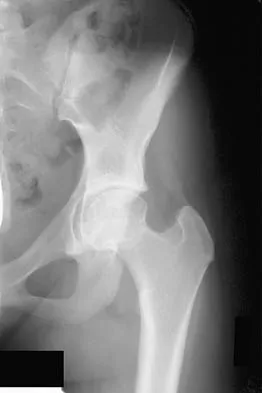
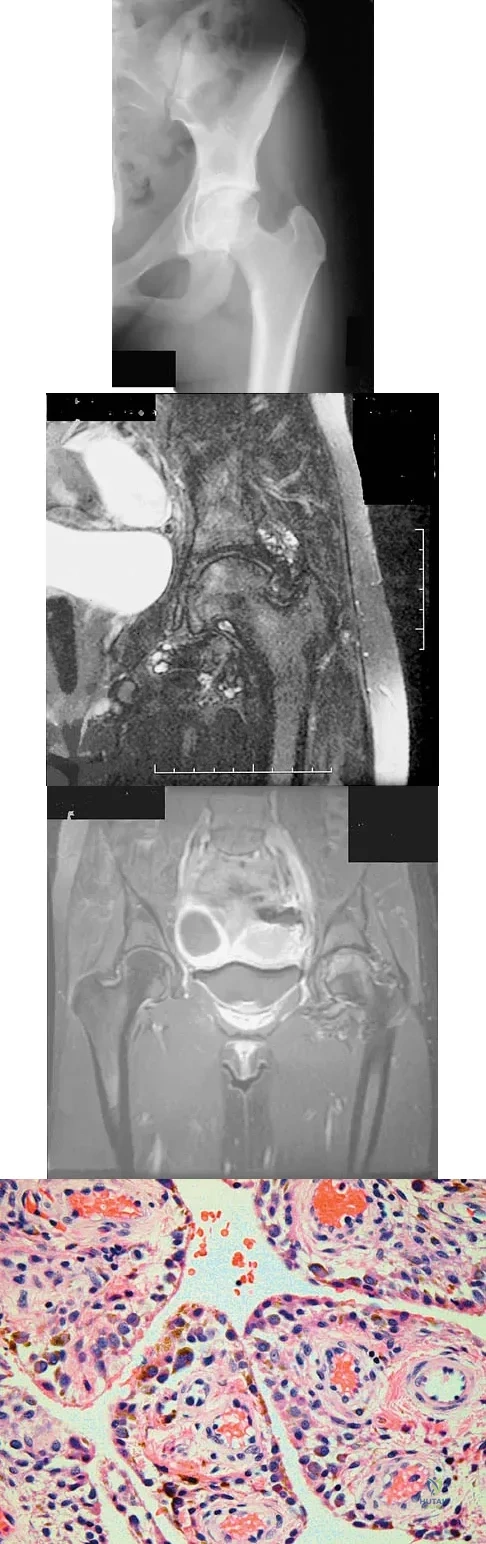
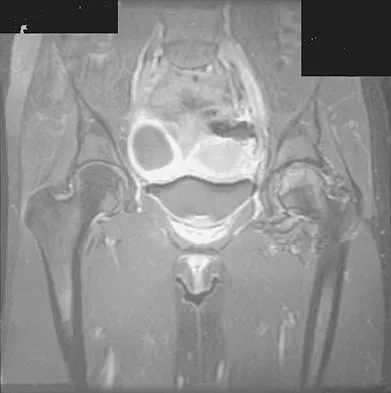
Figures 1a through 1c show the radiograph and MRI scans of a 16-year-old patient who has a painful hip. Examination reveals a significant limp, limited abduction and internal rotation, and severe pain with internal rotation and adduction. A biopsy specimen is shown in Figure 1d. What is the deposited pigment observed in this condition?


Explanation

Pigmented villonodular synovitis (PVNS) is a synovial proliferative disorder that remains a diagnostic difficulty. The most common clinical features are mechanical pain and limited joint motion. On radiographs, the classic finding is often a large lesion, associated with multiple lucencies. Other findings may include a normal radiographic appearance, loss of joint space, osteonecrosis of the femoral head, or acetabular protrusion. MRI is the imaging modality of choice and will show the characteristic findings of a joint effusion, synovial proliferation, and bulging of the hip. The synovial lining has a low signal on T1- and T2-weighted images, secondary to hemosiderin deposition. Copper deposition occurs in patients with Wilson's disease, which mainly affects the liver. Bhimani MA, Wenz JF, Frassica FJ: Pigmented villonodular synovitis: Keys to early diagnosis. Clin Orthop 2001;386:197-202.

Question 5

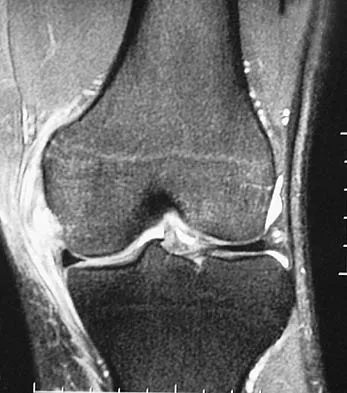
Titanium and its alloys are unsuitable candidates for which of the following implant applications?
Basic Science 2006 Practice Questions: Set 1 (Solved) - Figure 8


Explanation

Titanium alloy is highly biocompatible, has higher strength than stainless steel, and is highly resistant to corrosion. It is particularly suited for use in fracture plates, bone screws, and intramedullary nails because of its low modulus of elasticity (low stiffness), which can reduce stress shielding. It is also widely used for porous-ingrowth coatings. However, clinical experience has shown that titanium alloy bearing surfaces such as a femoral ball are highly susceptible to severe metallic wear, particularly in the presence of third-body abrasive particles (PMMA fragments, bone chips, metal debris, etc). McKellop HA, Sarmiento A, Schwinn CP, et al: In vivo wear of titanium-alloy hip prostheses. J Bone Joint Surg Am 1990;72:512-517. Salvati EA, Betts F, Doty SB: Particulate metallic debris in cemented total hip arthroplasty. Clin Orthop 1993;293:160-173.

Question 6

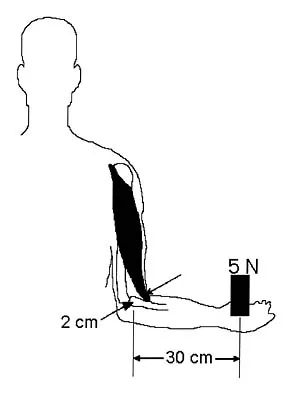
What percent of patients initially diagnosed with classic, high-grade osteosarcoma of the extremity have visible evidence of pulmonary metastasis on CT of the chest?
Basic Science 2006 Practice Questions: Set 1 (Solved) - Figure 9


Explanation

CT studies show that approximately 10% to 20% of patients with high-grade osteosarcoma have pulmonary metastases at diagnosis. Although not visible on current staging studies, it is believed that up to 80% of patients have micrometastatic disease that requires systemic chemotherapy. Because it is not possible to identify those patients who do not have disseminated micrometastatic disease, most patients are treated presumptively with chemotherapy. Kaste SC, Pratt CB, Cain AM, et al: Metastases detected at the time of diagnosis of primary pediatric extremity osteosarcoma at diagnosis: Imaging features. Cancer 1999;86:1602-1608.

Question 7

Staphylococcus aureus develops methicillin resistance through production of which of the following agents?


Explanation

Organisms may develop resistance to antibiotics by production of specific enzymes. S aureus develops methicillin resistance by production of penicillin-binding protein 2a (PBP2a). The strains of S aureus that have acquired the mecA gene for PBP2a are designated as methicillin-resistant S aureus (MRSA). The enzyme manifests resistance to covalent modification by beta-lactam antibiotics at the active-site serine residue in two ways. First, the microscopic rate constant for acylation (k2) is attenuated by three to four orders of magnitude over the corresponding determinations for penicillin-sensitive PBPs. Second, the enzyme shows elevated dissociation constants (Kd) for the noncovalent preacylation complexes with the antibiotics, the formation of which ultimately would lead to enzyme acylation. The two factors working in concert effectively prevent enzyme acylation by the antibiotics in vivo, giving rise to drug resistance. Catalase and oxidase are enzymes produced by some bacteria that confer virulence to the organism but do not make the organisms methicillin resistant. Glycocalix is the pericellular layer produced by bacteria that serves many functions including attachment to surfaces. Beta-lactam describes a class of antibiotics. Fuda C, Suvorov M, Vakulenko SB, et al: The basis for resistance to beta-lactam antibiotics by penicillin-binding protein 2a (PBP2a) of methicillin-resistant staphylococcus aureus. J Biol Chem 2004;279:40802-40806. Lim D, Strynadka NC: Structural basis for the beta lactam resistance of PBP2a from methicillin-resistant Staphylococcus aureus. Nat Struct Biol 2002;9:870-876.

Question 8

A 30-year-old man reports pain and weakness in his right arm. Examination reveals grade 4 strength in wrist flexion and elbow extension, decreased sensation over the middle finger, and decreased triceps reflex. These symptoms are most compatible with impingement on what spinal nerve root?


Explanation

Motor impulses to the triceps, wrist flexion and elbow extension, and sensation to the middle finger are associated most commonly with the C7 root. Hoppenfeld S: Physical Examination of the Spine and Extremities. Upper Saddle River, NJ, Prentice Hall, 1976, p 125.

Question 9

Why is tendon considered an anisotropic material?


Explanation

Anisotropic materials have mechanical properties that vary based on the direction of loading. The relative values of Young's modulus for tendon, ligament, and bone are not relevant to isotropy. The mechanical properties of tendon do change with preconditioning, but this change is related to viscoelasticity. The intrinsic mechanical properties of tendon do vary with the rate of loading, but this variance is related to viscoelasticity. Buckwalter JA, Einhorn TA, Simon SR (eds): Orthopaedic Basic Science: Biology and Biomechanics of the Musculoskeletal System, ed 2. Rosemont, IL, American Academy of Orthopaedic Surgeons, 2000, pp 134-180.

Question 10

What does Dual Energy X-ray Absorptiometry (DEXA) testing, as a technique, measure?


Explanation

DEXA can provide data on bone mineral content and soft-tissue composition, and requires cross-sectional dimension for accuracy. DEXA provides a quantitative, not qualitative, measurement of bone mineral content and is incapable of differentiating between trabecular and cortical bone. Osteoarthritis falsely elevates the values, especially in the AP spinal analysis. Genant HK, Faulkner KG, Gluer CC: Measurement of bone mineral density: Current status. Am J Med 1991;91:49S-53S. Genant HK, Engelke K, Fuerst T, et al: Review: Noninvasive assessment of bone mineral density and stature: State of the art. J Bone Miner Res 1996;11:707-730.

Question 11

A 20-year-old athlete sustains a 2- x 3-cm grade IV chondral injury to the right knee. After failure of nonsurgical management, which of the following procedures would ensure the highest percentage of hyaline-like cartilage?


Explanation

Autologous chondrocyte implantation was first reported by Brittberg in 1994 and has resulted in predominantly type II collagen (hyaline-like articular cartilage) in the repair tissue. The extracellular matrix in articular cartilage is made up primarily of type II collagen, proteoglycans, and water. Arthroscopic chondroplasty, microfracture, drilling, and abrasion arthroplasty all result eventually in fibrocartilage fill of the defect (predominantly type I collagen). Brittberg M, Lindahl A, Nilsson A, et al: Treatment of deep cartilage defects in the knee with autologous chondrocyte transplantation. N Engl J Med 1994;331:889-895.

Question 12

Which of the following changes to heart rate, blood pressure, and bulbocavernosus reflex are typical of spinal shock?


Explanation

The term 'spinal shock' applies to all phenomena surrounding physiologic or anatomic transection of the spinal cord that results in temporary loss or depression of all or most spinal reflex activity below the level of the injury. Hypotension and bradycardia caused by loss of sympathetic tone is a possible complication, depending on the level of the lesion. The mechanism of injury that causes spinal shock is usually traumatic in origin and occurs immediately, but spinal shock has been described with mechanisms of injury that progress over several hours. Spinal cord reflex arcs immediately above the level of injury also may be depressed severely on the basis of the Schiff-Sherrington phenomenon. The end of the spinal shock phase of spinal cord injury is signaled by the return of elicitable abnormal cutaneospinal or muscle spindle reflex arcs. Autonomic reflex arcs involving relay to secondary ganglionic neurons outside the spinal cord may be affected variably during spinal shock, and their return after spinal shock abates is variable. The returning spinal cord reflex arcs below the level of injury are irrevocably altered and are the substrate on which rehabilitation efforts are based.

Question 13

What is the primary intracellular signaling mediator for bone morphogenetic protein (BMP) activity?


Explanation

BMPs signal through the activation of a transmembrane serine/threonine kinase receptor that leads to the activation of intracellular signaling molecules called SMADs. There are currently eight known SMADs, and the activation of different SMADs within a cell leads to different cellular responses. The other mediators are not believed to be directly involved with BMP signaling. Lieberman J, Daluiski A, Einhorn TA: The role of growth factors in the repair of bone: Biology and clinical applications. J Bone Joint Surg Am 2002;84:1032-1044. Li J, Sandell LJ: Transcriptional regulation of cartilage-specific genes, in Rosier RN, Evans C (eds): Molecular Biology in Orthoapedics, Rosemont, IL, American Academy of Orthopaedic Surgeons, 2002, pp 21-24.

Question 14

Which of the following properties primarily provides the excellent corrosion resistance of metallic alloys such as stainless steel and cobalt-chromium-molybdenum?


Explanation

All of the metals and metallic alloys used in orthopaedic surgery obtain their corrosion resistance from an adherent oxide layer. For stainless steel and cobalt alloy, the addition of chromium as an alloying element ensures the formation of a chromium oxide passive layer that forms on the surface and separates the bulk material from the corrosive body environment. Titanium alloy achieves the same result without chromium by forming an adherent passive layer of titanium oxide. Although these layers can indeed be hard, hardness does not in and of itself provide corrosion resistance. Adding nickel to both metallic alloys adds to strength but does not influence corrosion resistance appreciably. Galvanic potential can influence corrosion but does so by differences in potential between two contacting materials; for example, stainless steel and cobalt alloy have substantially different potentials, and if they were in contact within an aqueous environment, corrosion would commence with the stainless steel becoming the sacrificial anode. Metallic carbides are important in strengthening the alloys but have no role in providing corrosion resistance. Williams DF, Williams RL: Degradative effects of the biological environment on metal and ceramics, in Ratner BD, Hoffman AS, Shoen FJ, et al (eds): Biomaterials Science. San Diego, CA, Academic Press, 1996, pp 260-265. Buckwalter JA, Einhorn TA, Simon SR (eds): Orthopaedic Basic Science: Biology and Biomechanics of the Musculoskeletal System, ed 2. Rosemont, IL, American Academy of Orthopaedic Surgeons, 2000, pp 190-193.

Question 15

Which of the following infectious organisms may be associated with underlying malignancy?


Explanation

Evidence implicates an association, albeit unexplained, between Clostridium septicum infection and malignancy, particularly hematologic or intestinal malignancy. The malignancy is often at an advanced stage, compromising survival of the patients. A bowel portal of entry is postulated for most patients. In the absence of an external source in the patient with clostridial myonecrosis or sepsis, the cecum or distal ileum should be considered a likely site of infection. Increased awareness of this association between Clostridium septicum and malignancy, and aggressive surgical treatment, may result in improvement in the present 50% to 70% mortality rate. Other organisms associated with malignancy include group Clostridium streptococci that are occasionally associated with upper gastrointestinal malignancies. Schaaf RE, Jacobs N, Kelvin FM, et al: Clostridium septicum infection associated with colonic carcinoma and hematologic abnormality. Radiology 1980;137:625-627.

Question 16

Immobilization of human tendons leads to what changes in structure and/or function?


Explanation

Recent in vivo and in vitro experiments demonstrate that immobilization of tendon decreases its tensile strength, stiffness, and total weight. Microscopically, there is a decrease in cellularity, overall collagen organization, and collagen fibril diameter.

Question 17

Human menisci are made up predominantly of what collagen type?


Explanation

Type I collagen accounts for more than 90% of the total collagen content. Other minor collagens present include types II, III, V, and VI. Mow VC, Arnoczky SP, Jackson DW (eds): Knee Meniscus: Basic and Clinical Foundations. New York, NY, Raven Press, 1992, p 41.

Question 18

Type II collagen in nondiseased adult human articular cartilage has a half-life that is generally


Explanation

Type II collagen in articular cartilage is amazingly stable. This is important to know because matrix homeostasis generally is associated with minimal synthesis and degradation of type II collagen. Passive glycation has a consistent rate and occurs over decades. The relative amount of glycation in cartilage with age has been used as a measure of stability. Also, the rate of racemization of aspartic acid from the L to D form occurs spontaneously at a very slow rate. The relative stability of collagen can be estimated by calculating the percentage of D aspartic acid per dry weight of type II collagen. Maroudas A, Palla G, Gilav E: Racemization of aspartic acid in human articular cartilage. Connect Tissue Res 1992;28:161-169.

Question 19

What changes in muscle physiology would be expected in an athlete who begins a rigorous aerobic program for an upcoming marathon?


Explanation

Muscle fibers can be categorized grossly into two types. Type I muscle, also known as slow-twitch muscle, is responsible for aerobic, oxidative muscle metabolism. It has a much lower strength and speed of contraction than fast-twitch type II muscle but is significantly more fatigue resistant. With training for endurance sports, the type I muscle undergoes adaptive changes to the increased stress. Increases in capillary density, oxidative capacity, mitochondrial density, and subsequent fatigue resistance are all observed changes. Hypertrophy of type IIb muscle is seen in strength training. Simon SR (ed): Orthopaedic Basic Science. Rosemont, IL, American Academy of Orthopaedic Surgeons, 1994, pp 89-125.

Question 20

When a structure like a long bone is under a bending load, its maximum stress is most dependent on what factor?


Explanation

The maximum stress in a bone occurs at the periosteal surface (the greatest distance from the center of the bone). The magnitude of the stress is equal to the magnitude of the applied moment (M) multiplied by the distance to the surface (roughly the radius of the bone, r) divided by the area moment of inertia (I), so that stress = Mr/I. Of the possible answers, only area moment of inertia of the cross section contains any of these three items. The stress can also depend on the length of the bone, but it cannot be determined without knowing the location at which the bending load is applied, information that was not given in the problem. The type of structural support may influence local stresses where the support contacts the bone, but it has little effect on the maximum stress in the bone. The cross-sectional area is not as important as the area moment of inertia because the stress is not evenly distributed over the cross-section. Plastic modulus is a material property, not a geometric or structural property, and it does not affect stress. Hayes WC, Bouxsein ML: Biomechanics of cortical and trabecular bone: Implications for assessment of fracture risk, in Mow VC, Hayes WC (eds): Basic Orthopaedic Biomechanics, ed 2. New York, NY, Lippincott-Raven, 1997, pp 76-82.

Question 21

A 24-year-old man who works at a local oyster and clam farm sustained a laceration on his hand at work. Examination reveals a cellulitic index finger without evidence of tenosynovitis. After appropriate irrigation and debridement, what antibiotic is most appropriate?


Explanation

Injuries involving brackish water and shellfish can have devastating consequences caused by Vibrio vulnificus infections. Patients may have a severe invasive infection, with three main clinical features: primary septicemia, wound infection, and gastroenteritis. Antibiotic administration is crucial because mortality rates of up to 50% have been observed with Vibrio septicemia. The current recommendation is to give a third-generation cephalosporin such as ceftazadime. Chiang SR, Chuang YC: Vibrio vulnificus infection: Clinical manifestations, pathogenesis, and antimicrobial therapy. J Microbiol Immunol Infect 2003;36:81-88.

Question 22

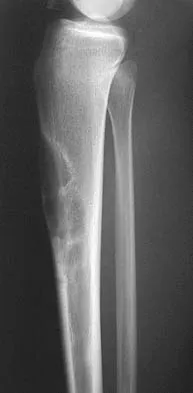
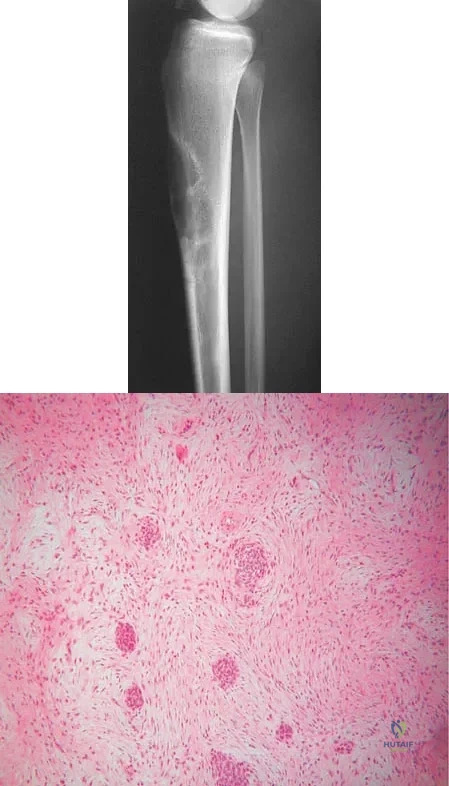
A 16-year-old girl has had anterior leg pain and a mass for the past 8 months. Figures 2a and 2b show a radiograph and an H & E histologic specimen. Which of the following disorders is believed to be a precursor of this lesion?


Explanation

The radiograph and pathology are consistent with adamantinoma. While the mechanism underlying adamantinoma has not been identified, it is believed to be closely related to osteofibrous dysplasia, which may represent a precursor. The other diagnoses are not known to give rise to adamantinoma.

Question 23

Acetaminophen is an antipyretic medication. It exerts its pharmacologic effects by inhibiting which of the following enzymes?


Explanation

Acetaminophen inhibits prostaglandin E2 production via IL-1 B, without affecting cyclooxygenase-2 enzymatic activity. The therapeutic concentrations of acetaminophen induce an inhibition of IL-1 B-dependent NF-kappa B nuclear translocation. The selectivity of this effect suggests the existence of an acetaminophen-specific activity at the transcriptional level that may be one of the mechanisms through which the drug exerts its pharmacologic effects. Acetaminophen does not affect any of the other enzymes named above.

Question 24

Nutritional rickets is associated with which of the following changes in chemical blood level?


Explanation

Nutritional rickets is associated with decreased dietary intake of Vitamin D, resulting in low levels of Vitamin D that result in decreased intestinal absorption of calcium and low to normal serologic levels of calcium. To boost serum calcium levels, there is a compensatory increase in PTH and bone resorption, leading to increased alkaline phosphatase levels. Brinker MR: Cellular and molecular biology, immunology, and genetics in orthopaedics, in Miller MD (ed): Review of Orthopaedics, ed 3. Philadelphia, PA, WB Saunders, 2001, pp 81-94. Pettifor J: Nutritional and drug-induced rickets and osteomalacia, in Farrus MJ (ed): Primer on the Metabolic Bone Diseases and Disorders of Mineral Metabolism, ed 5. Philadelphia, PA, Lippincott Williams and Wilkins, 2003, pp 399-466.

Question 25

What assay most directly assesses gene expression at the posttranslational level?


Explanation

Gene expression at the posttranslational level refers to proteins, as opposed to DNA or RNA. The only assay above that targets protein expression directly is the Western blot. Standard PCR is amplification of targeted DNA segments, regardless of whether or not they are actively expressed. Real-time PCR, Northern blot, and microarray expression profile analysis all quantify RNA as a means to determine posttranscriptional gene expression. Brinker MR: Cellular and molecular biology, immunology, and genetics in orthopaedics, in Miller MD (ed): Review of Orthopaedics, ed 3. Philadelphia, PA, WB Saunders, 2001, pp 81-94.

Question 26

The biphasic model of articular cartilage describes the tissue as a porous, permeable solid phase and an incompressible fluid phase. Under rapid loading of a joint, which mechanism primarily provides the tissue's initial stiffness?


Explanation

The biphasic model accounts for interstitial fluid and the solid extracellular matrix. Under rapid loading, interstitial fluid pressurization supports up to 90% of the applied load, giving cartilage its initial high stiffness.

Question 27

During an ACL reconstruction, a hamstring tendon graft is tensioned and secured at a constant length. Over the first few minutes, the tension within the graft decreases. This viscoelastic phenomenon is known as:


Explanation

Stress relaxation is the decrease in stress (tension) over time when a viscoelastic material is held at a constant length. Creep, conversely, is increasing deformation over time under a constant load.

Question 28

When placing a cortical screw for fracture fixation, which of the following alterations in screw geometry will most significantly increase its pullout strength?


Explanation

Pullout strength of a screw is most strongly proportional to the major (outer) diameter of the screw. Other factors include thread pitch, length of engagement, and the shear strength of the surrounding bone.

Question 29

Sclerostin is a key negative regulator of bone mass. It functions by antagonizing the Wnt signaling pathway. Which cell type is the primary source of sclerostin in the skeletal system?


Explanation

Sclerostin is produced almost exclusively by mature osteocytes. It binds to LRP5/6 receptors on osteoblasts, inhibiting Wnt signaling and thereby decreasing new bone formation.

Question 30

Which of the following bone graft substitutes is considered exclusively osteoconductive and relies entirely on the host bed for cellular and inductive components?


Explanation

Calcium phosphate cement provides a structural scaffold for bone ingrowth (osteoconduction). It completely lacks the osteoinductive proteins (like those found in DBM) or osteogenic cells found in autograft.

Question 31

On a standard stress-strain curve for a structural material such as metal or bone, the point at which the material transitions from completely reversible elastic deformation to permanent plastic deformation is known as the:


Explanation

The yield point marks the end of the linear elastic region. Loading a material past this specific point results in plastic, permanent deformation that will not recover upon load removal.

Question 32

In a bridge plating construct for a comminuted diaphyseal fracture, increasing the working length of the plate (the distance between the closest screws on either side of the fracture) has what primary biomechanical effect?


Explanation

Increasing the working length of a plate decreases the overall bending and torsional stiffness of the construct. This allows for controlled interfragmentary motion, which stimulates secondary bone healing via callus formation.

Question 33

Polyethylene wear in total joint arthroplasty can lead to particulate debris and subsequent osteolysis. The specific mechanism of wear resulting from hard particles (like bone cement fragments) becoming trapped between the articular surfaces is:


Explanation

Third-body wear occurs when independent, hard particles (such as cement debris or bone fragments) become embedded in the polyethylene and abrade the opposing metal or ceramic articular surface.

Question 34

Highly cross-linked polyethylene (HXLPE) is heavily utilized to decrease wear rates in total hip arthroplasty. What is the primary mechanical trade-off or consequence of increasing the cross-linking density in UHMWPE?


Explanation

While cross-linking significantly improves wear resistance, it reduces the material's ductility, yield strength, and fracture toughness. This trade-off makes the polyethylene more susceptible to fatigue-related failure.

Question 35

Galvanic corrosion occurs when two dissimilar metals are in contact within a conductive fluid environment. Which factor primarily dictates the severity and direction of this corrosive process?


Explanation

Galvanic corrosion requires an electrolyte fluid and two metals with differing electrochemical potentials. The less noble (more anodic) metal undergoes accelerated dissolution while the more noble metal is protected.

Question 36

Bone Morphogenetic Proteins (BMPs) play a crucial role in osteoinduction. Following the binding of BMPs to their serine/threonine kinase receptors, which intracellular signaling molecules are directly phosphorylated to translocate to the nucleus?


Explanation

BMPs bind to serine/threonine kinase receptors, leading to the phosphorylation of Smad 1, 5, and 8. These complex with Smad 4 and translocate to the nucleus to regulate transcription of osteogenic genes.

Question 37

The initial "toe region" of the load-elongation curve for a healthy ligament is primarily biomechanically explained by:


Explanation

The initial low-stiffness "toe region" reflects the uncrimping of relaxed, undulating collagen fibrils. Once the fibrils are pulled straight, the tissue enters the stiffer linear elastic phase.

Question 38

Osteoclasts resorb bone by creating an isolated extracellular microenvironment. Which enzyme is essential for generating the intracellular protons required to lower the pH within this sealing zone?


Explanation

Osteoclasts require a highly acidic environment to dissolve hydroxyapatite. Carbonic anhydrase II catalyzes the formation of carbonic acid, which dissociates into protons that are then pumped into the resorption pit.

Question 39

To maximize primary (direct) bone healing, a fracture construct must provide absolute stability. According to Perren's strain theory, direct Haversian remodeling without intermediate callus formation requires the fracture gap strain to be less than:


Explanation

Primary bone healing requires absolute stability with interfragmentary strain maintained at less than 2%. Strains between 2% and 10% are tolerated by granulation tissue and cartilage, promoting secondary healing via callus.

Question 40

During distraction osteogenesis (e.g., Ilizarov bone transport), new bone forms within the distraction gap. This primarily occurs through which underlying biologic process?


Explanation

Distraction osteogenesis generates new bone primarily through intramembranous ossification. The mechanical tension applied to the highly vascularized gap directly stimulates osteoblast differentiation without a cartilage intermediate.

Question 41

To minimize stress shielding around a femoral stem, the implant's material should have a stiffness (modulus of elasticity) as comparable to cortical bone as possible. Which of the following biomaterials most closely approximates the Young's modulus of cortical bone?


Explanation

Titanium alloy has a Young's modulus closer to that of cortical bone compared to stiffer metals like stainless steel or cobalt-chromium. This lower stiffness helps reduce stress shielding and subsequent bone resorption.

Question 42

According to the rule of mixtures, the stiffness of a composite material depends on its distinct components. In normal cortical bone, which component is primarily responsible for providing its tensile strength?


Explanation

Bone is a complex composite material. Type I collagen provides its tensile strength and flexibility, while the inorganic hydroxyapatite mineral primarily provides its compressive strength.

Question 43

You are applying a uniplanar external fixator to a tibia fracture. To maximize the bending stiffness of the construct, altering which parameter of the half-pins will have the most profound mathematical effect?


Explanation

The bending stiffness of a pin is proportional to its area moment of inertia, which scales with the radius to the fourth power (r^4). Thus, increasing the core diameter has the most profound exponential effect on stiffness.

Question 44

Normal articular cartilage is divided into specific structural zones. The deep zone is characterized by which of the following properties when compared to the superficial zone?


Explanation

The deep zone of articular cartilage contains the highest concentration of proteoglycans and the lowest water content. Its thick collagen fibers are oriented perpendicular to the joint surface to firmly anchor the tissue to the subchondral bone.

Question 45

Denosumab is a targeted pharmacological therapy utilized in the treatment of osteoporosis and giant cell tumor of bone. What is its precise mechanism of action at the cellular level?


Explanation

Denosumab is a fully human monoclonal antibody that specifically targets and neutralizes RANKL. By preventing RANKL from binding to its receptor (RANK), it profoundly suppresses osteoclastogenesis and bone resorption.

Question 46

When a constant force is applied to a ligament over an extended period of time, it undergoes a gradual increase in deformation. What is this biomechanical property called?


Explanation

Creep is the progressive deformation of a viscoelastic material under constant load. Stress relaxation, conversely, is the decrease in internal stress over time under constant deformation.

Question 47

Which of the following enzymes is primarily responsible for creating the acidic environment in the resorption pit beneath an active osteoclast?


Explanation

Carbonic anhydrase II generates protons that are pumped across the ruffled border via H+-ATPase to acidify the resorption pit. This acidification is essential for dissolving the inorganic mineral component of bone.

Question 48

For a hollow cylindrical bone undergoing a bending load, the bending stiffness is directly proportional to which of the following geometric properties?


Explanation

Bending stiffness of a long bone is proportional to its area moment of inertia, which depends on the distribution of mass away from the neutral axis. The polar moment of inertia is the equivalent property for torsional loading.

Question 49

Bone morphogenetic proteins (BMPs) induce osteogenesis primarily by signaling through which of the following intracellular pathways?


Explanation

BMPs bind to serine/threonine kinase receptors, leading to the phosphorylation of intracellular Smad 1, 5, and 8. These complex with Smad 4 to translocate into the nucleus and regulate osteogenic gene transcription.

Question 50

In articular cartilage, which structural component is primarily responsible for resisting compressive loads?


Explanation

Proteoglycan aggregates (principally aggrecan) draw water into the cartilage matrix via osmotic pressure, providing compressive stiffness. Type II collagen primarily provides the tensile strength to contain this swelling pressure.

Question 51

The pullout strength of a cortical screw is most heavily influenced by which of the following design parameters?


Explanation

Screw pullout strength is directly proportional to the outer (thread) diameter, thread engagement length, and shear strength of the host bone. Increasing the outer diameter has the greatest impact on increasing pullout resistance.

Question 52

Which transcription factor is considered the master regulator essential for the commitment of mesenchymal stem cells to the osteoblast lineage?


Explanation

Runx2 (Cbfa1) is the core transcription factor required for osteoblast differentiation from mesenchymal stem cells. Mutations in Runx2 cause cleidocranial dysplasia.

Question 53

When a cylindrical long bone is subjected to pure torsional loading, the maximum shear stress occurs at which location?


Explanation

Under torsional loading, shear stress is linearly distributed from zero at the neutral axis to a maximum at the outermost surface of the cylinder. This is why hollow tubes efficiently resist torsion.

Question 54

According to Perren's strain theory, which type of tissue is capable of tolerating the highest amount of interfragmentary strain before rupturing?


Explanation

Granulation tissue can tolerate up to 100% strain without rupturing, allowing early fracture stabilization. Fibrocartilage tolerates about 10-15% strain, whereas cortical bone tolerates only about 2%.

Question 55

Sclerostin is a protein secreted by osteocytes that inhibits bone formation. It accomplishes this by antagonizing which of the following signaling pathways?


Explanation

Sclerostin binds to the LRP5/6 receptors on osteoblasts, competitively inhibiting the canonical Wnt/beta-catenin signaling pathway. This leads to decreased osteoblast activity and net bone loss.

Question 56

In bridge plating of a comminuted diaphyseal fracture, leaving empty screw holes over the fracture site (increasing the working length) has what effect on the mechanical construct?


Explanation

Increasing the working length of a plate increases its flexibility. By distributing the deformation over a longer segment, it decreases the interfragmentary strain at the fracture site, which promotes secondary bone healing.

Question 57

Highly cross-linked ultra-high-molecular-weight polyethylene (UHMWPE) is used in total joint arthroplasty primarily to reduce wear. What is the major mechanical trade-off of the cross-linking process?


Explanation

While cross-linking UHMWPE significantly reduces abrasive and adhesive wear, it simultaneously reduces mechanical properties such as fatigue strength, ultimate tensile strength, and fracture toughness.

Question 58

Which of the following combinations of orthopedic implants is most likely to result in significant galvanic corrosion in vivo?


Explanation

Galvanic corrosion occurs when two dissimilar metals with different anodic indices are in contact in an electrolyte solution. The combination of stainless steel and titanium creates a significant galvanic cell and is generally avoided.

Question 59

Cortical bone exhibits different mechanical properties depending on the direction in which the load is applied (e.g., stronger in longitudinal compression than in transverse loading). This characteristic is best termed:


Explanation

Anisotropy refers to a material having different mechanical properties depending on the direction of loading. Bone is highly anisotropic, being significantly stronger when loaded along its longitudinal axis.

Question 60

During the remodeling phase of ligament healing, the initial disorganized collagen matrix is gradually replaced. Which of the following represents the primary transition in collagen type during this phase?


Explanation

In the early stages of ligament and tendon healing, fibroblasts predominantly synthesize Type III collagen. During remodeling, this is gradually replaced by stronger, more organized Type I collagen.

Question 61


On a standard stress-strain curve for a ductile material, the point at which the material transitions from elastic deformation to plastic deformation is known as the:


Explanation

The yield point marks the end of elastic (reversible) deformation and the beginning of plastic (permanent) deformation. Any load applied beyond this point causes permanent structural change.

Question 62

Osteoprotegerin (OPG) regulates bone resorption by which of the following mechanisms?


Explanation

OPG is secreted by osteoblasts and binds to RANKL, preventing it from interacting with the RANK receptor on osteoclast precursors. This prevents osteoclastogenesis and limits bone resorption.

Question 63

Placing a longitudinal slot in a cylindrical intramedullary nail significantly decreases which of its primary mechanical properties?


Explanation

Slotted nails have significantly less torsional rigidity compared to solid or closed-section nails. While this allows for easier insertion and some radial compressibility, it substantially reduces rotational stability.

Question 64

In which zone of articular cartilage do collagen fibers align perpendicular to the joint surface to resist shear forces and anchor to the subchondral bone?


Explanation

In the deep (radial) zone, collagen fibers are oriented perpendicular to the articular surface. This arrangement allows them to cross the tidemark and securely anchor the cartilage to the underlying subchondral bone.

Question 65

In the load-elongation curve of a healthy tendon, the initial nonlinear "toe region" represents which of the following physiologic phenomena?


Explanation

The initial "toe region" of a tendon's stress-strain curve represents the straightening out, or "uncrimping," of the naturally wavy collagen fibers under low loads. Linear elastic stretching occurs only after the fibers are fully straightened.

Question 66

A 45-year-old male undergoes open reduction and internal fixation of a diaphyseal radius fracture utilizing a dynamic compression plate to achieve absolute stability. What is the primary histological mechanism by which this fracture will heal?


Explanation

Absolute stability minimizes interfragmentary strain, allowing for primary bone healing. This occurs directly via cutting cones and Haversian remodeling without intermediate callus formation.

Question 67

Among the following structural metallic biomaterials utilized in orthopedic implants, which possesses a modulus of elasticity (Young's modulus) closest to that of cortical bone?


Explanation

Titanium alloy has a modulus of elasticity (~110 GPa) that is closer to cortical bone (~15-20 GPa) compared to stainless steel (~200 GPa) and cobalt-chrome (~220 GPa). This lower modulus helps to minimize stress shielding.

Question 68

Denosumab is an established therapeutic agent for osteoporosis and giant cell tumor of bone. Which of the following best describes its specific molecular mechanism of action?


Explanation

Denosumab is a monoclonal antibody that selectively binds to RANKL. By blocking RANKL from binding to RANK on osteoclast precursors, it inhibits osteoclastogenesis, function, and survival.

Question 69

During the insertion of a cortical screw, which of the following design parameters is directly proportional to the pullout strength of the screw?


Explanation

Screw pullout strength is directly proportional to the outer (thread) diameter, the length of thread engagement, and the shear strength of the bone. It is inversely proportional to the thread pitch.

Question 70

In normal articular cartilage, which structural zone is characterized by the highest water content and collagen fibers oriented parallel to the articular surface?


Explanation

The superficial zone of articular cartilage contains the highest concentration of water and Type II collagen fibers aligned parallel to the joint surface. This arrangement is optimally designed to resist shear forces.

Question 71

Mesenchymal stem cells differentiate into osteoblasts under the influence of specific gene regulators. Which of the following transcription factors is considered the essential master regulator for osteoblast differentiation?


Explanation

Runx2 (also known as Cbfa1) is the core transcription factor required for osteoblast differentiation. Mice lacking Runx2 exhibit a complete absence of osteoblasts and bone formation.

Question 72

In biomechanical material testing, an S-N (Stress-Number of cycles) curve is often generated to assess fatigue failure. What does the endurance limit on this curve represent?


Explanation

The endurance limit (or fatigue limit) is the highest stress level that a material can withstand for an infinite number of load cycles without experiencing fatigue failure.

Question 73

Teriparatide is utilized in the management of severe osteoporosis. What is the primary cellular effect responsible for its anabolic action on bone when administered via daily intermittent subcutaneous injections?


Explanation

Intermittent administration of parathyroid hormone (PTH) analogs exerts an anabolic effect primarily by inhibiting osteoblast apoptosis. This prolongs the functional lifespan of osteoblasts, leading to net bone formation.

Question 74

A tendon undergoes progressive elongation when subjected to a constant, sustained tensile load over a period of time. This fundamental viscoelastic property is defined as:


Explanation

Creep is the time-dependent deformation or elongation of a viscoelastic material when it is subjected to a constant load. In contrast, stress relaxation is the decrease in stress over time when the material is held at a constant length.

Question 75

The compressive stiffness and resilience of articular cartilage are primarily determined by the physiochemical interaction between interstitial fluid and which of the following macromolecular components?


Explanation

Aggrecan is the predominant proteoglycan in articular cartilage. Its highly negatively charged glycosaminoglycan side chains repel each other and attract water via the Donnan osmotic effect, providing the tissue's compressive stiffness.

Question 76

When utilizing a bridge plating technique for a highly comminuted femoral shaft fracture, increasing the working length of the plate has what biomechanical effect on the construct?


Explanation

The working length of a plate is the distance between the two innermost screws spanning the fracture. Increasing the working length decreases the bending stiffness, creating a more flexible construct that promotes secondary bone healing.

Question 77

During endochondral ossification, the initial phase of primary mineralization within the osteoid matrix is facilitated by which of the following structures?


Explanation

Matrix vesicles are membrane-bound structures that bud from hypertrophic chondrocytes and osteoblasts. They provide a protected microenvironment rich in calcium and phosphate, initiating hydroxyapatite crystal formation.

Question 78

In a well-functioning metal-on-polyethylene total hip arthroplasty, which specific mechanism of wear generates the majority of the biologically active submicron particles that lead to periprosthetic osteolysis?


Explanation

Adhesive wear occurs when microscopic asperities between the metal head and polyethylene liner temporarily bond and shear off. This process generates millions of submicron polyethylene particles, which are the primary drivers of macrophage-mediated osteolysis.

Question 79

Following the implantation of a massive cortical bone allograft for tumor reconstruction, incorporation into the host skeleton occurs predominantly via which of the following biological processes?


Explanation

Massive cortical allografts incorporate extremely slowly via creeping substitution. Host cutting cones must progressively resorb the necrotic allograft bone and sequentially lay down new host bone in its place.

Question 80

The torsional stiffness of a solid intramedullary nail is mathematically proportional to its radius raised to which of the following powers?


Explanation

The torsional stiffness of a solid cylinder is proportional to its polar moment of inertia. For a solid cylindrical intramedullary nail, the polar moment of inertia is proportional to the radius raised to the fourth power (r^4).

Question 81

Histologically, woven bone can be distinguished from mature lamellar bone by which of the following characteristic features?


Explanation

Woven bone is immature, rapidly deposited bone characterized by an isotropic (random, disorganized) orientation of collagen fibers. It also features a higher density of osteocytes and a lower mineral content compared to lamellar bone.

Question 82

When constructing a unilateral half-pin external fixator for tibial lengthening, which of the following structural modifications will most effectively increase the overall bending stiffness of the construct?


Explanation

Increasing the pin spread (the distance between the two outermost pins within a single bone fragment) significantly increases the bending and torsional stiffness of an external fixator construct.

Question 83

Bone morphogenetic proteins (BMPs) regulate osteoblastic differentiation by binding to cell-surface serine/threonine kinase receptors. This interaction primarily initiates intracellular signal transduction via which of the following molecular pathways?


Explanation

Upon binding to their respective receptors, BMPs initiate an intracellular signaling cascade primarily by phosphorylating Smad 1, 5, and 8. These activated Smads form a complex with Smad 4 and translocate to the nucleus to regulate gene transcription.

Question 84

During tensile biomechanical testing of a native human ligament, the initial non-linear 'toe region' of the resulting stress-strain curve represents which of the following physiologic phenomena?


Explanation

The initial toe region of a ligament or tendon stress-strain curve occurs at low strain levels and represents the physiological uncrimping or straightening of the naturally wavy collagen fibrils.

Question 85

Nitrogen-containing bisphosphonates, such as alendronate, are potent antiresorptive medications. They inhibit osteoclast function and induce osteoclast apoptosis primarily by inhibiting which specific enzyme?


Explanation

Nitrogen-containing bisphosphonates inhibit farnesyl pyrophosphate (FPP) synthase within the mevalonate pathway. This prevents the prenylation of critical small GTPase proteins (such as Ras, Rho, and Rab) required for osteoclast function and survival.

Question 86

A 65-year-old female is treated with denosumab for severe osteoporosis. Which of the following best describes the molecular mechanism of action of this medication?


Explanation

Denosumab is a monoclonal antibody that targets and binds to RANKL, preventing it from binding to the RANK receptor on osteoclast precursors. This action inhibits osteoclastogenesis and significantly decreases bone resorption.

Question 87

When analyzing the biomechanical properties of human bone via a stress-strain curve, cortical bone is distinct from cancellous bone in that cortical bone exhibits:


Explanation

Cortical bone is stiffer (has a higher Young's modulus) and fails at a much lower ultimate strain (making it more brittle) compared to cancellous bone. Cancellous bone is more compliant and can undergo significant deformation before failure.

Question 88

A surgeon elects to ream the femoral canal to increase the diameter of an intramedullary nail from 10 mm to 12 mm. Assuming a solid cylinder model, by what factor does the torsional rigidity of the nail increase?


Explanation

Torsional rigidity of a solid cylinder is proportional to the polar moment of inertia, which scales with the radius to the fourth power (r^4). Increasing the radius from 5 mm to 6 mm increases rigidity by a factor of (6/5)^4, equating to 2.07.

Question 89

Which bone morphogenetic protein (BMP) is an FDA-approved osteoinductive adjunct specifically for the treatment of acute, open tibial shaft fractures?


Explanation

Recombinant human BMP-2 (rhBMP-2) is FDA-approved for use in acute, open tibial shaft fractures stabilized with an intramedullary nail, as well as for anterior lumbar interbody fusion. BMP-7 (OP-1) was previously approved under a humanitarian device exemption for recalcitrant nonunions.

Question 90

A patient undergoes revision total hip arthroplasty using a modular implant with a cobalt-chromium femoral head placed on a titanium alloy stem. The use of two dissimilar metals in an electrolytic fluid environment primarily predisposes the construct to which type of corrosion?


Explanation

Galvanic corrosion occurs when two dissimilar metals with different electronegativities are coupled in an electrolytic solution (like body fluid). This creates an electrochemical cell, leading to electron transfer and accelerated corrosion of the less noble metal.

Question 91

Which of the following enzymes is primarily responsible for generating the protons required to create the acidic environment in the Howship lacuna during osteoclastic bone resorption?


Explanation

Carbonic anhydrase II catalyzes the intracellular formation of protons, which are then actively pumped across the ruffled border by vacuolar H+-ATPases to acidify the resorption pit. Cathepsin K and TRAP subsequently degrade the demineralized organic matrix.

Question 92

Ligaments and tendons exhibit time-dependent mechanical behaviors due to their viscoelastic nature. The phenomenon where an isolated tissue continues to elongate over time under a constant applied load is termed:


Explanation

Creep describes the progressive time-dependent deformation of a viscoelastic material subjected to a constant load. In contrast, stress relaxation is the progressive decrease in stress over time when the material is held at a constant length.

Question 93

Distraction osteogenesis generates new bone between osteotomized bone segments under controlled tension. This primarily occurs through which of the following biological processes?


Explanation

Distraction osteogenesis relies predominantly on intramembranous ossification, where mesenchymal stem cells differentiate directly into osteoblasts to form bone. This occurs without an intermediate cartilaginous phase, provided there is adequate stability and a controlled distraction rate.

Question 94

During internal fixation with a plate and screws, which of the following geometric modifications to a cortical screw will most significantly increase its pullout strength?


Explanation

Screw pullout strength is directly proportional to the outer (major) diameter, the length of thread engagement, and a shear factor related to the bone material. Maximizing the outer diameter and thread depth provides the greatest resistance to pullout.

Question 95

In the highly organized structural matrix of normal articular cartilage, which zone contains the highest concentration of proteoglycans and the lowest concentration of water?


Explanation

The deep (radial) zone is characterized by vertically oriented collagen fibers, the highest proteoglycan concentration, and the lowest water content, optimizing it for compressive load resistance. The superficial zone, conversely, has the highest water and lowest proteoglycan concentrations.

Question 96

The bending rigidity of an orthopedic plate is governed by its area moment of inertia. If the thickness of a rectangular titanium plate is doubled, how does its theoretical bending rigidity change?


Explanation

For a rectangular cross-section, the area moment of inertia under bending is proportional to the base times the height cubed (I = bh^3 / 12). Doubling the height (thickness) increases the bending rigidity by a factor of 2^3, which equals 8.

Question 97

Romosozumab is an advanced pharmacological agent utilized for patients with severe osteoporosis. Its primary mechanism of action promotes anabolism by targeting which of the following pathways?


Explanation

Romosozumab is a monoclonal antibody that binds to and inhibits sclerostin, an endogenous inhibitor of bone formation. By neutralizing sclerostin, it upregulates the Wnt/beta-catenin signaling pathway, leading to increased osteoblastic activity and net bone formation.

Question 98

In total joint arthroplasty, ultra-high-molecular-weight polyethylene (UHMWPE) is often subjected to gamma irradiation and thermal treatment. The primary goal of this cross-linking process is to achieve which of the following?


Explanation

Highly cross-linked polyethylene significantly decreases volumetric adhesive and abrasive wear, improving the longevity of the bearing surface. However, the cross-linking process inherently reduces mechanical properties such as ultimate tensile strength, fracture toughness, and fatigue resistance.

Question 99

Teriparatide, a recombinant human parathyroid hormone (PTH 1-34) analog, is given via daily subcutaneous injection. This intermittent dosing strategy leads to net bone formation primarily through which direct cellular effect?


Explanation

Intermittent, low-dose administration of PTH exerts anabolic effects on bone by stimulating osteoblast proliferation, increasing their lifespan by reducing apoptosis, and recruiting bone lining cells. This contrasts with continuous PTH exposure, which upregulates RANKL and drives net bone resorption.

Question 100

A titanium intramedullary nail is used to stabilize a transverse tibial diaphyseal fracture.

This construct represents which type of biomechanical environment, and what is the expected predominant mode of fracture healing?


Explanation

Intramedullary nails act as load-sharing devices that allow for axial micromotion at the fracture site while controlling bending and rotation. This relative stability promotes callus formation, which is the hallmark of secondary (indirect) bone healing.

None

Clinic OS
Medically Verified Content by
Prof. Clinic OS
Consultant Orthopedic & Spine Surgeon
Chapter Index
