AAOS Basic Science MCQs (Set 2): Bone Healing & Orthopedic Biomechanics | ABOS, OITE Prep
Key Takeaway
This high-yield question set (Set 2) for AAOS, ABOS, and OITE basic science exams focuses on fundamental orthopedic principles. Topics include bone physiology, molecular mechanisms of fracture healing, biomechanical concepts of stress and strain, and the biology of cartilage and joint function.
AAOS Basic Science MCQs (Set 2): Bone Healing & Orthopedic Biomechanics | ABOS, OITE Prep
Comprehensive 100-Question Exam
00:00
Start Quiz
Question 1
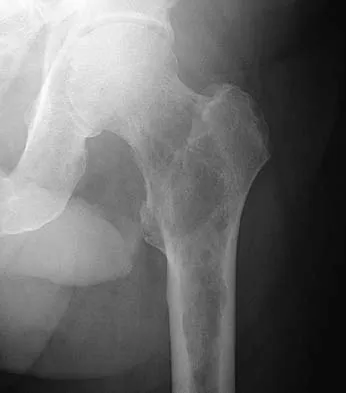
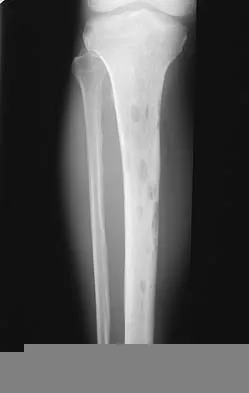
What is the current 5-year survival rate for patients with classic nonmetastatic, high-grade osteosarcoma of the extremity?
Explanation
Question 2
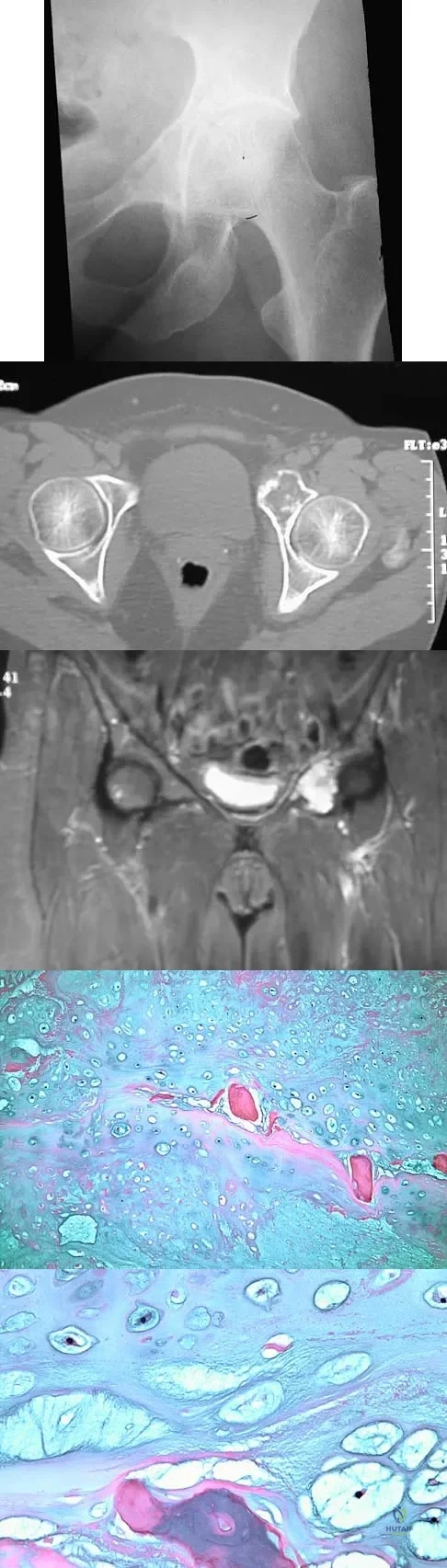
A 43-year-old woman has had pain in the left hip for the past 2 months. A radiograph, CT scan, MRI scan, and biopsy specimens are shown in Figures 16a through 16e. What is the most likely diagnosis?
Explanation
Question 3
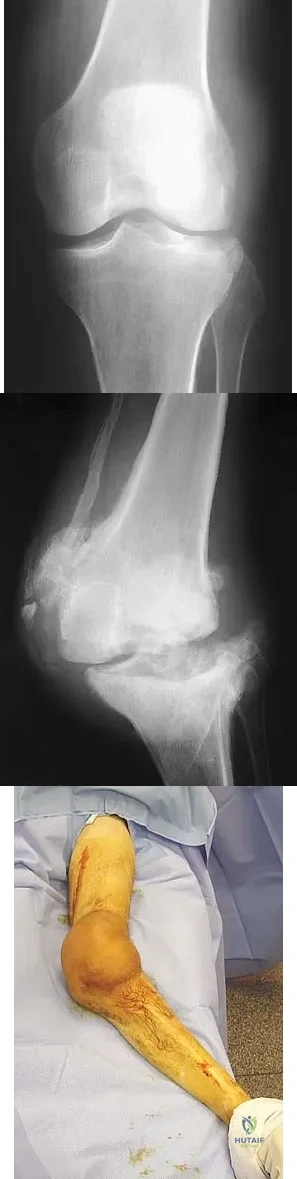
A 40-year-old man with amyloidosis injured his left knee while walking. Figure 17a shows an AP radiograph that was obtained 2 weeks after the injury. The radiograph shown in Figure 17b was obtained after the patient wore a hinged knee brace for 3 months. A clinical photograph is shown in Figure 17c. What is the most likely diagnosis?
Explanation
Question 4
Following preoperative chemotherapy, the percent of tumor necrosis has been shown to be of prognostic value for which of the following tumors?
Explanation
Question 5
Which of the following procedures is not part of the routine evaluation of a patient with suspected metastatic disease to bone?
Explanation
Question 6
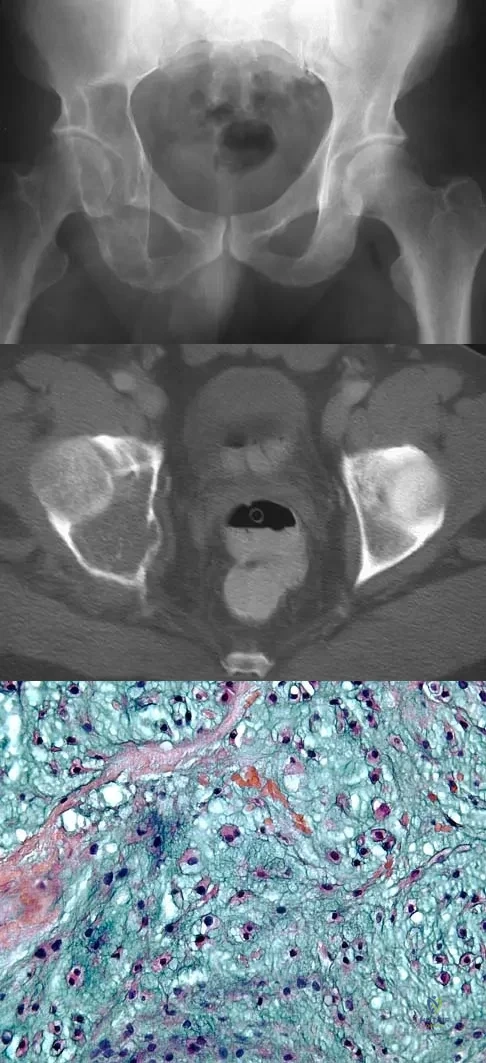
A 43-year-old man has had right groin pain for the past 3 months. A radiograph, CT scan, and biopsy specimen are shown in Figures 18a through 18c. What is the most likely diagnosis?
Explanation
Question 7
What malignant disease most commonly develops in conjunction with chronic osteomyelitis?
Explanation
Question 8
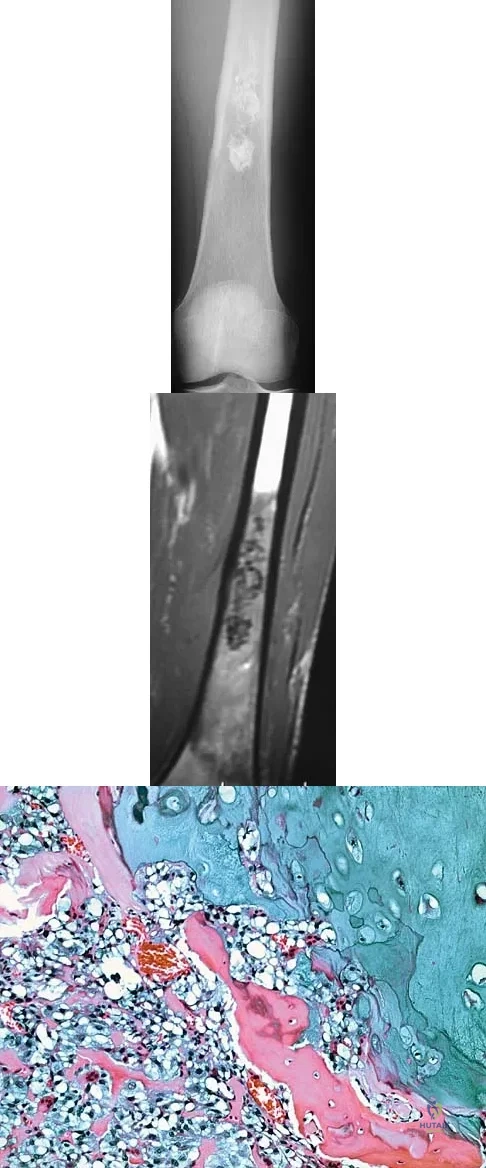
A 77-year-old man has had increasing right knee pain for the past 3 months. A radiograph and coronal T1-weighted MRI scan are shown in Figures 19a and 19b. A biopsy specimen is shown in Figure 19c. What is the most likely diagnosis?
Explanation
Question 9
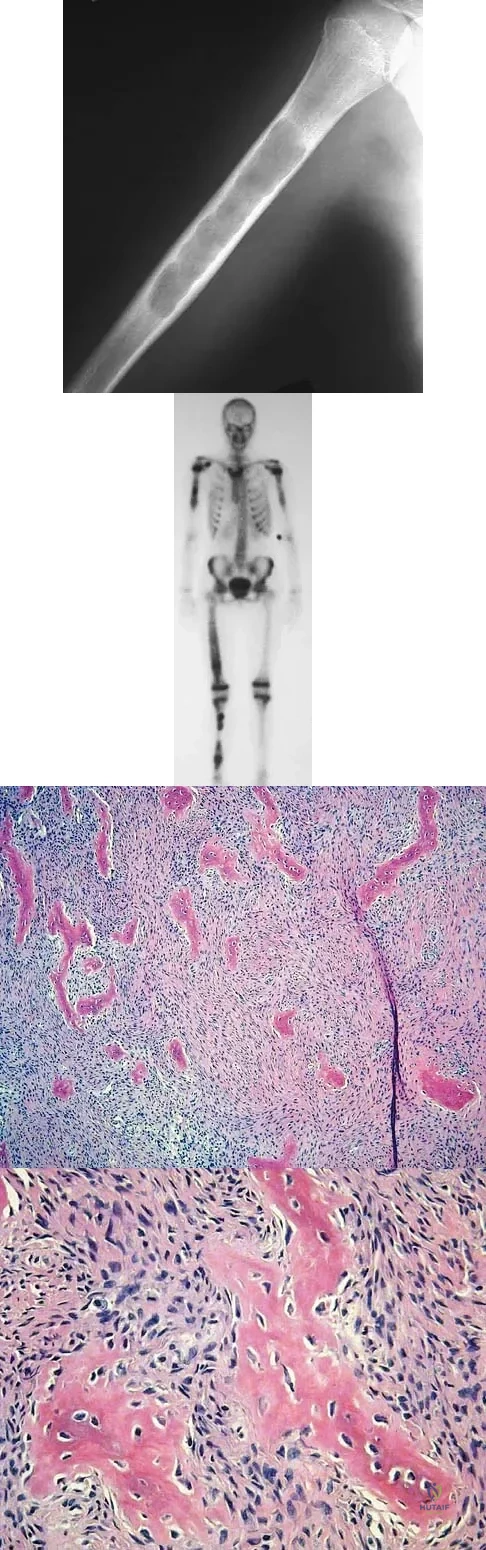
A 10-year-old girl reports activity-related bilateral arm pain. Examination reveals no soft-tissue masses in either arm, and she has full painless range of motion in both shoulders and elbows. The radiograph and bone scan are shown in Figures 20a and 20b, and biopsy specimens are shown in Figures 20c and 20d. What is the most likely diagnosis?
Explanation
Question 10
After excising a mass from the thigh that was thought to be a lipoma, the pathology reveals that the mass is a high-grade sarcoma. Subsequent treatment should include
Explanation
Question 11
Chemotherapy is routinely included in the treatment of which of the following soft-tissue sarcomas?
Explanation
Question 12
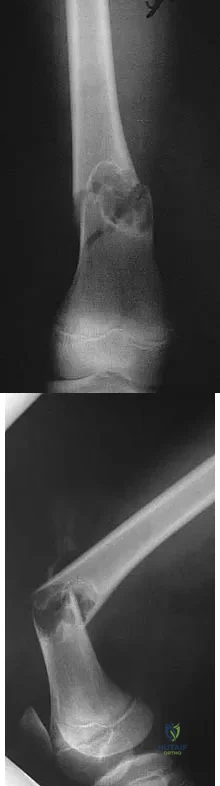
A 10-year-old child reports acute leg pain after wrestling with his brother. AP and lateral radiographs are shown in Figures 21a and 21b. What is the best course of action?
Explanation
Question 13
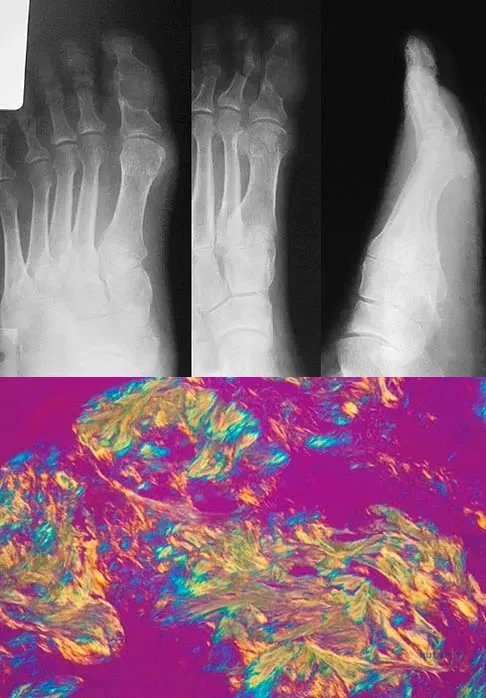
An 83-year-old man has a painful mass of the great toe. Radiographs and a biopsy specimen are seen in Figures 22a and 22b. What is the most likely diagnosis?
Explanation
Question 14
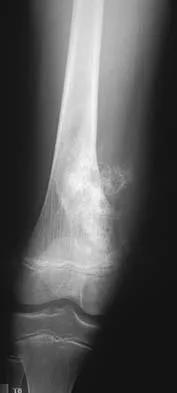
Eosinophilic granuloma frequently occurs as a solitary lesion in the tubular long bones. After biopsy, what is the best course of action?
Explanation
Question 15
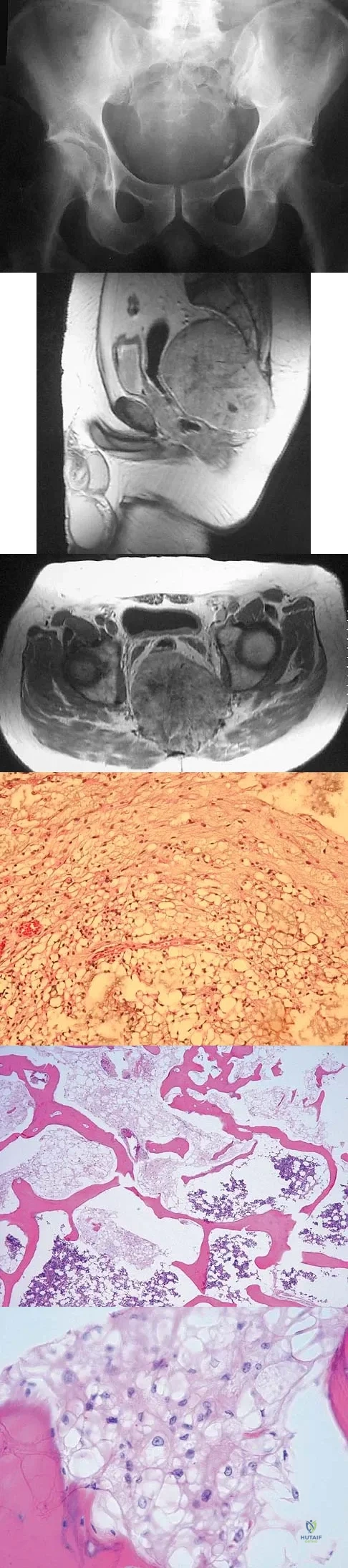
A 52-year-old man has had back pain radiating to the left leg for the past 5 weeks. A radiograph, MRI scans, and biopsy specimens are shown in Figures 23a through 23f. What is the most likely diagnosis?
Explanation
Question 16
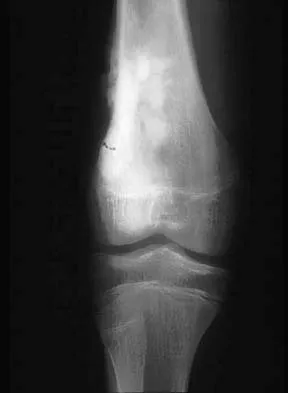
A 15-year-old boy has had pain in the right knee for the past 3 months. He denies any history of trauma. Examination reveals a firm mass in the distal thigh; the remainder of the examination is unremarkable. A radiograph is shown in Figure 24. What further work-up should be completed prior to biopsy?
Explanation
Question 17
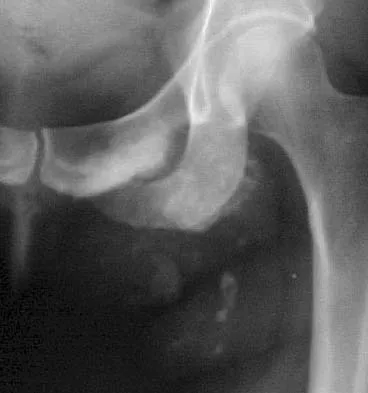
What is the most common primary malignant tumor of bone in childhood?
Explanation
Question 18
A patient with a 5-cm synovial sarcoma located in the distal portion of the rectus femoris muscle undergoes excision of the mass. The procedure is performed through a 10-cm longitudinal incision. Only a portion of the rectus femoris is removed; the vast majority of the muscle is preserved. The plane of dissection is beyond the reactive zone, and the pathology reveals that the margins are negative. This procedure is classified as
Explanation
Question 19
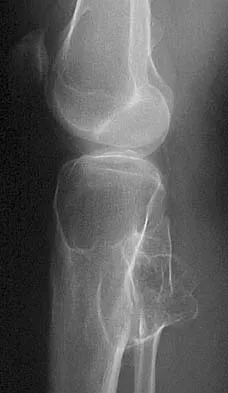
Which of the following tumors is most likely to present with a pathologic fracture in a child?
Explanation
Question 20
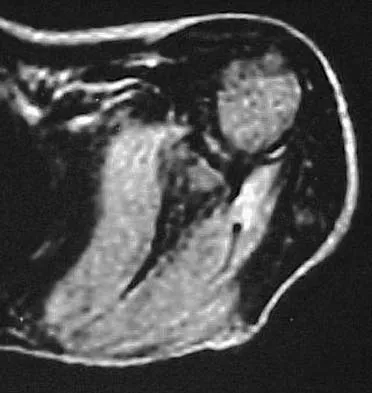
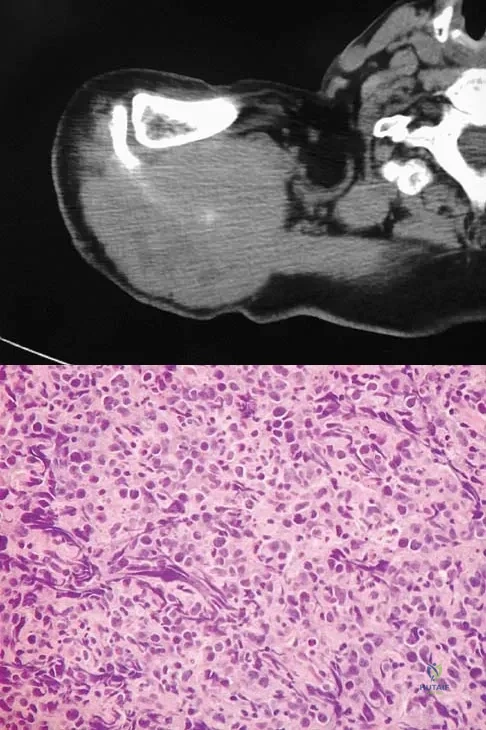
A 60-year-old woman has a mass in the right scapula. Figures 25a and 25b show a CT scan and a biopsy specimen. The cells are lymphocyte common antigen positive, Ewing's specific antigen (CD99) negative, and keratin negative. What is the next step in management?
Explanation
Question 21
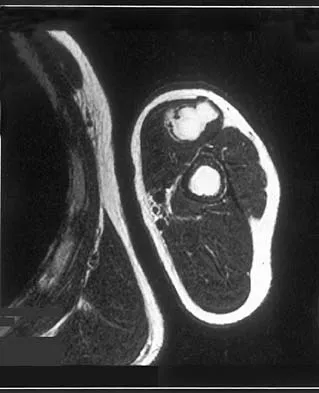
The use of multiagent adjuvant chemotherapy is associated with a clear survival benefit in which of the following diseases?
Explanation
Question 22
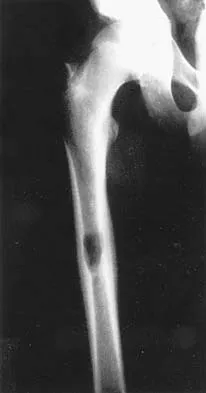
Which of the following definitions best describes Batson's vertebral vein system?
Explanation
Question 23
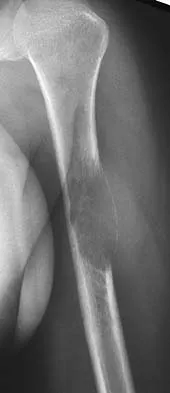
Figure 26 shows the radiograph of a 48-year-old woman who has right arm pain and hematuria. A bone scan reveals increased uptake in the left ribs and thoracic spine. A needle biopsy specimen shows that the lesion is highly keratin positive and composed primarily of clear cells. What is the best course of action?
Explanation
Question 24
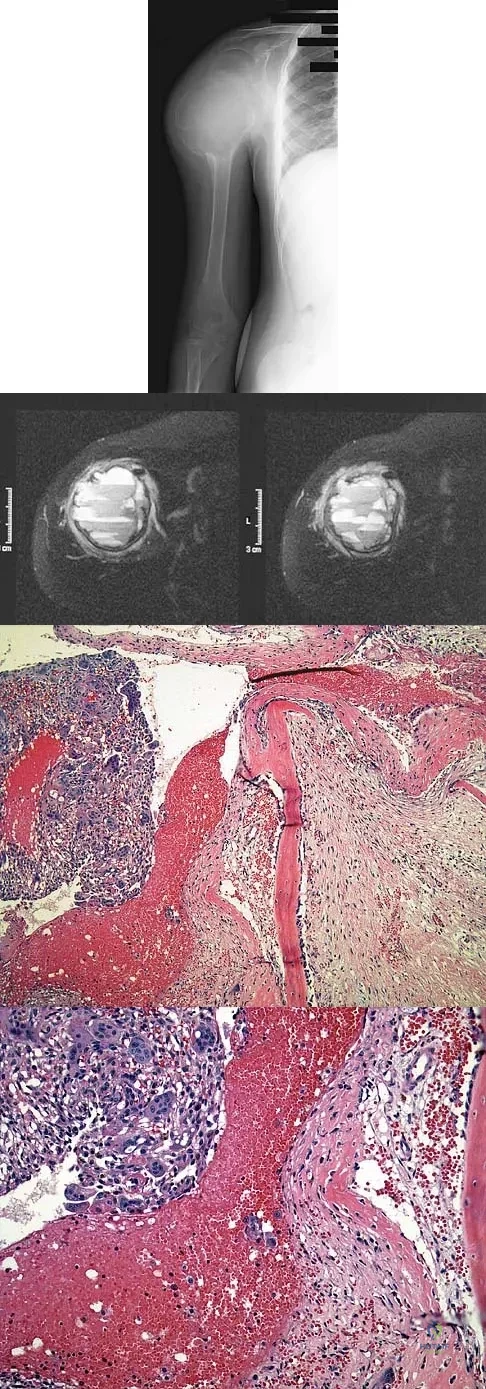
A 15-year-old boy has had pain in the right shoulder for the past 3 months. He denies any history of trauma and has no constitutional symptoms. Examination reveals a large firm mass in the proximal arm. A radiograph and MRI scan are shown in Figures 27a and 27b. Biopsy specimens are shown in Figures 27c and 27d. Management should consist of
Explanation
Question 25
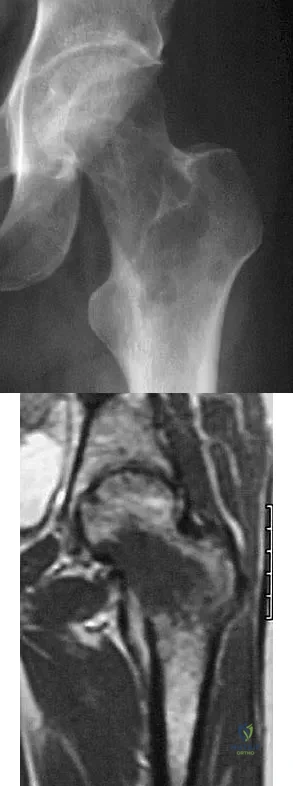
A 38-year-old woman with metastatic thyroid carcinoma has had increasing pain in the left hip for the past 3 months. An AP radiograph and coronal T1-weighted MRI scan are shown in Figures 28a and 28b. Management should consist of
Explanation
Question 26
A 45-year-old man undergoes fixation of a comminuted femoral shaft fracture with a bridging locked plate. To decrease the construct stiffness and promote secondary bone healing via callus formation, which of the following technical modifications is most appropriate?
Explanation
Question 27
Which of the following bone graft substitutes possesses osteoinductive properties but lacks both osteoconductive structural support and osteogenic cells?
Explanation
Question 28
In comparing orthopedic implant materials, which of the following accurately describes the relationship between the Young's modulus of elasticity of titanium, stainless steel, and cortical bone?
Explanation
Question 29
Bone morphogenetic proteins (BMPs) initiate intracellular signaling primarily through which of the following pathways to promote osteoblastic differentiation?
Explanation
Question 30
Cortical bone exhibits viscoelastic properties, meaning its biomechanical behavior depends on the rate of loading. Which of the following best describes the response of cortical bone to high-rate loading compared to low-rate loading?
Explanation
Question 31
The pullout strength of a cortical screw is most significantly increased by maximizing which of the following geometric parameters?
Explanation
Question 32
During revision of an uncemented total hip arthroplasty, severe polyethylene wear is noted secondary to retained bone and cement particles from a previous surgery acting between the articular surfaces. What type of wear mechanism is this?
Explanation
Question 33
A surgeon considers using a titanium locking plate with stainless steel screws for fracture fixation. Why is this combination traditionally contraindicated in orthopedic surgery?
Explanation
Question 34
Which of the following biomechanical conditions is strictly required to achieve primary (direct) bone healing without intermediate callus formation?
Explanation
Question 35
A patient presents with a pseudotumor around a modular total hip arthroplasty secondary to adverse local tissue reaction. The primary mechanism generating metal ions at the modular head-neck taper interface is:
Explanation
Question 36
During secondary fracture healing, the transition from soft callus to hard callus is characterized primarily by the replacement of which type of collagen with another?
Explanation
Question 37
Recombinant human bone morphogenetic protein-2 (rhBMP-2) is currently FDA-approved for use in which of the following orthopedic scenarios?
Explanation
Question 38
A clubfoot is treated with serial Ponseti casting. The gradual stretching and elongation of the tightened medial ligaments and tendons under a constant applied load over time demonstrates which viscoelastic property?
Explanation
Question 39
A surgeon chooses to ream the femoral canal to upsize a solid intramedullary nail from 10 mm to 12 mm in diameter. By what approximate factor does the bending stiffness of the solid nail increase?
Explanation
Question 40
According to Perren's strain theory of fracture healing, which of the following tissues can tolerate the highest interfragmentary strain before rupturing?
Explanation
Question 41
Which of the following represents the primary mechanical disadvantage of ceramic-on-ceramic bearings in total hip arthroplasty?
Explanation
Question 42
A surgeon is applying a unilateral uniplanar external fixator for a tibial shaft fracture. Which of the following modifications will most effectively INCREASE the bending stiffness of the construct?
Explanation
Question 43
A patient develops significant proximal femoral bone loss two years after an uncemented total hip arthroplasty utilizing a diaphyseal-fitting, extensively porous-coated cobalt-chromium stem. The primary mechanism for this bone loss is:
Explanation
Question 44
An empty 3 mm unicortical drill hole is accidentally made in the anterior cortex of a tibia during surgery. Under torsional loading, how much does this defect approximately reduce the bone's torsional strength?
Explanation
Question 45
Which of the following material properties represents the total energy absorbed by a material before it fails, corresponding to the total area under the stress-strain curve?
Explanation
Question 46
Mesenchymal stem cells differentiate into osteoblasts through the activation of specific transcription factors. Which of the following is considered the master transcription factor essential for osteoblast lineage commitment?
Explanation
Question 47
In cortical bone screw fixation, which geometric modification to the screw design will most significantly increase its pull-out strength?
Explanation
Question 48
According to Perren's strain theory, what is the maximum interfragmentary strain tolerated for primary (contact) bone healing to occur via cutting cones?
Explanation
Question 49
Which zone of normal articular cartilage contains the highest concentration of water, the lowest concentration of proteoglycans, and collagen fibers oriented parallel to the joint surface?
Explanation
Question 50
When utilizing a bridging plate for a comminuted diaphyseal fracture, what is a direct biomechanical consequence of increasing the working length (the distance between the closest inner screws) of the construct?
Explanation
Question 51
Which Bone Morphogenetic Protein (BMP) is currently FDA-approved as an adjunct for the treatment of acute open tibial shaft fractures treated with an intramedullary nail?
Explanation
Question 52
Which structural property is the primary determinant of torsional rigidity in a solid intramedullary nail?
Explanation
Question 53
During the soft callus phase of secondary fracture healing, the initial cartilaginous matrix is predominantly composed of which type of collagen?
Explanation
Question 54
A dynamic splint is applied to a patient's contracted elbow, delivering a constant force. Over several days, the joint progressively gains extension. Which biomechanical property of viscoelastic materials does this best describe?
Explanation
Question 55
To minimize stress shielding in total joint arthroplasty, engineers seek materials that match the mechanical properties of bone. Which of the following implant materials has a modulus of elasticity closest to that of human cortical bone?
Explanation
Question 56
Which of the following medications is known to impair early fracture healing by specifically inhibiting a pathway critical for the differentiation of osteoblasts during early endochondral ossification?
Explanation
Question 57
What is the primary biomechanical advantage of using a locked plate construct over a conventional non-locked compression plate in osteoporotic bone?
Explanation
Question 58
Denosumab is an effective pharmacological agent for treating osteoporosis. What is its specific molecular mechanism of action?
Explanation
Question 59
When a tendon is tested in tension, the initial region of its stress-strain curve demonstrates low stiffness before becoming linear. What is responsible for this initial 'toe region'?
Explanation
Question 60
A 50-year-old smoker presents with a 9-month-old humeral shaft nonunion. Radiographs reveal a widened fracture gap with rounded, sclerotic bone ends and absent callus formation. What is the most appropriate management principle?
Explanation
Question 61
Which of the following non-collagenous bone matrix proteins contains an RGD (Arg-Gly-Asp) sequence that is essential for osteoclast attachment via alpha-v beta-3 integrins?
Explanation
Question 62
When designing an external fixator, a surgeon opts to increase the diameter of the Schanz pins from 4 mm to 5 mm. How does this specific change mathematically alter the bending stiffness of the pins?
Explanation
Question 63
Following a microfracture procedure for a focal full-thickness articular cartilage defect in the knee, what type of tissue predominantly fills the defect?
Explanation
Question 64
Romosozumab has recently been utilized for the treatment of severe osteoporosis. What is the precise mechanism of action of this agent?
Explanation
Question 65
Which of the following parameters most significantly increases the pullout strength of a cortical screw?
Explanation
Question 66
A 35-year-old man sustains a diaphyseal tibia fracture treated with an unreamed intramedullary nail. Which of the following biomechanical adjustments will most effectively decrease the torsional stiffness of this construct?
Explanation
Question 67
In the context of bone healing, primary (strain-free) bone healing relies fundamentally on which of the following processes?
Explanation
Question 68
Which of the following cellular mechanisms correctly describes the action of denosumab in the treatment of osteoporosis?
Explanation
Question 69
A surgeon applies a unilateral external fixator for a severe open tibial shaft fracture. To maximize the bending stiffness of the construct, which of the following single modifications is most effective?
Explanation
Question 70
During cyclic loading of a tendon, a steady increase in deformation over time while the applied load remains strictly constant is best described by which viscoelastic property?
Explanation
Question 71
Which of the following best describes the inherent mechanical behavior of cortical bone?
Explanation
Question 72
Polyethylene wear particles in total hip arthroplasty predominantly induce periprosthetic osteolysis through the initial activation of which cell type?
Explanation
Question 73
In mature articular cartilage, which zone is characterized by the highest concentration of water and collagen fibers oriented parallel to the joint surface?
Explanation
Question 74
Which of the following bone graft or graft substitute options distinctly possesses osteoinductive, osteoconductive, and osteogenic properties simultaneously?
Explanation
Question 75
A locking compression plate (LCP) functions primarily by which biomechanical principle when utilized to bridge a highly comminuted diaphyseal fracture?
Explanation
Question 76
Which intracellular signaling pathway is directly activated by Bone Morphogenetic Proteins (BMPs) to stimulate osteoblast differentiation?
Explanation
Question 77
Which of the following physical properties accurately describes polymethylmethacrylate (PMMA) bone cement when utilized in arthroplasty?
Explanation
Question 78
On a classic stress-strain curve for a typical metallic implant, the exact point at which the material ceases to deform elastically and begins to deform permanently is known as the:
Explanation
Question 79
What is the primary cellular mechanism of action of parathyroid hormone (PTH) when administered intermittently at low doses (e.g., Teriparatide) for fracture healing or osteoporosis?
Explanation
Question 80
Regarding the modulus of elasticity (Young's modulus), which of the following sequences correctly orders common orthopedic materials from most stiff to least stiff?
Explanation
Question 81
When a surgeon applies a rigid plate to the lateral aspect of the femur to stabilize a subtrochanteric fracture, the plate functions primarily via which biomechanical principle?
Explanation
Question 82
Galvanic corrosion in orthopedic implants is most highly accelerated and likely to occur under which of the following specific conditions?
Explanation
Question 83
Which specific collagen type is predominantly expressed by cells during the soft callus (chondrogenic) phase of secondary fracture healing?
Explanation
Question 84
Stress shielding, frequently observed radiographically as proximal femoral osteopenia around a stiff primary arthroplasty stem, is a direct clinical manifestation of which biomechanical principle?
Explanation
Question 85
Increasing the working length of a locked plate construct has which of the following biomechanical effects?
Explanation
Question 86
Which of the following signaling pathways is most directly inhibited by the administration of nonsteroidal anti-inflammatory drugs (NSAIDs) during fracture healing?
Explanation
Question 87
On a standard stress-strain curve for an orthopedic biomaterial, the slope of the curve strictly within its linear elastic region represents which of the following material properties?
Explanation
Question 88
Increasing the radiation dose during the cross-linking process of ultra-high molecular weight polyethylene (UHMWPE) for total joint arthroplasty has what primary effect on its material properties?
Explanation
Question 89
Which of the following modifications to an intramedullary nail design will most significantly increase its torsional rigidity?
Explanation
Question 90
Bone morphogenetic proteins (BMPs) promote osteoinduction primarily through the activation of which of the following intracellular signaling pathways?
Explanation
Question 91
In the biphasic model of articular cartilage, which structural component is primarily responsible for generating the internal swelling pressure that resists compressive loads?
Explanation
Question 92
A patient undergoes an ACL reconstruction. When the graft is tensioned and secured at a constant fixed length, the tension within the graft is observed to gradually decrease over time. What is this specific viscoelastic property called?
Explanation
Question 93
The pullout strength of a standard cortical screw is directly proportional to which of the following geometric parameters?
Explanation
Question 94
Primary bone healing is characterized by direct Haversian remodeling without the formation of a visible fracture callus. What is the maximum interfragmentary strain threshold compatible with primary bone healing?
Explanation
Question 95
Trunnionosis in total hip arthroplasty, characterized by wear and localized failure at the modular head-neck junction, is primarily initiated by which specific type of corrosion?
Explanation
Question 96
Recombinant human bone morphogenetic protein-2 (rhBMP-2) is frequently used off-label in anterior cervical discectomy and fusion (ACDF). This specific application is strongly associated with which of the following complications?
Explanation
Question 97
According to beam theory, the bending stiffness of a solid rectangular fracture plate is a function of its width (b) and thickness (h). Assuming the material remains constant, how does doubling the plate's thickness affect its area moment of inertia?
Explanation
Question 98
Long-term bisphosphonate therapy is associated with an increased risk of atypical subtrochanteric femur fractures. At the cellular level, how do nitrogen-containing bisphosphonates primarily alter bone metabolism?
Explanation
Question 99
Cortical bone exhibits significantly higher ultimate tensile strength when loaded parallel to the osteons (longitudinally) compared to when it is loaded perpendicularly (transversely). Which of the following mechanical terms best describes this direction-dependent property?
Explanation
None
