Orthopedic Anatomy 2026 MCQs: Board Review Questions & Answers (Part 3)
Key Takeaway
This topic focuses on Orthopedic Anatomy 2026 MCQs: Board Review Questions & Answers (Part 3), Top-rated Orthopedic Anatomy 2026 MCQs bank. Practice with clinical case questions, orthopedic surgery board review, and evidence-based answers updated for 2026.
Orthopedic Anatomy 2026 MCQs: Board Review Questions & Answers (Part 3)
Comprehensive 100-Question Exam
00:00
Start Quiz
Question 1
In the most common condition causing a winged scapula, which of the following nerves is affected?
Explanation
Question 2
A 17-year-old woman seen in the emergency department reports right knee pain and swelling that has progressively worsened over the past several weeks. Radiographs are shown in Figures 31a and 31b. What is the most likely diagnosis?
Explanation
Question 3
A 26-year-old man has had hand pain and progressive swelling in the knuckle for the past several months. He denies any trauma to the hand. The ring finger metacarpophalangeal joint is tender, and there is loss of motion in the digit. Figure 32a shows the radiograph and Figures 32b through 32d show the T1-weighted, T2-weighted, and gadolinium MRI scans, respectively. What is the most likely diagnosis?
Explanation
Question 4
Which of the following best describes the relationship of the median nerve to the flexor carpi radialis tendon just proximal to the carpal canal?
Explanation
Question 5
Which of the following muscles has dual innervation?
Explanation
Question 6
Figure 33a shows a line drawing of a normal hemipelvis. The anterior acetabular rim is bold. Figure 33b illustrates a hemipelvis with a crossover sign, which is indicative of what acetabular pathology?
Explanation
Question 7
Which of the following structures is most vulnerable during a medial sesamoidectomy of the hallux?
Explanation
Question 8
What structure is most at risk for injury from a retractor against the tracheoesophageal junction during an anterior approach to the cervical spine?
Explanation
Question 9
A 40-year-old man has had hip pain with increased activity over the past year. Examination reveals restriction of motion and tenderness with combined hip flexion, adduction, and internal rotation. An AP radiograph is shown in Figure 34. What is the most likely diagnosis?
Explanation
Question 10
Figure 35 shows the radiograph of a 44-year-old woman with rheumatoid arthritis who reports neck pain. Below what threshold number is surgical stabilization warranted for the interval shown by the arrow?
Explanation
Question 11
An axillary nerve lesion may cause weakness in the deltoid and the
Explanation
Question 12
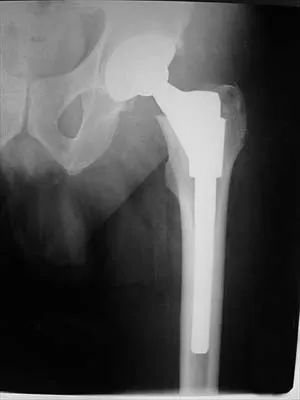
Figure 36 shows an AP radiograph of a 65-year-old man who reports activity-related groin pain. History reveals that he underwent total hip arthroplasty 12 years ago. What is the most likely diagnosis?
Explanation
Question 13
A 21-year-old man who was injured in a snowboarding accident 18 months ago now reports wrist pain. An MRI scan is shown in Figure 37. Based on the image findings, what is the most likely diagnosis?
Explanation
Question 14
An 82-year-old woman reports activity-related knee pain. History reveals that she underwent total knee arthroplasty 16 years ago. AP and lateral radiographs and a bone scan are shown in Figures 38a through 38c. What is the most likely diagnosis?
Explanation
Question 15
Which of the following tendons is found in the same dorsal compartment of the wrist as the posterior interosseous nerve?
Explanation
Question 16
Figures 39a and 39b show the MRI scans of a 25-year-old man with right shoulder pain. Figure 39c shows the arthroscopic view from a posterior portal in the beach chair position. What is the most likely diagnosis?
Explanation
Question 17
The posterior horn of the medial meniscus receives its primary blood supply from what artery?
Explanation
Question 18
In recurrent posterior shoulder instability, what is the recommended approach to the posterior capsule?
Explanation
Question 19
Following ankle arthroscopy performed through a posterolateral portal, a patient notes numbness on the lateral half of the heel pad of the foot. What is the most likely injured structure?
Explanation
Question 20
Figure 40 shows the MRI scan of a 23-year-old man with a history of recurrent anterior shoulder instability. What is the most likely diagnosis?
Explanation
Question 21
Figure 41 shows the MRI scan of a 38-year-old weightlifter. What does the arrow on the MRI scan indicate?
Explanation
Question 22
Which of the following describes the correct proximal to distal progression of the annular and cruciform pulleys of the digits?
Explanation
Question 23
A 75-year-old woman began a walking program 2 months after undergoing right total knee arthroplasty. She had to stop the program after 4 weeks because of hindfoot pain and ankle swelling. Radiographs are shown in Figures 42a and 42b. What is the most likely diagnosis?
Explanation
Question 24
Figure 43 shows an arthroscopic view of a right shoulder through a lateral portal in the beach chair position. The arrow is pointing to what structure?
Explanation
Question 25
In Charcot-Marie-Tooth disease a progressive deformity develops in the foot. Which functional muscles predominate in deformity formation?
Explanation
Question 26
A 35-year-old man undergoes an ilioinguinal approach for an anterior column acetabular fracture. During the surgical exposure along the superior pubic ramus, severe bleeding is encountered from an injured vascular anastomosis. This structure represents an anastomosis between which of the following vascular systems?
Explanation
Question 27
A 28-year-old man sustains a closed anterior shoulder dislocation. After a successful closed reduction, he has persistent numbness over the lateral aspect of the shoulder and weakness in shoulder abduction. The nerve injured in this patient passes through a defined anatomic space in the posterior shoulder. Which of the following forms the inferior border of this space?
Explanation
Question 28
During posterior spinal fusion for scoliosis, a surgeon places a thoracic pedicle screw at the T7 level. The surgeon must be acutely aware of the anatomic relationship of the exiting nerve root to the pedicle to prevent neurologic injury. The T7 nerve root exits the neural foramen in which position relative to the T7 pedicle?
Explanation
Question 29
A 24-year-old football player sustains a multi-ligament knee injury. MRI demonstrates complete disruption of the posterolateral corner structures. For anatomical reconstruction, the surgeon identifies the femoral footprints of the lateral collateral ligament (LCL) and the popliteus tendon. What is the anatomic location of the LCL origin relative to the popliteus tendon insertion on the lateral femoral epicondyle?
Explanation
Question 30
A 45-year-old woman presents with progressive, painful adult-acquired flatfoot deformity. Intraoperatively, the plantar calcaneonavicular ligament is found to be significantly attenuated and stretched. This ligament provides critical static support to prevent plantarflexion of which of the following structures?
Explanation
Question 31
During an anterior (Henry) approach to the radius for internal fixation of a midshaft fracture, the surgeon develops the interval between the brachioradialis and flexor carpi radialis. To expose the proximal radius, the supinator muscle must be elevated. What nerve must be protected, and how is it anatomically safeguarded during this specific step?
Explanation
Question 32
A 30-year-old construction worker undergoes surgical exploration and debridement for a deep space infection of the hand. Purulent fluid is drained exclusively from the midpalmar space. The midpalmar space is anatomically separated from the thenar space by which of the following structures?
Explanation
Question 33
A 32-year-old marathon runner presents with chronic exertional compartment syndrome of the lower leg. Intracompartmental pressure testing reveals isolated elevation within the deep posterior compartment. Which of the following major structures courses through this specific compartment?
Explanation
Question 34
A 12-year-old obese boy presents with acute-on-chronic hip pain and an externally rotated lower extremity, consistent with a slipped capital femoral epiphysis (SCFE). In situ pinning is planned. The surgeon must employ careful technique to avoid injury to the primary blood supply of the capital femoral epiphysis, which is a terminal branch derived mainly from the:
Explanation
Question 35
A 45-year-old man sustains a closed midshaft humerus fracture. Upon presentation, he is unable to extend his wrist or fingers and has numbness over the dorsal first web space. The nerve responsible for this deficit pierces the lateral intermuscular septum of the arm to cross from the posterior to the anterior compartment. At approximately what distance proximal to the lateral epicondyle does this nerve pierce the septum?
Explanation
Question 36
A 45-year-old male undergoes an open reduction and internal fixation for a proximal humerus fracture via a standard deltopectoral approach. To properly develop the internervous plane, the surgeon identifies the cephalic vein. Which of the following nerve pairs innervates the muscles that define the boundaries of this specific surgical interval?
Explanation
Question 37
A surgeon is performing an anterior approach to the hip (Smith-Petersen) for an uncemented total hip arthroplasty in a 65-year-old patient. The approach requires careful dissection through both a superficial and a deep internervous plane. Which of the following correctly identifies the muscles and corresponding innervations of the superficial internervous plane?
Explanation
Question 38
A 50-year-old man requires an excision of a symptomatic plantar fibromatosis. The surgeon utilizes a medial approach to the midfoot. Deep dissection reveals a critical intersection of tendons known as the Master Knot of Henry. Which of the following accurately describes the relationship of structures at this location?
Explanation
Question 39
A 32-year-old man sustains a deep laceration at the medial aspect of the elbow, resulting in a complete transection of the ulnar nerve. On physical examination weeks later, he surprisingly demonstrates preserved motor function of the first dorsal interosseous, adductor pollicis, and the deep head of the flexor pollicis brevis, despite absolute loss of ulnar sensation. Which of the following anatomical variants is most likely responsible for this preserved motor function?
Explanation
Question 40
A 60-year-old female is undergoing an L4-L5 posterior spinal fusion with instrumentation for degenerative spondylolisthesis. During the placement of L4 pedicle screws using a freehand technique, the surgeon must identify the correct starting point. Which of the following best describes the anatomical landmark for the ideal starting point for an L4 pedicle screw?
Explanation
Question 41
A 25-year-old male undergoes a four-compartment fasciotomy of the leg for acute compartment syndrome following a high-energy tibial plateau fracture. During the procedure, the deep posterior compartment is carefully released. Which of the following muscles is NOT located within the deep posterior compartment of the leg?
Explanation
Question 42
During an ilioinguinal approach to the pelvis for acetabular fracture fixation, significant hemorrhage occurs while dissecting over the superior pubic ramus. The bleeding is most likely from an anomalous anastomotic vessel connecting the external iliac system to the internal iliac system. This vessel, known as the 'corona mortis,' typically connects which of the following?
Explanation
Question 43
During surgical exploration for a complex flexor tendon laceration in Zone II of the index finger, a surgeon plans to vent portions of the flexor sheath to facilitate tendon glide. To prevent bowstringing of the flexor tendons, which of the following annular pulleys are considered the most biomechanically critical to preserve?
Explanation
Question 44
A 22-year-old collegiate football player sustains a complex multi-ligament knee injury. Physical examination using the dial test reveals 15 degrees of increased external rotation of the tibia compared to the uninjured side at 30 degrees of knee flexion, but symmetrical external rotation at 90 degrees of flexion. This isolated physical examination finding is most indicative of an injury to which of the following structures?
Explanation
Question 45
A 28-year-old male bodybuilder presents with right posterior shoulder pain, as well as distinct weakness in shoulder abduction and external rotation. An MRI of the shoulder reveals an isolated paralabral cyst compressing the structures within the quadrangular space. Which of the following neurovascular structures are most likely being compressed?
Explanation
Question 46
A surgeon is utilizing the anterior (Smith-Petersen) approach to the hip for an open reduction of a displaced femoral neck fracture. Which of the following best describes the deep internervous plane of this surgical approach?
Explanation
Question 47
A 35-year-old man requires open reduction and internal fixation of a middle-third humeral shaft fracture via a posterior approach. The surgeon must identify and protect the radial nerve as it passes through the intermuscular septum. At what average distance proximal to the lateral epicondyle does the radial nerve pierce the lateral intermuscular septum?
Explanation
Question 48
During an ilioinguinal approach to the pelvis for an anterior column acetabular fracture, severe hemorrhage is encountered superior to the superior pubic ramus while dissecting near the posterior aspect of the symphysis pubis. This bleeding is most likely originating from an anastomosis between which two vascular systems?
Explanation
Question 49
A surgeon is plating a proximal radius fracture utilizing the volar (Henry) approach to the forearm. In the proximal portion of the incision, what is the primary internervous plane being developed?
Explanation
Question 50
A 45-year-old woman is undergoing excision of a symptomatic accessory navicular with concurrent tendon advancement. During the medial approach to the midfoot, the posterior tibial tendon (PTT) is mobilized. Which of the following statements accurately describes the anatomy of the PTT?
Explanation
Question 51
A 60-year-old man is undergoing an open reduction and internal fixation of a proximal humerus fracture using a minimally invasive deltoid-splitting approach. To avoid injury to the axillary nerve, the surgeon must be aware of its location. The axillary nerve typically crosses the humerus at what distance distal to the lateral edge of the acromion?
Explanation
Question 52
A 28-year-old carpenter suffers a deep laceration to the volar aspect of the wrist, immediately proximal to the wrist crease and directly overlying the flexor carpi radialis (FCR) tendon. Exploration confirms a complete transection of the FCR. Which neural structure is at the highest risk of concomitant injury due to its intimate anatomical relationship with the FCR tendon at this level?
Explanation
Question 53
A spine surgeon is performing a posterolateral lumbar fusion at L4-L5 with pedicle screw fixation. When placing a pedicle screw into the right L4 pedicle, the surgeon must be cautious of the surrounding neural elements. What is the normal anatomical relationship of the L4 nerve root to the L4 pedicle?
Explanation
Question 54
A 24-year-old professional soccer player undergoes surgical reconstruction of the posterolateral corner (PLC) of the knee following a multiligamentous injury. During the exposure, the femoral footprints of both the fibular collateral ligament (FCL) and the popliteus tendon are identified. What is the location of the popliteus tendon femoral footprint relative to the FCL footprint?
Explanation
Question 55
A 30-year-old man requires open reduction and internal fixation of a displaced medial malleolus fracture. The surgeon plans a longitudinal incision centered directly over the medial malleolus. If the dissection strays too far anteriorly over the medial malleolus, which structures are at greatest risk of iatrogenic injury?
Explanation
Question 56
A surgeon is performing a posterolateral approach to the tibial plateau for a complex bicondylar fracture. To safely expose the posterior aspect of the lateral tibial plateau, the popliteus muscle must be carefully mobilized. Which of the following structures is most at risk of iatrogenic injury during the deep dissection when elevating the popliteus muscle off the posterior tibia?
Explanation
Question 57
During an anterior approach (Smith-Petersen) to the hip for a core decompression, the superficial internervous plane is developed between the sartorius and the tensor fasciae latae. What is the deep internervous plane utilized in this surgical approach?
Explanation
Question 58
A 45-year-old man undergoes open reduction and internal fixation of a diaphyseal radius fracture via a volar (Henry) approach. The surgeon begins the exposure in the proximal forearm. Which of the following describes the correct internervous plane for the proximal third of this approach?
Explanation
Question 59
A 55-year-old woman is noted to have a weakness in the internal rotation and adduction of her shoulder following an extensive axillary node dissection. Injury to the thoracodorsal nerve is suspected. Which of the following best describes the anatomic origin of the thoracodorsal nerve?
Explanation
Question 60
An orthopedic trauma surgeon is preparing to plate a displaced midshaft clavicle fracture. To avoid catastrophic injury to the neurovascular bundle during drilling, the surgeon must be aware of the local anatomy. Which muscular structure serves as the primary anatomical landmark separating the subclavian vein anteriorly from the subclavian artery posteriorly?
Explanation
Question 61
A 28-year-old male sustains an isolated, displaced fracture of the sustentaculum tali. During open reduction and internal fixation through a medial approach to the calcaneus, a specific tendon running directly inferior to the sustentaculum tali must be identified and protected to visualize the inferior margin of the fracture. Which tendon is this?
Explanation
Question 62
A patient presents with isolated weakness in shoulder abduction and external rotation, as well as numbness over the lateral deltoid, following a forceful posterior shoulder dislocation. An MRI reveals soft tissue entrapment in the quadrilateral space. Which of the following anatomical structures forms the superior boundary of the quadrilateral space?
Explanation
Question 63
A 35-year-old male undergoes a modified Stoppa approach for a displaced acetabular fracture involving the anterior column. During the dissection along the pelvic brim, the surgeon carefully ligates a vascular structure known as the 'corona mortis'. This structure represents an anastomotic connection between which two vascular systems?
Explanation
Question 64
A 22-year-old collegiate runner develops acute anterior leg pain and numbness in the first dorsal web space after a marathon, consistent with acute compartment syndrome. A decompressive fasciotomy is performed. To fully release the anterior compartment, the surgeon must ensure all structures within it are decompressed. Which of the following muscles is NOT located in the anterior compartment of the leg?
Explanation
Question 65
During surgical exploration for a compressive neuropathy in the proximal forearm, the radial nerve is identified. The superficial branch of the radial nerve and the deep branch (posterior interosseous nerve, PIN) are visualized at their bifurcation. The PIN classically passes beneath the arcade of Frohse and dives between the two heads of which muscle?
Explanation
Question 66
A 45-year-old man is undergoing an open reduction and internal fixation of an anterior column acetabular fracture via an ilioinguinal approach. During the deep dissection near the posterior aspect of the superior pubic ramus, brisk arterial bleeding is suddenly encountered. Which of the following vascular anastomoses was most likely injured in this location?

Explanation
Question 67
A 32-year-old male sustains a Monteggia fracture-dislocation. He undergoes open reduction and internal fixation of the ulna with closed reduction of the radial head. Postoperatively, he is unable to actively extend his thumb and fingers at the metacarpophalangeal joints. Wrist extension is preserved but occurs with radial deviation. Compression or injury to the affected nerve most commonly occurs at which of the following anatomic structures?
Explanation
Question 68
A 28-year-old professional volleyball player presents with vague posterior shoulder pain and progressive weakness in external rotation. An MRI reveals isolated fatty infiltration and atrophy of the teres minor muscle. Compression of the nerve responsible for this clinical finding most likely occurs within an anatomic space defined by which of the following sets of boundaries?

Explanation
Question 69
During a surgical dislocation of the hip to address femoroacetabular impingement (Ganz approach), the surgeon meticulously preserves the obturator externus muscle. Preservation of this muscle directly protects which of the following vital structures that provides the primary blood supply to the native femoral head?
Explanation
Question 70
A 42-year-old marathon runner undergoes surgical exploration of the plantar aspect of the midfoot for chronic tendinopathy. The surgeon identifies the 'Master Knot of Henry.' Which of the following accurately describes the tendinous anatomic relationships at this precise anatomic node?
Explanation
Question 71
A 22-year-old male sustains a proximal pole fracture of the scaphoid. He is educated regarding his high risk of avascular necrosis and nonunion. This risk is primarily due to the precarious retrograde blood supply of the scaphoid. The primary blood supply to the proximal pole of the scaphoid enters at which location and originates from which artery?
Explanation
Question 72
A surgeon is performing a lateral lumbar interbody fusion (LLIF) at the L4-L5 level utilizing a transpsoas approach. Postoperatively, the patient reports significant new-onset weakness in hip flexion and knee extension, along with numbness over the anterior thigh. Injury to which of the following neural structures within the psoas major muscle is the most likely cause?
Explanation
Question 73
During posterior cervical instrumentation, a spine surgeon prepares to place C1 lateral mass screws. To avoid catastrophic vascular injury, the surgeon must be acutely aware of the course of the vertebral artery in this region. Immediately after exiting the C1 transverse foramen, the vertebral artery typically lies in which position before entering the foramen magnum?
Explanation
Question 74
A 25-year-old athlete sustains a multi-ligament knee injury. Physical examination reveals an asymmetric, increased external tibial rotation at both 30 degrees and 90 degrees of knee flexion compared to the contralateral side. The primary static stabilizing structures of the posterolateral corner (PLC) are ruptured. Which of the following correctly lists the three major static stabilizers of the PLC?
Explanation
Question 75
A 35-year-old carpenter sustained a zone III volar forearm laceration that resulted in a complete transaction of his flexor digitorum profundus (FDP) tendons, which were subsequently repaired. Several weeks later, when he forcefully attempts to make a fist, he demonstrates paradoxical extension of the proximal interphalangeal (PIP) and distal interphalangeal (DIP) joints of the affected digits instead of flexion. What is the anatomic basis for this specific paradoxical movement?
Explanation
Question 76
A 45-year-old man undergoes an open reduction and internal fixation of a femoral head fracture via a Smith-Petersen (anterior) approach to the hip. The superficial internervous plane used in this approach lies between muscles innervated by which of the following pairs of nerves?
Explanation
Question 77
A 62-year-old man presents with severe radicular leg pain. Magnetic resonance imaging reveals a far lateral (extraforaminal) disc herniation at the L4-L5 level. Which of the following nerve roots is most likely to be compressed by this specific herniation?
Explanation
Question 78
A surgeon is performing an open reduction and internal fixation of a severely displaced proximal humerus fracture. To identify and protect the axillary nerve, the surgeon explores the quadrangular space. Which of the following correctly describes the anatomical boundaries of this space?
Explanation
Question 79
A 35-year-old new mother undergoes surgical release for recalcitrant De Quervain's tenosynovitis. During the release of the first dorsal compartment, the surgeon notes anatomical variations. Which of the following tendon structures most commonly has multiple distal slips that must be completely visualized to prevent surgical failure?
Explanation
Question 80
A 28-year-old male is involved in a motor vehicle collision and sustains a Hawkins Type III talar neck fracture. He is counseled on the high risk of avascular necrosis of the talar body. Which of the following arteries provides the primary, dominant blood supply to the body of the talus?
Explanation
Question 81
A 40-year-old carpenter complains of a progressive inability to cross his index and middle fingers, associated with numbness over the volar aspect of his small finger. Symptoms are exacerbated with prolonged elbow flexion. The nerve responsible for these findings passes between which two muscle heads in the proximal forearm?
Explanation
Question 82
An orthopedic trauma surgeon is stabilizing an anteroposterior compression type III (APC-III) pelvic ring injury. Complete disruption of the posterior sacroiliac complex is noted. Which specific ligamentous structure in this complex is primarily responsible for resisting vertical shear/translation of the hemipelvis?
Explanation
Question 83
During an anterior cervical discectomy and fusion (ACDF), the surgeon dissects laterally toward the uncinate processes. Extreme lateral dissection poses a risk of catastrophic injury to the vertebral artery. In the majority of the population, at what cervical level does the vertebral artery enter the foramen transversarium as it ascends toward the brain?
Explanation
Question 84
A 22-year-old motorcyclist presents with a traumatic brachial plexus injury after landing on his shoulder. Physical examination reveals a complete loss of active shoulder abduction, external rotation, and elbow flexion. Hand and wrist functions are fully preserved, and there is no Horner syndrome. This clinical picture is most consistent with an injury to which of the following nerve roots?
Explanation
Question 85
A 26-year-old marathon runner undergoes a four-compartment fasciotomy for acute exertional compartment syndrome of the lower leg. During the release of the deep posterior compartment, the surgeon must carefully protect the neurovascular bundle that travels intimately with these deep muscles. Which structures make up this specific neurovascular bundle?
Explanation
Question 86
An orthopedic surgeon is performing a modified Stoppa approach for an acetabular fracture. Which of the following vascular structures represents the 'corona mortis,' a significant potential source of hemorrhage during this dissection?
Explanation
Question 87
During an anterolateral approach to the distal tibia and ankle for pilon fracture fixation, the surgeon must be careful to protect a nerve that typically courses from medial to lateral across the surgical field. Injury to this nerve leads to what primary deficit?
Explanation
Question 88
During a posteromedial approach to the knee for open reduction and internal fixation of a medial tibial plateau fracture, the dissection involves the interval between the medial head of the gastrocnemius and the pes anserinus. Which of the following nerves is at greatest risk of iatrogenic injury during the superficial dissection?
Explanation
Question 89
Which of the following statements best describes the anatomical relationship of the posterior interosseous nerve (PIN) as it relates to surgical approaches of the proximal radius?
Explanation
Question 90
A 45-year-old patient undergoes an open reduction and internal fixation of a midshaft clavicle fracture. Postoperatively, the patient notes numbness over the anterolateral shoulder and anterior chest wall. Which of the following nerves was most likely injured during the procedure?
Explanation
Question 91
When performing a standard anterior approach to the cervical spine, the surgeon encounters the recurrent laryngeal nerve. Which of the following accurately describes its typical anatomical course?
Explanation
Question 92
During the surgical exposure of the posterior column of the acetabulum via a Kocher-Langenbeck approach, the surgeon carefully identifies and protects the sciatic nerve. In what percentage of the general population does a portion of the sciatic nerve (usually the peroneal division) pass directly through the piriformis muscle?
Explanation
Question 93
A surgeon is repairing a posterolateral corner (PLC) injury of the knee. The fibular collateral ligament (FCL), popliteus tendon (PT), and popliteofibular ligament (PFL) are the primary static stabilizers of the PLC. What is the typical femoral footprint insertion site of the FCL relative to the lateral epicondyle?
Explanation
Question 94
The scaphoid bone is highly susceptible to avascular necrosis following a proximal pole fracture due to its retrograde blood supply. Which of the following arterial branches is the primary source of blood supply to the proximal pole of the scaphoid?
Explanation
Question 95
The recurrent motor branch of the median nerve innervates the thenar musculature. When performing an open carpal tunnel release, the surgeon must be aware of anatomical variations of this branch. What is the most common anatomical variation (occurring in >50% of the population) of the recurrent motor branch relative to the transverse carpal ligament?
Explanation
Question 96
During a direct lateral approach to the distal fibula for an open reduction and internal fixation of an ankle fracture, the surgeon identifies a nerve piercing the crural fascia approximately 10 to 12 cm proximal to the tip of the lateral malleolus. If this nerve is inadvertently transected at this level, which of the following clinical deficits will the patient most likely experience postoperatively?
Explanation
Question 97
A 32-year-old male recreational volleyball player complains of vague posterior right shoulder pain and progressive weakness. On physical examination, he demonstrates 5/5 strength in shoulder abduction but 3/5 strength in external rotation. MRI reveals a large paralabral cyst. Based on the physical examination findings, at which of the following anatomic locations is the nerve most likely compressed?
Explanation
Question 98
A 38-year-old man sustains an unstable anteroposterior compression (APC-III) pelvic ring injury. The surgeon proceeds with open reduction and internal fixation of the anterior ring via a modified Stoppa approach. During dissection along the superior pubic ramus, brisk arterial hemorrhage is encountered. This bleeding is most likely caused by injury to the 'corona mortis', which represents an anastomosis between the obturator artery and which of the following vascular systems?
Explanation
Question 99
A 28-year-old professional rock climber presents with acute pain and a 'bowstringing' deformity over the volar aspect of his left ring finger after slipping on a hold. He is diagnosed with a severe flexor pulley rupture. Which of the following best describes the most biomechanically critical pulleys to prevent flexor tendon bowstringing, and their correct anatomical origins?
Explanation
Question 100
A 45-year-old woman presents with a 4-month history of vague proximal anterior forearm pain, weakness with pinching, and numbness in her thumb, index, and middle fingers. On examination, she has decreased sensation over both the palmar digits and the thenar eminence. Radiographs of the elbow reveal an osseous spur on the anteromedial aspect of the distal humerus. Neural compression is most likely occurring as the nerve passes deep to which of the following structures?
Explanation
None
