Psychoflexed and Psychoextended Hands: Diagnosis and Management
Key Takeaway
Psychoflexed and psychoextended hands represent complex psychogenic deformities requiring astute clinical differentiation from organic pathology. The psychoflexed hand typically involves severe, unyielding flexion of the ulnar three digits, often leading to palmar maceration. Conversely, the psychoextended hand presents with rigid proximal interphalangeal joint hyperextension. Recognizing paradoxical stiffness and avoiding unwarranted surgical intervention—such as Kirschner wire fixation or tendon releases—is paramount. Management relies primarily on multidisciplinary psychiatric care, specialized hand therapy, and behavioral modification techniques.
Comprehensive Introduction and Patho-Epidemiology
The human hand represents the pinnacle of evolutionary biomechanics, serving as the primary interface between human intent and the physical environment. However, it is also a profound instrument of psychological expression and non-verbal communication. In the realm of orthopedic surgery, few clinical scenarios evoke as much diagnostic trepidation and therapeutic frustration as encountering a patient with a severe, unyielding hand deformity in the absence of an identifiable organic etiology. These conditions, broadly categorized under psychogenic hand disorders, manifest as dysfunctional postures that defy standard anatomical, neurological, and biomechanical principles. For the practicing orthopedic surgeon, understanding the patho-epidemiology of these disorders is critical to prevent the catastrophic pitfall of unwarranted surgical intervention.
Psychogenic hand disorders encompass a spectrum of psychiatric conditions that present with somatic musculoskeletal symptoms. According to the Diagnostic and Statistical Manual of Mental Disorders, Fifth Edition (DSM-5), these primarily fall into three distinct categories: Functional Neurological Symptom Disorder (formerly Conversion Disorder), Factitious Disorder (formerly Munchausen Syndrome), and Malingering. In Functional Neurological Symptom Disorder, the patient experiences genuine, involuntary motor deficits or posturing driven by deep-seated subconscious psychological conflict or trauma. The patient is not consciously "faking" the deformity; to them, the paralysis or contracture is entirely real. A hallmark of this condition is la belle indifférence, a paradoxical lack of psychological distress regarding the severe physical impairment.
Conversely, Factitious Disorder involves the conscious, intentional production or feigning of physical signs to assume the "sick role" and garner medical attention, without obvious external rewards. Malingering, while similar in its conscious deception, is driven by clear secondary gain, such as financial compensation, workers' compensation, avoidance of military duty, or obtaining prescription narcotics. Differentiating between these underlying psychiatric drivers is less critical for the orthopedic surgeon than recognizing the non-organic nature of the deformity itself.
Epidemiologically, psychogenic hand postures exhibit a strong predilection for the female demographic, though they are increasingly recognized in males, particularly in the context of industrial accidents and workers' compensation claims. The peak incidence occurs in adolescents and young adults, often correlating with acute psychosocial stressors, interpersonal conflicts, or a history of physical or psychological trauma. Interestingly, epidemiological data suggest there is no significant predilection for the minor or dominant hand, and the condition can frequently present bilaterally. The most frequently encountered dysfunctional postures in clinical practice are the psychoflexed hand, the clenched fist syndrome, and the psychoextended hand. These conditions are characterized by rigid, non-anatomic posturing that, if left unrecognized, leads to severe secondary dermatological complications, joint contractures, and infectious morbidities.
Detailed Surgical Anatomy and Biomechanics
To accurately diagnose a psychogenic hand disorder, the orthopedic surgeon must possess an absolute, infallible mastery of the normal surgical anatomy and biomechanics of the upper extremity. The diagnosis of conditions like the psychoflexed hand or clenched fist syndrome relies entirely on identifying biomechanical impossibilities—physical findings that violate the fundamental laws of musculoskeletal anatomy.
The normal human hand operates on a delicate balance between the extrinsic musculature (originating in the forearm) and the intrinsic musculature (originating within the hand). The flexor digitorum profundus (FDP) and flexor digitorum superficialis (FDS) provide the primary extrinsic flexion force to the digits, counterbalanced by the extensor digitorum communis (EDC), extensor indicis proprius (EIP), and extensor digiti minimi (EDM). The intrinsic muscles, including the lumbricals and interossei, modulate this balance by flexing the metacarpophalangeal (MCP) joints while extending the proximal interphalangeal (PIP) and distal interphalangeal (DIP) joints.
The cornerstone of the physical examination in these patients is the evaluation of the tenodesis effect. In a normal, organically intact upper extremity, the length-tension relationship of the extrinsic tendons dictates a predictable, involuntary cascade of digital motion dependent on wrist position. Passive flexion of the wrist increases tension on the EDC, causing passive extension of the digits. Conversely, passive extension of the wrist increases tension on the FDP and FDS, causing involuntary digital flexion.
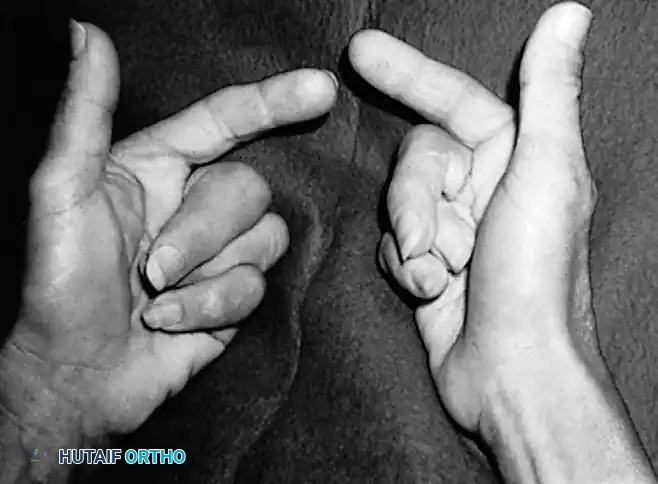
In the clenched fist syndrome and the psychoflexed hand, this normal biomechanical relationship is completely abolished, resulting in a phenomenon known as paradoxical stiffness. When the examiner passively flexes the patient's wrist, the fingers remain rigidly flexed into the palm. Biomechanically, this indicates that the patient is actively firing the flexor musculature to overpower the passive pull of the extensors. In a purely organic joint contracture or tendon adhesion, passive wrist flexion would either force the digits to extend or, if the flexors were organically tethered, would prevent wrist flexion entirely. The presence of paradoxical stiffness is a physiological impossibility in organic disease and is highly sensitive and specific for a psychogenic etiology.
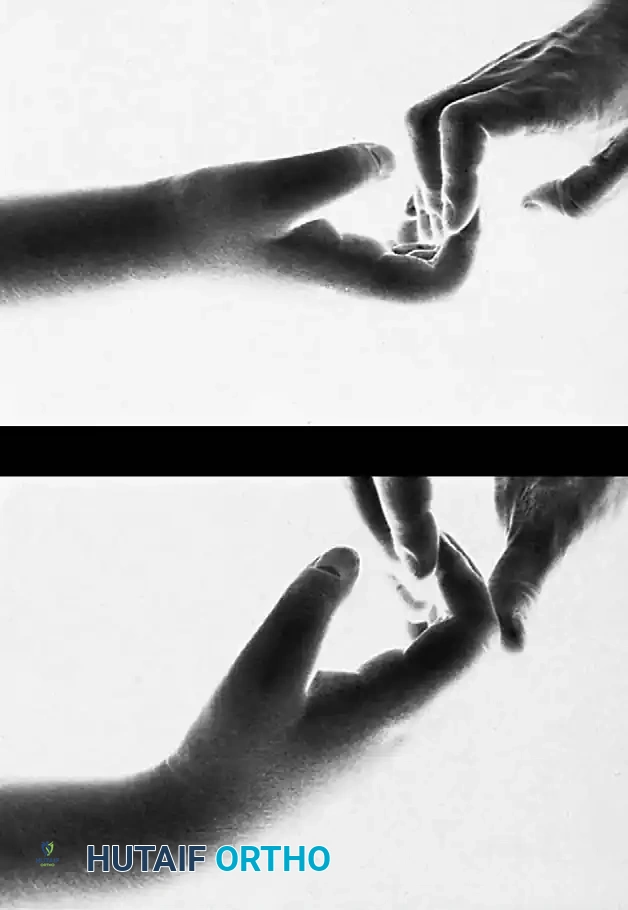
The psychoextended hand presents a different biomechanical paradox. This posture is characterized by rigid hyperextension at the PIP joints and flexion at the MCP joints, predominantly affecting the ulnar three digits (long, ring, and small fingers). This posture mimics an intrinsic-plus or severe swan-neck deformity. However, unlike a true swan-neck deformity caused by volar plate laxity, lateral band dorsal subluxation, or intrinsic tightness (as seen in rheumatoid arthritis or cerebral palsy), the psychoextended hand lacks underlying structural pathology. Furthermore, these patients often exhibit selective sparing of the index finger and thumb, maintaining a rudimentary pinch mechanism. The index finger MCP joint is held in flexion, but active flexion and extension are preserved at the PIP joint, allowing the index pulp to oppose the thumb. This selective anatomical sparing strongly points toward a psychogenic origin, as the patient subconsciously maintains enough function to perform basic activities of daily living while sustaining the "sick role."
Exhaustive Indications and Contraindications
The management of psychogenic hand disorders represents a unique paradigm in orthopedic surgery, where the primary "surgical" intervention is often diagnostic rather than therapeutic, and traditional structural interventions are absolutely contraindicated. The following table delineates the strict indications for diagnostic procedures and the absolute contraindications for structural surgery.
| Clinical Scenario | Diagnostic / Therapeutic Indication | Absolute Contraindication | Rationale |
|---|---|---|---|
| Psychoflexed Hand / Clenched Fist | Examination Under Anesthesia (EUA) / MAC Sedation | Flexor tendon lengthening, joint capsulotomy, intrinsic release | Deformity is driven by active muscle contraction, not structural shortening. Surgery will fail and exacerbate the psychiatric condition. |
| Psychoextended Hand | Psychiatric referral, gentle active-assisted therapy | PIP joint volar plate arthrodesis, K-wire fixation, lateral band rerouting | Patient will actively break hardware, inducing pin-tract infections and catastrophic iatrogenic osteomyelitis. |
| Factitious Ulcers / Secretan’s Syndrome | Diagnostic "Cast Test" (Rigid fiberglass immobilization) | Skin grafting, local flap coverage, surgical debridement (unless frankly necrotic/septic) | Self-inflicted wounds will heal rapidly under cast protection. Surgical grafts will be systematically destroyed by the patient post-operatively. |
| Severe Palmar Maceration / Sepsis | Superficial debridement, topical antifungals/antibiotics | Digit amputation (for deformity correction) | Amputation does not cure the psychiatric drive; the patient will simply adopt a new dysfunctional posture with the remaining digits or contralateral limb. |
| Chronic Posture (>12 months) with True Secondary Contracture | Dynamic splinting only after psychiatric stabilization | Open surgical release | Even if secondary organic contracture occurs, surgical release triggers severe psychological regression and immediate recurrence of the posture. |
Diagnostic Indications
The primary indication for any procedural intervention in these patients is the establishment of a definitive diagnosis. When a patient presents with a rigid, unyielding deformity that exhibits paradoxical stiffness, an Examination Under Anesthesia (EUA) is strongly indicated. This serves a dual purpose: it definitively rules out organic pathology (protecting the surgeon from missing a true ischemic or spastic contracture), and it provides undeniable, documented proof of the psychogenic nature of the disorder.
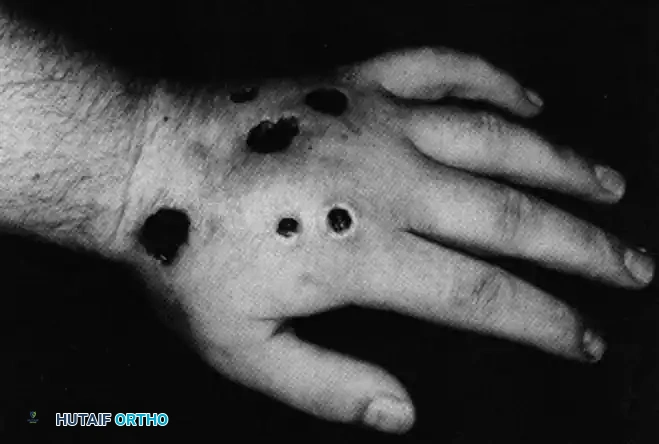
Furthermore, in patients presenting with suspected factitious lesions—such as chronic, non-healing, geometrically shaped ulcers, or unexplained dorsal edema (Secretan’s syndrome)—the application of a diagnostic cast is highly indicated. The "Cast Test" is both diagnostic and therapeutic, allowing the self-inflicted wounds to heal while confirming the etiology when the lesions disappear under immobilization and recur upon cast removal.
Absolute Surgical Contraindications
It cannot be overstated: structural surgical intervention for the primary correction of a psychogenic dysfunctional posture is strictly contraindicated. The literature is replete with tragic case reports of surgeons attempting to correct a psychoflexed hand with flexor tendon lengthenings or joint releases, only to have the patient wake up and immediately pull the hand back into the flexed posture, often rupturing the surgical repairs. Similarly, pinning a psychoextended hand with Kirschner wires inevitably leads to the patient manipulating the pins, bending the hardware, and inducing deep space infections. Surgical intervention in these patients validates their somatic delusions, entrenches them deeper into the "sick role," and initiates a vicious cycle of iatrogenic mutilation.
Pre-Operative Planning, Templating, and Patient Positioning
In the context of psychogenic hand disorders, "pre-operative planning" refers to the meticulous preparation for the diagnostic Examination Under Anesthesia (EUA) and the strategic multidisciplinary coordination required to manage the patient post-diagnosis. This planning phase is arguably the most critical component of the patient's care pathway.
Multidisciplinary Coordination and Pre-Procedural Workup
Before proceeding to the operating room or sedation suite, an exhaustive non-invasive workup must be completed. A detailed history must be obtained, specifically looking for inconsistencies, a history of multiple unexplained medical issues across different specialties, or recent severe psychosocial stressors. Electromyography and Nerve Conduction Studies (EMG/NCS) are mandatory pre-procedural steps. In psychogenic postures, these studies are typically entirely normal, effectively ruling out severe peripheral neuropathies, compressive syndromes, or cervical radiculopathies.
The surgeon must also engage in pre-procedural coordination with the anesthesia team. It is imperative that the anesthesiologist and the operating room staff are briefed on the suspected diagnosis. The environment must remain strictly professional; derogatory comments, accusations of "faking," or expressions of frustration by the staff during the induction or emergence phases can severely damage the therapeutic alliance if overheard by the patient.
Patient Positioning and Setup for EUA
The patient is brought to the operating room or a monitored anesthesia care (MAC) setting. The patient is positioned supine on the operating table with the affected upper extremity extended on a radiolucent hand board. While structural surgery is not planned, the setup should mimic a standard hand case to maintain the clinical environment. A pneumatic tourniquet is placed on the proximal arm but is typically not inflated unless secondary wound debridement for severe maceration or infection is concurrently required.
High-definition video and photographic equipment must be prepared and positioned prior to induction. The pre-operative planning mandates that the entire sequence of the contracture resolving under anesthesia is meticulously documented. This visual evidence is not used to confront or humiliate the patient, but rather serves as an essential component of the medical record to justify the refusal of future structural surgical interventions and to protect the surgeon medicolegally.
Planning the "Cast Test"
If the pre-operative plan involves the application of a diagnostic cast for factitious lesions or Secretan's syndrome, the surgeon must template the extent of the immobilization. The cast must be planned to extend sufficiently proximal (often above the elbow) and distal (enclosing the fingertips) to completely eliminate the patient's ability to access the lesions. The surgeon must also plan for heavy, rigid fiberglass material, as these patients will frequently attempt to break, soak, or dismantle standard plaster splints.
Step-by-Step Surgical Approach and Fixation Technique
While traditional structural fixation is contraindicated, the procedural approach for diagnosing and managing psychogenic hand disorders requires a highly specific, step-by-step methodology. This section details the execution of the Diagnostic Examination Under Anesthesia (EUA) and the therapeutic application of the Diagnostic Cast.
Step 1: Induction and the "Melting" Phenomenon
The procedure begins with the administration of intravenous sedation. Propofol is the agent of choice due to its rapid onset and short half-life. As the patient transitions into a state of deep sedation or general anesthesia, the surgeon maintains a gentle, continuous assessment of the affected hand. The hallmark of a psychogenic hand deformity is the dramatic, instantaneous resolution of the contracture. The rigidly clenched fist or the severely hyperextended digits will literally "melt away" as the active, subconscious muscle firing ceases. The hand will assume a normal, relaxed resting cascade.
Step 2: Documentation of Passive Range of Motion
Once the patient is fully relaxed, the surgeon must systematically document the passive range of motion of every joint in the affected extremity. The wrist, MCP, PIP, and DIP joints are taken through their full, unrestricted arcs of motion. The restoration of the normal tenodesis effect must be demonstrated and recorded. Passive wrist extension should now produce normal digital flexion, and passive wrist flexion should produce normal digital extension. This step definitively rules out organic structural contractures, ischemic fibrosis (Volkmann's contracture), or severe spasticity, which would not resolve completely under sedation.
Step 3: Management of Secondary Organic Complications
In cases where a psychoflexed hand has been maintained for years, true secondary organic contractures of the joint capsules or collateral ligaments may have developed. If the hand does not completely open under anesthesia, the surgeon must exercise extreme restraint. Gentle, passive stretching can be applied to assess the chronicity of the contracture, but aggressive manipulation or closed rupture of the volar plates is strictly avoided, as this will cause severe pain upon emergence, reinforcing the patient's somatic focus. If severe palmar maceration or secondary fungal/bacterial infection is present due to the tightly clenched fist, the surgeon utilizes this time under anesthesia to perform meticulous wound debridement, irrigation, and application of appropriate topical antimicrobial agents.
Step 4: The Diagnostic Cast Technique (For Factitious Lesions)
For patients presenting with factitious ulcers or self-mutilation, the "fixation technique" involves the application of an irremovable diagnostic cast.
1. The wounds are gently cleansed and dressed with non-adherent, sterile dressings.
2. A generous layer of cast padding (Webril) is applied from the proximal forearm (or above the elbow, depending on the lesion location) down to the fingertips.
3. Rigid fiberglass casting material is applied. The cast must completely enclose the digits, leaving no portals of entry.
4. Crucially, the cast must be molded to prevent the patient from inserting objects (e.g., coat hangers, rulers, pens) under the cast edges to continue the self-harm. The edges are heavily padded and contoured.
5. The patient is discharged with strict instructions to return in two to three weeks for cast removal. Upon removal, the rapid healing of the previously "refractory" lesions confirms the diagnosis of factitious trauma.
Step 5: Emergence and Post-Procedural Protocol
As the anesthesia is reversed, the surgeon observes the hand. In almost all cases of psychogenic posturing, as the patient regains consciousness, the hand will slowly, involuntarily return to its severe, dysfunctional posture. The surgeon must not attempt to physically block this recurrence, as it can cause extreme distress and agitation in the patient.
Complications, Incidence Rates, and Salvage Management
The complications associated with psychogenic hand disorders are bipartite: those arising from the chronic nature of the disease itself, and those resulting from iatrogenic harm caused by unwarranted surgical intervention. Understanding these complications is essential for guiding salvage management.
| Complication Category | Specific Complication | Estimated Incidence (in chronic cases) | Salvage Management Strategy |
|---|---|---|---|
| Disease-Related (Dermatological) | Profound palmar maceration, fungal intertrigo, pressure necrosis from fingernails | > 80% in severe Clenched Fist | EUA for hygiene, nail trimming, topical antifungals, absorptive dressings. |
| Disease-Related (Structural) | Secondary capsular contracture, collateral ligament shortening | 40-60% (if posture held > 1 year) | Non-operative. Gentle dynamic splinting only if psychiatric clearance is obtained. |
| Iatrogenic (Surgical Failure) | Immediate recurrence of deformity post-tendon release or joint fusion | 100% (if primary psychogenic etiology is missed) | Absolute cessation of further structural surgery. Immediate psychiatric referral. |
| Iatrogenic (Hardware Complications) | K-wire breakage, pin-tract osteomyelitis, self-induced hardware migration | 70-90% (in patients pinned for psychoextended hands) | Immediate hardware removal under anesthesia, aggressive IV antibiotics, wound debridement. |
| Psychiatric Complications | Transfer lesions (pathology moves to the contralateral limb after treatment of the first) | 30-50% | Comprehensive psychiatric inpatient management, Cognitive Behavioral Therapy (CBT). |
Complications of the Disease Process
The continuous, relentless posturing of the psychoflexed hand creates a closed, moist, anaerobic environment in the palm. The incidence of profound palmar maceration is exceedingly high. The hygiene of the hand becomes severely compromised, often resulting in an offensive odor and secondary bacterial or fungal infections. Furthermore, the continuous pressure of the fingernails against the palmar skin frequently causes deep pressure necrosis and ulceration. If left unchecked, this can progress to flexor tendon sheath infections or osteomyelitis of the metacarpals. Salvage management for these dermatological complications involves periodic sedation for hygiene, aggressive nail trimming, and the placement of absorptive, antimicrobial dressings (such as silver-impregnated foam) into the palm.
Complications of Unwarranted Surgery
The most devastating complications arise when an orthopedic surgeon fails to recognize the psychogenic nature of the deformity and proceeds with structural surgery. The incidence of failure in these scenarios approaches 100%. If a surgeon attempts to correct a psychoextended hand with Kirschner wire fixation, the patient will frequently manipulate the pins, actively bending them or breaking them within the medullary canal. This self-mutilation induces severe pin-tract infections and deep osteomyelitis.
Salvage management in these iatrogenic disasters requires immediate return to the operating room for hardware removal, aggressive debridement, and intravenous antibiotic therapy. In extreme cases of self-induced, life-threatening sepsis, amputation of the affected digits may be the only life-saving salvage option. However, the surgeon must be acutely aware that amputation does not resolve the underlying psychiatric drive; the patient will almost universally adopt a new dysfunctional posture with the remaining digits or transfer the pathology to the contralateral limb.
Phased Post-Operative Rehabilitation Protocols
In the context of psychogenic hand disorders, "post-operative" refers to the period following the diagnostic Examination Under Anesthesia or the removal of a diagnostic cast. The rehabilitation protocol is fundamentally different from traditional orthopedic therapy. It requires a delicate, multidisciplinary approach focused on psychological empowerment rather than aggressive physical manipulation.
Phase I: The Diagnostic Disclosure and Psychiatric Integration (Weeks 1-2)
The most critical phase of rehabilitation is the initial conversation following the EUA. Confronting the patient directly about the psychiatric nature of their deformity—accusing them of "faking" or malingering—is disastrous. It invariably leads to defensiveness, alienation, and a complete breakdown of the physician-patient relationship.
The surgeon must frame the diagnosis carefully. A highly effective strategy is to explain that the structural anatomy of the hand (the bones, tendons, and nerves) is perfectly healthy, as proven by the examination under anesthesia. The surgeon then explains that the "software" controlling the hand—the brain-nerve-muscle connection—is "misfiring" due to stress, trauma, or a subconscious reflex. By validating that the hand is indeed not functioning properly, while shifting the etiology from a structural "hardware" problem to a neurological "software" problem, the patient is provided a "face-saving" avenue to accept psychiatric referral. The primary rehabilitation in this phase is the initiation of Cognitive Behavioral Therapy (CBT) and psychiatric evaluation.
Phase II: Empowered Hand Therapy and Biofeedback (Weeks 3-8)
Once psychiatric care is initiated, specialized hand therapy can commence. The core philosophy of this approach, championed by Spiegel and Chase, is to empower the patient. The therapist must avoid aggressive passive stretching, which will only trigger severe guarding, pain behavior, and reinforcement of the contracture.
Therapy focuses on gentle, active-assisted range of motion and biofeedback. The patient is taught to regain internal control over their musculature. Techniques such as mirror visual feedback therapy—where the patient watches the reflection of their normal, functioning contralateral hand moving in a mirror, tricking the brain into perceiving movement in the affected hand—have shown significant efficacy. Self-hypnosis and relaxation techniques are also integrated to lower the baseline sympathetic tone and reduce the subconscious drive to fire the flexor or extensor musculature.
Phase III: Splinting Controversies and Long-Term Management (Months 2-6)
The use of static or dynamic splinting in psychogenic hand disorders is highly controversial. In many cases, patients will actively sabotage the splints, complain of excruciating pain, or develop factitious pressure sores under the straps. Splinting should only be attempted in the later phases of rehabilitation, and only if the patient has demonstrated significant psychiatric insight and a genuine desire to correct the posture. If utilized, splints should be lightweight, easily removable, and framed as a "gentle reminder" for the muscles to relax, rather than a rigid structural correction. Long-term management relies entirely on the continued success of the psychiatric intervention, with the orthopedic surgeon remaining in a supportive, observational role.
Summary of Landmark Literature and Clinical Guidelines
The diagnosis and management of psychogenic hand disorders are heavily guided by a robust body of historical and contemporary orthopedic literature. Familiarity with these landmark studies is essential for board examinations and clinical mastery.
- Frykman, Wood, and Miller (The Psychoflexed Hand): This classic triad of authors provided the definitive description of the psychoflexed hand. Their seminal work highlighted the selective sparing of the index finger and thumb, allowing for a rudimentary pinch mechanism, and established the necessity of the Examination Under Anesthesia to differentiate the condition from true organic contractures.
- Simmons and Vasile (Clenched Fist Syndrome): These authors extensively documented the clenched fist variant. Their most critical contribution to the literature was the detailed biomechanical description of paradoxical stiffness. They established that the absence of the normal tenodesis effect during passive wrist flexion is the pathognomonic physical exam finding for this syndrome.
- Spiegel and Chase (Non-Operative Management): Recognizing the catastrophic failure rates of surgical intervention, Spiegel and Chase published landmark protocols on the conservative management of these disorders. They reported successful outcomes using a combination of specialized hand therapy, biofeedback, and self-hypnosis, emphasizing the "face-saving" approach to patient communication.
- Louis DS (Factitious Lesions and the Cast Test): Dr. Dean Louis provided the definitive literature on the management of factitious trauma and Secretan's syndrome. His publication of the "Cast Test" remains the gold standard diagnostic and therapeutic modality for self-inflicted dermatological lesions of the upper extremity, proving that these mysterious wounds heal rapidly when the patient is mechanically prevented from accessing them.
Current Clinical Guidelines (AAOS / ASSH):
Modern guidelines from the American Academy of Orthopaedic Surgeons (AAOS) and the American Society for Surgery of the Hand (ASSH) strictly echo the findings of these landmark papers. The guidelines mandate a thorough diagnostic workup, including EMG/NCS and EUA, to definitively rule out organic pathology. They explicitly state that surgical intervention (tendon releases, arthrodeses, amputations) for the primary correction of psychogenic postures or factitious lesions is absolutely contraindicated. The established standard of care is a multidisciplinary approach, transitioning the patient from orthopedic surgical evaluation to comprehensive psychiatric and specialized rehabilitative care, thereby protecting the patient from the devastating cycle of iatrogenic mutilation.
This academic synthesis is based on established protocols from Hutaifortho's Operative Orthopaedics and has been medically reviewed by Prof. Dr. Mohammed Hutaif, Consultant Orthopedic & Spine Surgeon ---
