العربية
Part of the Master Guide

AAOS & ABOS Basic Science MCQs (Set 3): Bone Biology, Biomechanics & Anatomy Review

AAOS Orthopedic Basic Science MCQs (Set 2): Musculoskeletal Anatomy, Biomechanics & Physiology | Board Review
27 Apr 2026 53 min read 93 Views
Mtd 2008 MCQs - Part 2

Key Takeaway

This high-yield question set for the AAOS/ABOS Basic Science exams focuses on core foundational knowledge. Questions cover musculoskeletal anatomy, including nerve and muscle groups, principles of orthopedic biomechanics, and crucial aspects of bone and cartilage physiology, aiding in comprehensive board preparation.

AAOS Orthopedic Basic Science MCQs (Set 2): Musculoskeletal Anatomy, Biomechanics & Physiology | Board Review

Comprehensive 100-Question Exam


00:00

Start Quiz

Question 1

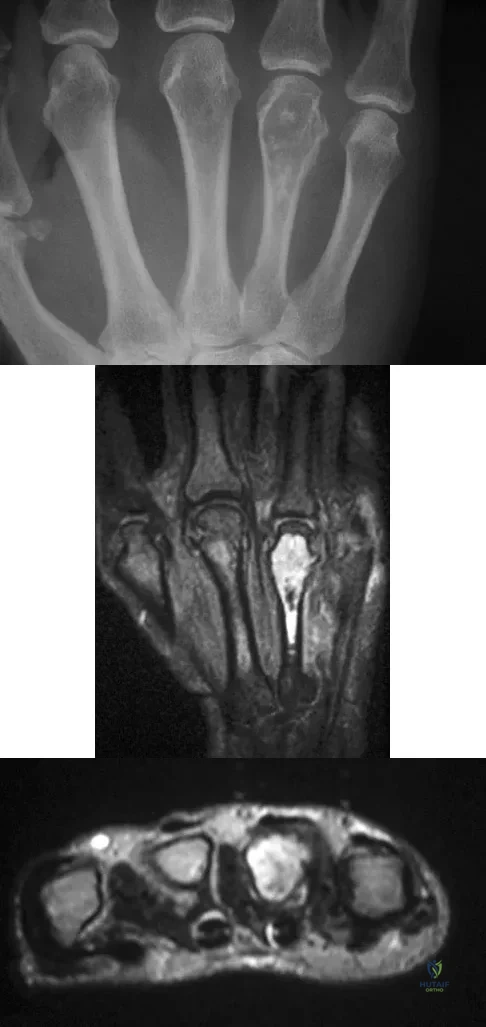
A 58-year-old woman has a fracture through a metacarpal lesion after a motor vehicle accident. She denies any preinjury symptoms and the fracture heals uneventfully. Based on the radiograph and MRI scans shown in Figures 22a through 22c obtained following fracture healing, follow-up management should consist of


Explanation

Enchondromas are the most common benign skeletal lesions identified in the bones of the hand. Most are incidentally found or initially become clinically evident after a pathologic fracture. If the patient has a fracture, the hand is immobilized until union. If the lesion is large and further pathologic fractures are expected, then an intralesional curettage and grafting procedure may be warranted. In this patient, the lesion has not significantly altered the size, shape, or morphology of the involved metacarpal head and recurrent fracture is unlikely. Observation with follow-up radiographs is considered appropriate management. Campanacci M: Bone and Soft Tissue Tumors, ed 2. New York, NY, Springer-Verlag, 1999, pp 213-228.

Question 2

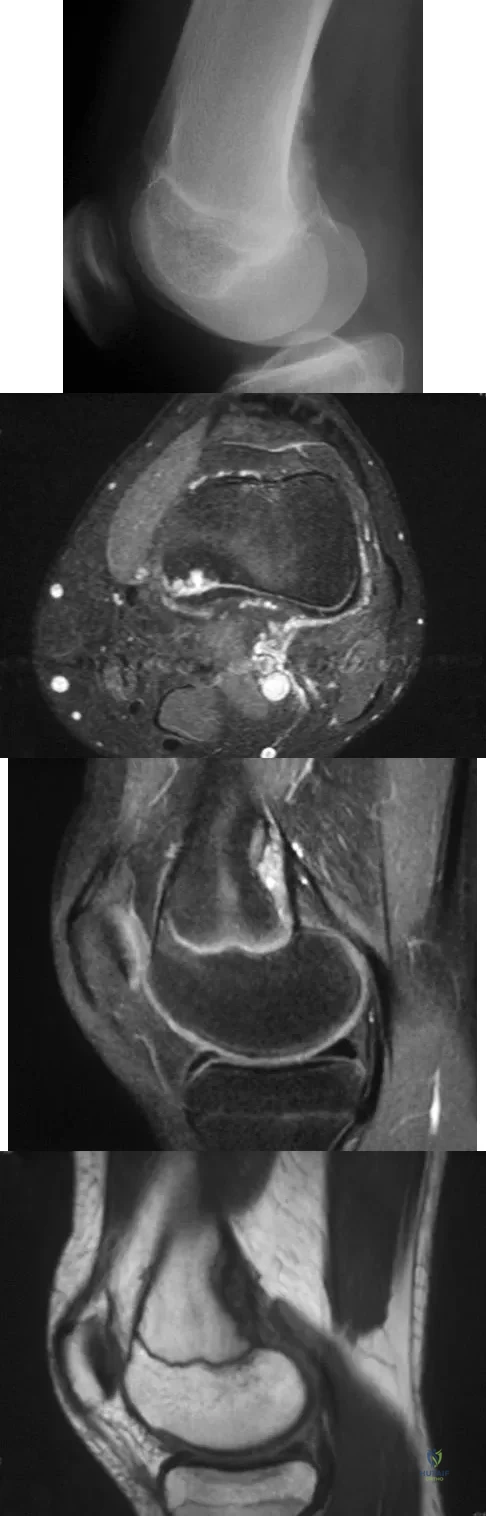
A 14-year-old girl reports bilateral patellofemoral symptoms. Based on the radiograph and MRI scans shown in Figures 23a through 23d, what is the next most appropriate step in management of the lesion?


Explanation

A periosteal desmoid lesion is a tumor simulator. It is characterized by a bone irregularity along the posteromedial aspect of the distal femur at the insertion of the adductor magnus or the origin of the gastrocnemius muscle. It most commonly occurs in patients who are age 10 to 15 years. The lesions are asymptomatic, with no palpable mass, pain, or swelling. They are frequently an incidental finding when radiographs are obtained for nonspecific symptoms or trauma about the knee. Following recognition of the characteristic imaging findings, observation is the management of choice. Dunham WK, Marcus NW, Enneking WF, et al: Developmental defects of the distal femoral metaphysis. J Bone Joint Surg Am 1980;62:801-806.

Question 3

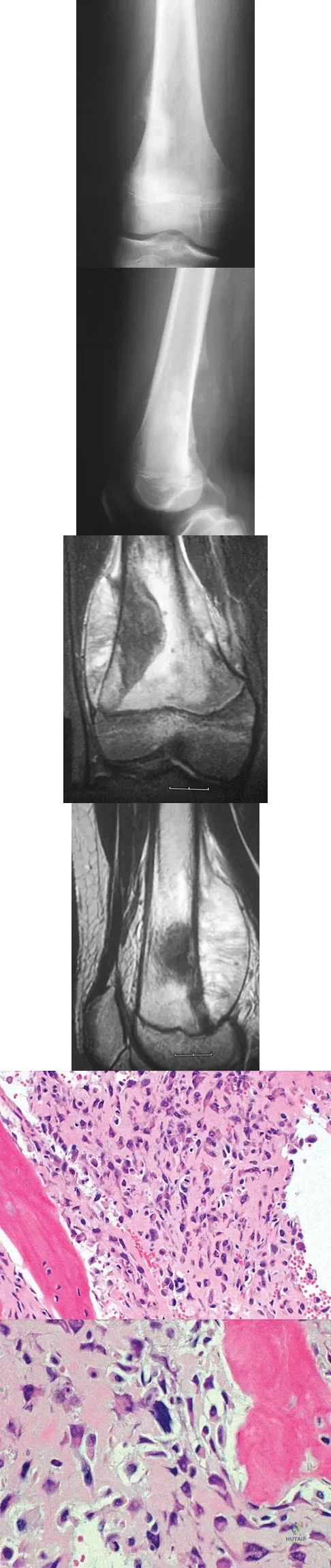
A 13-year-old boy has knee pain after sustaining a mild twisting injury while playing basketball 4 weeks ago. Radiographs and MRI scans are shown in Figures 24a through 24d, and biopsy specimens are shown in Figures 24e and 24f. Treatment should consist of


Explanation

The imaging studies and histology are consistent with high-grade osteosarcoma. The standard treatment for osteosarcoma is neoadjuvant chemotherapy combined with wide surgical resection that can be performed with amputation or limb salvage depending on characteristics unique to each tumor and each patient. In most patients, limb salvage surgery can be performed with reconstruction using allografts and/or megaprostheses. Osteosarcoma is poorly responsive to radiation therapy. Chemotherapy alone, in the absence of appropriate surgery, has not proven effective. Simon MA, Springfield DS: Surgery for Bone and Soft-Tissue Tumors. Philadelphia, PA, Lippincott-Raven, 1998, pp 265-274.

Question 4

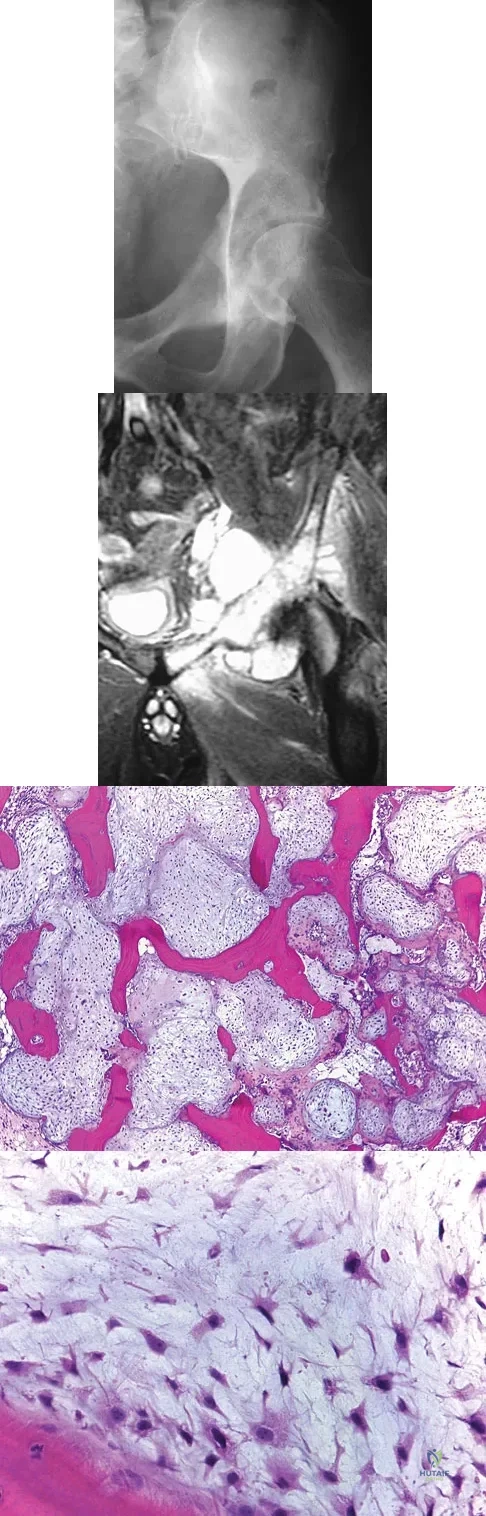
A 64-year-old man has had increasing pain in the left hip for the past 6 months. A radiograph and MRI scan are shown in Figures 25a and 25b. Biopsy specimens are shown in Figures 25c and 25d. What is the recommended treatment?


Explanation

The radiograph shows a lytic lesion in the left periacetabular area consistent with chondrosarcoma. A large soft-tissue mass is present along with extension through the supra-acetabular region and pubic ramus. The histology shows a hypercellular lesion infiltrating through the bony trabeculae with a basophilic cytoplasm. This is classified as a grade 2 chondrosarcoma. The treatment of a pelvic chondrosarcoma is wide resection via either an internal hemipelvectomy or amputation. Chondrosarcoma requires surgical resection for control and does not traditionally respond to chemotherapy or external beam irradiation therapy. Pring M, Weber, KL, Unni KK, et al: Chondrosarcoma of the pelvis: A review of sixty-four cases. J Bone Joint Surg 2001;83:1630-1642.

Question 5

The scoring system for impending pathologic fractures devised by Mirels involves assessment of which of the following factors?
Basic Science Board Review 2008: High-Yield MCQs (Set 2) - Figure 18


Explanation

The scoring system published by Mirels in 1989 is based on the following characteristics: the location of the lesion, the amount of pain the patient is experiencing, the type of lesion (either lucent, mixed, or blastic), and the lesion size. The tumor is scored from 1 to 3 in each category and a total score is obtained that correlates to fracture risk. Prophylactic fixation is advised for lesions with scores of higher than 8, and consideration for stabilization should be strongly considered for scores of 8. The Mirels scoring system can be useful as an adjunct to clinical decision making. Mirels H: Metastatic disease in long bones: A proposed scoring system for diagnosing impending pathologic fractures. 1989. Clin Orthop Relat Res 2003;415:S4-S13.

Question 6

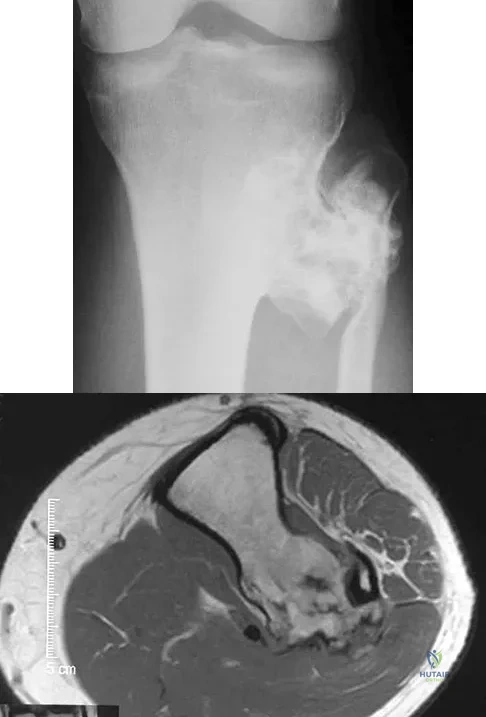
Figures 26a and 26b show the radiograph and MRI scan of a 22-year-old man with knee pain. What is the most likely diagnosis?


Explanation

The lesion is an osteochondroma. This is demonstrated by a pedunculated bone-forming lesion where the medullary space of the lesion communicates with the medullary space of the host bone. The cortex of the exostosis is in continuity with the cortex of the underlying bone. The MRI scan reveals that there is no significant cartilage cap, alleviating concern for malignant conversion to a chondrosarcoma. Osteoblastoma and osteosarcoma typically have mixed areas of bone formation and bone destruction. Malignant fibrous histiocytoma of bone is usually purely lytic. Vaccaro AR (ed): Orthopaedic Knowledge Update 8. Rosemont, IL, American Academy of Orthopaedic Surgeons, 2005, pp 197-215.

Question 7

Which of the following malignant tumors most commonly contains soft-tissue calcifications seen on radiographs or CT?
Basic Science Board Review 2008: High-Yield MCQs (Set 2) - Figure 21


Explanation

Focal calcifications causing small radiopacities are found in 15% to 20% of synovial sarcomas. Their irregular contours differentiate them from the phleboliths found in a benign hemangioma. Ewing's sarcoma, clear cell sarcoma, and malignant fibrous histiocytoma do not commonly have calcifications within the lesions. Enzinger FM, Weiss SW: Soft Tissue Tumors, ed 3. St Louis, MO, Mosby, 1995, p 761.

Question 8

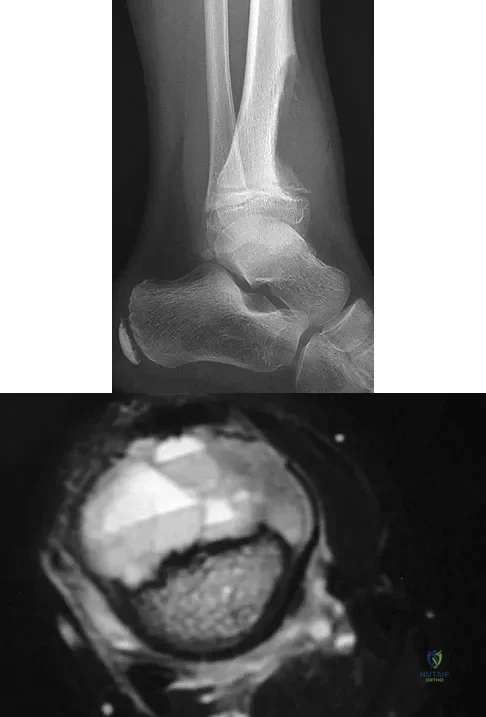
Which of the following is most associated with local recurrence of the lesion seen in the radiograph and MRI scan shown in Figures 27a and 27b?


Explanation

The lesion is an aneurysmal bone cyst. These lesions are known to have a local recurrence rate of 5% to 50%. Young age, open physes, stage, and type of surgical removal and resulting margin have all been shown to affect the recurrence rate. Chemotherapy is not used in the treatment of aneurysmal bone cysts. Gibbs CP Jr, Hefele MC, Peabody TD, et al: Aneurysmal bone cyst of the extremities: Factors related to local recurrence after curettage with a high-speed burr. J Bone Joint Surg Am 1999;81:1671-1678.

Question 9

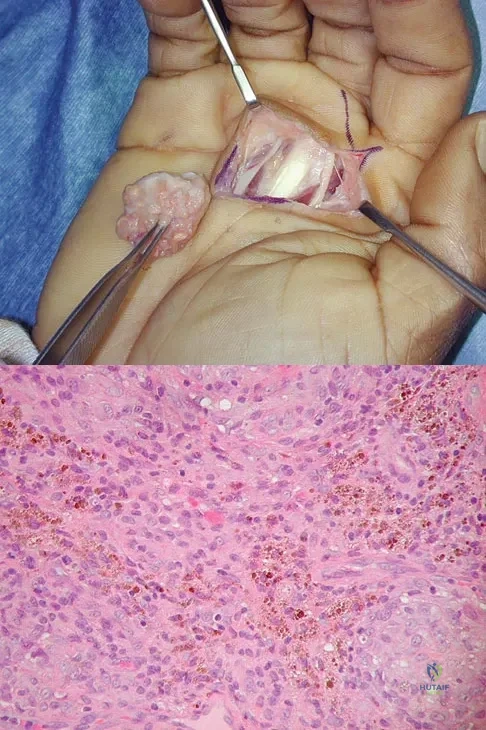
A 33-year-old woman reports a mass on the right hand that has been enlarging for 1 year. An intraoperative photograph is shown in Figure 28a, and a biopsy specimen is shown in Figure 28b. What is the most likely diagnosis?


Explanation

Giant cell tumor of the tendon sheath is the most common solid soft-tissue mass in the hand. These tumors are slow-growing and may be present for months or years before coming to medical attention. Patients usually report mechanical difficulties because of the size or position of the tumor. The gross appearance is that of a lobulated mass that may be multicolored; typically yellow, brown, red, and gray. Histologically the lesion consists of multinucleated giant cells, polygonal mononuclear cells, and histiocytes that may contain abundant hemosiderin or lipid. Walsh EF, Mechrefe A, Akelman E, et al: Giant cell tumor of tendon sheath. Am J Orthop 2005;34;116-121.

Question 10

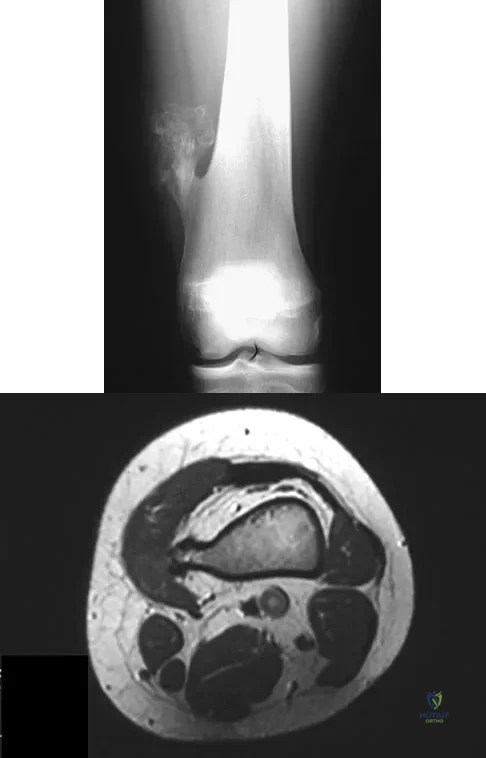
A 15-year-old girl has had a painful mass on the medial aspect of her left thigh for the past 5 years. The pain is present only when she is performing athletic activities and is completely relieved with rest. A radiograph and MRI scan are shown in Figures 29a and 29b. The patient and her parents would like to have the mass removed. What further diagnostic studies are required prior to considering surgical resection?


Explanation

The radiograph and MRI scan show a pedunculated lesion arising from the medial aspect of the distal femoral metaphysis. The cortex of the lesion is contiguous with the cortex of the underlying normal bone. Similarly, the medullary canal of the lesion is contiguous with that of the normal bone. These findings are diagnostic of osteochondroma. Rarely a secondary chondrosarcoma can arise in a preexisting osteochondroma. This diagnosis is suggested by identifying a cartilage cap that is greater than 1.5-cm thick in a skeletally mature patient. MRI is the best study to rule out a secondary chondrosarcoma. CT also may be used for this purpose but is not indicated in this patient because an MRI has already been obtained. A bone scan is not useful to identify a secondary chondrosarcoma. Similarly, there is no role for biopsy in this patient. No further tests are needed. Menendez LR (ed): Orthopaedic Knowledge Update: Musculoskeletal Tumors. Rosemont, IL, American Academy of Orthopaedic Surgeons, 2002, pp 103-111.

Question 11

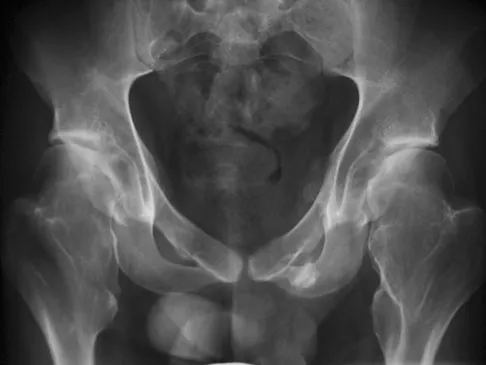
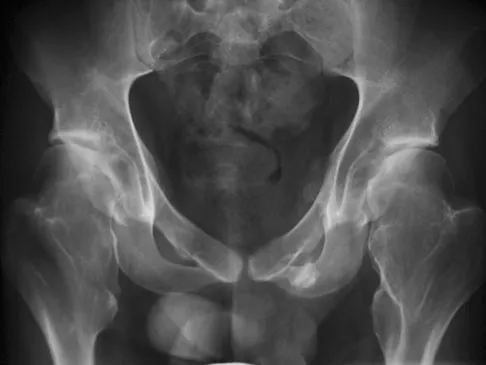
A 22-year-old man has mild hip pain bilaterally and multiple skeletal lesions. Based on the pelvic radiograph shown in Figure 30, what is the inheritance pattern for his disorder?
Basic Science Board Review 2008: High-Yield MCQs (Set 2) - Figure 28


Explanation

Multiple hereditary exostoses (MHE) is an autosomal dominant disorder manifested by multiple osteochondromas and characteristic skeletal involvement. EXT1 on 8q24.1 and EXT2 on 11p13 are the two genes most strongly associated with MHE. Mutations in these genes affect proper development of endochondral bone, such that in all affected individuals exostoses develop adjacent to the growth plates of long bones, and some exhibit additional bone deformities. Defects in the EXT genes result in increased chondrocyte proliferation and delayed hypertrophic differentiation. Stieber JR, Dormans JP: Manifestations of hereditary multiple exostoses. J Am Acad Orthop Surg 2005;13:110-120.

Question 12

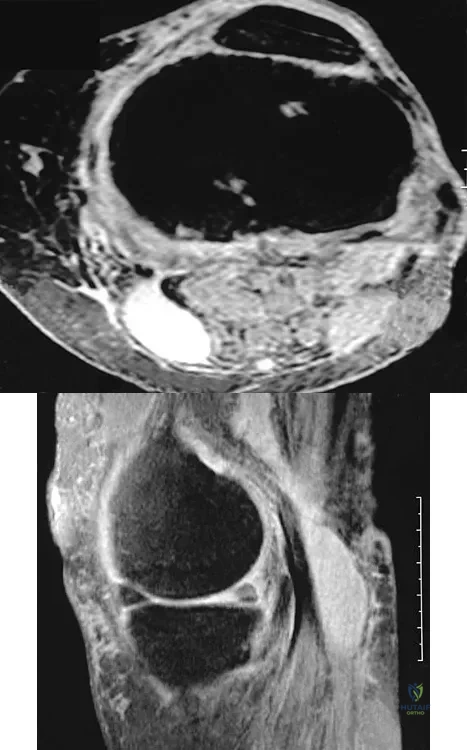
An 80-year-old woman notes a painless mass posterior to her left knee. MRI scans are shown in Figures 31a and 31b. What is the best course of action?


Explanation

The MRI scans show a popliteal cyst (Baker's cyst) in its most common location. The cyst emerges from the knee joint between the medial head of the gastrocnemius muscle and the tendon of the semimembranosus muscle. These images are diagnostic; therefore, no further work-up is indicated. Since the patient is asymptomatic, no treatment is necessary. Dlabach JA: Nontraumatic soft tissue disorders, in Canale ST (ed): Campbell's Operative Orthopaedics, ed 10. Philidelphia, PA, Mosby, 2003, vol 1, pp 885-969.

Question 13

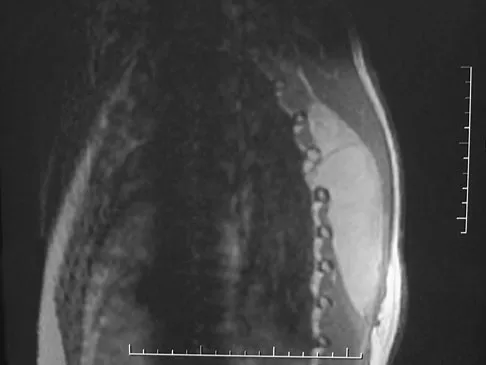
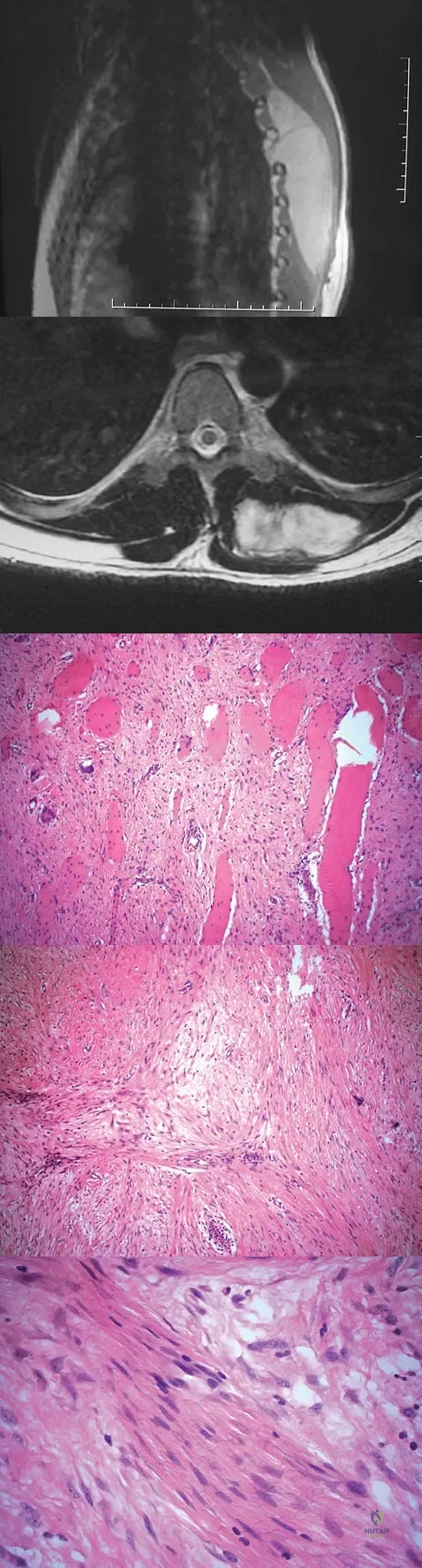
A 38-year-old man has an enlarging left paraspinal soft-tissue mass. Based on the MRI scans and biopsy specimens shown in Figures 32a through 32e, what is the most likely diagnosis?


Explanation

Fibromatosis is a benign but aggressive fibrous lesion that principally arises from the connective tissue of muscle and the overlying fascia. The peak incidence is between the ages of 25 and 35 years. Most patients have a deep-seated, firm, poorly circumscribed mass that has grown insidiously and causes little or no pain. MRI is helpful in diagnosing the lesion and in assessing the extent of disease prior to surgical intervention. Histologically, the lesion is poorly circumscribed and infiltrates the surrounding tissue. The lesion appears bland with uniform spindle cells separated by abundant collagen, with little or no cell-to-cell contact. Despite its bland microscopic appearance, the tumor frequently behaves in an aggressive manner. These lesions do not metastasize but have a high incidence of recurrence. Treatment options consist of surgical resection, radiation therapy, chemotherapeutic protocols, hormone modulation, and/or anti-inflammatory medications. Weiss SW, Goldblum JR, Enzinger FM: Enzinger and Weiss's Soft Tissue Tumors, ed 4. Philadelphia, PA, Elsevier, 2001, pp 309-337.

Question 14

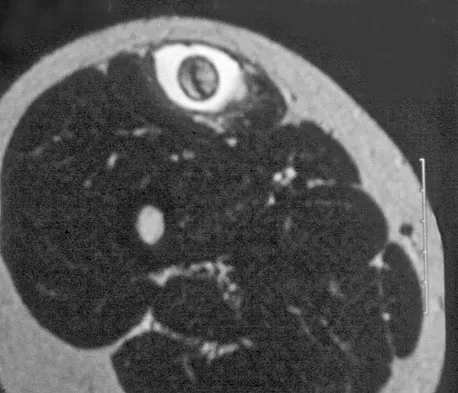
What is the most common malignancy involving the hand?
Basic Science Board Review 2008: High-Yield MCQs (Set 2) - Figure 36


Explanation

Skin cancers far outnumber primary musculoskeletal malignancies of the hand and the most common of these is squamous cell carcinoma. Metatastic lung carcinoma, while classic for the carcinoma that metastasizes to the hand, does so at an extremely low rate. Fink JA, Akelman E: Nonmelanotic malignant skin tumors of the hand. Hand Clin 1995;11:255-264.

Question 15

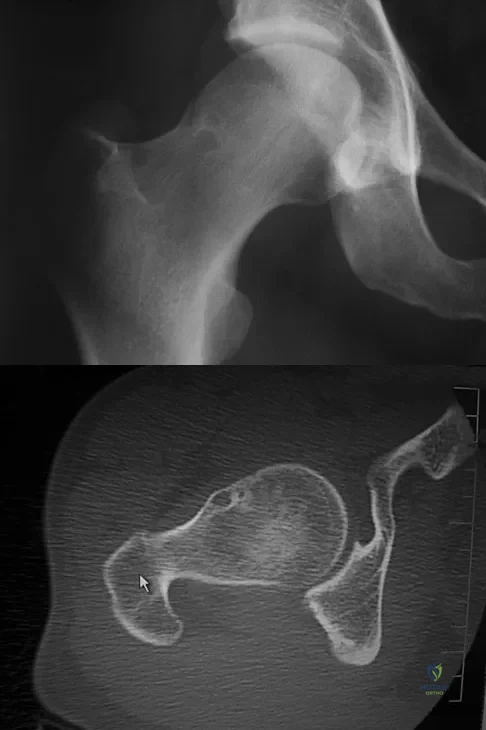
A 38-year-old man who is an avid runner reports a several month history of right hip pain. Based on the radiograph and cross-sectional CT scan shown in Figures 33a and 33b, what is the most likely diagnosis for the lesions seen on the femoral neck?


Explanation

Synovial herniation pits or Pitt's pits are tumor simulators and are incidentally identified on radiographs obtained for either pain or trauma. The main diagnostic pitfall with this lesion is mistakenly identifying it as an osteoid osteoma. Accurate diagnosis is achieved by knowledge of the location and the characteristic imaging appearance. These are common lesions in individuals with femoroacetabular impingement. Pitt MJ, Graham AR, Shipman JH, et al: Herniation pit of the femoral neck. Am J Roentgenol 1982;138:1115-1121.

Question 16

A 35-year-old man has had progressive right knee pain for the past 2 months. An AP radiograph, bone scan, MRI scan, and photomicrograph are shown in Figures 34a through 34d. What is the most appropriate treatment of this lesion?
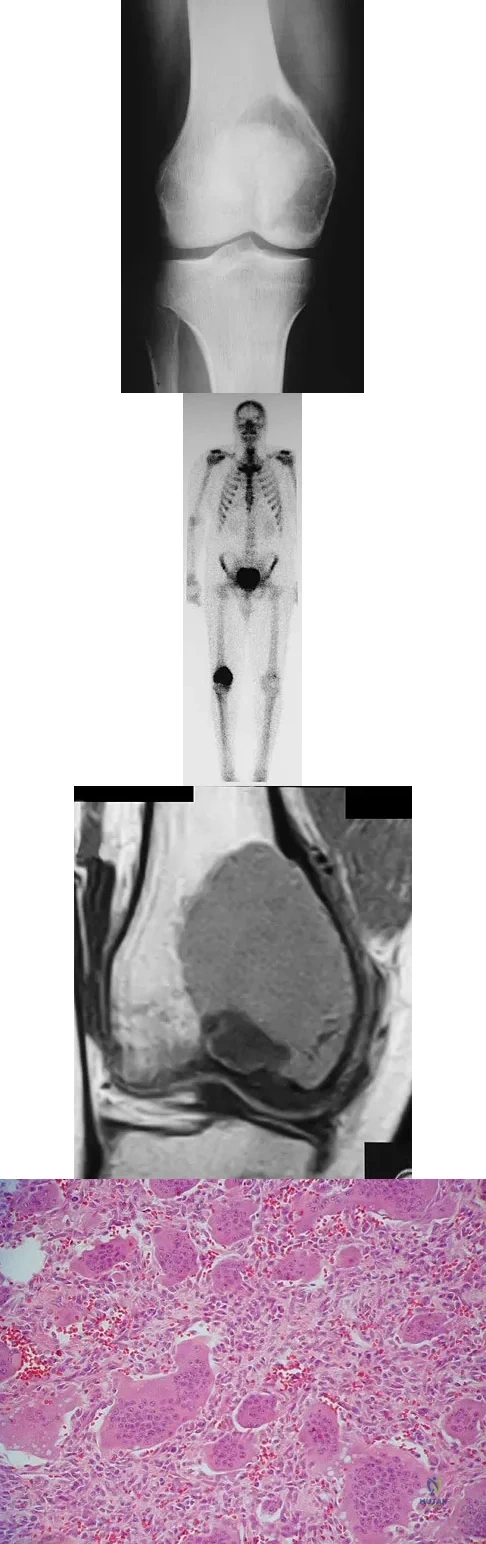


Explanation

This is a classic case of giant cell tumor of bone. The radiograph and the MRI scan reveal a purely lytic lesion in the medial femoral condyle. The lesion is well-demarcated without a rim of sclerotic bone. It is eccentrically located and abuts the subchondral bone. The lesion demonstrates increased uptake on a technetium TC 99m bone scan. These imaging studies are highly suggestive of giant cell tumor arising in its most common location. The photomicrograph confirms the diagnosis of giant cell tumor. Based on these findings, the most widely accepted treatment is extended curettage plus a local adjuvant such as polymethylmethacrylate bone cement, argon beam coagulation, liquid nitrogen, and/or phenol. Lackman RD, Hosalkar HS, Ogilvie CM, et al: Intralesional curettage for grades II and III giant cell tumors of bone. Clin Orthop Relat Res 2005;438:123-127.

Question 17

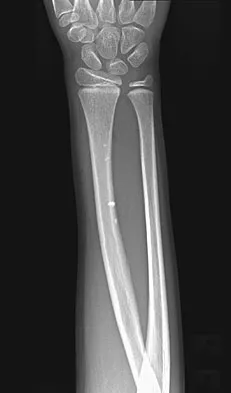
What is the most common bone tumor in the hand?
Basic Science Board Review 2008: High-Yield MCQs (Set 2) - Figure 43


Explanation

The most common bone tumor in the hand is an enchondroma. Forty-two percent of these lesions occur in the small tubular bones. They frequently present with a fracture in these locations. Fractures are usually treated nonsurgically. Indications for surgery include patients with symptomatic lesions or those who are considered high risk for recurrent fracture. The histologic appearance of an enchondroma in the hand is more cellular than enchondromas found in the long bones. Menendez LR (ed): Orthopaedic Knowledge Update: Musculoskeletal Tumors. Rosemont, IL, American Academy of Orthopaedic Surgeons, 2002, p 103.

Question 18

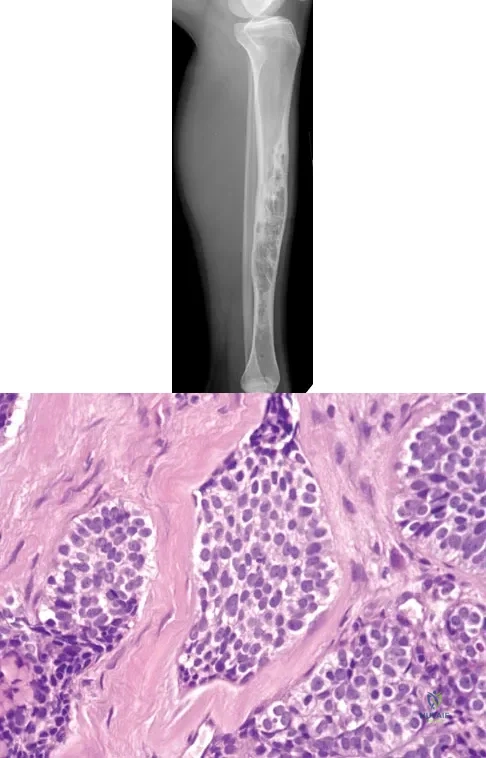
A 30-year-old woman has had pain in her right leg for the past 6 months. A lytic lesion is noted in the anterior cortex of the midtibia, extending 5 cm in length without a soft-tissue mass. A radiograph and a biopsy specimen are shown in Figures 35a and 35b. What is the preferred treatment?


Explanation

In an adult with an anterior cortical tibial lesion, this is the classic histologic appearance and anatomic location for an adamantinoma. The histology reveals areas of epithelial cells (in a glandular pattern) within a fibrous stroma. The epithelial cells are shown in nests. They would stain positively for keratin. Adamantinoma is a rare malignant bone tumor with a propensity for late metastasis. It has a high incidence of local recurrence unless resected with a wide margin. Chemotherapy and radiation therapy are not helpful in the treatment of this disease. Amputation generally is not necessary because a diaphyseal resection is usually possible. McCarthy EF, Frassica FJ: Pathology of Bone and Joint Disorders with Clinical and Radiographic Correlation. Philadelphia, PA, WB Saunders, 1998, p 263.

Question 19

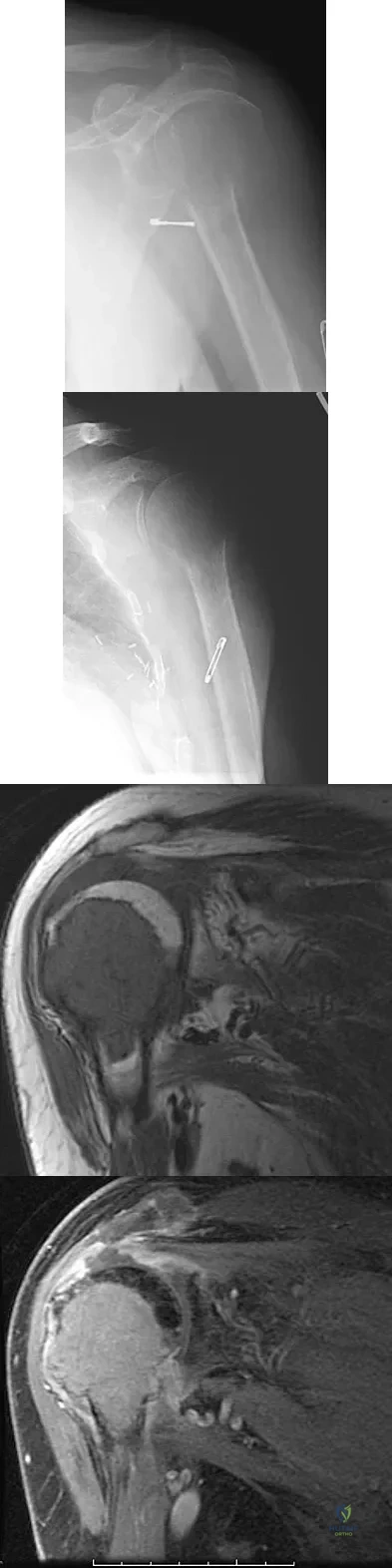
A 75-year-old woman has had severe shoulder pain for the past month. Her medical history includes hypertension and a total nephrectomy for renal cell carcinoma 7 years ago. Radiographs and sagittal MRI scans are shown in Figures 36a through 36d. A bone scan reveals this to be an isolated lesion. Biopsy findings are consistent with metastatic renal cell carcinoma. What is the most appropriate treatment for this patient?


Explanation

Resection and reconstruction of this very proximal lesion provides the best chance to avoid hardware complications that may be associated with stabilization procedures. Wide resection of isolated renal cell carcinoma metastasis, which presents distant to the nephrectomy, may improve long-term survival. Fuchs B, Trousdale RT, Rock MG: Solitary bony metastasis from renal cell carcinoma: Significance of surgical treatment. Clin Orthop Relat Res 2005;431:187-192.

Question 20

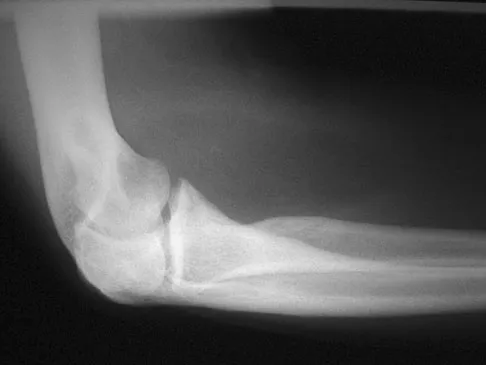
A patient undergoes a simple excision of a 3-cm superficial mass in the thigh at another institution. The final pathology reveals a leiomyosarcoma, without reference to the margins. What is the recommendation for definitive treatment?
Basic Science Board Review 2008: High-Yield MCQs (Set 2) - Figure 50


Explanation

Treatment of patients with unplanned excision of soft-tissue sarcomas is challenging. If the margins are positive or unclear, the patient is best managed with repeat excision of the tumor bed, and radiation therapy if the repeat excision does not yield wide margins. In patients with no detectable tumor on physical examination or imaging after unplanned excision, some studies have shown that up to 35% of patients will have residual disease and a poorer local recurrence rate (22% versus 7%). Therefore, whenever feasible, a reexcision of the tumor bed is recommended.

Question 21

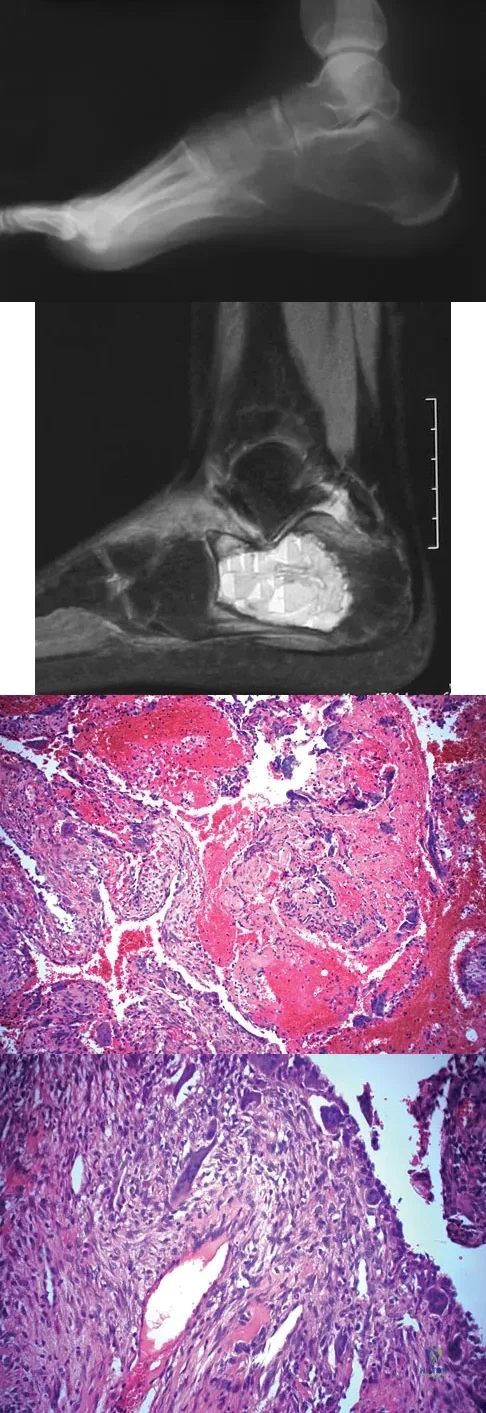
A 14-year-old girl has had progressive heel pain for the past several months. Based on the radiograph, MRI scan, and biopsy specimens shown in Figures 37a through 37d, treatment should include


Explanation

An aneurysmal bone cyst is a benign, locally destructive lesion of bone. Most are seen in patients in the second decade of life. The clinical presentation varies, but most patients have pain, tenderness, swelling, and/or pathologic fracture. Radiographs show a radiolucent lesion sometimes with expansile remodeling of the cortex. MRI best detects the commonly seen fluid-fluid levels associated with this lesion. Histologic findings include blood-filled spaces with bland fibrous connective tissue septa. The stroma has histiocytes, fibroblasts, scattered giant cells, hemosiderin, and occasional inflammatory cells. Treatment of these lesions consists of extended curettage, plus or minus the use of adjuvants (liquid nitrogen, phenol, argon beam coagulation), and finally filling the bone void (allograft or other bone substitute). Gibbs CP Jr, Hefele MC, Peabody TD, et al: Aneurysmal bone cyst of the extremities: Factors related to local recurrence after curettage with a high-speed burr. J Bone Joint Surg Am 1999;81:1671-1678.

Question 22

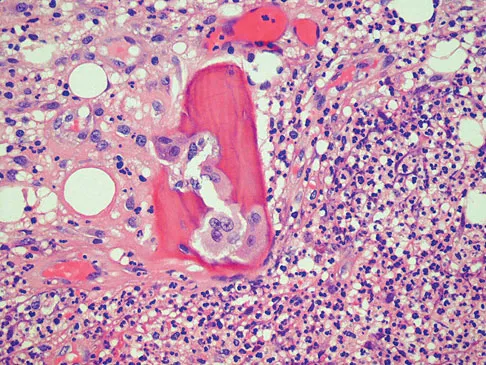
A 14-year-old boy has had knee pain for the past 2 months. He also has a low-grade fever of 101.3 degrees F (38.5 degrees C). Laboratory studies show a WBC count of 12,100/mm3 and an erythrocyte sedimentation rate of 58/h. A biopsy specimen of a lesion in the distal femoral metaphysis is shown in Figure 38. What is the most appropriate treatment?
Basic Science Board Review 2008: High-Yield MCQs (Set 2) - Figure 55


Explanation

The clinical presentation of this patient is consistent with both acute osteomyelitis and Ewing's sarcoma. Both entities can be noted in the distal femoral metaphysis although Ewing's sarcoma is classically noted in the diaphysis. The histology reveals a mixed inflammatory cell infiltrate with neutrophils, plasma cells, lymphocytes, and histiocytes. Ewing's sarcoma would be a uniform population of small round blue cells without an inflammatory component. Eosinophilic granuloma (EG) is characterized by Langerhans histiocytes and eosinophils. Treatment of EG often consists of an intralesional steroid injection. Treatment of acute osteomyelitis includes surgical debridement and antibiotics. McCarthy JJ, Dormans JP, Kozin SH, et al: Musculoskeletal infections in children: Basic treatment principles and recent advancements. Instr Course Lect 2005;54:515-528.

Question 23

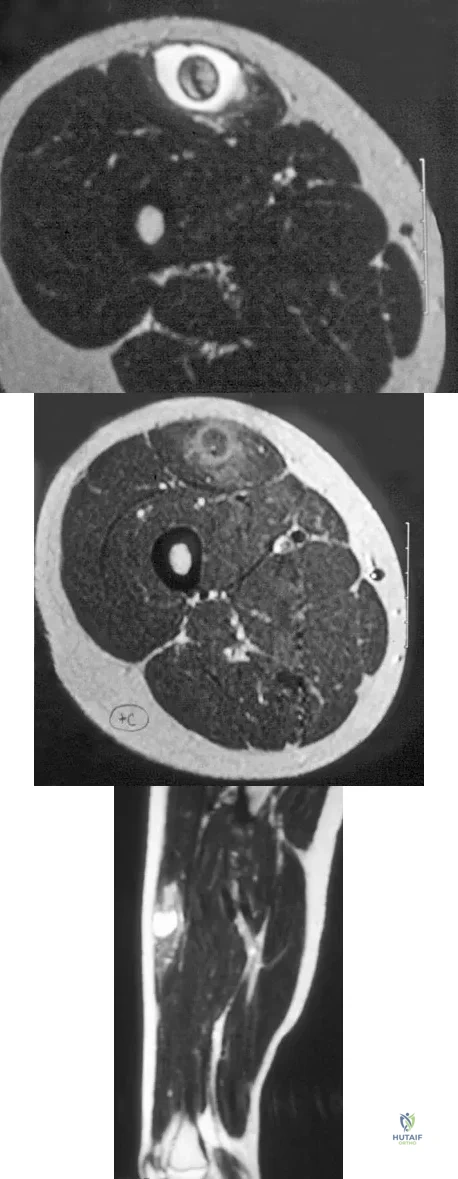
A 14-year-old girl reports a 3-week history of anterior thigh pain and a palpable mass after sustaining a soccer-related injury. Examination reveals a tender, firm mass in the midportion of the rectus femoris. MRI scans are shown in Figures 39a through 39c. What is the most appropriate management?


Explanation

The history, examination, and MRI scan findings are consistent with a midsubstance partial rupture of the rectus femoris muscle. This is an injury masquerading as a "pseudo tumor." The lack of an appreciable mass effect on the T1-weighted MRI scan, the defined fluid signal on the T2-weighted scans, and the lack of significant contrast enhancement after gadolinium are all most consistent with injury rather than a neoplasm. Most of these injuries respond to nonsurgical management; a few will benefit from late debridement and repair if symptoms fail to resolve in 3 to 6 months. The treatment of choice is nonsurgical management with a follow-up MRI scan to verify that the findings are resolving. Hughes C IV, Hasselman CT, Best TM, et al: Incomplete, intrasubstance strain injuries of the rectus femoris muscle. Am J Sports Med 1995;23:500-506.

Question 24

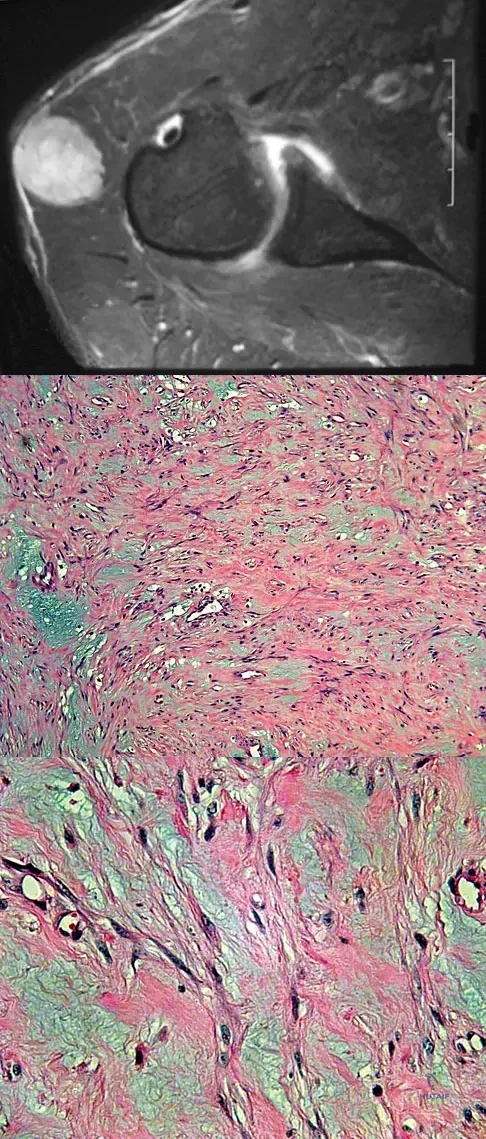
A 40-year-old man reports an enlarging soft-tissue mass in his right shoulder. Based on the MRI scan and biopsy specimens shown in Figures 40a through 40c, what is the most likely diagnosis?


Explanation

Nodular fasciitis is a pseudosarcomatous, self-limiting reactive process composed of fibroblasts and myofibroblasts. Most patients give a history of a rapidly growing mass that has been present for only a few weeks. Many have pain associated with the mass and can recall a specific traumatic event predating the presence of the lesion. It can occur at any age but is most commonly seen in adults who are 20 to 40 years of age. Histologically, the lesion is composed of predominantly plump, immature-appearing fibroblasts that bear a close resemblance to the fibroblasts found in granulation tissue. Characteristically, the fibroblasts are arranged in short, irregular bundles and fascicles and are adjacent to collagen and reticulin. The lesions can appear to be more myxoid or more fibrotic in nature and this correlates to the duration of symptoms. The lesions with a short duration of symptoms have a more myxoid appearance in contrast to those of longer duration characterized by hyaline fibrosis. Weiss SW, Goldblum JR, Enzinger FM: Enzinger and Weiss's Soft Tissue Tumors, ed 4. Philadelphia, PA, Elsevier, 2001, pp 250-266.

Question 25

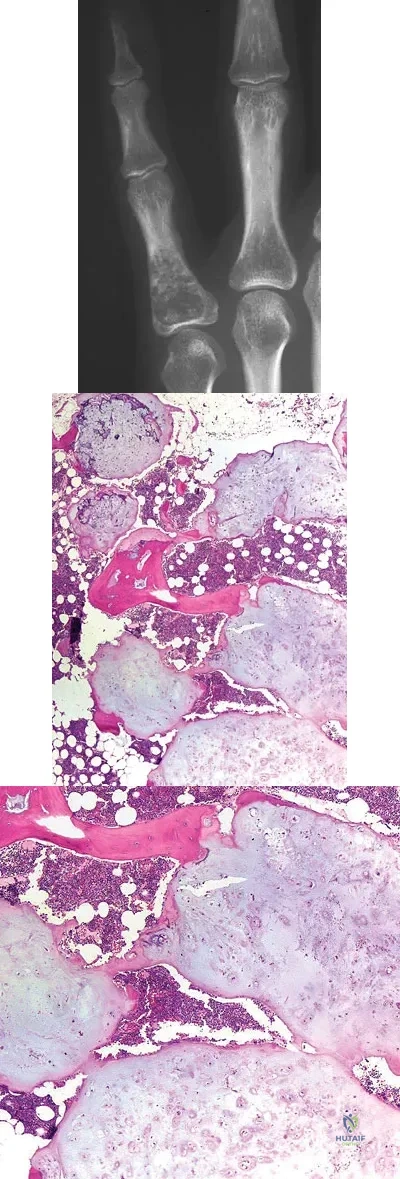
A 28-year-old woman has had pain in her hand and mild swelling of the little finger for the past 2 months. A radiograph is shown in Figure 41a, and the biopsy specimen is shown in Figures 41b and 41c. What is the most likely diagnosis?


Explanation

The radiographic appearance shows a slightly expansile lesion in the proximal phalanx of the fifth digit typical of an enchondroma. There is a stippled appearance within the bone and no evidence of cortical destruction. The biopsy reveals a cartilage lesion with basophilic cytoplasm. There are some hypercellular areas but no evidence of pleomorphism. Enchondromas in the tubular bones of the hand are usually more cellular than their counterparts in the femur and humerus and should not be considered malignant. No other lesions are noted in the radiograph, so a diagnosis of Ollier's disease cannot be made. An osteochondroma is a benign surface cartilage tumor. Brown tumor and osteomyelitis can be differentiated from enchondroma based on the histology. Wold LE, Adler CP, Sim FH, et al: Atlas of Orthopedic Pathology, ed 2. Philadelphia, PA, WB Saunders, 2003, p 225.

Question 26

According to Perren's strain theory, what level of tissue strain optimally promotes the formation of woven bone during secondary fracture healing?


Explanation

Tissue strain between 2% and 10% promotes the formation of woven bone (callus) during secondary healing. Strain less than 2% allows primary lamellar bone formation, while strain above 10% promotes granulation tissue.

Question 27

In articular cartilage, which zone is characterized by the highest concentration of water and collagen fibers oriented parallel to the joint surface?


Explanation

The superficial zone of articular cartilage contains the highest water content and has Type II collagen fibers arranged parallel to the articular surface to effectively resist shear forces.

Question 28

During skeletal muscle contraction, maximum isometric tension is generated at optimal resting length. This length corresponds physiologically to which of the following states?


Explanation

Maximum isometric tension occurs at optimal resting length due to the maximum number of cross-bridges formed between overlapping actin and myosin filaments without spatial interference.

Question 29

On a load-elongation (stress-strain) curve of a normal ligament, what structural change is responsible for the initial "toe region"?


Explanation

The toe region of the stress-strain curve represents the non-linear elastic phase where resting, crimped collagen fibers straighten out (uncrimp) under initial load.

Question 30

Which particle size of polyethylene wear debris is most highly associated with macrophage activation and subsequent periprosthetic osteolysis?


Explanation

Macrophages actively phagocytose particles in the 0.1 to 10 micrometer range. This triggers the release of pro-inflammatory cytokines (TNF-alpha, IL-1) leading to osteoclast activation and osteolysis.

Question 31

Combining a 316L stainless steel plate with a titanium alloy screw in a fracture construct is most likely to result in which type of corrosion?


Explanation

Galvanic corrosion occurs when two dissimilar metals with different anodic indices are placed in electrical contact within a conductive fluid environment, leading to accelerated corrosion of the less noble metal.

Question 32

A patient sustains a closed midshaft humerus fracture and presents with a radial nerve palsy. An EMG at 4 weeks shows fibrillation potentials in the brachioradialis, but an MRI demonstrates an intact epineurium. Which Seddon classification describes this injury?


Explanation

Axonotmesis involves disruption of the axon and myelin sheath but preservation of the supporting connective tissue (epineurium). Fibrillation potentials indicate axonal denervation, ruling out neuropraxia.

Question 33

Which of the following bone graft substitutes is considered exclusively osteoconductive and lacks both osteoinductive and osteogenic properties?


Explanation

Calcium phosphate cements provide a structural scaffold for new bone growth (osteoconductive) but contain no live cells (osteogenic) or signaling proteins like BMPs (osteoinductive).

Question 34

Rigid plate fixation of a transverse diaphyseal fracture leading to absolute stability primarily heals via which biological process?


Explanation

Absolute stability (strain < 2%) suppresses callus formation, leading to primary bone healing via osteoclast cutting cones and subsequent osteoblast-mediated Haversian remodeling.

Question 35

During the early stages of osteoarthritis, which of the following enzymes is primarily responsible for the aggressive cleavage of Type II collagen in the extracellular matrix?


Explanation

MMP-13 (collagenase 3) is significantly upregulated in osteoarthritis and is the primary enzyme responsible for degrading type II collagen in the articular cartilage matrix.

Question 36

The pullout strength of a cortical screw is most directly proportional to which of the following geometric parameters?


Explanation

Screw pullout strength is directly proportional to the outer (thread) diameter, the length of thread engagement, and the shear strength of the bone. Core diameter primarily determines bending strength.

Question 37

In myelinated peripheral nerves, saltatory conduction occurs rapidly due to the high concentration of which specific ion channels at the Nodes of Ranvier?


Explanation

Nodes of Ranvier contain highly concentrated voltage-gated sodium channels, which allow rapid depolarization and propagation of action potentials from node to node, known as saltatory conduction.

Question 38

When analyzing an orthopedic implant's S-N (Stress-Number of cycles) curve, the "endurance limit" refers to the:


Explanation

The endurance limit (fatigue limit) is the maximum stress amplitude below which a material can theoretically endure an infinite number of cyclic loading cycles without failing.

Question 39

Parathyroid hormone (PTH) stimulates bone resorption primarily by binding to receptors on which of the following cell types?


Explanation

PTH binds to receptors on osteoblasts, stimulating them to express RANKL. RANKL then binds to RANK on osteoclast precursors to induce differentiation into active bone-resorbing osteoclasts.

Question 40

The outer annulus fibrosus of the intervertebral disc is specialized to resist tensile hoop stresses. Which type of collagen predominantly provides this mechanical property?


Explanation

The outer annulus fibrosus is composed predominantly of Type I collagen, which provides the high tensile strength needed to resist hoop stresses generated by axial loading of the disc.

Question 41

During the remodeling phase of ligament healing, which biochemical transition characterizes the maturation of the scar tissue?


Explanation

In the proliferative phase, fibroblasts synthesize weak Type III collagen. During remodeling, this is gradually replaced by stronger, highly cross-linked Type I collagen, improving tensile strength.

Question 42

In the metabolic pathway of Vitamin D, the final hydroxylation step to produce the active form, 1,25-dihydroxyvitamin D3, occurs primarily in the:


Explanation

25-hydroxyvitamin D3 is converted by the enzyme 1-alpha-hydroxylase in the proximal tubules of the kidney to form the biologically active 1,25-dihydroxyvitamin D3 (calcitriol).

Question 43

During a normal human gait cycle, maximum muscle activity of the tibialis anterior occurs at which specific phase to prevent foot drop?


Explanation

The tibialis anterior peaks in activity just after heel strike (initial contact). It fires eccentrically to control plantarflexion of the foot, preventing it from slapping against the ground.

Question 44

Which of the following characteristics is true regarding Type I (slow-twitch) skeletal muscle fibers compared to Type IIb fibers?


Explanation

Type I (slow-twitch) fibers are specialized for endurance. They rely on oxidative metabolism and have high mitochondrial density, low fatigue rates, and high myoglobin content, giving them a red appearance.

Question 45

Which mechanism of joint lubrication is most critical for reducing friction between articular cartilage surfaces during high-load, low-speed activities, such as initiating standing from a chair?


Explanation

Boundary lubrication relies on surface-bound molecules like lubricin to reduce friction under high-load, low-speed conditions where fluid films cannot be physically maintained.

Question 46

In normal articular cartilage, which of the following best describes the structural composition and mechanical function of the superficial zone?


Explanation

The superficial zone of articular cartilage has the highest water and lowest proteoglycan content. Its collagen fibers are oriented parallel to the joint surface to primarily resist shear stresses.

Question 47

Which of the following biomechanical conditions is required for primary (strain-free) bone healing to occur, and what is the predominant mechanism of osteogenesis?


Explanation

Primary bone healing requires absolute stability with interfragmentary strain less than 2%. It occurs via direct Haversian remodeling (cutting cones) without intermediate callus formation.

Question 48

Which type of muscle contraction generates the highest maximum force, and what is its associated physiological energy characteristic?


Explanation

Eccentric contractions generate the highest maximum force while consuming less ATP compared to concentric contractions. However, they are more frequently associated with delayed-onset muscle soreness.

Question 49

A continuous, constant compressive load is applied to an intervertebral disc over several hours, resulting in progressive deformation over time. This specific viscoelastic property is defined as:


Explanation

Creep is the progressive deformation of a viscoelastic material when subjected to a constant load over time. Conversely, stress relaxation is the decrease in stress over time under a constant deformation.

Question 50

During the normal human gait cycle, which muscle group demonstrates peak activity during the initial contact (heel strike) to loading response phase to safely lower the foot?


Explanation

At initial contact to loading response, the tibialis anterior contracts eccentrically to smoothly lower the foot to the ground. This prevents the rapid plantar flexion known as "foot slap".

Question 51

Following a severe traction injury to the brachial plexus resulting in axonotmesis, Wallerian degeneration begins. Which of the following best describes this physiological process?


Explanation

Wallerian degeneration involves the clearance of the axon and myelin sheath distal to the site of injury. It is mediated by macrophages and Schwann cells to prepare the environment for axonal regeneration.

Question 52

On the stress-strain curve of a normal tendon, the initial "toe region" represents which of the following structural events?


Explanation

The "toe region" of a tendon's stress-strain curve represents the initial elastic stretch. During this phase, the normal wavy, crimped pattern of the resting collagen fibers straightens out.

Question 53

Under high-load, low-velocity conditions (such as standing from a seated position), which type of lubrication mechanism predominantly protects the articular cartilage surfaces?


Explanation

Boundary lubrication is the primary protective mechanism under high-load, low-velocity conditions when fluid-film cannot be maintained. It is mediated by lubricin (PRG4) binding directly to the articular surface.

Question 54

Denosumab, a biological therapy used in the treatment of osteoporosis, exerts its effect by directly targeting which of the following molecular mechanisms?


Explanation

Denosumab is a monoclonal antibody that binds to RANKL, effectively mimicking the inhibitory effect of OPG. This prevents RANKL from activating the RANK receptor on osteoclasts, thereby halting osteoclastogenesis.

Question 55

In total hip arthroplasty, the incorporation of highly cross-linked polyethylene primarily improves wear resistance by mitigating which specific mechanism of wear?


Explanation

Highly cross-linked polyethylene significantly reduces adhesive wear at the bearing surface, which decreases osteolytic particulate debris. However, the cross-linking process may make the material more susceptible to fatigue wear or fracture.

Question 56

Which of the following screw design alterations will most significantly increase the pullout strength of a cortical bone screw in diaphyseal bone?


Explanation

Pullout strength is directly proportional to the outer diameter and length of engagement, and inversely proportional to thread pitch. Decreasing the thread pitch increases the number of threads per unit length, thus increasing pullout strength.

Question 57

The blood supply to the adult medial meniscus is primarily derived from the medial inferior genicular artery. Approximately what portion of the meniscus receives a direct vascular supply?


Explanation

In adults, only the peripheral 10% to 30% of the medial meniscus (the red-red zone) is vascularized by branches of the genicular arteries. This vascularity is critical for the healing potential of peripheral meniscal tears.

Question 58

Demineralized bone matrix (DBM) is commonly used as a biological adjunct in spinal fusion. Which of the following best characterizes its bone healing properties?


Explanation

DBM provides a collagen scaffold (osteoconductive) and contains bone morphogenetic proteins that stimulate bone formation (osteoinductive). However, it lacks live bone cells and is therefore not osteogenic.

Question 59

Parathyroid hormone (PTH) regulates serum calcium levels through multiple systemic mechanisms. What is its direct physiological effect on the kidney?


Explanation

In the kidney, PTH directly increases tubular reabsorption of calcium and increases phosphate excretion (phosphaturia). It also stimulates the conversion of 25-hydroxyvitamin D to its active form, 1,25-dihydroxyvitamin D.

Question 60

When using a bridge plating technique for a comminuted diaphyseal fracture, increasing the "working length" of the plate has which of the following biomechanical effects?


Explanation

Increasing the working length (the distance between the innermost screws on either side of the fracture) decreases construct stiffness. This distributes the deformation over a longer segment, lowering the interfragmentary strain to promote secondary bone healing.

Question 61

Galvanic corrosion occurs when two dissimilar metals are placed in physical contact within a conductive fluid environment. Which of the following metal combinations is most likely to result in significant galvanic corrosion in orthopedic implants?


Explanation

Mixing stainless steel and titanium alloy implants in the same construct creates a large electrochemical potential difference, leading to severe galvanic corrosion. In contrast, mixing titanium and cobalt-chromium is generally well tolerated.

Question 62

The anterior cruciate ligament (ACL) is composed of two main functional bundles. During deep knee flexion, which bundle is under the most tension, and what is its primary biomechanical role?


Explanation

The anteromedial bundle of the ACL tightens in flexion and is the primary restraint to anterior tibial translation. The posterolateral bundle tightens in extension and acts primarily to resist rotational loads.

Question 63

During the physiological flexion and extension of a normal healthy lower cervical spine segment, the instantaneous axis of rotation (IAR) is typically located in which anatomical structure?


Explanation

In a normal cervical spine segment, the instantaneous axis of rotation during flexion and extension is typically located in the anterior portion of the subjacent (inferior) vertebral body.

Question 64

Cigarette smoking strongly inhibits bone healing and significantly increases the rate of nonunion. Which of the following is the primary physiological mechanism driving this adverse effect?


Explanation

Nicotine acts as a potent vasoconstrictor, while carbon monoxide competitively binds hemoglobin to reduce oxygen delivery. Together, they cause significant tissue hypoxia and inhibit angiogenesis, which critically impairs the fracture healing process.

Question 65

Muscle strain injuries most commonly occur at the myotendinous junction. Biomechanically, what microscopic structural feature of this junction makes it uniquely susceptible to these injuries?


Explanation

The myotendinous junction features complex microscopic interdigitation between muscle fibers and tendon collagen. This geometric arrangement creates a localized site of significant stress concentration during eccentric loading, predisposing it to failure.

Question 66

The deep zone of articular cartilage is best characterized by which of the following combinations of properties?


Explanation

The deep zone of articular cartilage contains the highest concentration of proteoglycans and the lowest water content. Its Type II collagen fibers are oriented perpendicularly to the subchondral bone to resist compressive loads.

Question 67

Which cytokine serves as the primary decoy receptor for RANKL, thereby inhibiting osteoclastogenesis and reducing bone resorption?


Explanation

Osteoprotegerin (OPG) is a glycoprotein secreted by osteoblasts that acts as a decoy receptor for RANKL. By binding RANKL, OPG prevents it from interacting with RANK on osteoclast precursors, inhibiting osteoclast differentiation.

Question 68

When a constant load is applied to a viscoelastic ligament over an extended period of time, the tissue gradually elongates. This biomechanical phenomenon is known as:


Explanation

Creep describes the time-dependent elongation of viscoelastic tissues under a constant load. Conversely, stress relaxation is the decrease in internal stress over time when the tissue is held at a constant length.

Question 69

Which of the following geometric alterations to a cortical screw design will most significantly increase its pullout strength?


Explanation

Screw pullout strength is increased by maximizing the volume of bone engaged by the threads. This is achieved by increasing the outer diameter, decreasing the inner diameter, or decreasing the thread pitch (more threads per unit length).

Question 70

Type I (slow-twitch) skeletal muscle fibers are primarily characterized by which type of metabolism and fatigue resistance?


Explanation

Type I muscle fibers rely on oxidative metabolism and have a high density of mitochondria and myoglobin. This allows them to maintain sustained, low-intensity contractions with a very high resistance to fatigue.

Question 71

In the mechanism of periprosthetic osteolysis following total hip arthroplasty, ultra-high-molecular-weight polyethylene (UHMWPE) wear particles are primarily phagocytosed by which cell type?


Explanation

Macrophages are the primary cells that phagocytose polyethylene wear particles. This triggers the release of pro-inflammatory cytokines (like IL-1, IL-6, and TNF-alpha) that drive osteoclast-mediated bone resorption.

Question 72

According to Sunderland's classification of peripheral nerve injuries, a fourth-degree injury involves disruption of all the following structures EXCEPT the:


Explanation

A Sunderland fourth-degree nerve injury completely disrupts the axon, endoneurium, and perineurium, leaving only the epineurium intact. Because severe internal scarring occurs, surgical intervention is almost always required for recovery.

Question 73

During secondary fracture healing, peak expression of Type II collagen occurs during which of the following stages?


Explanation

Soft callus formation is characterized by chondrogenesis and the production of a cartilaginous matrix rich in Type II collagen. This is later replaced by woven bone (Type I collagen) during hard callus formation.

Question 74

In the biomechanics of bridge plating for a comminuted diaphyseal fracture, the "working length" of the construct is defined as the distance between:


Explanation

The working length of a plate is the distance between the two innermost screws on opposite sides of the fracture. Increasing the working length makes the construct more flexible, which promotes secondary bone healing through callus formation.

Question 75

Which of the following combinations of implant alloys placed in direct physical contact poses the highest risk of significant galvanic corrosion?


Explanation

Stainless steel and titanium have widely separated resting potentials on the galvanic series, resulting in a high risk of galvanic corrosion when they are coupled. In contrast, mixing cobalt-chromium and titanium is generally well-tolerated.

Question 76

Which mechanism of joint lubrication is most critical for protecting articular surfaces under high-load, low-speed conditions, such as initial standing from a seated position?


Explanation

Boundary lubrication predominates under high-load and low-speed conditions when the fluid film breaks down. It relies on a monomolecular layer of lubricin (PRG4) to coat the articular surfaces and prevent direct wear.

Question 77

A massive structural cortical allograft is utilized to reconstruct a large segmental bone defect. The graft is incorporated into the host primarily via which biologic process?


Explanation

Structural cortical allografts incorporate slowly via creeping substitution, a process where host osteoclasts resorb the dead graft bone while host osteoblasts simultaneously lay down new woven bone. Deep revascularization is often minimal.

Question 78

Regarding the gross anatomy and biomechanics of the knee menisci, the medial meniscus differs from the lateral meniscus in that the medial meniscus is:


Explanation

The medial meniscus is C-shaped, larger in AP dimension, and firmly attached to the deep medial collateral ligament, making it less mobile than the O-shaped lateral meniscus. Both menisci are primarily composed of Type I collagen.

Question 79

Microscopically, which of the following is a primary structural difference between ligaments and tendons?


Explanation

Compared to tendons, ligaments possess a slightly higher elastin content and a more variable, interlacing collagen fiber orientation. This unique structure allows ligaments to resist complex, multidirectional tensile forces.

Question 80

During the propagation of a typical neuronal action potential, the rapid depolarization phase is directly mediated by the influx of which of the following ions?


Explanation

The rapid depolarization phase of an action potential is driven by the opening of voltage-gated sodium channels, allowing a massive influx of sodium ions. Subsequent repolarization is driven by the efflux of potassium ions.

Question 81

According to Wolff's Law, bone adapts its architecture in response to mechanical stress. The primary mechanosensory cell responsible for detecting fluid shear stress in the bone matrix is the:


Explanation

Osteocytes, residing within the lacunocanalicular network, act as the primary mechanosensors in bone. They detect fluid shear stress caused by mechanical loading and orchestrate remodeling by signaling osteoblasts and osteoclasts.

Question 82

During the normal process of tendon healing, the transition from disorganized Type III collagen synthesis to more aligned Type I collagen synthesis begins prominently during which phase?


Explanation

The proliferative phase (peaking around 2-4 weeks) is characterized by high cellularity and the synthesis of primarily Type III collagen, which gradually transitions into the production of stronger Type I collagen as remodeling begins.

Question 83

The unique ability of articular cartilage to withstand massive compressive loads is primarily determined by the biomechanical interaction between:


Explanation

Compressive stiffness in articular cartilage is derived from the Donnan osmotic swelling pressure generated by negatively charged aggrecan molecules attracting water. This swelling is tightly restrained by the strong, tensile Type II collagen network.

Question 84

Which of the following sterilization techniques for ultra-high-molecular-weight polyethylene (UHMWPE) joint components is most strongly associated with generating free radicals, leading to accelerated oxidative degradation?


Explanation

Gamma irradiation in an oxygen-rich environment (ambient air) generates free radicals that react with oxygen, causing chain scission and severe oxidative degradation of the polyethylene. Modern UHMWPE is cross-linked and sterilized in inert gases to prevent this.

Question 85

A 12-year-old boy presents with a history of recurrent long bone fractures after minimal trauma, progressive hearing loss, and distinctly blue sclerae. This clinical phenotype is most likely due to a genetic mutation affecting which structural protein?


Explanation

Osteogenesis imperfecta is classically caused by autosomal dominant mutations in the COL1A1 or COL1A2 genes, which encode Type I collagen. Type I collagen is the primary structural protein in bone, sclerae, and the ossicles of the ear.

Question 86

Which of the following combinations of orthopaedic implant materials is most susceptible to severe galvanic corrosion when placed in direct physical contact in vivo?


Explanation

Mixing stainless steel and titanium alloy creates a strong electrochemical potential difference, making the construct highly susceptible to galvanic corrosion. Cobalt-chromium and titanium alloys are more electrochemically compatible and are frequently used together clinically without significant galvanic issues.

Question 87

During the application of a dynamic splint to a contracted joint, a constant deformation is maintained over time. The observed decrease in peak force required to maintain this constant tissue length is an example of which viscoelastic property?


Explanation

Stress relaxation occurs when a viscoelastic material is held at a constant strain (length), resulting in a progressive decrease in the stress (force) required to maintain that deformation. In contrast, creep is the progressive deformation of a material under a constant applied load.

Question 88

In which zone of normal articular cartilage are the type II collagen fibers oriented primarily perpendicular to the joint surface to maximize resistance to compressive loads?


Explanation

In the deep (radial) zone of articular cartilage, collagen fibers are oriented perpendicularly to the articular surface and cross the tidemark. This structural arrangement provides the greatest resistance to compressive forces across the joint.

Question 89

Which of the following molecules acts as a soluble decoy receptor for RANKL, thereby inhibiting osteoclastogenesis and reducing bone resorption?


Explanation

Osteoprotegerin (OPG) is secreted by osteoblasts and binds to RANKL, preventing it from interacting with the RANK receptor on osteoclast precursors. By blocking this signaling cascade, OPG effectively inhibits osteoclast differentiation and function.

Question 90

A physical therapy protocol specifies a muscle contraction where tension remains constant while the muscle actively lengthens to control a decelerating load. Which of the following best describes this type of muscle contraction?


Explanation

An eccentric contraction occurs when a muscle lengthens while simultaneously generating tension, typically acting to decelerate a joint or resist gravity. It generates the highest forces compared to other contraction types and is primarily responsible for delayed onset muscle soreness (DOMS).

Question 91

Which of the following geometric structural properties most directly dictates a long bone's resistance to bending forces?


Explanation

The area moment of inertia determines a structure's resistance to bending and is proportional to the distance of the material distributed from the neutral axis. Polar moment of inertia, conversely, dictates the structure's resistance to torsional (twisting) loads.

Question 92

Absolute stability in fracture fixation with a fracture gap of less than 0.1 mm results in primary bone healing. Which of the following represents the predominant mechanism of healing under these strict biomechanical conditions?


Explanation

With absolute stability and direct cortical contact (gap < 0.1 mm), primary bone healing occurs via contact healing. This process is driven by osteoclast cutting cones that tunnel across the fracture site, immediately followed by osteoblasts depositing lamellar bone without an intermediate callus.

Question 93

During the normal gait cycle, maximum physiological dorsiflexion of the ankle occurs at which of the following phases?


Explanation

Maximum ankle dorsiflexion (approximately 10 degrees) occurs at the end of the terminal stance phase, immediately prior to heel-off. This pre-loads the gastrocsoleus complex for the rapid plantarflexion required during pre-swing (toe-off).

Question 94

What is the primary biomechanical function of the aggrecan molecule within the extracellular matrix of articular cartilage?


Explanation

Aggrecan is a heavily glycosylated proteoglycan with a high concentration of negatively charged chondroitin and keratan sulfate chains. This creates a strong fixed charge density that draws water into the cartilage via the Donnan osmotic effect, conferring compressive stiffness.

Question 95

Following a complete rupture of the anterior cruciate ligament (ACL), the initial phase of biological healing features a hematoma. Which type of collagen is predominantly synthesized by fibroblasts during the early proliferative phase of ligament healing?


Explanation

During the early proliferative phase of ligament and tendon healing, fibroblasts predominantly synthesize disorganized Type III collagen. Over the subsequent remodeling and maturation phases, this is gradually replaced by stronger, longitudinally aligned Type I collagen.

Question 96

Fibroblast growth factor 23 (FGF23) is a critical endocrine regulator of phosphate homeostasis. Which of the following accurately describes the primary physiological mechanism of FGF23?


Explanation

FGF23 is secreted by osteocytes in response to elevated serum phosphate levels. It acts on the kidneys to decrease phosphate reabsorption by down-regulating the NaPi-IIa cotransporters and inhibits 1-alpha-hydroxylase, reducing active Vitamin D levels.

Question 97

According to the Sunderland classification of peripheral nerve injuries, a third-degree injury is defined by the disruption of the axon and which of the following connective tissue structures?


Explanation

In a Sunderland third-degree injury, both the axon and the endoneurium are disrupted, but the perineurium and epineurium remain intact. The loss of the endoneurial tubes increases the risk of intrafascicular scarring and aberrant axonal regeneration.

Question 98

Which of the following transcription factors serves as the essential master regulator required for the differentiation of mesenchymal stem cells into the osteoblast lineage?


Explanation

Runx2 (also known as Cbfa1) is the essential master transcription factor for osteoblast differentiation and subsequent bone formation. Loss-of-function mutations in the Runx2 gene are responsible for the clinical phenotype of cleidocranial dysplasia.

Question 99

Which specific mode of wear is characterized by the generation of particulate debris when micro-asperities between two articulating bearing surfaces bond together and are subsequently torn away from the softer material?


Explanation

Adhesive wear occurs when micro-asperities on two moving surfaces adhere together, resulting in the softer material (e.g., polyethylene) being sheared or torn away. It is considered a primary mode of wear in conventional metal-on-polyethylene arthroplasty bearings.

Question 100

Which physiological mechanism of joint lubrication is most actively relied upon by the native knee under conditions of high compressive loading and extremely low velocity?


Explanation

Boundary lubrication predominates under high load and low sliding velocity conditions. It relies on a monomolecular layer of surface-active molecules, specifically lubricin (PRG4), which binds directly to the articular surface to reduce friction and wear.

None

Clinic OS
Medically Verified Content by
Prof. Clinic OS
Consultant Orthopedic & Spine Surgeon
Chapter Index
