العربية
Part of the Master Guide

AAOS & ABOS Basic Science MCQs (Set 3): Bone Biology, Biomechanics & Anatomy Review

AAOS & ABOS Basic Science MCQs (Set 1): Biomechanics, Bone Physiology & Cartilage Biology for OITE
27 Apr 2026 50 min read 98 Views
Mtd 2008 MCQs - Part 1

Key Takeaway

This high-yield Basic Science question set (Set 1) for AAOS, ABOS, and OITE board exams thoroughly assesses core orthopedic principles. Questions cover key concepts in orthopedic biomechanics, bone physiology, metabolism, and the intricate biology of cartilage and joints. It's ideal for comprehensive board preparation.

AAOS & ABOS Basic Science MCQs (Set 1): Biomechanics, Bone Physiology & Cartilage Biology for OITE

Comprehensive 100-Question Exam


00:00

Start Quiz

Question 1

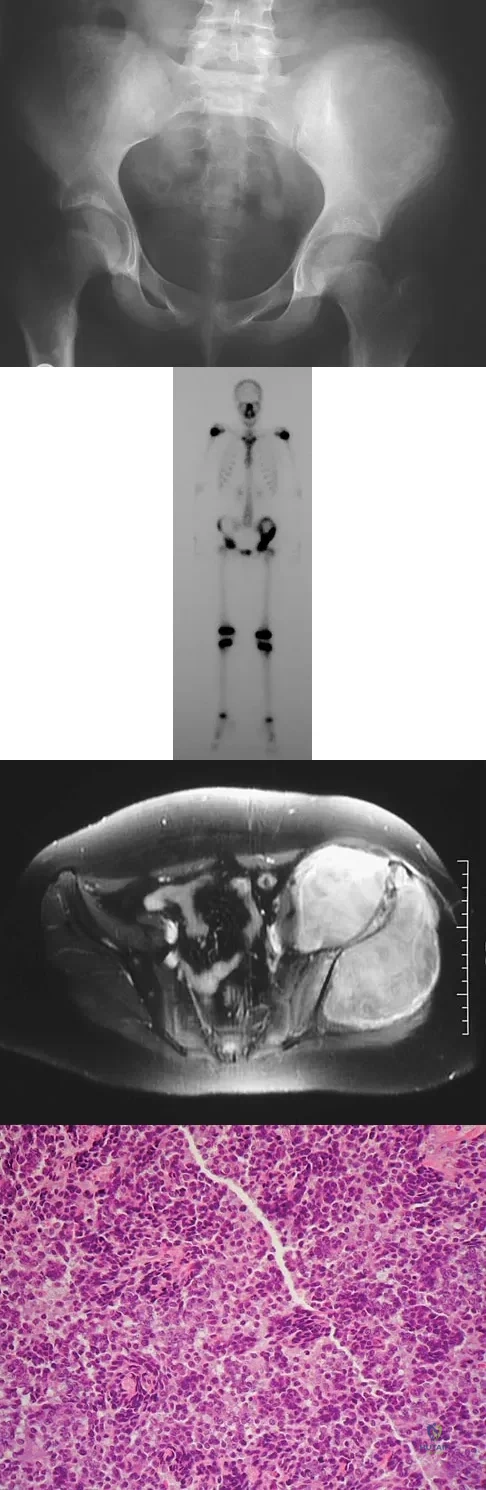
A 13-year-old girl has had increasing left hip pain for the past 4 months. A radiograph, bone scan, MRI scan, and photomicrograph are shown in Figures 1a through 1d. Which of the following immunohistochemistry results would confirm the most likely diagnosis?


Explanation

The imaging studies show a permeative lesion of the left hemipelvis with a large soft-tissue mass. The photomicrograph demonstrates a small blue cell tumor with pseudorosettes. The most likely diagnosis is primitive neuroectodermal tumor (Ewing's sarcoma family of tumors). MIC-2 is a highly sensitive and specific marker for this family of tumors. Cytokeratin is an epithelial marker. Vimentin is a mesenchymal marker. Thus, Ewing's sarcomas are cytokeratin negative and vimentin positive. Before discovery of the MIC-2 antigen, PAS and reticulin stains were commonly used to help differentiate Ewing's sarcoma from lymphoma. In contrast to lymphoma, Ewing's sarcomas are typically PAS positive and reticulin negative. Halliday BE, Slagel DD, Elsheikh TE, et al: Diagnostic utility of MIC-2 immunocytochemical staining in the differential diagnosis of small blue cell tumors. Diagn Cytopathol 1998;19:410-416.

Question 2

Which of the following is the preferred treatment for symptomatic localized pigmented villonodular synovitis (PVNS) of the knee?
Basic Science 2008 Practice Questions: Set 1 (Solved) - Figure 5


Explanation

Localized PVNS is a variant of the disease process where the synovial proliferation occurs in one area and usually presents as a discrete mass. It has been effectively treated with complete excision. This may be performed arthroscopically or with arthrotomy. Complete synovectomy and radiation therapy are unnecessary to eradicate the localized form of PVNS. Tyler WK, Vidal AF, Williams RJ, et al: Pigmented villonodular synovitis. J Am Acad Orthop Surg 2006;14:376-385.

Question 3

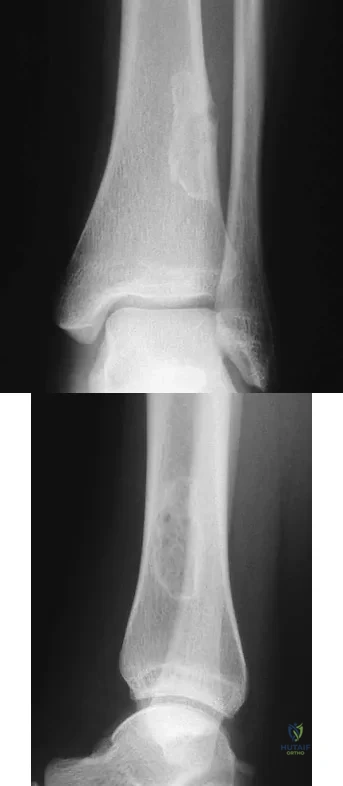
A previously asymptomatic 14-year-old girl sustained a twisting injury to her ankle. Radiographs are shown in Figures 2a and 2b. Management should consist of


Explanation

The radiographs show a well-defined, irregular, eccentric lesion in the distal tibia metaphysis with a thin sclerotic margin. The radiographs are diagnostic of nonossifying fibroma, a common entity in this age group and in this location. No further work-up is indicated. The patient was asymptomatic prior to the injury and the lesion is small and thus not worrisome for an impending pathologic fracture; therefore, no treatment is indicated beyond observation. The natural history of these lesions is to gradually ossify as the patient reaches skeletal maturity. Menendez LR (ed): Orthopaedic Knowledge Update: Musculoskeletal Tumors. Rosemont, IL, American Academy of Orthopaedic Surgeons, 2002, pp 69-75.

Question 4

A healthy 52-year-old woman is seeking professional advice about management of osteoporosis. She has no risk factors for osteoporosis. What is the best recommendation for bone health for this patient?
Basic Science 2008 Practice Questions: Set 1 (Solved) - Figure 8


Explanation

Women older than age 50 years should receive daily supplementation with calcium and vitamin D to help preserve bone density. Bone mineral density testing is recommended for women age 65 years or older and postmenopausal women with at least one risk factor for osteoporotic fractures: prior fragility fracture, low estrogen levels, premature menopause, long-term secondary amenorrhea, glucocorticoid therapy, maternal history of hip fracture, or low body mass index. Hormone therapy is not approved for the treatment of osteoporosis. Gass M, Dawson-Hughes B: Preventing osteoporosis-related fractures: An overview. Am J Med 2006;119:S3-S11.

Question 5

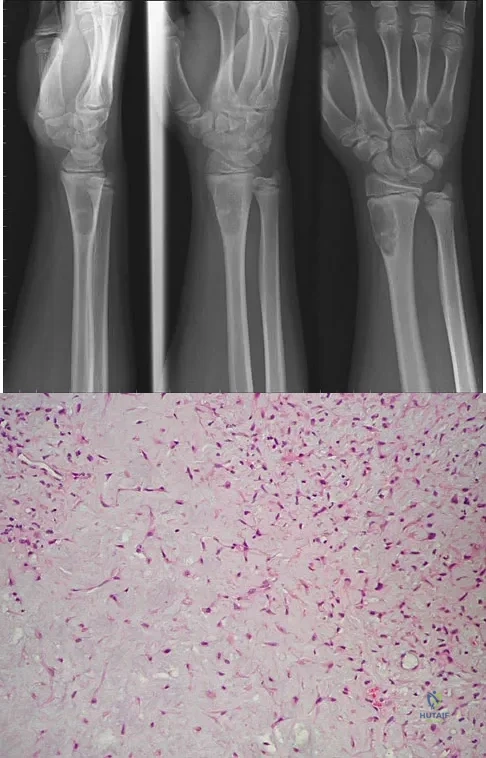
A 14-year-old boy reports progressive right wrist pain. Radiographs are shown in Figure 3a, and a photomicrograph is shown in Figure 3b. What is the most likely diagnosis?


Explanation

The radiographs show a benign-appearing, well-defined lytic lesion with a thin rim of surrounding reactive bone. The photomicrograph shows spindle cells with a myxoid cartilaginous matrix. These findings are diagnostic of chondromyxoid fibroma. This is a rare, benign tumor that usually causes pain and can be locally aggressive. Lersundi A, Mankin HJ, Mourikis A, et al: Chondromyxoid fibroma: A rarely encountered and puzzling tumor. Clin Orthop Relat Res 2005;439:171-175.

Question 6

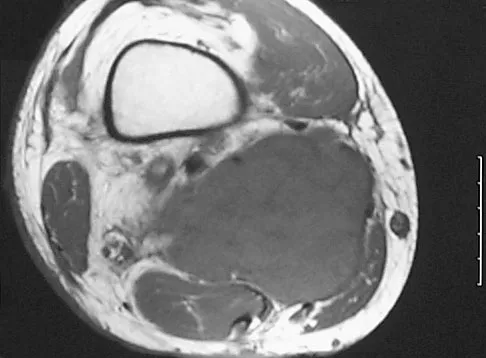
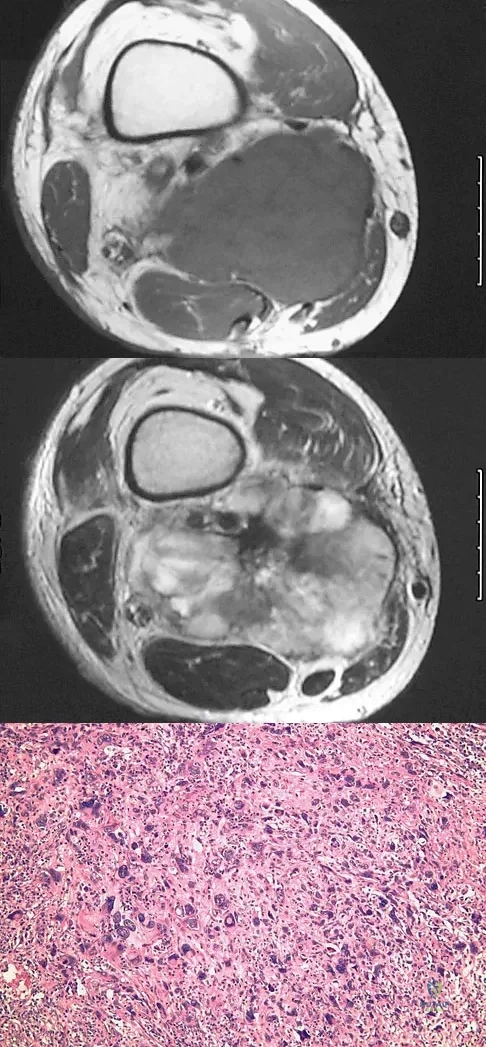
A 37-year-old man pulled his hamstring playing softball 3 weeks ago. The patient had not noted any mass prior to his injury. MRI scans of the posterior thigh are shown in Figures 4a and 4b. Figure 4c shows the biopsy specimen from a needle biopsy. What is the most likely diagnosis?


Explanation

Malignant fibrous histiocytoma (MFH) is the most common soft-tissue sarcoma. MFH typically presents as a large mass, deep to the fascia with heterogeneous signal on MRI. The MRI scans show a heterogeneous lesion in the posterior thigh. There is significant high signal uptake on the T2-weighted image. The histology shows malignant histiocytic cells with marked atypia and pleomorphism. Histology of a hematoma would show only old hemorrhage and some granulation tissue. Lipoma and liposarcoma are both seen as a fat-containing lesion on histology. No significant fat tissue is seen in this histologic specimen. Histology of myositis ossificans would show bone formation. Simon SR (ed): Orthopaedic Basic Science. Rosemont, IL, American Academy of Orthopaedic Surgeons, 1994, pp 219-276.

Question 7

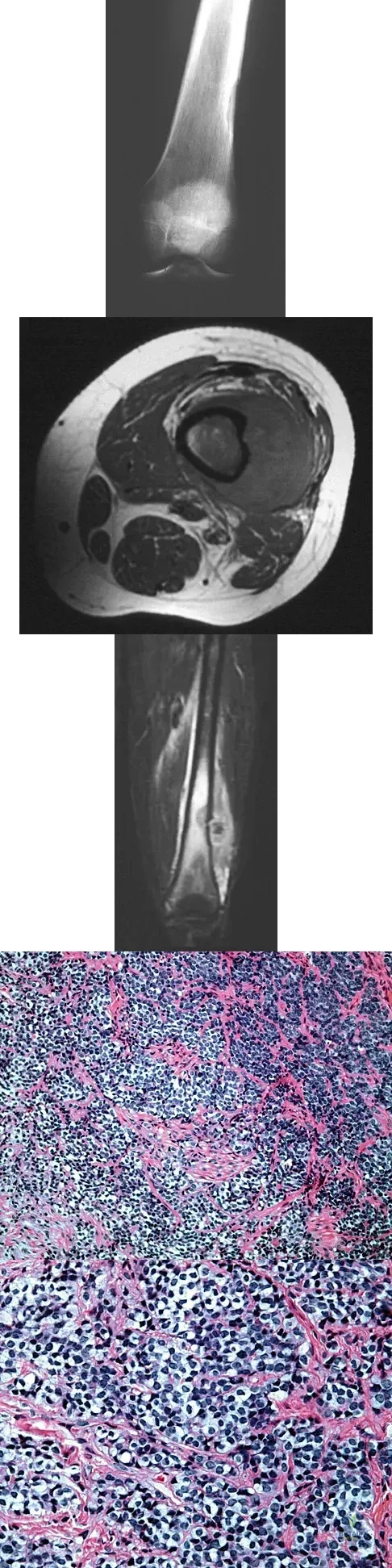
A 16-year-old boy has had left knee pain and swelling after sustaining a minor twisting injury while playing basketball 2 weeks ago. Figures 5a through 5e show the radiograph, MRI scans, and biopsy specimens. What is the most likely diagnosis?


Explanation

The imaging studies and histology are most consistent with Ewing's sarcoma. Tuberculosis can show small round blue cells on histology (lymphocytes associated with chronic infection) but would more typically involve the knee joint and periarticular bone. Osteosarcoma and MFH do not have small round blue cells histologically. Sissons HA, Murray RO, Kemp HBS: Orthopaedic Diagnosis. Berlin, Springer-Verlag, 1984, pp 254-256.

Question 8

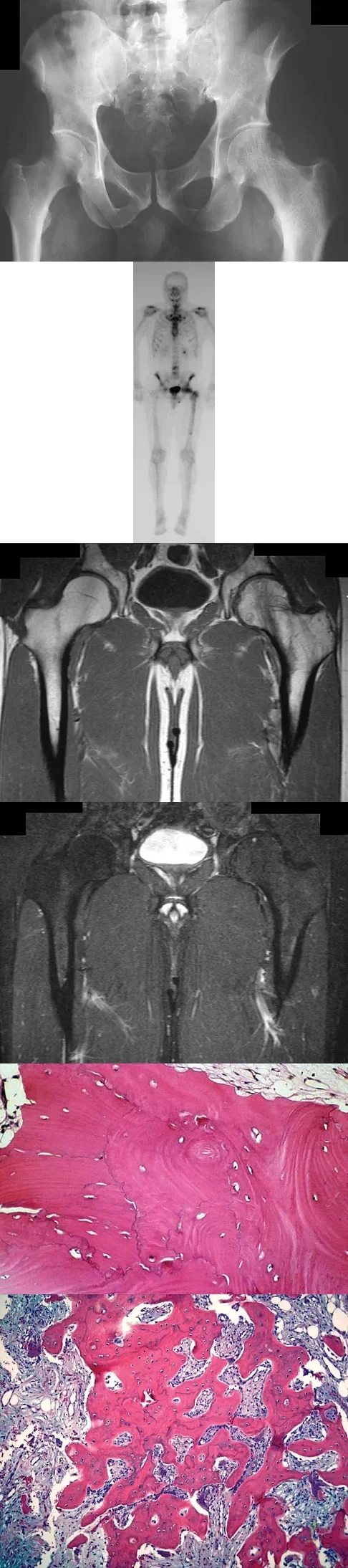
A 45-year-old man has had left thigh pain for the past 4 months. An AP radiograph, bone scan, MRI scans, and biopsy specimens are shown in Figures 6a through 6f. What is the most appropriate treatment?


Explanation

The radiograph demonstrates thickened trabeculae and thickened cortices in the left proximal femur compared to the right, and the bone scan shows increased uptake in this area. The MRI scans show thickened trabeculae with normal marrow signal. These findings are diagnostic of Paget's disease. Medical treatment, including bisphosphonates and calcitonin, is indicated for painful bone lesions. Hadjipavlou AG, Gaitanis IN, Kontakis GM: Paget's disease of the bone and its management. J Bone Joint Surg Br 2002;84:160-169.

Question 9

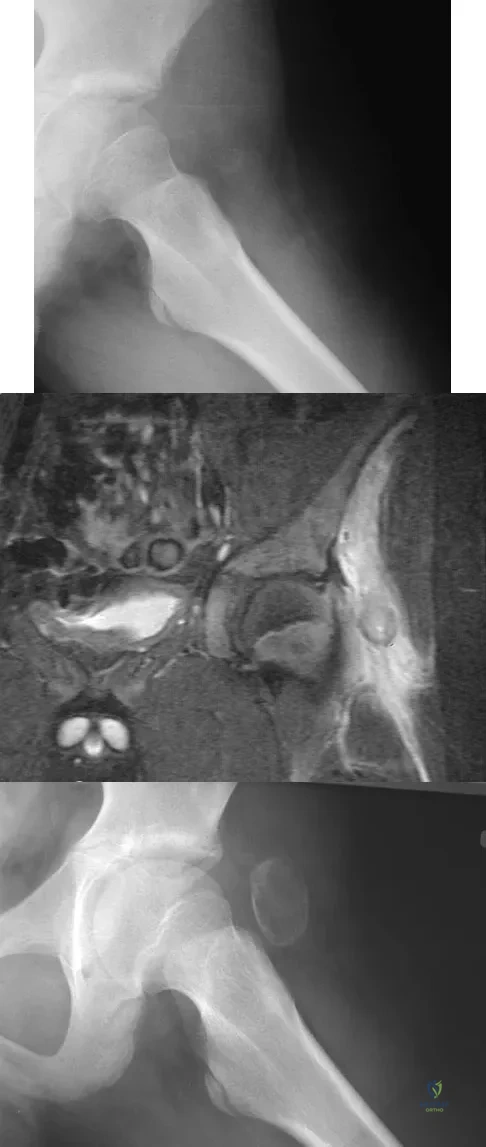
A 13-year-old boy has a painless "knot" over his left hip. History reveals that he injured his left hip playing soccer 4 months ago. A radiograph and MRI scan obtained at the time of injury are shown in Figures 7a and 7b. He is very active and is currently asymptomatic. A current radiograph is shown in Figure 7c. What is the next most appropriate step in management?


Explanation

The diagnosis is myositis ossificans resulting from an injury. The initial radiograph reveals a small amount of mineralization in the soft tissues overlying the left hip. The MRI scan shows signal abnormality of the entire gluteus minimus muscle with a mineralized mass in the center. The current radiograph shows a lesion within the abductor musculature with mature ossification peripherally. The imaging studies are diagnostic and the patient is asymptomatic; therefore, the management of choice is observation with no further evaluation or treatment indicated. Miller AE, Davis BA, Beckley OA: Bilateral and recurrent myositis ossificans in an athlete: A case report and review of treatment options. Arch Phys Med Rehabil 2006;87:286-290.

Question 10

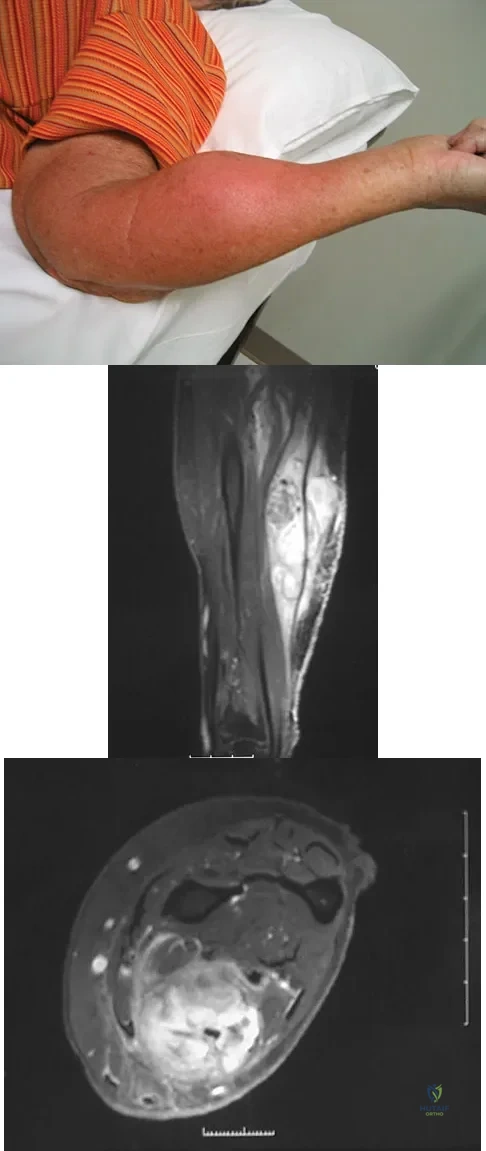
Figure 8a shows the clinical photograph of an 83-year-old woman who has an enlarging left forearm mass. MRI scans are shown in Figures 8b and 8c. What is the next most appropriate step in management?


Explanation

Any large (greater than 5 cm), deep, heterogeneous mass in the extremities should be considered a sarcoma until proven otherwise. Sarcomas are rare, and without a high index of suspicion, the lesions may be misdiagnosed or there may be a delay in diagnosis. Needle biopsies can obtain sufficient tissue for diagnosis and are associated with less morbidity than open biopsy. Marginal resections or excisional biopsies should be reserved for a few select benign lesions and locations. Damron TA, Beauchamp CP, Rougraff BT, et al: Soft-tissue lumps and bumps. Instr Course Lect 2004;53:625-637.

Question 11

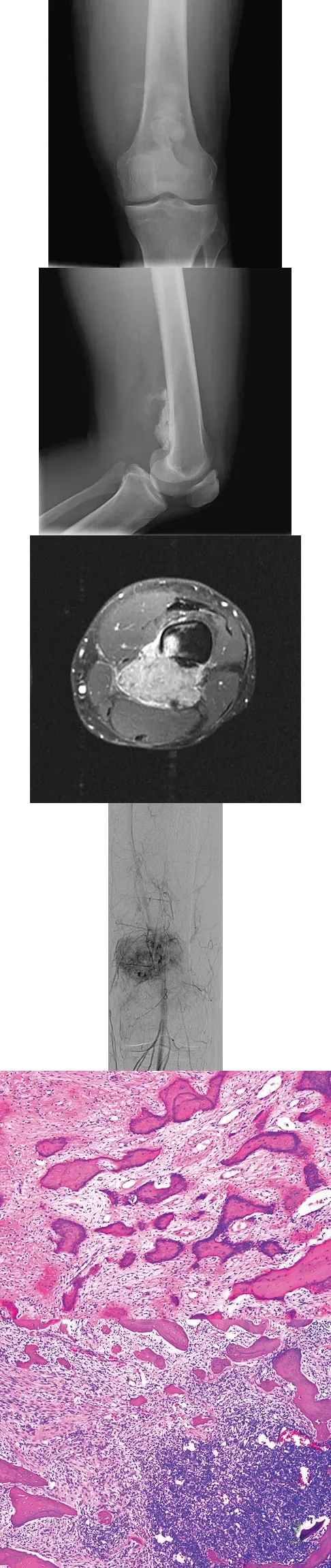
An otherwise healthy 33-year-old man who works in construction reports a 3-month history of knee pain. Radiographs are shown in Figures 9a and 9b. An axial T1-weighted MRI scan with contrast, an angiogram, and histologies are shown in Figures 9c through 9f. What is the most likely diagnosis?


Explanation

Dedifferentiated parosteal osteosarcoma designates high-grade transformation of conventional low-grade parosteal osteosarcoma. Unlike conventional parosteal osteosarcoma, where wide surgical excision alone is considered adequate treatment, patients with dedifferentiated osteosarcoma are treated with neoadjuvant chemotherapy and wide local resection. Recognition of dedifferentiated areas with angiography can localize the area that should be biopsied and thus render an accurate diagnosis. Percutaneous biopsy of hypervascular areas should prompt the administration of chemotherapy and wide local excision to optimize patient outcome. Sheth DS, Yasko AW, Raymond AK, et al: Conventional and dedifferentiated parosteal osteosarcoma: Diagnosis, treatment, and outcome. Cancer 1996;78:2136-2145.

Question 12

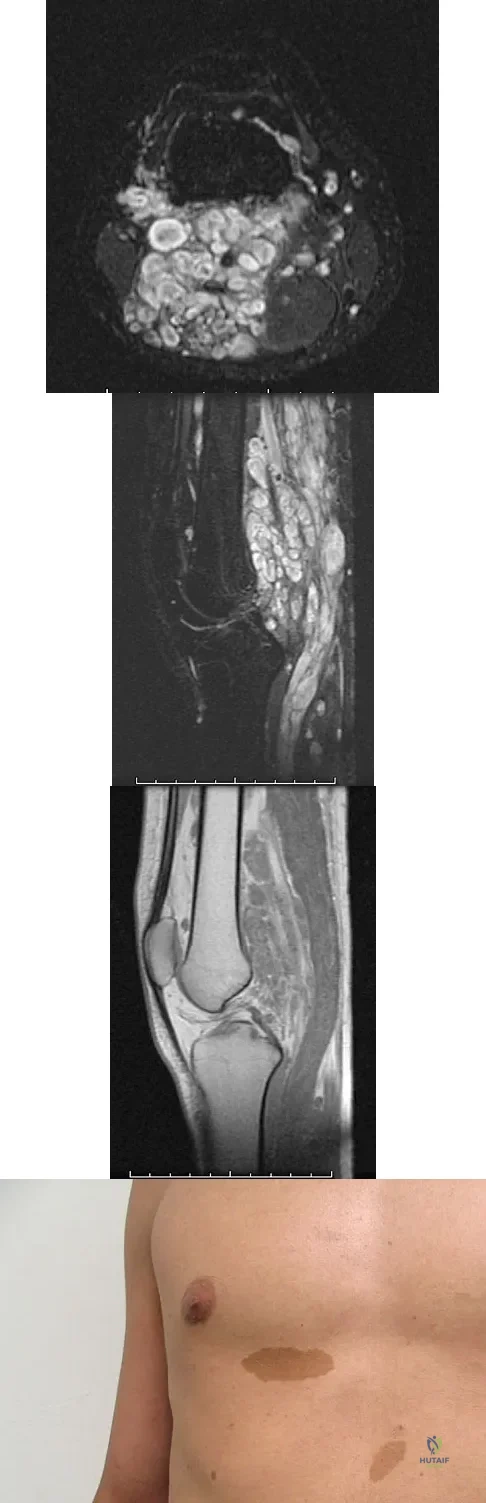
A 20-year-old man has a large soft-tissue mass behind his knee. MRI scans are shown in Figures 10a through 10c. Figure 10d shows a clinical photograph of his chest. The patient's condition is most likely a result of a defect in what gene?


Explanation

The patient has a plexiform neurofibroma and multiple café-au-lait spots, all characteristic of von Recklinghausen's neurofibromatosis. This disease has been linked to a defect of the gene NF1 on chromosome 17. EWS is one of the genes associated with the 11;22 translocation found in Ewing's sarcoma and several other sarcomas. EXT1 is the most common gene affecting patients with multiple hereditary exostosis. P53 and Rb are tumor suppressor genes whose inactivation has been associated with tumors in conditions such as Li-Fraumeni and retinoblastoma, respectively. Theos A, Korf BR, American College of Physicians, et al: Pathophysiology of neurofibromatosis Type 1. Ann Intern Med 2006;144:842-849.

Question 13

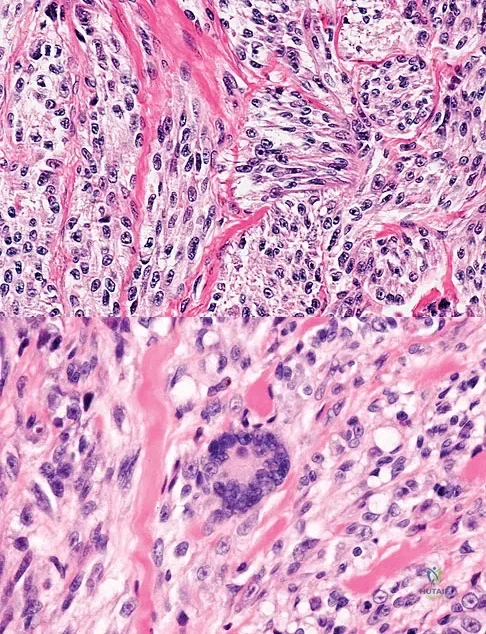
A 35-year-old man reports the development of a painful 2-cm nodule on his dorsal wrist over the past 3 years. A surgeon excised the lesion with a presumptive diagnosis of a ganglion cyst. Histology sections from the excision are shown in Figures 11a and 11b. What is the most likely diagnosis?


Explanation

The histologic appearance of the soft-tissue lesion reveals compact nests of cells with a clear cytoplasm surrounded by a delicate border of fibrocollagenous tissue. There can be scattered multinucleated giant cells. This is consistent with a clear cell sarcoma, also called malignant melanoma of soft parts. This tumor is usually positive for S-100 and HMB45 (a melanoma-associated antigen). These tumors are frequently found around the foot and ankle. Similar to epithelioid sarcoma, it is usually intimately bound to tendons or tendon sheaths. Often the tumors are present for many years. The classic histologic appearance of this lesion differentiates it from the other choices. Enzinger FM, Weiss SW: Soft Tissue Tumors, ed 3. St Louis, MO, Mosby, 1995, p 913.

Question 14

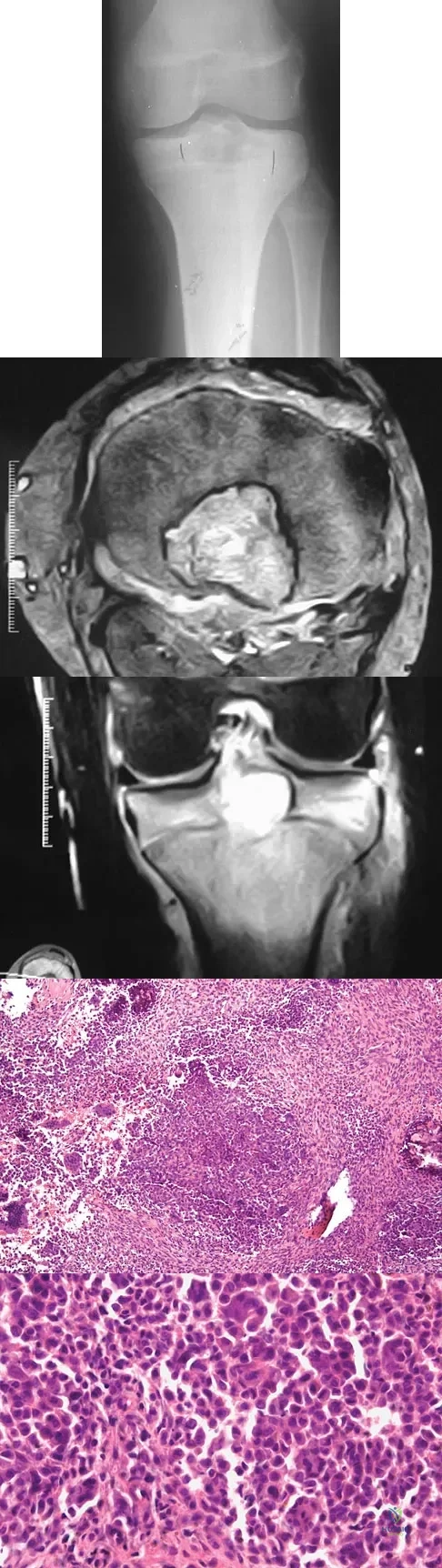
Figures 12a through 12e show the radiograph, MRI scans, and biopsy specimens of a 17-year-old boy. What is the most likely diagnosis?


Explanation

The images show an epiphyseal lesion. The MRI scan shows extensive bone edema surrounding the lesion, consistent with chondroblastoma. Histology shows polygonal chondroblasts in a cobblestone-like pattern and areas of calcification consistent with chondroblastoma. Although some giant cells are seen, the age of the patient and the polygonal chondroblasts differentiate this lesion from giant cell tumor. Clear cell chondrosarcoma is an epiphyseal lesion that occurs in an older population, and the cells have clear cytoplasm. This lesion is not producing bone on imaging or histologic specimen, eliminating osteosarcoma. Tuberculous septic arthritis can be an epiphyseal lesion, but granulomas would be seen on histology. Menendez LR (ed): Orthopaedic Knowledge Update: Musculoskeletal Tumors. Rosemont, IL, American Academy of Orthopaedic Surgeons, 2002, pp 103-111.

Question 15

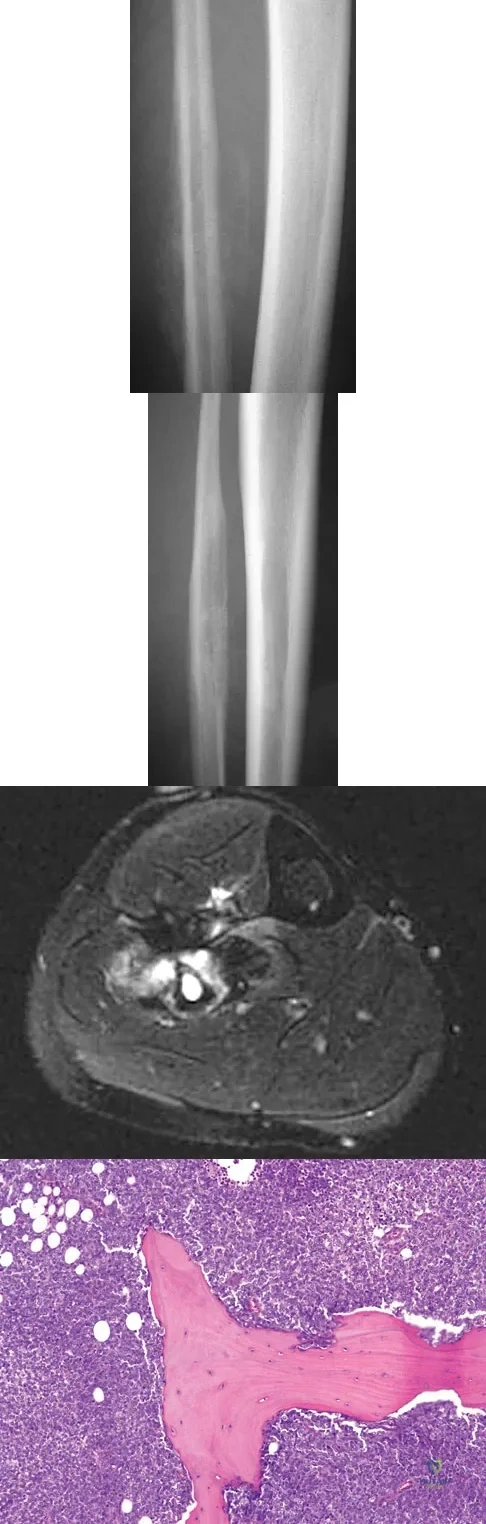
An 18-year-old boy reports increasing pain with weight bearing on his right leg and at night. Examination reveals swelling around the right midcalf. Radiographs and an MRI scan are shown in Figures 13a through 13c, and a biopsy specimen is shown in Figure 13d. What is the preferred treatment?


Explanation

The findings are consistent with Ewing's sarcoma. The radiographs reveal a lytic lesion in the diaphysis of the right fibula. There is elevation of the periosteum and evidence of a surrounding soft-tissue mass. The biopsy specimen shows diffuse small round blue cells surrounding the lamellar bone. It is the second most common malignant bone tumor in children. The most common treatment regimen consists of chemotherapy followed by surgical resection and/or radiation therapy. Surgical resection is employed when the lesion can be removed with wide margins and causes less morbidity than radiation therapy. McCarthy EF, Frassica FJ: Pathology of Bone and Joint Disorders with Clinical and Radiographic Correlation. Philadelphia, PA, WB Saunders, 1998, p 258.

Question 16

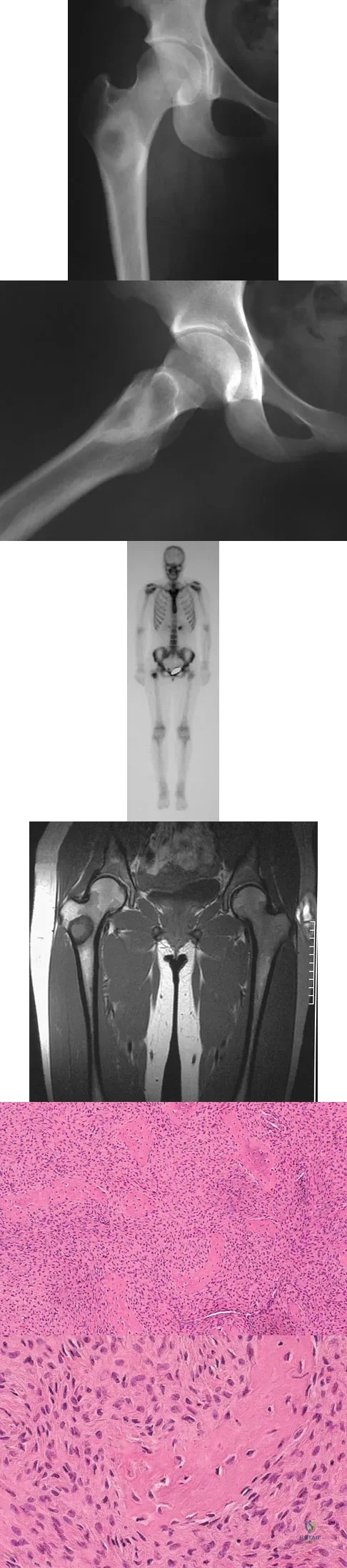
A 16-year-old girl injured her hip in a fall. Radiographs are shown in Figures 14a and 14b. She denies any history of pain prior to the fall and is currently asymptomatic. A bone scan, MRI scan, and biopsy specimens are shown in Figures 14c through 14f. What is the most likely diagnosis?


Explanation

Although the classic radiographic appearance of fibrous dysplasia is one of a central metaphyseal lesion with ground glass matrix, it is not unusual to see either a more radiodense-appearing lesion or a more peripheral location. The histologic finding of spicules of woven bone without osteoblastic rimming in a bland fibrous background is diagnostic of fibrous dysplasia. The imaging studies could be consistent with low-grade osteosarcoma, osteoblastoma, or osteomyelitis, but all have a very different histologic picture. Observation is indicated in the absence of symptoms, impending fracture, or deformity. Fibrous dysplasia most commonly occurs in the proximal femur. Huvos AG: Bone Tumors: Diagnosis, Treatment, and Prognosis. Philadelphia, PA, WB Saunders, 1991, pp 30-43.

Question 17

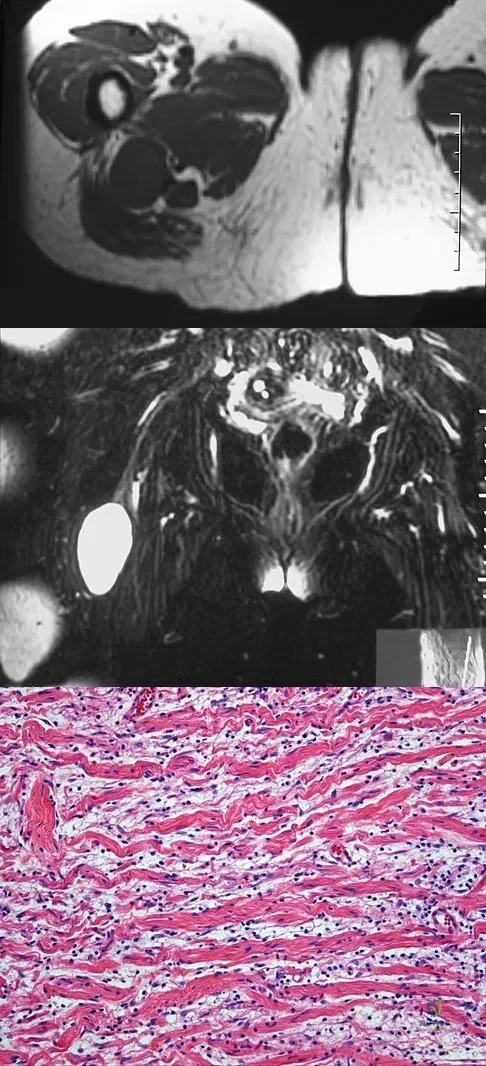
A 54-year-old woman reports worsening pain in her buttock, especially when sitting for long periods of time. She has occasional pain and paresthesias radiating down her posterior leg. She has no significant medical history. MRI scans are shown in Figures 15a and 15b and a biopsy specimen is shown in Figure 15c. What is the most likely diagnosis?


Explanation

The biopsy specimen shows a wavy collagenous matrix with elongated cells; this is most consistent with neurofibroma. The patient has a mass in the region of the sciatic nerve. Imaging characteristics, homogeneous and very low signal on T1-weighted and very high signal on the T2-weighted sequences, are consistent with a myxoid-type lesion. These include myxoma, myxoid sarcomas, and nerve sheath tumors. Campanacci M: Bone and Soft Tissue Tumors, ed 2. New York, NY, Springer-Verlag, 1999, pp 1135-1136

Question 18

It has been shown that bisphosphonate-based supportive therapy (pamidronate or zoledronate) reduces skeletal events (onset or progression of osteolytic lesions) both in patients with multiple myeloma and in cancer patients with bone metastasis. The use of biphosphonate therapy has been associated with
Basic Science 2008 Practice Questions: Set 1 (Solved) - Figure 61


Explanation

The use of bisphosphonates has been recently associated with the development of osteonecrosis of the jaw. Length of exposure seems to be the most important risk factor for this complication. The type of bisphosphonate may play a role and previous dental procedures may be a precipitating factor. Bisphosphonates are a class of therapeutic agents originally designed to treat loss of bone density (ie, alendronate). The primary mechanism of action of these drugs is inhibition of osteoclastic activity, and it has been shown that these drugs are useful in diseases with propensities toward osseous metastases. In particular, they are effective in diseases in which there is clear upregulation of osteoclastic or osteolytic activity, such as breast cancer and multiple myeloma, and have developed into a mainstay of treatment for individuals with these diseases. Although shown to reduce skeletal events, there has been no improvement in patient survival. Bamias A, Kastritis E, Bamia C, et al: Osteonecrosis of the jaw in cancer after treatment with bisphosphonates: Incidence and risk factors. J Clin Oncol 2005;23:8580-8587. Thakkar SG, Isada C, Smith J, et al: Jaw complications associated with bisphosphonate use in patients with plasma cell dyscrasias. Med Oncol 2006;23:51-56.

Question 19

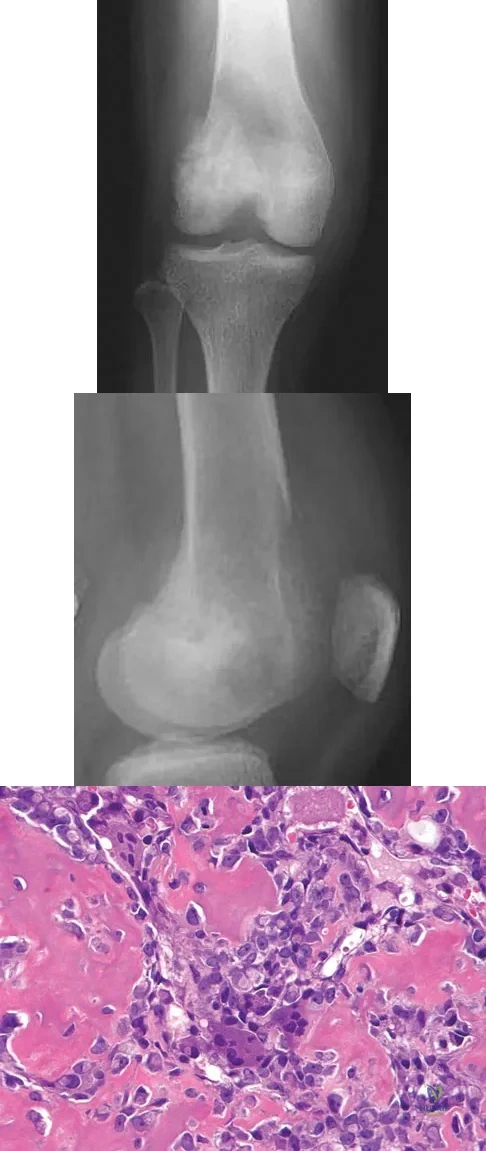
A 12-year-old girl has had pain in her right knee for 1 month that started as activity-related and progressed to night pain. Radiographs are shown in Figures 16a and 16b, and a biopsy specimen is shown in Figure 16c. What is the recommended treatment?


Explanation

This is a classic appearance for an osteosarcoma. The radiographs reveal a mixed osteolytic and osteoblastic lesion in a skeletally immature patient in the distal right femoral metaphysis. The pain pattern with progressive symptoms leading to the presence of night pain is also typical for this condition. The biopsy specimen reveals pleomorphic cells and the presence of osteoid. The current standard of care in the treatment of osteosarcoma is neoadjuvant chemotherapy followed by surgical resection or amputation followed by additional postoperative chemotherapy. Osteosarcoma is not radiosensitive. Wold LE, Adler CP, Sim FH, et al: Atlas of Orthopedic Pathology, ed 2. Philadelphia, PA, WB Saunders, 2003, p 179.

Question 20

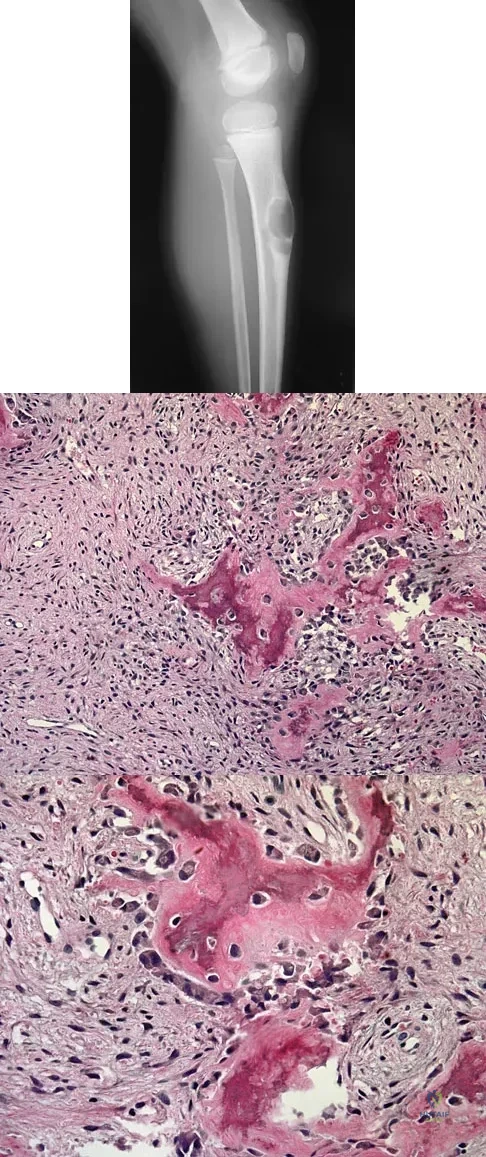
A 6-year-old boy presents with a mass and a lucent lesion involving the tibial shaft as seen in Figure 17a. The mass is mildly tender to palpation. The bone scan is focally hot in the tibia. Biopsy specimens are shown in Figures 17b and 17c. What is the most likely diagnosis?


Explanation

Osteofibrous dysplasia frequently presents at a very young age, usually less than 10 years. In most patients, it involves the anterior cortex of the tibial shaft and minor anterior bowing of the tibia is frequently seen. The lesion is unpredictable in nature, but local recurrence is very high in patients who undergo surgery before 15 years of age. Campanacci M, Laus M: Osteofibrous dysplasia of the tibia and fibula. J Bone Joint Surg Am 1981;63:367-375.

Question 21

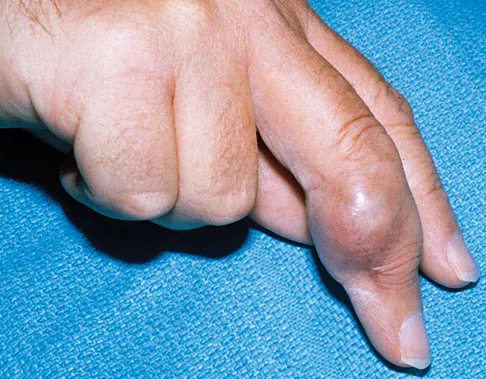
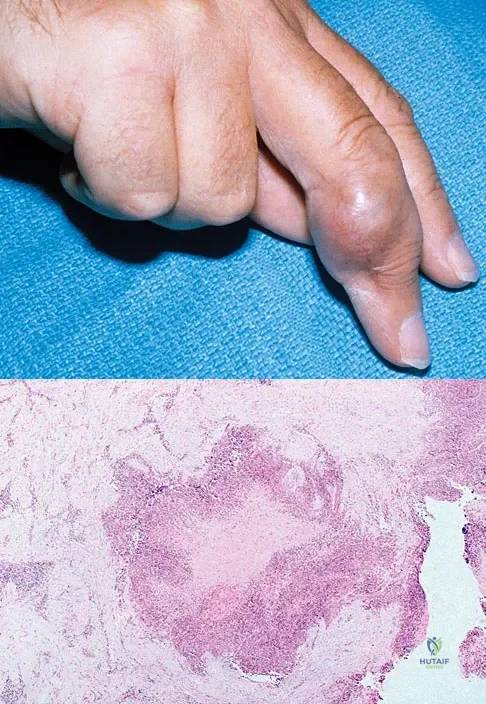
Figure 18a shows the clinical photograph of a 31-year-old man who has a slowly growing nodule on his right middle finger. It is minimally tender, and there is no erythema on examination. A biopsy specimen is shown in Figure 18b. What is the most likely diagnosis?


Explanation

Epithelioid sarcoma is the most common soft-tissue sarcoma in the hand and most commonly occurs in young adults. The tumors can be superficial and may become ulcerated. Deeper lesions are often attached to tendons, tendon sheaths, or fascial structures. These are usually minimally symptomatic. The biopsy specimen reveals the typical appearance of a nodular pattern with central necrosis. They can mimic a necrotizing granulomatous process. Usually there are chronic inflammatory cells along the margin of the tumor nodules. This biopsy specimen does not have the clear cells necessary for a clear cell carcinoma or sarcoma. Nora's tumor is a bizarre parosteal osteochondromatous proliferation (BPOP) first described in 1983 by the pathologist, Nora. The lesion is defined as a reactive heterotopic ossification and is mostly found in the hands or feet of adults in the third decade of life. Enzinger FM, Weiss SW: Soft Tissue Tumors, ed 3. St Louis, MO, Mosby, 1995, p 1074.

Question 22

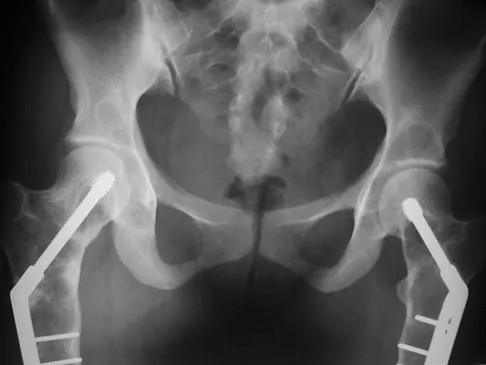
A 17-year-old girl who initially presented as a child with multiple skeletal lesions, café-au-lait spots, and precocious puberty now has bone pain. A recent bone scan reveals multiple areas of increased scintigraphic uptake, including bilateral proximal femurs. A radiograph is shown in Figure 19. Besides activity modification, what is the next best line of treatment for decreasing her pain?
Basic Science 2008 Practice Questions: Set 1 (Solved) - Figure 70


Explanation

McCune-Albright syndrome is the combination of polyostotic fibrous dysplasia, café-au-lait lesions, and endocrine dysfunction. The most common endocrine presentation is precocious development of secondary sexual characteristics. Compared with bone lesions in patients without polyostotic disease, the skeletal lesions in patients with the syndrome tend to be larger, more persistent, and associated with more complications. Bisphosphonate therapy has been shown in several studies to decrease the pain associated with the skeletal lesions of fibrous dysplasia. DiCaprio MR, Enneking WF: Fibrous dysplasia: Pathophysiology, evaluation and treatment. J Bone Joint Surg Am 2005;87:1848-1864.

Question 23

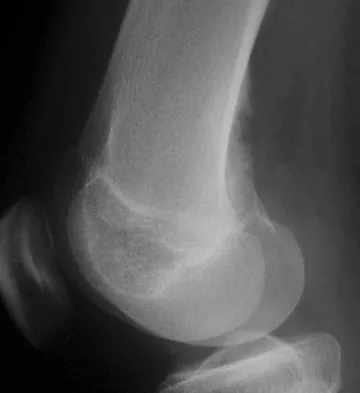
What are the four most common soft-tissue sarcomas to spread via the lymph node system?
Basic Science 2008 Practice Questions: Set 1 (Solved) - Figure 71


Explanation

Soft-tissue sarcomas most frequently metastasize to the lung, but certain histologic types have a predilection for the lymph node system as well. Rhabdomyosarcoma, clear cell sarcoma, epithelioid sarcoma, and synovial sarcoma are four of the most common types to spread in this fashion. Careful evaluation and/or sentinel lymph node biopsy plays a role in disease staging and prognosis. Riad S, Griffin AM, Liberman B, et al: Lymph node metastasis in soft-tissue sarcoma in an extremity. Clin Orthop Relat Res 2004;426:129-134.

Question 24

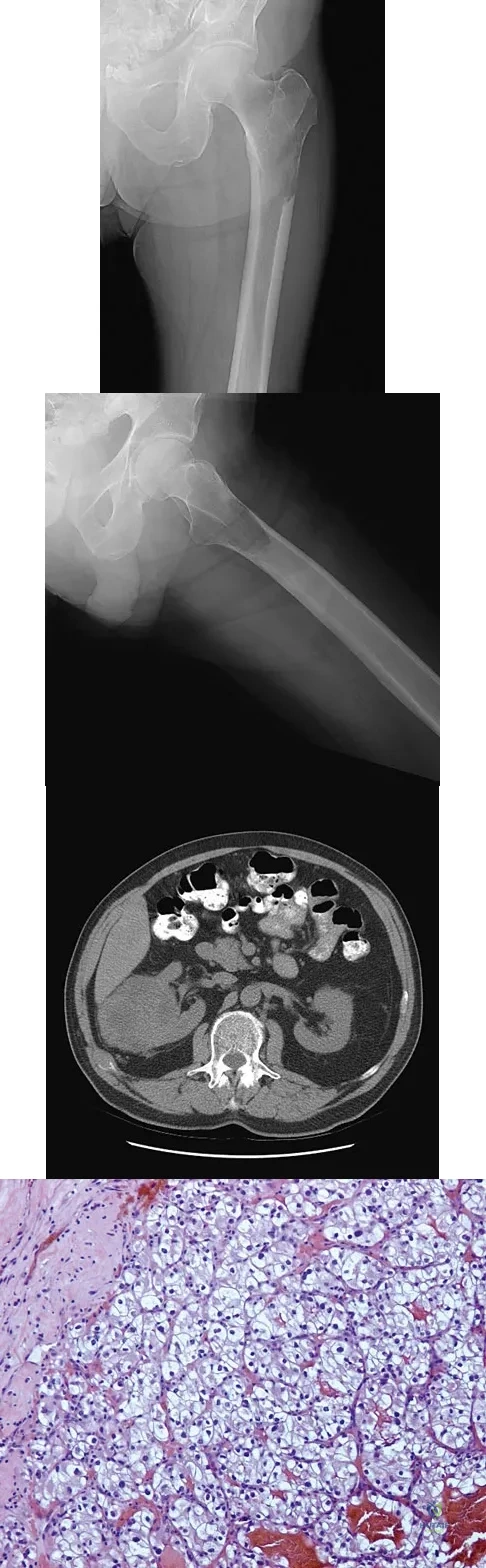
Figures 20a and 20b show the AP and lateral radiographs of a 62-year-old man who has had hip pain for the past 3 weeks. Figure 20c shows a CT scan of the abdomen and pelvis. A needle biopsy specimen is shown in Figure 20d. Preoperative management should include which of the following?


Explanation

The histology shows findings consistent with metastatic renal cell carcinoma. Renal cell carcinoma metastases are extremely vascular. Preoperative embolization helps minimize the amount of blood loss during curettage of these lesions. Chatziioannou AN, Johnson ME, Pneumaticos SG, et al: Preoperative embolization of bone metastases from renal cell carcinoma. Eur Radiol 2000;10:593-596.

Question 25

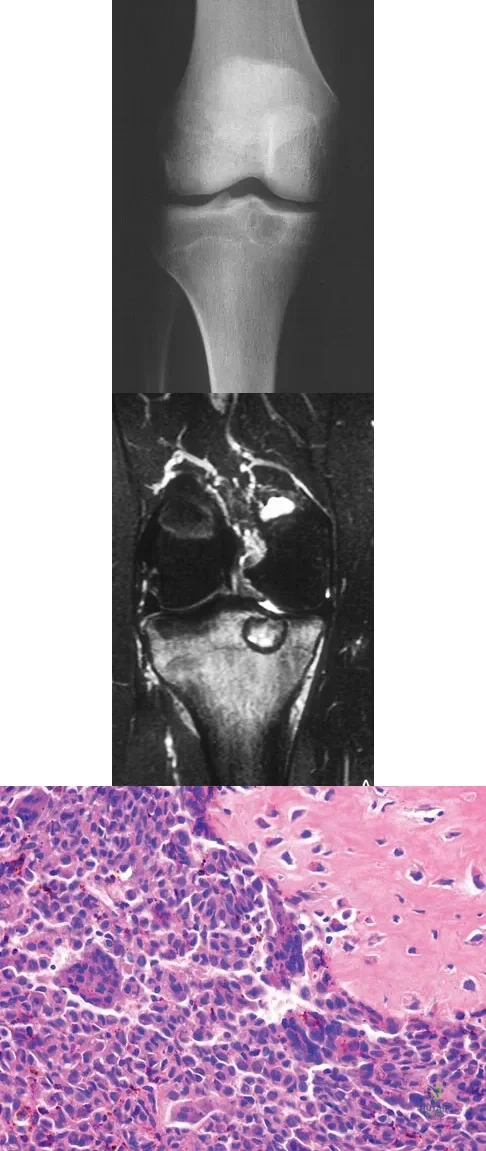
A 15-year-old girl reports a 6-month history of activity-related knee pain and swelling. A radiograph, MRI scan, and biopsy specimen are shown in Figures 21a through 21c. What is the most likely diagnosis?


Explanation

The epiphyseal location on the radiograph and MRI scan and the histologic findings of polyhedral cells separated by a chondroid matrix with pericellular, lattice-like "chicken wire" calcification all suggest chondroblastoma. Although giant cell tumors of bone typically occupy an epiphyseal location, they are rare in children and when present are often metaphyseal in skeletally immature patients. Enchondromas and osteoblastomas are generally metaphyseal and, along with giant cell tumors, have very different histology than seen here. Chondromyxoid fibromas are typically metaphyseal in location. Huvos AG: Bone Tumors: Diagnosis, Treatment, and Prognosis. Philadelphia, PA, WB Saunders, 1991, pp 295-313.

Question 26

In the evaluation of orthopedic biomaterials, the total area under the stress-strain curve up to the point of structural failure represents which of the following mechanical properties?


Explanation

Toughness is defined as the total amount of energy a material can absorb before catastrophic failure, represented by the total area under the stress-strain curve. Stiffness is indicated by the slope of the elastic region (Young's modulus).

Question 27

Which of the following best describes the structural and biochemical composition of the superficial zone of normal articular cartilage?


Explanation

The superficial zone of articular cartilage has the highest water content, lowest proteoglycan content, and collagen fibers oriented parallel to the joint surface to resist shear forces. The deep zone possesses the highest proteoglycan concentration and perpendicular collagen fibers.

Question 28

Sclerostin regulates bone mass by binding to LRP5/6 receptors on osteoblasts. This binding directly inhibits which of the following intracellular signaling pathways?


Explanation

Sclerostin is produced by osteocytes and negatively regulates bone formation by binding to LRP5/6, which competitively inhibits the Wnt/beta-catenin signaling pathway. Monoclonal antibodies against sclerostin (e.g., romosozumab) exploit this to therapeutically increase bone mass.

Question 29

An orthopedic surgeon is selecting a solid intramedullary titanium nail for a diaphyseal femur fracture. If the radius of the solid nail is increased by a factor of 2, how does this affect its bending stiffness?


Explanation

The bending stiffness of a solid cylinder is proportional to its area moment of inertia, which scales with the radius to the fourth power (r^4). Therefore, doubling the radius of a solid nail increases its bending stiffness by 2^4, or a factor of 16.

Question 30

A retrieved modular total hip arthroplasty demonstrates significant black macroscopic debris and surface damage at the head-neck taper junction. Which type of corrosion is most likely responsible for this specific damage pattern?


Explanation

Fretting corrosion occurs due to micromotion between two closely apposed surfaces (such as the modular head-neck taper of a THA), which repeatedly disrupts the passive oxide layer. Galvanic corrosion requires two dissimilar metals placed in an electrolytic solution.

Question 31

During bone resorption, osteoclasts create a sealed zone and secrete hydrogen ions to dissolve the inorganic mineral matrix. Which of the following intracellular enzymes is primarily responsible for generating these hydrogen ions?


Explanation

Carbonic anhydrase II catalyzes the conversion of CO2 and H2O into carbonic acid, which dissociates into bicarbonate and hydrogen ions; the H+ is then pumped into the resorption pit. Enzymes like Cathepsin K and MMPs function subsequently to degrade the organic collagen matrix.

Question 32

When normal articular cartilage is subjected to a constant compressive load over time, it undergoes a gradual increase in deformation until it reaches an equilibrium state. This viscoelastic property is best described as:


Explanation

Creep is a viscoelastic property defined as the progressive deformation of a material over time under a constant load, driven primarily by the exudation of interstitial fluid in cartilage. Stress relaxation is the decrease in stress observed over time under a constant deformation.

Question 33

Which of the following bone graft options possesses osteoconductive and osteoinductive properties but definitively lacks osteogenic potential?


Explanation

Demineralized bone matrix (DBM) provides an osteoconductive collagen scaffold and contains bone morphogenetic proteins (BMPs) that confer osteoinductive potential. However, the decalcification and processing destroy live cells, rendering it devoid of osteogenic potential.

Question 34

According to Perren's strain theory, what is the maximum amount of interfragmentary strain that can be tolerated for primary (direct) bone healing to occur?


Explanation

Primary (direct) bone healing via cutting cones requires absolute stability, defined as interfragmentary strain of less than 2%. Strains between 2% and 10% prevent primary healing but allow for secondary bone healing via callus formation.

Question 35

When applying a tension band construct for a transverse olecranon fracture, optimal biomechanical stability is achieved by placing the implant on the:


Explanation

The tension band principle involves applying a fixation device eccentrically on the tension (convex) side of a loaded bone. This converts physiological tensile forces into compressive forces at the opposite (concave) cortex, dynamically compressing the fracture.

Question 36

Which mode of joint lubrication is primarily responsible for minimizing articular friction during high-load, low-speed activities such as prolonged standing or the initial phase of gait?


Explanation

Boundary lubrication protects articular surfaces during high-load, low-speed activities when a fluid film cannot be physically maintained; it relies on surface-active molecules like lubricin (PRG4). Fluid film lubrication mechanisms predominate during high-speed, lower-load activities.

Question 37

In the systemic metabolism of Vitamin D, the conversion of 25-hydroxyvitamin D to its most biologically active form, 1,25-dihydroxyvitamin D, is primarily catalyzed by an enzyme located in which of the following organs?


Explanation

The enzyme 1-alpha-hydroxylase is located primarily in the proximal tubules of the kidney and catalyzes the conversion of 25-hydroxyvitamin D to 1,25-dihydroxyvitamin D (calcitriol), the most active form. The liver catalyzes the initial 25-hydroxylation step.

Question 38

Which of the following modifications to an orthopedic screw design will yield the greatest proportional increase in its pullout strength?


Explanation

Screw pullout strength is most heavily dependent on the outer thread diameter and the length of thread engagement in the bone. Increasing the outer diameter significantly increases the shear area of bone engaged by the threads, maximizing pullout resistance.

Question 39

Which of the following biochemical and biomechanical changes is characteristic of early-stage articular cartilage degeneration in osteoarthritis?


Explanation

In early osteoarthritis, damage to the superficial collagen network allows the hydrophilic proteoglycans to swell unconstrained, resulting in an increased tissue water content. This structural disruption leads to increased tissue permeability and markedly decreased compressive stiffness.

Question 40

Highly cross-linked ultra-high-molecular-weight polyethylene (UHMWPE) is widely utilized in total joint arthroplasty. What is the primary biomechanical trade-off associated with increasing the radiation cross-linking of UHMWPE?


Explanation

While high levels of radiation cross-linking significantly improve the abrasive wear resistance of UHMWPE, it structurally restricts polymer chain mobility. This results in reduced mechanical properties, specifically diminished fatigue strength, ductility, and fracture toughness.

Question 41

Osteoclasts degrade bone by creating an acidic environment. Which of the following enzymes is primarily responsible for the degradation of the organic bone matrix within the resorption pit?


Explanation

Osteoclasts secrete hydrogen ions via carbonic anhydrase II to dissolve inorganic hydroxyapatite, while Cathepsin K degrades the organic collagenous matrix at the ruffled border. TRAP is a marker of osteoclast activity but not the primary degrading enzyme.

Question 42

According to Perren's strain theory of bone healing, what is the maximum interfragmentary strain that allows for the formation of lamellar bone directly without an intermediate cartilage phase?


Explanation

Primary bone healing (lamellar bone formation) requires absolute stability with an interfragmentary strain of less than 2%. Strains between 2% and 10% result in secondary healing via callus formation.

Question 43

Sclerostin is a key regulator of bone mass. By which of the following mechanisms does it primarily inhibit bone formation?


Explanation

Sclerostin, secreted predominantly by osteocytes, binds to LRP5/6 receptors on osteoblasts, competitively inhibiting the Wnt/beta-catenin pathway. This decreases osteoblast differentiation and subsequent bone formation.

Question 44

Articular cartilage is divided into four distinct structural zones. Which of the following best characterizes the superficial zone?


Explanation

The superficial zone of articular cartilage has the highest water content, the lowest proteoglycan content, and collagen fibers arranged parallel to the joint surface to resist shear forces. Type X collagen is primarily found in the calcified zone.

Question 45

Highly cross-linked ultra-high molecular weight polyethylene (UHMWPE) is used in total joint arthroplasty to reduce wear. Which of the following is a known mechanical trade-off of increasing the cross-linking of UHMWPE?


Explanation

While cross-linking UHMWPE significantly reduces adhesive and abrasive wear rates, it alters the material's bulk mechanical properties, leading to a decrease in ultimate tensile strength, fatigue strength, and resistance to crack propagation.

Question 46

A clinician applies a dynamic splint to a patient's contracted elbow. The splint applies a constant load over time, resulting in gradually increasing extension of the soft tissues. This phenomenon is best described by which of the following viscoelastic principles?


Explanation

Creep is defined as the progressive deformation of a viscoelastic material over time when subjected to a constant load. Stress relaxation is the decrease in internal stress over time when the material is held at a constant deformation.

Question 47

The pullout strength of a cortical bone screw is directly proportional to which of the following design parameters?


Explanation

Screw pullout strength is directly proportional to the outer (thread) diameter, the length of thread engagement in bone, and the shear strength of the surrounding bone. It is inversely proportional to the pitch distance.

Question 48

Increasing the radius of a solid circular intramedullary nail by a factor of 2 will increase its torsional rigidity by a factor of:


Explanation

The torsional rigidity of a solid cylinder is proportional to its polar moment of inertia, which scales with the radius to the fourth power (r^4). Therefore, doubling the radius increases torsional rigidity by a factor of 16.

Question 49

In a rectangular fracture plate, bending stiffness is dictated by the area moment of inertia (I = bh^3 / 12). Increasing the thickness (h) of the plate by a factor of 2 increases its bending stiffness by a factor of:


Explanation

The area moment of inertia for a rectangular structure subjected to bending is proportional to the base multiplied by the height (thickness) cubed. Doubling the thickness increases the bending stiffness by a factor of 8 (2^3).

Question 50

Stress shielding around an orthopedic implant is strongly influenced by the elastic modulus of the material. Which of the following metals has an elastic modulus closest to that of cortical bone?


Explanation

Titanium alloy has an elastic modulus of approximately 100-110 GPa, making it closer to cortical bone (15-20 GPa) than Cobalt-chromium (approx. 220 GPa) or Stainless steel (approx. 200 GPa). This closer matching reduces the magnitude of stress shielding.

Question 51

Under high-load, short-duration impact conditions, the articular cartilage surfaces are protected primarily by which type of joint lubrication?


Explanation

Squeeze-film lubrication occurs under high axial loads when opposing joint surfaces are rapidly pressed together. The viscous synovial fluid is slowly squeezed out, creating a high-pressure fluid film that separates and protects the surfaces.

Question 52

Which transcription factor is considered the master regulator required for the differentiation of mesenchymal stem cells into chondrocytes during endochondral ossification?


Explanation

SOX9 is the essential transcription factor for chondrocyte differentiation and the expression of type II collagen. Runx2 and Osterix are primarily required for osteoblast differentiation.

Question 53

A patient presents with generalized osteosclerosis, frequent fractures, and an absence of a medullary canal on radiographs. Which of the following cellular mechanisms is most likely defective?


Explanation

Osteopetrosis is characterized by defective osteoclastic bone resorption. A common mutation involves Carbonic anhydrase II or the vacuolar proton pump, which prevents the acidification necessary to dissolve bone mineral.

Question 54

Bone morphogenetic proteins (BMPs) initiate an intracellular signaling cascade that promotes osteogenic differentiation. Which of the following intracellular proteins are phosphorylated directly by the BMP receptor complex?


Explanation

BMPs signal primarily through the phosphorylation of Smad 1, 5, and 8. In contrast, TGF-beta signaling typically acts through the phosphorylation of Smad 2 and 3.

Question 55

In the extracellular matrix of articular cartilage, aggrecan molecules are attached to a central hyaluronic acid backbone. Which specific molecule is responsible for stabilizing this non-covalent interaction?


Explanation

Link protein is a crucial glycoprotein that non-covalently binds and stabilizes the interaction between the aggrecan core protein and the long hyaluronic acid backbone in articular cartilage.

Question 56

When attempting to revise a fracture construct, a surgeon notices significant black debris and corrosion where a stainless steel screw was placed through a titanium plate. This is an example of which type of corrosion?


Explanation

Galvanic corrosion occurs when two dissimilar metals with different electrochemical potentials are placed in contact within a conductive body fluid, leading to accelerated localized corrosion of the less noble metal.

Question 57

A normal direct tendon insertion (enthesis) into bone is organized into four distinct histologic zones. In order from tendon to bone, what is the correct sequence of these zones?


Explanation

The normal direct enthesis transition consists of four sequential zones: tendon, uncalcified fibrocartilage, calcified fibrocartilage, and bone. The tidemark structurally separates the uncalcified and calcified fibrocartilage zones.

Question 58

A pediatric patient with bowing of the long bones and widening of the physes is evaluated. Laboratory studies show hypocalcemia, hypophosphatemia, and markedly elevated alkaline phosphatase. Which of the following is the most likely underlying pathophysiological mechanism?


Explanation

These findings are classic for nutritional rickets (Vitamin D deficiency), which results in deficient mineralization of the osteoid matrix and growth plate chondrocytes. FGF23 overproduction (X-linked hypophosphatemic rickets) typically presents with normal serum calcium.

Question 59

Which lubrication mechanism primarily protects articular cartilage during high-load, low-speed activities such as prolonged standing?


Explanation

Boundary lubrication is mediated by lubricin (PRG4) and hyaluronic acid bound to the articular surface, preventing wear during low-speed, high-load conditions. Fluid-film (elastohydrodynamic) lubrication typically operates during high-speed, dynamic joint movements.

Question 60

In the regulation of bone remodeling, which of the following molecules acts as a decoy receptor to directly inhibit osteoclast differentiation and activation?


Explanation

Osteoprotegerin (OPG) is secreted by osteoblasts and binds to RANKL, acting as a decoy receptor. This prevents RANKL from interacting with the RANK receptor on osteoclast precursors, thereby inhibiting osteoclast differentiation and bone resorption.

Question 61

On a standard stress-strain curve for an orthopedic implant material, the total area under the curve up to the point of failure represents which of the following biomechanical properties?


Explanation

Toughness is defined as the total amount of energy a material can absorb before it fails, represented by the total area under the stress-strain curve. Stiffness, conversely, is represented by the slope of the elastic region (Young's modulus).

Question 62

Which of the following is the most abundant glycosaminoglycan (GAG) in healthy mature articular cartilage?


Explanation

Chondroitin sulfate is the most abundant glycosaminoglycan in articular cartilage, followed by keratan sulfate. These GAGs attach to a core protein to form the aggrecan macromolecule, which provides compressive stiffness via osmotic swelling pressure.

Question 63

According to Perren's strain theory, what level of interfragmentary strain is ideal for promoting secondary bone healing through fracture callus formation?


Explanation

Secondary bone healing (endochondral ossification) with callus formation occurs when interfragmentary strain is maintained between 2% and 10%. Strain less than 2% promotes primary (direct) bone healing, while strain exceeding 10% typically results in a fibrous nonunion.

Question 64

Sclerostin, a glycoprotein secreted primarily by osteocytes, regulates bone mass by directly inhibiting which of the following intracellular signaling pathways?


Explanation

Sclerostin inhibits bone formation by binding to LRP5/6 receptors on the surface of osteoblasts, effectively blocking the Wnt/beta-catenin signaling pathway. Monoclonal antibodies targeting sclerostin, such as romosozumab, are utilized to treat severe osteoporosis.

Question 65

Which of the following geometric modifications to a standard cortical screw will most significantly increase its pullout strength in cancellous bone?


Explanation

Screw pullout strength is most heavily influenced by the outer diameter of the screw. Increasing the outer diameter increases the volume of bone captured between the threads, thereby maximizing the holding power and resistance to pullout.

Question 66

During distraction osteogenesis (e.g., Ilizarov technique), the generation of new bone within the distraction gap primarily relies on which of the following biologic processes?


Explanation

During distraction osteogenesis, new bone forms primarily through intramembranous ossification under tension. This process involves the direct differentiation of mesenchymal stem cells into osteoblasts without passing through a cartilaginous intermediate phase.

Question 67

In normal articular cartilage, which structural zone is characterized by chondrocytes arranged in columnar arrays and collagen fibrils oriented strictly perpendicular to the joint surface?


Explanation

The deep (radial) zone of articular cartilage contains vertically aligned chondrocytes and large-diameter collagen fibrils oriented perpendicular to the joint surface. This highly organized structural arrangement provides the cartilage with maximal resistance to compressive loading.

Question 68

If the radius of a solid cylindrical intramedullary nail is doubled, by what factor does its theoretical bending stiffness increase?


Explanation

The area moment of inertia for a solid cylinder, which dictates its bending stiffness, is proportional to the radius raised to the fourth power (r^4). Therefore, doubling the radius of a solid intramedullary nail increases its bending stiffness by a factor of 16 (2^4).

Question 69

Parathyroid hormone (PTH) maintains serum calcium homeostasis through multiple systemic mechanisms. Which of the following represents a direct cellular effect of continuously elevated PTH levels on bone tissue?


Explanation

Continuous elevation of parathyroid hormone (PTH) stimulates osteoblasts to upregulate RANKL expression. The increased RANKL subsequently binds to RANK on osteoclast precursors, leading to osteoclast activation, bone resorption, and calcium release.

Question 70

When a constant, prolonged compressive load is applied to articular cartilage, the tissue slowly continues to deform until it reaches an equilibrium state. This specific viscoelastic property is best described as:


Explanation

Creep is the time-dependent progressive deformation of a viscoelastic material when it is subjected to a constant load. In articular cartilage, this phenomenon is primarily driven by the exudation of interstitial water from the extracellular matrix.

Question 71

Bone morphogenetic proteins (BMPs) play a crucial role in osteoinduction. The intracellular signaling cascade initiated by BMP receptor activation primarily relies on the phosphorylation of which of the following proteins?


Explanation

BMPs bind to specific serine/threonine kinase cell-surface receptors, which leads to the phosphorylation and activation of intracellular Smad proteins (typically Smad 1, 5, and 8). The activated Smad complex translocates to the nucleus to regulate the transcription of target osteogenic genes.

Question 72

By what primary mechanism do chondrocytes residing in the uncalcified zones of mature adult articular cartilage receive their required nutritional supply?


Explanation

Mature uncalcified articular cartilage is completely avascular, and the calcified tidemark acts as an impenetrable barrier to subchondral blood vessels. Consequently, chondrocytes rely almost entirely on diffusion from synovial fluid, a process substantially enhanced by the pumping action of cyclic joint loading.

Question 73

Which of the following accurately describes the fundamental biomechanical principle of a locked plating construct when compared to a conventional non-locked compression plate?


Explanation

Locked plating systems function as fixed-angle constructs because the screw heads lock directly into the threaded holes of the plate. This design eliminates the requirement for plate-to-bone friction, preserving the periosteal blood supply and negating the need for exact plate contouring.

Question 74

In a patient with end-stage renal disease developing renal osteodystrophy, a deficiency in which of the following enzymes leads to impaired systemic calcium homeostasis?


Explanation

The kidney is the primary site for converting 25-hydroxyvitamin D into its active hormonal form, 1,25-dihydroxyvitamin D, via the enzyme 1-alpha-hydroxylase. Patients with end-stage renal disease lose this crucial enzymatic function, resulting in hypocalcemia and severe secondary hyperparathyroidism.

Question 75

During an open reduction and internal fixation, an orthopedic surgeon inadvertently uses a titanium screw through a stainless steel plate. This mismatched metal combination primarily increases the risk of which type of implant corrosion?


Explanation

Galvanic corrosion occurs when two dissimilar metals possessing different electrochemical potentials are placed in direct contact within an electrolytic medium like body fluid. In this scenario, the less noble metal acts as an anode and undergoes accelerated degradation.

Question 76

Which of the following statements represents a key histological and biomechanical difference between woven bone and lamellar bone?


Explanation

Woven bone is an immature, rapidly formed tissue characterized by a disorganized, random arrangement of collagen fibers, rendering it mechanically isotropic and relatively weak. Lamellar bone is mature, slowly formed, and features highly organized parallel collagen fibers, making it mechanically strong and anisotropic.

Question 77

Because of the avascular nature of articular cartilage, chondrocytes reside in a relatively hypoxic environment. Which of the following represents the primary metabolic pathway utilized by mature chondrocytes for ATP production?


Explanation

Mature articular chondrocytes operate in a characteristically low-oxygen environment and therefore rely almost exclusively on anaerobic glycolysis for cellular ATP production. This process results in the constant generation of lactic acid, which diffuses out into the synovial fluid.

Question 78

A 65-year-old woman is evaluated for osteoporosis and is recommended to start therapy with denosumab. What is the specific mechanism of action of this medication?


Explanation

Denosumab is a monoclonal antibody that acts similarly to osteoprotegerin (OPG). It binds to RANKL, preventing it from activating RANK on the surface of osteoclasts, which inhibits osteoclast maturation and survival.

Question 79

In normal articular cartilage, which zone is characterized by the highest concentration of proteoglycans, the lowest concentration of water, and collagen fibers oriented perpendicular to the joint surface?


Explanation

The deep (radial) zone contains the highest concentration of proteoglycans and the lowest water content. Its collagen fibers run perpendicular to the articular surface to provide significant resistance to compressive loads.

Question 80

When evaluating the biomechanics of a cortical screw, which of the following alterations to the screw's design will most significantly increase its pullout strength?


Explanation

Pullout strength is directly proportional to the outer (major) diameter, length of engagement, and the number of threads engaged. Decreasing the thread pitch increases the number of threads per inch, thereby increasing pullout strength.

Question 81

According to Perren's strain theory, what is the maximum amount of interfragmentary strain that can be tolerated for the formation of lamellar bone during fracture healing?


Explanation

Perren's strain theory states that lamellar bone can only form in a mechanical environment with less than 2% strain. Strains between 2% and 10% tolerate woven bone formation, while strains up to 30% tolerate cartilage formation.

Question 82

Mixing stainless steel and titanium implants within the same surgical construct should generally be avoided primarily due to the increased risk of which of the following processes?


Explanation

Galvanic corrosion occurs when two dissimilar metals are placed in direct contact within an electrolytic solution like body fluid. This creates an electrochemical gradient that leads to accelerated corrosion of the less noble metal.

Question 83

What is the primary biomechanical function of aggrecan within the extracellular matrix of articular cartilage?


Explanation

Aggrecan is a heavily glycosylated proteoglycan with a high concentration of fixed negative charges. These charges attract cations and water, generating an osmotic swelling pressure that resists compressive loads.

Question 84

A physical therapist applies a constant load to a patient's contracted knee joint, resulting in a gradual increase in deformation of the periarticular soft tissues over time. Which viscoelastic property does this phenomenon describe?


Explanation

Creep is defined as the time-dependent increase in deformation (strain) of a viscoelastic material when subjected to a constant load (stress). Stress relaxation is the time-dependent decrease in stress under a constant deformation.

Question 85

Romosozumab is a biologic therapy utilized in the management of osteoporosis. What is its cellular target and resulting primary effect?


Explanation

Romosozumab is a monoclonal antibody that binds to and inhibits sclerostin. Since sclerostin is a natural inhibitor of the Wnt/beta-catenin pathway, its inhibition leads to a significant increase in osteoblast activity and bone formation.

Question 86

Bone morphogenetic proteins (BMPs) such as BMP-2 and BMP-7 transmit their intracellular signals primarily through the phosphorylation and activation of which of the following?


Explanation

BMPs belong to the TGF-beta superfamily and exert their effects by binding to serine/threonine kinase cell surface receptors. These receptors subsequently phosphorylate intracellular Smad proteins (typically Smad 1, 5, and 8) to regulate gene transcription.

Question 87

Which of the following is considered the primary wear mechanism occurring in a well-functioning metal-on-polyethylene total joint arthroplasty?


Explanation

Adhesive wear is the primary wear mode in standard, well-functioning metal-on-polyethylene articulations. It occurs when microscopic asperities on the bearing surfaces bond together and are subsequently sheared off during sliding motion.

Question 88

Which of the following transcription factors is considered the essential 'master regulator' required for mesenchymal stem cells to commit to the osteoblast lineage?


Explanation

Runx2 (also known as Cbfa1) is the critical master transcription factor required for osteoblast differentiation and bone formation. Mutations in Runx2 cause cleidocranial dysplasia.

Question 89

During the swing phase of the human gait cycle, the knee joint experiences relatively low compressive loads and high sliding speeds. Which mechanism of articular cartilage lubrication predominates under these conditions?


Explanation

Elastohydrodynamic (fluid-film) lubrication predominates when joint loads are low and sliding speeds are high. In contrast, boundary lubrication, mediated by lubricin, predominates at low speeds and high loads (e.g., stance phase).

Question 90

When evaluating the material properties of an orthopedic implant on a load-deformation curve, the stiffness of the material is represented by which of the following parameters?


Explanation

The stiffness of a construct (analogous to Young's modulus on a stress-strain curve) is represented by the slope of the linear elastic portion of the load-deformation curve. The area under the entire curve represents the toughness of the material.

Question 91

In the context of fracture fixation with a bridging plate, increasing the working length by leaving empty screw holes directly over the fracture site has what specific biomechanical effect?


Explanation

Increasing the working length of a plate decreases the overall longitudinal stiffness of the construct. This allows for controlled, symmetric interfragmentary motion (relative stability), which promotes robust callus formation and secondary bone healing.

Question 92

Which specific collagen type is uniquely synthesized by chondrocytes, co-polymerizes directly with Type II collagen, and plays a crucial role in regulating the maximum diameter of the collagen fibrils?


Explanation

Type XI collagen is a minor cartilage-specific collagen that forms the central core of the fibril and regulates the lateral growth (diameter) of Type II collagen fibrils. Type X collagen is exclusively found in the calcified zone and hypertrophic chondrocytes.

None

Clinic OS
Medically Verified Content by
Prof. Clinic OS
Consultant Orthopedic & Spine Surgeon
Chapter Index
