AAOS Orthopedic MCQs (Set 1): Upper Extremity Trauma & Sports Injuries | Board Review
Key Takeaway
This high-yield question set, tailored for AAOS and ABOS exams, delves into critical upper extremity topics. It covers the diagnosis, classification, and management of shoulder, elbow, wrist, and hand trauma, including fracture care and common soft tissue injuries relevant to board certification.
AAOS Orthopedic MCQs (Set 1): Upper Extremity Trauma & Sports Injuries | Board Review
Comprehensive 100-Question Exam
00:00
Start Quiz
Question 1
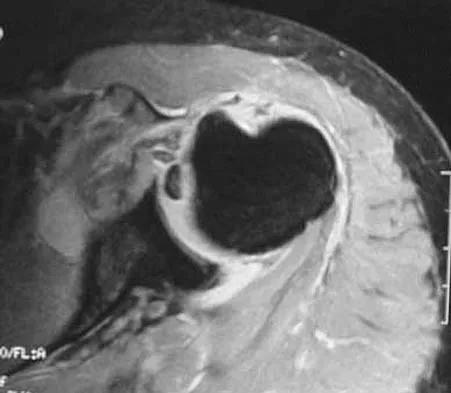
A 36-year-old woman has pain and swelling of the anterior arm after undergoing arthroscopic shoulder surgery 8 months ago. At the time of the procedure, extensive debridement and synovectomy of the anterior aspect of the joint was performed to remove scar tissue that had formed after an open rotator cuff repair. Examination reveals a golf ball-sized swelling just lateral to the coracoid. The area is not warm and shows no other signs of infection. An MRI scan is shown in Figure 1. Management should now consist of
Explanation
Question 2
A 45-year-old recreational tennis player underwent arthroscopic decompression and mini-open repair of a small supraspinatus tendon tear 3 weeks ago after nonsurgical management failed to provide relief. He now has pain, swelling about the wound, erythema, and purulent drainage. The patient is returned to the operating room for irrigation, debridement, and cultures. What is the most common organism causing this infection?
Explanation
Question 3
A paraplegic 32-year-old man was pulling himself up in bed by grasping the headboard rails when he felt a pop and immediate pain. A radiograph and CT scan are shown in Figures 2a and 2b. Based on these findings, management should consist of
Explanation
Question 4
A 23-year-old baseball pitcher reports pain in the posterior aspect of his dominant shoulder during the late cocking phase of throwing. With the dominant shoulder positioned in 90 degrees of abduction from the body and with the scapula stabilized, examination reveals 135 degrees of external rotation and 20 degrees of internal rotation. Examination of the opposite shoulder reveals 100 degrees of external rotation and 75 degrees of internal rotation. Both shoulders are stable on examination. Radiographs and MRI scans are unremarkable. What is the primary cause of his pain?
Explanation
Question 5
What is the most common indication for revision following unconstrained elbow arthroplasty?
Explanation
Question 6
What part of the glenoid labrum has the least vascularity?
Explanation
Question 7
One of the serious potential complications of repair of distal biceps tendon ruptures is limited pronation and supination as a result of synostosis. What surgical approach and technique presents the highest risk for development of this complication?
Explanation
Question 8
A 25-year-old carpenter falls on his outstretched arm. What physical finding best correlates with the lesion seen on the MRI scan shown in Figure 3?
Explanation
Question 9
A 72-year-old woman who sustained a cerebrovascular accident 9 months ago now has a fixed elbow flexion contracture of 80 degrees. Management should consist of
Explanation
Question 10
A 44-year-old recreational weight lifter reports chronic deep pain in his left shoulder that is aggravated by any pressing exercises. He also notes a painful catch in the shoulder occurring with rotational movements. Physical therapy and nonsteroidal anti-inflammatory drugs for 3 months have failed to provide relief. Examination reveals pain with O'Brien's test but no signs of instability. MRI scans are shown in Figures 4a and 4b. Treatment should now consist of
Explanation
Question 11
A 35-year-old carpenter sustained an injury to his dominant shoulder in a fall. He reports that he felt a sharp tearing sensation as he held on to a scaffold to keep from falling. Examination reveals swelling and ecchymosis down the upper arm, weakness to internal rotation, and deformity of the anterior axilla. He has good strength in external rotation and no apprehension with instability testing. Radiographs are normal. Management should consist of
Explanation
Question 12
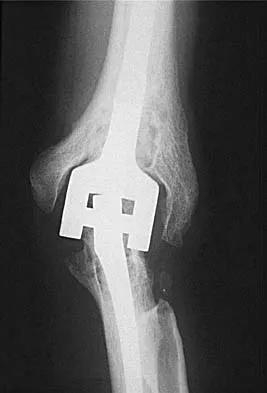
A 48-year-old woman with rheumatoid arthritis reports increasing elbow pain for the past 6 months. History reveals that she underwent total elbow arthroplasty 7 years ago. A peripheral WBC count, erythrocyte sedimentation rate, and C-reactive protein studies are normal. An AP radiograph is shown in Figure 5. What is the next most appropriate step in management?
Explanation
Question 13
Figure 6a shows the radiograph of a 50-year-old man who sustained an anterior dislocation of the shoulder. He undergoes closed reduction, and the postreduction radiograph is shown in Figure 6b. Management should now consist of
Explanation
Question 14
A 42-year-old man sustained a fracture of the distal radius with subsequent stiffness in the ipsilateral shoulder. Despite a 6-month program of range-of-motion exercises, external rotation at the side is limited to 10 degrees. Attempts at closed manipulation are unsuccessful. Treatment should now consist of
Explanation
Question 15
A 72-year-old woman who fell on her right shoulder while using a treadmill is now unable to elevate her right arm. An MRI scan is shown in Figure 7. What is the most likely diagnosis?
Explanation
Question 16
A 45-year-old man who underwent an open capsulolabral stabilization procedure 15 years ago now reports pain and has no external rotation on the affected side. Nonsurgical management has failed to provide relief. Examination reveals external rotation to -5 degrees compared with 50 degrees of external rotation on the contralateral side. Radiographs show a small inferior osteophyte and minimal posterior glenoid wear. Which of the following procedures will offer the best chance of restoring motion, decreasing pain, and preserving the native joint?
Explanation
Question 17
A right-handed 44-year-old construction worker reports pain and limited range of motion in his right elbow that has limited his ability to work for the past year. Examination reveals range of motion from 60 to 90 degrees, and he has pain at the extremes of flexion and extension. Pronation and supination are minimally restricted. Anti-inflammatory drugs have failed to provide relief. A radiograph is shown in Figure 8. Management should now consist of
Explanation
Question 18
Spontaneous recovery of upper extremtiy motor function after a cerebrovascular accident occurs in which of the following predictable patterns?
Explanation
Question 19
A 65-year-old woman sustained an axial load on the arm followed by an abduction injury after falling on ice. Treatment in the emergency department consisted of reduction of an anterior dislocation. She now has a positive drop arm sign and a positive lift-off test. An MRI scan is shown in Figure 9. Based on these findings, management should consist of
Explanation
Question 20
What type of nerve palsy is most common following elbow arthroscopy?
Explanation
Question 21
A 72-year-old man injured his right shoulder after tripping over a chair leg. Radiographs obtained in the emergency department reveal an isolated anterior dislocation. After successful closed reduction, the patient has recurrent anterior instability and is unable to elevate the arm. What is the most likely cause of the recurrent instability?
Explanation
Question 22
A 54-year-old woman sustained an elbow injury 3 months ago that was treated with open reduction and internal fixation. She now reports pain and limited elbow motion. Radiographs are shown in Figures 10a and 10b. Treatment should now consist of
Explanation
Question 23
Ulnohumeral distraction interposition arthroplasty is considered the most appropriate treatment for which of the following patients?
Explanation
Question 24
A 57-year-old man with type I diabetes mellitus has had a tender, erythematous right sternoclavicular joint for the past 2 weeks. Radiographs reveal mild osteolysis without arthritic changes, within normal limits. Management should consist of
Explanation
Question 25
A 58-year-old man has persistent pain and weakness of his right shoulder after undergoing primary rotator cuff repair 1 year ago. A clinical photograph is shown in Figure 11. Which of the following factors might make functional improvement problematic with revision rotator cuff surgery?
Explanation
Question 26
A 42-year-old man falls from a height and sustains a complex elbow dislocation.
Imaging reveals a posterolateral elbow dislocation, a comminuted radial head fracture, and a type II coronoid fracture. During operative management, what is the most appropriate sequence of reconstruction?
Explanation
Question 27
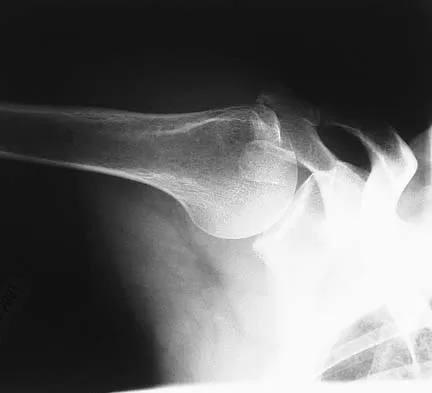
A 22-year-old collegiate rugby player presents with recurrent anterior shoulder instability. A 3D CT scan demonstrates 25% anterior glenoid bone loss.
Which of the following is the most appropriate definitive management?
Explanation
Question 28
A 34-year-old cyclist falls directly onto his shoulder. Radiographs show a displaced distal third clavicle fracture with the fracture line located medial to the intact coracoclavicular ligaments. The proximal fragment is displaced superiorly. This injury is best classified as:
Explanation
Question 29
A 45-year-old man undergoes a single-incision anterior approach for repair of an acute distal biceps tendon rupture. Postoperatively, he notes numbness along the lateral aspect of his forearm. Which nerve was most likely injured during the exposure?
Explanation
Question 30
A 78-year-old woman with severe osteoporosis sustains a comminuted 4-part proximal humerus fracture. The humeral head is split, and the tuberosities are widely displaced. She is treated with a reverse total shoulder arthroplasty (RTSA). Healing of which structure is most critical to restore active external rotation?
Explanation
Question 31
A 45-year-old man presents with chronic wrist pain. Radiographs demonstrate advanced osteoarthritis of the radioscaphoid and capitolunate joints, while the radiolunate joint is spared. A scaphoid nonunion is also noted. Which of the following surgical interventions is most appropriate?
Explanation
Question 32
A 22-year-old collegiate football player presents with his third anterior shoulder dislocation. Imaging reveals an engaged Hill-Sachs lesion and 25% anterior glenoid bone loss. What is the most appropriate surgical management?
Explanation
Question 33
A 40-year-old weightlifter felt a sudden pop in his antecubital fossa and presents with weakness in supination. The Hook test is positive. If he undergoes a single-incision anterior approach for distal biceps tendon repair, which nerve is most at risk of injury?
Explanation
Question 34
A 25-year-old cyclist falls and sustains a midshaft clavicle fracture. Which of the following is considered an absolute indication for open reduction and internal fixation?
Explanation
Question 35
A 28-year-old recreational hockey player falls onto the point of his shoulder. Radiographs show a 100% superior displacement of the distal clavicle relative to the acromion. The coracoclavicular distance is increased by 50% compared to the contralateral side. What is the most appropriate initial management?
Explanation
Question 36
A 45-year-old laborer with chronic shoulder pain has failed 6 months of physical therapy. MRI demonstrates a Type II SLAP tear without rotator cuff pathology. Based on recent literature, which surgical intervention provides the most reliable functional outcome in this demographic?
Explanation
Question 37
A 35-year-old woman falls on an outstretched hand, sustaining an elbow dislocation with associated fractures of the radial head and the coronoid process. During surgical reconstruction, what is the most widely accepted sequence of repair?
Explanation
Question 38
A 65-year-old woman undergoes volar locking plate fixation for a displaced distal radius fracture. Postoperative radiographs show the plate is placed distal to the watershed line. Which structure is at greatest risk of rupture?
Explanation
Question 39
A 25-year-old man sustains a closed, transverse midshaft humerus fracture. Upon examination in the emergency department, he is unable to extend his wrist or fingers, though he had normal function immediately after the injury prior to closed reduction. What is the most appropriate management of this neurologic deficit?
Explanation
Question 40
A 75-year-old osteoporotic woman sustains a displaced 4-part proximal humerus fracture. The articular surface is subluxated, and the tuberosities are widely displaced. Which treatment modality is associated with the most reliable return of forward elevation?
Explanation
Question 41
A scaphoid waist fracture is at high risk of nonunion and avascular necrosis due to its tenuous retrograde blood supply. Which vessel provides the dominant blood supply to the proximal pole of the scaphoid?
Explanation
Question 42
A 30-year-old man requires tension band wiring for a displaced, non-comminuted transverse olecranon fracture. What is the primary biomechanical principle underlying tension band wiring in this setting?
Explanation
Question 43
A 72-year-old man presents with chronic shoulder pain and an inability to actively raise his arm above 45 degrees. He has a positive drop arm sign. MRI reveals a massive, retracted, and irreparable posterosuperior rotator cuff tear with fatty infiltration of the infraspinatus and teres minor. The subscapularis is intact. What is the most appropriate definitive management?
Explanation
Question 44
A 30-year-old professional bodybuilder feels a tearing sensation in his anterior axilla while performing heavy bench presses. Examination reveals loss of the anterior axillary fold contour and weakness in internal rotation. In this mechanism of injury, where does the pectoralis major most commonly rupture?
Explanation
Question 45
A 22-year-old collegiate baseball pitcher complains of medial elbow pain during the late cocking phase of throwing. The moving valgus stress test is positive. Which specific ligamentous structure is the primary restraint to valgus stress at the elbow between 30 and 90 degrees of flexion?
Explanation
Question 46
A 40-year-old man falls onto an outstretched hand and sustains a 'terrible triad' injury of the elbow. He is taken to the operating room for surgical stabilization. After repairing the coronoid and stabilizing the radial head, the elbow remains unstable. According to the standard stepwise surgical protocol, which structure is typically addressed next?
Explanation
Question 47
A 28-year-old male presents with a closed midshaft humeral fracture after a direct blow. On examination, he is unable to extend his wrist or fingers, and he has decreased sensation over the dorsal web space of the hand. Which of the following is the most appropriate initial management?
Explanation
Question 48
A 75-year-old woman with severe osteoporosis sustains a displaced, 4-part proximal humerus fracture. Examination of preoperative imaging suggests severe valgus impaction and poor tuberosity bone stock. Which of the following surgical interventions will provide the most predictable outcome for postoperative functional elevation and pain relief?
Explanation
Question 49
A 45-year-old male weightlifter undergoes surgical repair of an acute distal biceps tendon rupture using a single anterior incision approach. Postoperatively, he complains of numbness and tingling over the anterolateral aspect of his forearm. Which nerve is most likely injured?
Explanation
Question 50
While operative fixation of acute midshaft clavicle fractures is increasingly common in active individuals, certain findings mandate surgical intervention. Which of the following is an absolute indication for operative fixation of an acute clavicle fracture?
Explanation
Question 51
A 22-year-old rugby player falls directly onto the point of his shoulder and presents with severe pain. Radiographs demonstrate a superiorly displaced distal clavicle. The superior translation is measured at 250% of the normal coracoclavicular (CC) distance. Which of the following accurately describes the ligamentous and fascial pathology in this Type V acromioclavicular (AC) joint injury?
Explanation
Question 52
A 21-year-old collegiate linebacker presents with recurrent anterior shoulder instability. An en face 3D CT scan of the glenoid demonstrates significant anterior bone loss. At what percentage of anterior glenoid bone loss is an isolated arthroscopic Bankart repair generally considered to have an unacceptably high failure rate, warranting a bony augmentation procedure?
Explanation
Question 53
A 32-year-old bodybuilder felt a sudden tear in his anterior chest wall while performing a heavy bench press. Examination reveals loss of the anterior axillary fold and extensive ecchymosis over the anterior arm. If surgical repair is planned, where is the most common site of failure requiring anatomic reattachment in this specific injury?
Explanation
Question 54
A 70-year-old man presents with chronic, severe shoulder pain and an inability to actively elevate his arm past 40 degrees (pseudoparalysis). Radiographs demonstrate a narrowed acromiohumeral interval of 2 mm and advanced glenohumeral osteoarthritis. What is the most appropriate surgical treatment?
Explanation
Question 55
A 25-year-old professional baseball pitcher presents with deep shoulder pain and decreased throwing velocity. Physical examination reveals a positive O'Brien test. MRI arthrography shows a Type II SLAP tear. Which of the following biomechanical forces is most frequently implicated in causing this injury during the late cocking phase of throwing?
Explanation
Question 56
A 20-year-old collegiate pitcher undergoes ulnar collateral ligament (UCL) reconstruction utilizing a palmaris longus autograft. Which specific bundle of the native UCL is the primary restraint to valgus stress between 30 and 90 degrees of elbow flexion and is the target of this reconstruction?
Explanation
Question 57
A 6-year-old child presents after a fall onto an outstretched arm. Radiographs demonstrate a fracture of the proximal third of the ulna with an anterior dislocation of the radial head. Based on this specific Bado classification pattern, which nerve is most commonly injured?
Explanation
Question 58
A 21-year-old male sustains a proximal pole scaphoid fracture. The treating orthopedic surgeon advises the patient of a high risk of nonunion and avascular necrosis. This risk is primarily due to the retrograde nature of the scaphoid's blood supply. Which of the following vessels provides this dominant arterial supply to the proximal pole?
Explanation
Question 59
A 25-year-old cyclist sustains a midshaft clavicle fracture. Which of the following radiographic or clinical findings is the strongest predictor of nonunion if this injury is managed nonoperatively?
Explanation
Question 60
A 22-year-old rugby player presents with recurrent anterior shoulder instability. CT scan imaging demonstrates 25% anterior glenoid bone loss. What is the most appropriate definitive surgical management?
Explanation
Question 61
A 65-year-old woman sustains a 4-part proximal humerus fracture. According to the Hertel criteria, which radiographic feature is the strongest predictor of subsequent humeral head ischemia?
Explanation
Question 62
A 30-year-old man presents with a closed distal-third spiral humeral shaft fracture (Holstein-Lewis type). Initial examination shows normal nerve function, and he is placed in a coaptation splint. At his 1-week clinic follow-up, he demonstrates a complete radial nerve palsy. What is the next most appropriate step in management?
Explanation
Question 63
A 40-year-old man undergoes a single-incision anterior approach repair of a distal biceps tendon rupture. What is the most commonly injured neurologic structure associated with this specific surgical approach?
Explanation
Question 64
A 35-year-old woman falls on an outstretched hand, sustaining an elbow dislocation, a comminuted radial head fracture, and a Type II coronoid fracture. What is the generally accepted sequence of surgical reconstruction for this "terrible triad" injury?
Explanation
Question 65
A 55-year-old woman sustains a nondisplaced distal radius fracture treated in a short arm cast. Six weeks later, the cast is removed, and she is unable to actively extend her thumb interphalangeal joint. Tenodesis effect of the thumb is absent. What is the most likely etiology?
Explanation
Question 66
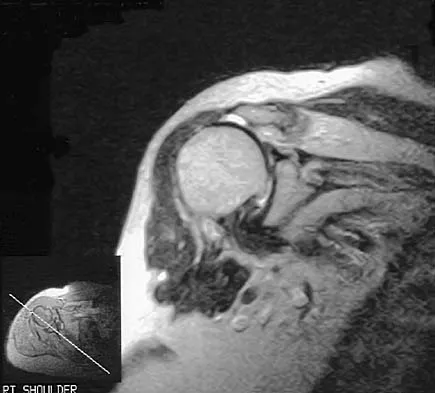
A 45-year-old man presents with chronic wrist pain. A radiograph (
) confirms a scaphoid nonunion with radioscaphoid and capitolunate arthritis. The radiolunate joint is completely preserved. What is the most appropriate surgical treatment?
Explanation
Question 67
A 24-year-old professional baseball pitcher reports posterior shoulder pain during the late cocking phase of throwing. MRI arthrography reveals posterosuperior labral fraying and a partial-thickness articular-sided supraspinatus tear. What is the primary pathophysiologic mechanism of this injury pattern?
Explanation
Question 68
A 28-year-old man falls directly onto the point of his shoulder. Radiographs demonstrate 150% superior displacement of the distal clavicle relative to the acromion. Which ligaments are completely disrupted in this injury?
Explanation
Question 69
An 18-year-old football player presents after a pile-up tackle with shortness of breath, dysphagia, and severe pain over the medial clavicle. Examination shows a palpable depression of the medial clavicle. What is the most appropriate initial diagnostic step?
Explanation
Question 70
A 32-year-old woman falls on an outstretched arm. Radiographs (
) demonstrate a coronal shear fracture of the capitellum extending into the lateral trochlea (Type IV). Which surgical approach and fixation strategy is biomechanically superior?
Explanation
Question 71
A 21-year-old collegiate pitcher reports medial elbow pain and decreased throwing velocity. The "moving valgus stress test" is positive. What structure is the primary restraint to valgus stress at the elbow during the late cocking phase of throwing?
Explanation
Question 72
A 30-year-old bodybuilder feels a "pop" in his anterior axilla while bench pressing. He exhibits ecchymosis and loss of the anterior axillary fold. MRI confirms a complete pectoralis major tear. Normal anatomy dictates that the sternal head of the pectoralis major inserts in what relation to the clavicular head?
Explanation
Question 73
A 28-year-old volleyball player presents with isolated atrophy of the infraspinatus muscle and painless weakness in external rotation. MRI reveals a paralabral cyst. At what anatomical location is this cyst most likely compressing the suprascapular nerve?
Explanation
Question 74
A 42-year-old man feels a pop in his anterior elbow while lifting a heavy object. An MRI confirms a complete avulsion of the distal biceps tendon. He elects to undergo surgical repair via a single-incision anterior approach. What is the most common neurologic complication associated with this specific surgical approach?
Explanation
Question 75
A 65-year-old woman sustains an intra-articular distal humerus fracture (AO/OTA type 13-C3). During open reduction and internal fixation utilizing a transolecranon osteotomy, the surgeon must routinely identify and protect which of the following structures?
Explanation
Question 76
A 24-year-old cyclist falls directly onto his shoulder. Clinical examination reveals a prominent distal clavicle. Radiographs demonstrate >100% superior displacement of the clavicle relative to the acromion, with the clavicle penetrating the deltotrapezial fascia. This injury is best classified as a Rockwood Type:
Explanation
Question 77
A 38-year-old man falls on an outstretched hand, sustaining an elbow dislocation, a radial head fracture, and a coronoid fracture. Which of the following is the standard recommended surgical sequence for restoring stability in this terrible triad injury?
Explanation
Question 78
A 28-year-old man sustains a closed distal-third spiral fracture of the humeral shaft. On initial presentation, his neurologic examination is completely intact. Closed reduction and splinting are performed. Post-reduction, he is entirely unable to extend his wrist or fingers. What is the most appropriate next step in management?
Explanation
Question 79
A 31-year-old competitive weightlifter feels a tearing sensation in his anterior chest while performing a heavy bench press. Examination reveals loss of the anterior axillary fold and weakness in internal rotation. The most common site of this specific muscle injury is:
Explanation
Question 80
A 74-year-old woman with severe osteoporosis sustains a comminuted 4-part proximal humerus fracture. She undergoes a reverse total shoulder arthroplasty (RTSA). Which of the following describes the primary biomechanical advantage of RTSA in this setting?
Explanation
Question 81
A 22-year-old man falls onto an extended wrist. Radiographs reveal a non-displaced fracture of the proximal pole of the scaphoid. Why is this specific fracture location at a particularly high risk for nonunion and avascular necrosis?
Explanation
Question 82
A 6-year-old boy falls off monkey bars. Radiographs demonstrate a fracture of the proximal third of the ulna with an anterior dislocation of the radial head. According to the Bado classification, this injury is classified as a:
Explanation
Question 83
A 35-year-old tennis player complains of ulnar-sided wrist pain. MRI confirms an isolated tear of the central, articular disk portion of the triangular fibrocartilage complex (TFCC). Which of the following statements best dictates the preferred surgical management of this specific lesion?
Explanation
Question 84
A 29-year-old elite volleyball player presents with poorly localized posterior shoulder pain and paresthesias over the lateral deltoid. An MRI demonstrates isolated atrophy of the teres minor. He is diagnosed with quadrilateral space syndrome. Which artery and nerve traverse this anatomical space?
Explanation
Question 85
A 33-year-old construction worker sustains a fracture of the distal third of the radial shaft with associated disruption of the distal radioulnar joint (DRUJ). After rigid open reduction and internal fixation of the radius, the DRUJ remains highly unstable. What is the most appropriate next step in management?
Explanation
Question 86
A 21-year-old collegiate baseball pitcher presents with deep shoulder pain and clicking during the late cocking phase of throwing. MRI arthrography reveals a detachment of the superior labrum and biceps anchor from the glenoid. Which physical examination test is most specific for this pathology?
Explanation
Question 87
A 19-year-old rugby player is tackled and sustains a posterior sternoclavicular (SC) joint dislocation. He presents to the ER with mild dyspnea and dysphagia. What is the most critical imaging study required before attempting closed reduction in the operating room?
Explanation
Question 88
A 40-year-old woman falls on her outstretched arm and sustains an isolated coronal shear fracture of the humeral capitellum. What is the optimal surgical approach and fixation strategy for this injury?
Explanation
Question 89
A 23-year-old professional baseball pitcher undergoes ulnar collateral ligament (UCL) reconstruction using a palmaris longus autograft. Which nerve is most at risk for injury or entrapment during the harvesting of the graft at the volar wrist?
Explanation
Question 90
A 72-year-old female presents with a highly comminuted, intra-articular distal humerus fracture (OTA 13-C3) after a ground-level fall. Her bone quality is poor, and the articular surface is deemed non-reconstructible. She lives independently and performs her own activities of daily living. What is the most appropriate definitive management?
Explanation
Question 91
A 22-year-old collegiate rugby player presents with his fourth anterior shoulder dislocation. A 3D CT scan reveals 25% anterior glenoid bone loss. Which of the following is the most appropriate surgical intervention to minimize the risk of recurrent instability?
Explanation
Question 92
A 30-year-old cyclist undergoes open reduction and internal fixation of a displaced midshaft clavicle fracture utilizing an anterior-inferior plating technique. Postoperatively, he complains of a well-demarcated area of numbness over his anterosuperior chest wall, just inferior to the surgical incision. Which nerve was most likely injured during the surgical exposure?
Explanation
Question 93
A 45-year-old manual laborer presents with persistent anterior shoulder pain and painful catching despite 6 months of targeted physical therapy and NSAIDs. An MRI arthrogram reveals a Type II SLAP lesion. He has no other rotator cuff pathology. What is the most appropriate surgical treatment?
Explanation
Question 94
A 24-year-old professional baseball player sustains a fall onto an outstretched hand. Initial radiographs are negative, but an MRI reveals an acute, non-displaced fracture of the scaphoid waist. He wishes to return to play as safely and quickly as possible. What is the optimal management?
Explanation
Question 95
A 17-year-old football player sustains a direct blow to the medial shoulder. He presents to the trauma bay with shortness of breath, stridor, and difficulty swallowing. The medial clavicle is not palpable anteriorly. What is the most appropriate next step in management?
Explanation
Question 96
A 40-year-old weightlifter feels a sudden "pop" in his anterior elbow while attempting a heavy deadlift. On examination, he has marked weakness in forearm supination and elbow flexion. The Hook test is positive. What is the recommended treatment?
Explanation
None
