AAOS Orthopedic Trauma MCQs (Set 1): Emergency & Fracture Management | Board Review
Key Takeaway
This high-yield question set for the AAOS and ABOS exams (Set 1) covers essential orthopedic trauma principles. It includes MCQs on initial assessment, fracture classification, emergency stabilization, and general management strategies for various musculoskeletal injuries. Perfect for board preparation and OITE review.
AAOS Orthopedic Trauma MCQs (Set 1): Emergency & Fracture Management | Board Review
Comprehensive 100-Question Exam
00:00
Start Quiz
Question 1
A 36-year-old woman sustained a tarsometatarsal joint fracture-dislocation in a motor vehicle accident. The patient is treated with open reduction and internal fixation. What is the most common complication?
Explanation
Question 2
What is the most appropriate indication for replantation in an otherwise healthy 35-year-old man?
Explanation
Question 3
Figure 1 shows the radiograph of an 11-year-old boy who stubbed his great toe while playing soccer barefoot. He is able to walk home despite a small amount of bleeding at the nail fold. Management should consist of
Explanation
Question 4
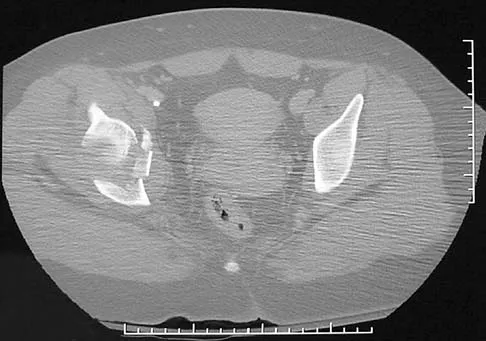
Figure 2a shows the radiograph of a 48-year-old man who was involved in a motorcycle accident. A CT scan is shown in Figure 2b. The patient underwent pelvic angiography for persistent hypotension despite resuscitation. What vessel is most likely to be injured?
Explanation
Question 5
A 46-year-old man fell 20 feet and sustained the injury shown in Figure 3. The injury is closed; however, the soft tissues are swollen and ecchymotic with blisters. The most appropriate initial management should consist of
Explanation
Question 6
A 13-year-old boy hyperextends his knee while playing basketball and reports a pop that is followed by a rapid effusion. A lateral radiograph is shown in Figure 4. Initial management consists of attempted reduction with extension, with no change in position of the fragment. What is the next most appropriate step in management?
Explanation
Question 7
A collegiate golfer sustains a hook of the hamate fracture. After 12 weeks of splinting and therapy, the hand is still symptomatic. What is the most appropriate management to allow return to competitive activity?
Explanation
Question 8
In an acute closed boutonniere injury, what is the most appropriate splinting technique for the proximal interphalangeal joint?
Explanation
Question 9
A 20-year-old man sustained a closed tibial fracture and is treated with a reamed intramedullary nail. What is the most common complication associated with this treatment?
Explanation
Question 10
An 8-year-old boy sustained an isolated distal radial fracture that was reduced and immobilized with 10 degrees of residual dorsal tilt. What is the next step in management?
Explanation
Question 11
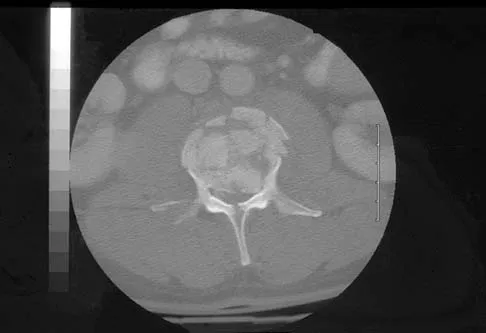
A 46-year-old man has incomplete paraplegia after being involved in a motor vehicle accident. The CT scan shown in Figure 5 reveals marked canal compromise. What is the most appropriate management to improve neurologic status?
Explanation
Question 12
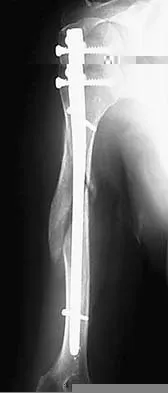
What is the most likely complication following treatment of the humeral shaft fracture shown in Figure 6?
Explanation
Question 13
A 4-year-old girl sustains an isolated spiral femoral fracture after falling from her tricycle. Management should consist of
Explanation
Question 14
A 16-year-old girl sustained the injury shown in Figure 7a. CT scans are shown in Figures 7b through 7d. The results of treatment of this injury have been shown to most correlate with which of the following factors?
Explanation
Question 15
An 18-month-old child sustains a crush amputation of the tip of the index finger. Bone is exposed, but the nail is intact. Management should consist of
Explanation
Question 16
An otherwise healthy 25-year-old man sustained a wound with a 1-cm by 1.5-cm soft-tissue loss over the volar aspect of the middle phalanx of his middle finger. After appropriate debridement and irrigation, the flexor digitorum profundus tendon and neurovascular bundles are visible. The wound should be treated with a
Explanation
Question 17
An active 49-year-old woman who sustained a diaphyseal fracture of the clavicle 8 months ago now reports persistent shoulder pain with daily activities. An AP radiograph is shown in Figure 8. Management should consist of
Explanation
Question 18
Examination of a 25-year-old man who was injured in a motor vehicle accident reveals a fracture-dislocation of C5-6 with a Frankel B spinal cord injury. He also has a closed right femoral shaft fracture and a grade II open ipsilateral midshaft tibial fracture. Assessment of his vital signs reveals a pulse rate of 45/min, a blood pressure of 80/45 mm Hg, and respirations of 25/min. A general surgeon has assessed the abdomen, and a peritoneal lavage is negative. His clinical presentation is most consistent with what type of shock?
Explanation
Question 19
A 32-year-old woman sustained an injury to her left upper extremity in a motor vehicle accident. Examination reveals a 2-cm wound in the mid portion of the dorsal surface of the upper arm and deformities at the elbow and forearm; there are no other injuries. Her vital signs are stable, and she has a base deficit of minus 1 and a lactate level of less than 2. Radiographs are shown in Figures 9a and 9b. In addition to urgent debridement of the humeral shaft fracture, management should include
Explanation
Question 20
A patient sustained the injuries shown in the radiographs and clinical photograph seen in Figures 10a through 10c. The neurovascular examination is normal. The first step in emergent management of the extremity injuries should consist of
Explanation
Question 21
Figure 11 shows the radiograph of a 3-year-old girl who sustained a proximal radius injury. Appropriate initial management should include
Explanation
Question 22
Figures 12a and 12b show the radiographs of a 56-year-old man with diabetes mellitus who has had left foot swelling with no pain for the past several weeks. He denies any history of trauma. Examination reveals warmth, moderate swelling, no tenderness, and mild pes planus with standing. Pulses are palpable, and his sensory examination is grossly intact to light touch. Standing radiographs are shown in Figures 12c and 12d. What is the most likely diagnosis?
Explanation
Question 23
A 25-year-old student sustains the injury shown in Figures 13a through 13c after falling off a curb. Initial management should consist of
Explanation
Question 24
What structure is most often injured in a volar proximal interphalangeal joint dislocation?
Explanation
Question 25
What patient factor is predictive of better outcomes for surgical management of a displaced calcaneal fracture compared to nonsurgical management?
Explanation
Question 26
A 25-year-old male is brought to the ED after a motorcycle collision. He is hemodynamically unstable. A pelvic radiograph shows an APC-III pelvic ring injury. Where should a pelvic binder be applied to most effectively reduce the pelvic volume?
Explanation
Question 27
A 42-year-old construction worker sustains a Gustilo-Anderson Type IIIB open tibia fracture. Which of the following factors has been shown to be the most critical in reducing the risk of subsequent infection?
Explanation
Question 28
A 30-year-old male presents with a closed tibial shaft fracture. He complains of severe pain out of proportion to the injury. Which of the following intracompartmental pressure measurements is an absolute indication for fasciotomy?
Explanation
Question 29
A 22-year-old football player sustains an ultra-low velocity knee dislocation that spontaneously reduces. His pedal pulses are palpable, but his Ankle-Brachial Index (ABI) is 0.8. What is the most appropriate next step in management?
Explanation
Question 30
A 45-year-old polytrauma patient presents with bilateral femoral shaft fractures, severe closed head injury, and pulmonary contusions. Which of the following laboratory values is a specific indication for damage control orthopedics (external fixation) rather than early total care?
Explanation
Question 31
A 19-year-old male with an isolated closed femoral shaft fracture develops confusion, a respiratory rate of 30 breaths/min, and a petechial rash over his axillae 24 hours after injury. What is the most appropriate initial management?
Explanation
Question 32
A 28-year-old male sustains a low-velocity gunshot wound to the thigh resulting in a comminuted femoral shaft fracture. The entrance and exit wounds are 1 cm clean punctures. He has intact distal pulses and no neurologic deficits. What is the most appropriate definitive management?
Explanation
Question 33
A 32-year-old female sustains a displaced, completely off-ended, transcervical femoral neck fracture (Pauwels type III). What is the preferred surgical treatment and timing to minimize the risk of avascular necrosis (AVN)?
Explanation
Question 34
A 35-year-old male sustains a closed spiral fracture of the distal third of the humerus (Holstein-Lewis fracture). On initial examination in the ED, he has a dense radial nerve palsy. What is the most appropriate initial management?
Explanation
Question 35
A 24-year-old cyclist falls onto his shoulder, sustaining a midshaft clavicle fracture. Which of the following is considered an absolute indication for operative fixation?
Explanation
Question 36
A 45-year-old man presents with a hemodynamically unstable APC-III pelvic ring injury. A pelvic binder is applied in the trauma bay. To optimally reduce pelvic volume and stabilize the fracture, the binder should be centered over which of the following anatomic landmarks?
Explanation
Question 37
A 25-year-old polytrauma patient sustains bilateral closed femoral shaft fractures and pulmonary contusions. His initial lactate is 5.2 mmol/L, pH is 7.21, and base excess is -8. What is the most appropriate initial management of his bilateral femur fractures?
Explanation
Question 38
A 30-year-old man sustains a Gustilo-Anderson Type IIIA open tibial shaft fracture following a motorcycle collision. What is the standard antibiotic prophylaxis recommended?
Explanation
Question 39
A 28-year-old man presents with a closed midshaft tibia fracture. Four hours post-admission, he complains of severe leg pain out of proportion to the injury, exacerbated by passive toe stretch. His diastolic blood pressure is 70 mm Hg. What intracompartmental pressure reading strongly indicates the need for an emergent four-compartment fasciotomy?
Explanation
Question 40
A 60-year-old woman with a history of severe osteoporosis sustains a comminuted distal femur fracture (OTA/AO 33-C2). She has a well-fixed total knee arthroplasty in place. The fracture involves the bone immediately proximal to the prosthesis. What is the preferred surgical treatment?
Explanation
Question 41
A 22-year-old man sustains a low-velocity gunshot wound to the thigh resulting in a closed, midshaft spiral femoral fracture. Neurovascular exam is normal. What is the most appropriate management?
Explanation
Question 42
A 35-year-old woman is evaluated 6 weeks after sustaining a talar neck fracture treated with open reduction and internal fixation. A mortise radiograph of the ankle demonstrates a subchondral radiolucent band in the talar dome (Hawkins sign). What does this radiographic finding indicate?
Explanation
Question 43
A 40-year-old man falls from a height and sustains a displaced, intra-articular calcaneus fracture. Which of the following surgical approaches is most commonly associated with wound healing complications and requires careful handling of the sural nerve?
Explanation
Question 44
In the staged management of severe pilon fractures (OTA/AO 43-C), what is the primary rationale for initial application of a spanning external fixator and fibular fixation, followed by delayed definitive tibial articular reconstruction?
Explanation
Question 45
A 42-year-old woman is struck by a motor vehicle and sustains a closed Schatzker VI bicondylar tibial plateau fracture. Severe soft tissue swelling and fracture blisters are present. What is the most appropriate initial management?
Explanation
Question 46
A 55-year-old man sustains a severe crush injury to his leg resulting in a mangled extremity. The surgeon is calculating the Mangled Extremity Severity Score (MESS) to help guide the decision between amputation and salvage. Which of the following is NOT a component of the MESS?
Explanation
Question 47
A 26-year-old man sustains an anterior shoulder dislocation. After successful closed reduction, he is noted to have weakness with shoulder abduction and decreased sensation over the lateral aspect of the deltoid. Which nerve is most likely injured?
Explanation
Question 48
A 50-year-old polytrauma patient develops petechial hemorrhages over the axillae and chest, progressive hypoxemia, and confusion 36 hours after sustaining bilateral femoral shaft fractures. What is the most likely diagnosis?
Explanation
Question 49
A 32-year-old woman sustains a closed, isolated midshaft humerus fracture. She presents with a wrist drop and inability to extend her metacarpophalangeal joints. What is the most appropriate initial management of her nerve injury?
Explanation
Question 50
A 75-year-old man with a history of falls presents with a displaced, intracapsular femoral neck fracture. He is previously an independent community ambulator with minimal comorbidities. What is the most appropriate surgical treatment?
Explanation
Question 51
Where is the optimal anatomical location to place a pelvic binder in a hemodynamically unstable patient with an anteroposterior compression pelvic ring injury?
Explanation
Question 52
A 25-year-old farmer sustains an open tibial shaft fracture with massive soft tissue stripping and heavy soil contamination. In addition to a first-generation cephalosporin and an aminoglycoside, which of the following antibiotics should be added for appropriate prophylaxis?
Explanation
Question 53
A 32-year-old man presents with a closed diaphyseal tibia fracture and is intubated in the ICU. Intracompartmental pressure measurements show a diastolic blood pressure of 70 mm Hg and an anterior compartment pressure of 45 mm Hg. What is the most appropriate next step in management?
Explanation
Question 54
A 24-year-old man sustains a multiligamentous knee injury with a suspected spontaneous reduction of a knee dislocation. Pulses are palpable but asymmetric, and his ankle-brachial index (ABI) is measured at 0.8. What is the next most appropriate step in management?
Explanation
Question 55
Which of the following physiologic parameters is an absolute indication for 'Damage Control Orthopedics' (provisional external fixation) rather than Early Total Care for a displaced femoral shaft fracture?
Explanation
Question 56
A 28-year-old man with bilateral femur fractures develops confusion, a petechial rash on the axilla, and hypoxemia 48 hours after injury. Which of the following is the most effective management strategy for the underlying syndrome?
Explanation
Question 57
A 40-year-old man presents with a boggy, fluctuant mass over his greater trochanter following a high-speed motorcycle collision. Radiographs show no underlying fracture. What is the pathophysiology of this clinical finding?
Explanation
Question 58
Which mechanism of injury is classically associated with a traumatic spondylolisthesis of the axis (Hangman's fracture)?
Explanation
Question 59
A 30-year-old man falls from a height and sustains a Hawkins Type III fracture of the talar neck. What is the approximate risk of developing avascular necrosis (AVN) of the talar body?
Explanation
Question 60
A 25-year-old man sustains a completely displaced, vertically oriented femoral neck fracture (Pauwels Type III). What is the optimal surgical management to minimize the risk of fixation failure?
Explanation
Question 61
A 65-year-old woman sustains a volar-displaced distal radius fracture. Which nerve is at greatest risk of iatrogenic injury during a standard Henry (volar) surgical approach for plate osteosynthesis?
Explanation
Question 62
Blood supply to the scaphoid primarily enters through the dorsal ridge and supplies the proximal pole in a retrograde fashion. Which artery provides this dominant intraosseous supply?
Explanation
Question 63
Which of the following scenarios is considered an absolute indication for operative fixation of an acute midshaft clavicle fracture?
Explanation
Question 64
A 22-year-old man sustains a low-velocity civilian gunshot wound to the thigh, resulting in a comminuted midshaft femur fracture. The 1 cm wounds are clean, with no active bleeding or neurovascular deficit. Which of the following is the most appropriate initial management?
Explanation
Question 65
A patient with a mechanically unstable pelvic ring injury remains hemodynamically unstable despite a pelvic binder and massive transfusion protocol. A FAST exam is negative. What is the most appropriate next step in management?
Explanation
Question 66
A 45-year-old unrestrained driver is involved in a head-on collision and sustains a traumatic posterior hip dislocation. Which of the following physical examination findings is most likely present in the affected lower extremity?
Explanation
Question 67
A 50-year-old man sustains a severe closed tibial pilon fracture with significant fracture blisters and profound soft tissue swelling. What is the preferred initial management strategy?
Explanation
Question 68
An 80-year-old woman sustains a Vancouver B2 periprosthetic femur fracture around her cementless total hip arthroplasty stem. Radiographs reveal a loose stem with adequate proximal bone stock. What is the most appropriate surgical treatment?
Explanation
Question 69
Which of the following statements best describes the fundamental pathophysiologic mechanism of acute compartment syndrome?
Explanation
Question 70
A 25-year-old athlete sustains a hyperplantarflexion injury to his midfoot. Weight-bearing radiographs demonstrate a 3 mm diastasis between the base of the first and second metatarsals. What is the primary anatomic structure disrupted in this injury?
Explanation
Question 71
A 42-year-old male arrives hypotensive after a motorcycle crash. Pelvic radiograph shows an APC-III pelvic ring injury. After ATLS protocol, he remains hemodynamically unstable despite initial fluid resuscitation. What is the most appropriate next step in orthopedic management?
Explanation
Question 72
A 28-year-old male sustains a Gustilo-Anderson Type IIIA open tibia fracture. What is the most critical factor in reducing the risk of deep infection in this patient?
Explanation
Question 73
A 30-year-old male presents with a severely comminuted closed tibial shaft fracture and pain out of proportion to his injury. His diastolic blood pressure is 75 mmHg. Intracompartmental pressure testing yields: Anterior 40 mmHg, Lateral 35 mmHg, Superficial posterior 20 mmHg, Deep posterior 45 mmHg. What is the most appropriate management?
Explanation
Question 74
A 24-year-old male sustains a vertically oriented (Pauwels type III) displaced femoral neck fracture. To maximize biomechanical stability and minimize shear forces, what is the preferred fixation construct?
Explanation
Question 75
A 45-year-old construction worker falls from a height, sustaining a closed, highly comminuted distal tibia (Pilon) fracture with significant soft tissue swelling and fracture blisters. What is the most appropriate initial management?
Explanation
Question 76
A 32-year-old female sustains a Hawkins Type III talar neck fracture. Which of the following statements regarding her risk of avascular necrosis (AVN) and the presence of a positive Hawkins sign is correct?
Explanation
Question 77
A 25-year-old male sustains a high-energy knee dislocation. After reduction, his foot is warm and pink, but pedal pulses are asymmetric. The Ankle-Brachial Index (ABI) is measured at 0.85. What is the most appropriate next step?
Explanation
Question 78
A 35-year-old polytrauma patient presents with closed bilateral femur fractures, multiple rib fractures, and pulmonary contusions. His serum lactate is 4.5 mmol/L, pH is 7.20, and base excess is -8. What is the most appropriate initial management of his femur fractures?
Explanation
Question 79
A 40-year-old male is scheduled for open reduction and internal fixation of a displaced intra-articular calcaneus fracture via an extensile lateral approach. Which of the following structures is most at risk during the initial surgical dissection of the full-thickness flap?
Explanation
Question 80
A 22-year-old cyclist falls onto his left shoulder, sustaining a midshaft clavicle fracture. Which of the following is an absolute indication for operative fixation of this injury?
Explanation
Question 81
A 50-year-old male presents with a posterior hip dislocation and an associated posterior wall acetabular fracture following an MVC. Post-reduction CT reveals a posterior wall fragment comprising 45 percent of the posterior articular surface. The joint is congruent. What is the definitive management?
Explanation
Question 82
A 29-year-old male sustains a low-velocity gunshot wound to the right thigh, resulting in a minimally displaced diaphyseal femur fracture. The entry and exit wounds are small and clean. Neurovascular exam is normal. What is the most appropriate initial management?
Explanation
Question 83
A 65-year-old female sustains a significantly displaced distal radius fracture. Upon presentation, she has profound numbness in her thumb, index, and long fingers. The fracture is reduced and splinted, but her neurologic symptoms progressively worsen over the next 2 hours. What is the most appropriate next step?
Explanation
Question 84
A 38-year-old male is involved in a high-speed collision. Imaging reveals a fracture through the bilateral pars interarticularis of C2 with 4 mm of anterior translation of C2 on C3 and no severe angulation (Levine-Edwards Type II). What is the preferred initial management?
Explanation
Question 85
A 25-year-old man sustains a displaced, basicervical femoral neck fracture in a motor vehicle collision. What is the most appropriate definitive management to provide biomechanical stability and minimize the risk of nonunion?
Explanation
Question 86
A 42-year-old male is involved in a motorcycle collision and sustains a severe crush injury to his right lower leg. Clinical exam shows a tense, swollen leg with severe pain on passive stretch of the toes. Which of the following is the most accurate parameter for diagnosing acute compartment syndrome?
Explanation
Question 87
A 30-year-old trauma patient arrives with an anterior-posterior compression (APC-III) pelvic ring injury and is hemodynamically unstable. Where is the most biomechanically effective anatomical location to apply a noninvasive pelvic circumferential compression device (pelvic binder)?
Explanation
Question 88
A 22-year-old male sustains a high-energy knee dislocation. Following emergent closed reduction, his foot is well-perfused, but his Ankle-Brachial Index (ABI) is measured at 0.8. What is the next most appropriate step in management?
Explanation
Question 89
A 45-year-old woman who has been taking alendronate for 8 years presents with a prodrome of lateral thigh pain followed by a low-energy displaced subtrochanteric femur fracture. Her radiograph shows lateral cortical thickening and a transverse fracture with a medial spike. What is the most appropriate surgical management?
Explanation
Question 90
A 38-year-old male falls from a roof and sustains a closed, displaced intra-articular calcaneus fracture (Sanders type II). Open reduction and internal fixation via an extensile lateral approach is planned. To minimize severe wound complications, what is the optimal timing for surgery?
Explanation
Question 91
A 28-year-old male suffers a closed, mid-shaft humeral fracture. Neurological examination reveals a wrist drop and inability to extend the metacarpophalangeal joints. The fracture is treated with a functional brace. At 12 weeks, there is no clinical or electromyographic (EMG) evidence of radial nerve recovery. What is the next best step?
Explanation
Question 92
A 34-year-old woman presents to the ER with an open tibia fracture after a high-speed motor vehicle collision. The wound is 12 cm long with significant periosteal stripping. According to evidence-based guidelines, when should systemic antibiotics be administered?
Explanation
Question 93
A 55-year-old female presents with a displaced fracture of the distal radius treated with a volar locking plate. Six months postoperatively, she suddenly loses the ability to actively flex the interphalangeal joint of her thumb. What is the most likely cause of this complication?
Explanation
Question 94
A 40-year-old polytrauma patient with a severe traumatic brain injury (GCS 6), bilateral pulmonary contusions, and a closed right femoral shaft fracture is brought to the trauma bay. His lactate is 4.5 mmol/L and base deficit is -8. What is the most appropriate initial management of his femur fracture?
Explanation
Question 95
A 30-year-old man sustains a Hawkins Type III talar neck fracture. What does this classification indicate regarding the specific fracture pattern and its associated risk of avascular necrosis (AVN)?
Explanation
Question 96
During the preparation for intramedullary nailing of a diaphyseal femur fracture, the surgeon notices a coronal plane fracture of the lateral femoral condyle extending into the knee joint on the lateral radiograph. This specific articular injury is commonly referred to as a:
Explanation
Question 97
A 65-year-old male presents with severe right shoulder pain after experiencing a grand mal seizure. Radiographs reveal a posterior shoulder dislocation on the axillary view. What associated bony defect is most likely present on the anteromedial aspect of the humeral head?
Explanation
Question 98
A 25-year-old male sustains a low-velocity civilian gunshot wound to the midshaft femur, resulting in a comminuted fracture. The bullet passed cleanly through the thigh. His neurovascular exam is normal, and the wounds are small without gross contamination. What is the most appropriate management?
Explanation
Question 99
A 45-year-old male laborer falls from a height and sustains a completely displaced, closed transverse fracture of the acetabulum with a large posterior wall component. Which surgical approach provides the most direct access to visualize and reduce the posterior wall and posterior column?
Explanation
None
