العربية
Part of the Master Guide

Orthopedic Surgery Board Prep: Set 403 (100 MCQs on Fractures & Casting)

Orthopedic Trauma 2026 MCQs: Board Review Questions & Answers (Part 1)

27 Apr 2026 62 min read 100 Views
Figure for Trauma 2000 MCQs - Part 1 - Question 1

Key Takeaway

Discover the latest medical recommendations for Orthopedic Trauma 2026 MCQs: Board Review Questions & Answers (Part 1). Top-rated Orthopedic Trauma 2026 MCQs bank. Practice with clinical case questions, orthopedic surgery board review, and evidence-based answers updated for 2026.

Orthopedic Trauma 2026 MCQs: Board Review Questions & Answers (Part 1)

Comprehensive 100-Question Exam


00:00

Start Quiz

Question 1

A 21-year-old woman who was wearing a seat belt sustained an injury of the thoracolumbar junction in a motor vehicle accident. The AP radiograph shows widening between the L1 and L2 spinous processes, and the CT scan shows the empty facet sign at this level. The initial evaluation should include


Explanation

The patient has a flexion-distraction injury of the thoracolumbar spine that is often associated with wearing a seat belt. The fracture has a high risk of associated intra-abdominal injury; therefore, the initial evaluation should include a CT of the abdomen. The most common visceral injury is to the bowel. Smith WS, Kaufer H: Patterns and mechanisms of lumbar injuries associated with lap seat belts. J Bone Joint Surg Am 1969;51:239-254.

Question 2

A 20-year-old man sustains the injury shown in Figures 1a and 1b in a motorcycle accident. In addition to a prompt closed reduction, his outcome might be optimized by


Explanation

1b Lateral subtalar dislocations, which are less common than medial subtalar dislocations, are high-energy injuries that are frequently associated with small osteochondral fractures. It is generally recommended that large fragments be internally fixed, and small fragments entrapped within the joint be excised. Although arthrosis frequently occurs after this injury and is the most common long-term complication, primary subtalar arthrodesis is not indicated. A talar neck fracture is not evident on the radiographs, and lateral subtalar dislocation usually does not lead to instability.

Question 3

Figure 2 shows the lateral radiograph of an 8-year-old boy who sustained an acute injury to the elbow after falling down the stairs. Management should consist of


Explanation

The patient has a flexion-type olecranon fracture, and the integrity of the extensor mechanism is disrupted. With this degree of displacement, closed reduction and extension casting would not be adequate. The strongest construct is an oblique screw across the fracture site, with a tension band. Healing is rapid in this age group; therefore one of the heavy absorbable sutures can be used as the tension band. Two parallel pins with the stainless steel tension band wire (AO technique) can be used but requires wire dissection for removal. Once the fracture is healed, the single screw can be removed easily with only a small incision. The presence of the screw, across the apophysis, has not been shown to produce any significant growth disturbance. Use of a large intramedullary screw would not be advisable because of the small size of the proximal fragment. Murphy DF, Greene WB, Gilbert JA, Dameron TB Jr: Displaced olecranon fractures in adults: Biomechanical analysis of fixation methods. Clin Orthop 1987;224:210-214.

Question 4

A 28-year-old man sustains the closed injury shown in Figures 3a through 3c after falling 8 feet while rock climbing. Management should consist of


Explanation

3b 3c The radiographs show a comminuted talar body fracture. The goal of treatment is to minimize the risks of posttraumatic arthrosis of the ankle and subtalar joint and to maintain vascularity. Open reduction and internal fixation with an attempt at anatomic reduction will lead to improved outcomes. Attempting to repair this fracture via an arthrotomy only is extremely difficult, and the addition of a medial malleolar osteotomy is warranted. A limited anterior lateral arthrotomy with minimal soft-tissue stripping may assist with fixation of anterior-lateral and lateral fragments and allow better assessment of reduction of the major fracture line. Nonsurgical care would lead to inadequate reduction and increased risk of both ankle and hindfoot arthrosis. Talectomy and primary ankle and hindfoot arthrodesis should not be performed as primary surgical reconstructive options in this closed injury pattern. Sanders R: Fractures and fracture-dislocations of the talus, in Coughlin MJ, Mann RA (eds): Surgery of the Foot and Ankle, ed 7. St Louis, MO, Mosby, 1999, pp 1465-1518.

Question 5

Which of the following types of displaced posterior pelvic disruptions must undergo anatomic reduction and internal fixation to ensure the best clinical outcome?


Explanation

Although all of the above displaced injuries require reduction, the sacroiliac joint dislocation is a ligamentous injury. Without fixation, healing is unlikely and the result will be a painful dislocation. Both Holdsworth and Tile showed that the sacroiliac joint must be reduced anatomically and stabilized. The injuries through bone will unite fairly rapidly and, if reduced and stabilized with traction or external fixation, will generally result in an acceptable outcome unless modified by other associated problems such as neurologic injury. Tile M: Fractures of the Pelvis and the Acetabulum. Baltimore, MD, Williams and Wilkins, 1995. Holdsworth F W: Dislocation and fracture dislocation of the pelvis. J Bone Joint Surg Br 1948;30:461-465.

Question 6

A 10-year-old boy has a painful, swollen knee after falling off his bicycle. Examination reveals that the knee is held in 45 degrees of flexion, and any attempt to actively or passively extend the knee produces pain and muscle spasms. A lateral radiograph is shown in Figure 4. What is the most likely diagnosis?


Explanation

This is a typical patellar sleeve fracture. The patellar tendon avulses a portion of the distal bony patella, along with the retinaculum and articular cartilage from the inferior pole of the patella. It is common in children between ages 8 and 10 years. Anatomic reduction and repair of the extensor mechanism are mandatory to reestablish full knee extension. Houghton GR, Ackroyd CE: Sleeve fractures of the patella in children: A report of three cases. J Bone Joint Surg Br 1979;61:165-168.

Question 7

A 12-year-old girl sustains an acute injury to the right elbow in a fall. An AP radiograph is shown in Figure 5. Nonsurgical management will most likely result in


Explanation

The patient has a significantly displaced medial epicondyle fracture. The only absolute indication for surgical treatment is irreducible incarceration in the joint. Nonsurgical management usually results in a painless nonunion with good elbow function and little elbow instability. Prolonged immobilization should be avoided to prevent stiffness. Tardy ulnar nerve palsy and cubitus varus are not complications of medial epicondyle fractures. Chamber HG, Wilkins KE: Part IV: Apophyseal injuries of the distal humerus, in Rockwood CA Jr, Wilkins KE, Beaty JH (eds): Fractures in Children, ed 4. Philadelphia, PA, Lippincott-Raven, 1996, vol 3, pp 801-812.

Question 8

Which of the following factors is considered most important when assessing an ankle fracture for surgical treatment?


Explanation

Although all of these factors may influence the decision to perform surgery, the most important is the position of the talus in the mortise. The goal of treatment of ankle fractures is to maintain the talus centered in the mortise. If it is in this position, the other factors do not enter into the decision to intervene surgically. Stover MD, Kellam JF: Articular fractures: Principles, in Ruedi TP, Murphy WM (eds): AO Principles of Fracture Management. Stuttgart, Thieme, 2000, pp 105-119. Hahn DM, Colton CL: Malleolar fractures, in Ruedi TP, Murphy WM (eds): AO Principles of Fracture Management. Stuttgart, Thieme, 2000, pp 559-581.

Question 9

A 35-year-old woman who underwent open reduction and internal fixation of a calcaneal fracture 14 months ago reports pain that has failed to respond to nonsurgical management. Examination reveals limited painful subtalar motion but no hindfoot deformity. A lateral radiograph is shown in Figure 6. Surgical reconstruction is best accomplished with


Explanation

The patient has posttraumatic subtalar joint arthrosis that developed following a calcaneal fracture. Because there is no hindfoot deformity, in situ subtalar joint arthrodesis is the treatment of choice. Calcaneal osteotomy or distraction bone block arthrodesis is beneficial in patients with severe talar dorsiflexion or malunion of the calcaneal body. Triple arthrodesis is not warranted without changes at the transverse tarsal joint, and typically even with injury into the calcaneocuboid joint, this joint is often asymptomatic. Pantalar arthrodesis is not indicated as the pathology is occurring at the subtalar joint and not in the ankle joint. Sanders R: Fractures and fracture-dislocations of the calcaneus, in Coughlin MJ, Mann RA (eds): Surgery of the Foot and Ankle, ed 7. St Louis, MO, Mosby, 1999, pp 1422-1464. Juliano TJ, Myerson MS: Fractures of the hindfoot, in Myerson MS (ed): Foot and Ankle Disorders. Philadelphia, PA, WB Saunders, 2000, pp 1297-1340.

Question 10

Which of following side effects is most commonly seen in a pediatric patient undergoing ketamine anesthesia?


Explanation

The most common deleterious side effect of ketamine is increased salivation and tracheobronchial secretions. For this reason, an antisialagogue agent should be given. While lack of sufficient respiratory depression is one of the major advantages of using ketamine, apnea can occur if the drug is given too rapidly intravenously. Emergence phenomena is common in adults but relatively rare in children. Furman JR: Sedation and analgesia in the child with a fracture, in Rockwood CA Jr, Wilkins KE, Beaty JH (eds): Fractures in Children, ed 4. Philadelphia, PA, Lippincott-Raven, 1996, vol 3, pp 62-63. White PF, Way WL, Trevor AJ: Ketamine: Its pharmacology and therapeutic uses. Anesthesiology 1982;56:119-136.

Question 11

Figures 7a and 7b show the radiographs of a 51-year-old woman who injured her left leg after falling off a stepladder. Surgical reconstruction is performed with a compression screw and side plate; the postoperative radiograph is shown in Figure 7c. Following gradual progression of weight bearing, she reports that she slipped again and placed full weight on the extremity. She now notes a new onset of increased pain in her left thigh and hip region. Follow-up radiographs are shown in Figures 7d and 7e. Reconstruction should consist of


Explanation

7b 7c 7d 7e The initial fracture was an unstable reverse oblique intertrochanteric fracture with subtrochanteric extension. Initial fixation with a high-angled screw and side plate construct may not provide stability as well as a 95 degree fixed-angle device or a intramedullary hip screw device. The follow-up radiographs show loss of fixation and further propagation of the fracture distally. Reconstruction would best be accomplished with hardware removal and conversion to a long intramedullary nail with femoral head fixation or a 95 degree angled plate and screw device. Conversion to a longer plate does not improve the biomechanical situation at the primary fracture site. In situ bone grafting would not provide any additional stability and would not correct the deformity. The proximal femoral fracture is not amenable to retrograde nailing. Cerclage wiring will not sufficiently enhance stability and is not indicated. Bridle SH, Patel AD, Bircher M, Calvert PT: Fixation of intertrochanteric fractures of the femur: A randomized prospective comparison of a gamma nail and dynamic hip screw. J Bone Joint Surg Br 1991;73:330-334. DeLee JC: Fractures and dislocations of the hip, in Rockwood CA Jr, Green DP, Bucholz RW, Heckman JD (eds): Rockwood and Green's Fractures in Adults, ed 4. Philadelphia, PA, Lippincott-Raven, 1996, pp 1659-1825. Haidukewych GJ, Israel TA, Berry DJ: Reverse obliquity fractures of the intertrochanteric region of the femur. J Bone Joint Surg Am 2001;83:643-650.

Question 12

An intoxicated 68-year-old man fell at home. Examination reveals abrasions on his forehead, 2/5 weakness of his hand intrinsics and finger flexors, and 4/5 strength of the deltoid, biceps, and triceps bilaterally. Lower extremity motor function is 5/5. Sensory examination to pain and temperature is diminished in his hands but intact in his lower extremities. Deep tendon reflexes are depressed in all four extremities, but perianal sensation and rectal tone are intact. Foley catheterization yields 700 mL of urine. Radiographs of the cervical spine reveal multilevel spondylosis without fracture or subluxation. An MRI scan reveals high-intensity signal change within the cord substance at C5. What is the most likely diagnosis?


Explanation

Central cord syndrome is characterized by greater neurologic involvement of the upper extremities than the lower extremities. This is typically seen in older patients with cervical spondylosis without associated bony injury or joint subluxation. The prognosis for recovery is fair. Patients with Brown-Sequard syndrome have an ipsilateral motor deficit and contralateral loss of pain and temperature. Prognosis for recovery depends on the mechanism of injury, which is often of a penetrating nature. Anterior cord syndrome results from anterior compression such as occurs with a burst or teardrop fracture of the vertebral body; patients have bilateral motor loss, pain, and temperature loss with preservation of proprioception and vibratory sensation (posterior column function). The prognosis for recovery is generally poor. Posterior cord syndrome is rare and is associated with loss of posterior column function (proprioception and vibration). Northrup BE: Evaluation and early treatment of acute injuries to the spine and spinal cord, in Clark CR (ed): The Cervical Spine, ed 3. Philadelphia, PA, Lippincott-Raven, 1998, pp 541-549.

Question 13

A 23-year-old woman sustains an injury to her right hand after falling off her snowboard. Examination reveals that she has difficulty moving her fingers. A radiograph and a clinical photograph are shown in Figures 8a and Figure 8b. Management should consist of


Explanation

8b The radiograph reveals oblique fractures of the third and fourth metacarpals. The rotational component of the fracture displacement is well visualized on the clinical photograph, which shows scissoring of the middle finger over the ring finger. The fracture obliquity results in rotational deformity that cannot be adequately maintained and held by closed treatment. The treatment of choice is open reduction and internal fixation. Stern PJ: Fractures of the metacarpals and phalanges, in Green DP, Hotchkiss RN, Pederson WC (eds): Green's Operative Hand Surgery, ed 4. Philadelphia, PA, 1999, pp 711-771. Freeland AE, Benoist LA, Melancon KP: Parallel miniature screw fixation of spiral and long oblique hand phalangeal fractures. Orthopedics 1994;17:199-200.

Question 14

A 32-year-old man sustained an L1 burst fracture with 90% canal compromise, intact posterior elements, and kyphosis of 25% at the L1 level. He has an incomplete neurologic injury. Definitive management should consist of


Explanation

With an incomplete injury, the best chance for recovery occurs when the canal is cleared and the neural structures are decompressed. Anterior decompression, vertebral body reconstruction, and anterior stabilization have been shown to be highly effective in the treatment of burst-type injuries. Laminectomy alone is contraindicated because it increases the instability. Short segment posterior fixation has a high rate of failure in this type of injury at this level. Kaneda K, Abumi K: Burst fractures with neurologic deficits of the thoracolumbar spine. J Bone Joint Surg Am 1997;79:69-83.

Question 15

The management of a complex multifragmentary diaphyseal fracture of either the tibia or femur has changed during the last decade. Which of the following principles of treatment is now considered less important?


Explanation

Although the original concept of internal fixation was one of anatomic reduction and stable fixation, over the past 10 to 15 years there has been a change based on the advent of intramedullary nailing and bridge plating. It is now appreciated that in a multifragmentary diaphyseal fracture, particularly of the lower extremity, the achievement of axis alignment (mechanical and anatomic axis) is all that is required. Healing will occur by callus. Relatively stable fixation is achieved through intramedullary nailing or bridge plating, providing adequate pain relief for functional aftercare. Perren SM, Claes L: Biology and mechanics of fracture management, in Ruedi TP, Murphy WM (eds): AO Principles of Fracture Management. Stuttgart, Thieme, 2000, pp 7-32. deBoer P: Diaphyseal fractures: Principles, in Ruedi TP, Murphy WM (eds): AO Principles of Fracture Management. Stuttgart, Thieme, 2000, pp 93-104.

Question 16

A 68-year-old woman who sustained a closed distal tibia fracture 2 years ago was initially treated with an external fixator across the ankle for 12 weeks, followed by intramedullary nailing of the fibula and lag screw fixation of the tibia. She continued to report persistent pain so she was treated with a brace and a bone stimulator. She now reports pain in her ankle. Examination reveals ankle range of motion of 8 degrees of dorsiflexion to 25 degrees of plantar flexion. She is neurovascularly intact. Current radiographs are shown in Figures 9a through 9c. What is the next most appropriate step in management?


Explanation

9b 9c The patient has a nonunion of the distal fifth of the tibia. The nonunion appears to be oligotrophic, somewhere between atrophic and hypertrophic. Management requires stabilization and stimulation of the local biology, which can be accomplished with open reduction and internal fixation with bone grafting. Bracing or casting does not provide enough stability. Ultrasound bone stimulation has been shown to speed fresh fracture repair but is not indicated in nonunions. The distal segment is too short for intramedullary nailing. A fibular osteotomy alone would increase instability and, even with prolonged casting, would be unlikely to lead to successful repair. Carpenter CA, Jupiter JB: Blade plate reconstruction of metaphyseal nonunion of the tibia. Clin Orthop 1996;332:23-28. Lonner JH, Siliski JM, Jupiter JB, Lhowe DW: Posttraumatic nonunion of the proximal tibial metaphysis. Am J Orthop 1999;28:523-528. Stevenson S: Enhancement of fracture healing with autogenous and allogeneic bone grafts. Clin Orthop 1998;355:S239-S246.

Question 17

A patient has a displaced midshaft transverse fracture of the humerus and is neurologically intact. Following closed reduction and application of a coaptation splint, the patient cannot dorsiflex the wrist or the fingers at the metacarpophalangeal joints of the hand. What is the next most appropriate step in management?


Explanation

The answer to this question is controversial. All of the standard textbooks state that development of a radial nerve palsy during initial fracture management may represent a laceration or injury of the nerve by bone fragments at the time of manipulation; therefore, surgery should be considered. However, it appears that there is no scientific basis for this decision. A review of the available literature shows that the results were the same for patients who were observed as for those who underwent radial nerve exploration. The indications for surgical exploration include palsies associated with open fractures, irreducible closed fractures, and vascular injuries. The only other relative indication for surgical exploration is following manipulation of a Holstein-Lewis fracture (a distal third fracture of the humerus with a lateral spike). In this type of fracture, exploration may be necessary if a closed reduction leads to radial nerve palsy because the spike may lacerate or compress the nerve. Observation for return of nerve function may be appropriate for 3 months or longer prior to considering late exploration. Bostman O, Bakalim G, Vainionpaa S, Wilppula E, Patiala H, Rokkanen P: Radial palsy in shaft fracture of the humerus. Acta Orthop Scand 1986;57:316-319. Shaz JJ, Bhatti NA: Radial nerve paralysis associated with the fractures of the humerus: A review of 62 cases. Clin Orthop 1983;172:171-176.

Question 18

A 24-year-old woman has a spleen laceration and hypotension. Radiographs reveal a pulmonary contusion and a displaced mid-diaphyseal fracture of the femur. The trauma surgeon clears her for stabilization of the femoral fracture. What technique will offer the least potential for initial complications?


Explanation

A concern in the multiply injured patient who has a pulmonary contusion is the potential for further pulmonary compromise because of embolization of marrow, blood clot, or fat during manipulation of the medullary canal. Recent evidence has shown that the presence of a lung injury is the most important determining factor in future deterioration. However, despite the lung injury and its potential consequences, this patient's femur fracture needs stabilization. Because damage control in the multiply injured patient requires a technique that can be performed rapidly and consistently, the treatment of choice is application of an external fixator. By placing two pins above and below the fracture and with longitudinal traction, the fracture is quickly realigned and stabilized. This allows the patient to be resuscitated and treated at a later date when definitive management of the fracture can be carried out. There is little difference between plate fixation and intramedullary nailing. Bosse MJ, MacKenzie EJ, Riemer BL, et al: Adult respiratory distress syndrome, pneumonia, and mortality following thoracic injury and a femoral fracture treated with either intramedullary nailing with reaming or with a plate: A comparative study. J Bone Joint Surg Am 1997;79:799-809. Scalea TM, Boswell SA, Scott JD, Mitchell KA, Kramer ME, Pollak AN: External fixation as a bridge to intramedullary nailing for patients with multiple injuries and with femur fractures: Damage control orthopedics. J Trauma 2000;48:613-623.

Question 19

Figure 10 shows the radiograph of a 9-year-old girl who injured her left lower leg after being thrown from a horse. Examination reveals no other injuries. Which of the following forms of management will provide the lowest rate of complications and the earliest return to function?


Explanation

Because the patient has a transverse midshaft fracture with no evidence of comminution, the treatment of choice is closed reduction and stabilization with flexible intramedullary nails. Transverse fractures treated with an external fixator heal with poor callus and have a high refracture rate. In addition, the pin tracks produce undesirable and excessive scarring. Femoral pin traction is safe and effective but results in considerable muscle wasting and a slow return to function. Interlocking nails run the risk of greater trochanteric growth disturbance and/or osteonecrosis of the femoral head in this age group. Plate fixation, while effective, requires considerable tissue dissection with large scar formation. It also requires a rather extensive dissection for later plate removal. Ligier JN, Metaizeau JP, Prevot J, Lascombes P: Elastic stable intramedullary nailing of femoral shaft fractures in children. J Bone Joint Surg Br 1988;70:74-77.

Question 20

A 25-year-old woman has had continuous pain after falling on her outstretched wrist 12 weeks ago. A current radiograph is shown in Figure 11. Management should consist of


Explanation

The patient has a scaphoid fracture with cystic resorption of the distal aspect of the midthird of the scaphoid. This fracture is unlikely to heal without intervention. Percutaneous pinning, closed manipulation, and bone grafting will not restore alignment. Treatment requires restoration of scaphoid length, bone grafting, and internal fixation to obtain healing with normal alignment. Cooney WP, Linscheid RL, Dobyns JH, Wood MB: Scaphoid nonunion: Role of anterior interpositional bone grafts. J Hand Surg Am 1988;13:635-650. Fernandez DL: A technique for anterior wedge-shaped grafts for scaphoid nonunions with carpal instability. J Hand Surg Am 1984;9:733-737. Stark HH, Rickard TA, Zemel NP, Ashworth CR: Treatment of ununited fractures of the scaphoid by illiac bone grafts and Kirschner-wire fixation. J Bone Joint Surg Am 1988;70:982-991.

Question 21

A 7-year-old boy sustains an acute injury to the distal radial metaphysis, along with a completely displaced Salter-Harris type I fracture of the ulnar physis, as shown by the arrows in Figure 12. After satisfactory reduction of both injuries, what is the major concern?


Explanation

While injury of the distal radial metaphysis is a rather common occurrence, the incidence of physeal arrest is only about 4% to 5% of patients. While injury of the distal physis of the ulna is rare, the incidence of physeal arrest is greater than 50% in fractures of this structure. These patients need to be followed closely both clinically and radiographically to look for the signs of distal ulnar/physeal arrest such as loss of the prominence of the ulna and ulnar deviation of the hand. Radiographically, progressive shortening of the ulna is observed. Nelson OA, Buchanan JR, Harrison CS: Distal ulnar growth arrest. J Hand Surg Am 1984;9:164-170.

Question 22

A 28-year-old man sustained a fracture-dislocation of T8 in a motor vehicle accident 1 week ago. The injury resulted in complete paraplegia. Management should consist of


Explanation

With a complete injury in the thoracic spinal cord, the likelihood of neurologic recovery is small. If possible, treatment should be planned to allow rapid mobilization and rehabilitation without the use of braces and their associated skin problems. The use of long segment fixation provides for rapid mobilization without having to use braces postoperatively. The use of steroid protocol is controversial and should be considered only if it can be started within 8 hours of the injury. Laminectomy is contraindicated because it will increase instability.

Question 23

A 30-year-old woman sustained a nondisplaced unilateral facet fracture of C5 in a motor vehicle accident. She is neurologically intact and has no other injuries. Management should consist of


Explanation

The patient has a stable bony fracture that will heal with immobilization in a rigid collar. Flexion-extension radiographs may be obtained at 6 weeks to verify that there is no instability; mobilization may then be begun.

Question 24

A 26-year-old man is brought to the emergency department unresponsive and intubated after being found lying on the side of the road. He has a Glasgow Coma Scale score of 6. A chest tube has been inserted on the right side of the chest for a pneumothorax. An abdominal CT scan reveals a small liver laceration and minimal intraperitoneal hematoma. A pneumatic antishock garment (PASG) is on but not inflated. He has bilateral tibia fractures. A pelvic CT scan shows an anterior minimally displaced left sacral ala fracture and left superior and inferior rami fractures. He has received 2 L of saline solution and 4 units of blood but remains hemodynamically unstable. What is the next most appropriate step in management?


Explanation

There is no identifiable thoracic, abdominal, or long bone source of ongoing bleeding. The patient has a lateral compression Burgess-Young type I pelvic ring injury. This injury does not increase the pelvic volume because it is not unstable in external rotation. Application of a PASG, a pelvic clamp, or an external fixator may be helpful if the patient has a pelvic injury that is unstable in external rotation or translation but would be of little use in this injury pattern. Persistent hemodynamic instability after administration of 4 units of blood is the decision point where most authors would recommend angiography and embolization. If the pelvis is unstable in external rotation or translation, inflation of the PASG trousers or application of an external fixator is recommended before angiography. Attributing the hemodynamic instability to the head injury before ruling out the pelvis as a source is not indicated. Burgess AR, Eastridge BJ, Young JW, et al: Pelvic ring disruptions: Effective classification system and treatment protocols. J Trauma 1990;30:848-856. Evers BM, Cryer HM, Miller FB: Pelvic fracture hemorrhage: Priorities in management. Arch Surg 1989;124:422-424.

Question 25

A patient has a displaced complex intra-articular distal humeral fracture. What factor is considered most important when deciding on what surgical approach to use?


Explanation

When managing a complex intra-articular fracture, it is imperative that there is adequate visualization of the joint; this usually means an extensile approach. At the elbow, this is usually through a transolecranon osteotomy. The recent addition of a muscle-sparing approach as described by Bryan and Morrey has gained popularity, but it is difficult to maintain soft-tissue viability and it may put the ulnar nerve at risk. A triceps-splitting approach, which can be used for simple single articular splits into the joint where extra-articular reduction is available, is possible and good results have been reported. To date, there is minimal data on these alternative approaches for comminuted intra-articular distal humeral fractures. McKee MD, Mehne DK, Jupiter JP: Fractures of the distal humerus: Part II, in Browner BD, Jupiter JP, Levine AM, Trafton P (eds): Skeletal Trauma, ed 2. Philadelphia, PA, WB Saunders, 1998, pp 1483-1522 McKee MD, Wilson TL, Winston L, Schemitsch EH, Richards RR: Functional outcome following surgical treatment of intra-articular distal humeral fractures through a posterior approach. J Bone Joint Surg Am 2000;82:1701-1707. Patterson SD, Bain GI, Mehta JA: Surgical approaches to the elbow. Clin Orthop 2000;370:19-33.

Question 26

A 35-year-old male presents in hemorrhagic shock after a motorcycle crash. A pelvic radiograph demonstrates an anteroposterior compression type III (APC-III) pelvic ring injury. A pelvic binder is promptly applied, and he receives massive transfusion therapy but remains persistently hypotensive. A Focused Assessment with Sonography for Trauma (FAST) exam is negative. What is the most appropriate next step in management?


Explanation

Hemodynamic instability in a patient with a mechanically unstable pelvic fracture and a negative FAST exam indicates retroperitoneal bleeding. Preperitoneal pelvic packing or angioembolization is indicated to achieve rapid hemostasis. External fixation provides mechanical stability but is insufficient alone for severe arterial or venous hemorrhage.

Question 27

A 25-year-old man sustains a Pauwels type III (highly vertical) femoral neck fracture. Which of the following internal fixation constructs offers the highest biomechanical stability for this specific fracture pattern in a young adult?


Explanation

Pauwels type III fractures experience high shear forces due to their vertical orientation. A sliding hip screw with a supplemental derotation screw is biomechanically superior to parallel screws for resisting vertical shear in young patients.

Question 28

A 28-year-old female sustains a closed distal-third spiral humeral shaft fracture (Holstein-Lewis type). Upon initial presentation in the emergency department, her radial nerve motor and sensory functions are intact. Following a closed reduction and application of a coaptation splint, she is immediately unable to extend her wrist or fingers. What is the most appropriate management?


Explanation

A secondary radial nerve palsy that develops immediately following a closed reduction maneuver of a humeral shaft fracture strongly suggests iatrogenic nerve entrapment in the fracture site. This is a widely accepted relative indication for early surgical exploration.

Question 29

A 42-year-old agricultural worker sustains a highly contaminated open diaphyseal tibia fracture with significant periosteal stripping and muscle loss (Gustilo-Anderson IIIB) after a farming tractor accident. Which of the following intravenous antibiotic regimens is most appropriate upon presentation?


Explanation

Farm injuries carry a high risk of anaerobic contamination, including Clostridium species. Current guidelines recommend adding penicillin to a first-generation cephalosporin and an aminoglycoside for highly contaminated agricultural open fractures.

Question 30

A 78-year-old woman sustains a mechanical fall and presents with thigh pain. Radiographs reveal a spiral fracture around the tip of her cemented, polished taper-slip total hip arthroplasty stem. The stem demonstrates a 4 mm subsidence and a prominent cement mantle fracture. According to the Vancouver classification system, what is the most appropriate treatment?


Explanation

This is a Vancouver B2 periprosthetic fracture, defined by a fracture around a loose femoral component with adequate remaining bone stock. The standard of care is revision arthroplasty utilizing a diaphyseal-engaging (uncemented) long stem.

Question 31

A 45-year-old man presents with a high-energy closed tibial pilon fracture. Clinical examination reveals significant soft tissue swelling with hemorrhagic fracture blisters over the anterolateral ankle. What is the most appropriate initial management?


Explanation

High-energy pilon fractures are fraught with soft tissue complications. A staged protocol featuring initial spanning external fixation allows the soft tissue envelope to recover prior to definitive internal fixation.

Question 32

A 30-year-old male sustains a Hawkins type II talar neck fracture following a motor vehicle collision. Which of the following best describes the anatomical disruption of blood supply and the associated risk of avascular necrosis (AVN)?


Explanation

A Hawkins II fracture involves a talar neck fracture with subluxation or dislocation of the subtalar joint, compromising the artery of the tarsal canal and superior neck branches. This typically results in a 20-50% risk of AVN.

Question 33

A 40-year-old man sustains a bicondylar tibial plateau fracture. Computed tomography imaging reveals a large, proximally displaced posteromedial coronal fragment. To optimally reduce and buttress this specific fragment, what surgical approach is most appropriate?


Explanation

Posteromedial tibial plateau fragments require a posterior buttress plate for mechanical stability. The optimal access is via a posteromedial approach, working in the interval between the medial gastrocnemius and pes tendons.

Question 34

A 25-year-old male with a tibial shaft fracture complains of escalating, out-of-proportion leg pain 12 hours post-injury. His systemic blood pressure is 110/70 mmHg. Intracompartmental pressure monitoring is performed. Using the delta P concept, at or above what absolute intracompartmental pressure reading is an emergency fasciotomy strictly indicated?


Explanation

The Delta P is calculated as Diastolic BP minus Compartment Pressure. A Delta P of 30 mmHg or less is an indication for fasciotomy. With a diastolic BP of 70 mmHg, a compartment pressure of 40 mmHg yields a Delta P of 30.

Question 35

Six months following volar locking plate fixation of a distal radius fracture, a 60-year-old female presents with a sudden inability to actively flex the interphalangeal joint of her thumb. Which of the following technical errors during the index procedure is the most likely cause of this complication?


Explanation

Flexor pollicis longus (FPL) tendon rupture is a known complication of volar plating. It most commonly occurs due to attrition from prominent hardware placed distal to the anatomic watershed line.

Question 36

In a patient with an anterior posterior compression (APC) type III pelvic ring injury, what is the most common source of major retroperitoneal hemorrhage?


Explanation

Despite the life-threatening nature of arterial bleeding, the most common source of hemorrhage in pelvic ring injuries is venous, originating from the presacral and prevesical plexuses, as well as bleeding from fractured cancellous bone.

Question 37

A 28-year-old male sustains a vertically oriented, displaced femoral neck fracture (Pauwels type III). Which of the following fixation constructs provides the most biomechanically stable fixation for this specific fracture pattern?


Explanation

Pauwels type III fractures experience high shear forces due to their vertical orientation. A sliding hip screw combined with a derotational screw provides superior biomechanical stability compared to multiple cancellous screws in these specific fractures.

Question 38

A 32-year-old woman sustains an open tibial shaft fracture with a 6 cm laceration, moderate soft tissue damage, and adequate periosteal coverage. What is the most appropriate initial antibiotic regimen according to current guidelines?


Explanation

This injury represents a Gustilo-Anderson Type IIIA open fracture. Current guidelines recommend administering a first-generation cephalosporin combined with an aminoglycoside (or a broad-spectrum equivalent) to adequately cover both gram-positive and gram-negative organisms.

Question 39

A 24-year-old male presents with severe leg pain following a tibial shaft fracture. His diastolic blood pressure is 75 mmHg. Intracompartmental pressure testing reveals an anterior compartment pressure of 50 mmHg. What is the delta p and the appropriate management?


Explanation

Delta p is calculated as diastolic blood pressure minus intracompartmental pressure (75 - 50 = 25 mmHg). A delta p of less than 30 mmHg is an absolute indication for an immediate four-compartment fasciotomy to prevent irreversible muscle necrosis.

Question 40

A 40-year-old male sustains a high-energy distal femur fracture. CT imaging reveals a coronal plane fracture of the lateral femoral condyle. This specific fracture pattern is best described as and typically requires:


Explanation

A coronal fracture of the femoral condyle is known as a Hoffa fracture. It is typically managed with operative fixation utilizing anterior-to-posterior lag screws to counteract shear forces and anatomically reduce the articular surface.

Question 41

An 8-year-old boy presents with a displaced extension-type supracondylar humerus fracture. The hand is pink but the radial pulse is absent before and after closed reduction and percutaneous pinning. The hand remains warm and well-perfused. What is the most appropriate next step?


Explanation

In a pink, pulseless hand following a well-reduced and pinned supracondylar humerus fracture, collateral circulation is adequate to perfuse the hand. The standard of care is close observation and hospital admission rather than immediate vascular exploration.

Question 42

On an anteroposterior (AP) radiograph of the pelvis, disruption of the iliopectineal line indicates a fracture involving which structural component of the acetabulum?


Explanation

The iliopectineal line is the primary radiographic landmark for the anterior column of the acetabulum. Disruption of this line on an AP pelvis radiograph is indicative of an anterior column fracture.

Question 43

A 25-year-old female sustains a Hawkins Type III talar neck fracture. What is the estimated risk of developing avascular necrosis (AVN) of the talar body?


Explanation

A Hawkins Type III fracture involves displacement of the talar neck with subluxation or dislocation of both the subtalar and tibiotalar joints. This severely disrupts the delicate retrograde blood supply, carrying a 70-100% risk of AVN.

Question 44

A 38-year-old roofer falls from a height, sustaining a closed, displaced intra-articular calcaneus fracture. Which of the following radiographic findings is most characteristic of this injury on a lateral view?


Explanation

Intra-articular calcaneus fractures typically result in impaction and depression of the posterior facet. This classically presents on a lateral radiograph as a decreased (flattened) Bohler's angle.

Question 45

A 22-year-old football player sustains a hyperplantarflexion injury to his midfoot. Radiographs show a small bony avulsion in the first intermetatarsal space, known as the Fleck sign. What does this finding pathognomonically represent?


Explanation

The Fleck sign is a small bony avulsion located in the first intermetatarsal space. It is pathognomonic for a Lisfranc injury, representing the avulsion of the Lisfranc ligament that connects the medial cuneiform to the second metatarsal base.

Question 46

A 45-year-old male sustains a high-energy closed tibial pilon fracture with severe soft tissue swelling and fracture blisters. What is the most widely accepted initial management strategy?


Explanation

High-energy pilon fractures with severe soft tissue compromise are best managed with a staged approach. Initial spanning external fixation allows soft tissues to heal and swelling to subside, followed by delayed definitive ORIF to minimize severe wound complications.

Question 47

A 72-year-old female with osteoporosis presents with a 4-part proximal humerus fracture and significant tuberosity displacement. Which of the following surgical options is most likely to provide the most reliable functional outcome and pain relief?


Explanation

In elderly patients with poor bone stock and complex 4-part proximal humerus fractures, reverse total shoulder arthroplasty provides superior and more reliable restoration of function compared to ORIF or hemiarthroplasty. This is primarily because its functional success relies less on anatomic tuberosity healing.

Question 48

Which of the following scenarios represents an absolute indication for operative fixation of an acute midshaft clavicle fracture?


Explanation

Absolute indications for operative fixation of a clavicle fracture include open fractures, vascular injury requiring repair, and progressive neurologic deficits. Skin tenting without ischemia and shortening of less than 2 cm are considered relative indications.

Question 49

The primary blood supply to the scaphoid bone enters anatomically at the:


Explanation

The primary blood supply to the scaphoid is retrograde, entering through branches of the radial artery at the dorsal ridge near the distal pole and waist. This anatomical configuration leaves the proximal pole highly susceptible to avascular necrosis after a fracture.

Question 50

A 55-year-old female falls on an outstretched hand, sustaining a fracture-dislocation of the radiocarpal joint with a displaced volar rim fragment of the distal radius. This injury is best classified as a:


Explanation

A volar Barton's fracture is a shear-type intra-articular fracture of the distal radius involving the volar articular margin. It is classically accompanied by volar subluxation or dislocation of the carpus along with the fracture fragment.

Question 51

In the management of intertrochanteric femur fractures, the presence of an incompetent or fractured lateral femoral wall is a strong indication for using:


Explanation

An incompetent lateral wall in an intertrochanteric fracture often leads to excessive collapse and construct failure if treated with a sliding hip screw. Cephalomedullary nailing is indicated because it bypasses the lateral wall, providing stable intramedullary fixation.

Question 52

Which of the following clinical parameters is the strongest indication to proceed with Damage Control Orthopedics (DCO) rather than Early Total Care (ETC) in a polytrauma patient with a femur fracture?


Explanation

A base deficit greater than 8 mEq/L, along with elevated lactate and hypothermia, are critical markers of physiologic exhaustion and shock. These parameters identify a borderline or in-extremis patient who requires Damage Control Orthopedics rather than immediate definitive fixation.

Question 53

A 29-year-old male sustains a high-energy traumatic knee dislocation that is reduced in the emergency department. His pedal pulses are palpable. What is the recommended Ankle-Brachial Index (ABI) threshold below which an immediate CT angiogram or surgical exploration is indicated?


Explanation

Following a knee dislocation, an ABI of less than 0.9 strongly suggests an underlying arterial injury, even if pedal pulses are palpable. Such patients require immediate further vascular evaluation, typically via CT angiography.

Question 54

A 78-year-old man sustains a fall from standing and presents with neck pain. CT scan shows a fracture through the base of the dens (odontoid process) without displacement. What is the Anderson and D'Alonzo classification and standard treatment for this patient?


Explanation

A fracture through the base of the dens is a Type II odontoid fracture. In elderly patients, rigid cervical collar immobilization is generally preferred over halo vests due to the significant morbidity and mortality associated with halo application in this age group.

Question 55

A 35-year-old man presents hemodynamically unstable following a motorcycle crash. An AP pelvis radiograph demonstrates a symphyseal diastasis of 4 cm and widening of both SI joints. What is the most appropriate initial orthopaedic management?


Explanation

For an unstable APC pelvic ring injury with hemodynamic instability, the initial management is closing the pelvic volume. A pelvic binder must be centered over the greater trochanters, not the iliac crests, to effectively reduce the ring and decrease pelvic volume.

Question 56


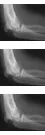
A 28-year-old sustains a high-energy distal femur fracture. CT imaging reveals a coronal plane fracture of the lateral femoral condyle. If missed, this fragment most frequently displaces in which direction?


Explanation

A Hoffa fracture is a coronal shear fracture of the femoral condyle, most commonly lateral. Unopposed pull from the gastrocnemius and popliteus muscles causes posterior and superior displacement if not adequately stabilized.

Question 57

In a 25-year-old patient with a vertically oriented (Pauwels type III) femoral neck fracture, what biomechanical force is most responsible for fixation failure?


Explanation

Pauwels type III fractures have a vertical fracture line (angle >50 degrees), which converts weight-bearing forces into high shear forces across the fracture site. This increases the risk of varus collapse and nonunion.

Question 58

A 32-year-old male with a closed tibial shaft fracture develops severe, escalating leg pain. Blood pressure is 100/65 mmHg. Intracompartmental pressure of the anterior compartment is 40 mmHg. What is the most appropriate next step?


Explanation

Compartment syndrome is diagnosed when the delta pressure (diastolic blood pressure minus intracompartmental pressure) is 30 mmHg or less. Here, the delta pressure is 25 mmHg (65 - 40), mandating immediate four-compartment fasciotomy.

Question 59

A 28-year-old woman sustained a Hawkins type II talar neck fracture and underwent ORIF. At 8 weeks postoperatively, an AP radiograph of the ankle demonstrates a subchondral radiolucent band in the talar dome. What does this finding indicate?


Explanation

The Hawkins sign is a subchondral radiolucent band visible on AP radiographs 6-8 weeks after a talus fracture. It represents subchondral osteopenia from hypervascularity, indicating that the talar body has preserved blood supply and is not undergoing avascular necrosis.

Question 60

A 40-year-old man falls from a height, sustaining a "terrible triad" injury of the elbow. What is the generally recommended sequence of surgical reconstruction to restore stability?


Explanation

The standard surgical protocol for a terrible triad injury proceeds from deep to superficial and medial to lateral. The sequence is typically coronoid fixation, followed by radial head fixation or arthroplasty, and finally lateral collateral ligament (LCL) repair.

Question 61

Which of the following radiographic findings is the strongest predictor of avascular necrosis following a proximal humerus fracture?


Explanation

A disrupted medial hinge and a short metaphyseal head extension (calcar segment) are the most reliable predictors of ischemia to the articular segment. A calcar segment < 2 mm indicates a very high risk of avascular necrosis.

Question 62

A 25-year-old male sustains a closed transverse midshaft humerus fracture. He is neurologically intact on initial presentation and placed in a coaptation splint. Two weeks later at follow-up, he exhibits a complete radial nerve palsy. What is the most appropriate management?


Explanation

Secondary radial nerve palsies developing after closed reduction or bracing of a closed humeral shaft fracture are typically neuropraxias. They have a high rate of spontaneous recovery, making observation the most appropriate initial management.

Question 63

During ORIF of a posterior wall acetabular fracture, an area of marginal impaction of the articular cartilage is identified. What is the most appropriate management of this articular fragment?


Explanation

Marginal impaction involves articular cartilage driven into the underlying cancellous bone. To restore joint congruity, the impacted segment must be elevated, the defect filled with bone graft, and the construct supported by posterior wall fixation.

Question 64

A 35-year-old male is brought to the trauma bay after a high-speed motorcycle collision. He has an anteroposterior compression (APC) type III pelvic ring injury. Despite the application of a pelvic binder and aggressive fluid resuscitation, his blood pressure remains 75/40 mm Hg. Focused Assessment with Sonography for Trauma (FAST) is negative for intra-abdominal fluid. What is the most appropriate next step in management?


Explanation

In a hemodynamically unstable patient with a pelvic ring injury and a negative FAST, the source of bleeding is presumed to be retroperitoneal/pelvic. Preperitoneal pelvic packing or immediate pelvic angiography with embolization are the gold standards for hemorrhage control.

Question 65

A 28-year-old man sustains a high-energy Pauwels type III (vertical) femoral neck fracture. Which internal fixation construct provides the most biomechanically stable fixation for this specific fracture pattern?


Explanation

Pauwels type III fractures experience high vertical shear forces. Biomechanical studies consistently show that a sliding hip screw supplemented with a derotation screw provides superior fixation and resists shear forces better than multiple parallel screws.

Question 66

A 22-year-old football player sustains a closed tibial shaft fracture. Two hours post-injury, he complains of severe leg pain out of proportion to the injury. Which of the following intracompartmental pressure measurements is the most reliable threshold for indicating a four-compartment fasciotomy?


Explanation

The Delta pressure (diastolic blood pressure minus intracompartmental pressure) is the most accurate predictor for compartment syndrome. A Delta pressure of less than 30 mm Hg is a universally accepted threshold for performing an emergency fasciotomy.

Question 67

A 45-year-old woman falls from a height and sustains a talar neck fracture with displacement of the talar body from both the subtalar and tibiotalar joints. According to the Hawkins classification, what is the approximate risk of developing avascular necrosis (AVN) of the talar body?


Explanation

This is a Hawkins type III talar neck fracture (displaced from both the subtalar and tibiotalar joints). The disruption of the major blood supplies to the talus in this pattern results in an AVN rate of approximately 80-100%.

Question 68

A 72-year-old woman with a well-fixed total knee arthroplasty (TKA) sustains a closed distal femur fracture just proximal to the femoral component (Lewis-Rorabeck type II). The bone quality is poor. Which of the following is an acceptable and highly effective surgical treatment?


Explanation

Lewis-Rorabeck type II periprosthetic fractures involve a displaced fracture with a well-fixed TKA component. Lateral locked plating or retrograde intramedullary nailing are the standard operative treatments, offering excellent stability while preserving the implant.

Question 69

A 30-year-old farmer sustains a Gustilo-Anderson type IIIB open tibia fracture from a tractor rollover in a muddy field. In addition to thorough surgical debridement, which antibiotic regimen is most appropriate for initial management?


Explanation

For severe open fractures (type III) with gross soil or agricultural contamination, coverage for Clostridium species is mandated. The standard regimen includes a first-generation cephalosporin, an aminoglycoside, and high-dose penicillin.

Question 70

A 24-year-old gymnast presents with midfoot pain after landing awkwardly. Non-weight-bearing AP and lateral radiographs of the foot appear normal. Clinical suspicion for a Lisfranc injury remains high. What is the most appropriate next step in diagnosis?


Explanation

Subtle Lisfranc injuries can be missed on non-weight-bearing films. Weight-bearing radiographs of both feet are essential to assess for diastasis (>2 mm) between the first and second metatarsal bases or cuneiforms.

Question 71

A 29-year-old polytrauma patient with a closed femoral shaft fracture, multiple rib fractures, and bilateral pulmonary contusions is being evaluated for "Damage Control Orthopedics" (DCO) versus "Early Total Care" (ETC). Which of the following physiologic parameters is a strong indication to proceed with DCO (external fixation) rather than primary intramedullary nailing?


Explanation

Elevated serum lactate (> 2.5 mmol/L), base deficit (> 6.0 mEq/L), hypothermia, and coagulopathy indicate an unresuscitated or borderline patient. These are clear triggers for Damage Control Orthopedics to prevent a fatal second hit.

Question 72

A 65-year-old woman on alendronate for 12 years presents with an incomplete, transverse fracture through the lateral cortex of the subtrochanteric femur. She reports progressive thigh pain over the last 3 months. What is the most appropriate management for this symptomatic impending atypical femur fracture?


Explanation

Symptomatic incomplete atypical femoral fractures associated with prolonged bisphosphonate use are at high risk of completing. Prophylactic intramedullary nailing is indicated to relieve pain and prevent catastrophic displacement.

Question 73

During the open reduction and internal fixation of a pronation-external rotation (Weber C) ankle fracture, the surgeon decides to place a syndesmotic position screw. Which of the following is the strongest predictor of long-term functional outcome in this patient?


Explanation

Multiple studies have shown that the anatomic reduction of the syndesmosis is the single most important factor determining functional outcomes in syndesmotic injuries. Screw size, number of cortices, and removal protocols do not significantly alter outcomes if reduction is perfect.

Question 74

A 40-year-old man sustains an ipsilateral midshaft clavicle fracture and a scapular neck fracture (floating shoulder). Which of the following is a recognized radiographic indication for operative intervention of the scapula in this injury pattern?


Explanation

Indications for surgery in a floating shoulder (or isolated scapular neck fracture) include a glenopolar angle < 22 degrees, medial translation > 10-20 mm, or severe angular displacement > 40 degrees, as these alter rotator cuff mechanics.

Question 75

A 6-year-old boy falls from monkey bars and sustains an extension-type supracondylar humerus fracture. Radiographs show posteromedial displacement of the distal fragment. Which nerve is at the highest risk of injury from the proximal metaphyseal spike?


Explanation

In posteromedially displaced supracondylar fractures, the proximal spike is driven anterolaterally, piercing the brachialis muscle and putting the radial nerve at the highest risk of injury.

Question 76

A 25-year-old man sustains a spiral fracture of the distal third of the humerus (Holstein-Lewis fracture). In the emergency department, he has normal radial nerve function. Following closed reduction and splint application, he is noted to have a complete radial nerve palsy. What is the most appropriate next step?


Explanation

A secondary (post-reduction) radial nerve palsy is an absolute indication for immediate surgical exploration, as the nerve is likely entrapped within the fracture site during the reduction maneuver.

Question 77

A 32-year-old woman is involved in a high-speed motor vehicle collision and suffers a posterior hip dislocation. Closed reduction in the emergency department is unsuccessful. A CT scan reveals an intra-articular osteochondral fragment physically blocking the reduction. Which surgical approach is most appropriate to extract the fragment and reduce the hip?


Explanation

For an irreducible posterior hip dislocation with posterior wall/acetabular fragments blocking reduction, the Kocher-Langenbeck (posterior) approach allows direct visualization, extraction of incarcerated fragments, and repair of the posterior column/wall.

Question 78

A 19-year-old man sustains a low-velocity gunshot wound to the thigh, resulting in a comminuted midshaft femur fracture. Clinical examination reveals normal distal pulses and intact neurological function. There is no active bleeding from the entry or exit wounds. What is the most widely accepted definitive management?


Explanation

Low-velocity gunshot wounds resulting in femur fractures without neurovascular compromise or massive contamination do not require formal tract debridement. They are best managed with local wound care, tetanus prophylaxis, IV antibiotics, and standard intramedullary nailing.

Question 79

A 35-year-old male arrives at the trauma bay hypotensive (BP 70/40 mmHg) following a high-speed motorcycle crash. Pelvic radiographs show a widely displaced anteroposterior compression (APC III) fracture. A pelvic binder is applied and he receives 2 units of uncrossmatched blood, but his blood pressure remains 75/45 mmHg. A FAST exam is negative. What is the most appropriate next step in his management?


Explanation

In a hemodynamically unstable patient with a pelvic ring injury and a negative FAST, preperitoneal pelvic packing combined with external fixation is a rapid and effective method to control venous and cancellous bone bleeding. Exploratory laparotomy is not indicated with a negative FAST, and CT angiography is unsafe in a profoundly unstable patient.

Question 80

A 25-year-old female sustains a displaced basicervical femoral neck fracture following a fall from a height. She has no other injuries. Which of the following internal fixation constructs provides the most biomechanical stability for this specific fracture pattern?


Explanation

Basicervical femoral neck fractures are biomechanically distinct, length-unstable, and have a higher rate of failure when fixed with multiple cannulated screws alone. A sliding hip screw, often supplemented with a derotational screw, provides superior biomechanical stability and is the gold standard for this fracture pattern.

Question 81

A 30-year-old male is admitted with a closed, highly comminuted tibia shaft fracture. Twelve hours later, he complains of disproportionate leg pain. His blood pressure is 110/70 mmHg. Intracompartmental pressure monitoring is performed. Which of the following pressure measurements is the generally accepted threshold to indicate an acute compartment syndrome requiring fasciotomy?


Explanation

The threshold for diagnosing acute compartment syndrome is a Delta P (diastolic blood pressure minus intracompartmental pressure) of less than 30 mm Hg. This accounts for systemic perfusion pressure better than an absolute pressure value, minimizing unnecessary fasciotomies.

Question 82

A 45-year-old male presents after a high-speed MVC. Radiographs and CT demonstrate the injury pattern seen in Figure 10. The surgeon plans an isolated Kocher-Langenbeck approach for definitive fixation.

Which of the following acetabular fracture patterns is most appropriate for this specific surgical approach?


Explanation

The Kocher-Langenbeck approach provides excellent exposure to the posterior column and posterior wall. It is the gold standard surgical approach for isolated posterior wall and posterior column fractures of the acetabulum.

Question 83

A 28-year-old male snowboarder sustains a high-energy hyperdorsiflexion injury to his right foot, resulting in a Hawkins Type III talar neck fracture. Which of the following vessels provides the dominant blood supply to the talar body and is at greatest risk of disruption in this injury pattern?


Explanation

The artery of the tarsal canal, a branch of the posterior tibial artery, provides the dominant blood supply to the talar body. It is highly susceptible to disruption in displaced talar neck fractures, contributing to the high rate of avascular necrosis in Hawkins Type III and IV injuries.

Question 84

In the management of a high subtrochanteric femur fracture, the proximal fracture fragment is typically displaced into a characteristic deformity. Which combination of deforming forces is responsible for the position of the proximal fragment?


Explanation

In subtrochanteric femur fractures, the proximal fragment is pulled into flexion by the iliopsoas, abduction by the gluteus medius and minimus, and external rotation by the short external rotators. Understanding these deforming forces is critical for achieving an accurate closed reduction.

Question 85

A 40-year-old farmer sustains a Grade IIIb open tibia fracture heavily contaminated with soil and manure. Based on current trauma guidelines, which of the following prophylactic antibiotic regimens is most appropriate upon presentation?


Explanation

High-energy Grade III open fractures require broad-spectrum coverage, typically a cephalosporin and vancomycin. When there is gross soil or farm contamination, adding high-dose penicillin is strongly recommended to cover for Clostridium species.

Question 86

A 50-year-old male presents with a highly comminuted, closed distal tibia intra-articular fracture (OTA/AO 43C pilon fracture) with severe soft tissue swelling and multiple fracture blisters. What is the most appropriate initial management?


Explanation

High-energy pilon fractures with severe soft tissue compromise are best managed with a staged protocol to minimize wound complications. A spanning external fixator restores length and alignment while allowing the soft tissues to recover for definitive internal fixation typically 10-21 days later.

Question 87

A 28-year-old man sustains a high-energy trauma resulting in the isolated injury shown in Figure 10.

Assuming the radiograph demonstrates a vertically oriented, displaced Pauwels type III femoral neck fracture, what is the most biomechanically sound definitive fixation construct to minimize the risk of varus collapse?


Explanation

In young patients with vertically oriented (Pauwels type III) femoral neck fractures, high shear forces predispose the fracture to varus collapse and nonunion. A sliding hip screw with a derotational screw provides superior biomechanical stability against these vertical shear forces compared to multiple parallel cancellous screws.

Question 88

A 35-year-old man is brought to the emergency department following a high-speed motor vehicle collision. He has closed bilateral femoral shaft fractures and a severe pulmonary contusion. After initial fluid resuscitation, his blood pressure is 105/65 mmHg, heart rate is 110 bpm, serum lactate is 4.8 mmol/L, and base deficit is -9 mEq/L. What is the most appropriate initial orthopaedic management of his femur fractures?


Explanation

This polytrauma patient is physiologically unstable as indicated by an elevated serum lactate and a severe base deficit. Damage control orthopaedics with rapid bilateral spanning external fixation is indicated to minimize the surgical "second hit" while the patient is aggressively resuscitated in the intensive care unit.

None

Clinic OS
Medically Verified Content by
Prof. Clinic OS
Consultant Orthopedic & Spine Surgeon
Chapter Index
