Orthopedic Trauma 2026 MCQs: Board Review Questions & Answers (Part 3)
Key Takeaway
Learn more about Orthopedic Trauma 2026 MCQs: Board Review Questions & Answers (Part 3) and how to manage it. Top-rated Orthopedic Trauma 2026 MCQs bank. Practice with clinical case questions, orthopedic surgery board review, and evidence-based answers updated for 2026.
Orthopedic Trauma 2026 MCQs: Board Review Questions & Answers (Part 3)
Comprehensive 100-Question Exam
00:00
Start Quiz
Question 1
A 54-year-old man sustained a small superficial abrasion over the left acromioclavicular joint after falling from his bicycle. Examination reveals no other physical findings. Radiographs show a displaced fracture of the lateral end of the clavicle distal to a line drawn vertically to the coracoid process. Management should consist of
Explanation
Question 2
A 47-year-old man sustained a degloving injury over the pretibial surface and anterior ankle region in a motor vehicle accident. After debridement and irrigation, there is inadequate tissue for closure of the exposed anterior tibial tendon and tibia. Prior to definitive soft-tissue coverage, management should consist of
Explanation
Question 3
The humeral nonunion shown in Figure 27 is most likely to unite when using what method of treatment?
Explanation
Question 4
An adult with a distal humeral fracture underwent open reduction and internal fixation. What is the most common postoperative complication?
Explanation
Question 5
The radiographs and CT scan seen in Figures 28a through 28d reveal what type of acetabular fracture pattern?
Explanation
Question 6
A 26-year-old man sustained an isolated injury to his left hip joint in a motor vehicle accident. Closed reduction was performed, and the postreduction radiograph is shown in Figure 29. Management should now consist of
Explanation
Question 7
A 35-year-old man is brought to the emergency department following a motorcycle accident. He is breathing spontaneously and has a systolic blood pressure of 80 mm Hg, a pulse rate of 120/min, and a temperature of 98.6 degrees F (37 degrees C). Examination suggests an unstable pelvic fracture; AP radiographs confirm an open book injury with vertical displacement on the left side. Ultrasound evaluation of the abdomen is negative. Despite administration of 4 L of normal saline solution, he still has a systolic pressure of 90 mm Hg and a pulse rate of 110. Urine output has been about 20 mL since arrival 35 minutes ago. What is the next best course of action?
Explanation
Question 8
A healthy 25-year-old man sustains a grade IIIB open tibial fracture. Following appropriate debridement, irrigation, and stabilization with an external fixator, the soft-tissue injury is shown in Figure 30. What is the most appropriate definitive soft-tissue coverage procedure?
Explanation
Question 9
A 25-year-old woman undergoes surgical treatment of a displaced proximal humeral fracture via a deltopectoral approach. At the first postoperative visit, she reports a tingling numbness along the anterolateral aspect of the forearm. What structure is most likely injured?
Explanation
Question 10
A 7-year-old girl has pain and swelling of the right elbow after falling off her bicycle. Radiographs are shown in Figure 31. What is the most appropriate initial step in management?
Explanation
Question 11
A 32-year-old man sustained a fracture of his upper arm in a motor vehicle accident. Radiographs are shown in Figure 32. Because of other associated injuries, surgical stabilization is chosen. What technique will result in the least complications and the best outcome?
Explanation
Question 12
A 56-year-old man sustained a nondisplaced extra-articular fracture of the proximal aspect of the third metatarsal after dropping a heavy object on his left foot. Management should consist of
Explanation
Question 13
During a posterior approach to the glenoid with retraction as shown in Figure 33, care should be taken during superior retraction to avoid injury to which of the following structures?
Explanation
Question 14
A 42-year-old woman sustained a closed, displaced talar neck fracture in a motor vehicle accident. Which of the following is an avoidable complication of surgical treatment?
Explanation
Question 15
Figures 34a through 34c show the radiographs of a 51-year-old woman who injured her elbow in a fall from standing height. Examination reveals that elbow range of motion is limited by pain only. Management should consist of
Explanation
Question 16
Figure 35 shows the radiograph of a 12-year-old boy who fell off a snowmobile and landed on his left shoulder. He has a closed injury. Management should consist of
Explanation
Question 17
What is the most common complication requiring reoperation after dorsal plating for a distal radius fracture?
Explanation
Question 18
Figures 36a and 36b show the radiographs of a 48-year-old woman who smokes cigarettes and sustained a segmental femoral shaft fracture in a motor vehicle accident 9 months ago. Initial management consisted of stabilization with a reamed statically locked intramedullary nail. She now reports lower leg pain that increases with activity. In addition to advising the patient to quit smoking, management should include
Explanation
Question 19
A 5-year-old boy has a deformity of his right arm after falling from a jungle gym. A radiograph is shown in Figure 37. Management should consist of
Explanation
Question 20
What is the most important factor in determining recovery after surgical repair of a complete laceration of a nerve at the wrist?
Explanation
Question 21
A 39-year-old woman fell onto her flexed elbow and sustained a comminuted displaced radial head and neck fracture. Radiographs confirm concentric reduction of the ulnohumeral joint. Examination reveals pain with compression of the radius and ulna at the wrist. What is the best treatment for the radial head fracture?
Explanation
Question 22
A 25-year-old laborer sustains a transverse fracture of the proximal 25% of the scaphoid. CT reconstructions reveal a 1-mm fracture gap. What is the most appropriate treatment?
Explanation
Question 23
A 34-year-old man sustained a tibial fracture in a motorcycle accident. What perioperative variable is associated with the greatest relative risk for reoperation to achieve bone union?
Explanation
Question 24
Figure 38a shows the radiograph of a 12-year-old boy who underwent a reamed intramedullary nailing for a closed femoral shaft fracture. One year after rod removal, he reports groin pain. A current radiograph is shown in Figure 38b. The findings are most likely the result of
Explanation
Question 25
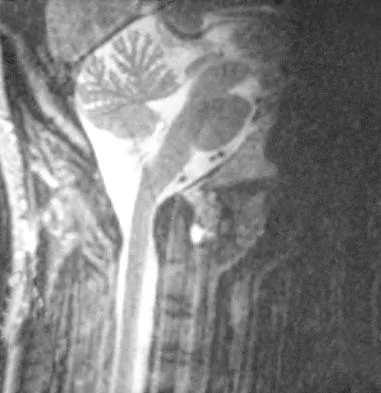
A 36-year-old woman has neck pain in the upper cervical region and occipital discomfort after being involved in a motor vehicle accident. Examination reveals no forehead or scalp lacerations. The neurologic examination is normal. A CT scan shows no evidence of bony injury. Figures 39a and 39b show a lateral radiograph and an MRI scan. Management should consist of
Explanation
Question 26
A 35-year-old male is brought to the ED after a motorcycle collision. He is hypotensive with a systolic BP of 70 mmHg. Primary survey reveals an unstable pelvis. Radiographs show a widened pubic symphysis of 4 cm and disruption of the anterior and posterior sacroiliac ligaments. A pelvic binder is to be applied to temporarily stabilize the pelvis. To achieve optimal reduction of pelvic volume and mechanical stability, where should the pelvic binder be centered?
Explanation
Question 27
A 28-year-old man sustains a closed midshaft tibia fracture. Four hours post-injury, he complains of worsening leg pain out of proportion to the injury, not relieved by intravenous opioids. On examination, there is severe pain with passive stretch of the hallux. The most reliable diagnostic parameter for acute compartment syndrome is:
Explanation
Question 28
A 25-year-old man sustains a high-energy Pauwels type III (vertical shear) femoral neck fracture. To maximize biomechanical stability and minimize the risk of varus collapse, which of the following fixation constructs is most appropriate?
Explanation
Question 29
A 42-year-old construction worker sustains a Gustilo-Anderson IIIB open tibia fracture with a 10 cm soft tissue defect over the middle third of the tibia, exposing the bone devoid of periosteum. Following serial debridement, skeletal stabilization, and negative pressure wound therapy, definitive soft-tissue coverage is planned. The most appropriate local flap choice for this specific defect is:
Explanation
Question 30
A 30-year-old female presents with midfoot pain after falling from a horse. Her foot was plantarflexed at the time of impact. Radiographs demonstrate a widening of the space between the first and second metatarsal bases with a distinct "fleck sign." Based on current literature, which of the following treatments results in better functional outcomes and lower revision rates for purely ligamentous Lisfranc injuries?
Explanation
Question 31
A 45-year-old male sustains a distal femur fracture following a motor vehicle collision. CT imaging reveals an isolated coronal plane fracture of the lateral femoral condyle. Which surgical approach provides the best visualization to anatomically reduce this specific articular fracture fragment?
Explanation
Question 32
A 68-year-old woman with a 10-year history of alendronate therapy presents with progressively worsening right thigh pain for 3 months. Radiographs demonstrate focal cortical thickening of the lateral cortex of the subtrochanteric right femur with a transverse radiolucent "dreaded black line." The patient denies any trauma. What is the most appropriate next step in management?
Explanation
Question 33
A 50-year-old male is involved in a high-speed MVC. Pelvic radiographs and CT demonstrate a fracture involving both the anterior and posterior columns of the acetabulum. On the obturator oblique plain radiograph, a prominent "spur sign" is identified. This radiographic sign represents:
Explanation
Question 34
A 22-year-old male motorcyclist is struck by a car and presents with massive swelling of the right shoulder girdle and an entirely flail, pulseless right upper extremity. Chest radiograph shows severe lateral displacement of the scapula. Which of the following neurologic injuries is most commonly associated with this specific pattern of high-energy trauma?
Explanation
Question 35
A 34-year-old male falls from a height of 15 feet and sustains a displaced talar neck fracture with subluxation of the subtalar joint, while the tibiotalar and talonavicular joints remain located. According to the Hawkins classification, this is a Type II injury. The primary blood supply to the talar body, which is at highest risk in this injury, is derived from the:
Explanation
Question 36
A 42-year-old man sustains a severe closed pelvic fracture following a motorcycle collision. Clinical examination reveals a large, fluctuant area over the greater trochanter with intact, but hypoesthetic overlying skin. Aspiration yields serosanguineous fluid. Which of the following best describes the pathophysiology of this specific soft-tissue injury?
Explanation
Question 37
A 28-year-old man sustains a closed midshaft tibia fracture. Four hours post-injury, he complains of severe leg pain that is unresponsive to opioids. His blood pressure is 110/65 mmHg. Intracompartmental pressures are measured: anterior 42 mmHg, lateral 38 mmHg, deep posterior 45 mmHg, and superficial posterior 30 mmHg. What is the most appropriate management based on the objective data?
Explanation
Question 38
A 30-year-old woman is involved in a high-speed motor vehicle collision and sustains a Hawkins Type III talar neck fracture. Which of the following blood vessels provides the dominant blood supply to the talar body, which is critically at risk in this injury?
Explanation
Question 39
A 22-year-old man sustains a low-velocity gunshot wound to the distal thigh. Radiographs demonstrate a comminuted distal femur fracture and a retained bullet lodged within the knee joint space. The entry wound is 1 cm, clean, without massive soft-tissue destruction. What is the most appropriate initial management regarding the retained bullet?
Explanation
Question 40
A 19-year-old motorcyclist is thrown from his bike. He presents with a completely flail, pulseless left upper extremity. Radiographs reveal lateral displacement of the left scapula by 3 cm compared to the right, a displaced clavicle fracture, and acromioclavicular joint disruption. Which of the following injuries is most strongly associated with this clinical picture?
Explanation
Question 41
A 45-year-old construction worker sustains an open tibial shaft fracture with a 6 cm laceration, significant periosteal stripping, and exposed bone, but adequate soft tissue for coverage without requiring a flap (Gustilo-Anderson IIIA). Which of the following interventions is the most critical factor in preventing deep infection in this patient?
Explanation
Question 42
A 25-year-old male falls from a height of 15 feet, sustaining a vertically oriented, displaced intracapsular femoral neck fracture (Pauwels type III). What biomechanical force is most responsible for the high rate of internal fixation failure in this specific fracture pattern?
Explanation
Question 43
A 76-year-old woman with a well-functioning cruciate-retaining (CR) total knee arthroplasty (TKA) falls and sustains a displaced supracondylar femur fracture (Lewis-Rorabeck Type II). Radiographs demonstrate a closed fracture with the distal component ending 1 cm superior to the intact, well-fixed femoral component. Which of the following is the most appropriate surgical treatment?
Explanation
Question 44
A 22-year-old collegiate football player sustains a hyperplantarflexion injury to his midfoot. Weight-bearing radiographs demonstrate 3 mm of widening between the base of the first and second metatarsals, with a subtle "fleck sign" adjacent to the medial cuneiform. What is the anatomical path of the primarily injured ligament?
Explanation
Question 45
In the initial ATLS resuscitation of a hemodynamically unstable patient with an anteroposterior compression (APC) III pelvic ring injury, what is the correct anatomical landmark for the optimal placement of a circumferential pelvic binder?
Explanation
Question 46
A 35-year-old male is brought to the emergency department after a high-speed motor vehicle collision. He is hypotensive with a blood pressure of 75/40 mmHg. A pelvic binder is immediately applied. The FAST exam is negative. An anteroposterior pelvic radiograph shows an anteroposterior compression (APC) type III injury with a widened pubic symphysis (>3 cm) and disrupted sacroiliac joints. Despite ongoing fluid and blood resuscitation, the patient remains hemodynamically unstable. What is the most appropriate next step in management?
Explanation
Question 47
A 28-year-old female sustains a displaced, highly vertical (Pauwels type III) femoral neck fracture after falling from a horse. Which of the following internal fixation constructs provides the greatest biomechanical stability for this specific fracture pattern?
Explanation
Question 48
A 45-year-old man sustains an open fracture of the proximal third of the tibia, resulting in a 6 x 6 cm anterior soft-tissue defect with exposed bone lacking periosteum. After serial debridements and adequate skeletal stabilization, there is no evidence of infection, but the bone remains exposed. Which of the following soft-tissue coverage options is the most appropriate definitive management?
Explanation
Question 49
An 82-year-old woman presents with severe knee pain and inability to bear weight after a mechanical fall. She underwent a total knee arthroplasty 10 years ago. Radiographs demonstrate a displaced supracondylar distal femur fracture. Careful radiographic evaluation shows no evidence of osteolysis, and the femoral component remains rigidly fixed to the bone.
What is the most appropriate surgical management?

Explanation
Question 50
A 24-year-old professional football player sustains an acute, purely ligamentous Lisfranc injury involving the first, second, and third tarsometatarsal joints. Which of the following surgical treatments has been shown to yield the best long-term functional outcomes for this specific injury pattern?
Explanation
Question 51
A 32-year-old man underwent unreamed intramedullary nailing of a closed diaphyseal tibia fracture. He was discharged on postoperative day 3. Six months later, he complains of pain in the calf and the development of severe clawing of his lesser toes (flexion at the PIP and DIP joints). He notes the deformity worsens when his ankle is passively dorsiflexed. Ischemic contracture of which of the following compartments is the most likely cause of this deformity?
Explanation
Question 52
A 48-year-old construction worker falls from scaffolding, sustaining a high-energy, highly comminuted closed distal tibia pilon fracture. On presentation to the emergency department, the ankle is grossly deformed, and the overlying skin is tight, shiny, and demonstrates multiple fracture blisters over the medial malleolus. What is the most appropriate initial step in the operative management?
Explanation
Question 53
During surgical management of a 'terrible triad' injury of the elbow (elbow dislocation, radial head fracture, and coronoid fracture), you perform fixation of the coronoid fragment, replace the non-reconstructible radial head with a metallic arthroplasty, and repair the lateral ulnar collateral ligament (LUCL) to its anatomic origin on the lateral epicondyle. Upon fluoroscopic examination through a full arc of motion, the elbow subluxates posteriorly when extended past 30 degrees. What is the most appropriate next step to restore stability?
Explanation
Question 54
A 29-year-old man undergoes open reduction and internal fixation for a displaced Hawkins type II fracture of the talar neck. At his 8-week postoperative visit, an anteroposterior radiograph of the ankle demonstrates a subchondral radiolucent band beneath the dome of the talus. What does this specific radiographic finding indicate regarding the patient's prognosis?
Explanation
Question 55
A 25-year-old man complains of persistent radial-sided wrist pain 10 months after falling onto an outstretched hand. Radiographs demonstrate a nonunion of the proximal pole of the scaphoid. A subsequent MRI reveals lack of enhancement in the proximal pole, consistent with avascular necrosis (AVN). There is no radiographic evidence of radiocarpal or midcarpal osteoarthritis.
Which of the following is the most appropriate surgical intervention?

Explanation
Question 56
A 28-year-old male sustains a vertically oriented, displaced femoral neck fracture (Pauwels type III) after a fall from a height. To maximize biomechanical stability and reduce the risk of varus collapse and nonunion, which of the following internal fixation constructs is most appropriate?
Explanation
Question 57
A 32-year-old male sustains a closed comminuted midshaft tibia fracture. He is complaining of out-of-proportion pain, and physical examination reveals intact pedal pulses. His diastolic blood pressure is 70 mm Hg and his MAP is 85 mm Hg. Direct continuous pressure measurements reveal an anterior compartment pressure of 35 mm Hg, lateral 25 mm Hg, superficial posterior 20 mm Hg, and deep posterior 45 mm Hg. Which of the following is the most appropriate next step in management?
Explanation
Question 58
A 45-year-old female presents with a complex intra-articular distal femur fracture (OTA/AO 33-C3). A CT scan reveals a coronal plane fracture of the lateral femoral condyle (Hoffa fracture). What is the most biomechanically appropriate fixation strategy for this specific coronal fragment?
Explanation
Question 59
A 40-year-old male sustains a displaced intra-articular calcaneus fracture (Sanders type III) with significant soft tissue swelling and fracture blisters over the lateral hindfoot. If an extensile lateral approach for open reduction and internal fixation (ORIF) is planned, which of the following patient factors is the most significant predictor of postoperative wound complications?
Explanation
Question 60
A 25-year-old male is involved in a motor vehicle collision and sustains a Gustilo-Anderson IIIB open midshaft tibia fracture with extensive periosteal stripping and exposed bone that requires a free soft-tissue transfer. According to the Lower Extremity Assessment Project (LEAP) study, which of the following factors is the most significant predictor of poor long-term functional outcome in this patient?
Explanation
Question 61
A 38-year-old male requires open reduction and internal fixation of a posterior wall acetabular fracture via a Kocher-Langenbeck approach. During the deep exposure, what is the proper anatomical management of the short external rotators to protect the medial femoral circumflex artery (MFCA)?
Explanation
Question 62
A 55-year-old woman undergoes volar locked plating for a displaced distal radius fracture.
Six months postoperatively, she presents with a new-onset inability to actively flex the interphalangeal joint of her thumb. Which of the following technical errors during the initial surgery most likely caused this complication?
Explanation
Question 63
A 29-year-old male sustained a Hawkins type II talar neck fracture and underwent open reduction and internal fixation. At 8 weeks postoperatively, an AP radiograph of the ankle
demonstrates a subchondral radiolucent band in the talar dome. This radiographic finding most accurately indicates:
Explanation
Question 64
A 35-year-old male involved in a high-speed collision presents with bilateral closed femoral shaft fractures, a grade IV liver laceration, and a severe closed head injury (GCS 7). His initial laboratory values show a lactate of 6.5 mmol/L, pH of 7.15, and his core temperature is 34.5°C. According to Damage Control Orthopedics (DCO) principles, what is the most appropriate initial orthopedic management for his femur fractures?
Explanation
Question 65
A 24-year-old female sustains a closed spiral fracture of the distal third of the humeral shaft (Holstein-Lewis fracture).
On initial evaluation in the emergency department, she is unable to extend her wrist or digits, and has decreased sensation in the first dorsal web space. What is the most appropriate initial management?
Explanation
Question 66
A 35-year-old male is brought to the ED after a motorcycle collision. He is hypotensive (BP 75/40 mmHg) and tachycardic (HR 130). AP pelvis radiograph shows a widened pubic symphysis of 4 cm and widened bilateral sacroiliac joints. A pelvic binder has been applied appropriately but he remains hemodynamically unstable after 2 liters of crystalloid and 2 units of packed red blood cells. What is the most appropriate next step in management?
Explanation
Question 67
A 42-year-old skier presents with a complex bicondylar tibial plateau fracture (Schatzker VI). Radiographs and CT scan reveal a large, displaced posteromedial fragment in addition to lateral plateau depression. When planning surgical fixation, which of the following approaches and patient positioning is most appropriate to optimally address the posteromedial fragment?
Explanation
Question 68
A 25-year-old man sustains a completely displaced, vertically oriented (Pauwels type III) femoral neck fracture after a fall from a height. Which of the following fixation constructs provides the most biomechanically stable fixation for this specific fracture pattern?
Explanation
Question 69
A 38-year-old male sustains a comminuted distal femur fracture. CT scan reveals a coronal plane fracture of the lateral femoral condyle (Hoffa fragment). Which of the following principles is most critical when fixing this specific coronal fragment?
Explanation
Question 70
A 65-year-old woman undergoes open reduction and internal fixation of a 3-part proximal humerus fracture with a locked plating system. Which of the following technical factors is most strongly associated with failure of fixation and subsequent varus collapse?
Explanation
Question 71
A 22-year-old motorcyclist sustains severe high-energy right shoulder trauma. Radiographs reveal lateral displacement of the scapula, a completely displaced clavicle fracture, and acromioclavicular joint separation. His right upper extremity is pulseless, and he has a complete motor and sensory deficit of the right arm. What is the most likely long-term functional outcome for the injured extremity despite optimal initial management?
Explanation
Question 72
A 28-year-old male sustains a Hawkins Type III fracture of the talar neck. What is the approximate risk of developing avascular necrosis (AVN) of the talar body, and what is the characteristic finding of the Hawkins sign?
Explanation
Question 73
A 45-year-old farmer sustains a severe open tibia fracture after his leg was caught in a tractor. The wound is 12 cm long with extensive muscle damage and gross agricultural contamination. The foot is well-perfused with palpable pulses. According to current evidence-based guidelines, what is the most appropriate initial antibiotic regimen?
Explanation
Question 74
A 30-year-old male undergoes intramedullary nailing of a closed diaphyseal tibia fracture. In the recovery room, he complains of severe leg pain out of proportion to the injury, unrelieved by IV opioids. On examination, he has pain with passive stretch of the hallux and paresthesias in the first web space. Absolute compartment pressures are measured at 35 mmHg, and his diastolic blood pressure is 60 mmHg. What is the most appropriate next step?
Explanation
Question 75
A 40-year-old roofer falls 15 feet, sustaining a closed, displaced intra-articular calcaneus fracture (Sanders Type III) with significant blistering over the lateral heel. Surgery via an extensile lateral approach is planned. Which of the following factors is most predictive of wound healing complications following this surgical approach?
Explanation
Question 76
A 28-year-old polytrauma patient presents with a hemodynamically unstable pelvic ring injury. A pelvic binder is applied in the trauma bay. To be maximally effective in reducing pelvic volume and controlling hemorrhage, the binder should be centered over which of the following anatomic landmarks?
Explanation
Question 77
A 35-year-old male is involved in a high-speed motor vehicle collision and sustains a 'terrible triad' injury of the elbow. Which of the following describes the most appropriate sequence of surgical reconstruction to restore stability?
Explanation
Question 78
A 40-year-old female sustains an isolated closed midshaft tibia fracture treated with a reamed intramedullary nail. Twelve hours postoperatively, she requires escalating doses of IV pain medication and reports severe pain with passive stretch of her hallux. Which compartment of the lower leg is most commonly affected in this scenario?
Explanation
Question 79
A 65-year-old woman with a history of osteoporosis and 7 years of alendronate therapy presents with progressively worsening thigh pain. Radiographs reveal a transverse, non-comminuted fracture of the lateral cortex of the subtrochanteric femur with localized periosteal thickening ('beaking'). What is the most appropriate prophylactic surgical treatment?
Explanation
Question 80
In the management of open fractures, current literature demonstrates that the most critical factor in reducing the risk of deep infection is:
Explanation
Question 81
A 25-year-old male sustains a Hawkins Type III talar neck fracture following a fall from height. Which of the following best describes the pathoanatomy of a Hawkins Type III fracture and its associated risk of avascular necrosis (AVN)?
Explanation
Question 82
A 32-year-old motorcyclist sustains a completely displaced, highly comminuted intra-articular fracture of the calcaneus (Sanders Type IV). If open reduction and internal fixation (ORIF) is attempted via an extensile lateral approach, which nerve is at greatest risk of iatrogenic injury?
Explanation
Question 83
A 45-year-old male is undergoing closed reduction and percutaneous pinning for a displaced proximal humerus fracture. To minimize the risk of injury to the axillary nerve, lateral pins should be inserted avoiding a specific zone. The axillary nerve typically courses transversely at what distance distal to the lateral edge of the acromion?
Explanation
Question 84
A 22-year-old male sustains a vertically oriented, displaced femoral neck fracture (Pauwels Type III) after a fall from a roof. The plan is for urgent open reduction and internal fixation. To maximize biomechanical stability and resist shear forces in this specific fracture pattern, the optimal fixation construct consists of:
Explanation
Question 85
In a patient with multiple severe injuries including bilateral femur fractures and a severe traumatic brain injury (TBI) with elevated intracranial pressure, the concept of Damage Control Orthopedics (DCO) suggests which of the following initial management strategies for the femur fractures?
Explanation
Question 86
A 35-year-old male presents with an open diaphyseal tibia fracture with a 12 cm soft tissue defect and exposed bone after a motorcycle crash. The limb is vascularly intact. After initial debridement, what is the most appropriate timing and method for soft tissue coverage?
Explanation
Question 87
A 42-year-old hemodynamically unstable male presents after a high-speed motor vehicle collision. A pelvic AP radiograph reveals a symphyseal diastasis of 4 cm and disruption of the anterior sacroiliac ligaments bilaterally. He is tachycardic (130 bpm) and hypotensive (80/50 mmHg). FAST exam is negative. What is the most appropriate initial step in management?
Explanation
Question 88
A 28-year-old female sustains a displaced, vertical (Pauwels type III) femoral neck fracture. She is brought to the operating room for internal fixation. Which of the following biomechanical constructs provides the most stable fixation for this specific fracture pattern?
Explanation
Question 89
A 45-year-old male sustains a closed, displaced intra-articular calcaneus fracture. A CT scan shows a Sanders Type III fracture. The surgeon plans an extensile lateral approach for open reduction and internal fixation. To minimize the risk of wound complications, when should the surgery ideally be performed?
Explanation
Question 90
A 72-year-old female with osteoporosis presents with a closed, displaced extra-articular distal femur fracture (OTA/AO 33-A). She is scheduled for open reduction and internal fixation with a lateral locking plate. What is the primary mechanical advantage of a locked plating construct over conventional non-locked plating in this specific scenario?
Explanation
Question 91
A 30-year-old male falls from a height and sustains a Hawkins type III fracture of the talar neck. Which of the following blood vessels provides the primary residual blood supply to the talar body, and what is the approximate rate of avascular necrosis (AVN) for this fracture type?
Explanation
Question 92
A 22-year-old gymnast sustains a hyperplantarflexion injury to her midfoot. Weight-bearing radiographs reveal widening of the interval between the first and second metatarsal bases. In a purely ligamentous Lisfranc injury, which of the following best describes the anatomical origin and insertion of the primarily injured ligament?
Explanation
Question 93
A 29-year-old male is admitted with a closed midshaft tibia fracture. Twelve hours post-injury, he complains of severe leg pain out of proportion to the injury, exacerbated by passive toe stretch. His pedal pulses are palpable. Intracompartmental pressure testing reveals a pressure of 45 mmHg with a diastolic blood pressure of 65 mmHg. Which of the following is the most appropriate definitive management?
Explanation
Question 94
A 38-year-old female presents with a spiral fracture of the distal third of the humeral shaft. On examination, she is unable to extend her wrist or fingers. Radiographs confirm a Holstein-Lewis fracture. What is the most appropriate initial management of her nerve palsy?
Explanation
Question 95
A 50-year-old male presents with a posterior hip dislocation and an associated posterior wall acetabular fracture after a dashboard injury. The hip is reduced in the emergency department. Post-reduction CT scan reveals a single, large posterior wall fragment comprising 45% of the posterior wall, with 3 mm of displacement and evidence of marginal impaction. What is the most appropriate definitive management?
Explanation
Question 96
A 25-year-old intubated polytrauma patient is admitted to the intensive care unit with a comminuted closed tibial shaft fracture. The nursing staff notes the leg is exquisitely swollen and tense. Intracompartmental pressure testing of the anterior compartment reveals a pressure of 35 mm Hg. The patient's current blood pressure is 90/50 mm Hg (mean arterial pressure 63 mm Hg). What is the most appropriate next step in management?
Explanation
Question 97
A 45-year-old male sustains a high-energy Schatzker VI tibial plateau fracture. He is initially managed with a spanning external fixator. At 2 weeks, the soft-tissue envelope improves, and he undergoes definitive open reduction and internal fixation utilizing an anterolateral locking plate and a direct medial plate. Three months postoperatively, radiographs demonstrate a varus collapse of the medial plateau. What technical error is most likely responsible for this failure mechanism?
Explanation
Question 98
A 65-year-old woman is treated nonoperatively in a short arm cast for a nondisplaced extra-articular fracture of the distal radius. Six weeks later, the cast is removed, and radiographs show a healed fracture. However, she suddenly notes an inability to actively extend her thumb interphalangeal joint. The tenodesis effect is absent for the thumb. What is the most appropriate surgical treatment for this complication?
Explanation
Question 99
A 28-year-old agricultural worker sustains an open midshaft tibia fracture heavily contaminated with soil and manure after being pinned by a tractor. The soft-tissue wound is 12 cm long with extensive muscle devitalization, corresponding to a Gustilo-Anderson Type IIIB injury. According to established orthopedic trauma guidelines, what is the most appropriate initial empiric antibiotic regimen?
Explanation
Question 100
A 34-year-old man sustains a displaced fracture of the talar neck with subluxation of the subtalar joint, while the tibiotalar and talonavicular joints remain congruent (Hawkins Type II). He undergoes prompt open reduction and internal fixation. Which of the following is the most reliable early radiographic indicator that osteonecrosis of the talar body will NOT occur?
Explanation
None
