العربية
Part of the Master Guide

AAOS & ABOS Foot & Ankle Board Review MCQs (Set 2): Ankle Fractures, Lisfranc, Diabetic Foot

AAOS & ABOS Foot & Ankle MCQs (Set 4): Ankle Fractures, Deformities & Achilles Injuries
23 Apr 2026 64 min read 96 Views
Foot & Ankle 2009 MCQs - Part 4

Key Takeaway

This high-yield question set (Set 4) for AAOS, ABOS, and OITE exams focuses on crucial Foot & Ankle topics. It includes multiple-choice questions on diagnosis, classification, and management of ankle fractures, various foot deformities like bunions, and common Achilles tendon injuries, providing essential board preparation.

AAOS & ABOS Foot & Ankle MCQs (Set 4): Ankle Fractures, Deformities & Achilles Injuries

Comprehensive 100-Question Exam


00:00

Start Quiz

Question 1

A 26-year-old rugby player injured his foot when tackled from behind. Radiographs are seen in Figures 35a through 35c. What is the most appropriate treatment?


Explanation

The patient has a ligamentous Lisfranc injury. Diastasis seen between the bases of the second metatarsal and medial cuneiform is pathognomonic for a rupture of the Lisfranc's ligament. This injury is best treated surgically with either open reduction and internal fixation or possibly closed manipulation and percutaneous screw fixation if anatomic alignment can be achieved closed. Pin fixation has been shown to be inferior to screw fixation due to the length of time that fixation is required for adequate ligament healing. Chiodo CP, Myerson MS: Developments and advances in the diagnosis and treatment of injuries of the tarsometatarsal joint. Orthop Clin North Am 2001;32:11-20.

Question 2

A 32-year-old woman sustained a closed calcaneus fracture 2 years ago and was treated nonsurgically. She now reports a 6-month history of progressively worsening pain over the anterior ankle and lateral hindfoot. Climbing stairs and ascending slopes is particularly difficult for her. Bracing and intra-articular corticosteroid injections have not provided sufficient relief. Figure 36 shows a weight-bearing lateral radiograph. What is the most appropriate surgical option?


Explanation

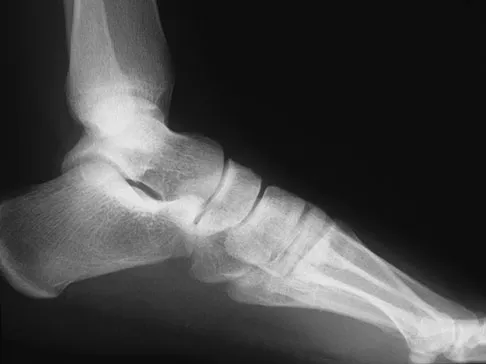
Intra-articular fractures of the calcaneus often include depression of the posterior facet of the subtalar joint. This can lead to dorsiflexion of the talus because of diminished height posteriorly. In a weight-bearing position, the dorsal surface of the talar neck can impinge against the distal tibia, causing anterior ankle pain. In addition, posttraumatic arthritis of the subtalar joint typically occurs after a calcaneus fracture. The patient's symptoms are consistent with both anterior ankle impingement and subtalar degenerative arthritis. The Bohler angle, approximately 15 degrees, confirms depression of the posterior facet. Distraction subtalar arthrodesis with a corticocancellous bone block autograft will improve talar declination, decrease anterior impingement, and address the subtalar degenerative arthritis simultaneously. Rammelt S, Grass R, Zawadski T, et al: Foot function after subtalar distraction bone-block arthrodesis: A prospective study. J Bone Joint Surg Br 2004;86:659-668.


Question 3

A 42-year-old woman who observes traditional Muslim practices is seen in your office accompanied by her physician husband to discuss possible elective bunion correction. In considering the treatment of this patient, what is one of the most important considerations?


Explanation

In considering faith-based issues regarding treatment of this patient, the presence of her husband for the office visit would imply an agreement with her decision to have surgery. It also may facilitate her examination. Her role as caregiver, dietary concerns, and cleansing rituals are less important considerations with an outpatient-based procedure. Privacy concerns remain paramount to Muslim women, which include limited exposure during examination, during surgery, and in subsequent follow-up visits.

Question 4

A 35-year-old female runner reports progressive vague aching pain involving her midfoot. Her pain is most notable when running. She denies specific injury. Examination reveals minimal swelling and localized tenderness over the dorsal medial midfoot and navicular. Radiographs and an MRI scan are shown in Figures 37a through 37c. What is the most appropriate management?


Explanation

A high index of suspicion is required to identify a possible navicular stress fracture, especially in runners. High pain tolerance in the competitive athlete and often minimal swelling contribute to frequent delays in diagnosis. Localized tenderness over the dorsal navicular (so-called "N spot") in a running athlete should alert the treating physician. In this patient, the radiographs are negative and the MRI scan shows marrow edema within the navicular. This could represent a stress reaction, stress fracture, or osteonecrosis. Appropriate management should include non-weight-bearing immobilization and obtaining a CT scan to determine if a fracture is present. Early surgical treatment may be considered but only if a fracture is identified. Lee A, Anderson R: Stress fractures of the tarsal navicular. Foot Ankle Clin 2004;9:85-104.


Question 5

A 47-year-old woman underwent a bunionectomy and hallux valgus correction a few years ago. She now has the complication shown in Figures 38a and 38b. She has no pain with motion of the metatarsophalangeal or interphalangeal joints. What is the best reconstructive option in this setting?


Explanation

The patient has a flexible hallux varus that is a complication of the bunion surgery. With joints that are not arthritic and still flexible, a medial release is necessary to realign the joint. The extensor hallucis longus split transfer helps maintain position and still preserve motion at the interphalangeal joint level. Arthrodesis is a salvage procedure. Soft-tissue releases alone are most likely inadequate. Excision of the lateral sesamoid is contraindicated because that further compromises the forces resisting hallux varus. Phalangeal osteotomy would not address the medial subluxation at the metatarsophalangeal joint. Richardson EG (ed): Orthopaedic Knowledge Update: Foot and Ankle 3. Rosemont, IL, American Academy of Orthopaedic Surgeons, 2004, pp 27-32.


Question 6

A 43-year-old man reports a 3-year history of progressively worsening pain in the first metatarsophalangeal joint that is aggravated by activity. Larger shoes, intra-articular corticosteroid injections, and a Morton's extension pedorthic have failed to provide relief. Motion is limited to 10 degrees of dorsiflexion, and the "grind test" is positive. An AP radiograph is shown in Figure 39. What is the most appropriate surgical treatment?


Explanation

Stage III hallux rigidus comprises end-stage degenerative arthritis with loss of cartilage from the phalanx and metatarsal. Therefore, cheilectomy, osteotomy, and resection arthroplasty are inadequate. Resection arthroplasty results in diminished propulsion and transfer metatarsalgia. Resurfacing implant hemiarthroplasty remains unproven for earlier stages of hallux rigidus, but is not appropriate when there is cartilage loss from the base of the proximal phalanx. First metatarsophalangeal arthrodesis has proven to be a very reliable and functional treatment of end-stage hallux rigidus. Gibson JN, Thomson CE: Arthrodesis or total replacement arthroplasty for hallux rigidus: A randomized controlled trial. Foot Ankle Int 2005;26:680-690.


Question 7

A 12-year-old girl who plays softball has chronic lateral hindfoot aching pain that is aggravated by weight-bearing activity. She reports that the pain has recurred after initial improvement with cast immobilization, and it continues to limit her overall level of activity. Radiographs are seen in Figures 40a through 40c. What is the most appropriate surgical treatment?


Explanation

The patient has a calcaneonavicular tarsal coalition. Symptoms of calcaneonavicular coalitions typically are seen between the ages of 10 and 14 years. The cause of pain has not been clearly established. It has been postulated that the coalition stiffens with maturity and microfractures can result, producing pain. Resection of a calcaneonavicular coalition generally has been associated with a satisfactory result. Soft-tissue interposition, most commonly using the extensor digitorum brevis muscle, appears to be helpful. A hindfoot arthrodesis (usually triple) would be reserved if coalition resection proves to be unsuccessful. Achilles tendon lengthening and orthotic support, as well as debridement of the sinus tarsi, are not expected to result in a satisfactory outcome. The patient does not have a flatfoot deformity. Vaccaro AR (ed): Orthopaedic Knowledge Update 8. Rosemont, IL, American Academy of Orthopaedic Surgeons, 2005, pp 757-765.


Question 8

A 38-year-old man underwent a transtibial amputation for chronic posttraumatic foot and ankle pain and chronic calcaneal osteomyelitis. Postoperative radiographs are seen in Figures 41a and 41b. What is the proposed purpose of the surgical modification seen in the radiographs?


Explanation

The Ertl modification of a below-knee amputation has been proposed to create a more stable "platform" to aid in transferring the load of weight bearing between the residual limb and the prosthetic socket. It is felt that a stable platform allows total contact loading over an enlarged stable surface area. Early studies have suggested that this modification may enhance the patient's perceived functional outcome. Pinzur MS, Pinto MA, Saltzman M, et al: Health-related quality of life in patients with transtibial amputation and reconstruction with bone bridging of the distal tibia and fibula. Foot Ankle Int 2006;27:907-912.


Question 9

Figures 42a through 42c show the clinical photographs and radiograph of a patient with diabetes mellitus who lives independently. The patient was admitted to the hospital late yesterday afternoon with clinical signs of sepsis. Parenteral antibiotic therapy resolved the sepsis, and blood glucose levels are now well controlled. The patient has no palpable pulses. The ankle-brachial index is 0.70. Laboratory studies show a WBC count of 8,500/mm3, a serum albumin of 1.9 g/dL, and a total lymphocyte count of 1,500/mm3. What treatment has the best potential to optimize his survival and independence?


Explanation

The patient was admitted to the hospital with sepsis. The sepsis has resolved, leaving the patient with a negative nitrogen balance. Now that the patient is stable, metabolic support should be used to optimize his nutrition. If the serum albumin can be increased to 2.5 g/dL, he has an excellent potential to heal an amputation at the Syme ankle disarticulation level; a level that will optimize his functional independence. Pinzur MS, Stuck RR, Sage R, et al: Syme ankle disarticulation in patients with diabetes. J Bone Joint Surg Am 2003;85:1667-1672.


Question 10

A toddler is brought in by his parents for evaluation of gait problems. Birth history and neurologic examination are unremarkable. After evaluating femoral torsion, tibial torsion, and foot contour, the diagnosis is excessive internal tibial torsion. The parents should be advised to expect which of the following outcomes?


Explanation

Excessive internal tibial torsion is a common cause of intoeing in toddlers. In most children, this resolves spontaneously by 3 to 4 years of age. Intoeing in elementary age children is usually the result of excessive femoral anteversion. Studies have shown that active intervention (casting, splinting, and shoe modifications) has no demonstrable effect on the natural history or resolution of tibial torsion. Surgery is rarely indicated in adolescents with severe internal tibial torsion that has not resolved and is resulting in cosmetic and functional problems. Canale ST, Beaty JH: Operative Pediatric Orthopaedics. St Louis, MO, Mosby Year Book, 1991, pp 357-385.

Question 11

Arthrodesis of which of the following joints has the greatest cumulative effect on midfoot/hindfoot motion?


Explanation

Arthrodesis of the talonavicular joint eliminates almost all hindfoot motion. Arthrodesis of the subtalar joint eliminates 74% of talonavicular motion and 44% of calcaneocuboid motion. Arthrodesis of the calcaneocuboid joint eliminates 33% of talonavicular motion and 8% of subtalar motion. Arthrodesis of the naviculocuneiform or cuboid-fifth metatarsal joint has limited effect on hindfoot motion. Astion DJ, Deland JT, Otis JC, et al: Motion of the hindfoot after simulated arthrodesis. J Bone Joint Surg Am 1997;79:241-246.

Question 12

A 51-year-old man sustained an open fracture of his tibia in Korea 42 years ago. An infection developed and it was resolved with surgical treatment. For the past 6 months, an ulcer with mild drainage has developed over the medial tibia. The ulcer is small and there is minimal erythema at the ulcer site. A radiograph and MRI scan are shown in Figures 43a and Figure 43b. Initial cultures show Staphylococcus aureus susceptible to the most appropriate antibiotics. Laboratory studies show an erythrocyte sedimentation rate of 70 mm/h. What is the most appropriate surgical treatment at this time?


Explanation

The patient has chronic tibial osteomyelitis that is due to low virulent bacteria. The history and studies do not suggest the need for an amputation or a free-flap procedure. This is a localized tibial infection that is in a healed bone; there is no need to resect the entire area of the tibia bone around the infection. The most appropriate treatment is curettage, debridement of nonviable bone, and placement of absorbable antibiotic beads, followed by a course of IV antibiotics from 1 to 4 weeks and a 6-week course of oral antibiotics. Studies have shown that in cases of localized osteomyelitis that are of low virulence, as little as 1 week of IV antibiotics followed by 6 weeks of oral antibiotics is successful. Patzakis MJ, Zalavras CG: Chronic posttraumatic osteomyelitis and infected nonunion of the tibia: Current management concepts. J Am Acad Orthop Surg 2005;13:417-427.


Question 13

Which of the following best describes the relationship of the anterior tibial artery and dorsalis pedis artery to the extensor hallucis longus (EHL) tendon as they progress from the level of the ankle to the dorsum of the foot?


Explanation

At the ankle level, the anterior tibial artery lies medial to the EHL tendon. The artery becomes the dorsalis pedis after crossing onto the dorsum of the foot. At this point, the artery lies lateral to the tendon. Resch S: Functional anatomy and topography of the foot and ankle, in Myerson M (ed): Foot and Ankle Disorders. Philadelphia, PA, WB Saunders, 2000, vol 1, pp 25-49.

Question 14

A 42-year-old man reports a 12-month history of a painful fusiform swelling of the Achilles tendon. Physical therapy, heel lifts, and anti-inflammatory drugs have failed to provide relief. MRI scans are shown in Figures 44a and 44b. What is the treatment of choice?


Explanation

The area of the tendon degeneration is greater than 50% of the width so a supplemental tendon transfer is needed. Debridement and repair alone do not provide adequate strength. Injection risks tendon rupture. Brisement is indicated for peritendinitis, not tendinosis. Nonsurgical management is unlikely to be of benefit after 12 months. Richardson EG (ed): Orthopaedic Knowledge Update: Foot and Ankle 3. Rosemont, IL, American Academy of Orthopaedic Surgeons, 2004, pp 94-95.


Question 15

A 35-year-old man is seen for evaluation of his left ankle following multiple previous ankle sprains and frequent episodes of the ankle giving way. Examination reveals marked laxity about the lateral ankle with associated tenderness along the peroneal tendons. Physical therapy, anti-inflammatory drugs, and supportive bracing have failed to provide relief. An MRI scan shows peroneal tenosynovitis and a possible tear. He elects to undergo a peroneal tendon repair and lateral ligament reconstruction. Which of the following best describes the structure labeled "A" in Figure 45?


Explanation

The structure labeled "A" is a peroneus quartus, a supernumary muscle arising most commonly from the peroneus brevis. The presence of peroneus quartus is not uncommon, with an incidence of up to 21%, and is associated with lateral ankle pain and peroneal tendon symptoms, theoretically as a result of mass effect within the peroneal tendon sheath. Zammit J, Singh D: The peroneus quartus muscle: Anatomy and clinical relevance. J Bone Joint Surg Br 2003;85:1134-1137.


Question 16

You are asked to evaluate the patient whose current clinical photographs are shown in Figures 46a and 46b following aortic valve replacement 9 days ago. He is currently taking anticoagulation medication. He has no systemic signs of sepsis. What is the best management?


Explanation

These lesions are emboli related to the cardiac surgery, and the patient is already on anticoagulation medication. The foot reveals no signs consistent with gangrene or infection. Unless the patient shows local or systemic signs of sepsis, the best management is observation. It is unlikely that formal debridement will be necessary. Bowker JH, Pfeiffer MA (eds): The Diabetic Foot. St Louis, MO, Mosby, 2001, pp 219-260.


Question 17

A 48-year-old woman with a history of a spinal cord injury as a teenager, has unilateral weakness in the left lower extremity. She has used an ankle-foot orthosis for many years without difficulty but recently has had a recurrent painful callus beneath the great toe that has been recalcitrant to nonsurgical management. Examination reveals intact sensation with an intractable plantar keratosis (IPK) beneath the first metatarsal head. Motor examination reveals no active ankle or great toe dorsiflexion, and 4/5 plantar flexion strength at the ankle and great toe. Passive ankle dorsiflexion is 10 degrees, whereas passive plantar flexion is 40 degrees. Passive great toe dorsiflexion is 30 degrees and plantar flexion is 10 degrees. Foot alignment on standing is normal. Radiographs are shown in Figures 47a and 47b with a marker beneath the IPK. Based on her request for surgical treatment, what is the most appropriate procedure?


Explanation

Passive dorsiflexion is adequate to accommodate standing erect without excessive pressure, and a gastrocnemius recession may lead to more instability. Complete excision of the medial sesamoid could lead to an iatrogenic hallux valgus deformity. She does not have a cock-up toe deformity; therefore, a flexor hallucis longus tendon transfer is not warranted. There is no significant foot deformity; therefore, a dorsiflexion osteotomy is not warranted. The appropriate procedure is planing of the plantar half of the medial sesamoid, thereby preserving its function while diminishing the excessive pressure. Grace DL: Sesamoid problems. Foot Ankle Clin 2000;5:609-627. Mizel MS, Miller RA, Scioli MW (ed): Orthopaedic Knowledge Update: Foot and Ankle 2. Rosemont, IL, American Academy of Orthopaedic Surgeons, 1998, pp 135-150.


Question 18

The cavovarus deformity associated with Charcot-Marie-Tooth (CMT) disease is caused by which of the following?


Explanation

The most common inherited neuromuscular disease seen by orthopaedic surgeons is CMT, which is an inherited autosomal-dominant disease. It is more commonly seen in men due to the nature of the inheritance. Identification of cavus deformity in the foot of a child should arouse suspicion. Richardson EG (ed): Orthopaedic Knowledge Update: Foot and Ankle 3. Rosemont, IL, American Academy of Orthopaedic Surgeons, 2004, pp 135-143. Charcot-Marie-Tooth Disease (CMT) Penn State Hershey Medical Center. www.hmc.psu.edu/healthinfo/c/cmt.htm

Question 19

When performing a gastrocnemius recession, what structure should be protected?


Explanation

When performing a gastrocnemius slide at the tendinous portion of the gastrocnemius insertion, the sural nerve and saphenous vein, which tend to run midline posterior at this level, must be protected and retracted laterally. An anatomic study of the sural nerve at this level localized the nerve superficial to the deep fascia overlying the gastrocnemius in 42.5% of the cases; deep to the superficial fascia in 57.5% of the cases, and directly applied to the gastrocnemius tendon in 12.5% of cases. Pinney SJ, Sangeorzan BJ, Hanen ST Jr: Surgical anatomy of the gastrocnemius resection (Strayer procedure). Foot Ankle Int 2004;25:247-250.

Question 20

A 59-year-old woman underwent open reduction and internal fixation (ORIF) of her ankle 6 months ago, with subsequent hardware removal 3 months later. She now reports persistent, diffuse ankle pain, swelling, and limited range of motion. Figure 48 shows an oblique radiograph of the ankle. What is the next most appropriate step in management?


Explanation

The radiographs demonstrate persistent widening of the medial clear space with an ossicle. This represents soft-tissue interposition-scar tissue, the deltoid ligament, or the posterior tibialis tendon. Physical therapy will not improve the symptomatic malalignment. Hardware removal would be indicated for pain localized to the lateral fibula. Repeat syndesmotic screw fixation alone will not reduce the malalignment. Deltoid ligament repair may be necessary but will need to be combined with debridement of the medial ankle and syndesmosis, as well as repeat placement of one or more syndesmotic screws to maintain the reduction. Weening B, Bhandari M: Predictors of functional outcome following transsyndesmotic screw fixation of ankle fractures. J Orthop Trauma 2005;19:102-108.


Question 21

A farmer is seen in the emergency department after falling out of a hay loft onto the barn floor below. He is unable to bear weight. Exploration of a 0.5 cm laceration over the anterior tibia reveals bone. Radiographs reveal oblique displaced midshaft tibial and fibular fractures. Based on these findings, what is the most appropriate antibiotic prophylaxis?


Explanation

A farm injury is automatically considered a grade III (Gustillo classification) injury regardless of size, energy, or additional soft-tissue injury due to the likelihood of substantial contamination. Antibiotic recommendations for grade III injuries include a first- or second-generation cephalosporin with an aminoglycoside or fluoroquinolone within 3 hours of injury, with penicillin added for farm injuries. Okike K, Bhattacharyya T: Trends in the management of open fractures: A critical analysis. J Bone Joint Surg Am 2006;88:2739-2748.

Question 22

A 66-year-old patient with type 1 diabetes mellitus has a deep, nonhealing ulcer under the first metatarsal head and a necrotic tip of the great toe. He has been under the direction of a wound care clinic for 4 months, and has had orthotics and shoe wear changes. What objective findings are indicative of the patient's ability to heal the wound postoperatively?


Explanation

Absolute toe pressures greater than 40 to 50 mm Hg are a good sign of healing potential. An ABI of greater than 0.45 favors healing, but indices greater than 1 are falsely positive due to calcifications in the vessels. Normal albumin is an overall indication of nutritional status. A transcutaneous oxygen level should be greater than 40 mm Hg for healing. Mizel MS, Miller RA, Scioli MW (eds): Orthopaedic Knowledge Update: Foot and Ankle 2. Rosemont, IL, American Academy of Orthopaedic Surgeons, 1998, pp 113-122.

Question 23

Which of the following have been found to affect the rate of perioperative infections or wound complication rates in foot and ankle surgery?


Explanation

Clinical studies have shown that smoking cessation for 4 weeks reduces the risk of infection to the level of nonsmokers. Adverse effects on wound healing caused by chemotherapy used to treat rheumatoid arthritis has not been borne out in the literature. Bibbo C, Anderson RB, Davis WH, et al: The influence of rheumatoid chemotherapy, age, and presence of rheumatoid nodules on postoperative complications in rheumatoid foot and ankle surgery: Analysis of 725 procedures in 104 patients. Foot Ankle Int 2003;24:40-44. Bibbo C, Goldberg JW: Infections and healing complications after elective orthopaedic foot and ankle surgery during tumor necrosis factor-alpha inhibition therapy. Foot Ankle Int 2004;25:331-335.

Question 24

Intrinsic muscles of the foot act on the toes by


Explanation

Intrinsic muscles of the foot function to flex the metatarsophalangeal joints and extend the interphalangeal joints. Myerson MS, Shereff MJ: The pathologic anatomy of claw and hammertoes. J Bone Joint Surg Am 1989;71:45-49.

Question 25

A 23-year-old woman with a history of bilateral recurrent ankle sprains, progressive cavovarus feet, and a family history of high arches and foot deformities is seen for evaluation. Management consisting of bracing and physical therapy has been poorly tolerated. Heel varus is partially corrected with a Coleman block. There are thick calluses under the first metatarsal heads. Sensation to touch and Weinstein monofilament is normal. Tibialis anterior and peroneus brevis are weak but present. What is the most appropriate management?


Explanation

The history and presentation are consistent with type I Charcot-Marie-Tooth (CMT), the most common form of hereditary peripheral motor sensory neuropathy. Type I CMT is the most common, occurring in 50% of patients with CMT, and is characterized by marked slowing of motor neuron velocities, and inconsistent slowing of sensory neuron velocities. Peroneus longus to brevis transfer is indicated to release the overpull of the peroneus longus, and restore the eversion and dorsiflexion function of the peroneus brevis. A lateralizing calcaneal osteotomy with proximal translation is indicated to correct heel varus given that the Coleman block only allows for partial correction of heel varus. Proximal translation of the posterior tuber corrects for the increased calcaneal dorsiflexion, improving the lever arm for the triceps surae. A medial column closing wedge osteotomy is often required to correct a rigid, or semirigid plantar flexed first ray to allow for a balanced, plantigrade foot. Triple arthrodesis is indicated for rigid, arthritic hindfoot deformities. Transfer of the posterior tibial tendon to the tibialis anterior is not indicated since it is an out-of-phase transfer. Transfer of the posterior tibial tendon, when performed, should be to the lateral aspect of the foot. A medializing calcaneal osteotomy would accentuate the heel varus. There is no indication for Botox in CMT; Botox injection of the calf would further weaken push-off during gait. Bracing of a progressive semirigid or rigid deformity is not recommended. Younger AS, Hansen ST Jr: Adult cavovarus foot. J Am Acad Orthop Surg 2005;13:302-315. Sammarco GJ, Taylor R: Cavovarus foot treated with combined calcaneus and metatarsal ostetotomies. Foot Ankle Int 2001;22:19-30.

Question 26

A 45-year-old active man sustains an acute, closed Achilles tendon rupture. He is evaluating his treatment options between surgical repair and nonoperative management with early functional rehabilitation. Based on recent high-quality randomized controlled trials, what is the most accurate information to provide regarding his outcomes?


Explanation

Recent RCTs show that nonoperative management utilizing early functional rehabilitation protocols has equivalent functional outcomes, strength, and re-rupture rates compared to surgical repair. Surgery is associated with higher rates of superficial and deep wound complications.

Question 27

A 14-year-old boy sustains a Salter-Harris type III fracture of the anterolateral distal tibia. Which of the following accurately describes the mechanism of this injury and the anatomic structure responsible for the fracture pattern?


Explanation

This describes a juvenile Tillaux fracture, which is an avulsion of the anterolateral distal tibial epiphysis. It is caused by an external rotation force with avulsion mediated by the anterior inferior tibiofibular ligament (AITFL) before the lateral physis closes.

Question 28

A 52-year-old woman presents with severe pes planovarus deformity. She has inability to perform a single-leg heel raise, marked forefoot abduction, and talonavicular uncoverage of 45% on standing AP foot radiographs. The deformity is fully flexible on examination. Which of the following is the most appropriate surgical management?


Explanation

This patient has stage IIb adult-acquired flatfoot deformity (flexible, with significant forefoot abduction/>30% talonavicular uncoverage). Optimal treatment includes an FDL transfer, medial displacement calcaneal osteotomy, and a lateral column lengthening to correct the forefoot abduction.

Question 29

A 22-year-old professional ballet dancer complains of chronic posterior ankle pain that is worsened when performing "en pointe" (maximal plantarflexion). Radiographs demonstrate a prominent os trigonum. Nonoperative management has failed. What is the most appropriate next step in management?


Explanation

Posterior ankle impingement often affects ballet dancers due to extreme plantarflexion. Excision of the os trigonum and FHL tenolysis (commonly performed endoscopically) is the gold standard after failed conservative care, yielding high return-to-sport rates.

Question 30

A 45-year-old man sustains a high-energy pilon fracture with severe soft tissue swelling and fracture blisters. A spanning external fixator is applied. What is the most reliable clinical indicator that the soft tissues are ready for definitive open reduction and internal fixation (ORIF)?


Explanation

Definitive ORIF of high-energy pilon fractures must be delayed until soft tissue swelling subsides to minimize wound breakdown and infection. The return of skin wrinkles (the "wrinkle sign") is the most reliable clinical indicator.

Question 31

A 58-year-old man with uncontrolled type 2 diabetes presents with a red, hot, swollen right foot. He recalls no trauma. Radiographs show periarticular fragmentation, subluxation of the tarsometatarsal joints, and bounding pedal pulses. What is the most appropriate initial treatment?


Explanation

This is a classic presentation of acute (Eichenholtz stage I) Charcot arthropathy. The mainstay of initial treatment to prevent progressive deformity and collapse is offloading with a total contact cast and strict non-weight-bearing.

Question 32

Which of the following represents an absolute contraindication to a total ankle replacement (TAR) for end-stage ankle arthritis?


Explanation

Absolute contraindications for TAR include active infection, severe neuroarthropathy (Charcot), lack of lower extremity muscle function, and extensive avascular necrosis of the talus, which precludes adequate component fixation.

Question 33

A 48-year-old man presents with an Achilles tendon tear that occurred 8 weeks ago but was misdiagnosed as an ankle sprain. MRI demonstrates a complete Achilles tendon rupture with a 5.5 cm gap. What is the most appropriate surgical management?


Explanation

Chronic Achilles ruptures with large gaps (>3-5 cm) cannot be primarily repaired. They require biologic augmentation such as a V-Y advancement or turndown flap, typically combined with an FHL transfer to restore plantarflexion strength.

Question 34

A 62-year-old diabetic patient with significant peripheral neuropathy sustains a bimalleolar equivalent ankle fracture. When comparing the postoperative management of this patient to a non-diabetic patient, what modification is most strongly recommended?


Explanation

Diabetic patients with neuropathy have significantly higher rates of hardware failure, nonunion, and Charcot arthropathy post-fracture. Treatment requires augmented fixation constructs and a doubled duration of non-weight-bearing immobilization (often 10-12 weeks).

Question 35

A 35-year-old woman presents with a symptomatic hallux valgus deformity. Examination reveals hypermobility of the first tarsometatarsal (TMT) joint. Radiographs show a hallux valgus angle of 40 degrees and an intermetatarsal angle of 18 degrees. Which of the following procedures is most appropriate?


Explanation

The Lapidus procedure (first TMT arthrodesis) is indicated for moderate to severe hallux valgus deformities, especially in the setting of first ray hypermobility, as it addresses the instability at the apex of the deformity.

Question 36

A 21-year-old collegiate basketball player sustains a zone 2 (Jones) fracture of the proximal fifth metatarsal. He wishes to return to play as safely and quickly as possible. What is the recommended treatment?


Explanation

Zone 2 (Jones) fractures in elite or competitive athletes are best treated with intramedullary screw fixation. This provides a faster return to play and a lower nonunion rate compared to conservative management.

Question 37

A patient with bilateral cavovarus feet undergoes a Coleman block test. When the lateral border of the foot is placed on the block and the first metatarsal is allowed to drop off, the hindfoot varus corrects to neutral. What does this physical examination finding indicate?


Explanation

The Coleman block test evaluates hindfoot flexibility in cavovarus deformities. If the hindfoot corrects to neutral when the first ray drops, the hindfoot is flexible, and the deformity is driven by a plantarflexed first ray, treatable with a 1st metatarsal dorsiflexion osteotomy.

Question 38

Which of the following injury patterns represents a Lauge-Hansen Supination-Adduction (SAD) stage II ankle fracture?


Explanation

In the Lauge-Hansen Supination-Adduction classification, Stage I is a transverse avulsion fracture of the lateral malleolus below the joint line, and Stage II includes the addition of a vertical shear fracture of the medial malleolus.

Question 39

A 24-year-old marathon runner presents with 6 weeks of vague dorsal midfoot pain. Radiographs are normal, but a CT scan reveals a non-displaced incomplete fracture of the dorsal aspect of the navicular. What is the most appropriate initial treatment?


Explanation

Non-displaced navicular stress fractures have a high risk of nonunion due to a tenuous central blood supply. The standard of care for initial management is strict non-weight-bearing in a cast for 6-8 weeks.

Question 40

A 68-year-old woman with a history of generalized osteoarthritis presents with significant pain and stiffness in her big toe. Radiographs show absent joint space, marked osteophytosis, and subchondral sclerosis at the first metatarsophalangeal (MTP) joint. She has failed shoe modifications and NSAIDs. What is the gold standard surgical treatment?


Explanation

The patient has end-stage (Grade 3/4) hallux rigidus. The gold standard surgical treatment providing the most reliable long-term pain relief and functional outcome is a first MTP joint arthrodesis.

Question 41

Following open reduction and internal fixation of an unstable ankle fracture with a suspected syndesmotic injury, intraoperative fluoroscopy is used to assess reduction. However, literature shows plain radiography is often inadequate. What is the most sensitive and specific imaging modality to assess syndesmotic malreduction?


Explanation

Bilateral axial CT scanning is the most sensitive and specific imaging modality for diagnosing subtle syndesmotic malreduction postoperatively, detecting malrotation and widening missed by plain radiographs.

Question 42

A 55-year-old overweight man presents with chronic, severe posterior heel pain. Examination reveals a prominent pump bump. MRI shows a massive intratendinous calcification and tendinosis involving 60% of the insertional Achilles tendon. During surgical debridement, more than 50% of the tendon footprint must be excised. What is the most appropriate additional step in the procedure?


Explanation

In insertional Achilles tendinopathy, if surgical debridement requires detachment or excision of >50% of the Achilles insertion, an FHL tendon transfer is indicated to augment repair and provide blood supply and plantarflexion strength.

Question 43

A 32-year-old man presents to the emergency department after a twisting injury to his leg. Examination shows tenderness over the medial ankle and the proximal fibula. Radiographs reveal an isolated proximal third fibula shaft fracture and a widened medial clear space. What ligamentous structure is critically torn extending from the ankle to the proximal fibula?


Explanation

This is a Maisonneuve fracture. The injury pattern typically involves a rupture of the medial structures (deltoid or medial malleolus) and disruption of the syndesmosis, which extends proximally through the interosseous membrane to exit as a proximal fibula fracture.

Question 44

The Achilles tendon is highly susceptible to rupture in a specific 'watershed' region due to a relative zone of hypovascularity. Where is this region anatomically located?


Explanation

The Achilles tendon has a watershed zone of poor vascularity located 2 to 6 cm proximal to its calcaneal insertion. This relative ischemia makes it the most common site for degenerative changes and acute ruptures.

Question 45

A 28-year-old man requires operative fixation for a syndesmotic injury after a pronation-external rotation ankle fracture. When comparing dynamic flexible fixation (suture-button) to static fixation (syndesmotic screws), recent literature suggests which of the following regarding flexible fixation?


Explanation

Dynamic flexible fixation (suture-button constructs) for syndesmosis injuries is associated with lower rates of malreduction, no need for routine hardware removal, and slightly superior functional outcomes compared to rigid screw fixation.

Question 46

A 35-year-old man sustains a pronation-external rotation ankle fracture. Following open reduction and internal fixation of the medial and lateral malleoli, the Cotton test is positive. What is the most appropriate next step in management?


Explanation

A positive Cotton test indicates syndesmotic instability after malleolar fixation. It requires stabilization using syndesmotic screws or a flexible suture button construct.

Question 47

A 28-year-old male presents with a severe ankle injury after a fall. Radiographs reveal a fracture-dislocation that is irreducible by closed means. It is identified as a Bosworth fracture-dislocation. Which anatomical event prevents closed reduction in this injury pattern?


Explanation

A Bosworth fracture-dislocation is characterized by the proximal fragment of the fibula becoming entrapped behind the posterior tubercle of the tibia, requiring open reduction.

Question 48

A 45-year-old man presents with a 3-month history of plantar flexion weakness following a 'pop' in his calf. MRI shows an Achilles tendon rupture with a 5 cm gap. What is the most appropriate surgical management?


Explanation

For chronic Achilles ruptures with a gap greater than 3 to 4 cm, direct repair is usually impossible. V-Y advancement or flexor hallucis longus (FHL) transfer is required to bridge the defect.

Question 49

A 50-year-old runner has chronic posterior heel pain. Imaging shows a Haglund deformity and insertional Achilles calcification. During surgery, more than 50% of the Achilles tendon insertion is detached to completely debride the calcific tendinosis. What additional procedure is recommended?


Explanation

When debridement of insertional Achilles tendinosis requires detaching more than 50% of the tendon footprint, augmenting the repair with an FHL transfer is recommended to prevent rupture.

Question 50

A 22-year-old woman with Charcot-Marie-Tooth disease presents with a bilateral cavovarus foot deformity. On examination, her hindfoot varus corrects completely when the lateral foot is placed on a Coleman block. What does this indicate regarding her deformity?


Explanation

The Coleman block test evaluates hindfoot flexibility. Correction of hindfoot varus when the first ray drops off the block indicates a flexible hindfoot driven by a plantarflexed first ray.

Question 51

A 55-year-old overweight woman complains of medial ankle pain and a collapsing arch. She is unable to perform a single-leg heel raise. Examination shows a flexible flatfoot deformity. Which surgical treatment is most appropriate after failure of conservative care?


Explanation

Stage II adult acquired flatfoot deformity is characterized by a flexible deformity and posterior tibial tendon dysfunction. Joint-sparing procedures like medial displacement calcaneal osteotomy and FDL transfer are indicated.

Question 52

A 45-year-old woman presents with a painful bunion. Radiographs reveal a hallux valgus angle (HVA) of 38 degrees, an intermetatarsal angle (IMA) of 16 degrees, and hypermobility of the first tarsometatarsal (TMT) joint. What is the most appropriate surgical option?


Explanation

For a moderate-to-severe hallux valgus deformity combined with hypermobility of the first TMT joint, the Lapidus procedure provides excellent correction and stability to the medial column.

Question 53

When managing a trimalleolar ankle fracture, what is a primary surgical indication for internal fixation of the posterior malleolus?


Explanation

Fixation of the posterior malleolus is strongly indicated if there is persistent posterior talar subluxation or syndesmotic instability after fixing the medial and lateral malleoli.

Question 54

A 21-year-old collegiate basketball player sustains an acute fracture at the metaphyseal-diaphyseal junction of the fifth metatarsal (Jones fracture). He wishes to return to play as soon as possible. What is the most appropriate treatment?


Explanation

In elite athletes, acute Jones fractures are best treated with intramedullary screw fixation to minimize the risk of nonunion and allow for an accelerated return to play.

Question 55

Recent randomized controlled trials comparing nonoperative and operative treatment for acute Achilles tendon ruptures utilizing functional rehabilitation protocols have demonstrated which of the following?


Explanation

Modern functional rehabilitation protocols featuring early weight-bearing and motion have equalized the re-rupture rates between operative and nonoperative management of Achilles tendon ruptures.

Question 56

A 25-year-old man injured his midfoot during a football game. Weight-bearing radiographs show 3 mm of widening between the base of the first and second metatarsals. What is the most appropriate treatment?


Explanation

A Lisfranc injury demonstrating instability (widening >2 mm between the 1st and 2nd metatarsal bases) requires surgical stabilization via ORIF or primary arthrodesis.

Question 57

An extensile lateral approach is planned for open reduction internal fixation of a displaced intra-articular calcaneus fracture. Which of the following nerves is at greatest risk of injury during this surgical approach?


Explanation

The sural nerve is highly vulnerable during the extensile lateral approach to the calcaneus. A full-thickness subperiosteal flap must be developed to protect it.

Question 58

A 14-year-old boy sustains an external rotation ankle injury. Radiographs reveal a fracture of the anterolateral aspect of the distal tibial epiphysis (Tillaux fracture). What is the underlying anatomical reason for this specific fracture pattern?


Explanation

The distal tibial physis closes from central, to medial, to anterolateral. The open anterolateral physis is the point of least resistance, leading to avulsion by the AITFL.

Question 59

A 35-year-old male sustains an acute Achilles tendon rupture while playing basketball. He opts for nonoperative management. Which of the following functional rehabilitation protocols is associated with outcomes most comparable to surgical repair?


Explanation

Early functional weight-bearing protocols using a functional brace with heel lifts provide re-rupture rates comparable to surgical repair. This approach minimizes muscle atrophy and tendon lengthening while safely loading the healing tendon.

Question 60

A 30-year-old male presents to the emergency department after a high-energy fall. Radiographs demonstrate a displaced fracture of the lateral malleolus with a complete posterior dislocation of the talus. Closed reduction is attempted but is unsuccessful, and a dimple sign is noted over the posterolateral ankle. What anatomical structure is most likely blocking reduction?


Explanation

This presentation is highly characteristic of a Bosworth fracture-dislocation. The proximal fibular fragment becomes incarcerated behind the posterior tubercle of the tibia, making closed reduction impossible and necessitating urgent open reduction.

Question 61

A 55-year-old male with long-standing, poorly controlled diabetes presents with a swollen, erythematous, and warm left foot. Radiographs reveal fragmentation and subluxation of the tarsometatarsal joints, but no obvious gas or focal osteomyelitis. What is the most appropriate initial management?


Explanation

The patient is presenting with acute Stage 0 or 1 Charcot arthropathy. The gold standard for initial treatment is immobilization with a total contact cast and non-weight-bearing to prevent further deformity and allow the acute inflammatory phase to subside.

Question 62

A 16-year-old male with Charcot-Marie-Tooth disease presents with bilateral cavovarus foot deformities. On examination, a Coleman block test completely corrects his hindfoot varus. What does this physical examination finding indicate?


Explanation

The Coleman block test nullifies the effect of a plantarflexed first ray. If the hindfoot varus corrects when the first ray drops off the block, the hindfoot is flexible, meaning surgical correction should focus on the forefoot (e.g., dorsiflexion osteotomy of the first metatarsal).

Question 63

A 14-year-old boy injures his ankle while skateboarding. Radiographs demonstrate a Salter-Harris III fracture of the anterolateral distal tibia. Avulsion of which of the following ligaments is responsible for this specific fracture pattern?


Explanation

This is a juvenile Tillaux fracture, caused by external rotation of the foot. The anterior inferior tibiofibular ligament (AITFL) avulses the anterolateral distal tibial epiphysis because the medial portion of the physis closes before the lateral portion.

Question 64

A 28-year-old male sustains a talar neck fracture following a motor vehicle collision. Six weeks post-open reduction and internal fixation, his radiographs demonstrate a subchondral radiolucent band in the dome of the talus. What is the prognostic significance of this finding?


Explanation

This finding is known as the Hawkins sign, representing subchondral osteopenia. It demonstrates that vascular supply to the talus is intact, as the bone must be vascularized to undergo osteoclastic resorption, indicating a very low risk of AVN.

Question 65

A 62-year-old female with peripheral neuropathy and uncontrolled diabetes sustains a displaced bimalleolar ankle fracture. Which of the following surgical strategies is most appropriate to minimize her risk of catastrophic failure and Charcot neuroarthropathy?


Explanation

Diabetic patients with peripheral neuropathy have a high risk of fixation failure, nonunion, and Charcot arthropathy following ankle fractures. They require augmented, rigid fixation (often twice the normal construct strength) and prolonged non-weight-bearing periods.

Question 66

A 68-year-old male is considering surgical options for end-stage primary ankle osteoarthritis. Which of the following is considered an absolute contraindication for a total ankle arthroplasty (TAA)?


Explanation

Severe peripheral neuropathy, lack of protective sensation, and active infection are absolute contraindications to total ankle arthroplasty. These conditions significantly increase the risk of implant failure, Charcot arthropathy, and soft tissue complications.

Question 67

A 55-year-old female presents with medial ankle pain and a progressively flattening arch. She is unable to perform a single-limb heel rise, but her hindfoot is passively correctable. Which of the following is the most standard surgical intervention for this stage of disease?


Explanation

The patient has Stage II adult-acquired flatfoot deformity (posterior tibial tendon dysfunction) characterized by a flexible deformity. Standard surgical treatment involves a joint-sparing procedure, combining a tendon transfer (FDL) with an osseous realignment (e.g., MDCO).

Question 68

A 40-year-old female sustains a trimalleolar ankle fracture. Recent literature regarding the posterior malleolus suggests that the indication for internal fixation is primarily based on which of the following factors?


Explanation

Modern treatment paradigms for posterior malleolar fractures focus on articular congruity and syndesmotic stability, as the PITFL remains attached to the fragment. Fixation is increasingly recommended even for smaller fragments if they contribute to syndesmotic instability.

Question 69

A 50-year-old male presents with chronic Achilles tendon rupture diagnosed 4 months after the initial injury. Intraoperatively, after debridement of the necrotic tendon ends, there is a 6-cm gap with the ankle in neutral. What is the most appropriate reconstructive option?


Explanation

Chronic Achilles ruptures with gaps greater than 5 cm typically require combined procedures for adequate tensioning and strength. A V-Y tendon advancement provides length, while an FHL transfer provides vascularity and mechanical augmentation.

Question 70

A 22-year-old competitive skier presents with recurrent lateral ankle pain and a snapping sensation behind the lateral malleolus. MRI confirms a tear of the superior peroneal retinaculum (SPR) with subluxation of the peroneal tendons. What is the most appropriate surgical treatment?


Explanation

Symptomatic recurrent peroneal tendon subluxation is treated by deepening the fibular groove and repairing or tightening the superior peroneal retinaculum. This restores the anatomic tunnel and prevents further subluxation.

Question 71

An ankle fracture characterized by a vertical fracture of the medial malleolus and a transverse fracture of the fibula below the level of the syndesmosis most likely corresponds to which Lauge-Hansen classification pattern?


Explanation

The Supination-Adduction (SAD) mechanism causes tension on the lateral side (transverse fibular fracture or lateral ligament tear) and compression on the medial side, resulting in a vertical shear fracture of the medial malleolus.

Question 72

A 45-year-old construction worker falls 15 feet, sustaining a highly comminuted, displaced intra-articular distal tibia (pilon) fracture. The soft tissues are severely swollen with early fracture blister formation. What is the most appropriate initial management?


Explanation

High-energy pilon fractures with compromised soft tissues are best managed with a staged protocol. Initial spanning external fixation maintains length and alignment while allowing the soft tissue envelope to recover before definitive ORIF.

Question 73

During the standard lateral extensile approach for open reduction and internal fixation of a displaced intra-articular calcaneus fracture, the surgical flap must be raised as a full-thickness subperiosteal layer. Which artery is the primary blood supply to this flap?


Explanation

The lateral calcaneal artery, a branch of the peroneal artery, provides the primary vascular supply to the lateral flap in a calcaneus approach. Raising a full-thickness subperiosteal flap protects this delicate blood supply and minimizes the risk of wound edge necrosis.

Question 74

A 55-year-old male runner presents with chronic posterior heel pain. Imaging shows a prominent retrocalcaneal exostosis (Haglund's deformity) and calcification within the Achilles tendon insertion. After 6 months of failed conservative management, surgical intervention is planned. This typically involves which of the following?


Explanation

Insertional Achilles tendinopathy with a Haglund's deformity requires excision of the bony prominence and diseased tendon. If significant tendon detachment is required for adequate debridement (often >50%), suture anchor reattachment is necessary.

Question 75

A 21-year-old elite collegiate basketball player sustains an acute Zone 2 fracture of the proximal fifth metatarsal. Which of the following treatments provides the fastest return to sport with the lowest nonunion rate in this specific patient population?


Explanation

Zone 2 (Jones) fractures in elite athletes are best treated with early intramedullary screw fixation. This approach significantly reduces the time to return to sport and lowers the high risk of nonunion associated with conservative management.

Question 76

A 25-year-old female presents with persistent ankle pain following a severe sprain 8 months ago. MRI demonstrates a 1.0 cm by 1.0 cm osteochondral lesion of the medial talar dome with intact overlying cartilage but deep edema. After failing conservative care, what is the best initial surgical intervention?


Explanation

For primary, symptomatic osteochondral lesions of the talus smaller than 1.5 cm squared, arthroscopic bone marrow stimulation (microfracture) is the gold standard initial surgical treatment, providing excellent results with low morbidity.

Question 77

A 32-year-old male sustains an inversion ankle injury. Clinical examination reveals pain over the anterior inferior tibiofibular ligament and a positive external rotation stress test. Initial non-weight-bearing radiographs are normal. What is the most appropriate next step to diagnose a subtle syndesmotic injury?


Explanation

Subtle, purely ligamentous syndesmosis injuries can be easily missed on static non-weight-bearing radiographs. Weight-bearing radiographs or MRI are essential for detecting hidden diastasis or confirming the ligamentous tear.

Question 78

A 48-year-old female presents with chronic, progressive midfoot pain and a newly developing planovarus deformity. Radiographs demonstrate comminution, sclerosis, and a 'comma-shaped' deformity of the tarsal navicular. What is the most likely diagnosis?


Explanation

Muller-Weiss syndrome is spontaneous adult-onset osteonecrosis of the tarsal navicular, characterized by a comma-shaped navicular and progressive midfoot collapse. Kohler disease is also navicular osteonecrosis but occurs in young children.

Question 79

A 35-year-old man sustains a pronation-external rotation ankle fracture. Intraoperatively, after fibular fixation, syndesmotic instability is noted along with a posterior malleolus fracture involving 15% of the articular surface. What is the biomechanically optimal management to stabilize the syndesmosis?


Explanation

ORIF of the posterior malleolus restores the posterior incisura and the posterior inferior tibiofibular ligament (PITFL). This provides superior biomechanical stability to the syndesmosis compared to trans-syndesmotic screws.

Question 80

A 42-year-old recreational athlete sustains an acute closed Achilles tendon rupture. He is evaluating operative versus nonoperative management. Based on recent Level I evidence incorporating early functional rehabilitation, which of the following statements is true?


Explanation

Recent studies utilizing early functional weight-bearing rehabilitation protocols show no significant difference in re-rupture rates between operative and nonoperative management. However, operative management carries higher risks of soft tissue and wound complications.

Question 81

A 65-year-old man with end-stage post-traumatic ankle osteoarthritis presents for evaluation. He requests a total ankle arthroplasty (TAA). Which of the following is considered an absolute contraindication to TAA in this patient?


Explanation

Absolute contraindications to total ankle arthroplasty include active infection, Charcot neuroarthropathy with loss of protective sensation, severe avascular necrosis of the talus, and inadequate vascular supply.

Question 82

A 13-year-old boy presents with ankle pain after a fall while skateboarding. Radiographs reveal a Salter-Harris type III fracture of the anterolateral aspect of the distal tibia. Which of the following ligaments is primarily responsible for the avulsion of this fracture fragment?


Explanation

A juvenile Tillaux fracture is a Salter-Harris III fracture of the anterolateral distal tibia. It occurs due to avulsion by the anterior inferior tibiofibular ligament (AITFL) during an external rotation mechanism, as the medial physis closes before the lateral physis.

Question 83

A 28-year-old woman presents with bilateral progressive cavovarus foot deformities. A Coleman block test is performed, which neutralizes the hindfoot varus to neutral. Which of the following muscle imbalances is the primary driver of this patient's forefoot-driven hindfoot varus?


Explanation

In Charcot-Marie-Tooth disease, a forefoot-driven cavovarus deformity is typically initiated by an overpull of the peroneus longus relative to a weak tibialis anterior, leading to a rigidly plantarflexed first ray. The Coleman block test confirms the hindfoot varus is flexible and driven by the forefoot.

Question 84

A 58-year-old man presents with a 3-month history of Achilles area pain and weakness following a "pop" felt during tennis. Clinical exam reveals a palpable gap and a positive Thompson test. MRI confirms a chronic Achilles tendon rupture with a 6 cm defect after simulated debridement. Which of the following is the most appropriate surgical management?


Explanation

For chronic Achilles tendon ruptures (>4 weeks) with a defect larger than 5 cm, direct repair is usually impossible due to retraction and poor tissue quality. Flexor hallucis longus (FHL) transfer is the gold standard as it provides excellent vascularity, length, and in-phase contractile plantarflexion strength.

Question 85

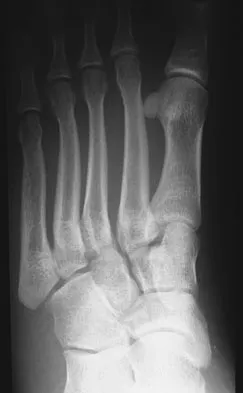
A 40-year-old construction worker falls from a height and sustains a highly comminuted distal tibia injury as shown in the radiograph.

The soft tissues are significantly swollen with hemorrhagic fracture blisters. What is the most appropriate initial management?


Explanation

High-energy pilon fractures with severe soft tissue compromise (e.g., hemorrhagic blisters) are best managed with a staged protocol. Initial spanning external fixation allows for soft tissue recovery, significantly decreasing wound complications prior to delayed definitive ORIF (typically 10-14 days later).

Question 86

A 52-year-old woman complains of progressive posterior heel pain that worsens with tight-fitting shoes. Examination reveals a prominence at the posterosuperior calcaneal tuberosity. MRI demonstrates insertional Achilles tendinosis with calcification involving 60% of the tendon insertion. She has failed 6 months of physical therapy. What is the most appropriate surgical intervention?


Explanation

In severe insertional Achilles tendinopathy where greater than 50% of the tendon must be detached or debrided to remove calcifications and the Haglund's prominence, tendon reattachment should be augmented with a Flexor Hallucis Longus (FHL) transfer to provide adequate strength.

Question 87

A 45-year-old male undergoes ORIF for a Weber C ankle fracture. Intraoperative external rotation stress testing reveals widening of the medial clear space, and a syndesmotic screw is subsequently placed. Postoperative CT scan is utilized to assess reduction. What is the most common long-term consequence of unrecognized syndesmosis malreduction?


Explanation

Malreduction of the syndesmosis alters ankle joint contact mechanics, leading to significantly elevated articular contact pressures. This biomechanical mismatch is the most common cause of early-onset post-traumatic osteoarthritis after a syndesmotic injury.

Question 88

A 65-year-old male with poorly controlled type II diabetes and severe peripheral neuropathy sustains a closed bimalleolar ankle fracture. Which of the following fixation strategies is most appropriate to minimize his elevated risk of Charcot arthropathy and hardware failure?


Explanation

Diabetic patients with neuropathy are at a high risk for hardware failure and Charcot arthropathy following ankle fractures. Enhanced fixation, often involving locking plates, quad-cortical syndesmotic screws, and prolonged non-weight-bearing (at least 8-12 weeks), is recommended to prevent these complications.

Question 89

A 30-year-old female presents to the emergency department after a twisting injury to her ankle. Radiographs demonstrate a fracture-dislocation with the proximal fibular shaft trapped posterior to the posterior tubercle of the distal tibia. Closed reduction is unsuccessful. What is the pathognomonic name and required management for this specific injury pattern?


Explanation

A Bosworth fracture-dislocation involves entrapment of the intact or fractured fibula behind the posterior tubercle of the tibia. Closed reduction is typically unsuccessful, necessitating urgent open reduction to release the entrapped fibula and prevent skin necrosis or compartment syndrome.

Question 90

A 38-year-old recreational athlete sustains an acute Achilles tendon rupture and elects for nonoperative management. Which of the following rehabilitation protocols has been shown in recent literature to yield re-rupture rates comparable to operative management?


Explanation

Functional rehabilitation utilizing early weight-bearing and early ROM in a structured orthosis with heel wedges has been shown to produce re-rupture rates similar to surgical repair. This approach successfully mitigates the risk of re-rupture while avoiding typical surgical complications such as wound breakdown and infection.

Question 91

A 55-year-old male presents with a 4-month history of profound weakness in plantar flexion and an altered gait. Clinical examination reveals a palpable gap in the Achilles tendon 5 cm proximal to the insertion. Intraoperatively, following debridement of necrotic tissue, a 6 cm tendon defect is measured. What is the most appropriate surgical management?


Explanation

For chronic Achilles tendon ruptures with defects greater than 5 cm after debridement, a tendon transfer (most commonly the flexor hallucis longus) is indicated. FHL transfer effectively restores plantar flexion strength, bridges the defect, and provides excellent vascularity to the compromised region.

Question 92

A 48-year-old male runner complains of chronic, posterior heel pain that is worse after exercise. Radiographs show a prominent Haglund deformity and extensive intratendinous calcification at the Achilles insertion. Conservative measures have failed. If surgical debridement requires detachment of 60% of the Achilles tendon insertion, what is the recommended subsequent step?


Explanation

When debridement of insertional Achilles tendinopathy requires detachment of more than 50% of the tendon footprint, simple reattachment carries a high risk of failure. Augmentation with an FHL transfer is recommended to provide mechanical strength, relieve tension on the repair, and bring healthy vascularized tissue to the area.

Question 93

A 55-year-old female presents with medial ankle pain, a flexible pes planovalgus deformity, and an inability to perform a single-leg heel raise. The deformity completely corrects when she stands on her toes. If 6 months of conservative management with a custom orthosis fails, which of the following is the most appropriate initial surgical intervention?


Explanation

This patient has Stage II posterior tibial tendon dysfunction characterized by a flexible planovalgus deformity. The gold standard surgical treatment involves a joint-sparing procedure utilizing an FDL transfer to replace the posterior tibial tendon, combined with a medializing calcaneal osteotomy to correct the valgus hindfoot axis.

Question 94

A 62-year-old female with a long history of a pes planovalgus deformity now presents with a rigid hindfoot and significant pain in the lateral hindfoot due to subfibular impingement. A trial of a custom Arizona brace was unsuccessful in relieving her symptoms. Which surgical procedure is most indicated?


Explanation

Stage III PTTD is characterized by a rigid, fixed planovalgus deformity, subtalar arthritis, and often lateral subfibular impingement. A joint-sacrificing procedure, such as a double or triple arthrodesis, is required to achieve coronal plane correction, stabilize the hindfoot, and relieve pain.

None

Clinic OS
Medically Verified Content by
Prof. Clinic OS
Consultant Orthopedic & Spine Surgeon
Chapter Index
