
العربية
Comprehensive Master Guide · Medically Reviewed

AAOS & ABOS Foot & Ankle Board Review MCQs (Set 2): Ankle Fractures, Lisfranc, Diabetic Foot

Master your AAOS and ABOS exams with our Foot & Ankle Board Review MCQs (Set 2). Test your knowledge on ankle fractures, Lisfranc, and diabetic foot.

35 Detailed Chapters
61 min read
Updated: Apr 2026
Clinic OS
Medically Reviewed by
Prof. Clinic OS
Verified Content Expert Reviewed

Quick Medical Answer

This high-yield question set (Set 2) for the AAOS and ABOS exams rigorously tests knowledge of foot and ankle pathology. Topics include the diagnosis, classification, and management of ankle fractures, Lisfranc injuries, and complex diabetic foot conditions, including Charcot arthropathy. Essential for comprehensive board preparation.

Foot & Ankle 2000 MCQs - Part 2

AAOS & ABOS Foot & Ankle Board Review MCQs (Set 2): Ankle Fractures, Lisfranc, Diabetic Foot

Comprehensive 100-Question Exam


00:00

Start Quiz

Question 1

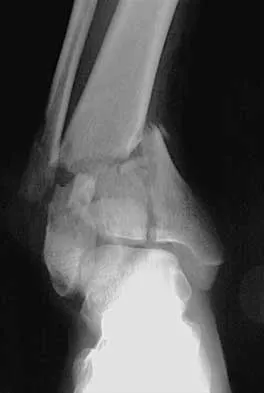
Figures 15a and 15b show the radiographs of an 18-year-old mountain biker who came off of a 15-foot ramp and sustained an injury to his ankle. Because the local rural hospital had no orthopaedic surgeon available, he was transported to a Level 1 emergency department 10 hours after his initial injury. Examination reveals that the injury remains closed. Management should consist of


Explanation

High-energy tibial pilon fractures involve disruption of the soft-tissue envelope with significant lower extremity edema. Definitive reconstruction of the comminuted distal tibia should be delayed for at least 7 days to allow edema to dissipate, lowering the risk of skin necrosis. An external fixator is the best method to keep the ankle at anatomic length while preventing skin necrosis. Ligamentotaxis will hold the fragments reduced to allow the edema to dissipate. CT may be obtained in traction to localize the individual fragments and plan surgical incisions and subsequent fixation. Short leg casting will not provide adequate ligamentotaxis to hold the fragments reduced and prevent skin compromise. Primary fusion of the ankle in an unstable tibial pilon fracture is prone to a poor result from nonunion or malunion. Tornetta P III, Weiner L, Bergman M, et al: Pilon fractures: Treatment with combined internal and external fixation. J Orthop Trauma 1993;7:489-496.

Question 2

A 47-year-old woman has had medial ankle pain and swelling for the past 3 months. She recalls no specific injury, and casting and nonsteroidal anti-inflammatory drugs have failed to provide relief. Examination reveals a pes planus with heel valgus that is passively correctable. Radiographs show no evidence of arthritis. An MRI scan is shown in Figure 16. What is the most appropriate surgical procedure to alleviate her pain?


Explanation

The patient has a stage II posterior tibial tendon tear with a supple foot; therefore, the treatment of choice is flexor digitorum longus transfer with medial displacement calcaneal osteotomy. Triple arthrodesis is not indicated, and isolated tendon transfer will stretch out in the face of persistent heel valgus. Direct repair of the posterior tibial tendon or repair of the spring ligament is not sufficient to correct the deformity. Myerson MS, Corrigan J: Treatment of posterior tibial tendon dysfunction with flexor digitorum longus tendon transfer and calcaneal osteotomy. Orthopedics 1996;19:383-388.


Question 3

A 38-year-old woman has a lesion on her left foot that has increased in size over the past 6 months. The clinical photograph is shown in Figure 17a, and a photomicrograph of the biopsy specimen is shown in Figure 17b. What is the most likely diagnosis?


Explanation

Melanoma comprises 25% of lower extremity lesions and is the most common malignant tumor of the foot. The preferred treatment is wide resection. Hughes LE, Horgan K, Taylor BA, Laidler P: Malignant melanoma of the hand and foot: Diagnosis and management. Br J Surg 1985;72:811-815.


Question 4

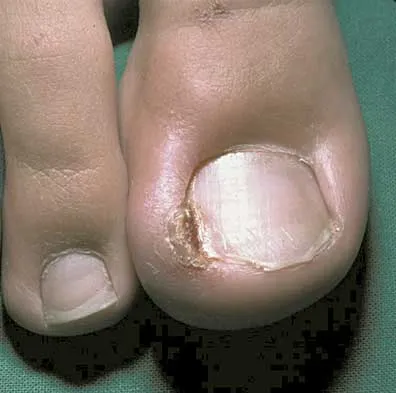
A 16-year-old boy has had a painful ingrown nail on his great toe for the past 3 months. When initial management consisting of soaking the foot in Epsom salts and trimming the nail failed to provide relief, his family physician recommended 2 weeks of oral antibiotics. His symptoms persist, and he is now seeking a second opinion. A clinical photograph is shown in Figure 18. Management should now consist of


Explanation

The patient has a chronic ingrown nail on his great toe, which is not an uncommon occurrence in teenagers because of improper nail care. There is local infection and a foreign body reaction because of the nail. Continued conservative management with soaks and antibiotics will not improve the clinical situation. In the presence of local chronic infection, nail matrix ablation is contraindicated. Additionally, in the absence of a history of an ingrown nail, a nail matrix ablation is not medically indicated. The appropriate treatment is partial removal of the nail plate. With nail plate removal, the inflammation and local infection will resolve rapidly. Pettine KA, Cofield RH, Johnson KA, Bussey RM: Ingrown toenail: Results of surgical treatment. Foot Ankle 1988;9:130-134.


Question 5

A 28-year-old man has a painful nodule on the plantar aspect of his foot in the midarch. Use of a soft orthosis has failed to provide relief. Examination reveals that the mass is approximately 2 1/2 cm in diameter, firm, and tender to palpation. An MRI scan confirms the presence of a plantar fibroma. Management should now consist of


Explanation

Plantar fibromas have an extremely high recurrence rate (approximately 60%) with local excision only. Resection of the entire plantar fascia is effective at irradicating the lesion. There is no role for chemotherapy or amputation with plantar fibromatosis. Radiation therapy may be helpful in combination with resection of the plantar fascia. Kirby EJ, Shereff MJ, Lewis MM: Soft-tissue tumors and tumor-like lesions of the foot: An analysis of 83 cases. J Bone Joint Surg Am 1989;71:621-626.


Question 6

A child born with myelomeningocele is expected to be an ambulator with bracing. Examination by the consulting orthopaedic surgeon reveals rigid clubfeet in addition to the neurologic issues. Management should consist of


Explanation

In a child with myelomeningocele, the guiding principle of treatment is to achieve a plantigrade foot by the time the child is ready to stand. The standard clubfoot protocol should be followed, but these children will require an aggressive surgical release to obtain a sufficient correction. Mizel MS, Miller RA, Scioli MW (eds): Orthopaedic Knowledge Update: Foot and Ankle 2. Rosemont, IL, American Academy of Orthopaedic Surgeons, 1998, pp 65-78.


Question 7

A 42-year-old man has a symptomatic flatfoot deformity and walks with a slight limp after falling off a scaffold 9 months ago. He also reports that he has had difficulty returning to work. Orthotics have failed to provide relief. Current radiographs are shown in Figures 19a and 19b. To relieve his pain and return the patient to work, treatment should consist of


Explanation

Because the patient has sustained a tarsometatarsal injury with midfoot sag, the treatment of choice is a tarsometatarsal arthrodesis. The cause of his flatfoot deformity is secondary to the tarsometatarsal injury and not from posterior tibialis tendon deficiency. Lateral column lengthening, double arthrodesis, and calcaneal osteotomy are not indicated. Although open reduction and internal fixation may be performed late when arthritis is present, these procedures are less likely to succeed. Komenda GA, Myerson MS, Biddinger KR: Results of arthrodesis of the tarsometatarsal joints after traumatic injury. J Bone Joint Surg Am 1996;78:1665-1676.


Question 8

A 16-year-old boy has a symptomatic flatfoot deformity that is causing pain, skin breakdown, and shoe wear problems. Shoe modification and an orthosis have failed to provide relief. Examination reveals hindfoot valgus, talonavicular sag, and forefoot abduction that are all passively correctable. Treatment should consist of


Explanation

The patient has a supple planovalgus deformity that is passively fully correctable, and nonsurgical management has failed to provide relief. Lateral column lengthening with medial soft-tissue tightening will correct the deformity and maintain a flexible foot. Arthrodesis is not recommended for a supple, correctable deformity because of loss of motion and long-term degeneration of surrounding joints. Medial displacement calcaneal osteotomy is generally reserved for an adult-acquired flexible flatfoot. Beaty JH (ed): Orthopaedic Knowledge Update 6. Rosemont, IL, American Academy of Orthopaedic Surgeons, 1999, pp 613-631. Evans D: Calcaneo-valgus deformity. J Bone Joint Surg Br 1975;57:270-278.


Question 9

A 48-year-old man has had pain and swelling of the hallux metatarsophalangeal joint for the past 9 months. A rocker bottom stiff-soled shoe has failed to provide relief; however, two cortisone injections have temporarily alleviated his symptoms. The radiographs shown in Figures 20a and 20b reveal diffuse arthritis of the entire hallux metatarsophalangeal joint. What is the most definitive surgical treatment?


Explanation

Because the radiographs demonstrate severe arthritis, hallux metatarsophalangeal arthrodesis is the treatment of choice. Cheilectomy alone will not relieve pain because the entire joint is degenerative. Joint replacement has not been shown to be a long-term solution. Keller resection arthroplasty is not indicated in younger active patients. Hallux valgus correction will not address arthritis of the joint and could stiffen the joint further. Smith RW, Joanis TL, Maxwell PD: Great toe metatarsophalangeal joint arthrodesis: A user-friendly technique. Foot Ankle 1992;13:367-377.


Question 10

During reconstruction of insertional gaps of a chronic Achilles tendon rupture, what tendon provides the most direct route of transfer?


Explanation

The flexor hallucis longus tendon provides the best, most direct route of transfer for filling Achilles tendon gaps. The tendon lies lateral to the neurovascular structures, making it safe for harvest and providing a direct route for transfer into the calcaneus without crossing these important structures. The flexor hallucis longus tendon also has muscle belly that extends distal on the tendon itself, often beyond the actual tibiotalar joint. When the tendon is transferred, this muscle belly brings excellent blood supply to the anterior portion of the reconstruction. Wilcox DK, Bohay DR, Anderson JG: Treatment of chronic achilles tendon disorders with flexor hallucis longus tendon transfer/augmentation. Foot Ankle Int 2000;21:1004-1010.


Question 11

A 27-year-old woman with Down syndrome has a severe bunion with pain and deformity in the left forefoot. Nonsurgical management has failed to provide relief. She does not use any assistive ambulatory devices. A radiograph is shown in Figure 21. Treatment should now consist of


Explanation

The patient requires an arthrodesis of the first metatarsophalangeal joint because of the abnormal neuromuscular forces. The more traditional bunionectomies such as a distal chevron bunionectomy, a proximal first metatarsal osteotomy, and a double osteotomy have a high failure rate because of the underlying Down syndrome. The Keller procedure is indicated for older, sedentary individuals and has little role in the management of a neuromuscular bunion. Coughlin MJ, Abdo RV: Arthodesis of the first metatarsophalangeal joint with Vitallium plate fixation. Foot Ankle Int 1994;15:18-28.


Question 12

Which of the following is considered the most important factor in eliminating infection in chronic osteomyelitis?


Explanation

The most important factor in eliminating infection in chronic osteomyelitis is a complete debridement of the compromised bone and soft tissue. Antibiotics should be used in conjunction with surgical debridement. However, the foundation of treating infected bone is removal of the diseased tissue. Cierny G III, Cook WG, Mader JT: Ankle arthrodesis in the presence of ongoing sepsis: Indications, methods, and results. Orthop Clin North Am 1989;20:709-721. Cierny G, Zorn EZ: Arthrodesis of the tibiotalar joint for sepsis. Foot Ankle Clin 1996;1:177-197.


Question 13

A 35-year-old woman reports worsening pain after undergoing a neurectomy in the third interspace for a Morton's neuroma 12 months ago. She states that the pain is sharp and electrical, worse than before her surgery, and prevents her from participating in her usual work and exercise activities. Use of wider shoes and pads used before her surgery have failed to provide relief. Examination does not reveal any deformity or inflammation. Tenderness along with neuritic pain occurs with compression of the plantar aspect of the foot between the third and fourth metatarsal head area. To most reliably alleviate her pain, management should consist of


Explanation

Most patients with a significant recurrent neuroma will not obtain relief with conservative methods. Pain results from a stump neuroma at the weight-bearing area from too short of a resection of the nerve or from regrowth of the remaining nerve end. Although steroid injection may be helpful in localizing symptoms or providing temporary relief, it rarely cures a stump neuroma. Orthotics with a metatarsal pad will likely increase pressure and pain at the neuroma site. Physical therapy could temporize the symptoms but will not address the underlying problem. Similarly, bone decompression alone will not alter the location of the neuroma stump. Revision of the nerve to a more proximal level off of the weight-bearing area is the most likely method to succeed. A plantar approach facilitates identification and ability to revise the nerve to a more proximal level. Mizel MS, Miller RA, Scioli MW (eds): Orthopaedic Knowledge Update: Foot and Ankle 2. Rosemont, IL, American Academy of Orthopaedic Surgeons, 1998, pp 101-111. Johnson JE, Johnson KA, Unni KK: Persistent pain after excision of an interdigital neuroma: Results of reoperation. J Bone Joint Surg Am 1988;70:651-657. Beskin JL, Baxter DE: Recurrent pain following interdigital neurectomy: A plantar approach. Foot Ankle 1988;9:34-39.


Question 14

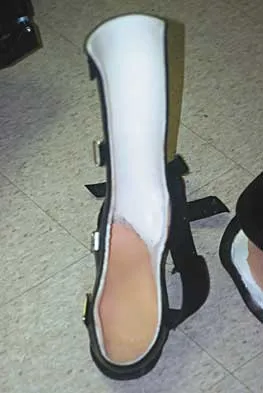
What type of brace is shown in Figures 22a and 22b?


Explanation

The figures show a Charcot restraining orthotic walker (CROW). This brace has been used as a customized total contact fit removable brace to maintain foot alignment as the patient evolves from Eichenholz stage 1 to Eichenholz stage 3 Charcot arthropathy. Mehta JA, Brown C, Sargeant N: Charcot restraint orthotic walker. Foot Ankle Int 1998;19:619-623.


Question 15

A 23-year-old man has pain and a callus beneath the second metatarsal head. Initial management should consist of


Explanation

The initial treatment of metatarsalgia with or without the presence of an intractable keratosis should be conservative. Simple paring of the callus with elevation of the metatarsals may suffice. A prefabricated "off-the-shelf" orthosis or felt pad can be used before investing in a custom orthosis. The use of medicated pads can lead to greater amounts of keratosis and should be avoided. Mizel MS, Miller RA, Scioli MW (eds): Orthopaedic Knowledge Update: Foot and Ankle 2. Rosemont, IL, American Academy of Orthopaedic Surgeons, 1998, pp 163-173.


Question 16

Figures 23a and 23b show the radiograph and clinical photograph of a patient who reports a reduced ability to flex the interphalangeal joint of her great toe after undergoing a Chevron-Akin bunionectomy. What is the most likely cause?


Explanation

The flexor hallucis longus tendon is at risk during a Chevron-Akin osteotomy because of its close relationship to the base of the proximal phalanx. The radiograph reveals a reduced ability to flex the interphalangeal joint secondary to the flexor hallucis longus laceration. The other complications are not supported by the radiograph. Tollison ME, Baxter DE: Combination chevron plus Akin osteotomy for hallux valgus: Should age be a limiting factor? Foot Ankle Int 1997;18:477-481.


Question 17

A 45-year-old man has persistent hindfoot pain that is aggravated by weight-bearing activities. History reveals that he sustained a calcaneus fracture 2 years ago, and he underwent a subtalar fusion 1 year ago. Examination reveals tenderness in the sinus tarsi and across the transverse tarsal joint. A plain radiograph and a CT scan are shown in Figures 24a and 24b. A technetium Tc 99m bone scan reveals uptake at the subtalar joint and at the transverse tarsal joints. Management should now consist of


Explanation

The patient has a nonunion at the subtalar joint because of poor preparation of the arthrodesis site with incomplete removal of the articular cartilage. Clinically, he has arthritis at the transverse tarsal joint. Casting with a bone stimulator is not expected to result in a union of the subtalar arthrodesis. To address both the subtalar nonunion and the transverse tarsal joint arthritis, revision of the subtalar arthrodesis and conversion to a triple arthrodesis is the preferred option. Graves SC, Mann RA, Graves KO: Triple arthrodesis in older adults: Results after long-term follow-up. J Bone Joint Surg Am 1993;75:355-362. Haddad SL, Myerson MS, Pell RF IV, Schon LC: Clinical and radiographic outcome of revision surgery for failed triple arthrodesis. Foot Ankle Int 1997;18:489-499. Sangeorzan BJ, Smith D, Veith R, Hansen ST Jr: Triple arthrodesis using internal fixation in treatment of adult foot disorders. Clin Orthop 1993;294:299-307. Sangeorzan BJ: Salvage procedures for calcaneus fractures. Instr Course Lect 1997;46:339-346.


Question 18

A 21-year-old college student reports hearing a pop and has acute pain laterally over the ankle after twisting it during a recreational basketball game. Examination 1 hour after the injury reveals minimal swelling and ecchymosis. The anterior drawer sign is positive. Radiographs reveal no evidence of a fracture. What is the best course of action?


Explanation

Even though the patient has a grade 3 ankle ligament injury, studies have shown that 95% of patients with a grade 3 injury that may include a complete tear of the ligaments will heal successfully with conservative functional management. Extensive diagnostic evaluation with stress radiographs, CT, and MRI is not indicated. Surgical reconstruction is not indicated because of the overwhelming success of conservative management; however, in the few patients where late instability develops, surgical reconstruction offers an excellent outcome. Carne P: Nonsurgical treatment of ankle sprains using the modified Sarmiento brace. Am J Sports Med 1989;17:253-257.


Question 19

What significant structure is most at risk during a posterior approach of the Achilles tendon near its musculotendinous junction?


Explanation

The sural nerve crosses near the midline at the level of the musculotendinous junction before descending to its more lateral location distally. The saphenous nerve and vein are further medial and at less risk. The posterior tibial nerve is at risk only during deep dissection, such as harvesting flexor hallucis longus tendon graft. The plantaris muscle lies in this area but is of little clinical significance. Webb J, Moorjani N, Radford M: Anatomy of the sural nerve and its relation to the Achilles tendon. Foot Ankle Int 2000;21:475-477.


Question 20

Figure 25 shows the clinical photograph of a 48-year-old man who has had a forefoot ulcer for the past 4 months. History reveals that he has had type II diabetes mellitus for the past 10 years. Examination reveals sensory and motor neuropathy, with weak ankle dorsiflexion. The ankle cannot be passively dorsiflexed past a neutral position. Initial management should consist of


Explanation

Foot deformity and decreased joint motion have been associated with increased plantar pressures and an increased risk of ulceration. In a partial-thickness ulcer without exposed bone or tendon, total contact casting is highly effective. Concomitant Achilles tendon lengthening increases the likelihood that healing of the ulcer can be obtained and perhaps more importantly, maintained. Lin SS, Lee TH, Wapner KL: Plantar forefoot ulceration with equinus deformity of the ankle in diabetic patients: The effect of tendo-Achilles lengthening and total contact casting. Orthopedics 1996;19:465-475.


Question 21

An active 36-year-old woman with rheumatoid arthritis has continued forefoot discomfort despite the use of orthotics and shoe wear modifications. A radiograph and a clinical photograph are shown in Figures 26a and 26b. Treatment at this point should consist of


Explanation

In a patient with inflammatory arthritis, advanced hallux valgus deformity in conjunction with lesser metatarsophalangeal joint destruction and subluxation warrants fusion of the first metatarsophalangeal joint and lesser metatarsal head resections. Hallux valgus correction will fail because of incompetent soft tissues. A Keller resection arthroplasty is not indicated in this age group. Synovectomy is contraindicated because of evidence of erosive changes of the lesser metatarsophalangeal joints. Ouzounian T: Rheumatoid arthritis of the foot & ankle, in Myerson MS (ed): Foot & Ankle Disorders. Philadelphia, PA, WB Saunders, 2000, vol 2, pp 1189-1204. Mann RA, Thompson FM: Arthrodesis of the first metatarsophalangeal joint for hallux valgus in rheumatoid arthritis. J Bone Joint Surg Am 1984;66:687-692.


Question 22

The Keller proximal phalanx resection procedure is most useful for which of the following conditions?


Explanation

A Keller proximal phalanx resection procedure usually results in reduced weight bearing under the first ray because of shortening of the toe and disruption of intrinsic flexor function. This can be an effective method of offloading a neuropathic ulcer under the great toe at the interphalangeal or metatarsophalangeal joint area. However, these features are generally undesirable in young active patients. The procedure has a high rate of recurrent deformity in patients with rheumatoid arthritis. It would exacerbate transfer metatarsalgia in a patient with a hypermobile first ray. Lin SS, Bono CM, Lee TH: Total contact casting and Keller arthroplasty for diabetic great toe ulceration under the interphalangeal joint. Foot Ankle Int 2000;21:588-593.


Question 23

An active 60-year-old man is evaluated 4 years following surgical correction of a hallux valgus deformity. The patient reports that a hallux varus deformity developed rapidly following his initial surgery. Conservative management consisting of wider shoes, toe strapping, and anti-inflammatory drugs has failed to provide relief. Examination reveals a hallux varus deformity with restricted painful motion of the metatarsophalangeal joint and callus formation under the second metatarsal head. What is the next most appropriate step in management?


Explanation

Hallux varus may occur as a complication following hallux valgus surgery, most commonly a modified McBride-type procedure. Conservative management is the initial treatment of choice; however, if unsuccessful, surgical options for reconstruction include soft-tissue reconstruction or metatarsophalangeal joint arthrodesis. The patient has evidence of joint arthrosis, making an arthrodesis the preferred method of reconstruction. Fascial arthroplasty, Silastic arthroplasty, and Keller resection arthroplasty will not correct the underlying deformity. Kitaoka HB, Patzer GL: Arthrodesis versus resection arthroplasty for failed hallux valgus operations. Clin Orthop 1998;347:208-214.


Question 24

A newborn has been referred for evaluation of a deformed foot. Prenatal and birth history are unremarkable. Examination reveals a rocker bottom appearance to the foot, and a longitudinal arch cannot be created. A palpable lump is appreciated on the plantar medial surface. What is the best course of action?


Explanation

The patient has congenital vertical talus. The navicular is irreducibly dorsally dislocated on the talus with the talar head prominent on the plantar medial aspect of the foot. Initial management involves corrective casting for 3 months to stretch the dorsal tendons, skin, and neurovascular structures. Surgical reconstruction is often needed and is indicated when the patient is age 6 to 12 months. Reconstruction requires both bony and soft-tissue procedures. Napiontek M: Congenital vertical talus: A retrospective and critical review of 32 feet operated on by peritalar reduction. J Pediatr Orthop 1995;4:179-187.


Question 25

Which of the following is considered an inherent problem in using the distal oblique shortening (Weil) metatarsal osteotomy for dorsal metatarsophalangeal subluxation?


Explanation

The distal oblique shortening (Weil) metatarsal osteotomy has not been associated with transfer lesions to the extent of other shortening osteotomies, and malunions and nonunions are unusual complications. Recurrent dorsal contracture of the toe has been reported. Recommendations to reduce this problem include release of the dorsal capsule and tendons, as well as a flexor tendon transfer. A potential cause suspected for this phenomenon is the relatively dorsal positioning of the intrinsic tendons after plantar displacement of the metatarsal head. Trnka HJ, Nyska M, Parks BG, Myerson MS: Dorsiflexion contracture after the Weil osteotomy: Results of cadaver study and three-dimensional analysis. Foot Ankle Int 2001;22:47-50. Trnka HJ, Muhlbauer M, Zettl R, Myerson MS, Ritschl P: Comparison of the results of the Weil and Helal osteotomies for the treatment of metatarsalgia secondary to dislocation of the lesser metatarsophalangeal joints. Foot Ankle Int 1999;20:72-79.


Question 26

A 28-year-old male sustains an unstable syndesmotic injury requiring screw fixation. Which of the following ligaments provides the greatest contribution to the stability of the distal tibiofibular syndesmosis?


Explanation

The posterior inferior tibiofibular ligament (PITFL) is the strongest of the syndesmotic ligaments and provides roughly 42% of the resistance to diastasis. The AITFL provides approximately 35%, and the interosseous ligament provides 22%.

Question 27

A 45-year-old female sustains a closed twisting injury to her right ankle. Radiographs demonstrate a displaced supination-external rotation (SER) IV ankle fracture. During surgical fixation, what is the most critical biomechanical factor in restoring normal tibiotalar contact area and pressures?


Explanation

Anatomic reduction of the fibula (length and rotation) restores the lateral buttress, which is the most critical factor in normalizing tibiotalar contact pressures in ankle fractures. Even 1 mm of lateral talar shift significantly decreases tibiotalar contact area.

Question 28

A 35-year-old male sustains a trimalleolar ankle fracture. The posterior malleolus fragment involves 15% of the articular surface. Following rigid fixation of the medial and lateral malleoli, intraoperative stress testing reveals persistent syndesmotic instability. What is the most biomechanically stable method to address this?


Explanation

Fixation of the posterior malleolus repairs the attachment of the posteroinferior tibiofibular ligament (PITFL). This provides superior biomechanical stability to the syndesmosis compared to syndesmotic screws alone, regardless of the fragment size.

Question 29

A 60-year-old diabetic patient undergoes open reduction and internal fixation for a displaced bimalleolar ankle fracture.

What postoperative protocol modification is most strongly recommended for this patient compared to a non-diabetic patient?


Explanation

Diabetics have a markedly higher risk of hardware failure, infection, and Charcot arthropathy following ankle fractures. Standard practice involves augmented fixation and doubling the typical non-weight-bearing period (e.g., 8-12 weeks instead of 4-6 weeks).

Question 30

A 28-year-old male sustains a high-energy closed tibial pilon fracture with severe fracture blisters and massive soft tissue swelling. What is the most appropriate initial management?


Explanation

High-energy pilon fractures with compromised soft tissues are best managed with a staged protocol. Initial spanning external fixation allows the soft tissue envelope to recover (typically 10-21 days) before definitive ORIF, minimizing the risk of wound complications and deep infection.

Question 31

A 30-year-old female presents with an irreducible ankle fracture-dislocation after a skiing accident. Radiographs reveal the proximal fibular fragment is entrapped behind the posterior tubercle of the distal tibia. What is the eponymous name for this specific injury pattern?


Explanation

A Bosworth fracture-dislocation involves the proximal fibular shaft displacing posteriorly and becoming locked behind the posterior tubercle of the distal tibia. It typically requires open reduction as the entrapped fibula blocks closed reduction.

Question 32

A 40-year-old male presents 8 months after non-operative treatment of an ankle fracture. He complains of chronic lateral pain and instability. Radiographs show a healed fibula that is shortened and externally rotated, with a widened medial clear space. What is the most appropriate surgical management?


Explanation

A malunited fibula (shortened and externally rotated) causes lateral talar shift and altered joint mechanics. The treatment of choice in a patient without severe osteoarthritis is a fibular lengthening and derotational osteotomy, often utilizing structural bone graft.

Question 33

In a suspected midfoot injury, subtle widening is noted between the 1st and 2nd metatarsal bases.

The critical Lisfranc ligament, responsible for stability in this region, anatomically connects which two structures?


Explanation

The Lisfranc ligament is a strong, obliquely oriented interosseous ligament that originates on the lateral aspect of the medial cuneiform and inserts onto the medial aspect of the second metatarsal base.

Question 34

A 35-year-old female sustains a purely ligamentous Lisfranc injury with 3 mm of diastasis between the medial cuneiform and 2nd metatarsal. Based on recent prospective randomized trials, what is the recommended surgical management for optimal functional outcomes?


Explanation

Prospective randomized trials have demonstrated that primary arthrodesis for purely ligamentous Lisfranc injuries yields superior functional outcomes and significantly lower reoperation rates compared to ORIF.

Question 35

A 19-year-old athlete complains of severe midfoot pain after an axial load was applied to his plantarflexed foot. Non-weight-bearing radiographs in the emergency department are normal. What is the most appropriate next step in diagnosis?


Explanation

The initial step in evaluating a suspected subtle Lisfranc injury with normal non-weight-bearing radiographs is obtaining weight-bearing AP, lateral, and oblique views. These stress the midfoot and may reveal dynamic diastasis or arch collapse.

Question 36

During open reduction and internal fixation of a severe, multi-column Lisfranc fracture-dislocation, what is the universally accepted correct sequence of reduction and fixation?


Explanation

The base of the 2nd metatarsal acts as the 'keystone' of the midfoot arch. Surgical reconstruction must begin with the anatomic reduction and stabilization of the 2nd TMT joint to the medial cuneiform, followed by the 1st TMT, 3rd TMT, and finally the lateral columns if needed.

Question 37

A 55-year-old male presents with severe midfoot pain and a progressive planovalgus deformity. He was diagnosed with a 'foot sprain' 1 year ago. Radiographs demonstrate advanced degenerative changes at the tarsometatarsal joints with lateral subluxation. What is the most appropriate surgical treatment?


Explanation

Late or missed Lisfranc injuries that present with post-traumatic arthritis and fixed midfoot deformity are best managed with realignment midfoot arthrodesis to relieve pain and restore a plantigrade foot.

Question 38

A 58-year-old male with long-standing, poorly controlled diabetes presents with a red, hot, swollen foot. He has bounding pedal pulses and intact skin. Radiographs show early fragmentation and subluxation of the midfoot. What is the most appropriate initial management?


Explanation

The clinical picture describes acute Eichenholtz Stage I Charcot arthropathy. The gold standard for initial management is immediate offloading with a total contact cast to arrest progression and prevent catastrophic deformity while the acute inflammation subsides.

Question 39

A 62-year-old female with neuropathy presents with a chronic, uninfected plantar forefoot ulcer beneath the 3rd metatarsal head. It is classified as Wagner Grade 1. What intervention has the highest level of evidence for achieving ulcer healing?


Explanation

Total contact casting (TCC) is considered the gold standard for offloading and healing uncomplicated, non-infected plantar diabetic foot ulcers, consistently demonstrating the highest healing rates in randomized controlled trials.

Question 40

A 50-year-old diabetic male has a chronic plantar midfoot ulcer overlying a rocker-bottom deformity. An MRI is ordered to differentiate chronic inactive Charcot osteoarthropathy from osteomyelitis. Which MRI finding is most specific for osteomyelitis rather than Charcot changes alone?


Explanation

Both osteomyelitis and Charcot arthropathy exhibit bone marrow edema on MRI. However, the presence of a sinus tract, adjacent soft tissue ulceration, or the 'ghost sign' (indistinct bone margins on T1) are highly specific for osteomyelitis.

Question 41

A diabetic patient is being evaluated for a minor forefoot amputation due to a non-healing distal ulcer. Which of the following non-invasive vascular parameters represents the minimum threshold predictive of reliable wound healing?


Explanation

A transcutaneous oxygen tension (TcPO2) greater than 30 mm Hg, an ABI > 0.45, toe pressures > 40 mm Hg, albumin > 3.0 g/dL, and TLC > 1500 are standard thresholds that predict adequate perfusion and nutrition for surgical wound healing in diabetics.

Question 42

A 65-year-old diabetic patient has a recurrent uninfected plantar ulcer beneath the 1st metatarsal head despite optimal orthotics. Examination demonstrates 5 degrees of ankle plantarflexion with the knee extended, but 15 degrees of dorsiflexion with the knee flexed. What is the most appropriate surgical adjunct to aid in offloading?


Explanation

The Silfverskiöld test is positive for an isolated gastrocnemius contracture (equinus). This contracture increases forefoot plantar pressures. A gastrocnemius recession effectively decreases these pressures, facilitating ulcer healing.

Question 43

A 52-year-old diabetic male has a stable, rigid midfoot Charcot deformity with a prominent plantar-medial bony bossing. He has developed 3 recurrent, non-infected ulcers over this specific prominence despite custom total contact orthotics. What is the most appropriate surgical management?


Explanation

In a patient with a rigid, stable Charcot foot and localized recurrent ulceration due to a bony prominence, a simple exostectomy (shaving the prominent bone) is highly effective, carries low morbidity, and avoids the high complication rates of major reconstructive arthrodesis.

Question 44

A 40-year-old female sustains a pronation-abduction (PAB) ankle fracture. According to the Lauge-Hansen classification system, what represents the first stage (Stage I) of this specific injury mechanism?


Explanation

In the Lauge-Hansen Pronation-Abduction (PAB) sequence, the foot is pronated (tensioning medial structures). Stage I is a transverse medial malleolar fracture or deltoid rupture. Stage II is syndesmotic rupture, and Stage III is an oblique/transverse fibular fracture.

Question 45

Total contact casting (TCC) is considered the gold standard for offloading diabetic plantar foot ulcers. Which of the following is an absolute contraindication to the application of a TCC?


Explanation

Absolute contraindications to Total Contact Casting (TCC) include active deep infection (abscess, gangrene, acute osteomyelitis) and severe peripheral arterial disease, as enclosing an infected or profoundly ischemic limb can lead to rapid limb loss.

Question 46

A subtle radiographic finding indicative of a Lisfranc injury is the "fleck sign". This sign represents a bony avulsion of the Lisfranc ligament from which of the following anatomic locations?


Explanation

The 'fleck sign' represents a bony avulsion of the Lisfranc ligament. While the ligament spans from the medial cuneiform to the second metatarsal, the avulsion fragment (fleck) most commonly originates from the medial aspect of the base of the second metatarsal.

Question 47

A 62-year-old diabetic male has a recurrent, non-healing plantar ulcer under the first metatarsal head despite 12 weeks of total contact casting. Ankle dorsiflexion is -10 degrees with the knee extended and -10 degrees with the knee flexed. Which of the following is the most appropriate surgical treatment to facilitate ulcer healing?


Explanation

The patient has a fixed equinus contracture with the knee extended and flexed, indicating a combined gastro-soleus contracture. An Achilles tendon lengthening (TAL) is required to reduce forefoot plantar pressure and heal the ulcer.

Question 48

In the surgical management of a trimalleolar ankle fracture, anatomic reduction and internal fixation of the posterior malleolus is most strongly indicated to achieve which of the following biomechanical goals?


Explanation

Fixation of the posterior malleolus restores the incisura fibularis, which significantly enhances syndesmotic stability. It also reconstructs the articular surface and limits posterior, not anterior, talar subluxation.

Question 49

A 45-year-old construction worker sustains a purely ligamentous Lisfranc injury involving the 1st, 2nd, and 3rd tarsometatarsal (TMT) joints. What is the most appropriate definitive management?


Explanation

Purely ligamentous Lisfranc injuries have a higher rate of hardware failure and loss of reduction with ORIF compared to primary arthrodesis. Arthrodesis of the medial three TMT joints provides superior long-term functional outcomes in these specific injuries.

Question 50

A 55-year-old female with poorly controlled type 2 diabetes presents with a red, hot, swollen left foot. Radiographs show soft tissue swelling and mild osteopenia but no fractures. MRI shows diffuse marrow edema without focal fluid collections. Her ESR and CRP are normal. What is the most appropriate initial management?


Explanation

This presentation is classic for Eichenholtz stage 0 (acute) Charcot neuroarthropathy. The mainstay of treatment is strict offloading, typically with a total contact cast, to prevent joint collapse and progressive deformity.

Question 51

Which of the following radiographic parameters is the most accurate and reliable indicator of a syndesmotic injury on standard weight-bearing ankle radiographs?


Explanation

A tibiofibular clear space greater than 5 mm measured 1 cm above the joint line on an AP or mortise radiograph is the most reliable plain radiographic sign of syndesmotic widening. Medial clear space widening represents deltoid ligament insufficiency.

Question 52

A 28-year-old male sustains a twisting injury to his foot. Radiographs demonstrate a small bony avulsion fragment in the space between the bases of the first and second metatarsals. This fragment represents an avulsion of a structure that originates from which of the following bones?


Explanation

The 'fleck sign' represents an avulsion fracture of the Lisfranc ligament. The Lisfranc ligament originates on the lateral aspect of the medial cuneiform and inserts on the medial base of the second metatarsal.

Question 53

Which of the following magnetic resonance imaging (MRI) findings is the most sensitive and specific for distinguishing osteomyelitis from acute Charcot neuroarthropathy in the diabetic foot?


Explanation

Replacement of the normal marrow fat signal (low T1) that extends contiguously from a skin ulcer is highly indicative of osteomyelitis. Acute Charcot typically exhibits periarticular subchondral marrow edema but preserves the geographic marrow fat signal away from the joint.

Question 54

According to the Lauge-Hansen classification, a Supination-Adduction stage II ankle fracture typically presents with which of the following distinct fracture patterns?


Explanation

Supination-adduction injuries begin with tension on the lateral side causing a transverse fibular fracture at or below the joint line (Stage I). This is followed by impaction of the talus into the medial malleolus, causing a vertical medial malleolus fracture (Stage II).

Question 55

A 65-year-old patient with severe peripheral neuropathy and diabetes sustains a bimalleolar ankle fracture. Which surgical strategy is most appropriate to minimize the risk of catastrophic fixation failure and secondary Charcot arthropathy?


Explanation

Diabetic ankle fractures have an exponentially higher complication rate, including fixation failure and Charcot neuroarthropathy. They require rigid, often augmented, internal fixation and prolonged non-weight bearing (often double the normal duration).

Question 56

A 32-year-old athlete complains of persistent midfoot pain after a fall. Non-weight bearing radiographs in the emergency department appear normal. What is the next best step to evaluate for a subtle Lisfranc injury?


Explanation

Weight-bearing radiographs are essential to uncover subtle Lisfranc instability that may reduce spontaneously when the foot is not loaded. Bilateral comparison is useful to assess the normal anatomic alignment for the individual patient.

Question 57

A patient requires a Syme amputation for a severe diabetic forefoot infection. Which of the following technical steps is absolutely essential for a successful outcome and a durable, weight-bearing stump?


Explanation

A Syme amputation involves disarticulation of the ankle and removal of the malleoli. Securely anchoring the plantar heel pad to the distal tibia via drill holes is critical to prevent posterior and medial migration of the pad during weight-bearing.

Question 58

A 40-year-old sustains an ankle injury. Radiographs reveal a widened medial clear space and a short oblique fracture of the fibula 6 cm proximal to the joint line. According to Lauge-Hansen, what was the first structure injured in this sequence?


Explanation

This describes a Pronation-External Rotation (PER) injury. The sequence begins medially with a transverse medial malleolus fracture or deltoid ligament rupture (Stage I), followed by the AITFL (II), a high fibula fracture (III), and the PITFL or posterior malleolus (IV).

Question 59

A 58-year-old diabetic male presents with a deep plantar ulcer extending to the joint capsule, but with no bone involvement, no abscess, and no gangrene. According to the Wagner classification, what grade is this ulcer?


Explanation

Wagner Grade 2 ulcers are deep ulcers penetrating to the tendon, bone, or joint capsule but without deep infection or osteomyelitis. Grade 1 is superficial, and Grade 3 involves deep infection such as osteomyelitis or abscess.

Question 60

A patient presents with a severe ankle injury where the proximal fibular fragment is entrapped behind the posterior tubercle of the tibia, rendering closed reduction impossible. Which mechanism is primarily responsible for this specific injury pattern (Bosworth fracture-dislocation)?


Explanation

A Bosworth fracture-dislocation is characterized by the proximal fibular fragment becoming locked behind the posterior tibial tubercle. It typically occurs via a severe external rotation mechanism (Supination-External Rotation) and requires open reduction.

Question 61

The primary osseous stability of the midfoot is provided by the interlocking 'keystone' configuration of the tarsometatarsal joints. Which anatomical structure forms this critical keystone?


Explanation

The base of the second metatarsal is deeply recessed proximally between the medial and lateral cuneiforms. This interlocking 'keystone' configuration provides the primary osseous stability of the Lisfranc joint complex.

Question 62

A 60-year-old diabetic patient presents with a chronic, rigid, 'rocker-bottom' foot deformity (Eichenholtz Stage III) and a recurrent midfoot plantar ulcer under the cuboid. Nonoperative management with a CROW boot has failed multiple times. What is the most appropriate surgical intervention?


Explanation

In a chronic, rigid Charcot foot with a rocker-bottom deformity and recurrent ulceration that fails offloading, surgical exostectomy of the bony prominence and/or midfoot realignment arthrodesis with rigid fixation is indicated to restore a plantigrade foot.

Question 63

The 'logsplitter' injury of the ankle is best described by which of the following pathomechanical processes?


Explanation

A 'logsplitter' injury occurs from high-energy axial loading that drives the talus cranially into the tibial plafond. This acts as a wedge, separating the tibia and fibula and causing severe disruption of the syndesmosis.

Question 64

A 35-year-old male is 2 years out from an open reduction and internal fixation of a severe Lisfranc injury. He now complains of severe, localized midfoot pain with weight-bearing. Radiographs show advanced degenerative changes at the 2nd and 3rd TMT joints. Management should consist of:


Explanation

Post-traumatic arthritis is a frequent complication after severe or ORIF-treated Lisfranc injuries. When conservative measures fail, arthrodesis of the involved TMT joints is the standard of care and provides reliable pain relief.

Question 65

A 50-year-old diabetic woman has severe flexible claw toe deformities and recurrent distal tip ulcerations on digits 2-4. She has palpable pulses and a normal ABI. What is the most appropriate prophylactic surgical procedure to heal the ulcers and prevent recurrence?


Explanation

For flexible claw toe deformities in diabetics complicated by distal tip ulcerations, percutaneous flexor tenotomies are highly effective. They correct the deformity, reduce pressure on the toe tips, and allow the ulcers to heal rapidly.

Question 66

A 65-year-old poorly controlled diabetic patient sustains a closed, displaced bimalleolar equivalent ankle fracture. What is the most appropriate surgical strategy compared to a non-diabetic patient?


Explanation

Diabetic patients have significantly higher risks of implant failure, nonunion, and Charcot neuroarthropathy following ankle fractures. Augmented fixation and a prolonged non-weight-bearing period (often double the standard) are recommended to prevent these complications.

Question 67

Which of the following accurately describes the primary attachment sites of the Lisfranc ligament?


Explanation

The Lisfranc ligament is an interosseous ligament that connects the lateral aspect of the medial cuneiform to the medial aspect of the base of the second metatarsal. It is critical for the stability of the midfoot.

Question 68

A 30-year-old male sustains a purely ligamentous Lisfranc injury. Weight-bearing radiographs demonstrate 4 mm of diastasis between the first and second metatarsal bases without fracture. Which of the following is the most appropriate definitive management?


Explanation

For purely ligamentous Lisfranc injuries, evidence supports primary arthrodesis of the medial column over ORIF. This approach yields lower rates of hardware failure and avoids symptomatic secondary osteoarthritis.

Question 69

A 55-year-old diabetic patient presents with a swollen, erythematous, and warm right foot without an open ulcer. Radiographs show fragmentation and subluxation of the midfoot. ESR and WBC are normal. What is the most appropriate initial management?


Explanation

The clinical picture describes acute Charcot neuroarthropathy (Eichenholtz stage I). The gold standard initial treatment to prevent progressive deformity is immobilization in a total contact cast and strict non-weight-bearing.

Question 70

In the operative management of a trimalleolar ankle fracture, traditional guidelines indicate fixation of the posterior malleolus if the fragment involves what minimum percentage of the articular surface?


Explanation

Traditional indications for posterior malleolus fixation include a fragment involving >25-33% of the articular surface or persistent posterior talar subluxation. Modern trends, however, increasingly favor fixation of smaller fragments to restore syndesmotic stability.

Question 71

A 60-year-old diabetic male has a recurrent neuropathic ulcer under the first metatarsal head. He has a rigid equinus deformity with limited ankle dorsiflexion. What is the best surgical intervention to prevent recurrence after ulcer healing?


Explanation

A rigid equinus contracture increases forefoot peak plantar pressures, contributing to recurrent forefoot ulceration. Achilles tendon lengthening or gastrocnemius recession effectively reduces these pressures and promotes ulcer healing.

Question 72

A 25-year-old male sustains an ankle injury. Radiographs reveal a fracture-dislocation of the ankle. During closed reduction in the emergency department, the ankle remains irreducible. What is the most likely anatomic block to reduction?


Explanation

A Bosworth fracture-dislocation is characterized by the proximal segment of the fibula becoming incarcerated behind the posterior tubercle of the tibia. This typically makes closed reduction impossible, necessitating urgent open reduction.

Question 73

A 62-year-old diabetic patient with a chronic midfoot ulcer presents with erythema and swelling. Radiographs show bone destruction. Which of the following is the most reliable imaging modality to differentiate acute Charcot neuroarthropathy from osteomyelitis?


Explanation

Differentiating Charcot arthropathy from osteomyelitis is clinically challenging. A combined Indium-111 WBC scan and Tc-99m marrow scan is highly specific and sensitive for diagnosing osteomyelitis in the setting of Charcot foot.

Question 74

During ORIF of a supination-external rotation type IV ankle fracture, the surgeon suspects a syndesmotic injury. After fixing the fibula, what intraoperative maneuver is best to test the integrity of the syndesmosis?


Explanation

The Cotton test involves applying a lateral and posterior force to the distal fibula using a bone hook. Diastasis of the syndesmosis under fluoroscopy during this maneuver confirms instability requiring syndesmotic fixation.

Question 75

A patient presents with a painful, swollen midfoot after a fall from a horse. Plain anteroposterior radiographs reveal a small avulsion fracture in the space between the base of the first and second metatarsals. What is this radiographic finding called and what does it signify?


Explanation

The "fleck sign" represents an avulsion fracture of the Lisfranc ligament from the base of the second metatarsal or medial cuneiform. It is highly specific and often pathognomonic for a Lisfranc injury.

Question 76

A patient undergoes a transmetatarsal amputation (TMA) for a gangrenous diabetic foot infection. Post-operatively, the patient is at highest risk for developing which of the following foot deformities?


Explanation

Following a transmetatarsal amputation, the loss of the toe extensors and peroneus brevis/tertius often leads to a muscle imbalance. The overpowering Achilles tendon and tibialis anterior/posterior pull the remaining foot into an equinovarus deformity.

Question 77

A 40-year-old female sustains an ankle fracture. Radiographs show a transverse fracture of the lateral malleolus at the level of the joint line and a vertical fracture of the medial malleolus. Which Lauge-Hansen classification best describes this injury pattern?


Explanation

A Supination-Adduction (SAD) injury typically presents with a transverse avulsion fracture of the lateral malleolus or lateral ligament tear. This is followed by a vertical fracture of the medial malleolus due to medial talar impaction.

Question 78

Regarding lower extremity amputations in diabetic patients, which level of amputation requires the least increase in energy expenditure for ambulation compared to normal gait?


Explanation

The more distal the amputation, the lower the energy expenditure required for ambulation. A transmetatarsal amputation requires approximately a 10-15% increase in energy expenditure, which is less than a Syme (15-30%) or below-knee (40-50%) amputation.

Question 79

A 35-year-old patient presents with chronic lateral ankle pain 2 years after nonoperative treatment of an ankle fracture. Radiographs reveal a malunion with lateral talar shift. Disruption of which radiographic line on the AP view is the most sensitive indicator of fibular shortening?


Explanation

The "dime break" sign is an unbroken curve extending from the lateral aspect of the talus to the recess in the distal fibula. Disruption of this curve on a mortise or AP view indicates fibular shortening.

Question 80

A 28-year-old male sustains a severe crush injury to his midfoot. Radiographs show a divergent Lisfranc fracture-dislocation with significant comminution of the cuboid (nutcracker fracture). When performing ORIF, what is the primary goal of managing the lateral column (4th and 5th TMT joints)?


Explanation

The lateral column of the foot is highly mobile and essential for normal gait accommodation. Injuries here are best treated with temporary pinning (e.g., K-wires) to maintain length while preserving joint mobility, avoiding primary arthrodesis.

Question 81

A 35-year-old construction worker undergoes open reduction and internal fixation for a highly comminuted bimalleolar equivalent ankle fracture with syndesmotic disruption. Intraoperatively, the syndesmosis is reduced and stabilized with two trans-syndesmotic screws. What is the most accurate imaging modality to assess the accuracy of the syndesmotic reduction postoperatively?


Explanation

Standard radiographs are notoriously inaccurate for evaluating fine syndesmotic reduction. Bilateral CT scanning is considered the gold standard for accurately assessing the reduction of the syndesmosis postoperatively.

Question 82

A 24-year-old collegiate football player presents with severe midfoot pain after an axial loading injury to a plantar-flexed foot. Non-weight-bearing radiographs in the emergency department show no fractures or malalignment. What is the most appropriate next step in diagnosis?


Explanation

The initial step in evaluating a suspected Lisfranc injury when non-weight-bearing films are normal is to obtain weight-bearing radiographs to assess for dynamic instability. MRI or CT may be indicated if weight-bearing films are equivocal.

Question 83

A 55-year-old poorly controlled diabetic patient presents with a red, hot, and swollen left foot. Radiographs are negative for fracture or overt destruction. Which of the following clinical findings best differentiates acute Charcot neuroarthropathy from a deep infection?


Explanation

The clinical elevation test is highly useful in differentiating acute Charcot neuroarthropathy from infection. In acute Charcot, the limb erythema significantly improves or resolves after 5-10 minutes of elevation, whereas cellulitis or deep infection remains erythematous.

Question 84

Current orthopedic literature suggests that direct open reduction and internal fixation of a posterior malleolus fracture fragment, as opposed to percutaneous AP screw fixation or nonoperative management, offers which of the following distinct biomechanical advantages?


Explanation

Direct fixation of the posterior malleolus anatomically restores the posterior incisura fibularis. This restores the intact posterior inferior tibiofibular ligament (PITFL), providing superior biomechanical stability to the syndesmosis compared to trans-syndesmotic screws alone.

Question 85

A 30-year-old recreational athlete sustains a purely ligamentous Lisfranc injury involving the first, second, and third tarsometatarsal (TMT) joints. What surgical intervention has been shown in recent prospective literature to yield the most favorable functional outcomes and lowest reoperation rate for this specific injury pattern?


Explanation

Recent prospective randomized trials demonstrate that primary arthrodesis of the 1st, 2nd, and 3rd TMT joints yields superior functional outcomes and significantly lower reoperation rates than ORIF for purely ligamentous Lisfranc injuries.

Question 86

A 62-year-old diabetic patient is successfully treated for an infection associated with a Wagner Grade 3 plantar ulcer beneath the first metatarsal head. Clinical examination reveals a severe equinus contracture. Which of the following adjunctive surgical interventions will best prevent recurrence of the ulcer?


Explanation

An equinus contracture secondary to a tight Achilles tendon causes drastically increased plantar forefoot pressures during the stance phase. Tendo-Achilles lengthening (TAL) relieves this pressure and is critical in promoting healing and preventing recurrence of forefoot ulcers.

Question 87

A 65-year-old patient with long-standing, poorly controlled diabetes mellitus and peripheral neuropathy sustains an unstable bimalleolar ankle fracture. Which of the following modifications to the standard surgical protocol is most appropriate?


Explanation

Diabetic patients with neuropathy have high complication rates following ankle fractures, including hardware failure and Charcot arthropathy. Augmented fixation constructs and prolonged non-weight-bearing (often double the standard 6 weeks) are strictly recommended.

Question 88

During the surgical exposure and reduction of a Lisfranc fracture-dislocation, an understanding of the local anatomy is critical. The primary Lisfranc ligament connects which of the following two structures?


Explanation

The Lisfranc ligament is a robust interosseous ligament that originates on the lateral aspect of the medial cuneiform and inserts onto the medial aspect of the base of the second metatarsal, anchoring the midfoot.

Question 89

A 58-year-old diabetic man requires a transmetatarsal amputation for a non-healing, gangrenous toe wound. Preoperative non-invasive vascular testing is ordered to predict wound healing. Which of the following parameters is generally accepted as the minimum threshold indicating adequate perfusion for healing of the amputation?


Explanation

An absolute toe pressure greater than 40 mm Hg (or ABI > 0.45) indicates adequate perfusion for distal foot amputations to heal. Transcutaneous oxygen tension (TcPO2) > 30 mm Hg is also a reliable indicator of healing potential.

Question 90

A 40-year-old male sustains an irreducible fracture-dislocation of the right ankle following a fall from a height. The injury is classified as a Bosworth fracture-dislocation. Which of the following anatomic blocks to reduction is the hallmark of this injury?


Explanation

A Bosworth fracture-dislocation is a rare, severe injury wherein the proximal fragment of the fractured fibula becomes trapped rigidly behind the posterior lateral tubercle of the distal tibia, making closed reduction impossible.

Question 91

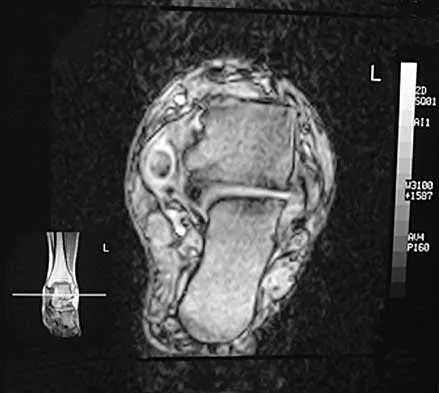
A patient with long-standing diabetes presents with a markedly swollen, warm, and erythematous foot. Radiographs demonstrate severe periarticular debris, joint dislocation, and fragmentation of the midfoot bones.

According to the Eichenholtz classification of Charcot neuroarthropathy, this represents which stage?


Explanation

Eichenholtz Stage I is the developmental (acute) phase of Charcot arthropathy. It is characterized clinically by a red, hot, swollen foot and radiographically by bone fragmentation, joint dislocation, and osseous debris.

Question 92

Based on the classic biomechanical studies by Ramsey and Hamilton regarding ankle congruency following a fracture, 1 mm of lateral talar shift results in approximately what percentage decrease in tibiotalar contact area?


Explanation

Ramsey and Hamilton established that merely 1 mm of lateral talar shift results in a 42% reduction in tibiotalar contact area. This drastic change severely increases peak contact stresses and accelerates the development of post-traumatic osteoarthritis.

Question 93

What is the most common mechanism of injury that results in a longitudinal Lisfranc fracture-dislocation in an athletic population?


Explanation

The most common indirect mechanism for a Lisfranc injury is an axial load applied to a plantar-flexed foot. This forces the metatarsals to displace dorsally relative to the tarsus.

Question 94

A Total Contact Cast (TCC) is considered the gold standard for offloading plantar diabetic foot ulcers. What is its primary biomechanical mechanism of action in promoting ulcer healing?


Explanation

A Total Contact Cast (TCC) primarily works by redistributing plantar pressures. By maintaining total contact with the lower extremity, it transfers weight-bearing loads away from the forefoot and midfoot and distributes them evenly across the heel and lower leg.

Question 95

A diabetic patient presents with a midfoot ulcer and deep soft tissue swelling. Which of the following MRI findings is most indicative of osteomyelitis rather than acute Charcot neuroarthropathy?


Explanation

Osteomyelitis typically presents on MRI as focal marrow abnormality (low T1, high T2) that is spatially contiguous with a skin ulcer or sinus tract. Acute Charcot typically exhibits periarticular marrow edema across multiple bones (the "ghost sign") without direct continuity to an ulcer.

Question 96

During the operative treatment of a complex ankle fracture, an avulsed bony fragment is identified attached to the anterior inferior tibiofibular ligament (AITFL). If this fragment originated from the tibia, it is anatomically referred to as the:


Explanation

The Chaput tubercle (or Tillaux-Chaput fragment) is the anterolateral avulsion of the distal tibia at the attachment site of the AITFL. A Wagstaffe fragment is the corresponding avulsion from the anteromedial fibula.

Question 97

According to the Lauge-Hansen classification system, what is the sequence of injury in a Pronation-Abduction (PA) Stage III ankle fracture?


Explanation

In the Pronation-Abduction sequence: Stage 1 is deltoid ligament rupture or transverse medial malleolar fracture; Stage 2 is rupture of the AITFL/syndesmosis; Stage 3 is a bending (transverse or comminuted) fracture of the fibula above the level of the syndesmosis.

None

Detailed Chapters & Topics

Dive deeper into specialized chapters regarding foot-ankle-2000-set-2-mcqs-3940

35 Chapters
01
Chapter 1 53 min

Foot & Ankle Orthopedics: Comprehensive Self-Assessment MCQs

Test your knowledge of foot and ankle orthopedics with these high-yield MCQs covering anatomy, biomechanics, surgical a…

02
Chapter 2 70 min

Foot & Ankle Orthopedics: High-Yield Board Review MCQs

Test your knowledge with 10 high-yield, ABOS-style multiple-choice questions on foot and ankle orthopedics, covering bi…

03
Chapter 3 66 min

Diabetic Foot & Charcot Arthropathy MCQs | Ortho Board Review

Test your knowledge on diabetic foot complications, Charcot arthropathy, and neuropathic ulcers with these high-yield o…

04
Chapter 4 51 min

Orthopedic Board Review: Mock Exam Set 574 - 100 High-Yield MCQs (Foot & Ankle Focus)

Prepare for success with Orthopedic Board Review Mock Exam Set 574. Master 100 high-yield Foot and Ankle MCQs using our…

05
Chapter 5 96 min

AAOS & ABOS Orthopedic MCQs (Set 1): Ankle, Foot & Gait Biomechanics | 2026 Board Prep

Prepare for your 2026 AAOS and ABOS exams with our interactive Orthopedic MCQs. Test your knowledge on ankle, foot, and…

06
Chapter 6 54 min

Diabetic Foot Screening & Protective Sensation MCQs

Test your knowledge on diabetic foot screening, Semmes-Weinstein monofilament testing, and neuropathic arthropathy with…

07
Chapter 7 98 min

Orthopedic Foot and Ankle 2026 MCQs: Board Review Questions & Answers

Master your 2026 Orthopedic Foot and Ankle board exams with our interactive MCQ dashboard. Practice timed questions, tr…

08
Chapter 8 56 min

Diabetic Foot Screening & Neuropathy MCQs

Master diabetic foot screening, protective sensation, and the 5.07 Semmes-Weinstein monofilament with these ABOS/AAOS s…

09
Chapter 9 57 min

Orthopedic Foot & Ankle 2026 MCQs: Board Review Questions & Answers (Part 1)

Prepare for the 2026 Orthopedic Foot & Ankle board exam with our interactive MCQs. Review detailed questions and answer…

10
Chapter 10 53 min

Orthopedic Foot & Ankle 2026 MCQs: Board Review Questions & Answers (Part 2)

Ace your 2026 exams with our Orthopedic Foot & Ankle MCQs. Practice interactive board review questions and detailed ans…

11
Chapter 11 59 min

Orthopedic Foot & Ankle 2026 MCQs: Board Review Questions & Answers (Part 3)

Ace your 2026 exams with Part 3 of our Orthopedic Foot & Ankle MCQs. Practice high-yield board review questions, answer…

12
Chapter 12 47 min

Orthopedic Foot & Ankle 2026 MCQs: Board Review Questions & Answers (Part 4)

Ace your 2026 Orthopedic Foot & Ankle board exams with Part 4 of our interactive MCQs. Practice with real questions and…

13
Chapter 13 84 min

Orthopedic Foot & Ankle 2026 MCQs: Board Review Questions & Answers (Part 1)

Ace your exams with our Orthopedic Foot & Ankle 2026 MCQs. Master essential board review questions and detailed answers…

14
Chapter 14 83 min

Orthopedic Foot & Ankle 2026 MCQs: Board Review Questions & Answers (Part 2)

Prepare for your exams with Part 2 of our Orthopedic Foot & Ankle 2026 MCQs. Test your knowledge with interactive board…

15
Chapter 15 90 min

Orthopedic Foot & Ankle 2026 MCQs: Board Review Questions & Answers (Part 3)

Prepare for your 2026 exams with Part 3 of our Orthopedic Foot & Ankle MCQs. Master board review questions and answers …

16
Chapter 16 58 min

Orthopedic Foot & Ankle 2026 MCQs: Board Review Questions & Answers (Part 4)

Ace your 2026 Orthopedic Foot and Ankle Board Exams with Part 4 of our interactive MCQ review. Practice with detailed q…

17
Chapter 17 93 min

Orthopedic Foot & Ankle 2026 MCQs: Board Review Questions & Answers (Part 1)

Ace your 2026 exams with our interactive Orthopedic Foot & Ankle MCQs. Practice with top-tier board review questions an…

18
Chapter 18 63 min

Orthopedic Foot & Ankle 2026 MCQs: Board Review Questions & Answers (Part 2)

Prepare for your 2026 orthopedic board exams with Part 2 of our Foot & Ankle MCQs. Practice with interactive questions …

19
Chapter 19 61 min

AAOS Orthopedic Foot & Ankle MCQs (Set 3): Ankle Trauma & Deformities | 2026 Board Review

Master AAOS & ABOS boards with practice MCQs for Set 3, covering ankle fractures, Achilles tendon injuries, and common …

20
Chapter 20 63 min

Orthopedic Foot & Ankle MCQs (Part 4): ABOS & AAOS Board Review 2026

Master Orthopedic Foot & Ankle MCQs for your 2026 ABOS and AAOS board review. Practice Part 4 interactive questions to …

21
Chapter 21 59 min

AAOS Foot & Ankle MCQs (Set 1): Fractures, Deformities & Sports Injuries | Board Prep

Master orthopedic board prep with our interactive AAOS Foot & Ankle MCQs (Set 1). Test your knowledge on fractures, def…

22
Chapter 22 63 min

AAOS Orthopedic MCQs (Set 3): Foot & Ankle Trauma & Pathology | ABOS Board Prep

Master AAOS & ABOS boards with Set 3 Foot & Ankle MCQs. Practice questions cover ankle fractures, foot pathologies, Ach…

23
Chapter 23 49 min

ABOS Foot & Ankle MCQs (Set 4): Ankle Fractures & Diabetic Foot | OITE & SMLE Review

Master ankle fractures and diabetic foot conditions with our interactive ABOS Foot & Ankle MCQs (Set 4). Perfect for yo…

24
Chapter 24 58 min

AAOS Foot & Ankle MCQs (Set 1): Trauma & Degenerative Disorders | ABOS Review

Prepare for your ABOS exam with our interactive AAOS Foot & Ankle MCQs. Test your knowledge on trauma and degenerative …

25
Chapter 25 54 min

AAOS & ABOS Orthopedic MCQs (Set 2): Foot & Ankle Trauma | Board Exam Prep

Master the AAOS & ABOS boards with high-yield practice MCQs for Set 2, covering ankle fractures, foot deformities, and …

26
Chapter 26 66 min

Foot & Ankle Orthopedic MCQs (Set 3): Fractures, Deformities & Tendon Injuries | AAOS & ABOS

Master foot and ankle orthopedic MCQs with our interactive quiz. Test your knowledge on fractures, deformities, and ten…

27
Chapter 27 59 min

AAOS Foot & Ankle MCQs (Set 4): Ankle Fractures & Hindfoot Deformities | Board Review

Master AAOS & ABOS boards with practice MCQs for Set 4, focusing on high-yield topics like ankle fractures, hindfoot de…

28
Chapter 28 59 min

AAOS Orthopedic MCQs (Set 1): Foot & Ankle Trauma & Deformities | Board Review

Ace your board review with interactive AAOS Orthopedic MCQs on foot and ankle trauma and deformities. Practice with tim…

29
Chapter 29 63 min

AAOS/ABOS Foot & Ankle Board Review (Set 2): Ankle Fractures, Hallux Valgus & PTTD MCQs | 2009

Ace your AAOS/ABOS exams with our Foot & Ankle Board Review (Set 2). Master ankle fractures, hallux valgus, and PTTD wi…

30
Chapter 30 66 min

AAOS & ABOS Orthopedic MCQs: Foot & Ankle Set 3 | Board Prep Questions

Ace your orthopedic board exams with Foot & Ankle MCQs Set 3. Practice AAOS and ABOS style questions using timed exam m…

31
Chapter 31 64 min

AAOS & ABOS Foot & Ankle MCQs (Set 4): Ankle Fractures, Deformities & Achilles Injuries

Master AAOS & ABOS exams with Foot & Ankle MCQs for Set 4. Practice high-yield questions on ankle fractures, foot defor…

32
Chapter 32 138 min

OITE & ABOS Orthopedic Board Prep: Foot & Fracture MCQs Part 26

Ace your OITE and ABOS exams with Part 26 of our Orthopedic Surgery Board Review. Practice 50 high-yield foot and fract…

33
Chapter 33 72 min

Orthopedic Board Prep MCQs: Ankle, Foot & Deformity | Part 48

Master ankle and foot deformity topics with 50 high-yield MCQs for OITE and AAOS orthopedic board prep. Take our intera…

34
Chapter 34 39 min

ABOS Part I Orthopaedic Surgery Board Review: CECS & MTP Joint Instability Questions | Part 22150

Ace the ABOS Part I and AAOS OITE exams with 20 advanced multiple-choice questions on CECS and MTP joint instability. S…

35
Chapter 35 45 min

ABOS Part I Orthopedic Review: Lisfranc Injuries, Foot Compartment Syndrome, Ankle Fractures | Part 22158

Master your ABOS Part I exam with our orthopedic review. Practice 12 MCQs on foot compartment syndrome, ankle fractures…

Clinic OS
Medically Verified Content by
Prof. Clinic OS
Consultant Orthopedic & Spine Surgeon
Guide Overview