العربية
Part of the Master Guide

AAOS & ABOS Foot & Ankle Board Review MCQs (Set 2): Ankle Fractures, Lisfranc, Diabetic Foot

AAOS Foot & Ankle MCQs (Set 1): Trauma & Degenerative Disorders | ABOS Review
23 Apr 2026 58 min read 90 Views
Foot & Ankle 2006 MCQs - Part 1

Key Takeaway

This high-yield question set, Set 1, for AAOS and ABOS board exams, focuses on critical foot and ankle orthopedics. It covers common trauma, degenerative conditions, biomechanics, and surgical management principles crucial for comprehensive review and exam preparation.

AAOS Foot & Ankle MCQs (Set 1): Trauma & Degenerative Disorders | ABOS Review

Comprehensive 100-Question Exam


00:00

Start Quiz

Question 1

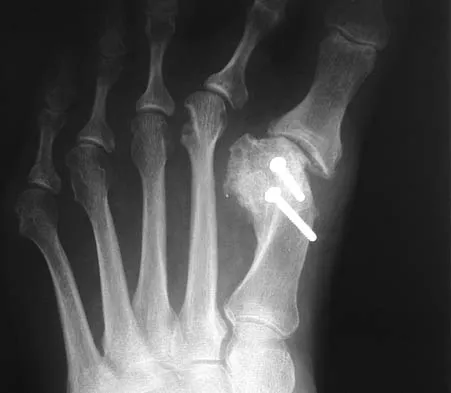
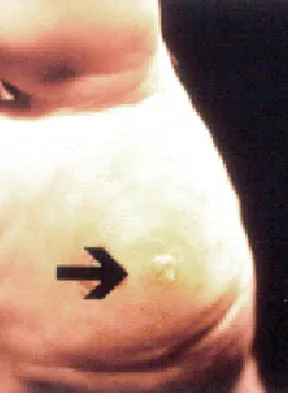
Figures 1a and 1b show the clinical photograph and oblique radiograph of a 52-year-old man who has plantar first metatarsal pain. A felt pad in the shoe proximal to the area of pain has failed to provide relief. Management should now consist of


Explanation

The patient has a discrete callus that overlies a prominent medial sesamoid. Calluses typically occur in response to increased pressure on the skin. Initial treatment should be directed at reducing local pressure with a felt pad. Sesamoid shaving is indicated if the felt pad fails to provide relief. Sesamoidectomy should be reserved for refractory callus given the potential complications of transfer metatarsalgia or callus and hallux valgus. A first metatarsal dorsiflexion osteotomy is more appropriate for a diffuse callus that fails to respond to nonsurgical management. Cryoablation and topical salicylic acid are appropriate for plantar warts, which have a rougher appearance with multiple, small black spots in the lesion. Mann RA, Wapner KL: Tibial sesamoid shaving for treatment of intractable plantar keratosis. Foot Ankle 1992;13:196-198.

Question 2

A 47-year-old man has an acute swollen, red, painful first metatarsophalangeal joint. He denies any history of similar symptoms. What is the first step in evaluation?


Explanation

The patient's symptoms are typical for gouty arthropathy, and the diagnosis can only be confirmed with aspiration and visualization of the crystals. A concomitant infection also must be ruled out; therefore, it is important to obtain a cell count and culture. Colchicine may have a role in gouty management, but the diagnosis must be confirmed. Allopurinol is not effective in acute gouty arthropathy. Measurement of serum uric acid levels is often not helpful in making a definitive diagnosis. Steroid injections should be deferred until cell count and culture results indicate no accompanying infection. Richardson EG (ed): Orthopaedic Knowledge Update: Foot and Ankle 3. Rosemont, IL, American Academy of Orthopaedic Surgeons, 2004, pp 172-173.


Question 3

A 7-year-old boy sustained an acute puncture wound of the foot after stepping barefoot on a piece of glass 1 day ago. His mother states that she is not sure if she got the piece of glass out; however, she reports that his immunizations are up-to-date. Examination reveals that the wound is slightly erythematous, less than 1 mm in length on the heel, and is not currently draining. What is the next most appropriate step im management?


Explanation

The child has an up-to-date tetanus; therefore, a booster is not recommended. Pseudomonas coverage is most likely not needed because the child was barefoot. It is too early to evaluate for abscess or osteomyelitis with MRI, and a formal debridement is rarely indicated without signs of an abscess or a retained foreign body. Radiographs with soft-tissue penetration should be obtained to check for a retained foreign body. Richardson EG (ed): Orthopaedic Knowledge Update: Foot and Ankle 3. Rosemont, IL, American Academy of Orthopaedic Surgeons, 2004, pp 199-205.


Question 4

Figures 2a and 2b show the clinical photograph and radiograph of a 16-year-old cheerleader who fell on her left lower extremity while performing a pyramid. Following adequate sedation, closed reduction is performed, but an incomplete reduction is noted. What structure is most likely preventing a reduction?


Explanation

The stretched peroneus brevis muscle and tendon follow anterior to the fibula and are most likely incarcerated with reduction. The anterior talofibular ligament is too small to prevent reduction of the ankle joint itself. The extensor digitorum brevis originates from the talus; therefore, it is not involved in the tibiotalar joint. The posterior tibial tendon lies medially and would not be interposed into the ankle joint. Similarly, the anterior tibialis tendon also would not be involved. Pehlivan O, Akmaz I, Solakoglu C, et al: Medial peritalar dislocation. Arch Orthop Trauma Surg 2002;122:541-543.


Question 5

Figures 3a and 3b show the current radiographs of a 59-year-old woman who has pain and deformity after undergoing bunion surgery 1 year ago. Nonsurgical management has failed to provide relief. Treatment should now consist of


Explanation

The hallux varus seen in this patient is most likely the result of a combination of causes. Based on the degenerative changes and the significant shortening of the first metatarsal relative to the second metatarsal, a metatarsophalangeal arthrodesis is the treatment of choice. The other surgical approaches are not expected to provide a satisfactory result. Coughlin MJ, Mann RA: Adult hallux valgus, in Coughlin MJ, Mann RA (eds): Surgery of the Foot and Ankle, ed 7. St Louis, MO, Mosby-Year Book, 2000, pp 150-269.


Question 6

A 30-year-old man who sustained a tibial fracture with a peroneal nerve palsy 2 years ago now has a drop foot and weak eversion of the foot. He reports success with stretching exercises, but he catches his toes when his foot tires. Examination reveals that the foot is plantigrade and supple. What is the next most appropriate step in management?


Explanation

The patient has a supple plantigrade foot that would benefit from a drop foot brace to prevent catching of the toes. Tendon transfer should not be considered until the patient has undergone bracing. Achilles tendon lengthening is not necessary because the foot is plantigrade and flexible. Nerve grafting is not indicated because of the length of time the peroneal nerve palsy has been present. Dehne R: Congenital and acquired neurologic disorders, in Mann RA, Coughlin MJ (eds): Surgery of the Foot and Ankle, ed 7. St Louis, MO, Mosby, 1999, vol 1, pp 552-553.


Question 7

Removal of both hallucal sesamoids should be reserved as a salvage procedure because of the high incidence of which of the following postoperative complications?


Explanation

Removal of both sesamoids is associated with a high incidence of postoperative hallux valgus and cock-up deformity of the great toe because of weakening of the flexor hallucis brevis tendon. The sesamoids lie within these tendons and require meticulous repair following excision. Richardson EG (ed): Orthopaedic Knowledge Update: Foot and Ankle 3. Rosemont, IL, American Academy of Orthopaedic Surgeons, 2003, pp 17-25.


Question 8

A 35-year-old man who snowboards sustained the injury shown in Figures 4a through 4c. What is the mechanism of injury?


Explanation

Fractures of the lateral process of the talus in snowboarders have been thought to result from pure dorsiflexion, inversion, and axial loading. In a cadaveric study, 10 cadavers were placed in fixed dorsiflexion and inversion with an axial load. This was combined with or without external rotation. No fractures occurred after axial loading in the dorsiflexed-inverted position. Fractures of the lateral process of the talus occurred in 75% of the specimens with the addition of external rotation. Boon AJ, Smith J, Zobitz ME, et al: Snowboarder's talus fracture: Mechanism of injury. Am J Sports Med 2001;29:333-338.


Question 9

A 63-year-old man with type I diabetes mellitus who underwent open forefoot amputation now has a high fever, and an elevated WBC count and blood glucose levels. Repeat laboratory studies the day after surgery show a WBC count of 9,500/mm3, a serum albumin level of 1.9 g/dL, and a total lymphocyte count of 1,900/mm3. Examination reveals that he is afebrile, and his blood glucose level is now normal. An ultrasound Doppler of the dorsalis pedis artery shows an ankle-brachial index of 0.6. A transcutaneous partial pressure measurement of oxygen at the ankle joint shows a level of 38 mm Hg. What is the best course of action?


Explanation

This patient appears to have adequate blood supply to heal a Syme's ankle disarticulation but is currently malnourished because of the systemic infection, and is likely to progress to wound failure. Therefore, the initial management of choice is culture-specific antibiotic therapy, open wound management, and nutritional supplementation. If his serum albumin rises to a minimum of 2.5 gm/dL, he can undergo elective Syme's ankle disarticulation. If the serum albumin does not rise within a short period of time, he should undergo transtibial amputation.


Question 10

A 40-year-old man has a painful mass on his anterior ankle joint with limited range of motion. A radiograph, MRI scan, a gross specimen, and a hematoxylin/eosin biopsy specimen are shown in Figures 5a through 5d. What is the most likely diagnosis?


Explanation

Synovial chondromatosis results from chondroid metaplasia within the synovium. Male to female ratio is 2:1, with a peak incidence in early adult life. Radiographs can show speckled cal


Question 11

A 63-year-old woman with a history of poliomyelitis has a fixed 30-degree equinus contracture of the ankle, rigid hindfoot valgus, and normal knee strength and stability. She reports persistent pain and has had several medial forefoot ulcerations despite a program of stretching, bracing, and custom footwear. What is the next most appropriate step in management?


Explanation

The patient has a fixed deformity of the hindfoot and an Achilles tendon contracture; therefore, the treatment of choice is triple arthrodesis with Achilles tendon lengthening. Further bracing will not be helpful. Amputation is not indicated, and ankle arthrodesis will not address the hindfoot deformity. Palliative management would be more appropriate if the knee was unstable or the quadriceps were weak, because the equinus balances the ground reaction force across the knee. Perry J, Fontaine JD, Mulroy S: Findings in post-poliomyelitis syndrome: Weakness of muscles of the calf as a source of late pain and fatigue of muscles of the thigh after poliomyelitis. J Bone Joint Surg Am 1995;77:1148-1153.


Question 12

What is the most common foot deformity associated with myelomeningocele?


Explanation

All of the above can be associated with myelomeningocele, but talipes equinovarus occurs in 50% to 90% of patients with myelomeningocele. Congenital vertical talus is rarely associated with any neuromuscular diseases other than myelomeningocele but is not the most common deformity in myelomeningocele. Stans AA, Kehl DK: The pediatric foot, in Baratz ME, Watson AD, Imbriglia JE (eds): Orthopaedic Surgery: The Essentials. New York, NY, Thieme, 1999, pp 702-703.


Question 13

Where is the watershed zone for tarsal navicular vascularity?


Explanation

The central one third has been established as the watershed zone by angiographic studies, and has been borne out in clinical conditions involving the navicular, such as stress fractures and osteonecrosis. These findings account for the susceptibility to injury at this level. Nunley JA, Pfeffer GB, Sanders RW, et al (eds): Advanced Reconstruction: Foot and Ankle. Rosemont, IL, American Academy of Orthopaedic Surgeons, 2004, pp 239-242.


Question 14

A 37-year-old woman has had intermittent paresthesias and numbness in the plantar foot for the past 6 months. She reports that the symptoms are worse with activity, and the paresthesias are beginning to awaken her at night. MRI scans are shown in Figures 6a and 6b. What is the most likely diagnosis?


Explanation

The symptoms are consistent with tarsal tunnel syndrome. Ganglion cysts are a well-known cause of tarsal tunnel syndrome. The MRI scans show a high intensity, well-circumscribed mass in the tarsal tunnel that is consistent with a fluid-filled cyst. Patients usually respond well to excision of the ganglion and resolution of the tarsal tunnel symptoms. The surrounding fat is a different signal intensity on the MRI scans, which rules out a lipoma. Synovial cell sarcoma has a heterogeneous appearance on an MRI scan. Metastatic tumors are most commonly found in the osseous structures of the foot, not the soft tissues. Rozbruch SR, Chang V, Bohne WH, et al: Ganglion cysts of the lower extremity: An analysis of 54 cases and review of the literature. Orthopedics 1998;21:141-148. Llauger J, Palmer J, Monill JM, et al: MR imaging of benign soft-tissue masses of the foot and ankle. Radiographics 1998;18:1481-1498.


Question 15

Figure 7 shows the CT scan of a 25-year-old soccer player who has had posterior ankle pain with plantar flexion for the past 2 years. Immobilization has failed to provide relief. He is ambulatory. Management should consist of


Explanation

An os trigonum is usually asymptomatic, but this accessory bone has been associated with persistent posterior ankle pain, which has been described as os trigonum syndrome. This usually affects athletes and ballerinas. Forced plantar flexion leads to impingement of the os trigonum against the posterior tibial plafond, and flexor hallucis tendinitis may develop. It may be difficult to differentiate a fractured trigonal process from the os trigonum. MRI may reveal bone marrow edema that may aid in the diagnosis of os trigonum syndrome. Steroid injections may lead to tendon rupture. The results of excision of a symptomatic os trigonum through a posteromedial or lateral approach are favorable, with a rapid return to full function. The main complication of this procedure is sural nerve injury with a lateral approach. Hedrick MR, McBryde AM: Posterior ankle impingement. Foot Ankle Int 1994;15:2-8.


Question 16

Figure 8 shows the CT scan of an 11-year-old boy who has had a 1-year history of worsening painful flatfeet. He reports pain associated with physical education at school, especially with running and jumping. Management consisting of activity restriction, anti-inflammatory drugs, and casting has failed to provide relief. Treatment should now consist of


Explanation

In most patients with symptomatic talocalcaneal coalition involving less than 50% of the subtalar joint, resection with fat graft interposition is preferred over a subtalar or triple arthrodesis, especially if reasonable range of motion can be achieved. This patient has a synchondrosis that is partially cartilaginous. Although patients may have a residual gait abnormality, most report pain relief after surgery. Scranton PE Jr: Treatment of symptomatic talocalcaneal coalition. J Bone Joint Surg Am 1987;69:533-539. Kitaoka HB, Wikenheiser MA, Schaughnessy WJ, et al: Gait abnormalities following resection of talocalcaneal coalition. J Bone Joint Surg Am 1997;79:369-374.


Question 17

An elite skier training for the Olympics sustains an isolated traumatic dislocation of the peroneal tendons that have spontaneously reduced. The games are 9 months away and the athlete does not want to miss them. Treatment should consist of


Explanation

Most of these injuries occur in young, active patients. Success rates for nonsurgical management are only marginally better than 50%. The treatment of choice is early surgery for patients who desire a quick return to a sport or active lifestyle. Subluxation of the peroneal tendons leads to longitudinal tears over time. McLennan JG: Treatment of acute and chronic luxations of the peroneal tendons. Am J Sports Med 1980;8:432-436.


Question 18

What is the optimum position of immobilization of the foot and ankle immediately after Achilles tendon repair to maximize skin perfusion?


Explanation

Achilles tendon tension is not affected by knee position when the ankle is in 20 degrees to 25 degrees of plantar flexion. Skin perfusion overlying the Achilles tendon is maximal in 20 degrees of plantar flexion and is reduced beyond 20 degrees of plantar flexion. Neutral flexion or any amount of dorsiflexion compromises the repair.


Question 19

A 32-year-old man who sustained a tarsometatarsal (Lisfranc) injury 3 years ago now reports increasing pain in the left foot. Orthotics, nonsteroidal anti-inflammatory drugs, and injections have provided only temporary relief. Examination reveals swelling and tenderness over the tarsometatarsal joints. Radiographs show advanced arthrosis of the first and second tarsometatarsal joints. Management should now include


Explanation

The patient has advanced arthrosis of the midfoot, and orthotic management has failed to provide relief. Therefore, the treatment of choice is midfoot arthrodesis. Shock wave treatment has not been shown to be beneficial for arthritis. An ankle-foot orthosis would not be appropriate based on findings of a normal ankle joint. Triple arthrodesis would not be helpful because the hindfoot joint is not affected in a Lisfranc injury. Sangeorzan BJ, Veith GR, Hansen ST Jr: Salvage of Lisfranc's tarsometatarsal joints by arthrodesis. Foot Ankle 1990;10:193-200.


Question 20

The Lisfranc ligament connects the base of the


Explanation

The Lisfranc ligament arises from the lateral surface of the first (medial) cuneiform and is directed obliquely outward and slightly downward to insert on the medial surface of the second metatarsal base. It is the strongest of the tarsometatarsal interosseous ligaments. Sarrafian SK: Anatomy of the Foot and Ankle: Descriptive, Topographic, Functional, ed 2. Philadelphia, PA, JB Lippincott, 1993.


Question 21

An 11-year-old girl has had pain in the medial arch of her foot for the past 3 months. She reports that pain is present even with daily activities such as walking to class at school, and ibuprofen provides some relief. She denies any history of trauma. Examination reveals a flexible pes planus with focal tenderness over a prominent tarsal navicular tuberosity. Radiographs show a prominent accessory navicular. Management should consist of


Explanation

The patient has the classic symptoms, examination findings, and radiographs for a painful accessory navicular. Initial treatment should always be nonsurgical, specifically cast immobilization. Surgery should be reserved for those patients who fail nonsurgical management. Corticosteroids should not be injected into a posterior tibial tendon or insertion point because they can weaken the tendon and possibly cause tendon rupture. Triple arthrodesis and biopsy have no role in the management of a painful accessory navicular.


Question 22

Figures 9a and 9b show the radiographs of a 28-year-old woman who sustained a head injury and a closed injury, without soft-tissue compromise, to her right lower extremity in a motor vehicle accident. Appropriate management of the foot injury should include


Explanation

The displaced talar neck fracture should be treated with open reduction and internal fixation using screws. Closed reduction and casting will not maintain position, and percutaneous pinning is not able to maintain reduction to allow union. External fixation and amputation are not necessary for this injury unless there is severe soft-tissue loss.


Question 23

An active 47-year-old woman with rheumatoid arthritis reports forefoot pain and deformity and has difficulty with shoe wear. Examination reveals hallux valgus and claw toes. A radiograph is shown in Figure 10. What is the most appropriate surgical treatment?


Explanation

Rheumatoid arthritis commonly affects the metatarsophalangeal joints, which become destabilized with time resulting in hallux valgus and dislocated lesser claw toes. The result is metatarsalgia as the dislocated claw toes "pull" the fat pad distally. Severe hallux valgus reduces first ray load, which compounds the metatarsalgia because the load is transferred to the lesser metatarsal heads. First metatarsophalangeal arthrodesis restores weight bearing medially and corrects the painful bunion. Metatarsal head resection slackens the toe tendons to allow correction of the claw toes by whatever means necessary and decreases plantar load over the forefoot. Rheumatoid arthritis in the first metatarsophalangeal joint will continue to progress if osteotomies or a Lapidus procedure are performed. Keller resection arthroplasty increases transfer metatarsalgia and reduces push-off power during gait. Flexor-to-extensor tendon transfer of the lesser toes does not address the metatarsalgia and does not correct the dislocation of the metatarsophalangeal joint. Coughlin MJ: Arthritides, in Coughlin MJ, Mann RA (eds): Surgery of the Foot and Ankle, ed 7. St Louis, MO, Mosby, 1999, p 572.


Question 24

Figure 11 shows the radiograph of an otherwise healthy 22-year-old man who sustained a midfoot injury in a motor vehicle accident 9 days ago. Treatment should consist of


Explanation

The dislocation is between the medial and middle cuneiform. Although the first and second tarsometatarsal joints are aligned, there is a gap between the cuneiforms. The radiograph shows a Lisfranc dislocation variant. In a healthy active individual, open reduction and internal fixation yields the best results. The reestablishment of the normal arch and medial column support with anatomic reduction is critical to obtaining the best possible outcome from these injuries. Teng AL, Pinzur MS, Lomasney L, et al: Functional outcome following anatomic restoration of the tarsal-metatarsal fracture dislocation. Foot Ankle Int 2002;23:922-926.


Question 25

A 32-year-old woman has left second toe dactylitis (sausage toe). Radiographs show a "pencil in cup" distal interphalangeal joint deformity. Examination reveals that subtalar motion is markedly reduced. What is the most likely diagnosis?


Explanation

The patient's clinical picture is considered the classic presentation for psoriatic arthritis. The other answers are not applicable for the constellation of findings. Jahss MH: Disorders of the Foot and Ankle, ed 2. Philadelphia, PA, WB Saunders, 1991, pp 1691-1693.


Question 26

A 42-year-old recreational athlete sustains an acute Achilles tendon rupture. He elects for nonoperative management. Which of the following best describes his expected outcome compared to operative repair?


Explanation

Recent literature shows that early functional rehabilitation in nonoperative management of acute Achilles tendon ruptures yields functional outcomes and re-rupture rates similar to operative repair. Operative repair carries a higher risk of wound complications and nerve injury.

Question 27

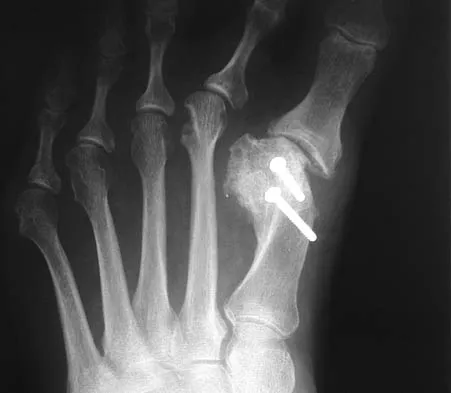
A 30-year-old active male presents with midfoot pain after an axial load injury to a plantarflexed foot. Weight-bearing radiographs demonstrate 4 mm of widening between the medial cuneiform and the base of the second metatarsal, with no associated fractures.

According to recent literature, what is the most appropriate surgical management for this patient?


Explanation

Recent Level I evidence demonstrates that primary arthrodesis yields superior functional outcomes and lower reoperation rates compared to ORIF for purely ligamentous Lisfranc injuries. ORIF is typically reserved for primarily bony Lisfranc fracture-dislocations.

Question 28

A 42-year-old weekend warrior sustains an acute Achilles tendon rupture. He elects for non-operative management. What rehabilitation protocol modification has been shown to result in re-rupture rates comparable to operative management?


Explanation

Functional rehabilitation featuring early weight-bearing in an equinus cast or boot significantly reduces the re-rupture rate in non-operative management, making it comparable to surgical repair. Prolonged immobilization leads to worse functional outcomes.

Question 29

A 35-year-old male sustains a Hawkins Type III talar neck fracture. Which of the following blood vessels is the primary vascular supply to the talar body and is at greatest risk of disruption in this injury?


Explanation

The artery of the tarsal canal, a branch of the posterior tibial artery, supplies the majority of the talar body. It forms an anastomotic sling with the artery of the tarsal sinus (branch of the dorsalis pedis) beneath the talar neck.

Question 30

During an extensile lateral approach for the open reduction and internal fixation of a displaced intra-articular calcaneus fracture, a nerve is at risk of iatrogenic injury at the proximal and distal extents of the incision. Which nerve is this?


Explanation

The sural nerve is at highest risk during the extensile lateral approach to the calcaneus. It runs posterior to the fibula, crosses the lateral border of the Achilles tendon, and runs parallel to the lateral border of the foot.

Question 31

A 65-year-old male with end-stage ankle osteoarthritis presents for operative evaluation. He is requesting a total ankle arthroplasty (TAA). Which of the following is considered an absolute contraindication to TAA?


Explanation

Avascular necrosis of >50% of the talar body is an absolute contraindication to TAA due to a lack of viable bone for implant support. Neuropathy (e.g., Charcot) and active infection are also absolute contraindications.

Question 32

A 20-year-old collegiate track athlete complains of vague dorsal midfoot pain that worsens with sprinting. Plain radiographs are normal. A subsequent CT scan reveals an incomplete dorsal cortical fracture line in the navicular. What is the most appropriate initial management?


Explanation

Incomplete navicular stress fractures are best treated initially with strict non-weight-bearing in a cast for 6 to 8 weeks. Surgery (ORIF) is generally reserved for complete, displaced fractures or cases that fail conservative management.

Question 33

A 22-year-old collegiate basketball player sustains an acute Zone 2 fracture of the proximal fifth metatarsal. He wishes to return to play as soon as safely possible. What is the recommended treatment?


Explanation

Zone 2 (Jones) fractures in competitive athletes are best treated with intramedullary screw fixation to reduce the risk of nonunion and allow for a faster return to sport compared to non-operative management.

Question 34

A 45-year-old female presents with a highly comminuted, displaced tibial pilon fracture and severe soft tissue swelling with fracture blisters.

What is the most appropriate initial step in her orthopedic management?


Explanation

High-energy pilon fractures with severe soft-tissue compromise are standardly treated with a staged protocol: initial spanning external fixation (with or without fibular fixation) to allow soft tissues to recover, followed by delayed definitive ORIF in 10-14 days.

Question 35

During the evaluation of a rotational ankle fracture, a syndesmotic injury is suspected. Which of the following radiographic parameters on an AP or mortise radiograph is most diagnostic of syndesmotic instability?


Explanation

A tibiofibular clear space of greater than 5 mm on AP or mortise views is indicative of syndesmotic injury. The clear space is measured 1 cm proximal to the joint line.

Question 36

A 55-year-old male presents with dorsal foot pain localized to the first metatarsophalangeal (MTP) joint. Examination reveals a dorsal osteophyte and pain primarily at the end-ranges of dorsiflexion, with preserved mid-range motion (Coughlin Stage 2 Hallux Rigidus). Non-operative measures have failed. What is the most appropriate surgical treatment?


Explanation

Cheilectomy (removal of the dorsal osteophyte and up to 30% of the dorsal metatarsal head) is the procedure of choice for Stage 1 and 2 hallux rigidus with pain primarily on terminal dorsiflexion. First MTP fusion is preferred for end-stage (Stage 3 and 4) disease.

Question 37

A 58-year-old patient with long-standing, poorly controlled diabetes presents with an acutely swollen, erythematous, and warm unilateral foot. Radiographs demonstrate periarticular fragmentation and debris at the tarsometatarsal joints. Elevation of the limb for 10 minutes leads to resolution of the erythema. What is the best initial management?


Explanation

The clinical picture describes acute Eichenholtz Stage I Charcot neuroarthropathy. The resolution of redness with elevation helps differentiate it from infection. The standard of care for acute Charcot is offloading with a total contact cast.

Question 38

A 14-year-old boy is evaluated for recurrent ankle sprains and a rigid, painful flatfoot. On physical exam, subtalar motion is severely restricted. Which radiographic view is most sensitive for diagnosing the most likely pathology?


Explanation

The patient likely has a tarsal coalition. A calcaneonavicular coalition (most common) is best visualized on a 45-degree internal oblique view, whereas a talocalcaneal coalition is best seen on a Harris axial view or CT.

Question 39

A 50-year-old overweight female presents with progressive flattening of her left medial longitudinal arch. Examination reveals an inability to perform a single-leg heel raise and forefoot abduction with >30% talonavicular uncoverage on radiographs, but the hindfoot remains manually correctable. What is the appropriate surgical classification and treatment?


Explanation

Stage IIB adult acquired flatfoot deformity (flexible, but with severe forefoot abduction / >30% TN uncoverage) typically requires a lateral column lengthening (e.g., Evans osteotomy) in addition to FDL transfer and medial displacement calcaneal osteotomy.

Question 40

A 28-year-old skier sustained a sudden dorsiflexion and inversion injury. She reports a painful popping sensation behind the lateral malleolus. Examination reveals swelling posterior to the fibula and the tendons subluxate anteriorly during resisted eversion. This pathology is associated with failure of which structure?


Explanation

Peroneal tendon dislocation is caused by an injury to the superior peroneal retinaculum (SPR). It frequently occurs due to forceful dorsiflexion and inversion or sudden contraction of the peroneals.

Question 41

A 25-year-old professional football player suffers a severe hyperdorsiflexion injury to his great toe. MRI reveals a complete rupture of the plantar plate. Which of the following is considered a relative indication for surgical repair over non-operative management in this athlete?


Explanation

Turf toe is a sprain of the 1st MTP plantar plate. Surgical indications for turf toe (Grade 3) include complete tears with proximal sesamoid migration (>3 mm), intra-articular loose bodies, vertical instability, or failed conservative management in a high-level athlete.

Question 42

When comparing outcomes of Total Ankle Arthroplasty (TAA) versus ankle arthrodesis for end-stage ankle osteoarthritis, TAA has been shown in long-term studies to have which of the following relative advantages?


Explanation

TAA preserves some sagittal plane motion, which has been shown to reduce abnormal stresses on adjacent joints, thereby decreasing the incidence or progression of subtalar and transverse tarsal arthritis compared to ankle arthrodesis.

Question 43

A 24-year-old snowboarder lands hard following a jump, sustaining a forceful dorsiflexion and inversion injury to the ankle. He has lateral ankle pain mimicking a severe sprain, but radiographs reveal a fracture. Which of the following fractures is pathognomonic for this mechanism?


Explanation

A 'snowboarder’s fracture' is a fracture of the lateral process of the talus. It is caused by severe dorsiflexion and inversion and is often misdiagnosed clinically as an anterior talofibular ligament sprain.

Question 44

A 38-year-old female sustains a trimalleolar ankle fracture. The posterior malleolus fracture involves 35% of the articular surface and is displaced. Current biomechanical evidence suggests that which method provides the most stable fixation for this fragment?


Explanation

Biomechanical studies have shown that fixing a posterior malleolus fracture via a direct posterolateral approach with antiglide/buttress plating is biomechanically superior to indirect anterior-to-posterior lag screws.

Question 45

A 13-year-old boy presents with ankle pain after an external rotation injury. Radiographs show a Salter-Harris III fracture of the anterolateral distal tibia. Which ligament's avulsion force is responsible for this specific fracture pattern?


Explanation

This describes a juvenile Tillaux fracture, caused by the pull of the anterior inferior tibiofibular ligament (AITFL) on the anterolateral epiphysis, which is the last portion of the distal tibial physis to close.

Question 46

A 45-year-old runner with recalcitrant plantar fasciitis undergoes a complete surgical release of the plantar fascia. Post-operatively, she complains of new-onset, severe lateral midfoot pain and a visibly flatter arch. This complication is most directly related to which of the following pathomechanical changes?


Explanation

Complete release of the plantar fascia destroys the 'windlass mechanism' supporting the arch. This leads to arch collapse and subsequent lateral column overload, which often presents as severe lateral midfoot or cuboid pain.

Question 47

A 28-year-old man sustains a Hawkins type III talar neck fracture following a motor vehicle accident. He undergoes urgent closed reduction and subsequent definitive open reduction and internal fixation. Which of the following best describes his risk of developing avascular necrosis (AVN) of the talar body?


Explanation

Hawkins type III fractures involve dislocation of the subtalar and tibiotalar joints, disrupting the major blood supply to the talus. The risk of AVN is reported to be between 75% and 90%.

Question 48

A 35-year-old male sustains a purely ligamentous Lisfranc injury. Current evidence suggests that when compared to open reduction and internal fixation (ORIF), primary arthrodesis of the first, second, and third tarsometatarsal joints for this specific injury pattern results in:


Explanation

For purely ligamentous Lisfranc injuries, primary arthrodesis has been shown to yield better functional outcomes and a lower rate of planned hardware removal and secondary procedures compared to ORIF.

Question 49

A 45-year-old woman complains of painful bunions. Weight-bearing radiographs reveal a hallux valgus angle (HVA) of 38 degrees and an intermetatarsal angle (IMA) of 16 degrees. There is no hypermobility of the first tarsometatarsal joint. What is the most appropriate surgical management?


Explanation

For severe hallux valgus (IMA >13 degrees, HVA >30 degrees), a proximal metatarsal osteotomy combined with a distal soft tissue procedure is indicated to achieve adequate correction. Lapidus is typically reserved for those with TMT hypermobility or first ray arthritis.

Question 50

A 55-year-old male presents with dorsal midfoot and first toe pain. Examination reveals a palpable dorsal osteophyte and restricted, painful dorsiflexion of the first metatarsophalangeal (MTP) joint. Radiographs show moderate joint space narrowing with large dorsal osteophytes, but the plantar joint space is preserved. He has failed nonoperative management. What is the most appropriate surgical treatment?


Explanation

Cheilectomy is indicated for Grade 1 and 2 hallux rigidus with preserved plantar cartilage and pain predominantly on dorsiflexion. It involves removal of the dorsal osteophytes and the dorsal third of the metatarsal head.

Question 51

A 50-year-old woman presents with medial ankle pain and a progressively flattening arch. She is able to perform a single-leg heel rise but it is weak and painful. She has a flexible flatfoot deformity. Nonoperative management with a custom orthosis has failed. What is the most appropriate surgical intervention?


Explanation

The patient has Stage II posterior tibial tendon dysfunction characterized by a flexible deformity and weak single-leg heel rise. Standard surgical treatment includes an FDL transfer combined with a medializing calcaneal osteotomy.

Question 52

A 58-year-old diabetic patient presents with a swollen, erythematous, and warm right foot without open ulcerations. Laboratory studies show normal white blood cell count and slightly elevated ESR. Radiographs demonstrate fragmentation and subluxation of the midfoot. What is the most appropriate initial management?


Explanation

The patient presents with acute Charcot arthropathy (Eichenholtz stage 1). The mainstay of initial treatment is offloading with a total contact cast to prevent further deformity and allow the inflammatory phase to resolve.

Question 53

In the Sanders classification for intra-articular calcaneus fractures, the severity and type are determined primarily by which of the following radiographic or advanced imaging views?


Explanation

The Sanders classification is based on the number and location of articular fracture lines through the posterior facet of the calcaneus, as seen on coronal CT images.

Question 54

Which of the following is true regarding functional bracing (early functional rehabilitation) compared to surgical repair for acute Achilles tendon ruptures?


Explanation

Recent studies demonstrate that when utilizing an early functional rehabilitation protocol, nonoperative management of acute Achilles tendon ruptures yields similar re-rupture rates to surgical repair while avoiding surgical site complications.

Question 55

A 21-year-old collegiate basketball player sustains a fracture of the fifth metatarsal base located at the metaphyseal-diaphyseal junction. The fracture extends into the fourth-fifth intermetatarsal articulation. He wishes to return to play as soon as safely possible. What is the recommended treatment?


Explanation

This is a Jones fracture (Zone 2). In high-level or elite athletes, early intramedullary screw fixation is recommended to reduce the risk of nonunion and allow for a faster return to sport.

Question 56

A 42-year-old female presents with severe pain in the forefoot, often described as feeling like she is walking on a pebble. The pain is worst in narrow shoes and relieves when barefoot. Examination reveals a palpable click when the metatarsal heads are squeezed together while applying plantar pressure to the webspace. Which webspace is most commonly affected?


Explanation

Morton's neuroma most commonly affects the third webspace, followed by the second. The clinical finding described is a positive Mulder's click.

Question 57

A 62-year-old woman with end-stage post-traumatic ankle osteoarthritis is considering total ankle arthroplasty (TAA). Which of the following is considered an absolute contraindication to TAA?


Explanation

Active or recent deep infection is an absolute contraindication to total ankle arthroplasty. Relative contraindications include heavy labor, severe uncorrectable deformity, and significant avascular necrosis of the talus.

Question 58

A 45-year-old man sustains a high-energy closed tibial pilon fracture. There is severe soft tissue swelling and fracture blisters over the medial and anterior ankle. What is the most appropriate initial management strategy?


Explanation

In high-energy pilon fractures with severe soft tissue compromise, staged management with a temporary spanning external fixator allows for soft tissue recovery before definitive ORIF. This significantly reduces the risk of wound complications and infection.

Question 59

A 24-year-old football player sustains a hyperextension injury to his first MTP joint. He has severe pain, ecchymosis, and inability to bear weight. MRI demonstrates complete disruption of the plantar plate and sesamoid complex with proximal retraction of the sesamoids. What is the most appropriate management?


Explanation

This is a Grade 3 Turf Toe injury with complete rupture of the plantar plate and proximal migration of the sesamoids. Surgical repair is indicated to restore push-off strength and anatomy in a high-level athlete.

Question 60

A 48-year-old male runner complains of heel pain that is worst with the first few steps in the morning. Examination reveals point tenderness at the medial tuberosity of the calcaneus. Initial management has included rest, NSAIDs, and a prefabricated shoe insert, with minimal improvement after 4 weeks. What is the most appropriate next step in management?


Explanation

A structured stretching program targeting the plantar fascia and Achilles tendon has been shown to be highly effective. It is the appropriate next step in conservative management of plantar fasciitis before more invasive options are considered.

Question 61

Tarsal tunnel syndrome involves entrapment of the tibial nerve or its branches. The boundaries of the tarsal tunnel include the medial malleolus anteriorly, the calcaneus laterally, and which structure superficially?


Explanation

The superficial boundary (roof) of the tarsal tunnel is the flexor retinaculum. Entrapment of the posterior tibial nerve underneath this structure leads to tarsal tunnel syndrome.

Question 62

A 19-year-old track athlete presents with insidious onset of vague dorsal midfoot pain. Radiographs are normal, but an MRI confirms a stress fracture of the tarsal navicular without displacement. What is the initial treatment of choice?


Explanation

The tarsal navicular has a tenuous blood supply, making stress fractures prone to nonunion. The gold standard for conservative management of non-displaced navicular stress fractures is strict non-weight-bearing in a cast for 6-8 weeks.

Question 63

A 22-year-old female ballet dancer presents with posteromedial ankle pain, exacerbated by going en pointe. She notes a triggering sensation in her great toe. Which of the following is the most likely diagnosis?


Explanation

FHL tenosynovitis is common in ballet dancers due to repetitive plantar flexion (en pointe). It often presents with posteromedial ankle pain and triggering or crepitus along the FHL sheath posterior to the medial malleolus.

Question 64

Which of the following intraoperative tests is most reliable for diagnosing latent syndesmotic instability following fixation of a lateral malleolus fracture?


Explanation

The external rotation stress test and the lateral hook (Cotton) test performed under direct vision or fluoroscopy intraoperatively are the most reliable methods to assess for syndesmotic instability after fibular fixation.

Question 65

A 68-year-old male presents with an acute Achilles tendon rupture sustained while playing tennis. He has a past medical history of hypertension and well-controlled diabetes. He is moderately active but prefers avoiding surgery. Which of the following is the most appropriate management, considering current evidence regarding nonoperative versus operative treatment in this demographic?


Explanation

Recent randomized controlled trials demonstrate that functional rehabilitation protocols for Achilles tendon ruptures yield similar functional outcomes and re-rupture rates compared to surgical repair, while avoiding surgical site complications.

Question 66

A 55-year-old construction worker presents with end-stage post-traumatic ankle osteoarthritis. He has failed standard NSAID therapy and intra-articular corticosteroid injections. He wishes to delay surgery. Which of the following orthotic modifications is most effective for alleviating his pain during ambulation?


Explanation

A rigid AFO limits painful tibiotalar motion, while a rocker-bottom sole compensates for the lost ankle dorsiflexion and plantarflexion during the gait cycle, reducing forces across the arthritic joint.

Question 67

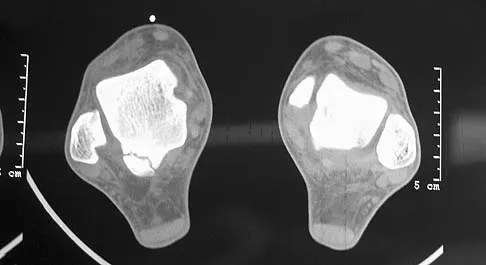
A 24-year-old athlete sustains a purely ligamentous Lisfranc injury involving the first, second, and third tarsometatarsal joints with 3 mm of diastasis, as seen on weight-bearing radiographs.

Based on current literature, which of the following surgical interventions provides the best long-term functional outcome?


Explanation

Multiple studies have shown that primary arthrodesis of the medial three rays for purely ligamentous Lisfranc injuries results in superior functional outcomes and lower hardware removal rates compared to ORIF.

Question 68

A 42-year-old man undergoes open reduction and internal fixation of a displaced intra-articular calcaneus fracture via an extensile lateral approach. Which of the following patient factors most significantly increases the risk of the most common postoperative complication associated with this approach?


Explanation

Wound healing complications, particularly apical edge necrosis, are the most common complication of the extensile lateral approach. Smoking is the most significant modifiable risk factor, increasing the wound complication rate markedly.

Question 69

A 30-year-old male is involved in a motor vehicle collision and sustains a Hawkins type III fracture of the talar neck. Which of the following best describes the joint dislocations associated with this specific injury pattern?


Explanation

A Hawkins type III talar neck fracture involves displacement with dislocation of both the subtalar and tibiotalar joints. This injury carries a very high risk (approaching 100% in some series) of avascular necrosis of the talar body.

Question 70

A 60-year-old woman complains of severe pain and stiffness in her great toe that limits her walking. Examination reveals less than 10 degrees of dorsiflexion at the first metatarsophalangeal (MTP) joint and mid-arc pain. Radiographs demonstrate severe joint space narrowing, a large dorsal osteophyte, and subchondral sclerosis. What is the gold standard operative treatment?


Explanation

First MTP joint arthrodesis is the gold standard for severe, high-grade hallux rigidus (Coughlin and Shurnas Grade 3 or 4). Cheilectomy is indicated for early-stage disease with preserved joint space and pain primarily at terminal dorsiflexion.

Question 71

A 22-year-old soccer player sustains an external rotation injury to his right ankle. Standard non-weight-bearing mortise and AP radiographs reveal no fractures and normal clear space parameters. However, the squeeze test is positive. What is the most appropriate next step to rule out a latent syndesmotic injury?


Explanation

A gravity external rotation stress view (or manual external rotation stress view) is a highly reliable, low-cost method to reveal latent, dynamic syndesmotic instability when static, non-weight-bearing radiographs appear normal.

Question 72

A 19-year-old Division I collegiate basketball player sustains an acute, non-displaced fracture of the proximal fifth metatarsal at the metaphyseal-diaphyseal junction (Zone 2). To minimize the risk of nonunion and facilitate the most rapid return to play, which of the following is the best treatment option?


Explanation

Zone 2 (Jones) fractures in high-demand athletes are best treated with intramedullary screw fixation. This approach significantly decreases the nonunion rate and time to return to play compared to nonoperative cast immobilization.

Question 73

A 54-year-old woman presents with progressive flattening of her left foot and medial ankle pain. Examination shows a flexible flatfoot, inability to perform a single-limb heel rise, and excessive forefoot abduction. Radiographs show greater than 40% talonavicular uncoverage. What surgical reconstruction is most appropriate?


Explanation

This patient has Stage IIb adult-acquired flatfoot deformity (flexible, with significant forefoot abduction). Treatment requires soft tissue reconstruction (FDL transfer) and bony realignment, typically achieved with a medial displacement calcaneal osteotomy and a lateral column lengthening.

Question 74

A 61-year-old male with poorly controlled type 2 diabetes presents with a globally swollen, erythematous, and warm right foot. He denies trauma. Pulses are palpable, and sensation to a 5.07 Semmes-Weinstein monofilament is absent. Radiographs show periarticular debris and early fragmentation at the tarsometatarsal joints. His ESR and CRP are normal. What is the most appropriate initial management?


Explanation

The patient presents with an acute phase (Eichenholtz stage I) Charcot arthropathy. In the absence of an open ulcer or elevated inflammatory markers suggesting infection, the standard of care is immediate immobilization with a total contact cast and strict non-weight-bearing.

Question 75

An 8-week post-operative radiograph of a 32-year-old male who underwent open reduction and internal fixation for a Hawkins Type III talar neck fracture demonstrates a subchondral radiolucent band in the dome of the talus. What is the clinical significance of this radiographic finding?


Explanation

This finding is known as the Hawkins sign, which represents subchondral osteopenia. Its presence indicates that the talar body retains its blood supply and is undergoing normal hyperemic bone resorption, making avascular necrosis highly unlikely.

Question 76

A 35-year-old construction worker falls from a ladder and sustains a severely displaced, intra-articular calcaneus fracture. He is scheduled for open reduction and internal fixation utilizing a standard extensile lateral approach. During the horizontal limb of the incision, which of the following structures is at greatest risk of iatrogenic injury?


Explanation

The sural nerve courses posterior to the lateral malleolus and along the lateral aspect of the hindfoot. It is highly vulnerable to injury during the horizontal limb of the extensile lateral approach to the calcaneus, which can lead to painful neuromas.

Question 77

A 24-year-old collegiate football player hyperplantarflexes his foot with an axial load during a tackle. Weight-bearing radiographs reveal a 'fleck sign' and 3 mm of widening between the medial and middle cuneiforms. What is the primary ligamentous restraint that has been disrupted?


Explanation

The Lisfranc ligament is an interosseous ligament that connects the lateral aspect of the medial cuneiform to the medial aspect of the base of the second metatarsal. It is the strongest and primary stabilizer of the second tarsometatarsal joint complex.

Question 78

A 65-year-old woman with post-traumatic end-stage ankle osteoarthritis is being evaluated for a total ankle replacement (TAR). Which of the following conditions is considered an absolute contraindication for this procedure?


Explanation

Avascular necrosis involving more than 50% of the talus is an absolute contraindication to total ankle arthroplasty due to the high risk of component subsidence and failure. In such cases, tibiotalocalcaneal (TTC) arthrodesis is preferred.

Question 79

A 22-year-old elite basketball player sustains an acute, non-displaced fracture at the metaphyseal-diaphyseal junction of the fifth metatarsal (Zone 2). To minimize his time away from play and risk of nonunion, what is the most appropriate management?


Explanation

Zone 2 fractures (Jones fractures) have poor blood supply and a high risk of nonunion. In high-level or competitive athletes, early intramedullary screw fixation is recommended to accelerate healing and return to sport.

Question 80

A 40-year-old male sustains an acute, closed Achilles tendon rupture while playing tennis. He is discussing operative repair versus non-operative management with early functional rehabilitation. Based on recent literature, what is the most accurate statement regarding outcomes?


Explanation

Recent high-quality studies show that non-operative management utilizing early functional rehabilitation protocols yields re-rupture rates equivalent to operative management, while avoiding the surgical risks of infection and wound breakdown.

Question 81

A 55-year-old female presents with progressive medial ankle pain and an acquired flatfoot deformity. Examination reveals a flexible hindfoot valgus, inability to perform a single-leg heel rise, and significant forefoot abduction (Stage IIb posterior tibial tendon dysfunction). Which combination of procedures is most appropriate?


Explanation

Stage IIb PTTD is characterized by a flexible deformity with greater than 30-40% uncoverage of the talonavicular joint (forefoot abduction). It is optimally treated with an FDL transfer, medial displacement calcaneal osteotomy, and a lateral column lengthening (e.g., Evans osteotomy) to correct the forefoot abduction.

Question 82

A 45-year-old woman presents with a symptomatic hallux valgus deformity. Radiographs demonstrate a hallux valgus angle (HVA) of 38 degrees, an intermetatarsal angle (IMA) of 18 degrees, and hypermobility at the first tarsometatarsal (TMT) joint. What is the most appropriate surgical treatment?


Explanation

A first TMT arthrodesis (Lapidus) is indicated for severe hallux valgus (IMA > 15-20 degrees) and is especially preferred when there is clinical or radiographic hypermobility of the first ray to prevent recurrence.

Question 83

A 50-year-old man presents with dorsal pain in his great toe, especially during terminal stance phase. Examination reveals pain at the extremes of dorsiflexion, but no pain during mid-range motion. Radiographs reveal dorsal osteophytes at the first MTP joint with mild to moderate joint space narrowing (Coughlin and Shurnas Grade 2). What is the recommended primary surgical intervention after failed conservative care?


Explanation

Grade 2 hallux rigidus is characterized by dorsal osteophytes and pain primarily at the extremes of motion with preservation of the main articular space. Cheilectomy (removal of dorsal osteophytes and the dorsal third of the metatarsal head) provides excellent pain relief and preserves motion.

Question 84

A 38-year-old man sustains a severe, high-energy axial load injury to his distal tibia resulting in a highly comminuted, displaced intra-articular pilon fracture. The soft tissues are markedly swollen with early fracture blister formation. What is the most appropriate initial management?


Explanation

High-energy pilon fractures are associated with significant soft-tissue envelopes that are prone to devastating complications like infection and necrosis if operated on acutely. The standard of care is a staged approach: initial spanning external fixation to allow soft-tissue recovery, followed by delayed definitive ORIF.

Question 85

A 58-year-old male with poorly controlled diabetes presents with a unilaterally erythematous, warm, and swollen foot. He denies any trauma. Radiographs reveal early fragmentation, periarticular debris, and subluxation of the tarsometatarsal joints. There are no open ulcers. What is the most appropriate initial management?


Explanation

This presentation is consistent with acute Eichenholtz stage I Charcot neuroarthropathy. The gold standard for initial management is immediate offloading and immobilization using a total contact cast to arrest the progression of deformity while the acute inflammatory stage resolves.

Question 86

A 20-year-old cross-country runner presents with an insidious onset of dorsal midfoot pain. Initial radiographs are unremarkable, but an MRI demonstrates a non-displaced fracture in the central third of the tarsal navicular. What is the most appropriate treatment?


Explanation

Non-displaced tarsal navicular stress fractures have a high risk of nonunion due to a relatively avascular zone in the central third of the bone. Strict non-weight-bearing in a short leg cast for 6 to 8 weeks is the proven conservative treatment.

Question 87

A 24-year-old athlete sustains an axial load injury to a plantarflexed foot. Non-weight-bearing radiographs of the foot are interpreted as normal, but the patient has severe midfoot pain and cannot bear weight. What is the next best step in evaluation?


Explanation

Weight-bearing radiographs are the initial diagnostic modality of choice to evaluate for a subtle Lisfranc injury when non-weight-bearing views are normal. Widening of the interval between the first and second metatarsal bases greater than 2 mm is diagnostic of instability.

Question 88

A 62-year-old woman complains of dorsal midfoot pain and limited toe-off during gait. Examination reveals severe pain with hallux dorsiflexion, which is limited to less than 10 degrees. Radiographs show diffuse joint space loss across the entire first metatarsophalangeal joint (Coughlin Stage 3) and prominent dorsal osteophytes. She has failed rigid shoe modifications. What is the best operative management?


Explanation

First MTP joint arthrodesis is the gold standard for advanced (Stage 3 and 4) hallux rigidus with diffuse joint space narrowing. Cheilectomy is indicated for Stage 1 or 2 disease where the plantar joint space is still preserved.

Question 89

A 55-year-old woman presents with progressive flattening of her left foot and medial ankle pain. Examination reveals a flexible hindfoot valgus, an inability to perform a single-leg heel rise, and a positive 'too-many-toes' sign. Conservative management has failed. What is the most appropriate surgical intervention?


Explanation

This patient has Stage II posterior tibial tendon dysfunction characterized by a flexible flatfoot deformity. Surgical management requires both a soft tissue reconstruction (FDL transfer) and a bony realignment procedure (medial displacement calcaneal osteotomy) to restore the arch and protect the transfer.

Question 90

A 38-year-old recreational athlete sustains an acute Achilles tendon rupture. He is counseled on nonoperative versus operative management. Based on recent literature, which of the following is true regarding nonoperative management utilizing an early functional rehabilitation protocol compared to traditional operative repair?


Explanation

Recent high-quality studies show that nonoperative management utilizing an early functional rehabilitation protocol has a rerupture rate comparable to operative management. It also avoids surgical complications such as wound breakdown and iatrogenic nerve injury.

Question 91

A 58-year-old man with poorly controlled diabetes presents with a red, hot, swollen right foot for 2 weeks. He denies trauma or skin ulceration. Radiographs show soft tissue swelling but no bony destruction or periosteal reaction. Inflammatory markers are within normal limits. What is the most appropriate initial management?


Explanation

The clinical presentation is highly suspicious for acute Eichenholtz stage 0 Charcot arthropathy. In the absence of an ulcer or systemic signs of infection, the gold standard for initial management is strict immobilization and offloading with a total contact cast to prevent subsequent bony destruction.

Question 92

A 28-year-old man undergoes open reduction and internal fixation of a supination-external rotation type IV ankle fracture. Intraoperatively, after rigid fixation of the lateral malleolus, the Cotton test demonstrates 4 mm of lateral shift of the fibula relative to the tibia. What is the next most appropriate step in management?


Explanation

A positive Cotton test (lateral pull on the fibula demonstrating >2-3 mm of syndesmotic widening) indicates syndesmotic instability after fibular fixation. Syndesmotic fixation (screws or suture buttons) is required to accurately restore and maintain the distal tibiofibular relationship.

None

Clinic OS
Medically Verified Content by
Prof. Clinic OS
Consultant Orthopedic & Spine Surgeon
Chapter Index
