Orthopedic Foot & Ankle 2026 MCQs: Board Review Questions & Answers (Part 1)

Key Takeaway
Discover the latest medical recommendations for Orthopedic Foot & Ankle 2026 MCQs: Board Review Questions & Answers (Part 1). Top-rated Orthopedic Foot & Ankle 2026 MCQs bank. Practice with clinical case questions, orthopedic surgery board review, and evidence-based answers updated for 2026.
Orthopedic Foot & Ankle 2026 MCQs: Board Review Questions & Answers (Part 1)
Comprehensive 100-Question Exam
00:00
Start Quiz
Question 1
Figure 1 shows the radiograph of a 60-year-old woman who underwent a previous operation for great toe pain 20 years ago. She has had increasing pain over the past 5 years and now reports pain with any motion, swelling, and clicking. She also reports pain under the ball of foot. What is the most appropriate management to alleviate her metatarsalgia and great toe pain?
Explanation
Question 2
A 47-year-old man with Charcot-Marie-Tooth (CMT) disease was treated with a fifth metatarsal head resection for a symptomatic bunionette 2 years ago. What is the most likely complication seen at this time?
Explanation
Question 3
A 19-year-old man was struck by a car and is seen in the emergency department with a grade IIIC open distal tibia and fibula fracture. Examination reveals that the toes are cool and dusky with a sluggish capillary refill. Angiography reveals a lesion in the posterior tibial artery amenable to repair. There is no sensation on the plantar aspect of the foot, and he is unable to flex his toes. A clinical photograph and radiograph are shown in Figures 2a and 2b. What is the next most appropriate step in management?
Explanation
Question 4
The pathophysiology of a claw toe deformity includes muscular imbalance caused by which of the following relatively strong structures?
Explanation
Question 5
A 26-year-old woman is seen in the emergency department with an intra-articular distal tibia fracture and a fibular fracture (pilon). The patient, her husband, and three small children have recently immigrated to the United States from Mexico. The husband and wife have both been in a migrant labor camp but have no immediate relatives in the States. What factor is most important when considering her recommended care and treatment?
Explanation
Question 6
A 57-year-old man with type II diabetes mellitus was successfully treated for a first occurrence forefoot full-thickness (Wagner II) diabetic foot ulcer underlying the third metatarsal head with associated hammertoe with a series of weight-bearing total contact casts. There was no evidence of osteomyelitis. The ulcer is now fully healed. He is insensate to the Semmes-Weinstein 5.07 (10 gm) monofilament. What is the next most appropriate step in management?
Explanation
Question 7
A 28-year-old man has had a 2-year history of progressive lateral ankle pain. History reveals that he underwent a triple arthrodesis at age 13 for a tarsal coalition. The pain has been refractory to braces, custom inserts, and nonsteroidal anti-inflammatory drugs. Weight-bearing radiographs of the ankle and foot are shown in Figures 3a through 3d. Surgical management should include which of the following?
Explanation
Question 8
If heel varus corrects with a Coleman block test, then the hindfoot deformity is flexible. This test proves that the varus is due to a
Explanation
Question 9
A 27-year-old man now reports dorsiflexion and inversion weakness after an automobile collision 6 months ago in which compartment syndrome developed isolated to the anterior and deep posterior compartments. Examination reveals the development of a progressive cavovarus deformity, but the ankle and hindfoot remain flexible. In addition to Achilles tendon lengthening, which of the following procedures is most likely to improve the motor balance of his foot and ankle?
Explanation
Question 10
Figures 4a through 4c show the radiographs of a 43-year-old woman who sustained a twisting injury to her right ankle. She has ankle pain and tenderness medially and laterally. To help determine the optimal treatment, an external rotation stress radiograph of the ankle is obtained. This test is designed to evaluate the integrity of what structure?
Explanation
Question 11
A 29-year-old patient sustains a closed, displaced joint depression intra-articular calcaneus fracture. In discussing potential complications of surgical intervention through an extensile lateral approach, which of the following is considered the most common complication following surgery?
Explanation
Question 12
Figures 5a and 5b show the radiographs of a 56-year-old man who was seen in the emergency department following a twisting injury to his left ankle. Examination in your office 3 days later reveals marked swelling and diffuse tenderness to palpation about the ankle and leg. What is the next most appropriate step in management?
Explanation
Question 13
A 61-year-old man has a symptomatic bunionette that is refractory to nonsurgical management. A radiograph is shown in Figure 6. What is the optimal surgical correction?
Explanation
Question 14
A 25-year-old woman with a healed proximal tibiofibular fracture treated with an intramedullary nail 2 years ago is currently wearing an ankle-foot orthosis (AFO) and reports a persistent foot drop. She is unhappy with the AFO and has not seen any functional improvement despite months of physical therapy. Serial electromyograms (EMG) show no recent change over the past year. Examination and EMG findings are consistent with a tibialis anterior 1/5, extensor hallucis longus 2/5, extensor digitorum longus 2/5, posterior tibial tendon (PTT) 5/5, peroneals 3/5, flexor hallucis longus 5/5, and gastrocsoleus 5/5. No discrete nerve lesion was identified. The patient has a flexible equinovarus contracture. What is the most appropriate management?
Explanation
Question 15
When using a two-incision approach for open reduction and internal fixation of a Hawkins III talar fracture-dislocation involving the talar neck and body, what anatomic structure must be preserved to optimize outcome?
Explanation
Question 16
A 10-year-old boy who is active in soccer has had activity-related heel pain for the past 3 months. Examination reveals tenderness over the posterior heel and a tight Achilles tendon. Radiographs demonstrate a 2-cm cyst in the anterior body of the calcaneus. His physes have not closed. Based on these findings, what is the most appropriate management?
Explanation
Question 17
A 35-year-old woman states that she stepped on a piece of glass 6 months ago and reports numbness and shooting pain along the plantar lateral forefoot. She had previously received steroid injections in the 3 to 4 webspace. Examination reveals mild tenderness along the plantar fascia; no Tinel's sign is noted plantar medially and no Mulder's click is noted distally. An MRI scan is shown in Figure 7. What is the most likely cause of the numbness?
Explanation
Question 18
A 69-year-old man reports pain over his bunion while wearing shoes and pain in the joint with push-off when barefoot. Nonsurgical management has failed to provide relief. Radiographs are shown in Figures 8a and 8b. What is the surgical procedure of choice?
Explanation
Question 19
A 65-year-old man has chronic Achilles insertional tendinitis that is refractory to nonsurgical management. A radiograph is shown in Figure 9. Preoperative counseling should include a discussion of the realistic duration of postoperative recovery. You should inform the patient that his expected recovery will last
Explanation
Question 20
Figures 10a and 10b show the clinical photograph and MRI scan of a plantar foot lesion. If excisional biopsy is performed, what is the most likely complication?
Explanation
Question 21
A patient with rheumatoid arthritis with both ankle and subtalar involvement was treated as shown in Figures 11a and 11b. What complication is unique to this type of fixation?
Explanation
Question 22
A 68-year-old man fell off a 20-foot mountain cliff and was seen in the emergency department the following morning. A radiograph is shown in Figure 12. He is a nonsmoker with medical comorbidities of hypertension and hypercholesterolemia that is well controlled with medicine and diet. Capillary refill and sensation are intact distally and the patient is able to move his toes with mild discomfort. Serosanguinous fracture blisters are present laterally, and the foot is swollen and red. What is the most appropriate management?
Explanation
Question 23
A 45-year-old woman has had intense pain in her foot for the last 3 days. She also reports a mild fever and difficulty with shoe wear. Examination reveals a swollen, slightly erythematous warm foot with tenderness at the great toe metatarsophalangeal joint and pain with passive motion of the joint. An AP radiograph is shown in Figure 13. Which of the following will best aid in determining a definitive diagnosis?
Explanation
Question 24
Figures 14a and 14b show the clinical photographs of a patient who was stranded in a subzero region for several days. The photographs were taken the morning after arrival in the hospital. The patient is otherwise healthy and fit, and takes no medication. He has no clinical signs of sepsis. He reports burning pain and tingling in both feet. What is the best treatment?
Explanation
Question 25
The peroneus tertius is a commonly used landmark for arthroscopic portal placement. What is the function of this tendon?
Explanation
Question 26
A 28-year-old professional soccer player sustains an external rotation ankle injury. Radiographs show a widening of the medial clear space and tibiofibular clear space. Intraoperative stress testing confirms syndesmotic instability. Which of the following statements regarding syndesmotic fixation is most accurate?
Explanation
Question 27
A 34-year-old male sustains a purely ligamentous Lisfranc injury of the left foot after falling off a horse with his foot caught in the stirrup. Weight-bearing radiographs demonstrate 3 mm of widening between the base of the first and second metatarsals. He is healthy and highly active. What is the most appropriate definitive management?
Explanation
Question 28
A 42-year-old recreational basketball player experiences a sudden 'pop' in his posterior heel. Clinical examination demonstrates a positive Thompson test. He opts for non-operative management with a functional rehabilitation protocol. Compared to acute surgical repair, which of the following is true regarding his chosen management?
Explanation
Question 29
A 55-year-old woman presents with progressive flattening of her right foot and medial ankle pain. Examination reveals a flexible pes planovalgus deformity, inability to perform a single-leg heel rise, and tenderness along the course of the posterior tibial tendon. The hindfoot valgus corrects to neutral when standing on her toes. Which surgical intervention is most appropriate if non-operative management fails?
Explanation
Question 30
A 24-year-old male with Charcot-Marie-Tooth disease presents with bilateral cavovarus foot deformities. A Coleman block test is performed. When the patient's heel and lateral border of the foot are placed on a 1-inch block while the first metatarsal hangs freely off the block, the hindfoot varus corrects to a neutral position. What does this physical examination finding indicate?
Explanation
Question 31
A 30-year-old man sustains a Hawkins type III talar neck fracture in a motor vehicle collision. He undergoes open reduction and internal fixation 24 hours after the injury. At his 8-week postoperative visit, a subchondral radiolucent band is observed in the talar dome on the anteroposterior radiograph of the ankle. What is the clinical significance of this radiographic finding?
Explanation
Question 32
A 45-year-old woman presents with severe bunion pain. Weight-bearing radiographs reveal a hallux valgus angle (HVA) of 45 degrees and an intermetatarsal angle (IMA) of 20 degrees. Clinical examination reveals profound hypermobility at the first tarsometatarsal (TMT) joint. Which of the following procedures is most appropriate?
Explanation
Question 33
A 28-year-old male runner presents with chronic, deep ankle pain following an inversion injury 1 year ago. MRI reveals an osteochondral lesion of the medial talar dome measuring 1.8 square centimeters. Non-operative management has failed. Which of the following is the most appropriate surgical intervention for this lesion?
Explanation
Question 34
A 58-year-old male with poorly controlled type 2 diabetes presents with a red, hot, swollen right foot. He denies recent trauma. Radiographs reveal fragmentation, periarticular debris, and subluxation of the midfoot joints. Laboratory results show a normal WBC count and mildly elevated CRP. What is the most appropriate initial management for this condition?
Explanation
Question 35
A 40-year-old roofer falls from a ladder and sustains a displaced intra-articular calcaneus fracture (Sanders type II). He is a current smoker (1 pack per day). Open reduction and internal fixation via an extensile lateral approach is planned. Which of the following is the most critical factor regarding the timing and approach to minimize soft tissue complications in this patient?
Explanation
Question 36
A 55-year-old woman presents with a progressive flatfoot deformity. She reports pain localized medially along the posterior tibial tendon and laterally within the sinus tarsi. On examination, she is completely unable to perform a single-leg heel rise on the affected side. Weight-bearing radiographs demonstrate 45% uncovering of the talar head on the AP view and severe talonavicular sag on the lateral view. What is the most appropriate surgical management for this patient?
Explanation
Question 37
A 24-year-old professional football player sustains an axial load injury to a plantarflexed foot. Weight-bearing radiographs show 3 mm of widening between the base of the first and second metatarsals without any obvious fracture fragments, consistent with a purely ligamentous Lisfranc injury. Based on recent outcome studies, which of the following treatments provides the lowest rate of hardware removal and the highest functional outcome score at 2 years for this specific injury pattern?
Explanation
Question 38
A 42-year-old recreational basketball player presents with an acute, midsubstance Achilles tendon rupture. The surgeon and patient are discussing operative versus non-operative management, planning to utilize an early functional rehabilitation protocol. Based on Level 1 evidence, the patient should be counseled that non-operative management is associated with which of the following when compared to operative management?
Explanation
Question 39
A 62-year-old man presents with severe, end-stage post-traumatic ankle osteoarthritis and is inquiring about total ankle arthroplasty (TAA). Which of the following conditions is considered an absolute contraindication to performing a total ankle arthroplasty?
Explanation
Question 40
A 31-year-old man falls from a height of 15 feet and sustains a Hawkins type III talar neck fracture. Which of the following correctly describes the joint dislocations associated with this specific injury grade, and what is the primary blood supply to the talar body that is at greatest risk of disruption?
Explanation
Question 41
A 58-year-old man with a 15-year history of poorly controlled type 2 diabetes presents with a swollen, warm, and erythematous right foot. He denies any recent trauma, systemic illness, or fever. Radiographs show fragmentation, periarticular debris, and early subluxation of the midfoot joints, but no signs of ulceration, gas, or focal osteomyelitis. Laboratory tests show a normal white blood cell count and a slightly elevated CRP.
What is the most appropriate initial management?
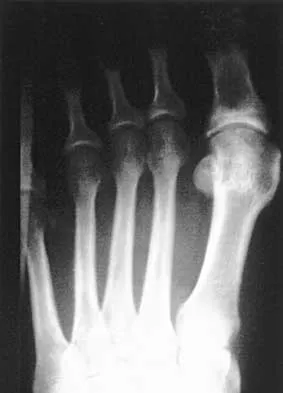
Explanation
Question 42
A 45-year-old woman complains of progressive pain and deformity of her left great toe that limits her ability to wear closed-toe shoes. Weight-bearing radiographs reveal a hallux valgus angle (HVA) of 45 degrees and an intermetatarsal angle (IMA) of 18 degrees. Clinical examination demonstrates significant hypermobility of the first tarsometatarsal (TMT) joint with dorsal elevation of the first ray. There is no evidence of metatarsophalangeal (MTP) joint arthritis. Which of the following surgical procedures is most appropriate to provide a durable correction?
Explanation
Question 43
During the operative treatment of a displaced, intra-articular calcaneus fracture via an extensile lateral approach, the surgeon must reduce the lateral tuberosity and posterior facet fragments to the 'constant' fragment. Which anatomical structure maintains the position of this 'constant' fragment relative to the talus?
Explanation
Question 44
A 52-year-old woman presents with burning pain in her forefoot that is exacerbated by wearing tight, high-heeled shoes. She describes a sensation of 'walking on a bunched-up sock.' Examination reveals a palpable click and radiating pain when compressing the medial and lateral aspects of the forefoot while simultaneously applying pressure to the plantar aspect of the third web space (Mulder's sign). If surgical excision of the lesion is eventually performed, what is the expected primary histologic finding of the excised tissue?
Explanation
Question 45
A 22-year-old collegiate soccer player sustains an acute fracture at the metaphyseal-diaphyseal junction of the fifth metatarsal (Zone 2) during a match. He desires to return to competitive play as quickly and safely as possible. What is the most recommended treatment for this athlete, and what is the primary reason this specific anatomical region is prone to nonunion?
Explanation
Question 46
A 35-year-old recreational basketball player sustains an acute, closed Achilles tendon rupture. He is active but prefers to avoid surgery if possible. After discussing treatment options, he elects to undergo non-operative management with an early functional rehabilitation protocol. Compared to traditional open operative repair, what is the most statistically expected outcome of his chosen management?
Explanation
Question 47
A 62-year-old woman with a BMI of 28 presents with severe, end-stage post-traumatic osteoarthritis of the right ankle. Radiographs demonstrate bone-on-bone tibiotalar joint space narrowing with a 5-degree varus deformity. She is evaluating the options of total ankle arthroplasty (TAA) versus ankle arthrodesis. When counseling the patient, which of the following is considered a well-documented advantage of TAA compared to arthrodesis?
Explanation
Question 48
A 55-year-old female presents with medial foot pain, difficulty standing on her toes, and a progressively flattening arch over the past year. Examination reveals a positive 'too-many-toes' sign and a flexible hindfoot that corrects to neutral on heel rise. Standing AP radiograph shows greater than 40% uncoverage of the talonavicular joint.
Based on the Johnson and Strom classification (modified by Myerson), what is the most appropriate surgical management?
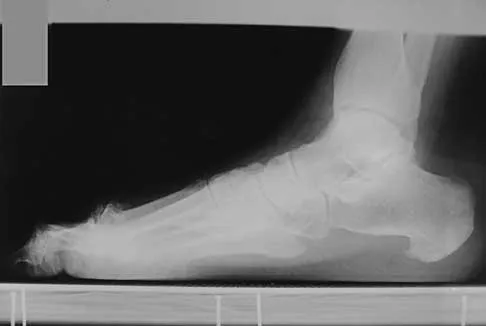
Explanation
Question 49
A 22-year-old collegiate football player sustains a midfoot injury after an axial load was applied to a plantarflexed foot. Weight-bearing radiographs reveal a 3 mm diastasis between the base of the first and second metatarsals, with no associated fractures. What is the gold standard surgical treatment to limit the development of midfoot arthritis and maximize functional outcome in this strictly ligamentous injury?
Explanation
Question 50
A 28-year-old male sustains an acute high ankle sprain. Examination reveals a positive external rotation stress test and positive squeeze test. An MRI confirms an isolated full-thickness tear of the anterior inferior tibiofibular ligament (AITFL) and the interosseous membrane up to 5 cm proximal to the joint line. Intraoperatively, the syndesmosis is unstable to the hook test. If dynamic suture-button fixation is chosen over static syndesmotic screw fixation, what is an established clinical advantage?
Explanation
Question 51
A 58-year-old male with poorly controlled type 2 diabetes and profound peripheral neuropathy presents with a red, hot, swollen right foot for 2 weeks. There are no skin breaks or ulcerations. He denies fever or chills. His WBC count is normal, and ESR is mildly elevated at 35 mm/hr. Radiographs demonstrate soft tissue swelling but no bony destruction, fragmentation, or subluxation.
What is the initial treatment of choice?
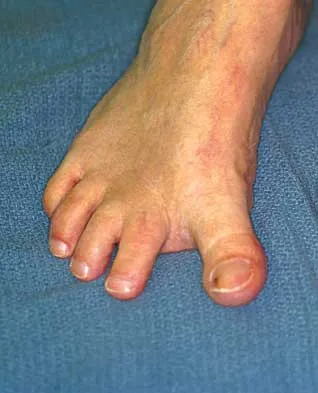
Explanation
Question 52
A 50-year-old male presents with chronic dorsal pain in his first metatarsophalangeal (MTP) joint, exacerbated by walking. He has failed conservative management including a stiff-soled shoe with a Morton extension. X-rays reveal dorsal osteophytes and mild to moderate joint space narrowing primarily in the dorsal aspect of the joint, while the plantar joint space is preserved (Coughlin and Shurnas Grade 2). He desires to maintain motion. What is the most appropriate surgical intervention?
Explanation
Question 53
A 31-year-old male falls from a ladder and sustains a Hawkins Type III talar neck fracture (fracture of the talar neck with subtalar and tibiotalar dislocation).
He is at high risk for avascular necrosis (AVN) of the talar body. Which of the following anatomical structures provides the majority of the blood supply to the talar body that is compromised in this injury?

Explanation
Question 54
A 21-year-old collegiate basketball player sustains an acute foot injury. Radiographs show a transverse fracture at the metaphyseal-diaphyseal junction of the fifth metatarsal (Zone 2) without displacement. He is eager to return to play as quickly and safely as possible. What is the recommended treatment to minimize the risk of nonunion and expedite his return to sports?
Explanation
Question 55
A 24-year-old competitive runner presents with severe, bilateral anterolateral leg pain that begins 15 minutes into her runs. The pain is accompanied by numbness in the first dorsal web space of both feet and a transient inability to actively dorsiflex her ankles. Symptoms completely resolve after 30 minutes of rest. Intracompartmental pressure testing reveals an elevated anterior compartment pressure of 45 mmHg immediately post-exercise. Compression of which nerve is directly responsible for her sensory and motor symptoms?
Explanation
Question 56
A 52-year-old woman presents with progressive medial ankle pain and a new-onset flatfoot deformity. On examination, she has a flexible hindfoot, a 'too many toes' sign, and is unable to perform a single-leg heel rise. Weight-bearing radiographs reveal a flexible pes planovalgus deformity with >40% talonavicular uncoverage on the AP view, indicative of significant forefoot abduction. What is the most appropriate surgical management for this stage of posterior tibial tendon dysfunction (Stage IIb)?
Explanation
Question 57
A 35-year-old male recreational athlete sustains an acute Achilles tendon rupture. He is discussing operative repair versus non-operative management utilizing a strict early functional rehabilitation protocol. Based on current randomized controlled trials (e.g., Willits et al.), what is the expected difference in outcomes between these two treatment strategies?
Explanation
Question 58
A 24-year-old male athlete sustains a purely ligamentous Lisfranc injury. Weight-bearing radiographs demonstrate 4 mm of diastasis between the bases of the first and second metatarsals without associated fractures. Which of the following treatments has been shown to provide the best long-term functional outcome and lowest reoperation rate for this specific injury pattern?
Explanation
Question 59
A 32-year-old man undergoes open reduction and internal fixation for a Hawkins type III talar neck fracture following a high-energy motor vehicle collision. At his 8-week postoperative visit, an AP radiograph of the ankle demonstrates a subchondral radiolucent band in the dome of the talus. What does this radiographic finding indicate?
Explanation
Question 60
A 55-year-old man with a 15-year history of poorly controlled type 2 diabetes and profound peripheral neuropathy presents with a red, hot, swollen right foot. He denies trauma. He is afebrile with normal white blood cell count and inflammatory markers. Radiographs reveal fragmentation, periarticular debris, and subluxation of the midfoot joints. There are no skin ulcerations. What is the most appropriate initial management?
Explanation
Question 61
A 45-year-old woman presents with persistent forefoot pain and a prominent bunion. Weight-bearing radiographs demonstrate a hallux valgus angle (HVA) of 42 degrees, an intermetatarsal angle (IMA) of 18 degrees, and notable hypermobility at the first tarsometatarsal (TMT) joint. Which of the following surgical procedures is most appropriate to address her pathology?
Explanation
Question 62
A 22-year-old collegiate basketball player sustains a fracture at the metaphyseal-diaphyseal junction of the fifth metatarsal (Zone 2) during a game. Radiographs show a non-displaced fracture without evidence of intramedullary sclerosis. He wishes to return to athletic competition as soon as safely possible. What is the most appropriate management?
Explanation
Question 63
A 28-year-old woman presents with persistent anterolateral ankle pain 1 year after a severe inversion injury. MRI demonstrates a 1.8 cm^2 osteochondral lesion of the anterolateral talar dome with deep subchondral cystic changes. She has failed a 6-month trial of conservative management. What is the most appropriate surgical treatment?
Explanation
Question 64
A 40-year-old construction worker falls from a ladder and sustains a displaced, intra-articular calcaneus fracture. He undergoes open reduction and internal fixation utilizing an extensile lateral approach. Which of the following is the most common complication associated with this specific surgical approach?
Explanation
Question 65
A 30-year-old man undergoes open reduction and internal fixation for a Weber C ankle fracture with syndesmotic instability. The syndesmosis is stabilized with two 3.5-mm metallic screws crossing four cortices. Postoperatively, he recovers well and begins weight-bearing at 6 weeks. According to current orthopedic literature, what is the recommendation regarding the routine removal of metallic syndesmotic screws in asymptomatic patients?
Explanation
Question 66
A 24-year-old professional football player sustains a hyperplantarflexion injury to his midfoot. Weight-bearing radiographs show a 2.5 mm diastasis between the base of the first and second metatarsals. MRI confirms a purely ligamentous disruption of the Lisfranc complex without associated fractures. What is the most appropriate definitive management to minimize reoperation rates and maximize functional outcome in this athlete?
Explanation
Question 67
A 34-year-old woman presents with bilateral foot pain, lateral column overload, and frequent ankle sprains. Examination shows a bilateral cavovarus foot type. To evaluate the flexibility of the hindfoot, you perform a Coleman block test. When the patient stands with her heel and lateral border of the foot on the block and the first metatarsal suspended freely off the block, her hindfoot varus corrects entirely to neutral. What does this physical examination finding indicate?
Explanation
Question 68
A 52-year-old man presents with chronic weakness in his posterior ankle 4 months after feeling a 'pop' while playing tennis. He has a palpable gap 6 cm proximal to the calcaneal insertion of the Achilles tendon. MRI confirms a chronic Achilles tendon rupture with a 5.5 cm gap with the foot in resting equinus. Which of the following is the most appropriate surgical treatment?
Explanation
Question 69
A 62-year-old man with end-stage post-traumatic ankle osteoarthritis presents for surgical consultation. He has a BMI of 28, is a non-smoker, and has well-controlled hypertension. Examination reveals severe tibiotalar arthritis but an intact and perfectly aligned hindfoot. His ankle range of motion is 5 degrees of dorsiflexion to 20 degrees of plantarflexion. Which of the following would be considered an absolute contraindication to a total ankle arthroplasty (TAA) in this patient?
Explanation
Question 70
A 28-year-old woman presents with persistent deep ankle pain following an inversion ankle sprain 6 months ago. MRI reveals an osteochondral lesion on the posteromedial aspect of the talar dome measuring 8 mm x 8 mm (64 mm^2), with intact overlying cartilage and no significant subchondral cystic changes. Conservative management has failed. What is the most appropriate next step in management?
Explanation
Question 71
A 55-year-old woman presents with progressively worsening right foot pain. On examination, she has a flexible flatfoot, a positive 'too-many-toes' sign, and an inability to perform a single-limb heel raise. Radiographs reveal uncovering of the talonavicular joint of 45% indicating severe forefoot abduction. What is the most appropriate surgical treatment algorithm for this stage of adult acquired flatfoot deformity?
Explanation
Question 72
A 58-year-old man with poorly controlled type 2 diabetes presents with a red, hot, swollen left foot. He reports no trauma. Radiographs show soft tissue swelling but no acute fractures, dislocations, or bony destruction. Inflammatory markers are mildly elevated. He is diagnosed with acute Eichenholtz stage 0 Charcot neuroarthropathy. What is the most appropriate initial management?
Explanation
Question 73
A 42-year-old woman presents with a painful bunion. Weight-bearing radiographs demonstrate a hallux valgus angle (HVA) of 45 degrees and an intermetatarsal angle (IMA) of 18 degrees. Clinical examination reveals profound hypermobility of the first tarsometatarsal (TMT) joint in the sagittal plane. What is the most appropriate surgical procedure?
Explanation
Question 74
A 22-year-old elite college basketball player sustains an inversion injury to his foot. Radiographs demonstrate an acute, non-displaced fracture of the fifth metatarsal at the metaphyseal-diaphyseal junction extending into the fourth-fifth intermetatarsal articulation.
To minimize the risk of nonunion and expedite his return to play, what is the best treatment option?
Explanation
Question 75
A 40-year-old male sustains a displaced intra-articular calcaneus fracture. He undergoes open reduction and internal fixation via an extensile lateral approach. Which of the following technical factors or patient characteristics most significantly increases his risk of postoperative wound necrosis and deep infection?
Explanation
Question 76
A 35-year-old male weekend warrior sustained an acute Achilles tendon rupture 2 days ago. He prefers nonoperative management but asks about the risks compared to surgery. According to recent high-level evidence, what is the most significant difference between operative and nonoperative management when an early functional rehabilitation protocol is employed?
Explanation
Question 77
A 25-year-old female sustains a severe midfoot sprain after a fall from a horse. Weight-bearing radiographs show a 4 mm diastasis between the base of the first and second metatarsals. MRI confirms a purely ligamentous Lisfranc injury with complete disruption of the Lisfranc ligament. Compared to open reduction and internal fixation (ORIF), primary arthrodesis for this specific injury pattern is associated with which of the following?
Explanation
Question 78
A 28-year-old male sustains a Hawkins Type II talar neck fracture following a motor vehicle collision. The primary blood supply to the talar body is at significant risk for disruption. Which of the following vessels provides the majority of the blood supply to the talar body?
Explanation
Question 79
A 55-year-old woman complains of medial ankle pain and progressive flattening of her left foot. Examination reveals an inability to perform a single-leg heel raise and a flexible planovalgus deformity (Stage II Adult Acquired Flatfoot Deformity). She undergoes a flexor digitorum longus (FDL) transfer and a medializing calcaneal osteotomy. Which of the following best describes the primary biomechanical rationale of the calcaneal osteotomy in this setting?
Explanation
Question 80
A 65-year-old man presents with end-stage post-traumatic ankle osteoarthritis and is evaluating surgical options between ankle arthrodesis and total ankle arthroplasty (TAA). Which of the following is considered a primary indication favoring TAA over ankle arthrodesis?
Explanation
Question 81
A 45-year-old female presents with a painful bunion. Weight-bearing radiographs show a hallux valgus angle of 35 degrees and an intermetatarsal angle (IMA) of 17 degrees. Clinical examination of the first tarsometatarsal (TMT) joint demonstrates significant hypermobility in the sagittal plane. What is the most appropriate surgical intervention?
Explanation
Question 82
A 40-year-old roofer falls 15 feet, sustaining a closed, displaced, intra-articular calcaneus fracture (Sanders Type III). Open reduction and internal fixation via an extensile lateral approach is planned. During the approach, which of the following structures is at greatest risk of iatrogenic injury if the full-thickness flap is not appropriately mobilized and protected?
Explanation
Question 83
A 21-year-old collegiate basketball player experiences acute lateral foot pain during practice. Radiographs reveal a transverse fracture of the fifth metatarsal at the metaphyseal-diaphyseal junction (Zone 2). To minimize the risk of nonunion and allow the fastest safe return to play, what is the most appropriate management?
Explanation
Question 84
A 58-year-old male with poorly controlled diabetes mellitus presents with a swollen, erythematous, warm, and painless right foot. Radiographs demonstrate periarticular fragmentation, debris, and subluxation of the tarsometatarsal joints. According to the modified Eichenholtz classification, what is the appropriate stage of this disease process, and what is the most appropriate initial management?
Explanation
Question 85
A 26-year-old professional football player presents after a severe hyperextension injury to his great toe. He has significant plantar ecchymosis, swelling, and gross instability with resisted plantarflexion of the first MTP joint. MRI confirms a complete tear of the plantar plate with proximal retraction of the sesamoids. Which of the following is the most appropriate management?
Explanation
Question 86
A 54-year-old female presents with medial ankle pain and progressive flattening of her left foot arch. On examination, she has a flexible hindfoot valgus, flexible forefoot varus, and is unable to perform a single-leg heel raise. Weight-bearing radiographs reveal a talonavicular coverage angle of 45 degrees. A trial of custom orthotics and physical therapy has failed to provide relief. What is the most appropriate surgical intervention?
Explanation
Question 87
A 28-year-old male runner presents with chronic, deep anterolateral ankle pain following a severe inversion injury 18 months ago. Non-operative management, including immobilization and physical therapy, has failed. MRI reveals a 1.8 square centimeter osteochondral lesion on the lateral talar dome with underlying subchondral cysts measuring 5 mm in depth. Which of the following is the most appropriate surgical treatment?
Explanation
Question 88
A 65-year-old female presents with a painful bunion. Weight-bearing radiographs reveal a hallux valgus angle (HVA) of 42 degrees and an intermetatarsal angle (IMA) of 16 degrees. There is evidence of hypermobility at the first tarsometatarsal (TMT) joint, but no degenerative changes are noted at the first metatarsophalangeal (MTP) joint. Which of the following surgical procedures is most appropriate?
Explanation
Question 89
A 35-year-old roofer falls from a height and sustains a closed, displaced intra-articular calcaneus fracture. He undergoes open reduction and internal fixation via an extensile lateral approach. Which of the following structures is at greatest risk of injury when reflecting the full-thickness fasciocutaneous flap?
Explanation
Question 90
Which of the following patient presentations represents an absolute contraindication to a primary total ankle arthroplasty (TAA) for end-stage ankle osteoarthritis?
Explanation
Question 91
A 42-year-old recreational basketball player sustains an acute closed Achilles tendon rupture. He opts for percutaneous surgical repair. During the procedure, the surgeon places sutures blindly through the proximal stump of the Achilles tendon. Which of the following anatomical structures is most susceptible to iatrogenic injury during this specific step?
Explanation
Question 92
A 24-year-old collegiate football lineman presents with midfoot pain after his foot was axially loaded while plantarflexed. Weight-bearing radiographs reveal a 3 mm diastasis between the base of the first and second metatarsals. An MRI confirms a complete tear of the Lisfranc ligament. He undergoes open reduction and internal fixation. Which of the following fixation constructs is considered the biomechanical gold standard to restore the primary stabilizing function of the Lisfranc complex?
Explanation
Question 93
A 58-year-old man with poorly controlled diabetes mellitus presents with a unilateral swollen, warm, and erythematous left foot. He denies trauma, fever, or chills, and there are no cutaneous ulcers. Radiographs reveal soft tissue swelling without obvious bony fragmentation. You suspect acute Charcot neuroarthropathy but wish to rule out an infectious etiology. Which of the following clinical bedside tests is most helpful in differentiating early acute Charcot neuroarthropathy from infection?
Explanation
Question 94
A 14-year-old boy presents with frequent ankle sprains and a rigid, painful flatfoot. On examination, he has decreased subtalar motion and peroneal muscle spasm. Radiographs reveal a 'C-sign' on the lateral view. A CT scan confirms a middle facet talocalcaneal coalition involving approximately 60% of the joint surface. There are secondary degenerative changes noted in the posterior facet. What is the most appropriate definitive surgical management?
Explanation
Question 95
A 26-year-old male sustains a pronation-external rotation ankle injury. Radiographs show a high fibular fracture (Maisonneuve). During surgical fixation, a syndesmotic injury is confirmed. The surgeon elects to use a flexible, suture-button construct rather than static syndesmotic screws. According to recent literature, what is the primary biomechanical and clinical advantage of using a suture-button construct for syndesmotic fixation?
Explanation
Question 96
A 28-year-old male sustains an axial load injury to his plantarflexed foot while playing football. Non-weight-bearing radiographs are unremarkable. However, weight-bearing radiographs demonstrate a 3 mm diastasis between the base of the first and second metatarsals. MRI confirms a complete rupture of the primary stabilizing ligament of this joint without associated fractures. Which of the following statements regarding the definitive surgical management of this injury is most strongly supported by current literature?
Explanation
Question 97
A 35-year-old woman presents with deep, aching, posteromedial ankle pain. She denies any specific traumatic event. MRI demonstrates an osteochondral lesion of the posteromedial talar dome measuring 1.8 square centimeters with underlying cystic changes. She has failed 6 months of non-operative management including immobilization and physical therapy. What is the most appropriate surgical intervention?
Explanation
Question 98
A 52-year-old woman presents with progressive medial ankle pain and flattening of her left foot arch over the past year. On examination, she is unable to perform a single-leg heel rise on the left. Weight-bearing radiographs reveal a talonavicular uncoverage of 45%, a Meary's angle of 15 degrees apex plantar, and no subtalar or talonavicular arthrosis. Which of the following surgical combinations is most appropriate for her condition?
Explanation
Question 99
A 68-year-old man with severe post-traumatic osteoarthritis of the right ankle is being evaluated for surgical intervention. He reports significant pain with weight-bearing activities. His past medical history is significant for well-controlled type 2 diabetes mellitus, hypertension, active Charcot neuroarthropathy of the midfoot, and a remote history of a deep vein thrombosis. Radiographs show bone-on-bone tibiotalar arthritis with 5 degrees of coronal plane varus deformity. Which of the following is an ABSOLUTE contraindication to performing a total ankle arthroplasty (TAA) in this patient?
Explanation
Question 100
A 21-year-old collegiate basketball player presents with acute lateral foot pain after a sudden pivoting maneuver during practice. Radiographs and an MRI confirm an acute, non-displaced transverse fracture of the fifth metatarsal at the metaphyseal-diaphyseal junction (Zone 2). What is the recommended treatment to minimize his risk of nonunion and expedite his return to competitive play?
Explanation
None
