AAOS Orthopedic MCQs (Set 3): Foot & Ankle Trauma & Pathology | ABOS Board Prep
Key Takeaway
This high-yield Set 3 question bank for AAOS/ABOS exams focuses on Foot & Ankle orthopedics. It covers the diagnosis, management, and surgical principles for common conditions like ankle fractures, sprains, Achilles tendon injuries, and forefoot pathologies, crucial for board preparation and OITE success.
AAOS Orthopedic MCQs (Set 3): Foot & Ankle Trauma & Pathology | ABOS Board Prep
Comprehensive 100-Question Exam
00:00
Start Quiz
Question 1
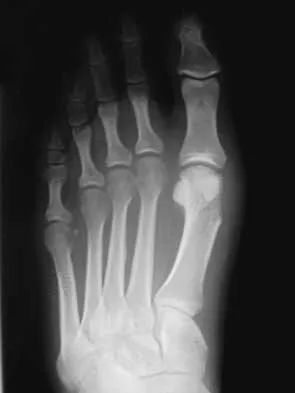
A 47-year-old woman underwent a distal chevron bunionectomy 2 months ago. Her postoperative recovery had been uneventful until 1 week ago. She now has new onset pain and dorsal swelling in the area of the third metatarsal. A radiograph is shown in Figure 27. What is the most likely diagnosis?
Explanation
Question 2
A 32-year-old runner has pain in the medial arch that radiates into the medial three toes. He reports the presence of pain only when running. Examination reveals normal hindfoot alignment. There is a weakly positive Tinel's sign over the posterior tibial nerve. Tenderness is noted with palpation over the plantar medial area in the vicinity of the navicular tuberosity. What is the most likely diagnosis?
Explanation
Question 3
A 58-year-old woman with rheumatoid arthritis and a severe hindfoot valgus deformity now reports recurrent lateral ankle pain. Examination reveals pain over the fibula and sinus tarsi, with a valgus hindfoot that is passively correctable. Despite the use of an ankle-foot orthosis, this is the second time this problem has occurred. Radiographs and a clinical photograph are shown in Figures 28a through 28c. What is the next most appropriate step in treatment?
Explanation
Question 4
A 7-year-old girl reports foot pain and has difficulty ambulating. History reveals that she fell off a scooter 1 week ago, and there is possible exposure to a tick bite. A radiograph is shown in Figure 29. What is the best course of action?
Explanation
Question 5
A 45-year-old man has severe pain in both feet after his boots become wet while hunting. Examination 3 hours after the onset of symptoms reveals that his feet are cold to touch and the skin appears blanched. Management should consist of
Explanation
Question 6
An 83-year-old woman with diabetes mellitus has a history of recurrent infection over the medial aspect of her great toe and has had a painless bunion for the past 45 years. Shoe wear modifications have failed to provide relief. Pedal pulses are palpable. Figures 30a and 30b show the clinical photograph and radiograph. Management should now consist of
Explanation
Question 7
Varus deformity after talar fractures is often seen due to collapse of the medial cortex. What artery supplies this portion of the talus?
Explanation
Question 8
Which of the following is considered the most useful screening method for the evaluation of protective foot sensation in a patient with diabetes mellitus?
Explanation
Question 9
A 17-year-old high school track athlete has had progressive midfoot pain for the past 3 weeks that prevents him from running. Examination reveals pain over the tarsal navicular. Radiographs are normal, but a CT scan reveals a nondisplaced sagittally oriented fracture line. Management should consist of
Explanation
Question 10
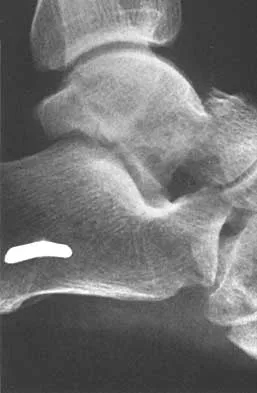
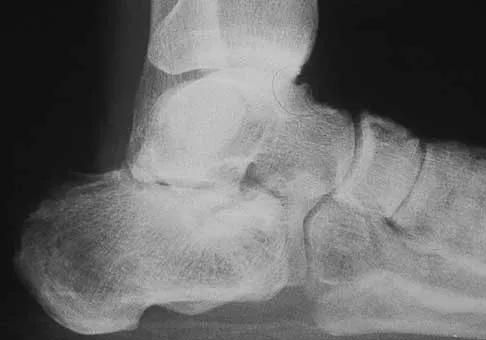
A construction worker sustained a comminuted calcaneus fracture 2 years ago. He now reports progressive hindfoot pain with the recent onset of anterior ankle pain. A lateral hindfoot radiograph is shown in Figure 31. Treatment should consist of
Explanation
Question 11
What is the most common long-term complication of the fracture shown in Figure 32?
Explanation
Question 12
A 62-year-old man has a severe pes planus and pain in the hindfoot. Radiographs show advanced degenerative changes at the talonavicular and subtalar joints with good preservation of the ankle joint. What is the most appropriate surgical procedure to alleviate his pain?
Explanation
Question 13
A 46-year-old woman reports pain and a shortened appearance of her toe after undergoing a Keller resection arthroplasty 2 years ago for hallux rigidus. Examination reveals mild swelling and motion limited to 25 degrees at the metatarsophalangeal joint. Radiographs show large dorsal osteophytes on the first metatarsal head, 50% resection of the proximal phalanx, and complete loss of the metatarsophalangeal joint space. Which of the following is considered the most reliable procedure to improve her pain and the appearance of her toe?
Explanation
Question 14
Which of the following is considered the most appropriate shoe modification following transmetatarsal amputation?
Explanation
Question 15
A 35-year-old man has had a mass on the bottom of his foot for the past 6 months. He reports that initially the mass was exquisitely painful but now is minimally tender. Examination reveals a 2.5- x 2.0-cm firm, noncompressible, nonmobile mass contiguous with the plantar fascia in the distal arch. The mass is particularly prominent with passive dorsiflexion of the ankle and toes. What is the best course of action?
Explanation
Question 16
A 25-year-old woman has significant pain and swelling in her left ankle after falling off her bicycle. Examination reveals that she is neurovascularly intact. Radiographs are shown in Figures 33a through 33c. What is the next most appropriate step in management?
Explanation
Question 17
A 55-year-old woman with type I diabetes mellitus has a chronic ulcer over the dorsum of her right foot and reports forefoot pain. Examination reveals 1- x 2-cm nondraining ulcer over the dorsum of the foot. The patient has 1-2+ pain with compression of the foot and ankle. She has a weakly palpable posterior tibial pulse and an absent dorsalis pedis pulse. There is no erythema, cellulitis, or drainage. Radiographs are normal. Which of the following diagnostic studies should be obtained?
Explanation
Question 18
A 57-year-old woman with diabetes mellitus has purulent drainage from a lateral incision after undergoing open reduction and internal fixation of a displaced ankle fracture 10 days ago. Examination reveals moderate erythema and a foul odor coming from the wound. Cultures are obtained. What is the next most appropriate step in management?
Explanation
Question 19
A 67-year-old woman has had pain in the area of the metatarsal heads and toes bilaterally for the past 18 months. She describes a diffuse discomfort and a constant burning sensation. She notes that the area feels swollen. Examination reveals that her pulses are normal, and there is no frank swelling or focal tenderness. What is the most likely diagnosis?
Explanation
Question 20
A 19-year-old woman has had a painful prominence on the lateral border of her fifth metatarsal head since she was a young girl. Nonsurgical management, including the use of a wide toe box shoe, has failed to provide relief. Examination reveals a callus over the lateral prominence and on the plantar portion as well. A clinical photograph and a radiograph are shown in Figures 34a and 34b. Treatment should consist of
Explanation
Question 21
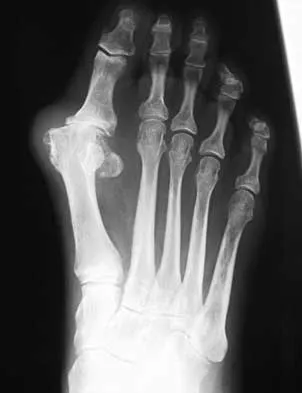
A 61-year-old woman has increasing pain in her left great toe. She states that she has had discomfort for years but now has pain with all shoe wear. A radiograph is shown in Figure 35. To provide the most predictable pain-free result, treatment should consist of
Explanation
Question 22
The most favorable outcomes from release of the tarsal tunnel are in patients who have which of the following findings?
Explanation
Question 23
An active 48-year-old woman has had progressive retrocalcaneal pain for the past 2 years. She reports that an injection into the retrocalcaneal bursa 3 weeks ago provided relief, but she now has swelling and weakness after tripping on the stairs 3 days ago. The Thompson test is positive. A radiograph is shown in Figure 36. What is the next most appropriate step in management?
Explanation
Question 24
A 47-year-old woman has a right bunion that has been symptomatic despite modifications in shoe wear. She requests surgical correction. An AP radiograph is shown in Figure 37. Treatment should consist of
Explanation
Question 25
A 68-year-old woman stepped on a needle while walking barefoot 10 days ago. She is not certain but thinks it is imbedded in her foot, and she notes local tenderness at the puncture site and drainage. Her primary care physician has been treating her with oral antibiotics. A plain radiograph is shown in Figure 38. What is the best course of action?
Explanation
Question 26
A 45-year-old female sustains a purely ligamentous Lisfranc injury with 3 mm of displacement between the medial and middle cuneiforms. She has no significant past medical history. Which surgical treatment has been shown in prospective studies to yield superior functional outcomes and a lower rate of revision compared to traditional open reduction and internal fixation (ORIF)?
Explanation
Question 27
A 35-year-old male presents with persistent lateral foot pain 18 months after nonoperative management of a displaced intra-articular calcaneus fracture. Examination reveals localized tenderness inferior to the lateral malleolus, swelling, and pain exacerbated by passive foot inversion and active eversion. What is the most likely etiology of his current symptoms?
Explanation
Question 28
A 21-year-old Division I collegiate basketball player sustains an acute fracture at the metaphyseal-diaphyseal junction of the fifth metatarsal (Zone 2). He desires to return to competition as rapidly and safely as possible. What is the most appropriate management?
Explanation
Question 29
A 30-year-old woman is brought to the emergency department after a high-speed motor vehicle collision. Radiographs demonstrate a Hawkins Type III fracture of the talar neck. What is the approximate reported rate of avascular necrosis (AVN) of the talar body associated with this specific injury pattern?
Explanation
Question 30
A 55-year-old patient with long-standing, poorly controlled type 2 diabetes presents with a unilaterally red, hot, and swollen right midfoot. There are no open ulcerations. Radiographs reveal acute bone fragmentation, periarticular debris, and joint subluxation at the midfoot. What is the most appropriate initial management?
Explanation
Question 31
A 62-year-old woman presents with progressive flattening of her left medial longitudinal arch and medial hindfoot pain. On examination, she is unable to perform a single-leg heel raise, and her hindfoot valgus is passively correctable to neutral. Weight-bearing radiographs show no subtalar or talonavicular osteoarthritis. If conservative measures fail, what is the most appropriate surgical intervention?
Explanation
Question 32
A 45-year-old male construction worker complains of dorsal big toe pain with push-off. Radiographs show moderate dorsal osteophytes at the first metatarsophalangeal (MTP) joint, but the plantar joint space remains well preserved. He has failed shoe modifications and NSAIDs. What is the most appropriate surgical option?
Explanation
Question 33
A 14-year-old boy presents with a history of recurrent ankle sprains and a rigid, painful flatfoot. A computed tomography (CT) scan confirms an osseous bridge between the calcaneus and the navicular. What is the initial recommended treatment for this condition?
Explanation
Question 34
A 25-year-old man sustains a foot injury in a motor vehicle collision. He has severe midfoot swelling and plantar ecchymosis. Radiographs reveal widening between the first and second metatarsal bases. The primary stabilizing ligament disrupted in this injury connects which of the following structures?
Explanation
Question 35
A 45-year-old roofer falls 15 feet, sustaining a displaced intra-articular calcaneus fracture. An extensile lateral approach is planned for open reduction and internal fixation. To prevent flap necrosis, the surgeon must preserve the primary blood supply to the corner of this flap. Which artery provides this critical vascularity?
Explanation
Question 36
A 32-year-old man sustains a Hawkins Type III talar neck fracture after a high-energy motorcycle crash. The fracture exhibits displacement of the talar body with dislocation from both the subtalar and tibiotalar joints. What is the approximate rate of avascular necrosis (AVN) of the talar body associated with this specific injury pattern?
Explanation
Question 37
A 21-year-old elite collegiate basketball player sustains an acute, displaced fracture at the metaphyseal-diaphyseal junction of the fifth metatarsal (Jones fracture). What is the most appropriate management to ensure the fastest return to sport and lowest risk of nonunion?
Explanation
Question 38
A 24-year-old female runner presents with chronic, deep-seated ankle pain following an inversion sprain 8 months ago. MRI reveals a posteromedial osteochondral lesion of the talus (OCLT). Which of the following best describes the typical characteristics of a posteromedial talar dome lesion compared to an anterolateral lesion?
Explanation
Question 39
A 19-year-old male track athlete complains of vague dorsal midfoot pain that worsens with running. Radiographs are negative. An MRI confirms a stress fracture involving the central third of the tarsal navicular. The fracture is non-displaced. What is the standard recommended treatment?
Explanation
Question 40
A 55-year-old woman presents with a progressive flatfoot deformity. Examination shows a "too many toes" sign, and she is unable to perform a single-leg heel rise on the affected side. The hindfoot remains flexible and passively correctable to neutral. If conservative management fails, which surgical procedure is most appropriate?
Explanation
Question 41
A 28-year-old downhill skier feels a sudden pop behind the lateral malleolus during a sharp turn. He presents with swelling and point tenderness over the distal fibula. Radiographs show a small longitudinal cortical avulsion fracture off the posterolateral margin of the distal fibula. What is the most likely diagnosis?
Explanation
Question 42
A 40-year-old man sustains a severe tibial pilon fracture with massive soft-tissue swelling and clear fracture blisters over the anterior ankle. Initial management consists of a spanning external fixator. What is the most reliable clinical indicator that the soft tissues are ready for definitive open reduction and internal fixation?
Explanation
Question 43
A 60-year-old man with long-standing poorly controlled diabetes presents with a unilaterally swollen, red, and warm right foot. He denies trauma. Pedal pulses are bounding. Radiographs demonstrate mild osteopenia but no fractures or dislocations. What is the most appropriate initial management?
Explanation
Question 44
A 48-year-old man complains of pain localized to the dorsal aspect of his right first metatarsophalangeal (MTP) joint, particularly during the push-off phase of walking. Radiographs demonstrate a prominent dorsal osteophyte on the first metatarsal head, but the joint space remains well-preserved. What is the best initial surgical option if non-operative management fails?
Explanation
Question 45
A 22-year-old collegiate football player sustains a hyperextension injury to his first MTP joint. MRI confirms a complete tear of the plantar plate with 4 mm of proximal retraction of the sesamoids. What is the most appropriate treatment?
Explanation
Question 46
A 26-year-old man sustains an external rotation injury to his right ankle. Radiographs show a proximal third fibula fracture (Maisonneuve fracture) and widening of the medial clear space on the AP ankle view. For this specific injury pattern to occur, which of the following structures MUST be disrupted?
Explanation
Question 47
A 67-year-old woman with end-stage post-traumatic ankle osteoarthritis is considering surgical options. She asks about a total ankle arthroplasty (TAA). Which of the following conditions is an absolute contraindication to performing a TAA?
Explanation
Question 48
A 35-year-old weekend warrior undergoes minimally invasive surgical repair for an acute midsubstance Achilles tendon rupture. Postoperatively, he reports numbness along the lateral aspect of his foot. Which nerve was most likely injured during the procedure?
Explanation
Question 49
A 25-year-old snowboarder presents with acute lateral ankle pain after a hard landing. He has point tenderness just inferior to the tip of the lateral malleolus. Plain radiographs of the ankle are initially interpreted as normal, but a CT scan is obtained due to high clinical suspicion. What occult fracture is classically associated with this mechanism?
Explanation
Question 50
A 50-year-old man is undergoing operative intervention for severe, recalcitrant insertional Achilles tendinopathy with a prominent Haglund's deformity. The surgeon plans a retrocalcaneal exostectomy and debridement of the diseased tendon. Up to what percentage of the Achilles tendon insertion can typically be detached and primarily repaired without requiring an augmentation transfer (e.g., FHL)?
Explanation
Question 51
A 16-year-old girl presents with a 3-month history of insidious forefoot pain, localized to the second metatarsophalangeal joint. Radiographs show flattening, sclerosis, and fragmentation of the second metatarsal head. What is the most likely diagnosis?
Explanation
Question 52
A 30-year-old construction worker sustains a severe crush injury to his foot. The foot is tensely swollen, and he has excruciating pain with passive toe extension. If a foot compartment syndrome is missed and left untreated, what is the classic late clinical deformity that develops?
Explanation
Question 53
A 45-year-old man sustains a closed intra-articular calcaneal fracture. The surgeon relies on the Sanders classification to determine the fracture pattern and prognosis. This classification system is based on the number of articular fracture lines passing through the posterior facet as seen on which imaging view?
Explanation
Question 54
A 24-year-old football player sustains a hyperplantarflexion injury to his midfoot. Weight-bearing radiographs show a 3 mm diastasis between the base of the first and second metatarsals without associated fractures.
What is the most appropriate management for this purely ligamentous injury?
Explanation
Question 55
A 45-year-old man undergoes percutaneous repair of an acute Achilles tendon rupture. Postoperatively, he notes numbness along the lateral aspect of his foot. At what location relative to the calcaneal insertion was the injured nerve most likely compromised during the percutaneous approach?
Explanation
Question 56
A 30-year-old motorcyclist sustains a high-energy trauma resulting in a severe foot and ankle injury. Radiographs reveal a talar neck fracture with complete dislocation of the talar body from both the subtalar and tibiotalar joints.
According to the Hawkins classification, what is the estimated rate of avascular necrosis (AVN) of the talar body?
Explanation
Question 57
A 42-year-old woman sustains a trimalleolar equivalent ankle fracture with a large posterior malleolus fragment involving 35% of the articular surface. During operative fixation, which of the following interventions provides the greatest biomechanical stability to the distal tibiofibular syndesmosis?
Explanation
Question 58
During an extensile lateral approach for open reduction and internal fixation of a displaced intra-articular calcaneus fracture, screws are directed medially into the sustentaculum tali. Penetration of the medial cortex places which of the following structures at greatest immediate risk?
Explanation
Question 59
A 55-year-old patient with poorly controlled diabetes mellitus presents with a red, hot, swollen, and painless left foot.
Radiographs demonstrate acute periarticular fragmentation and debris around the midfoot, with no clinical signs of an open ulcer or osteomyelitis. Which of the following is the most appropriate initial management?
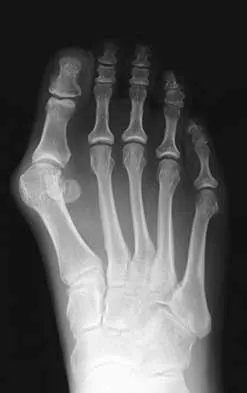
Explanation
Question 60
A 21-year-old collegiate basketball player sustains an acute, non-displaced fracture of the proximal fifth metatarsal at the metaphyseal-diaphyseal junction. What is the most appropriate treatment to optimize his return to play and minimize the risk of nonunion?
Explanation
Question 61
A 60-year-old man presents with severe pain and stiffness in his first metatarsophalangeal (MTP) joint. Radiographs show joint space obliteration, a large dorsal osteophyte, and subchondral sclerosis. He has pain throughout the entire arc of motion. What is the most reliable surgical treatment for long-term pain relief?
Explanation
Question 62
A 21-year-old collegiate basketball player complains of acute lateral foot pain after a pivoting maneuver. Radiographs demonstrate a fracture at the base of the fifth metatarsal extending into the fourth-fifth intermetatarsal articulation.
What is the most appropriate management to minimize the risk of nonunion and expedite his return to sports?
Explanation
Question 63
A 30-year-old equestrian falls from a horse, landing with her foot plantarflexed. She presents with midfoot pain, significant dorsal swelling, and plantar ecchymosis. Initial non-weight-bearing radiographs appear unremarkable.
What is the best initial diagnostic step to evaluate for a subtle Lisfranc injury?
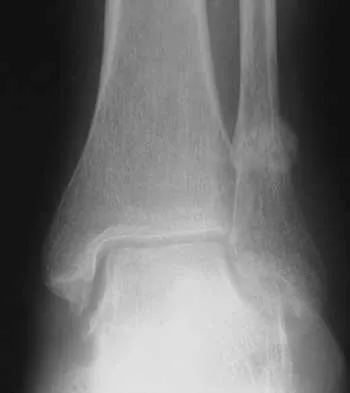
Explanation
Question 64
A 14-year-old girl twists her ankle while playing soccer. Radiographs reveal a Salter-Harris III fracture of the anterolateral distal tibia. Avulsion of this bony fragment is caused by tension from which of the following structures?
Explanation
Question 65
A 35-year-old man sustained a displaced talar neck fracture 8 weeks ago, which was treated with open reduction and internal fixation. A follow-up AP radiograph of the ankle shows a subchondral radiolucent band in the talar dome. What does this radiographic finding indicate?
Explanation
Question 66
A 55-year-old woman presents with a painful, progressive flatfoot deformity. Clinical examination reveals a "too-many-toes" sign, flexible hindfoot valgus, and more than 30% uncovering of the talonavicular joint with forefoot abduction. She is unable to perform a single-limb heel rise. What is the most appropriate surgical management if conservative treatment fails?
Explanation
Question 67
A 50-year-old man presents with pain in his right big toe that is worse during the toe-off phase of gait. Examination shows a palpable dorsal prominence and limited, painful dorsiflexion. Radiographs reveal dorsal osteophytes with preservation of the plantar joint space. What is the most appropriate initial surgical treatment if orthotics fail?
Explanation
Question 68
A 40-year-old construction worker falls from a roof, sustaining a high-energy pilon fracture.
On presentation, the limb is grossly swollen with fracture blisters developing. What is the most appropriate initial management?
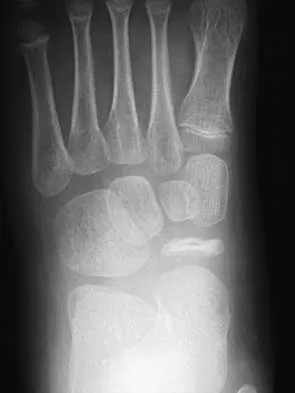
Explanation
Question 69
A 60-year-old man with poorly controlled diabetes presents with a unilaterally red, hot, swollen, and painless foot. Pulses are bounding. Initial radiographs show soft tissue swelling but no acute fracture or dislocation. What is the most appropriate immediate management?
Explanation
Question 70
A 14-year-old boy presents with recurrent ankle sprains, a rigid flatfoot, and peroneal muscle spasm. Suspecting the most common type of tarsal coalition, which radiographic view is most likely to demonstrate the pathology?
Explanation
Question 71
Recent meta-analyses comparing operative versus non-operative management of acute Achilles tendon ruptures using early functional rehabilitation bracing protocols have demonstrated which of the following outcomes?
Explanation
Question 72
A 25-year-old man complains of persistent lateral ankle pain 6 months after a severe inversion sprain. MRI demonstrates an osteochondral lesion of the talar dome. Which of the following best describes the typical characteristics of an anterolateral talar osteochondral lesion?
Explanation
Question 73
A 38-year-old man sustains a displaced intra-articular calcaneus fracture.
The widely used Sanders classification system evaluates the severity of this fracture based on the number and location of primary fracture lines seen on which imaging plane and anatomical structure?
Explanation
Question 74
A 28-year-old professional football player suffers a forced hyperextension injury to his first MTP joint. Clinical examination reveals profound weakness with active hallux plantarflexion. MRI demonstrates a complete rupture of the plantar plate with 1 cm of proximal retraction of the sesamoids. What is the most appropriate management?
Explanation
Question 75
A 45-year-old woman with chronic forefoot pain and a positive Mulder's click in the third webspace undergoes surgical excision of the symptomatic lesion after failing conservative management. Histologic examination of the excised specimen is most likely to reveal which of the following?
Explanation
Question 76
A 52-year-old man who was treated non-operatively for a displaced intra-articular calcaneus fracture 2 years ago now complains of persistent, severe lateral ankle pain and an inability to fit into narrow shoes. Pain is exacerbated by walking on uneven ground. What is the most likely anatomic cause of his current symptoms?
Explanation
Question 77
A 28-year-old male sustains a Hawkins type III talar neck fracture. Six weeks postoperatively, AP radiographs of the ankle reveal a linear radiolucent band in the subchondral bone of the talar dome. What does this radiographic finding indicate?
Explanation
Question 78
A 24-year-old football player sustains a midfoot injury during a game. Weight-bearing radiographs show 3 mm of widening between the base of the first and second metatarsals. What is the most appropriate definitive management for this purely ligamentous Lisfranc injury in an elite athlete?
Explanation
Question 79
A 55-year-old poorly controlled diabetic patient presents with a swollen, erythematous, and warm left foot and ankle but no open wounds. Radiographs demonstrate periarticular debris, fragmentation, and subluxation of the midfoot. What is the most appropriate initial treatment?
Explanation
Question 80
A 22-year-old collegiate basketball player sustains an acute fracture at the metaphyseal-diaphyseal junction of the fifth metatarsal. He wishes to return to play as soon as possible. What is the most appropriate treatment?
Explanation
Question 81
A 30-year-old man sustains a lateral subtalar dislocation after a fall from a height. Closed reduction in the emergency department is unsuccessful. Which of the following anatomic structures is most likely blocking the reduction?
Explanation
Question 82
A 45-year-old woman presents with medial ankle pain and a progressive flatfoot deformity. Examination reveals a "too many toes" sign and an inability to perform a single-leg heel rise. The deformity is passively correctable. What is the most appropriate surgical treatment after failed conservative measures?
Explanation
Question 83
A 14-year-old boy presents with recurrent lateral ankle sprains and rigid flatfeet. Subtalar motion is markedly decreased. Oblique radiographs of the foot reveal an "anteater sign." Which of the following conditions is most likely present?
Explanation
Question 84
Which of the following statements comparing operative and nonoperative management of acute Achilles tendon ruptures using early functional rehabilitation is most accurate?
Explanation
Question 85
A 35-year-old roofer falls from a ladder and sustains a displaced, intra-articular calcaneus fracture. If surgical intervention via a lateral extensile approach is planned, what is the most significant risk factor for postoperative wound complications?
Explanation
Question 86
A 42-year-old man sustains a severe, high-energy tibial pilon fracture with massive soft tissue swelling and fracture blisters. What is the most appropriate initial management strategy?
Explanation
Question 87
A 20-year-old running back sustains a hyperextension injury to his first metatarsophalangeal (MTP) joint. MRI demonstrates a complete tear of the plantar plate and sesamoid complex with proximal migration of the sesamoids. What is the recommended treatment?
Explanation
Question 88
A 60-year-old man presents with dorsal midfoot pain and limited dorsal extension of the great toe. Radiographs show significant joint space narrowing of the first metatarsophalangeal joint with large dorsal osteophytes. He fails conservative management. What is the most reliable surgical option for long-term pain relief?
Explanation
Question 89
A 25-year-old male presents with deep ankle pain after a severe inversion injury 6 months ago. MRI reveals a 1.2 cm osteochondral lesion on the anterolateral aspect of the talar dome. The cartilage is intact but there is subchondral edema. What is the most appropriate initial surgical intervention after failed conservative therapy?
Explanation
Question 90
A 28-year-old skier experiences a sudden snapping sensation over the lateral aspect of her ankle during a fall. Examination reveals tenderness over the posterior fibula and a palpable subluxation of the tendons with resisted foot eversion. What is the primary anatomical structure injured in this condition?
Explanation
Question 91
A 45-year-old obese man receives a third corticosteroid injection for chronic plantar fasciitis. Two weeks later, he feels a sudden "pop" in his heel while walking. He notices decreased arch height and an improvement in his chronic heel pain, but now has lateral column foot pain. What has most likely occurred?
Explanation
Question 92
A 40-year-old woman has a symptomatic bunion. Radiographs reveal a hallux valgus angle (HVA) of 45 degrees and an intermetatarsal angle (IMA) of 18 degrees. There is no hypermobility of the first tarsometatarsal joint. What is the most appropriate surgical approach?
Explanation
Question 93
A 19-year-old male track athlete complains of vague dorsal midfoot pain. Radiographs are normal, but an MRI demonstrates a stress fracture in the central third of the navicular body without displacement. What is the best initial management?
Explanation
Question 94
A 55-year-old man presents with persistent weakness in ankle plantar flexion 4 months after feeling a 'pop' in his calf during a tennis match. MRI confirms a chronic Achilles tendon rupture with a 6-cm gap between the tendon ends. Which of the following is the most appropriate surgical management for this patient?
Explanation
Question 95
A 28-year-old hockey player sustains a high ankle sprain. Intraoperative stress testing reveals gross syndesmotic instability, and the patient undergoes surgical stabilization. Which of the following factors is the most significant predictor of poor long-term clinical outcome and post-traumatic arthritis in this patient?
Explanation
Question 96
A 34-year-old man falls from a ladder and sustains a displaced fracture of the talar neck. Radiographs demonstrate displacement of the talar neck with subluxation of the subtalar joint, while the tibiotalar and talonavicular joints remain congruent. According to the Hawkins classification, what is the historically reported risk of avascular necrosis (AVN) of the talar body for this specific injury pattern?
Explanation
Question 97
A 60-year-old woman with poorly controlled type 2 diabetes presents with a unilaterally swollen, warm, and erythematous right foot. She denies any open wounds or fevers. Radiographs demonstrate bony fragmentation, periarticular debris, and subluxation of the tarsometatarsal joints. What is the most appropriate initial management for this condition?
Explanation
None
