AAOS & ABOS Orthopedic Trauma MCQs (Set 4): Pelvic, Acetabular & Lower Extremity Fractures
Key Takeaway
This high-yield question set (Set 4) for AAOS and ABOS exams focuses on critical orthopedic trauma. It includes MCQs on diagnosis and management of pelvic and acetabular fractures, plus lower extremity long bone fractures. Enhance board preparation with essential concepts covering key surgical and non-surgical considerations.
AAOS & ABOS Orthopedic Trauma MCQs (Set 4): Pelvic, Acetabular & Lower Extremity Fractures
Comprehensive 100-Question Exam
00:00
Start Quiz
Question 1
A 30-year-old woman sustains a transverse amputation of the distal phalanx of the index finger, leaving exposed bone. What is the most appropriate management of the soft-tissue defect?
Explanation
Question 2
What is the best approach to reduce and stabilize a displaced volar lunate facet fracture of the wrist?
Explanation
Question 3
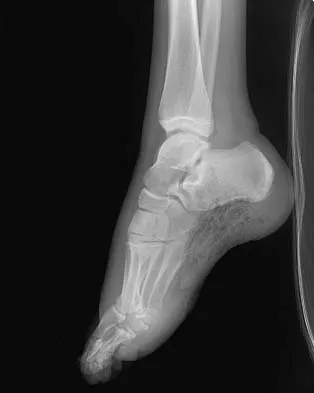
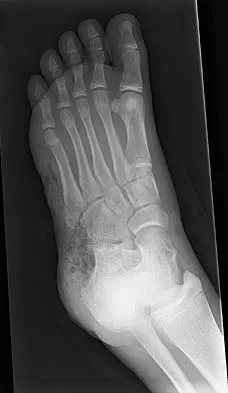
A 17-year-old man sustained a 5-mm laceration on the lateral aspect of the hindfoot while working on a farm. Examination in the emergency department revealed no fractures. Twenty-four hours later, he returns to the emergency department with increasing foot pain. Thin brown drainage is seen emanating from the wound. He has a temperature of 102.0 degrees F (38.9 degrees C), a pulse rate of 120, and a blood pressure of 80/40 mm Hg. Examination of the foot reveals diffuse swelling, ecchymosis, tenderness, and crepitus with palpation. Current radiographs are shown in Figures 40a and 40b. Management should now consist of
Explanation
Question 4
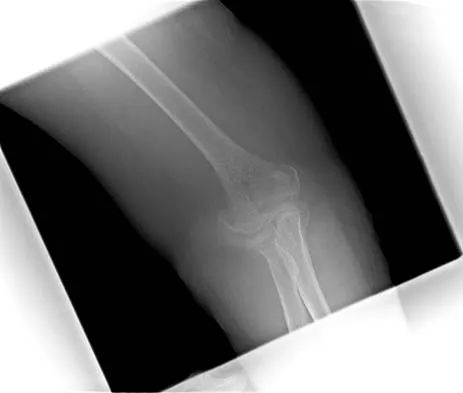
A healthy, active, independent 74-year-old woman fell and sustained the elbow injury shown in Figures 41a and 41b. Management should consist of
Explanation
Question 5
A 35-year-old man sustains a closed Monteggia fracture. Examination reveals that sensation, vascular status, and finger flexion are normal. When he extends his wrist, it deviates radially, and he is unable to extend his fingers or thumb. After reduction of the fracture, what is the next step in treatment for the extensor deficits of the thumb and fingers?
Explanation
Question 6
A 25-year-old man is brought to the emergency department following a motor vehicle accident. Extrication time was 2 hours, and in the field he had a systolic blood pressure by palpation of 90 mm Hg. Intravenous therapy was started, and on arrival in the emergency department he has a systolic blood pressure of 90 mm Hg with a pulse rate of 130. Examination reveals a flail chest and a femoral diaphyseal fracture. Ultrasound of the abdomen is positive. The trauma surgeons take him to the operating room for an exploratory laparotomy. At the conclusion of the procedure, he has a systolic pressure of 100 mm Hg with a pulse rate of 110. Oxygen saturation is 90% on 100% oxygen, and he has a temperature of 95.0 degrees F (35 degrees C). What is the recommended treatment of the femoral fracture at this time?
Explanation
Question 7
A 10-year-old girl has a right elbow deformity that is the result of trauma 5 years ago. She has no pain despite the arm deformity. The radiographs in Figures 42a and 42b show complete healing. This radiographic appearance demonstrates what complication?
Explanation
Question 8
A 64-year-old woman has left wrist pain and deformity after falling on her hand. Examination shows intact skin and no neurologic or vascular injuries. Radiographs are shown in Figures 43a and 43b. What is the most appropriate management for the injury?
Explanation
Question 9
A 26-year-old man was thrown from a car and sustained the injury seen in Figures 44a and 44b. Nonsurgical management of this injury is recommended. Which of the following factors increases the risk of nonunion?
Explanation
Question 10
A 13-year-old girl was riding on an all-terrain vehicle when the driver struck a tree. She sustained the injury shown in Figures 45a through 45d. This injury is best described as what type of acetabular fracture pattern?
Explanation
Question 11
A woman injures the metacarpophalangeal (MCP) joint of her thumb while skiing. Examination reveals tenderness along the ulnar aspect of the MCP joint. Radially directed stress of the joint in full extension produces 5 degrees of angulation. When the MCP joint is flexed 30 degrees, a radially directed stress produces 45 degrees of angulation. Radiographs are otherwise normal. Management should consist of
Explanation
Question 12
A 37-year-old laborer falls 12 feet and sustains a comminuted tibial plafond fracture. Three years after treatment using standard techniques, what will be the most likely outcome?
Explanation
Question 13
A 45-year-old woman sustains an injury to her lower leg. Examination reveals that there is a deformity with no neurologic or vascular problems. The skin is intact. Radiographs are shown in Figures 46a and 46b. Which of the following factors would make closed management the least appropriate choice for this injury?
Explanation
Question 14
Which of the following medications may have a negative effect on bone healing following fracture?
Explanation
Question 15
A 16-year-old boy has abdominal and back pain after being involved in a high-velocity head-on motor vehicle accident. He was restrained in the rear of the automobile by a lap belt only. A radiograph and CT scan are shown in Figure 47. The patient has no other injuries. Optimal management should include
Explanation
Question 16
What inflammatory mediator has been most closely associated with the magnitude of the systemic inflammatory response to trauma and with the development of multiple organ dysfunction syndrome (MODS)?
Explanation
Question 17
An 8-year-old girl sustained a displaced fracture at the base of the femoral neck in a motor vehicle accident. Management should consist of
Explanation
Question 18
The plate seen in Figure 48a was applied to the fracture seen in Figure 48b, and is functioning in what capacity?
Explanation
Question 19
Which of the following findings is considered the strongest indication for surgical treatment of a mallet fracture of the distal phalanx?
Explanation
Question 20
A 20-year-old woman sustained the closed injury shown in Figures 49a and 49b in a motor vehicle accident. Examination reveals that this is an isolated injury; however, she has a complete radial nerve palsy. Management should consist of
Explanation
Question 21
The fracture shown in Figure 50 is most reliably treated with what form of fixation?
Explanation
Question 22
A man sustained the injury shown in Figures 51a and 51b. He underwent closed reduction of the radial head dislocation and open reduction and internal fixation of the ulnar fracture. What is the most common cause of persistent radial head subluxation?
Explanation
Question 23
Which of the following is an indication for surgical management of a Weber type B distal fibular fracture?
Explanation
Question 24
Locked plating techniques have been shown to have biomechanical advantages over standard plating in which of the following scenarios?
Explanation
Question 25
A 25-year-old man sustained a head injury after being ejected from his car. Examination reveals a Glasgow Coma Scale score of 7 and a swollen right knee. Clinical examination shows that the knee is very unstable, suggesting tears of the medial collateral and anterior and posterior cruciate ligaments, as well as the posterior lateral corner. What is the most appropriate first step to rule out a vascular injury?
Explanation
Question 26
A 45-year-old man is brought to the emergency department after a high-speed motor vehicle collision. He is hypotensive with a blood pressure of 80/40 mm Hg. A pelvic radiograph shows a severely displaced 'open-book' pelvic ring injury. A commercial pelvic binder is ordered. To be most effective, the binder should be centered over which of the following anatomic landmarks?
Explanation
Question 27
A 32-year-old construction worker falls from a scaffolding, sustaining an acetabular fracture. Radiographs and CT imaging reveal a fracture pattern where no portion of the articular surface remains attached to the axial skeleton. Which of the following radiographic findings is pathognomonic for this fracture type?
Explanation
Question 28
A 28-year-old man sustains a displaced, completely off-ended, trans-cervical femoral neck fracture (Pauwels type III) after a fall from a height. Open reduction and internal fixation are planned. Which of the following constructs provides the most biomechanically stable fixation for this vertically oriented fracture pattern?
Explanation
Question 29
A 22-year-old athlete sustains a high-energy knee dislocation (KD-III). The knee is successfully reduced in the emergency department. Pulses are symmetric with the uninjured limb, and the Ankle-Brachial Index (ABI) is 0.85. What is the most appropriate next step in management?
Explanation
Question 30
A 40-year-old woman is scheduled for open reduction and internal fixation of a severe posterolateral tibial plateau fracture. An isolated posterolateral surgical approach without fibular osteotomy is chosen. Which of the following structures is at greatest risk of iatrogenic injury during this approach?
Explanation
Question 31
A 75-year-old woman sustains a reverse-oblique intertrochanteric femur fracture (AO/OTA 31-A3). She is medically stable for surgery. Which of the following is the most appropriate fixation implant?
Explanation
Question 32
A 35-year-old man sustained a Hawkins type II talar neck fracture and underwent open reduction and internal fixation 8 weeks ago. A plain radiograph of the ankle today demonstrates a subchondral radiolucent band in the dome of the talus. What does this finding indicate?
Explanation
Question 33
A 45-year-old man requires ORIF of a displaced posterior wall acetabular fracture via a Kocher-Langenbeck approach. To minimize iatrogenic injury to the sciatic nerve during retraction, how should the ipsilateral lower extremity be positioned intraoperatively?
Explanation
Question 34
A 26-year-old motorcyclist sustains a coronal plane fracture of the lateral femoral condyle (Hoffa fracture). Open reduction and internal fixation are planned. Which of the following screw configurations provides the most appropriate interfragmentary compression for this specific injury pattern?
Explanation
Question 35
A 42-year-old man presents with a closed, highly comminuted tibial pilon fracture with severe soft tissue swelling and fracture blisters. A spanning external fixator is applied. To avoid tethering of the anterior soft tissues and facilitate future open reduction and internal fixation, how should the foot be positioned during fixator placement?
Explanation
Question 36
A 24-year-old soccer player sustains a closed, midshaft tibia fracture treated with intramedullary nailing. Postoperatively, he develops severe, unrelenting leg pain exacerbated by passive stretch of the hallux. If the involved compartment is not rapidly decompressed, which sensory deficit is most likely to develop first?
Explanation
Question 37
A 30-year-old woman presents with midfoot pain after falling from a horse with her foot caught in the stirrup. Radiographs show a small bony avulsion in the space between the medial and middle cuneiforms. This 'fleck sign' represents an avulsion of a ligament that connects the medial cuneiform to which structure?
Explanation
Question 38
A 45-year-old man undergoes tension band wiring for a transverse patella fracture. According to the tension band principle, the wire construct works by converting what type of force at the anterior patellar surface into a compressive force at the articular surface during knee flexion?
Explanation
Question 39
A 45-year-old man is brought to the trauma bay in hemorrhagic shock following a motorcycle crash. A pelvic radiograph demonstrates an open-book pelvic ring injury.
What is the most appropriate anatomical landmark for the optimal placement of a circumferential pelvic sheet or binder?
Explanation
Question 40
During an ilioinguinal approach for the fixation of an anterior column acetabular fracture, the surgeon operates in the middle window. Which of the following structures defines the medial border of this surgical window?
Explanation
Question 41
A 28-year-old man sustains a displaced, high-shear vertical (Pauwels type III) femoral neck fracture. Open reduction and internal fixation is planned. What is the most common mechanical mode of failure for this specific fracture pattern when treated with three parallel cancellous lag screws?
Explanation
Question 42
A surgeon is treating a proximal third tibial shaft fracture with an intramedullary nail. Apex anterior (procurvatum) and valgus deformities are anticipated during nail passage. Where should blocking (Poller) screws be placed in the proximal fragment to prevent this malalignment?
Explanation
Question 43
A 35-year-old man sustains a subtrochanteric femur fracture. Without specific reduction maneuvers, what is the predictable deformity of the proximal fragment due to the muscular deforming forces?
Explanation
Question 44
A 25-year-old man falls from a height of 20 feet. Imaging reveals a Zone 3 sacral fracture according to the Denis classification. What is the most likely neurologic deficit associated with this specific injury pattern?
Explanation
Question 45
A 35-year-old man sustains a posterior wall acetabular fracture with severe marginal impaction of the articular cartilage after a motor vehicle collision. He is planned for open reduction and internal fixation via a Kocher-Langenbeck approach. What is the most critical intraoperative step for managing the marginal impaction to prevent early osteoarthritis?
Explanation
Question 46
During an ilioinguinal approach for an anterior column acetabular fracture, brisk arterial bleeding is encountered near the superior pubic ramus approximately 5 cm from the pubic symphysis. This bleeding is most likely arising from an anastomosis between which of the following vessel pairs?
Explanation
Question 47
A 28-year-old man sustains a highly vertical (Pauwels type III) basicervical femoral neck fracture. To maximize biomechanical stability and minimize the risk of shear failure, which of the following constructs is most appropriate?
Explanation
Question 48
An orthopedic trauma surgeon is performing antegrade intramedullary nailing of a femoral shaft fracture. The starting point is chosen at the piriformis fossa. If the guide wire is inadvertently placed too anteriorly on the femoral neck, which of the following iatrogenic complications is most likely to occur?
Explanation
Question 49
A 45-year-old woman presents with a medial tibial plateau fracture with extension into the intercondylar eminence (Schatzker type IV). The fracture includes a significantly displaced posteromedial fragment. What is the most appropriate surgical approach and fixation strategy?
Explanation
Question 50
A 32-year-old man undergoes intramedullary nailing for a closed transverse tibial shaft fracture. In the recovery room, he requires increasing doses of opioids and exhibits severe pain with passive stretch of the hallux. His diastolic blood pressure is 70 mm Hg, and an intracompartmental pressure reading of the anterior compartment is 55 mm Hg. What is the most appropriate immediate management?
Explanation
Question 51
A 25-year-old man sustained a Hawkins type II talar neck fracture and underwent open reduction and internal fixation. At his 6-week follow-up, a mortise radiograph reveals a subchondral radiolucent band across the dome of the talus (Hawkins sign). What does this radiographic finding indicate?
Explanation
Question 52
A 50-year-old male smoker with poorly controlled diabetes undergoes open reduction and internal fixation of a displaced intra-articular calcaneus fracture via an extensile lateral approach. Which of the following is the most common complication associated with this specific approach?
Explanation
Question 53
A 22-year-old construction worker falls from a height and sustains a vertical shear pelvic fracture. Radiographs show superior displacement of the right hemipelvis and avulsion of the right L5 transverse process. Which of the following ligamentous complexes are completely disrupted in this injury pattern?
Explanation
Question 54
An anteroposterior (AP) radiograph of the pelvis is obtained for a 60-year-old woman who fell from a ladder. The film demonstrates an isolated disruption of the iliopectineal line with a completely intact ilioischial line. Which acetabular structure is fractured?
Explanation
Question 55
A 68-year-old woman on long-term alendronate therapy presents with chronic left thigh pain. Radiographs demonstrate lateral cortical thickening and a transverse radiolucent line in the subtrochanteric region of the femur. Which of the following describes the fundamental pathophysiology of this specific fracture type?
Explanation
Question 56
A 32-year-old man is involved in a high-speed motor vehicle collision and sustains a displaced posterior wall acetabular fracture with a posterior hip dislocation.
Following emergent closed reduction of the hip, CT imaging confirms a large, single-piece posterior wall fragment. Which of the following surgical approaches is most appropriate for definitive fixation?
Explanation
Question 57
A hemodynamically unstable 45-year-old woman is brought to the trauma bay after a crush injury. Radiographs show an anterior-posterior compression type III (APC-III) pelvic ring injury with complete disruption of the sacroiliac joints.
The initial management to stabilize the pelvic volume should be placement of a pelvic binder centered over which of the following anatomic landmarks?
Explanation
Question 58
A 28-year-old man sustains a completely displaced, highly vertical (Pauwels type III) femoral neck fracture. Which of the following fixation constructs provides the highest biomechanical stability for this specific fracture pattern?
Explanation
Question 59
An 80-year-old woman presents with a reverse obliquity intertrochanteric femur fracture after a ground-level fall. Which of the following implants is most appropriate to prevent medial shaft displacement and failure?
Explanation
Question 60
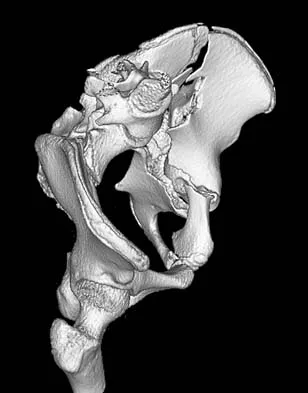
A 24-year-old polytrauma patient presents with bilateral closed femoral shaft fractures, severe pulmonary contusions, and an initial lactate of 5.0 mmol/L.
What is the most appropriate initial management of the femoral fractures?
Explanation
Question 61
During open reduction and internal fixation of a distal femur fracture, you identify a separate coronal plane fracture of the lateral femoral condyle (Hoffa fragment). What is the optimal fixation strategy for this specific fragment?
Explanation
Question 62
A 35-year-old man undergoes intramedullary nailing for a proximal-third tibial shaft fracture. Intraoperatively, the fracture demonstrates an apex anterior (procurvatum) and valgus deformity. Which of the following techniques is most effective in preventing this deformity?
Explanation
Question 63
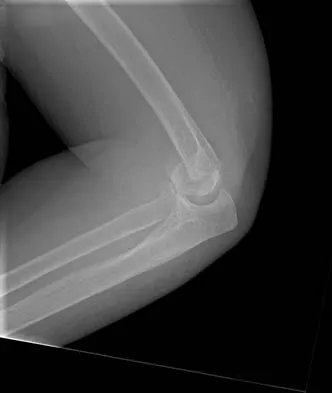
A 45-year-old man sustains a Schatzker IV tibial plateau fracture (medial plateau) from a high-energy varus force.
Which of the following approaches is most appropriate for direct visualization and buttressing of this fracture?
Explanation
Question 64
A 30-year-old construction worker falls from a roof, sustaining a closed, highly comminuted tibial pilon fracture with massive soft tissue swelling and fracture blisters. What is the most appropriate definitive management sequence?
Explanation
Question 65
A 28-year-old male sustains a Hawkins type III fracture of the talar neck. Which of the following accurately describes the associated dislocations and the approximate risk of avascular necrosis (AVN)?
Explanation
Question 66
During the extensile lateral approach for open reduction and internal fixation of a displaced intra-articular calcaneus fracture, which nerve is at greatest risk of iatrogenic injury in the distal portion of the incision?
Explanation
Question 67
A 22-year-old college football player sustains a purely ligamentous Lisfranc injury. Weight-bearing radiographs show a 4 mm diastasis between the first and second metatarsal bases. What is the most widely supported definitive surgical treatment for this specific injury pattern?
Explanation
Question 68
When utilizing the ilioinguinal approach for an anterior column acetabular fracture, the surgeon must identify and ligate the 'corona mortis'. This structure represents an anastomosis between the obturator vessels and the:
Explanation
Question 69
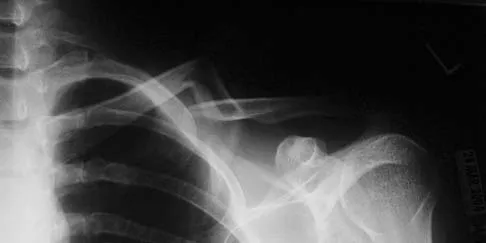
A 50-year-old man is brought to the emergency department after a crushing injury to his pelvis.
He has blood at the urethral meatus and a high-riding prostate on digital rectal exam. What is the most appropriate next step in his urologic evaluation?
Explanation
Question 70
During internal fixation of a bimalleolar ankle fracture, the surgeon performs a 'Cotton test' pulling the fibula laterally. Which specific anatomic structure is this test primarily designed to evaluate?
Explanation
Question 71
A 45-year-old man is brought to the trauma bay following a motorcycle collision. He is hypotensive with a blood pressure of 75/40 mm Hg. Radiographs reveal an anteroposterior compression type III (APC-III) pelvic ring injury. A pelvic binder is applied, and he receives 2 units of uncrossmatched packed red blood cells, but remains hemodynamically unstable. A FAST exam is negative. What is the most appropriate next step in management?
Explanation
Question 72
A 32-year-old man sustains a posterior hip dislocation and an associated posterior wall acetabular fracture. Following closed reduction, a CT scan of the pelvis is obtained, which demonstrates a 15-mm area of marginal impaction of the articular cartilage. What is the most critical step during the operative management of this fracture?
Explanation
Question 73
A 65-year-old woman sustains a subtrochanteric femur fracture. During closed reduction prior to intramedullary nailing, the proximal fragment is noted to be severely displaced. Which of the following best describes the typical deforming forces acting on the proximal fragment?
Explanation
Question 74
A 40-year-old man presents with a high-energy bicondylar tibial plateau fracture (Schatzker VI). CT imaging reveals a large, displaced posteromedial fragment. Biomechanically, what is the most appropriate surgical strategy for addressing this specific fragment?
Explanation
Question 75
A 24-year-old man undergoes closed reduction and percutaneous pinning for a Hawkins type II talar neck fracture. Radiographs obtained 8 weeks postoperatively demonstrate a distinct subchondral radiolucent band in the dome of the talus. What does this radiographic finding indicate?
Explanation
Question 76
A 38-year-old woman is evaluated for a closed pelvic ring injury after a pedestrian-versus-auto accident. Examination reveals a large, fluctuant soft-tissue swelling over the greater trochanter with overlying skin ecchymosis and decreased sensation. What is the pathophysiology of this associated soft-tissue injury?
Explanation
Question 77
During the surgical fixation of an anterior column acetabular fracture via an ilioinguinal approach, significant arterial hemorrhage is encountered posterior to the superior pubic ramus. This bleeding is most likely originating from an anastomosis between the obturator vessels and which of the following?
Explanation
Question 78
A 26-year-old man sustains a completely displaced, vertically oriented femoral neck fracture (Pauwels type III). Given his young age, joint-preserving surgery is planned. Biomechanically, which of the following construct choices offers the greatest resistance to vertical shear forces?
Explanation
Question 79
A 35-year-old man presents with an anteroposterior compression type III (APC-III) pelvic ring injury following a motorcycle collision. He arrives hypotensive, and a pelvic binder is applied. After receiving 2 units of packed red blood cells, his blood pressure remains 75/40 mm Hg. A Focused Assessment with Sonography for Trauma (FAST) exam is negative. What is the most appropriate next step in management?
Explanation
Question 80
During the surgical management of an anterior column acetabular fracture via the modified Stoppa approach, a retropubic vascular anastomosis is encountered. Injury to this structure, often called the "corona mortis," can cause massive hemorrhage. This structure typically represents an anastomosis between which of the following vessels?
Explanation
Question 81
A 40-year-old man falls from a height and sustains a displaced acetabular fracture. Plain radiographs demonstrate the "spur sign" on the obturator oblique view. Which of the following acetabular fracture patterns is pathognomonic for this radiographic finding?
Explanation
Question 82
A 24-year-old male sustains a vertically oriented, displaced femoral neck fracture (Pauwels type III) after a fall from a roof. To minimize shear forces and maximize biomechanical stability, which of the following constructs is most appropriate for definitive fixation?
Explanation
Question 83
A 38-year-old male is brought to the emergency department after a severe crush injury to his right leg. Radiographs reveal a highly comminuted Schatzker VI tibial plateau fracture. He complains of severe, unrelenting leg pain despite intravenous narcotics. Compartment pressure testing reveals an absolute anterior compartment pressure of 42 mm Hg. His current blood pressure is 110/65 mm Hg. What is the most appropriate management?
Explanation
Question 84
A 28-year-old female presents with a closed Hawkins type III fracture of the talar neck (associated with tibiotalar and subtalar dislocations). Despite prompt and anatomic open reduction and internal fixation, the surgeon counsels her regarding the high risk of a specific complication. What is the approximate risk of avascular necrosis (AVN) of the talar body in this injury pattern?
Explanation
Question 85
A 50-year-old construction worker presents with a severe, displaced OTA/AO type 43C3 (pilon) fracture of the distal tibia. Examination reveals marked soft tissue swelling, hemorrhagic fracture blisters, and threatened skin over the medial malleolus. What is the current standard of care for the initial orthopedic management of this injury?
Explanation
Question 86
A 26-year-old man sustains bilateral closed femoral shaft fractures, severe pulmonary contusions, and a severe closed head injury (GCS 6) following a motor vehicle accident. He requires aggressive resuscitation and is chemically paralyzed. According to the principles of Damage Control Orthopedics (DCO), what is the most appropriate initial management of his femoral fractures?
Explanation
Question 87
During the extensile lateral approach for open reduction and internal fixation of a displaced intra-articular calcaneus fracture, the surgeon elevates a full-thickness "no-touch" subperiosteal flap. Which of the following nerves is located within this flap and is at highest risk for iatrogenic injury or entrapment during retraction?
Explanation
Question 88
A 68-year-old woman sustains a lateral compression type 1 (LC-1) pelvic ring injury after a ground-level fall, presenting with a sacral ala fracture and ipsilateral rami fractures. She is hemodynamically stable. Radiographs show less than 1 cm of posterior displacement. What is the most appropriate initial management strategy?
Explanation
None
