Orthopedic Hip MCQs (Set 4): Femoral Neck Fractures, THA Complications & FAI | AAOS & ABOS Review
Key Takeaway
This high-yield question set for AAOS, ABOS, and OITE exams covers advanced topics in hip pathology. Focus areas include diagnosis and management of femoral neck fractures, identification and treatment of total hip arthroplasty complications, and understanding femoroacetabular impingement. Ideal for orthopedic board review and self-assessment.
Orthopedic Hip MCQs (Set 4): Femoral Neck Fractures, THA Complications & FAI | AAOS & ABOS Review
Comprehensive 100-Question Exam
00:00
Start Quiz
Question 1
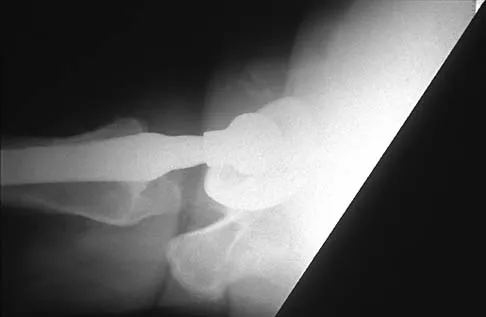
Figure 29 shows the radiograph of a 55-year-old patient who has recurrent total hip dislocation. Dislocation is most likely to occur in this patient when the hip is in which of the following positions?
Explanation
Question 2
Back pain and ipsilateral knee pain are common long-term sequelae of hip arthrodesis. To limit these problems, what position should be avoided during fusion of the hip?
Explanation
Question 3
Which of the following methods most reliably detects mechanical loosening of the hip?
Explanation
Question 4
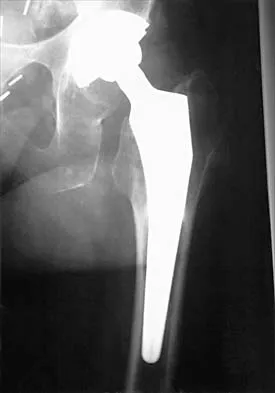
A 55-year-old man underwent cementless total hip arthroplasty for advanced painful osteoarthritis of the hip 2 years ago. The follow-up radiograph shown in Figure 30 shows
Explanation
Question 5
A 52-year-old woman has bicompartmental osteoarthritis following patellectomy. Treatment should consist of
Explanation
Question 6
In hybrid arthroplasty, the use of a polymethylmethacrylate (PMMA) precoated femoral component has been shown to result in
Explanation
Question 7
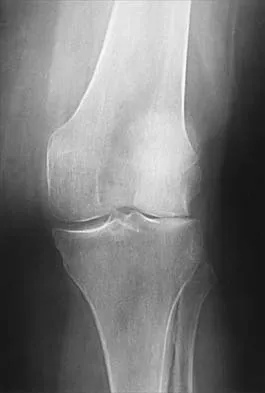
A 72-year-old woman has had progressively increasing pain in the right knee for the past 6 months. She denies any trauma and has no pain in any other joints, but she notes occasional swelling in the knee and a catching sensation. Figures 31a and 31b show the plain radiographs and Figure 31c shows the MRI scan. Treatment should consist of
Explanation
Question 8
Which of the following is considered the most appropriate indication for conversion of a hip fusion to total hip arthroplasty?
Explanation
Question 9
Which of the following methods is effective in correcting recurrent dislocation following total hip arthroplasty?
Explanation
Question 10
A 58-year-old woman who underwent a successful total hip replacement for degenerative arthritis 8 years ago reports groin pain for the past 6 months. A radiograph of the hip is shown in Figure 32. At revision, severe deficiency of the posterior column is noted. What reconstructive option would be most appropriate for the acetabulum?
Explanation
Question 11
A patient with a previously pain-free knee replacement now reports a sudden inability to ambulate. Radiographs of the knee are shown in Figures 33a and 33b. Management should consist of
Explanation
Question 12
Which of the following factors will adversely affect bone ingrowth in a revision porous-coated stem?
Explanation
Question 13
In the preoperative planning of revision acetabular reconstruction, the surgeon should identify significant posterior column deficiency by noting which of the following radiographic features?
Explanation
Question 14
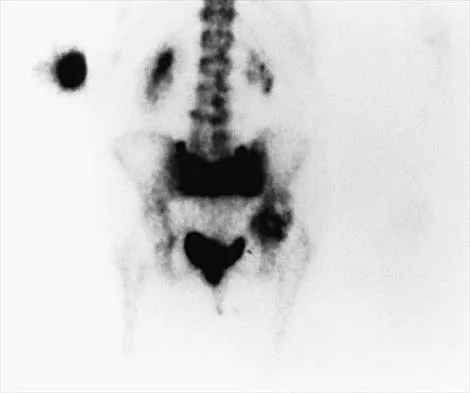
An 82-year-old woman reports right buttock pain after a car trip. Laboratory studies show an erythrocyte sedimentation rate of 30 mm/h and WBC of 4,600/mm3. Figure 34a shows a plain AP radiograph of the pelvis, and Figure 34b shows a delayed technetium Tc 99m bone scan. Management should consist of
Explanation
Question 15
Figures 35a and 35b show the radiographs of a patient who underwent debridement of a chronically infected, fully constrained knee prosthesis and now reports pain and instability despite bracing. History reveals that the patient has had no drainage since undergoing the last debridement 6 months ago. A C-reactive protein level and aspiration are negative for infection. Treatment should now consist of
Explanation
Question 16
Which of the following is considered an advantage of metal femoral heads compared with ceramic heads?
Explanation
Question 17
What is the most common result if the acetabulum is rotated too far anteriorly during a periacetabular osteotomy?
Explanation
Question 18
Which of the following radiographic views best assesses anterior coverage of the dysplastic hip?
Explanation
Question 19
Figure 36a shows the current radiograph of a 65-year-old woman who slipped and fell. History reveals that prior to the fall she was actively functioning without pain. Figure 36b shows a radiograph obtained 1 year ago. Based on the fracture pattern, the failure is most likely related to
Explanation
Question 20
A 70-year-old man has worn through his metal-backed patellar component and sustained damage to the femoral component. Following removal of the components and debridement of the metal-stained synovium, the surgeon finds that the thickness of the remaining patella is 10 mm. Treatment should now include
Explanation
Question 21
A 65-year-old man has a painful and often audible crepitus after undergoing a total knee arthroplasty 8 months ago. His symptoms are reproduced with active extension of about 30 degrees. Examination reveals no effusion or localized tenderness, a stable knee, and a range of motion of 5 degrees to 120 degrees. Radiographs are shown in Figures 37a and 37b. Management should consist of
Explanation
Question 22
What clinical parameter will most likely decrease the need for blood transfusion after total joint arthroplasty?
Explanation
Question 23
Figure 38 shows the radiograph of a 40-year-old woman who reports severe groin pain and lack of motion of the right hip. History reveals that the patient underwent a femoral osteotomy for hip dysplasia approximately 30 years ago. Treatment should include
Explanation
Question 24
What is the primary concern for arthrodesis of a failed infected total knee arthroplasty using internal fixation?
Explanation
Question 25
Oxidation of polyethylene after sterilization occurs most rapidly when the implant undergoes
Explanation
Question 26
A 35-year-old male sustains a vertically oriented (Pauwels type III) displaced femoral neck fracture. What is the most biomechanically stable construct for internal fixation?
Explanation
Question 27
A 65-year-old female presents with recurrent posterior instability of her total hip arthroplasty. Evaluation of her acetabular component reveals 20 degrees of abduction and 0 degrees of anteversion. What is the primary cause of her posterior dislocations?
Explanation
Question 28
A 28-year-old male hockey player presents with groin pain exacerbated by hip flexion and internal rotation. Radiographs demonstrate a prominent bump at the anterolateral head-neck junction. What radiographic measurement is most appropriate to quantify this deformity?
Explanation
Question 29
A healthy, independent 75-year-old community ambulator sustains a displaced femoral neck fracture. Which of the following is the primary advantage of total hip arthroplasty (THA) compared to bipolar hemiarthroplasty in this patient?
Explanation
Question 30
Following a primary total hip arthroplasty via a direct lateral approach, a patient complains of a pronounced limp. Examination reveals a positive Trendelenburg sign. Which nerve is most likely injured?
Explanation
Question 31
A 40-year-old female presents with activity-related hip pain. Radiographs demonstrate a "crossover sign" on the AP pelvis view. This finding is indicative of which of the following?
Explanation
Question 32
A 55-year-old male with a metal-on-metal total hip arthroplasty presents 5 years postoperatively with vague groin pain and a palpable mass. Serum cobalt and chromium levels are elevated. MRI with MARS reveals a large cystic mass communicating with the joint. What is the most appropriate next step in management?
Explanation
Question 33
A 42-year-old female presents 9 months after internal fixation of a displaced femoral neck fracture. She complains of persistent groin pain with weight-bearing. Radiographs show a prominent screw backing out and a visible radiolucent line across the fracture site. What is the most appropriate surgical treatment?
Explanation
Question 34
A 72-year-old female sustains a fall 5 years after an uncemented THA. Radiographs show a fracture at the tip of the femoral stem. The stem is radiographically loose with subsidence. According to the Vancouver classification, what type of fracture is this and what is the standard treatment?
Explanation
Question 35
A 38-year-old male with Cam-type FAI is considering hip arthroscopy for osteochondroplasty and labral repair. Which of the following preoperative radiographic findings is the strongest predictor of a poor clinical outcome and early conversion to total hip arthroplasty?
Explanation
Question 36
The blood supply to the femoral head is a critical factor in the development of avascular necrosis following a femoral neck fracture. Which vessel provides the primary blood supply to the adult femoral head?
Explanation
Question 37
A 68-year-old male presents with increasing hip pain 3 years after a primary THA. Aspiration of the hip joint yields fluid with a WBC count of 4,500 cells/uL and 85% neutrophils. Radiographs show progressive radiolucent lines around the acetabular component. What is the most appropriate definitive management?
Explanation
Question 38
During physical examination of a patient suspected of having Femoroacetabular Impingement (FAI), the examiner performs the FADIR test. Which of the following motions are combined during this provocative maneuver?
Explanation
Question 39
A 25-year-old male presents with deep groin pain worsened by hip flexion and internal rotation. Radiographs show a pistol grip deformity. What is the primary mechanism of cartilage damage in this condition?
Explanation
Question 40
A 32-year-old female sustains a displaced, completely off-ended, Pauwels type III femoral neck fracture. What is the most appropriate definitive management to minimize the risk of nonunion while maximizing biomechanical stability?
Explanation
Question 41
A 65-year-old patient undergoes a primary THA. Postoperatively, the acetabular component is found to have 10 degrees of anteversion and 30 degrees of inclination. The patient is at highest risk for dislocation in which of the following positions?
Explanation
Question 42
A 58-year-old male with a metal-on-metal total hip arthroplasty presents with new-onset groin pain and a palpable mass. MRI with MARS sequencing reveals a large cystic pseudo-tumor. Which of the following serum markers is most likely elevated?
Explanation
Question 43
When evaluating an AP pelvis radiograph for femoroacetabular impingement, which of the following findings is most specific for focal anterior acetabular overcoverage (pincer impingement)?
Explanation
Question 44
A 72-year-old community-dwelling male presents with groin pain 8 months after closed reduction and percutaneous pinning of a Garden II femoral neck fracture. Radiographs demonstrate nonunion with backing out of the screws and 2 cm of femoral neck shortening. What is the most appropriate management?
Explanation
Question 45
A 75-year-old female sustains a periprosthetic femur fracture 5 years after a cementless THA. Radiographs show a spiral fracture around the stem extending just distal to its tip. The femoral stem is grossly loose. There is good distal bone stock. Which of the following is the best treatment?
Explanation
Question 46
During surgical dislocation of the hip for treatment of FAI and a labral tear, the trochanteric flip osteotomy is performed. To preserve the blood supply to the femoral head, the osteotomy must stay superficial to which of the following structures?
Explanation
Question 47
Which of the following arteries provides the primary blood supply to the femoral head in an adult, making it highly vulnerable to injury in displaced femoral neck fractures?
Explanation
Question 48
Following a right total hip arthroplasty, a patient complains of a prominent right-sided limp. Clinical exam shows the right leg is 2 cm longer than the left, and the shuck test demonstrates excessive soft tissue tension. How does increased femoral offset during THA affect hip biomechanics?
Explanation
Question 49
In an otherwise well-functioning cementless THA with a conventional ultra-high-molecular-weight polyethylene (UHMWPE) liner, osteolysis is typically initiated by particles of what specific size?
Explanation
Question 50
A 28-year-old athlete undergoes evaluation for hip pain. The alpha angle is measured on a Dunn lateral view. What anatomical landmarks define the alpha angle?
Explanation
Question 51
A 78-year-old female with severe Alzheimer's dementia sustains a displaced femoral neck fracture. She was a limited household ambulator prior to the injury. Which of the following surgical options is associated with the lowest risk of dislocation in this specific patient?
Explanation
Question 52
A 62-year-old male with a metal-on-polyethylene THA presents with painful swelling in the thigh 6 years postoperatively. Aspirate is negative for infection, but serum cobalt levels are significantly elevated. Which of the following is the most likely source of the metal debris?
Explanation
Question 53
A 35-year-old female presents with chronic deep buttock pain. MRI shows narrowing of the space between the ischial tuberosity and the lesser trochanter, with edema in a specific muscle belly. Which muscle is most commonly compressed and pathognomonic for this condition?
Explanation
Question 54
Which of the following best describes a Garden Type II femoral neck fracture?
Explanation
Question 55
Following a difficult THA for developmental dysplasia of the hip, the patient develops a foot drop and is unable to actively extend the toes or dorsiflex the ankle. Sensation is intact on the plantar aspect of the foot. Which division of the sciatic nerve is most commonly injured during THA?
Explanation
Question 56
A 40-year-old male with symptomatic FAI and a labral tear undergoes hip arthroscopy with femoroplasty, acetabuloplasty, and labral repair. Which of the following preoperative factors is the strongest predictor of failure and eventual conversion to THA?
Explanation
Question 57
When utilizing three parallel cancellous lag screws for fixation of a nondisplaced femoral neck fracture, where should the inferior (calcar) screw be positioned to provide the most optimal biomechanical construct?
Explanation
Question 58
A 28-year-old male athlete presents with groin pain exacerbated by hip flexion and internal rotation. Radiographs reveal an alpha angle of 70 degrees. Which of the following is the most likely primary mechanism of cartilage damage in this condition?
Explanation
Question 59
A 28-year-old male sustains a vertically oriented, Pauwels type III femoral neck fracture after a high-energy motor vehicle collision. Which of the following internal fixation constructs provides the highest biomechanical stability for this specific fracture pattern?
Explanation
Question 60
In an effort to minimize the risk of dislocation following a total hip arthroplasty, a surgeon aims to increase the 'jump distance.' Which of the following modifications will most effectively accomplish this goal?
Explanation
Question 61
A 32-year-old female presents with chronic anterior groin pain exacerbated by hip flexion and internal rotation. An anteroposterior (AP) radiograph of the pelvis demonstrates a 'crossover sign.' This radiographic finding is most indicative of which of the following?
Explanation
Question 62
A 75-year-old patient sustains a periprosthetic femur fracture around a total hip arthroplasty placed 10 years ago. Radiographs show a fracture at the tip of the stem. The stem is clinically and radiographically loose, but the proximal femoral bone stock remains adequate. What is the most appropriate surgical management?
Explanation
Question 63
When evaluating a patient for suspected cam-type femoroacetabular impingement (FAI), measurement of the alpha angle is most accurately assessed using which of the following radiographic views?
Explanation
Question 64
A 68-year-old male presents with new-onset groin pain and a palpable mass 8 years after a metal-on-polyethylene total hip arthroplasty. Serum cobalt levels are significantly elevated, while chromium levels are normal. Inflammatory markers are within normal limits. What is the most likely diagnosis?
Explanation
Question 65
An active, independent 78-year-old community ambulator sustains a displaced femoral neck fracture. Compared to treatment with bipolar hemiarthroplasty, treatment with total hip arthroplasty (THA) is associated with which of the following?
Explanation
Question 66
During a safe surgical dislocation of the hip (Ganz approach) for the treatment of femoroacetabular impingement, a trochanteric flip osteotomy is performed. This technique is specifically designed to protect which critical vascular structure?
Explanation
Question 67
A 45-year-old active male is undergoing total hip arthroplasty. Which of the following bearing surface combinations is associated with the lowest volumetric wear rate?
Explanation
Question 68
A 35-year-old male presents with a nonunion of a femoral neck fracture 8 months after initial fixation with parallel cancellous screws. MRI confirms the femoral head remains viable with no evidence of avascular necrosis. What is the most appropriate surgical treatment?
Explanation
Question 69
To minimize the risk of dislocation after total hip arthroplasty, the acetabular component should ideally be placed within the 'Lewinnek safe zone'. Which of the following represents these correct target angles?
Explanation
Question 70
In the pathophysiology of cam-type femoroacetabular impingement, the aspherical portion of the femoral head engages the acetabulum during hip flexion and internal rotation. Where does the resulting chondral delamination characteristically occur?
Explanation
Question 71
A 60-year-old female complains of persistent groin pain 1 year after an uncomplicated total hip arthroplasty. The pain is particularly sharp when she lifts her leg to get out of a car or performs an active straight leg raise. Radiographs reveal a prominent anterior edge of the acetabular component. What is the most likely etiology of her pain?
Explanation
Question 72
Following a total hip arthroplasty via a posterior approach, a patient is noted to have a foot drop and inability to extend the great toe. The peroneal division of the sciatic nerve is injured. Which anatomic feature explains why the peroneal division is more susceptible to injury than the tibial division?
Explanation
Question 73
When evaluating a patient with a femoral neck fracture, which of the following is the most significant prognostic factor for the subsequent development of avascular necrosis of the femoral head after internal fixation?
Explanation
Question 74
A 25-year-old male sustains a vertically oriented femoral neck fracture (Pauwels type III). What fixation construct provides the greatest biomechanical stability for this specific pattern?
Explanation
Question 75
A patient presents with recurrent anterior dislocations following a total hip arthroplasty performed via a posterior approach. Radiographs show the acetabular component has 55 degrees of inclination and 45 degrees of anteversion. What is the primary cause of dislocation in this patient?
Explanation
Question 76
During hip arthroscopy for femoroacetabular impingement, a classic Cam lesion is identified. Where is the most common location of the associated chondral injury?
Explanation
Question 77
A 65-year-old male with a metal-on-polyethylene total hip arthroplasty presents with groin pain 5 years postoperatively. Aspiration yields cloudy fluid with negative cultures but elevated serum cobalt levels. MRI demonstrates a large cystic pseudotumor. What is the most likely diagnosis?
Explanation
Question 78
In the treatment of displaced femoral neck fractures in young adults, which of the following is the most reliable predictor of developing avascular necrosis (AVN)?
Explanation
Question 79
A 45-year-old female undergoes total hip arthroplasty with a ceramic-on-ceramic bearing. Three years later, she complains of a reproducible squeaking noise during gait. Which of the following factors is most strongly associated with this phenomenon?
Explanation
Question 80
Which of the following radiographic findings on an AP pelvis is most characteristic of Pincer-type femoroacetabular impingement caused by acetabular retroversion?
Explanation
Question 81
A 70-year-old female sustains a basicervical femoral neck fracture. Which of the following statements regarding this fracture pattern is true?
Explanation
Question 82
A 75-year-old female falls and sustains a periprosthetic femur fracture around a cemented THA stem. Radiographs show a fracture around the stem tip, a loose femoral component, and excellent distal bone stock (Vancouver B2). What is the optimal surgical management?
Explanation
Question 83
When measuring the alpha angle to evaluate for Cam morphology on a Dunn lateral radiograph or MRI, an angle greater than what threshold is traditionally considered abnormal?
Explanation
Question 84
A patient reports persistent groin pain and catching when actively rising from a seated position following an uncemented THA. A diagnostic injection of lidocaine into the iliopsoas bursa provides complete relief. What radiographic finding is most likely present?
Explanation
Question 85
Based on the HEALTH trial and recent evidence, which of the following is true regarding THA compared to hemiarthroplasty for displaced femoral neck fractures in active older adults?
Explanation
Question 86
A patient presents 6 weeks after a primary THA with a draining sinus tract communicating directly with the joint. According to the 2018 International Consensus Meeting (ICM) criteria, what is the next best step for diagnosing infection?
Explanation
Question 87
What is the most common nerve-related complication following hip arthroscopy due to portal placement and limb traction?
Explanation
Question 88
A 35-year-old female presents with persistent groin pain 8 months after internal fixation of a femoral neck fracture. Radiographs reveal varus collapse with a visible fracture line. MRI demonstrates a viable femoral head. What is the most appropriate management?
Explanation
Question 89
Which historical sterilization method for ultra-high-molecular-weight polyethylene (UHMWPE) is most associated with subsequent severe oxidation, delamination, and rapid wear in THA?
Explanation
Question 90
A 40-year-old female runner complains of deep gluteal pain radiating down the posterior thigh. MRI reveals narrowing of the space between the lesser trochanter and the ischium, with edema within the intervening muscle. What is the diagnosis?
Explanation
Question 91
Histologic evaluation of periprosthetic tissue from a failed metal-on-metal THA demonstrates an adverse local tissue reaction (ALTR). Which cellular finding is characteristic of an Aseptic Lymphocyte-dominated Vasculitis-Associated Lesion (ALVAL)?
Explanation
Question 92
A patient presents with an intracapsular femoral neck fracture that extends distally to the level of the lesser trochanter. If internal fixation is planned, what is the most biomechanically sound implant choice?
Explanation
Question 93
A patient complains of an apparent leg length discrepancy immediately following a primary THA. Examination reveals the operative leg appears longer, but true leg length measurement (ASIS to medial malleolus) is equal bilaterally. What is the most likely cause?
Explanation
Question 94
A 68-year-old woman presents with recurrent posterior dislocations following a primary total hip arthroplasty. Evaluation reveals the acetabular component is placed in 5 degrees of retroversion and 40 degrees of inclination. During which of the following activities is she at the highest risk for dislocation?
Explanation
Question 95
A 32-year-old male sustains a displaced, vertically oriented (Pauwels type III) femoral neck fracture in a motor vehicle collision. Which of the following fixation constructs provides the most biomechanically stable fixation for this specific fracture pattern?
Explanation
Question 96
A 24-year-old male collegiate hockey player presents with insidious onset of deep groin pain, exacerbated by deep squatting and prolonged sitting. Radiographs demonstrate a prominent osseous bump at the anterolateral femoral head-neck junction. Which of the following physical examination maneuvers is most likely to be positive in this patient?
Explanation
Question 97
A 55-year-old man who underwent a metal-on-polyethylene total hip arthroplasty 5 years ago presents with new-onset groin pain and a palpable fluid collection. Radiographs show well-fixed components with a large femoral head and a modular neck. Laboratory testing reveals elevated serum cobalt and normal chromium levels. What is the most likely diagnosis?
Explanation
Question 98
A 75-year-old cognitively intact, highly active community ambulator sustains a displaced femoral neck fracture. Compared to a cemented bipolar hemiarthroplasty, surgical treatment with a total hip arthroplasty (THA) is most likely associated with which of the following?
Explanation
Question 99
An anteroposterior (AP) pelvis radiograph is performed to evaluate a 30-year-old female with chronic groin pain. The radiograph demonstrates a "crossover sign" and an "ischial spine sign". Which of the following underlying pathomorphologies is most strongly associated with these radiographic findings?
Explanation
Question 100
Following a primary total hip arthroplasty performed via a posterior approach, the patient is noted in the recovery room to have an inability to dorsiflex the great toe or evert the foot. Sensation is decreased over the anterolateral leg and the dorsum of the foot. Which specific neural structure is most likely injured?
Explanation
None
