AAOS/ABOS Hip MCQs (Set 1): Anatomy, Trauma & Arthroplasty | Board Prep
Key Takeaway
This high-yield question set (Set 1) for the AAOS/ABOS exams focuses on core hip orthopedics. Questions cover detailed hip anatomy, common traumatic injuries, and the principles and complications of hip arthroplasty. Ideal for comprehensive board preparation and OITE review.
AAOS/ABOS Hip MCQs (Set 1): Anatomy, Trauma & Arthroplasty | Board Prep
Comprehensive 100-Question Exam
00:00
Start Quiz
Question 1
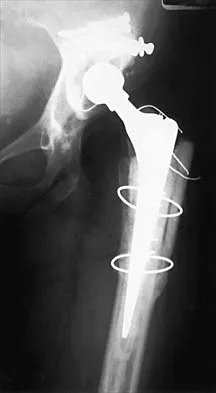
Figure 1 shows the radiograph of a 68-year-old man who underwent revision hip arthroplasty with impaction grafting of the femur and cementing of a tapered component into the graft 2 years ago. The patient remains symptom-free. Which of the following best describes the most likely histologic appearance of the proximal femur if a biopsy was performed?
Explanation
Question 2
Compared with cobalt-chromium, the biomechanical properties of titanium on polyethylene articulation in total hip replacement result in
Explanation
Question 3
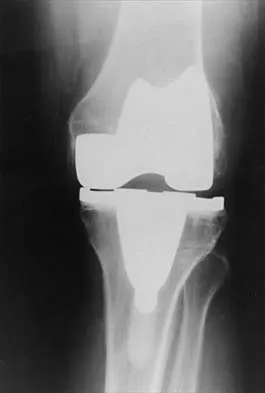
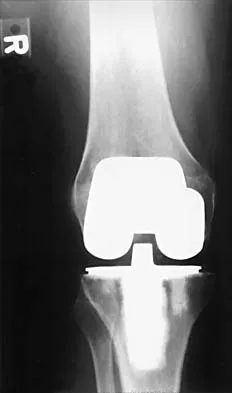
What is the most common reason for reoperation in total knee arthroplasty?
Explanation
Question 4
Which of the following factors is most commonly associated with mechanical failure of a cemented total hip arthroplasty?
Explanation
Question 5
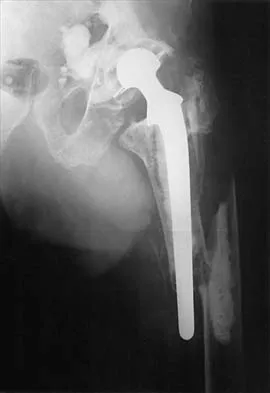
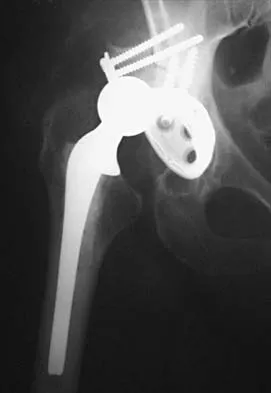
Figure 2 shows the radiograph of a 72-year-old woman who reports pain after a fall. History includes several years of increasing thigh pain and limb shortening. Management consisting of an extensive work-up for infection reveals normal laboratory studies, a positive bone scan, and a negative hip aspiration. What is the most likely etiology of this complication?
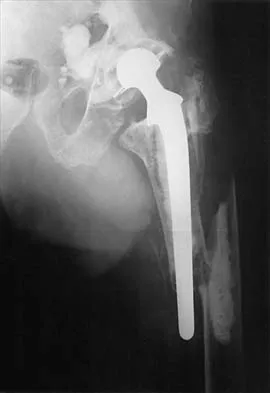
Explanation
Question 6
Figures 3a through 3c show the radiographs and bone scan of a patient who reports increasing pain associated with activity for the past several months. Laboratory studies show an erythrocyte sedimentation rate of 14 mm/h and a C-reactive protein level of 0.4. Aspiration is negative for infection. Management should consist of
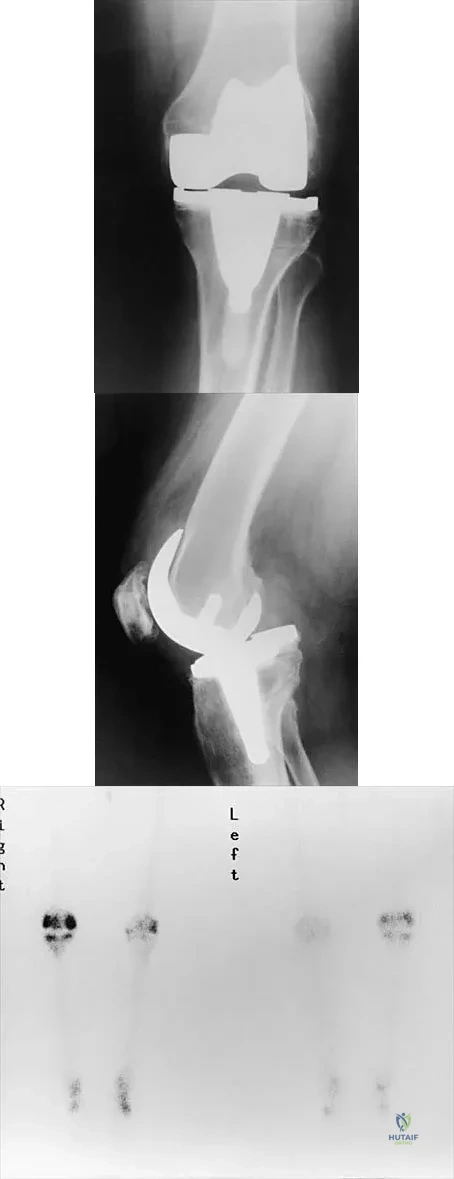
Explanation
Question 7
Which of the following studies has the highest sensitivity and specificity in diagnosis of osteonecrosis of the femoral head?
Explanation
Question 8
Figure 4 shows the AP radiograph of a 28-year-old woman who has had moderate pain in the left hip for the past year. Nonsurgical management has failed to provide relief. She denies any history of hip pain, pathology, or trauma. Management should consist of
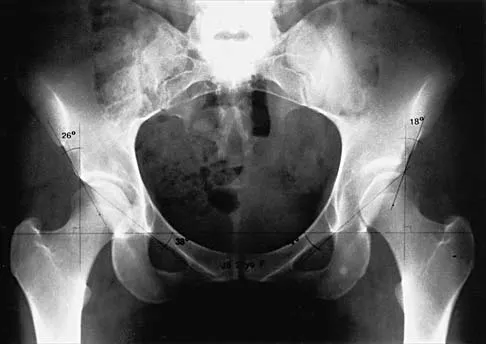
Explanation
Question 9
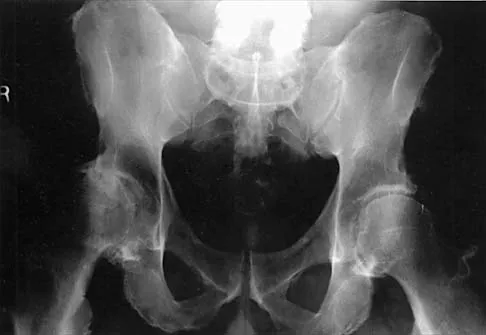
What complication is most likely to develop after right total hip arthroplasty in the patient shown in Figure 5?
Explanation
Question 10
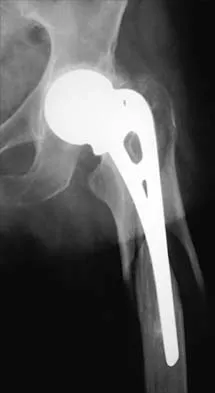
In revision total hip arthroplasty, an acetabular reconstruction cage is best indicated for which of the following patterns of bone loss?
Explanation
Question 11
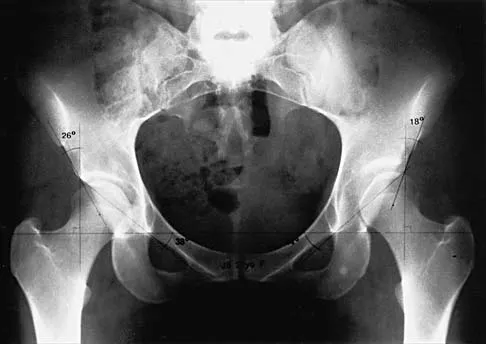
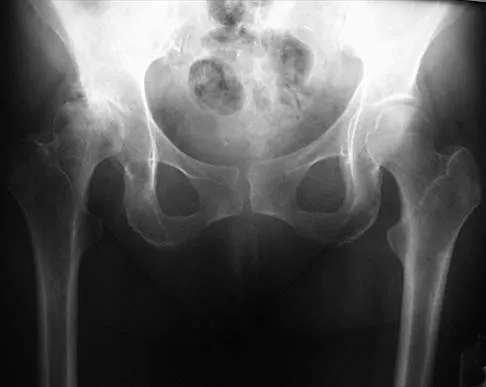
Mechanical reduction of the pain associated with the condition shown in Figure 6 can be accomplished through the use of a cane on the contralateral side. Similarly, if this patient must carry any type of load in his or her arms, it should be carried
Explanation
Question 12
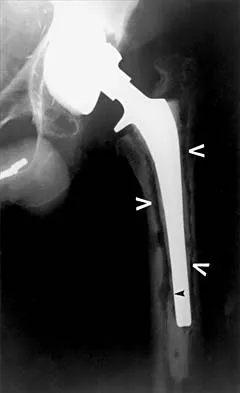
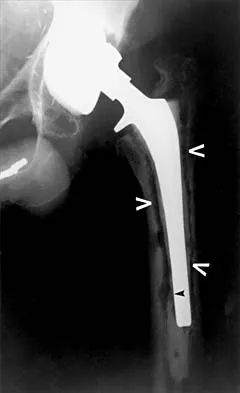
Figure 7 shows the AP radiograph of a 60-year-old man who has had pain in the thigh for past 6 months. History reveals that he underwent hip replacement 1 year ago. The radiographic changes are most likely the result of what process?
Explanation
Question 13
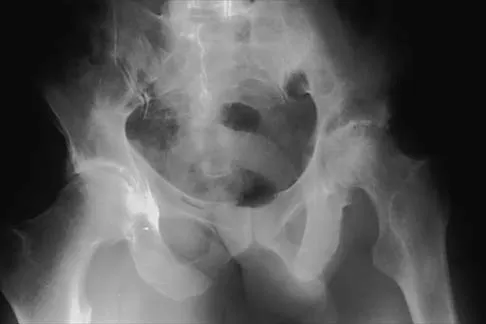
Figure 8 shows the radiograph of a 72-year-old man who has had severe pain in the left hip for the past 3 weeks. History reveals alcohol abuse. The next most appropriate step should consist of
Explanation
Question 14
Which of the following articulation couplings shows the lowest coefficient of friction as tested in the laboratory?
Explanation
Question 15
Which of the following is considered the best cementless acetabular reconstruction method when planning for total hip arthroplasty in a patient with developmental dysplasia of the hip (DDH)?
Explanation
Question 16
Which of the following mechanisms is considered the most common cause of failure of osteoarticular allografts used for articular reconstruction?
Explanation
Question 17
When compared with a patient who has a subluxated hip, a patient with a dislocated hip who is undergoing acetabular reconstruction for developmental dysplasia of the hip will most likely have
Explanation
Question 18
The anticoagulant effect of the low-molecular-weight heparins (LMWH) is mediated by the binding affinity of antithrombin III to which of the following coagulation factors?
Explanation
Question 19
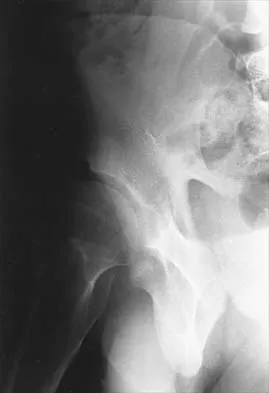
The primary purpose of obtaining the radiograph shown in Figure 9 is to assess
Explanation
Question 20
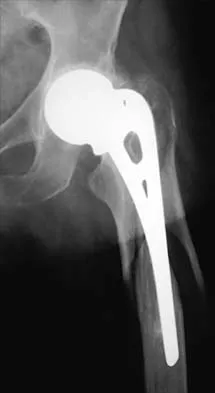
Figure 10 shows the radiograph of an active 75-year-old woman who reports severe leg pain after a fall. Management should consist of
Explanation
Question 21
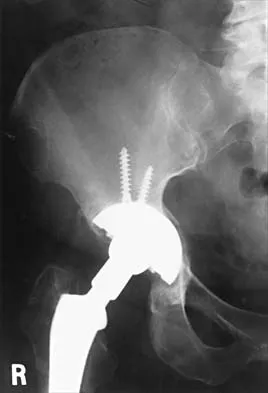
Which of the following procedures is considered most appropriate in patients with rheumatoid arthritis?
Explanation
Question 22
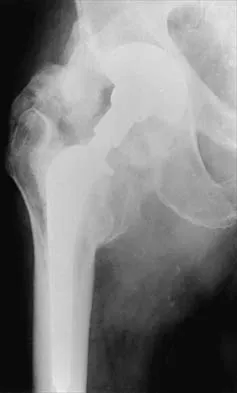
In a patient who has rheumatoid arthritis with acetabular protrusion, what is the best biomechanical position for the cup with respect to the preoperative center of rotation?
Explanation
Question 23
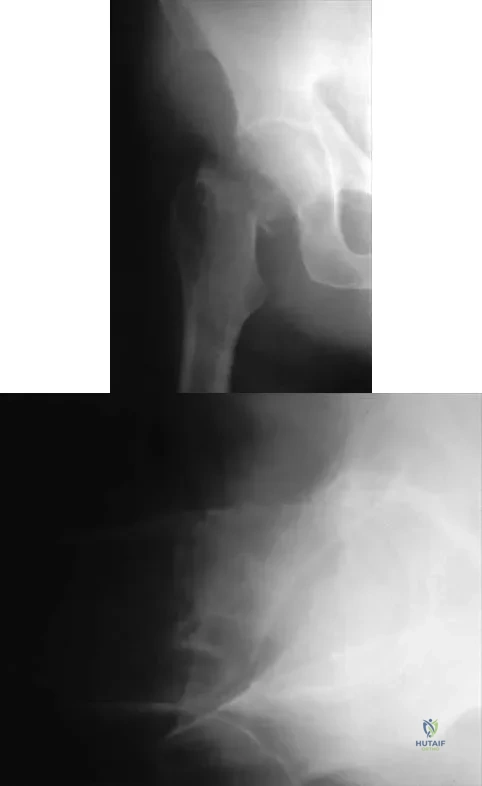
Figures 11a and 11b show the radiographs of a 50-year-old man who was struck by a car. Treatment should consist of
Explanation
Question 24
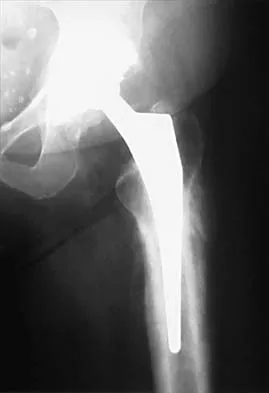
One advantage of using onlay strut allograft in femoral revision surgery is that it can
Explanation
Question 25
Which of the following methodologies has been proven to be effective in reducing the use of homologous blood transfusion following total hip arthroplasty (THA)?
Explanation
Question 26
During a direct anterior approach (Smith-Petersen) to the hip, an internervous plane is utilized. The superficial interval is developed between which of the following two muscles?
Explanation
Question 27
A 28-year-old man sustains a vertically oriented (Pauwels Type III) femoral neck fracture. Biomechanically, which of the following internal fixation constructs provides the greatest stability against shear forces?
Explanation
Question 28
In total hip arthroplasty, successfully increasing the femoral offset without altering the leg length will have which of the following biomechanical effects?
Explanation
Question 29
A 45-year-old man presents with a posterior wall acetabular fracture associated with a posterior hip dislocation. CT imaging demonstrates a focal area of marginal impaction of the articular surface. During surgical fixation, what is the most appropriate management of the impacted segment?
Explanation
Question 30
Ceramic-on-ceramic bearings in total hip arthroplasty have excellent wear characteristics but are associated with a unique complication known as "squeaking". Which of the following is the most significant risk factor for this phenomenon?
Explanation
Question 31
According to the quadrant system described by Wasielewski for acetabular screw placement during THA, placing a screw into the anterior-superior quadrant places which of the following structures at greatest risk?
Explanation
Question 32
A 55-year-old patient is involved in a high-speed motor vehicle collision and sustains a subtrochanteric femur fracture. Predictable deformity of the proximal fragment is primarily caused by which combination of muscular forces?
Explanation
Question 33
A 62-year-old female presents 5 years after a metal-on-metal total hip arthroplasty with new-onset groin pain and a cystic mass. Histologic evaluation of the periprosthetic tissue is most likely to demonstrate which of the following?
Explanation
Question 34
During a total hip arthroplasty via a posterior approach, the sciatic nerve is at risk of injury. Which specific division of the nerve is most susceptible to indirect injury (e.g., traction), and what is the anatomic reason?
Explanation
Question 35
Tranexamic acid (TXA) is widely utilized to reduce perioperative blood loss in joint arthroplasty. What is its precise mechanism of action?
Explanation
Question 36
A 75-year-old woman presents with a reverse obliquity intertrochanteric femur fracture (AO/OTA 31-A3). If this injury is treated inappropriately with a sliding hip screw (dynamic hip screw), what is the most likely mode of biomechanical failure?
Explanation
Question 37
In the manufacturing of highly cross-linked polyethylene (HXLPE) for use in total hip arthroplasty, what is the primary purpose of heating the polyethylene above its melting point (remelting) following irradiation?
Explanation
Question 38
Three months following an uncomplicated primary total hip arthroplasty, a patient complains that the operative leg feels longer. Clinical examination reveals equal tape measurements from the anterior superior iliac spine (ASIS) to the medial malleolus bilaterally. However, the distance from the umbilicus to the medial malleolus is greater on the operative side. What is the most appropriate initial management?
Explanation
Question 39
A 35-year-old male sustains a high-energy trauma resulting in a displaced femoral neck fracture.
The predominant blood supply to the adult femoral head, which is critically at risk in this injury, arises directly from which of the following vessels?
Explanation
Question 40
A 24-year-old male arrives in the emergency department following a motorcycle collision. He is hypotensive and tachycardic. Pelvic radiographs demonstrate an anteroposterior compression (APC) type III pelvic ring injury. A pelvic binder is applied. For maximum mechanical effectiveness, the binder must be centered at the level of the:
Explanation
Question 41
A cementless femoral stem design is chosen for a primary THA in a 60-year-old man. Compared to a fully porous-coated cylindrical stem, what is the primary biomechanical advantage of a proximally coated tapered wedge stem?
Explanation
Question 42
A 30-year-old active female sustains a posterior hip dislocation with an associated femoral head fracture that extends cephalad to the fovea capitis (Pipkin Type II). Following closed reduction of the hip joint, the displaced fracture is noted to have a 3mm step-off. What is the most appropriate definitive management?
Explanation
Question 43
Trunnionosis has emerged as a significant mode of failure in modern total hip arthroplasty, particularly involving modular head-neck junctions. This process is most accurately described by which of the following mechanisms?
Explanation
Question 44
A patient with advanced unilateral hip osteoarthritis is instructed to use a cane. To maximally reduce the joint reaction force on the affected hip, the cane should be held in the contralateral hand. What is the primary biomechanical reason for this reduction?
Explanation
Question 45
A 68-year-old female undergoes a revision total hip arthroplasty for aseptic loosening. Preoperative dual-energy x-ray absorptiometry (DEXA) scanning confirms severe osteoporosis. During impaction of a cementless acetabular component, a non-displaced medial wall acetabular fracture occurs. The component is stable. What is the most appropriate intraoperative management?
Explanation
Question 46
Placement of a screw in the anterosuperior quadrant of the acetabulum (Wasielewski zones) during total hip arthroplasty places which of the following structures at greatest risk of injury?
Explanation
Question 47
A 68-year-old female presents with acute thigh pain after a minor fall. Radiographs reveal a transverse subtrochanteric fracture with lateral cortical thickening and medial spiking. She has a 9-year history of alendronate use. What is the most appropriate surgical management?
Explanation
Question 48
A 70-year-old man with ankylosing spondylitis and a completely fused lumbar spine is undergoing a total hip arthroplasty. How does his stiff spinopelvic anatomy alter the typical acetabular component positioning to prevent posterior dislocation?
Explanation
Question 49
A 65-year-old man receives a ceramic-on-ceramic total hip arthroplasty. Two years later, he complains of a reproducible squeaking noise during gait. What is the most common biomechanical or radiographic finding associated with this phenomenon?
Explanation
Question 50
A 30-year-old man sustains a displaced, vertically oriented (Pauwels Type III) femoral neck fracture. Which of the following internal fixation constructs provides the most biomechanically stable fixation for this specific high-shear fracture pattern?
Explanation
Question 51
A 75-year-old woman sustains a periprosthetic femur fracture around a cemented polished taper-slip stem. Radiographs demonstrate a fracture near the tip of the stem with obvious cement mantle fragmentation and stem subsidence. What is the most appropriate classification and treatment?
Explanation
Question 52
During an anterior (Smith-Petersen) approach to the hip for a periacetabular osteotomy, the surgeon develops the superficial internervous plane. Which of the following represents the correct muscles and their respective innervations for this interval?
Explanation
Question 53
A 60-year-old man with a metal-on-polyethylene total hip arthroplasty presents with new-onset groin pain and a palpable mass 5 years postoperatively. Blood work reveals elevated serum cobalt and chromium. Aspiration yields sterile, cloudy fluid. What is the most likely etiology?
Explanation
Question 54
A 25-year-old man involved in a motor vehicle collision presents with a shortened, internally rotated left lower extremity. Radiographs confirm a posterior hip dislocation without fracture. Which intervention is most critical for minimizing the risk of avascular necrosis (AVN) of the femoral head?
Explanation
Question 55
Histologic evaluation of a successful, well-fixed porous-coated cementless titanium acetabular component retrieved 5 years postoperatively for an unrelated cause typically demonstrates bone ingrowth into approximately what percentage of the available porous surface?
Explanation
Question 56
When treating a highly comminuted subtrochanteric femur fracture with an antegrade intramedullary nail, establishing a starting entry point that is too lateral to the tip of the greater trochanter typically leads to which of the following mechanical malalignments?
Explanation
Question 57
A 60-year-old male is scheduled for a revision total hip arthroplasty. He has a history of severe Brooker class III heterotopic ossification following his index procedure. What is the most effective prophylactic regimen to prevent recurrence?
Explanation
Question 58
During a posterior approach to the hip, excessive retraction or release of the short external rotators close to the intertrochanteric crest endangers the primary blood supply to the femoral head. These critical retinacular vessels are terminal branches of which artery?
Explanation
Question 59
During an ilioinguinal approach for an anterior column acetabular fracture, significant arterial bleeding is encountered near the superior pubic ramus. This bleeding is most likely from the 'corona mortis', which is an anastomosis between the obturator vessels and which of the following?
Explanation
Question 60
A 28-year-old man sustains a completely displaced, vertically oriented (Pauwels type III) femoral neck fracture. To maximize biomechanical stability and minimize the risk of shear-induced failure, which of the following fixation constructs is most appropriate?
Explanation
Question 61
A 55-year-old active woman undergoes primary total hip arthroplasty with a ceramic-on-ceramic bearing. At her 2-year follow-up, she complains of a squeaking noise coming from the hip during deep flexion, though she is pain-free. What is the most significant risk factor for this phenomenon?
Explanation
Question 62
The direct anterior approach (DAA) to the hip is an internervous plane. Which of the following best describes the superficial neural interval used in this approach?
Explanation
Question 63
A 70-year-old woman sustains a reverse obliquity intertrochanteric hip fracture. Why is a cephalomedullary nail mechanically preferred over a sliding hip screw (SHS) for this specific fracture pattern?
Explanation
Question 64
Which of the following ligaments of the hip joint is the strongest and serves as the primary static restraint to hip extension?
Explanation
Question 65
A patient with severe spinopelvic stiffness secondary to ankylosing spondylitis is evaluated for a total hip arthroplasty. The patient's pelvis is fixed in a posterior pelvic tilt. How does this fixed deformity affect the functional orientation of the acetabulum when the patient transitions from sitting to standing?
Explanation
Question 66
A 64-year-old man presents with painful swelling in his groin three years after undergoing a metal-on-metal total hip arthroplasty. Blood work reveals significantly elevated serum cobalt and chromium ion levels. A MARS MRI demonstrates a large cystic pseudotumor. If revision surgery is undertaken, histologic evaluation of the periprosthetic tissue will most likely show:
Explanation
Question 67
During surgical dislocation of the hip using the Ganz trochanteric flip approach for a femoral head fracture, the blood supply to the femoral head is protected by maintaining the integrity of which of the following structures?
Explanation
Question 68
A 72-year-old female presents with a periprosthetic femur fracture around a cementless, proximally porous-coated femoral stem.
Radiographs reveal a fracture extending just distal to the tip of the stem. The stem is radiographically loose with subsidence, but the proximal bone stock is highly comminuted while the diaphyseal bone is intact. According to the Vancouver classification, what is the most appropriate management?
Explanation
Question 69
A 35-year-old man presents to the emergency department with a shortened, flexed, abducted, and externally rotated left lower extremity following a high-speed motorcycle accident. Which of the following is the most likely diagnosis?
Explanation
Question 70
During a primary total hip arthroplasty using a posterior approach, the surgeon decides to use a 'high offset' femoral stem instead of a standard offset stem. Assuming the neck angle remains the same, how does this stem primarily affect hip biomechanics?
Explanation
Question 71
A 68-year-old man underwent a right total hip arthroplasty 5 years ago with a modular cobalt-chromium femoral head on a titanium stem. He now presents with persistent thigh pain. Inflammatory markers are normal, and joint aspiration is negative for infection. Radiographs show no loosening. Serum cobalt is disproportionately elevated compared to chromium. What is the most likely diagnosis?
Explanation
Question 72
When advising a patient with severe left hip osteoarthritis on the use of a single-point cane, you instruct them to hold the cane in their right hand. What is the primary biomechanical rationale for this instruction?
Explanation
Question 73
A 25-year-old male sustains a posterior wall acetabular fracture with a posterior hip dislocation. Post-reduction, he undergoes open reduction and internal fixation via a Kocher-Langenbeck approach. Postoperatively, he is noted to have an inability to extend his great toe and decreased sensation in the first dorsal web space. Which specific neural element was most likely injured?
Explanation
Question 74
In modern cementing techniques for total hip arthroplasty (third-generation cementing), vacuum mixing of the polymethylmethacrylate (PMMA) bone cement is standard practice. What is the primary biomechanical benefit of vacuum mixing?
Explanation
Question 75
A patient is undergoing revision of a failed metal-on-metal total hip arthroplasty due to severe trunnionosis. The well-fixed titanium femoral stem will be retained, but the trunnion is macroscopically damaged. Which of the following head component combinations is most appropriate to place on the damaged trunnion?
Explanation
Question 76
A 45-year-old man presents with a Pipkin type II femoral head fracture associated with a posterior hip dislocation. The dislocation is successfully reduced in the emergency department, but the large fracture fragment remains displaced superior to the fovea capitis. What is the recommended surgical management?
Explanation
Question 77
An extensively porous-coated, cylindrically fully coated diaphyseal engaging stem is used in revision hip arthroplasty. To achieve predictable long-term biologic fixation (osseointegration), what is the minimum required distance of diaphyseal scratch fit?
Explanation
Question 78
Anatomical variation of the sciatic nerve as it exits the greater sciatic foramen is well documented. In approximately 10-15% of the population, a variant exists that can predispose to iatrogenic injury or piriformis syndrome. What is the most common anatomical variant of the sciatic nerve?
Explanation
Question 79
A 60-year-old highly active man undergoes a primary total hip arthroplasty using a ceramic-on-ceramic bearing. Two years postoperatively, he complains of a reproducible, audible squeaking sound from the hip during deep flexion. Radiographs show a well-fixed implant but with a steeply positioned acetabular component. What is the most likely biomechanical cause of the squeaking?
Explanation
Question 80
During a direct anterior (Smith-Petersen) approach to the hip for total hip arthroplasty, the surgeon utilizes both superficial and deep internervous planes. Which of the following accurately describes the deep internervous plane for this approach?
Explanation
Question 81
A 75-year-old woman sustains a highly unstable intertrochanteric femur fracture and is treated with a cephalomedullary nail. To minimize the risk of lag screw cut-out, what is the maximum recommended tip-apex distance (TAD) as described by Baumgaertner?
Explanation
Question 82
In the evaluation of a painful total hip arthroplasty, synovial fluid is aspirated and sent for an alpha-defensin test to rule out periprosthetic joint infection (PJI). Which of the following best describes the biologic function and source of alpha-defensin?
Explanation
Question 83
The widespread use of highly cross-linked polyethylene (HXLPE) in total hip arthroplasty has significantly reduced volumetric wear rates compared to conventional ultra-high-molecular-weight polyethylene. Which of the following biomechanical properties is typically DECREASED as a direct result of the high irradiation cross-linking process?
Explanation
Question 84
To protect the deep branch of the medial femoral circumflex artery (MFCA) during a posterior approach to the hip, the surgeon should carefully avoid aggressive dissection and electrocautery at the upper border of which of the following muscles?
Explanation
Question 85
A 58-year-old man presents with groin pain three years after a primary metal-on-polyethylene total hip arthroplasty. Aspiration yields fluid with elevated cobalt levels but normal chromium levels. MARS MRI demonstrates a solid pseudotumor. Which of the following implant design factors most significantly increases the risk of this specific complication?
Explanation
Question 86
A 32-year-old unrestrained driver is involved in a motor vehicle collision. Radiographs demonstrate a posterior hip dislocation associated with a femoral head fracture that involves the weight-bearing zone superior to the fovea capitis. According to the Pipkin classification, what is the grade of this injury?
Explanation
Question 87
An orthopedic surgeon is performing an anterior intrapelvic (modified Stoppa) approach for an acetabular fracture. The surgeon must identify and ligate the 'corona mortis' to prevent massive hemorrhage. This vascular structure is most commonly an anastomosis between which of the following systems?
Explanation
Question 88
A 72-year-old osteoporotic woman is undergoing cemented total hip arthroplasty. The surgeon utilizes a highly polished, collarless, double-tapered (taper-slip) stem. Which of the following biomechanical principles is essential for the long-term success of this specific stem design?
Explanation
Question 89
A 28-year-old man sustains a completely displaced, vertically oriented (Pauwels type III) femoral neck fracture. Which of the following fixation constructs provides the greatest biomechanical stability against vertical shear forces for this specific fracture pattern?
Explanation
Question 90
During a primary total hip arthroplasty via a posterior approach, the surgeon utilizes the transverse acetabular ligament (TAL) as a soft-tissue landmark. Positioning the acetabular component parallel to the native TAL helps primarily determine which aspect of component orientation?
Explanation
None
