العربية
Part of the Master Guide

Orthopedic Board Review Set 675: 100 MCQs for ABOS, OITE, FRCS – Hip Focus

Orthopedic Hip 2026 MCQs: Board Review Questions & Answers (Part 4)

23 Apr 2026 56 min read 80 Views
Figure for Hip 2001 MCQs - Part 4 - Question 76

Key Takeaway

Learn more about Orthopedic Hip 2026 MCQs: Board Review Questions & Answers (Part 4) and how to manage it. Top-rated Orthopedic Hip 2026 MCQs bank. Practice with clinical case questions, orthopedic surgery board review, and evidence-based answers updated for 2026.

Orthopedic Hip 2026 MCQs: Board Review Questions & Answers (Part 4)

Comprehensive 100-Question Exam


00:00

Start Quiz

Question 1

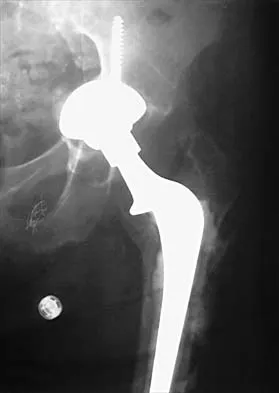
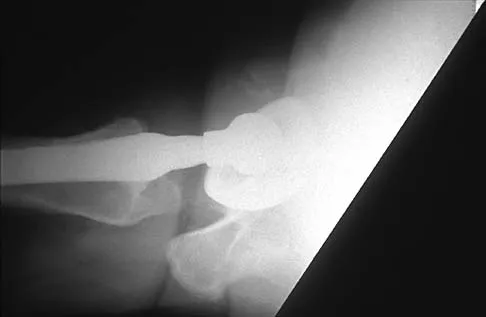
Figure 29 shows the radiograph of a 55-year-old patient who has recurrent total hip dislocation. Dislocation is most likely to occur in this patient when the hip is in which of the following positions?


Explanation

The patient has an acetabular component that is placed in excessive anteversion; this is confirmed by the shoot-through radiograph. The most common reasons for dislocation of a total hip replacement include inappropriate positioning of the components, inadequate abductor tension, or impingement. Implants placed without adequate total anteversion tend to dislocate posteriorly, and implants with excessive anteversion tend to dislocate anteriorly. Superior dislocations can occur if the acetabular component is placed in a severely vertical position with inadequate lateral coverage.

Question 2

Back pain and ipsilateral knee pain are common long-term sequelae of hip arthrodesis. To limit these problems, what position should be avoided during fusion of the hip?


Explanation

The recommended position for a hip fusion is flexion of 20 degrees to 30 degrees, slight adduction (5 degrees) or neutral, and 10 degrees of external rotation. In long-term follow-up, patients who underwent fusion in abduction had more ipsilateral knee and low back pain than patients who were positioned in adduction. Internal rotation should be avoided to prevent interference with the opposite foot during gait. External rotation facilitates the application of shoe wear. Callaghan JJ, Brand RA, Pederson DR: Hip arthrodesis: A long-term follow-up. J Bone Joint Surg Am 1985;67:1328-1335.

Question 3

Which of the following methods most reliably detects mechanical loosening of the hip?


Explanation

Mechanical loosening of the hip is best revealed by serial radiographs of the prosthetic joint. None of the other methods of evaluation is considered reliable in diagnosing mechanical loosening. Beaty JH (ed): Orthopaedic Knowledge Update 6. Rosemont, IL, American Academy of Orthopaedic Surgeons, 1999, pp 455-492.

Question 4

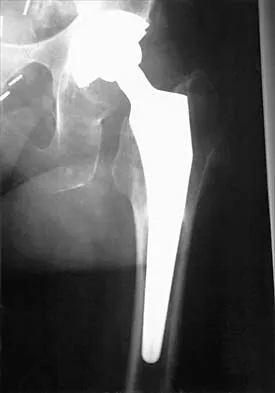
A 55-year-old man underwent cementless total hip arthroplasty for advanced painful osteoarthritis of the hip 2 years ago. The follow-up radiograph shown in Figure 30 shows


Explanation

The radiograph shows a well-osseointegrated tapered stem with a metaphyseal porous coating, spot welds in the porous region, and calcar rounding. Trochanteric stress shielding and distal cortical hypertrophy are also signs of ingrown stems but are seen more frequently in association with extensively porous-coated stems exhibiting diaphyseal ingrowth. There is no evidence of lucent lines or a pedestal, signs that suggest instability. Femoral stem subsidence can be determined only by a review of sequential radiographs. Engh CA, Massin P, Suthers KE: Roentgenographic assessment of the biologic fixation of porous-surfaced femoral components. Clin Orthop 1990;257:107-128.

Question 5

A 52-year-old woman has bicompartmental osteoarthritis following patellectomy. Treatment should consist of


Explanation

The patient has extensive degenerative changes in both the medial and lateral compartments within the knee; therefore, arthroscopic debridement or an osteotomy will not be helpful. A patellar arthroplasty will not address the medial and lateral compartments. Because the extensor mechanism provides a significant amount of anteroposterior stability, a posterior cruciate-substituting total knee arthroplasty is the treatment of choice for this patient. Martin SD, Haas SB, Insall JN: Primary total knee arthroplasty after patellectomy. J Bone Joint Surg Am 1995;77:1323-1330.

Question 6

In hybrid arthroplasty, the use of a polymethylmethacrylate (PMMA) precoated femoral component has been shown to result in


Explanation

Precoating of the femoral stem with PMMA results in increased bonding of the stem to the cement mantle. However, this has not been shown to result in superior survivorship compared with nonprecoated stems of similar design. In one series, the rate of revision of precoated stems was greater than that of nonprecoated cohorts. The wear and infection rates have not been shown to differ between precoated and nonprecoated stems. Sporer SM, Callaghan JJ, Olejniczak JP, Goetz DD, Johnston RC: The effects of surface roughness and polymethylmethacrylate precoating on the radiographic and clinical results of the Iowa hip prosthesis: A study of patients less than fifty years old. J Bone Joint Surg Am 1999;81:481-492.

Question 7

A 72-year-old woman has had progressively increasing pain in the right knee for the past 6 months. She denies any trauma and has no pain in any other joints, but she notes occasional swelling in the knee and a catching sensation. Figures 31a and 31b show the plain radiographs and Figure 31c shows the MRI scan. Treatment should consist of


Explanation

31b 31c The plain radiographs show a defect in the lateral femoral condyle and narrowing of the lateral joint space. The MRI scan shows a lesion consistent with osteonecrosis of the lateral femoral condyle. The treatment alternatives for this condition are an osteotomy or a total knee replacement, but a total knee replacement is the treatment of choice for a 72-year-old patient. Arthroscopy or an osteochondral bone graft will not address her symptoms. A valgus osteotomy will exacerbate the problem by overloading the lateral joint, which is already diseased. Lotke PA, Ecker ML: Osteonecrosis of the knee. J Bone Joint Surg Am 1988;70:470-473.

Question 8

Which of the following is considered the most appropriate indication for conversion of a hip fusion to total hip arthroplasty?


Explanation

Hip fusion provides successful long-term results (20 to 30 years). The usual mode of failure is symptomatic arthrosis of the lower back, contralateral hip, or the ipsilateral knee. Disabling low back pain is the best indication for conversion and responds well to the procedure. Degenerative changes in the other joints do not respond as well and frequently require replacement arthroplasty. Restoration of limb length is not predictable after conversion to hip replacement. Santore RF: Hip reconstruction: Nonarthroplasty, in Callaghan JJ, Dennis DA, Paprosky WG, Rosenberg AG (eds): Orthopaedic Knowledge Update: Hip and Knee Reconstruction. Rosemont, IL, American Academy of Orthopaedic Surgeons, 1995, pp 109-115.

Question 9

Which of the following methods is effective in correcting recurrent dislocation following total hip arthroplasty?


Explanation

Recurrent dislocation following total hip arthroplasty is a difficult problem to correct. Studies conducted by the Mayo Clinic show a failure rate of close to 40% with surgical treatment. A variety of methods have been successful, but no specific approach has been reported to be the most predictably successful. To select and institute the proper treatment option, the cause of the dislocation must be identified. Surgical options fall into several broad categories that include increasing soft-tissue tension (trochanteric advancement or longer neck lengths) or more stable articulation (larger diameter head component, bipolar prosthesis, or a constrained component). In a series of total hip arthroplasties done with a constrained cup, the loosening rates of the cup and the stem were reported to be 6% each, comparable to a reported series of complex revision total hip arthroplasties at a similar follow-up interval. Woo RY, Morrey BF: Dislocations after total hip arthroplasty. J Bone Joint Surg Am 1982;64:1295-1306.

Question 10

A 58-year-old woman who underwent a successful total hip replacement for degenerative arthritis 8 years ago reports groin pain for the past 6 months. A radiograph of the hip is shown in Figure 32. At revision, severe deficiency of the posterior column is noted. What reconstructive option would be most appropriate for the acetabulum?


Explanation

The radiograph shows medial migration of the cementless acetabular component, strongly suggesting acetabular discontinuity with a combined segmental and cavitary medial deficiency. The treatment of choice is a morcellized or structural graft, supported with a reconstructive cage bridging the pelvic discontinuity, and a cemented cup. Whiteside LA: Selection of acetabular component, in Steinberg ME, Garino JP (eds): Revision Total Hip Arthroplasty. Philadelphia, PA, Lippincott Williams and Wilkins, 1999, pp 209-220.

Question 11

A patient with a previously pain-free knee replacement now reports a sudden inability to ambulate. Radiographs of the knee are shown in Figures 33a and 33b. Management should consist of


Explanation

33b The radiographs show a patellar tendon rupture following a total knee replacement. This infrequent, but serious, complication is reported to occur in 0.17% to 1.4% of patients after total knee arthroplasty. Although the radiographs show concerning features such as incomplete tibial and femoral periprosthetic lucencies, it is most important for the surgeon to recognize extensor mechanism disruption. Insall J, Salvati E: Patella position in the normal knee joint. Radiology 1971;101:101-104. Lynch AF, Rorabeck CH, Bourne RB: Extensor mechanism complications following total knee arthroplasty. J Arthroplasty 1987;2:135-140.

Question 12

Which of the following factors will adversely affect bone ingrowth in a revision porous-coated stem?


Explanation

The optimal conditions for bony ingrowth include a pore size of 100 to 400 um, interface micromotion of 50 um or less, intimate contact between the bone and the implant, circumferential porous coating of the implant, and use of a biocompatible material. Stem designs with patch coatings have a poor record of bony ingrowth, especially in the revision setting. Failure of ingrowth in the previous stem would be the result of its own mechanical milieu and would not necessarily predict results for the new stem. Berry DJ, Harmsen WS, Ilstrup D, Lewallen DG, Cabanela ME: Survivorship of uncemented proximally porous-coated femoral components. Clin Orthop 1995;319:168-177. Cook SD, Thomas KA, Haddad RJ Jr: Histologic analysis of retrieved human porous-coated total joint components. Clin Orthop 1988;234:90-101.

Question 13

In the preoperative planning of revision acetabular reconstruction, the surgeon should identify significant posterior column deficiency by noting which of the following radiographic features?


Explanation

Proximal and medial migration of the femoral head usually indicates deficiencies of the dome or anterior column. Wear of the polyethylene may result in osteolysis and impingement, which are not indicative of any major bone deficiency. A significant osteolytic lesion in the ischium may represent a major posterior column deficiency that can create a technical challenge during the reconstruction. Paprosky WG, Magnus RE: Principles of bone grafting in revision total hip arthroplasty: Acetabular technique. Clin Orthop 1994;298:147-155.

Question 14

An 82-year-old woman reports right buttock pain after a car trip. Laboratory studies show an erythrocyte sedimentation rate of 30 mm/h and WBC of 4,600/mm3. Figure 34a shows a plain AP radiograph of the pelvis, and Figure 34b shows a delayed technetium Tc 99m bone scan. Management should consist of


Explanation

34b The radiograph shows bilateral cemented total hip arthroplasties. The acetabular components are loose bilaterally, but there has been no acute change. Therefore, it is unlikely that the acetabular loosening is contributing to the patient's pain. The bone scan is consistent with a sacral insufficiency fracture. This is best treated with bed rest and pain medication. Activity can be increased as the pain allows. Revision will not address the pain. Newhouse KE, el-Khoury GY, Buckwalter JA: Occult sacral fractures in osteopenic patients. J Bone Joint Surg Am 1992;74:1472-1477.

Question 15

Figures 35a and 35b show the radiographs of a patient who underwent debridement of a chronically infected, fully constrained knee prosthesis and now reports pain and instability despite bracing. History reveals that the patient has had no drainage since undergoing the last debridement 6 months ago. A C-reactive protein level and aspiration are negative for infection. Treatment should now consist of


Explanation

35b The radiographs show a significant loss of the proximal anterior tibial cortex, consistent with an extensively damaged or deficient extensor mechanism. Such a deficit precludes insertion of another knee arthroplasty. Arthrodesis is the treatment of choice for this patient and is indicated for loss of the extensor mechanism and knee instability. A recent report on arthrodesis following removal of an infected prosthesis showed a union rate of 91% using a short intramedullary nail. Insertion of an antibiotic-impregnated PMMA spacer is not indicated because the rationale for using a spacer is to maintain a space for reinsertion of another prosthesis. Reconstruction of the extensor mechanism would not address the loss of the joint. Amputation is the final treatment option if the arthrodesis fails. Rand JA: Alternatives to reimplantation for salvage of the total knee arthroplasty complicated by infection. J Bone Joint Surg Am 1993;75:282-289. Lai KA, Shen WJ, Yang CY: Arthrodesis with a short Huckstep nail as a salvage procedure for failed total knee arthroplasty. J Bone Joint Surg Am 1998;80:380-388.

Question 16

Which of the following is considered an advantage of metal femoral heads compared with ceramic heads?


Explanation

Ceramic-on-ceramic bearing surfaces have superior tribological properties and show lower linear wear than metal-on-metal implants. However, because of their lower strength and vulnerability to fracture, design considerations constrain the neck-length options available to ensure optimal taper fit.

Question 17

What is the most common result if the acetabulum is rotated too far anteriorly during a periacetabular osteotomy?


Explanation

In patients with hip dysplasia who undergo a periacetabular osteotomy, the authors note that the freed acetabular segment can be overcorrected for the deformity. If it is placed too anteriorly, then hip flexion is limited. Posterior dislocation is a rare complication. The other complications should not occur as a result of this procedure. Hussell JG, Rodriguez JA, Ganz R: Technical complications of the Bernese periacetabular osteotomy. Clin Orthop 1999;363:81-92.

Question 18

Which of the following radiographic views best assesses anterior coverage of the dysplastic hip?


Explanation

Anterior coverage of the hip may be best estimated by the anterior center edge angle of Lequesne and de Seze (analogous to Wiberg's angle), which is measured on the well-defined faux profil view. Evaluation with CT scans also has been described. Klaue K, Wallin A, Ganz R: CT evaluation of coverage and congruency of the hip prior to osteotomy. Clin Orthop 1988;232:15-25.

Question 19

Figure 36a shows the current radiograph of a 65-year-old woman who slipped and fell. History reveals that prior to the fall she was actively functioning without pain. Figure 36b shows a radiograph obtained 1 year ago. Based on the fracture pattern, the failure is most likely related to


Explanation

36b The radiograph shows a fracture distal to the prosthesis in a stable, apparently well-fixed prosthetic stem. The well-fixed prosthesis-bone composite is stiff, creating a modulus mismatch between the proximal and distal femur. Therefore, the risk of fracture, particularly in osteoporotic bone, is increased at this level. Revision of the stem to a longer construct is unnecessary, and standard plate and screw fixation has been shown to yield union rates of greater than 90%. Nonsurgical treatment of fractures distal to the tip of the prosthesis results in high nonunion rates, reported to be from 25% to 42%. Johansson JE, McBroom R, Barrington TW, Hunter GA: Fracture of the ipsilateral femur in patients with total hip replacement. J Bone Joint Surg Am 1981;63:1435-1442. Bethea JS III, DeAndrade JR, Fleming LL, Lindenbaum SD, Welch RB: Proximal femoral fractures following total hip arthroplasty. Clin Orthop 1982;170:95-106.

Question 20

A 70-year-old man has worn through his metal-backed patellar component and sustained damage to the femoral component. Following removal of the components and debridement of the metal-stained synovium, the surgeon finds that the thickness of the remaining patella is 10 mm. Treatment should now include


Explanation

Revision of a failed patellar component can be difficult because of bone loss and damage to the extensor mechanism. Several authors have advised against reinsertion of a patellar component if the residual patellar thickness is 10 mm or less. Leaving an unresurfaced bony remnant in place at the time of revision or reimplantation surgery has been shown to be a reasonable option; however, the results are of a lower quality when compared with revision surgery where the patellar component can be retained or revised. The other treatment options have not been shown to be effective approaches to this problem. Rand JA: The patellofemoral joint in total knee arthroplasty. J Bone Joint Surg Am 1994;76:612-620. Pagnano MW, Scuderi GR, Insall JN: Patellar component resection in revision and reimplantation total knee arthroplasty. Clin Orthop 1998;356:134-138.

Question 21

A 65-year-old man has a painful and often audible crepitus after undergoing a total knee arthroplasty 8 months ago. His symptoms are reproduced with active extension of about 30 degrees. Examination reveals no effusion or localized tenderness, a stable knee, and a range of motion of 5 degrees to 120 degrees. Radiographs are shown in Figures 37a and 37b. Management should consist of


Explanation

37b This is a typical presentation of the patellar clunk syndrome. The syndrome usually follows implantation of a posterior stabilized prosthesis. It is thought to be the result of femoral component design and altered extensor mechanics. The condition usually resolves with arthroscopic debridement of the suprapatellar fibrous nodule. Arthrotomy or revision is seldom warranted. Beight JL, Yao B, Hozack WJ, Hearn SL, Booth RE Jr: The patellar "clunk" syndrome after posterior stabilized total knee arthroplasty. Clin Orthop 1994;299:139-142.

Question 22

What clinical parameter will most likely decrease the need for blood transfusion after total joint arthroplasty?


Explanation

Bilateral joint replacement, chronic disease, and preoperative autologous donation all increase the risk of needing blood. Young patients and a high hemoglobin level (greater than 15 g/dL) are considered clinical parameters that decrease the risk for requiring allogenic blood. Bierbaum BE, Callaghan JJ, Galante JO, Rubash HE, Tooms RE, Welch RB: An analysis of blood management in patients having a total hip or knee arthroplasty. J Bone Joint Surg Am 1999;81:2-10.

Question 23

Figure 38 shows the radiograph of a 40-year-old woman who reports severe groin pain and lack of motion of the right hip. History reveals that the patient underwent a femoral osteotomy for hip dysplasia approximately 30 years ago. Treatment should include


Explanation

Although the patient is young, a total hip arthroplasty will provide pain relief and improve her range of motion. The arthritis is too advanced for the patient to benefit from an osteotomy. In addition, periacetabular osteotomy and hip arthrodesis do not improve range of motion of the hip. It has not been established that patients with severe osteoarthritis will benefit from arthroscopic debridement of the hip.

Question 24

What is the primary concern for arthrodesis of a failed infected total knee arthroplasty using internal fixation?


Explanation

Arthrodesis of the failed infected total knee arthroplasty may be accomplished by external fixation, intramedullary rod fixation, and dual plates and screws. External fixation runs the risk of pin tract infection, although after its removal, there are no metal surfaces left in place. Intramedullary rods have been used successfully in the treatment of infected total knees, although they also leave metal within the region of the infection. The dual plate technique of knee fusion is useful in patients with rheumatoid arthritis who require fusion in the absence of infection because it provides good initial stability and avoids the use of external pins. However, in the face of infection, the large surface area of the screws and plates may serve as a site for bacteria to hide within a glycocalyx and make eradication of the infection almost impossible.

Question 25

Oxidation of polyethylene after sterilization occurs most rapidly when the implant undergoes


Explanation

The use of gamma radiation to sterilize polyethylene will result in the formation of free radicals in the material that increase the susceptibility of the material to oxidation and wear. The packaging can also have an impact. If the polyethylene is packaged in air, the oxygen in the packaging can significantly oxidize the material on the shelf prior to clinical use. Gas plasma and ethylene oxide sterilization do not appear to increase oxidation of polyethylene. Simon SR (ed): Orthopaedic Basic Science. Rosemont, IL, American Academy of Orthopaedic Surgeons, 1994, pp 449-486. Wright TM: Ultra-high molecular weight polyethylene, in Morrey BF (ed): Joint Replacement Arthroplasty. New York, NY, Churchill Livingstone, 1991, pp 37-46.

Question 26

Figure 14 shows the radiograph of an 80-year-old male presenting with thigh pain. Radiographs demonstrate a periprosthetic fracture around a loose femoral stem with poor proximal bone stock. What is the most appropriate management?


Explanation

This describes a Vancouver B3 periprosthetic fracture. The standard of care is revision to a distally fixing, fluted, tapered stem to bypass the compromised proximal bone and achieve distal stability.

Question 27

A 35-year-old active male is undergoing total hip arthroplasty. A ceramic-on-ceramic bearing is chosen. Which of the following is a known specific complication associated with this bearing surface compared to metal-on-polyethylene?


Explanation

Ceramic-on-ceramic bearings offer extremely low wear rates but are associated with squeaking in a small percentage of patients, as well as a risk of catastrophic component fracture.

Question 28

Figure 4 displays the MRI of a 40-year-old patient with groin pain and normal plain radiographs. What is the most appropriate initial surgical intervention for early-stage pre-collapse avascular necrosis of the femoral head?


Explanation

Core decompression is indicated for symptomatic, pre-collapse (Ficat Stage I or II) osteonecrosis of the femoral head. This procedure aims to reduce intraosseous pressure and promote revascularization.

Question 29

A 28-year-old hockey player complains of insidious onset anterior groin pain exacerbated by hip flexion and internal rotation. Figure 11 shows a lateral radiograph demonstrating an abnormal alpha angle. What is the most likely diagnosis?


Explanation

An increased alpha angle (typically > 50-55 degrees) on a lateral hip radiograph is indicative of a lack of femoral head-neck offset. This is the radiological hallmark of Cam-type femoroacetabular impingement.

Question 30

A 45-year-old female presents with secondary osteoarthritis due to developmental dysplasia of the hip (DDH). Preoperative radiographs reveal a subluxation of 60% of the femoral head relative to the true acetabulum. How is this classified according to the Crowe classification?


Explanation

The Crowe classification grades DDH by proximal subluxation: I (<50%), II (50-74%), III (75-100%), and IV (>100%). A 60% subluxation falls into the Crowe II category.

Question 31

A 32-year-old male falls from a height. Radiographs and CT scan (Figure 2) show an acetabular fracture involving both the anterior and posterior columns. The spur sign is present on the obturator oblique radiograph. Which fracture pattern is this?


Explanation

The spur sign is pathognomonic for an associated both-column fracture of the acetabulum. It represents the intact ilium attached to the axial skeleton protruding posteriorly to the displaced articular segment.

Question 32

During a direct anterior approach for total hip arthroplasty, which nerve is at greatest risk of iatrogenic injury during the superficial dissection between the sartorius and tensor fasciae latae?


Explanation

The lateral femoral cutaneous nerve runs superficially near the internervous plane of the direct anterior approach. It is at significant risk of neuropraxia or transection during this exposure.

Question 33

According to Lewinnek, what is the target safe zone for acetabular component positioning to minimize the risk of dislocation in total hip arthroplasty?


Explanation

Lewinnek defined the traditional safe zone for acetabular cup placement as 40 degrees +/- 10 degrees of abduction (inclination) and 15 degrees +/- 10 degrees of anteversion.

Question 34

A 65-year-old man presents with groin pain 5 years after undergoing a primary total hip arthroplasty with a metal-on-polyethylene bearing. Serum metal ion testing reveals an isolated elevation of cobalt levels with normal chromium levels. Metal artifact reduction sequence (MARS) MRI shows a fluid collection around the hip. What is the most likely diagnosis?


Explanation

In a metal-on-polyethylene THA, isolated elevated cobalt with normal chromium strongly suggests mechanically assisted crevice corrosion (trunnionosis) at the head-neck taper. Bearing surface wear would not produce significant cobalt ions in a metal-on-polyethylene construct.

Question 35

A 72-year-old woman is evaluated for a primary total hip arthroplasty. She has a history of a long spinal fusion from T10 to the pelvis for adult spinal deformity. How does this spinopelvic stiffness affect her acetabular component positioning compared to a patient with normal spinal mobility?


Explanation

Patients with lumbopelvic fusions cannot increase posterior pelvic tilt when sitting, which functionally decreases their acetabular anteversion and increases the risk of posterior dislocation. To accommodate this stiffness and prevent dislocation during seated activities, the cup should be placed in relatively more anteversion.

Question 36


A 78-year-old woman sustains a periprosthetic femur fracture around a cementless tapered wedge stem. Radiographs show a spiral fracture around the tip of the stem with 2 cm of implant subsidence, but excellent bone stock remains in the proximal femur. According to the Vancouver classification, what is the most appropriate management?


Explanation

This is a Vancouver B2 fracture, characterized by a loose stem but adequate proximal bone stock. The standard of care is revision to a cementless, extensively porous-coated or modular fluted tapered stem that bypasses the fracture by at least two cortical diameters.

Question 37

A 68-year-old patient with a prior L3-pelvis spinal fusion for adult spinal deformity undergoes primary total hip arthroplasty (THA). Because of spinopelvic stiffness, the patient's pelvis fails to appropriately retrovert when moving from a standing to a sitting position. If standard "safe zone" cup positioning is used, what is the most likely complication during sitting?


Explanation

In a normal spine, sitting causes pelvic retroversion, which increases functional acetabular anteversion to accommodate hip flexion. In a stiff spine, failure to retrovert causes relative cup retroversion, leading to anterior impingement and subsequent posterior dislocation.

Question 38

A 74-year-old female sustains a fall and presents with thigh pain. Radiographs demonstrate a fracture around a cemented femoral stem. The stem is radiographically loose, but the proximal femur has good bone stock with an intact calcar. According to the Vancouver classification, what is the most appropriate surgical management?


Explanation

This is a Vancouver B2 periprosthetic fracture (fracture around a loose stem with adequate proximal bone stock). The standard of care is revision to a cementless diaphyseal-engaging stem (extensively porous-coated or fluted tapered) bypassing the fracture.

Question 39

A 55-year-old male with a ceramic-on-ceramic total hip arthroplasty complains of a new-onset, audible squeaking from his hip when walking. Radiographs show the acetabular component is placed in 60 degrees of inclination. Which of the following is the most likely biomechanical cause of this symptom?


Explanation

Squeaking in ceramic-on-ceramic THA is heavily associated with component malposition, particularly excessive cup inclination or retroversion. This leads to edge loading, which disrupts the fluid film lubrication and causes stripe wear on the ceramic head.

Question 40

A 28-year-old male athlete presents with chronic groin pain exacerbated by hip flexion and internal rotation. A Dunn view radiograph shows an alpha angle of 65 degrees. This radiographic finding is most indicative of which of the following pathomorphologies?


Explanation

An alpha angle greater than 50-55 degrees indicates a decreased femoral head-neck offset, characteristic of Cam-type femoroacetabular impingement. This bony prominence impinges on the anterosuperior acetabular rim during hip flexion.

Question 41

Aseptic loosening due to wear-particle induced osteolysis remains a long-term complication of total hip arthroplasty. At the cellular level, which of the following is the primary direct mediator of osteoclast activation and subsequent bone resorption in this cascade?


Explanation

While macrophages release IL-1, IL-6, and TNF-alpha in response to wear particles, RANKL is the final common and primary direct mediator that binds to RANK on osteoclast precursors, stimulating their differentiation and activation.

Question 42

When performing a direct anterior approach (DAA) for total hip arthroplasty, the surgeon utilizes an internervous and intermuscular plane. Which of the following correctly describes the superficial surgical interval for this approach?


Explanation

The direct anterior approach (Smith-Petersen) utilizes the superficial interval between the tensor fasciae latae (superior gluteal nerve) and the sartorius (femoral nerve). The deep interval is between the rectus femoris and gluteus medius.

Question 43

A 62-year-old female with a metal-on-polyethylene total hip arthroplasty presents with a large, painful cystic mass in her groin. Laboratory testing reveals markedly elevated serum cobalt levels and normal serum chromium levels. Radiographs show a well-fixed cup and stem. What is the most likely diagnosis?


Explanation

Elevated cobalt with normal chromium in a metal-on-polyethylene THA is classic for trunnionosis (mechanically assisted crevice corrosion at the modular head-neck junction). This can lead to an adverse local tissue reaction (ALTR) and pseudotumor formation.

Question 44

The sciatic nerve is the most commonly injured nerve during total hip arthroplasty, particularly during lengthening for developmental dysplasia. Which portion of the nerve is most susceptible to stretch injury, and why?


Explanation

The common peroneal division of the sciatic nerve is most vulnerable to stretch injury because it has less protective epineurium and is anatomically tethered distally at the fibular head and proximally at the sciatic notch.

Question 45

A 32-year-old patient on chronic corticosteroid therapy presents with deep groin pain. MRI reveals a focal, well-circumscribed anterosuperior necrotic lesion in the femoral head. There is no evidence of subchondral collapse or joint space narrowing on radiographs or MRI. Which of the following is the most appropriate joint-preserving surgical intervention?


Explanation

Core decompression is indicated for early-stage osteonecrosis (AVN) of the femoral head prior to subchondral collapse (Ficat Stage I or II). Once collapse or secondary osteoarthritis occurs, total hip arthroplasty is generally required.

Question 46

During a revision total hip arthroplasty, the surgeon encounters a massive acetabular defect. Preoperative radiographs demonstrate superior migration of the hip center greater than 3 cm, severe ischial lysis, and an intact Kohler's line. According to the Paprosky classification, what type of defect is this, and what is the preferred reconstructive option?


Explanation

This describes a Paprosky Type IIIA defect (superior migration >3 cm, intact Kohler's, severe ischial lysis indicating 'up and out' migration). The standard reconstruction is a highly porous multi-hole hemispherical cup, often requiring a porous metal augment for superior structural support.

Question 47

Which of the following is considered the most critical prerequisite for a successful periacetabular osteotomy (Ganz osteotomy) in an adult patient with symptomatic developmental dysplasia of the hip?


Explanation

A periacetabular osteotomy (PAO) relies on reorienting the acetabulum. Preoperative joint congruency in the anticipated corrected position (assessed via abduction/internal rotation views) is critical. Advanced arthritis (Tonnis 3) or lack of congruency are contraindications.

Question 48

According to the latest guidelines from the American Academy of Orthopaedic Surgeons (AAOS) and the American Association of Hip and Knee Surgeons (AAHKS), what is the recommended pharmacological strategy for routine venous thromboembolism (VTE) prophylaxis in a standard-risk patient undergoing primary THA?


Explanation

Recent AAOS/AAHKS guidelines strongly support the use of aspirin for VTE prophylaxis in standard-risk patients undergoing primary total joint arthroplasty, owing to its efficacy and lower risk of major bleeding compared to potent anticoagulants.

Question 49

A 66-year-old female presents with chronic lateral hip pain and a severe Trendelenburg lurch. Corticosteroid injections have provided no relief. Radiographs show no evidence of osteoarthritis. MRI reveals a full-thickness tear of the gluteus medius tendon with minimal fatty infiltration of the muscle belly. What is the most appropriate management?


Explanation

In patients with a full-thickness abductor tendon tear without advanced muscle atrophy/fatty infiltration (Goutallier stage 1-2) and no osteoarthritis, surgical repair (open or endoscopic) is indicated and provides significant functional improvement.

Question 50

Metal-on-metal hip resurfacing arthroplasty has specific indications and contraindications. Which of the following patient profiles is associated with the highest risk of early failure and adverse local tissue reactions (ALTR) following this procedure?


Explanation

Female gender and small femoral head components (< 48 mm) are major risk factors for failure in metal-on-metal hip resurfacing. Small heads reduce the clearance and fluid film lubrication, increasing wear and ALTR risk.

Question 51

In total hip arthroplasty, the 'jump distance' is the distance the femoral head must translate laterally to dislocate from the acetabular component. Which of the following component modifications will most effectively increase the jump distance without altering leg length?


Explanation

Jump distance is mathematically defined as the radius of the femoral head. Therefore, increasing the femoral head diameter directly increases the jump distance, significantly reducing the risk of dislocation.

Question 52

Dual mobility components are increasingly utilized in revision THA to prevent instability. What is the primary biomechanical mechanism by which these components reduce the risk of dislocation?


Explanation

Dual mobility implants consist of a standard femoral head articulating within a large mobile polyethylene liner, which then articulates within a metal shell. This increases the effective head size (the large poly liner) and maximizes the head-to-neck ratio, drastically increasing the jump distance and range of motion before impingement.

Question 53

According to the 2018 International Consensus Meeting (ICM) criteria, which of the following findings is considered a definitive 'major criterion' for the diagnosis of periprosthetic joint infection (PJI)?


Explanation

The 2018 ICM criteria define two major criteria that definitively diagnose PJI: 1) A sinus tract communicating with the joint space, and 2) Two positive periprosthetic tissue/fluid cultures isolating the same organism.

Question 54

In the biomechanical analysis of the hip joint during single-leg stance, if the abductor lever arm is shortened (e.g., due to severe medialization of the femoral shaft or trochanteric nonunion), how does this affect the joint reaction force?


Explanation

The joint reaction force is heavily influenced by the abductor muscle force. If the abductor lever arm is shortened, the abductors must generate significantly more force to maintain a level pelvis against the body weight moment, thereby greatly increasing the joint reaction force.

Question 55

A 58-year-old male undergoes a direct anterior approach THA. Postoperatively, he complains of burning pain and numbness over the anterolateral aspect of his thigh, but his quadriceps motor function is completely intact. Which nerve was most likely injured during the surgical exposure?


Explanation

The lateral femoral cutaneous nerve (LFCN) is a pure sensory nerve that crosses over the sartorius muscle and is at high risk of stretch or transection during the direct anterior approach to the hip, leading to anterolateral thigh numbness (meralgia paresthetica).

Question 56

Patients with sickle cell disease who undergo total hip arthroplasty for avascular necrosis present unique perioperative challenges. Compared to patients undergoing THA for primary osteoarthritis, sickle cell patients have a significantly higher risk of which of the following complications?


Explanation

Sickle cell disease patients are at a remarkably high risk for perioperative complications following THA, most notably vaso-occlusive crises (sickle cell crises) triggered by surgical stress/hypoxia, as well as a markedly increased risk of periprosthetic joint infection.

Question 57

A 72-year-old female presents with severe groin pain 10 years after a revision total hip arthroplasty.

Radiographs demonstrate complete separation of the superior and inferior hemi-pelvis through the acetabulum. Which of the following is the most appropriate management for a chronic, unhealed pelvic discontinuity with adequate remaining bone stock?


Explanation

Pelvic discontinuity requires spanning the defect and achieving stable fixation in both the ilium and ischium. A cup-cage construct, custom triflange, or distraction with highly porous components provides necessary mechanical stability to allow biological fixation or healing.

Question 58

A 50-year-old male undergoes a primary total hip arthroplasty using a ceramic-on-ceramic bearing surface. Two years postoperatively, he complains of an audible squeaking sound during gait, though he denies any pain. Which of the following factors is most strongly associated with this phenomenon?


Explanation

Squeaking in ceramic-on-ceramic THA is frequently linked to edge loading caused by component malposition, such as cup retroversion or excessive inclination. Other factors include impingement and third-body wear, but cup positioning is the most consistently identified risk factor.

Question 59

A 28-year-old professional hockey player presents with gradual onset of anterior groin pain exacerbated by hip flexion and internal rotation.

A cross-table lateral radiograph reveals a prominent bump at the anterolateral head-neck junction. Which of the following intra-articular damage patterns is most characteristic of this specific morphology?


Explanation

Cam impingement (characterized by a prominent bump at the head-neck junction) causes significant shear forces on the anterosuperior acetabular rim during flexion and internal rotation. This classically results in acetabular cartilage delamination and separation of the labrum from the adjacent articular cartilage.

Question 60

A 12-year-old obese male presents with a slipped capital femoral epiphysis (SCFE) of the left hip. Radiographs show a slip angle of 40 degrees. Under which of the following circumstances is prophylactic in situ pinning of the contralateral, asymptomatic right hip most strongly indicated?


Explanation

Prophylactic pinning of the contralateral hip in SCFE is highly recommended in patients with an underlying endocrine disorder (e.g., hypothyroidism, renal osteodystrophy) due to the exceedingly high risk of bilateral involvement. A modified Oxford bone age score < 16 is also considered a strong predictor for bilateral disease.

Question 61

Increasing femoral offset during total hip arthroplasty without changing the vertical leg length will have which of the following biomechanical effects?


Explanation

Increasing femoral offset increases the abductor lever arm, which favorably decreases both the required abductor force and the overall joint reaction force. However, increasing the horizontal distance from the center of the head to the stem shaft also increases the bending moment (stress) on the femoral component.

Question 62

A 24-year-old female with residual dysplasia of the hip presents with groin pain.

Radiographs demonstrate a closed triradiate cartilage, a center-edge (CE) angle of 12 degrees, and an anteriorly deficient acetabulum. She is scheduled for a Bernese periacetabular osteotomy (PAO). Which of the following is the primary advantage of the PAO over a standard Salter osteotomy in this patient?


Explanation

The Bernese periacetabular osteotomy (PAO) is indicated for skeletally mature hips and preserves the posterior column of the hemipelvis. This structural preservation allows for immediate postoperative pelvic stability and permits extensive, multi-planar correction of the acetabulum.

Question 63

A 65-year-old male with a metal-on-polyethylene total hip arthroplasty placed 8 years ago presents with new-onset groin pain and a palpable anterior thigh mass. Hip aspiration yields cloudy fluid with 2,500 WBC/uL and a negative Gram stain. Serum cobalt is markedly elevated, while serum chromium is normal. Which of the following is the most likely cause of this patient's symptoms?


Explanation

Mechanically assisted crevice corrosion (trunnionosis) at the modular head-neck junction results in elevated serum cobalt levels (often out of proportion to chromium) and an adverse local tissue reaction (pseudotumor). The negative Gram stain and modest white blood cell count differentiate this ALTR from an acute infection.

Question 64

A 78-year-old female sustains a highly unstable intertrochanteric femur fracture with subtrochanteric extension and loss of the posteromedial cortex. She is treated with a cephalomedullary nail. Which of the following technical factors is most critical in minimizing the risk of lag screw cut-out?


Explanation

The tip-apex distance (TAD), described by Baumgaertner, is the most highly predictive radiographic factor for lag screw cut-out in the fixation of intertrochanteric fractures. A TAD of less than 25 mm ensures central and deep placement of the lag screw within the femoral head.

Question 65

A 55-year-old male with a history of multiple revision total hip arthroplasties presents with massive proximal femoral bone loss (Paprosky Type IV).

The decision is made to perform a proximal femoral replacement (megaprosthesis). Which of the following is the most common major complication associated with this procedure for non-oncologic indications?


Explanation

Instability and dislocation are the most common complications following proximal femoral replacement for non-oncologic indications, with rates often exceeding 15-20%. This complication is primarily driven by the extensive loss of soft tissue attachments, particularly the abductor mechanism.

Question 66

During an anterior approach (Smith-Petersen) to the hip for total hip arthroplasty, the surgeon develops the internervous plane between the sartorius and the tensor fasciae latae. Which of the following structures is at greatest risk of injury during the superficial dissection of this approach?


Explanation

The lateral femoral cutaneous nerve crosses the operative field within the superficial fascia during the anterior (Smith-Petersen) approach. Careful blunt dissection and medial retraction are required to prevent neuropraxia or transection, which can cause anterolateral thigh numbness.

Question 67

A 38-year-old asthmatic patient on chronic oral corticosteroids presents with 3 months of progressive groin pain.

MRI reveals a well-demarcated area of osteonecrosis in the anterosuperior femoral head involving 20% of the weight-bearing surface. Plain radiographs show no evidence of subchondral collapse or crescent sign. What is the most appropriate joint-preserving surgical intervention?


Explanation

In early-stage (Ficat Stage I or II) osteonecrosis of the femoral head with a small to medium-sized lesion and no subchondral collapse, core decompression is the preferred initial surgical treatment. The goal is to reduce intraosseous pressure, alleviate pain, and potentially promote revascularization.

Question 68

A 6-year-old boy presents with a painless limp and limited abduction and internal rotation of the right hip. Radiographs show sclerosis and fragmentation of the capital femoral epiphysis. According to the Herring lateral pillar classification, which of the following radiographic findings determines a Type B categorization?


Explanation

In the Herring lateral pillar classification for Legg-Calvé-Perthes disease, Type B indicates that the lateral pillar maintains more than 50% of its original height. Type C indicates less than 50% height is maintained, which carries a worse prognosis and higher risk of aspherical head healing.

Question 69

A 68-year-old woman presents with recurrent posterior dislocations following a primary total hip arthroplasty. Radiographs demonstrate a well-fixed femoral stem with appropriate anteversion, but the acetabular component is retroverted.

Which of the following is the most appropriate surgical intervention?


Explanation

Posterior instability resulting from acetabular retroversion is a component malpositioning issue. Revision of the malpositioned acetabular cup to the correct anteversion is required rather than simply increasing head size or using a constrained liner.

Question 70

A 32-year-old man with systemic lupus erythematosus on chronic corticosteroids presents with severe bilateral groin pain. MRI reveals pre-collapse avascular necrosis of both femoral heads (Ficat stage II) with edema. What is the most appropriate initial surgical management?


Explanation

Core decompression is indicated for early-stage (pre-collapse) osteonecrosis of the femoral head. It relieves intraosseous pressure, decreases pain, and may promote revascularization, which is ideal in young patients to delay arthroplasty.

Question 71

A 55-year-old man presents with groin pain and a palpable anterior thigh mass 6 years after a metal-on-metal total hip arthroplasty. Serum cobalt and chromium levels are significantly elevated. MARS MRI demonstrates a large cystic pseudotumor. What is the most appropriate next step in management?


Explanation

Symptomatic adverse local tissue reaction (ALTR) with elevated metal ions and a pseudotumor in a metal-on-metal THA requires revision. The bearing surfaces must be exchanged to non-metal alternatives, typically combined with excision of the necrotic tissue.

Question 72

A 72-year-old woman presents with persistent hip pain 2 years following a total hip arthroplasty. Aspiration of the hip yields a synovial white blood cell count of 4,500 cells/µL with 85% polymorphonuclear leukocytes (PMNs). What is the most appropriate definitive management?


Explanation

A synovial WBC >3,000 cells/µL and >80% PMNs is highly diagnostic of chronic periprosthetic joint infection in a THA over 90 days out. Two-stage exchange arthroplasty remains the gold standard treatment in North America.

Question 73

A 24-year-old professional hockey player presents with insidious onset groin pain exacerbated by hip flexion and internal rotation. Radiographs demonstrate an alpha angle of 68 degrees on the Dunn lateral view.

Which pathophysiologic mechanism is most responsible for his symptoms?


Explanation

An elevated alpha angle indicates Cam-type FAI, characterized by an aspherical femoral head. This mismatch causes shear stress at the anterosuperior chondrolabral junction during flexion and internal rotation, frequently leading to cartilage delamination.

Question 74

A 40-year-old man sustains a transverse acetabular fracture with significant posterior wall comminution. Which of the following surgical approaches provides the optimal visualization for direct reduction and fixation of the primary displaced components in this fracture pattern?


Explanation

The Kocher-Langenbeck approach is the standard workhorse approach for posterior wall and posterior column fractures. It is also indicated for transverse fractures where the main displacement and comminution involve the posterior wall.

Question 75

Which of the following patients has an absolute contraindication for a metal-on-metal hip resurfacing arthroplasty?


Explanation

Advanced renal disease is an absolute contraindication for MoM hip resurfacing due to the inability of the kidneys to properly clear cobalt and chromium ions. Women of childbearing age and patients with severe osteoporosis are also contraindicated.

Question 76

A 78-year-old woman sustains a fall 8 years after a cemented THA. Radiographs show a fracture occurring 5 cm distal to the tip of the femoral stem.

The stem remains well-fixed. According to the Vancouver classification, what is the proper classification and management?


Explanation

A Vancouver Type C fracture occurs entirely distal to the tip of the prosthesis. The standard treatment is open reduction and internal fixation using plates and screws, ensuring the fixation overlaps the prosthesis tip.

Question 77

A 25-year-old woman presents with symptomatic hip dysplasia. Her center-edge angle is 12 degrees. The triradiate cartilage is closed, and there is no evidence of advanced osteoarthritis. Which of the following procedures is most appropriate?


Explanation

The Bernese PAO is the procedure of choice for symptomatic acetabular dysplasia in young adults with closed triradiate cartilage. It allows for powerful multiplanar correction while preserving the integrity of the posterior column.

Question 78

A 65-year-old man presents with groin pain 5 years after an uncomplicated metal-on-polyethylene total hip arthroplasty using a large-diameter cobalt-chromium femoral head on a titanium stem. Laboratory tests show significantly elevated serum cobalt levels with normal serum chromium levels. What is the most likely diagnosis?


Explanation

Trunnionosis occurs at the modular head-neck junction due to mechanically assisted crevice corrosion. It is classically characterized by elevated serum cobalt levels disproportionate to chromium in metal-on-polyethylene bearings, leading to adverse local tissue reactions.

Question 79

When templating for a total hip arthroplasty in a patient with Crowe IV developmental dysplasia of the hip (DDH), where is the optimal location for the placement of the acetabular component to restore the anatomic center of rotation?


Explanation

In Crowe IV DDH, the hip is completely dislocated superiorly. The true acetabulum is located at the level of the radiographic teardrop, which remains the target for cup placement to restore the anatomic center of rotation and optimize abductor mechanics.

Question 80

During hip arthroscopy, excessive traction or prolonged operative time in the supine position most commonly causes neurapraxia to which of the following nerves?


Explanation

Pudendal nerve neurapraxia is a well-documented complication of hip arthroscopy due to compression against the perineal post. Minimizing traction time and using a well-padded post or post-less distraction system reduces this risk.

Question 81

A 58-year-old woman with a metal-on-metal total hip arthroplasty presents with a growing, painless groin mass and progressive limping. MRI with MARS reveals a large cystic mass communicating with the joint. What is the most appropriate definitive management?


Explanation

The patient has a symptomatic pseudotumor (ALVAL) secondary to metal wear debris from a metal-on-metal articulation. Definitive treatment requires revision of the bearing surfaces to non-metal-on-metal (e.g., metal-on-polyethylene) and thorough excision of the necrotic tissue.

Question 82

A 72-year-old woman presents with severe groin pain 10 years after THA. Radiographs show a medialized acetabular component with a fracture line through the Kohler line and inferior translation of the lower half of the hemipelvis. What is the most appropriate classification and treatment concept for this defect?


Explanation

Pelvic discontinuity occurs when the superior and inferior halves of the hemipelvis are separated, marked by a transverse fracture line and medial/inferior translation. Management requires rigid fixation spanning the defect, often utilizing a cup-cage construct, custom triflange, or distraction using a highly porous jumbo cup.

Question 83

Which of the following best describes the true internervous plane utilized during the direct anterior approach to the hip?


Explanation

The direct anterior (Smith-Petersen) approach uses a superficial internervous plane between the sartorius (supplied by the femoral nerve) and the tensor fasciae latae (supplied by the superior gluteal nerve). The deep plane is between the rectus femoris and gluteus medius.

Question 84

A patient experiences recurrent posterior dislocations of their total hip arthroplasty, especially when rising from a low chair. Radiographic evaluation shows the acetabular component is placed in 25 degrees of anteversion and 40 degrees of inclination. The femoral stem is retroverted by 10 degrees. What is the primary cause of instability?


Explanation

Combined anteversion (acetabular plus femoral) should fall safely between 25 and 45 degrees. A retroverted femoral stem (-10 degrees) combined with 25 degrees of cup anteversion results in insufficient overall anteversion, predisposing the hip to posterior dislocation during flexion.

Question 85

Which of the following patients with osteonecrosis of the femoral head is the most appropriate candidate for core decompression?


Explanation

Core decompression is most successful in early, pre-collapse osteonecrosis (Ficat Stage I or II) with small to medium-sized lesions. Once subchondral fracture (crescent sign, Stage III) or overt collapse (Stage IV) occurs, the failure rate is high, and THA is typically indicated.

Question 86

A 70-year-old man with a dual-mobility total hip arthroplasty presents with acute hip pain and a grinding sensation after a fall. Radiographs show an eccentric position of the small femoral head within the large acetabular shell. What is the most likely diagnosis?


Explanation

Intra-prosthetic dislocation (IPD) is a unique complication of dual-mobility bearings where the small inner femoral head dissociates from the large mobile polyethylene liner. Radiographically, it presents as an asymmetric, eccentric position of the femoral head within the outer shell.

Question 87


An anteroposterior pelvis radiograph of a 28-year-old male with groin pain demonstrates a crossover sign and a prominent ischial spine sign. Which of the following pathologies do these findings most strongly suggest?


Explanation

The crossover sign (anterior wall crossing lateral to the posterior wall) and the prominent ischial spine sign are classic radiographic indicators of true acetabular retroversion. This represents focal overcoverage leading to Pincer-type femoroacetabular impingement.

Question 88


A 75-year-old sustains a fall 3 years after a cementless THA. Radiographs show a periprosthetic femur fracture around the distal aspect of the stem. The stem is radiographically loose with subsidence, but there is excellent proximal and distal bone stock. According to the Vancouver classification, what is the standard recommended treatment?


Explanation

A fracture around a loose stem with adequate bone stock is classified as a Vancouver B2 periprosthetic fracture. The gold standard treatment is revision to a longer cementless stem (often fluted and tapered) that bypasses the fracture site to achieve diaphyseal fixation.

Question 89

During a posterior approach to the hip, what is the key anatomical structure that serves as the posterior border of the gluteus medius and protects the superior gluteal neurovascular bundle from injury?


Explanation

The superior gluteal neurovascular bundle exits the greater sciatic foramen superior to the piriformis muscle. Identifying the piriformis and avoiding dissection more than 3-5 cm proximal to its insertion minimizes the risk of injury to the superior gluteal nerve.

None

Clinic OS
Medically Verified Content by
Prof. Clinic OS
Consultant Orthopedic & Spine Surgeon
Chapter Index
