العربية
Part of the Master Guide

Orthopedic Board Review Set 675: 100 MCQs for ABOS, OITE, FRCS – Hip Focus

Orthopedic Trauma MCQs (Set 1): Femur, Tibia Fractures & Polytrauma | AAOS ABOS OITE Review
23 Apr 2026 66 min read 96 Views
Trauma 2000 MCQs - Part 1

Key Takeaway

This high-yield question set for AAOS, ABOS, and OITE board review focuses on essential orthopedic trauma concepts. Questions cover the diagnosis, classification, and management of common long bone injuries like femur and tibia fractures, along with critical principles for initial polytrauma assessment and immediate care.

Orthopedic Trauma MCQs (Set 1): Femur, Tibia Fractures & Polytrauma | AAOS ABOS OITE Review

Comprehensive 100-Question Exam


00:00

Start Quiz

Question 1

A 21-year-old woman who was wearing a seat belt sustained an injury of the thoracolumbar junction in a motor vehicle accident. The AP radiograph shows widening between the L1 and L2 spinous processes, and the CT scan shows the empty facet sign at this level. The initial evaluation should include


Explanation

The patient has a flexion-distraction injury of the thoracolumbar spine that is often associated with wearing a seat belt. The fracture has a high risk of associated intra-abdominal injury; therefore, the initial evaluation should include a CT of the abdomen. The most common visceral injury is to the bowel. Smith WS, Kaufer H: Patterns and mechanisms of lumbar injuries associated with lap seat belts. J Bone Joint Surg Am 1969;51:239-254.

Question 2

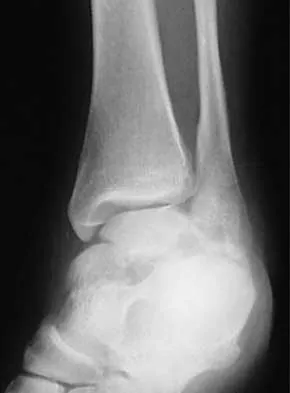
A 20-year-old man sustains the injury shown in Figures 1a and 1b in a motorcycle accident. In addition to a prompt closed reduction, his outcome might be optimized by


Explanation

Lateral subtalar dislocations, which are less common than medial subtalar dislocations, are high-energy injuries that are frequently associated with small osteochondral fractures. It is generally recommended that large fragments be internally fixed, and small fragments entrapped within the joint be excised. Although arthrosis frequently occurs after this injury and is the most common long-term complication, primary subtalar arthrodesis is not indicated. A talar neck fracture is not evident on the radiographs, and lateral subtalar dislocation usually does not lead to instability.


Question 3

Figure 2 shows the lateral radiograph of an 8-year-old boy who sustained an acute injury to the elbow after falling down the stairs. Management should consist of


Explanation

The patient has a flexion-type olecranon fracture, and the integrity of the extensor mechanism is disrupted. With this degree of displacement, closed reduction and extension casting would not be adequate. The strongest construct is an oblique screw across the fracture site, with a tension band. Healing is rapid in this age group; therefore one of the heavy absorbable sutures can be used as the tension band. Two parallel pins with the stainless steel tension band wire (AO technique) can be used but requires wire dissection for removal. Once the fracture is healed, the single screw can be removed easily with only a small incision. The presence of the screw, across the apophysis, has not been shown to produce any significant growth disturbance. Use of a large intramedullary screw would not be advisable because of the small size of the proximal fragment. Murphy DF, Greene WB, Gilbert JA, Dameron TB Jr: Displaced olecranon fractures in adults: Biomechanical analysis of fixation methods. Clin Orthop 1987;224:210-214.


Question 4

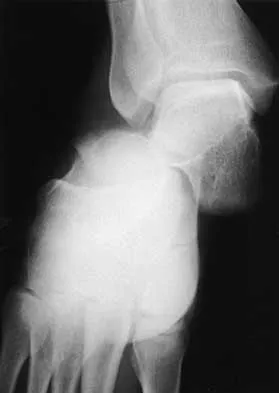
A 28-year-old man sustains the closed injury shown in Figures 3a through 3c after falling 8 feet while rock climbing. Management should consist of


Explanation

The radiographs show a comminuted talar body fracture. The goal of treatment is to minimize the risks of posttraumatic arthrosis of the ankle and subtalar joint and to maintain vascularity. Open reduction and internal fixation with an attempt at anatomic reduction will lead to improved outcomes. Attempting to repair this fracture via an arthrotomy only is extremely difficult, and the addition of a medial malleolar osteotomy is warranted. A limited anterior lateral arthrotomy with minimal soft-tissue stripping may assist with fixation of anterior-lateral and lateral fragments and allow better assessment of reduction of the major fracture line. Nonsurgical care would lead to inadequate reduction and increased risk of both ankle and hindfoot arthrosis. Talectomy and primary ankle and hindfoot arthrodesis should not be performed as primary surgical reconstructive options in this closed injury pattern. Sanders R: Fractures and fracture-dislocations of the talus, in Coughlin MJ, Mann RA (eds): Surgery of the Foot and Ankle, ed 7. St Louis, MO, Mosby, 1999, pp 1465-1518.


Question 5

Which of the following types of displaced posterior pelvic disruptions must undergo anatomic reduction and internal fixation to ensure the best clinical outcome?


Explanation

Although all of the above displaced injuries require reduction, the sacroiliac joint dislocation is a ligamentous injury. Without fixation, healing is unlikely and the result will be a painful dislocation. Both Holdsworth and Tile showed that the sacroiliac joint must be reduced anatomically and stabilized. The injuries through bone will unite fairly rapidly and, if reduced and stabilized with traction or external fixation, will generally result in an acceptable outcome unless modified by other associated problems such as neurologic injury. Tile M: Fractures of the Pelvis and the Acetabulum. Baltimore, MD, Williams and Wilkins, 1995. Holdsworth F W: Dislocation and fracture dislocation of the pelvis. J Bone Joint Surg Br 1948;30:461-465.


Question 6

A 10-year-old boy has a painful, swollen knee after falling off his bicycle. Examination reveals that the knee is held in 45 degrees of flexion, and any attempt to actively or passively extend the knee produces pain and muscle spasms. A lateral radiograph is shown in Figure 4. What is the most likely diagnosis?


Explanation

This is a typical patellar sleeve fracture. The patellar tendon avulses a portion of the distal bony patella, along with the retinaculum and articular cartilage from the inferior pole of the patella. It is common in children between ages 8 and 10 years. Anatomic reduction and repair of the extensor mechanism are mandatory to reestablish full knee extension. Houghton GR, Ackroyd CE: Sleeve fractures of the patella in children: A report of three cases. J Bone Joint Surg Br 1979;61:165-168.


Question 7

A 12-year-old girl sustains an acute injury to the right elbow in a fall. An AP radiograph is shown in Figure 5. Nonsurgical management will most likely result in


Explanation

The patient has a significantly displaced medial epicondyle fracture. The only absolute indication for surgical treatment is irreducible incarceration in the joint. Nonsurgical management usually results in a painless nonunion with good elbow function and little elbow instability. Prolonged immobilization should be avoided to prevent stiffness. Tardy ulnar nerve palsy and cubitus varus are not complications of medial epicondyle fractures. Chamber HG, Wilkins KE: Part IV: Apophyseal injuries of the distal humerus, in Rockwood CA Jr, Wilkins KE, Beaty JH (eds): Fractures in Children, ed 4. Philadelphia, PA, Lippincott-Raven, 1996, vol 3, pp 801-812.


Question 8

Which of the following factors is considered most important when assessing an ankle fracture for surgical treatment?


Explanation

Although all of these factors may influence the decision to perform surgery, the most important is the position of the talus in the mortise. The goal of treatment of ankle fractures is to maintain the talus centered in the mortise. If it is in this position, the other factors do not enter into the decision to intervene surgically. Stover MD, Kellam JF: Articular fractures: Principles, in Ruedi TP, Murphy WM (eds): AO Principles of Fracture Management. Stuttgart, Thieme, 2000, pp 105-119. Hahn DM, Colton CL: Malleolar fractures, in Ruedi TP, Murphy WM (eds): AO Principles of Fracture Management. Stuttgart, Thieme, 2000, pp 559-581.


Question 9

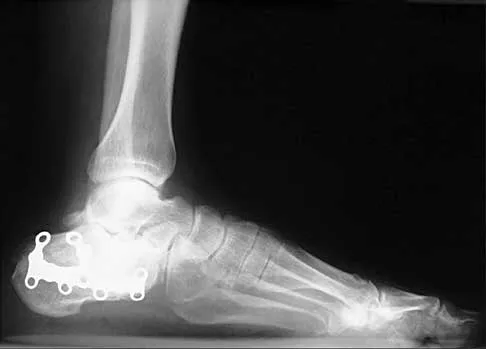
A 35-year-old woman who underwent open reduction and internal fixation of a calcaneal fracture 14 months ago reports pain that has failed to respond to nonsurgical management. Examination reveals limited painful subtalar motion but no hindfoot deformity. A lateral radiograph is shown in Figure 6. Surgical reconstruction is best accomplished with


Explanation

The patient has posttraumatic subtalar joint arthrosis that developed following a calcaneal fracture. Because there is no hindfoot deformity, in situ subtalar joint arthrodesis is the treatment of choice. Calcaneal osteotomy or distraction bone block arthrodesis is beneficial in patients with severe talar dorsiflexion or malunion of the calcaneal body. Triple arthrodesis is not warranted without changes at the transverse tarsal joint, and typically even with injury into the calcaneocuboid joint, this joint is often asymptomatic. Pantalar arthrodesis is not indicated as the pathology is occurring at the subtalar joint and not in the ankle joint. Sanders R: Fractures and fracture-dislocations of the calcaneus, in Coughlin MJ, Mann RA (eds): Surgery of the Foot and Ankle, ed 7. St Louis, MO, Mosby, 1999, pp 1422-1464. Juliano TJ, Myerson MS: Fractures of the hindfoot, in Myerson MS (ed): Foot and Ankle Disorders. Philadelphia, PA, WB Saunders, 2000, pp 1297-1340.


Question 10

Which of following side effects is most commonly seen in a pediatric patient undergoing ketamine anesthesia?


Explanation

The most common deleterious side effect of ketamine is increased salivation and tracheobronchial secretions. For this reason, an antisialagogue agent should be given. While lack of sufficient respiratory depression is one of the major advantages of using ketamine, apnea can occur if the drug is given too rapidly intravenously. Emergence phenomena is common in adults but relatively rare in children. Furman JR: Sedation and analgesia in the child with a fracture, in Rockwood CA Jr, Wilkins KE, Beaty JH (eds): Fractures in Children, ed 4. Philadelphia, PA, Lippincott-Raven, 1996, vol 3, pp 62-63. White PF, Way WL, Trevor AJ: Ketamine: Its pharmacology and therapeutic uses. Anesthesiology 1982;56:119-136.


Question 11

Figures 7a and 7b show the radiographs of a 51-year-old woman who injured her left leg after falling off a stepladder. Surgical reconstruction is performed with a compression screw and side plate; the postoperative radiograph is shown in Figure 7c. Following gradual progression of weight bearing, she reports that she slipped again and placed full weight on the extremity. She now notes a new onset of increased pain in her left thigh and hip region. Follow-up radiographs are shown in Figures 7d and 7e. Reconstruction should consist of


Explanation

The initial fracture was an unstable reverse oblique intertrochanteric fracture with subtrochanteric extension. Initial fixation with a high-angled screw and side plate construct may not provide stability as well as a 95 degree fixed-angle device or a intramedullary hip screw device. The follow-up radiographs show loss of fixation and further propagation of the fracture distally. Reconstruction would best be accomplished with hardware removal and conversion to a long intramedullary nail with femoral head fixation or a 95 degree angled plate and screw device. Conversion to a longer plate does not improve the biomechanical situation at the primary fracture site. In situ bone grafting would not provide any additional stability and would not correct the deformity. The proximal femoral fracture is not amenable to retrograde nailing. Cerclage wiring will not sufficiently enhance stability and is not indicated. Bridle SH, Patel AD, Bircher M, Calvert PT: Fixation of intertrochanteric fractures of the femur: A randomized prospective comparison of a gamma nail and dynamic hip screw. J Bone Joint Surg Br 1991;73:330-334. DeLee JC: Fractures and dislocations of the hip, in Rockwood CA Jr, Green DP, Bucholz RW, Heckman JD (eds): Rockwood and Green's Fractures in Adults, ed 4. Philadelphia, PA, Lippincott-Raven, 1996, pp 1659-1825. Haidukewych GJ, Israel TA, Berry DJ: Reverse obliquity fractures of the intertrochanteric region of the femur. J Bone Joint Surg Am 2001;83:643-650.


Question 12

An intoxicated 68-year-old man fell at home. Examination reveals abrasions on his forehead, 2/5 weakness of his hand intrinsics and finger flexors, and 4/5 strength of the deltoid, biceps, and triceps bilaterally. Lower extremity motor function is 5/5. Sensory examination to pain and temperature is diminished in his hands but intact in his lower extremities. Deep tendon reflexes are depressed in all four extremities, but perianal sensation and rectal tone are intact. Foley catheterization yields 700 mL of urine. Radiographs of the cervical spine reveal multilevel spondylosis without fracture or subluxation. An MRI scan reveals high-intensity signal change within the cord substance at C5. What is the most likely diagnosis?


Explanation

Central cord syndrome is characterized by greater neurologic involvement of the upper extremities than the lower extremities. This is typically seen in older patients with cervical spondylosis without associated bony injury or joint subluxation. The prognosis for recovery is fair. Patients with Brown-Sequard syndrome have an ipsilateral motor deficit and contralateral loss of pain and temperature. Prognosis for recovery depends on the mechanism of injury, which is often of a penetrating nature. Anterior cord syndrome results from anterior compression such as occurs with a burst or teardrop fracture of the vertebral body; patients have bilateral motor loss, pain, and temperature loss with preservation of proprioception and vibratory sensation (posterior column function). The prognosis for recovery is generally poor. Posterior cord syndrome is rare and is associated with loss of posterior column function (proprioception and vibration). Northrup BE: Evaluation and early treatment of acute injuries to the spine and spinal cord, in Clark CR (ed): The Cervical Spine, ed 3. Philadelphia, PA, Lippincott-Raven, 1998, pp 541-549.


Question 13

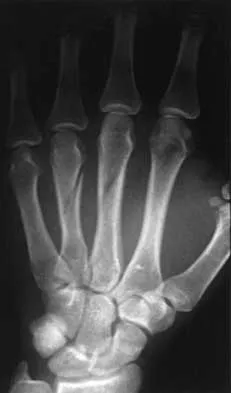
A 23-year-old woman sustains an injury to her right hand after falling off her snowboard. Examination reveals that she has difficulty moving her fingers. A radiograph and a clinical photograph are shown in Figures 8a and Figure 8b. Management should consist of


Explanation

The radiograph reveals oblique fractures of the third and fourth metacarpals. The rotational component of the fracture displacement is well visualized on the clinical photograph, which shows scissoring of the middle finger over the ring finger. The fracture obliquity results in rotational deformity that cannot be adequately maintained and held by closed treatment. The treatment of choice is open reduction and internal fixation. Stern PJ: Fractures of the metacarpals and phalanges, in Green DP, Hotchkiss RN, Pederson WC (eds): Green's Operative Hand Surgery, ed 4. Philadelphia, PA, 1999, pp 711-771. Freeland AE, Benoist LA, Melancon KP: Parallel miniature screw fixation of spiral and long oblique hand phalangeal fractures. Orthopedics 1994;17:199-200.


Question 14

A 32-year-old man sustained an L1 burst fracture with 90% canal compromise, intact posterior elements, and kyphosis of 25% at the L1 level. He has an incomplete neurologic injury. Definitive management should consist of


Explanation

With an incomplete injury, the best chance for recovery occurs when the canal is cleared and the neural structures are decompressed. Anterior decompression, vertebral body reconstruction, and anterior stabilization have been shown to be highly effective in the treatment of burst-type injuries. Laminectomy alone is contraindicated because it increases the instability. Short segment posterior fixation has a high rate of failure in this type of injury at this level. Kaneda K, Abumi K: Burst fractures with neurologic deficits of the thoracolumbar spine. J Bone Joint Surg Am 1997;79:69-83.


Question 15

The management of a complex multifragmentary diaphyseal fracture of either the tibia or femur has changed during the last decade. Which of the following principles of treatment is now considered less important?


Explanation

Although the original concept of internal fixation was one of anatomic reduction and stable fixation, over the past 10 to 15 years there has been a change based on the advent of intramedullary nailing and bridge plating. It is now appreciated that in a multifragmentary diaphyseal fracture, particularly of the lower extremity, the achievement of axis alignment (mechanical and anatomic axis) is all that is required. Healing will occur by callus. Relatively stable fixation is achieved through intramedullary nailing or bridge plating, providing adequate pain relief for functional aftercare. Perren SM, Claes L: Biology and mechanics of fracture management, in Ruedi TP, Murphy WM (eds): AO Principles of Fracture Management. Stuttgart, Thieme, 2000, pp 7-32. deBoer P: Diaphyseal fractures: Principles, in Ruedi TP, Murphy WM (eds): AO Principles of Fracture Management. Stuttgart, Thieme, 2000, pp 93-104.


Question 16

A 68-year-old woman who sustained a closed distal tibia fracture 2 years ago was initially treated with an external fixator across the ankle for 12 weeks, followed by intramedullary nailing of the fibula and lag screw fixation of the tibia. She continued to report persistent pain so she was treated with a brace and a bone stimulator. She now reports pain in her ankle. Examination reveals ankle range of motion of 8 degrees of dorsiflexion to 25 degrees of plantar flexion. She is neurovascularly intact. Current radiographs are shown in Figures 9a through 9c. What is the next most appropriate step in management?


Explanation

The patient has a nonunion of the distal fifth of the tibia. The nonunion appears to be oligotrophic, somewhere between atrophic and hypertrophic. Management requires stabilization and stimulation of the local biology, which can be accomplished with open reduction and internal fixation with bone grafting. Bracing or casting does not provide enough stability. Ultrasound bone stimulation has been shown to speed fresh fracture repair but is not indicated in nonunions. The distal segment is too short for intramedullary nailing. A fibular osteotomy alone would increase instability and, even with prolonged casting, would be unlikely to lead to successful repair. Carpenter CA, Jupiter JB: Blade plate reconstruction of metaphyseal nonunion of the tibia. Clin Orthop 1996;332:23-28. Lonner JH, Siliski JM, Jupiter JB, Lhowe DW: Posttraumatic nonunion of the proximal tibial metaphysis. Am J Orthop 1999;28:523-528. Stevenson S: Enhancement of fracture healing with autogenous and allogeneic bone grafts. Clin Orthop 1998;355:S239-S246.


Question 17

A patient has a displaced midshaft transverse fracture of the humerus and is neurologically intact. Following closed reduction and application of a coaptation splint, the patient cannot dorsiflex the wrist or the fingers at the metacarpophalangeal joints of the hand. What is the next most appropriate step in management?


Explanation

The answer to this question is controversial. All of the standard textbooks state that development of a radial nerve palsy during initial fracture management may represent a laceration or injury of the nerve by bone fragments at the time of manipulation; therefore, surgery should be considered. However, it appears that there is no scientific basis for this decision. A review of the available literature shows that the results were the same for patients who were observed as for those who underwent radial nerve exploration. The indications for surgical exploration include palsies associated with open fractures, irreducible closed fractures, and vascular injuries. The only other relative indication for surgical exploration is following manipulation of a Holstein-Lewis fracture (a distal third fracture of the humerus with a lateral spike). In this type of fracture, exploration may be necessary if a closed reduction leads to radial nerve palsy because the spike may lacerate or compress the nerve. Observation for return of nerve function may be appropriate for 3 months or longer prior to considering late exploration. Bostman O, Bakalim G, Vainionpaa S, Wilppula E, Patiala H, Rokkanen P: Radial palsy in shaft fracture of the humerus. Acta Orthop Scand 1986;57:316-319. Shaz JJ, Bhatti NA: Radial nerve paralysis associated with the fractures of the humerus: A review of 62 cases. Clin Orthop 1983;172:171-176.


Question 18

A 24-year-old woman has a spleen laceration and hypotension. Radiographs reveal a pulmonary contusion and a displaced mid-diaphyseal fracture of the femur. The trauma surgeon clears her for stabilization of the femoral fracture. What technique will offer the least potential for initial complications?


Explanation

A concern in the multiply injured patient who has a pulmonary contusion is the potential for further pulmonary compromise because of embolization of marrow, blood clot, or fat during manipulation of the medullary canal. Recent evidence has shown that the presence of a lung injury is the most important determining factor in future deterioration. However, despite the lung injury and its potential consequences, this patient's femur fracture needs stabilization. Because damage control in the multiply injured patient requires a technique that can be performed rapidly and consistently, the treatment of choice is application of an external fixator. By placing two pins above and below the fracture and with longitudinal traction, the fracture is quickly realigned and stabilized. This allows the patient to be resuscitated and treated at a later date when definitive management of the fracture can be carried out. There is little difference between plate fixation and intramedullary nailing. Bosse MJ, MacKenzie EJ, Riemer BL, et al: Adult respiratory distress syndrome, pneumonia, and mortality following thoracic injury and a femoral fracture treated with either intramedullary nailing with reaming or with a plate: A comparative study. J Bone Joint Surg Am 1997;79:799-809. Scalea TM, Boswell SA, Scott JD, Mitchell KA, Kramer ME, Pollak AN: External fixation as a bridge to intramedullary nailing for patients with multiple injuries and with femur fractures: Damage control orthopedics. J Trauma 2000;48:613-623.


Question 19

Figure 10 shows the radiograph of a 9-year-old girl who injured her left lower leg after being thrown from a horse. Examination reveals no other injuries. Which of the following forms of management will provide the lowest rate of complications and the earliest return to function?


Explanation

Because the patient has a transverse midshaft fracture with no evidence of comminution, the treatment of choice is closed reduction and stabilization with flexible intramedullary nails. Transverse fractures treated with an external fixator heal with poor callus and have a high refracture rate. In addition, the pin tracks produce undesirable and excessive scarring. Femoral pin traction is safe and effective but results in considerable muscle wasting and a slow return to function. Interlocking nails run the risk of greater trochanteric growth disturbance and/or osteonecrosis of the femoral head in this age group. Plate fixation, while effective, requires considerable tissue dissection with large scar formation. It also requires a rather extensive dissection for later plate removal. Ligier JN, Metaizeau JP, Prevot J, Lascombes P: Elastic stable intramedullary nailing of femoral shaft fractures in children. J Bone Joint Surg Br 1988;70:74-77.


Question 20

A 25-year-old woman has had continuous pain after falling on her outstretched wrist 12 weeks ago. A current radiograph is shown in Figure 11. Management should consist of


Explanation

The patient has a scaphoid fracture with cystic resorption of the distal aspect of the midthird of the scaphoid. This fracture is unlikely to heal without intervention. Percutaneous pinning, closed manipulation, and bone grafting will not restore alignment. Treatment requires restoration of scaphoid length, bone grafting, and internal fixation to obtain healing with normal alignment. Cooney WP, Linscheid RL, Dobyns JH, Wood MB: Scaphoid nonunion: Role of anterior interpositional bone grafts. J Hand Surg Am 1988;13:635-650. Fernandez DL: A technique for anterior wedge-shaped grafts for scaphoid nonunions with carpal instability. J Hand Surg Am 1984;9:733-737. Stark HH, Rickard TA, Zemel NP, Ashworth CR: Treatment of ununited fractures of the scaphoid by illiac bone grafts and Kirschner-wire fixation. J Bone Joint Surg Am 1988;70:982-991.


Question 21

A 7-year-old boy sustains an acute injury to the distal radial metaphysis, along with a completely displaced Salter-Harris type I fracture of the ulnar physis, as shown by the arrows in Figure 12. After satisfactory reduction of both injuries, what is the major concern?


Explanation

While injury of the distal radial metaphysis is a rather common occurrence, the incidence of physeal arrest is only about 4% to 5% of patients. While injury of the distal physis of the ulna is rare, the incidence of physeal arrest is greater than 50% in fractures of this structure. These patients need to be followed closely both clinically and radiographically to look for the signs of distal ulnar/physeal arrest such as loss of the prominence of the ulna and ulnar deviation of the hand. Radiographically, progressive shortening of the ulna is observed. Nelson OA, Buchanan JR, Harrison CS: Distal ulnar growth arrest. J Hand Surg Am 1984;9:164-170.


Question 22

A 28-year-old man sustained a fracture-dislocation of T8 in a motor vehicle accident 1 week ago. The injury resulted in complete paraplegia. Management should consist of


Explanation

With a complete injury in the thoracic spinal cord, the likelihood of neurologic recovery is small. If possible, treatment should be planned to allow rapid mobilization and rehabilitation without the use of braces and their associated skin problems. The use of long segment fixation provides for rapid mobilization without having to use braces postoperatively. The use of steroid protocol is controversial and should be considered only if it can be started within 8 hours of the injury. Laminectomy is contraindicated because it will increase instability.


Question 23

A 30-year-old woman sustained a nondisplaced unilateral facet fracture of C5 in a motor vehicle accident. She is neurologically intact and has no other injuries. Management should consist of


Explanation

The patient has a stable bony fracture that will heal with immobilization in a rigid collar. Flexion-extension radiographs may be obtained at 6 weeks to verify that there is no instability; mobilization may then be begun.


Question 24

A 26-year-old man is brought to the emergency department unresponsive and intubated after being found lying on the side of the road. He has a Glasgow Coma Scale score of 6. A chest tube has been inserted on the right side of the chest for a pneumothorax. An abdominal CT scan reveals a small liver laceration and minimal intraperitoneal hematoma. A pneumatic antishock garment (PASG) is on but not inflated. He has bilateral tibia fractures. A pelvic CT scan shows an anterior minimally displaced left sacral ala fracture and left superior and inferior rami fractures. He has received 2 L of saline solution and 4 units of blood but remains hemodynamically unstable. What is the next most appropriate step in management?


Explanation

There is no identifiable thoracic, abdominal, or long bone source of ongoing bleeding. The patient has a lateral compression Burgess-Young type I pelvic ring injury. This injury does not increase the pelvic volume because it is not unstable in external rotation. Application of a PASG, a pelvic clamp, or an external fixator may be helpful if the patient has a pelvic injury that is unstable in external rotation or translation but would be of little use in this injury pattern. Persistent hemodynamic instability after administration of 4 units of blood is the decision point where most authors would recommend angiography and embolization. If the pelvis is unstable in external rotation or translation, inflation of the PASG trousers or application of an external fixator is recommended before angiography. Attributing the hemodynamic instability to the head injury before ruling out the pelvis as a source is not indicated. Burgess AR, Eastridge BJ, Young JW, et al: Pelvic ring disruptions: Effective classification system and treatment protocols. J Trauma 1990;30:848-856. Evers BM, Cryer HM, Miller FB: Pelvic fracture hemorrhage: Priorities in management. Arch Surg 1989;124:422-424.


Question 25

A patient has a displaced complex intra-articular distal humeral fracture. What factor is considered most important when deciding on what surgical approach to use?


Explanation

When managing a complex intra-articular fracture, it is imperative that there is adequate visualization of the joint; this usually means an extensile approach. At the elbow, this is usually through a transolecranon osteotomy. The recent addition of a muscle-sparing approach as described by Bryan and Morrey has gained popularity, but it is difficult to maintain soft-tissue viability and it may put the ulnar nerve at risk. A triceps-splitting approach, which can be used for simple single articular splits into the joint where extra-articular reduction is available, is possible and good results have been reported. To date, there is minimal data on these alternative approaches for comminuted intra-articular distal humeral fractures. McKee MD, Mehne DK, Jupiter JP: Fractures of the distal humerus: Part II, in Browner BD, Jupiter JP, Levine AM, Trafton P (eds): Skeletal Trauma, ed 2. Philadelphia, PA, WB Saunders, 1998, pp 1483-1522 McKee MD, Wilson TL, Winston L, Schemitsch EH, Richards RR: Functional outcome following surgical treatment of intra-articular distal humeral fractures through a posterior approach. J Bone Joint Surg Am 2000;82:1701-1707. Patterson SD, Bain GI, Mehta JA: Surgical approaches to the elbow. Clin Orthop 2000;370:19-33.


Question 26

A 25-year-old male presents following an MVC. He has a closed femur fracture, bilateral rib fractures, and a pulmonary contusion. His initial lactate is 4.5 mmol/L and pH is 7.21. After initial resuscitation, his lactate is 3.8 mmol/L. Which of the following is the most appropriate management of his femur fracture?


Explanation

Patients with persistent acidosis (pH < 7.25), elevated lactate (> 2.5 mmol/L), or a base deficit worse than -5.5 are inadequately resuscitated. They should undergo damage control orthopedics (external fixation) to minimize the systemic inflammatory response and avoid the "second hit" phenomenon.

Question 27

A 32-year-old male undergoes reamed antegrade intramedullary nailing of a left femoral shaft fracture on a fracture table. Postoperatively, he complains of perineal numbness and erectile dysfunction. Which of the following is the most likely cause?


Explanation

Pudendal nerve palsy is a well-documented complication of fracture table use due to prolonged compression against the perineal post. It typically resolves spontaneously over a period of weeks to months.

Question 28

During surgical planning for a highly comminuted intra-articular distal femur fracture (AO/OTA 33-C3), a coronal plane fracture of the lateral femoral condyle is identified. Which of the following is the most appropriate fixation strategy for this specific fragment?


Explanation

A Hoffa fracture is a coronal plane fracture of the femoral condyle. It is best stabilized with anterior-to-posterior oriented lag screws placed perpendicular to the fracture plane to provide optimal compression.

Question 29

A 28-year-old male sustains an ipsilateral femoral neck and shaft fracture. Which of the following statements regarding this injury pattern is true?


Explanation

Ipsilateral femoral neck fractures occur in 2-6% of femoral shaft fractures and are frequently non-displaced. A dedicated CT protocol of the hip is recommended to avoid missing the diagnosis, and the neck fracture is prioritized for anatomic reduction.

Question 30

You are treating a 45-year-old male with a proximal third tibial shaft fracture. When performing an intramedullary nailing, what is the most common malalignment deformity expected?


Explanation

Proximal third tibia fractures have a strong tendency to go into valgus and procurvatum (apex anterior). This is primarily due to the pull of the patellar tendon, the anterior start point of the nail, and the unconstrained metaphysis.

Question 31

According to the SPRINT trial, which of the following is true regarding reamed versus unreamed intramedullary nailing of tibial shaft fractures?


Explanation

The SPRINT trial demonstrated that reamed intramedullary nailing significantly reduced the risk of reoperations (primarily for nonunion) in closed tibial shaft fractures compared to unreamed nails. There was no significant difference in outcomes for open fractures.

Question 32

A 30-year-old male sustains a severe open tibial shaft fracture with extensive soft tissue stripping (Gustilo-Anderson IIIB). He has a documented history of anaphylaxis to penicillin. Which of the following is the most appropriate initial antibiotic regimen?


Explanation

For a Type III open fracture in a patient with a severe penicillin allergy (anaphylaxis), clindamycin is used to cover gram-positives, while an aminoglycoside like gentamicin covers gram-negatives. Cephalosporins are generally avoided if the allergy is anaphylactic.

Question 33

A 24-year-old male sustains a closed tibial shaft fracture. Twelve hours later, he develops excruciating leg pain out of proportion to the injury. Which of the following clinical findings is the most sensitive early indicator of acute compartment syndrome?


Explanation

Pain with passive stretch of the muscles in the involved compartment is the most sensitive and earliest clinical sign of acute compartment syndrome. Pulselessness, pallor, and paralysis are late and unreliable signs of irreversible ischemia.

Question 34

A 22-year-old male with bilateral femoral shaft fractures develops hypoxia, altered mental status, and a petechial rash on his axilla 36 hours after injury. Which of the following is the most appropriate management?


Explanation

The clinical triad of hypoxia, altered mental status, and a petechial rash is classic for Fat Embolism Syndrome (FES). Management is primarily supportive, focusing on maintaining adequate oxygenation and hemodynamic stability.

Question 35

A 40-year-old male presents with persistent mid-leg pain 8 months after undergoing reamed intramedullary nailing of a closed tibial shaft fracture. Radiographs show a widened fracture line with abundant callus formation ("elephant foot"). Inflammatory markers are normal. What is the most appropriate definitive management?


Explanation

The patient has an aseptic hypertrophic nonunion, indicating adequate biology but inadequate mechanical stability. Exchange intramedullary nailing with a larger diameter reamed nail provides the necessary mechanical stability to allow healing.

Question 36

Recent literature regarding the timing of surgical debridement for open lower extremity fractures indicates that:


Explanation

Multiple studies have shown that if prompt, appropriate intravenous antibiotics are administered, delaying surgical debridement up to 24 hours does not significantly increase the rate of infection in open fractures. Early antibiotic administration remains the most critical factor.

Question 37

In the management of a polytraumatized patient, which of the following is considered the most reliable indicator of adequate global tissue perfusion and readiness for definitive orthopedic surgery?


Explanation

Serum lactate clearance to less than 2.0 mmol/L and the correction of the base deficit are the most reliable markers of adequate global tissue perfusion. Normalizing these values indicates the patient is resuscitated and ready for Early Total Care (ETC).

Question 38

A 26-year-old male presents with a "floating knee" injury (ipsilateral femur and tibia fractures) following an ATV crash. He is hemodynamically stable. Which of the following is the most appropriate sequence of fixation?


Explanation

In a hemodynamically stable patient with a floating knee, the standard of care is to stabilize the femur first. This restores the length and axis of the extremity, significantly facilitating the subsequent reduction and fixation of the tibia.

Question 39

In which of the following scenarios is retrograde intramedullary nailing of a femoral shaft fracture most strongly indicated over antegrade nailing?


Explanation

Retrograde nailing is particularly advantageous in morbidly obese patients due to easier access to the starting point. It is also ideal for patients with ipsilateral tibial shaft fractures (floating knee) as both fractures can be treated through a single incision without repositioning.

Question 40

A 25-year-old man sustains a severe closed head injury, a blunt chest injury, and a closed midshaft femur fracture in a motor vehicle collision. Upon arrival, his blood pressure is 90/60 mm Hg, heart rate 120 bpm, and Glasgow Coma Scale score is 7. His base deficit is 9. What is the most appropriate initial management for the femur fracture?


Explanation

In a polytrauma patient with 'borderline' or 'in extremis' physiological status (e.g., severe head injury, shock, base deficit >8), Damage Control Orthopedics (DCO) with temporary external fixation is indicated to minimize the 'second hit' of surgery.

Question 41

A 30-year-old woman is evaluated after a high-speed motor vehicle collision. Radiographs demonstrate a comminuted midshaft femur fracture. Which of the following is the most appropriate imaging modality or protocol to rule out an associated ipsilateral femoral neck fracture?


Explanation

Ipsilateral femoral neck fractures occur in 2-9% of femoral shaft fractures and are often non-displaced. A dedicated CT protocol of the pelvis or a fine-cut CT through the proximal femur is considered the gold standard for ruling out these associated injuries.

Question 42

When performing intramedullary nailing of a proximal third tibial shaft fracture via an infrapatellar approach, there is a tendency for the proximal fragment to displace into which of the following positions?


Explanation

During infrapatellar IM nailing of proximal third tibia fractures, the pull of the patellar tendon extends the proximal fragment, leading to an apex anterior (procurvatum) and valgus deformity. Blocking screws or a suprapatellar approach can mitigate this.

Question 43

A 28-year-old man presents with a closed midshaft tibia fracture. He reports excruciating pain in the leg, out of proportion to the injury. Passive stretch of the great toe elicits severe pain. Intracompartmental pressure measurements are obtained. Which of the following values is the most universally accepted threshold to perform a four-compartment fasciotomy?


Explanation

The most reliable indicator for compartment syndrome is a Delta P (diastolic blood pressure minus the intracompartmental pressure) of less than 30 mm Hg. This accounts for systemic perfusion pressure, which dictates tissue oxygenation.

Question 44

A 45-year-old woman sustains a displaced intra-articular fracture of the distal femur. CT scan reveals a coronal plane fracture of the lateral femoral condyle. Which of the following biomechanical forces is primarily responsible for the displacement of this specific fragment?


Explanation

A coronal plane fracture of the femoral condyle is known as a Hoffa fracture, most commonly affecting the lateral condyle. The lateral head of the gastrocnemius muscle and the popliteus exert deforming forces on this fragment, causing posterior and proximal displacement.

Question 45

A 32-year-old man sustains a subtrochanteric femur fracture. Preoperatively, the proximal fragment is noted to be flexed, abducted, and externally rotated. Which muscle is primarily responsible for the external rotation of the proximal fragment?


Explanation

In subtrochanteric femur fractures, the proximal fragment is flexed by the iliopsoas, abducted by the gluteus medius and minimus, and externally rotated by the short external rotators (e.g., piriformis, obturator internus, gemelli).

Question 46

A 35-year-old construction worker sustains a Gustilo-Anderson Type IIIB open tibia fracture. According to current evidence-based guidelines, which of the following is the most critical factor in reducing the risk of deep infection?


Explanation

The most critical factor in reducing infection rates in open fractures is the early administration of appropriate systemic antibiotics, ideally within 1 hour of injury. The historical '6-hour rule' for surgical debridement has not been consistently supported by modern evidence.

Question 47

Which of the following is an advantage of reamed intramedullary nailing compared to unreamed intramedullary nailing for the treatment of closed femoral shaft fractures?


Explanation

Reamed intramedullary nailing of closed femoral shaft fractures provides higher union rates and lower implant failure rates compared to unreamed nailing. Reaming deposits osteogenic bone graft at the fracture site and allows for a larger, mechanically stronger nail.

Question 48

A 22-year-old man with bilateral closed femoral shaft fractures develops hypoxemia, a petechial rash on his chest and axillae, and altered mental status 36 hours after presentation. What is the pathophysiologic mechanism most directly responsible for the cutaneous manifestations?


Explanation

Fat embolism syndrome typically presents with the triad of hypoxemia, neurological abnormalities, and a petechial rash. The rash is caused by the occlusion of dermal capillaries by fat macroglobules, leading to local endothelial damage and erythrocyte extravasation.

Question 49

When placing a blocking (Poller) screw to prevent a valgus deformity during intramedullary nailing of a proximal third tibial shaft fracture, the screw should be positioned in which location relative to the path of the reamer and nail?


Explanation

To prevent a valgus deformity in a proximal tibia fracture, the blocking screw should be placed on the concave side of the anticipated deformity (lateral side of the proximal fragment). This forces the nail medially, effectively narrowing the wide metaphysis and maintaining reduction.

Question 50

A 28-year-old man sustains a high-energy trauma resulting in a midshaft femur fracture. Routine trauma radiographs reveal no other obvious injuries. What is the most common fracture pattern of the commonly missed ipsilateral proximal femur fracture in this scenario?


Explanation

Ipsilateral femoral neck fractures occur in 2-9% of femur shaft fractures and are often missed on initial presentation. They are typically vertical, non-displaced, and basilar or transcervical, behaving mechanically like high-shear Pauwels III fractures.

Question 51

A 35-year-old polytrauma patient presents with severe chest trauma, a closed femur fracture, and a closed tibia fracture. Which of the following parameters most strongly indicates the need for Damage Control Orthopedics (external fixation) rather than Early Total Care (intramedullary nailing)?


Explanation

Elevated pulmonary artery pressure (>24 mm Hg), profound acidemia (base deficit >8), and elevated lactate (>2.5) are markers of an under-resuscitated or unstable polytrauma patient. A pulmonary artery pressure of 45 mm Hg contraindicates early intramedullary nailing due to the high risk of fatal right heart failure or ARDS.

Question 52

When treating a proximal third tibial shaft fracture with an intramedullary nail, what is the most common resulting malalignment if standard infrapatellar techniques are used without adjunctive reduction aids?


Explanation

Proximal third tibia fractures treated with standard intramedullary nailing typically fall into an apex anterior (procurvatum) and valgus deformity. This is driven by the pull of the patellar tendon anteriorly and the wedge effect of the nail in the wide metaphyseal flare.

Question 53

A 42-year-old farmer sustains an open grade IIIB tibia fracture after his leg is caught in a tractor mechanism. Visible soil and organic debris contaminate the wound. What is the most appropriate initial intravenous antibiotic regimen?


Explanation

For severe open fractures with heavy farm or soil contamination, the standard recommendation is triple antibiotic coverage. This includes a first-generation cephalosporin, an aminoglycoside for Gram-negative coverage, and high-dose penicillin to cover Clostridium species.

Question 54

A 22-year-old man with an isolated closed femur fracture becomes acutely dyspneic, confused, and develops a petechial rash on his chest 48 hours after admission. Which of the following is the most critical aspect of the initial management of his primary systemic condition?


Explanation

The classic triad of Fat Embolism Syndrome (FES) includes hypoxemia, neurologic compromise, and a petechial rash. The primary treatment is supportive care, particularly ensuring adequate oxygenation and ventilation, as corticosteroids and heparin have not shown definitive survival benefit.

Question 55

A 65-year-old woman presents with vague thigh pain. Radiographs demonstrate an impending subtrochanteric atypical femur fracture characterized by lateral cortical thickening. She has been on alendronate for 10 years. What is the most appropriate initial medical management alongside prophylactic intramedullary nailing?


Explanation

Management of bisphosphonate-related atypical femur fractures requires immediate discontinuation of the offending bisphosphonate. Teriparatide, an anabolic parathyroid hormone analog, is frequently recommended to aid in the healing of these specific fractures.

Question 56

A 45-year-old patient involved in a motor vehicle collision sustains a supracondylar distal femur fracture. CT imaging reveals an associated coronal plane fracture of the lateral femoral condyle. What is the standard operative approach to adequately visualize and reduce this specific condylar fragment?


Explanation

A Hoffa fracture is a coronal plane fracture of the femoral condyle, most commonly involving the lateral condyle. A direct lateral approach with articular visualization (often via lateral parapatellar arthrotomy) allows direct reduction and optimal anterior-to-posterior screw fixation.

Question 57

A 38-year-old woman sustains a high-energy varus directed force to her knee, resulting in a medial tibial plateau fracture with metaphyseal-diaphyseal dissociation. Which of the following associated injuries must be evaluated with the highest priority?


Explanation

Schatzker IV (medial plateau) fractures typically occur from high-energy trauma and are considered equivalent to a knee dislocation. There is a significantly elevated risk of popliteal artery injury and common peroneal nerve injury, necessitating careful vascular evaluation.

Question 58

A 40-year-old man sustains a closed, highly comminuted tibial plafond fracture with severe soft tissue swelling and fracture blisters. What is the primary rationale for placing a spanning external fixator rather than proceeding with immediate open reduction and internal fixation?


Explanation

High-energy pilon fractures are associated with significant soft-tissue injury. A staged approach (spanning external fixation followed by delayed ORIF at 10-21 days) allows the soft-tissue envelope to recover, dramatically reducing the risk of wound breakdown and deep infection.

Question 59

A 25-year-old man is recovering from an intramedullary nailing of a tibial shaft fracture. He complains of increasing leg pain not relieved by opioids. His diastolic blood pressure is 70 mm Hg. What intracompartmental pressure reading would definitively support the diagnosis of acute compartment syndrome?


Explanation

Compartment syndrome is clinically supported when the delta P (Diastolic Blood Pressure minus Intracompartmental Pressure) is less than 30 mm Hg. With a diastolic BP of 70 mm Hg, an intracompartmental pressure of 45 mm Hg yields a delta P of 25 mm Hg, indicating acute compartment syndrome.

Question 60

A 45-year-old smoker presents with an aseptic oligotrophic nonunion of the tibial diaphysis 9 months after initially undergoing intramedullary nailing. The fracture is mechanically stable but not healed. What is the most appropriate next step in management?


Explanation

For aseptic nonunions of the tibial shaft following intramedullary nailing, exchange nailing with reaming to a larger diameter is the treatment of choice. Reaming stimulates the local biological environment, and a larger nail provides increased mechanical stability.

Question 61

An 80-year-old woman sustains a periprosthetic femur fracture around a cemented total hip arthroplasty. Radiographs demonstrate a fracture around the tip of the stem with evidence of cement mantle disruption and stem subsidence, but the proximal bone stock remains adequate. What is the most appropriate treatment?


Explanation

This describes a Vancouver B2 periprosthetic fracture (fracture around the stem, loose implant, adequate bone stock). The standard of care is revision arthroplasty using a long-stem implant that bypasses the fracture site, combined with appropriate fixation of the fractured segments.

Question 62

A 28-year-old male presents with a closed femoral shaft fracture, pulmonary contusions, and a closed head injury following a motor vehicle collision. His initial lactate is 4.5 mmol/L, base deficit is -8, and IL-6 is highly elevated. What is the most appropriate initial management of his femur fracture?


Explanation

This patient is in an unstable physiological state (lactate >4, base deficit >6) with multiple injuries, making him an ideal candidate for Damage Control Orthopedics (DCO). External fixation provides rapid stability while avoiding the physiological 'second hit' associated with intramedullary nailing.

Question 63

A 32-year-old male sustains a high-energy diaphyseal femur fracture. What is the most common concomitant fracture that is historically missed in this setting, and what imaging is mandatory?


Explanation

Ipsilateral femoral neck fractures occur in 2-6% of femoral shaft fractures and are missed initially in up to 30% of cases. A dedicated CT scan or fine-cut protocol through the femoral neck is mandatory to rule out this injury.

Question 64

A 68-year-old female presents with thigh pain and a low-energy subtrochanteric femur fracture. A representative radiograph is shown, demonstrating lateral cortical thickening and a transverse fracture pattern with a medial spike.

Which of the following medications is most strongly associated with this injury pattern?


Explanation

Atypical femur fractures are associated with long-term bisphosphonate therapy (e.g., alendronate) which suppresses osteoclast activity and severely decreases bone turnover. The characteristic radiographic appearance includes a transverse fracture of the lateral cortex with a medial spike.

Question 65

A 45-year-old male presents with a distal femur fracture. CT imaging demonstrates a coronal plane fracture of the lateral femoral condyle (Hoffa fracture). If utilizing screw fixation from anterior to posterior, where must the screws be placed to avoid articular cartilage damage while providing optimal compression?


Explanation

Hoffa fractures (coronal shear fractures) are typically stabilized with anterior-to-posterior lag screws placed through the anterior non-weight-bearing articular surface of the condyle. These screws must be countersunk to prevent patellofemoral articulation impingement.

Question 66

A 24-year-old male with a comminuted tibial shaft fracture complains of severe pain out of proportion to the injury. Which of the following parameters is the most accurate diagnostic threshold for acute compartment syndrome requiring fasciotomy?


Explanation

The Delta P (diastolic blood pressure minus the intracompartmental pressure) is the most reliable threshold for diagnosing acute compartment syndrome. A Delta P of less than 30 mmHg is a strict indication for four-compartment fasciotomies.

Question 67

A 35-year-old male sustains a Gustilo-Anderson Type IIIB open fracture of the proximal third of the tibia. Following aggressive debridement and skeletal stabilization, a soft tissue defect with exposed bone remains. What is the most appropriate soft tissue coverage option?


Explanation

For Gustilo IIIB open tibia fractures, soft tissue coverage is dictated by the zone of injury. The proximal third of the tibia is classically covered with a medial gastrocnemius rotational flap, whereas the middle third utilizes a soleus flap.

Question 68

A 60-year-old male presents with a subtrochanteric femur fracture. During closed reduction for intramedullary nailing, the proximal segment is difficult to control. Which of the following best describes the typical deformity of the proximal fragment and the primary muscle responsible for its flexion?


Explanation

In a subtrochanteric fracture, the proximal fragment is typically flexed by the iliopsoas, abducted by the gluteus medius and minimus, and externally rotated by the short external rotators.

Question 69

A 25-year-old male is undergoing antegrade intramedullary nailing of a femoral shaft fracture via a piriformis fossa entry portal. If the starting point is placed too far anteriorly, what is the most likely iatrogenic complication?


Explanation

An anterior starting point in the piriformis fossa forces the rigid nail to course posteriorly, which significantly increases the risk of anterior cortical perforation or blowout of the proximal femur. A strictly colinear starting point on the lateral view is crucial.

Question 70

In the initial resuscitation of a polytrauma patient with a suspected hemodynamically unstable pelvic ring injury, at what anatomic level should a pelvic binder or circumferential sheet be applied?


Explanation

A pelvic binder should be centered precisely over the greater trochanters to generate optimal compressive forces across the pelvic ring, particularly to close an open-book (APC) injury. Placement over the iliac crests is ineffective and can paradoxically widen the true pelvis.

Question 71

A 22-year-old male with bilateral femoral shaft fractures develops hypoxia, confusion, and a petechial rash on his chest 48 hours after injury. Which of the following is considered a major criterion for the clinical diagnosis of Fat Embolism Syndrome (FES) according to Gurd and Wilson?


Explanation

Gurd and Wilson's major criteria for Fat Embolism Syndrome (FES) include a petechial rash, respiratory insufficiency, and cerebral involvement. Tachycardia, fever, and retinal changes are considered minor criteria.

Question 72

A 42-year-old male sustains a highly comminuted, closed distal tibia (pilon) fracture with severe soft tissue swelling and fracture blisters, similar to the injury pattern shown.

What is the current standard of care regarding the timing and sequence of definitive treatment?


Explanation

Severe pilon fractures with compromised soft tissues require a staged approach. Initial management utilizes a joint-spanning external fixator to restore length and alignment, followed by definitive ORIF once soft tissue swelling resolves (typically 1-3 weeks).

Question 73

A 30-year-old male who underwent intramedullary nailing for a tibial shaft fracture 18 months ago presents with chronic anterior knee pain. Fracture healing is complete. What is the most commonly cited etiology for anterior knee pain after this procedure?


Explanation

Anterior knee pain is the most common complication following intramedullary nailing of the tibia. It is primarily attributed to the surgical approach, including patellar tendon trauma, fat pad fibrosis, or incision placement, regardless of a transtendinous or paratendinous technique.

Question 74

A 26-year-old male sustains a vertically oriented (Pauwels type III) femoral neck fracture during a motor vehicle accident. Which fixation construct provides the most biomechanical stability for this specific fracture pattern?


Explanation

Pauwels type III femoral neck fractures in young adults are highly vertically oriented and experience high shear forces. Biomechanical studies demonstrate that a Sliding Hip Screw (SHS) combined with a derotation screw provides superior stability against vertical shear compared to multiple cancellous screws.

Question 75

You are evaluating a polytrauma patient with a femur fracture to decide between Early Total Care (ETC) and Damage Control Orthopedics (DCO). According to the clinical grading of polytrauma, which of the following parameters classifies a patient as 'borderline' rather than 'stable' or 'unstable'?


Explanation

Polytrauma clinical grading often utilizes Pape's criteria. A 'borderline' patient may have an estimated pulmonary artery pressure > 24 mmHg, ISS > 20 with a thoracic injury, or multiple injuries requiring careful reassessment before committing to prolonged procedures like ETC.

Question 76

A 55-year-old female presents with a distal femur nonunion 8 months after locked plating for a supracondylar femur fracture. Radiographs show failure of the plate at the level of the fracture. Which technical error during the index surgery most likely contributed to this failure?


Explanation

Placing locking screws immediately adjacent to a comminuted fracture site creates a 'short working length', which makes the construct too rigid. This concentrates stress over a short segment of the plate, preventing interfragmentary motion (callus formation) and leading to early fatigue failure.

Question 77

A 25-year-old male is brought to the trauma bay after a high-speed motor vehicle collision. He has a GCS of 8, a closed head injury, and bilateral closed femoral shaft fractures. His vital signs show a blood pressure of 85/50 mmHg, heart rate of 125 bpm, and a core temperature of 34°C. Laboratory results demonstrate a serum lactate of 5.5 mmol/L and a pH of 7.15. What is the most appropriate initial orthopedic management for his femur fractures?


Explanation

This patient is 'in extremis' with the lethal triad of hypothermia, acidosis, and coagulopathy (implied by shock). Damage control orthopedics (DCO) with rapid external fixation is indicated to minimize additional physiologic hits while providing temporary skeletal stability.

Question 78

A 30-year-old male sustains a high-energy trauma resulting in an ipsilateral displaced midshaft femoral fracture and a displaced basicervical femoral neck fracture. What is the priority regarding the surgical sequence and fixation strategy?


Explanation

In ipsilateral femoral neck and shaft fractures, anatomic reduction and rigid fixation of the femoral neck fracture is the absolute priority to minimize the risk of nonunion and avascular necrosis.

Question 79

A 45-year-old female undergoes intramedullary nailing for a proximal third tibial shaft fracture using an infrapatellar approach with the knee in extension. Postoperative radiographs reveal a coronal and sagittal plane deformity. Which deformity pattern is most commonly associated with this technique?


Explanation

Intramedullary nailing of proximal third tibia fractures often leads to apex anterior (procurvatum) and valgus deformity. This is due to the unopposed pull of the patellar tendon and the geometric mismatch between the straight nail and the flared proximal tibia.

Question 80

A 22-year-old male presents with a severely swollen leg following a closed midshaft tibia fracture. He requires escalating doses of IV narcotics. His blood pressure is 110/65 mmHg. Intracompartmental pressure testing yields a reading of 45 mmHg in the anterior compartment. What is this patient's delta pressure, and what is the standard threshold for fasciotomy?


Explanation

Delta pressure is calculated as diastolic blood pressure minus intracompartmental pressure (65 - 45 = 20 mmHg). A delta pressure of less than 30 mmHg is highly suggestive of compartment syndrome and is an absolute indication for emergency fasciotomy.

Question 81

A 28-year-old male with an isolated closed femur fracture develops hypoxia, a petechial rash over his axilla, and altered mental status 48 hours after admission. Which pathophysiologic mechanism most accurately explains the classic petechial rash seen in this syndrome?


Explanation

The petechial rash in fat embolism syndrome is caused by the direct embolization of fat macroglobules into the dermal capillaries. This mechanical occlusion leads to erythrocyte extravasation and the characteristic rash.

Question 82

A 35-year-old male sustains a severely comminuted open tibia fracture from a motorcycle crash. The wound measures 12 cm, features massive contamination, and has exposed bone stripped of its periosteum requiring a rotational muscle flap for coverage. Distal pulses are palpable and symmetric. What is the correct Gustilo-Anderson classification for this injury?


Explanation

Gustilo-Anderson Type IIIB fractures involve extensive soft-tissue stripping and inadequate bone coverage, necessitating local or free flap coverage. The presence of normal vascularity rules out a Type IIIC injury.

Question 83

A 40-year-old male is 9 months post-intramedullary nailing for a midshaft femur fracture. He reports persistent pain with weight-bearing. Radiographs show abundant, bridging callus that fails to cross the fracture line (an "elephant shoe" appearance). What is the most appropriate surgical management?


Explanation

The patient has a hypertrophic nonunion, which indicates adequate biology but insufficient mechanical stability. Exchange nailing with a larger diameter reamed nail provides the necessary stability to allow the already active biological process to bridge the fracture.

Question 84

A 65-year-old female with an 8-year history of alendronate use presents with a 3-month history of progressive thigh pain. Radiographs reveal lateral cortical thickening and an incomplete transverse radiolucent line in the subtrochanteric region of the femur.

What is the most appropriate next step in management?


Explanation

Symptomatic incomplete atypical femur fractures associated with long-term bisphosphonate use are at high risk for completion. They should be treated with discontinuation of the offending agent and prophylactic intramedullary nailing.

Question 85

A 75-year-old female with a primary total knee arthroplasty sustains a closed distal femur fracture just above the femoral component. Radiographs confirm the prosthesis remains well-fixed without evidence of loosening (Lewis-Rorabeck Type II). What is the optimal surgical treatment?


Explanation

Lewis-Rorabeck Type II fractures are displaced periprosthetic fractures around a well-fixed implant. They are best treated with internal fixation, commonly using either a lateral locking plate or a retrograde intramedullary nail, preserving the well-fixed components.

Question 86

A 45-year-old male sustains a bicondylar tibial plateau fracture. CT imaging demonstrates a significant posteromedial shear fragment that is displaced inferiorly. What is the optimal surgical approach and fixation strategy to address this specific fragment?


Explanation

A posteromedial shear fragment in a tibial plateau fracture requires an open posteromedial approach and buttress (antiglide) plating. Lateral locking plates frequently fail to capture or adequately compress this coronally oriented fragment.

Question 87

A 32-year-old male is involved in a high-energy collision. Radiographs demonstrate a coronal plane fracture of the lateral femoral condyle (Hoffa fracture). How should this specific fracture pattern be ideally stabilized to optimize articular compression and stability?


Explanation

Hoffa fractures are coronal plane shear fractures of the femoral condyles. They are best stabilized using anterior-to-posterior directed interfragmentary lag screws to provide perpendicular compression across the fracture plane.

Question 88

A 25-year-old polytrauma patient with a pelvic ring injury and bilateral femur fractures is undergoing resuscitation in the ICU. Which of the following clinical parameters is considered the most reliable indicator of adequate tissue perfusion to safely clear the patient for Early Total Care (ETC)?


Explanation

Normalization of serum lactate (< 2.0 mmol/L) and correction of the base deficit are the most reliable markers of adequate cellular resuscitation and tissue perfusion, indicating the patient is physiologically optimized for definitive fracture surgery.

Question 89

A 25-year-old man presents following a high-speed motor vehicle collision. He has a closed right femoral shaft fracture, bilateral pulmonary contusions, and a grade III spleen laceration. Initial vitals show HR 120 bpm and BP 90/60 mm Hg. Arterial blood gas shows a base deficit of -8 and a serum lactate of 4.5 mmol/L. According to damage control orthopedics (DCO) principles, what is the most appropriate initial management of his femur fracture?


Explanation

In a hemodynamically unstable polytrauma patient with severe chest injury and elevated lactate (>4.0 mmol/L), early total care with intramedullary nailing risks a 'second hit' phenomenon, potentially triggering ARDS. Damage control external fixation is indicated to stabilize the fracture rapidly while physiology normalizes.

Question 90

A 32-year-old man undergoes reamed intramedullary nailing for a closed comminuted tibial shaft fracture. Four hours postoperatively, he complains of severe, unrelenting leg pain resistant to intravenous opioids. His blood pressure is 110/70 mm Hg. Examination reveals a tense anterior calf and severe pain with passive plantar flexion of the toes. Which of the following compartment pressure measurements definitively indicates the need for immediate four-compartment fasciotomy?


Explanation

The diagnostic threshold for acute compartment syndrome is a Delta P (diastolic blood pressure minus compartment pressure) of less than 30 mm Hg. Absolute pressure measurements are less reliable, particularly in hypotensive patients.

Question 91

A 45-year-old woman is evaluated for a complex intra-articular distal femur fracture following a fall from height. A CT scan of the knee demonstrates a displaced coronal plane shear fracture of the lateral femoral condyle (Hoffa fracture). Which of the following isolated fixation strategies is biomechanically optimal for securing this specific condylar fragment?


Explanation

A Hoffa fracture is a coronal shear fracture of the femoral condyle, typically requiring independent lag screw fixation. Biomechanical studies show that anterior-to-posterior (AP) directed lag screws offer superior fixation strength by engaging the denser bone of the posterior condyle compared to PA screws.

Question 92

A 28-year-old man sustains a high-energy closed midshaft femur fracture. Routine trauma radiographs of the femur, knee, and pelvis are obtained in the trauma bay. Which of the following statements regarding the evaluation and management of a potential ipsilateral femoral neck fracture in this patient is most accurate?


Explanation

Ipsilateral femoral neck fractures occur in 2-6% of femoral shaft fractures, are often non-displaced, and are initially missed in up to 30% of cases. A dedicated fine-cut CT scan through the femoral neck is standard protocol to identify these typically vertical (Pauwels III) fractures.

None

Clinic OS
Medically Verified Content by
Prof. Clinic OS
Consultant Orthopedic & Spine Surgeon
Chapter Index
