العربية
Part of the Master Guide

Orthopedic Board Review Set 675: 100 MCQs for ABOS, OITE, FRCS – Hip Focus

Orthopedic Hip 2026 MCQs: Board Review Questions & Answers (Part 4)

23 Apr 2026 64 min read 97 Views
Figure for Hip 2004 MCQs - Part 4 - Question 77

Key Takeaway

Discover the latest medical recommendations for Orthopedic Hip 2026 MCQs: Board Review Questions & Answers (Part 4). Top-rated Orthopedic Hip 2026 MCQs bank. Practice with clinical case questions, orthopedic surgery board review, and evidence-based answers updated for 2026.

Orthopedic Hip 2026 MCQs: Board Review Questions & Answers (Part 4)

Comprehensive 100-Question Exam


00:00

Start Quiz

Question 1

What is the average linear wear rate of a conventional, noncross-linked ultra-high molecular weight polyethylene liner used in total hip arthroplasty?


Explanation

Several studies have shown that ultra-high molecular weight polyethylene liners used in total hip arthroplasties wear at a rate of 0.1 to 0.2 mm/yr. The orthopaedic surgeon performing total hip arthroplasties should be aware of the average wear rate so that potential problems can be identified when following patients postoperatively. Callaghan JJ, Albright JC, Goetz DD, Olejniczak JP, Johnston RC: Charnley total hip arthroplasty with cement: Minimum twenty-five year follow-up. J Bone Joint Surg Am 2000;82:487-497.

Question 2

A 68-year-old woman underwent a successful total right hip arthroplasty with a metal-on-metal articulation and cementless porous-coated components. Three months later, she underwent identical surgery on the left hip. Three months after surgery on the left hip, she reports groin pain on ambulation. Examination reveals significant groin discomfort with passive hip motion, particularly at the extremes of motion. Radiographs are shown in Figures 21a and 21b. Laboratory studies show an erythrocyte sedimentation rate of 35 mm/h and a C-reactive protein of 0.9. Aspiration yields scant growth of Staphylococcus epidermidis in the broth only, with no evidence of loosening on arthrography. A second aspiration yields scant growth of Staphylococcus epidermidis in the broth only. What is the most likely cause of the patient's pain?


Explanation

21b The difference in the clinical results combined with the laboratory findings points to infection. While there is a significant risk of false-positive findings with aspiration, the fact that two successive aspirations grew the same organism strongly suggests infection. The radiograph shows that there is more radiolucency around the left acetabular component than the right component. White RE: Evaluation of the painful total hip arthroplasty, in Callaghan JJ, Rosenberg AG, Rubash HE (eds): The Adult Hip. Philadelphia, PA, Lippincott-Raven, 1998, vol 2, pp 1377-1385.

Question 3

Etanercept is a recombinant genetically engineered fusion protein used to treat rheumatoid arthritis. What is its mode of action?


Explanation

Etanercept is a molecule consisting of the Fc portion of IgG fused to the extracellular domain of the p76 human THF-a receptor. It is soluble and binds TNF-a. Infliximab is the monoclonal antibody that binds TNF-a. IL-1 receptor antagonists are still in development. Leflunomide is a drug that inhibits pyrimidine synthesis and is similar to methotrexate as an antimetabolite.

Question 4

Which of the following bearing materials is most resistant to scratching from third-body debris?


Explanation

Alumina is the hardest of all the materials listed. Clinical retrieval demonstrates resistance to scratching from third-body debris.

Question 5

Which of the following surgical techniques is associated with an increased incidence of patellar complications after total knee arthroplasty?


Explanation

Surgical technique in patellar resurfacing has been found to be one of the critical factors in the success or failure of total knee arthroplasty. Theoretically, metal-backed patellar components are an excellent way of evenly distributing joint forces from the polyethylene button to bone (similar to the tibial component). However, despite this theoretical advantage, metal-backed patellae have been associated with a higher failure rate. Some of the observed problems include poor bone ingrowth, peg failure, dissociation of the metal plate and polyethylene button, and component fracture. Because of these factors, all-polyethylene patellae have proved to be the standard if patellar resurfacing is attempted. Medialization of the patellar component, a symmetrically thick patella, and external rotation of the femoral and tibial components improve patellar tracking. Pellicci PM, Tria AJ Jr, Garvin KL (eds): Orthopaedic Knowledge Update: Hip and Knee Reconstruction 2. Rosemont, IL, American Academy of Orthopaedic Surgeons, 2000, pp 323-337.

Question 6

A large circumferential proximal femoral allograft is to be used in the reconstruction of a failed femoral component in a total hip arthroplasty. To enhance fixation of the graft to the implant, which of the following strategies should be used?


Explanation

The optimum treatment is cementing the implant to the allograft. Press-fit stability is unreliable. Wires and screws may be used for an incomplete proximal femoral allograft but cannot be used to anchor a complete proximal femoral allograft. Allan DG, Lavoie GJ, Rudan JF, et al: The use of allograft bone in revision total hip arthroplasty, in Friedlaender GE, Goldberg VM (eds): Bone and Cartilage Allografts: Biology and Clinical Applications. Park Ridge, IL, American Academy of Orthopaedic Surgeons, 1991, pp 263-264. Gross AE, Lavoie MV, McDermott P, Marks P: The use of allograft bone in revision of total hip arthroplasty. Clin Orthop 1985;197:115-122.

Question 7

Which of the following design features of a femoral component used in a total knee arthroplasty best minimizes the patellar component contact stresses?


Explanation

Several studies have shown that design of the femoral component, especially the trochlear groove portion, largely influences patellar tracking and patellofemoral contact stresses. A deep, curved anatomic femoral trochlear groove has been shown to have the lowest contact stresses. Petersilge WJ, Oishi CS, Kaufman KR, Irby SE, Colwell CW Jr: The effect of trochlear design on patellofemoral shear and compressive forces in total knee arthroplasty. Clin Orthop 1994;309:124-130. Theiss SM, Kitziger KJ, Lotke PS, Lotke PA: Component design affecting patellofemoral complications after total knee arthroplasty. Clin Orthop 1996;326:183-187.

Question 8

Figure 22 shows the radiograph of a 67-year-old woman who has an infected left total hip arthroplasty. The most efficient means to remove the distal cement mantle includes the use of


Explanation

An extended trochanteric osteotomy has been shown to be very efficient in removing a well-fixed distal implant and cement with minimal complications. Direct lateral, posterior, and transtrochanteric osteotomy exposures do not provide exposure of the midfemur.

Question 9

Which of the following findings best describes the effects of increasing conformity of a fixed tibial bearing component and femoral component in total knee arthroplasty?


Explanation

In the design of tibial and femoral components, a compromise must be made between contact stresses and constraint. Increased conformity increases constraint, limits motion, and potentially increases stress on the knee-cement interface. By increasing conformity, the surface area over which force is applied is increased, resulting in decreased peak contact stresses and decreased component wear rates. Pellicci PM, Tria AJ Jr, Garvin KL (eds): Orthopaedic Knowledge Update: Hip and Knee Reconstruction 2. Rosemont, IL, American Academy of Orthopaedic Surgeons, 2000, pp 265-274.

Question 10

Figures 23a and 23b show the AP and lateral radiographs of a 67-year-old woman who has severe left knee pain when ambulating. History reveals that she underwent primary total knee arthroplasty 7 years ago. The patient reports increasing deformity over the past several years and uses a knee brace and a cane. Examination reveals that she walks with a varus thrust and has an uncorrectable varus deformity with valgus force. What is the primary reason for implant failure?


Explanation

23b Both cemented and cementless total knee arthroplasties depend on adequate fixation of the tibial component to promote long-term survivorship. An effective stem and adequate peripheral fixation of the tibial component to the cancellous-cortical portion of the proximal tibia are necessary for cementless fixation. Peripheral screws and pegs can serve as adjunctive fixation to decrease micromotion and shear forces and allow bone ingrowth to occur. Careful preparation of the proximal tibial surface can minimize fixation failure. Cemented fixation of the tibial stem should be performed in addition to the plateau. Osteolysis, polyethylene wear, and failure at the insert/tray locking mechanism have not occurred. Posterior cruciate ligament retention has not caused the tibial component fixation failure.

Question 11

Which of the following bearing surface combinations has shown the lowest in vivo wear rates in total hip arthroplasty?


Explanation

Ceramic bearings, made of alumina, have the lowest in vivo wear rates of any bearing combination, 0.5 to 2.5 Mm per component per year. Laboratory wear rates for metal-on-metal are lower than those for metal-on-polyethylene bearings, ranging from 2.5 to 5.0 Mm per year. Titanium used for bearing surfaces has a high failure rate because of a poor resistance to wear and notch sensitivity. Wear rates for ceramic-on-polyethylene bearings have varied, ranging from 0 to 150 Mm. Beaty JH (ed): Orthopaedic Knowledge Update 6. Rosemont, IL, American Academy of Orthopaedic Surgeons, 1999, pp 47-53.

Question 12

Figure 24 shows the radiograph of a 47-year-old woman who has severe right hip pain and a limp. Management should consist of


Explanation

Femoral shortening osteotomy for a Crowe type IV hip dislocation has been shown to provide superior results with minimal complications. Cementless fixation of the stem allows for modular implants that greatly simplify the reconstruction.

Question 13

When planning revision of a total hip arthroplasty where an acetabular reconstruction will be required, what prerequisite is important to ensure long-term success of a cementless component?


Explanation

In bone defects where host bone support is less than 50%, the failure rate is 70% at 5.1 years. The presence or absence of columns or hip position is of relatively little importance if the supportive bone is not present in at least 50% of the surface area around the future acetabular implant.

Question 14

A 62-year-old man who underwent total knee arthroplasty 6 months ago now reports pain after falling on the anterior portion of the knee. Examination reveals weakness of knee extension but no extensor lag. Flexion that had once measured 115 degrees is now limited to 70 degrees because of pain. A radiograph is shown in Figure 25. Management should now consist of


Explanation

The patient has a type IIIB patellar fracture (inferior pole fracture with an intact patellar tendon). Nonsurgical management is the treatment of choice if there is little displacement and the extensor mechanism is intact. Brown TE, Diduch DR: Fractures of the patella, in Insall JN, Scott WN (eds): Surgery of the Knee, ed 3. Philadelphia, PA, Churchill Livingstone, 2001, vol 2, pp 1290-1312.

Question 15

Failure of high tibial osteotomy (HTO) is most closely associated with which of the following factors?


Explanation

Long-term survivorship studies have attempted to clarify patient factors related to good outcomes in HTO. One particular study showed that a patient age of less than 50 years was related to good outcomes in those who had good preoperative knee flexion. The same study found no relation between HTO failure and the presence of postoperative infection or deep venous thrombosis. The presence of a lateral tibial thrust is a contraindication to performing this surgery. As expected, good patient selection is critical to obtaining good long-term results with HTO. Naudie D, Borne RB, Rorabeck CH, Bourne TJ: Survivorship of the high tibial valgus osteotomy: A 10- to 22-year followup study. Clin Orthop 1999;367:18-27. Rinonapoli E, Mancini GB, Corvaglia A, Musiello S: Tibial osteotomy for varus gonarthrosis: A 10- to 21-year followup study. Clin Orthop 1998;353:185-193.

Question 16

During a posterior cruciate ligament-sacrificing total knee arthroplasty with anterior referencing, 8 mm of distal femur is resected. It is noted that the flexion gap is tight and the extension gap appears stable. What is the next most appropriate step in management?


Explanation

If the flexion gap is tight and the extension gap is correct, it is preferable to change only the flexion gap and leave the extension gap unchanged; therefore, the treatment of choice is to decrease the size of the femoral component. The smaller component will be smaller in both medial-lateral as well as anterior-posterior dimensions. A smaller anterior-posterior size will allow more space for the flexion gap without significantly affecting the extension gap. Decreasing the size of the tibial polyethylene insert thickness or cutting more proximal tibia will affect both the flexion and extension gaps. Cutting more distal femur will increase the extension gap and not change the flexion gap, making the described situation worse. Cutting both the proximal tibia and distal femur will increase both the flexion and extension gaps.

Question 17

A 72-year-old woman with rheumatoid arthritis who underwent primary total knee arthroplasty 2 years ago has had diffuse knee pain that developed shortly after the surgery. The patient has difficulty with stair descent and arising from chairs. Evaluation for infection is negative. AP and lateral radiographs are shown in Figure 26. Management should now consist of


Explanation

The radiographs show posterior flexion instability that is the result of flexion-extension gap imbalance and/or posterior cruciate ligament incompetence after a posterior cruciate-retaining total knee arthroplasty. The radiographs also show anterior femoral displacement on the tibia. Pagnano and associates reported on a series of patients with painful total knee arthroplasties who had been previously diagnosed as having pain of unknown etiology, showing that the pain was secondary to flexion instability. Pain relief was achieved by revision to a posterior stabilized implant. Pagnano MW, Hanssen AD, Lewallen DG, Stuart MJ: Flexion instability after primary posterior cruciate retaining total knee arthroplasty. Clin Orthop 1998;356:39-46. Fehring TK, Valadie AL: Knee instability after total knee arthroplasty. Clin Orthop 1994;299:157-162.

Question 18

A homebound 75-year-old woman with diabetes mellitus has had progressive left knee pain and swelling for the past 6 weeks. She is febrile with a temperature of 103 degrees F (39.5 degrees C). History reveals that she underwent arthroplasty 5 years ago. Examination shows passive range of motion of 0 to 100 degrees with no active extension. Knee aspiration reveals purulent fluid with a Gram stain showing gram-negative rods. A radiograph is shown in Figure 27. In addition to IV antibiotics, which of the following management options offers the best chance of a successful outcome?


Explanation

The patient has an infected total knee arthroplasty and an interrupted extensor mechanism. A late infection of a total knee arthroplasty in a patient with diabetes mellitus and a virulent organism requires removal of the components, debridement, antibiotic spacers, and surveillance to ensure eradication of the infection. Reconstruction of an incompetent extensor mechanism in an infected knee is extremely unlikely to be successful. Arthrodesis is the procedure of choice if a revision total knee arthroplasty is not likely to succeed. Resection arthroplasty is recommended only as a long-term solution if the patient is medically unable to undergo further surgery. Koval KJ (ed): Orthopaedic Knowledge Update 7. Rosemont, IL, American Academy of Orthopaedic Surgery, 2002, pp 513-536.

Question 19

Design and manufacturing of a metal-on-metal articulation has an important influence on the tribology. Which of the following statements best characterizes the type of contact that is best for metal-on-metal articulations?


Explanation

It is important that the radii of a metal-on-metal head to cup articulation be such that there is polar contact. As the radii become closer to equal, conditions favor higher frictional torque and equatorial seizing. The "bedding in" of metal-on-metal surfaces and their stiffness are both components of the properties considered in the design of polar contact surfaces.

Question 20

A 52-year-old man has had groin and deep buttock pain for the past 2 months. Examination reveals that hip range of motion is mildly restricted, and he has pain with both weight bearing and at rest. An MRI scan is shown in Figure 28. Management should consist of


Explanation

The MRI findings show highly increased signal through the entire femoral head and neck that is diagnostic of transient osteoporosis of the femoral head. This recently described entity is often seen in middle-aged men and should be treated nonsurgically with protected weight bearing and anti-inflammatory drugs. The natural history is that of self-resolution. Guerra JJ, Steinberg ME: Distinguishing transient osteoporosis from avascular necrosis of the hip. J Bone Joint Surg Am 1995;77:616-624.

Question 21

Polyethylene wear of the bearing surface has been recognized as a mode of failure in total knee arthroplasty; therefore, many patients are offered polyethylene exchange. In terms of success rates, this surgical procedure has been reported to have a


Explanation

Engh and associates reported on the results of 63 knees (56 patients) following polyethylene exchange. The mean interval between exchange and the index total knee arthroplasty was 59 months. The mean follow-up after exchange was 7.4 years. Seven of 48 knees with adequate follow-up failed. Greater failure occurred if there was more severe wear before the exchange. Greater undersurface wear also resulted in a higher failure rate. Perioperative osteolysis or intraoperative observation of metallosis did not have an impact on the failure of polyethylene exchange. The risk of infection is no different from other total knee arthroplasty revisions. Wasielewski RC, Parks N, Williams I, et al: Tibial insert undersurface as a contributing source of polyethylene wear debris. Clin Orthop 1997;345:53-59.

Question 22

Which of the following types of ultra-high molecular weight polyethylene has been associated with the poorest clinical performance?


Explanation

Numerous studies have documented the poor performance of heat-pressed ultra-high molecular weight polyethylene used in the porous-coated anatomic tibial inserts of both total knee and unicompartmental arthroplasty. The other processing and sterilization methods have not been associated with significantly high failure rates. Wright TM, Rimnac CM, Stulberg SD, et al: Wear of polyethylene in total joint replacements: Observations from retrieved PCA knee implants. Clin Orthop 1992;276:126-134. Landy MM, Walker PS: Wear of ultra-high molecular-weight polyethylene components of 90 retrieved knee prostheses. J Arthroplasty 1988;3:S73-S85.

Question 23

Which of the following is considered the best method for the prevention of wrong-site surgery?


Explanation

The best method of preventing wrong-site surgery is for the surgeon to initial the surgical site in the preoperative holding area after discussion and confirmation of the site with the patient. This should be done before sedating medications are administered. A recent study found that patient noncompliance with specific preoperative instructions to mark the site with a "yes" at home was surprisingly high; only 59% of the patients marked the extremity correctly and 37% made no mark. Noncompliance was higher in those with workers' compensation claims (70%) and those with previous related surgery (51%). DeGiovanni CW, Kang L, Manuel J: Patient compliance in avoiding wrong site surgery. J Bone Joint Surg Am 2003;85:815-819.

Question 24

During the implantation of a cementless acetabular component in total hip arthroplasty, placement of a screw in the anterior superior quadrant puts which of the following structures at risk for damage?


Explanation

A knowledge of the safe quadrants for screw placement for acetabular component implantation is essential when performing total hip arthroplasty. The external iliac vessels are on the inner wall of the pelvis, corresponding to the anterior superior quadrant of the acetabulum. Keating EM, Ritter MA, Faris PM: Structures at risk from medially placed acetabular screws. J Bone Joint Surg Am 1990;72:509-511.

Question 25

What is the most frequent complication following primary total hip arthroplasty?


Explanation

Thromboembolic disease can occur in up to 58% of unprotected patients and up to 20% of protected patients depending on the type of prophylaxis used, even though most thrombi are small and have little clinical consequence. The primary goal of prophylaxis is to prevent symptomatic deep venous thrombosis and fatal pulmonary emboli. Dislocation has been reported in up to 10% of primary cases, but generally acceptable rates of less than 5% are the norm. Component loosening following primary total hip arthroplasty is rare prior to a 10-year follow-up, and 90% to 95% of patients should reach the 10-year follow-up without the need for revision for any reason. Metal hypersensitivity is unusual, and nickel found in cobalt-chromium alloys is the most common offending agent. Infection of primary total hip arthroplasty is less than 1%. Eftekhar N: Total Hip Arthroplasty. St Louis, MO, Mosby,1993, pp 1445-1676.

Question 26

A 24-year-old male athlete presents with anterior groin pain exacerbated by hip flexion and internal rotation. Radiographs (

) demonstrate an abnormally elevated alpha angle. In this condition, what is the most likely location of the primary articular cartilage damage?
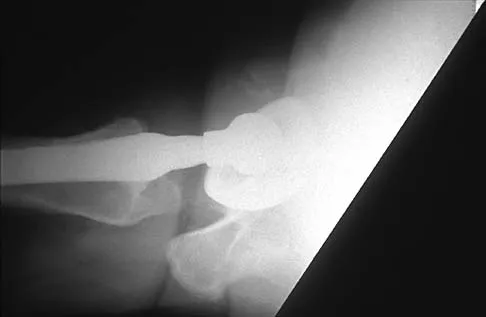


Explanation

An elevated alpha angle indicates cam-type femoroacetabular impingement. The non-spherical femoral head engages the acetabulum during flexion, typically causing chondrolabral delamination and articular cartilage damage in the anterosuperior acetabulum.

Question 27

A 55-year-old man undergoes cementless total hip arthroplasty with a ceramic-on-ceramic bearing. At his 2-year follow-up, he complains of an audible squeaking sound during certain activities, though he has no pain. Radiographs (

) show well-fixed components. What is the most significant risk factor associated with this phenomenon?


Explanation

Squeaking in ceramic-on-ceramic hips is most strongly associated with component malpositioning, particularly acetabular cup retroversion or steep inclination. This leads to edge loading, stripe wear, and subsequent micro-separation and audible noise.

Question 28

A 68-year-old woman presents with persistent hip pain 3 years after a primary THA. Her ESR is 45 mm/hr and CRP is 25 mg/L. Aspiration yields a synovial WBC count of 3,500 cells/uL with 75% PMNs. Based on the 2018 International Consensus Meeting (ICM) criteria, what is the next best step to establish the diagnosis?


Explanation

According to the 2018 ICM criteria, this patient has an inconclusive minor score based on her ESR, CRP, synovial WBC, and PMN percentage. Adding a synovial alpha-defensin test or synovial CRP serves as an adjunct to definitively confirm or rule out periprosthetic joint infection.

Question 29

A 45-year-old woman with Crowe type IV developmental dysplasia of the hip is undergoing a primary THA (

). During reconstruction, the true acetabulum is prepared. Which nerve is at greatest risk of injury when the femur is subsequently brought down to the true center of rotation?
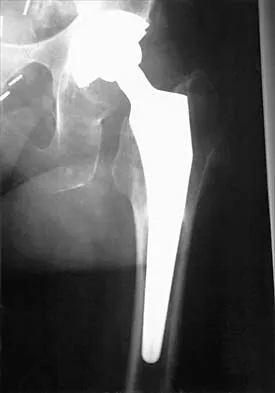


Explanation

The sciatic nerve is at the greatest risk of stretch injury during femoral lengthening in THA for high-riding DDH (Crowe IV). To prevent this, a subtrochanteric shortening osteotomy is frequently necessitated to safely reduce the hip.

Question 30

A 12-year-old obese boy presents with a 3-week history of right thigh and knee pain. Radiographs confirm a stable slipped capital femoral epiphysis (SCFE) of the right hip. Under what circumstance is prophylactic in situ pinning of the contralateral left hip most strongly indicated?


Explanation

Prophylactic pinning of the contralateral hip in SCFE is highly recommended for patients with underlying endocrine or metabolic disorders (such as renal osteodystrophy or hypothyroidism). These conditions carry a significantly elevated risk for bilateral involvement.

Question 31

A 78-year-old woman sustains an intertrochanteric femur fracture. Preoperative radiographs and CT (

) demonstrate a lateral wall thickness of 18 mm. What is the most appropriate surgical implant for this patient to minimize the risk of mechanical failure?


Explanation

A lateral wall thickness of less than 20.5 mm is a major predictor of secondary lateral wall fracture during dynamic hip screw insertion. Therefore, an intramedullary device (cephalomedullary nail) is preferred to bypass the deficient lateral wall.

Question 32

An 8-year-old boy is diagnosed with Legg-Calve-Perthes disease. Which of the following radiographic findings represents the greatest risk for a poor long-term outcome?


Explanation

Lateral subluxation (extrusion) of the femoral head causes it to abut the lateral acetabular margin, leading to hinge abduction. This mechanical block severely deforms the head during the healing phase, resulting in a poor long-term outcome.

Question 33

A 32-year-old man on chronic corticosteroids presents with bilateral hip pain. MRI (

) reveals pre-collapse avascular necrosis of the femoral head (Ficat stage II). Core decompression is planned. What is the primary mechanism by which core decompression provides pain relief and attempts to halt disease progression?
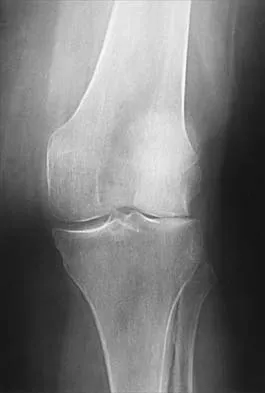


Explanation

Core decompression primarily aims to relieve elevated intraosseous pressure caused by venous stasis and edema within the femoral head. By reducing this pressure, it provides pain relief and facilitates the ingrowth of new vascularity.

Question 34

A 72-year-old woman presents for revision THA due to aseptic loosening. Intraoperatively, complete separation of the superior and inferior hemipelvis through the acetabulum is noted, along with significant host bone compromise. What is the most appropriate reconstructive technique for this pelvic discontinuity?


Explanation

Pelvic discontinuity with massive bone loss requires rigid fixation bridging the superior and inferior pelvic segments to allow healing. A cup-cage construct or custom triflange provides the necessary mechanical stability across the defect.

Question 35

A 28-year-old man sustains a posterior hip dislocation (

) in a motor vehicle collision. After closed reduction, he has a foot drop. Which specific mechanism of injury during the dislocation typically leads to this neurologic deficit?


Explanation

The common peroneal division of the sciatic nerve is located laterally and is more superficially tethered at the fibular head. This specific anatomical arrangement makes it uniquely susceptible to stretch injury over the posteriorly dislocated femoral head.

Question 36

A 65-year-old man experiences recurrent posterior dislocations after a primary THA. Radiographs (

) show the acetabular component in 30 degrees of inclination and 5 degrees of retroversion. The femoral stem is neutrally versioned. Which surgical intervention is most likely to resolve the instability?
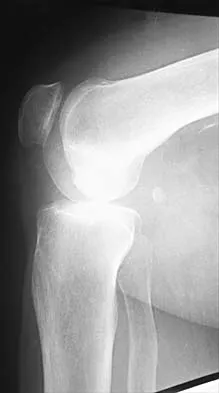


Explanation

The primary cause of the recurrent posterior instability is acetabular component retroversion. Revising the cup to the safe zone (roughly 40 degrees inclination and 15-20 degrees anteversion) directly addresses the structural root cause of the dislocations.

Question 37

A 72-year-old woman with a history of recurrent instability following a revision THA is treated with a dual-mobility construct. Two years later, she presents with an acute inability to bear weight after a minor fall. Radiographs show eccentric position of the femoral head within the larger polyethylene liner.

What is the most likely diagnosis?


Explanation

Intraprosthetic dislocation is a complication unique to dual-mobility bearings, occurring when the small femoral head dislocates from the captive polyethylene liner. It classically presents with eccentric positioning of the metallic head within the liner on radiographs.

Question 38

A 45-year-old active male underwent a cementless THA with a ceramic-on-ceramic bearing. Three years postoperatively, he complains of a new, audible squeaking sound from his hip during deep flexion. Radiographs demonstrate well-fixed components with the acetabular cup placed at 60 degrees of inclination and 30 degrees of anteversion.

What is the most likely cause of the squeaking?


Explanation

Squeaking in ceramic-on-ceramic THA is often associated with edge loading, which disrupts the fluid film lubrication. This is most commonly caused by component malposition, such as excessive cup inclination or anteversion.

Question 39

A 55-year-old man presents with groin pain and a palpable anterior hip mass 7 years after a metal-on-metal resurfacing arthroplasty. Cobalt and chromium levels are significantly elevated. MRI reveals a thick-walled cystic collection communicating with the joint.

Histological examination of the periprosthetic tissue is most likely to show which of the following?


Explanation

Adverse local tissue reactions (ALTR) or pseudotumors in metal-on-metal arthroplasty are characterized histologically by Aseptic Lymphocytic Vasculitis Associated Lesions (ALVAL). This represents a Type IV delayed hypersensitivity response to metal wear debris.

Question 40

A 38-year-old woman with severe bilateral developmental dysplasia of the hip (DDH) is planned for THA. Radiographs show proximal migration of the femoral head with the inferomedial aspect of the femoral head articulating with the false acetabulum. The native acetabular teardrop is located 55% of the femoral head height inferiorly.

Which Crowe classification best describes this hip?


Explanation

The Crowe classification is based on the proximal migration of the femoral head. Proximal subluxation of 50-75% of the femoral head height (or 10-15% of the pelvic height) characterizes a Crowe III dysplasia.

Question 41

A 24-year-old male hockey player presents with persistent groin pain exacerbated by hip flexion and internal rotation. Radiographs reveal an alpha angle of 72 degrees.

During operative intervention for this condition, damage to which aspect of the labrum and cartilage is most characteristically found?


Explanation

Cam impingement typically causes shear forces at the chondrolabral junction during flexion and internal rotation. This leads to anterosuperior labral tears and outside-in delamination of the adjacent acetabular cartilage.

Question 42

A 65-year-old man presents with a painful THA 2 years postoperatively. His ESR is 45 mm/hr and CRP is 2.5 mg/dL. Hip aspiration yields 4,500 WBC/mcL with 85% neutrophils. An alpha-defensin test is positive.

According to the 2018 International Consensus Meeting (ICM) criteria, what is the diagnosis?


Explanation

The 2018 ICM criteria assign points for minor criteria including elevated serum CRP, elevated synovial WBC/PMN%, and positive alpha-defensin. A combined score of 6 or greater definitively diagnoses a periprosthetic joint infection.

Question 43

A 55-year-old active man presents with an audible squeaking sound originating from his hip that occurs when bending or walking.

He underwent a primary total hip arthroplasty (THA) 4 years ago utilizing a ceramic-on-ceramic bearing. Which of the following factors is most strongly associated with the development of this complication?


Explanation

Squeaking is a known complication of ceramic-on-ceramic THA bearings, occurring in up to 10% of patients. It is most strongly associated with component malposition, specifically acetabular cup steepness or malversion, which leads to edge loading and loss of fluid film lubrication.

Question 44

A 28-year-old man presents with chronic, deep groin pain exacerbated by hip flexion. An AP pelvis radiograph is obtained.

The image demonstrates the anterior wall of the acetabulum crossing lateral to the posterior wall before reaching the sourcil. What does this "crossover sign" primarily indicate?


Explanation

The crossover sign on a true AP pelvis radiograph represents focal or global acetabular retroversion, a common cause of pincer-type femoroacetabular impingement. This retroverted morphology leads to anterior overcoverage and secondary labral pathology during hip flexion.

Question 45

A 71-year-old woman presents to the emergency department with severe hip pain and inability to bear weight after bending over to pick up an object from the floor.

She underwent a primary THA via a posterior approach 6 weeks ago. Which specific combination of hip movements most commonly precipitates this specific complication?


Explanation

Posterior dislocation is the most common direction of instability following a THA performed via a posterior approach. The classic mechanism of injury involves a combination of hip flexion, adduction, and internal rotation, which levers the femoral head out posteriorly.

Question 46

A 62-year-old man presents with progressive groin pain and swelling 6 years after a metal-on-polyethylene THA with a modular titanium stem and cobalt-chromium head.

Laboratory studies show an elevated serum cobalt level but a normal chromium level. Aspiration is negative for infection. What is the most likely diagnosis?


Explanation

Trunnionosis refers to mechanically assisted crevice corrosion at the modular head-neck junction. It is classically associated with metal-on-polyethylene bearings presenting with elevated cobalt relative to chromium, leading to an adverse local tissue reaction (pseudotumor).

Question 47

Following a primary THA performed via a direct lateral (Hardinge) approach, a patient presents with a persistent Trendelenburg gait at 6 months postoperatively.

Which nerve and corresponding muscle group are most at risk of injury with excessive superior splitting of the muscle in this approach?


Explanation

The direct lateral approach involves splitting the gluteus medius and minimus. Proximal extension of this split greater than 3 to 5 cm from the greater trochanter places the superior gluteal nerve at high risk, resulting in denervation of the abductors and a Trendelenburg lurch.

Question 48

A 38-year-old woman with a history of corticosteroid use for systemic lupus erythematosus presents with a 4-month history of groin pain.

Radiographs and MRI confirm Ficat Stage II osteonecrosis of the right femoral head with no crescent sign and no subchondral collapse. What is the most appropriate initial joint-preserving surgical intervention?


Explanation

Core decompression is the standard initial joint-preserving surgical treatment for early-stage (Ficat I and II) osteonecrosis prior to subchondral collapse. It aims to reduce intraosseous pressure, improve venous drainage, and stimulate revascularization.

Question 49

A polished, double-tapered, collarless cemented femoral stem is chosen for an 80-year-old patient undergoing THA.

On which biomechanical principle does this specific stem design rely to achieve and maintain stability?


Explanation

Polished, double-tapered stems act as a wedge and rely on force-closed (taper-slip) mechanics, allowing the stem to subside slightly within the cement mantle to increase radial compressive forces. In contrast, shape-closed designs rely on a roughened surface bonding to the cement.

Question 50

An 82-year-old woman sustains a fall and incurs a periprosthetic femur fracture around a cemented femoral stem.

Radiographs demonstrate a fracture at the tip of the stem. The cement mantle is fractured, and the stem is clearly loose. The patient has adequate distal bone stock. According to the Vancouver classification, what is the recommended treatment?


Explanation

This is a Vancouver B2 periprosthetic fracture (fracture around the stem, loose stem, good bone stock). The standard of care is revision arthroplasty, typically utilizing a long uncemented diaphyseal-fitting stem to bypass the fracture and achieve stable distal fixation.

Question 51

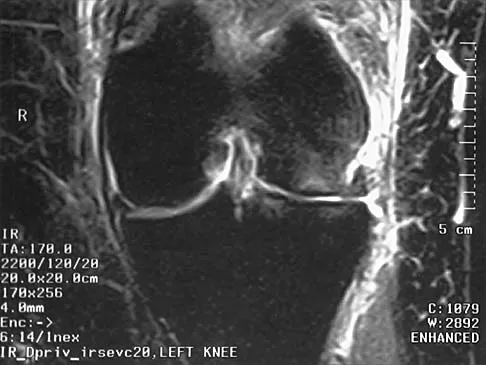
Highly cross-linked polyethylene (HXLPE) has significantly reduced the incidence of wear-induced osteolysis in THA.

During the manufacturing process, irradiation is followed by a heating process (remelting or annealing). What is the primary biomechanical purpose of the remelting process?


Explanation

Irradiation creates cross-links but leaves behind free radicals, which can lead to long-term oxidation and material degradation. Remelting (heating above the melting point) effectively extinguishes these trapped free radicals, drastically improving oxidation resistance at a slight cost to fatigue strength.

Question 52

A 45-year-old woman with a history of developmental dysplasia of the hip (DDH) requires a THA.

Preoperative planning reveals a Crowe Type IV completely dislocated, high-riding hip. Bringing the femoral head down to the true acetabulum will drastically increase sciatic nerve tension. What adjunctive procedure is most frequently required?


Explanation

In Crowe IV DDH, restoring the anatomic hip center often requires more than 3-4 cm of leg lengthening, which places the sciatic nerve at extremely high risk of traction palsy. A subtrochanteric shortening osteotomy is typically performed to protect the nerve while allowing cup placement in the true acetabulum.

Question 53

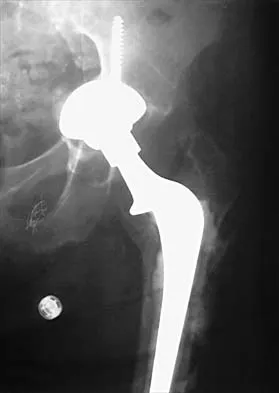
A 55-year-old patient undergoes revision THA for a failed metal-on-metal implant presenting with a large pseudotumor.

Histopathological examination of the periprosthetic tissue demonstrates an aseptic lymphocytic vasculitis-associated lesion (ALVAL). What is the classic histological hallmark of this reaction?


Explanation

ALVAL is a delayed-type (Type IV) hypersensitivity reaction primarily mediated by T-lymphocytes responding to metal ions. The pathognomonic histological findings include extensive perivascular lymphocytic infiltration, macrophage accumulation, and marked tissue necrosis.

Question 54

A 30-year-old man sustains a displaced, basicervical femoral neck fracture.

Understanding the vascular anatomy is critical to anticipating the risk of osteonecrosis. Which vessel provides the primary blood supply to the weight-bearing dome of the adult femoral head?


Explanation

The medial femoral circumflex artery (MFCA) is the predominant blood supply to the adult femoral head, giving rise to the lateral epiphyseal artery system. The lateral femoral circumflex artery supplies the anterior/inferior neck, while the ligamentum teres contribution is minimal in adults.

Question 55

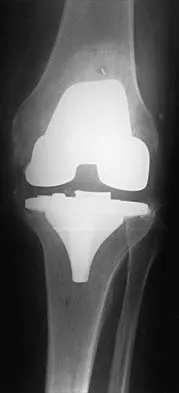
The Smith-Petersen (direct anterior) approach is frequently utilized for THA and pelvic procedures.

Which two muscles define the true superficial internervous plane of this surgical approach?


Explanation

The superficial interval of the Smith-Petersen approach utilizes the internervous plane between the sartorius (innervated by the femoral nerve) and the tensor fasciae latae (innervated by the superior gluteal nerve). The deep interval is between the rectus femoris and gluteus medius.

Question 56

A patient is evaluated for a painful total hip arthroplasty 2 years postoperatively.

According to the Musculoskeletal Infection Society (MSIS) and International Consensus Meeting (ICM) criteria, which of the following is considered a definitive "major" criterion for the diagnosis of periprosthetic joint infection (PJI)?


Explanation

Under the MSIS/ICM criteria, definitive diagnosis of PJI is established if there is a sinus tract communicating with the joint or two distinct periprosthetic samples yielding the same phenotypically identical organism. Biomarkers like CRP, ESR, and synovial WBC are considered minor criteria.

Question 57

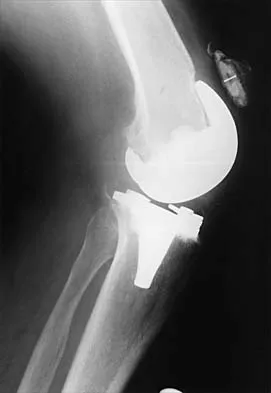
A 65-year-old man with advanced ankylosing spondylitis and a totally fused lumbar spine is undergoing a THA.

Due to his spinopelvic stiffness, how does his pelvic mobility alter his risk of impingement and dislocation when transitioning from a standing to a sitting position?


Explanation

In a normal spinopelvic relationship, sitting induces posterior pelvic tilt, which functionally increases acetabular anteversion and clears the anterior neck. A stiff spine prevents this posterior tilt, leading to anterior impingement during flexion and subsequent posterior levering out of the femoral head.

Question 58

Proper orientation of the acetabular component is critical to minimize the risk of dislocation after THA.

According to the historically established "Lewinnek safe zone", what are the optimal target angles for acetabular inclination (abduction) and anteversion?


Explanation

Lewinnek famously described a radiographic safe zone for acetabular cup placement consisting of an inclination (abduction) of 40 ± 10 degrees and an anteversion of 15 ± 10 degrees. While modern dynamic spinopelvic parameters adjust these targets, Lewinnek's values remain a foundational concept.

Question 59

A 40-year-old man who sustained a severe traumatic brain injury requires a THA for an un-reconstructable acetabular fracture.

Given his extremely high risk for heterotopic ossification (HO), what is the most effective prophylactic measure?
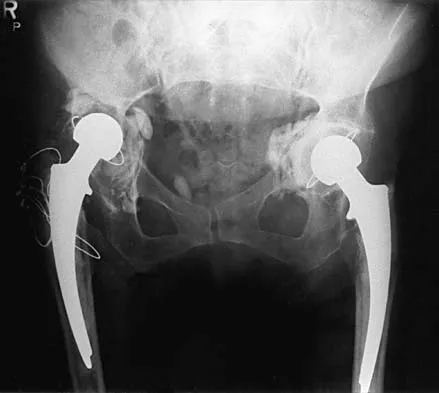


Explanation

Patients with traumatic brain injuries or prior HO are at immense risk for ectopic bone formation. The most effective proven prophylaxis is localized external beam radiation (typically a single 700 cGy fraction given within 24 hours pre- or postoperatively) or a 6-week course of oral indomethacin.

Question 60

A 70-year-old woman on oral alendronate for 12 years presents with an atraumatic, aching thigh pain.

Radiographs demonstrate a cortical stress reaction. Which radiographic feature is characteristic of a bisphosphonate-related atypical femur fracture?


Explanation

Atypical femur fractures associated with long-term bisphosphonate use characteristically occur in the subtrochanteric or diaphyseal region. They present as transverse or short oblique fractures, non-comminuted, with localized periosteal or endosteal thickening of the lateral cortex (the "lateral beak").

Question 61

A 65-year-old man undergoes THA. Preoperative radiographs show severe lumbar spine ankylosis with a fixed anterior pelvic tilt (hyperlordosis). To prevent posterior dislocation when the patient transitions from standing to sitting, how should the acetabular component be positioned compared to a patient with a normal, mobile spine?


Explanation

A stiff spine with a fixed anterior pelvic tilt fails to accommodate hip flexion by tilting posteriorly during sitting. Increasing the cup anteversion compensates for this lack of dynamic clearance, reducing anterior impingement and posterior dislocation risk.

Question 62

A 72-year-old woman sustains a fall 5 years after a cementless THA. Radiographs

demonstrate a fracture around the stem just below the lesser trochanter. On intraoperative assessment, the fully porous-coated stem is found to be grossly loose, but the proximal femur has adequate bone stock. What is the most appropriate management?


Explanation

This is a Vancouver B2 periprosthetic fracture, characterized by a fracture around a loose stem with adequate surrounding bone stock. The standard of care is revision arthroplasty using a long cementless stem to bypass the fracture by at least two cortical diameters.

Question 63

A 64-year-old man presents with chronic right hip pain 2 years following a THA. ESR is 45 mm/hr and CRP is 2.5 mg/dL. Hip aspiration yields 2,500 WBC/µL with 75% PMNs. The synovial fluid alpha-defensin test is positive. What is the primary cellular source of the biomarker measured in this specific immunoassay?


Explanation

Alpha-defensin is an antimicrobial peptide released by activated neutrophils in response to infection. It is a highly sensitive and specific biomarker used in the diagnosis of periprosthetic joint infection (PJI).

Question 64

A 58-year-old man presents with new-onset groin pain and a palpable mass 6 years after a metal-on-polyethylene THA. He has a 36-mm cobalt-chromium femoral head on a titanium alloy stem. Radiographs show no loosening. Metal ion testing reveals elevated serum cobalt levels with normal chromium levels. MRI demonstrates a large cystic fluid collection around the hip. What is the most likely diagnosis?


Explanation

Mechanically assisted crevice corrosion (trunnionosis) at the modular head-neck junction is characterized by elevated serum cobalt disproportionate to chromium. This leads to an adverse local tissue reaction (ALTR) presenting as pain and an abductor-sparing pseudotumor.

Question 65

A 28-year-old professional hockey player complains of insidious onset, activity-related anterior groin pain. An AP pelvis radiograph

shows the anterior rim of the acetabulum crossing the posterior rim in the superior aspect of the joint. What does this radiographic finding indicate?


Explanation

The 'crossover sign' occurs when the anterior wall line crosses the posterior wall line on a perfectly positioned AP pelvis radiograph. This indicates acetabular retroversion, a common cause of pincer-type femoroacetabular impingement (FAI).

Question 66

The creation of highly cross-linked polyethylene (HXLPE) for THA involves irradiating the material. What is the primary purpose of post-irradiation thermal treatment (remelting or annealing) in the manufacturing process of HXLPE?


Explanation

Irradiation of polyethylene creates beneficial cross-links but also generates free radicals that can lead to in vivo oxidation and degradation. Post-irradiation thermal treatments extinguish these free radicals and improve long-term oxidative stability.

Question 67

A 45-year-old woman underwent a ceramic-on-ceramic THA 3 years ago. She now complains of a high-pitched squeaking noise during gait, without significant pain. Radiographs are unremarkable. Which of the following conditions is most strongly associated with this phenomenon?


Explanation

Squeaking in ceramic-on-ceramic THA is highly associated with edge loading, often caused by acetabular cup malposition (excessive inclination or extreme version). Edge loading disrupts fluid film lubrication, leading to stripe wear and audible noise.

Question 68

A 32-year-old man on chronic systemic corticosteroids presents with right hip pain. MRI reveals a crescent-shaped subchondral fracture in the superior femoral head, but plain radiographs only show patchy sclerosis without gross collapse. According to the modified Ficat classification, what is the stage and most appropriate joint-preserving recommendation?


Explanation

A subchondral fracture (crescent sign) indicates structural failure and defines Ficat Stage III osteonecrosis. Core decompression is typically indicated for pre-collapse (Stage I and II) disease and is generally ineffective once a subchondral fracture has occurred.

Question 69

A 42-year-old woman with neglected bilateral developmental dysplasia of the hip presents for THA. Radiographs

demonstrate Crowe IV dysplasia with the femoral head completely dislocated superiorly. To place the acetabular cup at the true anatomical center of rotation and safely reduce the hip without causing sciatic nerve palsy, which of the following surgical adjuncts is most frequently required?


Explanation

In Crowe IV DDH, bringing the femur down to the true anatomical acetabulum involves significant lengthening, placing the sciatic nerve at high risk for stretch injury. A subtrochanteric shortening osteotomy allows for safe reduction while protecting neurovascular structures.

Question 70

In modern total hip arthroplasty, the use of large-diameter femoral heads has increased to reduce the risk of dislocation. However, which of the following is a recognized trade-off when using a large-diameter cobalt-chromium head on a standard titanium femoral stem trunnion?


Explanation

Large-diameter metal heads increase the frictional torque at the modular head-neck junction. This micro-motion exacerbates mechanically assisted crevice corrosion (trunnionosis), leading to adverse local tissue reactions.

Question 71

A 68-year-old man underwent a primary THA 4 weeks ago. He now presents with 3 days of increasing hip pain, fever, and drainage from the surgical site. Synovial fluid aspiration grows Staphylococcus aureus. Radiographs

show well-fixed components. What is the most appropriate indication to proceed with Debridement, Antibiotics, and Implant Retention (DAIR)?


Explanation

DAIR is indicated for acute postoperative PJIs (within 4 weeks of surgery) or acute hematogenous infections with less than 3 weeks of symptoms. It is contraindicated in cases with loose components or chronic sinus tracts.

Question 72

During a direct anterior approach for THA, the surgeon uses fluoroscopy to assess leg length and offset. Which of the following anatomical landmarks provides the most reliable horizontal reference on an AP pelvis radiograph for evaluating leg length discrepancy intraoperatively?


Explanation

The inter-teardrop line serves as a reliable horizontal pelvic reference. Measuring the perpendicular distance from this line to the lesser trochanter provides an accurate assessment of radiographic leg length discrepancy.

Question 73

A 70-year-old woman is evaluated for a persistent limp 1 year following a right THA performed via a direct lateral (Hardinge) approach. She complains of lateral hip pain and demonstrates a pronounced Trendelenburg gait. Radiographs show a well-fixed cementless THA. An MRI with metal artifact reduction sequence (MARS) is ordered. What is the most likely finding?


Explanation

The direct lateral approach involves splitting and detaching the anterior portions of the gluteus medius and minimus. Failure of these repairs can lead to abductor avulsion, resulting in a positive Trendelenburg sign and weakness.

Question 74

A 35-year-old active man undergoes a total hip arthroplasty with a ceramic-on-ceramic bearing. Two years postoperatively, he complains of a reproducible squeaking noise from the hip when bending to tie his shoes, though he has no pain. Radiographs show a well-fixed stem with an acetabular cup placed in 60 degrees of inclination and 35 degrees of anteversion. What is the most likely cause of the squeaking?


Explanation

Squeaking in ceramic-on-ceramic THA is often associated with component malposition (such as excessive cup inclination or anteversion). This leads to edge loading, loss of fluid film lubrication, and subsequent stripe wear, creating the audible squeak.

Question 75

A 72-year-old woman sustains a fall 4 years after a primary cementless total hip arthroplasty. Radiographs reveal a periprosthetic fracture extending from the lesser trochanter to just distal to the tip of the femoral stem. The stem is visibly subsided by 15 mm compared to previous films, but the remaining distal bone stock is good.

According to the Vancouver classification, what is the most appropriate management?


Explanation

This is a Vancouver B2 fracture (fracture around the stem, loose stem, adequate bone stock). The standard of care for a B2 fracture is revision to a long cementless stem that bypasses the fracture site by at least two cortical diameters.

Question 76

A 65-year-old man presents with chronic dull pain in his left hip 3 years after a primary total hip arthroplasty. His ESR is 45 mm/hr and CRP is 25 mg/L. A hip aspiration is performed. According to the International Consensus Meeting (ICM) criteria, what synovial fluid white blood cell (WBC) count threshold is highly indicative of a chronic periprosthetic joint infection?


Explanation

For chronic periprosthetic joint infections (PJI) occurring >90 days postoperatively, the widely accepted threshold is a synovial fluid WBC count >3,000 cells/uL and/or a PMN percentage >80%. Acute infections have higher thresholds (e.g., >10,000 cells/uL).

Question 77

A surgeon performs a primary total hip arthroplasty using a direct anterior approach utilizing the inter-nervous plane between the tensor fasciae latae and the sartorius. Postoperatively, the patient notes an area of numbness and dysesthesia over the anterolateral thigh. Which nerve was most likely stretched or injured during the approach?


Explanation

The lateral femoral cutaneous nerve (LFCN) crosses the surgical field of the direct anterior approach to the hip. Injury or stretching of the LFCN causes numbness or dysesthesia over the anterolateral thigh.

Question 78

A 28-year-old male hockey player presents with gradual onset of anterior groin pain exacerbated by hip flexion and internal rotation. Radiographs demonstrate an alpha angle of 75 degrees on the modified Dunn lateral view and normal acetabular version.

What is the underlying pathomorphology?


Explanation

An alpha angle greater than 50-55 degrees on a lateral radiograph indicates a loss of femoral head-neck offset, characteristic of cam-type femoroacetabular impingement (FAI). This extra bone abuts the acetabular rim during flexion and internal rotation.

Question 79

A 66-year-old man presents with severe right hip pain 8 years after a primary metal-on-polyethylene total hip arthroplasty. Inflammatory markers are normal and aspiration is negative for infection. An MRI with metal artifact reduction sequence (MARS) reveals a large cystic mass communicating with the joint space. Blood tests reveal elevated serum cobalt levels with normal chromium levels. What is the most likely diagnosis?


Explanation

Elevated cobalt relative to chromium in a metal-on-polyethylene hip indicates trunnionosis (MACC at the head-neck junction). This can lead to an adverse local tissue reaction (ALTR/ALVAL) and pseudotumor formation.

Question 80

Which of the following patients presenting with a unilateral slipped capital femoral epiphysis (SCFE) is at the highest risk for a contralateral slip and represents the strongest indication for prophylactic in situ pinning of the contralateral hip?


Explanation

Patients with underlying endocrine disorders (such as hypothyroidism or renal osteodystrophy) or those who are very young (e.g., <10 years old) are at an exceptionally high risk for bilateral SCFE and are strong candidates for prophylactic contralateral pinning.

Question 81

A 55-year-old woman presents with an apathetic abductor lurch (Trendelenburg gait) 6 months after a primary THA performed via a direct lateral (Hardinge) approach. Physical exam shows profound weakness in hip abduction. Which neurologic structure was most likely injured during the proximal extension of the split in the gluteus medius?


Explanation

The superior gluteal nerve innervates the gluteus medius, gluteus minimus, and tensor fasciae latae. Extending the proximal muscle split more than 3 to 5 cm proximal to the tip of the greater trochanter places this nerve at high risk during a direct lateral approach.

Question 82

Which of the following clinical profiles represents an absolute contraindication to metal-on-metal hip resurfacing?


Explanation

Metal-on-metal resurfacing relies on renal clearance of circulating cobalt and chromium ions. It is strictly contraindicated in patients with significant renal impairment, as well as in females of childbearing age or patients with large femoral head cysts.

Question 83

A 32-year-old man sustains a displaced, basicervical femoral neck fracture following a motorcycle collision. What is the most appropriate surgical treatment to maximize native joint preservation and minimize the risk of nonunion?


Explanation

In young adults with displaced femoral neck fractures, aggressive joint preservation is paramount. For basicervical or vertically oriented Pauwels type III fractures, a sliding hip screw with a derotational screw or a length-stable construct provides superior biomechanical stability compared to cannulated screws.

Question 84

A 60-year-old man with a history of ankylosing spondylitis is scheduled for a bilateral total hip arthroplasty. Given his high risk for heterotopic ossification (HO), what prophylactic regimen is most strongly supported by current evidence?


Explanation

High-risk patients for heterotopic ossification (such as those with ankylosing spondylitis, hypertrophic OA, or prior HO) should receive prophylaxis. Evidence strongly supports NSAIDs (specifically indomethacin) or a single-fraction low-dose external beam radiation (700-800 cGy).

Question 85

When preparing the acetabulum during a total hip arthroplasty, the surgeon aims to place the acetabular cup within the classic "Lewinnek safe zone" to minimize the risk of postoperative dislocation. What are the target parameters for this zone?


Explanation

The classic Lewinnek safe zone is defined as 40 degrees of inclination (abduction) +/- 10 degrees, and 15 degrees of anteversion +/- 10 degrees. Cups placed outside these parameters have historically been associated with a higher risk of impingement and dislocation.

Question 86

A 45-year-old woman presents with severe hip osteoarthritis secondary to developmental dysplasia of the hip (DDH). Preoperative radiographs reveal that the native femoral head is migrated superiorly, demonstrating 110% subluxation relative to the true acetabulum.

What is the correct Crowe classification for this hip?


Explanation

The Crowe classification stages DDH based on the degree of proximal subluxation. Crowe I is <50%, II is 50-74%, III is 75-99%, and Crowe IV is >100% subluxation (a completely dislocated, high-riding hip).

Question 87

To significantly reduce the wear rate in total hip arthroplasty, highly cross-linked polyethylene (HXLPE) is manufactured by subjecting ultra-high molecular weight polyethylene (UHMWPE) to gamma or electron-beam irradiation. What is the primary mechanical trade-off associated with increasing the irradiation dose?


Explanation

While high doses of irradiation increase cross-linking and drastically reduce wear rates, the primary trade-off is a decrease in the material's mechanical properties, including fatigue resistance, ultimate tensile strength, and fracture toughness.

Question 88

A 40-year-old man presents with a 4-month history of deep groin pain. MRI reveals osteonecrosis (avascular necrosis) of the femoral head involving 25% of the weight-bearing surface. Plain radiographs show a normal head contour with sclerosis and cystic changes, but no subchondral radiolucent line (crescent sign) or articular collapse. What is the most appropriate initial surgical intervention?


Explanation

This patient has Ficat Stage II avascular necrosis (sclerosis/cysts, but pre-collapse, no crescent sign). Core decompression is indicated for symptomatic, pre-collapse AVN to decrease intraosseous pressure and promote revascularization.

Question 89

A patient undergoes revision surgery for a painful metal-on-metal total hip arthroplasty. Intraoperatively, extensive solid caseous necrosis and a cystic pseudotumor are found. Histopathological examination of the periarticular tissues would most likely demonstrate which of the following?


Explanation

The classic histology for Adverse Local Tissue Reaction (ALTR) or ALVAL associated with metal-on-metal implants features a dense perivascular lymphocytic infiltrate (suggesting a delayed type IV hypersensitivity response) and macrophages loaded with metallic wear debris.

Question 90

A patient complains that their operative leg feels substantially longer following a primary THA. Postoperative anteroposterior pelvic radiographs indicate that the vertical distance from the inter-teardrop line to the lesser trochanter on the operative side is 15 mm greater than on the unoperated side. Global offset is equal bilaterally. Which surgical error most likely caused this leg length discrepancy?


Explanation

An insufficient femoral neck resection leaves too much host bone, which artificially elevates the center of rotation on the femoral side when the stem is fully seated, resulting in direct leg lengthening without changing offset.

Question 91

Six months after a primary THA, a 55-year-old woman reports sharp, catching groin pain that occurs specifically when lifting her leg to get into a car or climbing stairs. Passive hip rotation is painless, but resisted straight leg raise reproduces her pain. Radiographs reveal an acetabular component placed in 45 degrees of inclination and 10 degrees of retroversion, with the anterior edge of the cup overhanging the bone.

What is the most likely diagnosis?


Explanation

Iliopsoas impingement commonly presents as anterior groin pain with active hip flexion (e.g., getting into a car). It is often caused by an oversized or retroverted acetabular cup that overhangs the anterior rim, irritating the overlying psoas tendon.

Question 92

A 78-year-old woman with a stable intertrochanteric fracture is treated with a short cephalomedullary nail. The surgeon meticulously positions the lag screw to achieve an optimal tip-apex distance (TAD). According to the classic study by Baumgaertner et al., staying below what TAD threshold minimizes the risk of lag screw cut-out?


Explanation

Baumgaertner et al. demonstrated that a Tip-Apex Distance (TAD) of less than 25 mm on combined AP and lateral radiographs significantly reduces the incidence of lag screw cut-out in the treatment of intertrochanteric hip fractures.

Question 93

A 55-year-old male presents with new-onset groin pain 6 years after undergoing a total hip arthroplasty with a metal-on-polyethylene bearing and a modular titanium stem with a cobalt-chromium head. Infection workup including aspiration is negative. MRI shows a solid/cystic mass in the periprosthetic soft tissues. What is the most likely pathophysiologic mechanism for this patient's condition?


Explanation

This patient presents with an adverse local tissue reaction (ALTR) or pseudotumor despite having a metal-on-polyethylene articulation. This is classically caused by mechanically assisted crevice corrosion (trunnionosis) at the modular head-neck taper junction.

Question 94

A 62-year-old female presents with chronic pain 2 years after a primary total hip arthroplasty. Serologic inflammatory markers (ESR and CRP) are equivocal. Aspiration is performed to rule out periprosthetic joint infection (PJI). Which of the following synovial fluid biomarkers provides the highest sensitivity and specificity for diagnosing PJI?


Explanation

Alpha-defensin is an antimicrobial peptide secreted by neutrophils with high accuracy for diagnosing PJI. It has demonstrated superior sensitivity and specificity compared to other synovial fluid markers, even in cases involving prior antibiotic use.

Question 95

A 28-year-old male athlete presents with deep anterior groin pain exacerbated by hip flexion and internal rotation. An AP pelvis radiograph demonstrates the anterior acetabular rim line crossing the posterior rim line superiorly.

What is the most likely diagnosis, and what is the primary structural abnormality?


Explanation

The radiographic finding described is the crossover sign, which indicates focal or global acetabular retroversion. This creates overcoverage of the anterior femoral head, leading to pincer-type femoroacetabular impingement.

Question 96

A 70-year-old female complains of severe lateral-sided right hip pain and a prominent limp. Examination reveals weakness in hip abduction and a positive Trendelenburg sign. MRI demonstrates a complete discontinuity of the tendon inserting onto the lateral facet of the greater trochanter. Which muscle is affected?


Explanation

The gluteus medius inserts on the lateral and superoposterior facets of the greater trochanter. A tear of this tendon results in abductor weakness, a positive Trendelenburg sign, and refractory lateral hip pain.

Question 97

According to Lewinnek's classically described safe zone for total hip arthroplasty, what acetabular component orientation is recommended to minimize the risk of postoperative dislocation?


Explanation

Lewinnek established the historical safe zone for acetabular cup placement as 40 ± 10 degrees of inclination (abduction) and 15 ± 10 degrees of anteversion. Placing the cup within these parameters is associated with a reduced risk of instability.

Question 98

A 78-year-old male sustains a fall 8 years following an uncemented total hip arthroplasty. Radiographs reveal a periprosthetic femur fracture around the middle of the femoral stem. The stem has subsided 2 cm compared to previous films, but the proximal femur demonstrates thick, excellent cortical bone stock. According to the Vancouver classification, what is the fracture type and the recommended surgical management?


Explanation

This is a Vancouver B2 fracture because it occurs around the stem, the stem is loose (subsided), and there is adequate bone stock remaining. The standard treatment is revision to a longer uncemented stem to achieve stable diaphyseal fixation.

Question 99

When evaluating patients for metal-on-metal hip resurfacing arthroplasty, which of the following characteristics represents the most ideal candidate and is associated with the lowest long-term failure rates?


Explanation

The ideal candidate for hip resurfacing is a younger, active male (typically under 55) with primary osteoarthritis, good bone density, and normal femoral morphology. Females, patients with avascular necrosis or cysts, and those with poor bone quality have significantly higher failure rates.

None

Clinic OS
Medically Verified Content by
Prof. Clinic OS
Consultant Orthopedic & Spine Surgeon
Chapter Index
