AAOS Hip MCQs (Set 3): Femoral Neck Fractures & Arthroplasty | ABOS Board Review
Key Takeaway
This high-yield question set for the AAOS/ABOS exams focuses on critical hip pathology. It covers the diagnosis, classification, and management of femoral neck fractures, principles of total hip arthroplasty, and key aspects of developmental dysplasia of the hip, crucial for board preparation.
AAOS Hip MCQs (Set 3): Femoral Neck Fractures & Arthroplasty | ABOS Board Review
Comprehensive 100-Question Exam
00:00
Start Quiz
Question 1
During total knee arthroplasty, what component position aids in proper tracking and stability of the patellar component?
Explanation
Question 2
An otherwise healthy 57-year-old woman has limited range of motion and moderate effusion after undergoing total knee arthroplasty 6 months ago. One of two cultures of joint aspirate reveals methicillin-resistant Staphylococcus epidermidis. Management should now consist of
Explanation
Question 3
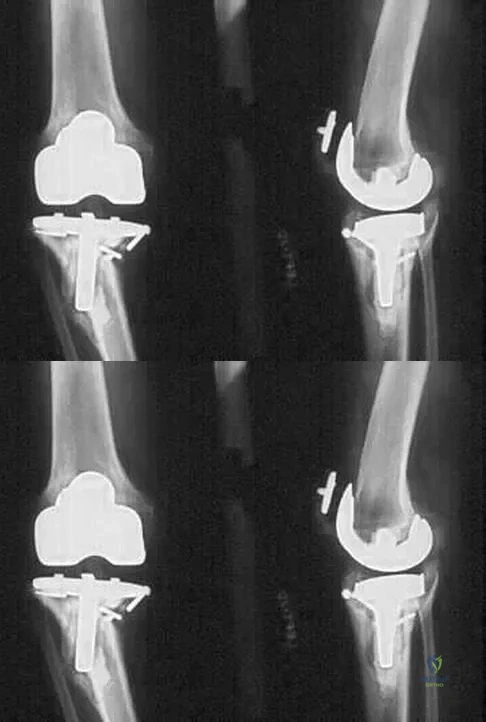
Figure 13 shows the radiographs of a 56-year-old woman who has pain and varus knee deformity after undergoing total knee arthroplasty 8 years ago. Aspiration and studies for infection are negative. During revision surgery, management of the tibial bone loss is best achieved by
Explanation
Question 4
Varus intertrochanteric osteotomy for coxa valga commonly produces which of the following results?
Explanation
Question 5
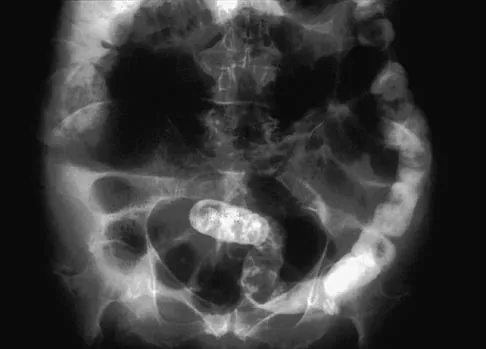
A 65-year-old woman has nausea, vomiting, and abdominal distention after undergoing total knee arthroplasty 48 hours ago. An abdominal radiograph is shown in Figure 14. Associated risk factors for this disorder include
Explanation
Question 6
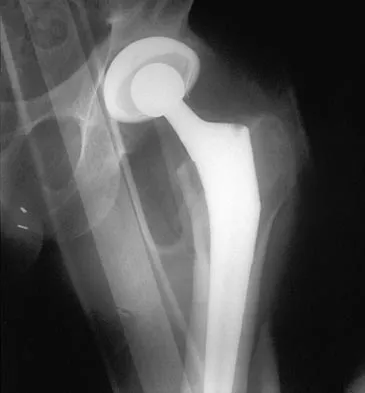
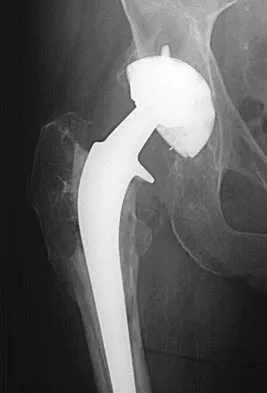
A 77-year-old woman with osteoporosis who underwent cemented total hip arthroplasty 12 years ago fell down a flight of stairs. A radiograph is shown in Figure 15. What is the best option for treating this fracture?
Explanation
Question 7
Total hip arthroplasty in a patient with a long-standing hip fusion on the contralateral side is most likely to result in
Explanation
Question 8
A 60-year-old woman reports anterior knee pain 2 years after undergoing primary total knee arthroplasty for rheumatoid arthritis. A Merchant view of the patella is shown in Figure 16. What is the most likely cause of her pain?
Explanation
Question 9
The anterior portal of a hip arthroscopy places what structure at greatest risk for injury?
Explanation
Question 10
Figure 17 shows the radiograph of an 80-year-old woman who has left groin pain. She underwent a total hip arthroplasty 15 years ago and has no history of hip dislocation; however, she now reports that the pain results in functional impairment. Preoperative findings reveal that the component used has been discontinued, the locking mechanism is poor, and there is no replacement polyethylene available from the company. During surgery, the acetabular component is found to be well fixed, it is in satisfactory position, and adequate access can be obtained through the screw holes in the component to debride the osteolytic cavities. What is the best course of action for revision?
Explanation
Question 11
The need for postoperative allogeneic blood transfusions after total hip arthroplasty has been shown to be reduced when using
Explanation
Question 12
Which of the following is considered a major characteristic of hyaluronate?
Explanation
Question 13
Which of the following is considered an important factor in improved cemented femoral stem survivorship?
Explanation
Question 14
An acetabular reinforcement cage is most often indicated for which of the following conditions?
Explanation
Question 15
What is the most common short-term complication following femoral impaction grafting for revision total hip arthroplasty?
Explanation
Question 16
Which of the following is considered the most predictive factor in determining whether a patient will need a blood transfusion after total knee arthroplasty?
Explanation
Question 17
A 32-year-old man has posttraumatic arthritis after undergoing open reduction and internal fixation of a left acetabular fracture. A total hip arthroplasty is performed, and the radiograph is shown in Figure 18. What is the most common mode of failure leading to revision in this group of patients?
Explanation
Question 18
A 42-year-old man sustained the periprosthetic fracture shown in Figures 19a and 19b. The femoral component is well fixed. What is the next most appropriate step in management?
Explanation
Question 19
A 58-year-old man has anterior knee pain after undergoing total knee arthroplasty for osteoarthritis 2 years ago. He denies any history of trauma. A Merchant view is shown in Figure 20. What is the most likely cause of his pain?
Explanation
Question 20
A 30-year-old patient has acetabular dysplasia and moderate secondary osteoarthrosis. Which of the following studies will best help predict the success of periacetabular osteotomy?
Explanation
Question 21
Which of the following is considered a specific advantage of using COX-2 inhibitors over COX-1 inhibitors?
Explanation
Question 22
Which of the following is not a reported mode of failure for a constrained acetabular component?
Explanation
Question 23
Which of the following factors is most likely to be associated with prolonged survival of total knee arthroplasty?
Explanation
Question 24
Analysis of primary total hip arthroplasty using press-fit acetabular components without supplementary screw fixation reveals that screw fixation
Explanation
Question 25
Dislocation following primary total hip arthroplasty is more likely to occur in which of the following situations?
Explanation
Question 26
A 35-year-old healthy male sustains a vertically oriented, displaced femoral neck fracture (Pauwels III). Which of the following fixation constructs provides the most biomechanically stable fixation for this specific fracture pattern?
Explanation
Question 27
A highly active 68-year-old male presents with a displaced femoral neck fracture. He is medically optimized and a decision is made between total hip arthroplasty (THA) and hemiarthroplasty. According to current literature, which of the following is true regarding THA compared to hemiarthroplasty in this patient population?
Explanation
Question 28
A 78-year-old female presents with thigh pain and inability to bear weight after a mechanical fall. Radiographs demonstrate a transverse periprosthetic femur fracture around a fully porous-coated femoral stem placed 10 years ago. The stem appears loose on radiographs, but there is adequate proximal bone stock.
What is the most appropriate treatment?
Explanation
Question 29
A 55-year-old male with a ceramic-on-ceramic total hip arthroplasty complains of a loud, high-pitched squeaking noise with ambulation. Which of the following factors is most strongly associated with this complication?
Explanation
Question 30
During the cementation and pressurization phase of a cemented hemiarthroplasty for a femoral neck fracture, the patient's blood pressure drops acutely to 70/40 mmHg, accompanied by severe hypoxia. What is the primary pathophysiologic mechanism of this event?
Explanation
Question 31
A 45-year-old female presents with unexplained groin pain 5 years after receiving a metal-on-metal total hip arthroplasty. Her radiographs are unremarkable. What is the most appropriate initial diagnostic workup for the suspected pathology?
Explanation
Question 32
Following a primary total hip arthroplasty, a patient is noted to have a new-onset sciatic nerve palsy. Which of the following motor deficits is most likely to be present on physical examination?
Explanation
Question 33
A 24-year-old male sustains a nondisplaced femoral neck fracture following a fall from height. He is treated with percutaneous cannulated screw fixation. Which of the following factors is most critical in minimizing his risk of developing avascular necrosis (AVN) of the femoral head?
Explanation
Question 34
A 60-year-old female complains of anterior groin pain 1 year after an uncomplicated total hip arthroplasty. The pain is worst when she actively raises her leg to get into a car. Radiographs reveal the acetabular component has 10 degrees of anteversion and a prominent anterior rim. Conservative management has failed. What is the most appropriate surgical treatment?
Explanation
Question 35
A 42-year-old male presents with progressively worsening hip pain. Radiographs demonstrate a crescent sign and early subchondral collapse of the femoral head, but the joint space is preserved (Ficat Stage III).
What is the most reliable definitive treatment for this patient?
Explanation
Question 36
During a standard posterior approach to the hip for arthroplasty, preserving the insertion of the quadratus femoris muscle or remaining proximal to it is recommended to protect which of the following vascular structures?
Explanation
Question 37
A surgeon utilizes a direct lateral (Hardinge) approach for a total hip arthroplasty. The gluteus medius is split longitudinally. Extending this split more than 5 cm proximal to the tip of the greater trochanter places which nerve at significant risk?
Explanation
Question 38
An 88-year-old female nursing home resident with severe dementia and minimal ambulatory capacity sustains a displaced femoral neck fracture. Which of the following is the most appropriate surgical intervention?
Explanation
Question 39
When evaluating a patient for a potential metal-on-metal total hip arthroplasty, which of the following medical conditions is widely considered an absolute contraindication to this bearing surface?
Explanation
Question 40
A 35-year-old man sustains a completely displaced, vertically oriented femoral neck fracture (Pauwels type III) after a fall from a height.
Which of the following internal fixation constructs provides the greatest biomechanical stability for this fracture pattern?
Explanation
Question 41
When comparing total hip arthroplasty (THA) to hemiarthroplasty for the treatment of a displaced femoral neck fracture in an active, independent 72-year-old woman, which of the following statements is most accurate?
Explanation
Question 42
A 78-year-old man with a displaced femoral neck fracture undergoes a primary total hip arthroplasty. Compared to a patient undergoing total hip arthroplasty for elective primary osteoarthritis, this patient is at an increased risk for which of the following complications?
Explanation
Question 43
During closed reduction and internal fixation of a displaced femoral neck fracture, care must be taken to minimize further injury to the primary blood supply of the adult femoral head. Which of the following vessels provides the majority of this blood supply?
Explanation
Question 44
A meta-analysis comparing unipolar and bipolar hemiarthroplasty for the treatment of displaced femoral neck fractures in the elderly would most likely demonstrate which of the following findings?
Explanation
Question 45
A 25-year-old female marathon runner presents with insidious onset groin pain. Radiographs are normal, but an MRI reveals a focal fracture line involving the superior (tension) aspect of the femoral neck without displacement. What is the most appropriate management?
Explanation
Question 46
A 75-year-old woman sustains a valgus-impacted femoral neck fracture. What is the primary rationale for recommending operative fixation with percutaneous cannulated screws over non-operative management?
Explanation
Question 47
An 82-year-old woman is scheduled for a hemiarthroplasty for a displaced femoral neck fracture. When counseling the family on the choice between a cemented and an uncemented femoral stem, current evidence suggests that a cemented stem is associated with:
Explanation
Question 48
In an 80-year-old patient with multiple medical comorbidities, surgical intervention for a displaced femoral neck fracture within 48 hours of admission has been shown to primarily decrease the risk of:
Explanation
Question 49
Which of the following is the strongest predictive factor for nonunion after closed reduction and internal fixation of a displaced femoral neck fracture in a 60-year-old patient?
Explanation
Question 50
During the insertion of cemented hemiarthroplasty for a femoral neck fracture, the patient's blood pressure drops acutely and oxygen saturation falls. Bone cement implantation syndrome (BCIS) is suspected. The primary hemodynamic derangement in severe BCIS is characterized by:
Explanation
Question 51
An 81-year-old nursing home resident with severe Parkinson's disease sustains a displaced femoral neck fracture. Which of the following surgical options minimizes her risk of postoperative instability while addressing the fracture?
Explanation
Question 52
A 65-year-old woman undergoes conversion of a failed ORIF of a femoral neck fracture to a total hip arthroplasty. Compared to primary THA for osteoarthritis, this conversion procedure is associated with:
Explanation
Question 53
A 45-year-old man with end-stage renal disease on hemodialysis presents with a displaced femoral neck fracture. If internal fixation is chosen over arthroplasty, the surgeon must be aware of an exceptionally high risk for which complication?
Explanation
Question 54
A 68-year-old active man presents with a displaced femoral neck fracture. Radiographs reveal the fracture along with severe, pre-existing osteoarthritis of the ipsilateral hip characterized by joint space narrowing and large osteophytes. The most appropriate surgical treatment is:
Explanation
Question 55
When utilizing three cannulated screws for the fixation of a non-displaced femoral neck fracture, the optimal biomechanical configuration of the screws is:
Explanation
Question 56
A 55-year-old woman sustains a displaced femoral neck fracture. She has a history of severe pelvic radiation for cervical cancer 15 years ago. Which of the following is the most appropriate surgical management?
Explanation
Question 57
A 30-year-old man involved in a motorcycle accident sustains a comminuted midshaft femur fracture and an ipsilateral, non-displaced femoral neck fracture. What is the most appropriate sequence and method of fixation?
Explanation
Question 58
A 77-year-old woman undergoes total hip arthroplasty for a displaced femoral neck fracture. Which of the following surgical approaches, if performed without meticulous soft-tissue repair, is associated with the highest risk of postoperative dislocation?
Explanation
Question 59
A healthy 35-year-old man sustains a displaced femoral neck fracture. When counseling the patient on the risk of avascular necrosis (AVN), which of the following is considered the most significant determining factor?
Explanation
Question 60
An active, independent 74-year-old woman sustains a displaced femoral neck fracture. Compared to treatment with a bipolar hemiarthroplasty, treatment with a total hip arthroplasty (THA) is associated with which of the following?
Explanation
Question 61
When performing a total hip arthroplasty via the direct anterior approach, the internervous plane utilized is between muscles innervated by which of the following nerves?
Explanation
Question 62
A 28-year-old female marathon runner complains of progressively worsening anterior groin pain. MRI reveals a stress fracture on the superior aspect of the femoral neck involving 60% of the neck width. What is the most appropriate management?
Explanation
Question 63
Which of the following fracture patterns of the proximal femur is biomechanically best treated with a sliding hip screw (SHS) rather than multiple parallel cancellous screws?
Explanation
Question 64
A 68-year-old man undergoes a cemented unipolar hemiarthroplasty for a displaced femoral neck fracture. During cement pressurization and stem insertion, the patient experiences sudden profound hypotension and hypoxia. What is the primary pathophysiologic mechanism of this complication?
Explanation
Question 65
During preoperative templating for a total hip arthroplasty, the surgeon notes that increasing the femoral offset of the implant will result in which of the following biomechanical changes?
Explanation
Question 66
A 45-year-old man presents with a painful nonunion of a femoral neck fracture 9 months after fixation with 3 cancellous screws. Radiographs show a vertical fracture line (Pauwels type III) with varus collapse, but MRI confirms a viable femoral head. What is the best surgical option?
Explanation
Question 67
Which of the following vessels provides the predominant blood supply to the weight-bearing dome of the adult femoral head?
Explanation
Question 68
A 35-year-old man sustains a displaced, vertically oriented (Pauwels type III) femoral neck fracture. Which of the following fixation constructs offers the greatest biomechanical stability for this specific fracture pattern?
Explanation
Question 69
A healthy, active 72-year-old woman sustains a Garden IV femoral neck fracture. Compared to bipolar hemiarthroplasty, treatment with total hip arthroplasty (THA) is associated with a higher rate of which of the following?
Explanation
Question 70
During a direct anterior approach for total hip arthroplasty, the internervous plane is developed between muscles supplied by which of the following nerves?
Explanation
Question 71
A 45-year-old man undergoes total hip arthroplasty. Six months postoperatively, he presents with a squeaking sound from his hip during normal walking. He has no pain, and radiographs show well-fixed components. Which bearing surface was most likely used?
Explanation
Question 72
A 68-year-old woman with rheumatoid arthritis is scheduled for a total hip arthroplasty. Preoperative radiographs reveal severe protrusio acetabuli. During acetabular reconstruction, what is the most appropriate management to restore the anatomic center of rotation?
Explanation
Question 73
A 55-year-old man presents with painful clicking and groin pain 5 years after an uncemented total hip arthroplasty. Radiographs show a well-fixed femoral stem and a well-fixed acetabular shell. Blood work shows markedly elevated serum cobalt and mildly elevated chromium. What is the most likely diagnosis?
Explanation
Question 74
A 75-year-old nursing home resident sustains a displaced femoral neck fracture. A cemented bipolar hemiarthroplasty is planned. During cement pressurization, the patient's blood pressure drops precipitously and end-tidal CO2 decreases. Which of the following is the most important prophylactic measure to prevent this?
Explanation
Question 75
A 28-year-old woman sustains a non-displaced femoral neck fracture. She undergoes in situ fixation with three cannulated screws. What is the most significant factor predicting the development of osteonecrosis (AVN) of the femoral head in this patient?
Explanation
Question 76
An 80-year-old man falls and sustains a basicervical femoral neck fracture. Which of the following fixation methods is biomechanically most appropriate for this fracture pattern?
Explanation
Question 77
Three weeks after a primary total hip arthroplasty via a posterior approach, a 65-year-old woman presents with sudden hip pain and shortening of the limb. Radiographs show a posterior dislocation. Closed reduction is successful. What is the most appropriate initial management?
Explanation
Question 78
A 68-year-old man presents with a Vancouver B2 periprosthetic femur fracture around his uncemented total hip arthroplasty 6 years after the index procedure. Radiographs show a fracture around a loose stem with adequate distal bone stock. What is the treatment of choice?
Explanation
Question 79
When evaluating an anteroposterior pelvis radiograph to assess acetabular component positioning post-total hip arthroplasty, the /"safe zone/" for acetabular abduction (inclination) and anteversion, as historically described by Lewinnek, is:
Explanation
Question 80
A 70-year-old man undergoes a total hip arthroplasty via a direct anterior approach. Postoperatively, he complains of numbness and a burning sensation over the anterolateral aspect of his thigh. Motor function is completely intact. Which nerve was most likely stretched or injured?
Explanation
Question 81
You are reviewing a radiograph of a 62-year-old female who sustained a fall. The radiograph reveals a Garden I femoral neck fracture. Which of the following best describes the classical radiographic appearance of this fracture type?
Explanation
Question 82
A 50-year-old woman undergoes a total hip arthroplasty via a posterior approach. During the approach, the short external rotators are released. The surgeon must be particularly careful to protect the sciatic nerve, which typically exits the pelvis:
Explanation
Question 83
A 25-year-old man sustains a displaced transcervical femoral neck fracture. Which of the following fixation constructs provides the greatest biomechanical stability for this high-shear fracture pattern?
Explanation
Question 84
An active, independent 72-year-old woman sustains a displaced femoral neck fracture. Compared to bipolar hemiarthroplasty, treatment with total hip arthroplasty (THA) is most closely associated with which of the following outcomes?
Explanation
Question 85
A 65-year-old man presents with groin pain 5 years after undergoing a metal-on-polyethylene total hip arthroplasty with a large diameter (36 mm) metal head. Aspiration yields cloudy fluid with negative cultures. MRI with metal artifact reduction shows a solid pseudotumor. What is the most likely cause?
Explanation
Question 86
A 30-year-old male presents with a nondisplaced femoral neck fracture. Which of the following is the most compelling rationale for performing a hip capsulotomy during surgical fixation?
Explanation
Question 87
A 45-year-old man underwent closed reduction and percutaneous pinning for a displaced femoral neck fracture 8 months ago. He now complains of progressive groin pain. Radiographs reveal varus collapse and fracture nonunion with a viable femoral head on MRI. What is the most appropriate definitive management?
Explanation
Question 88
During a direct anterior approach to the hip for total hip arthroplasty, the ascending branch of the lateral femoral circumflex artery is typically ligated. In what intermuscular interval is this approach performed?
Explanation
Question 89
When utilizing three parallel cannulated screws for the fixation of a femoral neck fracture, what configuration provides the maximum biomechanical stability?
Explanation
Question 90
A patient undergoes a posterior approach total hip arthroplasty. Postoperatively, the patient experiences recurrent anterior dislocations. Which of the following component malpositions is most likely responsible?
Explanation
Question 91
A 68-year-old male sustains a basicervical femoral neck fracture. Which of the following fixation methods is most appropriate due to the inherent biomechanical instability of this specific fracture pattern?
Explanation
Question 92
Following a total hip arthroplasty, a patient has a completely stable hip but complains that the operative leg feels 1.5 cm longer. Intraoperative templating was accurate. Which of the following adjustments during surgery would have corrected this leg length discrepancy without compromising abductor tension?
Explanation
Question 93
An 81-year-old woman with a displaced femoral neck fracture is undergoing a cemented bipolar hemiarthroplasty. During the pressurization of the cement and insertion of the femoral stem, she experiences sudden hypoxia, hypotension, and right heart failure. What is the primary pathophysiologic mechanism of this complication?
Explanation
Question 94
Which of the following vessels is the principal source of blood supply to the weight-bearing dome of the femoral head, and is most at risk in a displaced intracapsular femoral neck fracture?
Explanation
Question 95
A 55-year-old man with a history of ankylosing spondylitis is scheduled for a bilateral total hip arthroplasty. To prevent heterotopic ossification, which of the following prophylactic regimens is most appropriate?
Explanation
Question 96
A 78-year-old man presents with a displaced femoral neck fracture. He is on clopidogrel for a drug-eluting stent placed 2 years ago. Cardiology clears him for surgery. What is the optimal timing for his hemiarthroplasty to minimize mortality?
Explanation
Question 97
A 75-year-old woman sustains a fall. Radiographs show a valgus-impacted femoral neck fracture (Garden I). She is currently ambulating with minimal pain. What is the recommended treatment?
Explanation
Question 98
Following a complex total hip arthroplasty via a posterior approach for developmental dysplasia of the hip (DDH), the patient is noted to have a foot drop. They cannot dorsiflex the great toe but have preserved plantar flexion. Which nerve division is most likely injured, and what is the typical mechanism?
Explanation
Question 99
A 42-year-old active male underwent a ceramic-on-ceramic total hip arthroplasty 3 years ago. He presents with an audible 'squeaking' noise from the hip during deep flexion, though he denies any pain. Radiographs show no loosening. What is the most common factor associated with this phenomenon?
Explanation
None
