AAOS Orthopedic MCQs (Set 1): Hip Fractures & Arthroplasty | ABOS Board Review 2004
Key Takeaway
This high-yield question set for the AAOS/ABOS exams, Set 1 from 2004, focuses on the diagnosis and management of hip fractures, including femoral neck and intertrochanteric types. It also covers total hip arthroplasty indications, surgical approaches, and potential complications. Ideal for residents preparing for OITE.
AAOS Orthopedic MCQs (Set 1): Hip Fractures & Arthroplasty | ABOS Board Review 2004
Comprehensive 100-Question Exam
00:00
Start Quiz
Question 1
During primary total knee arthroplasty, what is the maximum distance the joint line can be raised or lowered before poor motion, joint instability, and increased chance of revision occur?
Explanation
Question 2
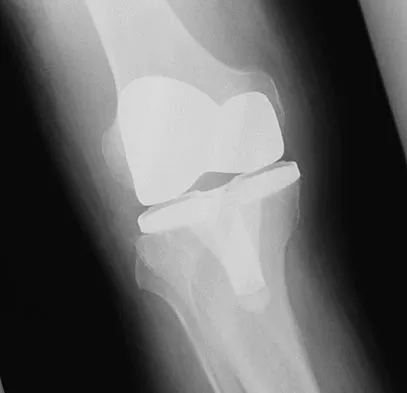
Figure 1 shows the radiograph of an 18-year-old patient who has severe knee pain. Treatment consisting of osteotomy should be perfomed
Explanation
Question 3
Figure 2 shows the AP radiograph of an 18-year-old woman with progressive and severe right hip pain. Nonsteroidal anti-inflammatory drugs no longer control her pain. What is the next most appropriate step in management?
Explanation
Question 4
Which of the following findings is a prerequisite for a high tibial valgus osteotomy for medial compartment gonarthrosis?
Explanation
Question 5
Figures 3a and 3b show the current radiographs of a 58-year-old man who underwent total knee arthroplasty with a cruciate ligament sparing prosthesis 7 years ago. Examination reveals boggy synovitis and moderate pain, particularly anteriorly. Management should consist of
Explanation
Question 6
What is the main benefit of using metal-backed tibial components in total knee arthroplasty?
Explanation
Question 7
Figures 4a and 4b show the radiographs of a 32-year-old man who has right groin pain with activity or prolonged standing. Which of the following factors would not prohibit consideration of acetabular liner exchange and grafting of the defects?
Explanation
Question 8
A patient who underwent total knee arthroplasty 6 years ago now reports knee pain for the past 3 days following dental surgery. Cultures of the aspirate are positive for Staphylococcus epidermidis. Management should consist of
Explanation
Question 9
A 32-year-old woman with systemic lupus erythematosus treated with methotrexate and oral corticosteroids reports right groin pain with ambulation and night pain. Examination reveals pain with internal and external rotation and flexion that is limited to 105 degrees because of discomfort. Laboratory studies show a serum WBC of 9.0/mm3 and an erythrocyte sedimentation rate of 35 mm/h. Figures 5a and 5b show AP and lateral radiographs of the right hip. Further evaluation should include
Explanation
Question 10
An otherwise healthy 57-year-old man has persistent, severe hip pain after undergoing total hip arthroplasty 3 months ago. What is the next most appropriate step in management?
Explanation
Question 11
A 61-year-old man reports right hip pain and limited motion after undergoing total hip arthroplasty for posttraumatic arthritis 1 year ago. Figure 6 shows an AP radiograph of the pelvis. To improve motion and relieve pain, management should consist of
Explanation
Question 12
Osteolysis after total knee arthroplasty can be minimized through prosthetic design features such as
Explanation
Question 13
What type of cementless femoral fixation results in the highest rate of distal femoral osteolysis?
Explanation
Question 14
When performing a total knee arthroplasty using modular components, what is the minimum recommended thickness of an ultra-high molecular weight polyethylene insert for a tibial component?
Explanation
Question 15
During total knee arthroplasty using a posterior cruciate-retaining design, excessive tightness in flexion is noted, while the extension gap is felt to be balanced. Which of the following actions will effectively balance the knee?
Explanation
Question 16
What is the dominant component of articular cartilage extracellular matrix by weight?
Explanation
Question 17
A 70-year-old man underwent primary total knee arthroplasty 3 months ago. Figures 7a and 7b show the radiograph and clinical photograph following incision and drainage of the wound 1 week ago. Aspiration of the joint reveals methicillin-sensitive Staphylococcus aureus. What is the next most appropriate step in management?
Explanation
Question 18
A 35-year-old male laborer with isolated posttraumatic degenerative arthritis of the right hip undergoes the procedure shown in Figure 8. What is the most appropriate position of the right lower extremity?
Explanation
Question 19
Which of the following factors can contribute to patellar subluxation following routine total knee arthroplasty?
Explanation
Question 20
When an adult hip is surgically dislocated for relief of femoro-acetabular impingment, what is the risk of postoperative iatrogenic osteonecrosis?
Explanation
Question 21
What is the most frequent late complication of cementless fixation in total knee arthroplasty?
Explanation
Question 22
In the treatment of acetabular dysplasia, what type of pelvic osteotomy leaves the "teardrop" in its original position and redirects the acetabulum?
Explanation
Question 23
What is the correct order of the elastic modulus of the following materials from greatest to least?
Explanation
Question 24
Compared to similar patients who do not donate autologous blood, patients with normal baseline hemoglobin who donate autologous blood prior to undergoing primary total hip arthroplasty are likely to
Explanation
Question 25
Which of the following best describes the resultant forces on an increased offset stem when compared with a standard offset stem?
Explanation
Question 26
What is the most common mechanism of failure of a cemented femoral component in total hip arthroplasty?
Explanation
Question 27
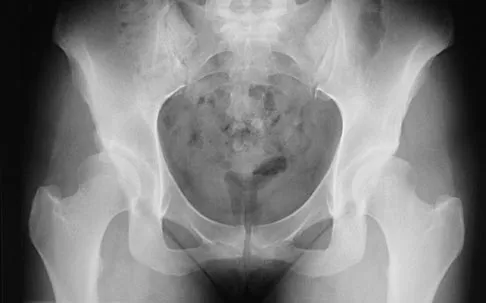
Figure 3 shows an AP radiograph of an 80-year-old woman who sustained a low-energy fall. She has a nondisplaced femoral neck fracture. What is the most appropriate definitive management?
Explanation
Question 28
A 45-year-old active male presents with an intertrochanteric hip fracture. Open reduction and internal fixation with a sliding hip screw is planned. To minimize the risk of screw cut-out, what is the ideal tip-apex distance (TAD)?
Explanation
Question 29
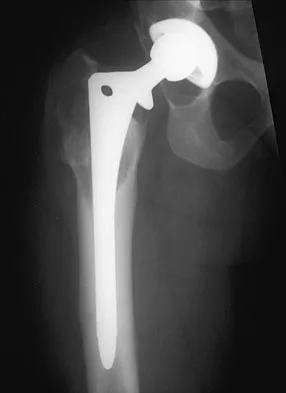
Figure 4 shows a pelvic radiograph of a 65-year-old man who is 5 years status post right total hip arthroplasty. He reports a squeaking sound from his hip. What bearing surface combination was most likely used?
Explanation
Question 30
In a patient undergoing total hip arthroplasty, placement of the acetabular component in excessive retroversion is most likely to result in which of the following complications?
Explanation
Question 31
A 72-year-old woman presents with a displaced femoral neck fracture. She has a history of rheumatoid arthritis and is an independent ambulator. Which of the following is the most appropriate surgical treatment?
Explanation
Question 32
What is the most accurate method to diagnose an adverse local tissue reaction (ALTR) in a patient with a metal-on-metal total hip arthroplasty?
Explanation
Question 33
A 68-year-old man presents with groin pain 7 years after total hip arthroplasty. Radiographs show eccentric wear of the polyethylene liner and osteolysis in Gruen zones 1 and 7. What is the primary biological mediator responsible for this osteolysis?
Explanation
Question 34
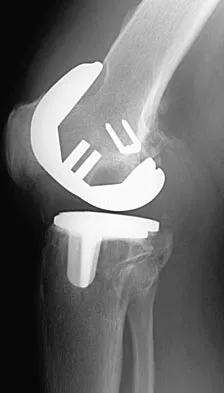
Figure 6 shows the radiograph of an 82-year-old man who sustained a Vancouver B2 periprosthetic femur fracture around a cemented femoral stem. What is the most appropriate surgical management?
Explanation
Question 35
During a posterior approach to the hip, which muscle is most critical to protect and repair to minimize the risk of postoperative dislocation?
Explanation
Question 36
Which of the following is considered the "safe zone" for acetabular component placement in total hip arthroplasty as described by Lewinnek?
Explanation
Question 37
A 25-year-old man sustains a basicervical femoral neck fracture. Which of the following fixation constructs provides the most biomechanical stability for this specific fracture pattern?
Explanation
Question 38
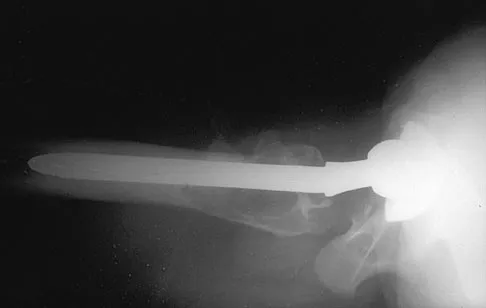
Based on Figure 9 showing an intertrochanteric fracture with posteromedial comminution, what is the primary advantage of a cephalomedullary nail over a sliding hip screw?
Explanation
Question 39
A 55-year-old woman complains of lateral hip pain after an uncomplicated total hip arthroplasty performed via a direct anterior approach. What structure is most likely contributing to her symptoms?
Explanation
Question 40
When converting an ankylosed (arthrodesed) hip to a total hip arthroplasty, the patient should be counseled about an increased risk of which of the following complications compared to primary THA?
Explanation
Question 41
Highly cross-linked polyethylene is primarily used in total hip arthroplasty to reduce which of the following?
Explanation
Question 42
A 60-year-old male is evaluated for a painful THA. Aspiration yields a synovial fluid white blood cell (WBC) count of 4,500 cells/uL with 85% polymorphonuclear leukocytes. What is the most appropriate next step?
Explanation
Question 43
Increasing femoral offset in a total hip arthroplasty has what primary biomechanical effect on the joint?
Explanation
Question 44
A 75-year-old active community ambulator sustains a displaced femoral neck fracture. Compared to hemiarthroplasty, total hip arthroplasty for this patient is associated with:
Explanation
Question 45
A 45-year-old man sustains a subtrochanteric femur fracture. Which muscle group is primarily responsible for the flexion and external rotation deformity of the proximal fragment?
Explanation
Question 46
An 82-year-old woman presents with a periprosthetic femur fracture around a cementless THA stem. Radiographs show a fracture at the tip of the stem, and the stem is radiographically loose. According to the Vancouver classification, what is the most appropriate management?
Explanation
Question 47
When utilizing a sliding hip screw for an intertrochanteric femur fracture, maintaining a tip-apex distance (TAD) of less than 25 mm is primarily associated with a decreased risk of:
Explanation
Question 48
A 30-year-old man sustains a Pauwels type III femoral neck fracture. To maximize biomechanical stability and prevent shear failure, the optimal construct should include:
Explanation
Question 49
A 55-year-old man with a metal-on-metal total hip arthroplasty presents with groin pain 5 years postoperatively. Workup reveals a solid pseudotumor and elevated serum cobalt and chromium levels. This reaction is primarily mediated by which type of hypersensitivity?
Explanation
Question 50
In a patient undergoing primary THA with a ceramic-on-ceramic bearing, what is a specific known complication related to this bearing choice compared to others?
Explanation
Question 51
A 65-year-old woman is evaluated for a painful THA 3 years postoperatively. Her serum CRP is 25 mg/L and ESR is 45 mm/hr. Hip aspiration yields 4,500 WBCs/uL with 85% neutrophils. What is the most appropriate next step?
Explanation
Question 52
Following a primary THA using a posterior approach, the patient demonstrates a foot drop and inability to extend the great toe. Sensation is decreased over the dorsum of the foot. Which specific neural structure was most likely injured?
Explanation
Question 53
When performing an anterior approach to the hip (Smith-Petersen), the internervous plane utilized is between muscles innervated by which two nerves?
Explanation
Question 54
To minimize the risk of dislocation, the acetabular component in a THA should ideally be placed within the "safe zone" described by Lewinnek. What are these target angles?
Explanation
Question 55
Highly cross-linked polyethylene is now commonly used in THA. The primary negative biomechanical effect of increasing the cross-linking radiation dose in polyethylene is:
Explanation
Question 56
A patient with a history of severe heterotopic ossification (HO) following a contralateral THA is undergoing an ipsilateral THA. Which of the following is the most proven prophylactic treatment against HO?
Explanation
Question 57
A 28-year-old woman with systemic lupus erythematosus presents with groin pain. Radiographs show a subchondral lucent line (crescent sign) in the femoral head but no gross collapse. What Ficat and Arlet stage does this represent?
Explanation
Question 58
Hip resurfacing arthroplasty is most appropriately indicated for which of the following patient profiles?
Explanation
Question 59
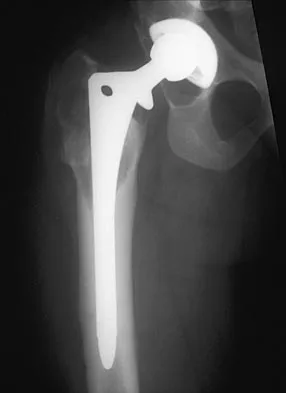
Stress shielding of the proximal femur following cementless THA is most commonly seen with which type of femoral stem design?
Explanation
Question 60
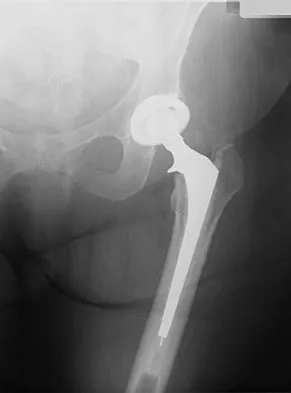
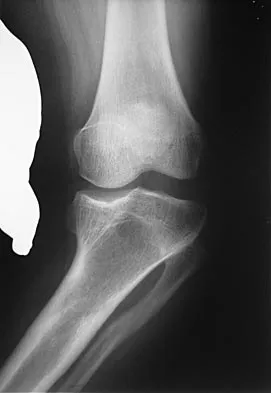
Figure 1 shows the radiograph of a 72-year-old man with severe groin pain 5 years after an uncemented total hip arthroplasty. Inflammatory markers are normal.
What is the most likely cause of his pain if symptoms are exacerbated by active hip flexion against resistance?
Explanation
Question 61
In active, healthy elderly patients who sustain a displaced femoral neck fracture, what is the primary clinical advantage of total hip arthroplasty (THA) compared to hemiarthroplasty?
Explanation
Question 62
Which of the following vessels provides the primary blood supply to the adult femoral head and is at highest risk of injury during a displaced femoral neck fracture?
Explanation
Question 63
When evaluating a patient for a primary total hip arthroplasty, increasing the femoral head offset without altering leg length will have which of the following biomechanical effects?
Explanation
Question 64
A 68-year-old woman sustains a posterior dislocation of her primary total hip arthroplasty 4 weeks postoperatively. Closed reduction is successful in the emergency department. What is the most appropriate initial management?
Explanation
Question 65
A 78-year-old community-ambulating woman with mild dementia sustains a displaced femoral neck fracture. According to recent literature, which of the following surgical options is associated with the best functional outcome and lowest reoperation rate?
Explanation
Question 66
In total hip arthroplasty, which of the following bearing surface combinations is most characteristically associated with the phenomenon of "stripe wear"?
Explanation
Question 67
Six months after a primary total hip arthroplasty, a patient presents with new-onset hip pain. Inflammatory markers are elevated. Aspiration yields 35,000 WBCs/mcL with 90% neutrophils. What is the most appropriate definitive management?
Explanation
Question 68
Which of the following radiographic fracture patterns makes an intertrochanteric femur fracture inherently unstable and prone to collapse with a sliding hip screw?
Explanation
Question 69
A 65-year-old man is undergoing preoperative templating for a total hip arthroplasty. To accurately restore leg length and offset, which anatomical landmark is most commonly used to reference the inferior margin of the acetabular component on an AP pelvis radiograph?
Explanation
Question 70
In a cementless, fully porous-coated femoral component, initial mechanical stability (primary fixation) is most heavily dependent on which of the following factors?
Explanation
Question 71
Following a primary total hip arthroplasty performed via a posterior approach, the patient demonstrates a foot drop and decreased sensation over the dorsum of the foot. Which specific neural structure is most likely injured?
Explanation
Question 72
A 72-year-old woman on long-term bisphosphonate therapy presents with atraumatic thigh pain. Radiographs reveal a transverse, non-comminuted subtrochanteric fracture with a medial spike and lateral cortical thickening. What is the most appropriate surgical treatment?
Explanation
Question 73
According to AAOS guidelines, what is the recommended duration of pharmacological venous thromboembolism (VTE) prophylaxis following an elective total hip arthroplasty?
Explanation
Question 74
Following surgical fixation of an osteoporotic intertrochanteric hip fracture, when is the optimal time to initiate intravenous zoledronic acid to reduce the risk of subsequent fractures without delaying fracture union?
Explanation
Question 75
During a total hip arthroplasty utilizing the direct anterior (Smith-Petersen) approach, which of the following internervous planes is utilized superficially?
Explanation
Question 76
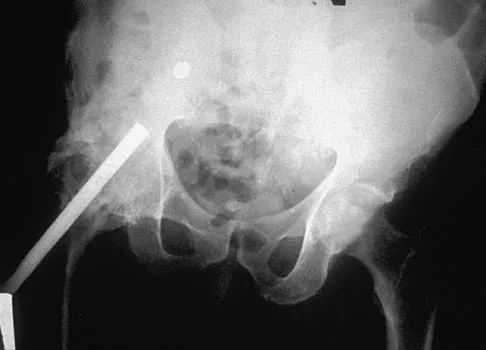
A patient presents with mechanical groin pain 10 years after a cementless THA. Radiographs show a continuous, progressive radiolucent line greater than 2 mm extending through all three DeLee and Charnley zones. This finding is most pathognomonic for which of the following?
Explanation
Question 77
A 35-year-old man sustains a completely displaced, vertically oriented (Pauwels Type III) femoral neck fracture after a motor vehicle collision. Which of the following fixation constructs provides the most biomechanically stable fixation for this specific fracture pattern?
Explanation
Question 78
A surgeon utilizes the direct anterior approach (Smith-Petersen) for a primary total hip arthroplasty. Which of the following is an expected potential neurologic complication specific to this surgical approach?
Explanation
Question 79
Which of the following is a uniquely recognized complication of ceramic-on-ceramic total hip arthroplasty compared to other modern bearing surfaces?
Explanation
Question 80
A 65-year-old man presents with progressive thigh pain 10 years after a cementless total hip arthroplasty. Radiographs demonstrate eccentric positioning of the femoral head within the acetabular shell and focal endosteal radiolucencies in Gruen zones 1 and 7. What is the primary biologic mechanism responsible for these radiographic findings?
Explanation
Question 81
Figure 4 illustrates a radiograph of an 82-year-old woman who sustained a low-energy fall resulting in a reverse obliquity intertrochanteric femur fracture. Based on the fracture morphology, what is the most biomechanically stable surgical intervention?
Explanation
Question 82
Following a primary total hip arthroplasty performed via a posterolateral approach, the patient develops a foot drop and decreased sensation over the dorsum of the foot. Which of the following intrinsic anatomic factors makes the affected nerve particularly susceptible to this surgical injury?
Explanation
Question 83
A 35-year-old patient presents with a vertically oriented, displaced femoral neck fracture (Pauwels Type III) after a motor vehicle collision. To minimize the risk of varus collapse, which of the following internal fixation strategies provides the greatest biomechanical stability?
Explanation
None
