AAOS Pediatric Orthopedics (Set 2): DDH, SCFE & Femur Fractures | Board Review
Key Takeaway
This high-yield question set for the AAOS/ABOS/OITE exams focuses on crucial pediatric orthopedic topics. It covers the diagnosis and management of Developmental Dysplasia of the Hip (DDH), Slipped Capital Femoral Epiphysis (SCFE), and common pediatric femur fractures, essential for board review.
AAOS Pediatric Orthopedics (Set 2): DDH, SCFE & Femur Fractures | Board Review
Comprehensive 100-Question Exam
00:00
Start Quiz
Question 1
Figures 11a and 11b show the clinical photograph and radiograph of a newborn. Based on these findings, what is the best course of action?
Explanation
Question 2
Figure 12 shows the radiograph of a patient who has anterior knee pain. History reveals a femoral fracture at age 5 years. What is the most likely cause of the deformity?
Explanation
Question 3
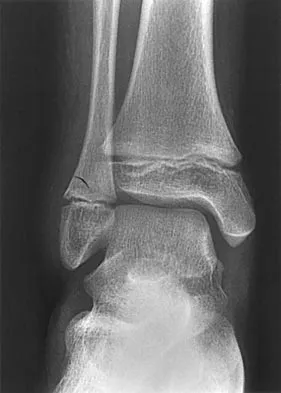
An 11-year-old boy has had a fever and pain and swelling over the lateral aspect of his right ankle for the past 3 days. Examination reveals warmth, swelling, and tenderness over the lateral malleolus, and he has a temperature of 103.2 degrees F (39.5 degrees C). Laboratory studies show a WBC count of 13,200/mm3 with 61% neutrophils, an erythocyte sedimentation rate of 112 mm/h, and a C-reactive protein of 15.7. Radiographs and a T2-weighted MRI scan are shown in Figures 13a through 13c. Aspiration yields 1 mL of purulent fluid. Management should now consist of
Explanation
Question 4
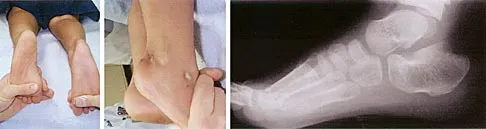
Figure 14 shows the clinical photographs and radiograph of an 8-year-old girl who has a progressive equinus deformity of the right ankle. There is no history of trauma or infection. What is the most likely diagnosis?
Explanation
Question 5
Which of the following patients is considered the most appropriate candidate for an isolated split posterior tendon transfer?
Explanation
Question 6
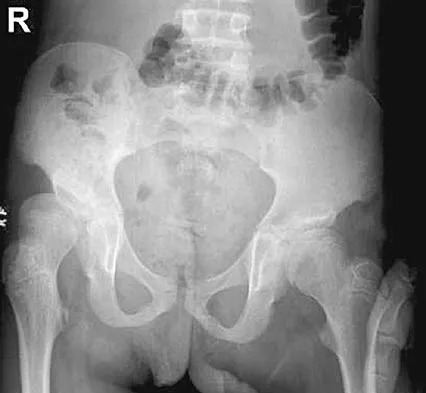
The mother of a 2-year-old boy reports that he had pain in the right hip all night and refuses to walk on the leg this morning. He is afebrile. Examination reveals pain on hip extension and adduction, but he is able to internally and externally rotate the hip approximately 20 degrees in each direction without pain. Laboratory studies reveal a WBC count of 7,400/mm3, with 62% polymorphonuclear neutrophil leukocytes. The AP radiograph shown in Figure 15 reveals a left teardrop distance of 8 mm, while the right side measures 10 mm. Which of the following diagnostic studies will best help confirm the diagnosis?
Explanation
Question 7
A senior resident is scheduled to perform a posterior medial release on a 10-month-old infant who has a congenital clubfoot deformity. Informed consent is obtained for the procedure. The supervising surgeon is obligated to give the parents what information?
Explanation
Question 8
Figure 16 shows the clinical photograph of a 3-month-old infant with a foot deformity that has been nonprogressive since birth. Examination reveals that the deformity corrects actively and with passive manipulation. There is no associated equinus. Management should consist of
Explanation
Question 9
Figure 17 shows the radiograph of an 11-year-old boy with Duchenne muscular dystrophy who has been nonambulatory for the past 2 years. Management of the spinal deformity should consist of
Explanation
Question 10
A 13-year-old girl with Down syndrome has bilateral chronic patellar dislocations. She denies knee pain. She is able to straighten her knees and walks with a symmetric but awkward gait. She does not flex her knees in midstance. Examination reveals that the patellae cannot be brought into a reduced position. Management should consist of
Explanation
Question 11
A 3-year-old patient with L3 myelomeningocele has bilateral dislocated hips. Management should consist of
Explanation
Question 12
A 4-year-old child sustains a spiral fracture to the tibia in an unwitnessed fall. History reveals three other fractures to long bones, and the parents are vague about the etiology of each. There is no family history of bone disease. The parents ask if the child has osteogenesis imperfecta (OI); however, there are no clinical or radiographic indications of this diagnosis. In addition to fracture care, management should include
Explanation
Question 13
A 10-year-old girl has been unable to walk for the past 5 days because of bilateral hip pain. Administration of IV morphine has provided some pain relief. She is afebrile. History reveals that she had an upper respiratory tract infection 3 weeks ago that resolved uneventfully. Examination reveals moderate pain with internal rotation and abduction, while log rolling maneuvers do not cause significant pain. An MRI scan shows a small effusion of one hip; however, a bone scan and plain radiographs are normal. Initial laboratory studies showed a markedly elevated WBC count, which subsequently declined to normal levels with IV antibiotics. Current studies show an erythrocyte sedimentation rate (ESR) of 100 mm/h. Aspiration of the hip obtains 3 mL of fluid; Gram stain is negative for bacteria, but a cell count shows a WBC count of 16,500/mm3. Streptozyme titer of the peripheral blood is 200 units (normal is less than 100 units). Management should now consist of
Explanation
Question 14
What is the best initial screening test for a patient with a limb-length discrepancy?
Explanation
Question 15
A 6-year-old girl has never been able to crawl or walk and can sit only when propped. History reveals no complications during pregnancy or delivery. Examination reveals a 30-degree scoliosis from T4 to L3. Deep tendon reflexes are absent, but fasciculations are present. The most likely genetic defect is the result of an abnormality in
Explanation
Question 16
Figure 18a shows the clinical photograph of a 2-year old boy who has a deformity of the right leg. Examination reveals eight cutaneous markings similar to those shown in Figure 18b. Radiographs are shown in Figure 18c. Management should consist of
Explanation
Question 17
What is the most common problem seen following epiphysiodesis for limb-length discrepancy?
Explanation
Question 18
Figure 19 shows the radiograph of a 6-month-old infant who has limited hip motion. History reveals no complications during pregnancy or delivery. Examination reveals that hip abduction is 45 degrees in flexion bilaterally. The neurologic examination is normal. What is the best course of action?
Explanation
Question 19
A 6-year-old boy with spastic diplegic cerebral palsy has a crouched gait. Examination reveals hip flexion contractures of 15 degrees and popliteal angles of 70 degrees. Equinus contractures measure 10 degrees with the knees extended. Which of the following surgical procedures, if performed alone, will worsen the crouching?
Explanation
Question 20
The parents of a 13-year-old boy with Down syndrome report that he has an increasing limp and decreased endurance with activities. Lateral flexion-extension radiographs of the cervical spine show no evidence of instability. Examination reveals a right Trendelenburg limp and an obvious limb-length discrepancy. Hip motion is symmetric except for some decreased abduction on the right side. A standing AP radiograph is shown in Figure 20. Management should consist of
Explanation
Question 21
A 9-year-old girl reports the immediate onset of severe groin pain and the inability to walk after tripping on a curb. Examination reveals marked hip pain with passive range of motion. A radiograph is shown in Figure 21. Regardless of treatment, what is the most common complication following this injury?
Explanation
Question 22
An 8-year-old boy reports progressive difficulty with walking. Examination reveals muscle weakness, with proximal groups more affected than distal muscles. Deep tendon reflexes are within normal limits. Laboratory studies show a creatine kinase level of 7,200 IU. Based on these findings, what is the most likely diagnosis?
Explanation
Question 23
A 7-year-old boy sustained a 2-cm laceration to the anterior aspect of his left knee after falling on a rock. Examination reveals that the joint surface is not visible through the wound. Radiographs show no evidence of a foreign body or free air in the joint. Management should consist of
Explanation
Question 24
What radiographic measurement is best used to assess the adequacy of deformity correction for the patient shown in Figure 22?
Explanation
Question 25
Figure 23 shows the radiograph of a 7 year-old girl with a low thoracic-level myelomeningocele. She has a history of skin ulcers over the apex of the deformity, but her current skin condition is good. Management of the spinal deformity should consist of
Explanation
Question 26
A 6-week-old female is being treated with a Pavlik harness for developmental dysplasia of the hip (DDH). At her 1-week follow-up, the mother notes that the child has stopped extending the knee on the affected side. On examination, the quadriceps are flaccid. What is the most appropriate next step in management?
Explanation
Question 27
A 9-month-old child with DDH is undergoing closed reduction and spica casting. According to Ramsey, the safe zone for positioning the hip to minimize the risk of avascular necrosis while maintaining reduction is defined by the arc between which two positions?
Explanation
Question 28
An 18-month-old requires open reduction for a chronically dislocated hip due to DDH. Which of the following anatomical structures is considered an intra-articular obstacle to successful closed reduction?
Explanation
Question 29
A 5-year-old female with residual acetabular dysplasia requires a pelvic osteotomy to improve anterolateral femoral head coverage. The surgeon plans an incomplete pericapsular osteotomy that hinges on the triradiate cartilage. Which procedure is being described?
Explanation
Question 30
A 4-week-old female born breech undergoes an ultrasound screening for DDH. The report notes an alpha angle of 45 degrees and a beta angle of 65 degrees. According to Graf's classification, what does the alpha angle represent?
Explanation
Question 31
A 6-month-old infant was treated with a Pavlik harness for 3 months. Recent radiographs reveal fragmentation and delayed ossification of the left femoral head. Excessive positioning in which direction during treatment is most strongly associated with this complication?
Explanation
Question 32
A 4-year-old child undergoes a Salter innominate osteotomy for the treatment of DDH. Which of the following biomechanical changes occurs as a direct result of this specific osteotomy?
Explanation
Question 33
A 13-year-old obese male presents with left groin and knee pain. On physical examination, which finding is considered the classic pathognomonic sign during passive flexion of the affected hip?
Explanation
Question 34
A 9-year-old female presents with bilateral Slipped Capital Femoral Epiphysis (SCFE). She is in the 10th percentile for height and weight.
Which of the following laboratory investigations is most indicated for this patient?
Explanation
Question 35
A 14-year-old male is unable to bear weight on his right leg after a minor fall. Radiographs demonstrate a severe, acute unstable SCFE. What is the primary advantage of the modified Dunn procedure via a surgical dislocation approach compared to in-situ pinning for this patient?
Explanation
Question 36
An 11-year-old boy undergoes in-situ pinning for a symptomatic left SCFE. Which of the following is the strongest clinical indication for prophylactic pinning of the asymptomatic right hip?
Explanation
Question 37
A 14-year-old male treated with in-situ pinning for a stable SCFE 6 months ago now presents with severe hip stiffness and worsening pain. Radiographs reveal global joint space narrowing to 2 mm. What is the most likely cause of this complication?
Explanation
Question 38
A 12-year-old female presents with hip pain for 3 weeks but is able to ambulate into the clinic with a mild limp.
According to the Loder classification, what is her approximate risk of developing avascular necrosis (AVN) following in-situ pinning?
Explanation
Question 39
A 13-year-old male presents with vague knee pain. An AP pelvis radiograph is obtained. Which of the following radiographic signs strongly indicates a subtle SCFE?
Explanation
Question 40
A 6-week-old female infant is brought to the clinic for a routine check-up. She was born via cesarean section for a breech presentation. Clinical examination reveals symmetrical thigh creases and negative Barlow and Ortolani maneuvers. What is the most appropriate next step in management?
Explanation
Question 41
A 4-month-old infant with developmental dysplasia of the hip has been treated in a Pavlik harness for 3 weeks. The parents report that the child has stopped kicking the left leg. On examination, the knee lacks active extension but has normal sensation. What is the most likely cause?
Explanation
Question 42
A 14-year-old boy with a BMI in the 95th percentile presents with 3 weeks of vague left knee pain and a slight limp. He is able to bear weight on the affected limb. Radiographs show a widened and irregular left capital femoral physis with a posterior and inferior slip. What is the most appropriate treatment?
Explanation
Question 43
In evaluating a patient with a slipped capital femoral epiphysis (SCFE), which of the following is considered an indication for prophylactic pinning of the contralateral asymptomatic hip?
Explanation
Question 44
A 4-year-old boy sustains a completely displaced, isolated, midshaft femur fracture after a fall from a playground structure. He weighs 18 kg (40 lbs). What is the most appropriate initial treatment?
Explanation
Question 45
A 9-year-old boy presents with an acute, unstable slipped capital femoral epiphysis (SCFE) after a minor fall. He is unable to bear weight. Which of the following complications is most highly associated with this specific type of SCFE compared to a stable SCFE?
Explanation
Question 46
A 12-month-old girl is noted to have a painless limp. Examination reveals a positive Galeazzi sign and asymmetric thigh folds. Radiographs demonstrate a superolaterally displaced right femoral head with an acetabular index of 40 degrees. What is the most appropriate initial management?
Explanation
Question 47
A 10-year-old boy weighing 40 kg sustains a closed, length-stable transverse midshaft femur fracture. Which of the following is the most appropriate surgical treatment?
Explanation
Question 48
During the surgical treatment of a slipped capital femoral epiphysis (SCFE) with in situ pinning, the surgeon must be careful to avoid joint penetration. Which complication is most directly associated with unrecognized pin penetration into the hip joint?
Explanation
Question 49
A 13-year-old boy who recently underwent intramedullary nailing for a femur fracture via a piriformis fossa entry point presents for a follow-up 2 years later. What is the most likely complication associated with this specific entry point in a skeletally immature patient?
Explanation
Question 50
A 3-week-old male infant undergoes ultrasound screening for developmental dysplasia of the hip (DDH). The alpha angle is measured at 40 degrees. According to the Graf classification, what does this alpha angle indicate?
Explanation
Question 51
A 6-year-old boy sustains a spiral midshaft femur fracture. He is managed with a spica cast. Two years later, his parents are concerned about a leg length discrepancy. Which of the following is the most expected outcome regarding limb length after this injury?
Explanation
Question 52
A 5-month-old infant is being treated with a Pavlik harness for DDH. The ultrasound at 4 weeks of treatment shows failure of reduction of the hip. What is the most appropriate next step in management?
Explanation
Question 53
Which of the following radiographic findings on an AP pelvis is most indicative of developmental dysplasia of the hip (DDH) in an 8-month-old child?
Explanation
Question 54
A 6-week-old female is undergoing treatment for developmental dysplasia of the hip with a Pavlik harness. During a follow-up visit, the mother notes the child is no longer kicking her leg on the affected side. On examination, active knee extension is absent, but the hip remains well reduced. What is the most appropriate next step in management?
Explanation
Question 55
A 5-week-old female infant undergoes hip ultrasound screening due to a breech presentation. The alpha angle is 55 degrees and the beta angle is 60 degrees. Dynamic testing demonstrates a stable hip. What is the most appropriate next step?
Explanation
Question 56
A 3-year-old girl is diagnosed with unilateral DDH. Closed reduction was unsuccessful. During an open reduction, an innominate osteotomy is planned to address acetabular dysplasia. Which of the following osteotomies hinges on the pubic symphysis to provide anterolateral coverage?
Explanation
Question 57
An 8-year-old boy presents with an acute on chronic slipped capital femoral epiphysis. His height and weight are both at the 25th percentile for his age. Which of the following laboratory studies is most strongly indicated?
Explanation
Question 58
A 13-year-old obese boy presents to the emergency department with severe right hip pain after a minor fall. He is unable to bear weight on the right leg, even with crutches. Radiographs confirm a severe slipped capital femoral epiphysis (SCFE). Which of the following represents the highest risk of complication for this patient?
Explanation
Question 59
A 12-year-old boy is scheduled for in situ pinning of a left-sided slipped capital femoral epiphysis. Prophylactic pinning of the asymptomatic right hip is most strongly recommended if the patient also has:
Explanation
Question 60
A 9-month-old infant is brought to the emergency department with a swollen and deformed left thigh. Radiographs reveal a spiral fracture of the femoral shaft. Assuming no other injuries, which of the following is the most appropriate initial orthopedic management?
Explanation
Question 61
A 6-year-old boy sustains an isolated diaphyseal femur fracture and is treated with flexible intramedullary nailing. To anticipate the most common complication related to leg length, how much overgrowth is typically expected after a femur fracture in this age group?
Explanation
Question 62
When performing a closed reduction and spica casting for a 9-month-old with developmental dysplasia of the hip, a percutaneous adductor tenotomy is often performed. The primary purpose of this tenotomy is to:
Explanation
Question 63
A 3-month-old girl with DDH is treated with a Pavlik harness. During a follow-up visit, she is noted to have decreased active knee extension on the affected side. What is the most appropriate next step in management?
Explanation
Question 64
A 13-year-old obese boy presents to the emergency department with acute left groin pain and an inability to bear weight after a minor fall. Radiographs show a slipped capital femoral epiphysis. According to Loder's classification, what is the primary significance of his inability to bear weight?
Explanation
Question 65
A 6-year-old boy sustains a completely displaced midshaft femur fracture. If treated with a spica cast, what is the acceptable amount of shortening to aim for during reduction to account for expected overgrowth?
Explanation
Question 66
A 4-week-old female infant undergoes a screening hip ultrasound for a breech presentation. The alpha angle is measured at 65 degrees and the beta angle at 45 degrees. Which of the following is the most appropriate management?
Explanation
Question 67
Prophylactic pinning of the contralateral, asymptomatic hip in a patient presenting with a unilateral slipped capital femoral epiphysis (SCFE) is most strongly indicated in which of the following scenarios?
Explanation
Question 68
A 12-year-old boy sustains a transverse midshaft femur fracture. He is treated with a rigid intramedullary nail using a piriformis fossa starting point. Which of the following is the most devastating complication associated with this specific surgical technique in this age group?
Explanation
Question 69
An 18-month-old girl presents with a painless limp. Examination reveals a positive Galeazzi sign and limited abduction of the right hip. Radiographs confirm a dislocated right hip. Which of the following is the most appropriate definitive treatment?
Explanation
Question 70
A 12-year-old boy presents with an unstable slipped capital femoral epiphysis (SCFE). The surgeon plans to perform a capsulotomy and percutaneous in situ pinning. What is the primary rationale for performing an anterior capsulotomy in this setting?
Explanation
Question 71
A 6-week-old female infant is being treated with a Pavlik harness for a dislocated left hip. During a follow-up visit, the parents report that the child has stopped actively extending her left knee. On examination, there is decreased active knee extension and a diminished patellar reflex on the left. What is the most likely cause of this finding, and what is the appropriate management?
Explanation
Question 72
A 4-week-old female infant born in the breech presentation undergoes ultrasound screening for developmental dysplasia of the hip (DDH). The coronal image reveals an alpha angle of 40 degrees and a beta angle of 80 degrees. According to the Graf classification, what is the best initial management for this patient?
Explanation
Question 73
A 13-year-old obese boy presents to the emergency department with acute severe right hip pain after a minor fall. He is completely unable to bear weight on the right leg, even with the use of crutches. Radiographs confirm a severe slipped capital femoral epiphysis (SCFE). Based on the Loder classification, this specific clinical presentation carries the highest risk for which of the following complications?
Explanation
Question 74
A 9-month-old infant is brought to the pediatric emergency department with swelling and deformity of the left thigh. Radiographs demonstrate a spiral fracture of the femoral diaphysis. Which of the following factors in this patient's presentation is the strongest indicator of non-accidental trauma (child abuse)?
Explanation
Question 75
A 3-year-old boy sustains an isolated, closed midshaft femur fracture with 2 cm of shortening after falling from a playground structure. His neurovascular exam is intact. What is the most appropriate definitive management for this patient?
Explanation
Question 76
A 12-year-old girl is diagnosed with a unilateral stable slipped capital femoral epiphysis (SCFE). She has a known medical history of panhypopituitarism and renal osteodystrophy. When counseling the parents about surgical management, what is the primary indication for recommending prophylactic in situ pinning of the contralateral hip?
Explanation
Question 77
During a closed reduction for developmental dysplasia of the hip (DDH) under general anesthesia in a 9-month-old, the hip reduces at 100 degrees of flexion and 60 degrees of abduction. However, it redislocates when abduction is reduced to 40 degrees. The safe zone of Ramsey is determined to be narrow. Which of the following is the best next step to safely enlarge this zone?
Explanation
Question 78
An 8-year-old boy, weighing 35 kg, underwent flexible intramedullary nailing for a transverse midshaft femur fracture 6 months ago. The fracture has healed well radiographically, but he now complains of knee pain and a slight limp. What is the most common complication of this procedure causing his current symptoms?
Explanation
Question 79
A 14-year-old boy is undergoing in situ single-screw fixation for a stable slipped capital femoral epiphysis (SCFE). To provide optimal stability and minimize the risk of unrecognized joint penetration, where should the screw threads be ideally positioned within the epiphysis?
Explanation
Question 80
An 11-year-old boy weighing 65 kg (143 lbs) sustains a length-unstable, comminuted midshaft femur fracture. He is planned for rigid intramedullary nailing. To minimize the risk of iatrogenic avascular necrosis (AVN) of the femoral head, which entry point is strictly recommended in this pediatric age group?
Explanation
Question 81
A 13-year-old girl was treated 8 months ago with a single cannulated screw for a SCFE. She now presents with progressive hip stiffness, worsening pain, and a significant loss of hip range of motion. Radiographs demonstrate diffuse joint space narrowing of the affected hip without focal collapse. What is the most likely etiology of this late complication?
Explanation
Question 82
A 2-year-old girl is brought to the clinic for a newly noticed painless limp. Radiographs demonstrate a completely dislocated right hip with a false acetabulum and a dysplastic true acetabulum. Based on her age and presentation, what is the most appropriate initial management?
Explanation
Question 83
A 12-year-old, overweight boy complains of vague left knee pain for the past 3 months. His knee examination is completely unremarkable. When the examiner passively flexes his left hip to 90 degrees, the leg obligately deviates into external rotation. What is the most likely underlying diagnosis?
Explanation
Question 84
A 10-year-old boy is diagnosed with a unilateral stable slipped capital femoral epiphysis. Which of the following radiographic parameters is considered the most reliable predictor for the development of a subsequent contralateral slip?
Explanation
Question 85
A 6-week-old female is undergoing treatment with a Pavlik harness for developmental dysplasia of the hip. At a follow-up visit, the parents report the infant is no longer kicking her right leg. Examination reveals an inability to actively extend the knee on the affected side. This complication is most directly caused by which of the following?
Explanation
Question 86
A 4-year-old boy sustains an isolated, closed midshaft femur fracture and is treated with immediate spica casting. To appropriately account for anticipated post-traumatic limb overgrowth, what is the ideal amount of initial fracture shortening accepted in the cast?
Explanation
Question 87
According to the Loder classification, an unstable slipped capital femoral epiphysis (SCFE) is associated with a significantly higher rate of which of the following complications when compared to a stable SCFE?
Explanation
Question 88
A 3-year-old girl is diagnosed with a neglected, completely dislocated unilateral developmental dysplasia of the hip. She is scheduled for an open reduction and pelvic osteotomy. What is the primary biomechanical rationale for performing a concurrent femoral shortening osteotomy in this patient?
Explanation
Question 89
A 12-year-old male who weighs 65 kg (143 lbs) presents with a length-unstable, comminuted midshaft femur fracture. His greater trochanteric physis remains open. To minimize the risk of avascular necrosis of the femoral head while providing stable fixation, what is the preferred starting point if a rigid intramedullary nail is selected?
Explanation
Question 90
A 14-year-old girl presents with progressive groin pain and marked stiffness 8 months after undergoing an uncomplicated in situ pinning for a stable slipped capital femoral epiphysis. Radiographs reveal diffuse narrowing of the hip joint space with preservation of femoral head sphericity. What is the most likely diagnosis?
Explanation
Question 91
When interpreting an anteroposterior pelvic radiograph of a 6-month-old infant for developmental dysplasia of the hip, the normal position of the proximal femoral ossific nucleus (or its expected location) should be in which quadrant formed by Hilgenreiner's and Perkin's lines?
Explanation
Question 92
When performing in situ pinning for a stable slipped capital femoral epiphysis using a single fully threaded cannulated screw, what is the optimal position of the screw within the epiphysis to achieve maximal biomechanical stability and reduce the risk of joint penetration?
Explanation
Question 93
An ultrasound is performed on a 4-week-old female infant to evaluate for developmental dysplasia of the hip. According to the Graf classification, a normal, mature hip (Type 1) is defined by which of the following sonographic measurements?
Explanation
None
