Orthopedic Hip & Knee 2026 MCQs: Board Review Questions & Answers (Part 3)
Key Takeaway
In this comprehensive guide, we discuss everything you need to know about Orthopedic Hip & Knee 2026 MCQs: Board Review Questions & Answers (Part 3). Top-rated Orthopedic Hip & Knee 2026 MCQs bank. Practice with clinical case questions, orthopedic surgery board review, and evidence-based answers updated for 2026.
Orthopedic Hip & Knee 2026 MCQs: Board Review Questions & Answers (Part 3)
Comprehensive 100-Question Exam
00:00
Start Quiz
Question 1
Figure 30 shows the MRI scan of a 68-year-old woman who has left hip pain. What is the most appropriate treatment?
Explanation
Question 2
There is increasing concern about the ethical relationship of orthopaedists to the orthopaedic equipment industry. Which of the following describes the most appropriate relationship?
Explanation
Question 3
A 30-year-old patient has had severe left hip pain and difficulty ambulating, necessitating the use of a cane, for the past 6 months. A photomicrograph of the femoral head sectioned at the time of surgery is shown in Figure 31. What is the most likely diagnosis?
Explanation
Question 4
When comparing mobile-bearing total knee arthroplasty (TKA) to fixed-bearing total condylar arthroplasty, the mobile-bearing procedure provides
Explanation
Question 5
Based on the type of articulation shown in Figure 32, wear is not affected by which of the following factors?
Explanation
Question 6
Figure 33 shows the venogram of a patient who has a long history of alcohol abuse. Warfarin should be used cautiously because of the interaction with which of the following factors?
Explanation
Question 7
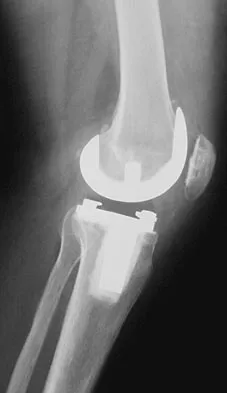
A 78-year-old patient undergoing revision total knee arthroplasty has bone loss throughout the knee at the time of revision. A distal femoral augment is used to restore the joint line. One month after surgery, the patient reports pain and is unable to ambulate. A lateral radiograph is shown in Figure 34. What is the most likely etiology of this problem?
Explanation
Question 8
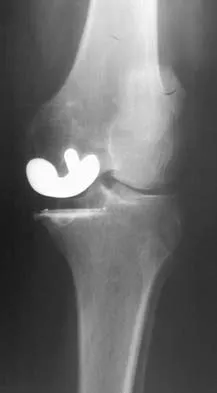
Figure 35 shows the AP radiograph of a patient who underwent a previous upper tibial osteotomy (UTO). The patient may be at risk for which of the following during total knee arthroplasty (TKA)?
Explanation
Question 9
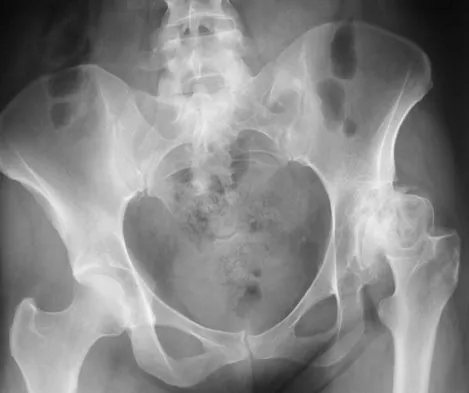
Figure 36 shows the radiograph of a patient who has hip pain and is unable to ambulate. What is the most appropriate management for this patient?
Explanation
Question 10
When polyethylene is exposed to radiation and subsequently heated, certain chemical changes occur in the material. Which of the following statements best describes these changes?
Explanation
Question 11
Familial (Leiden) thrombophilia is of importance in joint arthroplasty because of an abnormality in the clotting cascade. Which of the following statements best describes the condition?
Explanation
Question 12
Figure 37 reveals a periprosthetic fracture around a cemented femoral stem in an 81-year-old patient with Paget's disease and mild coagulopathy. What is the most appropriate reconstructive management on the femoral side?
Explanation
Question 13
A patient with a documented allergy to nickel requires a total knee arthroplasty. Which of the following prostheses is most likely to provide long-term success in this individual?
Explanation
Question 14
Which of the following is accurate regarding low-molecular-weight heparin used for deep venous thrombosis (DVT) prophylaxis in total joint arthroplasty?
Explanation
Question 15
A 42-year-old man reports the recent onset of right hip pain. A radiograph and MRI scan are shown in Figures 38a and 38b. A WBC count, erythrocyte sedimentation rate, and hip aspiration are within normal limits. Management should now consist of
Explanation
Question 16
During cemented total hip arthroplasty, peak pulmonary embolization of marrow contents occurs when the
Explanation
Question 17
What are the optimal conditions for leaving the acetabular shell in place, replacing the acetabular liner, and grafting the osteolytic defect shown in Figure 39?
Explanation
Question 18
A 53-year-old patient is seen in the emergency department after sustaining a fall onto her left hip. A current radiograph is shown in Figure 40. What is the best treatment option?
Explanation
Question 19
A 67-year-old patient seen in the emergency department reports the acute onset of pain and is unable to ambulate. History reveals that the patient underwent surgical treatment for a periprosthetic femoral fracture 6 months ago. A radiograph is shown in Figure 41. What is the best treatment option at this time?
Explanation
Question 20
With the increasing availability of total hip arthroplasty (THA) to younger patients with hip osteoarthritis, there has been increased use of alternative bearing surfaces. Compared to a ceramic-on-ceramic articulation, which of the following is a specific advantage of a metal-on-metal bearing surface?
Explanation
Question 21
Which of the following prophylactic regimens for the prevention of deep venous thrombosis after knee arthroplasty has received a grade 1A recommendation in favor of its use from the American College of Chest Physicians (ACCP) in the 2004 guidelines?
Explanation
Question 22
In the radiograph shown in Figure 42, the fracture pattern around this well-fixed stem is classified as Vancouver type
Explanation
Question 23
Figures 43a and 43b show the T1- and T2-weighted MRI scans of a 78-year-old woman who reports the sudden atraumatic onset of well-localized medial knee pain. Pain is worse at night and also occurs with weight-bearing activity. What is the most likely diagnosis?
Explanation
Question 24
Figure 44 shows the radiograph of a 65-year-old man who underwent a revision arthroplasty to remove a loose, cemented femoral stem. When planning the postoperative restrictions, the surgeon should be aware that
Explanation
Question 25
A 75-year-old patient returns for follow-up after undergoing bilateral total hip arthroplasty (THA). The right hip is a hybrid THA performed 12 years ago, whereas the left hip is a cementless THA performed 10 years ago. Both acetabular components are the same type, same size, and from the same manufacturer. Both femoral heads are 28-mm cobalt-chromium components. What is the most likely explanation for the advanced polyethylene wear in one hip?
Explanation
Question 26
During a primary posterior-stabilized total knee arthroplasty, the surgeon inserts the trial components and assesses the gaps. The knee is found to be symmetrically tight in both full extension and 90 degrees of flexion. Which of the following is the most appropriate next step to achieve a balanced knee?
Explanation
Question 27
A 55-year-old female presents with groin pain 6 years after undergoing a metal-on-metal total hip arthroplasty. Her serum cobalt level is 12 ppb and chromium is 9 ppb. MARS MRI demonstrates a symptomatic 4 cm cystic mass communicating with the joint. Infection has been ruled out. What is the most appropriate definitive management?
Explanation
Question 28
During a total hip arthroplasty, the surgeon decides to use a high-offset femoral stem instead of a standard-offset stem to optimize abductor mechanics. Assuming the leg length remains completely unchanged, what is the biomechanical effect of this decision?
Explanation
Question 29
A 68-year-old male presents with persistent pain and stiffness 18 months after a primary total knee arthroplasty. Serology shows an ESR of 45 mm/hr and a CRP of 25 mg/L. Joint aspiration yields a synovial fluid white blood cell (WBC) count of 4,500 cells/µL with 85% neutrophils. What is the most appropriate next step in management?
Explanation
Question 30
When evaluating a patient for a fixed-bearing medial unicompartmental knee arthroplasty (UKA), which of the following is widely considered an absolute contraindication?
Explanation
Question 31
A 62-year-old female presents with a painful 'catch' and a palpable 'pop' at the anterior aspect of her knee when she actively extends her knee from a flexed position. She underwent a posterior-stabilized total knee arthroplasty 14 months ago. Radiographs show well-fixed components with appropriate sizing. What is the most appropriate management?
Explanation
Question 32
A 70-year-old male sustains a posterior dislocation of his total hip arthroplasty while bending to tie his shoes 6 weeks postoperatively. Radiographs demonstrate a well-fixed cup with 45 degrees of inclination and 5 degrees of retroversion. The femoral stem is anteverted by 10 degrees. What is the most likely primary cause of the dislocation?
Explanation
Question 33
During the final 20 degrees of active knee extension, the 'screw-home' mechanism occurs to lock the knee in its most stable position. In an open kinetic chain (e.g., seated leg extension), which of the following best describes this obligatory kinematic coupling?
Explanation
Question 34
A 65-year-old female undergoes a right total knee arthroplasty for severe valgus osteoarthritis. Postoperatively, she is unable to actively dorsiflex her right ankle or extend her toes, and she has decreased sensation over the dorsum of her foot. Which of the following intraoperative factors is most closely associated with this complication?
Explanation
Question 35
During a primary total knee arthroplasty utilizing a measured resection technique, the surgeon aims to establish a balanced rectangular flexion gap. If the femoral component is inadvertently placed in excessive internal rotation relative to the transepicondylar axis, what is the expected effect on the flexion gap?
Explanation
Question 36
A 68-year-old male presents with a painful total knee arthroplasty 3 years after the index procedure. Radiographs show no component loosening. Joint aspiration yields a synovial white blood cell (WBC) count of 4,200 cells/µL with 88% polymorphonuclear leukocytes (PMNs). Which of the following synovial fluid biomarkers has the highest specificity for diagnosing a periprosthetic joint infection (PJI)?
Explanation
Question 37
A 79-year-old woman sustains a fall 8 years following a primary total hip arthroplasty. Radiographs demonstrate a displaced periprosthetic fracture of the femur just distal to the tip of the stem. The stem appears radiographically loose, but there is excellent proximal and distal bone stock.
What is the most appropriate surgical management?

Explanation
Question 38
Which of the following conditions is considered an absolute contraindication to metal-on-metal hip resurfacing?
Explanation
Question 39
During the manufacturing of highly cross-linked polyethylene (HXLPE) for total hip arthroplasty, the material is subjected to gamma irradiation to induce cross-linking. Which of the following subsequent steps is most critical to eliminate free radicals and minimize the risk of in vivo oxidation?
Explanation
Question 40
A 58-year-old female presents with isolated medial compartment knee osteoarthritis. She is evaluating options for a unicompartmental knee arthroplasty (UKA). Which of the following is considered an absolute contraindication to performing a UKA?
Explanation
Question 41
A 72-year-old male with a history of a total knee arthroplasty (TKA) 5 years ago presents with a chronic, massive rupture of the patellar tendon following a fall. He is unable to perform a straight leg raise. According to recent literature, which of the following reconstructive techniques demonstrates the best long-term survivorship and prevention of extensor lag?
Explanation
Question 42
A 69-year-old female experiences recurrent posterior dislocations after a primary total hip arthroplasty performed through a posterior approach. Radiographic evaluation reveals the acetabular component is positioned in 30 degrees of abduction and 5 degrees of retroversion.
What is the most definitive surgical treatment to prevent future dislocations?
Explanation
Question 43
During a posterior-stabilized (PS) total knee arthroplasty, gap assessment reveals a symmetric, well-balanced extension gap, but the flexion gap is unacceptably tight. Which of the following is the most appropriate technical step to resolve this imbalance?
Explanation
Question 44
A 35-year-old male treated with high-dose corticosteroids for a systemic disease presents with right hip pain. Radiographs demonstrate an area of sclerosis with a visible subchondral radiolucent line (crescent sign), but no significant flattening of the femoral head. What is the most appropriate management for this hip?
Explanation
Question 45
When performing a total hip arthroplasty on a 45-year-old female with a Crowe Type IV (high dislocation) developmental dysplasia of the hip (DDH), which of the following intraoperative strategies is most commonly required?
Explanation
Question 46
A 68-year-old male undergoes a primary total knee arthroplasty. During intraoperative trialing, the knee is found to be tight in flexion but symmetric and well-balanced in extension. What is the most appropriate next step in management to address this gap imbalance?
Explanation
Question 47
A 72-year-old woman presents with recurrent posterior dislocations following a primary total hip arthroplasty (THA) performed via a posterior approach. She has had three dislocations in the past 4 months. Radiographs demonstrate appropriate component positioning with an acetabular cup anteversion of 15 degrees and abduction of 40 degrees. The femoral stem is stable and in 15 degrees of anteversion. Which of the following is the most appropriate surgical option to minimize the risk of future dislocations?
Explanation
Question 48
A 65-year-old male presents with right knee pain 3 years after a total knee arthroplasty. Aspiration yields synovial fluid with a WBC count of 4,500 cells/uL with 85% PMNs. Serum CRP is 25 mg/L, and ESR is 40 mm/hr. Synovial fluid alpha-defensin testing is positive. According to the 2018 International Consensus Meeting (ICM) criteria, what is the correct diagnosis?
Explanation
Question 49
A 55-year-old man who underwent a metal-on-metal total hip arthroplasty 10 years ago presents with progressive groin pain and a palpable soft tissue mass. Serum cobalt and chromium levels are significantly elevated (Cobalt 15 ppb, Chromium 12 ppb). MARS MRI demonstrates a large, thick-walled cystic fluid collection compressing the femoral vein. What is the most appropriate management?
Explanation
Question 50
A 70-year-old woman who underwent a primary total knee arthroplasty 5 years ago presents with an inability to actively extend her knee following a mechanical fall. Radiographs demonstrate a high-riding patella (patella alta) with well-fixed TKA components. Clinical examination reveals a palpable defect inferior to the patella. What is the most appropriate surgical management for this condition?
Explanation
Question 51
A 62-year-old man undergoes primary total hip arthroplasty via a direct anterior approach. Intraoperatively, after placing the trial components, the leg lengths are perfectly equal compared to the contralateral side; however, the hip is unstable in extension and external rotation, tending to anteriorly dislocate. Which of the following component changes would most appropriately improve stability without increasing the patient's leg length?
Explanation
Question 52
A 24-year-old male athlete presents with deep anterior groin pain exacerbated by hip flexion and internal rotation. An AP pelvis radiograph demonstrates a crossover sign and a prominent ischial spine sign. The alpha angle on the lateral view is 45 degrees. These radiographic findings are most consistent with which of the following pathomorphologies?
Explanation
Question 53
A 68-year-old female with a severe 25-degree valgus deformity of the right knee undergoes a primary total knee arthroplasty via a lateral parapatellar approach. In the Post-Anesthesia Care Unit, she is unable to actively dorsiflex her right foot or extend her toes, and sensation is decreased over the dorsum of the foot. What is the most appropriate initial step in the management of this complication?
Explanation
Question 54
When comparing posterior-stabilized (PS) to cruciate-retaining (CR) total knee arthroplasty designs, which of the following kinematics or complications is most uniquely characteristic of a PS design?
Explanation
Question 55
A 60-year-old man presents with a painful right hip 6 years following a primary total hip arthroplasty. He has a metal-on-polyethylene bearing with a titanium femoral stem and a large diameter (36 mm) cobalt-chromium femoral head. Serum cobalt levels are markedly elevated at 12 ppb, while chromium levels are normal. An MRI reveals a solid tissue mass adjacent to the hip joint. What is the most likely etiology of this patient's presentation?
Explanation
Question 56
A 64-year-old man presents with progressive left groin pain 6 years after a primary total hip arthroplasty. The implant utilizes a titanium cementless stem, a cobalt-chromium femoral head, and a highly cross-linked polyethylene liner in a titanium shell. Radiographs show no evidence of component loosening. Laboratory workup reveals an erythrocyte sedimentation rate of 12 mm/hr, a C-reactive protein of 0.4 mg/L, a serum cobalt level of 16.5 mcg/L, and a serum chromium level of 1.2 mcg/L. An MRI demonstrates a solid-cystic pseudotumor in the joint space. What is the most likely etiology of his presentation?
Explanation
Question 57
A 68-year-old woman complains of recurrent knee swelling and a sensation of her knee 'giving way' particularly when descending stairs, 1 year after a primary posterior-stabilized total knee arthroplasty. On examination, the knee is completely stable to varus and valgus stress in full extension. At 90 degrees of flexion, there is 12 mm of joint opening with both varus and valgus stress, and a positive anterior drawer test. Which intraoperative technical error most likely caused this specific complication?
Explanation
Question 58
A 79-year-old woman sustains a fall and presents with severe thigh pain. She underwent a total hip arthroplasty 12 years ago with a polished taper-slip cemented stem. Radiographs demonstrate a periprosthetic spiral fracture of the femur located around the tip of the stem. The stem has subsided 3 cm compared to prior films, and the cement mantle is extensively fractured. Proximal bone stock is adequate.
According to the Vancouver classification, what is the most appropriate management?
Explanation
Question 59
A 28-year-old professional hockey player reports deep anterior groin pain that is exacerbated by hip flexion and internal rotation. An anteroposterior radiograph of the pelvis demonstrates a 'crossover sign'.
What is the primary pathophysiologic mechanism responsible for this patient's condition?

Explanation
Question 60
A 62-year-old woman is 18 months post-op from a posterior-stabilized total knee arthroplasty. She reports a painful popping and catching sensation at the anterior aspect of her knee when extending her leg from a flexed seated position. Physical exam reveals a palpable, painful clunk at approximately 35-40 degrees of flexion as the knee extends. Which of the following implant design features or surgical factors is most strongly associated with this complication?
Explanation
Question 61
A 55-year-old active man complains of a high-pitched squeaking sound originating from his right hip when walking or bending, 3 years after receiving a primary total hip arthroplasty with a ceramic-on-ceramic bearing. He reports no pain, and radiographs show well-fixed components. Which of the following factors is most strongly associated with the development of this phenomenon?
Explanation
Question 62
A 72-year-old woman sustains a complete spontaneous rupture of her patellar tendon 4 years after a primary total knee arthroplasty. The implant components are clinically and radiographically well-fixed, and infection has been ruled out. She is scheduled for an extensor mechanism reconstruction using a whole extensor mechanism allograft. To optimize the functional outcome and minimize postoperative extensor lag, how should the allograft be tensioned during the reconstruction?
Explanation
Question 63
A surgeon is performing a primary total hip arthroplasty using the direct anterior approach. The superficial internervous plane is established between the sartorius and the tensor fasciae latae. During this specific stage of the superficial dissection, which of the following neurologic structures is at the highest risk of iatrogenic injury?
Explanation
Question 64
A 38-year-old man presents with an 8-month history of debilitating right groin pain. He has a history of severe asthma managed with frequent bursts of oral corticosteroids. Anteroposterior and lateral radiographs of the hip demonstrate a dense sclerotic rim and a subchondral radiolucent line (crescent sign) in the anterosuperior aspect of the femoral head. The joint space is well-preserved, and there is no flattening of the articular surface. According to the Ficat and Arlet classification, what is the most appropriate definitive management?
Explanation
Question 65
A 66-year-old male with a painful total knee arthroplasty 3 years post-operatively undergoes a joint aspiration. The synovial fluid analysis reveals a white blood cell count of 4,200 cells/μL with 88% polymorphonuclear leukocytes. Gram stain is negative. Which of the following synovial fluid biomarkers is known to be an antimicrobial peptide released by neutrophils and is highly specific for diagnosing a periprosthetic joint infection (PJI)?
Explanation
Question 66
A surgeon is performing a crucial step in a posterior-stabilized total knee arthroplasty (TKA). After making the initial bone cuts, the trial components are placed. The knee is symmetric and balanced in extension but is too tight in flexion, preventing full range of motion. What is the most appropriate next step?
Explanation
Question 67
A 65-year-old woman undergoes primary total hip arthroplasty via a posterior approach. Six weeks postoperatively, she sustains a posterior dislocation while picking an item off the floor. CT scan demonstrates the acetabular component is placed in 45 degrees of inclination and 5 degrees of retroversion. The femoral stem is anteverted 15 degrees. What is the most appropriate definitive management if recurrent instability occurs?
Explanation
Question 68
A 72-year-old man presents with acute onset of severe right knee pain and swelling. He underwent primary TKA 5 years ago and had excellent function. Three days ago, he developed fever and chills following a routine dental cleaning without prophylactic antibiotics. Synovial fluid aspiration yields a WBC count of 85,000 cells/µL with 95% neutrophils. What is the most appropriate surgical management?
Explanation
Question 69
An 80-year-old man sustains a periprosthetic femur fracture around a cemented polished taper-slip femoral stem placed 10 years ago. Radiographs demonstrate a spiral fracture at the tip of the stem. The stem is radiographically loose with a fractured cement mantle, but there is adequate cortical bone stock both proximally and distally. According to the Vancouver classification, what is the most appropriate treatment?
Explanation
Question 70
A 58-year-old man presents with progressive groin pain 4 years after a primary metal-on-polyethylene THA utilizing a 36mm femoral head and a titanium alloy stem. Inflammatory markers are normal, and joint aspiration is negative for infection. Serum cobalt levels are markedly elevated (15 ppb) while chromium levels are mildly elevated (3 ppb). MARS MRI demonstrates a cystic mass communicating with the joint space. What is the most likely source of the elevated metal ions?
Explanation
Question 71
A 68-year-old woman complains of a painful 'catching' sensation in her knee when rising from a chair, 1 year after a posterior-stabilized TKA. Physical exam reveals a palpable pop at the superior pole of the patella as the knee actively extends from 40 degrees of flexion to full extension. What is the most likely pathogenesis of this condition?
Explanation
Question 72
A 62-year-old woman presents with acute onset of severe medial knee pain that began abruptly while walking. Radiographs show minimal joint space narrowing and no obvious fractures. MRI of the knee demonstrates localized bone marrow edema in the medial femoral condyle with a subchondral crescent sign, but no cortical collapse. What is the most appropriate initial management?
Explanation
Question 73
During preoperative templating for a total hip arthroplasty, a surgeon notes that the planned femoral component will increase the femoral neck offset by 8 mm compared to the contralateral native hip, without altering the leg length. Which of the following biomechanical effects will this change have?
Explanation
Question 74
A 70-year-old man complains of persistent anterior knee pain and a feeling of instability 2 years after a primary TKA. CT scan evaluation demonstrates that the femoral component is internally rotated 6 degrees relative to the surgical transepicondylar axis, and the tibial component is internally rotated 9 degrees relative to the medial third of the tibial tubercle. What is the most likely clinical consequence of this combined component positioning?
Explanation
Question 75
A 55-year-old active man underwent THA with a ceramic-on-ceramic bearing surface. Three years postoperatively, he complains of an audible squeaking sound from his hip during ambulation, though he denies any pain. Radiographs show well-fixed components with the acetabular cup placed in 65 degrees of inclination and 35 degrees of anteversion. What is the most likely underlying cause of the squeaking?
Explanation
Question 76
A 68-year-old woman who underwent a posterior-stabilized total knee arthroplasty 18 months ago presents with a painful catching sensation and an audible 'pop' when extending her knee from a flexed position. The range of motion is 0 to 120 degrees. Radiographs show well-fixed components with no evidence of loosening. Which of the following is the most likely cause of her symptoms?
Explanation
Question 77
A 55-year-old man with a metal-on-metal total hip arthroplasty presents with progressive groin pain and swelling 6 years after his index surgery. MRI with metal artifact reduction sequence (MARS) demonstrates a large, thick-walled cystic mass communicating with the joint space. Serum cobalt and chromium levels are elevated. If a biopsy of the periprosthetic tissue is performed, which of the following histologic findings is most characteristic of this patient's pathology?
Explanation
Question 78
A 24-year-old collegiate hockey player presents with chronic anterior groin pain exacerbated by hip flexion and internal rotation. Anteroposterior pelvis radiographs reveal a prominent crossover sign and an ischial spine sign. Which of the following best describes the pathomorphology contributing to this patient's impingement?
Explanation
Question 79
A 28-year-old male sustains a direct blow to the anteromedial aspect of his proximal tibia while his knee is flexed. Physical examination reveals increased external rotation of the tibia compared to the contralateral side when tested at 30 degrees of knee flexion, but symmetric external rotation when tested at 90 degrees of knee flexion. Which of the following structures is most likely injured?
Explanation
Question 80
During a direct anterior approach for a total hip arthroplasty, the surgeon dissects through the superficial internervous plane between the tensor fasciae latae and the sartorius. In the distal extent of this field, a leash of vessels is encountered crossing the surgical field transversely, requiring ligation. These vessels are branches of which of the following arteries?
Explanation
Question 81
A surgeon performs a total knee arthroplasty using a measured resection technique. Postoperatively, the patient develops anterior knee pain and recurrent lateral patellar subluxation. A CT scan of the lower extremity is obtained to evaluate component rotation. Which of the following malpositions of the femoral component is most likely responsible for this complication?
Explanation
Question 82
In planning a total hip arthroplasty for a patient with severe osteoarthritis, the surgeon templates to medialize the center of rotation of the acetabular component relative to the native anatomy, without changing its superior-inferior position. What is the primary biomechanical effect of this medialization?
Explanation
Question 83
A 45-year-old active male with isolated medial compartment knee osteoarthritis and a varus deformity undergoes a medial opening-wedge high tibial osteotomy. To prevent an unintended increase in the posterior tibial slope during the procedure, how should the osteotomy gap be managed?
Explanation
Question 84
A 72-year-old female presents to the emergency department with a posterior dislocation of her total hip arthroplasty, which was performed via a posterior approach 6 weeks ago. After a successful closed reduction, component position is evaluated. Which of the following combinations of component positions would place her at the highest risk for recurrent posterior instability?
Explanation
Question 85
A 68-year-old male presents with increasing pain and swelling in his total knee arthroplasty 3 years after the index surgery. Laboratory studies show an Erythrocyte Sedimentation Rate (ESR) of 55 mm/hr and a C-Reactive Protein (CRP) of 3.2 mg/dL. Knee aspiration yields a synovial fluid white blood cell (WBC) count of 5,500 cells/µL with 88% neutrophils. According to the 2018 International Consensus Meeting (ICM) criteria, what is the most appropriate definitive management for this patient?
Explanation
Question 86
Compared to conventional ultra-high molecular weight polyethylene (UHMWPE), highly cross-linked polyethylene (HXLPE) used in total hip arthroplasty has which of the following mechanical characteristics?
Explanation
Question 87
A 65-year-old woman presents with anterior knee pain and a sensation of giving way 1 year after a primary total knee arthroplasty. Radiographs reveal lateral patellar subluxation. A CT scan is performed to evaluate component rotation. Which of the following component malpositions is the most likely cause of this complication?
Explanation
Question 88
A 72-year-old man presents with a painful total hip arthroplasty 4 years after his index procedure. His ESR is 45 mm/hr and CRP is 22 mg/L. Joint aspiration is performed. According to the 2018 International Consensus Meeting (ICM) criteria, which of the following synovial fluid results strongly supports the diagnosis of a chronic periprosthetic joint infection?
Explanation
Question 89
A 55-year-old man presents with progressive groin pain and swelling 6 years after a metal-on-metal total hip arthroplasty. A MARS MRI demonstrates a large cystic mass adjacent to the greater trochanter. Aspiration reveals sterile, cloudy fluid. If a tissue biopsy of the pseudotumor were analyzed, what would be the most characteristic histological finding?
Explanation
Question 90
Which of the following is widely considered an absolute contraindication for a medial unicompartmental knee arthroplasty (UKA)?
Explanation
Question 91
A 68-year-old woman undergoes a posterior approach total hip arthroplasty. Six weeks postoperatively, she sustains a posterior dislocation while bending over to tie her shoes. Radiographs demonstrate the acetabular component is placed in 55 degrees of inclination and 5 degrees of retroversion. Which of the following most accurately describes the biomechanical etiology of her instability?
Explanation
Question 92
A 45-year-old physically active man is considering a hip resurfacing arthroplasty for severe osteoarthritis. Which of the following is a recognized surgical risk factor for early femoral neck fracture following this procedure?
Explanation
Question 93
During the cementation of the femoral component in an 82-year-old patient undergoing a cemented hemiarthroplasty for a femoral neck fracture, the patient's end-tidal CO2 abruptly drops, followed by severe hypotension and hypoxia. Which of the following is the most likely pathophysiological mechanism of this intraoperative event?
Explanation
Question 94
In a posterior-stabilized (PS) total knee arthroplasty, the cam-post mechanism is designed to mechanically substitute for the resected posterior cruciate ligament (PCL). What is the primary kinematic function of this mechanism during deep knee flexion?
Explanation
Question 95
A 65-year-old woman presents with an inability to actively extend her knee 3 years after a primary total knee arthroplasty. Clinical examination and ultrasound confirm a chronic, retracted patellar tendon rupture. Infection has been definitively ruled out, and the remaining prosthetic components are well-fixed. What is the most appropriate and durable reconstructive option?
Explanation
Question 96
A 68-year-old man presents with anterior knee pain and a feeling of instability when descending stairs, 1 year after a posterior-stabilized total knee arthroplasty (TKA). Radiographs demonstrate that the femoral component was placed in excessive internal rotation. What is the primary kinematic consequence of this specific component malposition?
Explanation
Question 97
A 72-year-old woman is scheduled for a total hip arthroplasty (THA) for severe right hip osteoarthritis. She has a history of a multi-level lumbar spinal fusion from L2 to S1. How does this spinal pathology significantly alter her spinopelvic kinematics during the transition from standing to sitting?
Explanation
Question 98
A 65-year-old man presents with chronic pain in his right total hip arthroplasty, which was performed 3 years ago. Joint aspiration yields synovial fluid with a white blood cell count of 3,500 cells/µL with 75% polymorphonuclear neutrophils (PMNs). An alpha-defensin test is positive. Serum CRP is 15 mg/L, and ESR is 35 mm/hr. There is no sinus tract. According to the 2018 International Consensus Meeting (ICM) criteria, what is the most accurate diagnostic classification for this patient?
Explanation
Question 99
A 55-year-old man complains of groin pain and a palpable mass 8 years following a metal-on-metal hip resurfacing arthroplasty. MRI demonstrates an extensive solid and cystic periarticular mass. Serum metal ion levels are Cobalt = 15 ppb and Chromium = 12 ppb. Aspiration yields no bacterial growth. Revision surgery is planned, and extensive soft tissue necrosis is encountered. Which of the following is the characteristic histologic finding of the pseudo-capsule in this condition?
Explanation
Question 100
A 28-year-old trauma patient undergoes reconstruction of the anterior cruciate ligament (ACL), posterior cruciate ligament (PCL), and posterolateral corner (PLC) following a knee dislocation (KD-III L). During the PLC reconstruction, anatomic placement of the femoral tunnels is essential. Which of the following best describes the anatomic location of the femoral footprint of the popliteus tendon?
Explanation
None
