Orthopedic Hip 2026 MCQs: Board Review Questions & Answers (Part 1)
Key Takeaway
Your ultimate guide to Orthopedic Hip 2026 MCQs: Board Review Questions & Answers (Part 1) starts here. Top-rated Orthopedic Hip 2026 MCQs bank. Practice with clinical case questions, orthopedic surgery board review, and evidence-based answers updated for 2026.
Orthopedic Hip 2026 MCQs: Board Review Questions & Answers (Part 1)
Comprehensive 100-Question Exam
00:00
Start Quiz
Question 1
During primary total knee arthroplasty, what is the maximum distance the joint line can be raised or lowered before poor motion, joint instability, and increased chance of revision occur?
Explanation
Question 2
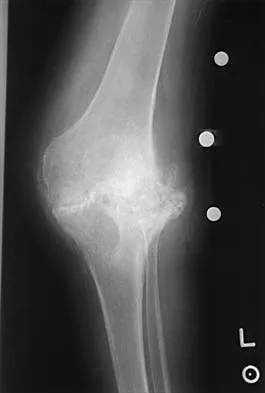
Figure 1 shows the radiograph of an 18-year-old patient who has severe knee pain. Treatment consisting of osteotomy should be perfomed
Explanation
Question 3
Figure 2 shows the AP radiograph of an 18-year-old woman with progressive and severe right hip pain. Nonsteroidal anti-inflammatory drugs no longer control her pain. What is the next most appropriate step in management?
Explanation
Question 4
Which of the following findings is a prerequisite for a high tibial valgus osteotomy for medial compartment gonarthrosis?
Explanation
Question 5
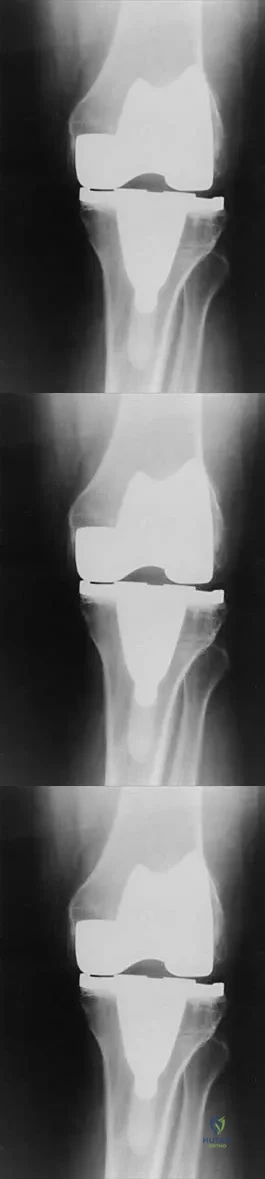
Figures 3a and 3b show the current radiographs of a 58-year-old man who underwent total knee arthroplasty with a cruciate ligament sparing prosthesis 7 years ago. Examination reveals boggy synovitis and moderate pain, particularly anteriorly. Management should consist of
Explanation
Question 6
What is the main benefit of using metal-backed tibial components in total knee arthroplasty?
Explanation
Question 7
Figures 4a and 4b show the radiographs of a 32-year-old man who has right groin pain with activity or prolonged standing. Which of the following factors would not prohibit consideration of acetabular liner exchange and grafting of the defects?
Explanation
Question 8
A patient who underwent total knee arthroplasty 6 years ago now reports knee pain for the past 3 days following dental surgery. Cultures of the aspirate are positive for Staphylococcus epidermidis. Management should consist of
Explanation
Question 9
A 32-year-old woman with systemic lupus erythematosus treated with methotrexate and oral corticosteroids reports right groin pain with ambulation and night pain. Examination reveals pain with internal and external rotation and flexion that is limited to 105 degrees because of discomfort. Laboratory studies show a serum WBC of 9.0/mm3 and an erythrocyte sedimentation rate of 35 mm/h. Figures 5a and 5b show AP and lateral radiographs of the right hip. Further evaluation should include
Explanation
Question 10
An otherwise healthy 57-year-old man has persistent, severe hip pain after undergoing total hip arthroplasty 3 months ago. What is the next most appropriate step in management?
Explanation
Question 11
A 61-year-old man reports right hip pain and limited motion after undergoing total hip arthroplasty for posttraumatic arthritis 1 year ago. Figure 6 shows an AP radiograph of the pelvis. To improve motion and relieve pain, management should consist of
Explanation
Question 12
Osteolysis after total knee arthroplasty can be minimized through prosthetic design features such as
Explanation
Question 13
What type of cementless femoral fixation results in the highest rate of distal femoral osteolysis?
Explanation
Question 14
When performing a total knee arthroplasty using modular components, what is the minimum recommended thickness of an ultra-high molecular weight polyethylene insert for a tibial component?
Explanation
Question 15
During total knee arthroplasty using a posterior cruciate-retaining design, excessive tightness in flexion is noted, while the extension gap is felt to be balanced. Which of the following actions will effectively balance the knee?
Explanation
Question 16
What is the dominant component of articular cartilage extracellular matrix by weight?
Explanation
Question 17
A 70-year-old man underwent primary total knee arthroplasty 3 months ago. Figures 7a and 7b show the radiograph and clinical photograph following incision and drainage of the wound 1 week ago. Aspiration of the joint reveals methicillin-sensitive Staphylococcus aureus. What is the next most appropriate step in management?
Explanation
Question 18
A 35-year-old male laborer with isolated posttraumatic degenerative arthritis of the right hip undergoes the procedure shown in Figure 8. What is the most appropriate position of the right lower extremity?
Explanation
Question 19
Which of the following factors can contribute to patellar subluxation following routine total knee arthroplasty?
Explanation
Question 20
When an adult hip is surgically dislocated for relief of femoro-acetabular impingment, what is the risk of postoperative iatrogenic osteonecrosis?
Explanation
Question 21
What is the most frequent late complication of cementless fixation in total knee arthroplasty?
Explanation
Question 22
In the treatment of acetabular dysplasia, what type of pelvic osteotomy leaves the "teardrop" in its original position and redirects the acetabulum?
Explanation
Question 23
What is the correct order of the elastic modulus of the following materials from greatest to least?
Explanation
Question 24
Compared to similar patients who do not donate autologous blood, patients with normal baseline hemoglobin who donate autologous blood prior to undergoing primary total hip arthroplasty are likely to
Explanation
Question 25
Which of the following best describes the resultant forces on an increased offset stem when compared with a standard offset stem?
Explanation
Question 26
A 72-year-old female presents with severe thigh pain after a ground-level fall. Radiographs demonstrate a periprosthetic fracture around a loose femoral stem, but with adequate surrounding bone stock. According to the Vancouver classification, what is the most appropriate surgical management?
Explanation
Question 27
A 68-year-old male is evaluated for a primary total hip arthroplasty. He has a history of a L2-S1 instrumented spinal fusion for degenerative scoliosis. How does this spinal stiffness alter his spinopelvic kinematics during the transition from a standing to a sitting position?
Explanation
Question 28
During a direct anterior approach for total hip arthroplasty, the surgeon dissects through an internervous plane. Which two nerves supply the muscles that form the superficial boundary of this interval?
Explanation
Question 29
A 55-year-old female with a metal-on-metal total hip arthroplasty presents with chronic groin pain and a palpable mass. MRI reveals a solid and cystic pseudotumor. If a tissue sample is taken, which histopathological finding is most characteristic of an Adverse Local Tissue Reaction (ALTR/ALVAL) in this setting?
Explanation
Question 30
A patient with a metal-on-polyethylene total hip arthroplasty presents with new-onset groin pain. Serological testing demonstrates significantly elevated serum cobalt levels, while chromium levels remain normal. What is the most likely source of the metal wear?
Explanation
Question 31
In patients who have undergone ceramic-on-ceramic total hip arthroplasty, post-operative 'squeaking' is a known complication. Which biomechanical factor is most strongly associated with the development of this phenomenon?
Explanation
Question 32
A 65-year-old woman with adult spinal deformity and a fused lumbar spine from L2 to the pelvis is planning to undergo a primary total hip arthroplasty. How does her stiff spinopelvic articulation affect the optimal acetabular cup positioning to prevent impingement and dislocation?
Explanation
Question 33
A 72-year-old man presents with chronic right hip pain 3 years after a primary total hip arthroplasty. Laboratory tests show an ESR of 45 mm/hr and a CRP of 18 mg/L. Hip aspiration yields synovial fluid with a WBC count of 3,500 cells/uL and 75% PMNs. Which of the following tests is the most accurate synovial biomarker to confirm a periprosthetic joint infection in this scenario?
Explanation
Question 34
A 78-year-old woman sustains a fall and presents with a periprosthetic femur fracture around a cemented polished taper-slip stem placed 8 years ago. Radiographs demonstrate a fracture just distal to the tip of the stem. The stem is well-fixed with no cement mantle fractures. According to the Vancouver classification, what is the most appropriate management?
Explanation
Question 35
A 25-year-old male hockey player presents with chronic groin pain exacerbated by hip flexion and internal rotation. An AP pelvis radiograph demonstrates a "crossover sign" and a prominent ischial spine. These radiographic findings are most indicative of which of the following pathomorphologies?
Explanation
Question 36
A 64-year-old man presents with progressive groin pain and swelling 6 years after a metal-on-polyethylene total hip arthroplasty utilizing a large-diameter cobalt-chromium femoral head on a titanium stem. Serum cobalt levels are markedly elevated (15 ppb) while chromium levels are normal (1.5 ppb). What is the most likely source of the elevated metal ions?
Explanation
Question 37
During a direct anterior approach to the hip, which internervous plane is utilized?
Explanation
Question 38
A 55-year-old man reports a new-onset squeaking noise originating from his hip when walking, 4 years after undergoing a primary total hip arthroplasty. Radiographs show a well-fixed uncemented titanium stem and acetabular shell with a ceramic-on-ceramic bearing. Which of the following factors is most strongly associated with the development of squeaking in ceramic-on-ceramic THA?
Explanation
Question 39
A 68-year-old woman presents with persistent lateral hip pain and a positive Trendelenburg sign 1 year after a total hip arthroplasty via a direct lateral approach. An MRI with metal artifact reduction sequence (MARS) demonstrates a full-thickness tear of the gluteus medius tendon with 4 cm of retraction and severe fatty atrophy (Goutallier stage 4). What is the most appropriate surgical management?
Explanation
Question 40
A 28-year-old male athlete presents with anterior groin pain that worsens with deep flexion and internal rotation. Radiographic imaging shows a loss of concavity at the femoral head-neck junction. Which radiographic parameter is most commonly utilized to quantify this specific deformity?
Explanation
Question 41
A 45-year-old patient underwent a total hip arthroplasty with a ceramic-on-ceramic bearing. Two years postoperatively, they complain of a high-pitched squeaking sound during movement but report no pain. What is the most likely biomechanical cause of this phenomenon?
Explanation
Question 42
The direct anterior (Smith-Petersen) approach to the hip is popular for total hip arthroplasty because it exploits a true internervous plane. Which two muscles define the superficial interval of this approach?
Explanation
Question 43
A 68-year-old male presents with a painful THA 3 years postoperatively. Synovial fluid aspiration reveals a WBC count of 3,500 cells/uL with 75% PMNs. Which of the following synovial fluid biomarkers is considered the most specific for confirming a periprosthetic joint infection?
Explanation
Question 44
When placing acetabular screws during a total hip arthroplasty, the "safe zone" is located in the posterior-superior quadrant of the acetabulum. What critical neurovascular structure is at highest risk if a screw significantly overpenetrates the anterior-superior quadrant?
Explanation
Question 45
A 35-year-old patient on chronic systemic corticosteroids for lupus presents with new-onset hip pain. MRI shows a double-line sign on T2-weighted images. Radiographs show a 2 mm subchondral crescent sign, but the femoral head remains spherical. What is the most appropriate joint-preserving surgical intervention?
Explanation
Question 46
A 42-year-old female sustains a completely displaced femoral neck fracture (Garden IV). What is the primary source of vascular supply to the adult femoral head that is critically disrupted in this injury?
Explanation
Question 47
Postoperatively, a THA patient complains that their operative leg feels "too long." Radiographs confirm the vertical distance from the teardrop to the lesser trochanter is equal bilaterally, but the horizontal distance is increased by 15 mm on the operative side. What is the most likely clinical consequence?
Explanation
Question 48
A 78-year-old female falls and sustains a periprosthetic femur fracture around her cemented THA stem. Radiographs demonstrate a fracture around the tip of the stem, frank loosening of the femoral component, and severely deficient surrounding proximal bone stock. How is this classified under the Vancouver system?
Explanation
Question 49
A 60-year-old female presents with persistent lateral hip pain and a positive Trendelenburg sign 6 months after a posterior approach THA. MRI demonstrates a complete avulsion of the conjoined tendon of the abductors. Where does the primary insertion of the gluteus medius strictly lie?
Explanation
Question 50
Highly cross-linked polyethylene (HXLPE) is the modern standard bearing surface in THA. What specific step in its manufacturing process is critical for eliminating free radicals to prevent late oxidative degradation?
Explanation
Question 51
During hip arthroscopy for FAI, the patient is placed supine with traction applied via a perineal post. Postoperatively, the patient reports numbness over the dorsum of the foot and profound weakness in great toe extension. Which nerve was most likely injured?
Explanation
Question 52
A patient with a metal-on-polyethylene THA presents with a painful, swollen hip 5 years postoperatively. Inflammatory markers are normal, and aspiration yields dark, sterile fluid. MRI reveals a large pseudotumor. What is the most likely source of this adverse local tissue reaction (ALTR)?
Explanation
Question 53
A 65-year-old undergoes THA. How does increasing femoral offset affect hip biomechanics?
Explanation
Question 54
A 55-year-old female presents with groin pain 5 years after a metal-on-metal THA. Labs show elevated cobalt and chromium. MARS MRI shows a large cystic mass. What histologic finding is most characteristic of this condition?
Explanation
Question 55
A 28-year-old male athlete presents with anterior groin pain exacerbated by hip flexion and internal rotation. A lateral radiograph of the hip reveals an alpha angle of 75 degrees. Which of the following is the primary mechanism of cartilage injury in this condition?
Explanation
Question 56
A 30-year-old male sustains a posterior hip dislocation in a motor vehicle collision. After closed reduction, he exhibits a foot drop and decreased sensation over the dorsum of his foot. Which nerve division is most likely injured?
Explanation
Question 57
A 72-year-old female undergoes revision THA. Intraoperatively, she is found to have complete separation of the superior and inferior hemi-pelvis with severe bone loss. What is the most appropriate acetabular reconstruction strategy?
Explanation
Question 58
A 12-year-old obese male presents with an unstable left slipped capital femoral epiphysis (SCFE). Which of the following is an absolute indication for prophylactic pinning of the contralateral hip?
Explanation
Question 59
On a pelvic radiograph of a 6-month-old female with developmental dysplasia of the hip, the proximal femoral metaphysis is located superior to Hilgenreiner's line and lateral to Perkin's line. What is the interpretation of Shenton's line in this patient?
Explanation
Question 60
A 40-year-old male falls from a height and sustains a basicervical femoral neck fracture with a highly vertical fracture line (Pauwels type III). What is the preferred surgical treatment to minimize failure?
Explanation
Question 61
A 7-year-old boy is diagnosed with Legg-Calvé-Perthes disease. According to the Herring classification, he has >50% loss of height of the lateral pillar. What is his Herring classification and corresponding prognosis?
Explanation
Question 62
A 35-year-old male sustains an anterior column and anterior wall acetabular fracture. The surgeon elects to use an ilioinguinal approach. Which structure is located in the middle window of this surgical approach?
Explanation
Question 63
A 55-year-old active male undergoes THA with a ceramic-on-ceramic bearing. At 2 years postop, he complains of a squeaking noise with deep flexion. Radiographs show a well-fixed cup. What is the most significant risk factor for this phenomenon?
Explanation
Question 64
A 25-year-old athlete presents with anterior groin pain exacerbated by hip flexion and internal rotation. AP pelvis radiograph shows a pistol grip deformity. During hip arthroscopy, an osteochondroplasty is performed. To minimize the risk of iatrogenic femoral neck fracture, the resection depth should not exceed what percentage of the femoral neck diameter?
Explanation
Question 65
A 65-year-old woman presents with chronic hip pain 3 years after a primary total hip arthroplasty. Serum ESR and CRP are elevated. Aspiration yields a synovial fluid WBC of 2,500 cells/uL with 60% PMNs. Which of the following synovial fluid biomarkers provides the highest specificity for confirming periprosthetic joint infection in this scenario?
Explanation
Question 66
A 62-year-old man presents with progressive groin pain and swelling 5 years after a metal-on-polyethylene THA utilizing a modular titanium neck. Aspiration yields cloudy fluid with a normal cell count but elevated cobalt and chromium ions. MRI demonstrates a solid pseudotumor. What is the most likely etiology?
Explanation
Question 67
A 30-year-old man sustains a vertically oriented (Pauwels type III) displaced femoral neck fracture. He is planned for open reduction and internal fixation. Which construct provides the highest biomechanical stability for this specific fracture pattern?
Explanation
Question 68
A 12-year-old obese boy is diagnosed with a severe, chronic slipped capital femoral epiphysis (SCFE) on the left side. What is the primary indication for prophylactic in situ pinning of the contralateral asymptomatic hip?
Explanation
Question 69
A 24-year-old woman presents with hip pain secondary to developmental dysplasia. Radiographs show a lateralized center of rotation, unroofed femoral head, and a sharply sloping sourcil. A periacetabular osteotomy (PAO) is planned. The cuts for a Ganz PAO involve which of the following pelvic bones?
Explanation
Question 70
During a primary total hip arthroplasty via a posterolateral approach, increasing the femoral offset without changing the leg length will have which of the following biomechanical effects?
Explanation
Question 71
A 35-year-old man with a history of corticosteroid use presents with hip pain. MRI reveals a well-demarcated area of osteonecrosis in the anterosuperior femoral head, involving 25% of the head. Radiographs show no subchondral collapse or joint space narrowing. What is the most appropriate initial surgical management?
Explanation
Question 72
A primary THA is performed via the direct anterior approach. The internervous plane utilized is between muscles innervated by which of the following nerves?
Explanation
Question 73
A 70-year-old woman experiences recurrent posterior dislocations of her total hip arthroplasty. Radiographs demonstrate a well-fixed acetabular component with 20 degrees of anteversion and 45 degrees of abduction. The femoral stem is well-fixed with 15 degrees of anteversion. What is the most appropriate surgical intervention?
Explanation
Question 74
A 78-year-old man sustains a fall 8 years after a primary cementless THA. Radiographs show a spiral fracture around the tip of the femoral stem. The stem is radiographically loose with subsidence, but the bone stock is well-preserved. According to the Vancouver classification, what is the most appropriate treatment?
Explanation
Question 75
Evaluate the clinical image provided:
A 45-year-old man presents with worsening hip pain. He has a history of childhood hip disease. If total hip arthroplasty is planned, which anatomic challenge is most characteristic when templating for a high hip dislocation (Crowe IV)?
Explanation
Question 76
A 68-year-old woman is scheduled for a total hip arthroplasty. She has a history of a multilevel lumbar spinal fusion from L2 to S1. How does this spinal pathology alter her pelvic biomechanics during the transition from standing to sitting?
Explanation
Question 77
A patient with a severe penicillin allergy (anaphylaxis) is undergoing THA. Current guidelines recommend which of the following single agents as the best alternative for surgical prophylaxis?
Explanation
Question 78
Which of the following conditions is considered an absolute contraindication to metal-on-metal hip resurfacing arthroplasty?
Explanation
Question 79
A 55-year-old woman undergoes a primary total hip arthroplasty via a direct anterior approach. Postoperatively, she reports numbness and a burning sensation over the anterolateral aspect of her thigh, with normal hip abductor and quadriceps motor function. Injury to which of the following structures is the most likely cause?
Explanation
Question 80
A 4-month-old infant with developmental dysplasia of the hip (DDH) is being treated with a Pavlik harness. The parents incorrectly tighten the anterior straps, resulting in hyperflexion of the hips beyond 120 degrees. This positioning most significantly increases the risk of which complication?
Explanation
Question 81
After a successful closed reduction of a first-time, uncomplicated posterior dislocation occurring 4 weeks following a primary total hip arthroplasty, what is the most widely recommended initial management?
Explanation
Question 82
In a child diagnosed with Legg-Calve-Perthes disease, which of the following is clinically recognized as the most important prognostic factor for long-term hip joint survival?
Explanation
Question 83
Prophylactic pinning of the contralateral, asymptomatic hip is most strongly indicated in a patient with a slipped capital femoral epiphysis (SCFE) who presents with which of the following concurrent conditions?
Explanation
Question 84
Which of the following radiographic parameters is most characteristic of Pincer-type femoroacetabular impingement (FAI)?
Explanation
Question 85
Compared to highly cross-linked polyethylene, the use of ceramic-on-ceramic bearing surfaces in primary total hip arthroplasty is uniquely associated with an increased risk of which of the following phenomena?
Explanation
Question 86
A 35-year-old man sustains an acetabular fracture in a motor vehicle collision. AP and Judet radiographs demonstrate disruption of both the iliopectineal and ilioischial lines, along with a prominent "spur sign" visible on the obturator oblique view. Based on the Letournel classification, what is the diagnosis?
Explanation
Question 87
A 75-year-old active, community-ambulating woman sustains a displaced intracapsular femoral neck fracture. Compared to internal fixation, treating this patient with a total hip arthroplasty (THA) provides which of the following distinct advantages?
Explanation
Question 88
A 50-year-old patient presents with groin pain 12 years after a primary total hip arthroplasty. A radiograph is provided.
Assuming eccentric wear of a standard polyethylene liner and extensive radiolucent lines around the components without signs of infection, what is the fundamental biologic mechanism causing the bone loss?
Explanation
Question 89
A 60-year-old man presents with a painful total hip arthroplasty 6 years after index surgery. He has a metal-on-polyethylene bearing with a 36-mm titanium head on a cobalt-chrome stem. Aspiration is negative for infection, but serum cobalt levels are markedly elevated. What is the most likely diagnosis?
Explanation
Question 90
A 65-year-old woman presents with persistent lateral hip pain and a severe Trendelenburg gait 1 year after a THA via a lateral (Hardinge) approach. MRI demonstrates a chronic, full-thickness, completely retracted tear of the gluteus medius and minimus with severe fatty infiltration. What is the most appropriate surgical management?
Explanation
None
