AAOS & ABOS Hip Board Review MCQs (Set 2): Fractures, Arthroplasty, & Pathology
Key Takeaway
This high-yield MCQ set for the AAOS and ABOS board exams focuses on essential hip topics. Questions cover the diagnosis and management of various hip fractures, principles of total hip arthroplasty, including indications and complications, and common hip joint pathologies relevant to orthopedic practice.
AAOS & ABOS Hip Board Review MCQs (Set 2): Fractures, Arthroplasty, & Pathology
Comprehensive 100-Question Exam
00:00
Start Quiz
Question 1
A 67-year-old man is requesting revision surgery because of continued pain in the knee after undergoing a total knee replacement 2 years ago. Examination reveals that the knee is not warm, the incision is well-healed, and the skin has normal coloration and hair formation. No varus or valgus instability is noted, and knee range of motion is 5 degrees to 100 degrees. Laboratory studies show an erythrocyte sedimentation rate of 15 mm/h and a WBC of 5,000/mm3. Aspiration of the knee reveals clear fluid that shows no growth on culture. Radiographs reveal an appropriately positioned cruciate-retaining cemented total knee arthroplasty that is well-fixed. What is the probability that the patient's pain will be improved with revision surgery?
Explanation
Question 2
For patients undergoing a surgical procedure where the risk of requiring a transfusion is less than 10%, the International Committee of Effective Blood Usage suggests
Explanation
Question 3
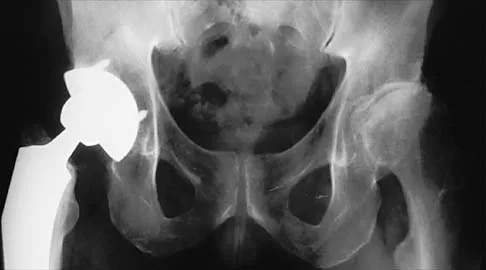
Figure 12 shows the radiograph of a 55-year-old man who has severe, painful osteoarthritis of the left hip and is scheduled to undergo a left total hip arthroplasty. History reveals that he underwent a right total hip arthroplasty 5 years ago that remains pain-free. Based on the preoperative radiograph, the patient is at greatest risk for what complication?
Explanation
Question 4
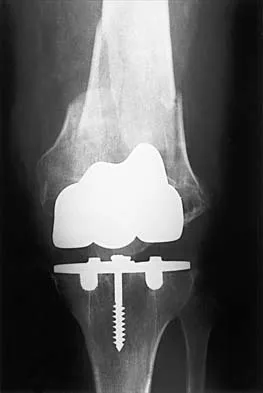
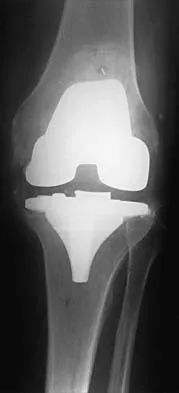
Figures 13a and 13b show the preoperative radiographs of a 60-year-old woman who is scheduled to undergo total knee arthroplasty under epidural anesthesia. Postoperatively she reports a burning sensation on the dorsum of her foot despite the administration of IV analgesics through a patient-controlled analgesia (PCA) pump. Management should now include
Explanation
Question 5
Figures 14a and 14b show the plain radiographs of an 85-year-old woman who has had severe pain in the right knee for the past 4 months. Management should consist of
Explanation
Question 6
The failure of the acetabular component shown in Figure 15 is most likely the result of the use of a 32-mm head and
Explanation
Question 7
The use of elevated rim acetabular liners and long femoral necks may result in
Explanation
Question 8
Cementation technique has a definite influence on the long-term survival of cemented femoral components. Both clinical and autopsy studies support the use of a cement mantle with a thickness of how many millimeters?
Explanation
Question 9
A 73-year-old man is scheduled to have mature heterotopic bone resected from around his left total hip arthroplasty. The optimal management for prophylaxis against the return of heterotopic bone postoperatively is radiation therapy that consists of
Explanation
Question 10
Which of the following is considered a potential advantage in prophylaxis for the prevention of deep venous thrombosis associated with the use of low-molecular weight heparin (LMWH) as compared with fixed-dose unfractionated heparin?
Explanation
Question 11
Figure 16 shows the radiograph of a 75-year-old man who has progressive groin pain and a limp following total hip replacement. At revision surgery, the anterior and posterior columns of the acetabulum are noted to be intact. The optimal surgical technique for acetabular component reconstruction is a
Explanation
Question 12
Which of the following is a recognized consequence of hip fusion?
Explanation
Question 13
Treatment of a cruciate-retaining total knee that is unstable in flexion is best accomplished by
Explanation
Question 14
The stiffness of a 16-mm femoral stem is mostly influenced by the
Explanation
Question 15
Figures 17a and 17b show the AP and lateral radiographs of a 75-year-old woman who reports giving way and shifting of the knee, particularly when she is descending stairs or ambulating on level surfaces. History reveals a total knee replacement 5 years ago. Treatment should consist of
Explanation
Question 16
Factors contributing to an increased risk of hip fracture include reduced bone mineral density of the femoral neck, cognitive status of the individual, and
Explanation
Question 17
A healthy 70-year-old man has a swollen knee after undergoing a knee replacement 10 years ago. Aspiration of the knee reveals cloudy, viscous synovial fluid. Laboratory studies show an erythrocyte sedimentation rate of 10 mm/h and a C-reactive protein level of less than 0.5. What is the most likely diagnosis?
Explanation
Question 18
The insurance carrier of a patient who underwent total knee arthroplasty 4 days ago is now demanding that the patient be discharged from the hospital. However, examination reveals that the patient has a range of motion of only 10 degrees to 55 degrees, and the patient is concerned whether she will ever move her knee normally. The insurance company representative should be advised that
Explanation
Question 19
Figure 18 shows the radiograph of a patient with a total hip arthroplasty dislocation. During revision, increasing the diameter of the femoral head while maintaining the ratio of head-to-neck diameter constant has the effect of
Explanation
Question 20
During primary total knee arthroplasty with trial implants in place, the surgeon notes technically satisfactory patellar resurfacing and restoration of a physiologic mechanical axis but excessively lateral patellar tracking. Treatment should now include
Explanation
Question 21
Figure 19 shows the current radiograph of a 48-year-old man who reports hip pain and marked difficulty walking after undergoing revision of a failed total hip replacement 2 years ago. What is the mechanism of failure?
Explanation
Question 22
Torsional moments about the longitudinal axis of a total hip arthroplasty show what change during stair climbing compared with walking?
Explanation
Question 23
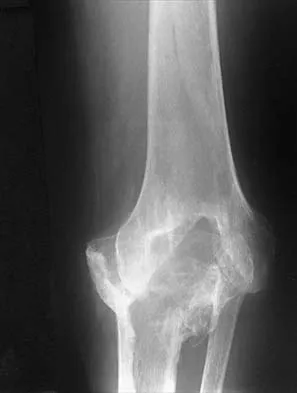
When converting the knee shown in Figure 20 to a total knee arthroplasty, satisfactory outcome can be expected in what percent of patients?
Explanation
Question 24
The specificity of intraoperative frozen sections obtained for the evaluation of infected total hip arthroplasty may be improved by
Explanation
Question 25
Figures 21a through 21c show the radiographs of a 70-year-old woman who has persistent pain with activity after undergoing hip revision 6 months ago. Treatment should now consist of
Explanation
Question 26
During the insertion of acetabular screws for a cementless cup in a total hip arthroplasty, the surgeon divides the acetabulum into four quadrants based on a line drawn from the anterior superior iliac spine through the center of the acetabulum and an intersecting perpendicular line. Placement of screws in which quadrant places the external iliac artery and vein at the greatest risk of injury?
Explanation
Question 27
A 75-year-old woman presents to the emergency department after a mechanical fall. Radiographs reveal a periprosthetic femur fracture occurring around the tip of a cemented femoral stem. The stem is clinically and radiographically loose, but the proximal femoral bone stock remains intact and of good quality. According to the Vancouver classification, what is the most appropriate definitive management?
Explanation
Question 28
In the pathogenesis of aseptic loosening secondary to polyethylene wear debris in total hip arthroplasty, which of the following is the primary cellular mediator responsible for initiating the inflammatory cascade that ultimately leads to osteolysis?
Explanation
Question 29
A surgeon is performing a direct anterior (Smith-Petersen) approach to the hip for a total hip arthroplasty. The superficial surgical dissection utilizes an internervous plane between two muscles. Which of the following defines this interval?
Explanation
Question 30
A 72-year-old patient sustains a reverse obliquity intertrochanteric fracture of the proximal femur (AO/OTA 31-A3). Which of the following fixation constructs is considered biomechanically superior for this specific fracture pattern?
Explanation
Question 31
A 60-year-old woman presents with progressive groin pain 5 years after receiving a large-head metal-on-metal total hip arthroplasty. MRI reveals a large, solid-cystic mass adjacent to the hip joint causing mass effect. Serum cobalt and chromium levels are significantly elevated. Infection has been ruled out. What is the most appropriate definitive management?
Explanation
Question 32
Cam-type femoroacetabular impingement (FAI) is primarily a disorder of the proximal femur that leads to progressive chondrolabral damage. It is most commonly characterized by which of the following radiographic findings?
Explanation
Question 33
A 28-year-old man sustains a completely displaced, vertically oriented femoral neck fracture (Pauwels type III). Assuming anatomical closed or open reduction is achieved, which internal fixation construct provides the greatest biomechanical stability to counteract the high shear forces in this injury?
Explanation
Question 34
According to the updated Musculoskeletal Infection Society (MSIS) and International Consensus Meeting (ICM) criteria, which of the following findings is considered a definitive major criterion for diagnosing a periprosthetic joint infection?
Explanation
Question 35
During a primary total hip arthroplasty for a patient with bilateral Crowe type IV developmental dysplasia of the hip, the surgeon plans to restore the hip center of rotation to the true anatomic acetabulum. What intraoperative step is frequently required to minimize the risk of postoperative sciatic nerve palsy?
Explanation
Question 36
A 55-year-old man who underwent a ceramic-on-ceramic total hip arthroplasty 2 years ago presents with a loud squeaking noise from his hip when walking and ascending stairs. He has no pain, and inflammatory markers are normal. Which of the following is the most significant risk factor for developing this phenomenon?
Explanation
Question 37
A 60-year-old man experiences recurrent posterior dislocations after a total hip arthroplasty. Radiographs demonstrate a well-fixed stem and cup, but with significantly decreased femoral offset compared to the contralateral normal hip. Which of the following best describes the biomechanical consequence of increasing the femoral offset during revision surgery?
Explanation
Question 38
A 35-year-old woman presents with bilateral groin pain and is diagnosed with Ficat Stage II avascular necrosis (AVN) of the femoral head. She undergoes core decompression. What is the primary biological mechanism by which this procedure is thought to relieve pain and promote healing?
Explanation
Question 39
A 55-year-old man undergoes a total hip arthroplasty using a ceramic-on-ceramic bearing. Two years later, he complains of an audible squeaking sound from the hip during walking. Which of the following acetabular component positions is most highly associated with this phenomenon?
Explanation
Question 40
Which of the following processes is primarily responsible for reducing wear and minimizing oxidation in modern highly cross-linked polyethylene used in total hip arthroplasty?
Explanation
Question 41
A 32-year-old man sustains a completely displaced, vertically oriented femoral neck fracture (Pauwels Type III). What is the most biomechanically sound fixation method to prevent shear-induced displacement?
Explanation
Question 42
A 78-year-old woman with a history of recurrent posterior dislocations following a total hip arthroplasty presents for evaluation. Radiographs demonstrate well-fixed components with the acetabular cup at 40 degrees of abduction and 20 degrees of anteversion. Examination reveals a profound abductor lurch and a positive Trendelenburg sign. What is the most appropriate surgical intervention?
Explanation
Question 43
A 28-year-old male athlete presents with chronic anterior groin pain exacerbated by hip flexion and internal rotation. A Dunn lateral radiograph of the hip demonstrates an alpha angle of 65 degrees. What is the primary underlying pathomorphology?
Explanation
Question 44
A 75-year-old woman sustains a periprosthetic femur fracture around her cemented total hip arthroplasty after a fall.
Radiographs confirm a fracture at the tip of the stem. The stem appears loose, but the proximal bone stock is adequate (Vancouver Type B2). What is the recommended surgical management?
Explanation
Question 45
During preoperative templating for a total hip arthroplasty utilizing a standard femoral stem with a neck-shaft angle of 135 degrees, the surgeon decides to increase the modular neck length by 4 mm. How will this change affect the patient's leg length and femoral offset?
Explanation
Question 46
A 55-year-old man presents with groin pain and a palpable anterior mass 4 years after receiving a metal-on-metal total hip arthroplasty. Aspiration yields sterile, turbid fluid. What is the classic histologic hallmark found in the periprosthetic tissue?
Explanation
Question 47
Following a primary total hip arthroplasty via a posterior approach, a patient exhibits a foot drop and inability to extend the great toe. Sensation is diminished over the dorsum of the foot. Which division of the sciatic nerve is injured, and what is its primary sensory distribution?
Explanation
Question 48
In the treatment of an intertrochanteric femur fracture with a sliding hip screw or cephalomedullary nail, which radiographic measurement is the most reliable predictor of lag screw cut-out?
Explanation
Question 49
A 40-year-old woman with systemic lupus erythematosus on chronic corticosteroids presents with severe left hip pain. Radiographs reveal a subchondral lucent line (crescent sign) with flattening of the femoral head. What is the most appropriate definitive surgical treatment?
Explanation
Question 50
A patient presents with a painful total hip arthroplasty 3 years postoperatively. Serum ESR and CRP are normal, but clinical suspicion for chronic periprosthetic joint infection (PJI) remains high. Which of the following synovial fluid biomarkers offers the highest specificity for diagnosing PJI?
Explanation
Question 51
During a primary total hip arthroplasty, the acetabular component is inadvertently placed in 45 degrees of abduction and 40 degrees of anteversion. This specific malpositioning places the patient at highest risk for which of the following complications?
Explanation
Question 52
The direct anterior approach (Smith-Petersen) to the hip is favored by some surgeons due to its true internervous plane. Which two nerves supply the muscles that form the boundaries of this superficial surgical interval?
Explanation
Question 53
A surgeon is evaluating a patient for the surgical management of a confirmed chronic periprosthetic joint infection of the hip. Under current consensus guidelines, which of the following is considered an absolute contraindication to performing a single-stage revision?
Explanation
Question 54
In a subtrochanteric fracture of the femur, the proximal fragment is typically subjected to strong deforming muscle forces. Which muscles are primarily responsible for the characteristic flexion and abduction of the proximal fragment?
Explanation
Question 55
A 45-year-old woman with severe developmental dysplasia of the hip (Crowe Type IV) is undergoing total hip arthroplasty. To optimize hip biomechanics and component longevity, where should the acetabular component ideally be placed?
Explanation
Question 56
In a primary total hip arthroplasty, the surgeon decides to upsize the femoral head from 28 mm to 36 mm. Assuming the neck geometry remains the same, this modification increases stability primarily by improving which two factors?
Explanation
Question 57
A 72-year-old woman sustains a fall and complains of left hip pain. Radiographs reveal a periprosthetic femur fracture located around the tip of her cemented femoral stem. The stem demonstrates circumferential radiolucent lines indicating loosening, but her proximal bone stock remains robust and adequate. According to the Vancouver classification, what is the appropriate categorization and optimal management?
Explanation
Question 58
A 68-year-old man presents with recurrent posterior dislocations of his primary total hip arthroplasty. Postoperative CT imaging demonstrates that the acetabular component is positioned at 10 degrees of anteversion and 35 degrees of inclination. The femoral stem has 15 degrees of anteversion. Which of the following is the most likely primary mechanical cause for his instability?
Explanation
Question 59
A 40-year-old man taking high-dose corticosteroids for systemic lupus erythematosus presents with severe right groin pain. Radiographs reveal a subchondral crescent sign in the anterosuperior aspect of the femoral head, without gross flattening of the articular surface. What is the most reliable definitive treatment to relieve his pain and restore function?
Explanation
Question 60
A 32-year-old man sustains a displaced, completely off-ended, vertical femoral neck fracture (Pauwels type III) in a motor vehicle collision. What is the most biomechanically appropriate surgical fixation construct to minimize the risk of nonunion and avascular necrosis in this patient?
Explanation
Question 61
A 28-year-old highly active woman is undergoing total hip arthroplasty for severe secondary osteoarthritis due to hip dysplasia. To minimize volumetric wear and avoid complications associated with metal ion release, what is the most appropriate articulating surface combination?
Explanation
Question 62
A 65-year-old man presents with a painful total hip arthroplasty 3 years postoperatively. His ESR is 45 mm/hr and CRP is 25 mg/L. Aspiration of the hip yields synovial fluid with a WBC count of 4,500 cells/uL and 85% polymorphonuclear neutrophils. What is the most appropriate next step in management?
Explanation
Question 63
A 55-year-old man complains of mild groin pain 12 years after a primary total hip arthroplasty. Radiographs show a well-fixed cementless femoral stem and a well-fixed porous-coated acetabular shell. However, there is significant eccentric polyethylene wear and a large superior uncontained acetabular osteolytic defect. What is the most appropriate management?
Explanation
Question 64
A 60-year-old woman with a metal-on-metal total hip arthroplasty presents 4 years postoperatively with groin pain and a palpable anterior thigh mass. MRI demonstrates a large cystic collection. Aspiration reveals sterile, cloudy fluid. What is the most likely histologic finding in the periarticular tissues?
Explanation
Question 65
A patient undergoes a primary total hip arthroplasty utilizing a direct lateral (Hardinge) approach. Postoperatively, the patient demonstrates a pronounced Trendelenburg gait and persistent abductor weakness. Injury to which of the following nerves is the most likely iatrogenic cause?
Explanation
Question 66
A 45-year-old woman with developmental dysplasia of the hip presents with severe secondary osteoarthritis. Preoperative radiographs reveal that the femoral head is subluxated superiorly by 80% of the height of the normal true acetabulum. According to the Crowe classification, what is her stage?
Explanation
Question 67
A 68-year-old man is scheduled for a revision total hip arthroplasty. He has a history of severe, functionally limiting heterotopic ossification (Brooker class III) following his primary surgery. What is the most effective and appropriate prophylactic regimen to prevent recurrence?
Explanation
Question 68
A 78-year-old woman undergoes internal fixation of a stable intertrochanteric femur fracture with a sliding hip screw. To minimize the risk of lag screw cutout, the combined tip-apex distance (TAD) calculated from both the AP and lateral radiographs should ideally be less than:
Explanation
Question 69
A 40-year-old active man reports a loud, audible "squeaking" sound originating from his hip when he bends to tie his shoes, 3 years after a primary total hip arthroplasty. He has no pain. Which of the following bearing surface combinations is most commonly associated with this specific phenomenon?
Explanation
Question 70
Lewinnek established a radiographic "safe zone" for acetabular component positioning to reduce the risk of postoperative dislocation in total hip arthroplasty. What are the classically described recommended target angles for cup inclination and anteversion?
Explanation
Question 71
A 62-year-old woman complains of localized, sharp anterior groin pain that is exacerbated by initiating an active straight leg raise. Her symptoms began 6 months following an uncemented total hip arthroplasty. Radiographs reveal a slightly oversized acetabular component with anterior rim overhang. What is the most likely diagnosis?
Explanation
Question 72
A 40-year-old healthy man sustains a highly vertical, displaced femoral neck fracture (Pauwels type III). Which of the following internal fixation constructs provides the greatest biomechanical stability for this fracture pattern?
Explanation
Question 73
A 68-year-old woman presents with her third posterior dislocation of a total hip arthroplasty (THA) performed 6 months ago. Radiographs demonstrate an acetabular component inclination of 40 degrees and anteversion of 5 degrees. The femoral stem has 15 degrees of anteversion. What is the most likely cause of her recurrent instability?
Explanation
Question 74
A 55-year-old man presents with insidious onset of groin pain 8 years after a metal-on-metal total hip arthroplasty. Radiographs show well-fixed components with no osteolysis. Laboratory tests show normal ESR and CRP. What is the most appropriate next step in evaluation?
Explanation
Question 75
A 22-year-old collegiate hockey player complains of deep anterior groin pain exacerbated by hip flexion and internal rotation. Imaging confirms a prominent alpha angle and an aspherical femoral head. Which of the following best describes the pathophysiology of his condition?
Explanation
Question 76
A 78-year-old woman sustains a reverse obliquity intertrochanteric femur fracture after a ground-level fall. Which of the following is the most appropriate surgical intervention?
Explanation
Question 77
A 60-year-old man with a ceramic-on-ceramic total hip arthroplasty complains of a loud, reproducible squeaking noise coming from his hip when he walks or bends. What is the most commonly associated cause of this phenomenon?
Explanation
Question 78
A 65-year-old man with a metal-on-polyethylene total hip arthroplasty (large cobalt-chromium head on a titanium alloy stem) presents with new-onset hip pain 5 years postoperatively. Blood work reveals a markedly elevated serum cobalt level with a normal serum chromium level. What is the most likely diagnosis?
Explanation
Question 79
A 68-year-old woman who has been taking alendronate for 8 years presents with a transverse, non-comminuted fracture of the femoral shaft with a medial spike. What is the primary underlying mechanism of this fracture?
Explanation
Question 80
A 35-year-old man sustains a transverse acetabular fracture with predominant displacement of the posterior column following a motor vehicle collision. Which surgical approach is most appropriate for direct visualization and reduction of the primary displacement?
Explanation
Question 81
During the placement of a cementless acetabular component in a THA, supplemental screw fixation is planned. To minimize the risk of devastating vascular injury, screws should be placed exclusively in which quadrant?
Explanation
Question 82
A patient presents for a 6-week follow-up after a left THA complaining that the operative leg feels significantly longer. Standing radiographs confirm that the center of rotation is restored and absolute leg lengths are equal, but the femoral offset is increased by 8 mm on the operative side. What is the cause of the patient's perceived leg length discrepancy?
Explanation
Question 83
A 32-year-old woman with systemic lupus erythematosus on chronic corticosteroids presents with severe groin pain. Radiographs reveal a crescent sign in the anterosuperior femoral head with mild flattening of the articular surface. Joint space is preserved. What is the most reliable treatment to relieve pain and restore function?
Explanation
Question 84
A 70-year-old man presents 3 weeks after an uncomplicated primary THA with a draining sinus tract, increasing erythema, and a fever of 101.5°F. Radiographs show well-fixed components. What is the most appropriate definitive management?
Explanation
Question 85
A 25-year-old unrestrained driver suffers a posterior hip dislocation in a motor vehicle collision. Closed reduction is performed in the emergency department within 4 hours. Post-reduction CT scan shows a concentric joint reduction but identifies a 6x6 mm osteochondral fragment incarcerated within the joint space. What is the next best step in management?
Explanation
Question 86
During a complex revision THA for a well-fixed extensively porous-coated stem, the surgeon decides to perform an extended trochanteric osteotomy (ETO). Which muscle attachments must be maintained on the osteotomized fragment to ensure viability and subsequent healing?
Explanation
Question 87
A 64-year-old man underwent closed reduction and percutaneous pinning of a displaced femoral neck fracture 14 months ago. He now complains of severe, progressively worsening groin pain and shortened leg length. Radiographs demonstrate profound varus collapse, screw cut-out into the joint, and severe secondary acetabular wear. What is the treatment of choice?
Explanation
Question 88
A 75-year-old man with a cemented THA sustains a fall resulting in a periprosthetic femur fracture. Radiographs show a spiral fracture around the tip of the stem. The stem is radiographically loose with subsidence, but there is adequate proximal and distal bone stock (Vancouver B2). What is the recommended surgical treatment?
Explanation
Question 89
Highly cross-linked polyethylene (HXLPE) is widely used in modern THA to reduce wear rates. What is the primary mechanical trade-off associated with increasing the radiation dose used to create cross-linking in polyethylene?
Explanation
Question 90
A 14-year-old obese male underwent in situ pinning for a severe slipped capital femoral epiphysis (SCFE) 5 years ago. He now presents with groin pain and limited internal rotation. What is the most common long-term biomechanical complication leading to early osteoarthritis in this patient profile?
Explanation
Question 91
A 72-year-old woman presents with start-up thigh pain 12 years after an uncemented THA. A radiograph (Figure 12) demonstrates progressive radiolucent lines >2 mm in all Gruen zones around the femoral stem with obvious subsidence. Inflammatory markers are strictly normal. Hip aspiration yields clear fluid with a WBC count of 300 cells/mm3 and 20% PMNs. What is the most likely diagnosis?
Explanation
Question 92
A 65-year-old active man undergoes a total hip arthroplasty using a highly cross-linked polyethylene liner. Which of the following mechanical properties is most significantly decreased in highly cross-linked polyethylene compared to conventional ultra-high-molecular-weight polyethylene (UHMWPE)?
Explanation
Question 93
A 32-year-old man sustains a completely displaced, vertically oriented femoral neck fracture (Pauwels Type III). What is the biomechanically most stable fixation construct for this specific fracture pattern?
Explanation
Question 94
A 45-year-old woman with a history of systemic lupus erythematosus presents with severe groin pain. MRI confirms Ficat Stage II osteonecrosis of the femoral head without subchondral collapse. She undergoes a core decompression. What is the primary physiologic mechanism by which this procedure relieves pain?
Explanation
Question 95
During pre-operative planning for a primary total hip arthroplasty, a surgeon decides to use a high-offset femoral stem instead of a standard-offset stem. Assuming leg length remains unchanged, what effect will this design choice have on hip biomechanics?
Explanation
Question 96
A 78-year-old woman with a history of a metal-on-metal total hip arthroplasty performed 8 years ago presents with new-onset groin pain and a palpable mass. Laboratory testing shows elevated serum cobalt and chromium levels. Which of the following is the most appropriate next imaging modality to evaluate for an adverse local tissue reaction (ALTR)?
Explanation
Question 97
A 68-year-old woman sustains a reverse obliquity intertrochanteric femur fracture (OTA/AO 31-A3). Why is a long cephalomedullary nail preferred over a sliding hip screw (SHS) for this specific fracture pattern?
Explanation
Question 98
A 72-year-old man who underwent a right total hip arthroplasty 6 weeks ago presents with persistent hip pain, erythema, and a draining sinus tract. Which of the following is an absolute indication for a two-stage revision rather than a debridement, antibiotics, and implant retention (DAIR) procedure?
Explanation
Question 99
During an extensile surgical approach to the hip, preserving the blood supply to the femoral head is critical to prevent avascular necrosis. The main arterial supply to the adult femoral head is the deep branch of the medial femoral circumflex artery (MFCA). This artery courses posterior to which of the following structures?
Explanation
Question 100
A 55-year-old man undergoes a primary total hip arthroplasty. To optimize stability and minimize the risk of dislocation, what is the generally accepted "safe zone" for acetabular cup orientation as originally described by Lewinnek?
Explanation
None
