العربية
Part of the Master Guide

Self Assessment Examination Adult S Review | Dr Hutaif - ...

Orthopedics Hyperguide Review | Dr Hutaif General Ortho -...
23 Apr 2026 49 min read 113 Views
Illustration of microns to microns - Dr. Mohammed Hutaif

Key Takeaway

This interactive board review contains 100 randomly selected orthopedic surgery questions with clinical images, immediate feedback, and detailed references.

Orthopedics Hyperguide Review | Dr Hutaif General Ortho -...

Comprehensive 100-Question Exam


00:00

Start Quiz

Question 1

What is the correct sequence of deformity correction in the Ponseti method for idiopathic clubfoot?


Explanation

The mnemonic CAVE dictates the order of correction: Cavus (elevating the first ray to align the forefoot with the hindfoot), Adductus, Varus, and finally Equinus (often requiring a percutaneous Achilles tenotomy as the final step).

Question 2

In articular cartilage, which zone is characterized by the highest concentration of proteoglycans and collagen fibers oriented perpendicular to the joint surface?


Explanation

The deep zone of articular cartilage contains the highest concentration of proteoglycans, the lowest water content, and collagen fibers that are oriented perpendicular to the joint surface to maximally resist compressive loads.

Question 3

A 24-year-old male sustains a proximal pole scaphoid fracture. Which of the following best describes the primary vascular supply at risk, leading to avascular necrosis?


Explanation

The scaphoid receives its primary blood supply from the dorsal carpal branch of the radial artery, which enters the bone distally and flows retrograde. Proximal pole fractures are at a high risk for AVN because this retrograde blood supply is disrupted.

Question 4

According to the Anderson and D'Alonzo classification, a fracture through the base of the dens is classified as which type, and what is the typical initial treatment for a non-displaced fracture in an elderly patient?


Explanation

A fracture through the base of the dens is a Type II fracture. In elderly patients, initial treatment of non-displaced Type II fractures is generally a rigid cervical collar. Halo vests are associated with unacceptably high morbidity and mortality in the elderly.

Question 5

In total hip arthroplasty, osteolysis is primarily driven by a macrophage-mediated inflammatory response to wear debris. Which size range of polyethylene particles is most osteolytic?


Explanation

Polyethylene particles in the submicron range (0.1 to 1.0 micrometers) are most readily phagocytosed by macrophages. This triggers the release of inflammatory cytokines (such as TNF-alpha, IL-1, and IL-6), leading to subsequent osteoclast activation and osteolysis.

Question 6

A 15-year-old boy presents with knee pain. Radiographs reveal a mixed lytic/sclerotic lesion in the distal femoral metaphysis with a periosteal reaction ('sunburst' pattern). A biopsy confirms high-grade osteosarcoma. What is the standard of care for treatment?


Explanation

The standard treatment for high-grade intramedullary osteosarcoma includes neoadjuvant (preoperative) chemotherapy, followed by wide surgical resection (limb salvage or amputation), and then adjuvant (postoperative) chemotherapy. Radiation is generally ineffective for primary control of osteosarcoma.

Question 7

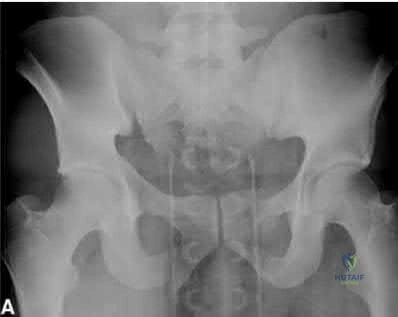
A patient sustains an anteroposterior compression (APC) Type III pelvic ring injury. Which primary ligamentous complex is ruptured, leading to complete global instability of the hemipelvis?


Explanation

An APC III injury implies complete disruption of the pubic symphysis anteriorly, as well as rupture of both the anterior AND posterior sacroiliac ligaments posteriorly, resulting in complete rotational and vertical instability of the hemipelvis.

Question 8

A 4-year-old boy presents with a limp and refuses to bear weight on his right leg. According to the modified Kocher criteria, which of the following combinations gives the highest probability of septic arthritis of the hip?


Explanation

The four classic Kocher criteria for septic arthritis in a child are: non-weight bearing on the affected side, ESR > 40 mm/hr, Fever > 38.5 C (101.3 F), and WBC count > 12,000 cells/mm3. The presence of all four criteria indicates a >99% probability of septic arthritis.

Question 9

During an ACL reconstruction, a surgeon accidentally places the femoral tunnel too anteriorly relative to the native footprint. What is the most likely biomechanical consequence of this error during postoperative knee range of motion?


Explanation

An anteriorly placed femoral tunnel (relative to the native footprint) causes the ACL graft to be relatively loose in extension and excessively tight in flexion. This often leads to restricted knee flexion and potential graft stretching or failure.

Question 10

Which type of bone healing is expected when a diaphyseal fracture is treated with a rigid plate and screws causing absolute stability, and what cell type is primarily responsible for the initial bridging?


Explanation

Absolute stability (e.g., via a lag screw and neutralization plate) leads to primary bone healing. This occurs via cutting cones where osteoclasts bore across the fracture line, followed immediately by osteoblasts laying down new bone. There is no intermediate cartilaginous callus formation.

Question 11

The Lisfranc ligament connects which two osseous structures in the foot?


Explanation

The Lisfranc ligament is a strong interosseous ligament that connects the lateral aspect of the medial cuneiform to the medial base of the second metatarsal. Its disruption is a hallmark of a Lisfranc fracture-dislocation.

Question 12

A 32-year-old male sustains a vertically oriented, displaced femoral neck fracture (Pauwels Type III). What is the primary biomechanical rationale for using a sliding hip screw with a derotation screw rather than multiple cancellous screws?


Explanation

Pauwels Type III fractures have a highly vertical fracture line and are subjected to massive vertical shear forces. A sliding hip screw (a fixed-angle device) provides superior resistance to these shear forces compared to multiple parallel cancellous screws, reducing the risk of varus collapse and nonunion.

Question 13

A 65-year-old female is diagnosed with osteoporosis and prescribed Alendronate. What is the primary cellular mechanism of action of this medication?


Explanation

Alendronate is a nitrogen-containing bisphosphonate. Its primary mechanism of action is the inhibition of farnesyl pyrophosphate (FPP) synthase in the mevalonate pathway within osteoclasts, leading to osteoclast apoptosis and decreased bone resorption.

Question 14

A 45-year-old male presents with severe lower back pain, bilateral lower extremity weakness, and saddle anesthesia. Post-void residual (PVR) volume is 400 mL. What is the most critical next step in management?


Explanation

The patient has signs of Cauda Equina Syndrome (saddle anesthesia, bilateral weakness, urinary retention indicated by high PVR). This is a surgical emergency requiring urgent MRI and prompt surgical decompression (typically within 24-48 hours) to maximize neurological recovery.

Question 15

A laceration to the volar aspect of the hand occurs in 'Zone II' of the flexor tendons. What anatomical boundaries define Zone II, historically known as 'no man/'s land'?


Explanation

Zone II is defined as the area from the proximal edge of the A1 pulley (distal palmar crease) to the insertion of the flexor digitorum superficialis (FDS) tendon on the middle phalanx. Both FDS and FDP tendons run tightly together in this fibro-osseous sheath.

Question 16

A 13-year-old overweight boy sustains an unstable slipped capital femoral epiphysis (SCFE) and is unable to bear weight. He undergoes urgent in-situ pinning. Which of the following complications is he at the highest risk for compared to a patient with a stable SCFE?


Explanation

An unstable SCFE (defined clinically as the inability to bear weight even with crutches) is associated with a much higher rate of avascular necrosis (AVN), historically reported up to 20-50%, compared to a stable SCFE where AVN is extremely rare (<1%).

Question 17

In the setting of anterior shoulder instability, a 'bony Bankart' lesion is identified on CT scan. What percentage of glenoid bone loss is generally considered the critical threshold at which an arthroscopic soft-tissue repair has an unacceptably high failure rate, thereby necessitating a bony augmentation procedure?


Explanation

Critical glenoid bone loss in anterior shoulder instability is classically cited as 20% to 25% of the inferior glenoid width. Defect sizes above this threshold result in a biomechanically unstable joint (the 'inverted pear' glenoid) and have unacceptably high failure rates with arthroscopic Bankart repair alone.

Question 18

During a posterior-stabilized total knee arthroplasty, the surgeon notes that the knee is well-balanced in extension but excessively tight in flexion. Which of the following adjustments is the most appropriate to balance the flexion and extension gaps?


Explanation

If a knee is balanced in extension but tight in flexion, the flexion gap needs to be increased without altering the extension gap. Downsizing the femoral component (utilizing the same posterior reference) decreases the posterior condylar offset, thereby specifically enlarging the flexion gap.

Question 19

A 28-year-old male is recovering from an intramedullary nailing of a closed tibial shaft fracture. He develops disproportionate pain. Delta pressure is measured. What is the formula for calculating delta pressure, and what threshold strongly suggests acute compartment syndrome?


Explanation

Delta pressure is calculated as Diastolic Blood Pressure minus Intracompartmental Pressure. A delta pressure of less than 30 mmHg (meaning the compartment pressure is approaching the diastolic pressure) strongly indicates impaired tissue perfusion and is a recognized threshold for diagnosing acute compartment syndrome.

Question 20

An infant is diagnosed with developmental dysplasia of the hip (DDH) and placed in a Pavlik harness. If the harness is applied with excessive hip flexion (greater than 120 degrees), which nerve is at greatest risk of palsy?


Explanation

Excessive flexion of the hip (> 120 degrees) in a Pavlik harness can impinge the femoral nerve against the inguinal ligament, leading to a compressive femoral nerve palsy. This manifests as an inability to extend the knee.

Question 21

Which of the following interventions most directly increases the statistical power of a clinical study evaluating a new orthopedic implant?


Explanation

Statistical power (1 - Beta) is the probability of correctly rejecting the null hypothesis when it is false (avoiding a Type II error). Power is increased by increasing the sample size, increasing the expected effect size, decreasing data variance, or increasing the alpha level. Decreasing the alpha level makes it harder to find significance, thereby decreasing power.

Question 22

A 25-year-old male sustains a low-velocity gunshot wound to the thigh. Radiographs demonstrate a non-displaced midshaft femur fracture. The bullet is lodged in the vastus lateralis. There is no hard sign of vascular injury. What is the most appropriate management of the bullet?


Explanation

Low-velocity gunshot wounds (GSWs) with bullets lodged in soft tissue or muscle do not routinely require bullet extraction, as the heat of the firing process generally sterilizes the missile, and the soft tissue will encapsulate it. Indications for bullet removal include intra-articular or trans-articular trajectory (risk of lead arthropathy and mechanical wear), location within the central nervous system, compression of a neurovascular structure, or signs of local infection/abscess. A non-displaced femur fracture from a low-velocity GSW can typically be treated non-operatively with local wound care and appropriate bracing or casting.

Question 23

During a posterior cruciate ligament (PCL) reconstruction, the surgeon is tensioning the anterolateral (AL) bundle of the graft. In a normal knee, the anterolateral bundle of the PCL is under maximum tension in which of the following positions?


Explanation

The PCL consists of two main bundles: the anterolateral (AL) bundle and the posteromedial (PM) bundle. The AL bundle is larger, stiffer, and is tightest in 90 degrees of flexion. The PM bundle is tightest in extension. Single-bundle PCL reconstructions typically attempt to recreate the AL bundle and are therefore tensioned and fixed at 90 degrees of knee flexion.

Question 24

A 9-month-old female is diagnosed with developmental dysplasia of the hip (DDH) after an abnormal physical exam. She has received no prior treatment. Radiographs confirm a dislocated left hip. What is the most appropriate initial management?


Explanation

For a child presenting between 6 and 18 months of age with a dislocated hip, the standard initial treatment is an examination under anesthesia (EUA), arthrogram, and attempted closed reduction followed by spica casting. A Pavlik harness is typically reserved for infants under 6 months of age and has a high failure rate if initiated after 6 months. Open reduction is indicated if closed reduction fails to achieve a stable, concentric reduction.

Question 25

Osteoid osteoma and osteoblastoma are both benign bone forming tumors. Which of the following is the most reliable distinguishing feature between an osteoblastoma and an osteoid osteoma?


Explanation

Osteoid osteoma and osteoblastoma are histologically identical, both demonstrating an interconnected network of woven bone trabeculae lined by prominent osteoblasts. The primary distinguishing feature is the size of the nidus: osteoid osteomas are less than 1.5 to 2 cm, whereas osteoblastomas are greater than 2 cm. Osteoblastomas also typically do not produce the classic nocturnal pain relieved by NSAIDs seen in osteoid osteomas.

Question 26

A 65-year-old male presents with deteriorating handwriting and difficulty buttoning his shirts. Physical exam reveals an inverted brachioradialis reflex. This finding is most indicative of compression at which spinal level?


Explanation

The inverted brachioradialis reflex is a classic upper motor neuron sign seen in cervical spondylotic myelopathy. It occurs when tapping the brachioradialis tendon produces paradoxical finger flexion (a lower cervical response) rather than elbow flexion (the expected C6 response) while the C5 and C6 reflex arc is diminished. It localizes the maximal level of cord compression to the C5-C6 level.

Question 27

A 55-year-old active male undergoes a total hip arthroplasty using a ceramic-on-ceramic bearing surface. Which of the following complications is unique to this specific bearing combination compared to metal-on-polyethylene?


Explanation

Ceramic-on-ceramic bearings have the lowest volumetric wear rate among THA bearing surfaces but are uniquely associated with audible 'squeaking' (reported in up to 10% of cases) and the risk of catastrophic ceramic fracture. Cold flow (creep) is seen with polyethylene. Trunnionosis and galvanic corrosion are associated with metal components, particularly metal-on-metal or modular head-neck junctions.

Question 28

During a minimally invasive (percutaneous) repair of an acute Achilles tendon rupture using a standard jig, which neurological structure is at greatest risk of iatrogenic injury?


Explanation

The sural nerve crosses from medial to lateral along the posterior calf and lies in close proximity to the lateral border of the Achilles tendon in the distal third of the leg. It is at significant risk of entrapment or laceration during percutaneous Achilles tendon repairs, particularly when placing sutures in the proximal lateral tendon stump.

Question 29

On a stress-strain curve testing a specific orthopedic biomaterial, the concept of 'toughness' is best represented by which of the following?


Explanation

Toughness is the ability of a material to absorb energy and deform plastically before fracturing. It is represented by the total area under the stress-strain curve. The slope of the linear elastic region represents stiffness (Young's modulus). The maximum stress represents ultimate tensile strength. The transition point is the yield strength, and the area under the elastic portion is the resilience.

Question 30

A patient sustains a deep laceration to the palmar aspect of the hand at the level of the proximal phalanx. This injury occurs in flexor tendon 'Zone II'. Which anatomical feature defines this zone?


Explanation

Flexor tendon Zone II, historically known as 'no man/'s land' due to the difficulty of repair and high risk of adhesions, extends from the proximal edge of the A1 pulley to the insertion of the FDS on the middle phalanx. Both the FDS and FDP tendons are enclosed within the same tight fibro-osseous sheath in this zone.

Question 31

In the Young-Burgess classification, an Anteroposterior Compression Type III (APC III) pelvic ring injury is characterized by the complete disruption of which primary stabilizing posterior ligaments?


Explanation

An APC III injury involves a severe anteroposterior force that causes symphyseal diastasis and complete disruption of the anterior sacroiliac, sacrotuberous, sacrospinous, AND posterior sacroiliac ligaments, leading to complete global (rotational and vertical) instability of the hemipelvis. APC II involves anterior SI, sacrotuberous, and sacrospinous disruption, but the posterior SI ligaments remain intact (rotationally unstable, vertically stable).

Question 32

A 12-year-old male is treated for a slipped capital femoral epiphysis (SCFE). The risk of developing a contralateral SCFE is significantly elevated in patients with which of the following underlying conditions?


Explanation

Patients with endocrine disorders, particularly hypothyroidism, growth hormone deficiency, and panhypopituitarism, have a high incidence of atypical SCFE and a markedly elevated risk of bilateral involvement (up to 100% in some series of endocrine-related SCFE). Prophylactic pinning of the contralateral hip is strongly considered in patients with an underlying endocrinopathy.

Question 33

A 14-year-old male presents with a permeative destructive lesion in the diaphysis of his femur with an associated 'onion skin' periosteal reaction. Biopsy confirms Ewing sarcoma. Which chromosomal translocation is pathognomonic for the most common variant of this disease?


Explanation

Ewing sarcoma is classically associated with the t(11;22)(q24;q12) translocation, which creates the EWS-FLI1 fusion protein (present in about 85-90% of cases). t(9;22) is seen in CML and sometimes chondrosarcoma/myxoid liposarcoma variants, t(X;18) in synovial sarcoma, t(12;16) in myxoid liposarcoma, and t(2;13) in alveolar rhabdomyosarcoma.

Question 34

During clinical evaluation of a patient with recurrent shoulder instability, the apprehension test is performed with the arm abducted to 90 degrees and externally rotated. Which ligamentous structure is the primary static restraint to anterior translation in this specific position?


Explanation

The anterior band of the inferior glenohumeral ligament (IGHL) is the primary static stabilizer against anterior and inferior translation of the humeral head when the arm is in 90 degrees of abduction and external rotation (the typical position for anterior dislocation). The SGHL and coracohumeral ligament restrict inferior translation with the arm at the side. The MGHL prevents anterior translation with the arm in 45 degrees of abduction.

Question 35

Bone morphogenetic proteins (BMPs) play a crucial role in bone healing by inducing the differentiation of mesenchymal stem cells into osteoblasts. Binding of BMP to its cell surface receptor leads to direct phosphorylation and activation of which intracellular signaling proteins?


Explanation

BMPs belong to the TGF-beta superfamily. When BMP binds to its heterodimeric serine/threonine kinase receptor, it phosphorylates the receptor-regulated Smads (R-Smads), specifically Smad 1, 5, and 8. These then form a complex with the co-Smad (Smad 4), which translocates to the nucleus to regulate transcription of osteogenic genes like Runx2. Beta-catenin is part of the Wnt signaling pathway.

Question 36

In the kinematics of the native knee joint, 'femoral rollback' allows for increased knee flexion by preventing early posterior impingement of the femur on the posterior tibia. This rollback mechanism is primarily driven by the intact:


Explanation

Femoral rollback is the posterior translation of the femoral condyles on the tibial plateau as the knee flexes. This is primarily driven by the tension in the posterior cruciate ligament (PCL). In total knee arthroplasty, posterior stabilized (PS) designs use a cam and post mechanism to artificially recreate this rollback when the PCL is sacrificed.

Question 37

A patient with diabetes mellitus and peripheral neuropathy presents with a warm, swollen, and erythematous foot. Radiographs reveal absorption of fine bone debris, early sclerosis, and fusion of the tarsometatarsal joints. According to the Eichenholtz classification of Charcot arthropathy, this represents which stage?


Explanation

The Eichenholtz classification describes the natural history of Charcot arthropathy. Stage II (Coalescence) is characterized by decreased warmth/swelling clinically, and radiographically by the absorption of fine intra-articular debris, early sclerosis, and fusion of large fragments. Stage I (Fragmentation) shows active debris formation, subluxation, and fracture. Stage III (Consolidation) shows mature bony remodeling, rounded bone ends, and stable deformity.

Question 38

According to the Thoracolumbar Injury Classification and Severity Score (TLICS), which of the following injury components assigns the highest number of points (3 points) to the overall score?


Explanation

In the TLICS system: Morphology (Compression = 1, Burst = 2, Translation/Rotation = 3, Distraction = 4). Neurological status (Intact = 0, Nerve root = 2, Complete cord = 2, Incomplete cord = 3, Cauda equina = 3). Posterior Ligamentous Complex (Intact = 0, Indeterminate = 2, Disrupted = 3). Therefore, a disrupted PLC contributes 3 points. A total TLICS score > 4 favors operative management; < 4 favors nonoperative; = 4 is indeterminate.

Question 39

In the evaluation of suspected Carpal Tunnel Syndrome, which of the following electrodiagnostic findings is typically the earliest and most sensitive indicator of median nerve compression?


Explanation

In compressive neuropathies such as Carpal Tunnel Syndrome, sensory fibers are typically affected before motor fibers because they are larger and more superficially located within the nerve fascicles. Prolongation of sensory latency across the carpal tunnel is the earliest and most sensitive electrodiagnostic finding. Motor latency prolongation and denervation potentials (fibrillations) represent later, more severe stages of compression.

Question 40

A 35-year-old agricultural worker sustains an open tibia fracture when a tractor rolls over his leg in a muddy field. The wound over the anterior shin measures 1.5 cm, with moderate periosteal stripping but adequate soft tissue coverage. The distal pulses are intact. According to the Gustilo-Anderson classification, this fracture is best classified as:


Explanation

Any open fracture occurring in a highly contaminated environment (such as a farm injury, barnyard, or stagnant water) is automatically classified as a Gustilo-Anderson Type III injury due to the high risk of severe infection (especially Clostridium perfringens). Because there is adequate soft tissue coverage and no requirement for a free flap or rotational flap, it is classified as Type IIIA, despite the wound measuring only 1.5 cm.

Question 41

Which of the following factors has the greatest influence on the pullout strength of a cortical screw in diaphyseal bone?


Explanation

Screw pullout strength is most significantly affected by the outer diameter of the thread. Other contributing factors include thread pitch, length of thread engagement, and the shear strength of the host bone.

Question 42

A 14-year-old boy presents with a diaphyseal femur lesion showing an "onion skin" periosteal reaction. A biopsy reveals small blue cells. Which chromosomal translocation is most characteristic of this tumor?


Explanation

The clinical picture describes Ewing sarcoma, which is classically associated with the t(11;22) chromosomal translocation. This specific translocation results in the formation of the EWS-FLI1 fusion protein.

Question 43

According to Mirels' criteria for impending pathologic fractures, which of the following characteristics scores the maximum points (3 points) in its respective category?


Explanation

Mirels' criteria assess site, pain, lesion type, and size to predict pathologic fracture risk. Functional pain (pain with weight-bearing) scores 3 points, predicting a higher risk of fracture requiring prophylactic fixation.

Question 44

During a posterior-stabilized total knee arthroplasty, the surgeon notes that the knee is tight in flexion but well-balanced in extension. Which of the following is the most appropriate next step to balance the knee?


Explanation

A knee that is tight in flexion but balanced in extension requires an increase in the flexion gap without affecting the extension gap. Decreasing the AP size of the femoral component achieves this by translating the posterior condyles anteriorly.

Question 45

An overweight 13-year-old boy presents with groin pain and an obligate external rotation of the hip with passive flexion. Radiographs confirm a slipped capital femoral epiphysis (SCFE). What is the classic direction of displacement of the femoral neck relative to the epiphysis?


Explanation

In SCFE, the epiphysis stays within the acetabulum while the femoral neck displaces anteriorly and superiorly. This anatomical shift results in the classic clinical finding of obligate external rotation upon hip flexion.

Question 46

During the process of secondary bone healing, which type of collagen is initially deposited by chondrocytes in the soft callus phase?


Explanation

In the soft callus phase of endochondral ossification, chondrocytes lay down a cartilaginous matrix predominantly composed of Type II collagen. This is later calcified and replaced by Type I collagen as woven bone is formed.

Question 47

While performing an ilioinguinal approach for an acetabular fracture, significant hemorrhage occurs posterior to the superior pubic ramus. This is most likely due to an injury to the "corona mortis," which is an anastomosis between which two vascular systems?


Explanation

The corona mortis is a critical vascular anastomosis between the external iliac (or inferior epigastric) system and the obturator system. It is classically located 5 to 7 cm laterally from the pubic symphysis.

Question 48

The anterior cruciate ligament (ACL) is composed of two distinct bundles. Which of the following best describes the function of the posterolateral (PL) bundle?


Explanation

The PL bundle is tight in extension and provides primary rotatory stability to the knee. In contrast, the anteromedial (AM) bundle is tightest in flexion and serves as the primary restraint against anterior tibial translation.

Question 49

A patient sustains a flexor tendon laceration in "Zone II" of the hand. Which of the following best defines the anatomical boundaries of Zone II?


Explanation

Zone II, often referred to as "no man's land," extends from the proximal edge of the A1 pulley to the insertion of the flexor digitorum superficialis (FDS). This zone is notorious for poor healing and adhesions due to the tightly confined fibro-osseous sheath.

Question 50

A diabetic patient presents with a swollen, erythematous foot and a rocker-bottom deformity. Radiographs show bone fragmentation, periarticular debris, and joint subluxation. What Eichenholtz stage of Charcot arthropathy does this represent?


Explanation

Eichenholtz Stage 1 (Developmental/Fragmentation) is characterized by acute inflammation, osteopenia, bone fragmentation, and joint subluxation. Stage 2 involves coalescence of fragments, while Stage 3 is the consolidation and remodeling phase.

Question 51

A 35-year-old male is involved in a high-speed motor vehicle collision. Radiographs demonstrate bilateral pars interarticularis fractures of C2. What is the most common mechanism of injury for this specific fracture pattern?


Explanation

Traumatic spondylolisthesis of the axis (Hangman's fracture) is typically caused by hyperextension and axial loading. This forces the posterior elements against the C3 articular processes, fracturing the pars interarticularis of C2.

Question 52

Which of the following molecules binds directly to RANK on the surface of osteoclast precursors to stimulate their differentiation into mature osteoclasts?


Explanation

RANKL, secreted by osteoblasts, binds to RANK on osteoclast precursors to promote their differentiation and activation. Osteoprotegerin (OPG) acts as a decoy receptor for RANKL, inhibiting this bone resorption pathway.

Question 53

A patient presents with a spiral fracture of the distal third of the humeral shaft (Holstein-Lewis fracture). Which nerve is most at risk of being entrapped in the fracture site, and what clinical deficit would be expected?


Explanation

The Holstein-Lewis fracture involves the distal third of the humerus, placing the radial nerve at high risk as it passes through the lateral intermuscular septum. Injury causes radial nerve palsy, which presents clinically as a wrist drop.

Question 54

When performing a total hip arthroplasty via the direct anterior approach (Smith-Petersen), the superficial surgical internervous plane is located between muscles supplied by which two nerves?


Explanation

The direct anterior approach utilizes an internervous plane between the sartorius (femoral nerve) and tensor fasciae latae (superior gluteal nerve). The deep plane continues between the rectus femoris (femoral nerve) and gluteus medius (superior gluteal nerve).

Question 55

A 6-week-old infant is treated with a Pavlik harness for developmental dysplasia of the hip. If the harness places the hip in excessive flexion, which nerve is at the greatest risk of compression neuropathy?


Explanation

Excessive hip flexion in a Pavlik harness can compress the femoral nerve against the inguinal ligament, leading to a temporary palsy. Excessive abduction is avoided due to the higher risk of avascular necrosis of the femoral head.

Question 56

A 20-year-old male complains of deep thigh pain that is distinctly worse at night and dramatically relieved by NSAIDs. Imaging shows a 1 cm radiolucent nidus surrounded by sclerotic bone. What is the central nidus predominantly composed of?


Explanation

The clinical and radiographic presentation is classic for an osteoid osteoma. The nidus consists of highly vascularized woven bone, active osteoblasts, and unmineralized osteoid, which secretes high levels of prostaglandins.

Question 57

Following a displaced talar neck fracture, a radiograph taken at 6 to 8 weeks demonstrates a subchondral radiolucent band in the talar dome. This radiographic finding (Hawkins sign) indicates which of the following?


Explanation

The Hawkins sign is subchondral osteopenia observed in the talar dome 6-8 weeks post-injury. It is a highly reliable indicator of intact vascular supply to the talar body, as it requires active blood flow to resorb the bone during disuse.

Question 58

Which compartment of the forearm is most severely affected in cases of acute compartment syndrome, and which muscle's passive stretch is the most sensitive clinical indicator?


Explanation

The deep volar compartment is the most commonly and severely involved compartment in forearm compartment syndrome. Passive extension of the fingers stretches the ischemic flexor digitorum profundus, causing severe, disproportionate pain.

Question 59

Which of the following stages of tendon healing is characterized by the highest content of Type III collagen?


Explanation

During the early proliferative (or fibroblastic) phase of tendon healing, fibroblasts rapidly synthesize Type III collagen to bridge the tissue gap. Over time, during the remodeling phase, this is gradually replaced by stronger Type I collagen.

Question 60

In total hip arthroplasty, highly cross-linked polyethylene (XLPE) inserts significantly reduce wear rates. However, increasing the radiation dose during cross-linking has which of the following detrimental effects on the material properties?


Explanation

While highly cross-linked polyethylene drastically reduces volumetric wear, the radiation cross-linking process alters its mechanical properties. Higher radiation doses decrease ultimate tensile strength, yield strength, and fatigue resistance, increasing the risk of mechanical failure.

Question 61

A 45-year-old male presents after a diving accident. Radiographs reveal a C1 burst fracture. An open mouth odontoid view demonstrates lateral displacement of the C1 lateral masses. A displacement greater than 6.9 mm indicates rupture of which of the following structures?


Explanation

The Rule of Spence states that if the combined overhang of the C1 lateral masses on C2 is greater than 6.9 mm on an AP open-mouth radiograph, it implies a rupture of the transverse ligament. This indicates instability and may require surgical stabilization.

Question 62

A 15-year-old boy presents with night pain in his left thigh. Radiographs show a permeative diaphyseal lesion with a lamellated periosteal reaction. Biopsy reveals small round blue cells. Which chromosomal translocation is most characteristic of this tumor?


Explanation

The clinical and radiographic presentation is classic for Ewing sarcoma. The most common chromosomal abnormality is t(11;22), resulting in the EWS-FLI1 fusion protein.

Question 63

During normal bone remodeling, osteoclast differentiation and activation are primarily stimulated by the binding of RANKL to its receptor, RANK. Which of the following proteins acts as a decoy receptor to inhibit this interaction?


Explanation

Osteoprotegerin (OPG) is secreted by osteoblasts and binds to RANKL, preventing it from interacting with RANK on osteoclast precursors. This inhibits osteoclastogenesis and prevents excessive bone resorption.

Question 64

A 13-year-old obese male presents with acute worsening of chronic groin pain and inability to bear weight. Radiographs demonstrate a severe slipped capital femoral epiphysis (SCFE). If an unstable SCFE is aggressively anatomically reduced prior to fixation, the patient is at highest risk for developing which of the following complications?


Explanation

Forceful or anatomic closed reduction of an unstable SCFE significantly increases the risk of avascular necrosis (AVN) due to disruption of the vulnerable retinacular blood supply. Gentle, in-situ fixation is generally preferred to minimize this risk.

Question 65

A 35-year-old male sustains an anterior posterior compression (APC-III) pelvic ring injury. During an anterior intrapelvic approach (Stoppa) to the acetabulum, massive bleeding is encountered over the superior pubic ramus. This bleeding is most likely from an anastomosis between the external iliac system and which of the following?


Explanation

The corona mortis is a vascular anastomosis between the external iliac (or inferior epigastric) and obturator vessels. It is located on the posterior aspect of the superior pubic ramus and is at high risk during anterior pelvic exposures.

Question 66

A 28-year-old manual laborer presents with dorsal wrist pain. Radiographs reveal sclerosis and fragmentation of the lunate. Which of the following anatomic variants is most strongly associated with the pathogenesis of this condition?


Explanation

Kienbock disease is characterized by avascular necrosis of the lunate. Negative ulnar variance is strongly associated with this condition, as it leads to increased radiolunate contact stresses and potential vascular compromise.

Question 67

A 65-year-old patient undergoes a total hip arthroplasty using a ceramic-on-ceramic bearing surface. One year later, they complain of a high-pitched squeaking noise with walking, without pain. What is the most common cause of squeaking in this specific bearing couple?


Explanation

Squeaking is a well-described complication of ceramic-on-ceramic THA, often caused by edge loading and microseparation resulting in stripe wear. It is highly dependent on cup position, particularly excessive anteversion or vertical orientation.

Question 68

A 55-year-old diabetic patient presents with a swollen, erythematous, and warm foot without systemic signs of infection. Radiographs show periarticular debris, fragmentation, and subluxation of the midfoot. According to the Eichenholtz classification, what is the most appropriate initial management for this stage?


Explanation

The patient is in Eichenholtz Stage I (Developmental/Fragmentation) of Charcot arthropathy. The standard of care is immediate immobilization with a total contact cast and strict non-weight bearing to prevent further deformity until the acute inflammatory phase resolves.

Question 69

A 40-year-old male presents with a locked shoulder after a generalized tonic-clonic seizure. The arm is internally rotated, and external rotation is mechanically blocked. An axillary radiograph confirms a posterior glenohumeral dislocation. What impaction fracture is typically associated with this injury?


Explanation

A reverse Hill-Sachs lesion is an impaction fracture of the anteromedial humeral head. It occurs when the humeral head becomes engaged on the posterior glenoid rim during a posterior shoulder dislocation.

Question 70

In orthopedic implants, the combination of a stainless steel screw with a titanium plate can lead to early implant failure. What specific type of corrosion is most likely to occur in this scenario?


Explanation

Galvanic corrosion occurs when two dissimilar metals are placed in physical contact within an electrolytic medium, such as body fluid. The less noble metal undergoes accelerated corrosion due to the electrochemical potential difference.

Question 71

An infant with developmental dysplasia of the hip (DDH) is being treated in a Pavlik harness. During a follow-up visit, the infant is noted to have decreased active extension of the knee on the treated side. What is the most likely iatrogenic cause?


Explanation

Femoral nerve palsy is a known complication of the Pavlik harness if the hip is maintained in excessive hyperflexion. It presents as an inability to actively extend the knee, and the harness should be adjusted or temporarily discontinued.

Question 72

A 30-year-old male sustains a closed tibial shaft fracture. Two hours post-admission, he develops severe pain out of proportion to the injury and pain with passive toe stretch. His blood pressure is 130/80 mmHg. What compartment pressure measurement confirms the need for an emergent fasciotomy?


Explanation

Acute compartment syndrome is diagnosed when the Delta P (Diastolic Blood Pressure minus Compartment Pressure) is less than 30 mmHg. Relying strictly on absolute pressures can lead to misdiagnosis, particularly in hypotensive patients.

Question 73

A 16-year-old gymnast complains of chronic low back pain exacerbated by extension. Oblique lumbar radiographs demonstrate a "collar on the Scotty dog." What is the exact anatomical location of this defect?


Explanation

The "collar on the Scotty dog" on oblique radiographs represents a defect or fracture in the pars interarticularis. This condition, known as isthmic spondylolysis, is common in adolescent athletes involved in repetitive hyperextension sports.

Question 74

A 25-year-old rugby player injures his ring finger while grabbing an opponent's jersey. He cannot actively flex the distal interphalangeal (DIP) joint. If radiographs show a small bony avulsion retracted to the A4 pulley, what is the optimal timeframe for surgical repair to prevent fixed retraction and muscle belly shortening?


Explanation

A Jersey finger (FDP avulsion) that retracts into the palm compromises its blood supply from the vincula. It requires prompt surgical repair, ideally within 7 to 10 days, to prevent irreversible tendon retraction and necrosis.

Question 75

A 35-year-old female undergoes an ACL reconstruction using a bone-patellar tendon-bone autograft. Postoperatively, she lacks terminal extension. An MRI demonstrates a nodular mass of fibrous tissue anterior to the tibial tunnel in the intercondylar notch. What is this lesion called?


Explanation

A Cyclops lesion is a localized anterior arthrofibrosis complication following ACL reconstruction. It physically blocks terminal knee extension and typically requires arthroscopic excision if symptomatic.

Question 76

In fracture fixation, increasing the working length of a bridging plate has which of the following biomechanical effects?


Explanation

Increasing the working length of a plate decreases both its axial and torsional stiffness. This allows for increased interfragmentary motion, which promotes secondary bone healing via callus formation.

Question 77

A 6-year-old boy presents with a displaced Gartland type III supracondylar humerus fracture. The hand is pink but pulseless. After closed reduction and percutaneous pinning, the hand remains pink and pulseless. What is the most appropriate next step in management?


Explanation

A pink, pulseless hand after adequate reduction and pinning indicates sufficient collateral circulation. The standard of care is close observation and admission, as the radial pulse often returns within 48 hours without the need for vascular exploration.

Question 78

Osteolysis following cementless total hip arthroplasty is primarily mediated by which of the following cell types in response to polyethylene wear debris?


Explanation

Macrophages phagocytose submicron polyethylene wear particles and subsequently release pro-inflammatory cytokines such as TNF-alpha and IL-1. This cascade stimulates osteoclastic bone resorption, leading to periprosthetic osteolysis.

Question 79

A 13-year-old obese male presents with left hip pain and an obligatory external rotation of the hip during active flexion. Radiographs confirm a severe Slipped Capital Femoral Epiphysis (SCFE). Which of the following is the most significant risk factor for the development of avascular necrosis (AVN) in this patient?


Explanation

The stability of the slip is the most critical prognostic factor for developing AVN. Unstable SCFE, defined as the inability to bear weight even with crutches, has a significantly higher rate of AVN compared to stable slips.

Question 80

A 32-year-old male sustains a closed tibial shaft fracture. Which of the following continuous compartment pressure measurements is the most reliable threshold for diagnosing acute compartment syndrome and indicating fasciotomy?


Explanation

Delta P, calculated as the diastolic blood pressure minus the absolute compartment pressure, is the most reliable indicator for compartment syndrome. A Delta P of less than 30 mmHg is the standard threshold indicating the need for emergent fasciotomy.

Question 81

According to current guidelines, what is the optimal prophylactic antibiotic regimen for a Gustilo-Anderson Type IIIA open tibia fracture heavily contaminated with soil?


Explanation

For Type III open fractures, a first-generation cephalosporin and an aminoglycoside are standard to cover Gram-positive and Gram-negative organisms. The addition of high-dose penicillin is indicated when there is heavy soil contamination to cover Clostridium species.

Question 82

A 16-year-old male is diagnosed with conventional osteosarcoma of the distal femur. Molecular analysis of the tumor is most likely to reveal mutations in which of the following tumor suppressor genes?


Explanation

Osteosarcoma is strongly associated with mutations in the Rb (retinoblastoma) and p53 (Li-Fraumeni syndrome) tumor suppressor genes. Loss of heterozygosity at these loci leads to unregulated cell proliferation.

Question 83

In flexor tendon repairs within Zone II of the hand, the primary blood supply to the tendon proper is provided by the:


Explanation

Within Zone II, flexor tendons receive their segmental blood supply dorsally through the vincula brevia and longa. While diffusion from synovial fluid also provides nutrition, the vincula represent the critical direct vascular supply.

Question 84

Following a complete peripheral nerve transection (neurotmesis), Wallerian degeneration occurs. At what rate does the regenerating axon typically grow after the initial latent period?


Explanation

After an initial latent period, axonal regeneration typically proceeds at a rate of approximately 1 mm per day (or about 1 inch per month). This is a vital metric for estimating the timeline of clinical recovery following nerve repair.

Question 85

A 65-year-old male complains of bilateral lower extremity pain radiating to the calves when walking. The pain is relieved by leaning forward on a shopping cart. Which of the following exam findings best differentiates neurogenic claudication from vascular claudication?


Explanation

Neurogenic claudication is typically relieved by spinal flexion (e.g., leaning forward, cycling), which increases the cross-sectional area of the spinal canal. Vascular claudication causes pain with exertion regardless of spinal posture, so cycling will reproduce symptoms.

Question 86

During the ligamentization process of a bone-patellar tendon-bone autograft used for ACL reconstruction, the graft is mechanically at its weakest at approximately what time postoperatively?


Explanation

The graft undergoes an ischemic necrosis and revascularization phase, becoming mechanically weakest between 6 to 12 weeks postoperatively. During this proliferative phase, aggressive rehabilitation must be carefully managed to prevent graft failure.

Question 87

Demineralized bone matrix (DBM) is commonly used as a bone graft substitute. Which of the following best describes its biological properties?


Explanation

DBM retains bone morphogenetic proteins (BMPs) providing osteoinductive properties, and its matrix acts as an osteoconductive scaffold. However, because it is acellular and lacks live osteoblasts, it does not possess osteogenic properties.

Question 88

A patient sustains a massive rotator cuff tear involving the supraspinatus and infraspinatus. Atrophy and fatty infiltration of the infraspinatus muscle are most directly associated with retraction of the tendon beyond which anatomical landmark?


Explanation

Retraction of the supraspinatus/infraspinatus tendons to the level of the glenoid rim places excessive traction on the suprascapular nerve as it passes through the spinoglenoid notch. This traction neuropathy can lead to irreversible fatty infiltration and muscle atrophy.

Question 89

In the acute management of a hemodynamically unstable patient with an Anteroposterior Compression Type III (APC-III) pelvic ring injury, what is the anatomically correct placement of a pelvic binder?


Explanation

Pelvic binders should be placed at the level of the greater trochanters to effectively close the pelvic ring and reduce pelvic volume. Placement over the iliac crests is less effective and may inadvertently cause paradoxical widening of the true pelvis.

Question 90

A 12-year-old boy presents with a permeative lytic lesion in the diaphysis of the femur with an associated "onion-skin" periosteal reaction. A biopsy is planned. Which of the following chromosomal translocations is most characteristic of this tumor?


Explanation

Ewing sarcoma classically presents in the diaphysis of long bones with an "onion-skin" periosteal reaction. It is characterized by the t(11;22) chromosomal translocation, which results in the EWS-FLI1 fusion protein.

Question 91

Galvanic corrosion of orthopedic implants occurs primarily when:


Explanation

Galvanic corrosion happens when two dissimilar metals (e.g., stainless steel and titanium) are in physical contact within the body's electrolytic fluid environment. This causes an electrochemical potential difference, leading to accelerated corrosion of the less noble metal.

Question 92

A 3-month-old infant is being treated with a Pavlik harness for Developmental Dysplasia of the Hip (DDH). Hyperflexion of the hips in the harness puts the patient at greatest risk for which of the following complications?


Explanation

Hyperflexion of the hips in a Pavlik harness (greater than 120 degrees) can compress the femoral nerve against the inguinal ligament, leading to transient femoral nerve palsy. Conversely, excessive abduction places the child at higher risk for avascular necrosis.

Question 93

When treating an intertrochanteric femur fracture with a sliding hip screw, the Tip-Apex Distance (TAD) is measured to predict the risk of lag screw cut-out. To minimize this risk, the combined TAD on AP and lateral radiographs should ideally be less than:


Explanation

Baumgaertner described the Tip-Apex Distance (TAD) as a key predictor of lag screw cut-out in intertrochanteric fractures. A combined TAD of less than 25 mm on AP and lateral radiographs is associated with a significantly reduced risk of failure.

Question 94

A 14-year-old gymnast presents with chronic low back pain. Radiographs reveal a grade I isthmic spondylolisthesis at L5-S1. The primary anatomic defect in this condition is located in the:


Explanation

Isthmic spondylolisthesis is caused by a structural defect or stress fracture in the pars interarticularis. This defect is classically visualized as a "collar on the Scotty dog" on oblique lumbar radiographs.

Question 95

Methicillin-resistant Staphylococcus aureus (MRSA) is a major concern in prosthetic joint infections. Its resistance to beta-lactam antibiotics is primarily mediated by the mecA gene, which encodes for:


Explanation

The mecA gene encodes for PBP2a, an altered penicillin-binding protein that has a significantly reduced affinity for beta-lactam antibiotics. This structural change allows MRSA to maintain cell wall synthesis even in the presence of these drugs.

None

Clinic OS
Medically Verified Content by
Prof. Clinic OS
Consultant Orthopedic & Spine Surgeon
Chapter Index
