Orthopedics Hyperguide Review | Dr Hutaif General Ortho -...
Key Takeaway
This interactive board review contains 100 randomly selected orthopedic surgery questions with clinical images, immediate feedback, and detailed references.
Orthopedics Hyperguide Review | Dr Hutaif General Ortho -...
Comprehensive 100-Question Exam
00:00
Start Quiz
Question 1
A 55-year-old female presents with osteoporosis. Medical therapy targeting osteoclast inhibition is planned. Which of the following best describes the cellular origin and essential signaling molecules required for osteoclast differentiation and activation?
Explanation
Question 2
What is the most significant prognostic factor for overall survival in a 14-year-old patient diagnosed with a high-grade intramedullary osteosarcoma of the distal femur?
Explanation
Question 3
A 32-year-old male sustains a closed tibial shaft fracture. Twelve hours post-admission, he complains of severe leg pain out of proportion to the injury. Which of the following intracompartmental pressure measurements is an absolute indication for a four-compartment fasciotomy?
Explanation
Question 4
A 4-month-old female is diagnosed with Developmental Dysplasia of the Hip (DDH). Ultrasound confirms a dislocated right hip, and treatment with a Pavlik harness is initiated. Which of the following complications is most likely if the hip is maintained in excessive hyperflexion (>120 degrees) in the harness?
Explanation
Question 5
In total hip arthroplasty, the use of highly cross-linked polyethylene (HXLPE) has significantly reduced wear rates compared to conventional polyethylene. What is the primary mechanical trade-off associated with increasing the radiation dose to increase cross-linking?
Explanation
Question 6
A 28-year-old carpenter suffers a laceration to his volar index finger at the level of the proximal phalanx, transecting both the FDP and FDS tendons. This injury corresponds to which flexor tendon zone, historically known as 'no man's land'?
Explanation
Question 7
A 45-year-old male presents with acute onset of severe low back pain, bilateral lower extremity radicular pain, saddle anesthesia, and urinary retention. MRI reveals a massive L4-L5 disc herniation. Which of the following is the most sensitive early clinical sign or symptom of cauda equina syndrome?
Explanation
Question 8
The Anterior Cruciate Ligament (ACL) is composed of two primary bundles. Which of the following accurately describes the tension pattern and primary function of the anteromedial (AM) bundle?
Explanation
Question 9
A new orthopedic implant material is being biomechanically tested. The total area under the stress-strain curve up to the point of fracture represents which of the following material properties?
Explanation
Question 10
A 40-year-old male sustains an acute Achilles tendon rupture. Non-operative management with an early functional rehabilitation protocol is chosen. Compared to traditional surgical repair, what does current Level I evidence indicate regarding re-rupture rates and deep infection rates when using functional rehabilitation?
Explanation
Question 11
In the Young-Burgess classification of pelvic ring injuries, an Anterior Posterior Compression Type II (APC-II) injury is characterized by rupture of which primary ligamentous structures, leading to rotational instability but maintained vertical stability?
Explanation
Question 12
A 13-year-old obese boy presents with right knee pain and a limp. Examination reveals obligate external rotation of the right hip with passive flexion. Slipped Capital Femoral Epiphysis (SCFE) is diagnosed. What is the most common direction of displacement of the proximal femoral epiphysis relative to the femoral neck (metaphysis)?
Explanation
Question 13
During a Posterior-Stabilized (PS) Total Knee Arthroplasty (TKA), the cam and post mechanism is designed to substitute for the sacrificed posterior cruciate ligament (PCL). What is the primary kinematic function of the cam-post engagement during deep flexion?
Explanation
Question 14
A patient presents with neck pain radiating to the lateral forearm and thumb, associated with weakness in elbow flexion and wrist extension. The brachioradialis reflex is diminished. Which cervical nerve root is most likely compressed?
Explanation
Question 15
Which of the following conditions is generally considered an absolute contraindication for an endoscopic carpal tunnel release?
Explanation
Question 16
A 10-year-old boy presents with a painful, swollen mid-thigh. Radiographs show a permeative diaphyseal lesion with an 'onion-skin' periosteal reaction. Biopsy reveals small round blue cells. Which chromosomal translocation is classically associated with this tumor?
Explanation
Question 17
In normal articular cartilage, what is the primary structural orientation of the collagen fibers in the superficial (tangential) zone?
Explanation
Question 18
A 22-year-old pitcher is diagnosed with a SLAP (Superior Labrum Anterior Posterior) tear. Arthroscopy reveals a superior labral tear with a detached biceps anchor, but the remaining labrum is intact without a bucket-handle component. According to the Snyder classification, what type of SLAP lesion is this?
Explanation
Question 19
A 35-year-old female sustains a Monteggia fracture-dislocation. According to the Bado classification, a Type I injury consists of an ulnar diaphyseal fracture combined with which of the following?
Explanation
Question 20
Which of the following describes the primary cellular defect initiating the pathophysiology of Paget's disease of bone (osteitis deformans)?
Explanation
Question 21
A 25-year-old male presents with a slow-growing, painful mass in his left foot. A biopsy reveals a biphasic tumor with both spindle cells and epithelial cells. Molecular analysis of this tissue is most likely to reveal which of the following chromosomal translocations?
Explanation
Question 22
A 65-year-old male complains of increasing hat size, hearing loss, and deep aching pain in his right thigh. Radiographs demonstrate anterolateral bowing of the femur with cortical thickening. Which of the following is the pathognomonic histologic finding associated with this condition?
Explanation
Question 23
During a revision open reduction and internal fixation of a nonunion, a surgeon uses a stainless steel screw through a titanium alloy plate. Several months later, rapid degradation is noted at the screw-plate interface. This is primarily an example of which type of corrosion?
Explanation
Question 24
A pediatric patient with frontal bossing, rhizomelic dwarfism, and a trident hand is evaluated. This condition is caused by a gain-of-function mutation in FGFR3. Which specific zone of the physis is primarily inhibited by this mutation?
Explanation
Question 25
A 68-year-old female is prescribed fondaparinux for deep vein thrombosis prophylaxis following a total hip arthroplasty. What is the mechanism of action of this agent?
Explanation
Question 26
An 18-year-old male presents with persistent night pain in his proximal thigh that is dramatically relieved by oral ibuprofen. CT scan shows a 7 mm radiolucent nidus surrounded by reactive sclerosis. The dramatic pain relief with NSAIDs is due to high intralesional concentrations of which of the following?
Explanation
Question 27
A patient develops a surgical site infection after spinal fusion. Cultures grow Methicillin-resistant Staphylococcus aureus (MRSA). The mecA gene is responsible for this resistance by encoding for which of the following?
Explanation
Question 28
In orthopedic biomechanics, when a constant load is applied to a viscoelastic tissue such as a ligament or tendon over an extended period, the tissue will slowly continue to elongate. This time-dependent deformation is known as:
Explanation
Question 29
A 4-year-old child with frequent fractures, blue sclerae, and dentinogenesis imperfecta is diagnosed with Osteogenesis Imperfecta. The severe, qualitative forms of this disease are most commonly caused by which of the following molecular defects?
Explanation
Question 30
During a posterolateral lumbar fusion, the surgeon decides to use Demineralized Bone Matrix (DBM) as a bone graft extender. Which of the following accurately describes the biologic properties of DBM?
Explanation
Question 31
Normal bone metabolism depends heavily on Vitamin D. The enzyme 1-alpha-hydroxylase, which converts 25-hydroxyvitamin D to the active form 1,25-dihydroxyvitamin D, is primarily located in which organ and is stimulated by which hormone?
Explanation
Question 32
A 12-year-old boy presents with a painful, permeative diaphyseal lesion in his femur with an 'onion skin' periosteal reaction. Molecular analysis confirms Ewing sarcoma. The specific fusion protein (EWS-FLI1) associated with this tumor involves a transcription factor belonging to which family?
Explanation
Question 33
Following a closed humerus fracture, a patient exhibits a radial nerve palsy. According to Sunderland's classification, a third-degree nerve injury is characterized by disruption of the axon, myelin, and which of the following connective tissue structures?
Explanation
Question 34
In Rheumatoid Arthritis, the hypertrophic synovium (pannus) causes juxta-articular bone destruction primarily through the activation of osteoclasts. Which key pro-inflammatory cytokine, secreted by macrophages and T-cells in the joint, is a primary driver of this RANKL-mediated osteoclastogenesis?
Explanation
Question 35
A 35-year-old presents with a large, recurrent knee effusion. Synovial fluid analysis reveals 25,000 WBCs/mm3 with a negative Gram stain. Due to suspected late Lyme arthritis, serology is ordered. According to CDC criteria, what constitutes a positive Western blot for late Lyme disease?
Explanation
Question 36
Multiple Hereditary Exostoses (MHE) is an autosomal dominant skeletal dysplasia characterized by multiple osteochondromas. This condition is most commonly caused by loss-of-function mutations in which pair of genes?
Explanation
Question 37
Articular cartilage exhibits remarkable compressive stiffness due to its extracellular matrix composition. What is the most abundant non-collagenous protein in articular cartilage responsible for generating the tissue's swelling pressure?
Explanation
Question 38
Denosumab has emerged as a highly effective neoadjuvant and definitive treatment for advanced Giant Cell Tumor of Bone (GCTB). It exerts its therapeutic effect by acting as a monoclonal antibody directly targeting which of the following?
Explanation
Question 39
Following open reduction and internal fixation of a transverse radius fracture with a dynamic compression plate, the fracture heals via primary bone healing. Which of the following mechanical and biological conditions is essential for this type of healing to occur?
Explanation
Question 40
To reduce wear rates in total joint arthroplasty, Ultra-High-Molecular-Weight Polyethylene (UHMWPE) undergoes irradiation to become highly cross-linked. While cross-linking successfully decreases volumetric wear, what is the primary mechanical disadvantage of this process?
Explanation
Question 41
Which zone of articular cartilage is primarily responsible for resisting shear stress and contains the highest concentration of collagen with fibers aligned parallel to the joint surface?
Explanation
Question 42
A hemodynamically unstable trauma patient is brought to the emergency department with an anteroposterior compression type III (APC-III) pelvic ring injury. In the initial resuscitation phase, where is the most anatomically appropriate location to apply a circumferential pelvic binder?
Explanation
Question 43
Which of the following underlying conditions is the strongest indication for prophylactic in situ pinning of the contralateral asymptomatic hip in a 12-year-old patient presenting with a unilateral slipped capital femoral epiphysis (SCFE)?
Explanation
Question 44
A 10-year-old boy presents with a diaphyseal destructive bone lesion of the femur with a prominent "onion skin" periosteal reaction. Biopsy reveals small round blue cells. Cytogenetic analysis is most likely to demonstrate which of the following translocations?
Explanation
Question 45
A 58-year-old male with a metal-on-metal total hip arthroplasty presents with groin pain and a palpable cystic mass 5 years postoperatively. Aspiration yields sterile fluid. Histological examination of the periprosthetic tissue is most likely to reveal which of the following?
Explanation
Question 46
In a patient presenting with severe low back pain and bilateral radiculopathy, which of the following clinical findings is the most sensitive indicator of impending or established cauda equina syndrome?
Explanation
Question 47
A 28-year-old male sustains a high-energy, vertically oriented, displaced femoral neck fracture (Pauwels Type III). What is the predominant blood supply to the femoral head that is critically compromised in this injury?
Explanation
Question 48
An infant is being treated with a Pavlik harness for developmental dysplasia of the hip (DDH). At the 2-week follow-up, the parents report the infant is no longer actively extending the knee on the treated side. This complication is most commonly associated with which of the following harness positioning errors?
Explanation
Question 49
Which of the following fracture fixation constructs relies entirely on primary (direct) bone healing, thereby preventing the formation of an intermediate fracture callus?
Explanation
Question 50
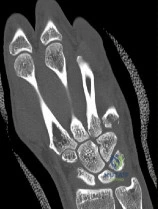
A 24-year-old patient presents with long-standing wrist pain. Radiographs demonstrate a scaphoid nonunion with advanced carpal collapse (SNAC wrist). According to the typical predictable progression of SNAC arthritis, which articulation is classically spared and remains preserved even in late stages?
Explanation
Question 51
A 35-year-old farmer sustains a Grade III open tibial shaft fracture highly contaminated with soil. In addition to surgical debridement and standard broad-spectrum cephalosporin and aminoglycoside coverage, what additional antibiotic should be administered to prevent a specific life-threatening infection?
Explanation
Question 52
A 65-year-old male is diagnosed with a conventional grade II chondrosarcoma of the proximal humerus. What is the most appropriate definitive management strategy for this lesion?
Explanation
Question 53
During a primary total knee arthroplasty for severe varus osteoarthritis, the surgeon finds the knee remains tight medially in both flexion and extension after performing initial bone cuts and removing osteophytes. Which structure should be released next in the standard sequence of medial soft tissue balancing?
Explanation
Question 54
A 6-year-old boy sustains a completely displaced (Gartland type III) extension-type supracondylar humerus fracture. Upon initial evaluation, the hand is pink and well-perfused, but the radial pulse is entirely absent. What is the most appropriate next step in management?
Explanation
Question 55
A 45-year-old female presents with severe neck pain radiating to her lateral right forearm and the thumb and index finger. Physical examination reveals weakness in wrist extension and a diminished brachioradialis reflex. Which cervical nerve root is most likely compressed?
Explanation
Question 56
A 25-year-old sustains a midshaft humerus fracture treated with a compression plate. What type of bone healing is expected, and what is the primary biomechanical prerequisite for this type of healing?
Explanation
Question 57
A 30-year-old male sustains a vertically oriented femoral neck fracture (Pauwels Type III). What is the most appropriate fixation method to minimize the risk of nonunion and shear failure?
Explanation
Question 58
A 12-year-old obese male presents with acute on chronic slipped capital femoral epiphysis (SCFE). What is the primary blood supply at risk of disruption during surgical pinning?
Explanation
Question 59
A 35-year-old female presents with a lytic epiphyseal lesion of the proximal tibia extending to the subchondral bone. Biopsy confirms Giant Cell Tumor. What is the mechanism of action of the targeted medical therapy for this condition?
Explanation
Question 60
During ACL reconstruction rehabilitation, what biomechanical property is responsible for the gradual elongation of a tendon graft over time when subjected to a constant continuous load?
Explanation
Question 61
In a patient presenting with suspected Cauda Equina Syndrome secondary to a massive lumbar disc herniation, which of the following initial clinical symptoms is considered the most sensitive indicator of the condition?
Explanation
Question 62
A 28-year-old laborer sustains a deep laceration over the volar aspect of the proximal phalanx, completely severing the flexor digitorum profundus and superficialis tendons. This injury corresponds to which flexor tendon zone, classically known as "no man's land"?
Explanation
Question 63
Which bearing surface combination in Total Hip Arthroplasty (THA) is associated with the lowest volumetric wear rate but carries a specific risk of audible squeaking and catastrophic component fracture?
Explanation
Question 64
A patient with a stainless steel dynamic compression plate subsequently has a titanium screw inserted into the plate. What type of corrosion is most likely to occur at the screw-plate interface?
Explanation
Question 65
According to current evidence-based guidelines, what is the most critical factor in reducing infection rates in patients with open long bone fractures?
Explanation
Question 66
A 3-month-old infant is being treated with a Pavlik harness for developmental dysplasia of the hip (DDH). Hyperflexion of the hip in the harness places the child at highest risk for which of the following complications?
Explanation
Question 67
A 22-year-old football player sustains an axial load to a plantarflexed foot. Weight-bearing radiographs reveal widening between the 1st and 2nd metatarsal bases. The critical stabilizing ligament injured in this scenario connects which two structures?
Explanation
Question 68
A 10-year-old boy presents with an aggressive diaphyseal lesion of the femur demonstrating an "onion skin" periosteal reaction. Cytogenetics reveal a t(11;22) translocation. What is the most likely fusion protein resulting from this translocation?
Explanation
Question 69
An 82-year-old patient sustains a Type II odontoid fracture after a low-energy fall. Which of the following factors is the strongest mechanical predictor of nonunion and indication for surgical fixation?
Explanation
Question 70
A 24-year-old male falls on an outstretched hand and sustains a fracture through the proximal pole of the scaphoid. Why is this specific fracture pattern at an exceptionally high risk for avascular necrosis?
Explanation
Question 71
An unstable pelvic ring injury is suspected in a hypotensive trauma patient. A pelvic binder is applied in the trauma bay. To optimally reduce pelvic volume and control venous hemorrhage, the binder should be centered directly over which anatomic landmarks?
Explanation
Question 72
During a primary total knee arthroplasty (TKA), the surgeon notes that the knee is tight in flexion but balanced in extension. Which of the following surgical steps is most appropriate to balance the gaps?
Explanation
Question 73
Articular cartilage is divided into distinct zones. Which zone features collagen fibers oriented parallel to the joint surface to resist shear forces, and contains the highest concentration of water?
Explanation
Question 74
A 21-year-old athlete sustains recurrent anterior shoulder dislocations. Preoperative imaging reveals an "engaging" Hill-Sachs lesion. What specific biomechanical criterion defines this lesion as "engaging"?
Explanation
Question 75
A 40-year-old recreational athlete presents with an acute Achilles tendon rupture. Based on current high-level randomized controlled trials, how do the outcomes of functional nonoperative rehabilitation compare to surgical repair?
Explanation
Question 76
Which of the following bone graft types relies primarily on creeping substitution for incorporation and provides the greatest initial structural support?
Explanation
Question 77
Which of the following modifications to a cortical screw will most significantly increase its pullout strength in diaphyseal bone?
Explanation
Question 78
A 12-year-old boy presents with a diaphyseal femur lesion exhibiting an "onion-skin" periosteal reaction. Biopsy shows small round blue cells. Which of the following chromosomal translocations is most characteristic of this diagnosis?
Explanation
Question 79
In normal articular cartilage, which zone is characterized by the highest concentration of proteoglycans and collagen fibers oriented perpendicular to the joint surface?
Explanation
Question 80
A 24-year-old male undergoes intramedullary nailing of a femur fracture. On postoperative day 2, he develops confusion, tachypnea, and a petechial rash over his axilla. Which of the following is the most important initial management?
Explanation
Question 81
According to the 2018 International Consensus Meeting criteria, which of the following findings is considered an absolute major criterion for the diagnosis of chronic periprosthetic joint infection?
Explanation
Question 82
During a volar approach to the wrist, the palmar cutaneous branch of the median nerve is most at risk of injury if the incision is placed in which location relative to the flexor carpi radialis (FCR) tendon?
Explanation
Question 83
A 65-year-old female presents with a distal radius fracture. Laboratory results show normal calcium, normal phosphorus, normal alkaline phosphatase, and normal parathyroid hormone levels. What is the most likely underlying metabolic diagnosis?
Explanation
Question 84
A 13-year-old overweight male presents with 3 weeks of vague knee pain and an antalgic limp. Examination reveals obligate external rotation of the hip with passive flexion. What is the most severe potential complication of the definitive surgical treatment for his condition?
Explanation
Question 85
Which type of corrosion occurs primarily when a stainless steel screw is used in direct mechanical combination with a titanium plate in an orthopedic construct?
Explanation
Question 86
A 35-year-old male sustains a spiral fracture of the distal third of the humerus (Holstein-Lewis fracture). He has an isolated radial nerve palsy on initial presentation. What is the most appropriate initial management of the nerve palsy?
Explanation
Question 87
Which of the following bearing surface combinations in total hip arthroplasty has the lowest volumetric wear rate but carries a unique risk of audible squeaking?
Explanation
Question 88
A 30-year-old female is diagnosed with a giant cell tumor of the distal femur. She is treated with denosumab preoperatively. What is the precise mechanism of action of this medication?
Explanation
Question 89
Which of the following clinical findings is considered the most reliable early indicator of cauda equina syndrome?
Explanation
Question 90
The major retrograde blood supply to the scaphoid bone enters primarily at which anatomical location?
Explanation
Question 91
During reconstruction of the anterior cruciate ligament (ACL), placing the femoral tunnel too far anteriorly will result in which of the following kinematic abnormalities?
Explanation
Question 92
In the emergent management of a hemodynamically unstable patient with an anteroposterior compression type III (APC-III) pelvic ring injury, where is the optimal anatomical position for a pelvic circumferential compression device?
Explanation
Question 93
Which of the following radiographic fracture patterns in an infant is considered highly specific for non-accidental trauma?
Explanation
Question 94
Which type of bone healing is primarily driven by cutting cones and requires absolute stability with no interfragmentary gap?
Explanation
Question 95
Comparing operative versus nonoperative management for acute Achilles tendon ruptures using early functional rehabilitation protocols, operative management is specifically associated with a higher risk of which complication?
Explanation
None
