Orthopedics Hyperguide Review | Dr Hutaif General Ortho -...
14 Apr 2026
48 min read
104 Views

Key Takeaway
This interactive board review contains 100 randomly selected orthopedic surgery questions with clinical images, immediate feedback, and detailed references.
Orthopedics Hyperguide Review | Dr Hutaif Gen...
00:00
Start Quiz
Question 1High Yield
volar tenderness along the flexor sheath
Patients commonly present 24 to 48 hours after onset of symptoms. The standard of care is “urgent surgical drainage” to avoid tendon scarring or necrosis with subsequent impairment of finger function followed by intravenous antibiotic administration.
According to Hand Surgery Update 3, open sheath irrigation has been replaced
largely by closed sheath irrigation. These authors cite a retrospective study that showed no statistical difference in resolution of infection using open sheath irrigation or closed sheath irrigation, however, there was a trend towards more frequent complications and reoperations in the open drainage group.
Lille et al reviewed the records of 75 patients with pyogenic flexor tenosynovitis and found that there was no difference in outcomes between those who received intraoperative irrigation only versus those receiving intraoperative irrigation and continuous postoperative irrigation.
A 50-year-old woman is diagnosed with carpal tunnel syndrome. She is prescribed a cock-up wrist splint at 30 degrees of extension to wear at night. This splint has what effect on the carpal tunnel?
Patients commonly present 24 to 48 hours after onset of symptoms. The standard of care is “urgent surgical drainage” to avoid tendon scarring or necrosis with subsequent impairment of finger function followed by intravenous antibiotic administration.
According to Hand Surgery Update 3, open sheath irrigation has been replaced
largely by closed sheath irrigation. These authors cite a retrospective study that showed no statistical difference in resolution of infection using open sheath irrigation or closed sheath irrigation, however, there was a trend towards more frequent complications and reoperations in the open drainage group.
Lille et al reviewed the records of 75 patients with pyogenic flexor tenosynovitis and found that there was no difference in outcomes between those who received intraoperative irrigation only versus those receiving intraoperative irrigation and continuous postoperative irrigation.
A 50-year-old woman is diagnosed with carpal tunnel syndrome. She is prescribed a cock-up wrist splint at 30 degrees of extension to wear at night. This splint has what effect on the carpal tunnel?


Explanation
No detailed explanation provided for this question.
Question 2High Yield
Which clinical sign is the most sensitive for the diagnosis of compartment syndrome in a child with a supracondylar humerus fracture?
Explanation
Although pain, pallor, paresthesia, paralysis, and pulselessness are all possible signs and symptoms of compartment syndrome in children with fractures, studies have shown increasing analgesia requirement is more sensitive.
Bae et al reviewed thirty-six cases of compartment syndrome in 33 pediatric patients. Approximately 75% of these patients developed compartment syndrome in the setting of fracture. "They found pain, pallor, paresthesia, paralysis, and pulselessness were relatively unreliable signs and symptoms of compartment syndrome in these children. An increasing analgesia requirement in combination with other clinical signs, was a more sensitive indicator of
compartment syndrome."
Whitesides et al summarizes the diagnosis and treatment of acute compartment syndrome. They emphasize the need for early diagnosis, as "muscles tolerate 4 hours of ischemia well, but by 6 hours the result is uncertain; after 8 hours, the damage is irreversible." They recommend fasciotomy be performed when tissue pressure rises past 20 mm Hg below diastolic pressure.
Bae et al reviewed thirty-six cases of compartment syndrome in 33 pediatric patients. Approximately 75% of these patients developed compartment syndrome in the setting of fracture. "They found pain, pallor, paresthesia, paralysis, and pulselessness were relatively unreliable signs and symptoms of compartment syndrome in these children. An increasing analgesia requirement in combination with other clinical signs, was a more sensitive indicator of
compartment syndrome."
Whitesides et al summarizes the diagnosis and treatment of acute compartment syndrome. They emphasize the need for early diagnosis, as "muscles tolerate 4 hours of ischemia well, but by 6 hours the result is uncertain; after 8 hours, the damage is irreversible." They recommend fasciotomy be performed when tissue pressure rises past 20 mm Hg below diastolic pressure.
Question 3High Yield
Examination of a 23-year-old female college basketball player who has had anterior knee pain for the past 3 weeks reveals tenderness and fullness over the inferior patella and proximal patellar tendon. There is no patellofemoral crepitus, patella apprehension sign, or anterior or posterior instability. Initial management should include
Explanation
The patient has patellar tendinitis (jumper’s knee). It is a common overuse condition seen in runners, volleyball players, soccer players, and jumpers but can be seen in any activity in which repeated extension of the knee is required. In the acute setting, the pain is well localized and there is tenderness and sometimes swelling of the tendon. MRI is recommended for evaluating chronic cases and for surgical planning. In the acute phases, ice, rest, and avoidance of the offending activity are recommended. Weakness of the quadriceps and hamstring muscle are thought to contribute to this problem; therefore, stretching and isometric exercise in a limited range of motion are important. Complete rest and intratendinous injections of steroids are detrimental to tendon physiology.
REFERENCES: Stanish WD, Rubinovich RM, Curwin S: Eccentric exercise in chronic tendinitis. Clin Orthop 1986;208:65-68.
Witvrouw E, Bellemans J, Lysens R, Danneels L, Cambier D: Intrinsic risk factors for the development of patellar tendinitis in an athletic population: A two-year prospective study. Am J Sports Med 2001;29:190-195.
REFERENCES: Stanish WD, Rubinovich RM, Curwin S: Eccentric exercise in chronic tendinitis. Clin Orthop 1986;208:65-68.
Witvrouw E, Bellemans J, Lysens R, Danneels L, Cambier D: Intrinsic risk factors for the development of patellar tendinitis in an athletic population: A two-year prospective study. Am J Sports Med 2001;29:190-195.
Question 4High Yield
The best index to measure acetabular deficiency in the coronal plane is:
Explanation
Literature from Europe and North America suggests that a patient with acetabular dysplasia whose anteroposterior radiograph shows a center edge angle of Wiberg less than 15° is a good candidate for periacetabular osteotomy
Question 5High Yield
Which factor should most influence a patient's decision to have surgery for adult scoliosis if he or she is younger than age 50?
Explanation
In a retrospective review of 137 patients treated surgically and 153 patients treated nonsurgically for adult scoliosis, Bess and associates found that surgical treatment for patients younger than 50 years of age was driven by increased coronal plane deformity, and surgical treatment for older patients was mandated by pain and disability. They also concluded that age, comorbidities, and sagittal balance did not influence treatment decisions.
RECOMMENDED READINGS
[Bess S, Boachie-Adjei O, Burton D, Cunningham M, Shaffrey C, Shelokov A, Hostin R, Schwab F, Wood K, Akbarnia B; International Spine Study Group. Pain and disability determine treatment modality for older patients with adult scoliosis, while deformity guides treatment for younger patients. Spine (Phila Pa 1976). 2009 Sep 15;34(20):2186-90. PubMed PMID: 19752704.](http://www.ncbi.nlm.nih.gov/pubmed/19752704)[View ](http://www.ncbi.nlm.nih.gov/pubmed/19752704)[Abstract at PubMed](http://www.ncbi.nlm.nih.gov/pubmed/19752704)
Anderson DG, Albert T, Tannoury C. Adult scoliosis. In: Spivak JM, Connolly PJ, eds. Orthopaedic Knowledge Update: Spine 3. Rosemont, IL: American Academy of Orthopaedic Surgeons; 2006:331-338.
RECOMMENDED READINGS
[Bess S, Boachie-Adjei O, Burton D, Cunningham M, Shaffrey C, Shelokov A, Hostin R, Schwab F, Wood K, Akbarnia B; International Spine Study Group. Pain and disability determine treatment modality for older patients with adult scoliosis, while deformity guides treatment for younger patients. Spine (Phila Pa 1976). 2009 Sep 15;34(20):2186-90. PubMed PMID: 19752704.](http://www.ncbi.nlm.nih.gov/pubmed/19752704)[View ](http://www.ncbi.nlm.nih.gov/pubmed/19752704)[Abstract at PubMed](http://www.ncbi.nlm.nih.gov/pubmed/19752704)
Anderson DG, Albert T, Tannoury C. Adult scoliosis. In: Spivak JM, Connolly PJ, eds. Orthopaedic Knowledge Update: Spine 3. Rosemont, IL: American Academy of Orthopaedic Surgeons; 2006:331-338.
Question 6High Yield
A 15-day-old boy presents with deformity of the right hand. The boy was delivered prematurely and underwent an urgent arterial switch for transposition of great vessels. The patient is in stable condition. He has a radial club hand, and because the radial head cannot be palpated, total absence of radius is suspected. The thumb is absent and the index finger has camptodactyly. The forearm is short compared to the left side, and the patient flexes his elbow upon stimulation. Spontaneous finger motion is also present. A thorough physical examination is performed and a set of investigations is ordered. The results are as follows: complete blood count 10,000 mcu/L; 254Ã103 mcu/L; neutophils 50%; Hb 14.2 mg/dL; lymphocytes 40%; Hct
45; and monocytes 10%. No renal abnormalities were noted on ultrasonogram of the abdomen. A radiograph of the spine is normal.
When the patient is 10 years old, he is not satisfied with the length of his forearm and wishes to lengthen it. Which of the following is not a satisfactory recommendation:
45; and monocytes 10%. No renal abnormalities were noted on ultrasonogram of the abdomen. A radiograph of the spine is normal.
When the patient is 10 years old, he is not satisfied with the length of his forearm and wishes to lengthen it. Which of the following is not a satisfactory recommendation:
Explanation
Acute lengthening is done for small defects and, if performed in this patient, may result in severe neurovascular compromise.
Question 7High Yield
Which condition would you expect to identify during a hip arthroscopy procedure for this patient based on the radiographic findings in Figures 37a through 37c?
Explanation
- Articular cartilage delamination
Question 8High Yield
A 33-year-old male presents 9 months after a fall from 15 feet. He complains of continued pain over his left arm and you elicit pain and gross movement with palpation of his humerus. Infectious workup is negative and a radiograph is shown in Figure A. What is the most appropriate next step in his management?

Explanation
This patient has developed a hypertrophic non-union of his left humerus following IM nailing. This will not go on to union without surgical intervention. McKee et al. reviewed 21 cases of humeral nonunion after failed intramedullary humeral nails. Although technically difficult, open reduction internal fixation with plating and bone grafting was more successful in union in 9/9 cases, vs exchanged humeral nailing which was only successful in 4/10 cases. Seven of the nonunions were atrophic, 2 were hypertrophic in the ORIF group. The authors conclude that the extent of humeral bone loss after failure of primary humeral nailing makes open reduction internal fixation with compression and bone grafting the most acceptable method of treating this problem.
It should be noted, however, that the use of bone grafting in the presence of a hypertrophic nonunion is controversial and has not been definitively proven in the literature to increase healing rates.
Question 9High Yield
An 18-year-old high school basketball player is being treated for Achilles tendinitis. What type of strengthening exercise has been shown to be helpful in the later phases of rehabilitation?
Explanation
DISCUSSION: Eccentric strengthening for tendinopathies has proved most helpful in the later stages of rehabilitation. Although the exact mechanism of the effect on eccentric exercises is not known, the most widely accepted theory is that the absence of concentric stretching disrupts the normal lengthing/shorten- ing cycle which may cause shearing in the tendon and injury to the collagen. Isokinetic exercise maintains a constant angular velocity of joint motion. Isotonic exercise maintains a constant force of contraction while isometric contraction develops force without changing the length of the musculotendinous unit.
All three types of these exercises have not been shown to benefit Achilles tendinitis as much as eccentric exercise.
REFERENCES: Jonsson P, Alfredson H, Sunding K, et al: New regimen for eccentric calf-muscle training in patients with chronic insertional Achilles tendinopathy: Results of a pilot study. Br J Sports Med
2008;42:746-749.
Maffulli N, Walley G, Say ana MK, et al: Eccentric calf muscle training in athletic patients with Achilles tendinopathy. Disabil Rehabil 2008;30:1677-1684.
Figure 67
DISCUSSION: Eccentric strengthening for tendinopathies has proved most helpful in the later stages of rehabilitation. Although the exact mechanism of the effect on eccentric exercises is not known, the most widely accepted theory is that the absence of concentric stretching disrupts the normal lengthing/shorten- ing cycle which may cause shearing in the tendon and injury to the collagen. Isokinetic exercise maintains a constant angular velocity of joint motion. Isotonic exercise maintains a constant force of contraction while isometric contraction develops force without changing the length of the musculotendinous unit.
All three types of these exercises have not been shown to benefit Achilles tendinitis as much as eccentric exercise.
REFERENCES: Jonsson P, Alfredson H, Sunding K, et al: New regimen for eccentric calf-muscle training in patients with chronic insertional Achilles tendinopathy: Results of a pilot study. Br J Sports Med
2008;42:746-749.
Maffulli N, Walley G, Say ana MK, et al: Eccentric calf muscle training in athletic patients with Achilles tendinopathy. Disabil Rehabil 2008;30:1677-1684.
Figure 67
Question 10High Yield
A 30-year-old man who sustained a tibial fracture with a peroneal nerve palsy 2 years ago now has a drop foot and weak eversion of the foot. He reports success with stretching exercises, but he catches his toes when his foot tires. Examination reveals that the foot is plantigrade and supple. What is the next most appropriate step in management?
Explanation
The patient has a supple plantigrade foot that would benefit from a drop foot brace to prevent catching of the toes. Tendon transfer should not be considered until the patient has undergone bracing. Achilles tendon lengthening is not necessary because the foot is plantigrade and flexible. Nerve grafting is not indicated because of the length of time the peroneal nerve palsy has been present.
REFERENCES: Dehne R: Congenital and acquired neurologic disorders, in Mann RA, Coughlin MJ (eds): Surgery of the Foot and Ankle, ed 7. St Louis, MO, Mosby, 1999, vol 1, pp 552-553.
Santi MD, Botte MJ: Nerve injury and repair in the foot and ankle. Foot Ankle Int
1996;17:425-439.
REFERENCES: Dehne R: Congenital and acquired neurologic disorders, in Mann RA, Coughlin MJ (eds): Surgery of the Foot and Ankle, ed 7. St Louis, MO, Mosby, 1999, vol 1, pp 552-553.
Santi MD, Botte MJ: Nerve injury and repair in the foot and ankle. Foot Ankle Int
1996;17:425-439.
Question 11High Yield
The main advantage of multicenter studies in analyzing total hip arthroplasty is:
Explanation
The main advantage of multicenter studies - although they are time-consuming, expensive, and often frustrating - is obtaining large numbers of patients in a relatively short time. This is important when examining statistical differences between varying results
Question 12High Yield
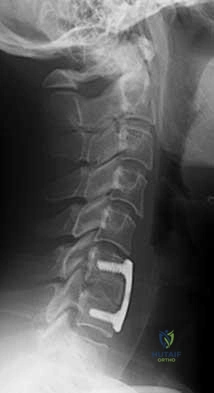
The process at C5-6 shown in Figures 36a and 36b is from radiographs taken in 2006 and 2009, and can occur over time following an anterior cervical discectomy and fusion. At what rate per year is this thought to occur?


Explanation
34
The process shown in the figures is that of degenerative change adjacent to an anterior cervical discectomy and fusion. The observed rate of degenerative adjacent changes is estimated at 2% to 3% per year following a single-level fusion. These changes are partly related to the natural aging process or degenerative process and can occur regardless of an adjacent fusion, but the influence of a solid adjacent fusion with the increased stress at the next level is thought to be a contributor.
RECOMMENDED READINGS
1. [Rihn JA, Lawrence J, Gates C, Harris E, Hilibrand AS. Adjacent segment disease after cervical spine fusion. Instr Course Lect. 2009;58:747-56. PubMed PMID: 19385583. ](http://www.ncbi.nlm.nih.gov/pubmed/19385583)[View Abstract at PubMed](http://www.ncbi.nlm.nih.gov/pubmed/19385583)
2. Hilibrand AS, Carlson GD, Palumbo MA, Jones PK, Bohlman HH. Radiculopathy and myelopathy at segments adjacent to the site of a previous anterior cervical arthrodesis. J Bone Joint Surg Am. 1999 Apr;81(4):519-28. PubMed PMID: 10225797.
[View Abstract at PubMed](http://www.ncbi.nlm.nih.gov/pubmed/10225797)
CLINICAL SITUATION FOR QUESTIONS 37 THROUGH 39
A 22-year-old woman has had right hip pain for 12 months. Her symptoms have not improved with nonsurgical treatment involving physical therapy and intra-articular injections.
A
B
35
C D E
The process shown in the figures is that of degenerative change adjacent to an anterior cervical discectomy and fusion. The observed rate of degenerative adjacent changes is estimated at 2% to 3% per year following a single-level fusion. These changes are partly related to the natural aging process or degenerative process and can occur regardless of an adjacent fusion, but the influence of a solid adjacent fusion with the increased stress at the next level is thought to be a contributor.
RECOMMENDED READINGS
1. [Rihn JA, Lawrence J, Gates C, Harris E, Hilibrand AS. Adjacent segment disease after cervical spine fusion. Instr Course Lect. 2009;58:747-56. PubMed PMID: 19385583. ](http://www.ncbi.nlm.nih.gov/pubmed/19385583)[View Abstract at PubMed](http://www.ncbi.nlm.nih.gov/pubmed/19385583)
2. Hilibrand AS, Carlson GD, Palumbo MA, Jones PK, Bohlman HH. Radiculopathy and myelopathy at segments adjacent to the site of a previous anterior cervical arthrodesis. J Bone Joint Surg Am. 1999 Apr;81(4):519-28. PubMed PMID: 10225797.
[View Abstract at PubMed](http://www.ncbi.nlm.nih.gov/pubmed/10225797)
CLINICAL SITUATION FOR QUESTIONS 37 THROUGH 39
A 22-year-old woman has had right hip pain for 12 months. Her symptoms have not improved with nonsurgical treatment involving physical therapy and intra-articular injections.
A
B
35
C D E
Question 13High Yield
A 29-year-old recreational basketball player has developed pain to the distal aspect of her patella that
occurs during warm-ups and returns toward the end of the game. She reports no history of trauma, effusions, instability, and no mechanical symptoms. On examination, she is point tender at the inferior pole of the patella, lacks patella apprehension, and has a Q-angle of 15°. She has no ligamentous laxity. Radiographs are unremarkable. What is the best next step?
Explanation
Patellar tendinopathy is a relatively common condition in athletes for which repetitive jumping is the norm, especially volleyball and basketball athletes. The prevalence has been reported to be up to 32% in professional basketball players. Initial management is nonoperative in nature with eccentric exercises providing the most reliable clinical results. The other selections have not demonstrated consistent longterm results.
Question 14High Yield
By which mechanism can a true aneurysm of the ulnar artery result?
Explanation
True aneurysms contain all arterial layers. As such, they occur following an arterial injury that allows the vessel to gradually dilate. A true aneurysm is more uniform in shape and is characterized by having an endothelial lining. True aneurysms result from repeated blunt trauma or vessel diseases that weaken the wall. A pseudoaneurysm, or false aneurysm, results from an arterial wall penetration. The extravasated hematoma subsequently organizes and then recanalizes. The lumen of this false aneurysm has no endothelial lining. Pseudoaneurysms result from penetrating injuries from external sources or from fractures.
RECOMMENDED READINGS
32. Koman LA, Ruch DS, Smith BP, Smith TL. Vascular disorders. In: Green DP, Hotchkiss RN, Pederson WC, eds. Green’s Operative Hand Surgery. 4th ed. Philadelphia, PA: Churchill Livingstone; 1999:2286-2287
33. Ho PK, Weiland AJ, McClinton MA, Wilgis EF. Aneurysms of the upper extremity. J Hand Surg Am. 1987 Jan; 12(1):39-46. PubMed PMID: 3805642.
RECOMMENDED READINGS
32. Koman LA, Ruch DS, Smith BP, Smith TL. Vascular disorders. In: Green DP, Hotchkiss RN, Pederson WC, eds. Green’s Operative Hand Surgery. 4th ed. Philadelphia, PA: Churchill Livingstone; 1999:2286-2287
33. Ho PK, Weiland AJ, McClinton MA, Wilgis EF. Aneurysms of the upper extremity. J Hand Surg Am. 1987 Jan; 12(1):39-46. PubMed PMID: 3805642.
Question 15High Yield
The patient in Figure 96 has medial pain at the first metatarsophalangeal (MTP) joint and no other pain.

Explanation
- Distal metatarsal osteotomy with a modified McBride procedure_
Question 16High Yield
Slide 1 Slide 2
You are planning a tendon transfer to help correct deformity in a patient with hereditary sensory motor neuropathy. Which of the following muscles will be used for the transfer based upon the clinical appearance of the foot (Slide 1 and Slide 2):
Explanation
The posterior tibial tendon transfer is a commonly performed surgery for correction of cavus foot deformity associated with weakness of the anterior tibial muscle and varying degrees of drop foot deformity. The removal of the force of the posterior tibial tendon adds to the correction of the deformity of the foot by balancing the absent peroneus brevis. Although the extensor hallucis longus can be used as a tendon transfer, it will not be the primary muscle used or sufficient to correct deformity.
Question 17High Yield
Figure 1 is the MRI scan of a 15-year-old boy who has had knee pain with running for 5 months. Radiographs show an osteochondritis dissecans (OCD) lesion of the medial femoral condyle. What is the most appropriate treatment?
---
---

Explanation
OCD is an acquired lesion of the subchondral bone. Patients with OCD initially report nonspecific pain and variable amounts of swelling. Initial radiographs help identify the lesion and establish the status of the physes. An MRI scan is useful for assessing the potential for the lesion to heal with nonsurgical treatment. Nonsurgical treatment is appropriate for small, stable lesions in patients with open physes and focuses on activity restriction for 3 to 9 months. Surgical treatment is necessary for unstable or detached lesions. Stable lesions with intact articular cartilage can be treated with subchondral drilling to stimulate vascular ingrowth, with radiographic healing at an average of 4.4 months. Fixation is indicated for unstable or hinged lesions, and stabilization of the fragment can be achieved using a variety of implants through an arthroscopic or open approach. The fragment should be salvaged and the normal articular _surface restored whenever possible._
Question 18High Yield
A 17-year-old male baseball catcher has groin pain and intermittent hip locking. Examination demonstrates reproduction of the pain with hip flexion, internal rotation, and adduction. MR imaging reveals an anterosuperior labral tear.
Explanation
- Abnormal femoral head-neck junction offset
Question 19High Yield
Figure 1 is the radiograph of a 51-year-old with back pain and right leg pain. The patient has a positive straight leg raise, full strength in the bilateral lower extremity, as well as intact sensation. What is the most common cause of the radicular leg pain?
Explanation
■
The radiograph reveals an L5-S1 spondylolisthesis secondary to L5 spondylolysis. Patients with isthmic spondylolisthesis have fibrous tissue at the pars interarticularis, which contributes to bilateral L5-S1 foraminal stenosis. This typically results in L5 radiculopathy, which is the exiting nerve root at L5-S1. Lateral recess stenosis and hypertrophic ligamentum flavum are typically seen in degenerative spondylolisthesis.
Question 20High Yield
Arthrodesis of the ankle in a 34-year-old woman should be performed with the ankle positioned in:
Explanation
Although the woman may wish to wear shoes of varying height, there is sufficient plantarflexion occurring through the transverse tarsal joint to permit the wearing of high-heel shoes. Any plantarflexion of the fusion will cause arthritis of the transverse tarsal joint, particularly the talonavicular joint. Dorsiflexion of an ankle arthrodesis is associated with a calcaneus position and heel pain. The ankle should be fused in a similar position for both male and female patients.
Question 21High Yield
A 12-year-old boy with achondroplasia has a gradual 40° thoracolumbar kyphosis. He is unable to walk more than two blocks. Magnetic resonance imaging reveals spinal stenosis, and the patient is scheduled to undergo posterior decompression from T12- S1. In addition to this procedure, you recommend:
Explanation
Extensive posterior decompression poses a high risk of postoperative increase in kyphosis because of both the patientâs age and pre-existing kyphosis.
Observation would not be a good idea because the risk is already known to be high.
Neither a brace nor an uninstrumented fusion would prevent the deformity from developing. C orpectomy is not indicated because the kyphosis is not focal.
Posterior instrumented fusion at the time of decompression is indicated.
Observation would not be a good idea because the risk is already known to be high.
Neither a brace nor an uninstrumented fusion would prevent the deformity from developing. C orpectomy is not indicated because the kyphosis is not focal.
Posterior instrumented fusion at the time of decompression is indicated.
Question 22High Yield
A 19-year-old linebacker underwent a coracoid transfer procedure for recurrent anterior glenohumeral instability. At his 1-week postsurgical check-up, his incision is healing well; however, he reports numbness over the lateral aspect of his forearm. What nerve may have been injured during his surgery?
Explanation
24
The patient has sustained an injury to the musculocutaneous nerve, which is at risk during a coracoid transfer procedure. The terminal branch of this nerve is the lateral antebrachial cutaneous nerve of the forearm. The axillary nerve provides sensation to the lateral arm. The median nerve provides sensation more distally. The radial nerve is not likely to be injured with a coracoid transfer procedure; if it is, the injury would result in numbness near the wrist.in the posterior forearm.
Question 23High Yield
A 70-year-old woman with a 4-part proximal humerus fracture dislocation and history of failed rotator cuff repair
Explanation
- Reverse total shoulder arthroplasty (rTSA)_
Question 24High Yield
Which of the following substances does not have androgenic effects?
Explanation
Growth hormone is the most abundant substance produced by the pituitary gland. Growth hormone has a direct anabolic effect by accelerating the incorporation of amino acids into proteins. It is becoming an increasingly popular anabolic steroid substitute; however, it is expensive and difficult to obtain. Androstenedione is an androgen produced by the adrenal glands and gonads. It acts as a potent anabolic steroid and is converted in the liver directly to testosterone with a resultant increase in levels after administration. DHEA is a naturally occurring hormone made by the adrenal cortex. It is converted to androstenedione, which in turn is converted to testosterone. The beneficial and adverse effects of DHEA can be correlated directly with those of testosterone. Nandrolone is also a potent anabolic steroid. It is commonly taken as 19-norandrostenedione and may be more favored because of its potent anabolic effects with less androgenic effects (no conversion to estrogen compounds). Creatine sales have skyrocketed, and it is a popular nutritional supplement. There is an expectation that creatine can increase strength and power performance; however, direct anabolic effects have not been demonstrated. Creatine serves as a substrate for hydrogen ions and contributes to the resynthesis of ATP (adenosine triphosphate) during maximal exercise. By enhancing ATP production and buffering local pH in muscle, there may be improved tolerance of anaerobic activities. Increases in muscle mass may be related to increased perception of improved training ability or an increase in muscle water content.
REFERENCES: Silver M: Use of ergogenic aids by athletes. J Am Acad Orthop Surg 2001;9:61-70.
Blue JG, Lombardo JA: Steroids and steroid-like compounds. Clin Sports Med 1999;18:667-689.
REFERENCES: Silver M: Use of ergogenic aids by athletes. J Am Acad Orthop Surg 2001;9:61-70.
Blue JG, Lombardo JA: Steroids and steroid-like compounds. Clin Sports Med 1999;18:667-689.
Question 25High Yield
Figures 5a through 5h
A B
C
6
D E F
G
H
A B
C
6
D E F
G
H


Explanation
- Calcaneonavicular (CN) coalition
Question 26High Yield
Which of the following organisms is most often found in a late (> 3 months) infection of a total hip arthroplasty?
Explanation
DISCUSSION: Staphylococcus epidermidis is the most common organism found in an infected total hip arthroplasty greater than 3 months from the origional surgery. Staphylococcus aureus is more common in acute postoperative infections, and E. coli is associated with infections of the urinary tract. Streptococcus species are less common.
REFERENCE: Barrack RL, Booth RE Jr, Lonner JH, et al (eds): Orthopaedic Knowledge Update: Hip and Knee Reconstruction 3. Rosemont, IL American Academy of Orthopedic Surgeons, 2006, pp 475-503.
Figure 82
REFERENCE: Barrack RL, Booth RE Jr, Lonner JH, et al (eds): Orthopaedic Knowledge Update: Hip and Knee Reconstruction 3. Rosemont, IL American Academy of Orthopedic Surgeons, 2006, pp 475-503.
Figure 82
Question 27High Yield
A professional baseball player has had intermittent, mild shoulder pain for the past 2 years. Nonsurgical management has consisted of anti-inflammatory drugs. Examination reveals atrophy of the infraspinatus muscle but not the supraspinatus. There is weakness in external rotation with the arm at his side but not at 90 degrees of abduction. He has no weakness or pain with resisted abduction. Electromyography confirms an isolated lesion of the suprascapular nerve branch to the infraspinatus. He is otherwise neurologically intact. An MRI scan of the shoulder shows no cysts but confirms atrophy of the infraspinatus muscle. What is the next most appropriate step in management?
Explanation
Suprascapular nerve injuries are more commonly seen in athletes who participate in overhead activities. When a patient is evaluated for posterior shoulder pain and infraspinatus muscle weakness or atrophy, electrodiagnostic studies are an essential part of the evaluation. In addition, imaging studies are indicated to exclude other diagnoses that can mimic a suprascapular nerve injury. Initial management should consist of cessation of the aggravating activity along with an organized shoulder rehabilitation program. If nonsurgical management fails to provide relief within 6 months to 1 year, surgical exploration of the suprascapular nerve should be considered. Release of the spinoglenoid ligament with resultant suprascapular nerve decompression may result in pain relief and a return of normal shoulder function. In this patient, who has a chronic neuropathy and mild symptoms, surgery is indicated only if nonsurgical management fails to provide relief and he is unable to perform at his position.
REFERENCES: Cummins CA, Bowen M, Anderson K, et al: Suprascapular nerve entrapment at the spinoglenoid notch in a professional baseball pitcher. Am J Sports Med 1999;27:810-812.
Cummins CA, Messer TM, Nuber GW: Suprascapular nerve entrapment. J Bone Joint Surg Am 2000;82:415-424.
Ferretti A, De Carli A, Fontana M: Injury of the suprascapular nerve at the spinoglenoid notch: The natural history of infraspinatus atrophy in volleyball players. Am J Sports Med 1998;26:759-763.
REFERENCES: Cummins CA, Bowen M, Anderson K, et al: Suprascapular nerve entrapment at the spinoglenoid notch in a professional baseball pitcher. Am J Sports Med 1999;27:810-812.
Cummins CA, Messer TM, Nuber GW: Suprascapular nerve entrapment. J Bone Joint Surg Am 2000;82:415-424.
Ferretti A, De Carli A, Fontana M: Injury of the suprascapular nerve at the spinoglenoid notch: The natural history of infraspinatus atrophy in volleyball players. Am J Sports Med 1998;26:759-763.
Question 28High Yield
-are the radiographs of a 78-year-old right-hand dominant man who fell at home and sustained an isolated injury to his right shoulder. He lives alone and is independent with his activities of daily living. Examination reveals a closed injury and a normal neurologic examination. What is the most appropriate management?

Explanation
No detailed explanation provided for this question.
Question 29High Yield
Slide 1 Slide 2 Slide 3
A 55-year-old man has severe wrist pain with erythema and soft tissue swelling. The plain radiograph is shown in Slide 1 and a biopsy specimen is shown in Slide 2 and Slide 3. Which of the following would be the best treatment:
Explanation
The plain radiographs show a destructive lesion in the wrist in the distal radius and at the scaphotrapezial joint. The joint spaces are preserved. The histology shows the features of gout: acellular amorphous tissue, macrophages, and giant cells.
Gout is caused by the deposition of monosodium urate crystals in tissues typically around joints. Common locations include the great toe, heel, ankle, and knee. In approximately 50% of patients, the first attack is in the great toe. Gout commonly occurs inside a joint for two reasons:
The synovial fluid is a poorer solvent than plasma
Lower temperatures (as in peripheral joints) favor crystallization
Neutrophils ingest the crystals and then release potent lysosomal enzymes. Histologically, the tophi have several features: Acellular amorphous material
Macrophages
Foreign body giant cells
The first line of treatment is nonsteroidal anti-inflammatory medications. Correct Answer: Nonsteroidal anti-inflammatory medications
Gout is caused by the deposition of monosodium urate crystals in tissues typically around joints. Common locations include the great toe, heel, ankle, and knee. In approximately 50% of patients, the first attack is in the great toe. Gout commonly occurs inside a joint for two reasons:
The synovial fluid is a poorer solvent than plasma
Lower temperatures (as in peripheral joints) favor crystallization
Neutrophils ingest the crystals and then release potent lysosomal enzymes. Histologically, the tophi have several features: Acellular amorphous material
Macrophages
Foreign body giant cells
The first line of treatment is nonsteroidal anti-inflammatory medications. Correct Answer: Nonsteroidal anti-inflammatory medications
Question 30High Yield
Figures 1 and 2 are MR images of a 13-year-old boy with activity-related left knee pain and swelling without mechanical symptoms. He does not have a history of a clear injury but has been having symptoms for 8 months. He has taken a month here and there off from his sports, without real relief. The best next step in management is to
Explanation
■
Skeletally immature patients with stable osteochondritis dissecans lesions of the knee have a very high healing rate with conservative treatment, which consists of strict non–weightbearing with or without immobilization. Healing rates are significantly lower for patients treated with unloader bracing who are allowed to continue normal activity. Physical therapy may be required later, but is not an appropriate initial treatment. Because the healing rate with conservative treatment is so high for lesions around the knee, this should be tried for several months before recommending surgical treatment.
■
Skeletally immature patients with stable osteochondritis dissecans lesions of the knee have a very high healing rate with conservative treatment, which consists of strict non–weightbearing with or without immobilization. Healing rates are significantly lower for patients treated with unloader bracing who are allowed to continue normal activity. Physical therapy may be required later, but is not an appropriate initial treatment. Because the healing rate with conservative treatment is so high for lesions around the knee, this should be tried for several months before recommending surgical treatment.
Question 31High Yield
A right-hand-dominant 45-year-old man sustained an injury to the anterior aspect of his right elbow during sudden elbow flexion while trying to lift a heavy load 3 days ago. He reports the sensation of a sudden, sharp pain at the time of injury, which has since subsided. He has ecchymosis in the anterior and medial elbow regions and has difficulty with resisted forearm supination with the elbow in a flexed position. A diagnosis of an acute distal biceps tendon rupture is made, and, after having a discussion with the patient, surgical treatment is chosen. During surgical reattachment, what is the relationship of the distal biceps tendon within the antecubital fossa to the median nerve and recurrent radial artery before the tendon attaches to the bicipital tuberosity?
Explanation
During surgical repair of a distal biceps tendon rupture, regardless of the surgical approach or technique, an understanding of the regional anatomy is important. The tendon passes distally into the antecubital fossa. The antecubital fossa is defined by the brachioradialis radially and the pronator teres ulnarly. A sheath surrounds the biceps tendon as it passes through the antecubital fossa toward its insertion on the radial tuberosity. The lateral antebrachial cutaneous nerve lies superficially in the subcutaneous tissue of the antecubital fossa. The nerve parallels the brachioradialis. While still superficial, the tendon is contiguous with the lacertus fibrosus that becomes confluent medially with the fascia overlying the flexor-pronator mass. The brachial artery lies just beneath the lacertus fibrosus at the level of the elbow flexion crease. The tendon travels just lateral (radial) to the median nerve within the antecubital fossa and passes posterior (deep) to the recurrent radial artery before it attaches to the radial tuberosity. Full forearm supination allows visualization of the tendinous insertion on the radial tuberosity.
RECOMMENDED READINGS
23. Leslie BM, Ranger H. Biceps tendon and triceps tendon ruptures. In: Baker CL, Plancher KD, eds. _Operative treatment of elbow injuries_. New York: Springer-Verlag; 2002:110-122.
24. [Eames MH, Bain GI, Fogg QA, van Riet RP. Distal biceps tendon anatomy: a cadaveric study. J Bone Joint Surg Am. 2007 May;89(5):1044-9. PubMed PMID: 17473142. ](http://www.ncbi.nlm.nih.gov/pubmed/17473142)[View Abstract at PubMed](http://www.ncbi.nlm.nih.gov/pubmed/17473142)
RECOMMENDED READINGS
23. Leslie BM, Ranger H. Biceps tendon and triceps tendon ruptures. In: Baker CL, Plancher KD, eds. _Operative treatment of elbow injuries_. New York: Springer-Verlag; 2002:110-122.
24. [Eames MH, Bain GI, Fogg QA, van Riet RP. Distal biceps tendon anatomy: a cadaveric study. J Bone Joint Surg Am. 2007 May;89(5):1044-9. PubMed PMID: 17473142. ](http://www.ncbi.nlm.nih.gov/pubmed/17473142)[View Abstract at PubMed](http://www.ncbi.nlm.nih.gov/pubmed/17473142)
Question 32High Yield
A newborn girl is noted to have decreased movement in the right upper extremity. She was large (10 lbs) at birth and was delivered vaginally with shoulder dystocia. She does not have elbow flexion, external shoulder rotation, or abduction. She has had weak finger flexion for 3 months. At 4-months-old, she regains the ability to flex her elbow. Recommended treatment includes:
Explanation
C onservative therapy is predicted to bring a good result because biceps are returning at four months of age. However, stretching of the shoulder is indicated to maintain a range of external rotation and abduction.
Magnetic resonance imaging is only indicated if there is a need to consider microvascular repair.
Tendon transfers are performed later (at several years of age), if shoulder abduction and external rotation are significantly limited.
Microvascular repair is mainly considered in patients who do not have return of biceps function by five months.
Open reduction is indicated later (if the shoulder joint is subluxated or severely contracted) after motor recovery has reached a plateau.
Magnetic resonance imaging is only indicated if there is a need to consider microvascular repair.
Tendon transfers are performed later (at several years of age), if shoulder abduction and external rotation are significantly limited.
Microvascular repair is mainly considered in patients who do not have return of biceps function by five months.
Open reduction is indicated later (if the shoulder joint is subluxated or severely contracted) after motor recovery has reached a plateau.
Question 33High Yield
A patient with no history of patellar instability sustains a traumatic lateral patellar dislocation. What structure most likely has been torn?
Explanation
Any of the above structures may be involved in a lateral patellar dislocation. However, biomechanic studies have found that the medial patellofemoral ligament is the major soft-tissue static restraint of lateral patellar displacement, providing at least 50% of this function.
REFERENCES: Desio SM, Burks RT, Bachus KN: Soft tissue restraints to lateral patellar translation in the human knee. Am J Sports Med 1998;26:59-65.
Conlan T, Garth WP Jr, Lemons JE: Evaluation of the medial soft-tissue restraints of the extensor mechanism of the knee. J Bone Joint Surg Am 1993;75:682-693.
Warren LF, Marshall JL: The supporting structures and layers on the medial compartment of the knee: An anatomical analysis. J Bone Joint Surg Am 1979;61:56-62.
REFERENCES: Desio SM, Burks RT, Bachus KN: Soft tissue restraints to lateral patellar translation in the human knee. Am J Sports Med 1998;26:59-65.
Conlan T, Garth WP Jr, Lemons JE: Evaluation of the medial soft-tissue restraints of the extensor mechanism of the knee. J Bone Joint Surg Am 1993;75:682-693.
Warren LF, Marshall JL: The supporting structures and layers on the medial compartment of the knee: An anatomical analysis. J Bone Joint Surg Am 1979;61:56-62.
Question 34High Yield
What is the most likely diagnosis based on the MRI findings shown in Figures 87a and 87b?
Explanation
DISCUSSION: The MRI scans reveal increased signal in the medial facet of the patella and the anterior aspect of the lateral femoral condyle. This pattern is typically seen in patients with acute patellar dislocations. In patients with ACL tears, the bone bruise of the lateral femoral condyle is usually seen in the central portion at the sulcus terminalis and the posterior half of the lateral tibial plateau and is not usually seen in the patella. This pattern of bone bruising is not seen with patellar tendon ruptures, LCL tears, and PCL tears.
REFERENCES: Elias DA, White LM, Fithian DA: Acute lateral patellar dislocation at MR imaging: Injury patterns of medial patellar soft-tissue restraints and osteochondral injuries of the inferomedial patella. Radiology 2002;225:736-743.
Virolainen H, Visuri T, Kuusela T: Acute dislocation of the patella: MR findings. Radiology 1993;189:243-246.
REFERENCES: Elias DA, White LM, Fithian DA: Acute lateral patellar dislocation at MR imaging: Injury patterns of medial patellar soft-tissue restraints and osteochondral injuries of the inferomedial patella. Radiology 2002;225:736-743.
Virolainen H, Visuri T, Kuusela T: Acute dislocation of the patella: MR findings. Radiology 1993;189:243-246.
Question 35High Yield
A 77-year-old man who underwent right total knee replacement surgery 2 and a half years ago has had knee pain since surgery. The pain is diffuse, constant, and made worse with activity. He notes warmth and swelling in his knee. Examination shows a well-healed incision, no erythema, moderate warmth, synovitis, and an effusion. The knee is stable, and has an arc of flexion between 3° and 120°. Radiographs show well-fixed and well-aligned implants. What is the most appropriate initial treatment?
Explanation
This patient's history and physical findings are concerning for deep infection. Inflammatory markers, including ESR and CRP, should be obtained first. If the levels are elevated, knee aspiration should be performed for the synovial cell count and culture. A bone scan is not indicated in an initial investigation for deep infection; it is rarely helpful and is not cost effective. CT to assess implant rotation is an appropriate investigation for knee pain when the clinical scenario is not suspicious for a deep infection
and when infection has been excluded.
Question 36High Yield
An 18-year-old man who sustained a lumbar fracture-dislocation with an associated complete spinal cord injury 6 weeks ago underwent instrumented posterior thoracolumbar fusion a few days after the injury. While at a rehabilitation facility, routine postoperative surveillance radiographs are obtained (Figures 11a
through 11d). What is the most appropriate next step in management?
---
through 11d). What is the most appropriate next step in management?
---


Explanation
The patient has sustained a traumatic spondylolisthesis at the level below the caudal instrumented level, likely not appreciated at the index surgery. Surveillance radiographs indicate that there is significant translation in the lumbar spine on sitting, indicating an unstable injury. The lack of significant bony involvement indicates that the injury is predominantly through the anterior and posterior ligamentous complexes, and thus is unlikely to stabilize with nonsurgical management. Because the patient reduces almost completely on lying supine, the most appropriate course of action is extension of the posterior fusion to include the level of the instability. Because the patient has a complete spinal cord injury below the level of the thoracic fracture, decompression is not indicated.
Question 37High Yield
Video 100 is the presurgical lateral ankle examination of a 45-year-old woman who has had pain and discomfort for 2 years along the posterolateral ankle following a sudden dorsiflexion injury. She notes occasional clicking and popping, and she has not experienced resolution of her symptoms despite immobilization and physical therapy. Examination reveals a stable ankle-to-anterior drawer and inversion stress testing. No strength deficit is noted, but
she has apprehension with resisted eversion. MR images do not reveal evidence of tendonosis or tear. The most appropriate surgical intervention is


Explanation
This patient has a clear history of dorsiflexion injury complicated by chronic peroneal tendon dislocation. The symptoms and findings are consistent with dislocation in this particular case. Groove deepening of the posterior fibula with associated imbrication of the peroneal retinaculum is the most effective surgical procedure. Associated synovitis or tendonosis should be addressed. However, failure to deepen the groove and imbricate the retinaculum will result in continued discomfort. Consequently, both responses that involve isolated tendon surgery are not appropriate. Associated subjective instability can be noted in these patients. The examination is critical to determine the stability of the lateral collateral complex, which is intact in this case (so
imbrication is not indicated). A sense of apprehension is a common examination finding because patients sense that the peroneals will subluxate with resisted eversion. Placement of the examiner's hands on the peroneals to stabilize the tendons should relieve this apprehension. A patient may not be able to voluntarily dislocate the tendon. Dynamic ultrasound is the most sensitive radiographic examination for detection of dislocation. Intrasheath peroneal subluxation may also occur and is treated similarly.
RECOMMENDED READINGS
Raikin SM. Intrasheath subluxation of the peroneal tendons. Surgical technique. J Bone Joint Surg Am. 2009 Mar 1;91 Suppl 2 Pt 1:146-55. doi: 10.2106/JBJS.H.01356. PubMed PMID:
[19255207.](http://www.ncbi.nlm.nih.gov/pubmed/19255207)[View Abstract at PubMed](http://www.ncbi.nlm.nih.gov/pubmed/19255207)
[Philbin TM, Landis GS, Smith B. Peroneal tendon injuries. J Am Acad Orthop Surg. 2009 May;17(5):306-17. Review. PubMed PMID: 19411642. ](http://www.ncbi.nlm.nih.gov/pubmed/19411642)[View Abstract at PubMed](http://www.ncbi.nlm.nih.gov/pubmed/19411642)
[Ogawa BK, Thordarson DB. Current concepts review: peroneal tendon subluxation and dislocation. Foot Ankle Int. 2007 Sep;28(9):1034-40. Review. PubMed PMID: 17880883. ](http://www.ncbi.nlm.nih.gov/pubmed/17880883)[View](http://www.ncbi.nlm.nih.gov/pubmed/17880883)[ ](http://www.ncbi.nlm.nih.gov/pubmed/17880883)[Abstract at PubMed](http://www.ncbi.nlm.nih.gov/pubmed/17880883)
This is the last question of the exam.
imbrication is not indicated). A sense of apprehension is a common examination finding because patients sense that the peroneals will subluxate with resisted eversion. Placement of the examiner's hands on the peroneals to stabilize the tendons should relieve this apprehension. A patient may not be able to voluntarily dislocate the tendon. Dynamic ultrasound is the most sensitive radiographic examination for detection of dislocation. Intrasheath peroneal subluxation may also occur and is treated similarly.
RECOMMENDED READINGS
Raikin SM. Intrasheath subluxation of the peroneal tendons. Surgical technique. J Bone Joint Surg Am. 2009 Mar 1;91 Suppl 2 Pt 1:146-55. doi: 10.2106/JBJS.H.01356. PubMed PMID:
[19255207.](http://www.ncbi.nlm.nih.gov/pubmed/19255207)[View Abstract at PubMed](http://www.ncbi.nlm.nih.gov/pubmed/19255207)
[Philbin TM, Landis GS, Smith B. Peroneal tendon injuries. J Am Acad Orthop Surg. 2009 May;17(5):306-17. Review. PubMed PMID: 19411642. ](http://www.ncbi.nlm.nih.gov/pubmed/19411642)[View Abstract at PubMed](http://www.ncbi.nlm.nih.gov/pubmed/19411642)
[Ogawa BK, Thordarson DB. Current concepts review: peroneal tendon subluxation and dislocation. Foot Ankle Int. 2007 Sep;28(9):1034-40. Review. PubMed PMID: 17880883. ](http://www.ncbi.nlm.nih.gov/pubmed/17880883)[View](http://www.ncbi.nlm.nih.gov/pubmed/17880883)[ ](http://www.ncbi.nlm.nih.gov/pubmed/17880883)[Abstract at PubMed](http://www.ncbi.nlm.nih.gov/pubmed/17880883)
This is the last question of the exam.
Question 38High Yield
A 15-year-old white boy presents to your office with inability to elevate his right shoulder and flex his elbow. He sustained a fall from an all-terrain vehicle 8 weeks ago. He landed on the right shoulder and says his neck was twisted away at the time of fall. He was seen at the local emergency department; skull, chest, cervical and thoracic spine, and shoulder x-rays showed no damage. There was no loss of consciousness and he has no chest pain or breathing difficulties. He was observed in the hospital until stable and was referred to follow up in the hand clinic at 4 weeks and scheduled for an electromyogram.
C linical examination reveals weakness of deltoid, supraspinatus, infraspinatus, teres minor, biceps, brachialis, brachioradialis, and extensor carpi radialis longus. The remainder of his forearm musculature is preserved and he can grasp and release and pinch. Sensations are decreased along the distribution of axillary nerve. There is 3 cm wasting of his arm and 2 cm of his forearm. Tinel sign is positive around the clavicle. Horner signs are absent and his arm lies against the body. The EMG report shows fibrillation potentials in the weak muscles. The parents are concerned and say they have not seen any improvement. The boy reports that he is now able to flex his elbow. When asked to demonstrate you notice that he flexes his wrist and pronates his forearm to âswingâ his elbow into flexion.
The most important function that needs to be restored in this boy is:
C linical examination reveals weakness of deltoid, supraspinatus, infraspinatus, teres minor, biceps, brachialis, brachioradialis, and extensor carpi radialis longus. The remainder of his forearm musculature is preserved and he can grasp and release and pinch. Sensations are decreased along the distribution of axillary nerve. There is 3 cm wasting of his arm and 2 cm of his forearm. Tinel sign is positive around the clavicle. Horner signs are absent and his arm lies against the body. The EMG report shows fibrillation potentials in the weak muscles. The parents are concerned and say they have not seen any improvement. The boy reports that he is now able to flex his elbow. When asked to demonstrate you notice that he flexes his wrist and pronates his forearm to âswingâ his elbow into flexion.
The most important function that needs to be restored in this boy is:
Explanation
Elbow flexion is central to management of brachial plexus management because it serves the most important function of feeding.
Question 39High Yield
Figure 1
The structure that lies immediately medial to the bone prominence in the posterior ankle shown is the:
Explanation
The os trigonum presented in the radiograph may be the cause of posterior ankle impingement. The flexor hallucis longus lies immediately medial to the os and must be protected during excision of this bone.
Question 40High Yield
Which of the following is a parameter that should be used in positioning arthrodesis of the hip in a young person:
Explanation
Neutral abduction is important in preventing back pain.
The flexion should be between 25° and 35°.
Any abduction beyond neutral poses increases risk of back pain. External rotation beyond approximately 5° is not needed.
Arthrodesis often produces some mandatory shortening; therefore, intentional shortening is not needed.
The flexion should be between 25° and 35°.
Any abduction beyond neutral poses increases risk of back pain. External rotation beyond approximately 5° is not needed.
Arthrodesis often produces some mandatory shortening; therefore, intentional shortening is not needed.
Question 41High Yield
A 13-year-old girl with adolescent idiopathic scoliosis is otherwise healthy with a normal neurologic examination and she began her menstrual cycle 3 months ago. Standing radiographs show a high left thoracic curve from T1-T6 that measures 29 degrees, a right thoracic curve from T7-L1 that measures 65 degrees, and a left lumbar curve from L1-L5 that measures 31 degrees, correcting to 12, 37, and 10 degrees, respectively, on bending films. Her Risser sign is
Explanation
DISCUSSION: The patient has typical adolescent idiopathic scoliosis with a right thoracic curve. This represents a Lenke-IB curve pattern; therefore, only treatment of the thoracic curve is required. The proximal thoracic and thoracolumbar curves are very flexible. The patient is Risser 1 and has just started her menstrual cycles; therefore, she is at significant risk for further curve progression. Bracing is not appropriate for a curve of this magnitude and will not halt the progression of this curve, nor will vertebral body stapling stop this curve. Vertebral body stapling is sometimes useful in small thoracic curves of less than 35 degrees and skeletally immature patients. Anterior and
**14 • American Academy of Orthopaedic Surgeons**
posterior spinal fusion is not required because the patient has no other risk factors, such as neurofibromatosis nor is she at risk for crankshaft. Anterior fusion is an option, but it is not listed.
REFERENCES: Lenke LG, Betz RR, Harmes J, et al: Adolescent idiopathic scoliosis: Anew classification to determine extent of spinal arthrodesis. J Bone Joint Surg Am 2001;83:1169-1181.
Lenke LG, Betz RR, Haher TR, et al: Multisurgeon assessment of surgical decision making in adolescent idiopathic scoliosis: Curve classification, operative approach, and fusion levels. Spine 2001;26:2347- 2353.
DISCUSSION: The patient has typical adolescent idiopathic scoliosis with a right thoracic curve. This represents a Lenke-IB curve pattern; therefore, only treatment of the thoracic curve is required. The proximal thoracic and thoracolumbar curves are very flexible. The patient is Risser 1 and has just started her menstrual cycles; therefore, she is at significant risk for further curve progression. Bracing is not appropriate for a curve of this magnitude and will not halt the progression of this curve, nor will vertebral body stapling stop this curve. Vertebral body stapling is sometimes useful in small thoracic curves of less than 35 degrees and skeletally immature patients. Anterior and
**14 • American Academy of Orthopaedic Surgeons**
posterior spinal fusion is not required because the patient has no other risk factors, such as neurofibromatosis nor is she at risk for crankshaft. Anterior fusion is an option, but it is not listed.
REFERENCES: Lenke LG, Betz RR, Harmes J, et al: Adolescent idiopathic scoliosis: Anew classification to determine extent of spinal arthrodesis. J Bone Joint Surg Am 2001;83:1169-1181.
Lenke LG, Betz RR, Haher TR, et al: Multisurgeon assessment of surgical decision making in adolescent idiopathic scoliosis: Curve classification, operative approach, and fusion levels. Spine 2001;26:2347- 2353.
Question 42High Yield
Figure 46 is the CT scan of a 50-year-old man who is brought to the emergency department after a fall. He has a complete C5 neurological injury. What is the root cause of his fracture?

Explanation
This patient has a fracture dislocation through the body of C6. Because the spine is ankylosed, it is rigid and prone to injury even in the setting of low-energy incidents. This patient has ankylosing spondylitis because the anterior longitudinal ligament is ossified. Ankylosing spondylosis is a seronegative spondyloarthropathy with sacroiliac joint involvement most commonly. It has a male predilection of 3:1. In the spine, it is characterized by diffuse syndesmotic ankylosis resulting in a “bamboo spine.”
This patient also has degenerative changes found at C3-4, C4-5, but the ankylosing of the spine is the main reason for the higher fracture risk. DISH (Forestier disease) is a noninflammatory
spondyloarthropathy characterized by flowing ossifications and bone proliferations at sites of tendinous and ligamentous insertion.
RECOMMENDED READINGS
7. [El Tecle NE, Abode-Iyamah KO, Hitchon PW, Dahdaleh NS. Management of spinal fractures in patients with ankylosing spondylitis. Clin Neurol Neurosurg. 2015 Dec;139:177-82. doi: 10.1016/j.clineuro.2015.10.014. Epub 2015 Oct 23. Review. PubMed PMID: 26513429. ](http://www.ncbi.nlm.nih.gov/pubmed/26513429)[View Abstract](http://www.ncbi.nlm.nih.gov/pubmed/26513429)[ ](http://www.ncbi.nlm.nih.gov/pubmed/26513429)[at PubMed](http://www.ncbi.nlm.nih.gov/pubmed/26513429)
8. [Lukasiewicz AM, Bohl DD, Varthi AG, Basques BA, Webb ML, Samuel AM, Grauer JN. Spinal Fracture in Patients With Ankylosing Spondylitis: Cohort Definition, Distribution of Injuries, and Hospital Outcomes. Spine (Phila Pa 1976). 2016 Feb;41(3):191-6. doi: 10.1097/BRS.0000000000001190. PubMed PMID: 26579959. ](http://www.ncbi.nlm.nih.gov/pubmed/26579959)[View Abstract at PubMed](http://www.ncbi.nlm.nih.gov/pubmed/26579959)
This patient also has degenerative changes found at C3-4, C4-5, but the ankylosing of the spine is the main reason for the higher fracture risk. DISH (Forestier disease) is a noninflammatory
spondyloarthropathy characterized by flowing ossifications and bone proliferations at sites of tendinous and ligamentous insertion.
RECOMMENDED READINGS
7. [El Tecle NE, Abode-Iyamah KO, Hitchon PW, Dahdaleh NS. Management of spinal fractures in patients with ankylosing spondylitis. Clin Neurol Neurosurg. 2015 Dec;139:177-82. doi: 10.1016/j.clineuro.2015.10.014. Epub 2015 Oct 23. Review. PubMed PMID: 26513429. ](http://www.ncbi.nlm.nih.gov/pubmed/26513429)[View Abstract](http://www.ncbi.nlm.nih.gov/pubmed/26513429)[ ](http://www.ncbi.nlm.nih.gov/pubmed/26513429)[at PubMed](http://www.ncbi.nlm.nih.gov/pubmed/26513429)
8. [Lukasiewicz AM, Bohl DD, Varthi AG, Basques BA, Webb ML, Samuel AM, Grauer JN. Spinal Fracture in Patients With Ankylosing Spondylitis: Cohort Definition, Distribution of Injuries, and Hospital Outcomes. Spine (Phila Pa 1976). 2016 Feb;41(3):191-6. doi: 10.1097/BRS.0000000000001190. PubMed PMID: 26579959. ](http://www.ncbi.nlm.nih.gov/pubmed/26579959)[View Abstract at PubMed](http://www.ncbi.nlm.nih.gov/pubmed/26579959)
Question 43High Yield
Figures 23a and 23b show the AP and lateral radiographs of the elbow of a 30-year-old professional pitcher. The pathology shown in these studies is most consistent with which of the following conditions?
Explanation
The radiographs show the osteophytic build-up of the posteromedial corner of the elbow that occurs with valgus extension overload in the pitching elbow. This is the result of excessive valgus forces during the acceleration and deceleration phases of throwing. These forces, coupled with medial elbow stresses, cause a wedging of the olecranon into the medial wall of the olecranon fossa. Valgus instability of the elbow may further stimulate osteophyte formation. Repetitive impact of a spur within the olecranon fossa may cause fragmentation and eventual formation of loose bodies.
REFERENCES: Azar FM, Wilk KE: Nonoperative treatment of the elbow in throwers. Oper Tech Sports Med 1996;4:91-99.
Field LD, Savoie FJ: Common elbow injuries in sport. Sports Med 1988;26:193-205.
Wilson FD, Andrews JR, Blackburn TA, et al: Valgus extension overload in the pitching elbow. Am J Sports Med 1983;11:83-88.
REFERENCES: Azar FM, Wilk KE: Nonoperative treatment of the elbow in throwers. Oper Tech Sports Med 1996;4:91-99.
Field LD, Savoie FJ: Common elbow injuries in sport. Sports Med 1988;26:193-205.
Wilson FD, Andrews JR, Blackburn TA, et al: Valgus extension overload in the pitching elbow. Am J Sports Med 1983;11:83-88.
Question 44High Yield
An 8-year-old boy sustained an isolated distal radial fracture that was reduced and immobilized with 10° of residual dorsal tilt. What is the next step in management?
Explanation
Distal radial fractures in children are common, and a large amount of displacement is acceptable. In general, 20° of dorsal displacement and complete bayonet apposition in girls to age 12 years and in boys to age 14 years can be expected to remodel with an excellent outcome. The potential for increased fracture displacement and subsequent malunion may exist in up to one third of patients with displaced fractures with less than anatomic reduction. Therefore, early follow-up is recommended and remanipulation is indicated should loss in reduction occur. Consideration for percutaneous pinning of isolated distal radial fracture is reasonable in patients with little growth remaining. In these patients, higher rates of redisplacement exist with little chance for remodeling.
REFERENCES: Gibbons CL, Woods DA, Pailthorpe C, et al: The management of isolated distal radius fractures in children. J Pediatr Orthop 1994;14:207-210.
McLauchlan GJ, Cowan B, Annan IH, et al: Management of completely displaced metaphyseal fractures of the distal radius in children. J Bone Joint Surg Br 2002;84:413-417.
Proctor MT, Moore DJ, Patterson JH: Redisplacement after manipulation of distal radial fractures in children. J Bone Joint Surg Br 1993;75:453-454.
Roy DR: Completely displaced distal radius fractures with intact ulnas in children. Orthopedics 1989;12:1089-1092.
REFERENCES: Gibbons CL, Woods DA, Pailthorpe C, et al: The management of isolated distal radius fractures in children. J Pediatr Orthop 1994;14:207-210.
McLauchlan GJ, Cowan B, Annan IH, et al: Management of completely displaced metaphyseal fractures of the distal radius in children. J Bone Joint Surg Br 2002;84:413-417.
Proctor MT, Moore DJ, Patterson JH: Redisplacement after manipulation of distal radial fractures in children. J Bone Joint Surg Br 1993;75:453-454.
Roy DR: Completely displaced distal radius fractures with intact ulnas in children. Orthopedics 1989;12:1089-1092.
Question 45High Yield
A 5-year-old girl sustained a nondisplaced fracture of the proximal tibial metaphysis, which was treated with a long leg cast and which healed uneventfully. Clinical examination and the image seen in Figure 1 reveals a deformity at 1 year postinjury. The most appropriate management at this time would be
Explanation
■
Development of proximal tibial valgus is an uncommon, but well-documented, complication of proximal tibial metaphyseal fractures in children. There are multiple theories as to the origin, but the exact etiolgy is unknown. Management with a guide-growth procedure is rarely required, because most patients ultimately achieve spontaneous correction.
■
Development of proximal tibial valgus is an uncommon, but well-documented, complication of proximal tibial metaphyseal fractures in children. There are multiple theories as to the origin, but the exact etiolgy is unknown. Management with a guide-growth procedure is rarely required, because most patients ultimately achieve spontaneous correction.
Question 46High Yield
Which of the following clinical findings is most often seen with the MRI scan findings shown in Figures 19a through 19c?
Explanation
DISCUSSION: The MRI scans show a large superior labral cyst. Impingement of the cyst on the suprascapular nerve is implied by the visible atrophy of the infraspinatus muscle as seen in Figure 19c. Clinically, this is manifested by atrophy of the posterior aspect of the shoulder inferior to the scapular spine. The suprascapular nerve provides only motor function and does not provide any sensory function to the shoulder girdle; therefore, sensory deficits will not be present in this patient.
REFERENCES: Westerheide KJ, Dopirak RM, Karzel RP, et al: Suprascapular nerve palsy secondary to spinoglenoid cysts: Results of arthroscopic treatment. Arthroscopy 2006;22:721-727.
Schroder CP, Skare O, Stiris M, et al: Treatment of labral tears with associated spinoglenoid cysts without
cyst decompression. J Bone Joint Surg Am 2008;90:523-530.
Piatt BE, Hawkins RJ, Fritz RC, et al: Clinical evaluation and treatment of spinoglenoid notch ganglion cysts. J Shoulder Elbow Surg 2002; 11:600-604.
REFERENCES: Westerheide KJ, Dopirak RM, Karzel RP, et al: Suprascapular nerve palsy secondary to spinoglenoid cysts: Results of arthroscopic treatment. Arthroscopy 2006;22:721-727.
Schroder CP, Skare O, Stiris M, et al: Treatment of labral tears with associated spinoglenoid cysts without
cyst decompression. J Bone Joint Surg Am 2008;90:523-530.
Piatt BE, Hawkins RJ, Fritz RC, et al: Clinical evaluation and treatment of spinoglenoid notch ganglion cysts. J Shoulder Elbow Surg 2002; 11:600-604.
Question 47High Yield
Currently, what is the most common clinical study type in the orthopaedic literature?
Explanation
**
Although a recent push for prospective, randomized trials has been advocated by multiple orthopaedic journals, many studies published continue to be of Level 4 evidence (retrospective case series). Case series represented 64% of all studies reviewed by Freedman and associates in 2001 from the British and American volumes of Journal of Bone and Joint Surgery and from Clinical Orthopaedics and Related Research.
Obremskey and associates published that
58.1% of all studies from nine orthopaedic journals were Level 4 evidence. Further investigation of more current trends is likely warranted with the
current emphasis on publishing higher level-of-evidence studies in orthopaedic journals.
Although a recent push for prospective, randomized trials has been advocated by multiple orthopaedic journals, many studies published continue to be of Level 4 evidence (retrospective case series). Case series represented 64% of all studies reviewed by Freedman and associates in 2001 from the British and American volumes of Journal of Bone and Joint Surgery and from Clinical Orthopaedics and Related Research.
Obremskey and associates published that
58.1% of all studies from nine orthopaedic journals were Level 4 evidence. Further investigation of more current trends is likely warranted with the
current emphasis on publishing higher level-of-evidence studies in orthopaedic journals.
Question 48High Yield
Glenohumeral inferior stability in the adducted shoulder position is primarily a function of the**
Explanation
When the arm is adducted, the superior structures, including the superior glenohumeral ligament, are responsible in limiting the inferior translation. With the arm abducted, the inferior glenohumeral ligament complex is responsible for limiting inferior subluxation. Rotator cuff activity can actually depress the humeral head and does not play a role in preventing inferior subluxation. The long head of the biceps and the posterior glenohumeral ligament do not play a role in protecting the shoulder from inferior instability.
REFERENCES: Warner JJ, Deng XH, Warren RF, Torzilli PA: Static capsuloligamentous restraints to superior-inferior translation of the glenohumeral joint. Am J Sports Med 1992;20:675-685.
Harryman DT II, Sidles JA, Harris SL, Matsen FA III: The role of the rotator interval capsule in passive motion and stability of the shoulder. J Bone Joint Surg Am 1992;74:53-66.
REFERENCES: Warner JJ, Deng XH, Warren RF, Torzilli PA: Static capsuloligamentous restraints to superior-inferior translation of the glenohumeral joint. Am J Sports Med 1992;20:675-685.
Harryman DT II, Sidles JA, Harris SL, Matsen FA III: The role of the rotator interval capsule in passive motion and stability of the shoulder. J Bone Joint Surg Am 1992;74:53-66.
Question 49High Yield
Which of the following statements best describes the relationship between tissue response to thermal capsulorrhaphy and the type of device used?
Explanation
Although radiofrequency devices and lasers differ fundamentally in the way they generate heat within a tissue, both classes of devices are capable of producing temperatures within the critical temperature range (65 to 75 degrees C) for collagen denaturation and subsequent tissue shrinkage. When it comes to cell viability and tissue response, heat is heat. Once critical temperatures are reached, cells will die at 45 degrees C, collagen will become denatured at 60 degrees C, and tissue ablation will occur at 100 degrees C no matter what the source of thermal energy. Therefore, claims of a better or different type of heat have little bearing on the biologic response of the tissue. Histologic, ultrastructural, and biomaterial alterations induced by laser and radiofrequency energy have been shown to be similar.
REFERENCES: Arnoczky SP, Aksan A: Thermal modification of connective tissues: Basic science considerations and clinical implications. J Am Acad Orthop Surg 2000;8:305-313.
Hayashi K, Markel MD: Thermal modification of joint capsule and ligamentous tissues: The use of thermal energy in sports medicine. Operative Techniques Sports Med 1998;6:120-125.
Naseef GS III, Foster TE, Trauner K, et al: The thermal properties of bovine joint capsule: The basic science of laser- and radiofrequency-induced capsular shrinkage. Am J Sports Med 1997;25:670-674.
REFERENCES: Arnoczky SP, Aksan A: Thermal modification of connective tissues: Basic science considerations and clinical implications. J Am Acad Orthop Surg 2000;8:305-313.
Hayashi K, Markel MD: Thermal modification of joint capsule and ligamentous tissues: The use of thermal energy in sports medicine. Operative Techniques Sports Med 1998;6:120-125.
Naseef GS III, Foster TE, Trauner K, et al: The thermal properties of bovine joint capsule: The basic science of laser- and radiofrequency-induced capsular shrinkage. Am J Sports Med 1997;25:670-674.
Question 50High Yield
Figure 37 shows the radiograph of a 23-year-old football player who sustained a blow to the anterior aspect of his shoulder. Examination reveals pain and limited rotation. He is unable to flex the arm above the shoulder. Management should include which of the following studies?
Explanation
The patient has a posterior dislocation. The radiograph reveals marked internal rotation, but fails to show whether the humeral head is posteriorly displaced. Therefore, an axillary radiograph should be obtained to help confirm the diagnosis. Transverse view CT or MRI scans also may be useful. The other studies will not help confirm the diagnosis. In addition to a direct posterior blow, a shoulder dislocation may be caused by a seizure disorder or electrocution.
REFERENCES: Bloom MH, Obata WG: Diagnosis of posterior dislocation of the shoulder with the use of Velpeau axillary and angle-up roentgenographic views. J Bone Joint Surg Am 1967;49:943-949.
Rockwood CA: Subluxations and dislocations about the shoulder, in Rockwood CA, Green DP (eds): Fractures in Adults, ed 2. Philadelphia, PA, JB Lippincott, 1984, vol 1, pp 806-856.
REFERENCES: Bloom MH, Obata WG: Diagnosis of posterior dislocation of the shoulder with the use of Velpeau axillary and angle-up roentgenographic views. J Bone Joint Surg Am 1967;49:943-949.
Rockwood CA: Subluxations and dislocations about the shoulder, in Rockwood CA, Green DP (eds): Fractures in Adults, ed 2. Philadelphia, PA, JB Lippincott, 1984, vol 1, pp 806-856.
You Might Also Like
Medically Verified Content by
Prof. Dr. Mohammed Hutaif
Consultant Orthopedic & Spine Surgeon
