العربية
Part of the Master Guide

Self Assessment Examination Adult S Review | Dr Hutaif - ...

Free Orthopedics Review | Dr Hutaif General Orthopedics -...
23 Apr 2026 53 min read 137 Views
Illustration of interosseous nerve palsy - Dr. Mohammed Hutaif

Key Takeaway

This interactive board review contains 100 randomly selected orthopedic surgery questions with clinical images, immediate feedback, and detailed references.

Free Orthopedics Review | Dr Hutaif General Orthopedics -...

Comprehensive 100-Question Exam


00:00

Start Quiz

Question 1

A 45-year-old male presents following a high-speed motor vehicle collision with an open book pelvic fracture (APC-III) and is hemodynamically unstable despite initial fluid resuscitation. He has an associated right femur shaft fracture. Which of the following is the most appropriate initial orthopedic intervention?


Explanation

Hemodynamic instability in severe pelvic trauma is often due to venous plexus bleeding or arterial injury. Initial management prioritizes hemorrhage control. REBOA is a critical temporizing measure in patients with non-compressible torso hemorrhage and hemodynamic instability, allowing time for definitive hemorrhage control (e.g., angioembolization or surgical packing) and initial pelvic stabilization (e.g., external fixator or pelvic binder). Definitive fixation of the pelvis and femur is part of damage control orthopedics but typically follows hemodynamic stabilization. DPL is less sensitive for retroperitoneal bleeding common in pelvic fractures and is superseded by imaging like CT with contrast in stable patients or focused assessment with sonography for trauma (FAST) in unstable patients for intraperitoneal blood. Anterior plating is a definitive fixation method, not an initial damage control measure for an unstable patient.

Question 2

A 68-year-old male undergoes revision total knee arthroplasty due to persistent pain and swelling 18 months post-primary surgery. Preoperative workup showed elevated ESR and CRP, and aspiration yielded cloudy fluid. Intraoperatively, there is evidence of synovitis. Periprosthetic tissue cultures initially return negative after 5 days. What is the most appropriate next step in confirming a periprosthetic joint infection (PJI) diagnosis given these findings?


Explanation

Despite initial negative cultures, elevated inflammatory markers, cloudy aspirate, and intraoperative findings of synovitis strongly suggest PJI. Culture-negative PJI can occur due to prior antibiotic use, fastidious organisms, or low bacterial burden. The next appropriate step is to extend the incubation time for standard aerobic and anaerobic cultures (typically up to 14 days) and to send for fungal and mycobacterial cultures, as these can also cause chronic infections. Re-implantation without confirming the absence of infection would be premature and risks recurrent PJI. Empiric antibiotics without definitive diagnosis are generally discouraged in PJI management, as it can further complicate culture identification. A repeat aspiration might be considered if the initial sample was suboptimal, but extending culture time on the existing samples is often more productive.

Question 3

A 14-year-old obese male presents with chronic left hip pain and an antalgic gait. Radiographs show a stable slipped capital femoral epiphysis (SCFE). Following in situ pinning, he continues to experience pain and limited range of motion, particularly internal rotation and flexion. What is the most likely long-term complication leading to his persistent symptoms, and what surgical intervention might be indicated?


Explanation

SCFE results in a deformity of the proximal femur, specifically retroversion of the femoral head relative to the neck, creating a 'pistol grip' deformity or cam-type impingement. This altered morphology can lead to femoroacetabular impingement (FAI), causing persistent pain, restricted range of motion, and predisposing to premature osteoarthritis, even after successful in situ pinning. Surgical dislocation and osteochondroplasty aim to reshape the femoral head-neck junction to relieve impingement. Avascular necrosis is a significant complication, but persistent pain with specific motion restriction is more indicative of FAI. Chondrolysis and nonunion are less common and typically present differently. Contralateral SCFE is a risk but doesn't explain the persistent ipsilateral symptoms.

Question 4

A 72-year-old female presents with severe debilitating low back pain, sagittal imbalance, and neurogenic claudication. Radiographs show a >60-degree thoracolumbar kyphosis, significant lumbar scoliosis, and degenerative spondylolisthesis at L4-L5. She has failed extensive conservative management. Surgical correction is planned. Which of the following principles is most crucial in determining the proximal fusion level for optimal long-term outcomes in this patient?


Explanation

In severe adult spinal deformity with significant sagittal and coronal imbalance, especially in elderly patients, the choice of the proximal fusion level is critical to prevent proximal junctional kyphosis (PJK) or proximal junctional failure (PJF). Fusing too short proximally can lead to breakdown above the construct. Current best practices often advocate extending the fusion to the upper thoracic spine (e.g., T4 or higher) when there is significant cervicothoracic kyphosis, global sagittal malalignment, or if the patient has shoulder imbalance, to ensure global balance and distribute stress over a longer construct, thereby reducing the risk of PJK/PJF. Fusing only to the stable vertebra or T10 might be too short for severe deformity. Terminating at T12-L1 is rarely appropriate for severe deformity correction. Coronal balance is important, but sagittal balance and the prevention of PJK/PJF often dictate a higher proximal fusion.

Question 5

A 28-year-old competitive athlete sustains a high-energy knee injury resulting in a knee dislocation with rupture of the ACL, PCL, and posterolateral corner (PLC). Neurovascular examination reveals intact distal pulses and sensation. After emergent reduction, the knee remains grossly unstable. What is the most appropriate surgical management strategy and timing for this patient?


Explanation

For multi-ligament knee dislocations without vascular compromise, the current consensus typically favors a single-stage, comprehensive reconstruction of all ruptured ligaments. The optimal timing is generally delayed until acute swelling and inflammation have subsided, typically 2-3 weeks post-injury. This allows for better tissue handling, reduced arthrofibrosis risk, and improved surgical outcomes. Acute repair of multiple ligaments often fails due to poor tissue quality and high tension. Staged reconstruction is an option but can be more complex and prolong recovery; single-stage is preferred for efficiency. Non-operative management is usually reserved for very low-demand patients or those with severe comorbidities and is generally not recommended for athletes with significant instability. Arthroscopic debridement alone does not address gross instability.

Question 6

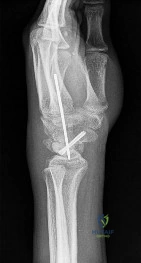
A 35-year-old male falls onto an outstretched hand and presents with severe wrist pain and swelling. Lateral radiographs show the capitate dislocated dorsally relative to the lunate, which remains aligned with the radius. The scaphoid and triquetrum are displaced with the capitate. Which of the following is the most appropriate initial management step?


Explanation

The description 'capitate dislocated dorsally relative to the lunate, which remains aligned with the radius' is pathognomonic for a perilunate dislocation. This is a severe, high-energy injury representing a continuum of carpal instability (often involving a trans-scaphoid component). It requires urgent closed reduction, typically under conscious sedation or general anesthesia, to restore carpal alignment, decompress neurovascular structures (especially the median nerve), and prevent chronic stiffness or avascular necrosis of the lunate. While an MRI or CT might be needed later for detailed planning of definitive surgical stabilization, the initial and most critical step is reduction. Open reduction and internal fixation (ORIF) is usually required after successful closed reduction for definitive stabilization, but not as the immediate first step unless closed reduction fails. Immobilization alone is insufficient.

Question 7

A 25-year-old male presents with persistent pain and swelling in his distal femur. Radiographs show a lytic lesion with cortical destruction and periosteal reaction. Further imaging (MRI, CT chest/abdomen) suggests a primary bone tumor. A biopsy is planned. Which of the following principles is most critical to adhere to during the biopsy procedure to avoid compromising future limb salvage surgery?


Explanation

For suspected malignant bone tumors, the biopsy is a critical step that can significantly impact the success of limb salvage surgery. The most crucial principle is to ensure that the entire biopsy tract (including skin, subcutaneous tissue, muscle, and bone entry point) can be completely excised en bloc with the definitive tumor resection. This minimizes the risk of tumor cell seeding into healthy tissue planes, which could necessitate a more extensive resection or even amputation. Therefore, biopsy incisions should be longitudinal and carefully planned in consultation with the orthopedic oncologist performing the definitive resection. Performing it perpendicular, using electrocautery liberally (which can cause tissue necrosis and obscure margins), or obtaining multiple peripheral core biopsies without a plan for tract excision all risk compromising future surgery.

Question 8

A 65-year-old female on long-term alendronate for osteoporosis presents with a prodromal dull, aching pain in her mid-thigh for several months, followed by an acute, low-energy fall resulting in a transverse fracture of the subtrochanteric femur. Radiographs show cortical thickening and a 'beaking' appearance at the fracture site. What is the most appropriate management strategy?


Explanation

The clinical presentation (long-term bisphosphonate use, prodromal thigh pain, low-energy transverse subtrochanteric fracture with cortical thickening and 'beaking') is highly characteristic of an atypical femur fracture (AFF). The management of an AFF includes surgical stabilization, typically with a long intramedullary nail (IMN), due to the high risk of displacement and nonunion with conservative management. It is also crucial to discontinue bisphosphonates and consider alternative anti-osteoporosis agents. Furthermore, the contralateral femur has a high risk (up to 50%) of developing an AFF, so monitoring with radiographs or MRI and potentially prophylactic nailing if a stress reaction or incomplete fracture is identified is recommended. Continuing alendronate or plating (which has higher failure rates than IMN for AFFs) is inappropriate. Immediate teriparatide can be considered after an AFF but is not the most appropriate initial strategy. Non-operative management is contraindicated. Prophylactic nailing of the contralateral side is generally reserved for symptomatic stress reactions or incomplete fractures, not immediate upon diagnosis of the ipsilateral fracture.

Question 9

A 58-year-old diabetic male with peripheral neuropathy presents with a warm, swollen, erythematous left foot. Radiographs reveal fragmentation of the midfoot joints, collapse of the arch, and subluxation of the talonavicular joint. He reports no acute trauma but has had increasing difficulty with shoe wear and ambulation. What is the most appropriate initial management for this patient?


Explanation

This patient's presentation (diabetic with neuropathy, warm/swollen/erythematous foot, radiographic changes of joint fragmentation and arch collapse) is classic for acute Charcot neuroarthropathy (Rockwood Stage 1 or Eichenholtz Stage 1). The most appropriate initial management is non-weight-bearing immobilization using a total contact cast (TCC) or a removable cast walker. The goal is to offload the foot, reduce inflammation, and prevent further joint destruction and deformity. Surgical correction is typically reserved for stable, chronic deformities that are refractory to conservative treatment or for those with severe instability/ulceration that cannot be accommodated by bracing. While osteomyelitis can complicate Charcot, the initial presentation points strongly to acute Charcot itself, and antibiotics are not indicated unless infection is proven. Amputation is a last resort. Physical therapy is contraindicated during the acute inflammatory phase.

Question 10

A 40-year-old patient undergoes open reduction and internal fixation of a distal tibia fracture with a locking plate. Compared to conventional non-locking plating, which statement best describes the primary biomechanical advantage of a locking plate in promoting fracture healing, particularly in osteoporotic bone or comminuted fractures?


Explanation

Locking plates differ fundamentally from conventional plates. Conventional plates rely on friction between the plate and bone, generated by interfragmentary compression from screw tightening, to provide stability. Locking plates, however, have screws that thread into the plate, creating a fixed-angle construct. This essentially acts as an internal fixator, maintaining reduction and stability without requiring direct compression of the plate to the bone. This 'bridge plating' technique allows for controlled micromotion at the fracture site, which promotes indirect (secondary) bone healing through callus formation, rather than the primary healing mechanism often sought with absolute stability (e.g., lag screws). This is particularly advantageous in comminuted fractures where interfragmentary compression is difficult to achieve, or in osteoporotic bone where screw pullout strength is compromised with conventional plating. While locking plates also offer periosteal sparing by not requiring tight contact, their primary biomechanical advantage related to healing mechanism is the fixed-angle construct promoting indirect healing. They do not provide superior interfragmentary compression (often the opposite), do not completely eliminate micromotion (which is beneficial for secondary healing), and do not inherently increase blood supply beyond the benefit of less periosteal stripping.

Question 11

A 32-year-old male sustains a closed Schatzker VI tibial plateau fracture. He has tense swelling and exquisite pain with passive stretch of the hallux. Compartment pressures measure 45 mmHg with a diastolic BP of 70 mmHg. What is the next best step?


Explanation

Delta pressure (Diastolic BP - compartment pressure) is 25 mmHg, which is less than 30 mmHg, indicating acute compartment syndrome. Immediate four-compartment fasciotomy is required to prevent irreversible ischemic muscle damage.

Question 12

A 72-year-old female presents with recurrent posterior dislocations following a total hip arthroplasty done 6 months ago. Radiographs show the acetabular component is in 30 degrees of inclination and 0 degrees of anteversion. What is the most appropriate surgical management?


Explanation

The acetabular cup is severely retroverted (0 degrees) compared to the Lewinnek safe zone (15 +/- 10 degrees anteversion). Revision to correct cup anteversion is the most appropriate management for her recurrent posterior instability.

Question 13

A 9-month-old female is diagnosed with developmental dysplasia of the hip (DDH). She has a completely dislocated left hip that is reducible but unstable. Prior Pavlik harness treatment failed at 3 months of age. What is the most appropriate next step in management?


Explanation

For infants aged 6 to 18 months with failed harness treatment or late-presenting DDH, closed reduction with spica casting under general anesthesia is the standard of care. Open reduction is reserved for failed closed reduction or older children.

Question 14

A 16-year-old male presents with deep knee pain and a mixed lytic/sclerotic lesion in the distal femur metaphysis with Codman's triangle. Core needle biopsy confirms high-grade intramedullary osteosarcoma. Staging is negative for metastasis. What is the standard treatment protocol?


Explanation

Standard treatment for classic high-grade intramedullary osteosarcoma is neoadjuvant chemotherapy, wide surgical resection, and adjuvant chemotherapy. Osteosarcoma is generally radioresistant, making radiation inappropriate as primary treatment.

Question 15

Which zone of articular cartilage is characterized by the highest concentration of proteoglycans, lowest concentration of water, and collagen fibrils aligned perpendicular to the articular surface?


Explanation

The deep zone of articular cartilage provides the greatest resistance to compressive loads due to its high proteoglycan content and perpendicular collagen fibrils. Water content is highest in the superficial zone and lowest in the deep zone.

Question 16

A 65-year-old male presents with progressive hand clumsiness, frequent falls, and a broad-based gait. Physical exam reveals a positive Hoffman's sign. MRI shows multilevel cervical stenosis with spinal cord signal change. What is the primary goal of surgical intervention?


Explanation

Cervical spondylotic myelopathy is a progressively deteriorating condition. The primary goal of surgical decompression is to halt the progression of neurological decline, though some patients may experience mild functional recovery.

Question 17

A 28-year-old male presents with wrist pain 2 years after a fall. Imaging reveals a scaphoid nonunion with early radiocarpal arthrosis. The midcarpal joint is spared. What is the most appropriate surgical procedure?


Explanation

The patient has a SNAC (Scaphoid Nonunion Advanced Collapse) Stage II wrist (radiocarpal arthrosis with preserved midcarpal joint). Proximal row carpectomy or four-corner fusion are both appropriate; bone grafting is contraindicated once arthrosis develops.

Question 18

A 22-year-old rugby player has recurrent anterior shoulder instability. CT arthrogram demonstrates 25% anterior glenoid bone loss and an engaging Hill-Sachs lesion. Which of the following surgical procedures is most appropriate?


Explanation

Glenoid bone loss greater than 20-25% in a contact athlete is an absolute indication for a bony augmentation procedure like the Latarjet. Soft tissue repairs alone have an unacceptably high failure rate in this scenario.

Question 19

A 6-year-old boy has a Gartland type III supracondylar humerus fracture. After closed reduction and percutaneous pinning, the fracture is anatomically aligned, but the radial pulse remains absent while the hand remains pink and warm. What is the next best step?


Explanation

In a "pink, pulseless" hand following anatomical reduction and pinning of a pediatric supracondylar humerus fracture, the standard of care is close observation. Vascular exploration is strictly indicated for a "white, pulseless" (ischemic) hand.

Question 20

A 35-year-old female presents with midfoot pain after a twisting injury. Weight-bearing radiographs show 3 mm of widening between the base of the first and second metatarsals. What is the anatomic attachment of the primary ligament injured?


Explanation

The Lisfranc ligament uniquely connects the lateral aspect of the medial cuneiform to the medial base of the second metatarsal. It is critical for the stability of the tarsometatarsal joint complex.

Question 21

Following a Zone II flexor digitorum profundus (FDP) repair, a patient starts early active mobilization. At what postoperative time point is the repaired tendon characteristically at its weakest?


Explanation

Tendons undergo an inflammatory phase followed by a fibroblastic phase. Due to early collagen degradation occurring before sufficient new collagen is synthesized, the repaired flexor tendon is weakest between days 7 and 10.

Question 22

Which of the following fixation constructs relies primarily on primary (contact) bone healing without the formation of a visible fracture callus?


Explanation

Absolute stability achieved via compression plating eliminates interfragmentary strain, leading to direct (primary) bone healing via cutting cones. Constructs providing relative stability heal via secondary bone healing with callus formation.

Question 23

A 30-year-old male sustains a vertically oriented, displaced basicervical femoral neck fracture (Pauwels III). What biomechanical complication is most highly associated with this fracture pattern compared to horizontal fracture patterns?


Explanation

Pauwels III fractures have a fracture angle >50 degrees, resulting in tremendous shear forces across the fracture line. This significantly increases the risk of varus collapse, fixation failure, and nonunion compared to horizontal patterns.

Question 24

A 12-year-old girl presents with fever, elevated ESR, and a diaphyseal lytic lesion of the fibula with "onion-skin" periosteal reaction. Cytogenetic analysis is most likely to show which of the following translocations?


Explanation

The clinical presentation and imaging strongly suggest Ewing sarcoma. This tumor is classically characterized by the t(11;22)(q24;q12) translocation, which forms the EWS-FLI1 fusion protein.

Question 25

A 19-year-old female soccer player undergoes ACL reconstruction using a bone-patellar tendon-bone (BPTB) autograft. Which of the following complications is most specific to this graft choice compared to a hamstring autograft?


Explanation

Patellar fracture is a recognized, specific complication of the BPTB autograft due to the harvest of the bone block from the patella. Hamstring grafts have a higher association with saphenous nerve neuropathy.

Question 26

A 70-year-old male presents with bilateral leg heaviness that worsens with standing, but improves when he leans forward on a shopping cart. Peripheral pulses are normal. What is the most appropriate initial diagnostic imaging modality?


Explanation

The patient's symptoms are classic for neurogenic claudication secondary to lumbar spinal stenosis. MRI of the lumbar spine without contrast is the gold standard imaging modality to evaluate central canal and foraminal stenosis.

Question 27

A 28-year-old male sustains a closed tibial shaft fracture. He develops severe pain out of proportion. His blood pressure is 110/70 mmHg. Compartment pressure measurement shows an anterior compartment pressure of 45 mmHg. What is the most appropriate management?


Explanation

Delta P is calculated as diastolic blood pressure minus compartment pressure (70 - 45 = 25 mmHg). A Delta P of less than 30 mmHg is an absolute indication for emergency four-compartment fasciotomy to prevent irreversible muscle necrosis.

Question 28

A 15-year-old male presents with knee pain. Radiographs reveal a mixed lytic and sclerotic lesion in the distal femur metaphysis with a "sunburst" periosteal reaction. Biopsy confirms high-grade osteosarcoma. What is the standard sequence of treatment?


Explanation

The standard of care for high-grade osteosarcoma is neoadjuvant chemotherapy, followed by wide surgical resection (limb salvage if possible), and then adjuvant chemotherapy. Osteosarcoma is highly radioresistant, making radiation generally ineffective as a primary treatment.

Question 29

A 42-year-old female presents with acute onset severe lower back pain, bilateral sciatica, saddle anesthesia, and urinary retention. Post-void residual volume is 600 mL. MRI demonstrates a massive central L4-L5 disc herniation compressing the thecal sac. What is the recommended timeframe for surgical intervention to optimize neurological recovery?


Explanation

Cauda equina syndrome is a surgical emergency. Decompression should ideally be performed within 24 hours, and evidence suggests best outcomes when done within 8 hours, to maximize the recovery of bladder and bowel function.

Question 30

A 4-month-old female infant is brought in for a well-child check. Examination reveals a positive Ortolani sign on the left hip. Ultrasound shows a shallow acetabulum with an alpha angle of 40 degrees. What is the most appropriate initial management?


Explanation

An alpha angle of less than 60 degrees on ultrasound, combined with a positive Ortolani sign, confirms Developmental Dysplasia of the Hip (DDH). The Pavlik harness is the gold standard initial treatment for reducible DDH in infants under 6 months of age.

Question 31

A 75-year-old female, who plays tennis three times a week and is medically fit, sustains a displaced intracapsular femoral neck fracture (Garden IV). What is the most appropriate surgical treatment to minimize reoperation and maximize functional outcome?


Explanation

Total hip arthroplasty (THA) is the treatment of choice for displaced femoral neck fractures in active, independent, and medically fit elderly patients. Compared to hemiarthroplasty, THA offers better long-term functional outcomes and lower revision rates for this demographic.

Question 32

A 22-year-old male sustains a twisting knee injury. Examination reveals a positive Lachman test and joint-line tenderness. MRI confirms an anterior cruciate ligament (ACL) rupture and a peripheral longitudinal tear in the "red-red" zone of the posterior horn of the medial meniscus. What is the most appropriate surgical management?


Explanation

The medial meniscus tear is in the vascularized "red-red" zone, making it highly amenable to repair. Performing the repair concurrently with ACL reconstruction creates a biologically favorable environment that enhances meniscal healing.

Question 33

A 30-year-old carpenter sustains a laceration to the volar aspect of his index finger at the level of the proximal phalanx (Zone II). Examination reveals an inability to flex the DIP and PIP joints. What is the most appropriate surgical approach for repair?


Explanation

Zone II flexor tendon injuries require robust repair to allow early active motion protocols, which prevent adhesions. A multi-strand (4- or 6-strand) core suture combined with an epitendinous repair provides the necessary tensile strength for early mobilization.

Question 34

A 45-year-old male undergoes open reduction and internal fixation of a transverse radial shaft fracture using a dynamic compression plate, achieving absolute stability. Which of the following best describes the primary mode of bone healing expected in this scenario?


Explanation

Rigid internal fixation with absolute stability (e.g., dynamic compression plating) eliminates micromotion at the fracture site. This leads to primary bone healing via cutting cones and direct Haversian remodeling without the formation of an intermediate fracture callus.

Question 35

A 55-year-old diabetic male presents with an erythematous, extremely painful lower leg. There is crepitus on palpation and dishwater-like fluid draining from a small blister. Which of the following laboratory findings is a key component of the Laboratory Risk Indicator for Necrotizing Fasciitis (LRINEC) score used to evaluate this condition?


Explanation

The LRINEC score incorporates CRP, total white cell count, hemoglobin, serum sodium, serum creatinine, and blood glucose. Hyponatremia (decreased serum sodium < 135 mmol/L) is a critical marker indicating systemic toxicity and third-spacing in necrotizing fasciitis.

Question 36

A 68-year-old male presents with recurrent posterior dislocations following a primary total hip arthroplasty performed via a posterior approach. Radiographic evaluation of the acetabular component demonstrates an anteversion of 5 degrees and an inclination of 35 degrees. What is the most likely cause of his instability?


Explanation

The "safe zone" for acetabular cup placement is generally considered to be 15 degrees (+/- 10 degrees) of anteversion and 40 degrees (+/- 10 degrees) of inclination. An anteversion of 5 degrees is insufficient (retroverted relative to the safe zone), predisposing the patient to posterior impingement and subsequent posterior dislocation.

Question 37

A 6-year-old boy presents with a 2-month history of a painless limp. Examination reveals limited internal rotation and abduction of the right hip. Radiographs show sclerosis and early fragmentation of the right capital femoral epiphysis. What is the primary goal of treatment in this condition?


Explanation

Legg-Calvé-Perthes disease is an idiopathic avascular necrosis of the pediatric femoral head. The primary goal of treatment is "containment"—keeping the biologically plastic femoral head well-seated in the acetabulum to maintain a spherical shape as it heals and remodels.

Question 38

A 40-year-old female presents after a fall on an outstretched hand. Radiographs reveal a fracture of the volar lip of the distal radius with volar subluxation of the carpus. Which of the following is the most appropriate definitive management?


Explanation

A Volar Barton fracture is an intra-articular shear fracture of the distal radius with associated volar radiocarpal subluxation. It is inherently unstable and is best managed with open reduction and internal fixation using a volar buttress plate to counteract the volar shear forces.

Question 39

A 35-year-old male falls from a height of 10 feet. He is neurologically intact. CT scan shows an L1 burst fracture with 15% loss of anterior vertebral body height, 10 degrees of regional kyphosis, and 20% retropulsion into the spinal canal. Posterior ligamentous complex is intact on MRI. What is the most appropriate management?


Explanation

This L1 burst fracture is considered stable, given the intact posterior ligamentous complex, lack of neurological deficit, mild kyphosis (<30 degrees), and minimal loss of vertebral height (<50%). Such stable burst fractures are successfully treated non-operatively with a TLSO brace and early mobilization.

Question 40

Bone morphogenetic proteins (BMPs) induce osteoblastic differentiation of mesenchymal stem cells. Which of the following intracellular signaling pathways is primarily responsible for mediating this osteoinductive effect?


Explanation

BMPs bind to serine-threonine kinase receptors, leading to phosphorylation of Smad 1, 5, and 8. These complex with Smad 4 to translocate to the nucleus and upregulate osteogenic genes like Runx2.

Question 41

A 25-year-old polytrauma patient sustains a closed tibial shaft fracture. He is intubated and sedated. Intracompartmental pressure testing is performed. Which of the following thresholds is most universally accepted as an indication for four-compartment fasciotomy?


Explanation

A differential pressure (Delta P) of less than 30 mmHg (Diastolic blood pressure minus compartment pressure) is the most reliable indicator for compartment syndrome requiring fasciotomy. Absolute pressure thresholds are less reliable due to fluctuations in systemic perfusion.

Question 42

A 4-week-old female is treated with a Pavlik harness for developmental dysplasia of the hip (DDH). During a follow-up visit, the parents report the infant is no longer actively extending the knee on the treated side. What is the most appropriate next step in management?


Explanation

The infant has developed a femoral nerve palsy, which is caused by excessive hip flexion in the Pavlik harness. The anterior straps should be loosened or the harness temporarily discontinued to allow nerve recovery.

Question 43

A 30-year-old carpenter undergoes a 4-strand core suture repair of a Zone II flexor digitorum profundus (FDP) laceration. Which of the following rehabilitation protocols is most appropriate to minimize adhesion formation while protecting the repair?


Explanation

Modern 4-strand and 6-strand repairs are strong enough to withstand early active motion protocols. True active flexion or place-and-hold exercises significantly reduce tendon adhesions and improve functional outcomes compared to passive-only protocols.

Question 44

A 45-year-old male presents with acute urinary retention, saddle anesthesia, and bilateral lower extremity weakness following a heavy lifting injury. MRI confirms a massive L4-L5 disc herniation compressing the cauda equina. Surgical decompression is planned. Which factor most strongly correlates with a favorable return of bladder function?


Explanation

Cauda equina syndrome is a surgical emergency. Decompression within 48 hours of symptom onset (particularly before the development of painless urinary retention) provides the highest likelihood of neurological recovery and return of bladder control.

Question 45

A 32-year-old female presents with an expansile, eccentric lytic lesion in the distal femur epimetaphysis. Biopsy confirms Giant Cell Tumor of bone (GCT). She is treated with denosumab preoperatively to consolidate the tumor margins. Denosumab targets which of the following mechanisms?


Explanation

Denosumab is a monoclonal antibody that binds to RANK-Ligand (RANKL), preventing it from activating RANK on the surface of osteoclasts and their precursors. In GCT, the neoplastic stromal cells overexpress RANKL, driving the massive osteoclast-mediated bone destruction.

Question 46

During a total knee arthroplasty, the surgeon notes that the knee is well-balanced in extension, but the flexion gap is unacceptably tight. Which of the following surgical adjustments will best correct this imbalance?


Explanation

A tight flexion gap with a balanced extension gap requires altering only the flexion gap. Downsizing the femoral component (reducing posterior condylar offset) while maintaining the anterior reference will selectively increase the flexion gap without affecting extension.

Question 47

A 28-year-old male falls from a height and sustains a Hawkins Type III fracture of the talar neck. Which of the following best describes the vascular supply compromise and the expected rate of avascular necrosis (AVN) in this injury?


Explanation

A Hawkins Type III fracture involves subluxation or dislocation of the talar body from both the subtalar and tibiotalar joints. This typically tears all three major blood supplies (tarsal canal, sinus tarsi, and deltoid branches), leading to an AVN rate approaching 100%.

Question 48

A 40-year-old male sustains an acute Achilles tendon rupture. After discussing treatment options, he elects for non-operative management. Compared to open surgical repair, which of the following is true regarding non-operative management utilizing early functional rehabilitation?


Explanation

Recent high-quality studies show that non-operative management with early functional rehabilitation yields re-rupture rates similar to operative repair. It also avoids the surgical risks of wound breakdown and infection associated with open repair.

Question 49

A 6-year-old boy presents with a displaced Gartland Type III supracondylar humerus fracture. His hand is pink but pulseless. Capillary refill is less than 2 seconds. What is the most appropriate initial management?


Explanation

In a "pink, pulseless" hand associated with a pediatric supracondylar humerus fracture, the initial step is urgent closed reduction and percutaneous pinning. The pulse often returns after fracture reduction relieves kinking or compression of the brachial artery.

Question 50

A 35-year-old male is brought to the trauma bay with a suspected pelvic ring injury after a motorcycle crash. An AP pelvis radiograph demonstrates a widened pubic symphysis (4 cm) and disruption of the anterior sacroiliac ligaments, but intact posterior sacroiliac ligaments. What is the Young-Burgess classification of this injury?


Explanation

An APC II injury is characterized by symphyseal diastasis >2.5 cm and disruption of the anterior sacroiliac ligaments, sacrospinous, and sacrotuberous ligaments, while the posterior SI ligaments remain intact. This causes rotational instability but maintains vertical stability.

Question 51

In total hip arthroplasty, the use of highly cross-linked polyethylene (HXLPE) has significantly reduced wear rates compared to conventional polyethylene. What is the primary trade-off or disadvantage associated with the high levels of radiation used to cross-link the polyethylene?


Explanation

While irradiation creates cross-links that drastically reduce adhesive and abrasive wear, it also reduces the mechanical properties of the polyethylene. Specifically, it decreases ductility, ultimate tensile strength, and resistance to fatigue crack propagation.

Question 52

A 22-year-old female soccer player undergoes an anterior cruciate ligament (ACL) reconstruction using a bone-patellar tendon-bone (BPTB) autograft. Six months postoperatively, she complains of anterior knee pain and difficulty kneeling. Which of the following is the most likely cause of her symptoms?


Explanation

Anterior knee pain and pain with kneeling are the most common specific complications of a bone-patellar tendon-bone (BPTB) autograft harvest. This harvest site morbidity is a key consideration when selecting graft types for patients whose activities require frequent kneeling.

Question 53

A 12-year-old boy presents with a painful mass in the diaphysis of his left femur. Radiographs show a permeative, moth-eaten lytic lesion with an "onion-skin" periosteal reaction. Cytogenetics reveals a t(11;22) translocation. Which fusion protein is diagnostic for this condition?


Explanation

The patient has Ewing sarcoma, classically characterized by a diaphyseal lesion with an "onion-skin" periosteal reaction. The t(11;22)(q24;q12) translocation results in the EWS-FLI1 fusion protein, which is diagnostic in approximately 85% of cases.

Question 54

Which of the following mechanical environments most strongly drives secondary bone healing (endochondral ossification) rather than primary bone healing in fracture repair?


Explanation

Secondary bone healing via callus formation is promoted by a mechanical environment with intermediate strain, typically between 2% and 10%. Absolute stability (strain < 2%) promotes primary (Haversian) bone healing, while strain > 10% typically leads to nonunion.

Question 55

A 32-year-old male presents with a closed tibial shaft fracture following a high-energy trauma. Which of the following continuous compartment pressure measurements is most specific for diagnosing acute compartment syndrome?


Explanation

The delta P (Diastolic BP minus compartment pressure) of less than 30 mm Hg is the most reliable and specific indicator for acute compartment syndrome. Absolute pressure readings alone have higher false-positive rates and can lead to unnecessary fasciotomies.

Question 56

A 70-year-old female experiences recurrent posterior dislocations of her total hip arthroplasty. Intraoperatively, the acetabular component is found to be solidly fixed but retroverted. What is the most appropriate surgical management?


Explanation

Recurrent posterior dislocations due to a retroverted acetabular cup require revision of the cup to proper anteversion (typically 15-20 degrees) to restore stability. Increasing head size alone does not correct the underlying mechanical malposition and will likely fail.

Question 57

A 65-year-old male presents with progressive hand clumsiness, gait instability, and hyperreflexia. MRI reveals cervical spinal stenosis at C4-C5 with myelomalacia. Which physical exam finding is most closely associated with this condition?


Explanation

The Hoffman sign indicates an upper motor neuron lesion and is a classic finding in cervical spondylotic myelopathy. The Spurling sign is specific for cervical radiculopathy, whereas Lhermitte sign is classically seen in multiple sclerosis but can occur in myelopathy.

Question 58

A 6-month-old female is diagnosed with developmental dysplasia of the hip (DDH) after an unsuccessful 6-week trial of a Pavlik harness. Radiographs confirm a persistently dislocated right hip. What is the most appropriate next step in management?


Explanation

Following the failure of a Pavlik harness in an infant, closed reduction and spica casting under general anesthesia is the standard next step. Open reduction is indicated if closed reduction is unsuccessful or in older children.

Question 59

A 16-year-old male presents with distal thigh pain and a palpable mass. Biopsy confirms high-grade, non-metastatic osteosarcoma of the distal femur. What is the standard treatment protocol for this patient?


Explanation

The standard of care for high-grade osteosarcoma is neoadjuvant chemotherapy, surgical resection with wide margins, and post-operative adjuvant chemotherapy. Osteosarcoma is highly radioresistant, making radiation therapy generally ineffective.

Question 60

During an ACL reconstruction using a bone-patellar tendon-bone autograft, the surgeon places the femoral tunnel too far anteriorly. What is the most likely biomechanical consequence of this error?


Explanation

An anteriorly placed femoral tunnel creates a graft that tightens excessively as the knee flexes. This limits knee flexion, causes abnormally high graft tension, and can result in a "captured knee."

Question 61

In the acute management of a hemodynamically unstable patient with an anterior-posterior compression (APC) pelvic ring injury, a pelvic binder should be positioned over which anatomical landmark for optimal volume reduction?


Explanation

Pelvic binders must be centered directly over the greater trochanters to effectively close the pelvic ring and reduce bleeding in open-book fractures. Placement over the iliac crests is mechanically disadvantaged and can paradoxically widen the pelvis.

Question 62

A 25-year-old sustains a volar laceration to the index finger at the level of the proximal phalanx, transecting both the FDP and FDS tendons. This injury corresponds to which flexor tendon zone?


Explanation

Zone II extends from the proximal aspect of the A1 pulley to the insertion of the FDS on the middle phalanx. It is historically known as "no man's land" due to poor healing and dense adhesions when both tendons are injured within the fibro-osseous sheath.

Question 63

Which of the following is the primary mechanism of wear in a well-functioning, non-impinging metal-on-polyethylene total joint arthroplasty?


Explanation

Adhesive wear is the primary mode of wear in a normally functioning metal-on-polyethylene articulation. It occurs when microscopic asperities on the articulating surfaces temporarily weld together and are subsequently sheared off during motion.

Question 64

A 6-year-old boy presents with a painless limp, and radiographs show sclerosis and fragmentation of the capital femoral epiphysis. According to the Herring lateral pillar classification for Legg-Calve-Perthes disease, a patient with 60% maintenance of lateral pillar height falls into which group?


Explanation

In the Herring classification, Group B is characterized by radiolucency and loss of height of the lateral pillar, but greater than 50% of the normal height is maintained. Group C indicates less than 50% of the lateral pillar height remains.

Question 65

According to ATLS protocols, which of the following vital sign changes is the most defining and sensitive indicator of transitioning into class III hemorrhagic shock?


Explanation

Class III hemorrhagic shock (indicating 30-40% blood volume loss) is defined by the onset of a drop in systolic blood pressure. Tachycardia and decreased pulse pressure manifest earlier in Class II shock.

Question 66

A 4-year-old boy presents refusing to bear weight on his right leg. He has a fever of 39 C, ESR of 55 mm/hr, WBC of 14,000/mm3, and resists all hip range of motion. According to Kocher's criteria, what is the predictive probability that this child has septic arthritis?


Explanation

The patient meets all four of Kocher's criteria: non-weight-bearing, temperature > 38.5 C, ESR > 40, and WBC > 12,000. The presence of all four predictors yields a 99% probability of septic arthritis.

Question 67

A 55-year-old diabetic male presents with a swollen, erythematous, but painless foot. Radiographs show acute fragmentation and subluxation of the tarsometatarsal joints. What is the most appropriate initial management?


Explanation

The patient is in the acute, inflammatory phase (Eichenholtz Stage I) of Charcot arthropathy. The standard initial treatment is rigorous offloading and immobilization, most commonly achieved with a total contact cast, until the acute phase resolves.

Question 68

During a primary total knee arthroplasty for a fixed valgus deformity, the surgeon notes a tight lateral compartment in both flexion and extension. Which structure should be released first to effectively balance the gap?


Explanation

For a fixed valgus knee that is tight in both flexion and extension, the iliotibial band (ITB) and the posterolateral capsule are typically released first. Releasing the LCL or popliteus initially can lead to severe instability, particularly in flexion.

Question 69

A 22-year-old athlete sustains a traumatic anterior shoulder dislocation. An MRI arthrogram reveals a bony Bankart lesion involving 25% of the anterior glenoid width. What is the most appropriate surgical management?


Explanation

Critical glenoid bone loss (> 20-25%) associated with recurrent anterior instability is a strong indication for a bony augmentation procedure, such as the Latarjet. Arthroscopic soft tissue repair in the setting of critical bone loss carries an unacceptably high failure rate.

Question 70

According to the Sunderland classification of nerve injuries, an injury involving disruption of the axon, myelin, and endoneurium, but with an intact perineurium and epineurium, corresponds to which degree?


Explanation

A Sunderland third-degree injury involves transection of the nerve fibers and endoneurium, leaving the perineurium and epineurium intact. Because the endoneurial tubes are disrupted, scarring can block axonal regeneration, leading to variable and incomplete recovery.

Question 71

A 75-year-old osteoporotic female sustains a highly unstable intertrochanteric femur fracture characterized by a detached lesser trochanter and a large posteromedial defect. Which type of implant provides the most biomechanically stable fixation?


Explanation

Unstable intertrochanteric fractures, particularly those with a loss of posteromedial support or reverse obliquity patterns, are best treated with a cephalomedullary nail. Its intramedullary position reduces the bending moment and prevents excessive medialization of the femoral shaft.

Question 72

A 14-year-old gymnast presents with chronic low back pain exacerbating with extension. Radiographs show a grade II isthmic spondylolisthesis at L5-S1. Despite 6 months of physical therapy and bracing, pain persists and prevents sports participation. What is the most appropriate surgical treatment?


Explanation

For a symptomatic high-grade or progressive isthmic spondylolisthesis failing nonoperative care, an L5-S1 posterior instrumented fusion is the gold standard. Direct pars repair is generally reserved for younger patients with a pars defect but minimal to no listhesis (Grade 0 or early Grade I).

Question 73

Denosumab, a monoclonal antibody used in the treatment of osteoporosis and giant cell tumors of bone, exerts its primary effect by binding to and inhibiting which of the following targets?


Explanation

Denosumab binds to and inhibits RANK ligand (RANKL), preventing it from activating the RANK receptor on osteoclasts. This blockade severely decreases osteoclast differentiation, function, and survival, leading to a marked reduction in bone resorption.

Question 74

A 15-year-old boy presents with a destructive diaphyseal lesion in his femur with a periosteal "onion skin" reaction. Biopsy reveals uniform small round blue cells. Cytogenetic analysis confirms a t(11;22) chromosomal translocation. Which specific fusion protein is the primary driver of this malignancy?


Explanation

Ewing sarcoma is classically characterized by the t(11;22) translocation. This specific genetic alteration results in the EWS-FLI1 fusion protein, which acts as an aberrant transcription factor promoting tumorigenesis.

Question 75

A 55-year-old female presents with progressive groin pain 5 years after receiving a metal-on-metal total hip arthroplasty. Radiographs show a well-fixed implant. MRI with metal artifact reduction demonstrates a large, thick-walled cystic mass communicating with the joint. What is the most likely histologic finding of the periprosthetic tissue?


Explanation

Metal-on-metal implants can cause Aseptic Lymphocytic Vasculitis-Associated Lesions (ALVAL) or adverse local tissue reactions (ALTR). Histologically, these lesions typically feature a robust perivascular lymphocytic infiltrate, prominent macrophages, and extensive local tissue necrosis.

Question 76

A 32-year-old male sustains a closed, displaced talar neck fracture (Hawkins Type III) and undergoes urgent open reduction and internal fixation. At 8 weeks postoperatively, an AP mortise radiograph reveals a distinct subchondral radiolucent band in the talar dome. What does this radiographic finding indicate?


Explanation

A subchondral radiolucent band in the talar dome seen 6 to 8 weeks post-injury is known as the Hawkins sign. It represents localized subchondral osteopenia secondary to hyperemia, indicating that the vascularity to the talar body is intact and effectively ruling out avascular necrosis.

Question 77

A 10-year-old girl with wide-open physes (Tanner Stage 1) sustains a complete midsubstance anterior cruciate ligament (ACL) tear. She experiences recurrent instability preventing her from participating in sports. Which surgical technique is most appropriate to stabilize the knee while minimizing the risk of growth arrest?


Explanation

In prepubescent patients with significant growth remaining (Tanner stage 1 or 2), physeal-sparing techniques such as an all-epiphyseal reconstruction using soft tissue grafts are recommended. Bone blocks and transphyseal tunnels unacceptably increase the risk of premature physeal closure and resultant angular deformity.

Question 78

A 24-year-old professional athlete sustains an axial loading and twisting injury to his midfoot. Weight-bearing radiographs show 3 mm of widening between the base of the first and second metatarsals without any evidence of fractures. What is the most appropriate definitive management for this purely ligamentous injury to optimize return to function?


Explanation

Purely ligamentous Lisfranc injuries exhibit a high rate of chronic instability and predictable post-traumatic arthritis when treated with open reduction and internal fixation. Current evidence indicates that primary arthrodesis of the involved medial column joints yields superior long-term functional outcomes and lower reoperation rates.

Question 79

A 65-year-old man presents with deteriorating fine motor skills, hand clumsiness, and an unsteady, broad-based gait. Examination reveals a positive Hoffmann sign bilaterally. MRI demonstrates severe cervical spinal stenosis at C4-C5 and C5-C6 with cord compression. Which of the following is the most critical prognostic factor for his functional recovery following decompressive surgery?


Explanation

In cases of cervical spondylotic myelopathy, the duration of neurological symptoms before surgical decompression is the most robust and critical predictor of postoperative recovery. Prolonged symptom duration leads to irreversible spinal cord damage, highlighting the need for prompt surgical intervention.

Question 80

A 5-year-old boy presents with a displaced Gartland type III supracondylar humerus fracture. His hand is pink and well-perfused, but the radial pulse is absent by palpation and Doppler. Following closed reduction and percutaneous pinning, the fracture is perfectly aligned; however, the radial pulse remains absent while the hand stays pink. What is the most appropriate next step in management?


Explanation

A "pulseless, pink hand" following anatomical reduction of a supracondylar humerus fracture indicates robust collateral circulation maintaining adequate distal perfusion. The standard of care is close inpatient observation with serial neurovascular exams, avoiding the morbidity of unnecessary vascular exploration.

Question 81

A 28-year-old manual laborer sustains a volar laceration to his index finger at the proximal phalangeal crease, completely severing the FDS and FDP tendons (Zone II injury). After an uncomplicated core suture repair, which post-operative rehabilitation protocol is best supported to prevent severe tendon adhesions while safeguarding the repair?


Explanation

Zone II flexor tendon repairs (historically known as "no man's land") are extremely prone to restrictive adhesion formation. Utilizing an early active extension and passive flexion protocol (e.g., modified Kleinert or Duran) provides necessary tendon excursion to limit adhesions while minimizing disruptive tension across the repair site.

Question 82

Recombinant human Bone Morphogenetic Protein-2 (rhBMP-2) is utilized extensively in spine fusion and complex fracture nonunions to promote osteogenesis. Upon binding to its specific serine/threonine kinase cell surface receptor, which primary intracellular signaling pathway does rhBMP-2 activate?


Explanation

Bone Morphogenetic Proteins (BMPs) initiate intracellular signaling by binding to specific cell surface receptors, which subsequently phosphorylate and activate the Smad 1/5/8 complex. These activated Smads then partner with Smad 4, translocating into the nucleus to drive the transcription of osteogenic genes.

Question 83

A 40-year-old male sustains a closed comminuted tibia fracture treated with reamed intramedullary nailing. Overnight, he develops intractable leg pain exacerbated by passive stretch of his great toe. Compartment manometry reveals an anterior compartment pressure of 35 mmHg, while his concurrent diastolic blood pressure is 60 mmHg. What is the mandatory next step?


Explanation

The patient demonstrates classic clinical symptoms of acute compartment syndrome combined with a Delta pressure (diastolic pressure minus compartment pressure) of 25 mmHg. A Delta pressure of 30 mmHg or less, alongside clinical findings, is an absolute indication for emergent four-compartment fasciotomy to prevent irreversible ischemic necrosis.

None

Clinic OS
Medically Verified Content by
Prof. Clinic OS
Consultant Orthopedic & Spine Surgeon
Chapter Index
