Orthopedic Trauma Board Review MCQs (Set 2): Femoral & Tibial Fractures, Shoulder Dislocations
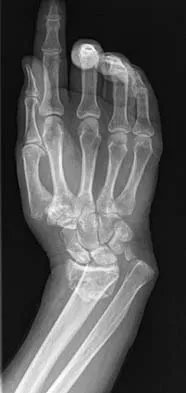
Key Takeaway
This high-yield MCQ set (Set 2) is crucial for AAOS and ABOS board preparation. It features challenging questions on femoral shaft and periarticular fractures, including tibial plateau injuries. Additionally, test your knowledge on the diagnosis and management of various shoulder dislocations and associated neurovascular considerations.
Orthopedic Trauma Board Review MCQs (Set 2): Femoral & Tibial Fractures, Shoulder Dislocations
Comprehensive 100-Question Exam
00:00
Start Quiz
Question 1
Figures 14a and 14b show the initial radiographs of an 18-year-old man who fell while snowboarding. Figures 14c and 14d show the radiographs obtained following closed reduction. Examination reveals that the elbow is stable with range of motion. Management should now consist of
Explanation
Question 2
A 12-year-old boy sustains open comminuted midshaft tibial and fibular fractures while playing indoor soccer. The wound is grossly clean and measures 7 cm with some periosteal stripping. Antibiotics and tetanus toxoid are administered immediately in the emergency department. Following irrigation and debridement of the wound in the operating room, treatment should include
Explanation
Question 3
Which of the following is an advantage of unreamed nailing of the tibia compared to reamed nailing?
Explanation
Question 4
A 12-year-old boy sustained a both bone forearm fracture 10 weeks ago and underwent closed reduction and casting. Examination now reveals that the injury is healed, but he is unable to extend his little and ring fingers of the injured hand with his wrist extended. Full extension is possible with the wrist flexed. A radiograph and clinical photograph are shown in Figures 15a and 15b. The remainder of his hand and wrist examination and neurologic evaluation in the hand are normal. What is the most likely diagnosis?
Explanation
Question 5
An otherwise healthy 35-year-old woman reports dorsal wrist pain and has trouble extending her thumb after sustaining a minimally displaced fracture of the distal radius 3 months ago. What is the next most appropriate step in management?
Explanation
Question 6
Figure 16a shows the radiograph of a 34-year-old woman who sustained a basicervical fracture of the femoral neck. The fracture was treated with a compression screw and side plate. Seven months postoperatively, she continues to have significant hip pain and cannot bear full weight on her hip. A recent radiograph is shown in Figure 16b. Management should now consist of
Explanation
Question 7
An 18-year-old man was in a motor vehicle accident and sustained a closed head injury, right displaced scapular body and glenoid fractures, a right proximal humeral fracture, fractures of ribs one through three, facial fractures, and bilateral pubic rami fractures with minimal displacement. He has a systolic blood pressure of 80/40 mm Hg despite fluid resuscitation. A radiograph is shown in Figure 17. Spiral CT does not identify any thoracic or abdominal injuries. What is the next most appropriate step in management?
Explanation
Question 8
What is the major difference in outcome following open reduction and internal fixation (ORIF) of the tibial plafond at 2 to 5 days versus 10 to 20 days?
Explanation
Question 9
Figure 18a shows the initial lateral radiograph of a 6-year-old girl who sustained a fracture in a motor vehicle accident and was treated in a cast 1 year ago. She now has the valgus deformity seen in Figure 18b. Treatment should consist of
Explanation
Question 10
Figure 19 shows the radiograph of a 45-year-old woman who has a painful nonunion. Treatment should consist of
Explanation
Question 11
A 7-year-old boy has a swollen and deformed right arm after falling off his bicycle. Radiographs reveal a completely displaced posterolateral supracondylar humeral fracture. Examination reveals a warm, pink hand and forearm but absent pulses. What is the next most appropriate step in management?
Explanation
Question 12
What is the treatment of choice for the injury shown in Figures 20a through 20c?
Explanation
Question 13
A 32-year-old man has intense right hand and wrist pain, a deformed wrist, and numbness in his fingers after falling off his motorcycle. This is an isolated injury. Examination reveals a swollen wrist, normal capillary refill to all fingers, and limited flexion of all fingers. Radiographs are shown in Figures 21a and 21b. Neurologic examination of the hand will most likely reveal
Explanation
Question 14
A 55-year-old woman fell and sustained an elbow dislocation with a coronoid fracture and a radial head fracture. The elbow is reduced and splinted. What is the most common early complication?
Explanation
Question 15
A 25-year-old man sustained the closed injury shown in Figures 22a and 22b. Examination reveals that this is an isolated injury, and he is hemodynamically stable. Treatment should consist of
Explanation
Question 16
Figure 23 shows the radiograph of an elderly man who fell on his right arm. What is the most important determinate of a good outcome following this injury?
Explanation
Question 17
A 40 year-old-man was involved in a motor vehicle accident and sustained the pelvic injury seen in Figures 24a and 24b. Definitive management of the injury should consist of reduction by
Explanation
Question 18
A 35-year-old patient sustained a bimalleolar ankle fracture. What is the most reliable method of predicting a tear of the interosseous membrane?
Explanation
Question 19
When performing a flexor tendon repair of a digit other than the thumb, what structures of the flexor tendon sheath should be preserved?
Explanation
Question 20
A distal radius fracture in an elderly man is strongly predictive for what subsequent injury?
Explanation
Question 21
A 13-year-old girl injures her ankle playing soccer. Radiographs reveal a displaced Tillaux fracture. CT scans are shown in Figure 25. What is the most important consideration for appropriate management?
Explanation
Question 22
What measure of physiologic status best evaluates whether an injured patient is fully resuscitated and best predicts that perioperative complications will be minimized following definitive stabilization of long bone fractures?
Explanation
Question 23
Based on the findings seen in the radiograph in Figure 26, emergent management should consist of
Explanation
Question 24
A 10-year-old girl has a midshaft both bone forearm fracture. After attempted closed reduction, alignment consists of bayonet apposition, 10 degrees of malrotation, and 8 degrees of volar angulation. Management should now consist of
Explanation
Question 25
In the treatment of ankle fractures, the superficial peroneal nerve is most commonly injured by
Explanation
Question 26
A 25-year-old man sustains a subtrochanteric femur fracture. During closed reduction for intramedullary nailing, the proximal fragment typically assumes which of the following positions?
Explanation
Question 27
A 30-year-old male is involved in a high-speed MVC and sustains an ipsilateral femoral neck and shaft fracture. Which of the following is the most appropriate management strategy?
Explanation
Question 28
A 65-year-old woman with a 10-year history of alendronate use presents with right thigh pain. Radiographs reveal localized lateral cortical thickening and a transverse radiolucent line in the proximal third of the femoral shaft. What is the most appropriate next step in management?
Explanation
Question 29
A 35-year-old man undergoes intramedullary nailing of a proximal third tibial shaft fracture. Postoperatively, the most common malalignment seen is:
Explanation
Question 30
A 40-year-old man presents to the emergency department with severe shoulder pain and an inability to externally rotate his arm after suffering an electrical shock. An AP radiograph shows a 'lightbulb' sign. What is the most likely diagnosis?
Explanation
Question 31
A 65-year-old woman sustains a first-time traumatic anterior shoulder dislocation. After successful closed reduction, she continues to have profound weakness in active shoulder abduction and external rotation. The most likely cause is:
Explanation
Question 32
A 28-year-old man sustains a closed midshaft tibial fracture. He develops severe leg pain out of proportion to the injury. Which of the following pressure measurements is most diagnostic for acute compartment syndrome requiring immediate fasciotomy?
Explanation
Question 33
A 24-year-old male sustains a displaced, vertically oriented (Pauwels type III) femoral neck fracture. What is the most appropriate definitive management?
Explanation
Question 34
A 45-year-old man sustains a distal femur fracture. CT scan reveals a coronal plane fracture of the lateral femoral condyle (Hoffa fracture). This specific fracture pattern is best treated with:
Explanation
Question 35
A 35-year-old man presents with a locked posterior shoulder dislocation following a seizure. CT scan reveals an anteromedial humeral head defect (reverse Hill-Sachs lesion) involving 35% of the articular surface. Which of the following is the most appropriate surgical management?
Explanation
Question 36
A 25-year-old polytrauma patient presents with a closed femoral shaft fracture, bilateral pulmonary contusions, and a Glasgow Coma Scale score of 7. His serum lactate is 4.5 mmol/L and base deficit is -8. What is the most appropriate initial management of the femur fracture?
Explanation
Question 37
When treating an extra-articular distal third tibial shaft fracture with an intramedullary nail, which of the following postoperative malalignments is most frequently observed?
Explanation
Question 38
A 24-year-old sustains an anterior shoulder dislocation. Closed reduction in the emergency department is unsuccessful despite adequate procedural sedation and muscle relaxation. Which structure is most likely interposing and preventing closed reduction?
Explanation
Question 39
A 30-year-old man sustains a closed high-energy tibial shaft fracture. Within 12 hours, he develops out-of-proportion pain and pain with passive toe flexion. Which compartment of the lower leg is most frequently involved in acute compartment syndrome following this injury?
Explanation
Question 40
A 28-year-old sustains a displaced, vertically oriented (Pauwels III) femoral neck fracture. To maximize biomechanical stability and resist the high shear forces inherent to this fracture pattern, which fixation construct is preferred?
Explanation
Question 41
A 40-year-old patient presents with an open type IIIB tibia fracture with a 6 cm soft tissue defect directly over the middle third of the tibia. Following adequate debridement, which flap is the most appropriate choice for local soft tissue coverage?
Explanation
Question 42
A 32-year-old sustains a high-energy femoral shaft fracture. Upon secondary survey, a non-displaced ipsilateral femoral neck fracture is discovered. Which of the following surgical strategies represents an optimal approach to manage both injuries?
Explanation
Question 43
Following a traumatic anterior shoulder dislocation, a patient is unable to actively abduct the arm and has decreased sensation over the lateral aspect of the shoulder. Due to the most likely nerve injury, which of the following muscles will also exhibit weakness?
Explanation
Question 44
A 45-year-old sustains a coronal plane fracture of the lateral femoral condyle (Hoffa fracture). Which of the following statements regarding the surgical fixation of this injury is true?
Explanation
Question 45
When treating a proximal third tibial shaft fracture with an intramedullary nail using a standard infrapatellar approach, the most commonly encountered post-operative malalignment is:
Explanation
Question 46
A 55-year-old active woman sustains an anterior shoulder dislocation with an associated displaced greater tuberosity fracture. After successful closed reduction of the glenohumeral joint, radiographs show the greater tuberosity remains displaced 10 mm superiorly. What is the recommended treatment?
Explanation
Question 47
A 65-year-old woman on long-term alendronate therapy presents with an atraumatic subtrochanteric femur fracture. Which of the following radiographic features is considered a hallmark of a bisphosphonate-related atypical femur fracture?
Explanation
Question 48
A 35-year-old man sustains a severe, closed, highly comminuted tibial pilon fracture with massive soft tissue swelling and impending fracture blisters. What is the most appropriate management strategy?
Explanation
Question 49
During arthroscopy for recurrent anterior shoulder instability, a lesion is noted where the anteroinferior labrum is avulsed but displaced medially along the glenoid neck with an intact periosteal sleeve. This pathoanatomic lesion is best described as an:
Explanation
Question 50
According to the Winquist-Hansen classification of femoral shaft fractures, how is a Type III fracture defined?
Explanation
Question 51
A 42-year-old pedestrian is struck by a motor vehicle and sustains an isolated medial tibial plateau fracture. According to the Schatzker classification system, what type of fracture is this?
Explanation
Question 52
A 25-year-old man sustains a high-energy femoral shaft fracture. What is the most commonly missed associated ipsilateral injury, and what is the best imaging modality to rule it out during the initial trauma evaluation?
Explanation
Question 53
A 28-year-old polytrauma patient sustains bilateral closed femoral shaft fractures. He has a GCS of 14, pulmonary contusions, and is hemodynamically stable after initial fluid resuscitation. Which of the following parameters is the most reliable indicator that the patient has been adequately resuscitated to safely undergo definitive early total care (intramedullary nailing) rather than damage control orthopedics?
Explanation
Question 54
A 25-year-old man undergoes reamed intramedullary nailing of a closed midshaft tibial fracture. Twelve hours postoperatively, he complains of severe, escalating leg pain that is not relieved by intravenous narcotics. On examination, the leg is tense, and passive plantar flexion of the great toe elicits excruciating pain. Which muscle compartment is most likely primarily involved?
Explanation
Question 55
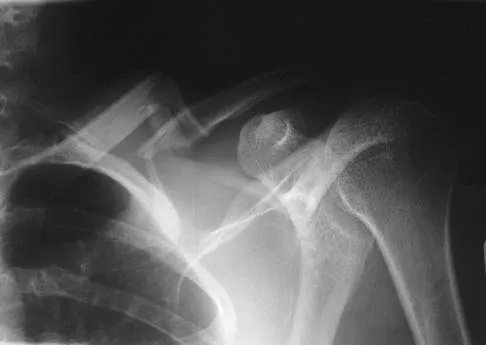
A 40-year-old man presents after a tonic-clonic seizure. His right arm is locked in internal rotation and adduction. An initial anteroposterior (AP) radiograph demonstrates a symmetric "lightbulb" appearance of the humeral head without obvious fracture. Which of the following is the most appropriate next step in imaging to confirm the suspected diagnosis?
Explanation
Question 56
A 35-year-old male sustains a high-energy trauma resulting in a coronal plane fracture of the lateral femoral condyle (Hoffa fracture). When performing open reduction and internal fixation, which of the following lag screw configurations provides the most biomechanically stable construct?
Explanation
Question 57
A 45-year-old woman is struck by a car, sustaining a lateral tibial plateau fracture with both a split and central depression (Schatzker Type II). There is 8 mm of joint depression. Which of the following is the most appropriate surgical management?
Explanation
Question 58
A 30-year-old construction worker sustains a Gustilo-Anderson Type IIIB open tibia fracture with a 10 x 5 cm anterior soft tissue defect requiring a free tissue transfer. Assuming the patient is hemodynamically stable and the wound is adequately debrided, what is the optimal timing for definitive soft tissue coverage to minimize infection rates?
Explanation
Question 59
During the intramedullary nailing of a proximal third tibial shaft fracture using a standard infrapatellar approach, the surgeon notes a post-reduction malalignment. What is the most common deformity encountered during this specific procedure?
Explanation
Question 60
A 22-year-old athlete sustains a traumatic anterior shoulder dislocation. Following closed reduction in the emergency department, he reports numbness over the lateral aspect of his shoulder. Which muscle's function is most likely to be impaired due to the associated nerve injury?
Explanation
Question 61
A 35-year-old male is involved in a high-speed motor vehicle collision and sustains an ipsilateral basicervical femoral neck fracture and a midshaft femur fracture. What is the standard priority and sequence of fixation for these injuries?
Explanation
Question 62
A 45-year-old male sustains a high-energy tibial pilon fracture. On presentation, the ankle is grossly swollen with hemorrhagic fracture blisters over the medial and lateral malleoli. What is the most appropriate initial management strategy?
Explanation
Question 63
A 19-year-old college football player experiences recurrent anterior shoulder instability. An MRI arthrogram reveals an impaction fracture on the posterolateral aspect of the humeral head. What is the proper eponym for this osseous defect?
Explanation
Question 64
A 65-year-old woman, who has been taking alendronate for 12 years, presents with a low-energy transverse subtrochanteric femur fracture. Radiographs show lateral cortical thickening and a medial spike. Following cephalomedullary nailing of the fracture, what is the most appropriate pharmacological recommendation?
Explanation
Question 65
A 28-year-old male presents with a "floating knee" injury (ipsilateral fractures of the femoral and tibial shafts) after a motorcycle collision. Which of the following factors is most predictive of a poor long-term functional outcome in this patient?
Explanation
Question 66
A 62-year-old man sustains an acute anterior shoulder dislocation after falling on an outstretched hand. The dislocation is successfully reduced. Three weeks later, he complains of persistent, profound weakness in active external rotation and abduction. Deltoid sensation is intact. What is the most likely underlying pathology?
Explanation
Question 67
A 35-year-old pedestrian is struck by a truck, sustaining a severe crush injury to the right lower extremity with a mangled lower leg. When evaluating the patient for potential amputation versus limb salvage, which of the following is NOT a formal component of the Mangled Extremity Severity Score (MESS)?
Explanation
Question 68
A 32-year-old man presents with a comminuted closed midshaft tibial fracture. Two hours after admission, he develops severe, unrelenting leg pain exacerbated by passive stretch of the hallux. The most reliable diagnostic parameter for acute compartment syndrome is a difference of less than 30 mmHg between:
Explanation
Question 69
A 22-year-old rugby player presents with recurrent anterior shoulder instability. A CT scan with 3D reconstruction reveals a glenoid bone loss of 28%. Which of the following is the most appropriate surgical treatment?
Explanation
Question 70
A 28-year-old multiple trauma patient sustains bilateral femoral shaft fractures and a severe closed head injury. On arrival, his lactate is 6.5 mmol/L, pH is 7.1, and core temperature is 34.0°C. What is the most appropriate initial management of the femoral fractures?
Explanation
Question 71
During intramedullary nailing of a proximal third tibial shaft fracture, the surgeon notes a persistent apex anterior and valgus deformity. Where should a blocking (Poller) screw be placed relative to the intended nail path to correct this deformity?
Explanation
Question 72
A 45-year-old man presents with severe shoulder pain and an inability to externally rotate his arm following a generalized tonic-clonic seizure. Radiographs demonstrate a posterior shoulder dislocation with a reverse Hill-Sachs lesion involving 25% of the articular surface. Which of the following is the most appropriate surgical management?
Explanation
Question 73
A 35-year-old man sustains a subtrochanteric femur fracture. During closed reduction for intramedullary nailing, the proximal fragment is noted to be flexed, abducted, and externally rotated. Which muscle is primarily responsible for the flexion deformity of the proximal fragment?
Explanation
Question 74
A 42-year-old pedestrian is struck by a car and sustains a pure centrally depressed fracture of the lateral tibial plateau with an intact lateral cortical rim (Schatzker type III). What is the optimal surgical approach and fixation strategy?
Explanation
Question 75
A 28-year-old man sustains a proximal third tibial shaft fracture. He undergoes intramedullary nailing via a standard infrapatellar approach. Which of the following deformities is most commonly seen postoperatively in this specific fracture pattern?
Explanation
Question 76
A 22-year-old athlete presents with his first episode of an anterior shoulder dislocation following a rugby tackle. After closed reduction, what is the single most important prognostic factor for recurrent instability?
Explanation
Question 77
A 32-year-old man sustains a Pauwels type III (vertical) femoral neck fracture in a motor vehicle collision. Which of the following biomechanical constructs provides the most stable fixation for this specific fracture pattern?
Explanation
Question 78
A 45-year-old man presents with severe shoulder pain following a generalized tonic-clonic seizure. Examination shows the arm is locked in internal rotation. Radiographs confirm a posterior shoulder dislocation with a 45% anteromedial humeral head impression defect (reverse Hill-Sachs lesion). What is the most appropriate surgical management?
Explanation
Question 79
A 35-year-old construction worker sustains a Gustilo-Anderson Type IIIB open tibia fracture. Following initial thorough debridement and stabilization with an external fixator, what is the optimal timing for definitive soft-tissue coverage to minimize infection rates?
Explanation
Question 80
A 78-year-old woman sustains a reverse obliquity intertrochanteric femur fracture. Which of the following best describes the biomechanical rationale for using a cephalomedullary nail rather than a sliding hip screw (SHS) for this fracture?
Explanation
Question 81
A 25-year-old male is brought in after a high-speed motorcycle crash. He has bilateral closed midshaft femur fractures and a pulmonary contusion. After initial fluid resuscitation, his serum lactate is 4.2 mmol/L. What is the most appropriate initial orthopedic management of the femur fractures?
Explanation
Question 82
A 40-year-old male sustains a high-energy Schatzker VI tibial plateau fracture. He presents with severe, unrelenting leg pain out of proportion to the injury, pain on passive stretch of the toes, and tense compartments. What is the most critical diagnostic step prior to surgical intervention?
Explanation
Question 83
A 65-year-old woman taking alendronate for 10 years presents with a low-energy transverse subtrochanteric femur fracture. Radiographs show cortical thickening of the lateral cortex. What is the most appropriate management of the contralateral, asymptomatic femur if radiographs show lateral cortical beaking?
Explanation
Question 84
A 45-year-old smoker is 9 months out from a reamed intramedullary nailing of a closed midshaft tibia fracture. He reports continued pain with weight-bearing. Radiographs show an oligotrophic nonunion with a broken distal locking screw. What is the most successful surgical intervention?
Explanation
Question 85
An 80-year-old woman sustains an anterior shoulder dislocation after a fall. The dislocation is successfully reduced in the emergency department. Three weeks later, she complains of profound weakness with active shoulder elevation and external rotation, though passive motion is preserved. Plain radiographs are normal. What is the most likely diagnosis?
Explanation
Question 86
A 30-year-old driver presents after a dashboard injury with a swollen knee. Radiographs reveal a coronal plane fracture of the lateral femoral condyle (Hoffa fracture). What is the most appropriate fixation strategy for this specific fracture pattern?
Explanation
Question 87
A 50-year-old man falls from a height, sustaining a highly comminuted, displaced intra-articular distal tibia fracture (OTA/AO 43-C3) with severe soft tissue swelling and fracture blisters. What is the most appropriate initial step in the operative sequence?
Explanation
None
