AAOS Sports Medicine MCQs (Set 4): Knee Ligament & Shoulder Instability | ABOS Board Review
Key Takeaway
This high-yield question set (Set 4) for AAOS, ABOS, and OITE exams meticulously covers critical sports medicine topics. Focus areas include comprehensive diagnosis and management of knee ligament injuries like ACL tears, detailed analysis of shoulder instability and rotator cuff pathology, and effective treatment strategies for ankle tendon injuries.
AAOS Sports Medicine MCQs (Set 4): Knee Ligament & Shoulder Instability | ABOS Board Review
Comprehensive 100-Question Exam
00:00
Start Quiz
Question 1
What nerve is most at risk during placement of the anterolateral portal in elbow arthroscopy?
Explanation
Question 2
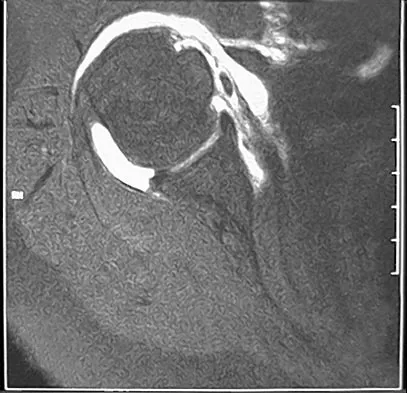
A 39-year-old man has anterior shoulder pain after landing on his abducted left shoulder while playing softball. Examination reveals a stable glenohumeral joint, pain on passive external rotation of greater than 25 degrees, and pain and weakness on belly press (Napoleon's) test. An MRI scan is shown in Figure 32. To provide maximum pain relief and return of function, management should include
Explanation
Question 3
A 37-year-old racquet player had dominant shoulder pain for 1 year, and cortisone injections provided only temporary relief. Because MRI findings did not reveal a rotator cuff tear, he underwent arthroscopic treatment including subacromial decompression and spur removal below the distal clavicle. Three years following surgery, he now reports that the pain has returned. What is the most likely cause of his pain?
Explanation
Question 4
Figure 33 shows the radiograph of a 28-year-old avid golfer who has chronic right wrist pain. Management should consist of
Explanation
Question 5
A 28-year-old hockey player has a shoulder deformity after being checked into the boards. Examination reveals that swelling has improved, but there is tenderness along the distal clavicle. Radiographs reveal a grade II acromioclavicular joint separation. Initial management should consist of
Explanation
Question 6
Which of the following best describes athletic pubalgia?
Explanation
Question 7
Figures 34a and 34b show the radiographs of a 28-year-old man who fell on his outstretched arm with significant force while mountain biking. The nerve deficit most likely to occur would result in weakness of
Explanation
Question 8
Which of the following activities can improve posterior capsular contractures?
Explanation
Question 9
Figure 35 shows the radiograph of a 35-year-old weightlifter who has had pain with overhead lifts for the past 7 months. Cortisone injections in the acromioclavicular joint provided only temporary relief. A bone scan reveals increased activity of the acromioclavicular joint. Treatment should now consist of
Explanation
Question 10
Following reconstruction of the anterior cruciate ligament (ACL), which of the following rehabilitation exercises has the greatest potential to harm the graft?
Explanation
Question 11
A young active patient with a complete isolated posterior cruciate ligament (PCL) tear undergoes a double bundle PCL reconstruction. The tensioning pattern of the anterolateral (AL) and posteromedial (PM) bundles most likely to reproduce the most normal knee kinematics would be to tension
Explanation
Question 12
Accurate evaluation of the upper portion of the subscapularis muscle is best accomplished with active internal rotation
Explanation
Question 13
During what phase of the throwing motion is the highest torque measured across the glenohumeral joint?
Explanation
Question 14
Figure 36 shows the radiograph of a 28-year-old man who injured his shoulder in a motocross race. Management should consist of
Explanation
Question 15
Figure 37 shows the radiograph of a 21-year-old collegiate basketball player who has had mild midfoot aching for the past 4 months. What is the best course of action?
Explanation
Question 16
A 17-year-old high school gymnast who has peripatellar knee pain has been unable to practice on a consistent basis for the past 3 years. She denies any specific injury events. Physical therapy for modalities, quadriceps strengthening, and hamstring stretching provide temporary relief. A trial of patellar taping significantly reduces her pain. Examination reveals an 15-degree Q angle, moderate lateral facet tenderness, negative patellar apprehension, and the inability to evert the patella. Radiographs show a moderate lateral patellar tilt. Treatment should now consist of
Explanation
Question 17
An active 55-year-old man who felt a sudden pop in the left heel while playing tennis 6 months ago was diagnosed with an ankle sprain around the time of injury. He now reports calf atrophy and severe weakness with running. Examination reveals a palpable defect in the Achilles tendon and only trace passive ankle flexion when the calf is squeezed. At the time of surgery, an Achilles tendon defect of 6 cm cannot be approximated. Surgical management of the Achilles tendon should include
Explanation
Question 18
Figures 38a and 38b show the AP and lateral radiographs of a 12-year-old baseball pitcher who has pain in his right dominant elbow. Management should consist of
Explanation
Question 19
What is the most reproducible landmark for the accurate anatomic placement of the tibial tunnel for an anterior cruciate ligament (ACL) reconstruction?
Explanation
Question 20
A 20-year-old football player sustains a dorsiflexion external rotation injury to his right ankle. During sideline evaluation, which of the following findings best indicates a syndesmosis ankle sprain without diastasis?
Explanation
Question 21
A 20-year-old college baseball pitcher reports the insidious onset of medial elbow pain. Examination reveals medial elbow tenderness, a normal neurologic examination, and no obvious valgus laxity. Plain radiographs are normal. MRI scans are shown in Figures 39a and 39b. Management should consist of
Explanation
Question 22
What is the most common arthroscopic finding of internal impingement in an overhead athlete?
Explanation
Question 23
A 16-year-old high school football player who sustained an acute forceful dorsiflexion ankle injury reported that he felt a pop and then noted immediate swelling over the lateral malleolus. Examination 24 hours later reveals moderate swelling and tenderness along the lateral malleolus. The external rotation, squeeze, anterior drawer, and talar tilt tests are negative. Subluxation of the peroneal tendons is palpable over the peroneal groove of the fibula. Radiographs reveal a small cortical avulsion off the distal rim of the fibula. The stress views show no instability. Initial management for this injury should include
Explanation
Question 24
The essential lesion responsible for posterolateral rotatory instability of the elbow is disruption of the
Explanation
Question 25
When evaluating articular cartilage, what extracellular matrix component is most closely associated with the deep calcified cartilage zone?
Explanation
Question 26
A 22-year-old rugby player undergoes an open Latarjet procedure for recurrent anterior shoulder instability with 25% glenoid bone loss. Postoperatively, he presents with profound weakness in elbow flexion and decreased sensation over the lateral aspect of his forearm. Which nerve was most likely injured during the procedure?
Explanation
Question 27
A 28-year-old man sustains a dashboard injury to his knee during a motor vehicle collision. Examination reveals a positive posterior drawer test. The Dial test demonstrates 15 degrees of increased external rotation at 30 degrees of knee flexion compared to the uninjured side, but symmetrical external rotation at 90 degrees. Which structures are most likely injured?
Explanation
Question 28
A 13-year-old female soccer player with widely open physes requires surgical management for a complete ACL tear. To minimize the risk of physeal arrest while providing optimal stability, which of the following surgical techniques is most appropriate?
Explanation
Question 29
A 25-year-old male presents with recurrent anterior shoulder dislocations. CT imaging reveals a 22% anterior glenoid bone defect and a large, engaging Hill-Sachs lesion. Which of the following is the most appropriate definitive surgical management?
Explanation
Question 30
A 30-year-old competitive weightlifter reports vague, deep posterior shoulder pain and a painful clicking sensation during the eccentric phase of the bench press. Examination demonstrates a positive jerk test. What is the most likely pathological finding?
Explanation
Question 31
A 35-year-old patient involved in a motorcycle collision sustains a knee dislocation. After reduction, the patient has a foot drop and lacks sensation over the dorsum of the foot. Which of the following specific ligamentous injury patterns is most highly associated with this neurologic deficit?
Explanation
Question 32
A 19-year-old female gymnast complains of bilateral shoulder pain and feeling like her shoulders 'slip out' when reaching overhead. She has a positive sulcus sign bilaterally and generalized ligamentous laxity. After 9 months of dedicated physical therapy, she remains symptomatic. What is the surgical treatment of choice?
Explanation
Question 33
A 24-year-old football player is hit on the lateral aspect of his knee. He presents with medial-sided pain. Examination reveals 8 mm of medial joint line opening at 30 degrees of flexion with a firm endpoint, but he is completely stable to valgus stress at full extension. What is the recommended treatment?
Explanation
Question 34
A 28-year-old professional baseball pitcher presents with deep shoulder pain and decreased throwing velocity. O'Brien's active compression test is positive. An MRI arthrogram reveals a superior labral tear with detachment of the biceps anchor from the superior glenoid. What SLAP tear type is this, and what is the optimal management?
Explanation
Question 35
A 32-year-old male presents with a ruptured ACL 3 years following a bone-patellar tendon-bone autograft reconstruction. Radiographs and CT demonstrate significant widening of both the femoral and tibial tunnels, measuring 15 mm each. What is the most appropriate surgical plan?
Explanation
Question 36
During an arthroscopic stabilization for recurrent anterior shoulder instability, you note that the labrum is completely intact, but the anterior band of the inferior glenohumeral ligament (IGHL) is avulsed off the humeral neck. What is the correct terminology for this specific lesion?
Explanation
Question 37
A 26-year-old male sustains an isolated Grade III PCL tear during a soccer match. He is initially treated conservatively but returns 9 months later with continued complaints. Which of the following is the most widely accepted absolute indication for PCL reconstruction in this patient?
Explanation
Question 38
During a Latarjet procedure for anterior shoulder instability, what is the anatomical landmark that dictates the maximum safe proximal osteotomy of the coracoid process to avoid destabilizing the clavicle and endangering the suprascapular nerve?
Explanation
Question 39
You are evaluating a 23-year-old patient with a suspected knee injury following a wrestling match. The Dial test is performed. The patient has 20 degrees greater external rotation on the injured side at 30 degrees of flexion, and 25 degrees greater external rotation at 90 degrees of flexion. What is the most accurate diagnosis?
Explanation
Question 40
A 28-year-old rock climber with recurrent anterior shoulder dislocations is found to have an engaging Hill-Sachs lesion but minimal glenoid bone loss. An arthroscopic Bankart repair with 'remplissage' is planned. Which structure is tenodesed into the humeral defect during this adjunctive procedure?
Explanation
Question 41
A 19-year-old female skier sustains a non-contact pivoting injury to her right knee, presenting with an immediate hemarthrosis. An acute ACL rupture is confirmed on MRI. What is the most common associated meniscal injury seen acutely in this specific setting?
Explanation
Question 42
A 22-year-old collegiate wrestler undergoes an anterior cruciate ligament (ACL) reconstruction using a bone-patellar tendon-bone (BPTB) autograft. Postoperatively, what is the most common complication specifically associated with this graft choice compared to a hamstring autograft?
Explanation
Question 43
A 20-year-old rugby player presents with recurrent anterior shoulder instability. A 3D CT scan reveals 25% anterior glenoid bone loss. What is the most appropriate definitive surgical management?
Explanation
Question 44
A 28-year-old man sustains a dashboard injury to his right knee. Physical examination demonstrates a positive posterior sag sign. Which of the following bundles of the primary injured ligament is tightest in knee flexion?
Explanation
Question 45
A 30-year-old recreational skier sustains an isolated, acute grade III medial collateral ligament (MCL) tear without meniscus or cruciate ligament involvement. What is the most appropriate initial management?
Explanation
Question 46
During an arthroscopic anterior stabilization for recurrent shoulder instability, an off-track, engaging Hill-Sachs lesion is identified. Glenoid bone loss is measured at 8%. Which of the following is the most appropriate adjunctive procedure?
Explanation
Question 47
A 35-year-old man sustains an anterior knee dislocation (Schenck KD III) during a motorcycle accident. Following closed reduction in the emergency department, ankle-brachial indices (ABI) are calculated at 0.85. What is the next most appropriate step in management?
Explanation
Question 48
A 24-year-old athlete undergoes evaluation for a suspected knee injury. Physical examination reveals a positive dial test at 30 degrees of flexion, but symmetric normal external rotation at 90 degrees. This finding indicates an isolated injury to which of the following structures?
Explanation
Question 49
A 21-year-old collegiate offensive lineman presents with vague posterior shoulder pain exacerbated by bench pressing. Examination reveals increased posterior translation with a load-and-shift test and pain with the jerk test. What is the initial treatment of choice?
Explanation
Question 50
Following an anterior cruciate ligament (ACL) reconstruction, a patient has persistent rotational instability (positive pivot shift) despite a negative Lachman test. Radiographs show the femoral tunnel placed at the 12 o'clock position in the intercondylar notch. What is the functional consequence of this specific tunnel placement?
Explanation
Question 51
A 26-year-old professional baseball pitcher reports a "dead arm" and deep shoulder pain during the late cocking phase of throwing. A type II SLAP tear is suspected. Which of the following pathomechanical processes is most responsible for this specific injury pattern?
Explanation
Question 52
A 24-year-old male undergoes a Latarjet procedure for recurrent anterior shoulder instability with severe glenoid bone loss. Postoperatively, he demonstrates profound weakness in elbow flexion and decreased sensation over the lateral aspect of his forearm. Which nerve was most likely injured during the surgical approach?
Explanation
Question 53
During a single-bundle posterior cruciate ligament (PCL) reconstruction using an Achilles tendon allograft aiming to reconstruct the anterolateral bundle, at what degree of knee flexion should the graft typically be tensioned to best restore normal knee kinematics?
Explanation
Question 54
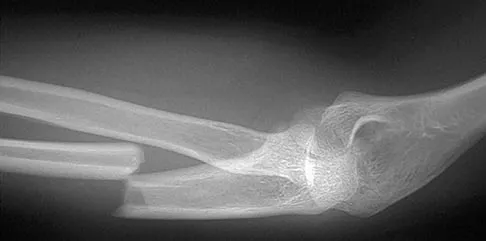
A 30-year-old man continues to have anterior shoulder instability after a seemingly successful arthroscopic Bankart repair. A revision MRI arthrogram is obtained.
The imaging demonstrates contrast extending inferiorly into the axillary pouch with a characteristic "J-sign" at the humeral insertion of the capsule. What is the most likely diagnosis?
Explanation
Question 55
During reconstruction of the posterolateral corner (PLC) of the knee, anatomical landmarks are critical. In an isolated injury to the popliteofibular ligament, what is the expected primary physical exam finding?
Explanation
Question 56
A 22-year-old male presents with recurrent anterior shoulder instability. Diagnostic arthroscopy reveals the anterior labrum is stripped and displaced medially down the glenoid neck, with the anterior periosteum remaining intact. Which of the following is the most accurate diagnosis?
Explanation
Question 57
A 19-year-old collegiate soccer player is scheduled for anterior cruciate ligament (ACL) reconstruction. The surgeon discusses using a bone-patellar tendon-bone (BTB) autograft. Compared to hamstring autografts, BTB autograft is most uniquely associated with which of the following postoperative complications?
Explanation
Question 58
A 25-year-old male presents with recurrent anterior shoulder dislocations. A pre-operative CT scan demonstrates an anterior glenoid bone defect.
At what percentage of anterior glenoid bone loss is a Latarjet procedure or bone grafting generally indicated over an isolated arthroscopic Bankart repair?
Explanation
Question 59
A 28-year-old male sustains a "dashboard injury" in a motor vehicle collision. Physical examination and MRI confirm an isolated Grade III posterior cruciate ligament (PCL) tear. What is the most appropriate initial management?
Explanation
Question 60
A 35-year-old male with a history of a seizure disorder presents with an unrecognized locked posterior shoulder dislocation that occurred 3 weeks ago. CT imaging reveals an anteromedial humeral head defect (reverse Hill-Sachs lesion) involving 35% of the articular surface. The glenohumeral cartilage is otherwise preserved. What is the most appropriate surgical treatment?
Explanation
Question 61
A 30-year-old male presents to the trauma bay following a high-speed motorcycle crash with a grossly deformed left knee. The joint is urgently reduced. Post-reduction, the distal pulses are palpable but symmetric, and the Ankle-Brachial Index (ABI) is calculated to be 0.8. What is the most appropriate next step in management?
Explanation
Question 62
A 24-year-old professional baseball pitcher complains of deep shoulder pain, decreased throwing velocity, and pain specifically during the late cocking phase. Clinical examination reveals a positive O'Brien test. What pathomechanical process is most commonly responsible for this patient's condition?
Explanation
Question 63
A 21-year-old football player is struck on the anteromedial aspect of his proximal tibia. On physical examination, he demonstrates 15 degrees of increased external rotation on the Dial test at 30 degrees of knee flexion compared to the contralateral knee, but normal external rotation at 90 degrees of knee flexion. Which structure(s) is/are most likely injured?
Explanation
Question 64
A 28-year-old male presents with recurrent apprehension 1 year after undergoing a Latarjet procedure. CT imaging reveals significant resorption of the coracoid graft. What technical error is most commonly associated with graft osteolysis following a Latarjet procedure?
Explanation
Question 65
A 26-year-old female presents with acute knee pain after a twisting injury while skiing. Plain radiographs demonstrate a small avulsion fracture from the lateral tibial plateau just distal to the articular surface. This radiographic finding is virtually pathognomonic for a concurrent tear of which of the following structures?
Explanation
Question 66
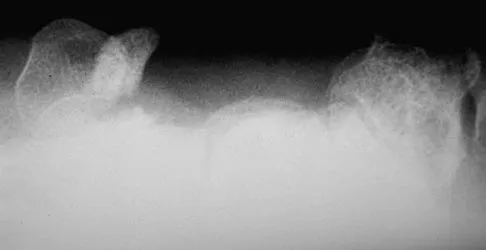
A 32-year-old rugby player presents after an acute anterior shoulder dislocation.
A coronal T2-weighted MRI reveals a J-sign with extravasation of joint fluid inferiorly into the axillary pouch, without detachment of the labrum. What is the most likely diagnosis?
Explanation
Question 67
A 40-year-old male suffers a valgus knee injury. An MRI is obtained, revealing a distal avulsion of the superficial medial collateral ligament (MCL). The torn distal end is flipped superficial to the pes anserinus tendons (a Stener-like lesion). What is the recommended management?
Explanation
Question 68
A 22-year-old male presents with recurrent anterior shoulder dislocations. Diagnostic arthroscopy reveals an anterior glenoid bone defect of 15% and a large, engaging Hill-Sachs lesion. Which of the following is the most appropriate surgical management?
Explanation
Question 69
During an endoscopic ACL reconstruction, an inexperienced surgeon places the femoral tunnel entirely too far anteriorly (high at the 12 o'clock position in the notch). What abnormal graft tension pattern will this non-anatomical placement cause?
Explanation
Question 70
During a routine diagnostic shoulder arthroscopy for mild non-specific pain, the surgeon visualizes a cord-like middle glenohumeral ligament and an absent anterosuperior labrum. The patient has no history of instability. What is the most appropriate management of these specific intra-articular findings?
Explanation
Question 71
A 22-year-old collegiate rugby player presents with recurrent anterior shoulder dislocations. Advanced imaging demonstrates an anteroinferior labral tear and 26% anterior glenoid bone loss. Which of the following is the most appropriate surgical management to minimize the risk of recurrent instability?
Explanation
Question 72
A 25-year-old male sustains a twisting injury to his knee. Physical examination reveals an isolated increase in external tibial rotation of 15 degrees compared to the contralateral side when tested at 30 degrees of knee flexion. The external rotation normalizes and is symmetric at 90 degrees of flexion. Which structure is most likely injured?
Explanation
Question 73
During diagnostic arthroscopy for a 28-year-old patient with recurrent anterior shoulder instability, the surgeon notes an intact anteroinferior labrum but observes a U-shaped capsular tear avulsed from the anatomic neck of the humerus in the axillary pouch. What is the diagnosis?
Explanation
Question 74
A 24-year-old male presents 6 months after an anterior cruciate ligament (ACL) reconstruction complaining of a lack of full terminal extension. Sagittal MRI reveals that the tibial tunnel was placed too anteriorly. The graft is most likely impinging against which of the following structures?
Explanation
Question 75
A 24-year-old male overhead athlete undergoes arthroscopic evaluation for recurrent anterior shoulder instability. Findings include an off-track, engaging Hill-Sachs lesion and 12% anterior glenoid bone loss. Which of the following is the most appropriate management alongside an arthroscopic Bankart repair?
Explanation
Question 76
An AP radiograph of a 30-year-old skier's knee following an acute pivoting injury demonstrates a small elliptical avulsion fracture of the lateral tibial plateau, just distal to the joint line. This radiographic finding is most highly associated with an injury to which of the following structures?
Explanation
Question 77
A 40-year-old man presents to the emergency department with severe shoulder pain and the arm locked in internal rotation after sustaining a severe electrical shock. Radiographs confirm a posterior shoulder dislocation with an anteromedial humeral head impaction fracture involving 25% of the articular surface. Following closed reduction, what is the preferred definitive surgical intervention?
Explanation
Question 78
When comparing the tibial inlay technique to the transtibial technique for Posterior Cruciate Ligament (PCL) reconstruction, what is the primary biomechanical advantage of the tibial inlay approach?
Explanation
Question 79
A 28-year-old man undergoes a Latarjet procedure for refractory anterior shoulder instability. Postoperatively, he complains of weakness in elbow flexion and numbness over the lateral aspect of his forearm. Which nerve was most likely injured during the procedure?
Explanation
Question 80
A 22-year-old collegiate football player sustains an isolated grade III Medial Collateral Ligament (MCL) sprain of the right knee. Examination shows significant valgus laxity at 30 degrees of flexion but a firm endpoint in full extension. What is the most appropriate initial management?
Explanation
Question 81
A 45-year-old manual laborer presents with deep anterior shoulder pain. Clinical examination reveals a positive O'Brien's test. MRI arthrogram demonstrates a Type II SLAP tear without concomitant rotator cuff pathology. Based on current evidence, what is the most appropriate surgical management for this patient?
Explanation
Question 82
A 30-year-old unrestrained driver is brought to the trauma bay after a motor vehicle collision. He has a grossly deformed knee which is quickly reduced. Post-reduction, distal pulses are palpable, but the Ankle-Brachial Index (ABI) is calculated to be 0.8. What is the most appropriate next step in management?
Explanation
Question 83
Which of the following factors is most strongly associated with an increased risk of recurrent instability following an isolated arthroscopic Bankart repair for anterior shoulder instability?
Explanation
Question 84
A 10-year-old male soccer player (Tanner stage 1) sustains a complete ACL tear and experiences recurrent giving-way episodes despite physical therapy. To minimize the risk of physeal arrest and angular deformity, which surgical technique is most appropriate?
Explanation
Question 85
A 19-year-old female gymnast complains of bilateral shoulder pain and feeling like her shoulders slip out of place. Examination reveals generalized ligamentous laxity, a positive sulcus sign, and apprehension in anterior, posterior, and inferior directions. What is the most appropriate initial treatment?
Explanation
Question 86
Six months following an uneventful ACL reconstruction using a hamstring autograft, a patient complains of a painful, audible click and an inability to achieve full terminal extension. MRI demonstrates a rounded, nodular soft tissue mass located anterior to the ACL graft in the intercondylar notch. What is the most likely diagnosis?
Explanation
Question 87
A 22-year-old elite baseball pitcher complains of posterior shoulder pain exclusively during the late cocking phase of throwing. Arthroscopic evaluation reveals undersurface fraying of the posterior supraspinatus tendon and a peel-back lesion of the posterosuperior labrum. What is the primary diagnosis?
Explanation
Question 88
A patient presents with a knee injury sustained from a blow to the anterolateral aspect of the flexed knee. Clinical examination reveals anteromedial rotatory instability (AMRI), characterized by valgus laxity and anterior subluxation of the medial tibial plateau. Which primary structure of the posteromedial corner is injured?
Explanation
Question 89
A 22-year-old collegiate rugby player with a history of recurrent anterior shoulder instability presents for definitive management. A 3D computed tomography (CT) scan reveals a 27% anterior glenoid bone loss with an associated engaging Hill-Sachs lesion. Which of the following is the most appropriate surgical intervention?
Explanation
Question 90
A 24-year-old male sustains a traumatic knee injury. On physical examination, the dial test reveals 15 degrees of increased external rotation on the injured side compared to the normal side when tested at 30 degrees of knee flexion. However, at 90 degrees of knee flexion, the external rotation is symmetric bilaterally. What is the most likely injured structure?
Explanation
Question 91
A 42-year-old male presents with a locked posterior shoulder dislocation following a witnessed seizure. Imaging reveals a reverse Hill-Sachs lesion comprising 30% of the anterior humeral head articular surface. After successful open reduction, the shoulder remains unstable in internal rotation. What is the most appropriate treatment for the humeral head defect?
Explanation
Question 92
A 21-year-old female recreational skier felt a "pop" in her knee during a twisting fall. An AP radiograph in the emergency department reveals a small, elliptical bony avulsion fragment just lateral to the lateral tibial plateau.
This radiographic finding is most highly associated with an injury to which of the following structures?
Explanation
Question 93
A 25-year-old professional baseball pitcher complains of deep shoulder pain during the late cocking phase of throwing. Magnetic resonance arthrography demonstrates a superior labral tear extending from anterior to posterior (Type II SLAP lesion). Which of the following mechanisms is considered the primary etiology for this specific injury in overhead throwing athletes?
Explanation
Question 94
A 30-year-old male is brought to the trauma bay after a high-speed motorcycle collision. Examination of his right lower extremity reveals a grossly unstable knee with positive anterior, posterior, and valgus stress testing. The foot is warm, and dorsalis pedis pulses are palpable. The Ankle-Brachial Index (ABI) is measured at 0.8. What is the most appropriate next step in management?
Explanation
Question 95
A 26-year-old male presents with recurrent anterior shoulder instability. Diagnostic imaging reveals a Bankart lesion, 10% anterior glenoid bone loss, and a large Hill-Sachs lesion that engages the anterior glenoid rim on dynamic 3D CT modeling. Which of the following is the most appropriate surgical management?
Explanation
Question 96
A 19-year-old collegiate football player is struck on the lateral aspect of his left knee. Physical examination reveals 8 mm of medial joint line opening without a firm endpoint when valgus stress is applied at 30 degrees of flexion, but the knee is stable to valgus stress at 0 degrees of flexion. MRI confirms an isolated, complete proximal tear of the medial collateral ligament (MCL). What is the recommended treatment?
Explanation
Question 97
A 55-year-old man presents to the emergency department after falling on his outstretched hand. Radiographs confirm an anteroinferior shoulder dislocation. After successful closed reduction, he notes decreased sensation over the lateral aspect of his shoulder. If this neurologic deficit persists, weakness in which of the following muscles is most likely to be observed?
Explanation
Question 98
A 28-year-old athlete is undergoing a complex multi-ligament knee reconstruction. The surgeon is reviewing the anatomy of the native posterior cruciate ligament (PCL) to optimize tunnel placement. Which of the following accurately describes the anatomy and biomechanics of the primary functional bundle of the PCL?
Explanation
None
